


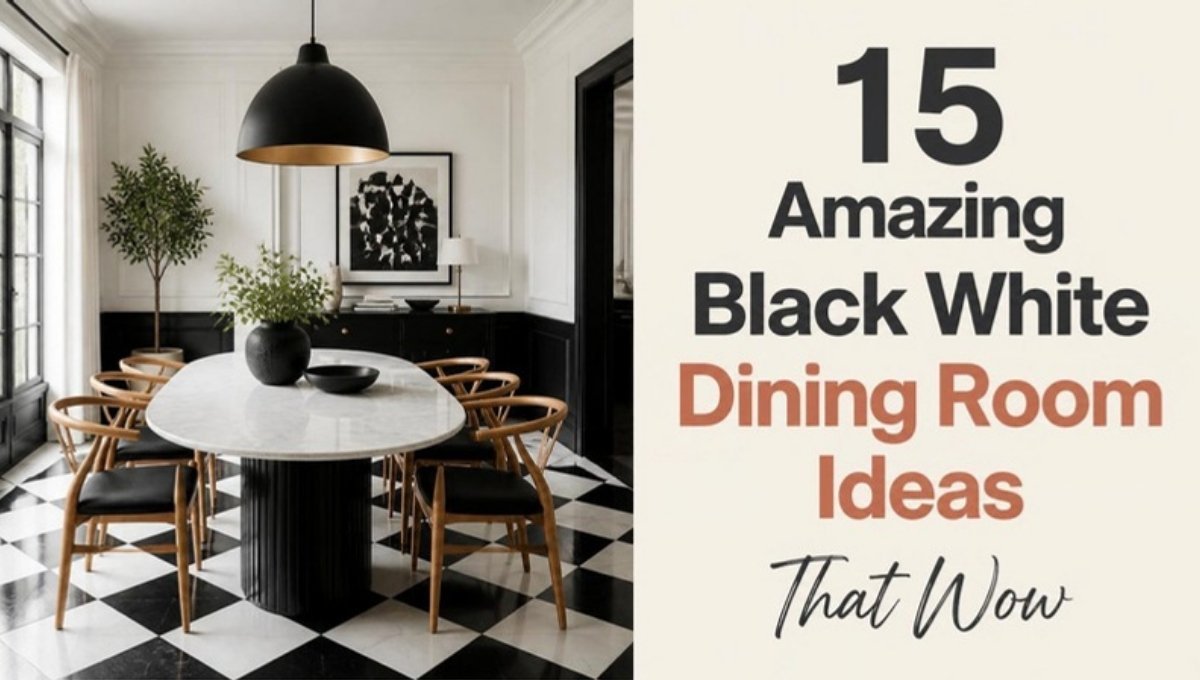
If you are looking for black white dining room ideas that actually work in a real home, this guide is for you. Black and white is the palette that never asks permission. In a dining room it delivers instant confidence: high contrast reads as deliberate, graphic and expensive, and it flatters almost every architectural style from Victorian townhouse to new-build apartment. The reason it works so consistently is structural rather than decorative. Black defines edges and creates visual weight, white opens space and reflects light, and the tension between them gives a room the sense of composition that a single mid-tone colour can never produce on its own.
The risk, of course, is coldness. A dining room is where people linger, eat and talk, so pure monochrome needs warmth engineered back in through texture, timber, brass and lighting. These 15 amazing black and white dining room ideas show exactly how to hold the contrast while keeping the space inviting. You will find checkerboard floors, black-framed windows, marble surfaces, moody accent walls, mixed seating and the small material choices that separate a striking monochrome room from a stark one.
1. Checkerboard Floor Statement
Nothing announces a black and white dining room faster than a checkerboard floor. Laid on the diagonal it visually widens a narrow space; laid square it feels crisper and more graphic. Execute it in marble for luxury, porcelain for durability, vinyl tile for budget, or painted plywood for a weekend transformation. Softening the contrast slightly — cream against charcoal rather than pure white against pure black — keeps the effect elegant rather than costume-like, and hides everyday dirt better than any single-colour floor.
2. Black Accent Wall Behind the Table
A single wall painted deep black or near-black behind the dining table creates an immediate focal point and makes everything in front of it — pale chairs, brass lighting, ceramics — appear to advance and glow. Use a matte or dead flat finish, which absorbs light and disguises wall imperfections far better than any sheen. Keep the remaining three walls white so the room stays bright, and hang a single large artwork or mirror on the dark wall for balance.
3. White Walls with Black Trim
Reversing convention by painting skirting boards, architraves, window frames and doors black against white walls produces a graphic outline that traces the room’s architecture. The effect is tailored and surprisingly modern in period properties, where elaborate mouldings suddenly read as deliberate line drawings rather than background trim. It works especially well in dining rooms with tall windows or panelled doors, and it costs nothing more than a different tin of paint.
4. Black Windows and Crittall-Style Glazing
Black window frames are the defining detail of contemporary black and white interiors. Slim steel or steel-look profiles maximise glass area while framing the view like a picture, and the dark line draws the eye outward, making the dining room feel connected to the garden. Crittall-style internal screens can also separate a dining zone from a hallway or kitchen without blocking light, defining the space while keeping it visually open.
5. Marble Table with Black Base
A white marble tabletop on a black metal or blackened timber base is the single most efficient monochrome purchase you can make. Marble’s grey veining supplies natural pattern and movement, so the palette never reads flat, and the reflective surface bounces light around a room that might otherwise feel heavy. Choose honed rather than polished marble for a softer, more forgiving finish, or marble-effect porcelain and sintered stone for genuine stain resistance.
6. Mixed Black and White Seating
Alternating black and white chairs around the same table introduces rhythm and stops a monochrome room feeling static. You can alternate every other chair, use black on one side and white on the other, or place two black carver chairs at the heads with white side chairs between. Keeping all chairs the same design in two finishes looks deliberate; mixing shapes as well as colours reads more eclectic and relaxed.
7. Warm Wood as the Third Element
The most successful black and white dining rooms are never actually two colours. A warm timber floor, oak table, walnut sideboard or rattan chair seat introduces the organic warmth that stops monochrome tipping into austerity. Wood also bridges the two extremes, sitting comfortably against both. Aim for one substantial timber element plus one or two smaller ones, so the warmth registers as part of the scheme rather than an afterthought.
8. Brass and Gold Accents
Metallics rescue monochrome from coldness better than almost anything. Brass pendant lights, gold picture frames, brass cabinet handles and candlesticks catch warm evening light and add a glow that black and white alone cannot produce. Unlacquered brass develops a patina over time, deepening the warmth. Repeat the metal at least three times across the room so it reads as a consistent thread rather than a single stray accent.
9. Black Pendant Lighting Over the Table
A black pendant, chandelier or linear suspension above the dining table works as sculpture against a pale ceiling, creating a strong silhouette that anchors the room. Matte black finishes read contemporary and industrial; black with brass or gold interiors adds warmth and reflects light downward onto the table. Hang the fixture 30 to 34 inches above the tabletop, sized at roughly half to two-thirds the table’s width.
Read More Blogs on: decormellow.com
10. Monochrome Gallery Wall
Black and white photography, line drawings and typographic prints in matching black frames create a gallery wall with total cohesion, because the palette does the unifying work for you. Vary frame sizes but keep the mounts and frame finish consistent, and hang with even spacing of roughly two to three inches. Above a sideboard or along a blank dining room wall, this adds personality and depth without introducing a single new colour.
11. Black and White Patterned Wallpaper
Wallpaper delivers pattern that paint cannot. Bold geometrics, damasks, botanical toiles and abstract brushstrokes in black on white all suit dining rooms, where guests sit long enough to actually appreciate detail. Use it on one wall or, for real drama, all four in a small dining room where the enclosing effect feels intentional. Large-scale patterns need height and space; small repeats suit compact rooms better.
12. Textured White Surfaces
Texture is what keeps white from reading as blank. Limewashed plaster, tadelakt, board-and-batten panelling, shiplap, tongue-and-groove and boucle upholstery all create shadow and depth in a single colour. In a black and white dining room, layering three or four white textures gives the pale half of the palette as much interest as the dark half. It also makes the room feel considerably warmer than flat white emulsion.
13. Striped Rug or Runner
A black and white striped rug under the dining table adds movement and reinforces the palette while defining the eating zone. Running stripes along the room’s length elongates it; running them across widens a narrow space. Choose a low-pile flatweave so chairs slide easily, and consider a slightly softened contrast — charcoal and cream rather than jet and bright white — which hides crumbs and everyday marks far better.
14. Black Sideboard or Built-In Cabinetry
A black credenza, sideboard or run of built-in cabinetry provides visual anchor and storage in one move. Against white walls the dark mass reads as architecture rather than furniture, particularly when built floor to ceiling. Break up the block with open shelving displaying white ceramics, or with brass hardware and a marble top. Matte and satin black finishes hide fingerprints far better than gloss lacquer in a room where people serve food.
15. Greenery and Living Contrast
Plants are the cheapest and most effective way to warm a monochrome room. The green of a monstera, olive tree or simple eucalyptus stems in a white vase reads as vivid against black and white, introducing life and organic irregularity to a scheme built on hard edges. A large floor plant in the corner softens architectural lines, while a low centrepiece on the table keeps sightlines clear across dinner.
Final Thoughts on Black White Dining Room Ideas
Black and white dining rooms succeed when the contrast is confident and the warmth is deliberate. Choose one strong monochrome gesture as your anchor — a checkerboard floor, a black feature wall, a marble table or black-framed glazing — and let everything else support it rather than compete. Then build warmth back in through three reliable channels: natural timber, brass or gold metalwork, and layered texture in the white surfaces. Add greenery and warm dimmable lighting, and the result is a dining room that reads as graphic and sophisticated by day, and genuinely inviting once the sun goes down.
For more inspiration, explore our 25 Top Mid Century Modern Dining Room Ideas and browse more home decor ideas.
Frequently Asked Questions About Black White Dining Room Ideas
How do I stop a black and white dining room feeling cold?
Introduce a third natural element such as oak, walnut or rattan, add brass or gold metallics, and layer textures like limewash plaster, boucle upholstery and woven rugs. Warm dimmable lighting around 2700K makes the biggest single difference in the evening.
Should walls be black or white in a small dining room?
White walls with black accents will keep a small dining room feeling open. That said, painting a small dining room entirely dark can work beautifully, because it blurs the boundaries and creates an intimate, enveloping space ideal for evening dining.
What colours go with black and white in a dining room?
Warm wood tones, brass and gold are the most reliable additions. For an accent colour, deep green, terracotta, mustard and burgundy all sit well against monochrome without disrupting the graphic effect.
Is a checkerboard floor still in style?
Yes. Checkerboard flooring has become a lasting design signature rather than a passing trend, appearing in both traditional and contemporary interiors. Softening the contrast to cream and charcoal gives a more current, less costume-like result.
What flooring works best in a black and white dining room?
Warm timber is the easiest choice because it supplies the warmth monochrome lacks. For a bolder look, checkerboard marble or porcelain tile makes the floor the statement. Avoid cool grey floors, which can push the scheme toward feeling clinical.
What lighting suits a monochrome dining room?
A black pendant or chandelier with a brass or gold inner shade gives strong silhouette plus warm reflected light. Always fit a dimmer, and layer in wall lights or candles so the room can shift from bright daytime use to soft evening dining.





Leave a comment