

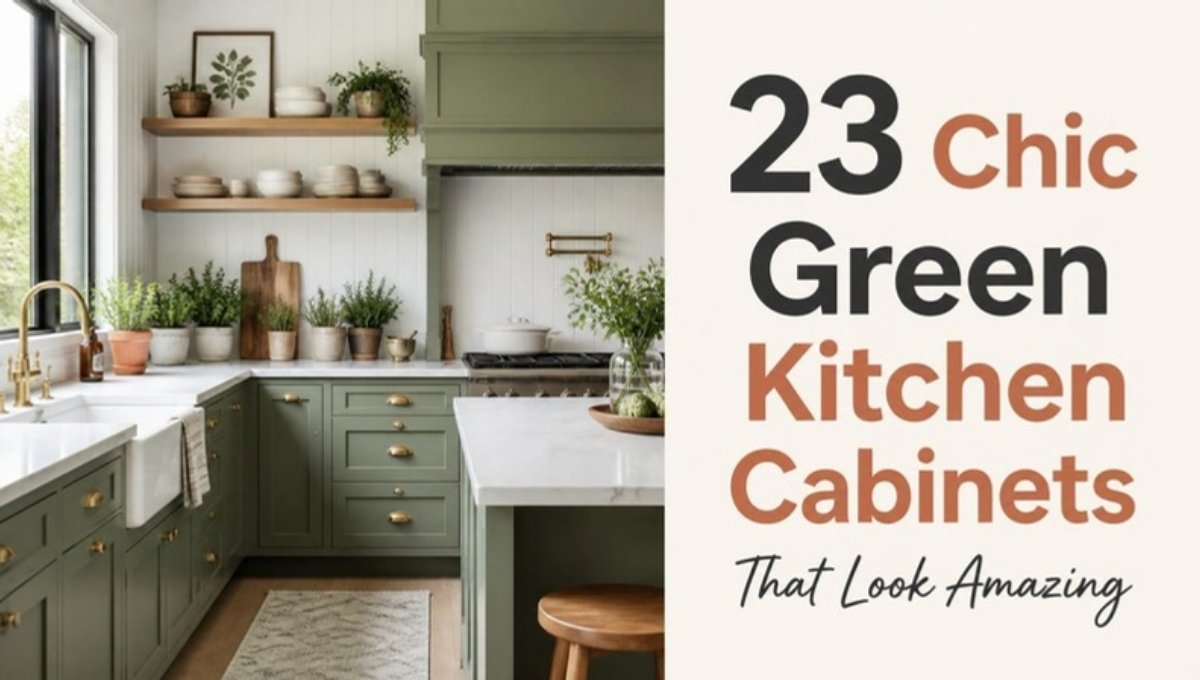
If you are looking for green kitchen cabinets that actually work in a real home, this guide is for you. Green has quietly become the most requested color in kitchen cabinetry, and it has staying power that most color trends lack. The reason is that green behaves like a neutral. It appears constantly in nature, it sits comfortably beside wood, stone, and every common metal finish, and it reads as calming rather than demanding. Whether you choose a barely-there sage or a deep forest, green cabinets bring warmth and personality to a kitchen without the risk that comes with brighter, more fashion-driven colors.
The challenge is choosing the right green, because the range is enormous and the undertone matters far more than the name on the paint tin. A green with a yellow base behaves completely differently from one with a blue or gray base, especially under kitchen lighting. Below are twenty-three green kitchen cabinet ideas covering specific shades, pairings, layouts, and finishing details, along with practical guidance on testing samples, choosing hardware, and combining green with countertops, backsplashes, and flooring so the finished kitchen looks genuinely chic.
1. Choose Sage for Soft, Everyday Calm
Sage is the most approachable green available and the reason so many people who were nervous about color end up loving it. Muted, gray-tinged, and gentle, it functions almost as a neutral while still giving the kitchen a clear identity. It suits both traditional Shaker doors and flat modern slabs, and it works in kitchens with limited natural light where deeper greens would feel heavy. Pair sage with cream walls, white or pale gray countertops, and warm brass hardware for a soft, timeless result.
2. Go Deep With Forest Green
Deep forest green delivers drama and richness while still reading as a natural color rather than a bold statement. It is particularly effective on lower cabinets or an island, where the depth grounds the room, and it makes brass hardware glow. In kitchens with generous natural light, a full run of forest green cabinetry looks confident and expensive. Balance it with light countertops, a pale backsplash, and warm wood flooring so the room stays bright and inviting. That is why it ranks among the most practical green kitchen cabinets in this guide.
3. Try Olive for Earthy Warmth
Olive sits between green and brown, which gives it a warmth that cooler greens lack. It reads as a genuine warm neutral from a distance and reveals its green character up close. Olive is exceptionally forgiving alongside natural stone, terracotta, and unlacquered brass, and it suits Mediterranean, rustic, and organic modern kitchens. Because the yellow undertone shifts noticeably under artificial light, test large samples in the evening as well as in daylight.
4. Pair Green Cabinets With Warm Brass
Brass and green is the defining combination of contemporary kitchen design, and it works because the warm metal balances green’s natural coolness. Brushed or satin brass hides fingerprints better than polished and looks more current. Use it consistently across cabinet pulls, the faucet, light fixtures, and any open shelf brackets. Unlacquered brass will develop a patina that darkens unevenly over time, which suits deeper greens beautifully if you enjoy an aged, lived-in look.
5. Use Green on Lower Cabinets Only
Placing green on base cabinets and keeping uppers white or cream is the lowest-risk way to introduce the color. The arrangement follows the natural logic of weight at the bottom and lightness above, which makes ceilings feel higher and rooms brighter. It also concentrates the color where cabinets take the most daily wear, and green hides scuffs better than pale paint. This two-tone approach suits small kitchens especially well. Of all the green kitchen cabinets here, this one offers some of the best value.
6. Paint Just the Island Green
A green island against neutral perimeter cabinetry gives you a strong focal point with minimal commitment. The island becomes the visual anchor of the room and defines the working core without dominating it. Choose a deeper green here, since the contained area can carry more saturation than a full run of cabinetry. Repeat green somewhere else in the room, perhaps in bar stools, a plant grouping, or a runner, so the island reads as part of a plan.
7. Combine Green With White Oak
White oak is the most flattering wood partner for green cabinetry. Its pale, slightly cool grain sits beautifully against both sage and forest tones, and the combination is the backbone of Scandinavian and organic modern kitchens. Use oak on open shelving, island end panels, a section of cabinetry, or the flooring. Keep the stain natural or very light so the wood stays bright and does not compete with the green for depth.
8. Add a White Marble Countertop
Light marble or marble-look quartz creates crisp contrast against green cabinetry and adds movement that keeps the scheme from feeling flat. Soft gray veining is the safest choice, working with both cool and warm greens, while warm cream veining pairs particularly well with olive and sage. Honed finishes look softer and more contemporary than polished, and they hide etching and water marks better in a working kitchen. It is a favorite among green kitchen cabinets because it works in so many homes.
9. Try Green With Butcher Block
Warm wood countertops against green cabinets produce one of the coziest kitchen combinations available. The pairing feels natural, unpretentious, and slightly rustic, and it suits cottage and farmhouse kitchens exceptionally well. Butcher block requires periodic oiling and does not love standing water, so many people use it on an island or a defined prep run while specifying stone at the sink. Choose walnut for depth or maple for brightness.
10. Use a Zellige Tile Backsplash
Handmade zellige in cream, white, or a soft green catches light unevenly across each tile, creating a shimmering surface with far more depth than machine-made tile. Against green cabinetry, the irregularity adds craft and character without introducing another color. Choose a grout tone close to the tile average so the natural variation reads as texture. Expect chips, waves, and glaze pooling, which are characteristic of the material rather than defects.
11. Go Tonal With a Green Backsplash
Pairing green cabinets with a backsplash in a related green produces a rich, immersive, tonal effect that feels distinctly designed. Vary the depth and the finish rather than the hue: deeper matte cabinets with a lighter glossy tile, for example. The reflective backsplash bounces light back into the room and prevents the tonal scheme from feeling flat. This approach works best in kitchens with good natural light or strong under-cabinet lighting. Keep it in mind as you shortlist green kitchen cabinets for your own space.
12. Choose Matte for Modern, Satin for Practical
Finish changes how green reads more than most people expect. Matte cabinetry absorbs light and produces a soft, contemporary, slightly velvety appearance that suits deeper greens beautifully. Satin reflects a little light, hides marks better, and cleans more easily, which matters enormously around a cooktop and sink. Many kitchens use satin on lower cabinets for durability and matte on uppers for effect, which is a sensible compromise.
13. Add Black Hardware for Crisp Contrast
Matte black hardware against green cabinets gives a cleaner, more graphic result than brass and suits contemporary and industrial kitchens particularly well. The dark pulls outline the cabinet geometry clearly and pair naturally with black window frames, black faucets, and dark pendant lighting. Black works with every green shade but is especially striking against mid-tone and sage cabinetry, where the contrast is clearest without becoming harsh. That is why it ranks among the most practical green kitchen cabinets in this guide.
14. Color-Drench Walls and Cabinets Together
Painting the walls, trim, and cabinetry in the same green removes the contrasting lines that break up a room and produces an enveloping, cohesive effect. Without visual interruptions, the space feels larger and more considered, which makes this surprisingly effective in small kitchens. Use different sheens for each surface, such as eggshell walls and satin cabinets, so the surfaces remain distinguishable up close while matching from across the room.
Read More Blogs on: decormellow.com
15. Test Undertones in Your Own Light
Green is more sensitive to lighting than almost any other cabinet color. A sage that looks perfect on a sample card can turn distinctly gray, blue, or yellow under your kitchen’s particular mix of daylight and bulbs. Paint large sample boards, at least A3 size, and move them around the room over several days, checking morning, afternoon, and evening. This step takes a week and prevents the single most common regret with green cabinetry.
16. Add Glass-Front Upper Cabinets
Breaking a run of green uppers with one or two glass-front doors adds depth and lightens the visual weight of the color. Fluted, reeded, or antique glass softens the view so the contents need not be perfectly arranged, making them far more livable than clear glass. Light the interiors so the cabinets glow rather than reading as dark holes. Paint the cabinet interiors in a contrasting cream for a beautiful layered effect. Of all the green kitchen cabinets here, this one offers some of the best value.
17. Use Green With Terracotta Accents
Terracotta and green sit opposite each other in warmth and complement each other perfectly. Clay pots, a terracotta tile floor, rust-toned textiles, or unglazed ceramics on open shelving all warm a green kitchen and give it a Mediterranean, sun-touched quality. Because most of these are accessories, they cost very little and can be adjusted seasonally, which makes them a low-risk way to fine-tune how warm the kitchen feels.
18. Choose Green Shaker for Classic Appeal
The Shaker door in green is arguably the safest chic kitchen combination available. The simple recessed panel is neither traditional nor modern, so it never dates, and green gives it warmth and character that plain white lacks. The recessed panel also creates a subtle shadow line that adds depth to the color. Pair with brass cup pulls and knobs for a classic result, or slim bar pulls for something more contemporary.
19. Add Light Flooring for Balance
Flooring is the largest continuous surface in the room and the easiest way to keep a green kitchen bright. Pale oak, warm limestone-look porcelain, or a light neutral tile bounce light upward onto the cabinetry and stop deeper greens from feeling heavy. Avoid very dark floors with dark green cabinets unless the room has abundant natural light. A mid-tone warm wood is the safest and most flattering option in the majority of kitchens. It is a favorite among green kitchen cabinets because it works in so many homes.
20. Pair Green With Soft Cream Walls
Cream and off-white walls flatter green far better than stark white, which can make green look cold and slightly harsh by contrast. A warm neutral wall gives the cabinetry space to breathe and makes the whole room feel softer. Choose a cream with a similar warmth to your green’s undertone so the two sit comfortably together. This pairing works with every shade of green from the palest sage to the deepest forest.
21. Try a Muted Eucalyptus or Sea Green
Between sage and forest sits a range of muted mid-tone greens with soft blue-gray undertones, often described as eucalyptus, sea, or smoke green. These shades are more distinctive than sage but far less committing than forest, which makes them an excellent middle path. They suit coastal and contemporary kitchens especially well, and they pair beautifully with both brass and polished nickel hardware and light stone countertops.
22. Add Plants to Echo the Palette
Living greenery reinforces a green kitchen in the most natural way possible. Herbs on a windowsill, a trailing pothos on an open shelf, or a potted olive tree in a corner introduce the irregular, vivid green of real foliage against the flatness of painted surfaces. The contrast makes both look better. Use simple terracotta or ceramic pots and place plants at several different heights around the room. Keep it in mind as you shortlist green kitchen cabinets for your own space.
23. Keep the Rest of the Palette Quiet
The most common mistake in a green kitchen is adding too much else. Once the cabinets carry a clear color, everything around them should support rather than compete: neutral countertops, a quiet backsplash, one metal finish, and a restrained floor. Let personality come from accessories and plants, which are easy to change. Restraint is what makes a colored kitchen look chic rather than busy, and it costs nothing to apply.
Final Thoughts on Green Kitchen Cabinets
Green kitchen cabinets work because green behaves like a neutral while still giving a room genuine character. Choose sage for soft everyday calm, olive for earthy warmth, or forest for depth and drama, and test large samples in your own light before committing. Pair the color with warm brass or crisp black hardware, light countertops, natural oak, and warm cream walls. Keep the rest of the palette quiet so the cabinetry stays the focus, and let plants and accessories add the finishing layer. Do that and you will have a kitchen that looks amazing on day one and still looks considered years later.
For more inspiration, explore our 26 Easy Kitchen Counter Decor Ideas and browse more home decor ideas.
Frequently Asked Questions About Green Kitchen Cabinets
What shade of green is best for kitchen cabinets?
Sage is the most versatile and forgiving, working in kitchens of any size and light level. Olive suits warm, earthy schemes, while deep forest green delivers drama and works best with good natural light. Always test large samples in your own kitchen before deciding, since green shifts noticeably under different lighting.
Are green kitchen cabinets a passing trend?
Green has been used in kitchens for well over a century and behaves as a natural neutral rather than a fashion color. Muted shades such as sage, olive, and forest have proven particularly durable. Very bright or highly saturated greens carry more trend risk than muted, natural-toned ones.
What countertop goes with green cabinets?
White or light gray marble and marble-look quartz create crisp contrast and suit every green shade. Butcher block adds warmth and works especially well with sage and olive. Soapstone and honed black granite pair beautifully with deeper forest greens for a rich, moody result.
What hardware looks best on green cabinets?
Brushed or satin brass is the most popular pairing and adds warmth that balances green’s coolness. Matte black gives a crisper, more contemporary look, while aged bronze suits olive and darker greens. Polished nickel works well with cooler, blue-toned greens such as eucalyptus.
Do green cabinets work in a small kitchen?
Yes. Use a lighter shade such as sage, or place green on lower cabinets only with light uppers. Maximize natural light, add strong under-cabinet lighting, and keep the countertop and backsplash pale. Color-drenching walls and cabinets in the same soft green can also make a small kitchen feel larger.
What wall color goes with green kitchen cabinets?
Warm cream and off-white flatter green best, giving it space without the harshness of stark white. Soft greige and pale warm gray also work well. For a bolder look, painting walls in the same green as the cabinets creates an enveloping, cohesive effect that suits both small and well-lit kitchens.




Leave a comment