


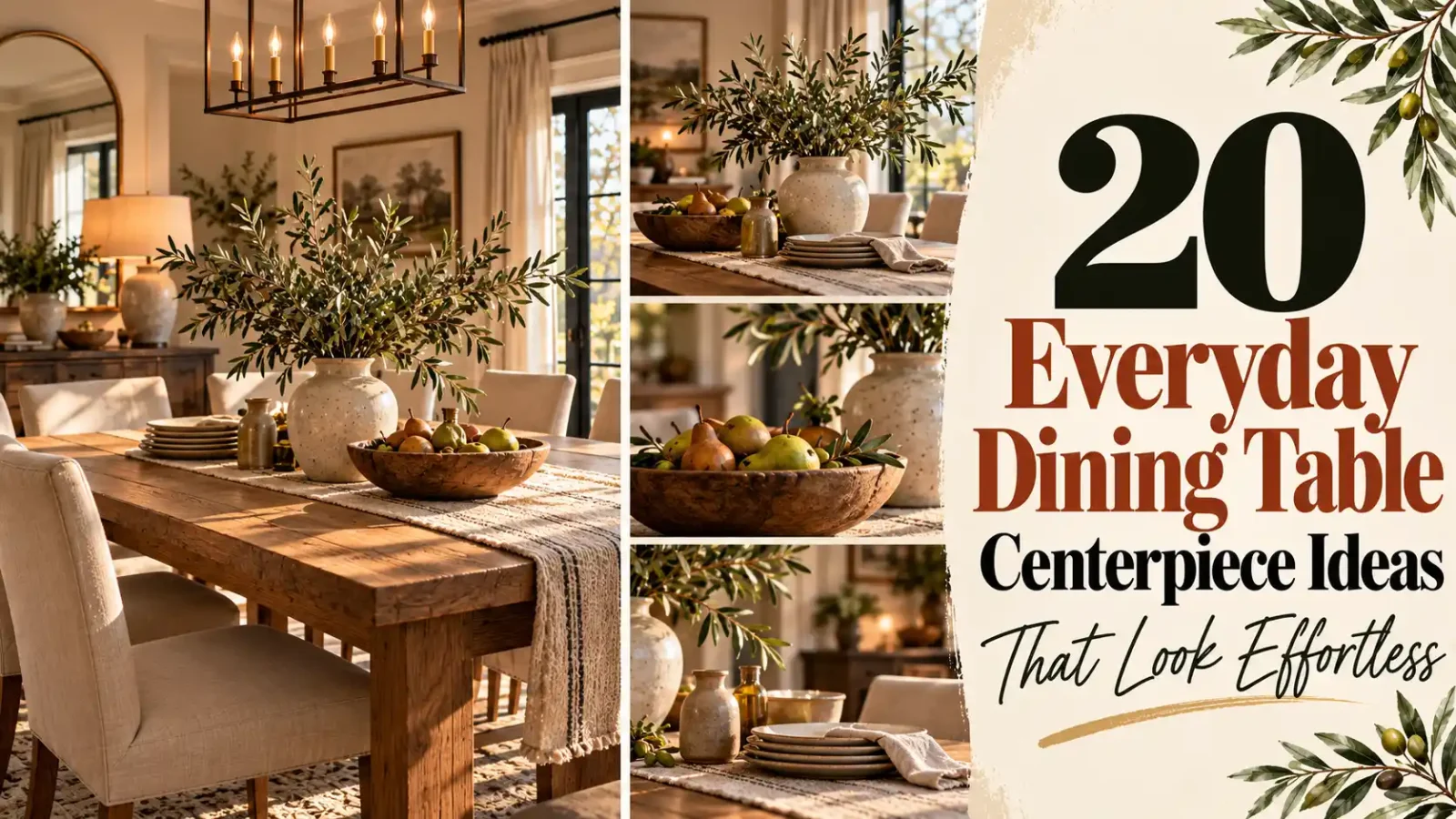
A dining table rarely stays empty for long. It holds homework, mail, coffee cups and weekend projects, which is exactly why a simple centerpiece helps. It gives the table a sense of purpose, makes the room look finished and encourages everyone to keep the surface clear. The best part is that an everyday centerpiece does not have to be fancy or expensive.
These 20 dining table centerpiece ideas are easy to maintain, work in any season and fit round, square and rectangular tables. For holiday versions, see our thanksgiving tablescapes ideas, and for the wider room, browse these dining room decor ideas.
Everyday centerpieces work best when they are:
- Low enough to see across, usually under 12 inches, or tall and slim.
- Easy to move when you need the table for meals.
- Scaled to the table: about one-third of its length.
- Built on a tray or runner so pieces stay grouped.
1. A Large Wooden Bowl
A large wooden bowl is one of the easiest ways to anchor a dining table without fussing over complicated arrangements. Its warm grain and organic curves soften the hard lines of the tabletop, and the low profile keeps sightlines open so conversation flows easily from one end to the other. You can leave the bowl empty as a quiet sculptural statement or fill it with seasonal accents — pinecones and cedar sprigs in winter, lemons or artichokes in summer — and it always looks intentional. Because turned wood suits farmhouse, coastal, and modern rooms alike, this single piece works in nearly any American dining room.
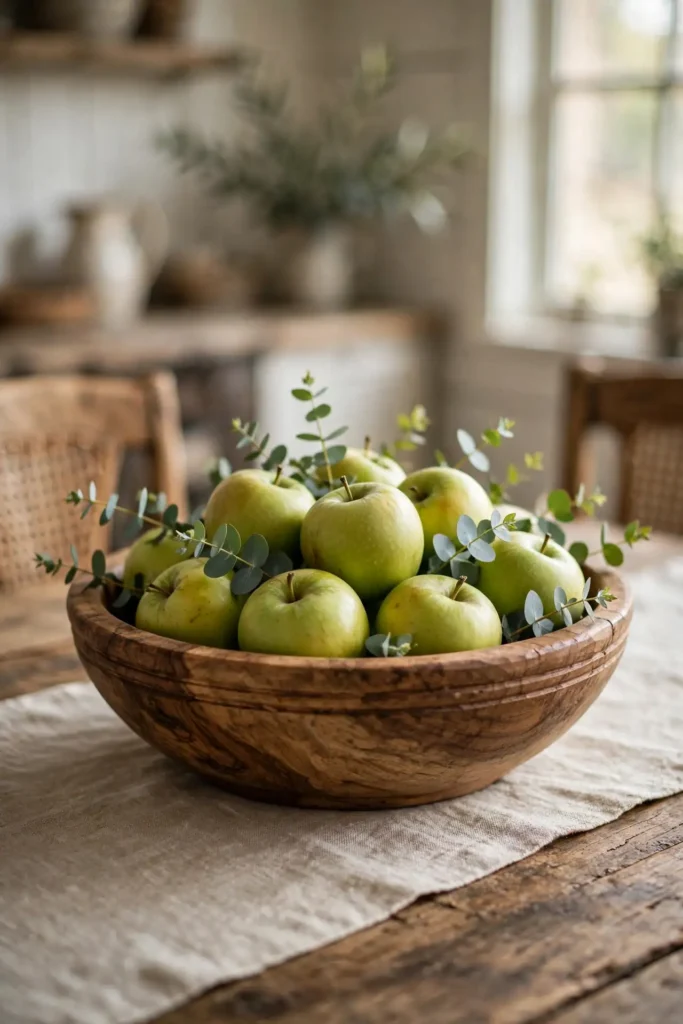
Shop for a bowl that measures 12 to 16 inches wide and under 8 inches tall, which fills the center without crowding plates. Target and HomeGoods carry acacia and mango-wood bowls for about $25 to $60, while Pottery Barn and World Market offer hand-carved designs between $70 and $130. Set a felt pad underneath to prevent scratches, then rotate the contents with the seasons for a fresh look at no extra cost. Wipe the bowl with a dry cloth after use, and let this simple piece do the quiet work of making your table feel complete.
2. A Vase of Fresh Branches
Nothing lifts a dining room quite like a vase of fresh branches. Tall, airy stems — dogwood blossoms in spring, eucalyptus in summer, bare quince in winter — add height and movement without the cost of a full flower arrangement. Because the look is deliberately loose and unfussy, it flatters both modern tables and traditional ones, and a single dramatic bundle can hold a room for two or three weeks. You can clip branches from your own yard for free or pick up bundles at Trader Joe’s for under $10, making this one of the most budget-friendly centerpiece ideas around.
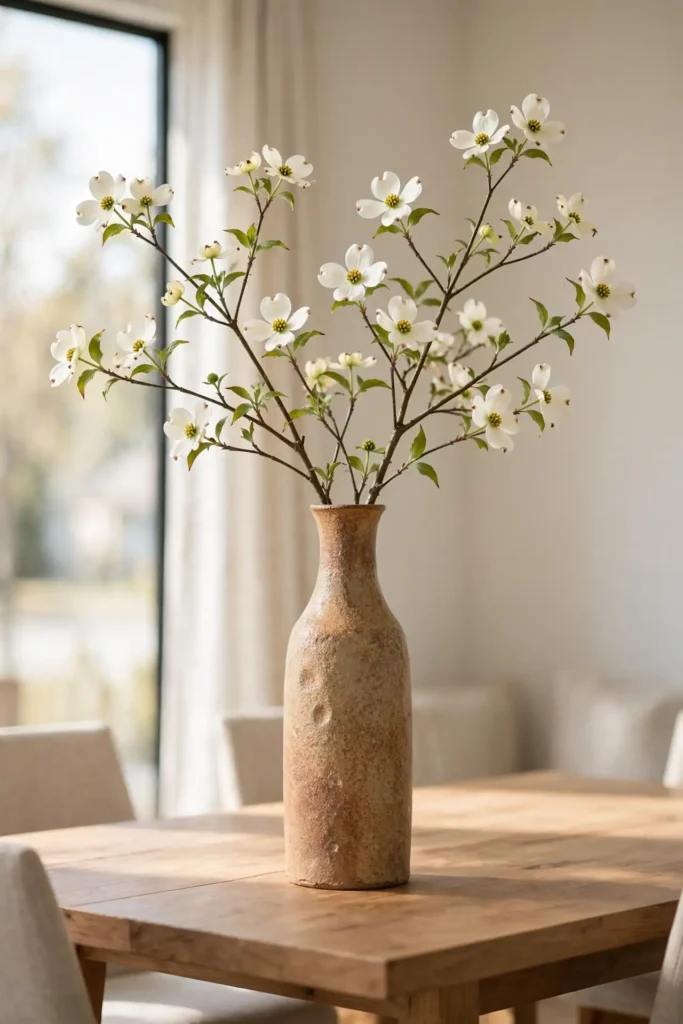
Pick a vase with some heft — ceramic or thick glass — so tall branches cannot tip it over, and aim for a total height of 24 to 32 inches for standard 8-foot ceilings. Target’s Studio McGee line and HomeGoods stock handsome ceramic vases from $20 to $50, while Crate & Barrel’s oversized styles run $80 to $150. Cut stems at an angle and change the water weekly to keep branches fresh, and strip any leaves below the waterline to slow bacteria. When the season shifts, swap the branches rather than the vase for an instant, nearly free refresh.
3. A Trio of Candlesticks
A trio of candlesticks brings instant rhythm to a dining table. Grouped at staggered heights, the tapers draw the eye down the center of the table the way a runner does, but with a glow and warmth that flat decor cannot match. This classic centerpiece works for everyday dinners and scales up beautifully for holidays — you simply tuck greenery around the bases. Mixed finishes like brass, black metal, and glass keep the look current rather than stuffy, and because the cluster sits narrow, it leaves plenty of room for serving dishes on both sides.
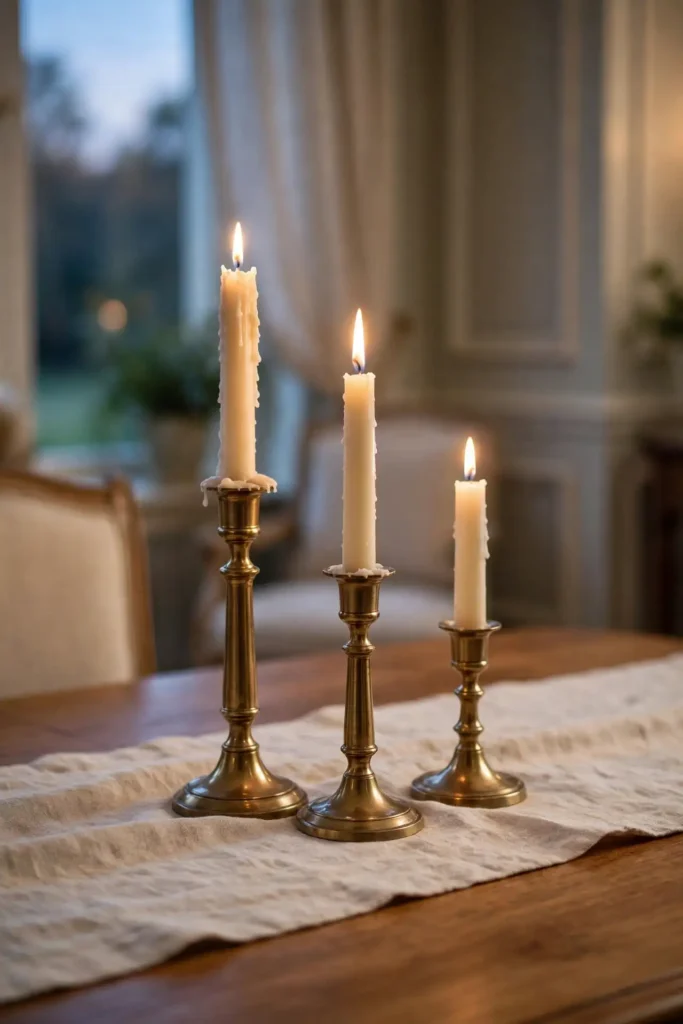
Choose candlesticks in three heights — roughly 6, 9, and 12 inches — and cluster them within a 12-inch footprint so the group reads as one arrangement. Amazon sells sets of three brass or matte-black holders for $25 to $45, while Pottery Barn and Crate & Barrel offer individual artisan styles from $20 to $60 each. Use dripless tapers to protect your tablecloth, and trim wicks to a quarter inch before lighting. Never leave candles burning unattended, and keep flames at least 12 inches from anything flammable for safe, cozy dinners.
4. A Low Floral Arrangement
A low floral arrangement is the classic centerpiece for a reason: it brings color, fragrance, and life to the table without ever blocking a face. Keeping blooms under 12 inches high means guests can talk across the table comfortably, which matters more than any single flower choice. Loose, garden-style mixes of roses, ranunculus, and filler greens feel effortlessly elegant, while a single-variety bunch — all white tulips, say — looks crisp and modern. Fresh flowers also signal that the table is cared for, which quietly sets the tone for the whole meal.

Build the arrangement in a low, wide vessel — a footed bowl or shallow ceramic dish works best — and trim stems so nothing rises more than a few inches above the rim. Grocery-store bunches from Kroger, Trader Joe’s, or Costco cost $5 to $20 and last a week with fresh water every two days. For a longer-lasting option, faux peonies and hydrangeas from Michaels or Afloral run $30 to $80 and look convincing at table distance. Change the water and recut stems every other day, and compost spent blooms to keep the routine sustainable.
5. A Wooden Dough Bowl
A wooden dough bowl — the long, hand-carved trough once used for bread-making — brings instant farmhouse character to a dining table. Its elongated shape suits rectangular tables perfectly, filling the center line without jutting into anyone’s place setting. Fill it with moss balls, pinecones, or a row of pillar candles and it becomes a ready-made vignette; leave it empty and the raw, rustic texture still reads as intentional styling. Because no two hand-carved bowls are exactly alike, this centerpiece adds the one-of-a-kind charm that mass-produced decor often misses entirely.

Look for dough bowls about 24 to 36 inches long and no more than 6 inches deep, which proportions well on standard 72-inch tables. Antique malls and Etsy sellers list genuine vintage bowls for $40 to $120, while HomeGoods and Hobby Lobby carry reproductions for $25 to $55. Line the bowl with a linen cloth before adding anything damp, since raw wood stains easily. Dust the bowl regularly and rub in a little food-safe mineral oil once a year to keep the wood from drying out, cracking, or losing its rich patina.
6. A Tray With Styled Objects
A tray with styled objects is the decorator’s secret for a centerpiece that always looks pulled together. The tray acts as a visual frame, turning a candle, a small plant, and a stack of coasters into one deliberate arrangement instead of random clutter. It also makes practical life easier: when you need the table for a big dinner or homework session, you lift the whole tray and the centerpiece moves in one trip. Rectangular wooden, rattan, or mirrored trays suit most dining rooms, and the contained footprint keeps everyday essentials — salt, napkins, a bud vase — within easy reach.
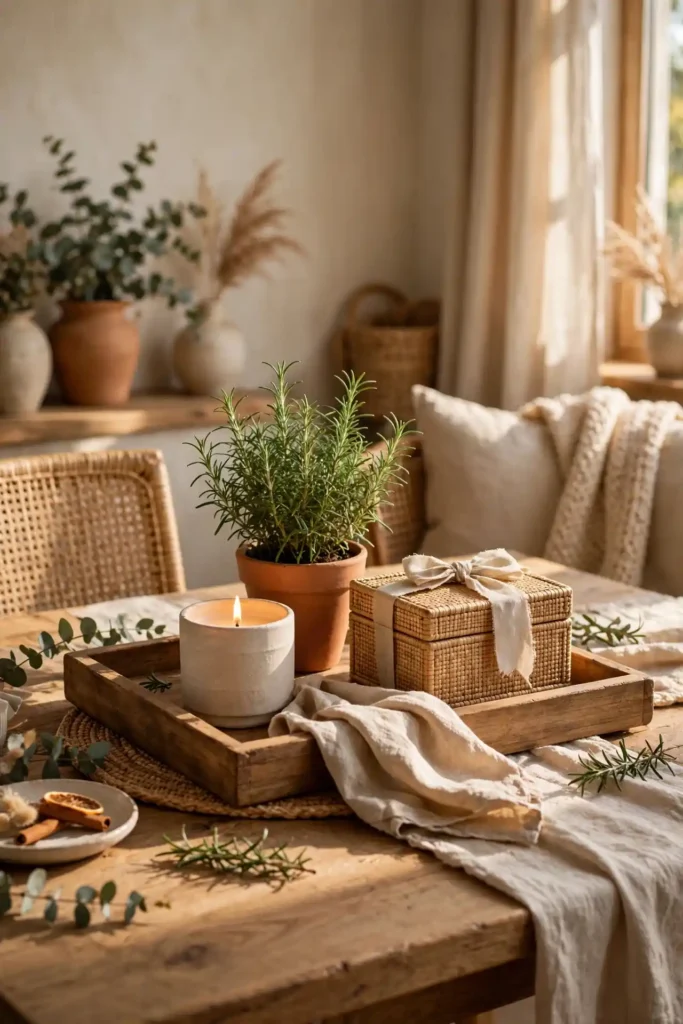
Start with a tray 18 to 24 inches long, then layer three to five objects of varying heights: a candle, a small potted herb, a decorative box, and perhaps a short stack of colorful coffee-table books. Target, Wayfair, and HomeGoods sell handsome trays from $20 to $55, with round rattan styles trending under $40. Follow the rule of odd numbers and mix materials — wood, glass, greenery — for a collected feel. Wipe the tray weekly, and refresh one object each season so the arrangement stays interesting without a full redo.
7. A Potted Plant
A potted plant is the lowest-maintenance centerpiece you can put on a dining table, and it pays you back with living greenery year-round. Unlike cut flowers, a healthy plant never wilts before the weekend, and its leaves add softness and color that balance the hard surfaces of wood and glass. Small, sculptural plants — a fiddle-leaf fig starter, a trailing pothos, or a compact olive tree — bring life without overwhelming the table. You also get a subtle air-quality boost, and guests always seem to relax a little more around something growing.
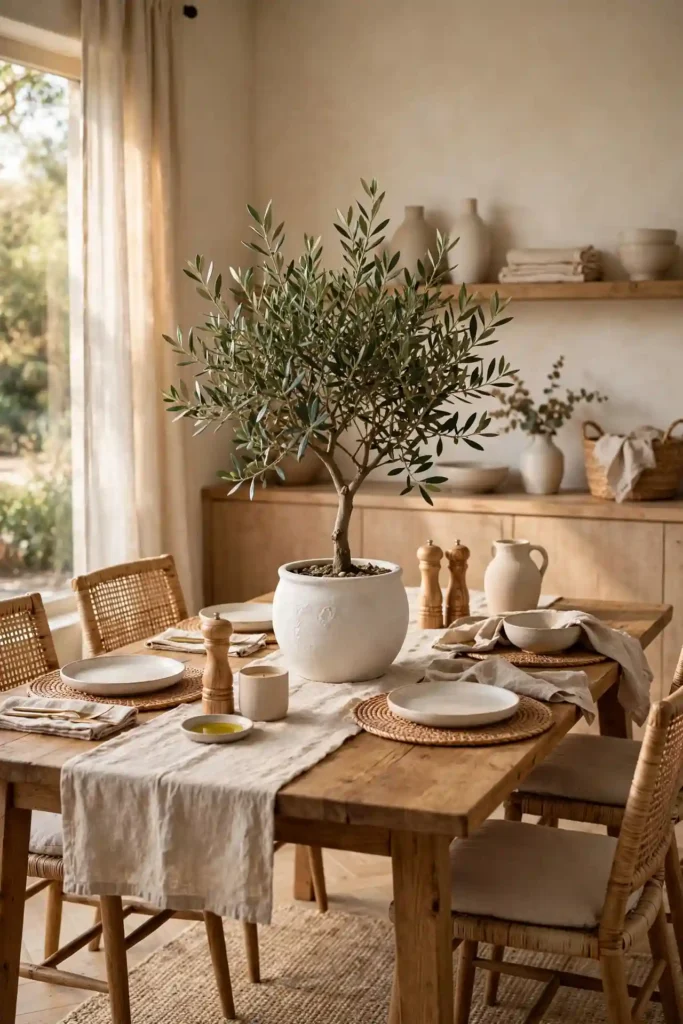
Choose a plant that stays under 18 inches tall in a pot 6 to 8 inches wide, so it reads as a centerpiece rather than a houseplant parked on the table. Home Depot, Lowe’s, and local nurseries sell table-ready plants for $15 to $40, with decorative ceramic pots at Target and IKEA running $10 to $30. Set the pot on a cork mat or saucer to protect the finish from water rings, and rotate the plant weekly for even growth. Water only when the top inch of soil feels dry, and wipe the leaves monthly so they stay glossy.
8. A Bowl of Seasonal Fruit
A bowl of seasonal fruit is the centerpiece that doubles as a snack. Piled high with lemons, apples, pomegranates, or figs, it brings natural color and a sense of abundance that no artificial decor can fake. Because the contents change with the seasons, the table always looks current without any extra effort — citrus glows in winter, stone fruit shines in summer. Fruit also invites interaction: guests reach for a clementine or an apple, which makes the table feel welcoming rather than precious. It is an old-fashioned idea that still feels completely fresh.

Use a wide, shallow bowl 12 to 14 inches across and layer fruit in a loose pyramid, mixing colors and sizes for a natural look. Grocery stores and farmers markets supply the produce for $8 to $20 per fill, and a ceramic or wooden bowl from Target or Crate & Barrel costs $25 to $70. Wash fruit before arranging it, and eat or replace pieces as they soften so the display always looks appetizing. Line the bowl with a cloth napkin to catch moisture, and refrigerate anything cut — this centerpiece works hardest when it stays edible.
9. A Cluster of Bud Vases
A cluster of bud vases gives you the charm of fresh flowers in miniature. Instead of one big arrangement, three to seven small vases — each holding a single stem or a tiny sprig — create a scattered, garden-party feel down the center of the table. The beauty is in the mix: vary the heights, shapes, and glass tones, and even grocery-store carnations look artful when each stem gets its own stage. Because each vase is small, the cluster stays low enough for easy conversation, and you can rearrange the whole group in seconds.
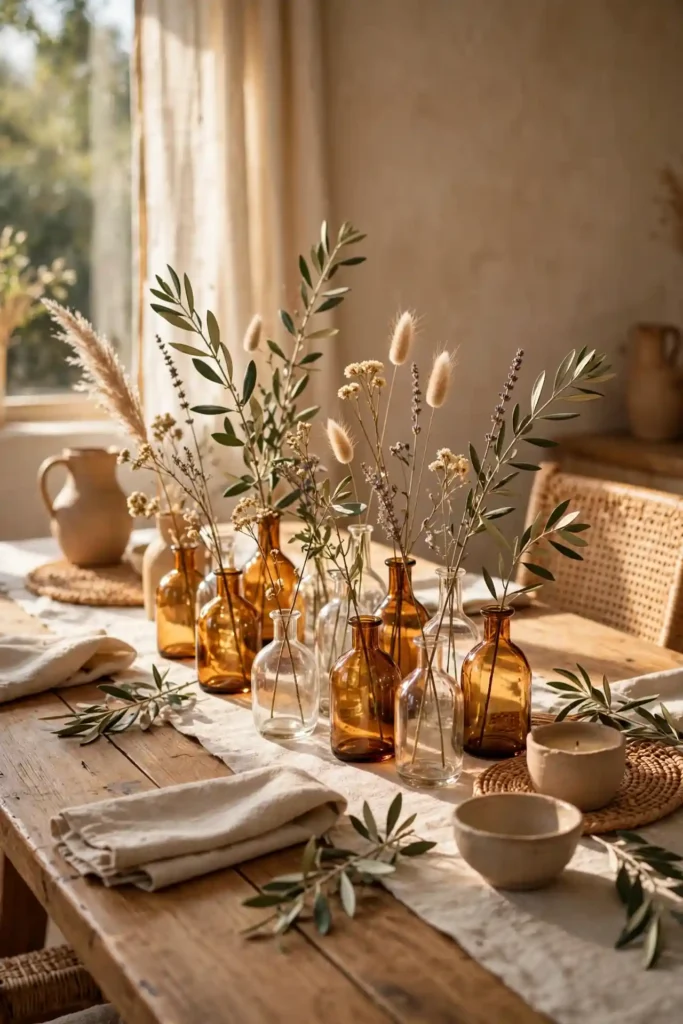
Gather bud vases between 4 and 8 inches tall in amber, clear, and milk glass for a collected look. Amazon and Target sell sets of six to twelve for $15 to $35, while Anthropologie and Etsy offer handblown singles from $12 to $28 each. Fill each vase with one stem — a rosebud, a sprig of eucalyptus, a wildflower — and change the water every two days. Arrange the vases in a loose S-curve or a tight triangle, and add one fresh stem to each before guests arrive so the cluster looks full and lively.
10. A Ceramic Sculpture
A ceramic sculpture turns your dining table into a small gallery. An abstract form, a hand-thrown vessel, or a modern bust adds an artistic focal point that needs no arranging, no watering, and no seasonal swapping. Sculptural ceramics work especially well in minimalist dining rooms, where one strong shape carries the whole table. The matte glazes and organic curves catch light beautifully, and because the piece never changes, it becomes a signature — the thing guests remember about your dining room long after dinner ends. Choose a form you love looking at daily, since this piece will greet you at every meal for years.
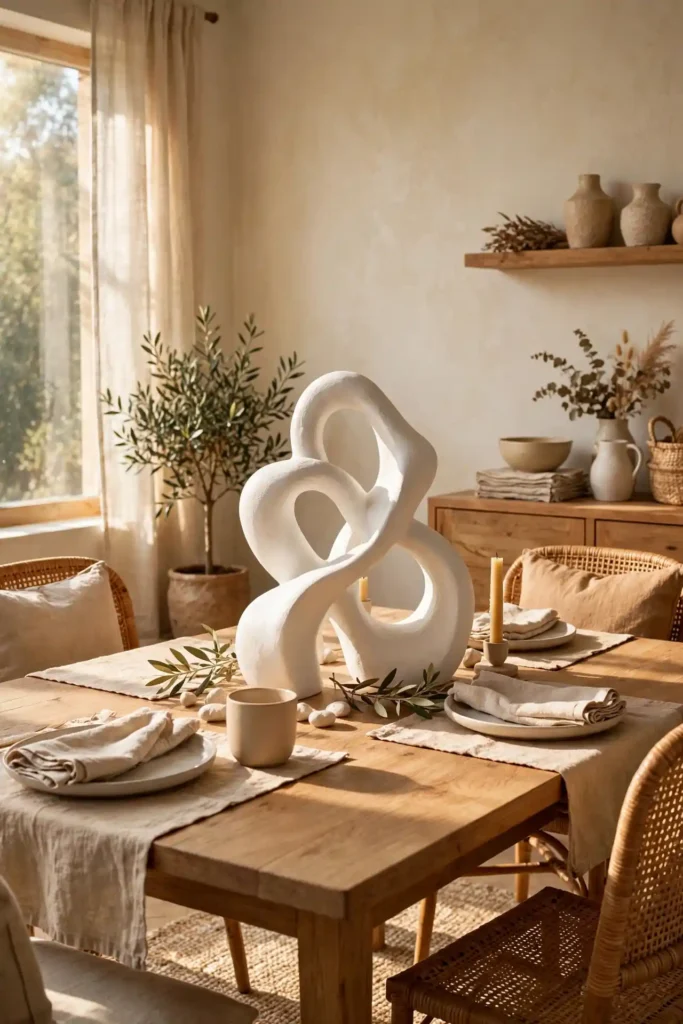
Choose a piece 10 to 16 inches tall with a stable base, sized to roughly one-third of the table’s width. Etsy, West Elm, and Crate & Barrel sell studio-pottery sculptures from $40 to $150, while HomeGoods often stocks striking pieces under $35. Place the sculpture slightly off-center on a runner or a stack of art books for a curated feel. Dust it with a soft cloth, keep it away from the table’s edge where elbows fly, and let this single object prove that one perfect thing beats a dozen small ones.
11. Glass Hurricanes With Candles
Glass hurricanes with candles bring a soft, flickering glow that instantly makes a dining room feel like a special occasion. The tall glass shields the flame from drafts, so the light stays steady even when the patio door is open, and the reflections dancing across the table multiply the warmth. A single oversized hurricane makes a bold statement; a pair or trio at staggered heights creates a glowing runway down a long table. They suit every style from coastal to traditional, and they transition effortlessly from weeknight dinners to holiday feasts.
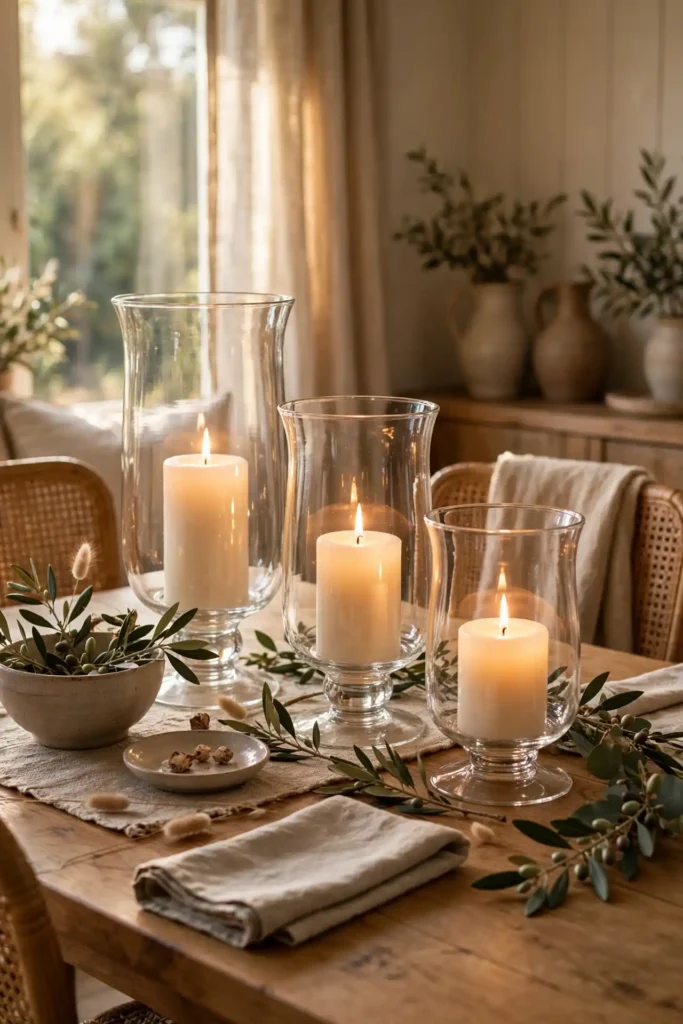
Pick hurricanes 10 to 16 inches tall and pair them with pillar candles that leave at least 2 inches of clearance below the rim. Pottery Barn, Crate & Barrel, and Wayfair sell hurricanes from $25 to $70 each, with budget-friendly sets at Target and IKEA under $40. Fill the base with sand, pebbles, or seasonal filler to anchor the candle, and trim wicks to a quarter inch for a clean burn. Always extinguish flames before leaving the room, and let the glass cool completely before handling it. Wipe fingerprints from the glass with a microfiber cloth so the glow stays crystal clear.
12. A Table Runner With a Single Vase
A table runner with a single vase is minimalism at its most elegant. The runner defines a clean center line down the table, and one well-chosen vase — holding a few stems or even standing empty — becomes a quiet exclamation point. This pairing works beautifully on tables with gorgeous wood grain, because it frames the table itself rather than covering it up. Linen runners in natural tones feel relaxed and timeless, while a patterned runner can carry the room’s color story. It is the kind of centerpiece that looks effortless because it genuinely is.
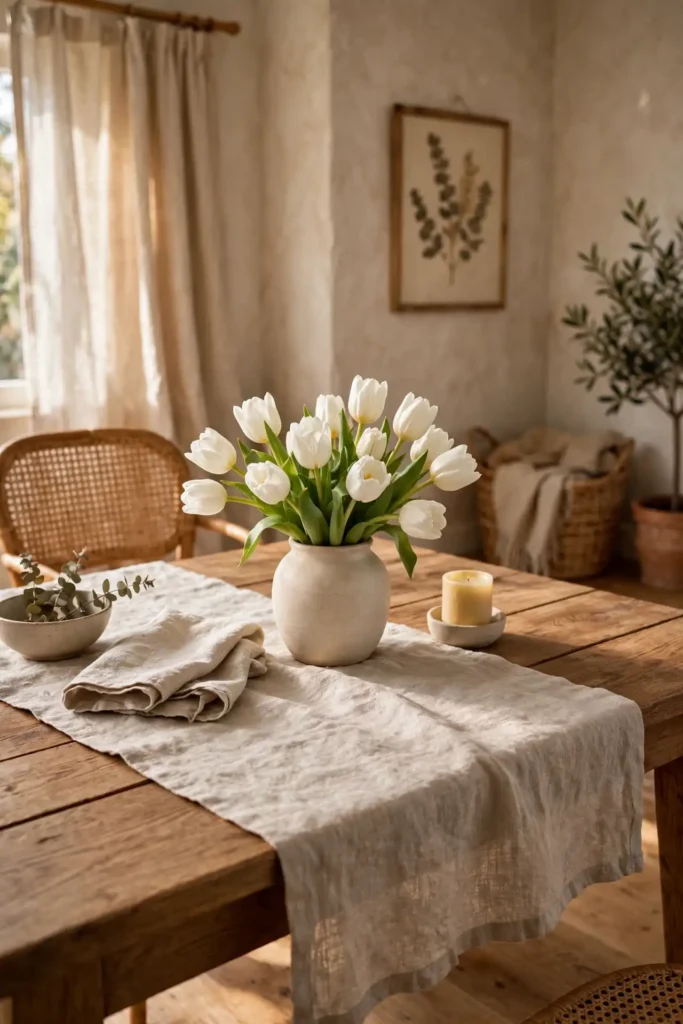
Choose a runner that hangs 6 to 12 inches over each end of the table, and center one vase 8 to 14 inches tall on it. Target, Pottery Barn, and Etsy sell linen and cotton runners for $20 to $60, with vases adding another $20 to $50. Iron or steam the runner before laying it flat, and anchor the vase with a small piece of museum putty if your table sees lively family dinners. Swap the stems weekly — or leave the vase empty as sculpture — and this two-piece formula will carry your table through every season.
13. Moss and Stone Arrangement
A moss and stone arrangement brings the calm of a Japanese garden to your dining table. Mounds of green moss tucked around smooth river stones create a miniature landscape that feels serene and sculptural at once. Unlike flowers, moss needs no arranging skill — you simply nestle the pieces together — and the result looks artful from every seat. This centerpiece suits modern and organic-style dining rooms especially well, and its cool greens and grays pair beautifully with both light oak and dark walnut tables. It also stays perfectly still and silent, which makes it ideal for tables where conversation is the main event.
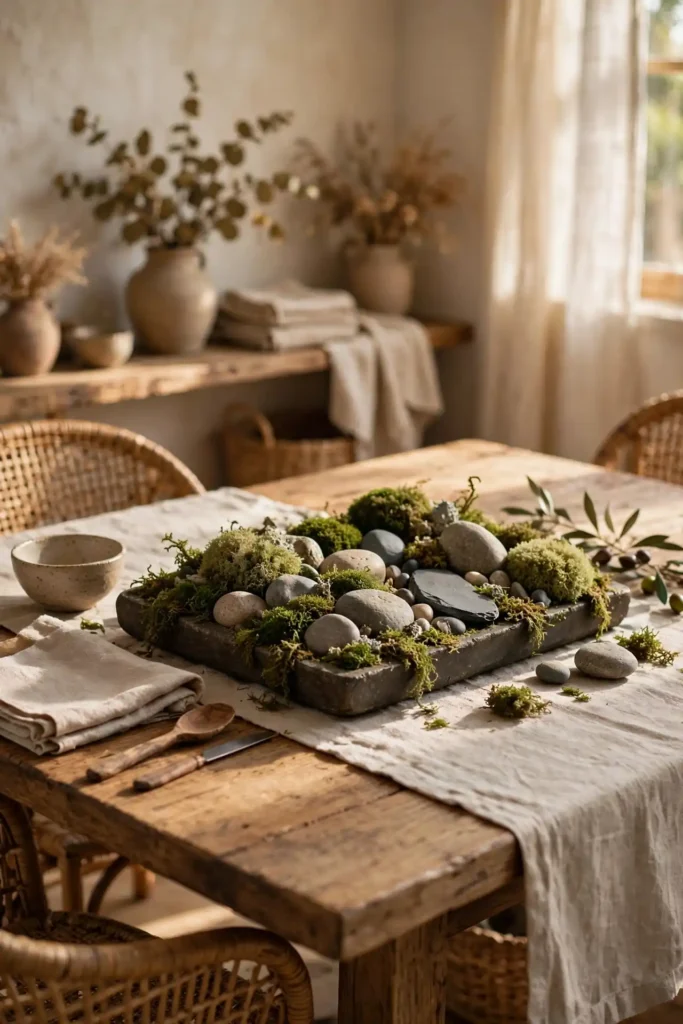
Build the arrangement in a shallow tray or low ceramic bowl, layering preserved moss over floral foam and nestling in river stones of mixed sizes. Craft stores like Michaels sell preserved-moss bags for $8 to $15 and stone assortments for $6 to $12, so a full arrangement costs under $40. Mist preserved moss lightly every few weeks to keep its color, and keep the display out of direct sun, which fades the green. Because nothing here wilts, this is one centerpiece you can style once and enjoy for years without spending another dollar.
14. Dried Floral Bouquet
A dried floral bouquet gives you everlasting flowers with zero maintenance. Pampas grass, dried lavender, wheat stalks, and preserved eucalyptus bring texture and movement that fresh blooms cannot match, and they never droop before dessert. The muted, earthy palette suits modern farmhouse and bohemian dining rooms, and the tall, wispy silhouettes add drama without blocking views — most dried stems are airy enough to see through. It is also a wonderfully sustainable choice, since one bouquet can last a year or more. You can refresh the look each season by swapping a few stems instead of replacing the whole bouquet.
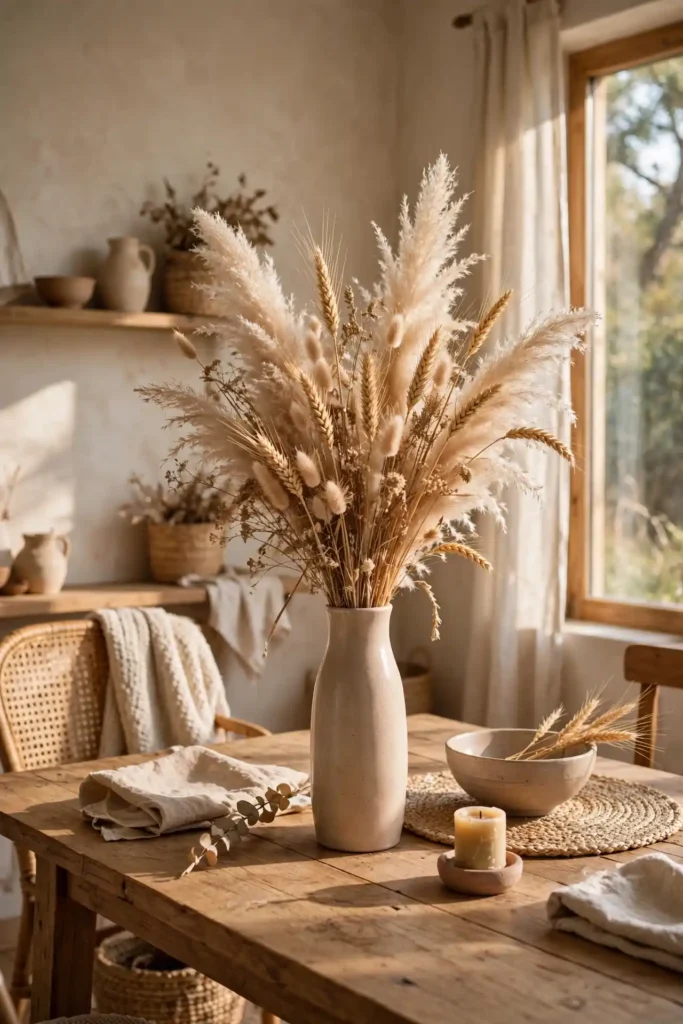
Arrange the stems in a tall, sturdy vase 16 to 24 inches high, letting plumes rise 30 to 40 inches total for a dramatic but see-through effect. Amazon and Etsy sell dried bouquets for $20 to $50, with pampas-grass bundles under $25. Keep dried flowers away from open flames and out of humid rooms, which can cause shedding. Shake stems gently outdoors every few months to remove dust, and trim or replace any pieces that look tired — with dried florals, refreshing the look costs almost nothing. Store spare stems in a tall paper bag in a dry closet so replacements are always on hand.
15. Stacked Books With a Vase
Stacked books with a vase turn your dining table into a conversation piece in the most literal sense. A short pile of beautiful coffee-table books — cookbooks, travel photography, art monographs — adds height, color, and personality, while a small vase or candle on top finishes the vignette. This centerpiece tells guests something about you before anyone sits down, and it works in every style from classic to eclectic. Because you probably own the books already, it is also one of the cheapest centerpiece ideas on this list — and one of the most personal.
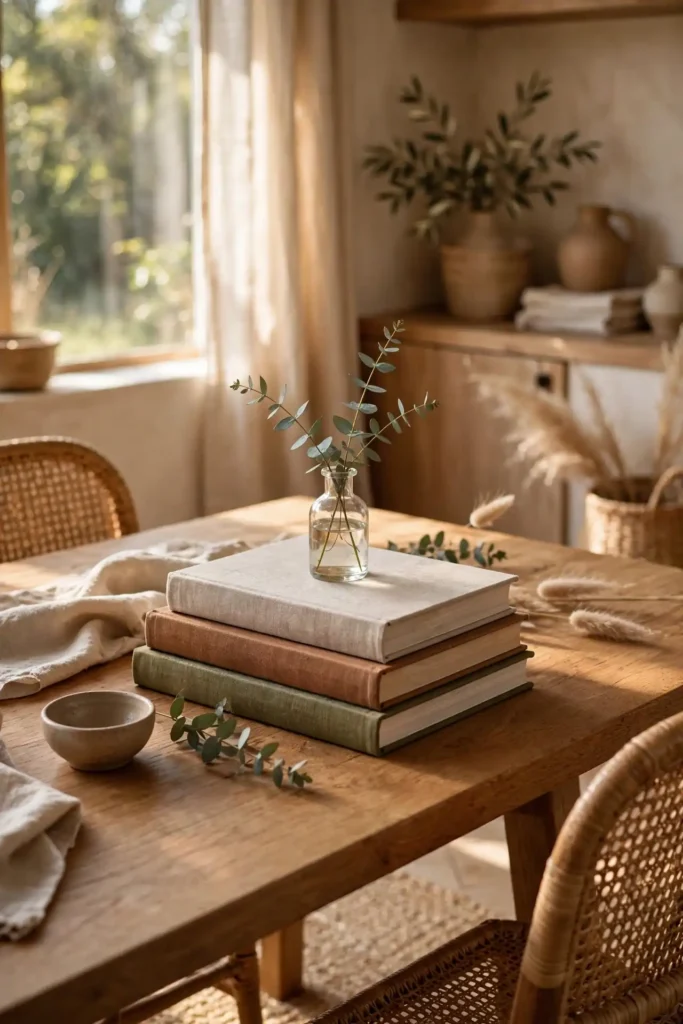
Stack three to five books with the largest on the bottom, keeping the total height under 10 inches so sightlines stay clear. Top the stack with a bud vase, a small succulent, or a candle, and align the pile near the table’s center. Thrift stores and used bookshops sell handsome coffee-table books for $5 to $15 each, or simply shop your own shelves. Dust the jackets regularly, and rotate the top book seasonally — a garden book in spring, a baking book in December — for a centerpiece that always feels current.
16. A Cake Stand Display
A cake stand display adds instant height and a touch of occasion to your dining table. Elevating fruit, pastries, or even a small plant on a pedestal turns everyday items into a styled moment, and the raised profile draws the eye without the bulk of a tall arrangement. Glass stands feel light and classic, marble reads luxurious, and wooden pedestals lean farmhouse. Because the display is inherently edible or changeable, it invites guests to linger — and it gives you a beautiful reason to bake on the weekends and share something homemade.
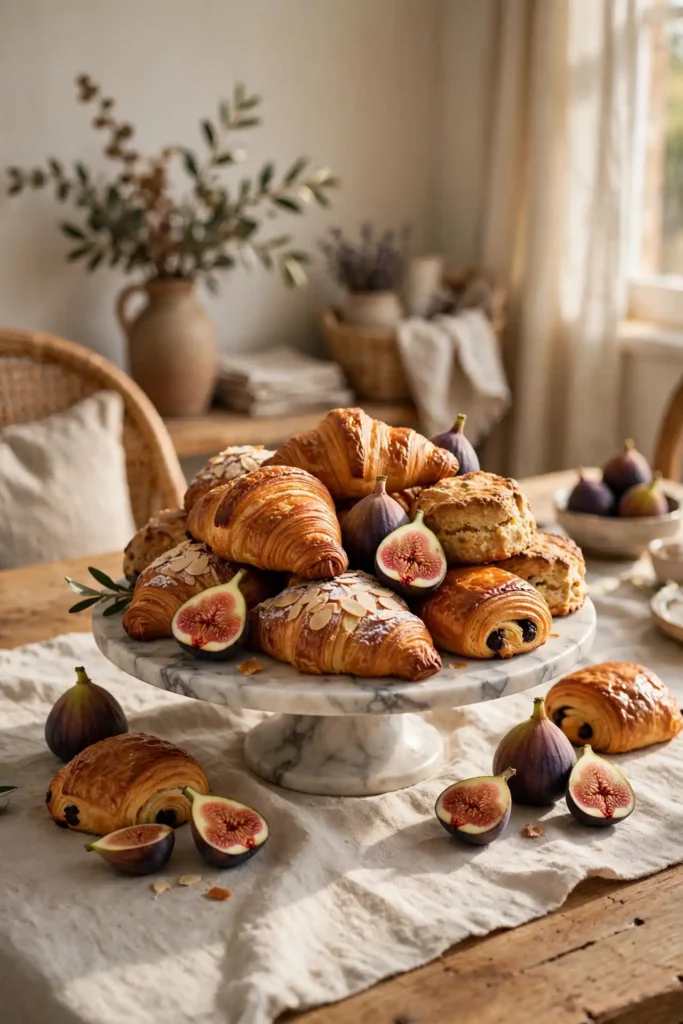
Choose a stand 10 to 13 inches in diameter with a foot 4 to 6 inches tall, which proportions well on most dining tables. Target, Walmart, and HomeGoods sell glass and ceramic stands for $15 to $40, while marble and wood designs at Crate & Barrel run $50 to $100. Style the top with a loose pile of fruit, a stack of muffins, or a trio of small pumpkins in fall. Wash the stand after each use, and keep heavier items centered so the display stays stable through the meal.
17. Seasonal Greenery Swag
A seasonal greenery swag drapes your dining table in living texture. Laid down the center like a garland — cedar and pine in winter, eucalyptus and olive branches in spring — it creates a lush, organic runner that no fabric can imitate. The low, sprawling profile keeps every face visible, and the fragrance of fresh greenery fills the room before a single dish arrives. This is the centerpiece that makes holiday dinners feel magical, yet it works just as well for an ordinary Tuesday when you want the table to feel special.
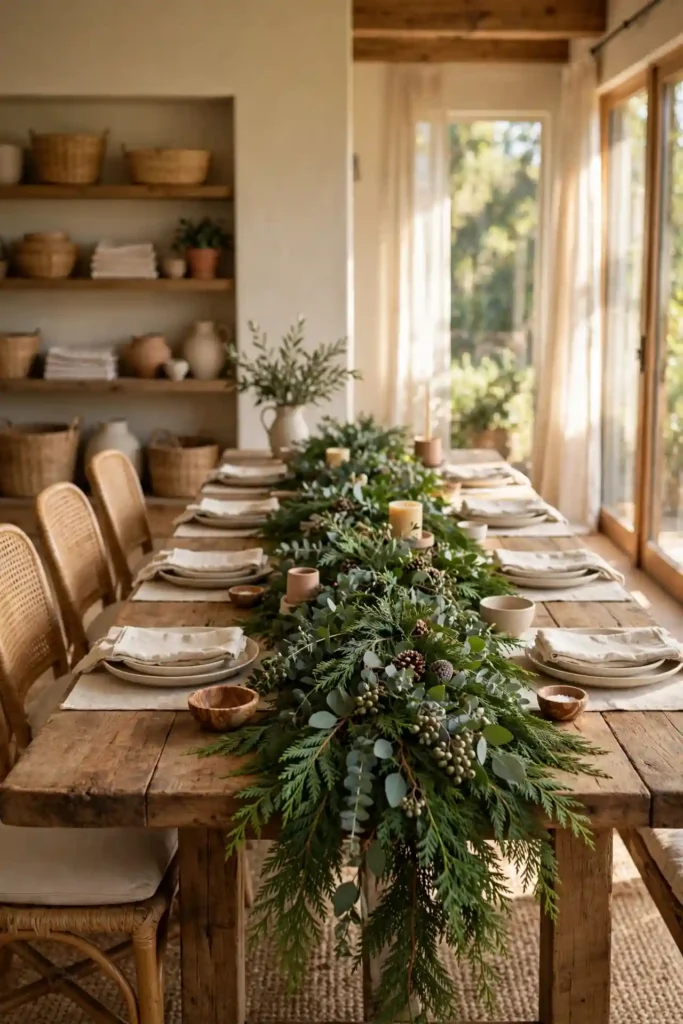
Build the swag on a 6- to 8-foot base of fresh garland from Trader Joe’s, Costco, or a local nursery — typically $15 to $35 — then tuck in extra sprigs, pinecones, or ornaments for fullness. Lay it straight down a rectangular table or in a loose curve on a round one, keeping the width under 12 inches so plates fit comfortably. Mist fresh greenery every couple of days, and compost it when it dries out. For a zero-maintenance version, faux garlands from Michaels or Balsam Hill cost $40 to $120 and last for years.
18. Glass Bottles With Stems
Glass bottles with stems are the ultimate upcycled centerpiece. A row of amber apothecary bottles, green wine bottles, or clear milk bottles — each holding a single stem — creates a charming, collected look that costs almost nothing. The varied heights and glass tones catch the light beautifully, and the casual arrangement suits farmhouse, cottage, and eclectic dining rooms. Because each bottle stands separate, you can spread them down a long table or cluster them tight on a round one, making this one of the most flexible ideas here for hosts who like to rearrange often.
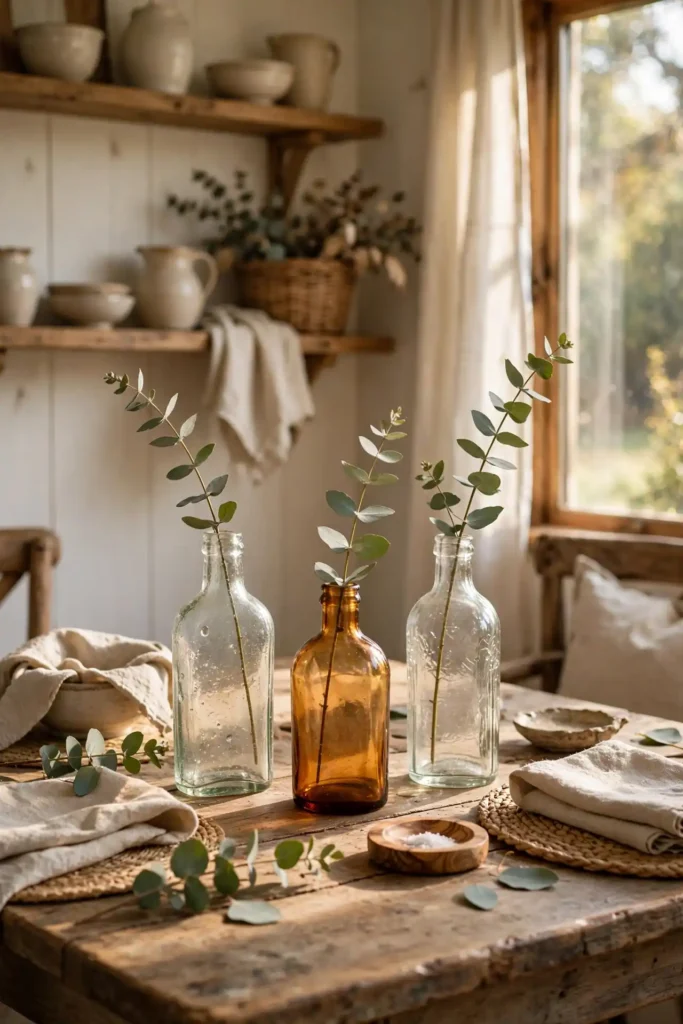
Collect bottles 6 to 12 inches tall and arrange five to nine of them in a loose line or cluster, each with one stem of eucalyptus, a wildflower, or a bare branch. Thrift stores sell vintage bottles for $1 to $5 each, and Amazon offers sets of colored glass bottles for $15 to $30. Clean bottles thoroughly before first use, and change the water every two to three days. Group similar tones together for a curated feel, or mix colors freely — with this centerpiece, there is genuinely no wrong way to arrange them.
19. A Lantern
A lantern brings a cozy, collected glow to the dining table with almost no styling effort. Whether it is black metal, weathered wood, or woven rattan, the lantern’s frame adds architectural interest while the candle inside casts the kind of warm light that makes everyone look good. Lanterns suit farmhouse, coastal, and bohemian dining rooms, and they scale beautifully — one large lantern anchors a round table, while a pair flanks the center of a long one. It is a set-it-and-forget-it centerpiece that looks intentional every single day of the year.
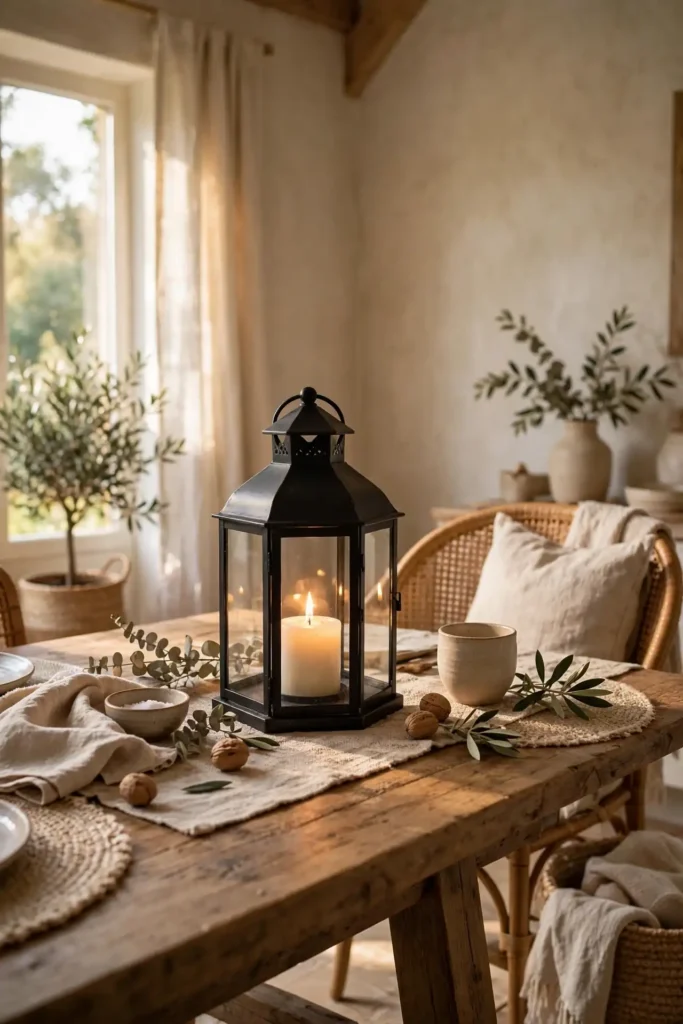
Choose a lantern 12 to 20 inches tall with a door or removable top for easy candle access, and use an LED pillar inside if you want glow without worry. HomeGoods, Target, and Wayfair sell lanterns from $20 to $60, with larger statement pieces at Pottery Barn running $80 to $150. Place the lantern on a small tray or runner to define its spot, and surround the base with a few sprigs of greenery for softness. Dust the glass panels monthly, and swap the candle seasonally — cinnamon-scented in fall is a crowd-pleaser.
20. Keep It Simple
Sometimes the best dining table centerpiece is barely a centerpiece at all. A beautiful table deserves to be seen, and leaving most of the surface clear lets the wood grain, the place settings, and the food itself become the decoration. A single small object — a bud vase with one stem, a tiny bowl, a lone candle — provides just enough of a focal point without competing with the meal. This approach suits busy households best, because there is nothing to dust, water, or move when homework spreads across the table.
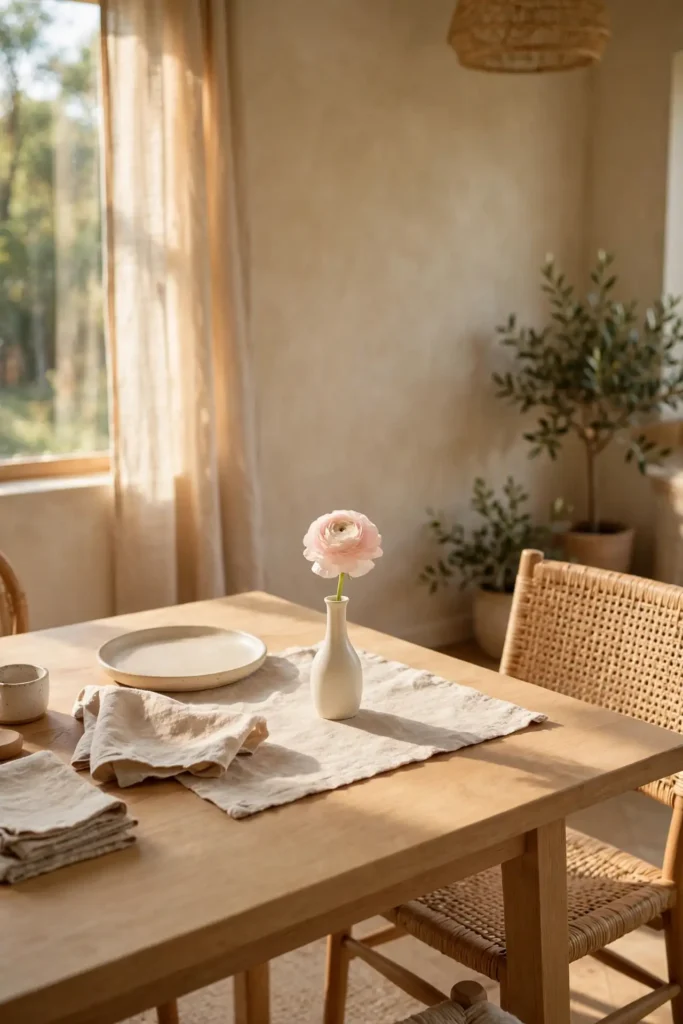
Pick one small piece under 8 inches tall — a bud vase, a votive, a petite succulent — and give it the center seat on a bare or lightly runnered table. Bud vases cost $8 to $20 at Target and IKEA, and a single stem from the grocery store adds $2 to $5. Resist the urge to add more; the restraint is the whole point. Wipe the table daily so the simplicity reads as intentional rather than empty, and enjoy a dining room that always looks calm, clean, and ready for whatever the evening brings.
Choosing Dining Table Centerpiece Ideas by Table Shape
The shape of your table should drive your centerpiece choice more than any passing trend. Round tables shine with a single centered arrangement — a low bowl of flowers or one sculptural vase — because every seat gets an equal view. Rectangular tables, the most common in American dining rooms, want linear styling: a runner with spaced objects, a dough bowl, or a row of bud vases that echo the table’s length. Square tables suit a tight cluster or one bold piece, while oval tables split the difference with a soft, centered grouping.
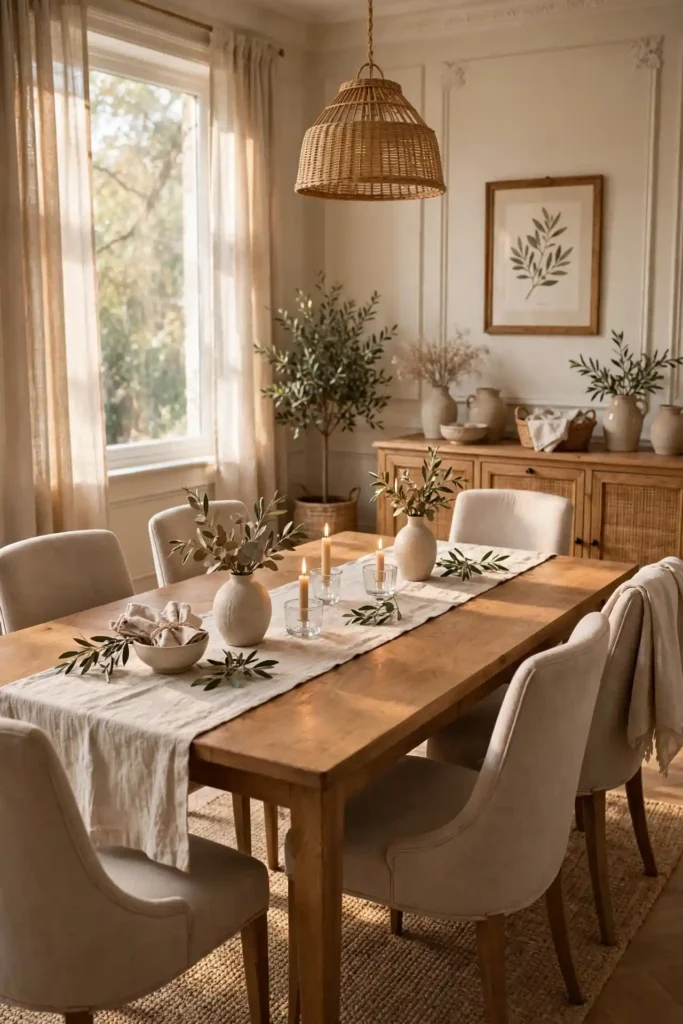
Scale the centerpiece to the table using simple math: keep arrangements within the middle third of the length, and leave at least 12 inches of clear space at each end for serving dishes. On 6-foot tables, one anchor piece plus two small accents is plenty; 8- to 10-foot tables can handle a trio of groupings spaced 18 to 24 inches apart. Test every arrangement by sitting down — if you cannot see the person across from you, it is too tall. Match the shape, respect the proportions, and the table practically styles itself.
How to Keep Dining Table Centerpiece Ideas Practical
A beautiful centerpiece that makes daily life harder will not survive the week. The most practical dining table centerpieces share three traits: they are easy to move, easy to clean around, and sturdy enough to survive elbows, homework, and enthusiastic toddlers. Trays are your best friend here, because the whole arrangement lifts away in one motion when you need the table. Low, weighted pieces beat tall, tippy ones, and anything that cannot handle a splash of water probably does not belong where drinks are poured. When in doubt, choose the sturdier option — you will thank yourself the first time someone bumps the table.
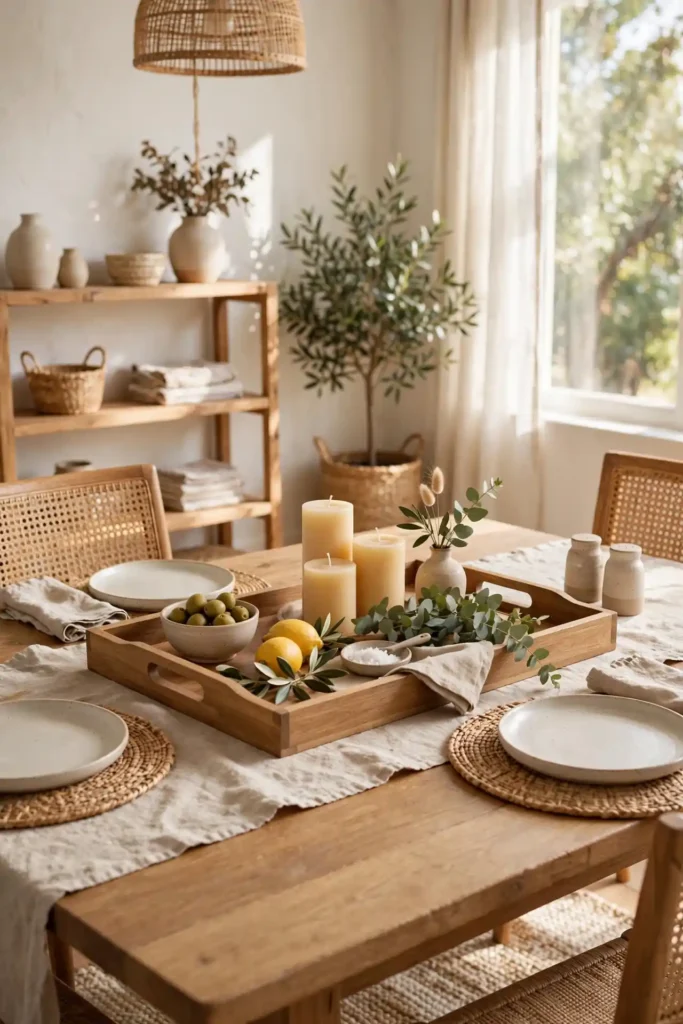
Build practicality in from the start: choose a tray or runner as your base, keep the total height under 14 inches, and avoid anything with tiny crevices that trap dust. Felt pads under every object protect the finish, and washable or wipeable materials — glass, glazed ceramic, sealed wood — save you from constant worry. Budget $30 to $80 for a complete practical setup from Target or HomeGoods. Finally, give yourself permission to clear the table completely on busy nights — the best centerpiece adapts to your real life, not the other way around.
How to Style Dining Table Centerpiece Ideas Step by Step
Styling a centerpiece is easier when you follow a simple order of operations. Start with a completely clear table — it is impossible to judge proportions against clutter. Next, lay your foundation: a runner, a tray, or nothing at all if the table is beautiful bare. Then place your anchor, the tallest or largest piece, dead center. Build outward from there with medium and small objects, stepping back every few minutes to check the view from a seated position. Working in layers like this keeps the arrangement balanced instead of lumpy.
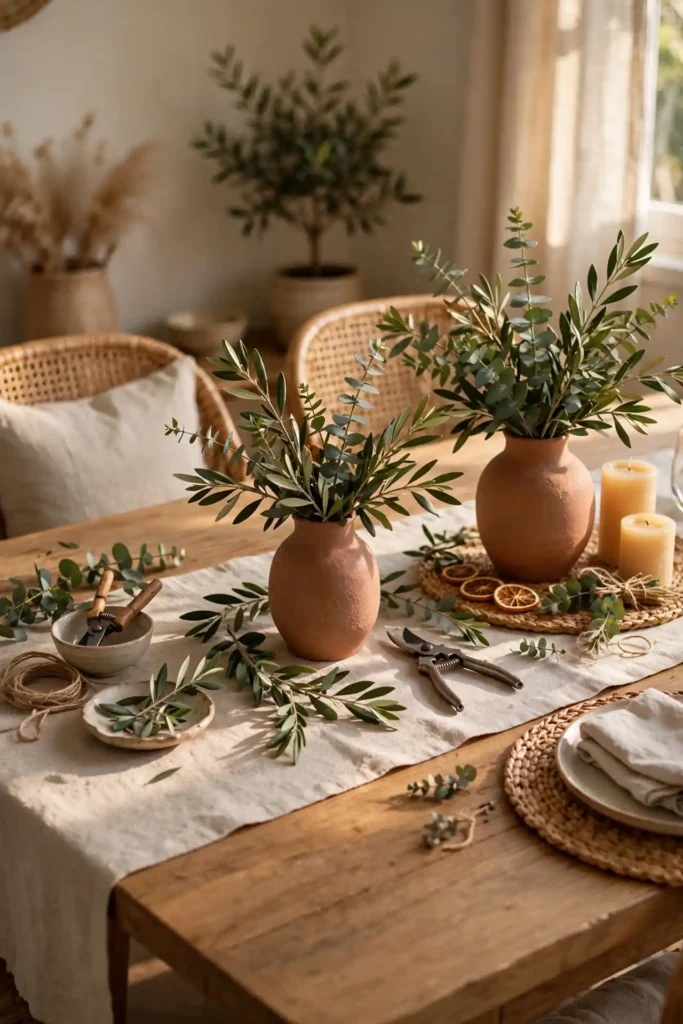
Follow the designer’s rulebook as you layer: group objects in odd numbers, vary heights by at least 3 inches between pieces, and mix at least two materials — say, wood and glass, or ceramic and greenery. Keep everything under 14 inches tall so conversation flows, and leave 12 to 18 inches of clear table on each side for dishes. Finish by sitting in every chair to confirm sightlines, then snap a photo — the camera reveals clutter your eyes miss. Adjust once, and your table is ready for guests — and for the compliments that follow.
- Measure the table and decide on a round or long arrangement.
- Choose a base: tray, runner, bowl or cake stand.
- Add one main element, such as a vase, bowl or candlesticks.
- Add one or two supporting pieces for height and texture.
- Step back, check sight lines and remove anything extra.
Final Thoughts on Dining Table Centerpiece Ideas
The thread running through all twenty of these dining table centerpiece ideas is restraint. None of them requires a florist’s training or a designer’s budget — they work because each one commits to a single clear idea and executes it well. A bowl of lemons, a row of bottles, one perfect lantern: these are choices, not accidents, and guests can feel the difference. Your dining table is where your household gathers most, so it deserves styling that supports real life rather than performing for a photograph. That is the real secret behind every effortless-looking table you have ever admired.
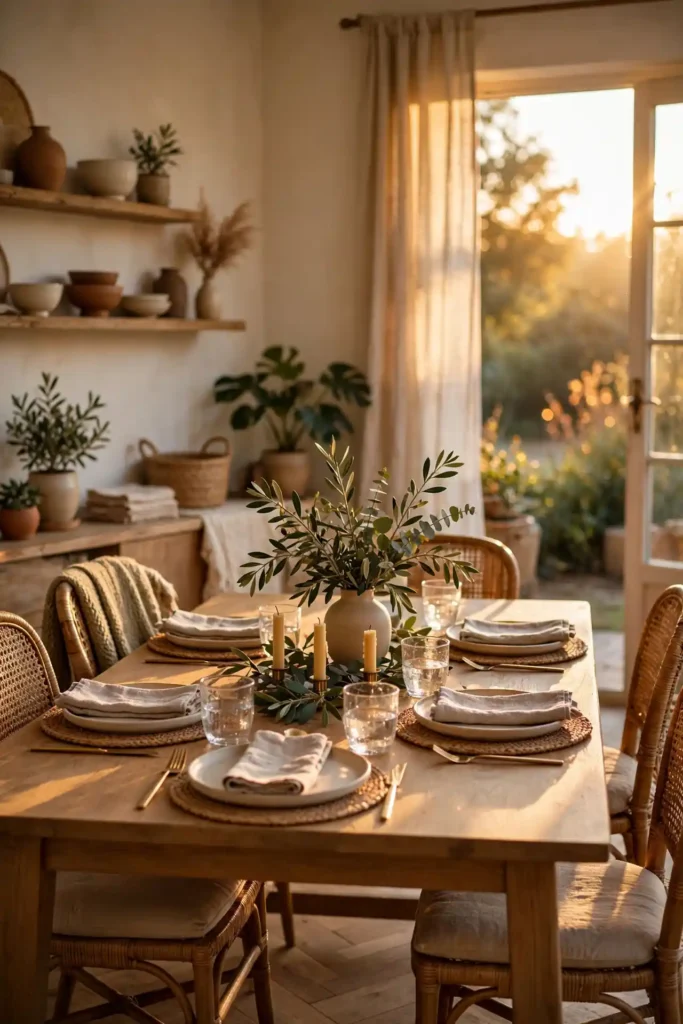
Start with whichever idea matches what you already own, then refine it over time as you learn what your household actually lives with. Swap the seasonal fill, try the arrangement on a tray, or scale it up for the holidays — small experiments teach you more than any guide. Most of these centerpieces cost under $60 to assemble, and many cost nothing at all. Pick one this weekend, style it in fifteen minutes, and enjoy a dining room that finally feels finished. Then sit down, pour yourself something nice, and enjoy the view you created.
Frequently Asked Questions About Dining Table Centerpiece Ideas
You have seen twenty centerpiece styles that look effortless — now here are the answers to the questions readers ask most before styling their own tables. Homeowners want to know the same practical things: how tall is too tall, what works on a small table, which ideas survive kids and pets, and how much a good centerpiece should cost. The guidance below distills everything in this post into quick, actionable answers, so you can stop second-guessing and start styling with confidence. Bookmark this section and return to it whenever you refresh your dining room.
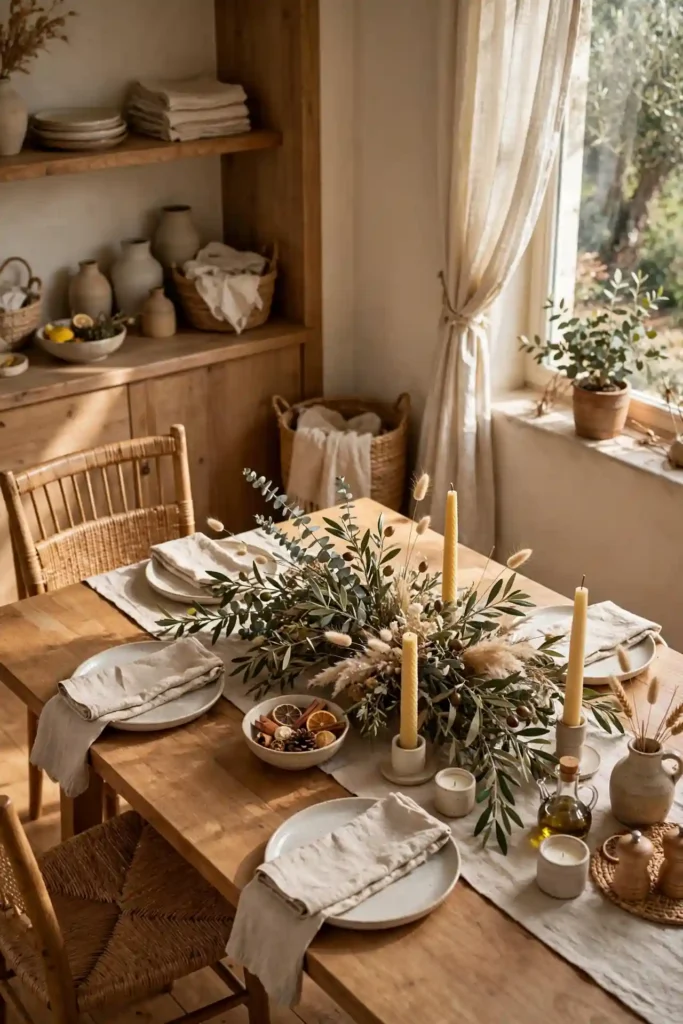
Each answer draws on the sizing rules, shopping sources, and styling steps covered above, with specific recommendations for common American dining rooms — from compact apartment nooks to long farmhouse tables. You will find concrete numbers for heights and budgets, store suggestions you can visit this weekend, and honest advice about what actually lasts. Skim for the question on your mind, or read straight through for a complete refresher before your next dinner party. Either way, you will leave with a clear plan instead of a Pinterest board full of maybes.
What do you put on a dining table when not in use?
A simple centerpiece such as a bowl, a vase of greenery, candlesticks or a tray with a few objects.
How big should a dining table centerpiece be?
Aim for about one-third of the table length and under 12 inches high so people can see each other.
What are cheap dining table centerpiece ideas?
Branches from the yard, a bowl of fruit, thrifted candlesticks and glass bottles with single stems.
Should a centerpiece be in the middle of the table?
Usually yes. Centering it creates balance, but on a table used as a desk, you can shift it to one end.
How often should I change my centerpiece?
Change it seasonally, or whenever fresh flowers fade. A base like a bowl or tray can stay year-round.




Leave a comment