


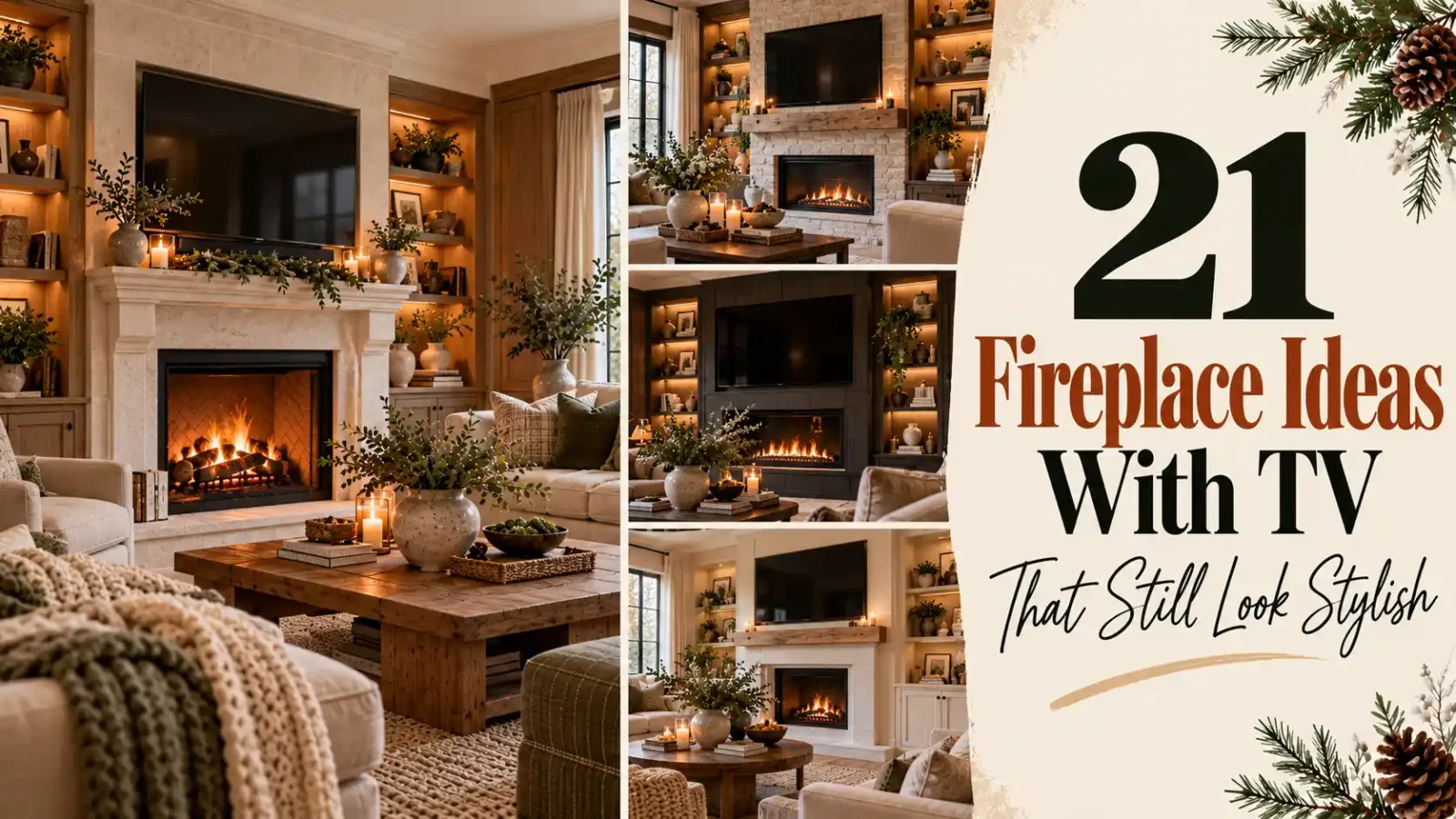
In many living rooms, the fireplace and the TV compete for the same wall. Mounting the TV above the fireplace is often the only practical option, but it can look awkward if not planned well. The good news is that there are plenty of ways to make the combination look intentional, balanced and stylish.
These 21 fireplace ideas with TV cover built-ins, frame TVs, recessed niches, side placements and styling tips. For seasonal mantel styling, see our fall mantle decor ideas, and for the rest of the room, browse these cozy living room ideas.
Key considerations when combining a fireplace and TV:
- Keep the TV center no higher than comfortable viewing, ideally with a tilt or pull-down mount.
- Check heat: use a mantel or deflector and follow manufacturer guidance.
- Hide cords inside the wall or in a conduit.
- Balance the TV with art, shelves or built-ins.
1. Use a Frame-Style TV
A frame-style TV, such as Samsung’s popular Frame TV, solves the biggest complaint about TVs over fireplaces: that blank black rectangle dominating your room. When you are not watching, Art Mode turns the screen into framed artwork, family photos, or subtle landscapes, so the display reads as decor rather than electronics. Pair it with a slim interchangeable bezel in wood, white, or matte black that matches your mantel trim. The matte anti-glare screen also cuts reflections from windows, which matters in bright living rooms where glossy TVs wash out during daytime viewing.
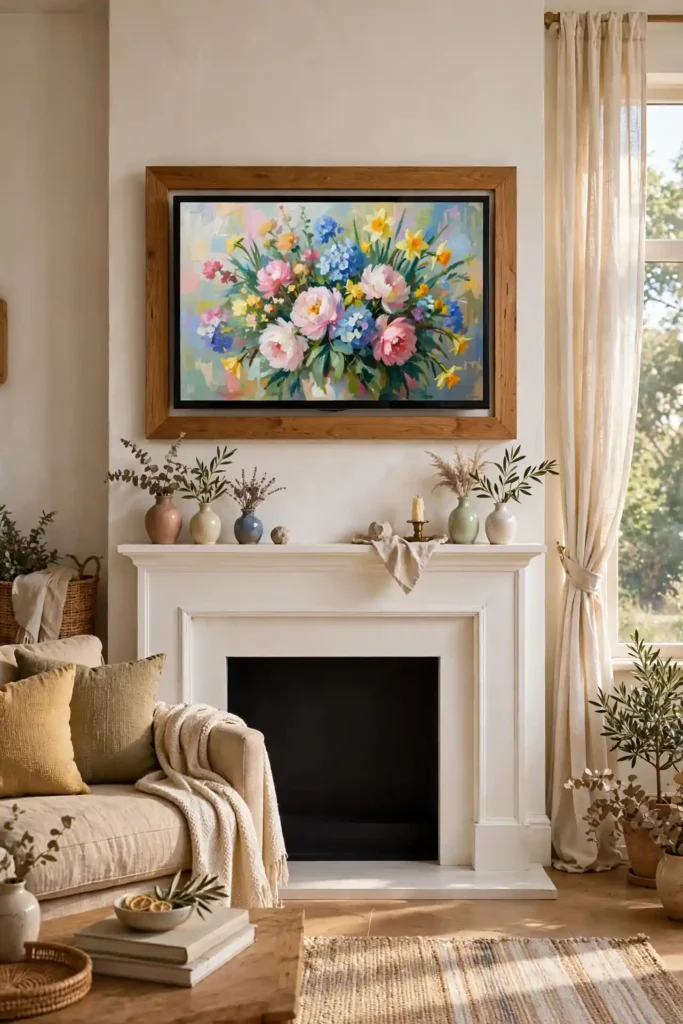
Installation is straightforward: mount the Frame TV on the fireplace wall using the slim-fit wall mount included in the box, keeping the screen nearly flush against the surface. Run the single One Connect cable through the wall to a hidden box in a nearby cabinet or closet, eliminating visible cords. Expect to spend about $1,000 to $2,500 depending on screen size at retailers like Best Buy or Amazon. Hang artwork and sconces on either side so the screen becomes one gallery piece among many, and guests will barely register it as a television.
2. Recess the TV Into a Niche
Building a shallow recess or niche for your TV gives the fireplace wall a custom built-in look that flat mounting cannot match. A recessed alcove, framed with drywall or wood panels, seats the screen a few inches back so it sits flush with the surrounding wall instead of jutting into the room. This trick reduces the visual bulk of large 55 to 75-inch screens and makes the fireplace itself feel like the star again. Leave about two inches of clearance on each side for ventilation and cable access, and finish the niche interior in a contrasting paint color for definition.
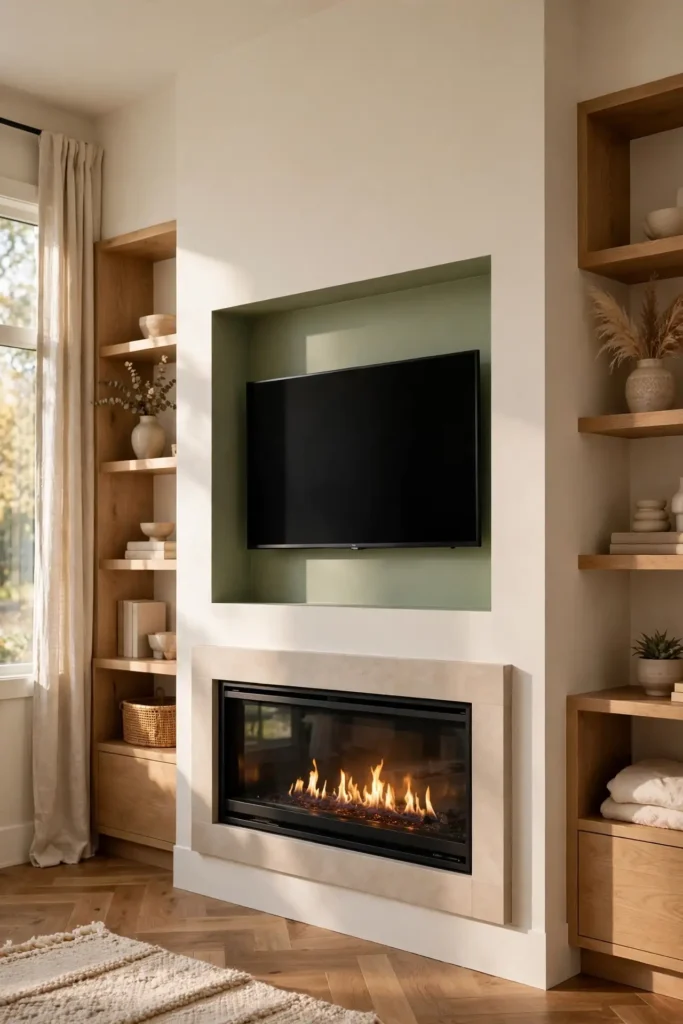
You can DIY a recessed TV niche with basic framing lumber, drywall, and joint compound if your wall is not load-bearing, though you will want to check for studs, wiring, and plumbing first. Budget $300 to $800 for materials, or $1,500 to $3,000 if you hire a carpenter. Run an in-wall power outlet and HDMI cables inside the cavity so no cords show. For a gas fireplace, keep the niche at least 12 inches above the mantel to respect heat clearance, and consider a small fan or vent slots if the alcove gets warm.
3. Flank the Fireplace With Built-Ins
Custom built-ins on either side of the fireplace turn an awkward TV placement into a balanced, intentional design. Floor-to-ceiling bookshelves or closed cabinets frame the fireplace and TV symmetrically, giving you storage for media equipment, books, and decor while pulling the eye across the whole wall. Paint the built-ins the same color as the wall for a seamless look, or choose a deep green or navy for contrast. Open shelves let you style baskets, plants, and pottery, while lower cabinets hide routers, gaming consoles, and streaming boxes out of sight.

You can build simple built-ins from stock IKEA Billy bookcases or Home Depot unfinished cabinets for a few hundred dollars, trimming them with crown molding and baseboards for a custom feel. Full custom carpentry typically runs $3,000 to $8,000 for a fireplace wall. Keep shelf depths around 12 inches so they do not overwhelm the fireplace surround. Leave ventilation gaps or mesh-front doors where electronics live, and install LED strip lights on the shelves to make evening styling glow. The result feels like a designer living room rather than a TV shrine.
4. Install a Pull-Down Mount
A pull-down mount like the MantelMount solves the neck-strain problem of TVs mounted high above fireplaces. The articulated arm lowers the screen 20 to 30 inches and pulls it toward you when you watch, then folds it back up against the wall afterward. Most models also swivel side to side and tilt, so you can fine-tune the angle from any seat. This is the most practical upgrade for families who actually watch TV daily in the fireplace room, because it restores comfortable eye-level viewing without giving up the fireplace focal point.

Installation requires solid anchoring into wall studs, so locate them with a stud finder before drilling. Pull-down mounts cost $200 to $500 at Amazon or Best Buy, and professional installation runs another $200 to $400. Keep the fireplace mantel clear so the TV can descend without hitting decor, and check that the mount’s travel path clears any deep mantel shelf. Pair the mount with a soundbar attachment for better audio. Once installed, you will wonder how you tolerated craning your neck all those years. Always test the full lowering motion slowly the first time to confirm smooth, silent operation.
5. Paint the Wall Dark
Painting the fireplace wall a dark color is the simplest trick for making a TV above the fireplace visually disappear. A deep charcoal, matte black, or navy wall swallows the black screen so it blends into the background instead of floating like a dark slab. This high-contrast move also makes the fire itself pop, since flames look brightest against dark surroundings. Use a matte or eggshell finish to avoid glare, and carry the color onto built-ins or trim on the same wall for a cohesive, enveloping look. The dark backdrop also hides vents, outlets, and cord covers that would stand out on white walls.

Try paint colors like Benjamin Moore Iron Mountain, Sherwin-Williams Iron Ore, or Behr Cracked Pepper, about $40 to $60 per gallon at Home Depot. Sample swatches first, because dark colors shift dramatically under fireplace glow versus daylight. Keep the rest of the room lighter — cream walls, natural wood floors, light upholstery — so the room does not feel cave-like. Add brass sconces or a light mantel for contrast. This one-weekend project costs under $100 and delivers one of the biggest visual payoffs on this list. Two coats over a quality primer give the richest, most even coverage on previously light walls.
6. Use Shiplap or Paneling
Shiplap or board-and-batten paneling gives a fireplace wall texture and farmhouse or coastal character while helping a TV look built-in rather than bolted on. Horizontal shiplap draws the eye across the wall and softens the hard lines of a flat-screen, while vertical paneling adds height to rooms with low ceilings. Paint it crisp white for a classic coastal feel, or stain natural wood for warmth. The panel lines also camouflage seams and mounting hardware, making the whole installation look more deliberate and finished. It is also one of the most renter-friendly upgrades if you use removable adhesive-backed panels.
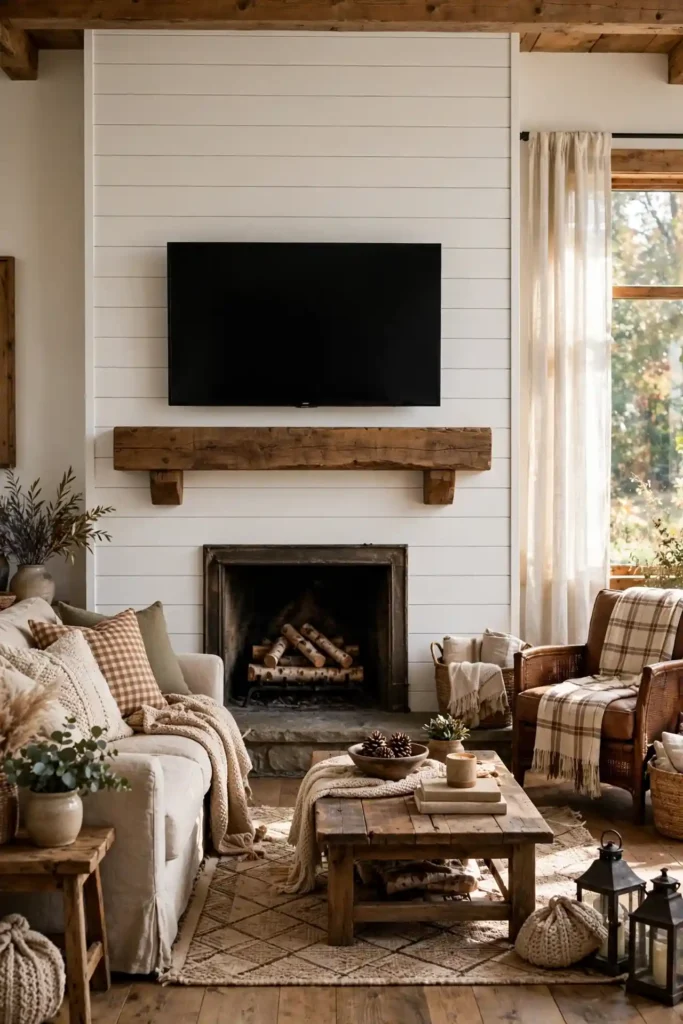
Install shiplap yourself with pre-primed boards from Home Depot at about $1 to $3 per square foot, plus nails and caulk. A single fireplace wall typically takes one weekend and $200 to $500 in materials. Mount the TV bracket through the shiplap into wall studs behind it for secure support, and use spacers if the boards create an uneven surface. Run cords through a cord channel painted to match, or fish them behind the panels. Finish with a chunky wood mantel beam and layered decor for a Joanna Gaines-approved focal wall.
7. Stone Surround With TV Above
A floor-to-ceiling stone surround makes the boldest statement for a fireplace with a TV, turning the whole wall into a textural centerpiece. Stacked stone, ledger panels, or faux stone veneer add rustic or modern-rustic character, and the TV mounted on top reads as part of the architecture rather than an afterthought. Natural stone tones also hide fingerprints and dust better than flat drywall. Choose lighter stone like quartzite for airy rooms or dark slate for moody, dramatic spaces. The natural variation in each stone means no two installations ever look alike, giving your room genuine one-of-a-kind character.
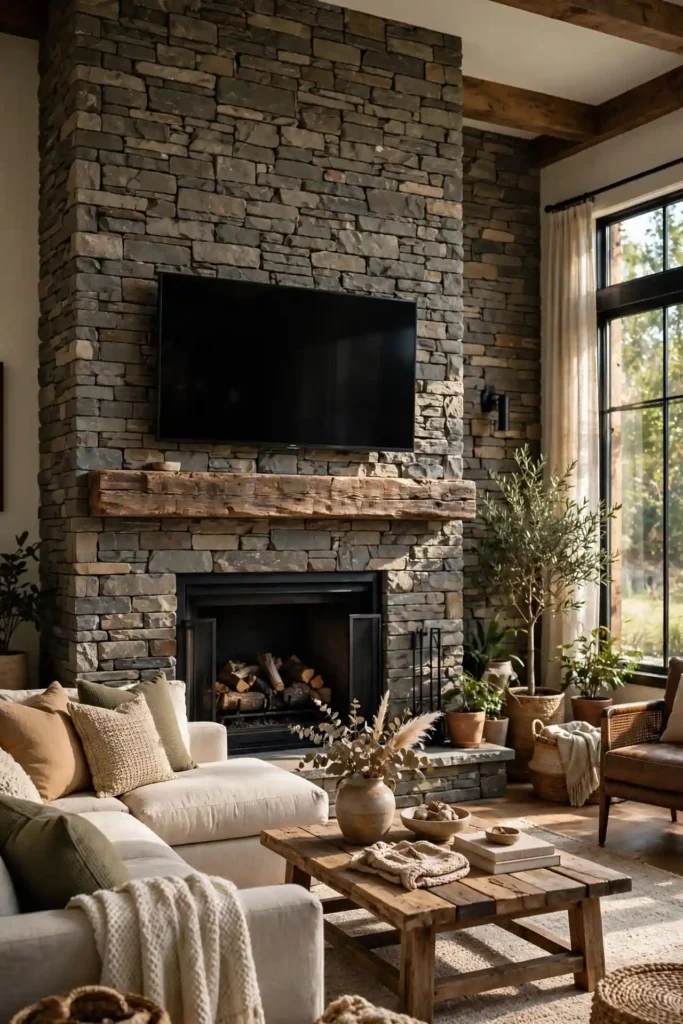
Real stone veneer costs $7 to $15 per square foot installed, while faux panels run $5 to $10 and work as a weekend DIY with construction adhesive. Mounting a TV on stone requires a hammer drill, masonry anchors, and patience — hire a professional if you are unsure. Keep the TV at least 12 to 24 inches above the mantel to avoid heat damage, and verify your fireplace’s clearance requirements in the manual. A wood mantel beam across the stone adds warmth and gives you a shelf for low-profile decor.
8. Place the TV Beside the Fireplace
Sometimes the most stylish answer is to skip the above-the-mantel debate entirely and place the TV beside the fireplace. An angled media console or corner arrangement lets both the fire and the screen share the room without competing, and viewing angles become far more comfortable since the TV sits at proper eye level. This layout shines in wide living rooms and open floor plans where the fireplace anchors one seating zone and the TV anchors another. You also avoid every heat and mantel-height concern in one move. Interior designers increasingly recommend this layout for its relaxed, unfussy feel.
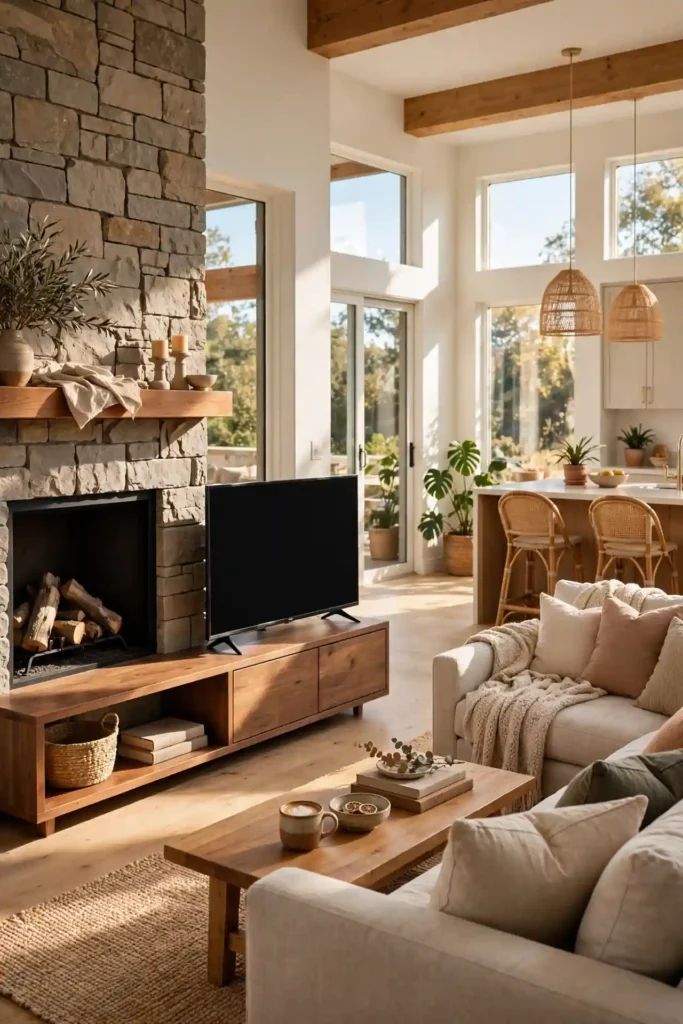
Position a low console perpendicular to the fireplace wall or float it in an open space, angled slightly toward the main sofa. Keep the console top around 24 to 30 inches high so a 55 to 65-inch screen lands at seated eye level. Style the fireplace mantel freely without worrying about a screen above it — tall vases, stacked art, and candles all work. Run cables along the baseboard in a paintable cord cover. If the room feels unbalanced, anchor the fireplace side with a tall plant or floor lamp.
9. Hide the TV Behind Doors
Concealing the TV behind cabinet doors or a sliding barn door keeps your fireplace room looking like a sophisticated sitting area until movie night. When closed, the doors read as ordinary built-in cabinetry, letting the fireplace and your decor take center stage. Bi-fold doors, pocket doors, or a pair of hinged panels all work, and you can paint or panel them to match surrounding millwork. This approach is ideal if you love the look of a screen-free living room but still want a big TV for evenings and game days.
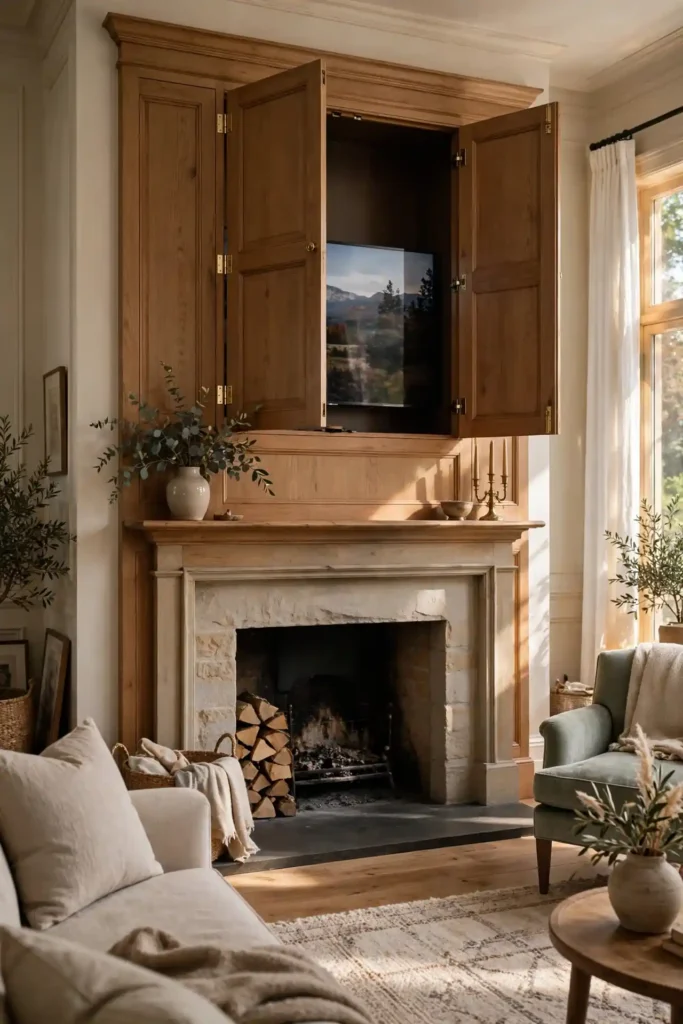
Build or buy a media cabinet deep enough for your TV plus three to four inches of ventilation space behind it. Off-the-shelf TV armoires run $400 to $1,200 at retailers like Wayfair or Amazon. For built-in looks, hire a carpenter to construct door fronts over a recessed niche, typically $1,000 to $2,500. Choose doors that open fully flat or pocket into the wall so they never block the screen. Add soft-close hinges and a ventilated back panel, and remote-control IR repeaters if the doors will block your streaming box signal.
10. Keep Mantel Decor Low
When a TV hangs above the fireplace, low mantel decor is the difference between styled and cluttered. Keep everything on the mantel below the bottom edge of the screen — think small stacks of books, short candles, low bowls, and trailing plants that stay under eight inches tall. This preserves a clean sightline to the screen and prevents decor from crowding or reflecting in the display. A restrained mantel also lets the fireplace itself breathe, which is especially important in smaller living rooms where the wall already carries a lot of visual weight.
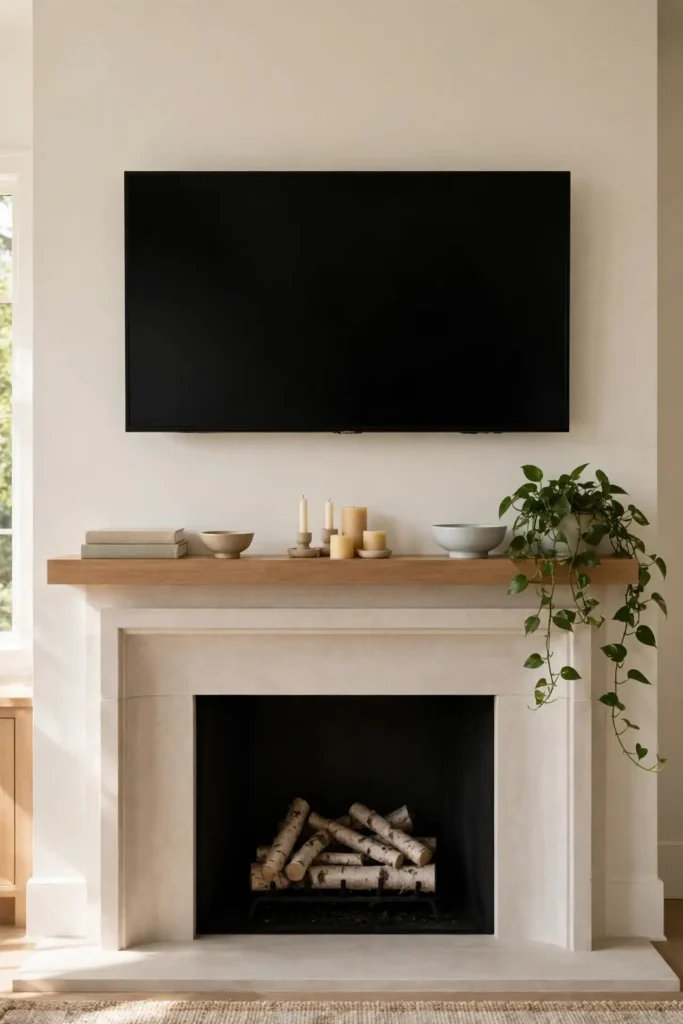
Style in odd-numbered groupings, such as three small objects clustered at each end with open space in the middle. Choose matte finishes over glossy ones to avoid screen glare, and skip tall candlesticks or vases that would poke up in front of the TV. Battery-operated LED candles add warm glow without competing with the screen. Refresh the look seasonally — a small pumpkin cluster in fall, a eucalyptus garland in spring — without breaking the low-profile rule. Simple, low, and intentional always wins here. Step back across the room after styling to confirm nothing blocks or distracts from the screen.
11. Frame the TV With Art
Treating your TV as one piece in a larger gallery wall makes it feel like curated decor rather than an electronic intrusion. Hang framed prints, photographs, and small canvases around the screen above the fireplace, keeping frames at a consistent style or color for cohesion. The TV becomes just another rectangle in an artful arrangement, especially if you display a landscape or abstract image on the screen itself. This works beautifully with frame-style TVs but looks great with any flat-screen set to a dim screensaver or digital art display. Guests will notice the art collection first and the television second, which is exactly the point.
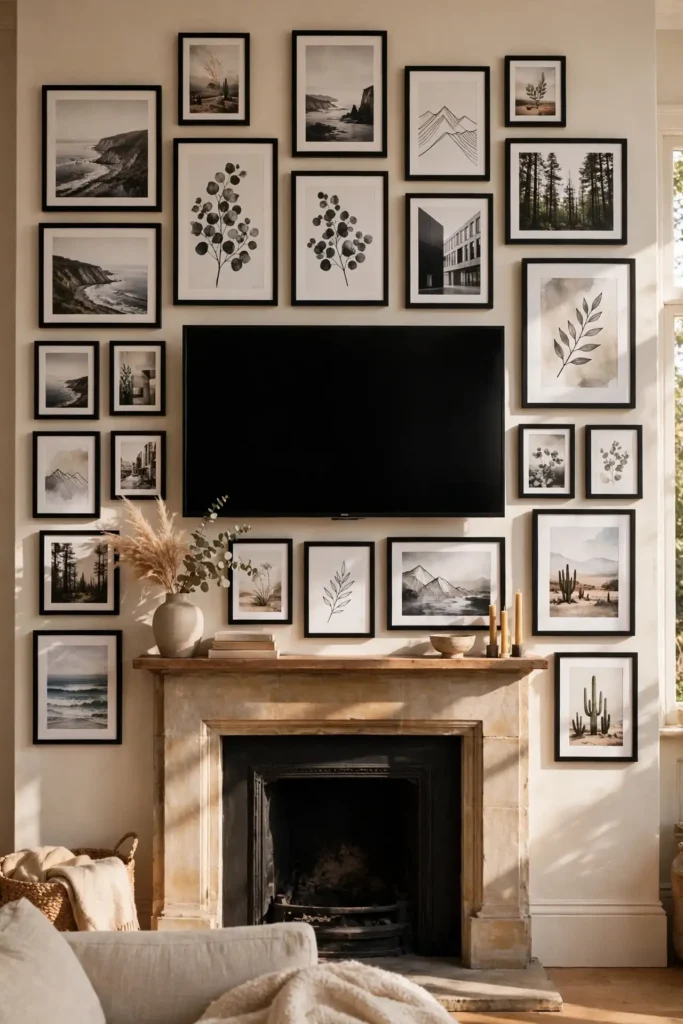
Plan the layout on the floor first with painter’s tape outlines on the wall, leaving two to three inches between frames. Mix frame sizes but keep one consistent finish — all black, all natural wood, or all brass. Hang the TV at the center and build outward symmetrically or in an organic salon style. Budget $100 to $300 for frames from IKEA, Target, or thrift stores. Use museum putty on smaller frames near the fireplace to prevent shifting from heat or vibration, and choose art with warm tones that echo the fire’s glow.
12. Use a Floating Media Console
A floating media console mounted under a fireplace TV keeps the setup sleek and makes the room feel larger. Wall-mounted at about 18 to 24 inches off the floor, the console hides streaming devices, routers, and cable boxes while its open underside keeps floor space clear for easy cleaning. The floating line echoes the mantel above, creating a tidy vertical stack of fireplace, screen, and storage. Choose a console in white oak, walnut, or matte black to match your room’s palette, and pick one at least six inches wider than the TV.
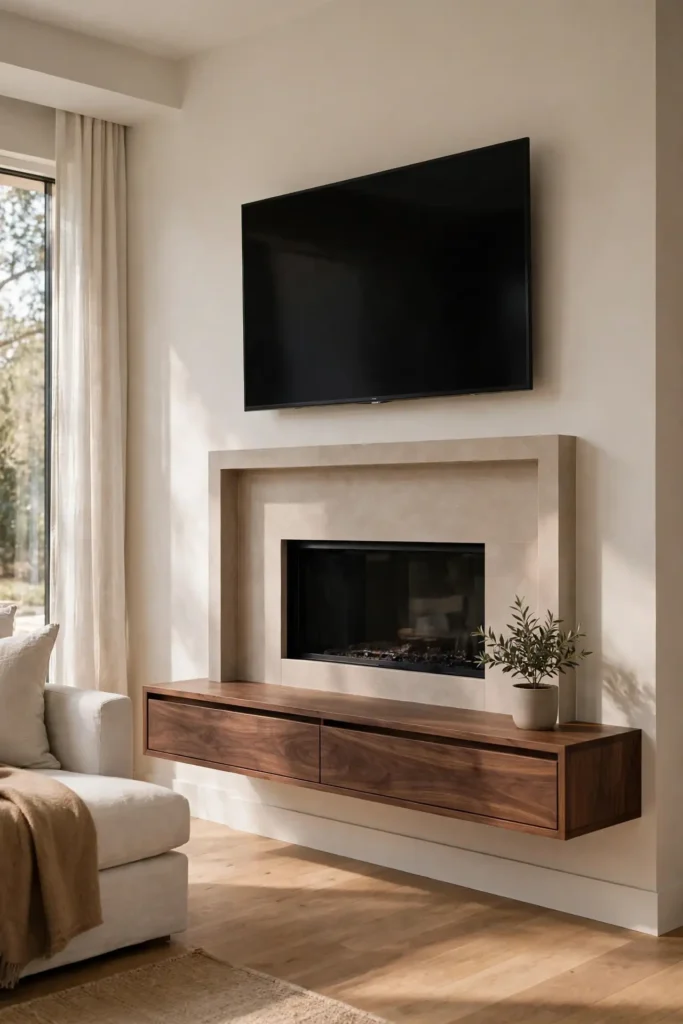
Secure the console to wall studs with a French cleat or heavy-duty brackets rated for at least 100 pounds. Floating consoles cost $150 to $600 at IKEA, West Elm, or Amazon. Cut a cable pass-through in the back panel and run cords inside the wall down to the console so nothing dangles. Leave ventilation slots or mesh panels where game consoles and receivers sit to prevent overheating. Style the top sparingly — a small plant and a stack of coffee table books — so the eye travels cleanly from fire to screen.
13. Choose a Linear Electric Fireplace
A linear electric fireplace paired with a TV creates the ultimate modern media wall with zero chimney required. These long, low units from brands like Touchstone, Dimplex, and Napoleon stretch 50 to 100 inches wide beneath the screen, producing realistic flames with LED technology and supplemental heat up to 5,000 BTUs. Because electric fireplaces stay cool on the wall surface, you can mount the TV directly above with minimal clearance. They install with a standard 120-volt outlet, making them perfect for apartments, condos, and homes without gas lines. Operating costs stay low too, typically just pennies per hour for the flame effect alone.
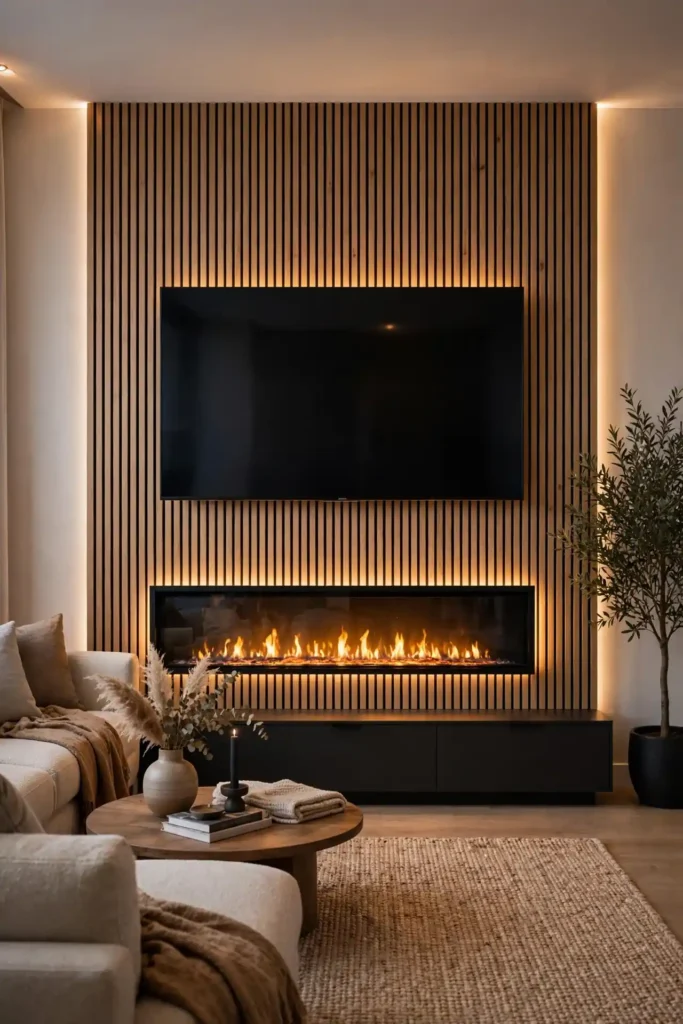
Expect to pay $500 to $2,000 for a quality linear electric fireplace at Home Depot or Amazon, plus a few hours for recessed or wall-mount installation. Mount the unit so the flame bed sits 12 to 18 inches below the TV for balanced proportions. Many models include remote controls, adjustable flame colors, and timer settings for year-round ambiance without heat. Frame the unit with shiplap, tile, or wood slats to give the wall a finished built-in look, and add a slim mantel shelf if you want display space between fire and screen.
14. Add Sconces on Each Side
Wall sconces flanking the fireplace add symmetry, warmth, and a designer finish to any TV-over-fireplace setup. A pair of sconces frames the screen like jewelry, balancing its width and softening the tech-heavy look with layers of ambient light. Choose plug-in or hardwired sconces in brass, black, or rattan depending on your style, and install them 60 to 66 inches from the floor — roughly at the TV’s mid-height. Dimmable bulbs let you lower the light for movie nights while keeping the fireplace wall glowing. Warm 2700K bulbs mimic candlelight and flatter both skin tones and wood finishes.

Hardwired sconces cost $80 to $300 per pair plus electrician fees of $150 to $400 if new wiring is needed, while quality plug-in versions from Amazon run $40 to $120 with no electrician required. Hide plug-in cords with paintable cord covers running down to the baseboard. For battery-operated sconces, rechargeable LED models now last weeks between charges. Keep sconce shades at least 12 inches from the TV edge to avoid crowding, and match the metal finish to your fireplace hardware or curtain rods for a pulled-together look. Position them so the glow washes the wall rather than shining directly into viewers’ eyes.
15. Use a Mirror TV
A mirror TV is the ultimate camouflage for a screen above the fireplace, displaying a reflective mirror surface when off and a full television when on. Brands like Séura and Evervue build these with genuine glass mirrors over LED panels, so your fireplace wall shows an elegant mirror — not a black box — during the day. The mirror also bounces light around the room, making smaller living spaces feel larger. This splurge-level option suits formal living rooms and primary suites where a visible screen would ruin the aesthetic. When movie night starts, the mirror fades and a vivid television appears behind the glass.

Mirror TVs start around $2,500 and climb past $10,000 for large custom sizes, available through specialty retailers and designers rather than big-box stores. Plan for professional installation, since the glass makes these units significantly heavier than standard TVs. When on, the picture is slightly dimmer than a regular LED screen, so this choice works best in rooms without harsh direct sunlight on the wall. Frame the mirror TV with an ornate or modern frame to complete the illusion, and guests will never guess your mirror is a television. Request a demo first so you can judge brightness and reflectivity in person.
16. Build a Modern Media Wall
A full modern media wall turns your fireplace and TV into one seamless architectural feature. Floor-to-ceiling paneling, slatted wood, large-format tile, or microcement wraps the entire wall, with the fireplace recessed at the bottom and the TV mounted flush above. Hidden LED backlighting behind the panels adds a soft glow that makes the wall look expensive at night. This built-in approach eliminates every cord, bracket, and awkward gap, giving you the clean, hotel-lobby look that dominates current home design trends. Acoustic panels can even be integrated behind slats to improve sound quality in echo-prone great rooms.
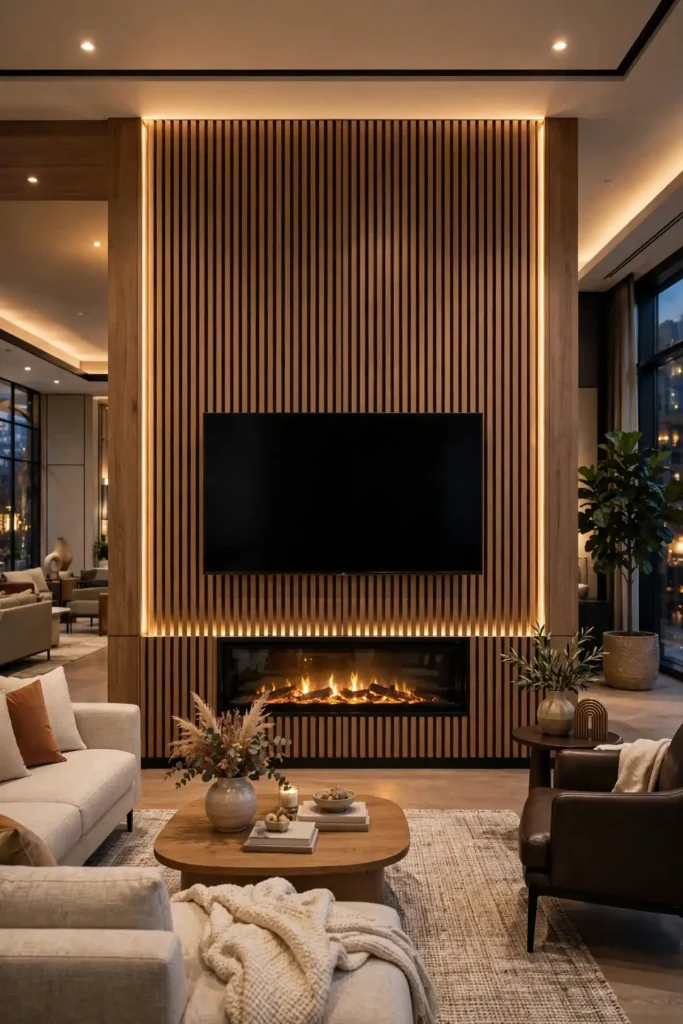
Budget $2,000 to $6,000 for a DIY-friendly media wall using wood slats, MDF panels, and an electric fireplace insert, or $8,000 to $15,000 for professional design and installation. Plan the layout around your exact TV and fireplace dimensions before buying materials. Run all power and HDMI through the wall cavity to a hidden equipment closet. Keep the fireplace manufacturer’s clearance specs handy — even electric units need a few inches. The investment pays off in daily enjoyment and resale appeal, since buyers consistently rank updated fireplace walls high on wish lists.
17. Use a Swivel Mount
A full-motion swivel mount gives you the flexibility that fixed brackets cannot, letting you angle the TV toward the sofa, the kitchen, or an adjacent seating area. Above a fireplace, the ability to pull the screen 15 to 24 inches off the wall and swivel it 45 degrees or more transforms viewing comfort for open-concept spaces. Look for mounts rated for at least 125 pounds with smooth, sturdy arms that hold position without drifting. This affordable upgrade makes one TV serve multiple zones of a great room. It is the easiest way to kill window glare without rearranging your furniture.
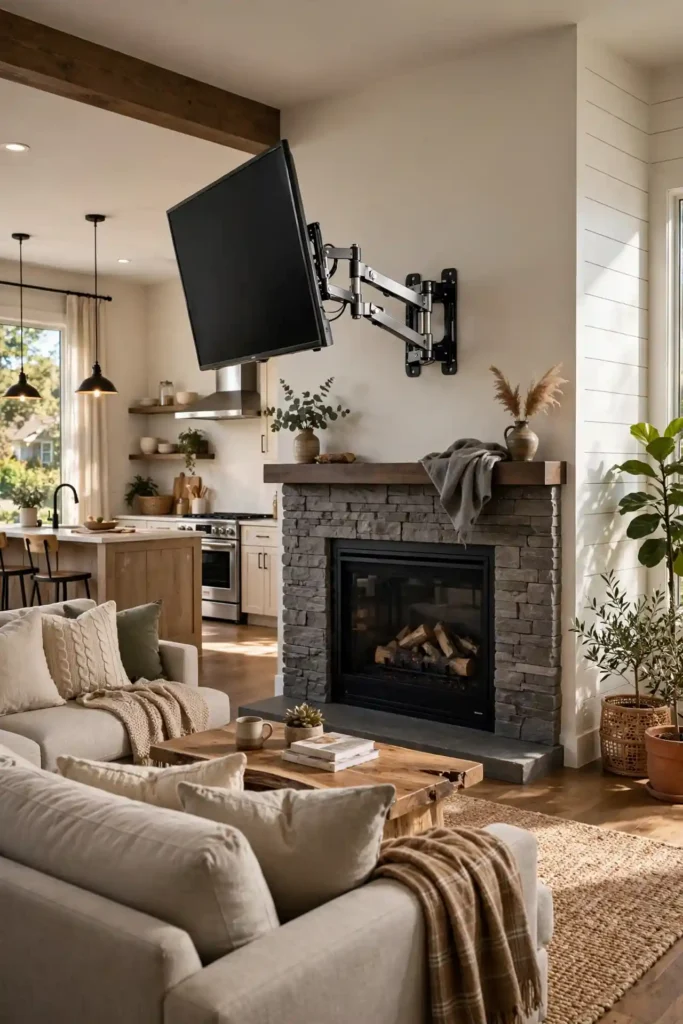
Quality full-motion mounts cost $50 to $150 at Best Buy or Amazon, and most handy homeowners can install one in under an hour with a drill and stud finder. Anchor into at least two studs, and confirm the mount’s extended position clears the mantel below. Pair it with a tilting adjustment to reduce glare from overhead lights. Because the TV moves, use flexible in-wall cable management or a cord cover that allows slack. The result is a fireplace setup that adapts to game day, movie night, and everyday lounging alike.
18. Soften With Plants
Plants soften the hard edges of a fireplace-and-TV wall, adding life, color, and organic texture that balances all that technology. A tall fiddle-leaf fig or olive tree in one corner draws the eye upward and fills awkward empty space beside the fireplace. Trailing pothos or philodendron on the mantel adds softness without blocking the screen, and small succulents in ceramic pots warm up the hearth. Greenery also improves perceived air quality and makes the whole room feel more welcoming and lived-in. Even one statement plant can shift the wall from tech-heavy to warmly styled in minutes.
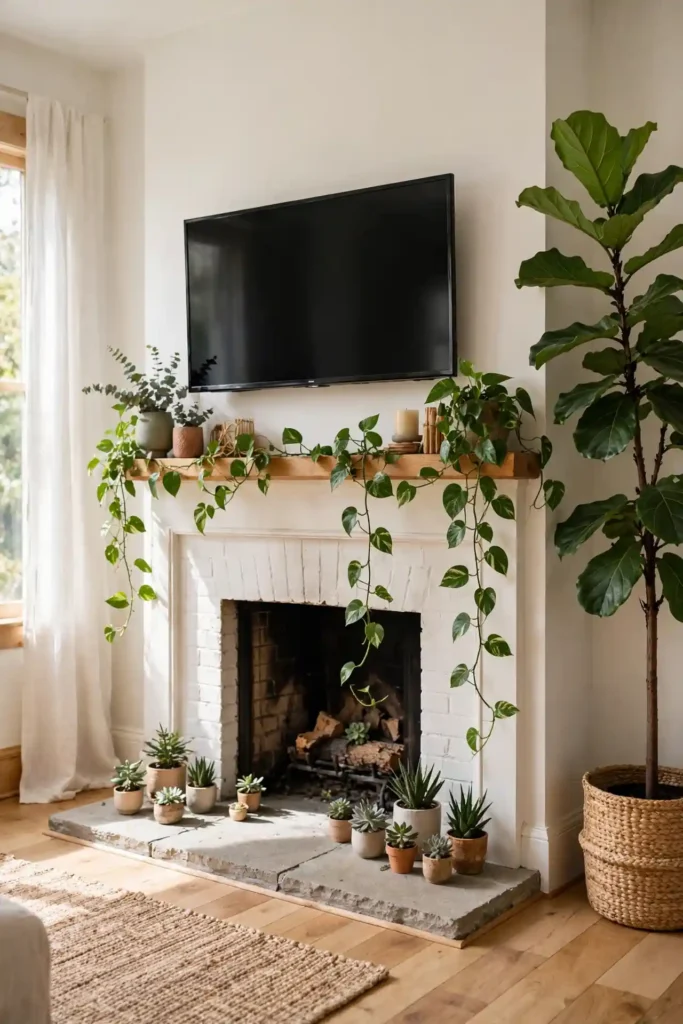
Choose low-maintenance plants if your fireplace area gets warm or dry — snake plants, ZZ plants, and pothos tolerate heat and low light well. Keep real plants at least three feet from an active fireplace opening to avoid heat damage, and use faux plants if the spot gets too warm. Water with a long-spout can to avoid splashing the mantel, and place saucers under every pot. Budget $30 to $150 per plant at Home Depot, Lowe’s, or local nurseries. Rotate plants occasionally so all sides get light and growth stays even.
19. Add a Deep Mantel as a Heat Shield
A deep mantel shelf does double duty as a heat shield and a styling surface for a TV mounted above the fireplace. A mantel that projects 10 to 12 inches from the wall deflects rising heat outward, away from the screen, protecting your TV from the warmth that shortens electronics’ lifespan. Choose a chunky reclaimed wood beam or a thick stone slab for maximum protection and visual weight. This is one of the most effective passive solutions recommended by fireplace professionals for above-mantel TV installations. It also creates a natural drip edge that keeps soot and dust from reaching the screen.
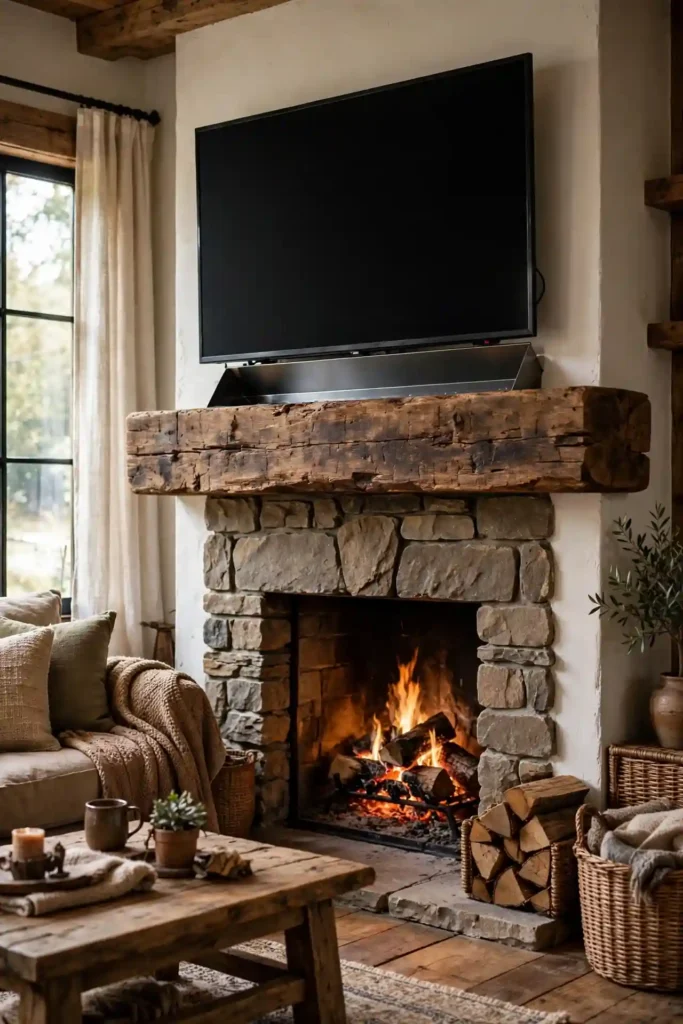
Check your fireplace manual for required clearances, but a general rule keeps the mantel at least 12 inches above the firebox opening and the TV at least 12 inches above the mantel. A solid wood beam mantel costs $100 to $400 at Home Depot or from local salvage yards, and installation takes a couple of hours with lag bolts into studs. Keep mantel decor heat-safe — avoid candles directly above the firebox. Measure your TV’s operating temperature limits in its manual, and consider a small thermometer on the mantel to monitor heat during heavy fireplace use.
20. Keep the Wall Symmetrical
Symmetry is the fastest way to make a fireplace-and-TV wall look intentional and calm. Center the TV over the fireplace, then mirror every element: matching sconces, identical bookcases, paired plants, or twin pieces of art on each side. The human eye reads balanced arrangements as orderly and high-end, which is why symmetrical fireplace walls photograph so well and feel so restful. This classic approach suits traditional, transitional, and modern farmhouse styles especially well, where order and proportion define the aesthetic. It also simplifies shopping, since you buy everything in pairs with zero guesswork about coordination.

Start by measuring the wall and marking the true centerline with painter’s tape before hanging anything. Choose pairs of identical items rather than near-matches — two of the same lamp, the same plant in the same pot, the same frame size. Keep the TV centered within an inch or two; even small offsets break the effect. If your room layout is asymmetrical, you can still create a symmetrical focal wall and let the surrounding furniture be casual. The contrast between a formal wall and relaxed seating feels collected rather than stiff.
21. Style for Every Season
A fireplace-and-TV wall becomes your home’s rotating gallery when you style it for every season. In fall, drape a eucalyptus garland across the mantel with small pumpkins at the hearth. Winter calls for evergreen boughs, pinecones, and warm white string lights framing the TV. Spring brings fresh tulips and pastel ceramics, while summer suits airy grasses, shells, and light linen textures. Keep the TV screen as part of the seasonal show by displaying matching digital art or photography when you are not watching. Holiday wreaths hung beside rather than over the screen keep things festive without blocking your view.

Store seasonal decor in labeled bins so swaps take under an hour — a $50 to $150 seasonal budget at Target, Hobby Lobby, or Michaels covers most refreshes. Keep every arrangement low-profile so nothing blocks the screen, and avoid flammable materials near the firebox. A simple formula works year-round: something trailing, something tall-ish but under the screen, and something glowing. Photograph each season’s setup for reference, and you will build a personal lookbook that makes next year’s styling effortless and even more polished. Shop end-of-season clearance sales to stock next year’s bins for a fraction of the price.
Is It Safe to Mount a TV Above a Fireplace?
Mounting a TV above a fireplace is safe when you respect heat and clearance guidelines from both manufacturers. Most TV makers recommend keeping the screen below 100 to 110 degrees Fahrenheit, so measure the wall temperature with an infrared thermometer during a typical fire — readings above that range mean you need more distance, a deeper mantel, or a heat deflector. Gas and electric fireplaces run cooler than wood-burning ones, making them friendlier for above-mantel TVs. Always check your fireplace manual’s clearance specs before drilling a single hole. Infrared thermometers cost under $30 at Home Depot and take seconds to use.
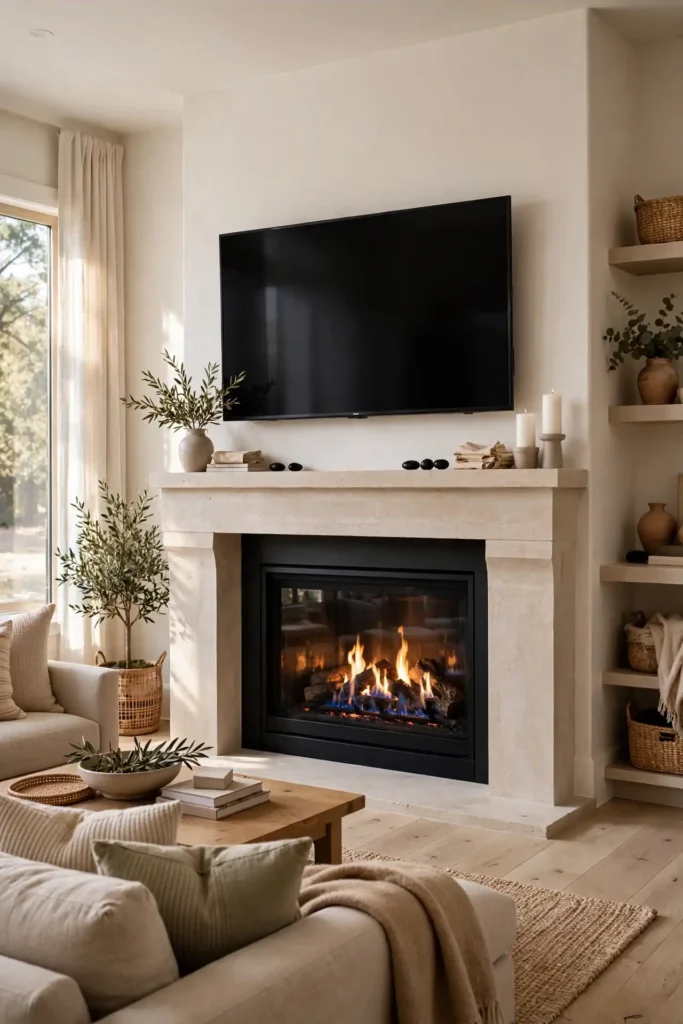
Practical safeguards include a mantel or heat shield that deflects warmth outward, at least 12 inches of space between the mantel and the TV’s bottom edge, and never mounting directly above a wood-burning firebox without professional assessment. Use a tilting or pull-down mount to improve airflow behind the screen. If you smell overheated plastic or the TV shuts off unexpectedly, move it immediately. When in doubt, consult a licensed fireplace technician — a $150 service call is cheap insurance for a $1,500 television and your home’s safety. Keep the TV’s warranty terms handy, since heat damage is rarely covered by standard policies.
Viewing Height and Comfort
The biggest ergonomic complaint about TVs above fireplaces is neck strain, because the screen often sits well above the recommended eye level. Ideally, the center of the screen should land at seated eye height — roughly 42 to 48 inches from the floor — but fireplace mantels commonly push screens to 60 inches or higher. If your setup forces upward viewing, limit long movie sessions, choose seats with high supportive backs, and recline slightly to reduce neck angle. Your comfort matters more than the symmetry of the wall. A quick phone photo from your seat reveals glare and angle problems instantly.
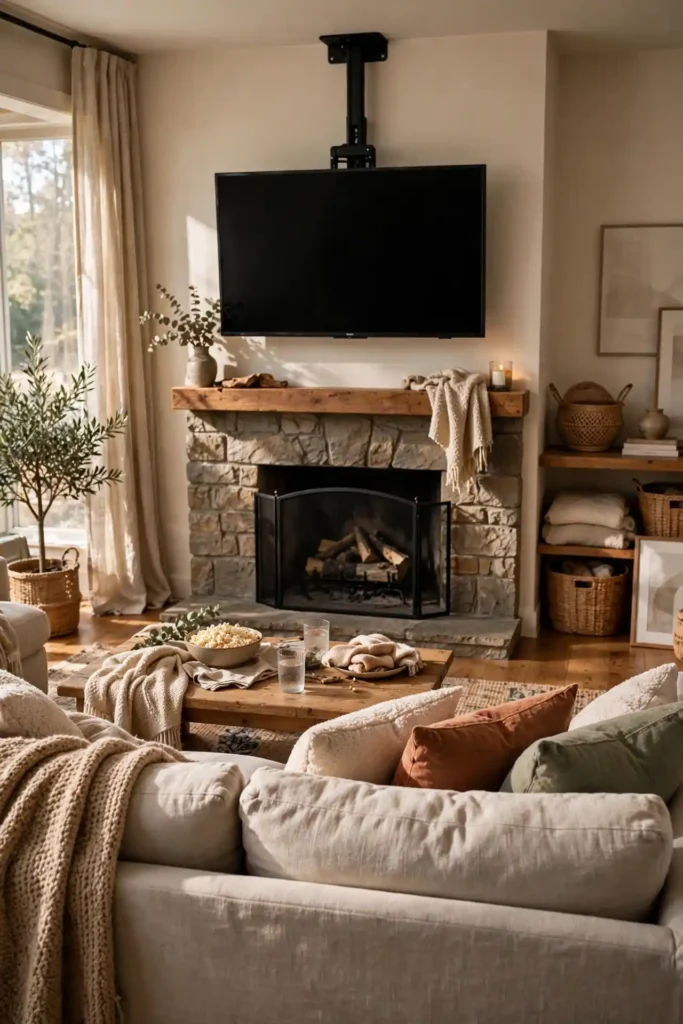
The best fixes are mechanical: a MantelMount pull-down bracket lowers the screen to eye level while watching, and a tilting mount angled down 10 to 15 degrees reduces glare and neck craning. As a rule of thumb, sit at least 1.5 times the screen’s diagonal away — about 8 feet for a 65-inch TV. Test the setup by sitting in your usual spot for 20 minutes before finalizing the mount height. If the angle still feels wrong, consider moving the TV beside the fireplace instead, where eye-level mounting is effortless.
How to Plan Fireplace Ideas With TV Step by Step
Planning your fireplace-and-TV project step by step prevents expensive mistakes. Start by measuring the wall, the fireplace opening, and your TV, then check both manufacturers’ clearance and heat specifications. Decide the TV’s final position — above, beside, or recessed — and mark it with painter’s tape to live with the sightlines for a few days. Next, plan power and cable routing: an in-wall outlet behind the TV and HDMI runs to your equipment location. Sketch the full wall including mantel, shelving, and lighting before buying anything. Photograph the marked-up wall from your main seats to sanity-check the composition before committing.

Set a realistic budget with a 15 percent cushion for surprises like extra lumber, an electrician visit, or a better mount. Order the fireplace insert or materials first since they have the longest lead times, then the TV mount and any built-in components. Install in this order: electrical, fireplace, wall finishing, mount, then TV and decor. Test the fireplace at full heat with a thermometer on the TV wall before finalizing. Finish with styling — low mantel decor, balanced lighting, and cable concealment — and photograph the result for your records.
- Measure the wall, mantel height and seating distance.
- Check heat output above the fireplace.
- Choose a mount type: fixed, tilt or pull-down.
- Plan hidden wiring and storage for devices.
- Style the mantel and surrounding wall.
Final Thoughts on Fireplace Ideas With TV
A fireplace and TV can absolutely share a wall beautifully — the secret is treating them as one designed composition instead of two competing focal points. Whether you choose a frame-style TV that doubles as art, a pull-down mount for ergonomic viewing, or a full media wall with hidden wiring, every option on this list works when you plan clearances, balance the styling, and keep the heat in check. The most stylish setups look effortless precisely because someone measured twice, hid the cords, and chose restraint over clutter. Pin your favorite idea from this list and start with the smallest possible version this weekend.

Start with the idea that fits your budget and skill level, then build from there. A $100 dark paint job or a $200 pull-down mount can transform the wall this weekend, while a full built-in media wall is a worthy longer-term project. Measure your heat, mount into studs, and style the mantel low. However you combine fire and screen, the payoff is a living room that feels warm, intentional, and ready for both quiet evenings and game-day crowds — proof that comfort and style were never really at odds. Your future self will thank you every single evening you settle in by the fire.
Frequently Asked Questions About Fireplace Ideas With TV
Readers ask the same questions about pairing fireplaces with TVs again and again. The most common ones cover safety — whether heat will damage the screen and how much clearance you really need — along with viewing comfort, since screens above mantels sit higher than ergonomic guidelines recommend. People also want to know which fireplace types work best with TVs, how to hide the tangle of cords, and whether a soundbar fits above or below the screen. The answers below address each concern with practical, specific guidance you can apply this weekend.
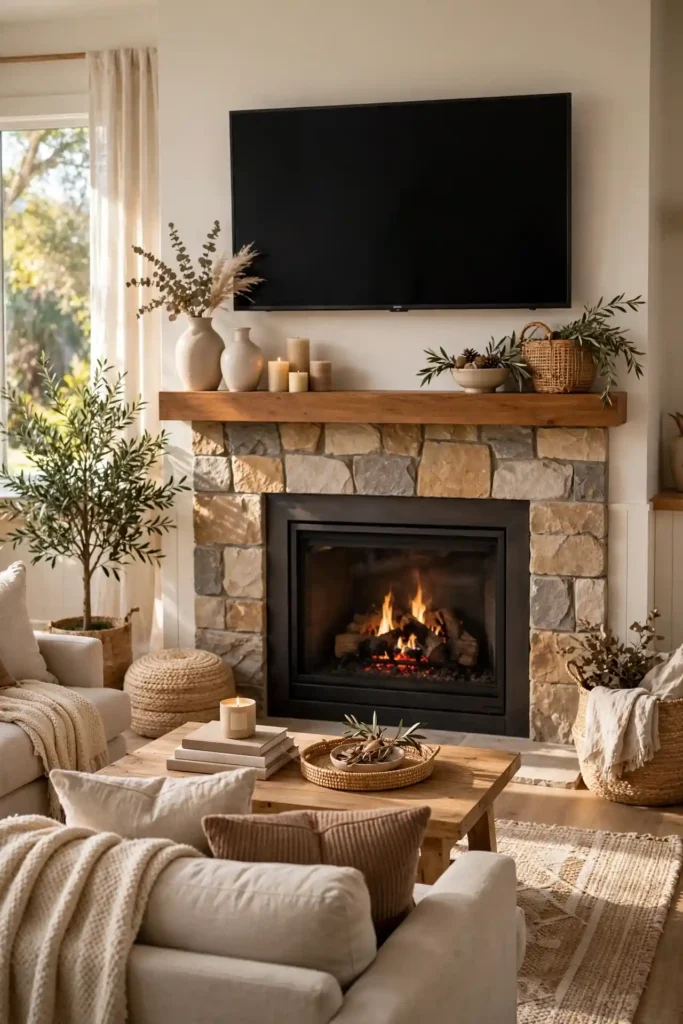
You will also find advice on choosing between gas, electric, and wood-burning fireplaces for TV walls, plus mounting hardware recommendations like pull-down and full-motion brackets. Budget questions come up often too — from $100 paint refreshes to $10,000 mirror TVs — so the answers span realistic price ranges. If your question is not covered, check the manufacturer’s manuals for your specific TV and fireplace models, since clearance and heat limits vary. The goal is a setup that looks great, feels comfortable, and keeps your electronics safe for years. Bookmark this guide so you can revisit the safety checklist before installation day.
Is it bad to put a TV above a fireplace?
Not if the wall stays cool enough and the viewing angle is comfortable. Use a tilt or pull-down mount.
How high should a TV be above a fireplace?
As low as safely possible, usually 4 to 12 inches above the mantel, with a downward tilt.
How do I hide wires for a TV above a fireplace?
Use an in-wall power kit or a paintable cord cover.
How do I decorate a mantel with a TV above it?
Keep decor low and place taller items at the ends to frame the TV.
What is the best TV for above a fireplace?
Frame TVs are popular because they display art when off.







Leave a comment