



When the holiday decorations come down, a winter decor aesthetic is the gentlest way to keep your home feeling beautiful through the cold months. A winter decor aesthetic is not about more stuff; it is about calm, quiet rooms where soft whites, candlelight, and cozy textures do all the talking. This style borrows from Scandinavian and minimalist decorating — ivory sofas, chunky knit throws, sheepskin drapes, and simple evergreen sprigs in ceramic vases. Because the palette stays neutral, every room feels restful and pulled together. Embracing a winter decor aesthetic is also practical: most pieces are affordable basics you can reuse for years in homes of every size.
Start by clearing visual clutter, then build warmth in layers. First, swap bright throws and patterned pillows for cream, oatmeal, and soft grey textiles. Next, add glow: group pillar candles of different heights on trays, place LED candles in lanterns for safety, and hang fairy lights where daylight is scarce. Finally, bring in texture — a faux fur throw over the arm of your sofa, a wool rug layered over your existing rug, or a sheepskin draped on a dining chair. These small changes are the essence of the winter decor aesthetic: calm, cozy, and under $50 per room if you shop Target, IKEA, and HomeGoods.
Below you will find 22 calm, cozy ideas organized room by room, each one a small step toward a full winter decor aesthetic, from living rooms and bedrooms to entryways and dining spaces. Each idea includes practical details — typical prices, dimensions that work in real rooms, and where to shop — so you can start today. Many pair beautifully with our winter decorating ideas guide for traditional holiday touches. And if your living room is the main gathering space, our christmas living room decor roundup shows how to blend festive accents with this serene neutral base. Ready to turn your home into a winter retreat? Let’s begin.
1. A Monochromatic White Winter Living Room

Going all-white is the fastest way to reset a tired living room for winter. Start with a white or ivory slipcover for your sofa — IKEA’s EKTORP-style covers run about $50–$80 — then swap patterned pillows for plain white and cream covers, which cost $8–$15 each at Target or HomeGoods. Layer a white cotton or linen throw across one arm and replace heavy drapes with sheer white curtains that let pale winter light pour in. The trick is texture: combine smooth cotton, nubby linen, soft knit, and a little sheepskin so the room feels warm rather than stark. A white palette also makes small living rooms look bigger and brighter during the darkest months of the year.
The one risk of a white room is that it can feel cold, so every light source should be warm. Swap cool-white bulbs for 2700K warm-white LEDs, add a floor lamp with a linen shade in the corner, and place a few candle groupings on the coffee table. Introduce one warm material — light oak, rattan, or a jute rug underneath — to keep the scheme grounded. White walls reflect both daylight and lamplight, so your living room stays bright even on grey afternoons. Pro tip: keep a small basket of cream knit blankets by the sofa so the white look always feels inviting, not untouchable.
2. Chunky Knit Throws on a Cream Sofa

Nothing says cozy winter quite like a chunky knit throw, and cream or oatmeal tones fit the serene palette perfectly. Look for throws in a cable or braided knit, roughly 50 x 60 inches, which drapes beautifully over a standard three-seat sofa without swallowing it. Quality acrylic or cotton-blend knits cost $25–$45 at Target, HomeGoods, or Amazon, while hand-knit wool versions from Etsy run $80–$150 and last for years. Choose a weight you can actually use — medium-weight knits layer well without overheating you. Drape the throw casually over one sofa arm or fold it in thirds across the back for a styled-but-effortless look.
Pair your knit throw with pillows in the same family — linen, boucle, or faux shearling in ivory and stone — so the textures play off each other. Avoid mixing in bold patterns or bright colors, which break the calm mood. If your sofa is a cool grey rather than cream, choose a warm oatmeal knit to bridge the tones. These matching layers are what give the winter decor aesthetic its collected, intentional feel. Wash knit throws on gentle and air-dry them to prevent pilling and stretching. Pro tip: buy two matching throws so one can live on the sofa while the other stays in the bedroom, keeping your whole home coordinated.
3. Candlelight Clusters for Soft Winter Evenings
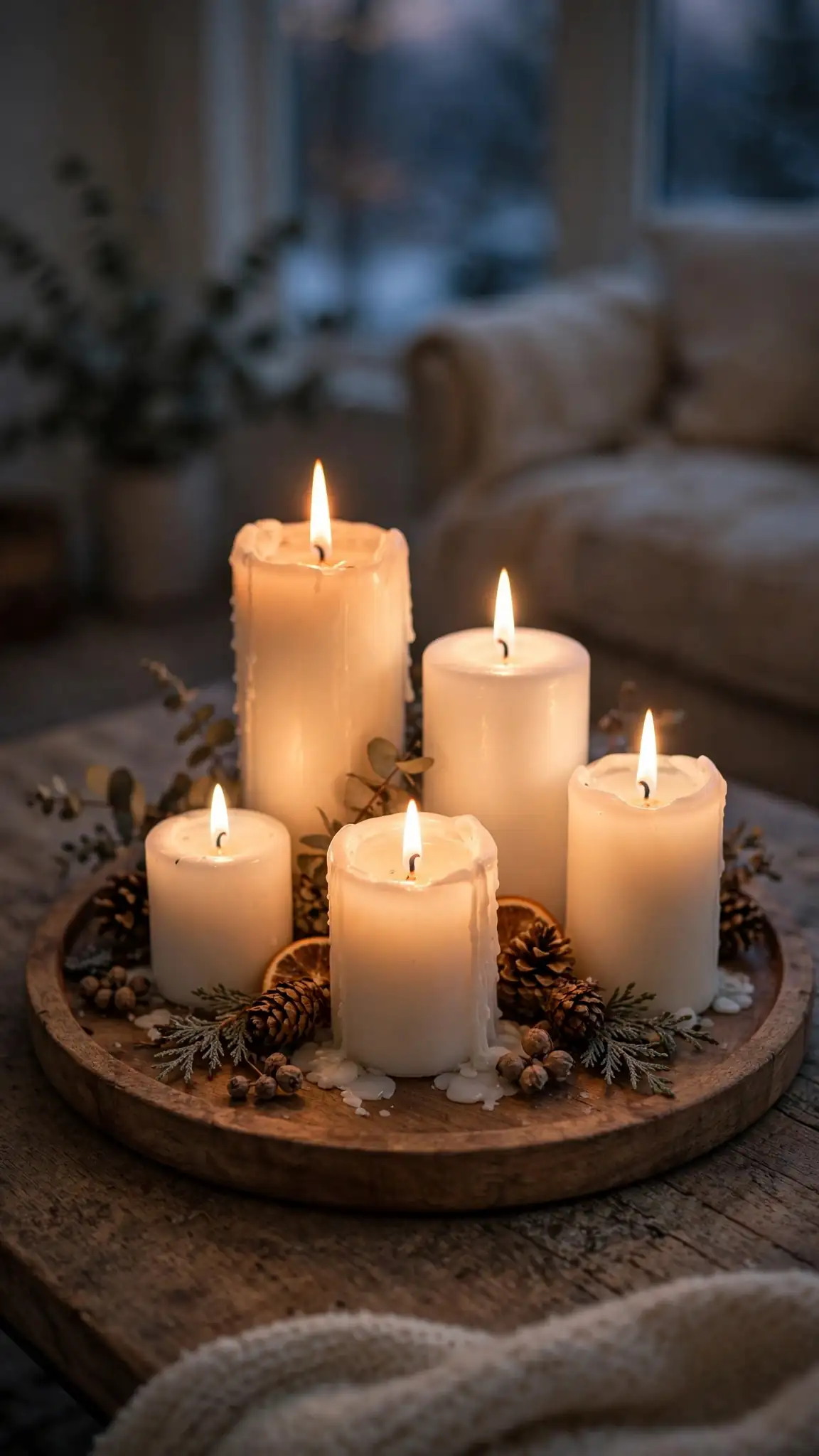
Winter evenings get dark early, so candlelight becomes your most important design tool. Group pillar candles in odd numbers — three or five — on a round wooden tray or a shallow stoneware platter, mixing heights from 3 to 8 inches for a natural look. Real wax pillars cost $3–$10 each at IKEA or Target, and unscented ivory or white ones fit the neutral scheme best. Place one cluster on the coffee table, one on a sideboard, and one near the entryway so the glow carries through the house. For households with kids or pets, high-quality flameless LED candles with a flicker effect are a safe alternative.
Layer your candlelight at different heights for the most flattering effect: floor lanterns beside the sofa, medium pillars on tables, and tiny tea lights tucked into ceramic houses or glass votives on shelves. Stick to warm-toned light everywhere — 2200K to 2700K — to keep the mood golden rather than clinical. A large round mirror behind a candle cluster doubles the glow for free. Candles also photograph beautifully, so rooms look as cozy in pictures as they feel in person. Pro tip: use LED candles with a built-in 6-hour timer in hard-to-reach spots so your winter glow switches itself on every evening at dusk.
4. Frosted Eucalyptus Garland on the Mantel

A mantel dressed with frosted eucalyptus is the hallmark of a calm winter look — green enough to feel seasonal, muted enough to stay serene. Faux frosted eucalyptus garlands, typically 6 feet long, cost $20–$35 at Michaels, Target, or Amazon and can be reused every year. Drape one garland across the mantel so the ends cascade about 12 inches down each side, then tuck in a few white pillar candles and a small stack of neutral art books for height. If you prefer real greenery, fresh eucalyptus costs $8–$12 a bunch at Trader Joe’s and dries beautifully, though the scent fades after a week.
Keep the rest of the mantel simple so the garland is the star — one framed print or a round mirror above, nothing more. If your mantel is wide, layer two garlands for fullness rather than stretching one thin. Secure garland ends with clear Command hooks ($5 for a pack) so nothing damages your paint or wood. A light dusting of faux snow spray ($6) on real eucalyptus adds the frosted effect, but skip it on faux stems that already have the finish. Pro tip: store faux garlands in a garment bag, not a box, so the stems keep their shape for next winter.
5. A Winter Decor Aesthetic Dining Table in Neutral Tones
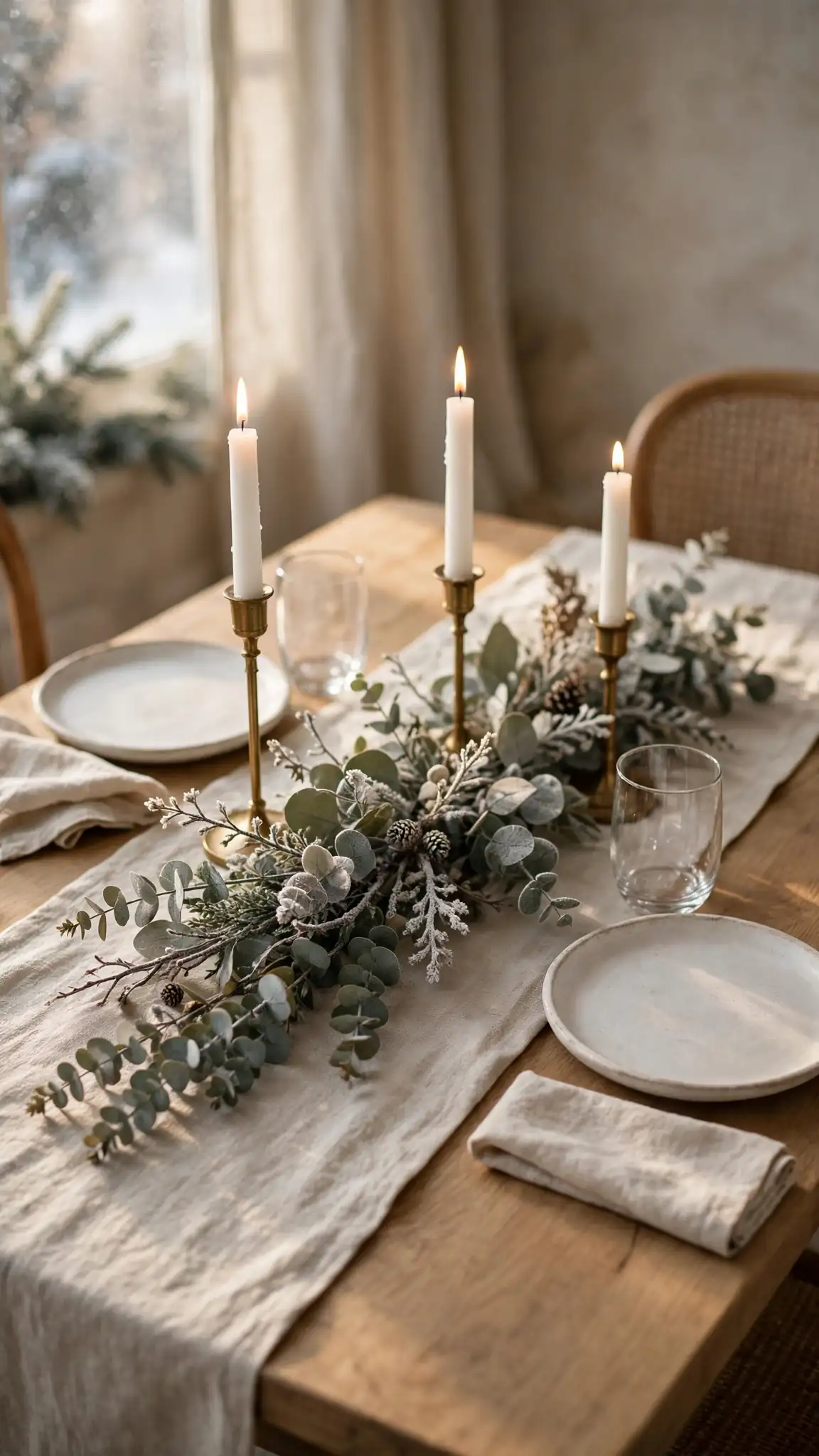
Your dining table is where the winter decor aesthetic truly shines, because a serene tablescape makes every meal feel special. Start with a natural linen table runner in oatmeal or flax — a 14 x 90-inch runner suits most six-seat tables and costs $20–$35 at Pottery Barn or World Market. Down the center, run a low garland of frosted eucalyptus or pine, then add white taper candles in brass or matte black holders at varied heights. Keep dinnerware simple: white stoneware plates, clear glassware, and linen napkins in a soft grey or cream complete the calm, cohesive look.
The key to this tablescape is keeping everything low so guests can see each other — nothing in the center should rise more than 12 inches. Mix in a few natural elements like pinecones, dried orange slices, or small birch logs for texture without color. For everyday meals, leave the runner and candles in place and just add placemats; the table then looks styled with zero daily effort. A washable runner is worth the small premium if you have young kids. Pro tip: light the tapers 15 minutes before dinner so the wax settles and the table glows when everyone sits down.
6. Faux Fur Accents in Ivory and Stone Grey
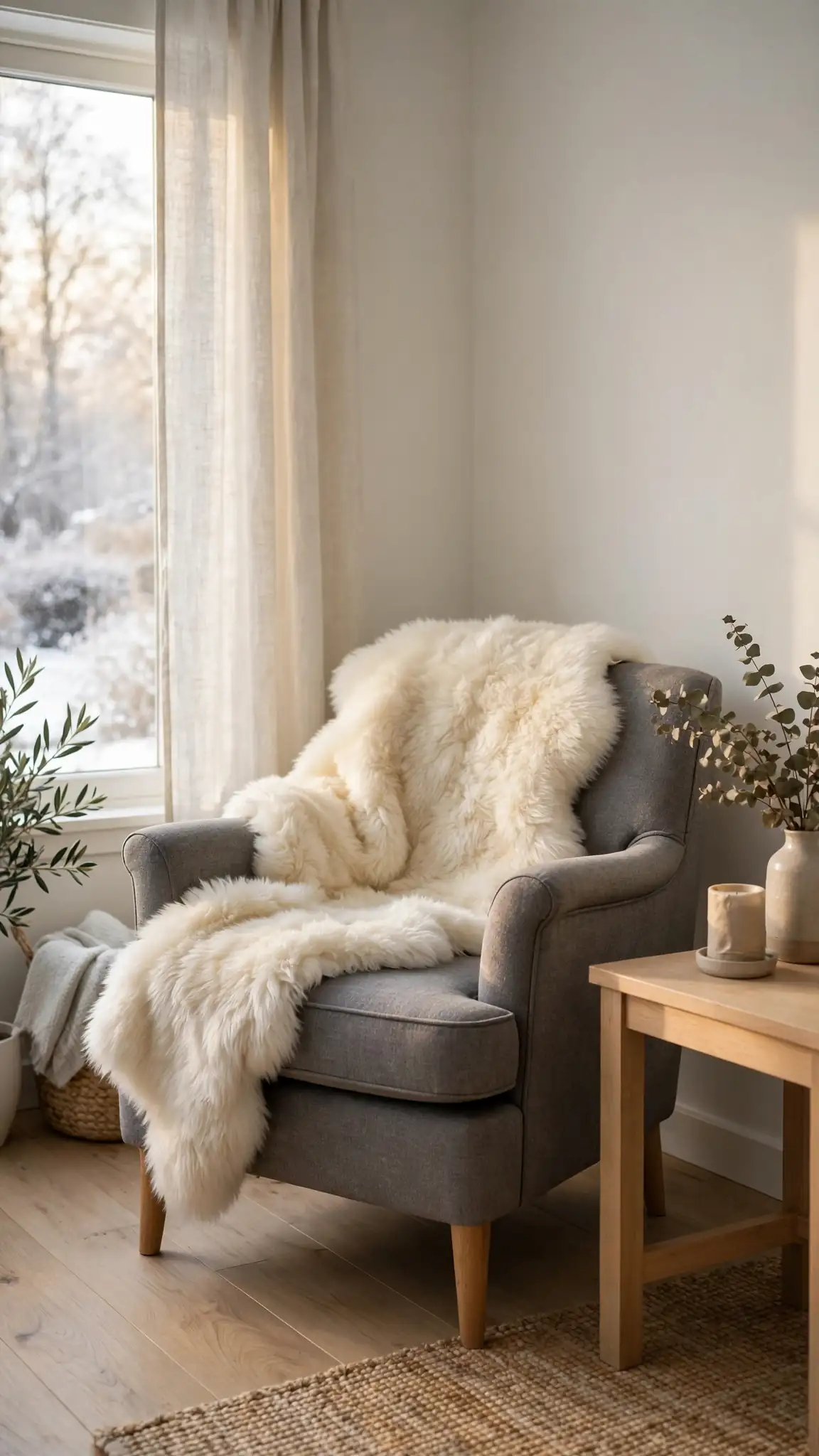
Faux fur is the texture that instantly reads as winter, and in ivory or stone grey it stays elegant rather than flashy. A 50 x 60-inch faux fur throw costs $30–$60 at Target, IKEA, or HomeGoods, while smaller 18-inch faux fur pillow covers run $12–$20 each. Drape a throw over the back of an accent chair, lay one across the foot of your bed, or fold one over a bench in the entryway. The long pile catches light beautifully, which adds softness to rooms that get little winter sun. Choose high-density fur with a woven (not glued) backing so it survives washing and daily use.
Use faux fur sparingly — two or three accents per room is plenty, since too much pile can look messy rather than luxurious. Pair it with smoother textures like linen, leather, or light wood to create contrast. Shake fur throws outside monthly and spot-clean spills immediately; most are machine washable on cold, but air-drying keeps the pile fluffy. If anyone in the house has allergies, look for hypoallergenic microfiber fur and wash it before first use. Pro tip: a single ivory faux fur throw on a grey armchair is the quickest $40 winter refresh you can buy.
7. Evergreen Sprigs in Simple Ceramic Vases

You do not need a big Christmas tree to bring winter greenery indoors — a few evergreen sprigs in a simple vase does the job with far less fuss. Snip 12- to 18-inch branches of pine, cedar, or fir from your yard (or buy a $5 bundle at Trader Joe’s in December), and arrange three to five stems in a matte white or stoneware vase. A 10-inch cylindrical vase works on dining tables, while a taller 16-inch vase suits entryway consoles. Change the water every three days and the sprigs will stay fresh for two to three weeks, filling the room with a subtle pine scent.
For a truly minimalist look, use a single dramatic branch in a tall vase and let negative space do the work. Ceramic vases in matte white, oatmeal, or soft grey cost $15–$30 at IKEA, Target, or CB2 and suit the neutral palette year-round. If you want the look to last all winter, invest in realistic faux pine stems ($8–$12 each) — the best ones have wired branches you can shape. Mix one real cedar sprig with faux stems for scent without the shedding. Pro tip: trim stems at an angle and crush the cut ends slightly so evergreens drink more water and stay fresh longer.
8. Layered Wool Rugs Underfoot

Cold floors are winter’s biggest comfort killer, and layering rugs is the designer’s fix that also looks fantastic. Start with your existing rug — a flatweave or low-pile base in a neutral tone — then layer a smaller wool or wool-blend rug on top at a slight angle. A 5 x 7-foot wool rug costs $150–$300 at Rugs USA, Ruggable, or IKEA, but even a $60 faux-wool option adds real warmth. In the living room, the top rug should sit under the front legs of the sofa and extend at least 18 inches beyond the coffee table so feet always land on something soft.
Stick to tone-on-tone layering — ivory over beige, grey over greige — to keep the serene mood; busy patterns fight the calm aesthetic. Use a non-slip rug pad ($20–$40) between layers so nothing slides on hardwood. Wool naturally resists stains and regulates temperature, making it ideal for winter, but vacuum weekly since the thicker pile traps more dust. In bedrooms, run a runner on each side of the bed so your first step each morning is warm. Pro tip: layer a washable cotton rug over wool in dining areas, since it handles food spills better.
9. A Serene Window Reading Nook

A window reading nook turns winter’s pale daylight into a feature instead of a flaw. Choose the brightest window in your home — ideally south or east-facing — and place a comfortable armchair or a wide 36-inch cushioned bench beneath it. Add a cream knit throw, two pillows in oatmeal linen, and a small side table for tea and books. A floor lamp with a 2700K bulb beside the chair extends the nook’s usefulness into dark evenings. If the window is drafty, hang floor-length thermal linen curtains ($40–$80 a panel) that block cold air while keeping the light soft and diffused.
Keep the nook’s palette strictly neutral so it feels like a retreat: ivory, oatmeal, soft grey, and one natural wood tone. A small sheepskin on the seat adds warmth for long reading sessions, and a lidded basket nearby corrals books and an extra blanket. Position the chair at a slight angle to the window rather than facing it directly — this gives the best reading light without glare. Avoid cluttering the sill; one small pine sprig in a bud vase is enough. Pro tip: add a battery-operated puck light ($10 for 3) under a nearby shelf for soft evening illumination without rewiring.
10. Frosted Pine Wreath on a Muted Door

Your front door sets the tone for the whole calm winter look, and a frosted pine wreath is the perfect quiet welcome. Choose a 24- to 28-inch wreath for a standard 36-inch door — large enough to read from the street, small enough not to overwhelm. Realistic faux frosted wreaths cost $35–$60 at Michaels, Target, or Balsam Hill and last for many seasons; fresh noble fir wreaths run $25–$40 at local tree lots but shed by January. Hang it with a simple jute or velvet ribbon in cream, tied in a loose bow at the top, and skip the red bow for a calmer look.
If your door is a bold color, the frosted white-green of the wreath still works — neutrals go with everything. Add a cream or grey outdoor doormat with a simple texture ($20–$30) and flank the door with two lanterns holding LED pillar candles for a welcoming glow after dark. For apartment dwellers, the same wreath hung on an interior door or above the fireplace brings the same effect indoors. Store faux wreaths in a dedicated wreath bag ($12) hung in a closet to keep the shape perfect. Pro tip: spray a faux wreath lightly with water and let it dry to refresh the frosted look each season.
11. Ceramic Houses with Tiny Tea Lights
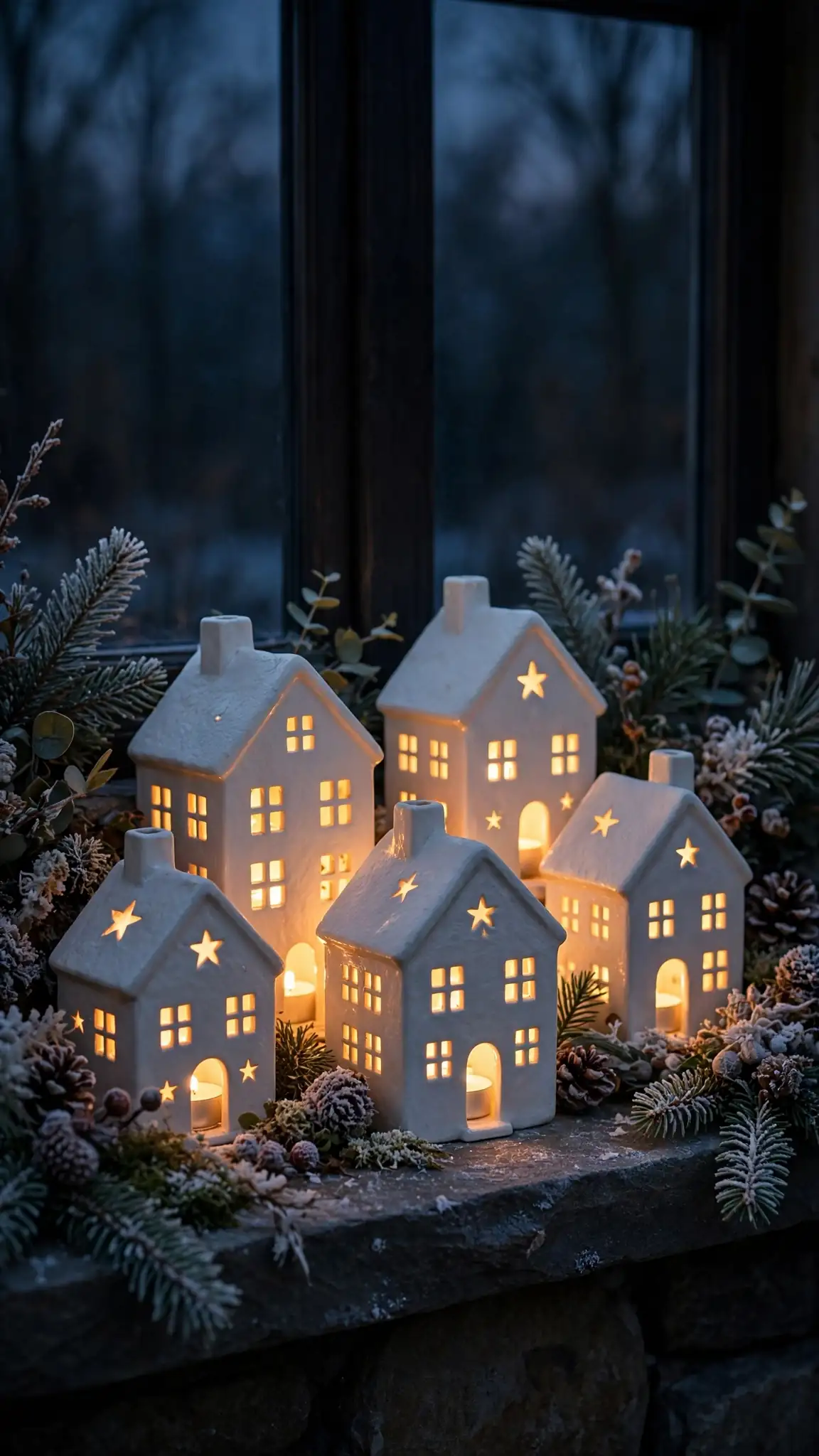
Little ceramic houses glowing from within are the coziest small-scale accent of the season — like a tiny winter village on your shelf. Sets of three to five white ceramic houses in graduated heights (3 to 8 inches) cost $20–$40 at Target, IKEA, or Pottery Barn, and each holds a standard tea light. Cluster them on a mantel, a console table, or a deep windowsill, spacing them a few inches apart so each one reads individually. The warm light shining through the cut-out windows creates the prettiest glow at dusk, especially against a dark window.
Style the village on a bed of faux snow blanket ($8 for a 3-foot roll) or a simple linen runner for extra winter magic. Battery tea lights with timers ($12 for 12) are the practical choice — they switch on at dusk automatically and never drip wax on your furniture. Mix in a few bottle-brush trees in white or frosted green ($5–$10 each) for a fuller scene. Keep the rest of the surface clear so the village feels intentional, not cluttered. Pro tip: group houses in odd numbers and vary the heights — threes and fives always look more natural than pairs.
12. Birch Log Bundles Beside the Fireplace
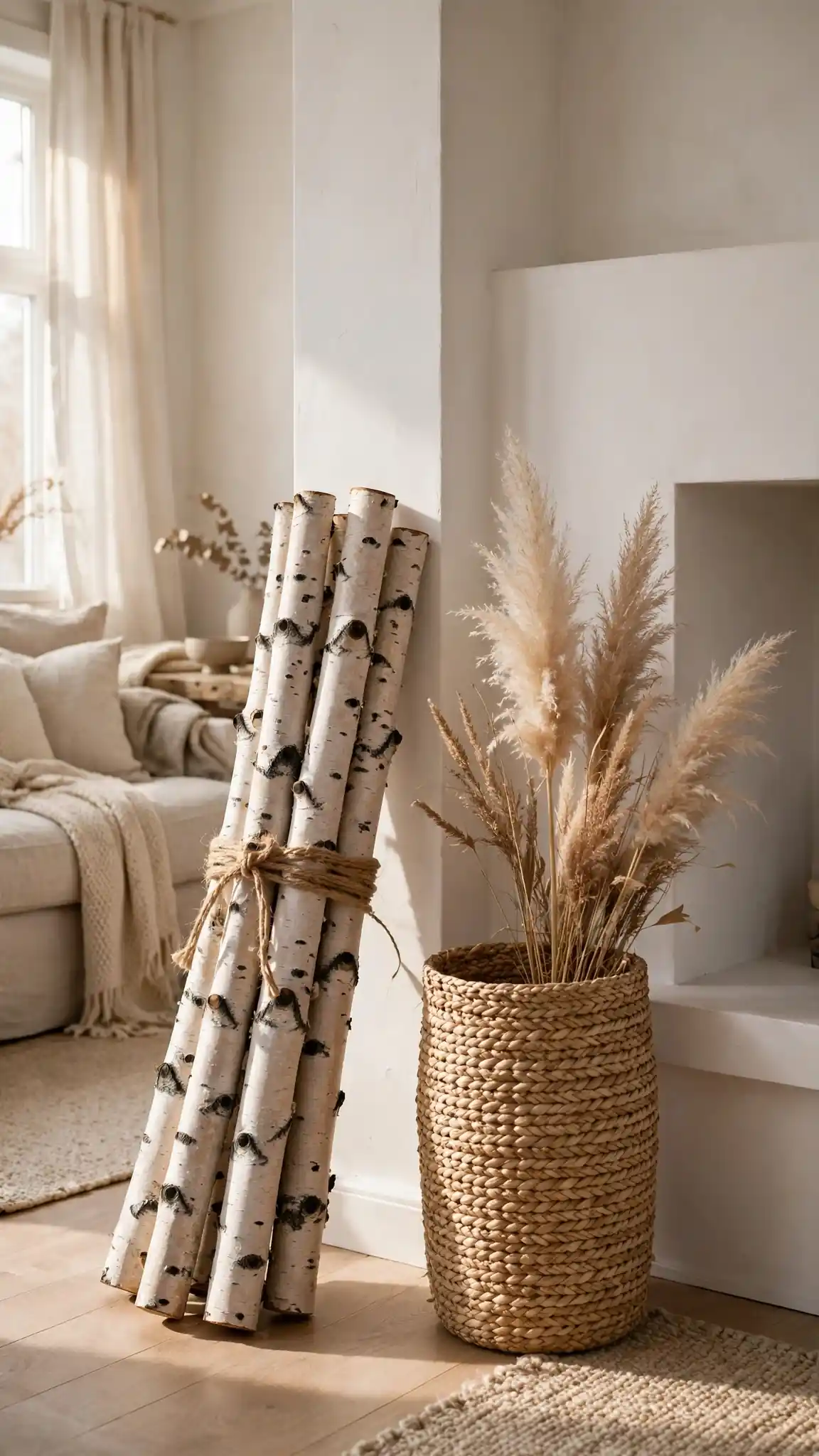
Even a non-working fireplace becomes a winter focal point with a bundle of white birch logs beside it. Decorative birch log bundles — typically 12 to 18 inches long, tied with jute twine — cost $25–$45 at Home Depot, Michaels, or Etsy and are purely ornamental, so no chimney needed. Lean the bundle against the fireplace surround or stand logs upright in a tall seagrass basket for a sculptural look. The white bark with dark markings fits the neutral palette perfectly and adds the kind of natural texture that makes a room feel collected rather than decorated.
If you have a working fireplace, keep decorative bundles at least 3 feet from the firebox and never burn decorative logs that may be treated. Pair the birch with a stack of two or three neutral art or design books and a small pine sprig on the mantel for a complete vignette. In homes without a fireplace, the same bundle styled in an empty corner or beside a media console creates a similar focal point. Dust the bark monthly with a dry cloth to keep it bright. Pro tip: buy one bundle and split it — half beside the fireplace, half in a bedroom corner — for two styled moments from one purchase.
13. Sheepskins Draped Over Dining Chairs
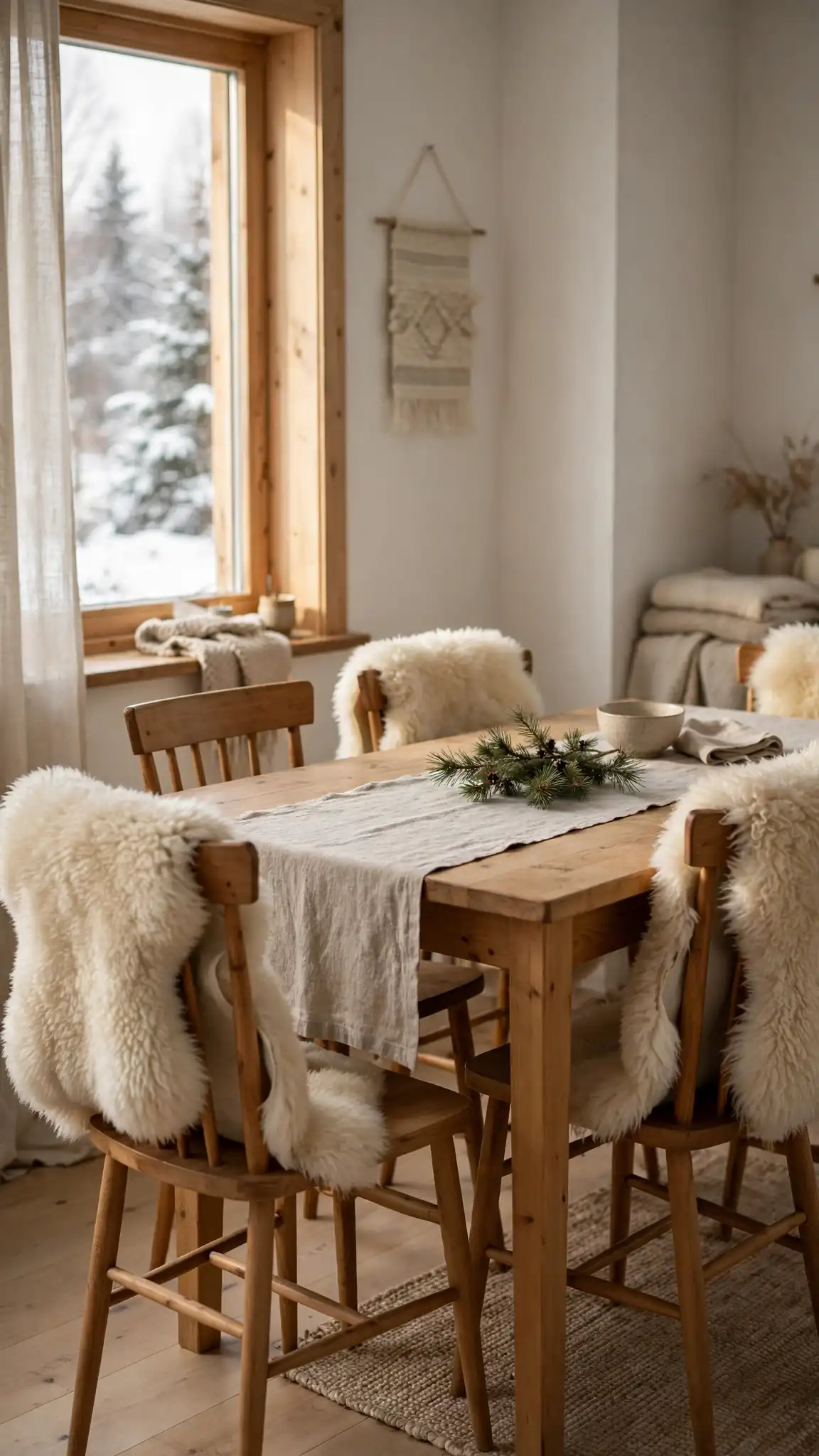
Draping a sheepskin over a dining chair is a Scandinavian trick that makes the whole dining room feel warmer and more inviting. Genuine sheepskins cost $40–$80 at IKEA, Overstock, or Etsy, while excellent faux versions run $20–$35 and are machine washable. Simply fold the skin in half over the chair back so about 12 inches hangs down the front — no ties or fasteners needed, since the weight holds it in place. Ivory and light grey skins suit the serene palette best, and they make hard wooden chairs genuinely comfortable for long winter dinners.
You do not need a skin on every chair — dressing the two end chairs or every other chair looks intentional and saves money. Shake sheepskins outside every few weeks and brush the wool with a pet brush to keep it fluffy; spot-clean spills immediately with a damp cloth. Faux skins can go in the washing machine on cold and air-dry beautifully. If your dining chairs are upholstered, skip the skins there and use them on a bench or accent chair instead. Pro tip: one sheepskin also transforms a cold home-office chair into the coziest seat in the house.
14. Pale Grey Bedroom Layers for Deep Winter

The bedroom deserves the full serene winter treatment, since you spend the darkest months craving rest. Build the bed in layers: start with white or ivory sheets, add a pale grey duvet cover ($50–$90 for queen at Target or IKEA), then fold a cream knit throw across the foot and stack sleeping pillows with two oatmeal linen shams in front. Pale grey reads as calm rather than cold when you layer in enough texture — think quilted coverlets, washed linen, and a nubby wool throw. Keep the headboard wall simple with one piece of muted winter art or a round mirror.
Warm lighting makes or breaks a grey bedroom: use 2700K bulbs in bedside lamps and add a pair of flameless candles on the nightstands for evening glow. A soft grey or ivory area rug under the bed — extending 24 inches on each side — keeps bare feet warm on winter mornings. Limit the palette to three tones maximum (white, pale grey, oatmeal) for the most restful effect. Wash bedding weekly in winter since dry air and heavy blankets trap more dust. Pro tip: a eucalyptus or pine sprig in a small bud vase on the nightstand adds a fresh scent that helps you unwind.
15. Mercury Glass Holders Down the Hallway
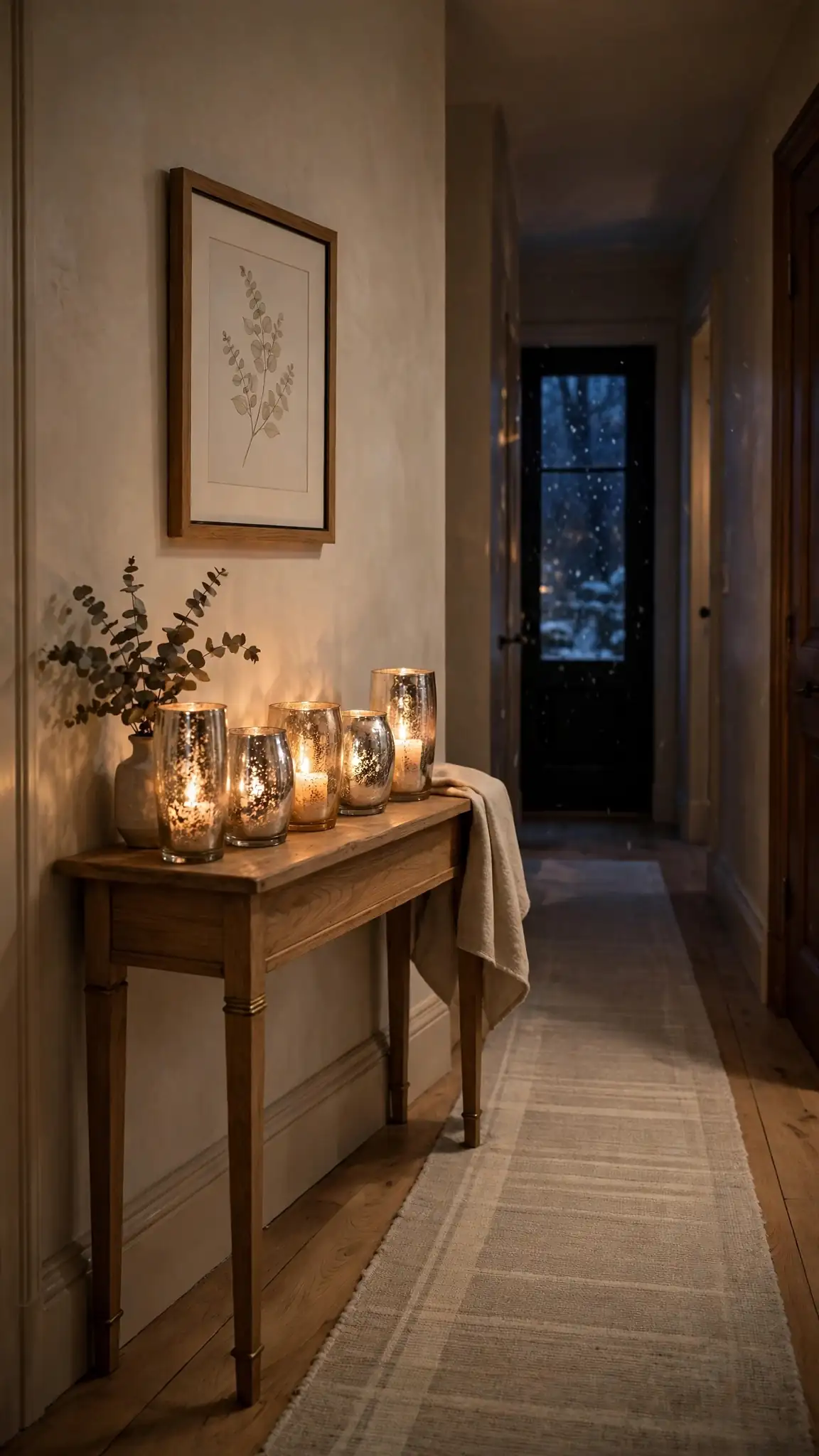
Hallways are often forgotten in winter decorating, but a row of mercury glass candle holders turns a plain corridor into a glowing gallery. Mercury glass votives and hurricanes in silver or champagne cost $4–$12 each at Pottery Barn, Target, or HomeGoods — buy in odd numbers for the best rhythm. Line three to five holders down the center of a console table, or place a pair on floating shelves at staggered heights. The mottled glass catches and multiplies candlelight beautifully, which is exactly what dark hallways need in January and February.
Use LED tea lights or pillars inside mercury glass for safety in high-traffic hallways where real flames could get knocked over. If your hallway is narrow, wall-mounted mercury glass sconces ($25–$40 each) give the same glow without taking up surface space. Keep the surrounding decor minimal — one runner rug in a neutral tone and a single framed print — so the candlelight is the star. Dust the glass monthly, since the mottled finish shows fingerprints. A dimmer switch on the hallway light lets the candle glow dominate after dark. Pro tip: champagne-toned mercury glass looks warmer and more winter-appropriate than bright silver.
16. A Simple Natural-Wood Advent Display
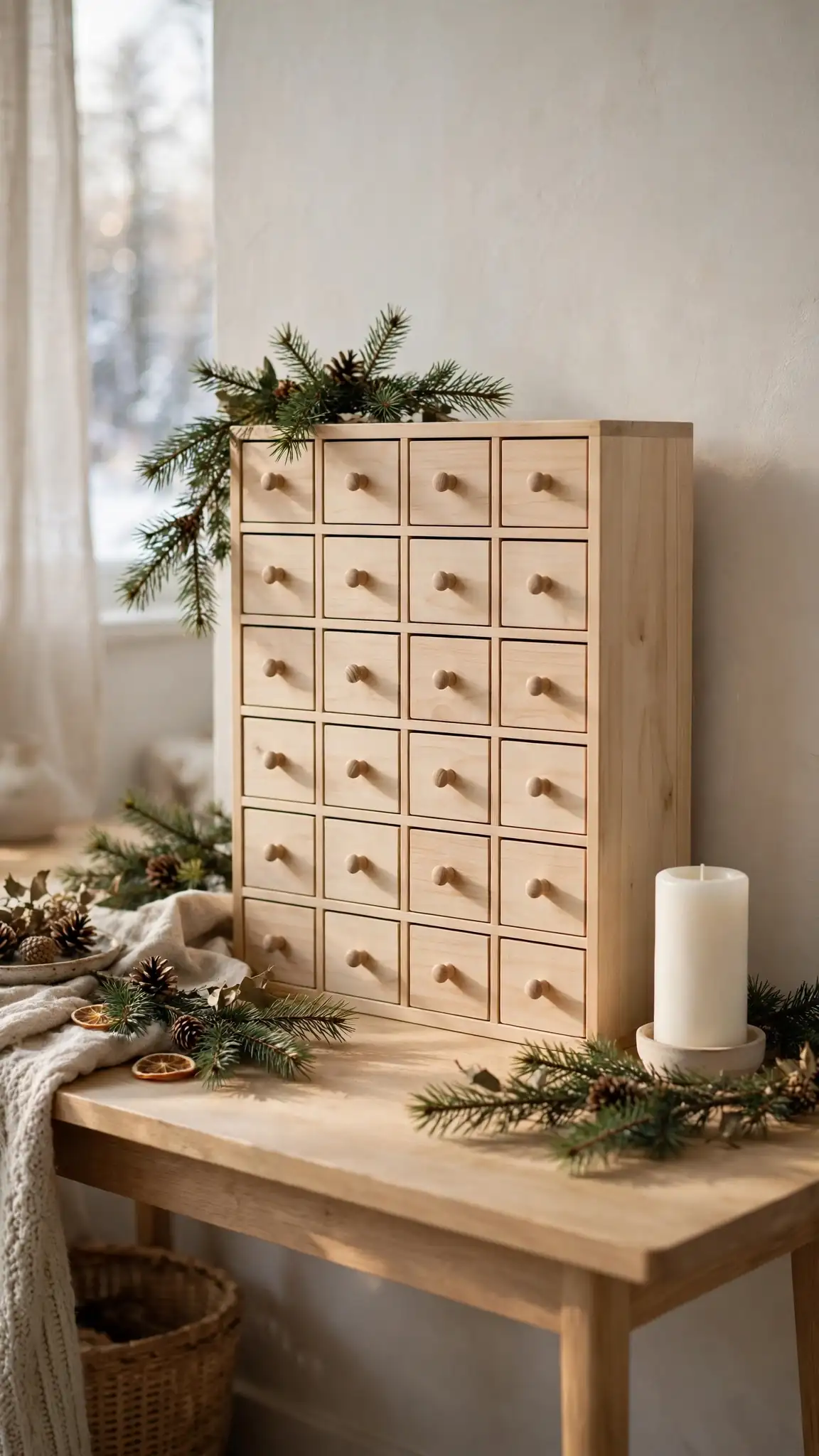
An advent display in natural wood brings quiet anticipation to the season without the visual noise of a traditional calendar. Look for a wooden advent house or tray with 24 small drawers or cubbies — birch or light oak versions cost $30–$55 at IKEA, Etsy, or Crate & Barrel and measure about 16 inches wide. Style it on a console or mantel with a few pine sprigs and one white pillar candle beside it. Fill the compartments with small treats, handwritten notes, or tiny ornaments; the ritual of opening one drawer each morning becomes a lovely December tradition.
After the holidays, the same wooden piece works as everyday storage for jewelry, tea bags, or desk supplies — which justifies the purchase beyond one month. Choose an advent style with clean lines and no painted characters so it fits the serene aesthetic; natural wood tones blend with everything. If you have young children, let them fill half the drawers themselves to build excitement. Store it with the drawers slightly open so the wood does not stick in humid summers. Pro tip: number the drawers with small kraft paper tags tied with twine for a handmade look that costs almost nothing.
17. Frosted Branches in a Tall Stoneware Vase

A tall vase of frosted branches is the single most dramatic — and easiest — winter statement you can make. Choose a stoneware or ceramic floor vase 24 to 36 inches tall in matte white, oatmeal, or soft grey ($40–$80 at CB2, West Elm, or HomeGoods) and fill it with five to seven bare branches sprayed with faux snow ($6 a can). Dogwood, birch, or curly willow branches work best; cut them 1.5 times the vase height so the arrangement feels balanced. Place the vase in an empty corner, beside the fireplace, or flanking the front door for instant winter architecture.
Add a string of 20 warm-white fairy lights ($8) woven through the branches for an evening glow that rivals a Christmas tree. If you prefer a no-spray option, buy pre-frosted faux branches ($10–$15 each) that you can reuse every year. Weigh the vase base with a bag of sand or stones if you have curious pets or toddlers — tall arrangements tip easily. Refresh real branches by re-spraying every few weeks as the frost effect fades. Pro tip: three branches in a medium vase on a dining sideboard gives the same look at half the scale and cost.
18. Cream Knit Poufs Around a Low Coffee Table

Cream knit poufs are the flexible seating your winter living room has been missing — soft, movable, and perfectly on-palette. Round knit poufs 18 to 20 inches in diameter cost $40–$70 each at Target, World Market, or Amazon, and most have removable, washable covers. Tuck two poufs under or beside a low coffee table (14 to 16 inches high) so they pull out easily for extra guests, kids’ lounging, or the comfiest footrest you have ever owned. The chunky knit texture echoes your throws and pillows, tying the whole seating area together.
Choose poufs with a sturdy inner core — EPS bead or foam filling holds its shape far better than loose stuffing. In small living rooms, poufs beat extra chairs because they slide completely under the coffee table when not in use. Spot-clean knit covers promptly, and wash removable covers on gentle to keep them cream rather than dingy. Pair poufs with a low-pile rug so they sit stable and do not wobble. Pro tip: a pouf beside each end of the sofa creates symmetrical, pulled-together styling even when the room is otherwise casual.
19. White Pillar Candles of Varying Heights

White pillar candles are the workhorse of the winter decor aesthetic — simple, affordable, and endlessly versatile. Stock up on unscented ivory pillars in 3, 4, 6, and 8-inch heights; a set of six costs $15–$25 at IKEA or Target, making this one of the cheapest high-impact updates on this list. Group them in threes on a round wood tray for the coffee table, line them along a deep windowsill, or cluster them inside a large glass hurricane on the dining table. Unscented candles keep the look clean and will not compete with cooking smells or evergreen sprigs.
Vary both height and diameter within each grouping — a 3×6-inch pillar beside a 2×4-inch one looks far more natural than matching sets. Place candles on trays, ceramic plates, or slices of birch wood to protect surfaces from wax drips. Trim wicks to a quarter inch before each lighting so the flames burn clean and even. For a no-maintenance version, ivory LED pillars with realistic melted edges ($20 for a set of three) look convincing from a few feet away. Pro tip: burn a new pillar for one hour per inch of diameter the first time so it melts evenly and never tunnels.
20. A Calm Winter Decor Aesthetic Entryway

The entryway is the first taste of your winter decor aesthetic, so keep it calm, warm, and clutter-free. Start with a neutral runner — a 2.5 x 8-foot washable runner in ivory or soft grey costs $40–$70 at Ruggable or Target — then add a cream knit throw folded over a bench and a lidded basket for winter accessories. A round mirror above the console bounces light into what is often the darkest spot in the house, and a single frosted pine sprig in a small vase adds the seasonal note. Wall hooks in matte black or brushed brass keep coats tidy without a bulky closet.
Good entryway lighting matters more in winter: swap the overhead bulb for a 2700K warm LED and add a small lantern with an LED pillar on the console for evening glow. Keep the palette to three neutrals maximum so the small space feels serene rather than busy. A boot tray ($15–$25) in a natural material corrals snowy shoes and protects your runner. If space is tight, a single floating shelf with two hooks below does the job of a full console. Pro tip: the entryway is the best place in the house for a scented pine or fir candle — guests smell winter the moment they walk in.
21. Linen Curtains That Soften Grey Winter Light
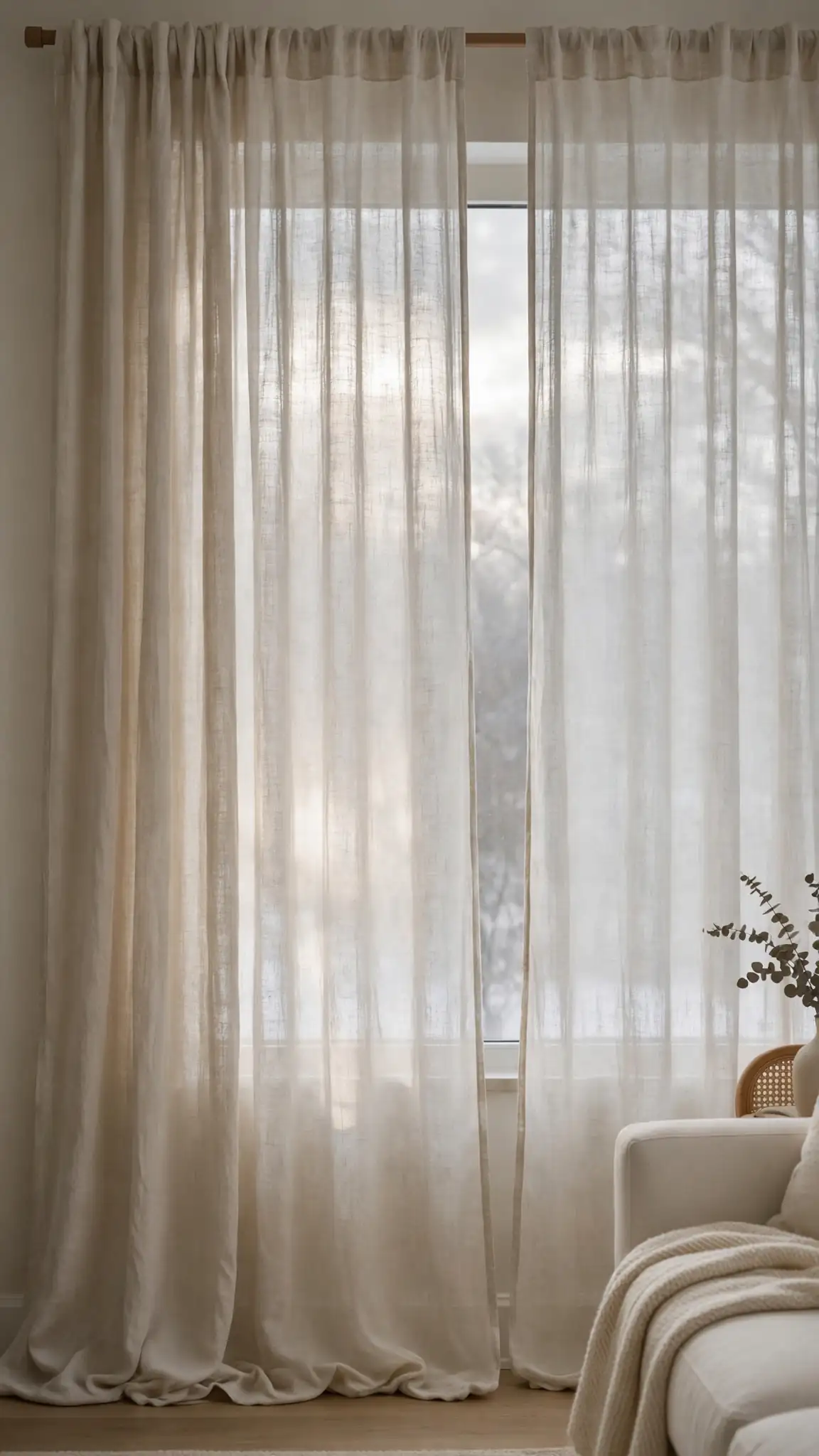
Grey winter light can feel harsh through bare windows, but linen curtains soften it into something beautiful. Choose floor-length panels in natural flax, oatmeal, or soft white — 96-inch panels suit standard 8-foot ceilings and cost $30–$60 per pair at IKEA, Target, or Pottery Barn. Hang the rod 4 to 6 inches above the window frame and 3 to 4 inches wider on each side so the windows look larger and the light filters through more fabric. Unlined linen glows gently when daylight passes through, turning even a cloudy afternoon into soft, diffused light.
For bedrooms or street-facing windows, layer a linen-look blackout curtain behind the sheer linen — you keep the soft aesthetic by day and get real darkness at night. Wash linen panels on gentle and hang them slightly damp to minimize wrinkles; a few natural creases suit the relaxed look. In living rooms, puddling the curtains 1 to 2 inches on the floor adds a luxurious, collected feel. Avoid heavy velvet or dark colors, which absorb the little light winter gives you. Pro tip: iron only the top hem and let the rest hang naturally — perfect linen curtains look softly rumpled, not crisp.
22. Nightstand Styling with Pine Sprigs and Brass
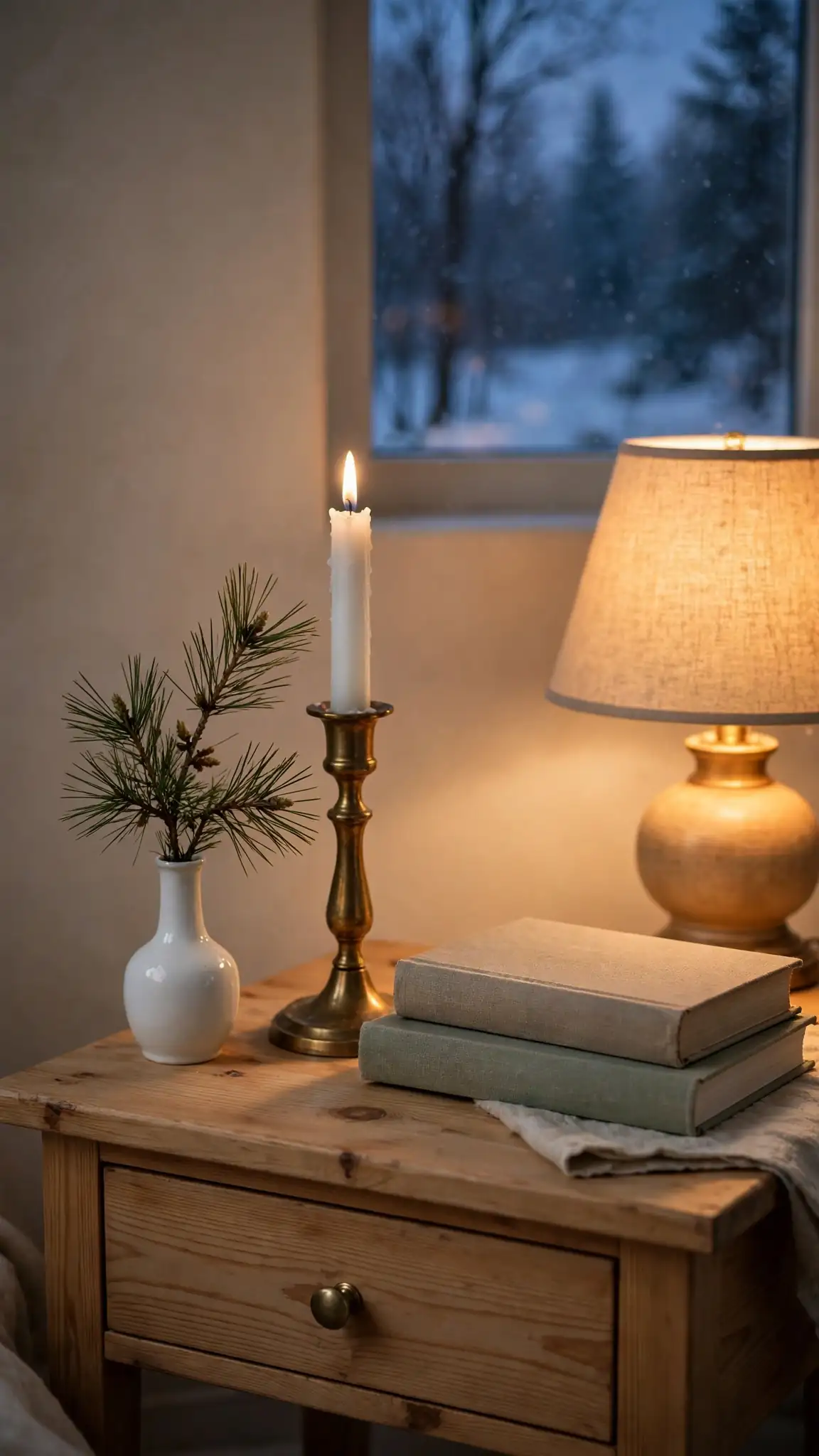
Your nightstand is the last thing you see at night and the first thing you see in the morning, so give it the serene winter treatment. Clear everything except the essentials — a lamp, your book, and water — then add one small pine or cedar sprig in a bud vase and a single brass candlestick with a white taper. Brass and warm wood tones ($12–$25 for a candlestick at Target or Etsy) add a touch of richness that keeps the neutral palette from feeling flat. A small stack of two books under the vase creates height and keeps the arrangement from looking lost on a wide nightstand.
Keep nightstand styling asymmetrical: lamp on one side of the arrangement’s visual weight, sprig and candle on the other, so it feels curated rather than staged. Choose a warm-white bulb no brighter than 40-watt equivalent — harsh light ruins the calm mood you are building. A tiny dish for jewelry or a linen-covered box corrals the small items that otherwise create clutter. Refresh the pine sprig every week or swap in a faux sprig for a zero-maintenance version. Pro tip: light the taper for ten minutes as part of your bedtime routine — the ritual signals your brain that the day is done.
Final Thoughts
Creating a winter decor aesthetic is really about editing more than adding — clearing the visual noise so calm textures and warm light can take over. You do not need to buy everything on this list; start with the three highest-impact moves: warm-white lighting in every room, a few cream knit throws, and simple evergreen sprigs in vases you already own. Those three changes alone will make your home feel like a serene winter retreat for under $100. Once the base feels calm, add one or two special pieces each year — a stoneware vase, a sheepskin, a set of ceramic houses — and your collection will grow naturally.
The best part of the winter decor aesthetic is how long it lasts. Unlike holiday decorations that come down in January, this serene neutral look carries you all the way through March, when the first hints of spring arrive. Because every piece is neutral and natural, nothing ever looks dated or out of place — your home simply feels peaceful. So pour something warm, light the candles, and enjoy the quietest, coziest season of the year in a home that finally feels like a retreat. Winter is long; your home should make it beautiful.
FAQs
Thinking about giving your home the serene winter treatment? These are the questions readers ask most about the winter decor aesthetic — from defining the style and choosing the right colors to budgeting and making it work in small spaces. The answers below will help you start with confidence, whether you are refreshing one room or styling your whole home.
Every answer focuses on practical, affordable steps you can take this week, with realistic prices and US stores for each piece. Most of these ideas cost under $50 per room, and many use items you may already own — the serene winter look is as budget-friendly as it is beautiful. Whether you are decorating your first apartment or refreshing a forever home, you will find a starting point that fits your budget and your schedule this season.
What is the winter decor aesthetic?
The winter decor aesthetic is a calm, Scandinavian-inspired decorating style for the cold months. It uses a neutral palette of white, cream, and soft grey, layered with cozy textures like knit, wool, and faux fur. Candlelight and simple evergreen touches replace bold holiday colors, creating rooms that feel peaceful and restful from December through March.
What colors define the winter decor aesthetic?
Whites, creams, ivory, oatmeal, stone grey, and pale greige form the core of the winter decor aesthetic. Natural wood tones and touches of muted green from eucalyptus or pine add life without breaking the calm. Avoid bright reds and saturated colors — the serenity comes from keeping everything soft, light, and tonal.
How is this different from regular Christmas decorating?
Christmas decorating is festive and colorful, with ornaments, reds, and greens. The winter decor aesthetic is quieter — it skips the holiday motifs and focuses on texture, candlelight, and neutral layers. The two can overlap in December, but this look stays up long after the tree comes down, carrying your home serenely into spring.
How much does it cost to refresh a room in this style?
A single room refresh typically costs $75–$150. The biggest wins are cheap: unscented pillar candles ($15–$25 for a set), a chunky knit throw ($25–$45), and fresh evergreen sprigs ($5–$12). Shop IKEA, Target, and HomeGoods for basics, and add one investment piece per year, like a stoneware vase or sheepskin.
Can I use this look in a small apartment?
Absolutely — this look suits small spaces beautifully. The light neutral palette makes rooms feel larger, and the style relies on textiles and candlelight rather than bulky furniture. Focus on a knit throw, a few candle clusters, one tall branch arrangement, and linen curtains to get the full effect in a studio or one-bedroom apartment.
When should I put up and take down winter decor?
Put up the neutral winter base in late November or early December, alongside or instead of holiday decorations. Unlike Christmas decor, which usually comes down in early January, this serene look can stay through February and into March. Swap the evergreen sprigs for pussy willow or bare branches as spring approaches for an easy transition.








Leave a comment