

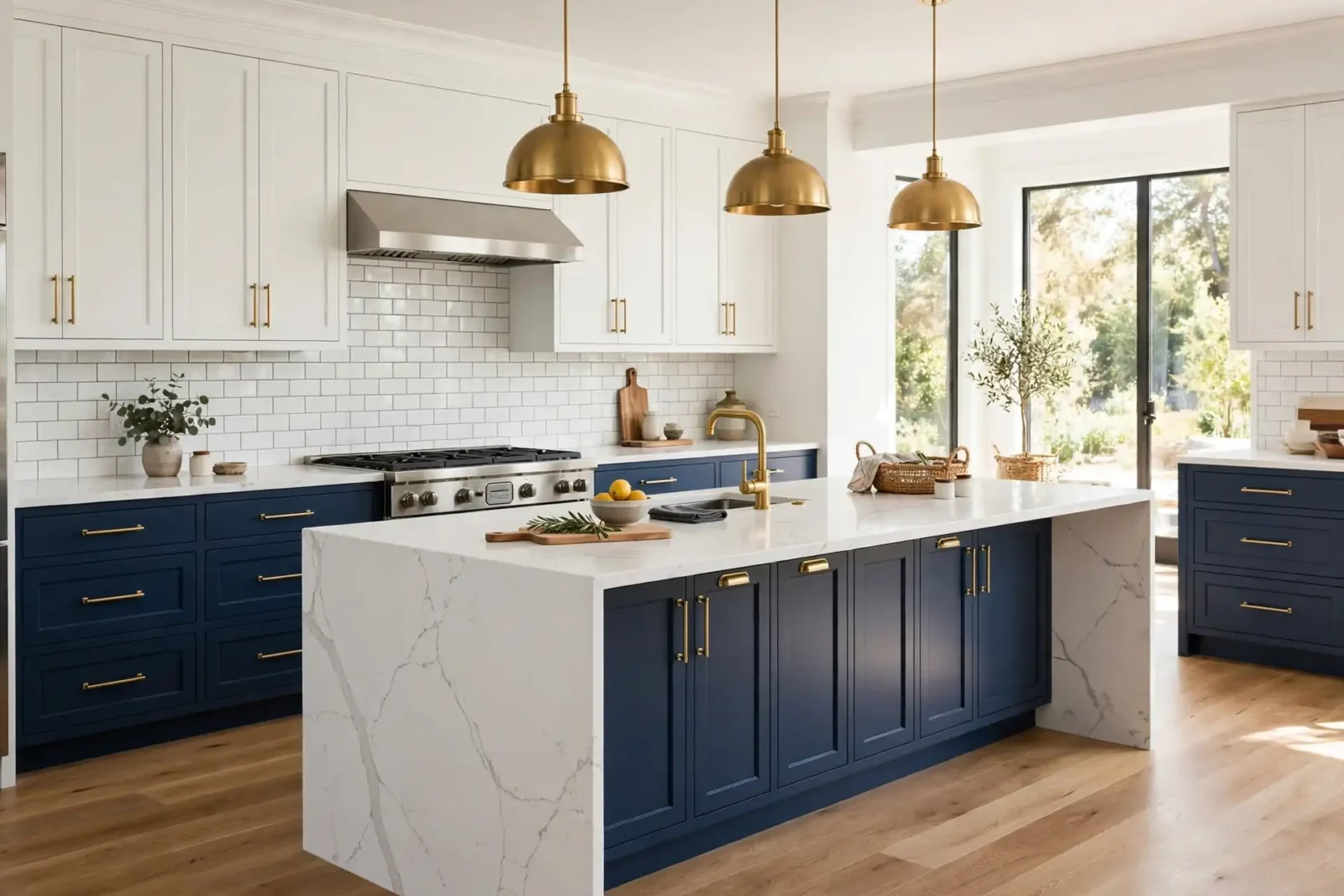
Two tone cabinets are the easiest way to give a kitchen personality without a full gut renovation, and designers keep reaching for them because the contrast simply works. Two tone cabinets pair a darker base with lighter uppers so the room feels grounded at the counter level and bright above. The look suits nearly every style, from classic Shaker kitchens to sleek modern spaces, and it hides everyday wear better than a single color. You can get there with fresh paint, refacing, or all-new cabinetry, so there is a path for every budget. This guide breaks down 23 favorite combinations with practical details that matter for your own kitchen.
Before you commit, it helps to understand how two tone cabinets change the feel of a room. Dark lowers draw the eye down and make floors look anchored, while light uppers reflect natural light and keep the space feeling open. Two tone cabinets also let you experiment: a bold color feels safer on the base cabinets, where it reads as furniture, than across the whole wall. Most combinations below cost between $3,000 and $12,000 installed depending on size and material, with refacing and paint landing far lower. We include real dimensions, price ranges and US stores so you can plan with confidence.
Two tone cabinets work especially well when you repeat each color at least twice so the pairing feels intentional. Try echoing the lower cabinet color in a kitchen island, a pantry door, or even small appliances and bar stools. Keep the hardware consistent across both tones so the kitchen reads as one design, not two. Two tone cabinets pair beautifully with butcher block, quartz, and marble counters, and most ideas below suit standard 30-inch base and 36-inch upper layouts. Grab a coffee and scroll through all 23 — one of them is about to become your kitchen.
1. Classic Navy and White Two Tone Cabinets
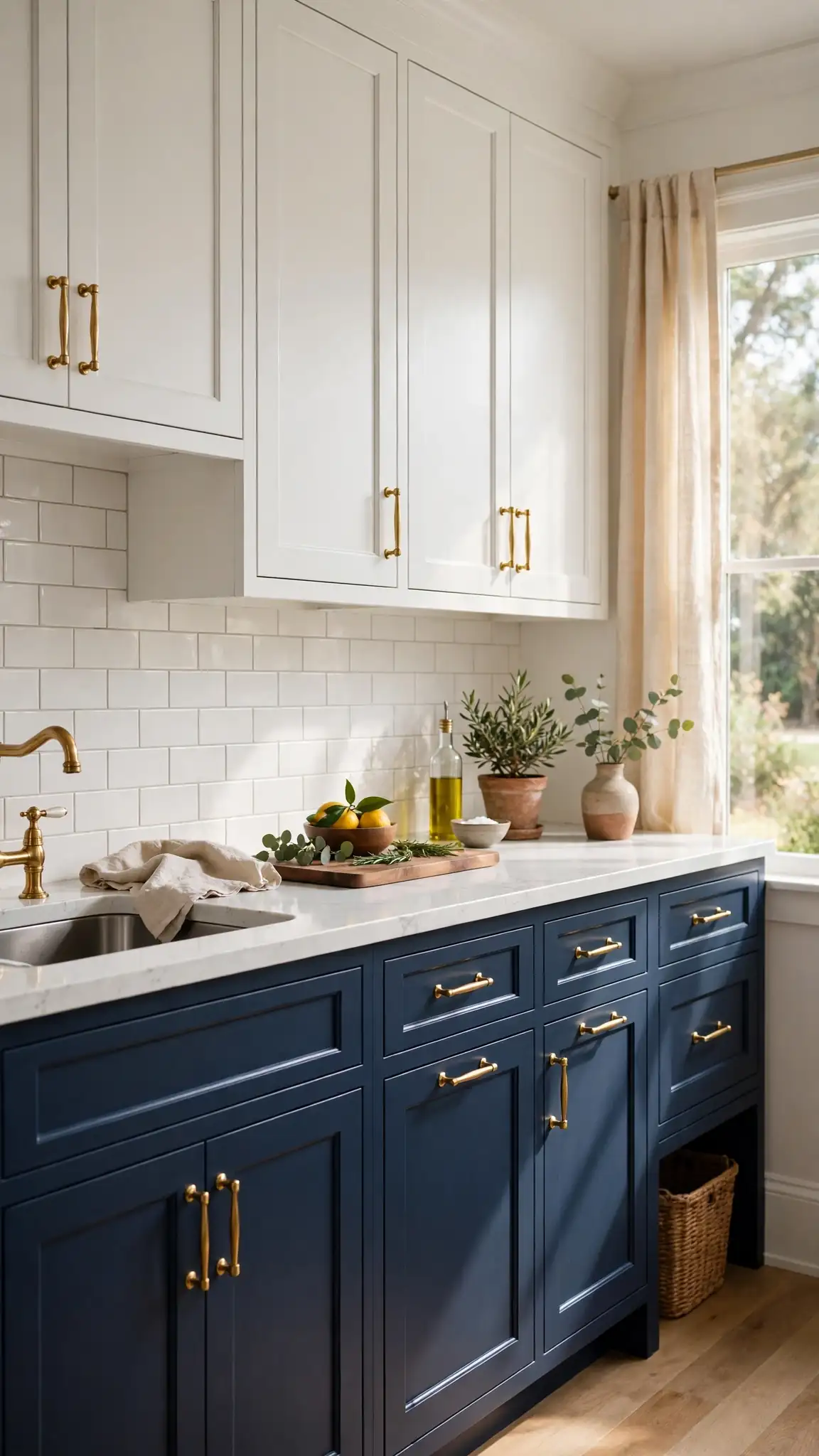
Navy lowers with crisp white uppers are the most requested of all two tone cabinets, and the reason is simple: the pairing looks expensive in almost any kitchen. Paint your base cabinets in a deep navy like Benjamin Moore Hale Navy or Sherwin-Williams Naval, and keep uppers a clean bright white. Standard base cabinets run 24 inches deep and 34.5 inches tall, with uppers 12 inches deep and 30 to 42 inches tall depending on ceiling height. Expect to pay $4,500 to $9,000 for a mid-size 10-by-10 kitchen with semi-custom boxes from Home Depot or Lowe’s, or $1,200 to $2,500 for a professional paint-only refresh.
Navy behaves like a neutral, so it pairs with warm wood floors, marble-look quartz, and both brass and matte black hardware. Keep the backsplash simple — white subway tile or a soft gray lets the cabinets be the star. If your kitchen gets limited light, choose a navy with a touch of warmth rather than an inky flat tone, and use satin or semi-gloss paint so the color reads rich instead of murky. Pro tip: paint a large sample board and move it around the kitchen for three days to see the navy in morning and evening light before committing.
2. Warm Wood Uppers with Matte Black Lowers
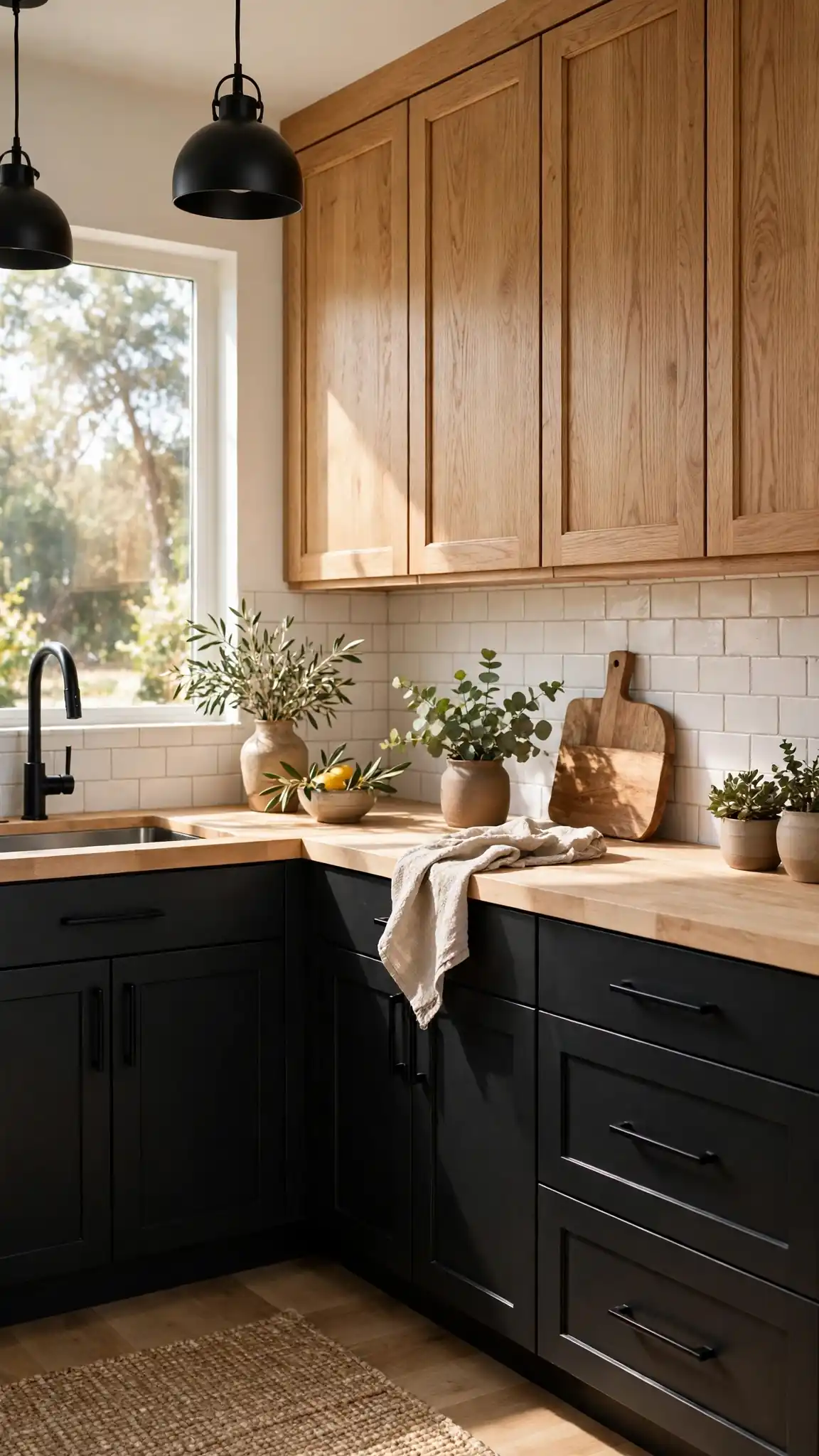
Pairing warm natural wood uppers with matte black base cabinets creates a modern-rustic kitchen that feels grounded and calm. The wood softens the drama of black, while the black lowers hide scuffs from shoes, pets and little hands far better than white. Look for white oak or walnut-look cabinets at IKEA, where SEKTION wall cabinets run $60 to $180 each, or semi-custom oak fronts from a local cabinet shop at $250 to $500 per linear foot. Matte black paint codes like Sherwin-Williams Tricorn Black or a thermofoil black finish keep the lowers fingerprint-resistant when you pick a satin sheen.
Balance the darkness with light counters — butcher block, light quartz, or concrete — and under-cabinet LED strips so the workspace stays bright. Warm wood floors echo the uppers and pull the whole room together. Because black lowers can read heavy, keep the uppers visually light with floating shelves or glass-front doors on one side. Choose simple bar pulls in aged brass or black for a cohesive look. Pro tip: if full black feels too bold, use black on the island only and a softer charcoal on the perimeter lowers.
3. Soft Gray Lowers and Crisp White Uppers
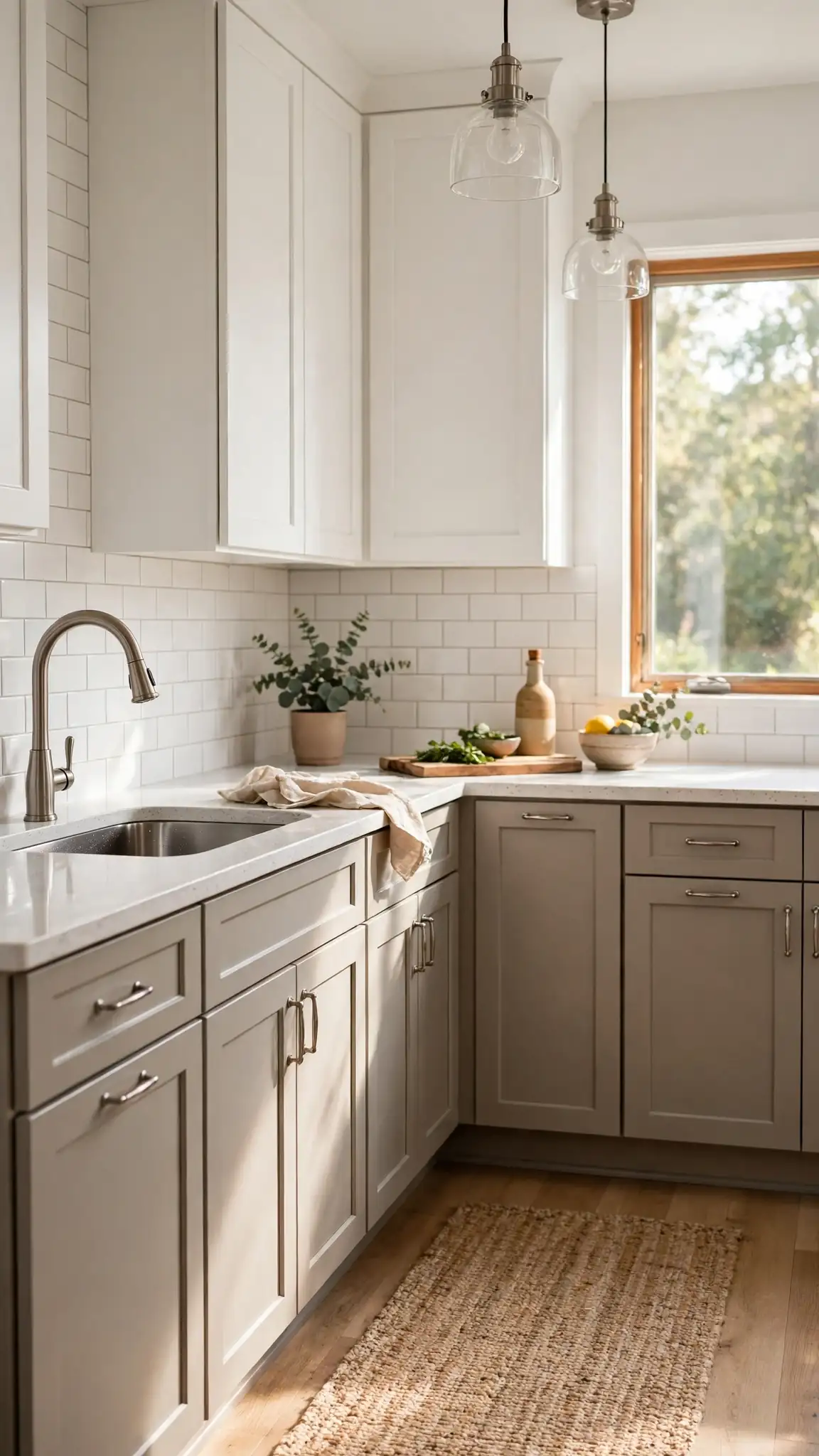
Soft gray base cabinets with white uppers are a safe-but-stylish choice that suits resale-minded homeowners, and this two tone cabinets pairing has stayed popular for over a decade. Try Sherwin-Williams Agreeable Gray or Benjamin Moore Revere Pewter on the lowers for a warm greige-gray that works with both warm and cool accents. A 10-by-12 kitchen refaced in this combo typically costs $5,000 to $10,000, while stock cabinets from Home Depot’s Hampton Bay line in gray and white can land under $4,000 for the whole room. Gray hides dust better than white, which keeps maintenance easy for busy families.
Gray pairs beautifully with stainless appliances, brushed nickel hardware, and white or light-gray quartz counters. Add warmth with wood cutting boards, a jute runner, or oak open shelves beside the white uppers. If you want a touch of color, gray is the perfect backdrop for a sage, navy or terracotta island. Keep grout light and counters light to stop the gray from feeling cold in north-facing kitchens. A patterned tile backsplash in soft blue or green adds quiet personality without overwhelming the neutral base. Pro tip: compare your gray sample against your flooring, not a white wall — floors shift gray undertones more than anything else.
4. Sage Green and Cream for a Calm Kitchen
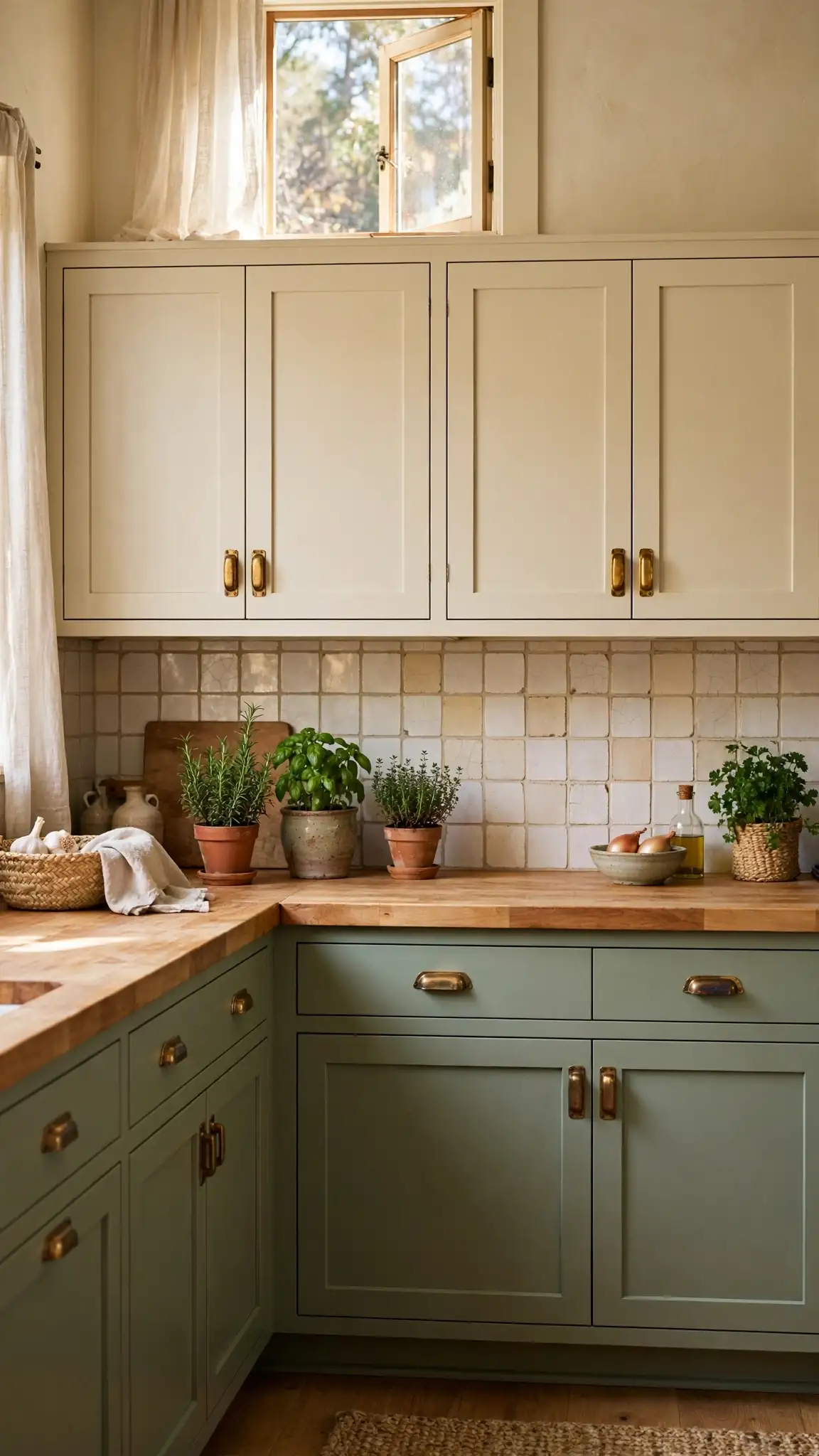
Sage green lower cabinets with warm cream uppers give a kitchen a serene, garden-inspired feel that works beautifully in farmhouse and cottage styles. Sage reads as a neutral with a whisper of color, so it pairs with almost everything you already own. Try Benjamin Moore Saybrook Sage or Farrow & Ball French Gray on the lowers, and a creamy white like White Dove up top. Painting existing cabinets in this combo costs $1,500 to $3,500 professionally for an average kitchen, while new semi-custom cabinets run $6,000 to $11,000 from retailers like Wayfair or Lowe’s. Sage is forgiving with crumbs and splashes, which busy cooks appreciate.
Warm the look with butcher block counters, unlacquered brass pulls, and a handmade-look zellige or subway backsplash. Cream uppers keep the sage from feeling heavy, and a light wood floor ties it all together. For open shelving, stain floating shelves to match the counter or floor rather than introducing a third color. Sage also flatters plants, copper cookware and woven textures, so style accordingly. Round out the look with a simple Roman shade and a vintage-style rug runner for extra farmhouse charm. Pro tip: skip cool-white bulbs here — 3000K warm LEDs keep sage and cream looking cozy instead of clinical.
5. Two Tone Shaker Cabinets with Brass Hardware
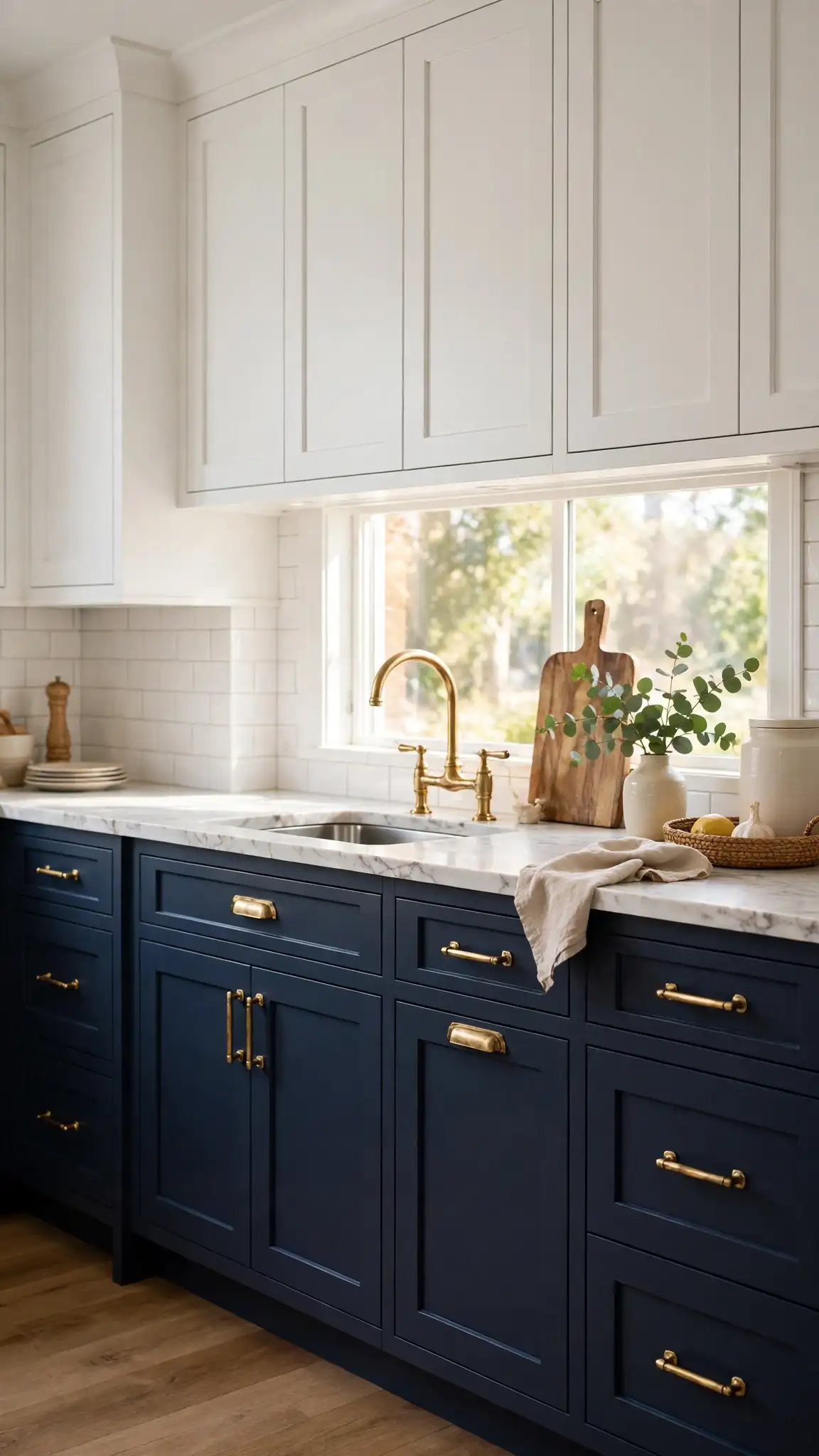
Shaker doors are the most versatile canvas for two tone cabinets, and unlacquered brass hardware elevates the whole pairing instantly. A timeless recipe: white or off-white Shaker uppers, lowers in a deep color like navy, forest green or charcoal, and slim brass bar pulls about 5 to 7 inches long on drawers. Shaker cabinets are widely available — IKEA SEKTION with BODBYN or AXSTAD fronts starts around $3,500 for a full 10-by-10 kitchen, while semi-custom Shaker lines from Home Depot or Lowe’s run $5,000 to $10,000. Standard Shaker door rails are 2.25 inches wide, giving that classic framed look at any price point.
Brass warms up cool cabinet colors, so it is ideal with navy, green and gray lowers. Let the brass age naturally for a lived-in patina, or choose lacquered brass if you prefer a constant shine. Keep faucets and light fixtures in the same finish family so the metal story feels deliberate. White Shaker uppers reflect light beautifully, which helps small kitchens feel bigger despite the dark base. Pro tip: buy one pull first and test it against your cabinet color in your own lighting — brass can skew yellow or pink depending on the paint.
6. Charcoal Lowers Under Bright White Uppers
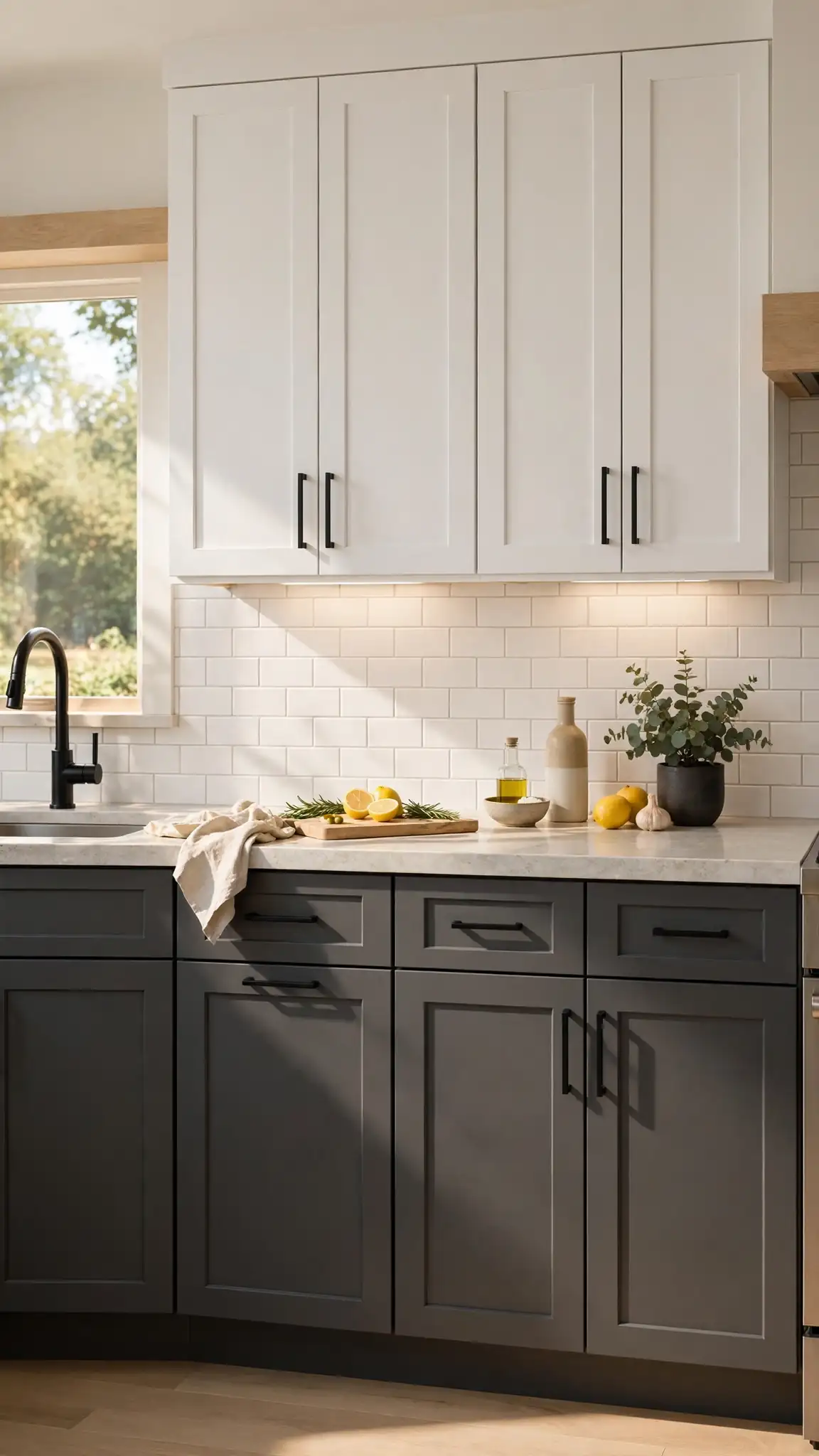
Charcoal gray base cabinets with bright white uppers deliver drama without the commitment of true black, making them a smart two tone cabinets choice for modern and transitional homes. Charcoal shades like Sherwin-Williams Peppercorn or Benjamin Moore Kendall Charcoal have enough depth to anchor a room but enough softness to feel livable. Refacing or painting lowers in charcoal costs $1,200 to $2,800 for an average kitchen, while a full new charcoal-and-white set runs $5,000 to $11,000 from stock or semi-custom lines. Charcoal hides wear at kick-plate level brilliantly, which is exactly where kitchens take the most abuse.
Pair charcoal with light stone or quartz counters to keep the contrast crisp, and choose hardware in matte black, polished nickel or champagne bronze. A white or light-gray backsplash keeps the uppers and lowers connected, and good under-cabinet lighting prevents the charcoal from feeling cave-like after dark. Add a warm runner and wood stools to soften the palette. A single floating wood shelf styled with white dishes breaks up long runs of white uppers beautifully. Pro tip: test charcoal next to your countertop sample — some charcoals carry blue or brown undertones that only show up beside stone.
7. Deep Forest Green Paired with Light Oak
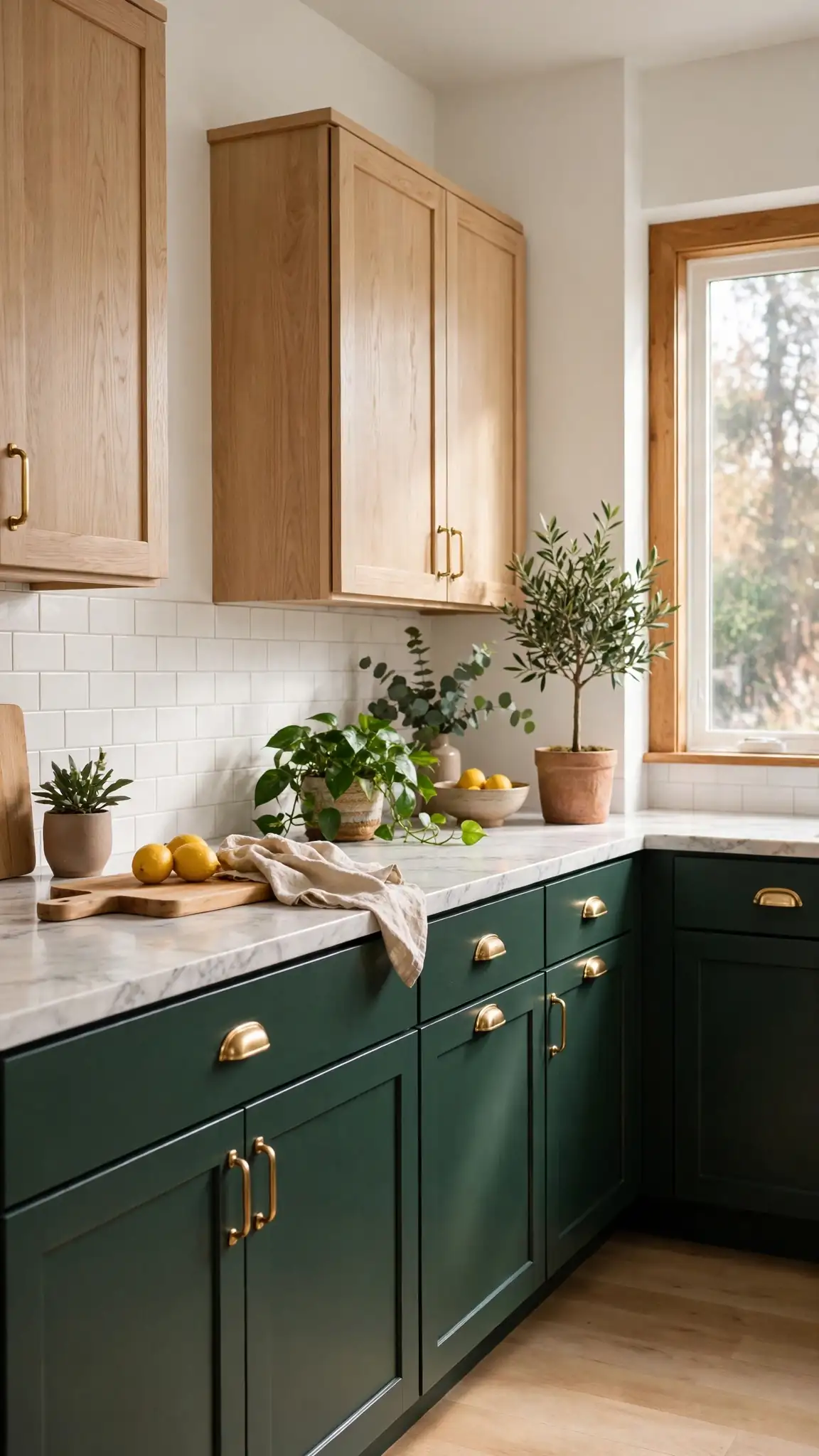
Deep forest green base cabinets with light oak uppers bring a rich, organic mood that feels both modern and timeless. Greens like Farrow & Ball Studio Green or Sherwin-Williams Evergreen Fog add depth while staying livable day after day. Natural oak wall cabinets cost $180 to $450 per linear foot from semi-custom makers, or go budget-friendly with IKEA SEKTION frames and oak-look fronts for about $2,000 to $4,000 in a mid-size kitchen. Painting just the lowers green while swapping uppers for oak fronts typically lands between $2,500 and $5,000, making this an achievable weekend-plus-pro project.
Forest green flatters brass and antique bronze hardware, marble-look counters, and warm white walls. The oak uppers introduce texture, so keep other wood tones close in value to avoid a mismatched look. Plants thrive visually against deep green, so style a few herbs on the counter or a hanging planter by the window. Good task lighting matters here — green absorbs light, so plan LED strips under the uppers. Pro tip: carry the forest green onto a nearby pantry door or bar cabinet so the color feels intentional, not isolated.
8. Coastal Blue and White for a Breezy Kitchen
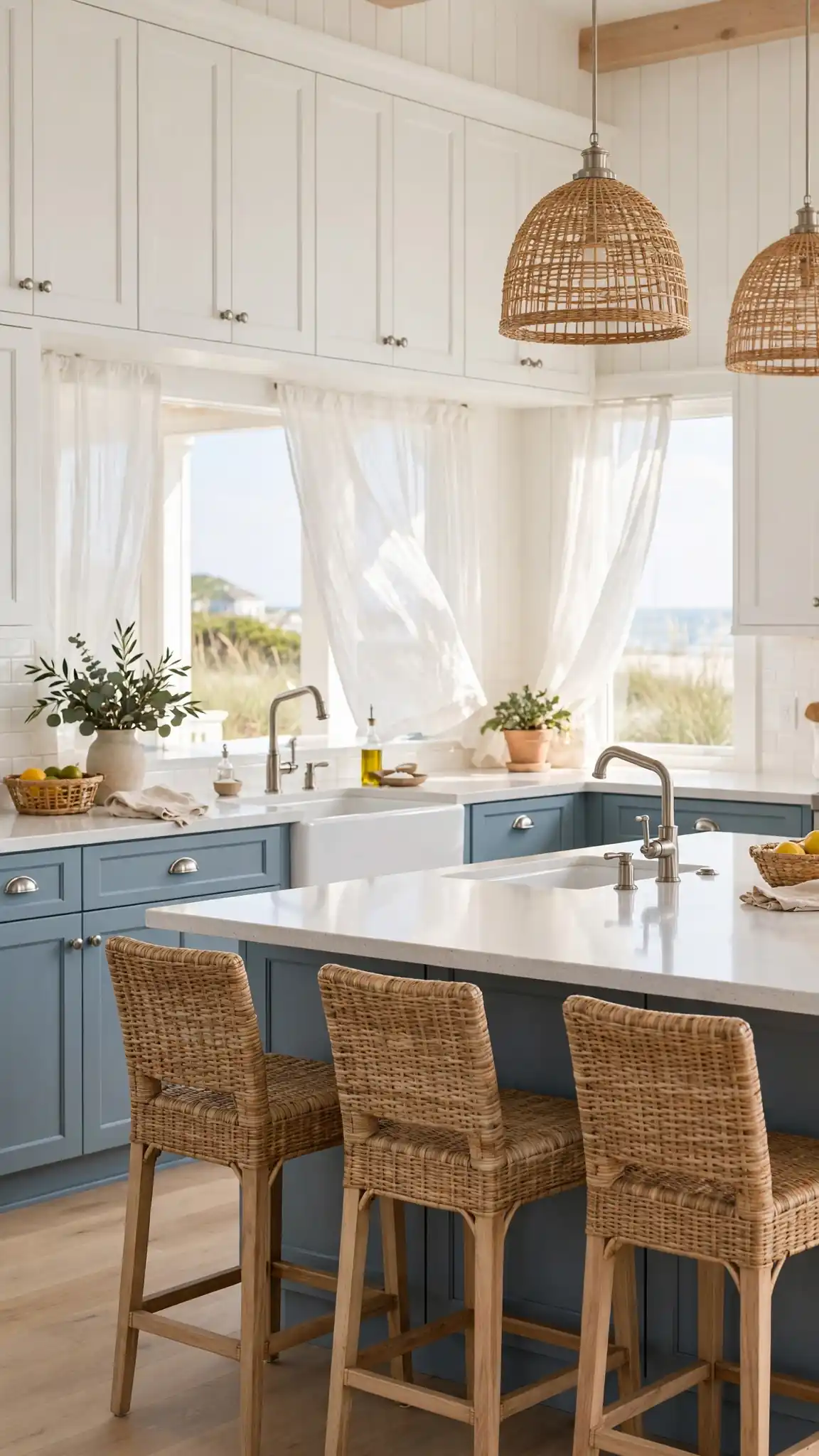
Coastal blue lower cabinets with fresh white uppers channel a relaxed beach-house vibe without any kitsch. Think soft denim or dusty blues like Benjamin Moore Beach Glass or Sherwin-Williams Rainwashed — colors with gray in them so they stay sophisticated. A professional paint job for this combo runs $1,500 to $3,000 in a standard kitchen, while new stock cabinets from Home Depot in blue-gray and white land between $4,000 and $8,000. Base cabinets at the standard 24 inches deep and 34.5 inches tall give plenty of presence for the color, and white uppers at 30 to 36 inches tall keep the ceiling feeling high.
Lean into the coastal mood with light quartz counters, a white or sea-glass backsplash, and brushed nickel or chrome hardware. Woven bar stools, a striped runner and open shelving with white dishes complete the breezy feel. Avoid going overboard on theme — no anchors required — and let the cabinet color do the talking. This palette loves natural light, so keep window treatments sheer. Woven pendant lights and a light jute rug reinforce the relaxed coastal mood effortlessly. Pro tip: use the same coastal blue inside a glass-front cabinet or on the island back for a subtle echo that ties the room together.
9. Espresso Lowers with Ivory Uppers
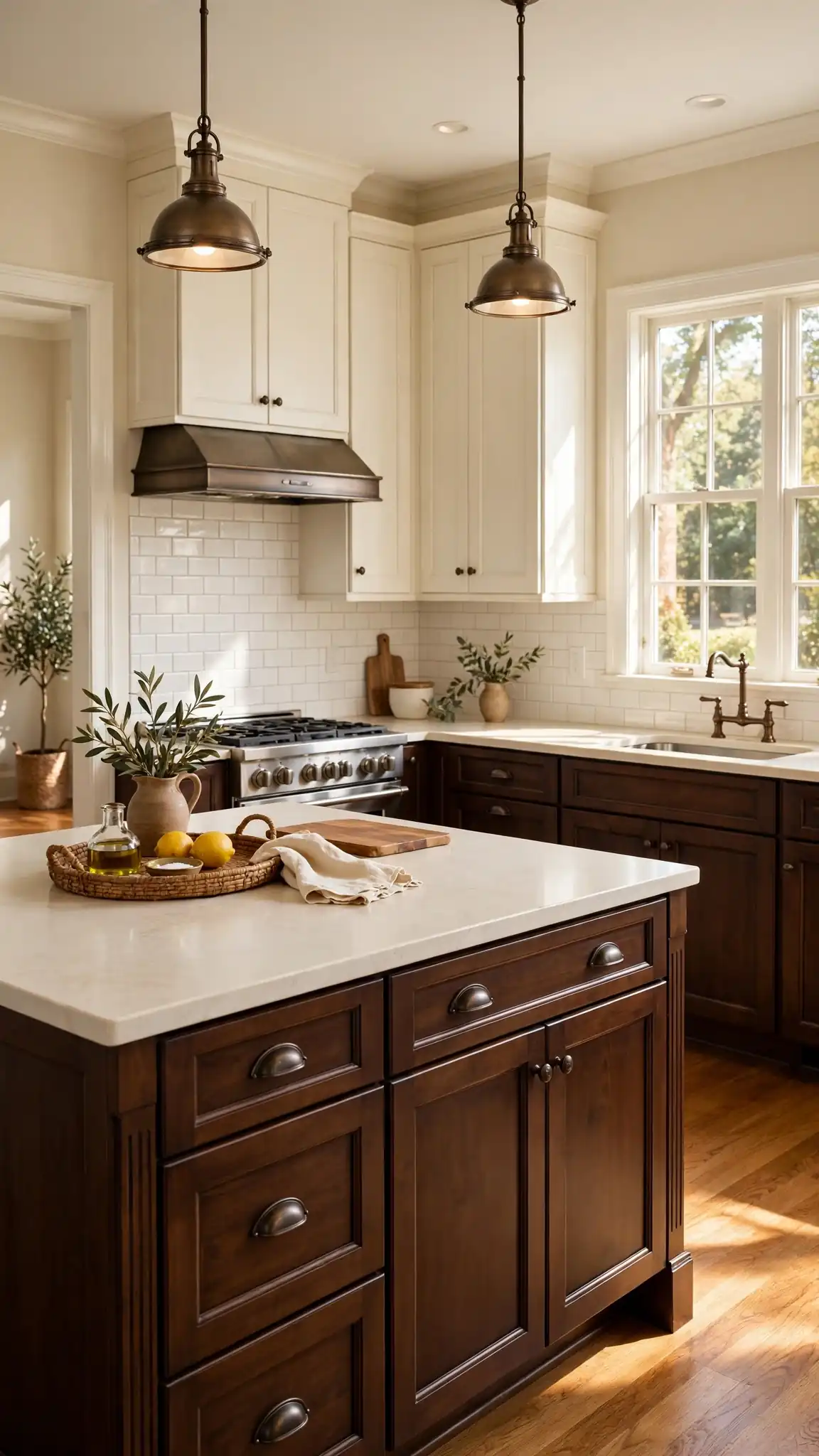
Espresso brown base cabinets with ivory uppers create a warm, furniture-like kitchen that feels custom and grounded. Espresso works beautifully with traditional and transitional styles, and it pairs naturally with wood floors of almost any tone. Dark stained lowers from stock lines like Home Depot’s Hampton Bay or Lowe’s Diamond run $3,500 to $7,000 for a 10-by-10 layout, while semi-custom espresso cabinets reach $8,000 to $13,000. If you already have dark wood lowers, simply painting the uppers ivory costs as little as $800 to $1,500 and still delivers the full two-tone effect with minimal disruption.
Espresso loves warm metals — oil-rubbed bronze, antique brass and copper all sing against it. Ivory uppers keep the room from feeling heavy, especially with light counters like cream quartz or butcher block. Add texture with a handmade-look backsplash and woven shades to soften the formality. Because espresso can read almost black in dim light, confirm your sample in evening lighting before committing. Glass-front uppers on one wall lighten the composition and show off pretty dishware nicely. Pro tip: choose a warm-white bulb around 2700K to 3000K so the espresso reads rich brown instead of flat black after dark.
10. Light Blue Gray and White in a Farmhouse Kitchen
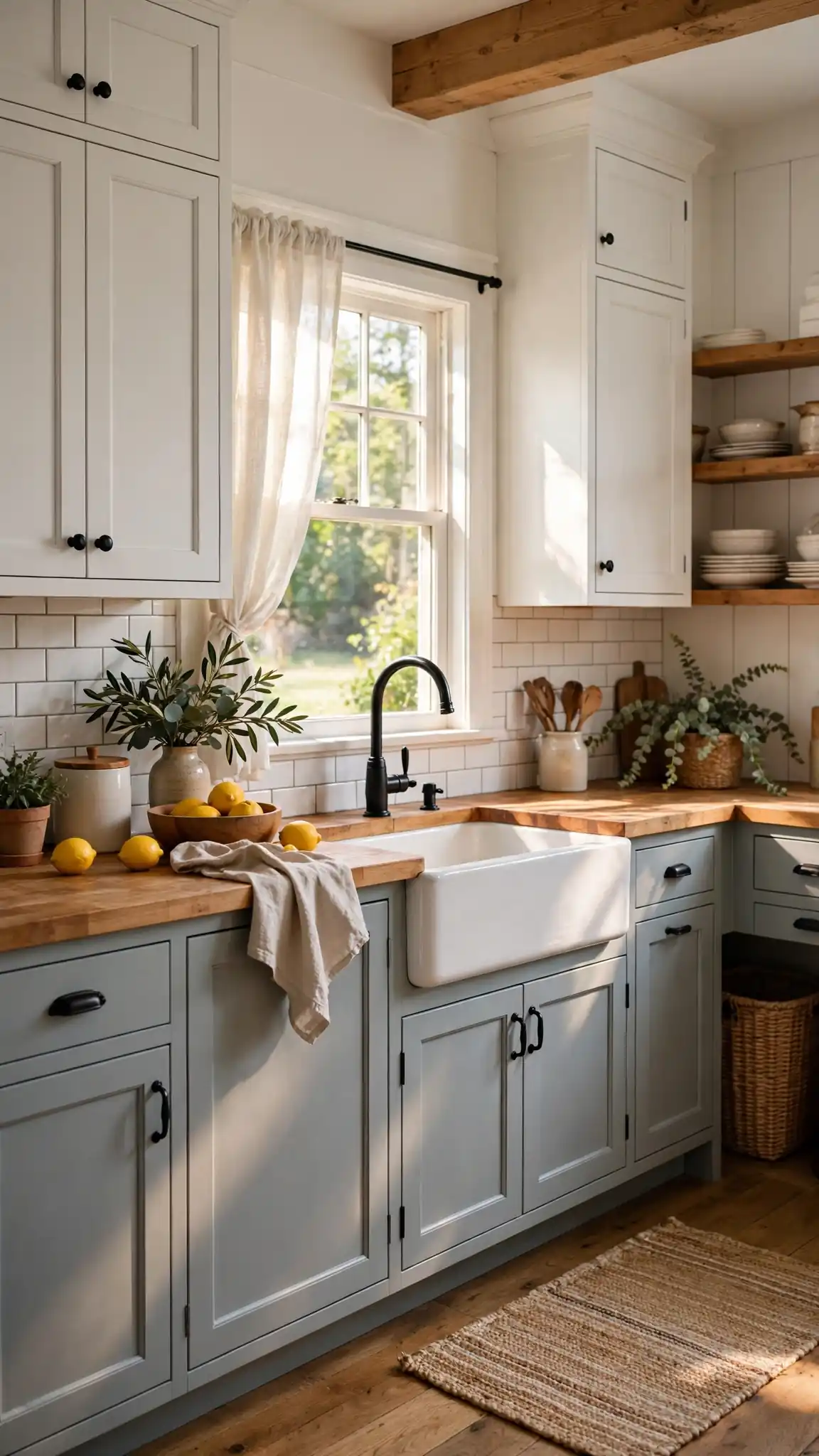
A light blue-gray on the lower cabinets with white uppers is farmhouse comfort at its best — soft, welcoming and endlessly livable. Colors like Sherwin-Williams Krypton or Benjamin Moore Smoke give just enough color to feel special without overwhelming a busy family kitchen. Painting existing cabinets in this palette costs $1,500 to $3,200 professionally, or start fresh with stock Shaker cabinets from Lowe’s for $4,000 to $8,000. This two tone cabinets pairing is forgiving with fingerprints and flour dust, which is exactly what a hardworking farmhouse kitchen needs from its finishes.
Style it with apron-front sinks, butcher block or soapstone-look counters, and matte black or aged pewter hardware for that modern-farmhouse edge. White shiplap or subway tile backsplashes keep the look cohesive, and open shelves in warm wood add the collected-over-time feel farmhouse lovers crave. A large farmhouse table or island doubles as homework central. Finish the look with vintage-style bin pulls and a classic bridge faucet in matte black. Pro tip: keep the blue-gray on the perimeter and make the island the same color — it grounds the room better than introducing a third cabinet color.
11. Olive Green Lowers with Open Wood Shelving
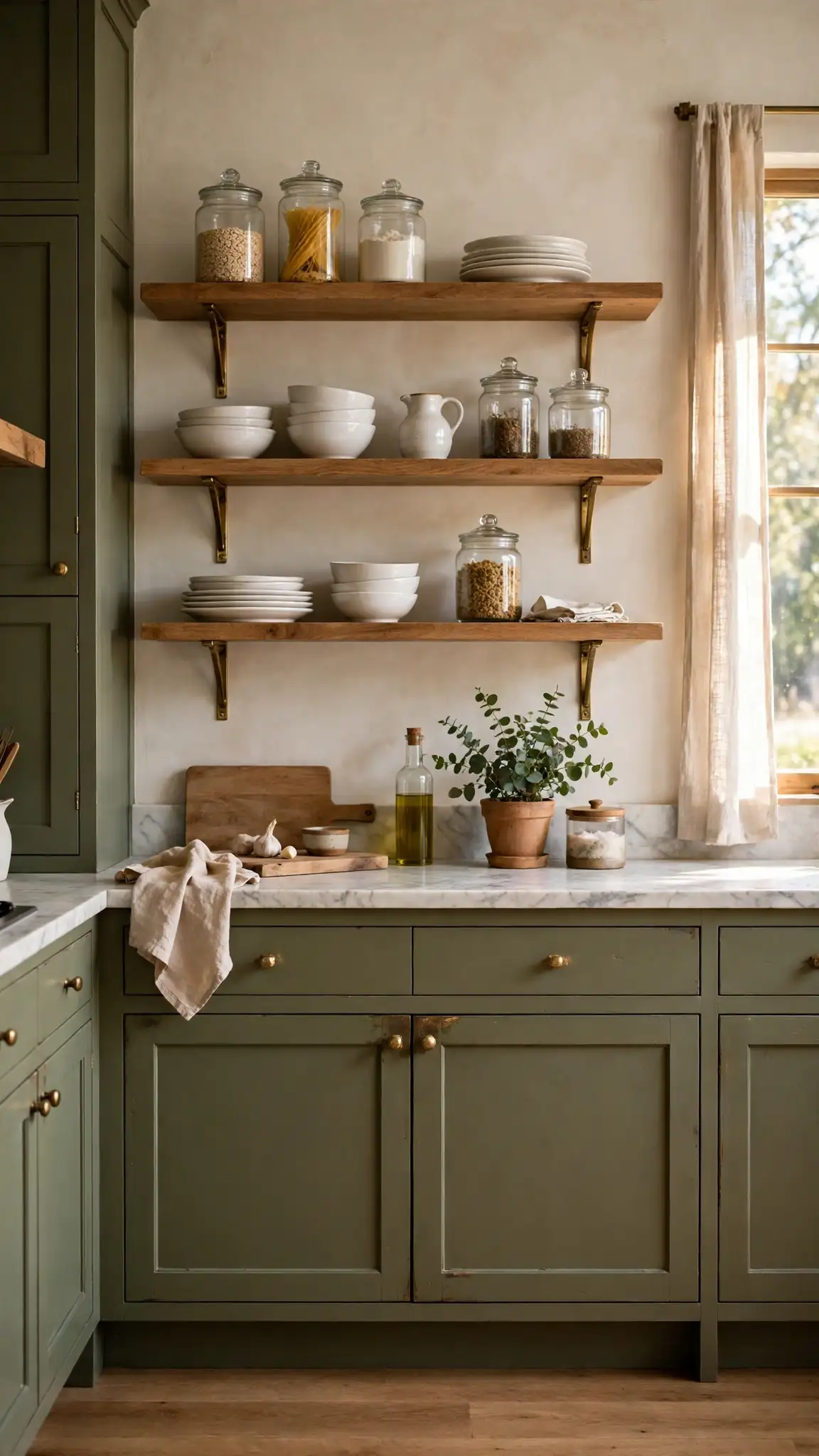
Olive green base cabinets topped with open wood shelving instead of upper cabinets create an airy, European-inspired kitchen with serious character. Skipping uppers saves real money — open shelves cost $100 to $400 installed versus $2,000-plus for wall cabinets — while the olive lowers deliver all the color impact. Olive shades like Benjamin Moore Tate Olive or Sherwin-Williams Dried Thyme feel earthy and calm. Painted lowers in olive run $1,200 to $2,800, and adding solid oak or walnut floating shelves at 10 to 12 inches deep costs another $300 to $800 depending on length and brackets.
Keep shelf styling simple: everyday white dishes, a few glass jars and one trailing plant per shelf so it stays functional, not fussy. Olive pairs beautifully with brass brackets, marble or butcher block counters, and warm white walls. Dust is the trade-off with open shelves, so store daily-use items up there and keep the fancy pieces behind closed doors. Under-shelf puck lights make the display glow at night. Pro tip: limit open shelving to one or two runs — full walls of shelves look cluttered fast and lose the airy effect.
12. Terracotta Lowers and Warm White Uppers
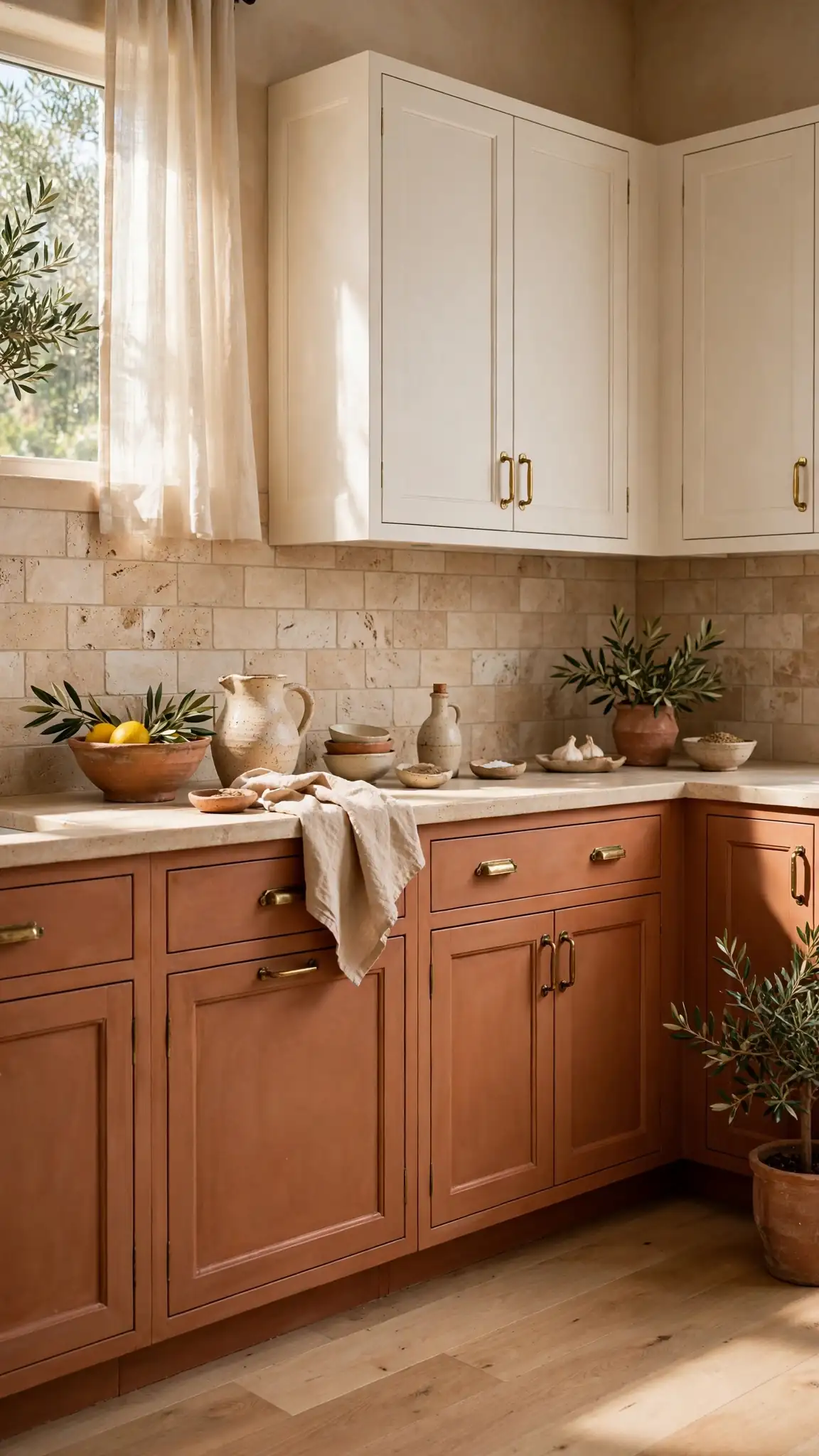
Terracotta lower cabinets with warm white uppers bring sunbaked Mediterranean warmth into a modern kitchen, and this bold two tone cabinets move is having a major moment. Terracotta shades like Sherwin-Williams Cavern Clay or Farrow & Ball Red Earth feel artisan and earthy rather than loud. Because terracotta is a statement, many homeowners paint existing lowers for $1,500 to $3,000 and see the biggest visual payoff per dollar of any option on this list. New cabinets in a custom terracotta lacquer run $7,000 to $14,000 for a mid-size kitchen, so paint-first is the smart way to test the color.
Terracotta loves natural textures — travertine or zellige backsplashes, oak floors, linen curtains and handmade ceramics. Warm white uppers in a shade like Benjamin Moore White Dove keep the palette soft, and unlacquered brass or matte black hardware both work. Keep counters light and simple so the terracotta stays the hero. This look glows in warm afternoon light, so position key prep areas near windows if you can. Pro tip: live with a painted sample door for two full weeks — terracotta shifts dramatically between morning cool light and evening warm light.
13. Greige and White for a Modern Neutral Kitchen
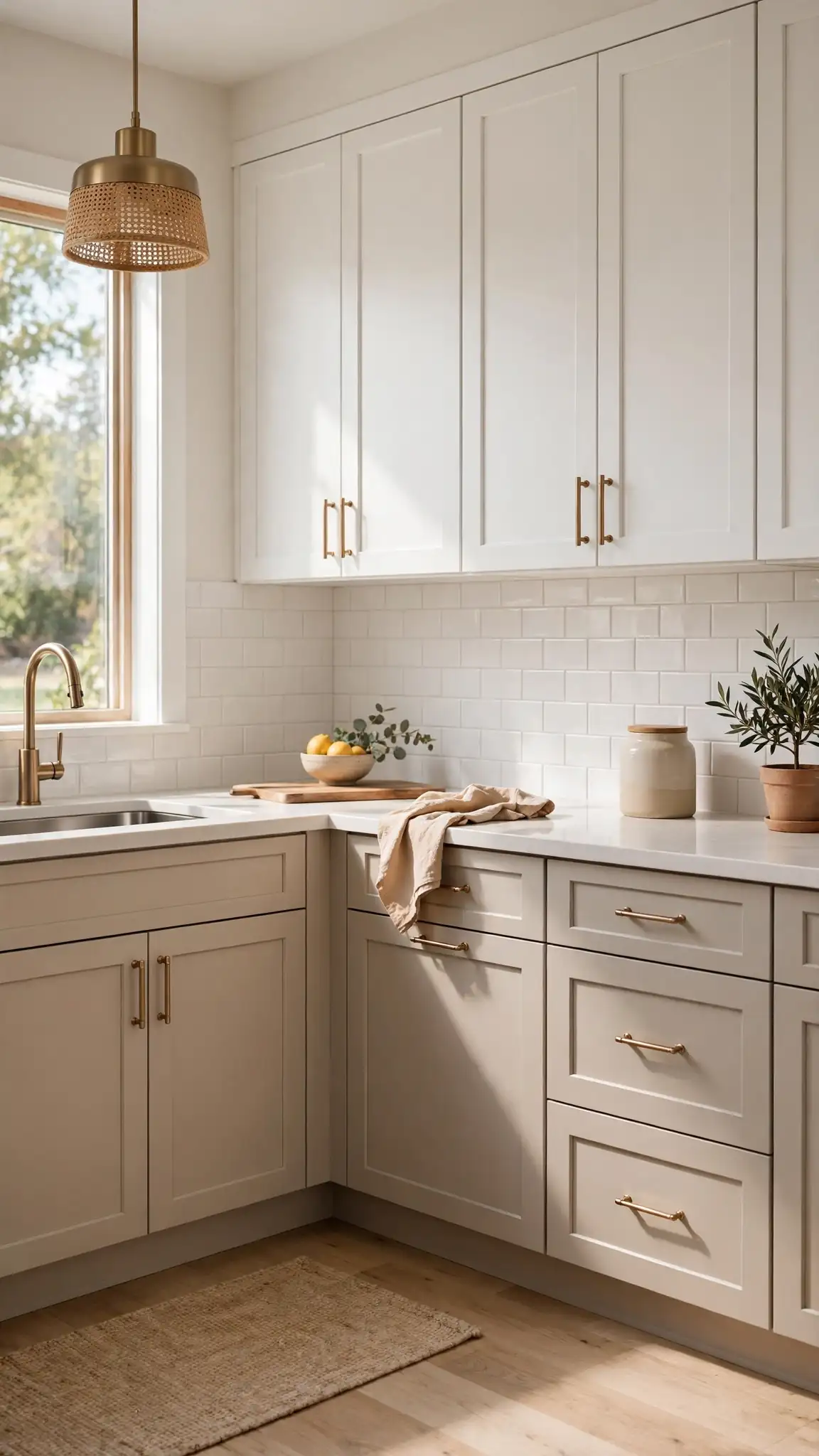
Greige lower cabinets with white uppers are the quiet-luxury answer to two-tone design — warm, neutral and endlessly versatile. Greige blends gray and beige so it works with warm woods, cool stones and almost any metal finish. Popular picks include Sherwin-Williams Accessible Beige and Benjamin Moore Edgecomb Gray. A full greige-and-white cabinet package in stock Shaker from Home Depot runs $4,000 to $8,000 for a 10-by-10 kitchen, while semi-custom lines reach $8,000 to $13,000. Greige is also the most forgiving neutral for resale, appealing to the widest range of buyers if you plan to sell.
Style greige with white oak floors, light quartz counters and champagne bronze or brushed nickel hardware for a soft modern look. Because greige sits between warm and cool, test it against your fixed elements — flooring and counters — since undertones shift with lighting. Add texture through a handmade backsplash, boucle bar stools or linen shades to keep the neutral palette from feeling flat. Plants and wood cutting boards add life. Pro tip: greige darkens noticeably in rooms with little natural light, so go one shade lighter than your sample in north-facing kitchens.
14. Matte Black and White in a Minimal Kitchen
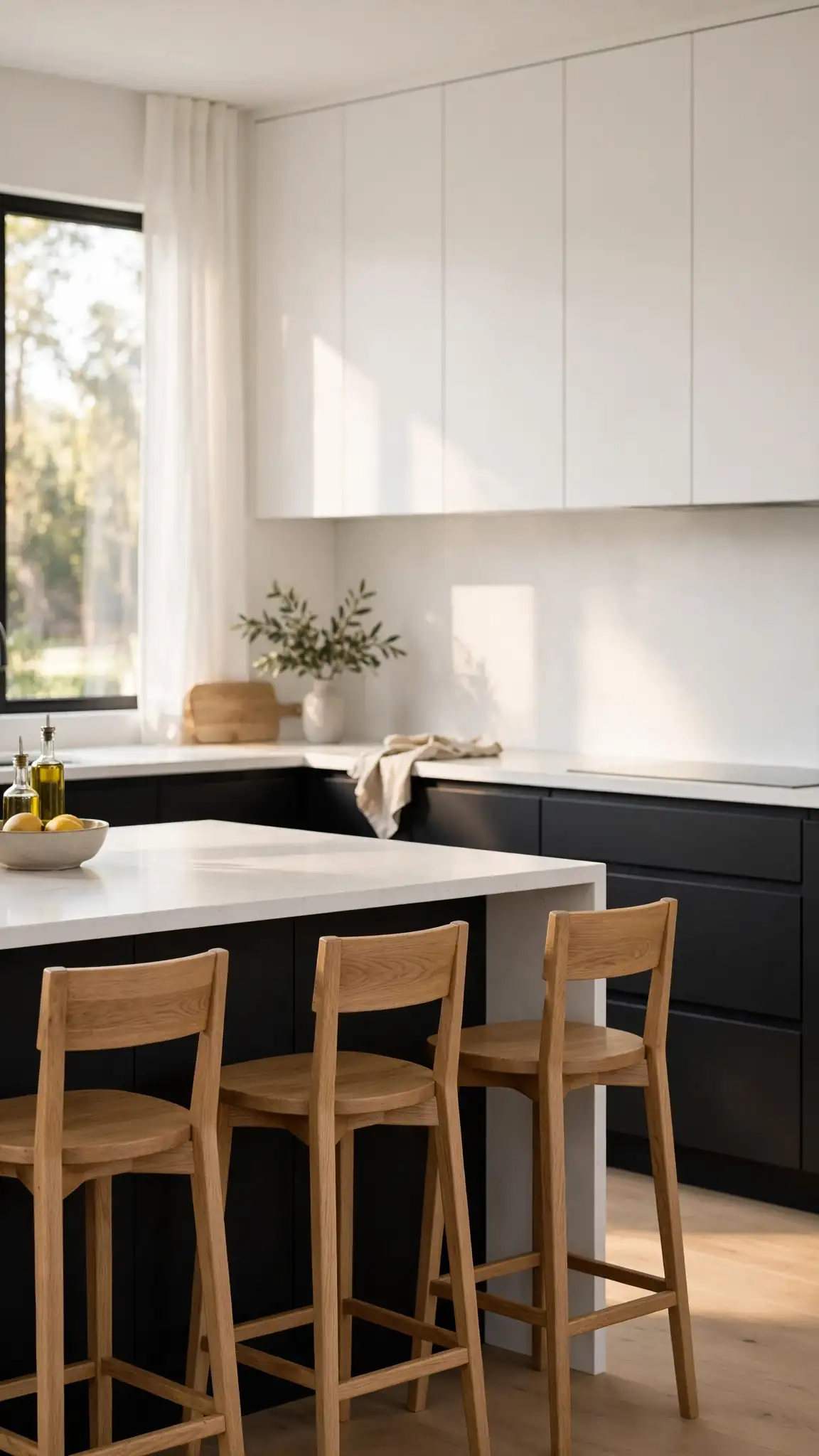
Matte black base cabinets with white uppers deliver high-contrast, gallery-like minimalism that suits modern and Scandinavian homes. The key is restraint: flat-panel or slim Shaker doors, integrated pulls or simple edge profiles, and zero visual clutter. Matte black thermofoil or lacquered lowers from IKEA or semi-custom lines cost $4,500 to $10,000 for a mid-size kitchen, while a pro paint job in a matte black like Benjamin Moore Black Beauty runs $1,800 to $3,500. Fingerprints show on matte black, so choose a satin or soft-matte finish and keep a microfiber cloth handy for the most-touched doors.
White uppers and light counters keep the contrast crisp — think white quartz with minimal veining and a simple white slab backsplash. Concrete or light gray floors ground the look, and a single wood accent like oak stools or a walnut shelf adds warmth. Hide small appliances in an appliance garage to protect the minimal vibe. Lighting is everything here: layer recessed, under-cabinet and pendant lighting. Pro tip: run the black onto the island and keep perimeter lowers black too — one consistent dark base reads calmer than mixing blacks.
15. Butter Yellow Accents with Classic White
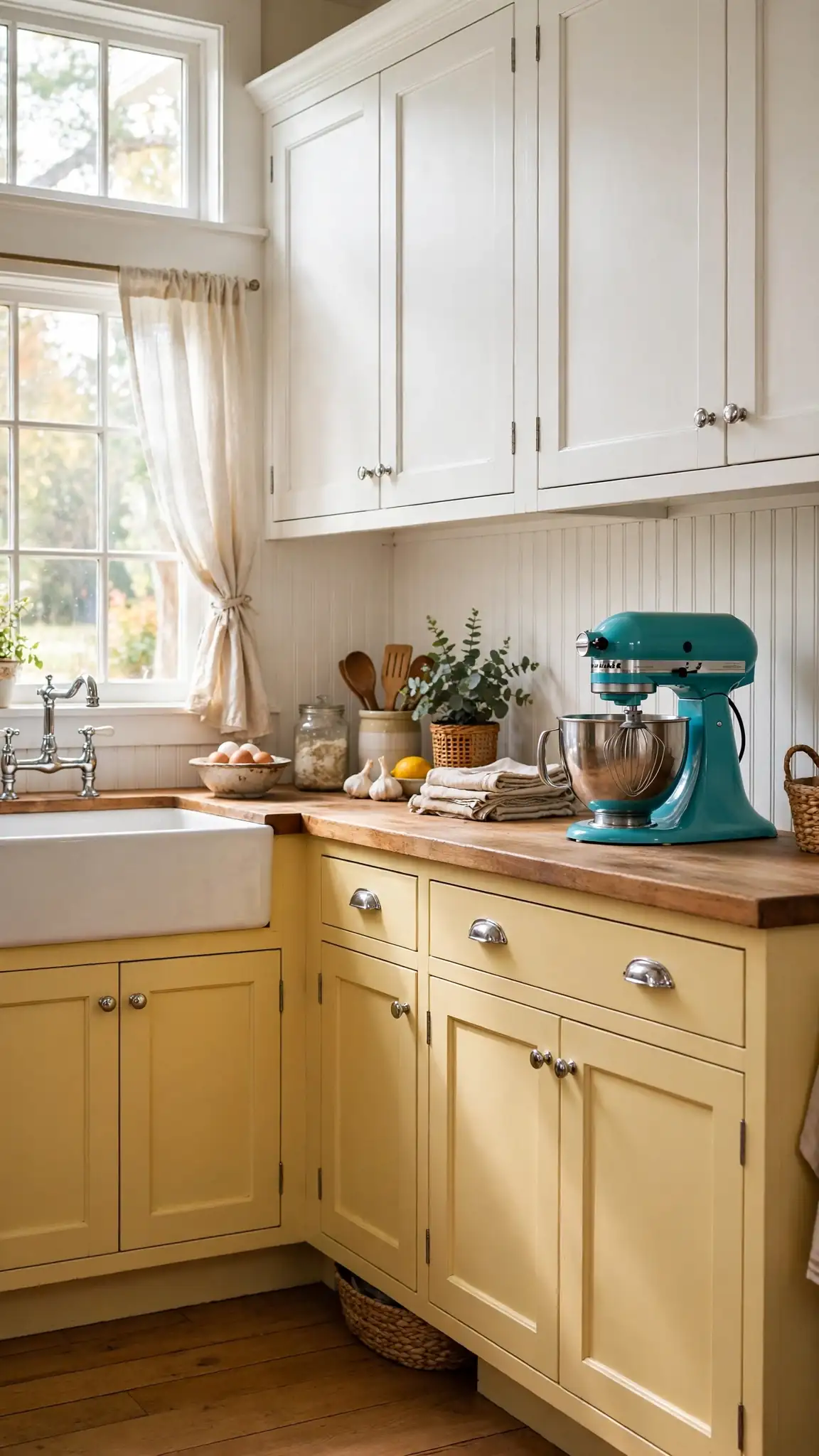
Butter yellow lower cabinets with classic white uppers bring cheerful vintage charm to cottages, farmhouses and retro-inspired kitchens. Soft yellows like Farrow & Ball Dayroom Yellow or Benjamin Moore Butter Up feel sunny without shouting. This is a paint-friendly project — refreshing existing lowers in butter yellow costs $1,200 to $2,800 professionally, while new painted cabinets run $5,000 to $10,000. Yellow reflects warm light beautifully, making it a wonderful choice for north-facing or window-light kitchens that need a lift. It pairs especially well with white beadboard backsplashes and chrome or nickel hardware.
Keep the rest of the palette calm so the yellow stays sweet: white quartz or butcher block counters, light wood floors and simple white dishes. Butter yellow loves retro touches — a colorful stand mixer, gingham or striped textiles, and a farmhouse sink. If full yellow lowers feel brave, try the color on the island only with white everywhere else. Warm 3000K lighting keeps yellow creamy rather than neon. Pro tip: butter yellow deepens over large areas, so pick a shade that looks almost too pale on the swatch — it will read perfectly on full cabinet runs.
16. Rustic Oak and Deep Navy Pairing
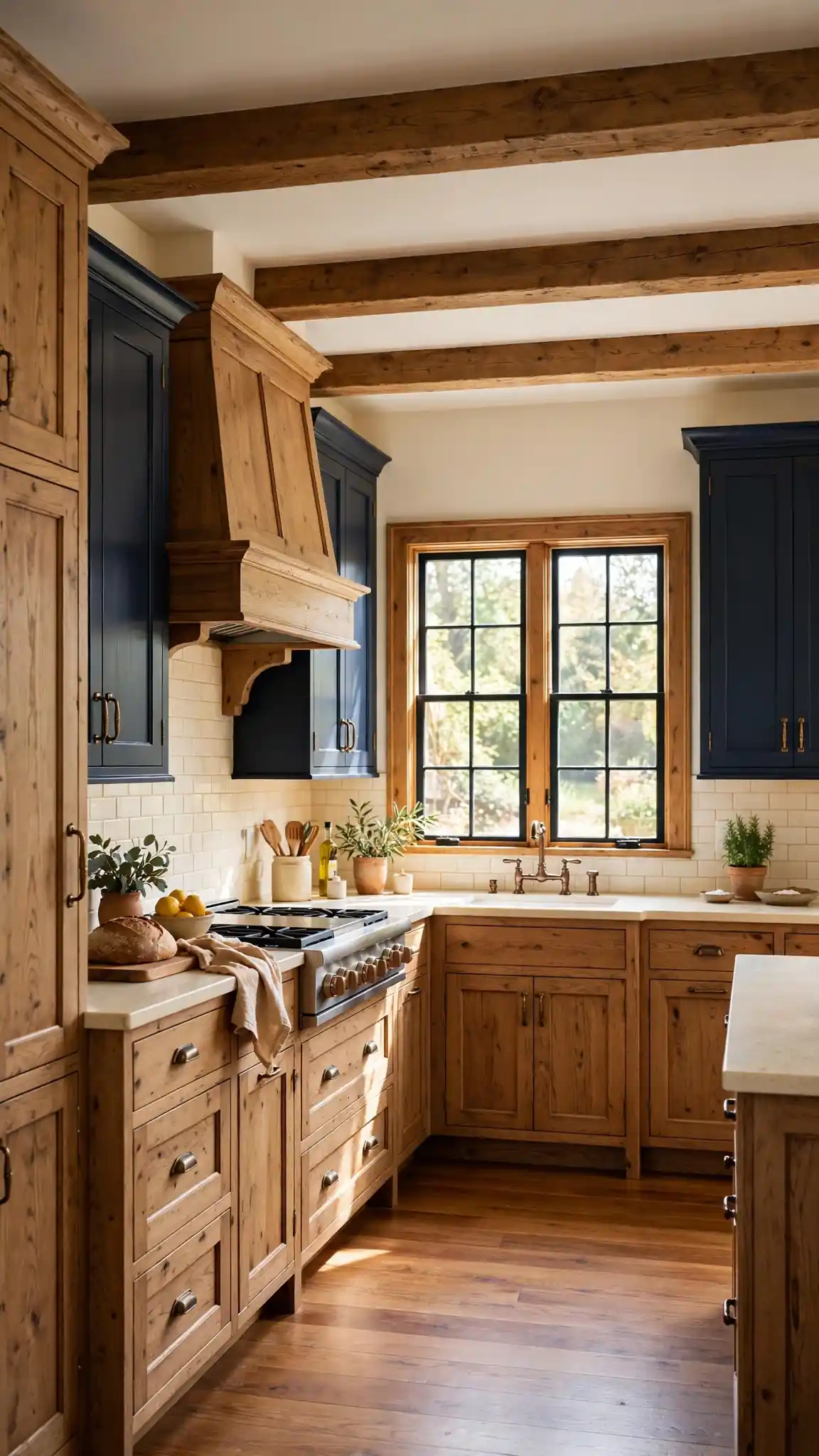
Rustic oak lowers with deep navy uppers flip the usual formula and create a kitchen with real depth and character. Putting the dark color up top works best with high ceilings — 9 feet or more — where navy uppers feel cozy rather than heavy. Oak base cabinets in a natural or lightly stained finish cost $200 to $450 per linear foot semi-custom, while navy painted uppers add $1,000 to $2,500 to a paint project. This two tone cabinets combination suits craftsman and transitional homes, especially with warm wood floors and stone counters that echo the oak’s natural variation.
Because the dark color sits at eye level, balance it with plenty of light: under-cabinet LEDs, glass-front sections, and light counters like honed marble or cream quartz. Brass or bronze hardware warms up both the oak and the navy. Keep walls a soft warm white so the navy reads as intentional color, not shadow. Open shelving in oak beside the navy uppers can lighten the composition. Pro tip: with dark uppers, extend them to the ceiling with stacked moldings — the continuous color line makes ceilings feel taller, not shorter.
17. Teal Lowers with Clean White Uppers
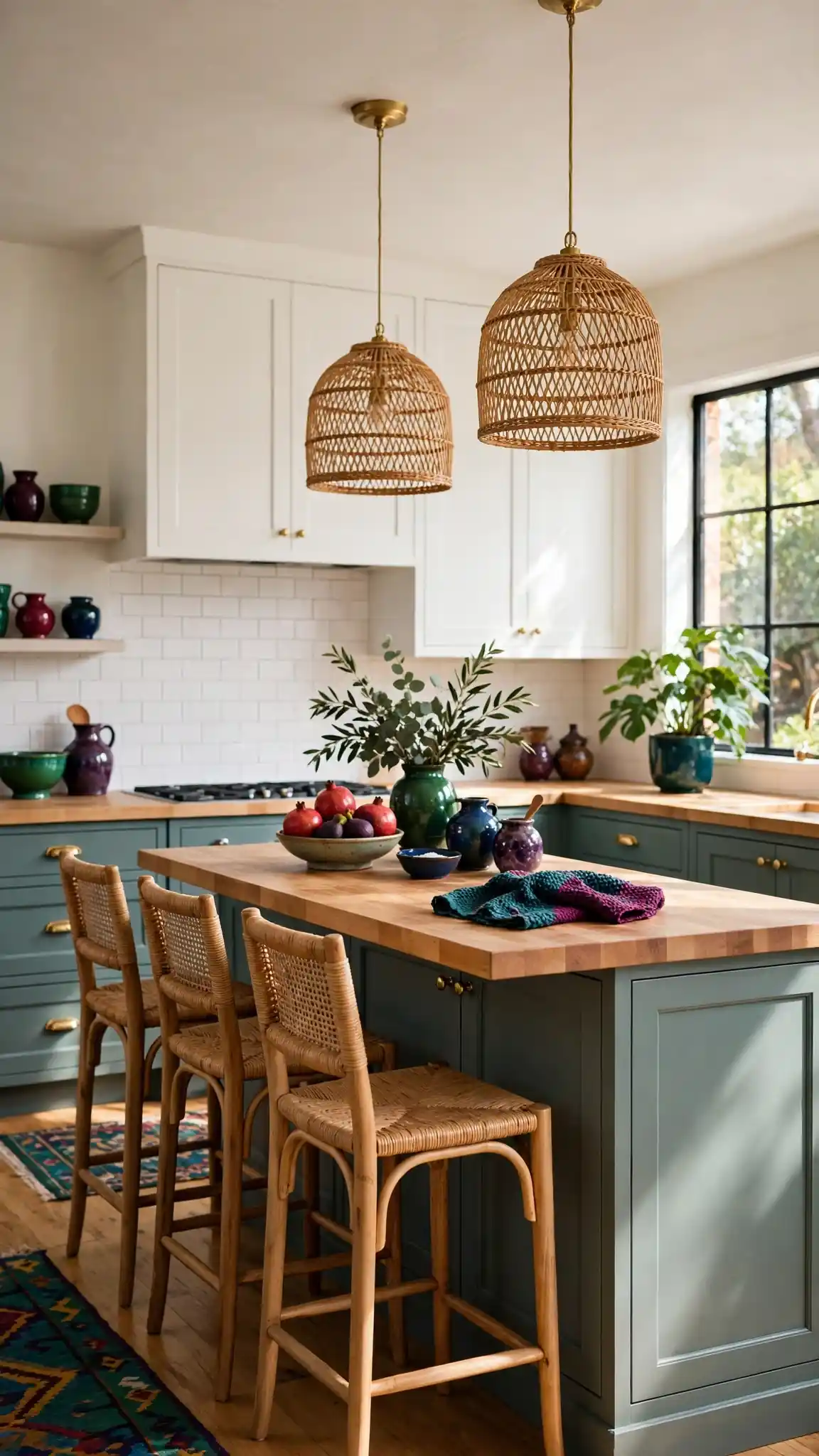
Teal lower cabinets with clean white uppers add jewel-box color that still feels livable, landing between blue’s calm and green’s freshness. Muted teals like Sherwin-Williams Oceanside or Benjamin Moore Aegean Teal bring personality without overwhelming. Painting lowers teal costs $1,500 to $3,200 for an average kitchen, while new semi-custom cabinets in a teal lacquer or paint run $6,000 to $12,000. Teal pairs surprisingly well with warm woods, which stop it feeling cold, and it hides everyday kitchen grime better than most mid-tone colors. White uppers at 30 to 42 inches tall keep the room bright above the color.
Style teal with butcher block or light marble counters, brass hardware, and a simple white or handmade-look backsplash. Natural textures — rattan pendants, wood stools, linen — keep the jewel tone grounded and inviting. Teal also loves plants, so a few green friends on the windowsill echo the cabinet color. Keep the palette to two metals maximum so the color stays the star. A simple white pendant or two over the island keeps the focus on the beautiful teal base. Pro tip: teal can skew green or blue depending on light, so view your sample at noon and at night before you commit to gallons.
18. Taupe and Cream in a Transitional Kitchen
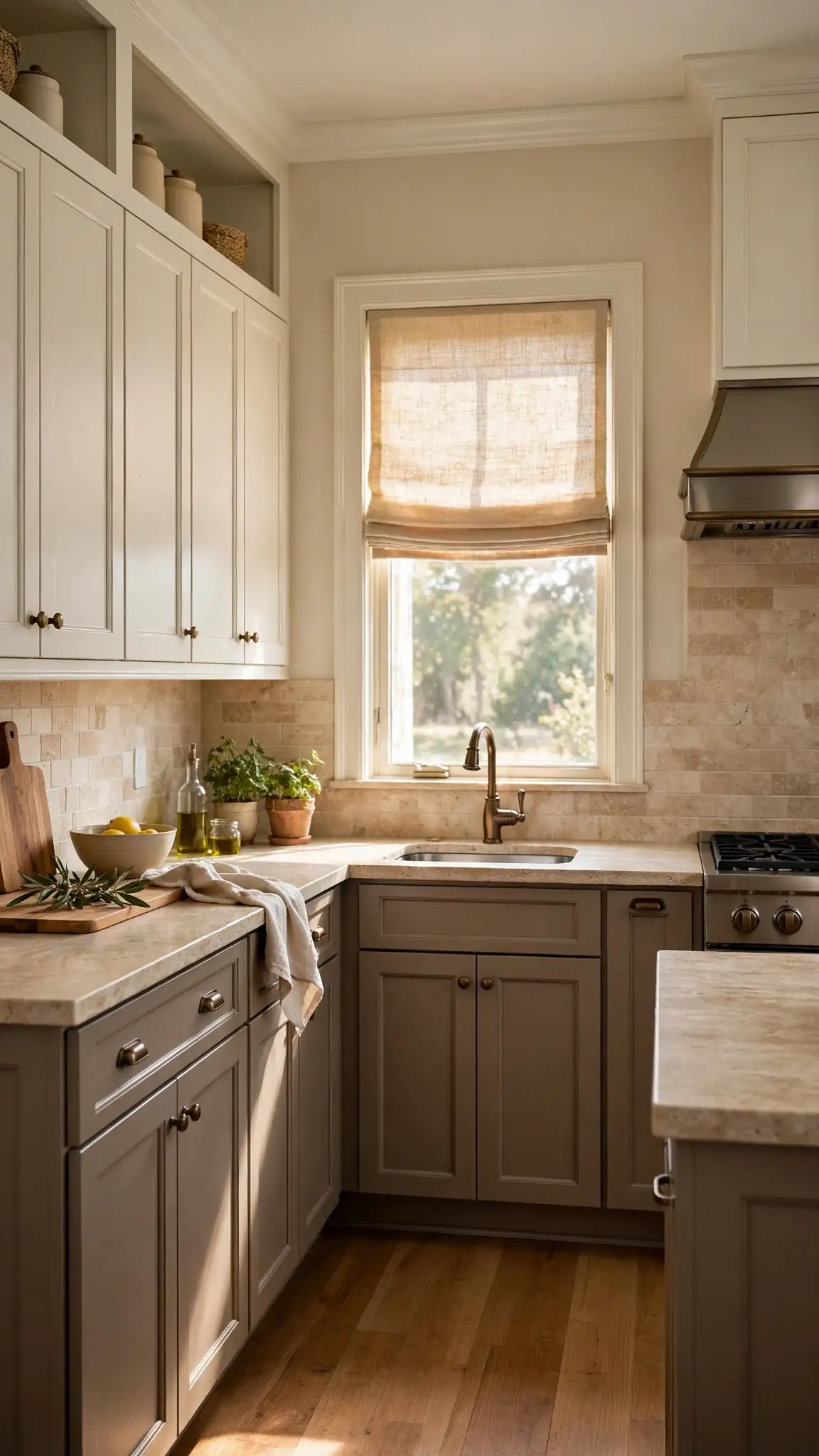
Taupe lower cabinets with cream uppers create a soft, layered neutral kitchen that bridges traditional and contemporary styles. Taupe — deeper than greige, warmer than gray — adds quiet richness without any risk of feeling stark. Shades like Benjamin Moore Pashmina or Sherwin-Williams Perfect Greige work beautifully. A stock taupe-and-cream Shaker kitchen from Lowe’s or Home Depot runs $4,500 to $9,000 for a 10-by-10 layout, while semi-custom reaches $8,000 to $13,000. Taupe is wonderfully forgiving with dust and smudges, and cream uppers reflect light to keep the room feeling open and calm.
Layer this palette with warm wood floors, cream or light-travertine counters, and bronze or champagne hardware for a cohesive transitional look. Textured backsplashes — handmade subway tile or soft stone — add dimension to the neutral scheme. Because taupe and cream are close in value, introduce contrast through darker floors, a patterned rug runner, or black-framed art. Linen shades and wood accents complete the warmth. Pro tip: keep the cream uppers a true warm white, not stark white — cool whites clash with taupe’s warmth and make it look muddy.
19. Two Tone Cabinets for Small Kitchens
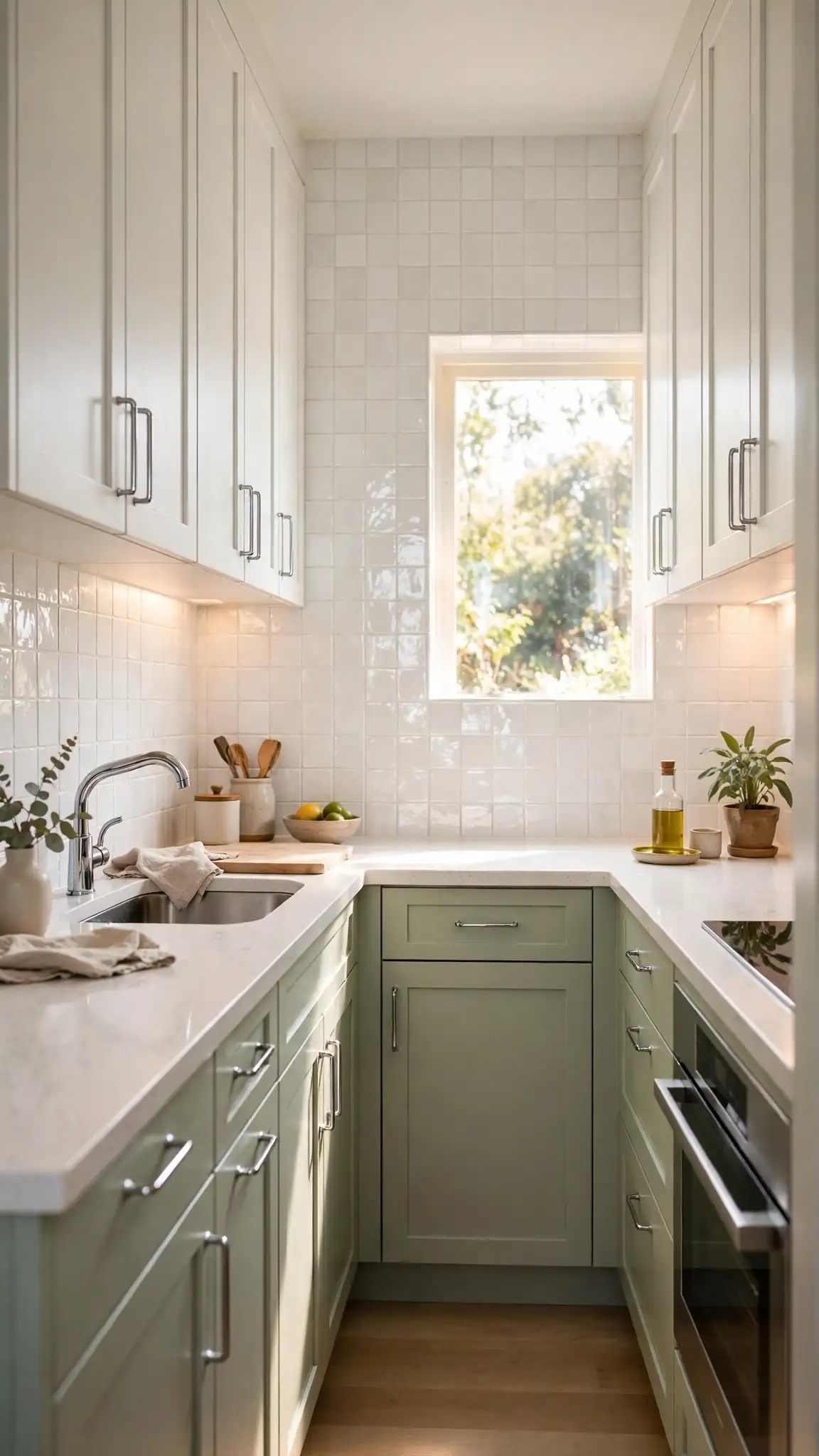
Small kitchens benefit enormously from two tone cabinets, because the contrast tricks the eye into reading more depth and dimension. The winning formula: light uppers in white or cream to lift the ceiling visually, and mid-tone lowers — sage, light blue-gray, warm greige — to add interest without closing the room in. In a galley or 8-by-10 kitchen, painting existing cabinets in this combo costs just $1,000 to $2,200, while compact stock cabinet sets from IKEA start around $2,500. Keep uppers at 30 inches tall rather than 42 so the scale suits the room, and use the same light tone on any tall pantry units.
Maximize the effect with reflective surfaces: a glossy or handmade-look backsplash, light quartz counters, and under-cabinet lighting that bounces off the counters. Choose slim bar pulls and keep hardware consistent to avoid visual noise. A mirror-like faucet finish — polished chrome or nickel — adds sparkle. Avoid dark lowers in truly tiny kitchens; mid-tones give the two-tone look without the weight. A narrow rolling cart in a matching tone adds flexible storage that tucks away neatly. Pro tip: paint the ceiling the same white as the uppers and skip the crown molding line — the blur between wall and ceiling adds perceived height.
20. Dark Green and Gold for a Luxe Look
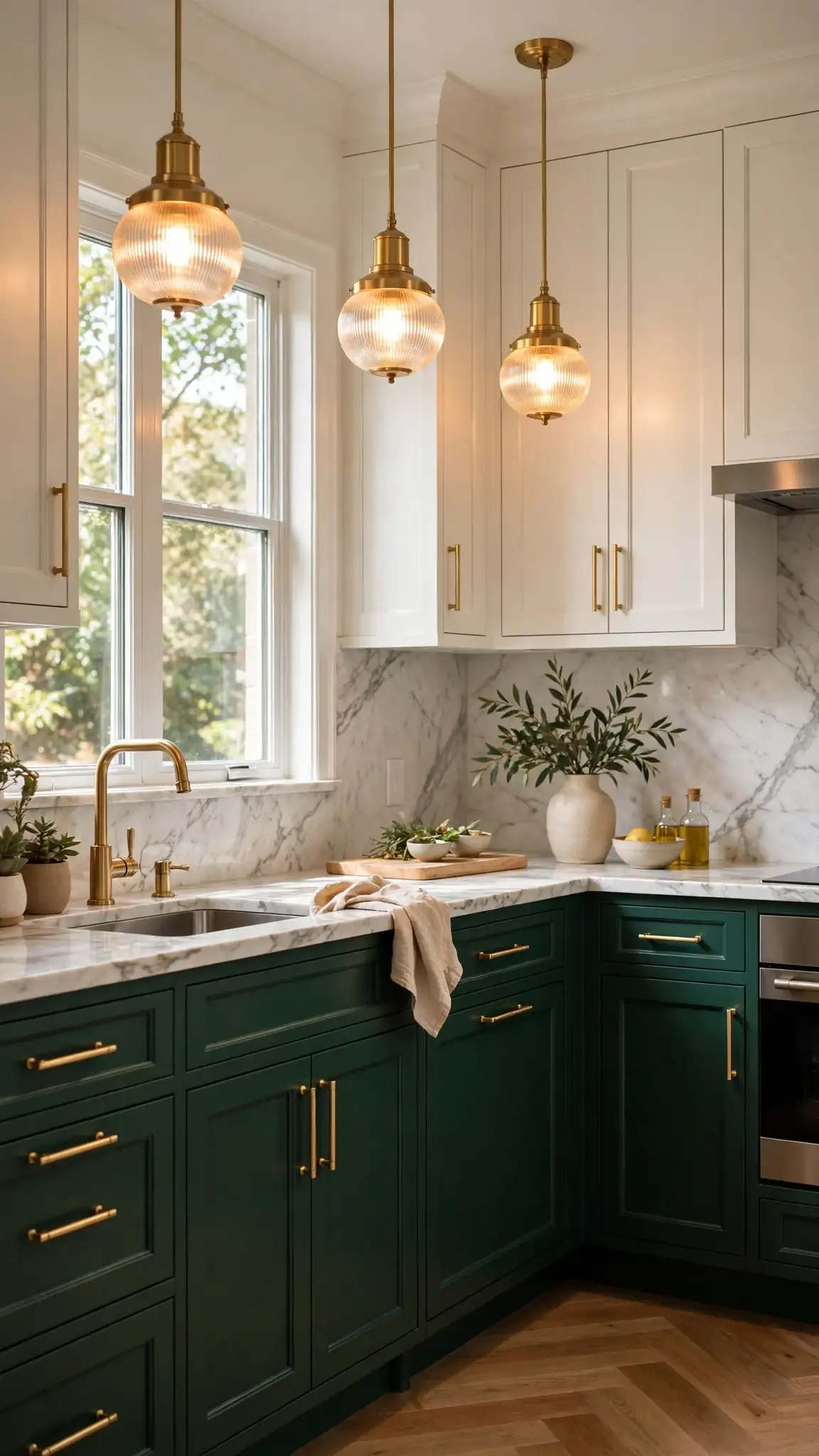
Dark green lower cabinets with brushed gold hardware and light uppers deliver a luxe, jewelry-box kitchen that feels straight out of a design magazine. Deep greens like Benjamin Moore Essex Green or Farrow & Ball Studio Green pair with gold the way emeralds pair with settings — rich and refined. Expect $6,000 to $12,000 for semi-custom dark green cabinets with quality gold hardware at $8 to $20 per pull, or $1,800 to $3,500 for a professional paint refresh of existing lowers. White or warm-white uppers keep the drama balanced, and marble-look quartz counters complete the high-end feel.
Gold hardware is the star, so give it room: simple Shaker or flat-panel doors, a quiet backsplash, and minimal countertop clutter. Warm 3000K lighting makes both the green and the gold glow, while cool lighting can flatten them. Carry a touch of green onto bar stools, a runner, or the island back for cohesion. This look suits both traditional and modern homes — the hardware and styling decide the direction. Pro tip: buy all gold hardware from one collection so the finish matches exactly; mixed golds clash more than mixed silvers do.
21. Misty Blue and Warm White Duo
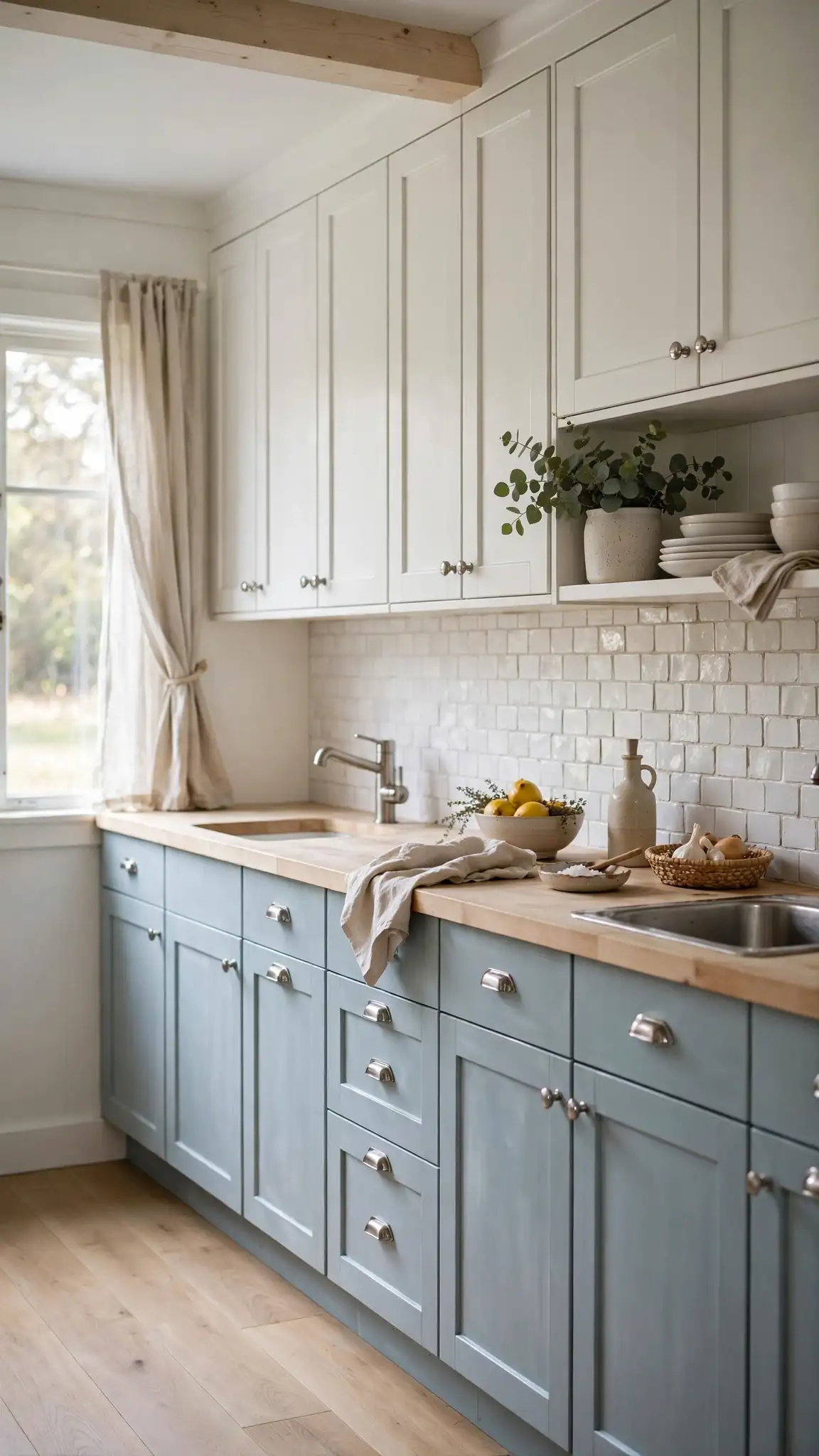
Misty blue lower cabinets with warm white uppers create a soft, dreamy kitchen that feels calm from the first cup of coffee. Misty blues like Benjamin Moore Breath of Fresh Air or Sherwin-Williams Misty carry gray undertones that keep them sophisticated and easy to live with. A professional paint job in this palette runs $1,500 to $3,000 for a standard kitchen, while new stock cabinets from Wayfair or Home Depot land between $4,000 and $8,500. This two tone cabinets pairing is ideal for coastal, cottage and Scandinavian styles, and the pale blue hides dust far better than white while still feeling light.
Pair misty blue with warm white — not stark white — uppers, light oak or whitewashed floors, and brushed nickel or soft brass hardware. A handmade-look white backsplash adds subtle texture, and linen curtains or shades soften the windows. Keep counters light: white quartz, butcher block or honed marble all work. Because the palette is so light, add grounding through a darker rug runner or wood stools. Pro tip: misty blue can wash out in very bright south-facing rooms — go one shade deeper than your first instinct in sun-drenched kitchens.
22. Elegant Two Tone Cabinets for Open-Plan Kitchens
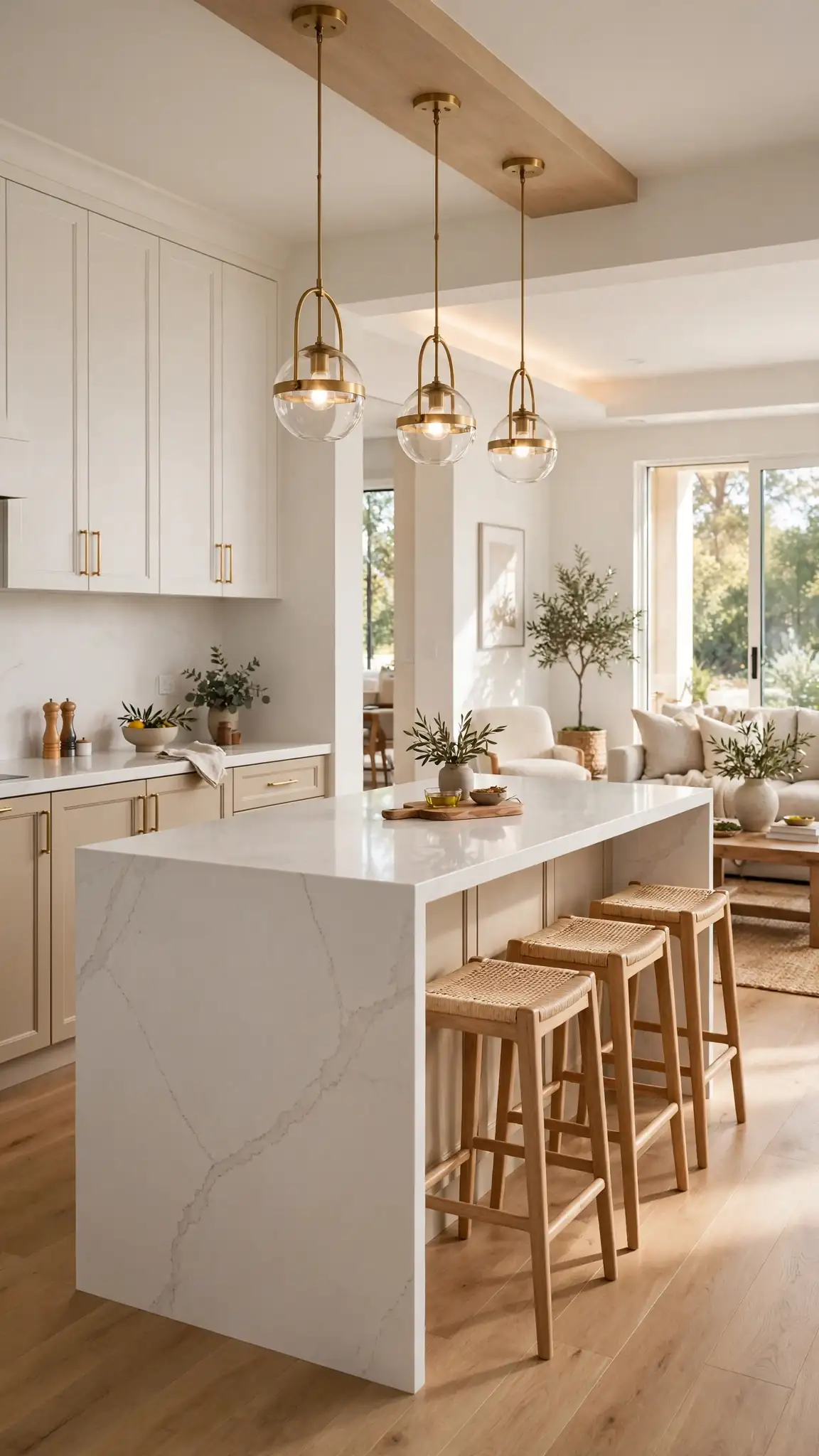
Open-plan kitchens need two tone cabinets that look beautiful from the sofa, the dining table and the cooktop — and this final idea delivers exactly that. Choose a sophisticated pairing like warm greige lowers with soft white uppers, or deep green bases with cream tops, so the kitchen reads as furniture within the larger living space. In open plans, repeat the lower cabinet color on the island and consider matching the nearby media or bar cabinetry. Budget $7,000 to $15,000 for a full semi-custom two-tone package in an open-plan layout, since these kitchens typically run larger with islands of 7 to 9 feet.
Cohesion is everything: echo the cabinet palette in the living area through textiles, art or an accent chair so the zones feel connected. Keep hardware and faucet finishes consistent, and choose a quiet backsplash that won’t fight with the living room view. A waterfall island in the same stone as the counters creates a stunning focal point visible from every angle. Good lighting zones — pendants over the island, spots over work areas — define the kitchen within the open space. Pro tip: view your cabinet samples from the farthest seat in the living area — open-plan colors must work at 20 feet, not just 2.
Final Thoughts
Two tone cabinets prove that the most impactful kitchen updates are often the simplest — a thoughtful color pairing changes everything about how a room feels. Whether you paint existing cabinets for under $3,000 or invest in all-new semi-custom cabinetry, the contrast between a grounded base and light uppers delivers a designer look that single-color kitchens rarely achieve. Two tone cabinets also age gracefully, since the darker lowers hide wear exactly where kitchens take the most beating. Pick the pairing that makes you smile every morning, because you will see it every single day.
Start with samples, not gallons: paint large boards, move them around your kitchen, and live with them for at least a week in all lights. Measure carefully, budget for hardware and lighting alongside the cabinets, and remember that two tone cabinets reward consistency — repeat each color twice and keep your metals matched. If you are unsure, the classics on this list like navy and white or sage and cream have delighted homeowners for decades and will not feel dated in five years. Your dream kitchen is closer than you think.
FAQs
Thinking about two tone cabinets but still have questions? You are not alone — this is one of the most searched kitchen design topics for good reason, and getting the details right makes all the difference. Below we answer the six questions homeowners ask most, from cost and color rules to whether the trend will truly last in a real family kitchen.
Each answer draws on real project costs and designer-tested color theory, so you can move forward with confidence instead of guesswork. Read through all six before you buy paint or book a contractor — a few minutes here can save costly mistakes later. If your question is not covered, drop it in the comments and we will add it to the guide.
Are two tone cabinets still in style in 2026?
Yes — two tone cabinets remain one of the most requested kitchen designs in 2026. Designers love them because the contrast adds depth and personality that single-color kitchens lack. Classic pairings like navy and white or sage and cream have proven staying power well beyond trend cycles.
Which color should go on top and which on the bottom?
The classic rule puts the darker color on the base cabinets and the lighter color on the uppers. Dark lowers ground the room and hide wear, while light uppers reflect light and keep the space feeling open. Reversing it works in rooms with very high ceilings.
How much do two tone cabinets cost?
Painting existing cabinets two-tone costs $1,200 to $3,500 professionally. Refacing runs $4,000 to $9,000, while all-new stock cabinets cost $4,000 to $8,000 and semi-custom $7,000 to $15,000 for a mid-size kitchen. Hardware and installation add to the total, so always get at least two detailed quotes before deciding.
Do two tone cabinets make a kitchen look smaller?
Not when done right. Light uppers keep the eye moving upward, which preserves a sense of height. Stick to mid-tone rather than very dark lowers in small kitchens, and keep the palette to two colors plus one metal finish for a calm, spacious feel.
What is the most popular two tone cabinets color combination?
Navy blue lowers with white uppers remain the most popular two tone cabinets combination in the US. Soft gray and white, sage green and cream, and black and wood round out the top requests. These pairings work across farmhouse, modern and traditional styles.
Can I do two tone cabinets with my existing countertops?
Usually yes. Light neutral counters like white quartz, butcher block or honed marble work with almost every pairing on this list. Before choosing colors, hold cabinet samples directly against your countertop in your own lighting to confirm the undertones play nicely together.


Leave a comment