



A master bedroom has to work for two people, often with different tastes, schedules and storage needs. The goal is a room that feels warm, restful and personal to both of you. With the right layout, textiles and lighting, you can create a shared retreat that feels like a boutique hotel suite.
These 22 cozy master bedroom decor ideas focus on comfort, balance and practical details for couples. For more inspiration, see our cozy bedroom ideas and these moody bedroom ideas.
Plan the room for two:
- Give each person a nightstand, lamp and outlet.
- Choose a neutral base palette and add colors you both like.
- Separate clothing storage to reduce clutter.
- Use dimmable lighting so one can read while the other sleeps.
1. Invest in a Generous Bed
Nothing says a bedroom is built for two like a big, inviting bed you can both sink into. Upgrading to a king or California king gives each of you roughly 38 inches of sleeping width — nearly the size of a twin mattress per person. Quality king mattress sets from US retailers like Saatva, Costco, or Mattress Firm run $800 to $2,500, and many offer 100-night trial periods. Before you buy, measure carefully: a standard king is 76 by 80 inches and needs a room at least 12 by 10 feet so you can walk around it comfortably. Taller couples should look at a California king, which adds four inches of length.
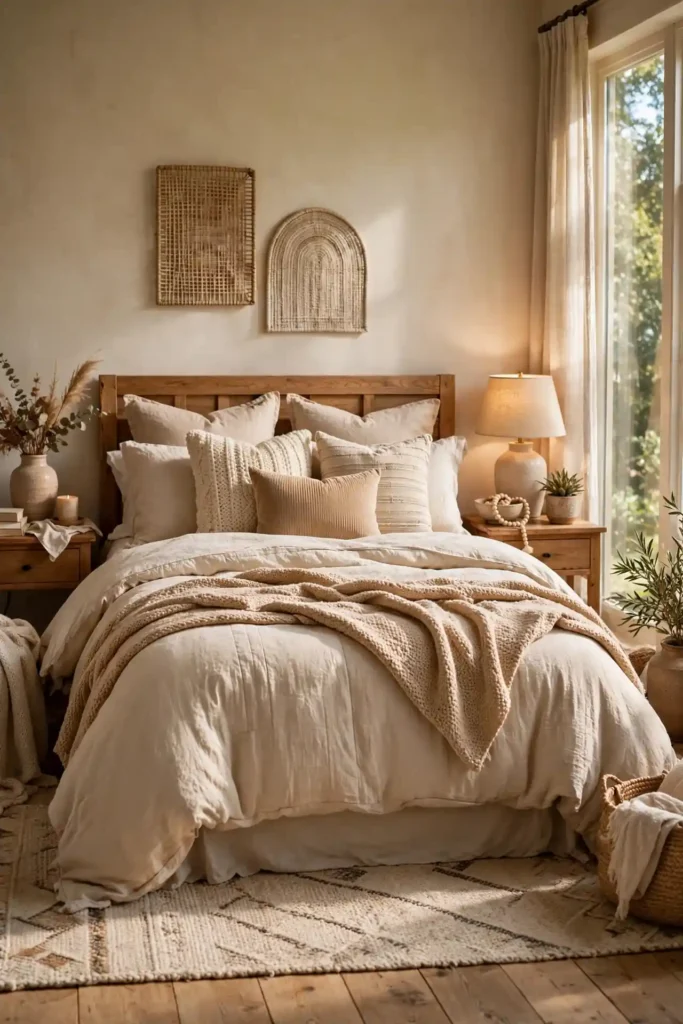
Pair that generous mattress with a sturdy bed frame and a supportive foundation so it lasts a decade or more. Platform frames from West Elm or Article ($300–$900) eliminate the need for a box spring and give a clean, modern look, while upholstered headboards add comfort for late-night reading side by side. If you share the bed with different sleep styles, consider a split king with two adjustable twin-XL bases — you each control your own elevation. Add a quality mattress protector ($40–$80 at Target or Amazon) to safeguard your investment. A big bed is the foundation of a truly cozy master bedroom for couples.
2. Matching Nightstands and Lamps
Matching nightstands create instant visual balance on both sides of the bed and give each partner equal real estate. Choose nightstands at least 24 inches wide and roughly the same height as the top of your mattress — typically 24 to 28 inches — so reaching for a glass of water or your phone feels natural. Solid wood or sturdy engineered-wood nightstands from Target, IKEA, or Wayfair cost $60 to $200 each, and buying a matched pair keeps the room symmetrical. Look for at least one drawer or shelf per nightstand so each of you has private storage for glasses, books, and chargers.
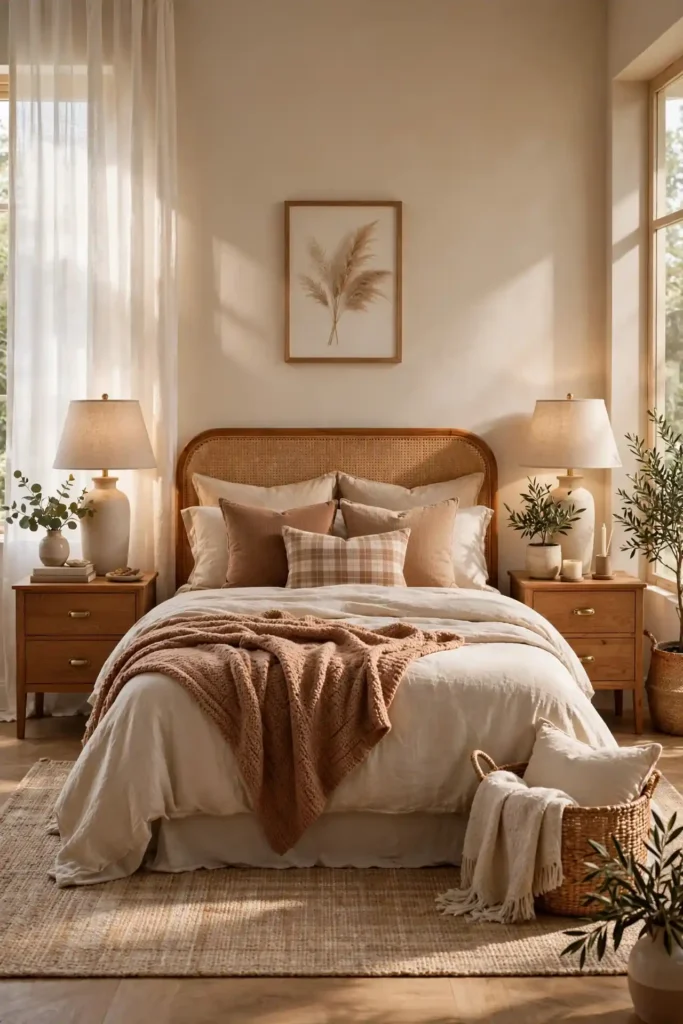
Top each nightstand with a matching pair of table lamps to unify the space and give you both the same warm glow. Pick lamps between 24 and 30 inches tall with warm-white LED bulbs (2700K) that flatter skin tones and wind you down before sleep. Budget-friendly pairs run $40 to $120 at Target or HomeGoods, while retailers like West Elm offer statement pairs up to $400. Place the lamps toward the outer edges so the inner space stays clear for your nighttime essentials. If you prefer asymmetry, match the lamps but vary the nightstand finishes — the shared lighting ties it together.
3. Layer Bedding in Neutral Tones
Layering neutral bedding is the fastest way to make a master bedroom feel cozy, expensive, and effortlessly pulled together. Start with crisp cotton or linen sheets in white, ivory, or warm greige — Brooklinen’s Luxe Core Sheet Set and Parachute’s percale sets ($150–$250) are popular with American couples for their breathability. Add a duvet insert in a relaxed linen or sateen cover, then fold a quilt or coverlet across the foot of the bed. Mix textures like washed linen, cotton matelassé, and a chunky knit throw in oatmeal or sand tones to build depth without competing colors.
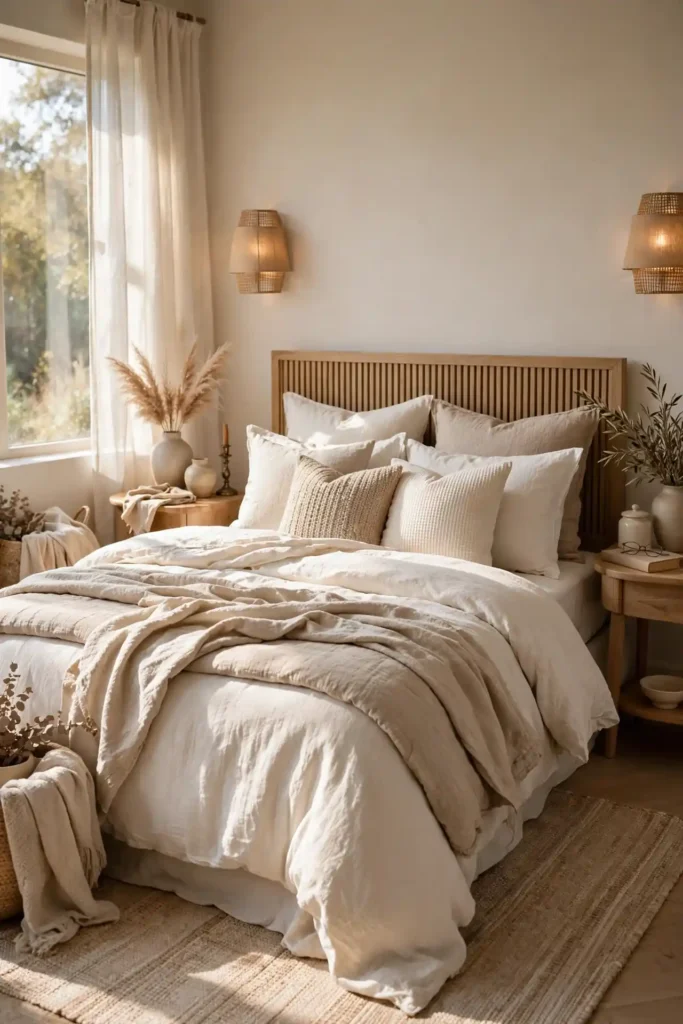
Use the classic layering formula: sleeping pillows against the headboard, two Euro shams (26-inch squares) in front, then two or three decorative pillows in complementary neutral patterns. A throw blanket draped across the foot adds warmth and gives you an easy layer to pull up on chilly nights. Keep your palette to three tones at most — for example, warm white, sand, and soft taupe — so the bed feels calm rather than busy. Neutrals also let you swap in seasonal accents, like a rust or sage throw, without rebuying your whole bedding set every year.
4. Add Individual Reading Lights
Individual reading lights let one partner read late while the other drifts off undisturbed — a small upgrade that prevents real bedtime arguments. Wall-mounted swing-arm sconces flanking the headboard are the most elegant solution; hardwired options from West Elm or Rejuvenation run $80 to $250 each, while plug-in versions from Amazon cost $30 to $70 and need no electrician. Mount them 30 to 36 inches above the mattress, centered over each pillow, so the light falls on your book instead of your partner’s face. Choose heads that rotate or pivot for precise aim.
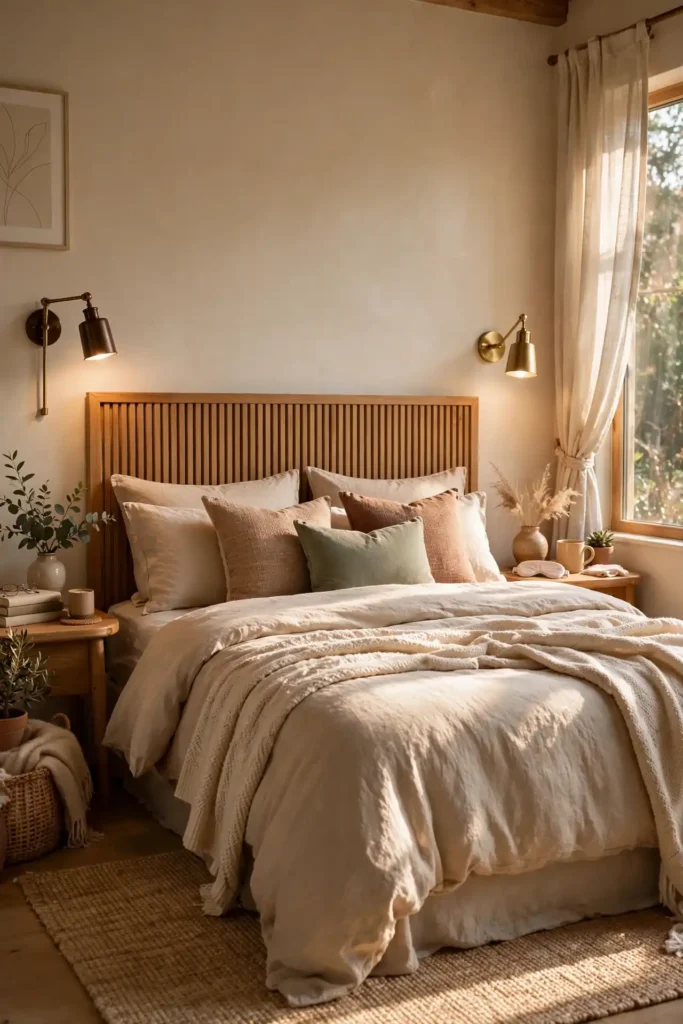
If drilling into walls is not an option, clip-on LED reading lights ($15–$35 at Amazon or Target) attach directly to headboards or books and offer adjustable brightness and color temperature. Look for models with a warm 2700K setting and a focused beam under 100 lumens so the light stays contained. Rechargeable USB models eliminate cord clutter and batteries. For a softer look, pair sconces with dimmable wall dimmers or smart bulbs so each side can be set independently. Individual lighting turns your bed into two personalized zones within one cozy shared space.
5. Create a Sitting Area
A dedicated sitting area turns your master bedroom from a sleep-only zone into a true couple’s retreat. Even a small corner fits two accent chairs — choose swivel or armless styles under 30 inches wide so they tuck into tight spots. Affordable pairs from Target or Article run $400 to $1,200, and a small round side table ($50–$150) between them holds coffee cups and books. Place the nook near a window to catch morning light, and angle the chairs toward each other rather than the TV so the space invites conversation.
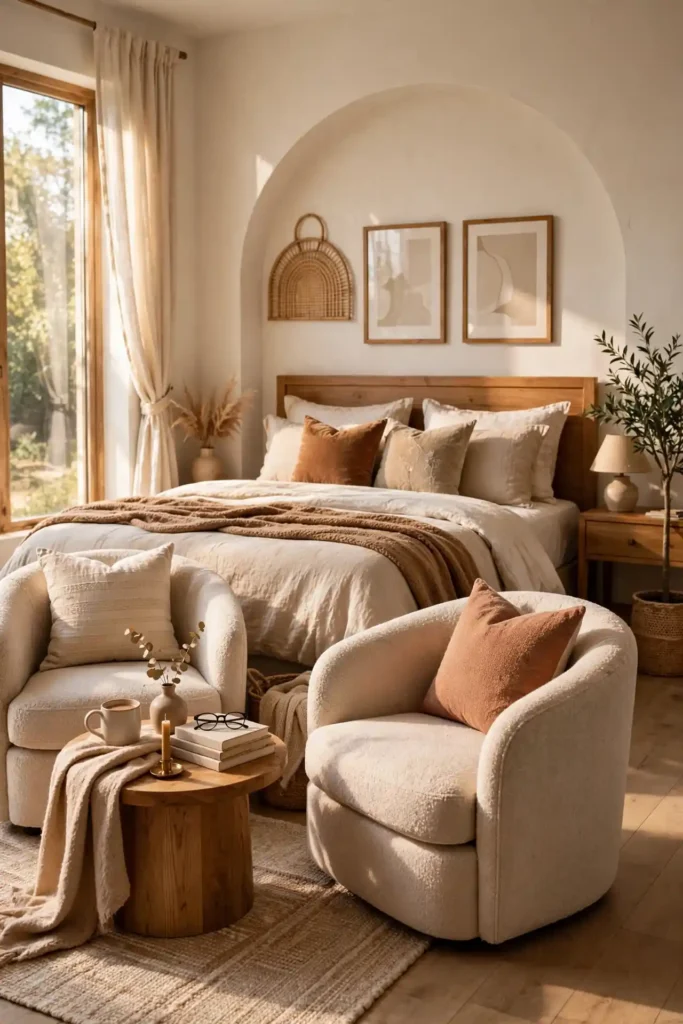
Anchor the sitting area with a 5-by-7-foot rug and a floor lamp with warm 2700K lighting to define it as a separate zone from the bed. Add a soft throw and one lumbar pillow per chair in colors that echo your bedding for a cohesive look. Use this corner for morning coffee, evening chats, or a quiet reading spot — rituals that strengthen your connection as a couple. If space is tight, a single upholstered chaise or a small loveseat under the window achieves the same effect in about 20 square feet.
6. Use a Large Rug
A large area rug is non-negotiable in a cozy master bedroom — it softens hard floors, quiets the room, and makes getting out of bed pleasant instead of jarring. Size it generously: an 8-by-10-foot rug under a king bed extends at least 18 to 24 inches beyond each side and the foot, so both partners step onto softness. Quality low-pile wool or washable rugs from Ruggable, Rugs USA, or Target range from $200 to $800. Leave 12 to 18 inches of bare floor between the rug edge and the walls so the room feels proportioned.
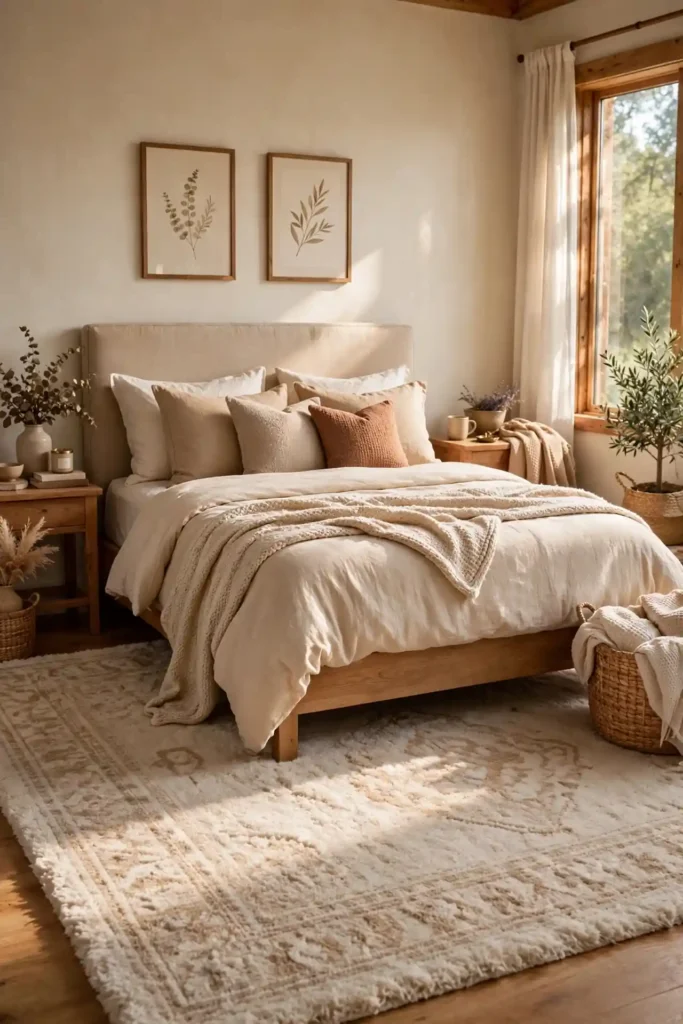
Place the rug so its front edge starts under the nightstands or about two-thirds of the way under the bed — this anchors the furniture and prevents the rug from looking like a floating island. In rooms too small for an 8-by-10, try two 3-by-5-foot runners, one on each side of the bed, for the same cozy landing at about $60 to $150 each. Choose patterns with subtle texture or tone-on-tone designs in neutral shades that hide lint and complement your bedding. A non-slip rug pad ($30–$60) keeps everything in place and adds extra cushion underfoot.
7. Hang Blackout Curtains
Blackout curtains are one of the highest-impact upgrades for couples with different sleep schedules or light sensitivity. True blackout panels block up to 99 percent of outside light, which helps your body produce melatonin and sleep more deeply. Hang curtain rods 4 to 6 inches above the window frame and extend them 8 to 12 inches past each side so panels fully cover the glass when closed. Ready-made blackout pairs from Target, Amazon, or IKEA cost $30 to $100 per window, while custom options from The Shade Store run $200 to $600.
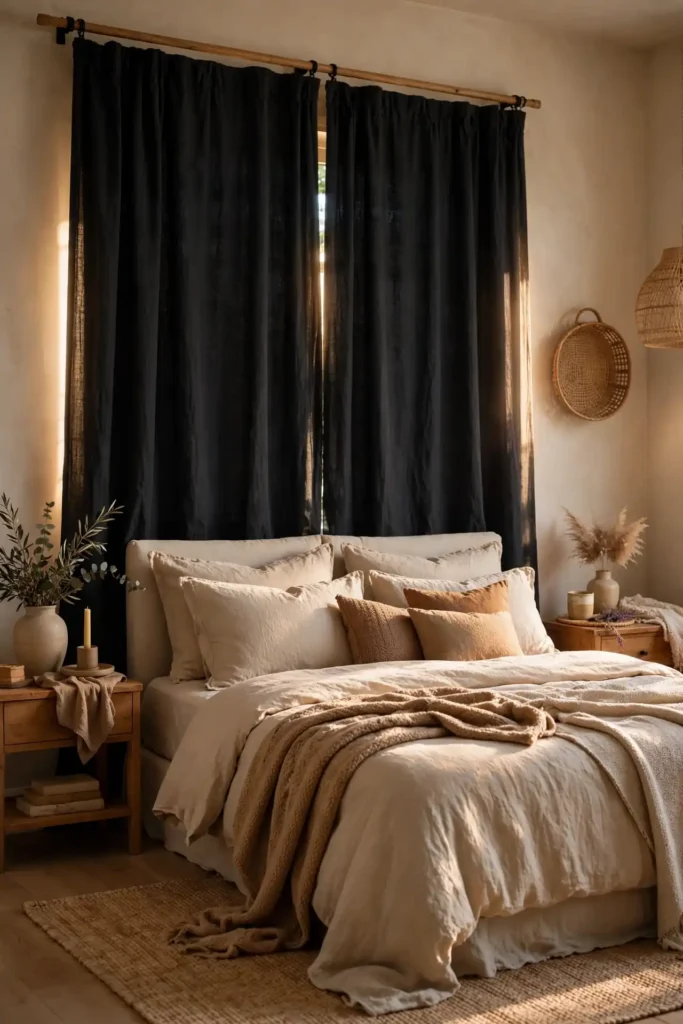
Choose floor-length panels that puddle slightly or just kiss the floor for a polished look — measure from rod to floor and add two inches for a gentle break. Layer sheer curtains behind the blackout panels so you get soft daylight privacy during the day and total darkness at night. Stick to warm neutrals like ivory, greige, or soft taupe that complement cozy bedroom palettes and do not show dust. Washable polyester-blackout blends are practical for bedrooms; avoid dry-clean-only fabrics. Good curtains also muffle street noise, a bonus for light sleepers.
8. Add a Bench at the Foot of the Bed
A bench at the foot of the bed adds function and a finished, hotel-like feel that couples love. Use it as a landing spot for tomorrow’s clothes, a perch while putting on shoes, or extra seating when you are chatting before sleep. Choose a bench 4 to 6 inches shorter than your bed’s width — for a 76-inch king, a 48-to-60-inch bench works well — and keep its height at or below the mattress top (around 18 to 22 inches). Upholstered storage benches from Target or Wayfair cost $100 to $300 and hide blankets or off-season bedding inside.
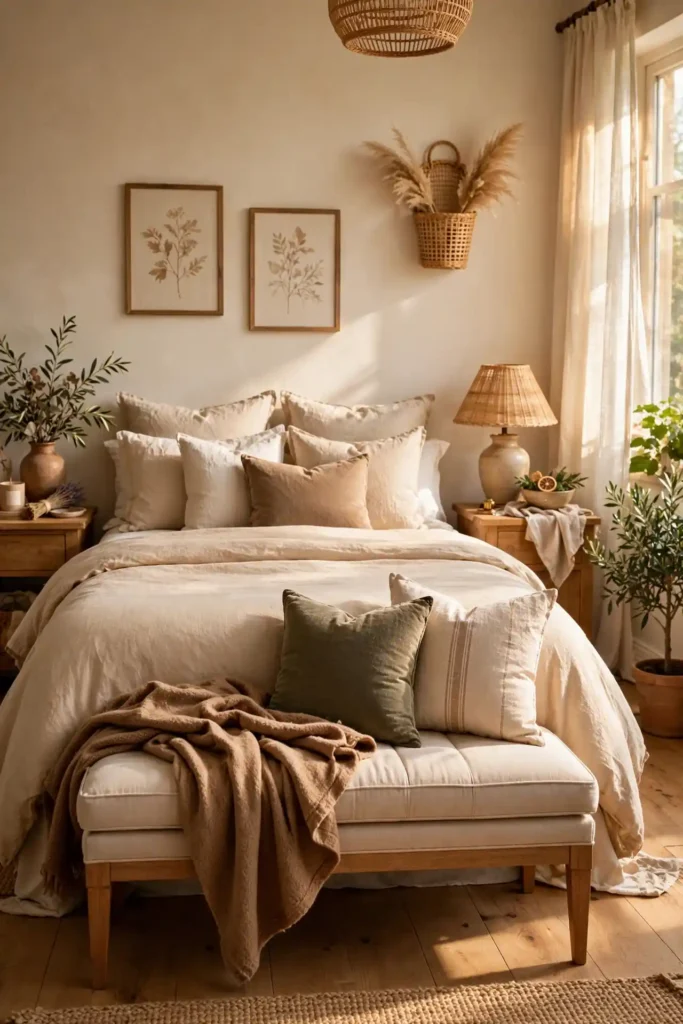
If your bedroom already has plenty of storage, opt for a simple upholstered or wooden bench ($80–$250) and style it with a folded throw and one or two small cushions. Tufted velvet benches in neutral tones add a touch of luxury, while woven or rattan designs suit relaxed, coastal-inspired rooms. Leave at least 24 inches of walking space between the bench and the wall or dresser so the foot of the bed never feels cramped. For narrow rooms, a backless bench keeps sight lines open and makes the space feel larger than it is.
9. Choose Calming Colors
Calming colors set the emotional tone of a couple’s bedroom, and soft, muted shades genuinely help both of you unwind. Warm neutrals like greige, warm white, and soft taupe are the most forgiving choices — they suit any furniture and make small rooms feel larger. Muted blues and sage greens are also proven sleep-friendly, lowering perceived stress for many people. Popular US paint picks include Sherwin-Williams Accessible Beige, Benjamin Moore Edgecomb Gray, and Behr’s Silver Drop, typically $40 to $70 per gallon. Test large swatches on the wall for 48 hours before committing.
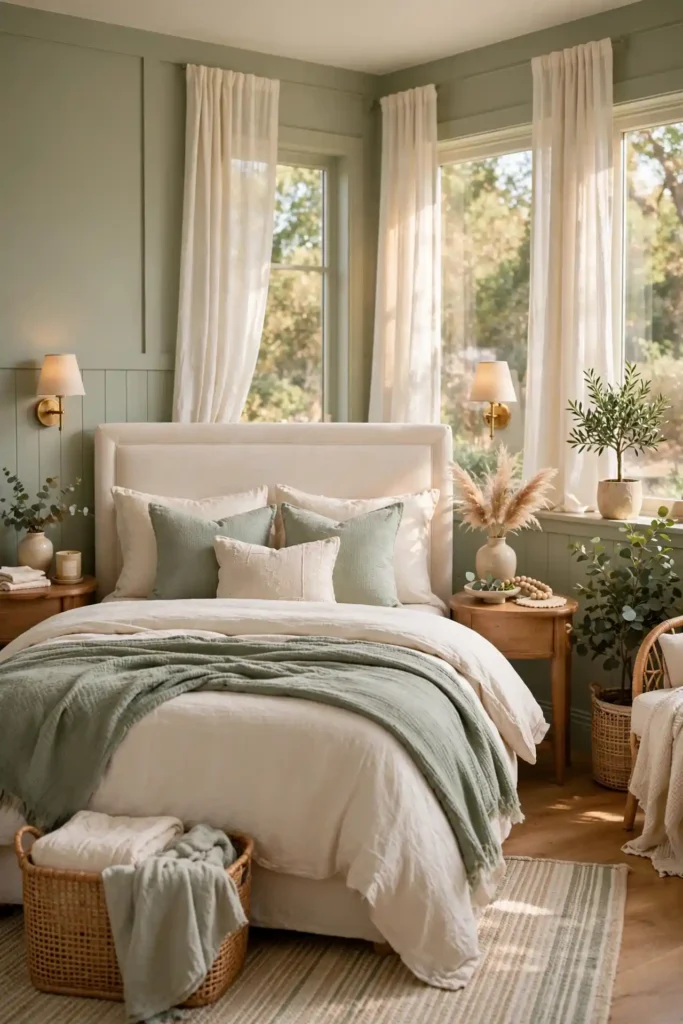
Keep the palette to three colors: a dominant wall tone, a secondary bedding or upholstery tone, and one accent repeated in art, pillows, or throws. This simple ratio prevents the visual clutter that makes bedrooms feel tense. If you and your partner disagree on color, compromise with a neutral base and let each of you pick one accent — a rust throw for one side, a dusty-blue pillow for the other. Avoid high-contrast or neon shades on large surfaces; save bold color for small accessories you can swap easily and affordably.
10. Display Couple Photos
Displaying couple photos turns a bedroom into a space that celebrates your relationship, not just a room where you sleep. Create a gallery wall of 5 to 9 framed prints above a dresser or in the sitting area — mixing black-and-white and color prints in matching frames keeps it cohesive. Print sizes from 8-by-10 to 11-by-14 inches work well; services like Artifact Uprising, Shutterfly, or Costco Photo print and frame them for $15 to $60 each. Arrange frames on the floor first, spacing them 2 to 3 inches apart, then transfer the layout to the wall.

Choose photos that spark good memories — wedding shots, travel moments, and everyday candids all belong — and update the display once a year so it reflects your life now. A single large canvas (24-by-36 inches, roughly $80–$150 from CanvasPop or Costco) above the bed makes a romantic focal point without overwhelming the wall. Keep frames off the nightstands if space is tight; one meaningful photo per side is plenty. Avoid cluttering every surface — a curated selection of favorites feels intimate, while dozens of frames can make the room feel busy and hard to relax in.
11. Separate Dressers
Separate dressers are a practical peace treaty for couples — each partner gets their own drawers, and nobody argues about who took over the top drawer. Two matching dressers flanking a window or placed on opposite walls look intentional and balanced, but the dressers do not need to be identical; matching heights (30 to 36 inches) matter more than matching styles. Solid-wood six-drawer dressers from IKEA, Target, or Article run $200 to $600 each. Measure your wall space first and leave at least 30 inches of walking room in front of each piece.
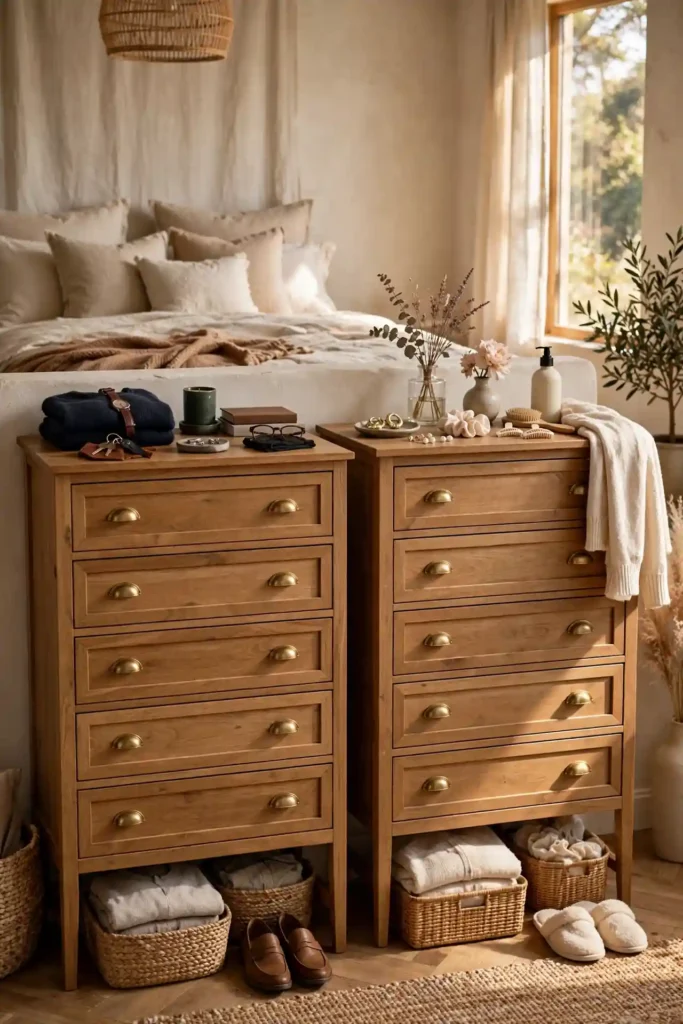
Organize each dresser with drawer dividers ($15–$30 for a set on Amazon) so socks, underwear, and accessories stay sorted without any daily effort or digging around. If floor space is tight, consider one wide double dresser with a clear left-right split — assign each partner three drawers and label the division with a removable divider or tray. Keep the tops styled minimally: a small tray for jewelry, one plant or candle, and a framed photo. Resist using dresser tops as catch-alls; a tidy surface makes the whole bedroom feel calmer and more grown-up.
12. Add a Fireplace or Candles
Few things make a bedroom feel cozier for two than the warm glow of a fireplace — and you do not need a chimney to get one. Freestanding electric fireplaces ($150–$500 at Amazon, Wayfair, or Home Depot) plug into a standard outlet, produce realistic LED flames, and add supplemental heat with a fan or infrared element. Corner and TV-stand-style models fit rooms where wall space is limited. For renters, they are ideal because they move with you. Place yours where both of you can see it from bed, ideally opposite the foot of the bed.
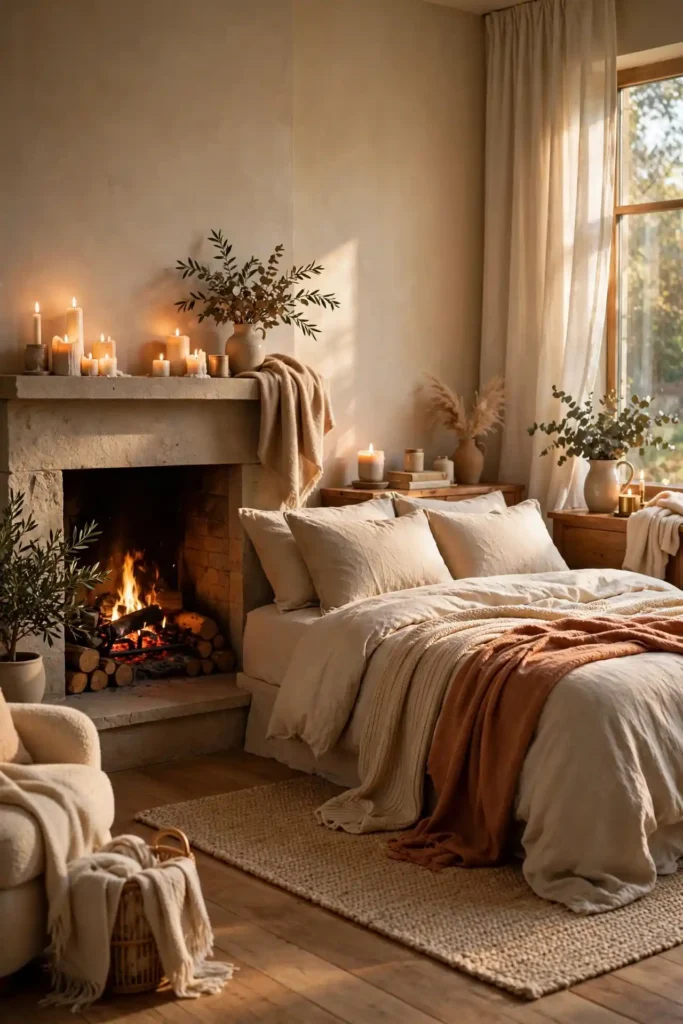
If a fireplace is not practical, lean into candles for the same romantic effect at a fraction of the cost. Cluster flameless LED candles ($20–$40 for a set of three on Amazon) on the dresser or nightstands — modern versions flicker realistically and run on timers, so they switch off safely after you fall asleep. Scented soy candles in vanilla, sandalwood, or lavender ($10–$25 from Bath & Body Works or Target) add fragrance, but always extinguish real flames before bed. Either option creates a warm, intimate ambiance that signals the day is winding down.
13. Use Wood and Natural Textures
Wood and natural textures bring warmth and tactility that flat, synthetic surfaces cannot match — essential for a bedroom that feels cozy rather than showroom-cold. A solid wood bed frame or nightstands in oak, walnut, or acacia instantly grounds the room; mid-range US retailers like Article, West Elm, and Crate & Barrel offer pieces from $300 to $1,500. Mix in woven elements — a jute or sisal rug, rattan baskets, a linen-upholstered bench — to layer texture at different heights. Keep wood tones within one family (all warm or all cool) so the mix feels curated.

Balance heavier wood pieces with soft natural fabrics: linen curtains, cotton quilts, and wool throws prevent the room from feeling rustic or heavy. Even small touches count — a wooden tray on the dresser, bamboo shades over the windows, or a live-edge floating shelf for books add organic character for under $50 each. Seal raw wood with a matte finish to protect against scratches and moisture from drinks. When both partners can touch wood grain, woven fibers, and soft linen in one room, the space reads as warm and welcoming to everyone who enters.
14. Keep Tech Out
Keeping tech out of the master bedroom is one of the simplest ways couples protect both sleep and connection. Televisions, laptops, and glowing chargers flood the room with blue light that suppresses melatonin and delays sleep onset — studies consistently link bedroom screens to poorer rest. Move the TV to the living room, charge phones overnight in the hallway or kitchen, and replace your phone alarm with a sunrise alarm clock ($25–$60 from Amazon brands like Philips or JALL). Agree on the boundary together so it feels like a shared choice, not a rule imposed by one partner.
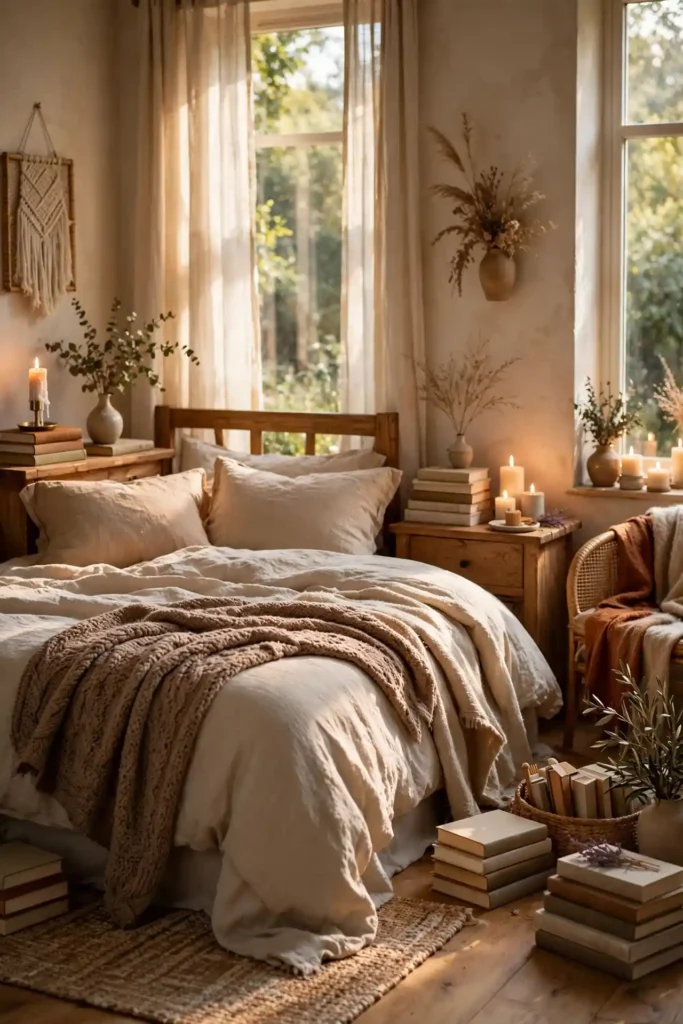
If removing every device feels unrealistic, start with a tech curfew: screens off 30 to 60 minutes before bed, enforced by a simple charging station outside the door. Swap scrolling for shared rituals — reading side by side, a ten-minute stretch, or talking through tomorrow’s plan. Use an e-reader with a warm front light instead of a tablet if you both read in bed. Couples who make the bedroom a screen-free zone often report better conversations and better sleep within two weeks, which makes the small inconvenience well worth it.
15. Add Plants
Plants soften a master bedroom’s edges and add living color that no decor object can replicate. Choose low-light, bedroom-friendly varieties — snake plants, pothos, ZZ plants, and peace lilies all tolerate indirect light and irregular watering, which suits busy couples. A 6-inch potted plant costs $10 to $30 at Home Depot, Lowe’s, or local nurseries, while a statement 3-foot fiddle-leaf fig runs $40 to $80. Place one larger plant in an empty corner and smaller pots on dressers or shelves, keeping leaves at least a foot from bedding to avoid nighttime allergens.

Match planters to your bedroom palette — matte ceramic, woven seagrass, or terracotta pots ($8–$25 at Target or IKEA) keep the look cohesive rather than cluttered. Water most bedroom plants every one to two weeks; a moisture meter ($10 on Amazon) takes the guesswork out for beginners. If you travel often or have a brown thumb, high-quality faux plants ($20–$50) deliver the same visual warmth with zero maintenance. Limit yourself to three or four plants so the bedroom stays serene — a jungle belongs in the living room, not where you sleep.
16. Hang Meaningful Art
Meaningful art gives your master bedroom a personal signature that generic prints never will. Choose pieces tied to your story as a couple — a framed map of where you met, a print from your honeymoon city, or a commissioned illustration of your wedding venue. Online marketplaces like Etsy and Society6 offer custom and original pieces from $30 to $300, while local art fairs let you meet the maker. Hang art at eye level, with the center roughly 57 to 60 inches from the floor, and size it to fill two-thirds of the wall space above furniture.
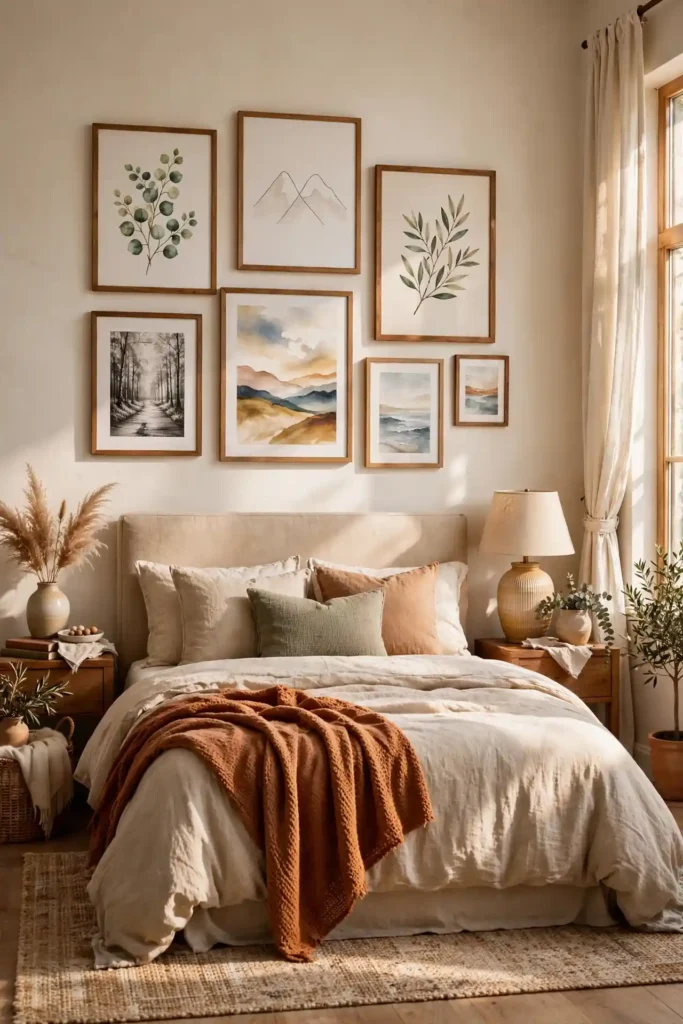
Above the bed, one large statement piece (at least 36 inches wide) creates a stronger focal point than several small frames scattered around. If your tastes differ, pick a neutral abstract in your bedroom’s color palette — it feels personal without favoring one partner’s style. Float-mount or gallery-wrap canvases need no frame and cost $60 to $200 for large sizes. Rotate pieces seasonally or yearly to keep the room feeling fresh. Art you both chose together becomes part of your shared story, which is exactly what a couple’s bedroom should reflect.
17. Include a Vanity or Dressing Area
A vanity or dressing area gives the bedroom a boutique-hotel feel and solves the morning bathroom bottleneck many couples face. A compact vanity table (36 to 48 inches wide) with a mirror and a cushioned stool fits into an unused corner or along a short wall; sets from Target, Wayfair, or IKEA run $100 to $350. Add a daylight-balanced LED mirror ($40–$120) so makeup and grooming look accurate. Keep the surface organized with a small tray for daily items — clutter here quickly spreads to the rest of the room.

If a full vanity will not fit, create an elegant dressing zone with a full-length leaning floor mirror ($60–$180 at Target or HomeGoods) and a wall-mounted shelf for perfume and jewelry. Place it near natural light, ideally beside a window, and add a small upholstered stool that tucks underneath when not in use. Both partners benefit: one can get ready in the bedroom while the other uses the bathroom. A dedicated getting-ready spot also keeps clothes and accessories off the bed, which instantly makes the room feel tidier and more relaxing.
18. Try a Wallpaper Accent
A wallpaper accent wall adds pattern and personality without overwhelming a couple’s bedroom — one wall is enough to make the statement. Peel-and-stick wallpaper is the renter-friendly hero here: brands like Chasing Paper, Spoonflower, and Tempaper sell rolls for $40 to $120, and a standard 10-by-8-foot accent wall needs three to four rolls. Choose subtle patterns — tone-on-tone geometrics, soft botanicals, or grasscloth textures — in colors that echo your bedding. Install it on the wall directly behind the bed so the tall headboard anchors the design and frames your sleeping space perfectly.
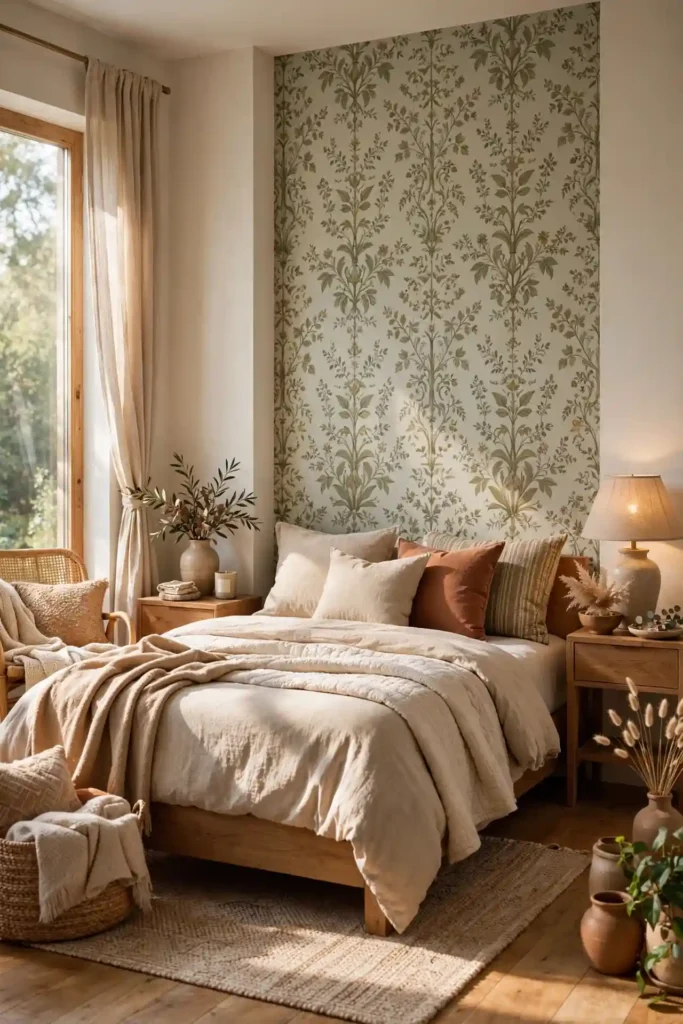
Prep the wall by cleaning it and filling nail holes, then start hanging from the center and work outward for a symmetrical pattern. Most peel-and-stick papers reposition easily, so do not panic over small misalignments — just lift and re-stick. If you prefer traditional paste wallpaper, budget $200 to $500 for professional installation of one wall. Keep the remaining walls a solid color pulled from the wallpaper so the room feels balanced. An accent wall is also easy to change in a few years when your taste evolves, unlike painting the whole room.
19. Use Warm Lighting Throughout
Warm lighting is the backbone of a cozy master bedroom — it flatters skin, relaxes the eyes, and signals your brain that bedtime is near. Standardize on warm-white bulbs at 2700K (or 2200K for extra amber glow) in every fixture, from ceiling lights to lamps. Dimmable LED bulbs ($8–$15 for a four-pack at Target or Amazon) let you lower the brightness as the evening progresses. Aim for three light sources per room minimum: overhead, bedside, and one accent like a floor lamp or sconce, so no single harsh light dominates.
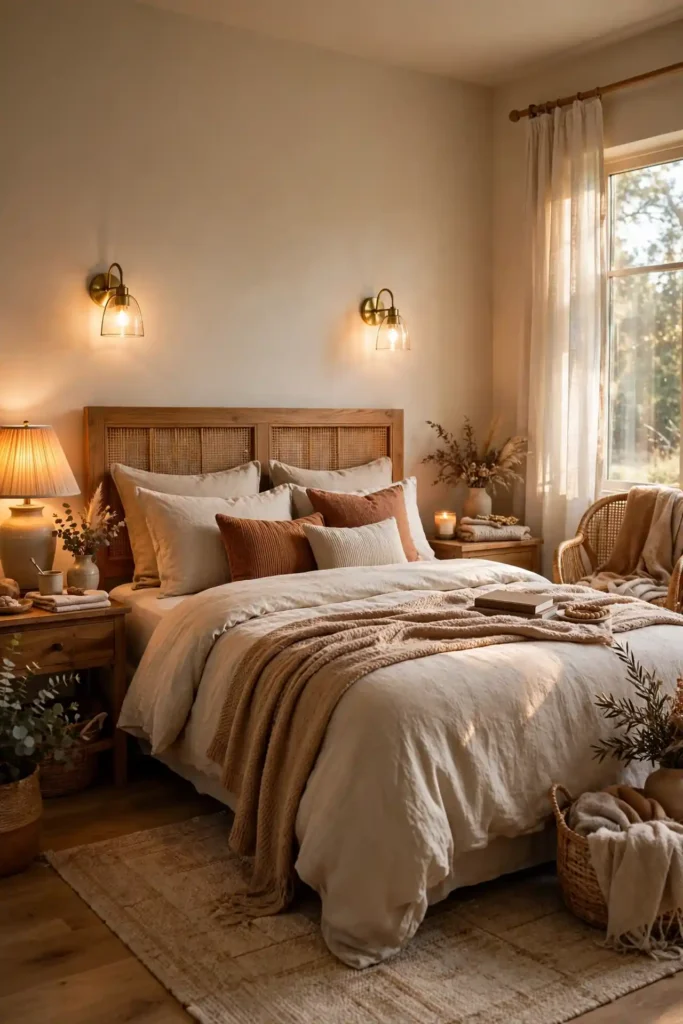
Put bedside and overhead lights on dimmers ($15–$30 per switch at Home Depot; many are DIY-friendly with basic wiring knowledge) or use smart bulbs like Philips Hue ($15–$50 each) for app and voice control per side of the bed. Add low, indirect glow with LED strip lights behind the headboard or under floating shelves ($15–$40 for a 16-foot strip) — the hidden light washes the wall softly without glare. Avoid cool-white or daylight bulbs (4000K+) in the bedroom entirely; they feel clinical and fight the cozy atmosphere you are building.
20. Add a Canopy Bed
A canopy bed turns an ordinary master bedroom into a romantic retreat — the frame itself becomes the room’s architecture. Modern four-poster and canopy frames in wood or matte black metal run $300 to $1,200 at retailers like Article, West Elm, and Amazon, far less than the custom versions of the past. Standard canopy beds stand 72 to 80 inches tall, so check your ceiling height first; you need at least 8-foot ceilings for comfortable proportions. The vertical posts draw the eye upward and make even modest rooms feel grand and intentional.

Drape the frame to control the mood: sheer white curtains ($30–$80 for a four-panel set on Amazon) create a dreamy, breezy enclosure, while leaving the frame bare keeps the look clean and modern. Tie-back panels during the day so the bed feels open, then close them at night for a private, cocoon-like space couples love. Keep bedding simple when the frame is detailed — let the canopy be the star. Dust the top rails monthly, since high frames collect dust, and secure the frame to the wall if you have an active sleeper or curious pets.
21. Keep Clutter Hidden
Hidden storage is what separates a truly cozy bedroom from one that just looks good in photos — clutter raises stress for most people, even when they cannot name why. Give every single item a concealed home: under-bed drawers or rolling bins ($25–$60 each at IKEA or Target) easily swallow off-season clothes and extra linens, while sturdy lidded baskets on closet shelves hide the visual overflow. Nightstands with drawers beat open shelves because remotes, chargers, and medications disappear behind a closed front. Do a weekly five-minute reset together to keep surfaces clear.

Corral the small stuff that breeds on dressers and nightstands with trays and boxes — a single tray per surface ($15–$40 at West Elm or HomeGoods) sets a visible boundary for keys, glasses, and jewelry. Run charging cables through a cable-management box ($15–$25 on Amazon) so cords never snake across the floor. If laundry tends to pile on a chair, replace the chair with a lidded hamper that matches your decor. When everything has a hidden spot, the bedroom stays calm by default instead of requiring constant tidying to feel restful.
22. Personalize Each Side
Personalizing each side of the bed honors both partners’ individuality inside your shared space. Let each of you style your own nightstand — one might display a small plant and a novel, the other a photo frame and a candle — while keeping lamp heights and finishes similar so the pair still looks unified. Choose your own pillow arrangement or throw on your half of the bed. This small autonomy prevents the resentment that builds when one partner’s taste dominates every surface, and it makes the room feel like it belongs to both of you equally.

Extend the idea to the walls: hang one piece of art or a floating shelf on each side of the bed reflecting each partner’s interests. Agree on a shared color palette first so the two sides feel like chapters of one story rather than two different rooms. Even bedding can be split — matching duvet covers with different accent pillow colors per side is a popular compromise. Revisit the arrangement yearly as tastes change. A bedroom that reflects two people, not one, is the truest definition of a couple’s retreat.
Balancing Two Styles in One Bedroom
Merging two decorating styles starts with finding your shared overlap, not fighting over differences. Sit down together and each pick five inspiration photos, then circle what naturally repeats — maybe you both genuinely gravitate toward warm wood, or you both like clean lines. That shared thread becomes your foundation, typically 70 percent of the room. Popular compromises pair together beautifully: modern and rustic meet at warm minimalism, traditional and contemporary meet at transitional. Agree on big-ticket items (bed, dressers) together and let each partner choose the smaller accents freely on their own.
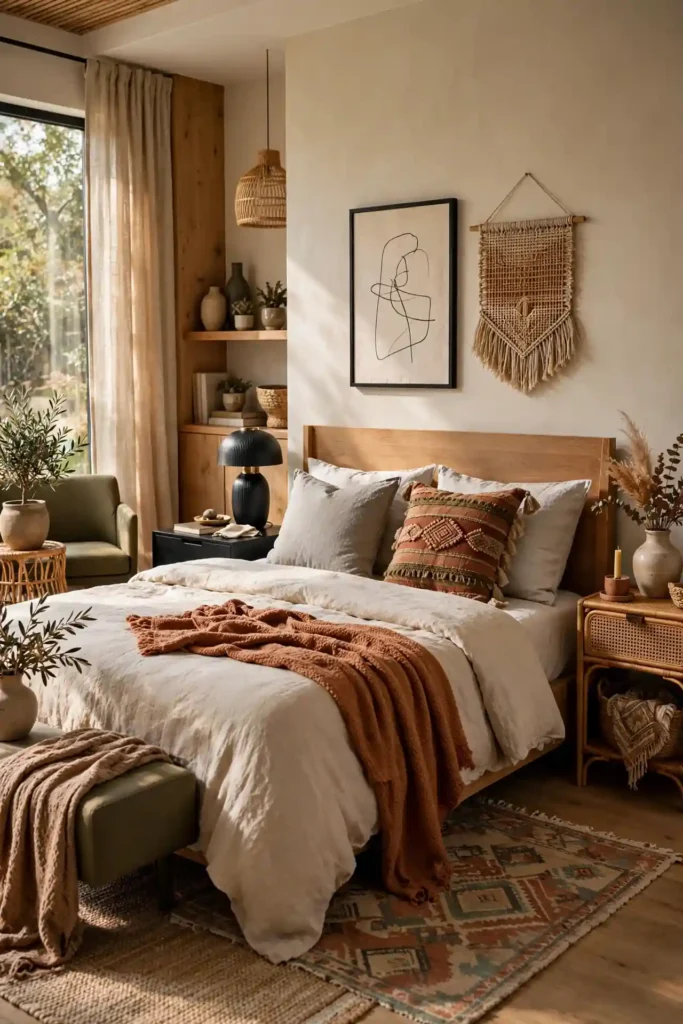
Use the 70-20-10 formula to keep the blend disciplined: 70 percent shared neutral base, 20 percent one partner’s style, 10 percent the other’s — a simple ratio that prevents style clashes. A neutral wall color, matching bed frame, and cohesive bedding carry the shared 70 percent, while art, throws, and accessories express individual taste. If one of you loves bold pattern and the other prefers solids, confine pattern to replaceable items like pillow covers ($15–$30 each). Compromise works best when both partners can point to something in the room and say, “That part is mine.”
A shared color palette is the glue. Agree on two or three colors you both like, and use them across pillows, art and accessories. This approach creates cozy master bedroom decor that feels like it belongs to both of you.
Storage Solutions for Couples
Couples need roughly double the storage of a single sleeper, so plan your master bedroom storage for two full wardrobes, not one. A reach-in closet with a double-hang system ($100–$300 for kits from IKEA PAX or ClosetMaid at Home Depot) instantly doubles hanging space by stacking two rods. Add shelf dividers and slim velvet hangers ($15–$25 for 50 on Amazon) to maximize every inch. If the closet is shared, split it down the middle with a clear divider so each partner’s section stays organized and neither side creeps into the other.
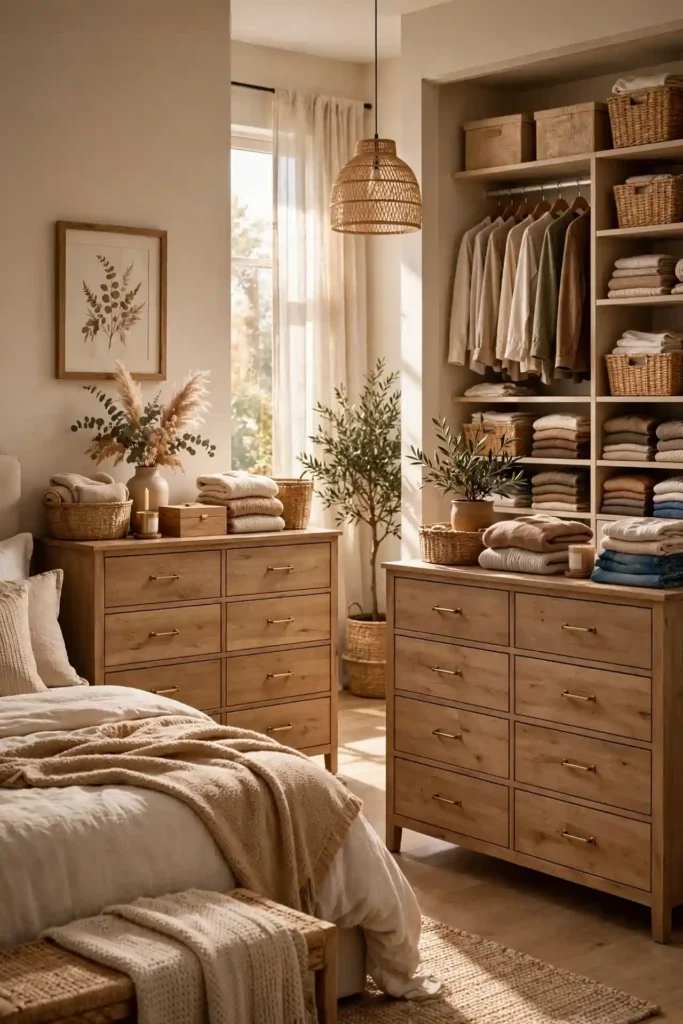
Extend storage beyond the closet: a sturdy storage bench at the foot of the bed ($100–$300) holds extra blankets, under-bed drawers neatly handle off-season clothes, and over-door hooks ($10–$20) keep robes and tomorrow’s outfits off the floor. Label bins and baskets so both partners return items to the right spot — shared systems only work when both people understand them. Purge together twice a year, donating what neither of you has worn. When storage is planned for two from the start, the bedroom stays organized with far less daily effort.
When it comes to cozy master bedroom decor, the best results come from balancing style, comfort and everyday function. Use this list as your go-to guide for cozy master bedroom decor, and start with the ideas that fit your space best. Save this guide on cozy master bedroom decor so you can come back to it when you are ready to update your home.
How to Plan Cozy Master Bedroom Decor Step by Step
Planning your cozy master bedroom starts with measuring and budgeting before you buy a single pillow. Measure the room’s length, width, ceiling height, and window and door positions, then sketch a simple floor plan — free tools like the IKEA planner or graph paper work fine. Set a realistic total budget: a full refresh typically runs $1,500 to $5,000 depending on furniture quality, so allocate the largest share (40 to 50 percent) to the bed and mattress. List must-haves versus nice-to-haves together so both partners agree on priorities from day one.
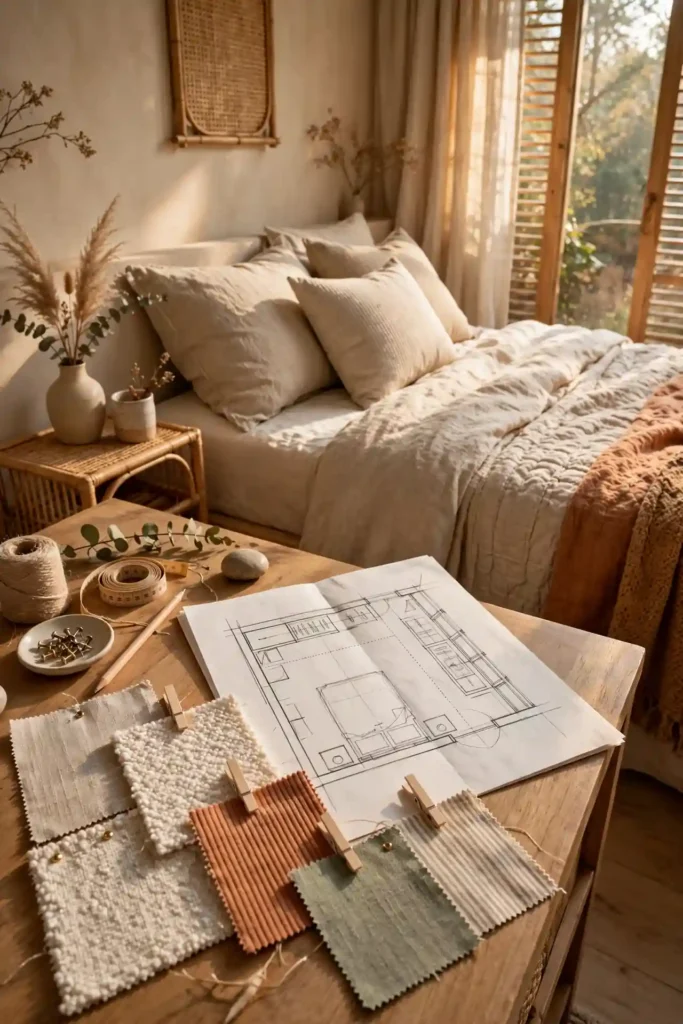
Tackle the room in this order: bed and mattress first, then large furniture (dressers, nightstands), then lighting, then textiles (rug, curtains, bedding), and finally decor and art. Buy the big pieces in one coordinated round so finishes match, then layer in textiles over a few weeks. Live with each stage for a few days before adding more — restraint prevents the cluttered, over-decorated look. Finish with a joint walkthrough: lie in bed together and check sight lines, lighting levels, and whether each side feels equally yours. Adjust until it does.
- Agree on a color palette and style direction.
- Choose the bed and nightstands.
- Plan storage for both partners.
- Add layered bedding, rugs and curtains.
- Finish with lighting, art and personal touches.
Final Thoughts on Cozy Master Bedroom Decor
A cozy master bedroom for couples is not about following trends — it is about building a space where both of you genuinely want to end the day. The ideas in this guide share one principle: design for two equal partners, from the generous bed and matching nightstands to the personalized touches on each side. You do not need to implement all twenty-two ideas at once; pick the three that would change your daily life most — usually the bed, the lighting, and the clutter — and start there. Small, thoughtful changes compound into a room that feels completely different.
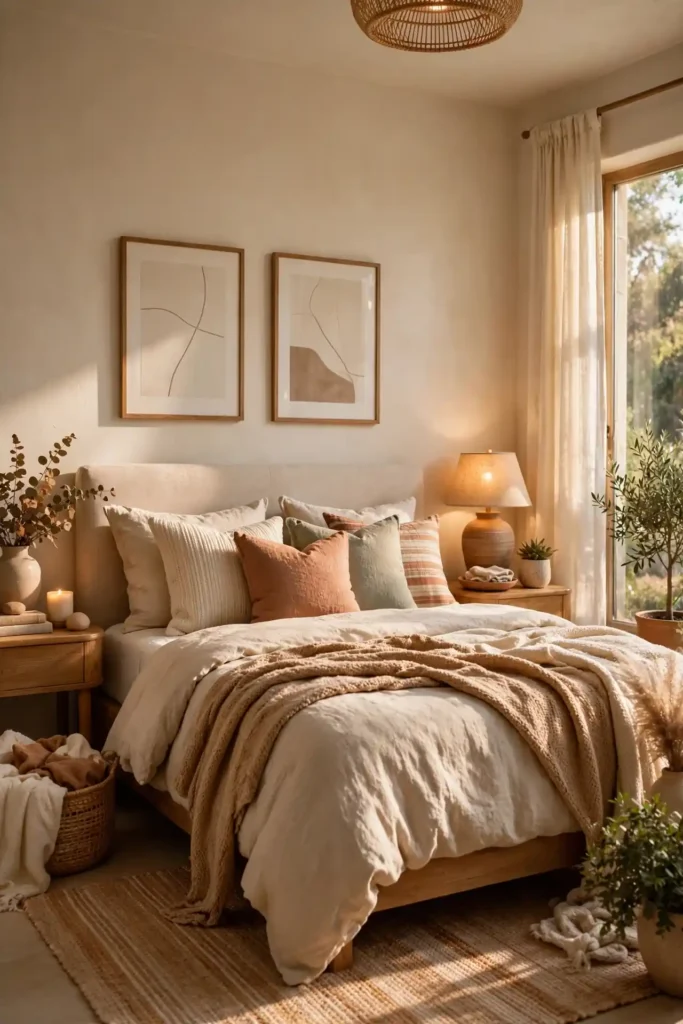
Remember that coziness is a feeling, not a shopping list. Warm light, soft textures, and a calm palette do more for intimacy than any single expensive piece. Keep talking as you decorate — the conversations about what each of you loves are part of what makes the room yours. Revisit your bedroom once a year, refresh the bedding, swap a piece of art, and confirm it still fits your life. A master bedroom that grows with your relationship will always feel cozier than one decorated once and frozen in time.
Save these ideas and follow along for more bedroom inspiration.
Frequently Asked Questions About Cozy Master Bedroom Decor
Couples ask the same practical questions when decorating a shared master bedroom: what size bed is really best for two, how do you blend different styles without fighting, and how much should a refresh cost? The short answers — a king for most couples, a shared neutral base with personal accents, and $1,500 to $5,000 for a full update — are covered in depth throughout this guide. Other common questions include which paint colors promote sleep, how to arrange furniture in small rooms, and whether separate blankets actually help couples sleep better.

You will also find answers below on lighting (why 2700K warm bulbs beat daylight bulbs for bedrooms), storage for two wardrobes in one closet, and renter-friendly upgrades like peel-and-stick wallpaper and plug-in sconces that need no electrician. Each answer gives concrete steps, real product types, and honest US price ranges so you can confidently act immediately today. If your question is not covered, the step-by-step planning section walks you through measuring, budgeting, and buying in the right order. Read the full guide first, then jump to the FAQ section for quick answers.
How do I make a master bedroom cozy?
Layer bedding, add a rug, use warm dimmable lighting and include personal touches.
How do couples decorate a bedroom together?
Agree on a neutral base and a shared color palette, then blend elements from both styles.
What colors work best for a couple’s bedroom?
Soft greens, warm neutrals, muted blues and earthy tones feel calm and balanced.
How do I add romance to a master bedroom?
Use candles, soft lighting, a canopy, plush textiles and meaningful art.
How do I reduce clutter in a shared bedroom?
Give each person dedicated storage and use baskets and under-bed boxes.






Leave a comment