



Your bedroom should be the most relaxing room in your home. It is where you start and end every day, so it deserves to feel warm, calm and inviting. Creating a cozy bedroom is less about buying new furniture and more about layering the right textures, lighting and personal touches.
These 25 cozy bedroom ideas are simple, affordable and work in any size room. For seasonal updates, see our fall bedroom decor ideas, and if you love a darker look, explore these moody bedroom ideas.
The building blocks of a cozy bedroom:
- Soft, layered bedding in natural fabrics.
- Warm, low lighting from multiple sources.
- A calm color palette.
- Minimal clutter and a few meaningful objects.
1. Layer the Bed Generously
Start with crisp cotton or linen sheets as your foundation — Parachute’s percale sheet sets ($129–$179 for queen) or Target’s Threshold linen-blend sheets ($49) both work beautifully. Add a flat top sheet, then a medium-weight duvet insert, and finish with a quilt or coverlet folded at the foot. The secret to that plush, hotel-style look is sizing up: buy a king duvet insert for a queen bed so the edges drape generously over the sides. Choose inserts with a baffle-box construction to prevent clumping, around 600–700 fill power for year-round comfort in most US climates.
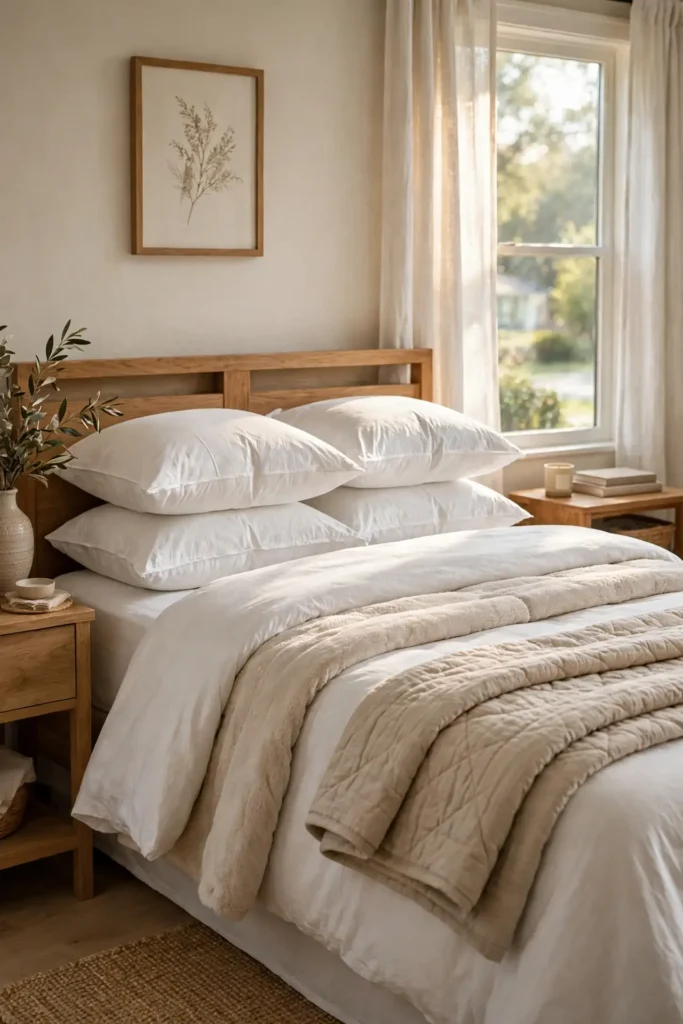
To arrange layers like a stylist, start with the fitted sheet pulled drum-tight, then lay the flat sheet printed-side down so the pattern shows when you fold the top cuff back twelve inches. Drape your duvet so it hangs eight to ten inches past the mattress edge on each side, then fold a coverlet or throw across the lower third for color contrast. Karate-chop the top pillows to create that plush crease, and stack sleeping pillows behind shams at a slight angle. This method takes under five minutes each morning and keeps every layer exactly where you left it overnight.
2. Use Warm, Dimmable Lighting
Harsh overhead lights kill coziness faster than anything else in a bedroom. Swap daylight bulbs (5000K) for warm-white LEDs in the 2700K range, and put every lamp on a dimmer — IKEA’s dimmer-compatible lamps and Target’s plug-in dimmer cords ($12) make this a ten-minute upgrade. Aim for three light sources per bedroom: a table lamp on each nightstand plus a floor lamp or wall sconce, each with a linen or fabric shade that diffuses the glow. Smart bulbs like Philips Hue ($50 for a two-pack on Amazon) let you schedule warm amber tones that automatically deepen as bedtime approaches.
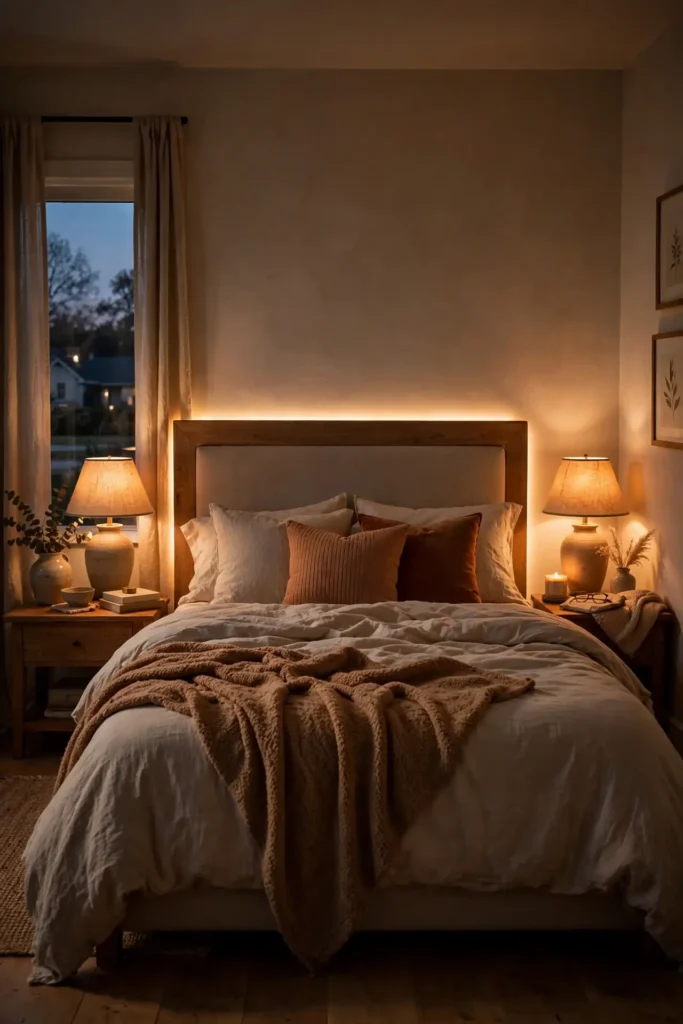
Layer your lighting so you can shift the mood from reading to relaxing to sleeping. Keep bedside lamps at about 24 inches tall with the shade bottom at shoulder height when you’re propped up, and add a small amber-toned night-light near the floor for middle-of-the-night trips that won’t wake your partner. String a dimmer strip behind the headboard for a soft halo effect — Govee LED strips ($18 on Amazon) stick on in minutes and dim from an app. Never underestimate candlelight either; real or flameless, flickering light signals your brain that the day is officially over.
3. Add a Soft Rug
A plush rug underfoot is the difference between a bedroom that looks cozy and one that feels cozy the moment your feet hit the floor. For a queen bed, choose an 8×10-foot rug so it extends at least 18 inches beyond each side and the foot of the bed — Ruggable’s washable rugs ($199–$349) or IKEA’s STOENSE ($129) are easy-care favorites for US homes. Pile height matters: a medium-pile or shag around 1 to 1.5 inches cushions steps without trapping the vacuum. Stick to warm neutrals like oatmeal, camel, or soft terracotta to keep the palette soothing.
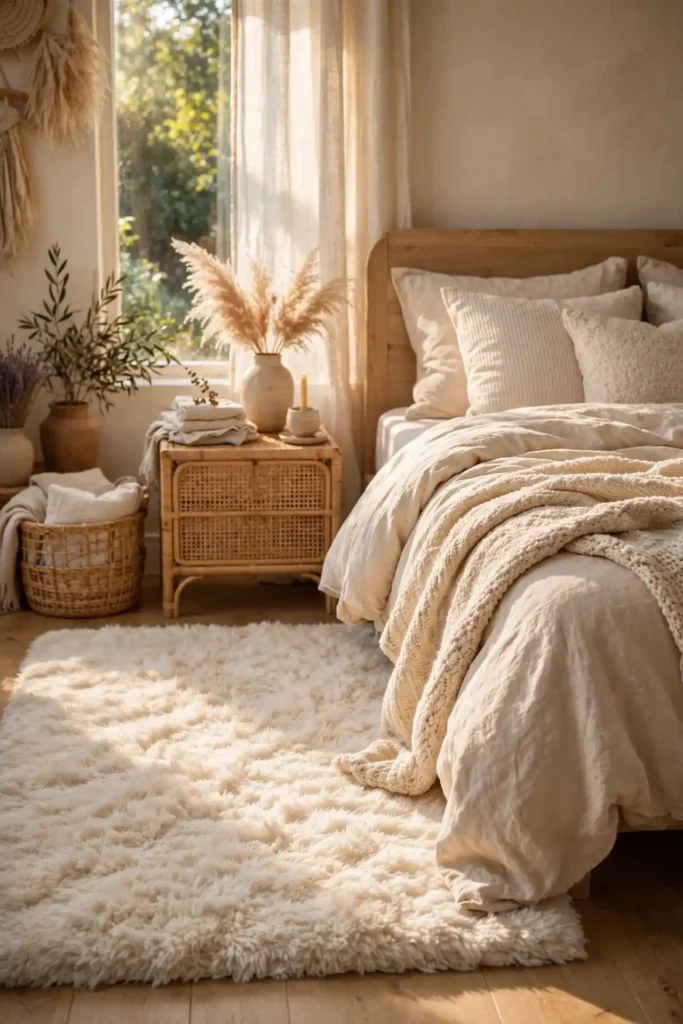
If a full-size rug busts your budget, layer two 3×5-foot runners down each side of the bed instead — Target’s Threshold runners start around $35 each and deliver the same warm-first-step feeling. Always use a rug pad underneath; a 1/4-inch felt pad ($40–$60 at Home Depot) adds cushioning, prevents slipping, and protects hardwood floors. For extra warmth in cold-climate states, layer a smaller sheepskin or faux-fur accent rug over the main rug near your reading chair. Vacuum with the beater bar off and rotate the rug every six months so sunlight fades it evenly.
4. Choose a Calm Palette
Color psychology is real: soft, muted tones measurably lower stress, which is exactly what you want where you sleep. Build your cozy bedroom around warm whites (Sherwin-Williams Alabaster or Benjamin Moore White Dove), then layer in mid-tone neutrals like greige, clay, or sage. Keep saturated color to about ten percent of the room — a throw pillow or piece of art — so the space reads restful instead of busy. Cool grays and stark whites can feel clinical, so always warm your palette with wood tones and brass or bronze accents throughout the space for balance.

Test paint colors before you commit: buy $5 sample quarts from Home Depot or Lowe’s, paint two-foot squares on each wall, and observe them at morning, noon, and lamplight. What looks like warm beige at noon can read pink or yellow under 2700K bulbs. If painting feels like too much, work the palette through textiles instead — bedding, curtains, and rugs in the same tonal family create a cohesive cocoon without touching a wall. Limit your scheme to three main colors plus one metallic, and repeat each at least three times around the room for a designer-pulled-together look.
5. Add an Upholstered Headboard
An upholstered headboard instantly softens a bedroom — no more cold wall against your back during late-night reading. Wingback styles ($250–$600 at Wayfair or Amazon) add architectural interest and block drafts in older homes, while simple rectangular panels in performance linen suit modern spaces. Measure carefully: the headboard should span the full width of the mattress (60 inches for queen) and rise 48 to 58 inches from the floor so pillows don’t disappear behind it. Most models mount directly to the bed frame with included brackets in under thirty minutes using basic hand tools.

Choose fabrics that invite touch: velvet for luxe depth, bouclé for on-trend texture, or woven linen for casual warmth. Performance fabrics like Revolution or Crypton ($30–$50 extra per yard equivalent) resist stains from coffee-in-bed mornings — worth it if you have kids or pets. Tufted buttons look classic but collect dust; channel-tufted or smooth panels are easier to vacuum with an upholstery attachment monthly. If you’re renting, a freestanding headboard that leans against the wall ($99+ at IKEA USA) delivers the cozy upgrade with zero holes in the wall and easy move-out later.
6. Hang Linen Curtains
Linen curtains filter daylight into the soft, golden wash that makes cozy bedrooms glow. Hang them high and wide: mount the rod four to six inches above the window frame and extend it eight to twelve inches past each side so panels stack off the glass and windows look bigger. For standard eight-foot ceilings, 96-inch panels give you that puddled-luxury look; IKEA’s RITVA curtains ($25 a pair) or Target’s linen-blend panels ($40) are budget-friendly picks. Choose a relaxed, stonewashed finish rather than crisp linen — the gentle wrinkles are the whole point.
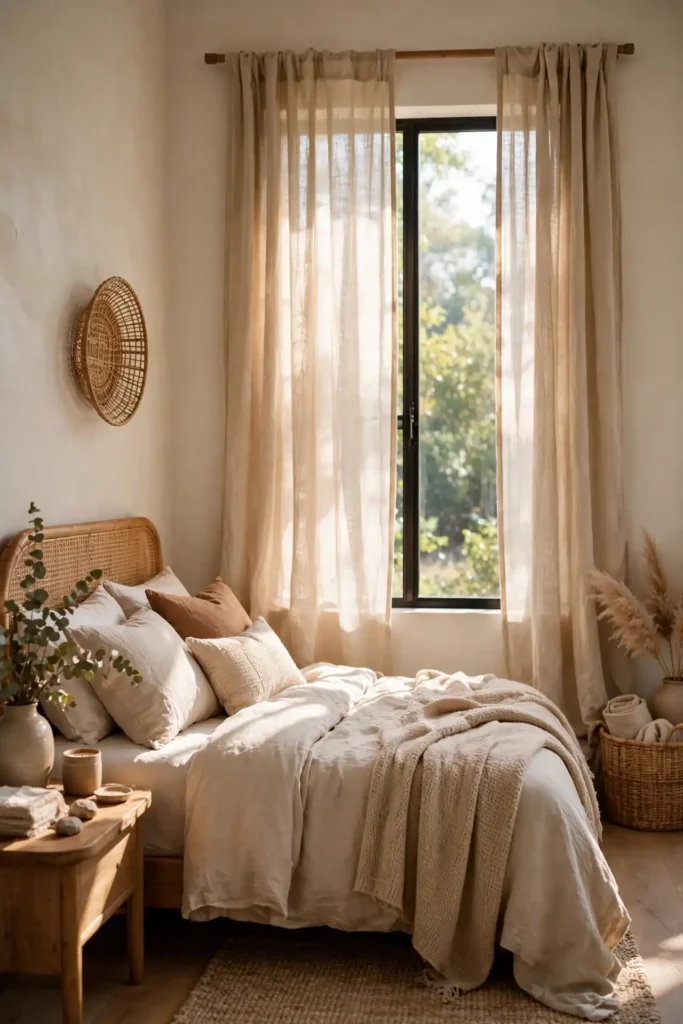
Double up with a sheer linen layer behind heavier drapes for daytime privacy that still lets light flood in. Use clip rings instead of rod pockets — they glide smoothly and let you adjust the fullness in seconds. Wash linen curtains every three to four months in cold water and hang them back up slightly damp; the weight pulls out wrinkles naturally, no ironing needed. If streetlights or early sunrises disturb your sleep, add a separate blackout roller shade behind the linens ($30–$60 at Home Depot) for the best of both worlds: dreamy texture by day, total darkness by night.
7. Create a Reading Corner
A dedicated reading nook turns an unused bedroom corner into the coziest square footage in your home. Start with a comfortable armchair — IKEA’s STRANDMON wing chair ($279) or a Target upholstered accent chair ($150–$250) — angled toward a window for natural light. Add a small side table for your tea and a floor lamp with a 2700K bulb positioned over your shoulder to eliminate page shadows. A 3×5-foot rug anchors the zone and signals to your brain that this corner is for unwinding, not scrolling. Keep a soft throw folded over the chair arm so it’s always within reach on chilly evenings.
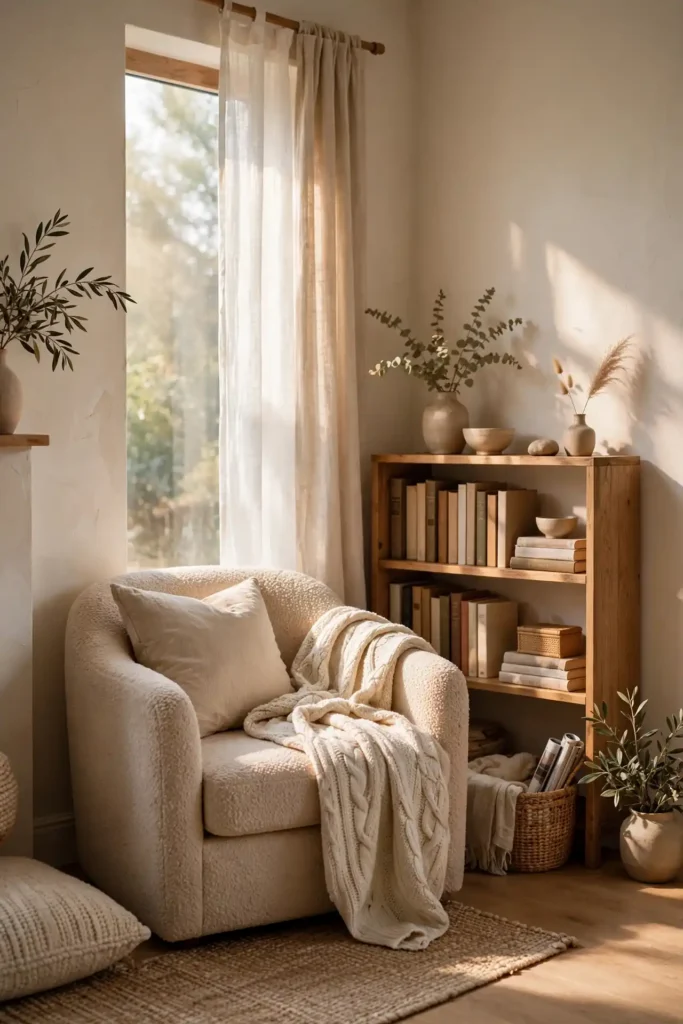
Comfort details make or break a nook. Choose a chair with a seat depth of at least 22 inches so you can curl up sideways, and add a lumbar pillow if the back is too upright. A small bookshelf or wall-mounted ledge within arm’s reach keeps your current reads handy without cluttering the table. Keep a charging cable tucked behind the table leg for your e-reader, and consider a battery-powered reading light ($15 on Amazon) clipped to the chair for late-night chapters. Even a 4×4-foot corner works — coziness comes from intention, not square footage.
8. Use Fairy Lights
Fairy lights are the fastest, cheapest way to make a bedroom feel magical after dark. Drape a 33-foot copper-wire string ($9–$15 on Amazon) along your headboard, around a mirror frame, or inside a glass vase for a warm, starry glow. Look for warm-white (2700K) LEDs with a timer function so they switch off automatically after six hours — no more falling asleep with lights blazing. Battery-operated strands work anywhere without an outlet, while plug-in versions with a remote let you dim from bed. They’re also renter-friendly: removable adhesive hooks hold strands securely and peel off cleanly at move-out.
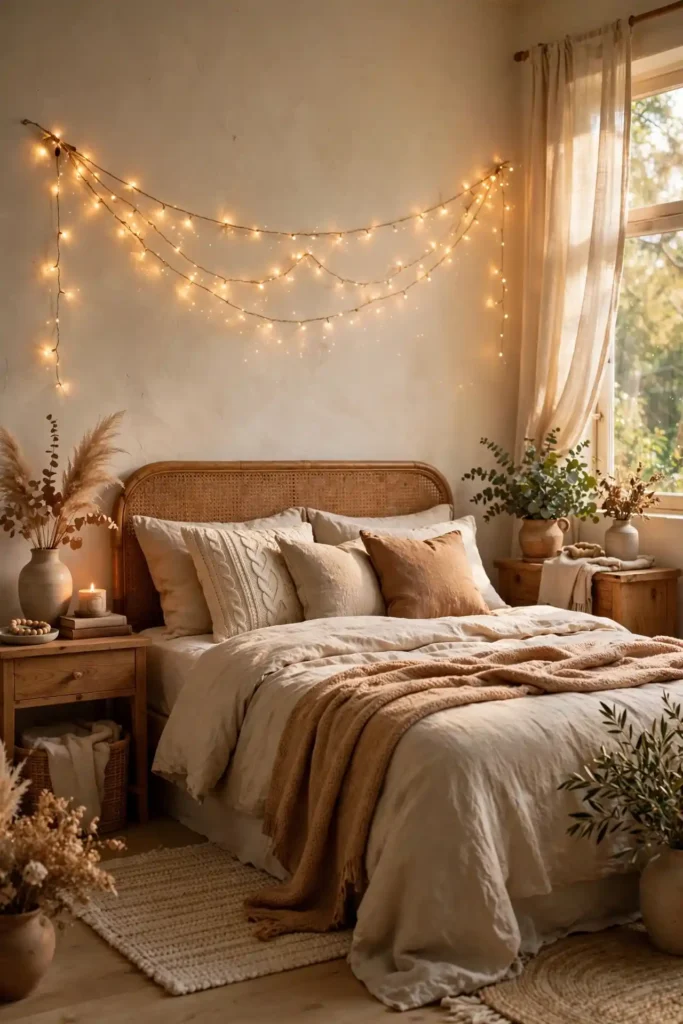
Placement determines whether fairy lights look dreamy or dorm-room. Weave them loosely through a sheer canopy or along the top of a bookshelf rather than outlining furniture in harsh geometric lines. Cluster three strands at different heights in one corner for a deliberate, layered glow instead of scattering singles everywhere. For a grown-up look, pair them with your main lighting on dimmers so they accent rather than carry the room. Replace batteries monthly or choose USB-rechargeable strands ($12) to avoid the slow fade of dimming, dying lights, and keep a spare set of batteries in the nightstand drawer for easy swaps.
9. Bring In Plants
Plants add living warmth that no decor object can replicate, and studies link greenery to lower stress and better air quality. Low-light champions like snake plants, pothos, and ZZ plants ($15–$35 at IKEA USA or local nurseries) thrive in bedrooms with a single north-facing window. Place a tall plant in an empty corner to fill dead space, and hang a trailing pothos from a ceiling hook for softness at eye level. Choose ceramic or woven basket planters in warm tones to reinforce your cozy palette. Group three plants of varying heights on a nightstand or dresser for a lush, collected vignette.

Care for bedroom plants with a simple routine: check soil moisture weekly by poking a finger one inch deep, and water only when dry — overwatering kills more houseplants than neglect. Wipe leaves with a damp cloth monthly so they absorb light efficiently, and rotate pots a quarter turn every few weeks for even growth. If you’re a chronic plant killer, high-quality faux plants ($20–$40 at Target) now look convincingly real and need zero care. Just keep real plants away from heating vents and at least three feet from the bed to avoid nighttime pollen bothering light sleepers.
10. Add Wood Furniture
Wood furniture brings organic warmth that balances soft textiles and keeps a cozy bedroom from feeling overstuffed. Mid-tone finishes like warm oak, walnut, or acacia ($200–$600 for a nightstand pair at Article or Wayfair) ground the room without the heaviness of dark mahogany. Mix, don’t match: a walnut dresser beside an oak nightstand looks collected and personal, while a full matching set reads showroom-stiff. Keep grain visible with matte or satin finishes — high-gloss lacquer bounces harsh light and fights the cozy brief. If your budget is tight, solid-pine pieces from IKEA USA stain beautifully with a $12 can of warm-toned wood stain.
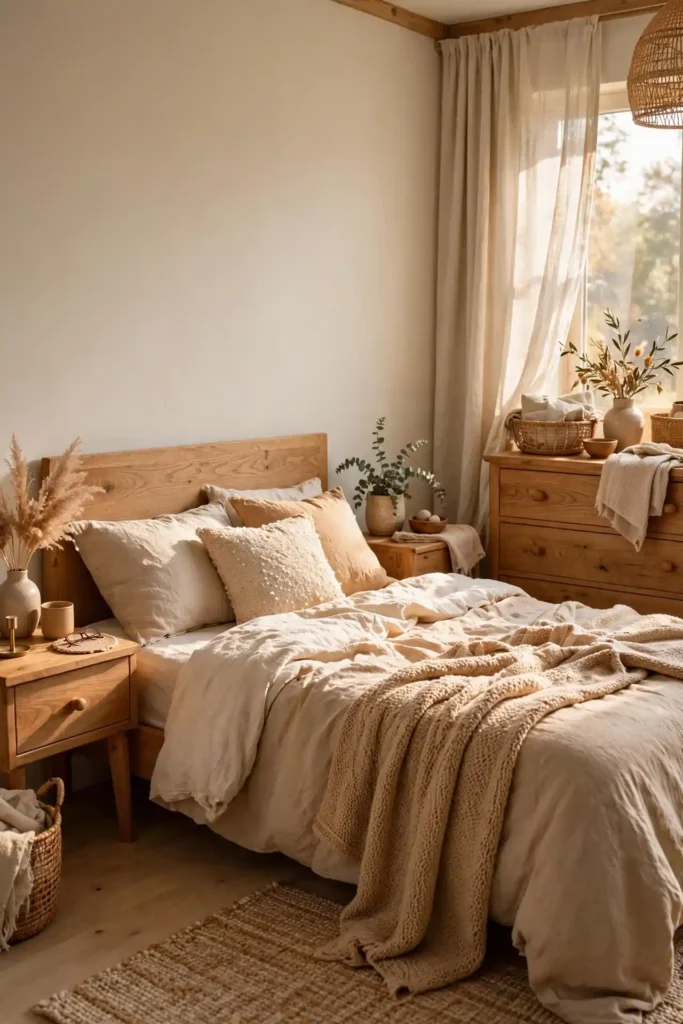
Scale wood pieces to your room: leave at least 24 inches of walkway between the bed and dresser, and choose nightstands within two inches of your mattress height for easy lamp reach. A wooden bench or trunk at the foot of the bed doubles as storage and a landing spot for tomorrow’s clothes. Protect surfaces with felt pads under lamps and coasters under drinks — water rings on walnut are a heartbreak. Dust weekly with a microfiber cloth and re-oil solid wood once a year with mineral oil ($8 at Home Depot) to keep the finish glowing.
11. Layer Throw Pillows
Throw pillows are the jewelry of a cozy bed — they add color, texture, and that sink-in invitation. Follow the 2-2-1 formula: two sleeping pillows upright against the headboard, two shams in front, and one lumbar or accent pillow centered. Vary textures — a chunky knit, a washed linen, a small velvet — rather than piling on five identical pillows. Keep inserts one size larger than the covers (a 20-inch insert in an 18-inch cover) for that plump, karate-chop-able fullness designers love. Target’s Studio McGee and Threshold pillow covers ($15–$25 each) make seasonal swaps affordable without buying new inserts.

Edit ruthlessly at bedtime: a beautiful pillow stack becomes a chore if you dread clearing it every night. Keep a lidded basket or the bench at the foot of the bed as the pillows’ overnight home so the ritual takes ten seconds. Rotate covers seasonally — warm rusts and deep greens for fall, airy creams and soft blues for spring — to refresh the room for under $50. Wash pillow covers monthly in cold water, and replace inserts yearly or when they stop bouncing back after a fluff; flat pillows undo all your cozy layering work.
12. Include a Bench at the Foot of the Bed
A bench at the foot of the bed completes the room like a period at the end of a sentence. Choose one roughly two-thirds the width of your bed — about 40 inches for a queen — and 16 to 18 inches high so it aligns with the mattress top. Upholstered benches ($120–$300 at Target or Wayfair) add softness, while storage benches with lift-up lids hide extra blankets and off-season bedding. Leave at least 30 inches between the bench and the wall so you can walk around comfortably. Anchor it with a folded throw in a contrasting texture for an extra layer of visual warmth.

Use the bench as your bedroom’s hardest-working surface. In the morning it holds the throw pillows you cleared from the bed; in the evening it’s a seat for pulling on socks or laying out tomorrow’s outfit. Storage models swallow board games, gift wrap, or the guest linens you never know where to stash. If floor space is tight, a backless bench tucks fully under a footboard-less bed frame. Style the top with a single folded quilt and one small tray — anything more collects dust and defeats the bench’s clean, calming purpose.
13. Use Candles
Nothing signals cozy like candlelight — the flicker alone lowers perceived stress and makes a bedroom feel intimate. Cluster three pillar candles of varying heights ($12–$25 for a set at Target) on a mirrored or wooden tray on your dresser for a deliberate vignette. Choose scents that support sleep: lavender, vanilla, cedarwood, or chamomile, and look for soy or beeswax candles that burn 40+ hours without soot. Yankee Candle and Bath & Body Works three-wick jars ($25–$35) reliably fill a master bedroom with scent. Trim wicks to a quarter inch before every burn to keep flames steady and prevent smoky glass.
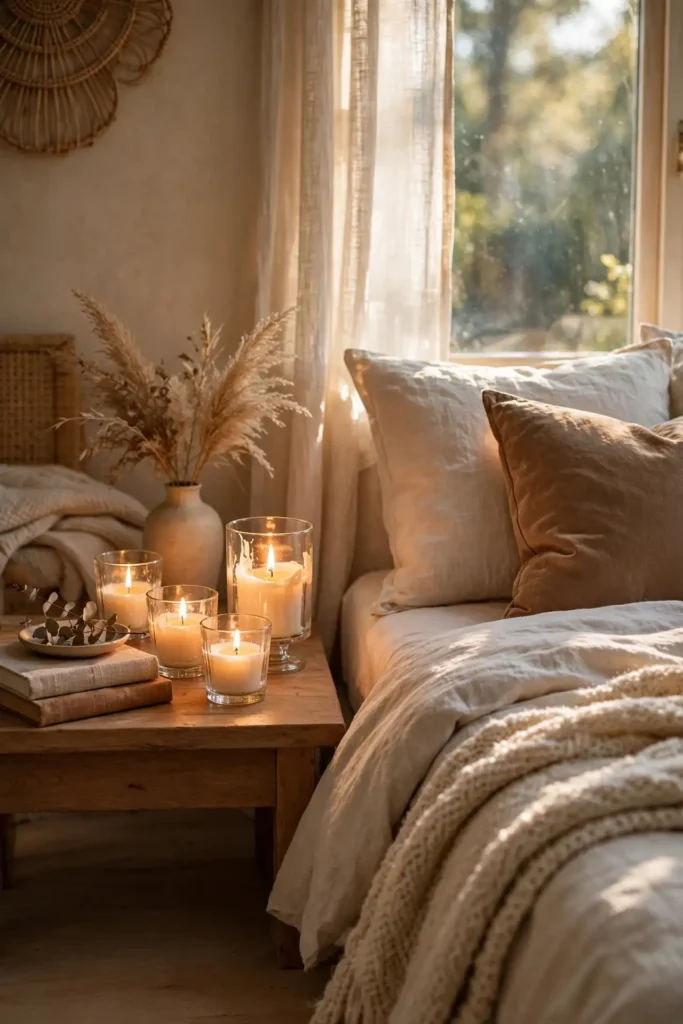
Safety comes first with real flames. Never leave candles burning unattended, keep them twelve inches from curtains and bedding, and extinguish them before you fall asleep — set a phone reminder if you light them during your wind-down routine. Flameless LED candles ($15–$25 for a set of three on Amazon) with timers give you the flicker without the worry, and they’re ideal if you have kids or pets. Store matches in a pretty lidded jar on the nightstand so lighting your evening candle becomes a small, intentional ritual. A quick sniff-test in the store beats guessing — scent is deeply personal.
14. Add Personal Art
Personal art is what separates a cozy bedroom from a staged hotel room — it should tell your story. Hang a framed wedding photo, a print from a favorite trip, or your kid’s drawing in a proper frame above the dresser or nightstand. For purchased art, Etsy and Society6 offer original prints ($25–$80 framed) from independent artists, and Target’s Studio McGee line has sophisticated abstracts under $60. Hang pieces so the center sits 57 to 60 inches from the floor — gallery standard — and keep frames within the same wood or metal family for cohesion.

Scale matters more than subject: a single oversized piece (at least two-thirds the width of the furniture below it) makes a stronger statement than a cluster of tiny frames. Lean a large framed print against the wall on your dresser for a relaxed, renter-friendly look — no nails required. Create a small gallery wall of three to five pieces above the nightstand, spacing frames two to three inches apart and mapping the layout with painter’s tape first. Rotate art seasonally or when your taste shifts; new perspectives keep the room feeling fresh and personal.
15. Keep Nightstands Tidy
A cluttered nightstand creates low-grade visual stress right where you need calm most. Limit the surface to five essentials: a lamp, your current book, a water carafe or glass, a small dish for jewelry, and one decorative object like a candle or tiny plant. Everything else — chargers, medications, lip balm — belongs in the drawer or a lidded box. Nightstands with at least one drawer ($80–$200 each at IKEA USA or Target) hide the daily clutter that kills the serene, hotel-like vibe you’re building. Corral small items on a single tray so the surface always looks intentional, even on messy days.
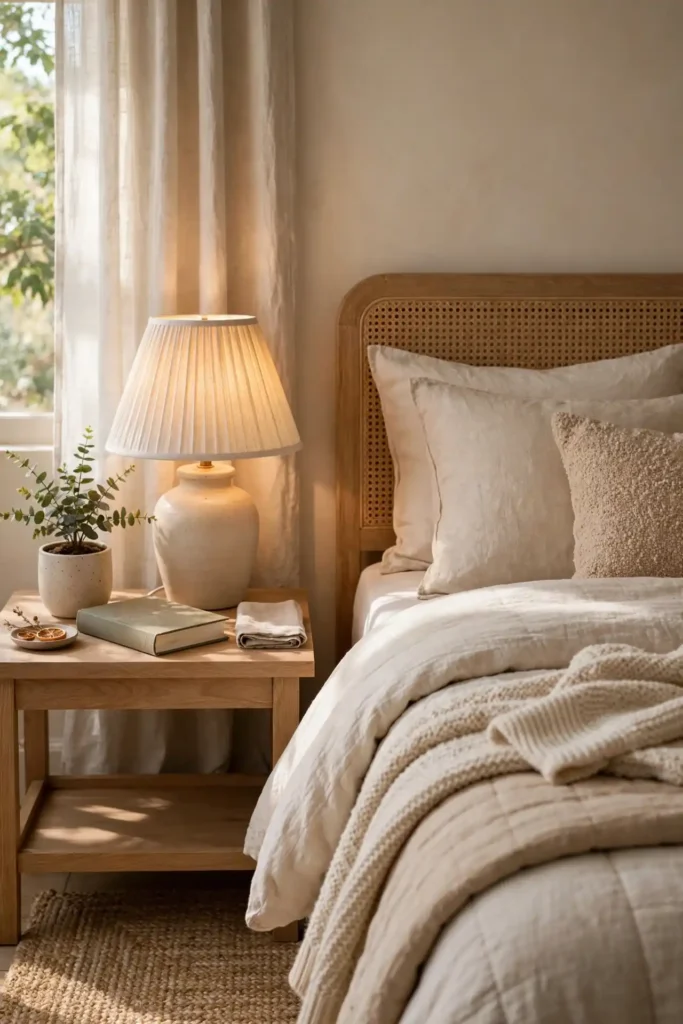
Build a weekly reset into your routine: every Sunday, clear both nightstands completely, wipe them down, and return only the essentials. Dust lampshades monthly — dusty shades dim your warm lighting and look dingy. Hide charging cables with a small cable box ($12 on Amazon) or adhesive clips behind the nightstand leg so cords don’t snake across the surface. If your nightstand has no drawer, a pretty lidded basket on the lower shelf serves the same purpose. Ten minutes a week keeps this high-impact zone permanently serene and protects your sleep sanctuary from creeping chaos.
16. Choose Blackout Linings
Blackout linings are a sleep-quality investment, not just a decor choice — even small amounts of light suppress melatonin and fragment your rest. Sew-in or clip-on blackout linings ($25–$50 per panel at Amazon or IKEA USA) attach behind your existing linen curtains, preserving the soft look while blocking 99 percent of light. For a cleaner finish, choose curtains with built-in thermal blackout backing. Measure your window and add four inches of width per side so no light leaks around the edges. Thermal backing also insulates, trimming heating and cooling bills by a few percent each season.
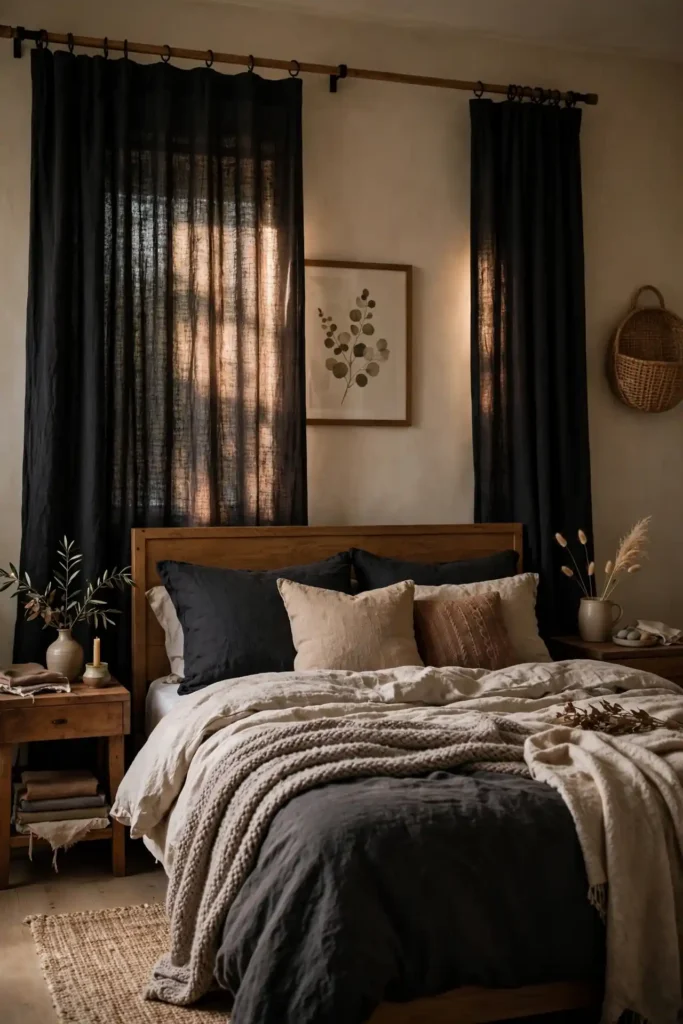
If new curtains aren’t in the budget, blackout roller shades ($30–$60 at Home Depot) mount inside the window frame in about fifteen minutes with just a drill. Portable blackout options with suction cups ($20–$35) are brilliant for renters and for darkening a nursery or guest room temporarily. Test the result at noon on a sunny day — if you can read a book comfortably, light is leaking and you need wider coverage. Pair blackout window treatments with a door draft stopper to block hallway light for truly cave-like sleep. Your mornings will thank you.
17. Add a Canopy
A canopy turns an ordinary bed into a private retreat — the draped fabric creates a cocoon effect that feels deeply restful. Four-poster frames with sheer panels ($300–$800 at Wayfair) make the strongest statement, but a simple ceiling-mounted hoop ($25–$40 on Amazon) with gauzy curtains delivers the romance for less. Hang the fabric so it pools slightly on the floor or just kisses it, and keep panels tied back during the day so the room stays bright and open. Choose lightweight voile or mosquito-net mesh that breathes — heavy fabrics trap heat and darken the room too much.

Canopies work in small bedrooms too — a ceiling canopy draws the eye up and makes eight-foot ceilings feel taller. Secure ceiling mounts into a joist or use a heavy-duty toggle bolt rated for at least 50 pounds; fabric plus hardware adds up. Wash sheer panels every two to three months since they collect dust quickly, and choose machine-washable fabrics to keep the chore painless. In kids’ rooms, skip floor-pooling fabric (a tripping hazard) and tie panels high. A canopy is pure atmosphere — embrace the drama and enjoy the nightly feeling of retreating into your own private world.
18. Use Baskets for Storage
Woven baskets are cozy storage at its best — they hide clutter while adding natural texture. Use large seagrass baskets ($25–$45 at Target or IKEA USA) for extra throw blankets, medium ones for the throw-pillow overflow at bedtime, and small lidded baskets on dressers for chargers and odds and ends. Natural materials like rattan, jute, and water hyacinth warm up the room in a way plastic bins never will. Look for baskets with handles for easy carrying and tight weaves that won’t snag delicate fabrics. Line bedroom baskets with fabric liners to protect wool throws and keep small items from slipping through gaps.
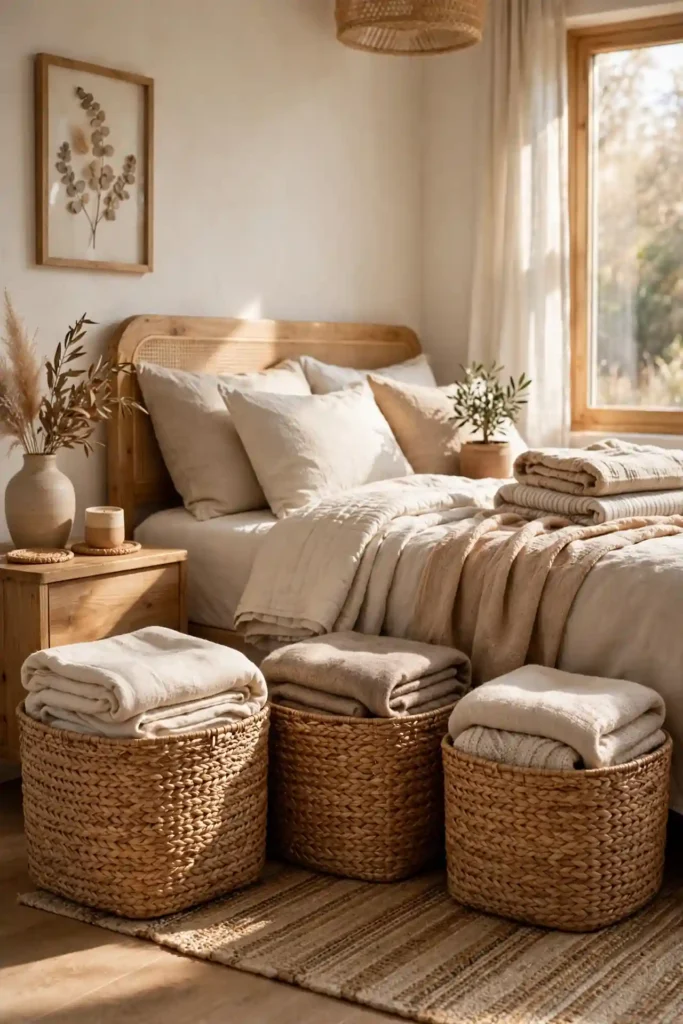
Assign every basket a job so they stay useful instead of becoming junk collectors. One by the bed for the book you’re reading, one in the closet for laundry, one under the bench for off-season accessories — when a basket fills with random items, it’s a sign the system needs a reset. Label lidded baskets with small chalk tags if you share the room. Dust baskets monthly with a vacuum brush attachment, and wipe spills immediately since natural fibers stain. At $20–$40 each, baskets are the rare storage solution that doubles as decor.
19. Try Wall Paneling
Wall paneling adds architectural coziness that paint alone can’t achieve — it gives the eye texture to rest on. Board-and-batten is the most DIY-friendly option: 1×3 pine strips ($1–$2 per linear foot at Home Depot), construction adhesive, and a weekend. Paint it the same warm white as the walls for subtle depth, or go bold with a deep forest green or navy accent wall behind the bed. Wainscoting at chair-rail height (32–36 inches) suits traditional homes, while full-height slat walls lean modern. Pre-primed MDF strips cut painting time in half and cost about the same as raw pine.

Plan your layout before you buy: sketch the wall, mark studs with painter’s tape, and space battens 12 to 16 inches apart for classic proportions. Rent a brad nailer ($30/day at Home Depot) instead of hammering — it’s faster and won’t split the trim. Caulk every seam and fill nail holes before painting; skipped prep is what separates DIY from professional results. If you’re renting, peel-and-stick panel molding ($40–$70 per wall) or removable wallpaper with a paneling print gives you the look with zero damage. Start with the wall behind the bed — one paneled accent wall delivers eighty percent of the impact.
20. Add a Faux Fur Throw
A faux fur throw is instant luxury — drape one over the foot of the bed or your reading chair and the room immediately feels richer. Look for dense, soft piles in natural tones like ivory, champagne, or gray ($35–$80 at Target, IKEA USA, or Amazon); cheap, sparse fur looks plasticky and sheds. Choose machine-washable options and wash in cold water on gentle, then air-dry to keep the pile fluffy. A 50×60-inch throw is the versatile sweet spot for beds and chairs alike. Shake it outdoors monthly to release trapped dust and restore loft between washes.

Style faux fur with intention so it reads plush, not kitschy. Fold it in thirds lengthwise and drape it across the lower third of the bed, letting one corner puddle softly. Pair it with contrasting textures — chunky knit, smooth linen — since fur against fur looks flat. In warm climates or summer months, swap the full throw for a smaller faux-fur lumbar pillow to keep the cozy signal without overheating. One fur piece per room is the rule; two starts to feel like a ski lodge gift shop, and store it folded in a breathable cotton bag during summer to protect the pile.
21. Mix Natural Textures
Coziness lives in texture contrast — a room of all-smooth surfaces feels cold no matter the color. Combine at least five natural textures: washed linen bedding, a nubby wool throw, a jute rug, a rattan basket, and raw wood furniture. Each material catches light differently, creating the visual depth that makes you want to sink in. Shop texture-first at stores like World Market, Target’s Threshold line, and IKEA USA, where $15–$40 accent pieces let you experiment cheaply. Run your hand over everything before buying — if it doesn’t feel good to touch, it won’t feel cozy in the room.

Balance rough and smooth so the mix feels curated, not chaotic. Pair nubby bouclé with sleek leather, raw jute with polished brass, chunky knit with crisp percale — the contrast is what makes each texture sing. Repeat each material at least twice in the room (a jute rug plus a jute basket) so nothing looks like an accident. Stick to your calm color palette while mixing textures; too many colors plus too many textures overwhelms the eye. When in doubt, add one more soft textile — you can rarely overdo touchable comfort.
22. Warm Up the Floors
Cold floors shatter the cozy illusion the second you get out of bed, so treat them as a priority. If wall-to-wall carpet isn’t an option, layer rugs strategically: a large area rug under the bed plus runners on each side covers the main traffic paths. In cold-climate states like Minnesota or Maine, a 1/2-inch memory-foam rug pad ($60–$90 for 8×10 at Home Depot) adds serious insulation underfoot. Heated bathroom-style floor mats ($40–$70 on Amazon) beside the bed are a secret luxury on winter mornings. Slip on washable wool-blend socks or soft slippers kept in a basket by the bed for the final layer of warmth.

Choose flooring materials with warmth in mind when you renovate. Engineered hardwood and luxury vinyl plank in warm oak tones feel kinder underfoot than tile or polished concrete, and area rugs complete the effect. If you’re stuck with cold tile, cork tiles ($3–$6 per square foot) or interlocking foam mats disguised under a rug add insulation cheaply. Keep bedroom floors clear of clutter so every rug and runner lies flat — bunched textiles underfoot feel chaotic, not cozy. Warm floors invite bare feet, and bare feet invite relaxation every single morning.
23. Add a Mirror
A well-placed mirror doubles light and makes a cozy bedroom feel larger without losing intimacy. Hang a full-length mirror ($60–$150 at Target or IKEA USA) opposite or adjacent to a window so it bounces daylight deep into the room. Lean an oversized arched mirror against the wall beside your dresser for a designer look with zero installation — just secure the top with a furniture strap for safety. Choose warm-toned frames in brass, wood, or rattan to keep the reflection feeling soft. Round mirrors soften angular furniture, while arched shapes echo the cozy curves of upholstered headboards.
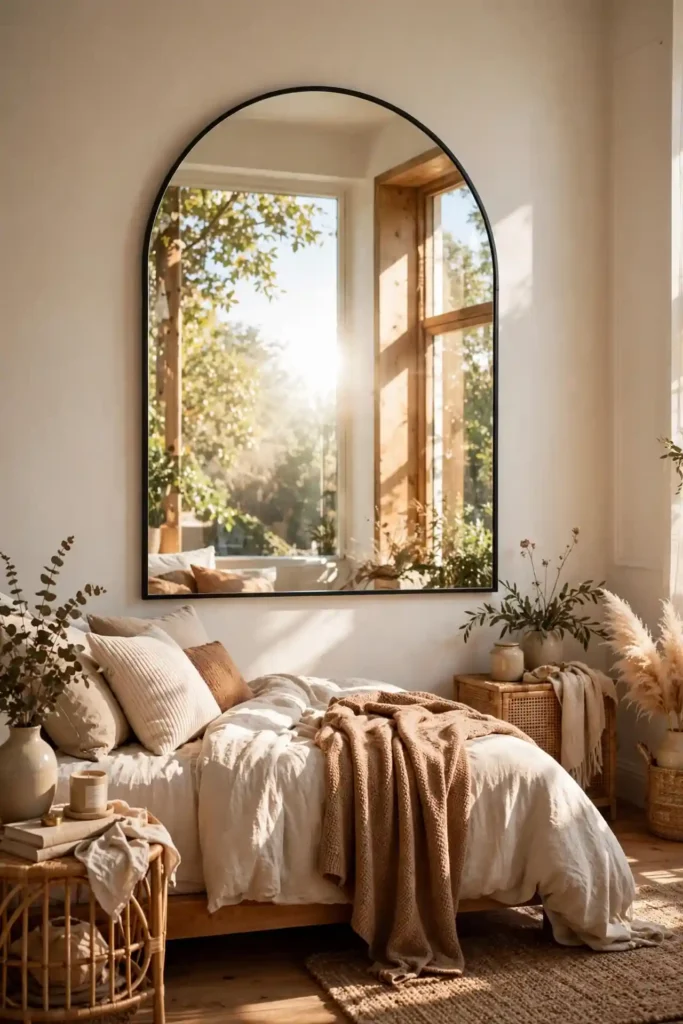
Avoid common mirror mistakes that kill coziness. Don’t hang a mirror directly opposite the bed if nighttime reflections startle you — offset it toward the window wall instead. Skip mirrored closet doors if you can; they bounce harsh light and feel more showroom than sanctuary. Clean mirrors monthly with a vinegar-water spray and microfiber cloth, since dusty glass dulls the light you’re trying to amplify. One statement mirror plus one small functional mirror (for getting dressed) is plenty — more than that fragments the room’s calm. Position mirrors to reflect something beautiful — a plant, art, or the warm glow of lamplight.
24. Create a Bedtime Routine Area
A bedtime routine area gives your wind-down ritual a physical home, which makes the habit stick. Dedicate a corner of your dresser or a small tray on the nightstand to your evening essentials: skincare, lip balm, hand cream, and a sleep journal. A pretty tray ($15–$30 at Target or World Market) corrals everything into one intentional-looking station instead of scattered clutter. Add a small carafe of water so you’re not trekking to the kitchen at midnight. Include a good book or e-reader on the tray as a screen-free alternative to late-night scrolling.

Pair the station with a consistent routine and your body will start associating the space with sleep. Dim the lights, light your evening candle, apply your skincare, and spend ten minutes journaling or reading — the same order every night trains your brain to power down. Keep your phone charging outside the bedroom or in a drawer on Do Not Disturb; the blue light and notifications are coziness killers. Within two weeks of a steady routine, most people fall asleep noticeably faster. Start with just three steps so the routine feels like a treat, not another chore on your list.
25. Declutter Regularly
Clutter is the enemy of coziness — visual noise raises cortisol and makes even beautiful rooms feel chaotic. Adopt the one-in-one-out rule: every new decor item or piece of clothing means one leaves via donation or trash. Do a ten-minute nightly reset: return books to shelves, toss laundry in the hamper, and clear every surface. Donation pickups from Goodwill or local charities make letting go painless — schedule one quarterly so bags don’t pile up in the closet. Keep a small donation bag hanging in the closet so purging becomes a continuous habit, not an annual event.
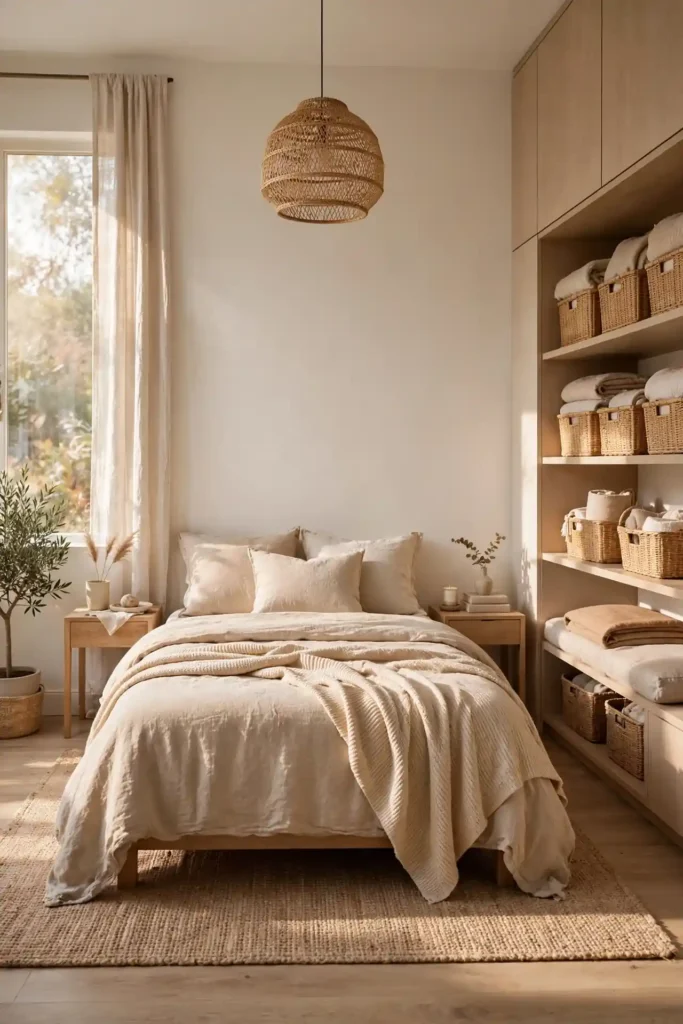
Tackle hidden clutter zones that quietly undermine the calm: the nightstand drawer, under the bed, and the top of the dresser. Use drawer dividers ($10–$15 at IKEA USA) to give every small item a home, and store under-bed items in flat, lidded bins so dust doesn’t collect. Go through your closet seasonally and remove anything you haven’t worn in a year — if you didn’t reach for it through four seasons, you won’t. A decluttered bedroom doesn’t just look cozier; it genuinely feels lighter to live in. Set a timer for twenty minutes — short, focused bursts beat exhausting whole-day purges.
Cozy Bedroom Ideas for Small Spaces
Small bedrooms can feel even cozier than large ones — limited square footage forces intentional choices. Choose a bed with built-in storage drawers or a lift-up ottoman base ($400–$900 at IKEA USA or Wayfair) to eliminate the need for a separate dresser. Mount nightstands to the wall as floating shelves ($25 each) to free up floor space, and use sconces instead of table lamps. Light, warm wall colors and a single large rug (rather than several small ones) make the room read bigger. Keep the bed low-profile — a platform frame under 14 inches high preserves precious visual breathing room.
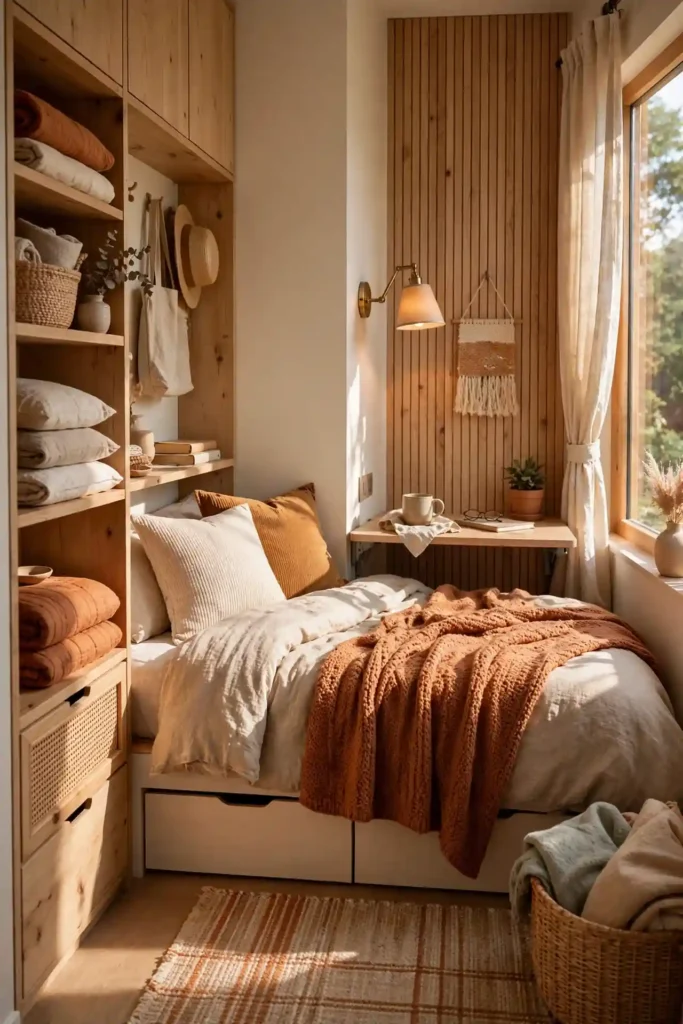
Vertical space is your best friend in a small cozy bedroom. Hang curtains from ceiling to floor to stretch the walls, and use tall, narrow bookshelves instead of wide dressers. Mirrors placed opposite windows double the perceived space while bouncing warm light around. Stick to a tight palette of two to three colors so the eye isn’t chopped up by competing hues. Finally, edit ruthlessly — in 100 square feet, every object must earn its place through beauty, function, or (ideally) both. Choose multifunctional pieces — a storage ottoman that seats two, a bed that hides your wardrobe.
Cozy Bedroom Ideas on a Budget
A cozy bedroom doesn’t require a big budget — it requires good decisions. Start with what costs nothing: declutter thoroughly, rearrange furniture for better flow, and wash every textile so colors look fresh. Thrift stores and Facebook Marketplace are goldmines for solid-wood nightstands and lamps ($10–$30 each); a $12 can of warm-toned spray paint unifies mismatched finds. IKEA USA’s basic frames, curtains, and bedding deliver the cozy look for a full room refresh under $300. Swap pillow covers and throws seasonally from Target’s $15–$25 range instead of buying whole new bedding sets.
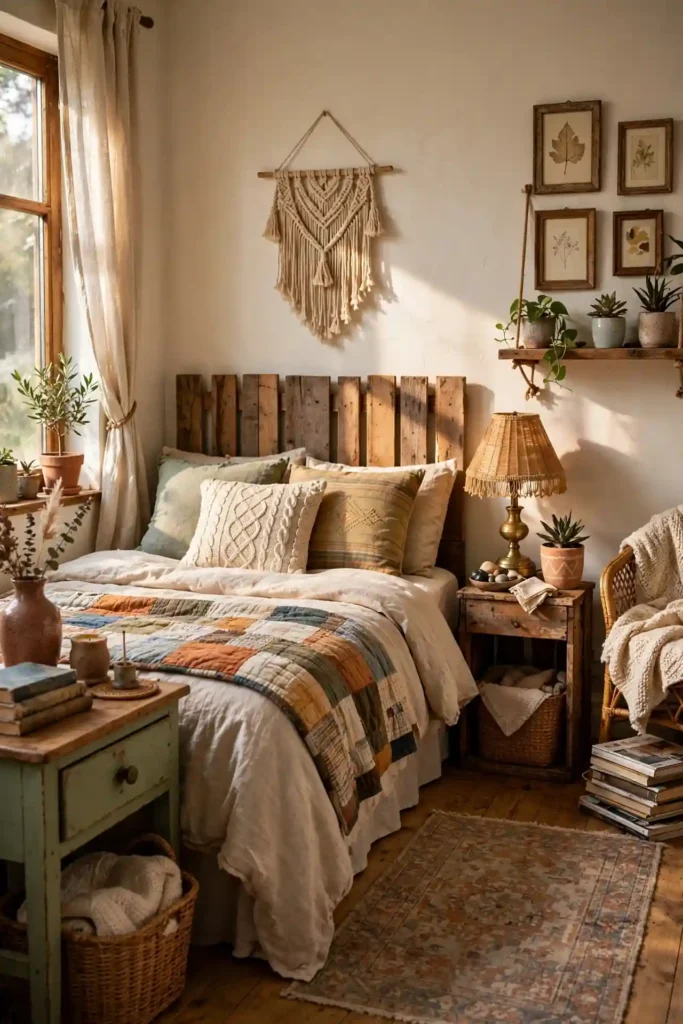
Prioritize the upgrades with the biggest cozy payoff per dollar. Warm dimmable bulbs ($12 for a four-pack) transform the mood instantly; a single can of warm-white paint ($35–$45) refreshes dingy walls; a thrifted wool throw beats a new polyester one every time. DIY what you can: a $25 string of fairy lights, homemade linen spray (water plus a few drops of lavender oil), and rearranged art cost almost nothing. Spend where you touch — bedding and rugs — and save where you just look. Track spending in a simple list so the refresh stays fun instead of snowballing past your budget.
How Scent and Sound Add to Coziness
Coziness isn’t just visual — scent and sound shape how restful a bedroom feels. Diffuse calming essential oils like lavender, cedarwood, or vanilla with an ultrasonic diffuser ($20–$35 on Amazon); run it for thirty minutes before bed rather than all night to avoid scent fatigue. A reed diffuser ($15–$25 at Target) on the dresser gives continuous low-level fragrance with zero effort. Layer scent through bedding too — a light spritz of linen spray on pillows signals your brain that sleep is coming. Avoid overpowering plug-ins near the bed — strong synthetic fragrance can irritate airways and disrupt sleep.

Sound matters just as much: a white noise machine ($25–$50, like the Yogasleep Dohm on Amazon) masks traffic, snoring partners, and creaky-house sounds that fragment sleep. If you prefer nature sounds, a small Bluetooth speaker playing rain or ocean tracks on a sleep timer works beautifully. Keep volumes low — around 50 decibels, like a quiet conversation — and place the machine across the room rather than beside your head. Together, calming scent and steady sound create a sensory cocoon that tells your nervous system it’s safe to fully relax for deeper, more restorative rest.
When it comes to cozy bedroom ideas, the best results come from balancing style, comfort and everyday function. Use this list as your go-to guide for cozy bedroom ideas, and start with the ideas that fit your space best. Save this guide on cozy bedroom ideas so you can come back to it when you are ready to update your home.
How to Plan Cozy Bedroom Ideas Step by Step
Plan your cozy bedroom makeover in phases so it stays enjoyable, not overwhelming. Step one: define your palette and gather inspiration on a Pinterest board, saving only rooms you’d actually sleep in. Step two: measure everything — wall lengths, window sizes, and clearances — and sketch a simple floor plan on graph paper. Step three: set a budget with a ten-percent cushion for surprises, then prioritize purchases by impact: bedding and lighting first, decor last. Step four: order big pieces first since furniture shipping takes two to six weeks; fill in with decor while you wait.
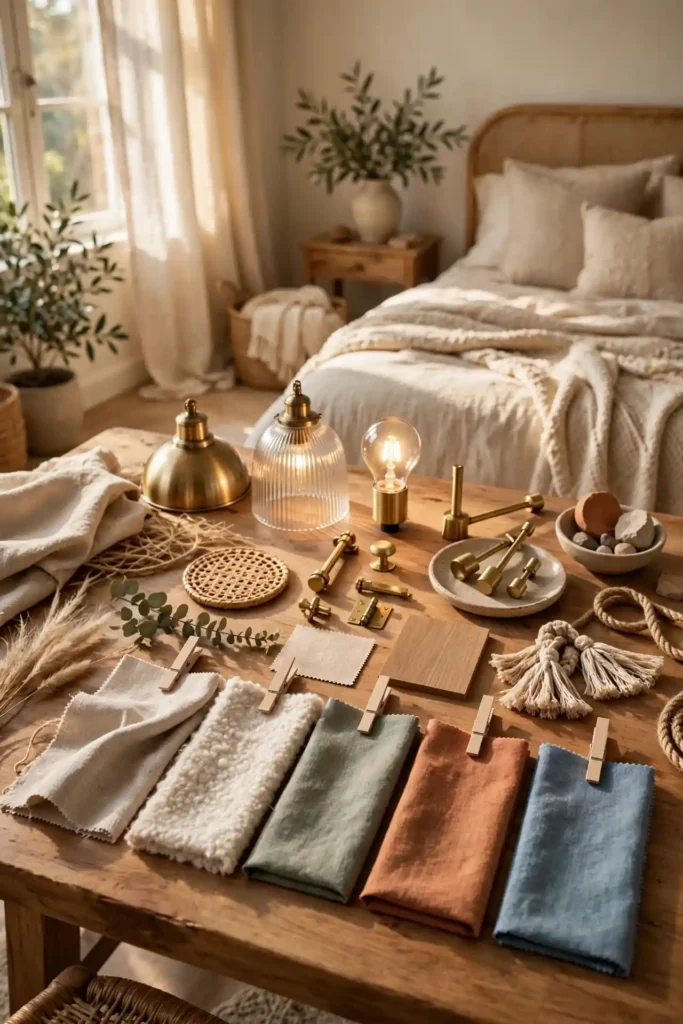
Execute room by room-zone, starting with the bed — it’s the visual anchor and where you’ll feel the change most. Install lighting and hang curtains before styling surfaces, since heavy pieces are harder to move once decor is placed. Live with each phase for a few days before buying more; impulse purchases are how budgets die and clutter is born. Photograph the room at each stage to track progress and spot what’s missing. Most cozy bedroom refreshes take two to four weekends — patience beats a frantic one-day overhaul every time, guaranteed.
- Declutter and clean the room.
- Choose a calm color palette.
- Layer the bed with sheets, duvet, quilt and throw.
- Add warm lighting and curtains.
- Finish with rugs, plants, art and scent.
Final Thoughts on Cozy Bedroom Ideas
The coziest bedrooms aren’t the most expensive ones — they’re the most intentional. Every idea in this guide, from layered bedding to warm lighting to a simple nightly reset, works because it engages your senses and removes friction from rest. You don’t need to do all twenty-five at once; pick the three that excited you most and start there this weekend. Small, consistent upgrades compound into a room that genuinely restores you. Remember that coziness is personal — your perfect retreat might lean rustic farmhouse while your neighbor’s glows modern minimal, and both are right.
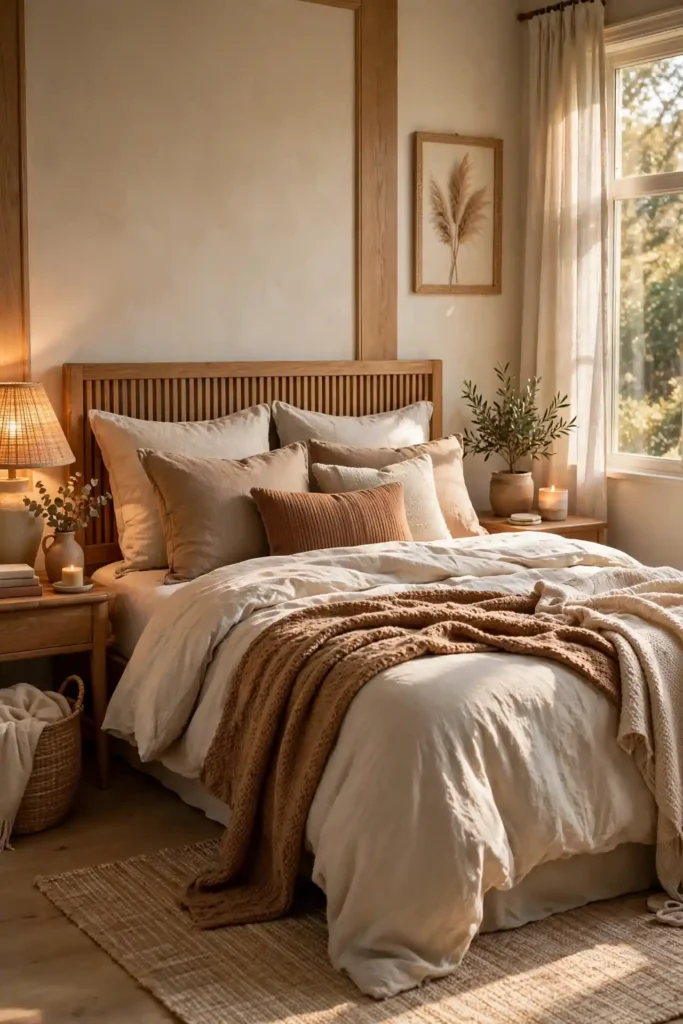
As you implement these cozy bedroom ideas, keep circling back to how the room feels at 10 p.m. with the lamps low — that’s the real test. Adjust, edit, and layer until stepping into your bedroom feels like exhaling. Save this guide and revisit it seasonally; swapping throws, scents, and pillow covers keeps the coziness fresh year-round. Your bedroom should be your favorite room in the house — now you have twenty-five proven ways to make it so. Pin your favorite ideas to Pinterest so they’re waiting when you’re ready for your next refresh.
Save these ideas and follow along for more bedroom inspiration.
Frequently Asked Questions About Cozy Bedroom Ideas
Readers ask us the same cozy-bedroom questions again and again: what colors make a bedroom feel coziest, how much should a refresh cost, and which single change matters most? The short answers — warm neutrals, as little as $150 with thrifted finds, and lighting — barely scratch the surface. Below you’ll find detailed answers covering budgets, small spaces, renter-friendly upgrades, and the best order to tackle changes for maximum impact with minimum stress. We also answer how long a cozy makeover takes and which upgrades are worth the splurge versus the save.

Use these answers as your quick-reference companion while you work through the twenty-five ideas above. Each response includes concrete product picks, price ranges, and measurements so you can act immediately instead of researching for hours. If your question isn’t covered, drop it in the comments — we read every one and update this guide with the most-requested additions. A truly cozy bedroom is built on good information, and this FAQ puts it all in one place. Bookmark this page now so the answers are handy when you’re standing in the Target aisle deciding.
How can I make my bedroom cozy on a budget?
Layer existing blankets and pillows, use warm bulbs, add plants and declutter.
What colors make a bedroom feel cozy?
Warm neutrals, soft greens, dusty blues and earthy browns.
What lighting is best for a cozy bedroom?
Warm, dimmable lamps and sconces rather than bright overhead lights.
How do I make a small bedroom cozy?
Use warm lighting, layered bedding, a rug and hidden storage.
What bedding is the coziest?
Flannel for winter, linen for year-round comfort and a chunky knit throw for texture.







5 Comments