



When the Christmas decorations come down in January, many homes suddenly feel bare and cold. But winter is long, and your home can stay cozy and beautiful well past the holidays. The trick is swapping festive pieces for neutral, seasonal decor that celebrates winter itself.
These 23 winter decor ideas help you keep the warmth going from January to March. For room-specific inspiration, see our cozy living room ideas and these cozy bedroom ideas.
Winter decor basics:
- Remove obvious Christmas items like ornaments, Santas and red bows.
- Keep neutral greenery, candles and white lights.
- Layer textures: wool, faux fur, knit and velvet.
- Stick to a calm palette of whites, creams, grays and greens.
1. Keep Evergreen Garlands Without Ornaments
Once the ornaments come down, your evergreen garland doesn’t have to retire with the Christmas tree. A bare garland of cedar, fir, or pine draped across the mantel reads as pure winter rather than leftover holiday clutter. The deep green softens hard edges, brings living texture into gray January rooms, and costs nothing when you reuse a quality faux garland you already own. Simply strip off the hooks, ribbons, and berry picks in early January, fluff each branch back into shape, and let the plain greenery anchor your living room or staircase all the way through February.

If your real garland is shedding needles, swap in a pre-lit or plain faux version from Target or Home Depot, where six-foot cedar garlands run about fifteen to thirty dollars. Wind one along the staircase banister, secure it with clear zip ties every eighteen inches, and tuck in a few natural pinecones for rustic texture. Mist real greenery weekly to slow drying, and rotate which side faces the window so fading stays even. When March arrives, coil the garland loosely into a breathable cotton storage bag so needles stay supple for next season.
2. Layer Cozy Throws
Nothing says winter comfort faster than a sofa stacked with soft throws in different weights and weaves. Layer a chunky cable-knit blanket over a lightweight waffle-weave throw, then fold a third one over the arm for that collected, lived-in look interior designers love. Mixing textures — bouclé, sherpa, and merino wool together — adds visual depth even in a neutral palette, so your living room feels intentionally styled rather than flat and unfinished. Aim for two or three throws per seating area, and keep at least one draped casually instead of folded to signal genuine, curl-up-here coziness.

Shop the Threshold and Casaluna lines at Target, where quality throws run twenty-five to sixty dollars, or grab a Pendleton wool blanket for a heritage touch around one hundred dollars. Drape longer throws over the back of the sofa, fold medium ones into thirds across an armchair seat, and keep a woven basket of spares by the fireplace for guests. Wash wool throws sparingly on a gentle cycle and air dry to prevent pilling and shrinkage. Swap your lightest summer blanket out now and store it until April. Choose machine-washable blends if you share the sofa with pets or small kids.
3. Add White Candles Everywhere
White pillar candles are the simplest way to make a post-Christmas home glow without a single red or gold ornament. Group three pillar candles of different heights — four, six, and eight inches — on a wooden tray in the living room, then repeat smaller clusters in the bathroom and bedroom for a whole-house rhythm that ties every space together. The warm flicker softens bare windows and dark early evenings, and unscented ivory pillars match every decor style from farmhouse to modern. Flameless LED versions with built-in timers give you the same cozy look with zero fire worry around kids and pets.

Stock up at IKEA, where multi-packs of unscented pillars start around five dollars, or try the Luminara flameless line on Amazon for about twenty dollars each with a handy remote control. Set real candles on heat-safe stone or metal trays, trim wicks to a quarter inch before each lighting, and never leave them burning unattended in any room. For LED versions, program the built-in timer for five to eleven in the evening so they glow nightly entirely on their own. Replace batteries once a season and your candlelit winter look runs itself.
4. Use Pinecones and Branches
A bowl of pinecones and a few bare branches cost almost nothing yet deliver serious winter style to any room. Gather pinecones from your yard or buy a bag for under ten dollars at Michaels or Joann, then pile them generously in a wide wooden bowl as a coffee table centerpiece. Add tall, leafless branches in a floor vase for height and sculptural drama, or tuck birch twigs into a ceramic pitcher on the dining table. The rough, organic textures contrast beautifully with smooth glass and polished metal, giving your rooms a collected, natural feel that lasts all season long.

Bake gathered pinecones at two hundred degrees Fahrenheit for one hour to kill hidden bugs before bringing them indoors. Spray them with a light coat of matte white paint for a frosted, snow-kissed look, or leave them natural beside silver candleholders for elegant contrast. Swap the branches every few weeks if they start drying out, and keep arrangements away from heating vents that speed up shedding. Come spring, pack the pinecones into a labeled bin — they will look just as good next winter. A bag of prepared pinecones also makes a lovely, rustic hostess gift for winter gatherings.
5. Swap Pillow Covers to Winter Textures
Swapping pillow covers is a fifteen-minute update that completely transforms your whole sofa for winter. Trade holiday prints for covers in velvet, cable knit, faux fur, or chunky boucle — fabrics that look and feel warm the moment you walk into the room. Stick to a calm palette of cream, oatmeal, charcoal, and soft gray so the rich textures do the talking, then add one plaid or herringbone accent for a touch of pattern. Eighteen and twenty-inch squares mix best together, with two larger Euro shams layered behind them on a standard three-seat sofa.

Amazon and Target sell winter-textured covers for eight to twenty dollars each, and they slip right over the inserts you already own. Choose covers with hidden zippers for a clean, tailored look, and fluff inserts with a quick karate chop to the top edge for that designer dent. Wash faux fur covers inside out on cold to keep them soft, and store off-season covers flat in a breathable linen bag. Your sofa reads instantly cozier with zero bulky new pillows to store. This quick trick works equally well on beds, benches, and reading nooks.
6. Display Winter Greenery
After the poinsettias fade, simple winter greenery keeps your home feeling alive through the darkest months of the year. Style eucalyptus, cedar sprigs, and pine boughs in simple glass or stoneware vases — one tall arrangement on the dining table and a smaller one in the entry is plenty for most homes. The silvery greens and soft natural fragrance lift gray January rooms, and real stems cost just a few dollars from Trader Joe’s or your own backyard. Keep the look minimal and sculptural rather than holiday-busy, and your rooms will feel fresh and current, not leftover.

Trim stems at an angle and change the water every three days to keep cut greenery fresh for two to three weeks. Eucalyptus dries beautifully on its own, so leave spent stems in place for a preserved look that lasts for months. For a low-maintenance option, invest in one quality faux cedar stem per vase from Afloral, around twelve to twenty dollars, and reuse them year after year. Wipe faux leaves with a damp cloth each January and they will look convincingly real for years. A quick monthly dusting keeps every stem looking fresh and lifelike.
7. Hang a Plain Winter Wreath
Take down the ornament-covered Christmas wreath and replace it with a plain evergreen or twig wreath for a look that works beautifully from January through March. An unadorned cedar, boxwood, or grapevine wreath on the front door signals quiet winter hospitality without shouting holiday, and it pairs gracefully with any exterior paint color. Hang it with a simple burlap or linen ribbon, skip the red bow entirely, and let the natural texture be the decoration. Inside, a small plain wreath hung over the mantel mirror echoes the theme beautifully. The unadorned look feels calm and timeless all season long.

Twenty-four-inch plain evergreen wreaths run twenty to forty dollars at Lowe’s and Home Depot, especially during January clearance sales. For outdoor wreaths, choose ones rated for weather exposure and hang them under a covered porch to extend their life. Indoors, a preserved boxwood wreath needs no water and holds its rich color for years — just dust it monthly with a soft cloth. When spring arrives, store wreaths in a round wreath bag hung flat in a closet. Label the bag clearly so next January’s decorating goes twice as fast.
8. Add Faux Snow Accents
A dusting of faux snow turns ordinary branches, pinecones, and garlands into a winter wonderland without any of the melt. Sprinkle artificial snow powder over your mantel garland, flock a small tabletop tree for the entryway, or fill a glass hurricane with snow-dusted pinecones and a glowing candle inside. The soft white coating brightens dark corners and makes green foliage pop dramatically, giving your rooms that fresh-fallen-snow magic from January into February. Look for non-toxic, flame-retardant snow products so every accent placed near candles stays completely safe. A little faux snow goes a long way — restraint keeps the look elegant.

Bags of artificial snow start around eight dollars at Michaels, and a single bag covers a six-foot garland easily. Apply it outdoors or over spread newspaper, let it dry for a full hour, then shake off the excess before bringing pieces inside. Vacuum loose flakes weekly with a brush attachment, and keep flocked items away from high-traffic edges where the coating rubs off quickly. Store faux snow accents in sealed bins so the flocking stays crisp and white for next year. Wipe shelves with a damp cloth afterward to catch any stray flakes.
9. Use Lanterns
Lanterns bring the cozy glow of candlelight to porches, staircases, and tabletops long after the holidays have ended. Group two or three metal or wood lanterns of different heights by the front door, each holding a white pillar candle or LED flame, for a warm and welcoming winter entry. Indoors, a single large lantern on the coffee table or hearth adds inviting warmth without visual clutter. Black metal, aged brass, and weathered wood finishes all complement winter’s neutral palette and transition effortlessly into spring decor. Their warm glow makes even the darkest January evening feel genuinely welcoming.

IKEA’s Borrby lanterns start around ten dollars, while larger Pottery Barn styles run forty to eighty dollars depending on size and finish. Use flameless candles inside lanterns on covered porches where wind is an issue, and burn real candles only where you can supervise them directly. Clean the glass panels with vinegar and water monthly so the light shines through clearly. Cluster lanterns in odd numbers — three reads more natural than two — and vary their heights by at least six inches. A small riser or stack of books creates instant height variation.
10. Bring in Sheepskin Rugs
Drape a sheepskin rug over an armchair, bench, or the foot of your bed and the whole room instantly feels warmer and more inviting. The long, soft pile adds a layer of Scandinavian-inspired coziness that photographs beautifully and feels incredible under bare feet on cold mornings. Use one as a throw over a dining bench for extra comfort, layer it on a leather chair to soften a hard modern look, or place it beside the bed as a plush first step each day. Natural ivory works in every room, while gray and brown tones add welcome depth.

IKEA sells genuine sheepskins for about thirty dollars, while Overstock and Rugs USA offer larger two-by-three-foot versions for fifty to eighty dollars. Shake sheepskins outdoors monthly and spot-clean with a damp cloth — never machine wash real wool, which will felt and shrink. Brush the pile with a pet brush to restore fluffiness after heavy use. Rotate the rug every few weeks so wear stays even, and store it rolled rather than folded during the summer months. Tuck a cedar block nearby in storage to keep moths away naturally all summer long.
11. Create a Hot Drink Station
A dedicated hot drink station turns an ordinary kitchen corner into the coziest spot in the house all winter long. Set up a tiered tray or small cart with cocoa mix, marshmallows, cinnamon sticks, tea bags, and a few favorite mugs positioned near the coffee maker. Add a small electric kettle or keep the French press right there so everything is within easy reach on freezing mornings. The station doubles as charming decor — warm wood tones, clear glass canisters, and artfully stacked mugs look inviting even when no one is pouring.

A rolling bar cart from Target or Amazon runs thirty to sixty dollars and fits neatly into even a small kitchen corner. Stock clear glass canisters from the Container Store for cocoa and sugar, and label them with a chalk marker for an authentic café feel. Refill supplies weekly, wipe the tray daily to catch drips, and swap in peppermint sticks or chai blends to keep the station feeling fresh. Come spring, repurpose the same cart as a lemonade or iced-tea bar. Add fresh flowers in spring and the whole station feels brand new again.
12. Decorate With Birch Logs
Bundles of white birch logs bring instant winter character to fireplaces, entryways, and empty corners throughout your home. Stack them in a black metal log holder beside the hearth, lean a tall bundle in a woven corner basket, or lay three logs across an unused fireplace opening for a striking sculptural focal point. The pale bark with its dark markings adds graphic contrast against dark walls and looks especially beautiful next to fresh evergreen sprigs. Real birch is lightweight, inexpensive, and unmistakably seasonal from January through March. Their clean white bark brightens even the darkest, dullest corners.

Bundles of decorative birch logs sell for fifteen to thirty dollars at Home Depot, garden centers, and Etsy shops. Choose logs between twelve and twenty-four inches long, and cut the ends cleanly with a saw for a finished, professional look. Keep real logs completely dry indoors to prevent mold, and never burn decorative birch that has been treated, painted, or varnished. Pair them with a simple pine sprig and a white pillar candle for a complete vignette that costs under forty dollars total. This simple styling photographs beautifully for social media, too.
13. Keep White Lights Up
There is no rule that says fairy lights must come down with the Christmas tree in January. Keep warm-white string lights woven through your plain garland, draped casually over a bookshelf, or strung along a bedroom headboard for a soft glow that fights winter’s early darkness. The tiny lights add quiet magic to ordinary evenings and make every room feel warmer without any holiday-specific symbolism. Choose warm white rather than multicolor, and keep the strands subtle — a little sparkle goes a long way once the holidays are over. They also make bedtime feel magical for kids on long winter nights.

Battery-operated fairy lights with built-in timers cost eight to fifteen dollars for a thirty-three-foot strand on Amazon. Weave them through greenery so the thin wire disappears into the foliage, and set the timer for dusk to midnight so they switch themselves on nightly. Use removable command hooks to hang strands without damaging paint, and keep spare batteries on hand since cold windowsills drain them faster. Take lights down in March, coil them neatly around cardboard, and they will last for years. Label each strand’s length on the cardboard for easy setup next year.
14. Add Winter Art
Swapping your wall art for winter scenes is a high-impact change that takes only minutes to complete. Replace a colorful print with a snowy landscape photograph, a minimalist birch forest, or an abstract in icy blues and soft grays above the sofa or mantel. The cooler palette instantly calms busy rooms and reinforces the season without a single snowman figurine in sight. Thrift stores and Etsy offer affordable winter prints, and you can even frame pages from a beautiful nature calendar for a nearly free refresh that feels completely intentional.

Downloadable winter prints on Etsy run five to fifteen dollars; print them at Staples or FedEx for another ten to twenty dollars depending on the size you choose. Standard frames from IKEA or Target cost ten to thirty dollars and work with most common print sizes. Hang art at eye level — the center about fifty-seven inches from the floor — and use two prints side by side for a balanced gallery feel. Store your swapped-out art flat between sheets of tissue paper until spring returns. Slip the wrapped art behind furniture where it stays flat and completely safe.
15. Use Silver and Glass
After the gold and red of Christmas, silver and glass feel crisp, clean, and perfectly wintry in any home. Gather mercury glass candleholders, silver trays, and clear glass vases together on the mantel or dining table for a display that catches and multiplies flickering candlelight beautifully. The cool metallics echo frost and ice while staying elegant rather than cold, and they work with every color scheme from all-white minimalism to deep navy drama. Mix heights and finishes — polished, hammered, and mercury glass together — so the arrangement never feels flat or overly formal.

Thrift stores are goldmines for silver-plate trays and mercury glass pieces, often priced under ten dollars apiece. Pottery Barn and HomeGoods carry new mercury glass hurricanes for fifteen to thirty dollars each in several sizes. Polish silver pieces with a soft cloth and baking-soda paste in January so they shine all season, and hand-wash mercury glass gently to protect its delicate finish. Group pieces in threes on a runner or tray, and add a single green sprig for fresh contrast. A small eucalyptus stem or cedar cutting works perfectly here.
16. Layer Rugs
Layering rugs adds instant warmth underfoot and makes large, echoing rooms feel intimate during the winter months. Start with a large neutral jute or wool rug as the base layer, then top it with a smaller patterned rug — a vintage-style Persian or a simple stripe — angled slightly for a collected, designer look. The double layer insulates cold hardwood floors, defines seating areas in open floor plans, and adds the kind of rich texture designers charge thousands to achieve. Keep the base rug simple and quiet so the top layer becomes the star.

A five-by-seven-foot jute rug runs eighty to one hundred fifty dollars at Rugs USA or Overstock, with smaller three-by-five accent rugs starting around forty dollars. Place a quality rug pad between the layers to prevent slipping and add soft cushioning underfoot. Vacuum the top rug weekly and the base monthly, and rotate both every season for even wear and fading. In spring, roll up the top layer and store it — the base rug works beautifully year-round entirely on its own. This flexibility makes layering one of the smartest decor investments.
17. Change Bedding to Flannel
Swapping to flannel sheets is the single best upgrade you can make for a cozy winter bedroom. The brushed cotton feels warm the very moment you climb in, holds heat reliably through cold nights, and comes in patterns — from classic plaid to subtle solids — that suit absolutely any style. Layer a flannel duvet cover over your comforter, add a quilted coverlet folded at the foot, and finish with two sleeping pillows plus two shams for a bed that looks as inviting as a mountain lodge retreat. Choose deep, saturated colors like forest green, navy, or burgundy for maximum winter mood.

Quality flannel sheet sets run forty to eighty dollars at Lands’ End, L.L.Bean, and Target’s Threshold line. Wash flannel in cold water and tumble dry on low to minimize pilling, and skip fabric softener, which coats the fibers and actually reduces softness over time. Add a heated mattress pad underneath for extra warmth on the coldest nights — it uses far less energy than raising the whole-house thermostat. Fold a throw across the foot in March and your winter bed transitions effortlessly into spring. Swap in a lightweight cotton throw to complete the seasonal change.
18. Add Paperwhites and Amaryllis
Paperwhites and amaryllis are winter’s perfect answer to fresh flowers, blooming cheerfully indoors when everything outside lies dormant. Pot paperwhite bulbs in shallow bowls of pebbles and water for fragrant white clusters in just three to four weeks, or plant an amaryllis bulb in soil for dramatic red, pink, or white trumpets on impressively tall stalks. Both need only a sunny windowsill and truly minimal care, and their blooms bring welcome color and life to January rooms that desperately need it. They also make thoughtful, inexpensive gifts for fellow garden lovers.

Paperwhite bulb kits cost eight to fifteen dollars at garden centers and Trader Joe’s, while amaryllis bulbs run ten to twenty dollars each. Start paperwhites in early December for reliable January blooms, and stake amaryllis stalks with a thin bamboo rod as they grow tall and top-heavy. Once the flowers fade, you can compost paperwhites, but amaryllis bulbs can be saved — cut the spent stalk, keep watering the strappy leaves, and replant next fall. Rotate pots weekly so stalks grow straight toward the light. Even light on all sides prevents leaning and keeps blooms picture-perfect.
19. Style a Winter Coffee Table
A well-styled winter coffee table anchors your living room beautifully without any trace of holiday kitsch. Start with a large tray to corral the whole arrangement, then add a stack of two or three coffee table books, a white pillar candle, and a small bowl of pinecones or a sprig of fresh greenery in a bud vase. Vary the heights deliberately — tall candle, medium book stack, low bowl — and leave some breathing room so the table still functions for drinks and tired feet. The finished result feels curated and seasonal, never cluttered or fussy.
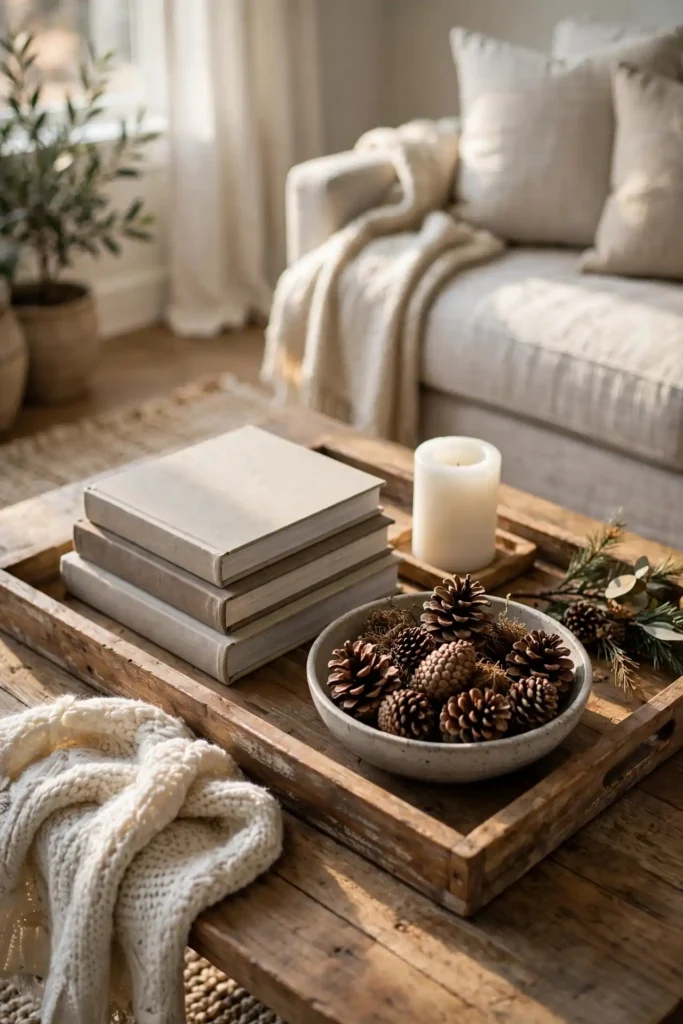
Wooden or rattan trays run fifteen to thirty dollars at Target and HomeGoods and instantly make any table look organized. Follow the classic rule of three groupings with varied heights, and keep everyday remotes tucked in a small lidded box to preserve the polished look. Dust the arrangement weekly and refresh the greenery sprig every two weeks before it dries out. When spring arrives, swap the pinecones for a small potted plant and the candle for a lighter scent — the tray and books stay put. This simple styling formula works for side tables and entry consoles, too.
20. Use Neutral Plaid
Neutral plaid — think cream and taupe, gray and white, or oatmeal and charcoal — gives you all the coziness of tartan without any of the Christmas associations. Drape a neutral plaid throw over the sofa arm, add two plaid lumbar pillows to the bed, or lay a plaid runner down the dining table for subtle pattern that reads winter, not holiday. The woven checks add welcome visual texture to solid-color rooms and bridge the gap between rustic and modern styles effortlessly. Stick to muted, earthy tones and the look stays sophisticated all season long.

Neutral plaid throws run twenty-five to fifty dollars at Target, Pottery Barn, and Eddie Bauer in a wide range of colorways. Mix one plaid with solid velvet or linen pillows so the pattern has room to breathe — two plaids in a single vignette is the absolute max. Machine wash on gentle and tumble dry low to keep the weave crisp, and press with a cool iron if needed. Store plaid pieces with your other winter textiles in March; they will feel fresh and new again next January. Fold them neatly with a lavender sachet to keep storage smelling sweet.
21. Decorate the Entry
Your entry sets the tone for the entire house, so give it a proper winter refresh once the holidays are over. Hang your plain wreath on the front door, place a lantern with a flameless candle on the console table, and add a small bowl of pinecones or a tall vase of branches beside it. A washable winter doormat and a sturdy basket for boots and scarves keep the space functional during slushy, salty months. The goal is welcoming and tidy — guests should feel the warmth of the season without tripping over decor.

A sturdy boot tray runs fifteen to twenty-five dollars at the Container Store or Amazon and saves your hardwood floors from damaging winter salt. Choose a low-pile washable runner for the entry — Ruggable styles start around one hundred dollars and go straight into the washing machine. Wipe the console table weekly, shake out the doormat regularly, and corral gloves and hats in labeled baskets everyone can reach. Refresh the branch vase monthly and your entry stays polished until spring. A quick five-minute tidy each week keeps the whole space welcoming.
22. Add Scent
Scent is the invisible finishing layer that makes your winter decor feel truly complete. Simmer a pot of water with orange slices, cinnamon sticks, cloves, and cranberries on the stove for an hour, and your whole house will smell like the coziest mountain cabin. Alternatively, light a cedar, fir balsam, or vanilla candle in the living room, or run a reed diffuser with pine and eucalyptus oils in the entryway. Winter scents should feel warm and woodsy — skip the sugary holiday blends and your home will smell seasonal, not stuck back in December.

A quality winter candle from Bath & Body Works or Yankee Candle runs fifteen to twenty-five dollars and burns for forty-plus hours of fragrance. For simmer pots, keep the water level topped up and never leave the stove unattended — a slow cooker set on low works safely for wonderful all-day scent. Reed diffusers starting around twenty dollars last three to four months; flip the reeds weekly for consistently stronger fragrance. Store leftover dried citrus and spices in a sealed jar for next winter’s simmer pots. They keep their fragrance for months when stored somewhere cool and dark.
23. Keep It Simple
The real secret to great post-Christmas decor is restraint — a few thoughtful touches always beat a house crowded with winter figurines. Choose exactly one focal point per room: the garland on the mantel, the lantern in the entry, the flannel bedding upstairs. Then edit ruthlessly, removing anything that feels like holiday leftovers rather than intentional winter style. Generous negative space lets each chosen piece breathe, and your rooms will feel calm and uncluttered during the very season when you spend the most time indoors. Less truly is more in January.

Walk through your home carrying a laundry basket and collect every single item that screams Christmas — red bows, Santa figures, glittery picks, novelty signs. Box them together with your holiday decor, then step back and assess each room with completely fresh eyes. If a surface feels bare, add one winter-textured item rather than three competing ones. Photograph each room with your phone, because the camera reveals clutter your eyes have learned to miss. Repeat this quick edit in February and your winter look will stay sharp, not stale. Your future self will thank you when spring decorating arrives.
How to Transition From Christmas to Winter Decor
The smoothest transition from Christmas to winter decor happens in manageable stages, not in one exhausting marathon. Start the first weekend of January by removing the obviously holiday items — ornaments, stockings, Santa figures, and anything combining red and green. Leave the tree up one extra week if you love it, but strip it down to plain white lights only. Next, keep every neutral element exactly in place: garlands, wreaths, white lights, and natural textures all read as winter entirely on their own. You will be genuinely surprised how little actually needs to change.

Tackle just one room per day over the course of a week to avoid burnout, starting with the most visible spaces like the living room and entry. As you remove each holiday piece, immediately replace the focal point with a winter alternative — swap the ornament wreath for a plain one, trade red pillows for textured neutrals. Box Christmas items by room and label every container clearly before storing it away. By mid-January your home should feel intentionally wintry, and the whole transition costs very little if you reuse what you already own.
This approach saves money and time, and it helps your home feel cozy instead of empty after the holidays. When spring arrives, simply swap greenery for fresh flowers and lighter textiles.
Winter Decor Ideas for Every Room
Every room in your home deserves a touch of winter, thoughtfully scaled to how you actually use it. The living room gets the full treatment — garland, throws, candles, and layered rugs — since it serves as your main gathering space all season. Bedrooms need flannel bedding, a sheepskin at the bedside, and a single candle or diffuser for evening calm. Kitchens shine with a dedicated hot drink station and a sprig of greenery on the windowsill, while bathrooms feel surprisingly luxurious with rolled white towels, a small candle, and eucalyptus hung from the showerhead. Even the home office benefits from a throw and warm task lighting.

Set a sensible per-room budget to keep the whole project manageable — fifty dollars completely transforms a bedroom, while the living room might take closer to one hundred. Shop your own home first, moving existing pieces between rooms for a fresh feel at zero cost. Prioritize the rooms guests see and the rooms where you spend your evenings, and leave low-traffic spaces beautifully simple. Work room by room over two weekends, photographing each finished space for reference. By February every corner of your home will feel intentionally cozy without a single Christmas ornament in sight.
When it comes to winter decor ideas, the best results come from balancing style, comfort and everyday function. Use this list as your go-to guide for winter decor ideas, and start with the ideas that fit your space best.
How to Plan Winter Decor Ideas Step by Step
Planning your winter decor before you spend a dollar saves money and prevents regrettable impulse buys. Start by photographing each room and honestly noting what already works — existing garlands, neutral pillows, and white string lights form your foundation. Next, list the specific gaps room by room: maybe the bedroom needs flannel sheets, the entry needs a boot tray, the mantel needs fresh candles. Set a realistic total budget — one hundred fifty to three hundred dollars covers most homes comfortably — then assign spending amounts per room. Finally, make a shopping list grouped by store so a single trip to Target or HomeGoods covers everything.

Shop in early January when winter decor hits deep clearance — you will routinely find thirty to fifty percent off candles, throws, and faux greenery. Choose versatile neutrals that will work beautifully for years rather than trendy pieces you will tire of by February. Schedule one full weekend for the transition: Saturday for removing Christmas and shopping, Sunday for styling each room with care. Keep all receipts and return anything that doesn’t earn its place. Photograph the finished rooms and save the images — next January you will have a proven plan to repeat.
- Pack away Christmas-specific decor.
- Keep plain greenery, lights and candles.
- Add winter textures like wool, faux fur and knit.
- Bring in natural elements like pinecones and birch.
- Refresh with fresh bulbs and flowers.
Final Thoughts on Winter Decor Ideas
Winter decor after Christmas is really about embracing the season itself instead of mourning the departed holidays. The bare branches, soft candlelight, and layered textures throughout this guide create a home that feels calm, warm, and intentional through the darkest months of the entire year. You don’t need to spend a fortune or redecorate every single room — a few thoughtful changes in the spaces where you live most will completely transform how winter feels day to day. Start with pieces you already own, add a few well-chosen new items, and let the season’s quiet natural beauty do the heavy lifting.

Remember that the most beautiful winter homes feel collected gradually over time, not decorated in a single frantic weekend. Keep the pieces you genuinely love, edit out anything that reads as clutter, and adjust your styling as the season progresses — heavier, cozier layers in January, lighter and brighter touches as March approaches. Your home should support how you actually live: cozy movie nights, slow weekend mornings, and warm drinks shared with people you love. That is the real point of winter decor, and it is absolutely within your reach this year.
Save these ideas and follow along for more seasonal inspiration.
Frequently Asked Questions About Winter Decor Ideas
The most common question is exactly when to take down Christmas decorations and switch to winter decor — most designers recommend the first or second weekend of January, right after Epiphany on January sixth. Another frequent question concerns what to do with the tree: if it is real, recycle it through your city’s curbside pickup program; if artificial, strip it to plain white lights for one extra week or take it down entirely. People also ask whether winter decor will look bare and sad — it won’t, as long as you keep texture-rich elements like garlands, throws, and glowing candles firmly in place.

Budget questions come up constantly, and the good news is that a full winter refresh typically costs one hundred to three hundred dollars, even less if you reuse garlands and lights you already own. Shoppers ask where to buy winter decor in January — Target, HomeGoods, and Michaels run deep clearance sales, while Amazon stocks year-round basics like flameless candles and flannel sheets. Finally, many wonder how long to keep winter decor displayed: aim for late February or early March, then swap heavy textures for lighter spring touches as the daylight gradually returns.
What decor can stay up after Christmas?
Plain greenery, white lights, candles, pinecones, neutral wreaths and cozy textiles.
How do I make my home cozy in winter?
Layer throws and rugs, use warm lighting and candles, and add natural textures.
When should I take down winter decor?
Most people switch to spring decor in March.
What colors are best for winter decor ideas?
White, cream, gray, silver, soft green and natural wood tones.
How do I decorate for winter on a budget?
Reuse Christmas greenery and lights, gather pinecones and branches and swap pillow covers.








2 Comments