



When temperatures drop, your bedroom should feel like a warm hug. Cold floors, thin sheets and harsh lighting make winter mornings harder, but a few thoughtful updates can turn your room into a snug retreat you never want to leave.
These 20 winter bedroom decor ideas focus on warmth, texture and soft light. For related inspiration, see our winter decor ideas for the whole house and these cozy bedroom ideas.
Winter bedroom essentials:
- Warmer bedding like flannel, wool and down.
- A rug beside or under the bed.
- Heavy curtains to block drafts.
- Warm, dim lighting for dark evenings.
1. Switch to Flannel Sheets
Flannel sheets are the single fastest way to make winter nights bearable. Made from loosely woven cotton that is brushed on both sides, flannel develops a soft, fuzzy nap that traps body heat the moment you climb in. Unlike crisp percale or sateen that feels icy in January, flannel warms up within seconds and keeps you insulated without overheating. A queen-size 100 percent cotton flannel set from Target or Amazon typically costs 35 to 60 dollars, making it one of the most affordable winter bedroom upgrades with the biggest comfort payoff.

Shop for flannel measured in ounces per square yard, since five ounces and up means a thicker, warmer weave that resists pilling through many washes. Before the first use, wash your new set on cold with a cup of white vinegar to soften the fibers and set the color. Choose deep winter tones like forest green, burgundy, or charcoal plaid to echo the season, or stick with cream for a timeless cabin look. Layer them under your duvet and you will notice the difference the very first night. For extra luxury, tumble them on low with wool dryer balls, which fluff the nap without the chemical residue of dryer sheets.
2. Add a Down or Wool Duvet
Your summer blanket is not built for February nights, so swap it for a real duvet insert rated for cold weather. Down and wool inserts are the gold standard because they trap heat in tiny air pockets while staying breathable, so you stay warm without waking up sweaty. Look for a fill power of 600 or higher on down, or a wool insert around 500 GSM for serious insulation. A queen down duvet from IKEA runs about 60 to 90 dollars, while premium wool options from Pottery Barn start near 200 dollars.

Do not skip the cover, because it protects the insert and lets you change your look seasonally. Choose a duvet cover in washed linen, velvet, or flannel for extra winter texture, and size it two inches larger than the insert so it stays plush instead of flat. Shake the duvet every morning and let it air by an open window weekly to keep the fill lofty. Add corner ties or clips inside the cover so the insert never bunches at the bottom. If you sleep hot, choose a lower GSM wool insert so you get winter warmth without overheating by midnight.
3. Layer a Faux Fur Throw
A faux fur throw draped across the foot of your bed adds instant visual warmth and a touch of luxury for very little money. The plush pile catches lamplight beautifully, making your whole bedroom glow, and it is genuinely useful for pulling over your shoulders during late-night reading. Target’s Threshold line sells generously sized faux fur throws for 25 to 40 dollars in cream, gray, and rust tones that read expensive against solid bedding. Look for throws at least 50 by 60 inches, since smaller sizes get lost on a queen or king bed, and wash them rarely to preserve the soft pile.
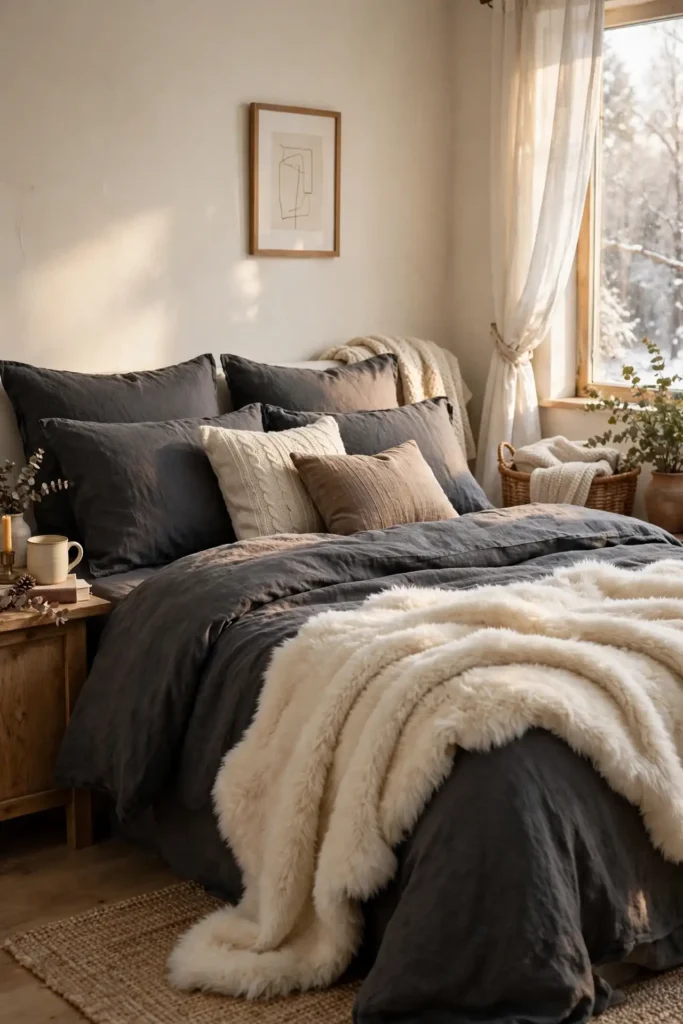
Style it casually rather than folded into a perfect rectangle, because a relaxed drape over one corner looks inviting and photograph-ready. For extra texture, layer the faux fur over a chunky knit blanket so you get two cozy layers in one spot. Keep the fur looking fresh by shaking it outside monthly and spot-cleaning stains with cold water, since machine washing flattens the pile. One throw per bed is plenty, as two starts to look cluttered instead of luxe. Choose a color that echoes another textile in the room, like your rug or curtains, so the throw feels coordinated rather than random.
4. Use Velvet Pillows
Velvet pillows are winter’s answer to flat, summery linen cushions. The dense pile reflects light in shifting tones, adding depth and richness that makes your bed look dressed for the season even when the rest of the room is simple. Swap out two or three of your warm-weather shams for 20-by-20-inch velvet covers in jewel tones like emerald, sapphire, or plum, and your bedroom instantly feels warmer and more intentional. Inserts with feather filling hold their shape far better than cheap polyfill. Two 20-inch squares plus one lumbar pillow create a balanced, designer-style arrangement on a queen bed.

You do not need to buy new pillows entirely, since covers alone do the job for 12 to 25 dollars each at HomeGoods, Amazon, or IKEA while you reuse your existing inserts. Mix velvet with one contrasting texture, like a knit or linen pillow, so the bed does not look flat and one-note. Place the velvet pillows at the back of your arrangement against the headboard where the color can anchor the whole bed. Spot clean with a damp cloth to keep the nap pristine. Fluff and karate-chop the tops weekly to keep the velvet looking plush and professionally styled.
5. Lay a Thick Rug
Stepping onto a cold hardwood floor at six in the morning ruins the cozy spell, so anchor your bed with a thick, plush rug. A high-pile shag or a dense wool rug under the bed keeps your feet warm on winter mornings and muffles sound, making the room feel quieter and more cocoon-like. Choose a rug that extends at least 18 inches beyond each side of the bed so your feet always land on something soft. An 8-by-10-foot rug from Rugs USA or Home Depot typically costs 150 to 300 dollars.

Layering works beautifully here too, so place a smaller faux sheepskin rug on top of a larger flat-weave rug beside the bed for a designer look on a budget. If you have wall-to-wall carpet already, a rug still adds pattern and a seasonal color shift for winter. Vacuum weekly with the beater bar off to protect the pile, and rotate the rug 180 degrees mid-season for even wear. Stick with warm neutrals like ivory, camel, or rust so the rug carries the room’s palette. Use a quality rug pad underneath to add cushioning, prevent slipping, and extend the rug’s life by years.
6. Hang Heavy Curtains
Lightweight sheers let winter drafts pour in around your windows, chilling the whole room overnight. Replace them with heavy curtains in velvet, lined cotton, or thermal-backed fabric, and you will feel the difference immediately, since thick drapes can cut heat loss through windows by up to 25 percent. Hang the rod four to six inches wider and three inches higher than the frame so the panels fully cover the glass and pool slightly on the floor, sealing out the cold. Choose a rod rated for at least 20 pounds, since velvet panels are far heavier than summer sheers.

Velvet curtain panels at IKEA or Amazon cost 30 to 50 dollars per pair and look far more expensive than they are. Choose colors that deepen your palette, like navy, forest, or warm taupe, and pair them with a simple blackout liner for draft blocking plus better sleep. During sunny winter days, pull them wide open to capture free solar heat, then close them at dusk to trap it. Wash lined panels only as directed, since harsh cycles can damage the thermal backing. If new panels are not in the budget, clip-on thermal liners behind your existing curtains work almost as well.
7. Use Warm Bulbs and Lamps
The wrong light temperature can make even a beautifully decorated bedroom feel cold and clinical. Swap any cool daylight bulbs for warm-white LEDs rated at 2700K or lower, because they cast the amber glow of candlelight that your brain reads as cozy. A pair of matching table lamps with fabric shades on your nightstands, plus one floor lamp in a dark corner, gives you layered light so you are never stuck under a single harsh ceiling fixture. Smart bulbs from Philips or Wyze let you dim everything from bed. Dimmable LEDs cost only a few dollars more and give you full control over the evening mood.
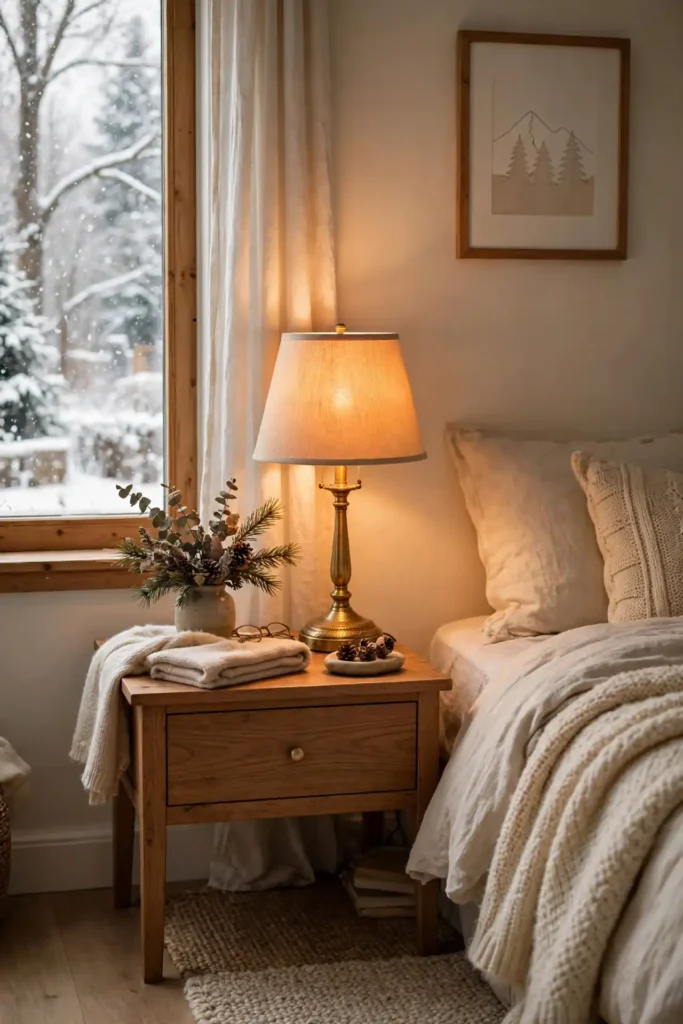
Aim for three light sources minimum, each under 800 lumens, so the room glows instead of glares. Lamps with warm wood or brass bases from Target’s Studio McGee line, priced 40 to 80 dollars, double as decor. Put your main lamps on timers or smart plugs so the bedroom lights itself up before you come home on dark winter evenings. Keep one lamp’s shade slightly translucent rather than opaque so light washes up the wall and makes the ceiling feel higher. Replace the overhead fixture’s bulbs too, so flipping one switch never floods the room with cold light.
8. Add Fairy Lights
A string of warm-white fairy lights is the cheapest way to make your bedroom feel magical in winter. Drape them along your headboard, wind them through a garland on the mantel, or fill a glass vase with a tangled strand for an instant glow that costs almost nothing to run. Battery-operated LED strands from Amazon run 8 to 15 dollars for 33 feet, and a single strand uses less energy than a nightlight while transforming the mood after dark. Plug-in strands with a built-in timer save you from hunting for the switch every night, and most cost under 12 dollars at craft stores.

Stick to warm white between 2700K and 3000K rather than cool blue-white, which reads festive but chilly. Copper wire fairy lights bend easily around bedposts and picture frames, and timer versions switch themselves off after six hours so you never fall asleep with them blazing. Layer them behind sheer curtains for a soft diffused glow, or cluster three strands in a large jar on your dresser as a no-flame alternative to candles. One or two strands is the sweet spot, since more can look cluttered. Secure strands with tiny clear adhesive clips rather than nails to protect your walls and paint.
9. Bring In Greenery
Winter strips the world of color, so bring life inside with real greenery that thrives in low light. A snake plant, pothos, or ZZ plant in a ceramic pot adds shape and freshness to a nightstand or dresser, and indoor plants can lift your mood during the dark months. Eucalyptus stems in a tall vase are another favorite, because they dry beautifully, smell amazing, and last for weeks. A six-inch potted plant from Home Depot or a local nursery costs 10 to 20 dollars. Water sparingly in winter, since most houseplants grow slowly and need less moisture in the cold months.

If your bedroom gets little natural light, choose low-light champions like cast iron plants or preserved moss arrangements that need no sun at all. Group plants in odd numbers, since three small pots on a dresser look intentional rather than scattered. Winter air is dry, so mist tropical plants weekly and keep them away from heating vents. Swap your summer florals for pine branches or cedar sprigs in December for a seasonal touch that costs nothing if you forage responsibly. A small grow light on a timer keeps light-hungry plants happy in north-facing bedrooms all winter.
10. Add a Knit Blanket
Nothing says cozy quite like a chunky knit blanket, and this winter bedroom staple earns its place with both looks and function. The oversized stitches create visible texture that makes your bed look handcrafted and inviting, while the thick yarn traps warm air against your body. Drape a 50-by-60-inch chunky knit throw across the foot of your bed or over an armchair for a look straight out of a Scandinavian cabin. Handmade-style knits from Etsy run 60 to 120 dollars. The open weave also lets the blanket breathe, so it adds warmth without making you overheat.

For a budget win, Target and Amazon sell machine-knit chenille throws for 25 to 40 dollars that photograph almost identically. Choose cream, oatmeal, or soft gray to keep the palette calm, or go bold with rust or mustard for a focal point. Fold the throw in thirds lengthwise, then drape it at a slight angle across the bed’s foot for a styled-but-effortless look. Wash chunky knits in a mesh laundry bag on delicate to prevent snagging and stretching. Roll rather than fold chunky knits for storage, since folding can crease the thick yarn permanently.
11. Use Warm Colors
Color temperature changes how warm a room feels before you touch a single blanket. Swap cool grays and stark whites for warm neutrals like terracotta, caramel, warm beige, and soft rust, and your bedroom will feel several degrees cozier even with the thermostat untouched. You do not need to repaint to get there, so start with textiles. A rust-colored duvet cover, amber throw pillows, and a camel rug layer warmth without a drop of paint, and each piece costs under 50 dollars at stores like Target. Even swapping white pillowcases for warm ivory ones shifts the whole bed toward coziness.

Follow the 60-30-10 rule for balance: 60 percent warm neutral base such as walls and a large rug, 30 percent secondary warmth from bedding and curtains, and 10 percent rich accent like a burnt-orange pillow or brass lamp. Metallics count as warm colors in winter, because brushed gold frames and copper fairy lights reflect lamplight and amplify the glow. Test paint swatches in evening light if you do repaint, since warm bulbs shift colors dramatically. Behr’s Warm Stone and Sherwin-Williams Accessible Beige are foolproof cozy choices. Keep one cool accent, like a soft sage throw, so the warm palette stays balanced and fresh.
12. Create a Reading Nook
A dedicated reading corner turns your bedroom into a true winter retreat instead of just a place to sleep. All you need is a comfortable armchair, a small side table for tea, and a floor lamp with a warm bulb, tucked into an unused corner or beside a window for natural daytime light. A 150-dollar accent chair from IKEA or Facebook Marketplace plus a 30-dollar throw blanket creates a nook that feels like a private library. Add a small bookshelf or a stack of books on the table to complete the invitation.

Layer the nook for maximum coziness with a sheepskin draped over the chair, a knit throw within arm’s reach, and a rug underneath to define the zone. A battery-operated reading light clipped to the chair gives you focused light without disturbing a sleeping partner. Keep a basket for current reads and a coaster for your mug so the spot stays tidy and ready. Even a three-foot corner works, because the magic is in the layering, not the square footage. A small tray on the side table corrals your book, glasses, and tea mug into one tidy spot.
13. Add Sheepskin to a Chair
A sheepskin draped over a bedroom chair is the shortcut to Scandinavian-level coziness. The natural wool is incredibly soft, regulates temperature so it never feels clammy, and instantly elevates even a basic wooden chair into something you would see in a design magazine. IKEA’s RENS sheepskin costs about 30 dollars and comes in white, gray, and black, so drape it over a desk chair, vanity stool, or accent chair for an immediate texture upgrade that photographs beautifully. The lanolin in real wool naturally resists dirt, so it stays cleaner than synthetic throws with daily use.

Real sheepskin is surprisingly practical, since a weekly shake-out and spot cleaning with wool-safe detergent keeps it beautiful for years. For a cruelty-free option, high-quality faux sheepskins from Amazon at 20 to 35 dollars look convincing and are machine washable. Position the skin slightly off-center on the seat with one corner hanging over the edge for that effortless Nordic look. Pair it with warm wood tones and a knit throw nearby to complete the hygge vignette. Never place sheepskin near a radiator or heating vent, since direct heat dries out the leather backing.
14. Use Candles
Candlelight is winter’s most flattering light source, and a few well-placed candles make any bedroom feel intimate and calm. The flickering flame adds movement and warmth that electric light cannot replicate, and scented candles in vanilla, cedar, or cinnamon layer in the smells of the season. Cluster three pillar candles of varying heights on a tray atop your dresser for a styled arrangement, or place a single large candle on each nightstand. A quality soy candle from Bath and Body Works or Yankee Candle runs 15 to 25 dollars. Let the wax melt edge to edge on the first burn to prevent tunneling and wasted candle.
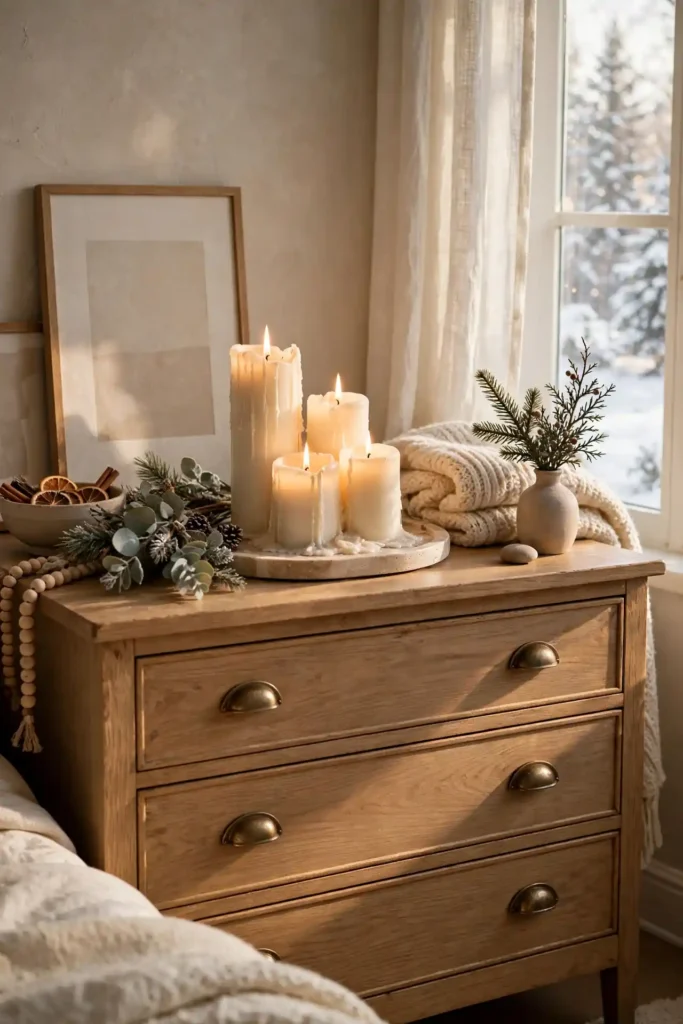
Safety comes first with real flames, so never leave candles burning while you sleep, and keep them at least 12 inches from curtains, bedding, and anything flammable. Battery-operated LED candles with realistic flicker are a worry-free alternative for nightstands, and many come with timers. Trim wicks to a quarter inch before each burn for a clean flame and longer candle life. Store seasonal scents in a cool drawer so the fragrance stays strong until next winter. Keep a candle snuffer nearby to avoid smoky blowouts that stain walls and ceilings over time.
15. Add a Draft Stopper
That cold air sneaking under your bedroom door is quietly stealing your heat and your comfort every night. A draft stopper, the long weighted cushion that sits against the bottom of a door, blocks the chill and can noticeably warm a drafty room. Measure your door’s width, since most interior doors are 30 to 36 inches, and choose a stopper that fits snugly without dragging. Stylish fabric options from Amazon cost 12 to 20 dollars and come in colors that match your decor. Double-sided stoppers that slide under the door stay put far better than single-sided versions.
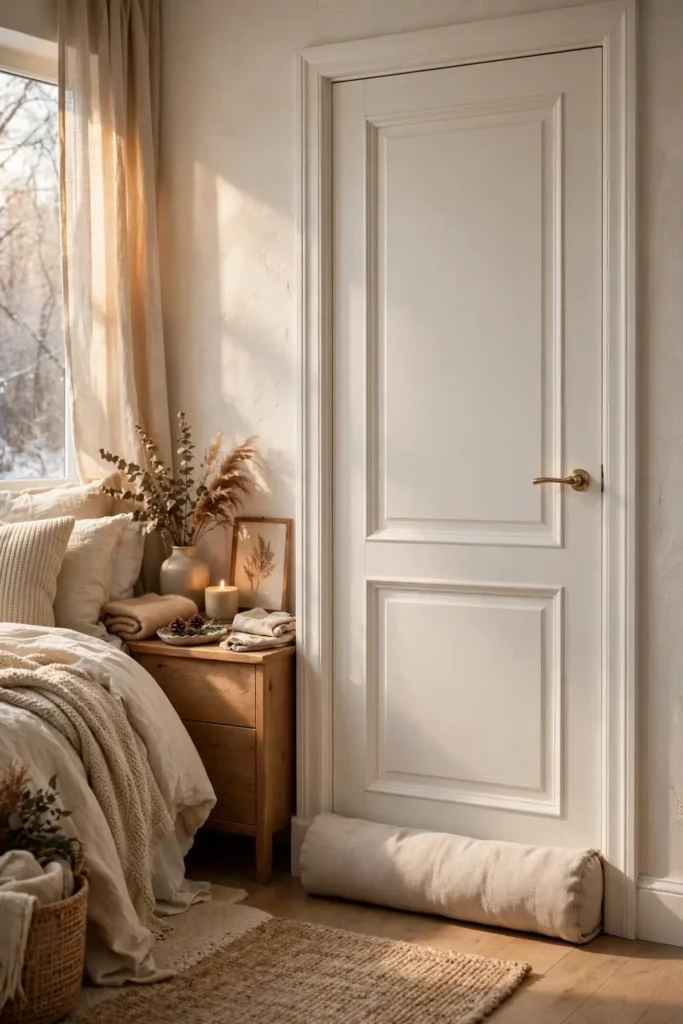
Place stoppers on any door leading to an unheated hallway, and do not forget windows either. Adhesive foam weatherstripping from Home Depot, about six dollars for a 17-foot roll, seals rattling sashes in minutes. For a quick DIY fix, fill a tube sock with rice, tie the end, and lay it along the sill. Check for drafts on a windy day by holding a lit incense stick near door and window edges and watching where the smoke wavers. Sealing drafts can trim heating bills while making the room genuinely warmer.
16. Put Slippers by the Bed
The coziest bedroom in the world still fails if your first step each morning is onto an icy floor. Keep a pair of warm slippers right beside your bed, since memory-foam slide slippers or wool-lined moccasins from brands like UGG, L.L.Bean, or Dearfoams at 25 to 60 dollars make winter mornings genuinely pleasant. Choose a pair with a sturdy rubber sole so you can pad to the kitchen without switching shoes, and pick a color that complements your bedding for a pulled-together look. Look for machine-washable pairs so you can refresh them easily halfway through the season.

Store them in a small basket or on a low tray under the nightstand so they stay tidy and always within reach. If you share the bed, get matching pairs, because it looks intentional and keeps the floor symmetrical in photos. Wool slippers naturally regulate temperature and resist odor, making them ideal for daily wear. Replace the insoles or the whole pair each season if they flatten, since worn-out cushioning defeats the purpose of that warm first step. A quick sprinkle of baking soda inside overnight absorbs odors and keeps them fresh for months.
17. Try a Canopy
A canopy bed transforms your bedroom into a private cocoon, and winter is the perfect season to try one. You do not need a four-poster frame, since a ceiling-mounted hoop or a simple curtain rod above the headboard holds sheer or linen panels that drape around your sleeping space and trap a pocket of warm air. Amazon sells canopy frame kits for 25 to 40 dollars that assemble in under an hour, and sheer white panels keep the look airy rather than heavy. Ceiling hooks rated for 15 pounds hold most fabric panels safely without damaging drywall.

For real winter warmth, choose heavier fabric like linen or light velvet instead of sheer voile, because the denser weave insulates better and blocks morning light for deeper sleep. Hang the panels so they pool slightly on the floor or tuck behind the headboard for a polished finish. Fairy lights woven through the canopy fabric create a dreamy glow that makes the whole bed feel like a retreat. Keep panels machine-washable, since bedroom textiles collect dust faster than you would expect. Leave one side of the canopy open so you can slip in and out of bed without wrestling fabric nightly.
18. Use Wood Accents
Wood is winter’s warmest material, because its natural tones and grain patterns make a bedroom feel grounded and sheltering when everything outside is gray. You do not need new furniture to get the effect, so swap a metal nightstand tray for a wooden one, add a reclaimed-wood picture frame, or hang a simple oak floating shelf above the dresser. Warm-toned woods like walnut, oak, and acacia, common at Target and World Market for 20 to 60 dollars per accent, read coziest against soft textiles. Thrift stores are gold mines for solid-wood frames and trays at a fraction of retail prices.

Balance is key, since too much dark wood can feel heavy, so mix in lighter pieces like a birch tray or pine stool. A wooden headboard is the ultimate statement, and IKEA’s MALM in oak veneer starts around 200 dollars and anchors the whole room’s palette. Treat raw wood accents with beeswax twice a year to keep them glowing through dry winter air. Pair wood with cream bedding and brass details for a cabin-modern look that works from November through March. A single wooden bench at the foot of the bed adds both storage and sculptural warmth.
19. Add Winter Art
Swapping your wall art seasonally is one of the fastest ways to make your bedroom feel dressed for winter. Replace bright summer prints with moody landscapes, abstract pieces in warm neutrals, or black-and-white photography of snowy scenes, since the visual shift tells your brain the season has changed. Large-format prints from Society6 or Etsy cost 20 to 50 dollars, and IKEA’s RIBBA frames at 10 to 15 dollars make anything look gallery-worthy. Etsy sellers offer instant-download winter prints under 10 dollars that you can print at FedEx or Staples for an afternoon refresh.

Hang art at eye level, with the center of the piece about 57 inches from the floor, and go bigger than you think over the bed, since small frames get lost above a queen or king. A single oversized piece at 36 by 48 inches makes a stronger winter statement than a scattered gallery wall. For a no-nail option, lean a large framed print on the dresser against the wall. Rotate the summer art back in March so the swap feels like a ritual, not a chore. Store off-season prints flat between sheets of tissue paper to keep them pristine for next year.
20. Keep It Uncluttered
Cozy does not mean crowded, because a cluttered bedroom feels chaotic rather than comforting, especially in winter when you are spending more time indoors. Clear every surface down to three intentional items per nightstand, such as a lamp, a book, and a candle, then corral chargers into a single tray and give every stray item a home. A tidy room lets your warm textures and lighting do the talking instead of competing with visual noise. Spend 15 minutes each evening on a quick reset to keep the calm. A clear nightstand also means better sleep, since visual clutter keeps your brain alert at bedtime.

Storage is what makes minimalism sustainable, so under-bed bins at 15 to 25 dollars from Target swallow off-season clothes, and a lidded basket by the door catches the winter clutter of scarves and gloves. Keep the floor visible, because it makes even a small bedroom feel larger and calmer. If an item has not been used in a month, move it to a closet or donate it. The goal is not stark emptiness but breathing room, so every cozy layer you added gets the spotlight it deserves. Do a five-minute nightly tidy of remotes, cups, and clothes so clutter never rebuilds.
Layering Bedding for Winter Bedroom Decor Ideas
Professional stylists build winter beds in layers, and you can copy their formula exactly. Start with flannel or brushed-cotton sheets, add a warm duvet insert, then fold a quilt or coverlet across the foot, and finish with a throw and two to three decorative pillows. Each layer adds visible texture and real insulation, so the bed looks abundant and sleeps warm. Work in odd numbers of pillows and vary the textures between smooth, nubby, and plush for a bed that looks styled from every angle. Tuck a thin quilt between the sheets and duvet on the coldest nights for bonus insulation.

The secret to layers that stay put is sizing, so choose a duvet one size larger than your mattress, like a king duvet on a queen bed, and the sides will drape generously to the floor. Tuck the top sheet and duvet together in a crisp fold about 12 inches from the headboard for that hotel look. In the morning, pull each layer smooth rather than remaking the bed from scratch, because it takes two minutes and keeps everything photograph-ready. Rotate which throw sits on top weekly to even out wear.
Keeping Your Bedroom Warm Naturally
Before you crank the thermostat, try the passive tricks that keep bedrooms warm for free. Open south-facing curtains on sunny winter days to capture solar heat, then close every curtain at dusk to trap it, since thermal-backed panels make this dramatically more effective. Reverse your ceiling fan to spin clockwise at low speed, which pushes warm air pooled at the ceiling back down to bed level. These two habits alone can make a room feel several degrees warmer without spending a dollar. Keep interior doors open during the day so warm air circulates, then close them at bedtime.

Humidity matters more than most people realize, because winter air is bone dry and moist air holds heat better. A cool-mist humidifier at 30 to 50 dollars from Target, set to 40 to 50 percent humidity, makes the room feel warmer while saving your skin and sinuses. Seal obvious drafts with weatherstripping, and keep the bedroom door closed at night so your body heat stays in the room. Together, these natural methods can let you lower the thermostat two to three degrees comfortably. A programmable thermostat that drops the temperature after you leave saves energy automatically.
Transitioning to Spring
When March arrives, you do not need to redecorate from scratch, so just peel back the winter layers strategically. Start by swapping the heaviest pieces: trade the faux fur throw for a light cotton quilt, replace velvet pillow covers with linen, and roll up the thickest rug layer. Store winter textiles in breathable cotton bags rather than plastic, which traps moisture, and add a cedar block to keep them fresh. The whole transition takes an afternoon and costs nothing if you stored last spring’s pieces. Launder everything before storing so spring unpacking feels like opening brand-new bedding.

Keep the elements that work year-round, like warm bulbs, the reading nook, and your favorite art, and refresh the rest with spring signals. Swap burgundy and forest tones for sage, cream, and soft blue, bring in fresh flowers instead of pine branches, and switch to lighter curtains that let in more daylight. Clean the humidifier and store it before the warm months arrive. A gradual transition over two weekends feels effortless and keeps your bedroom feeling intentional in every season. Donate any winter textiles you did not love this year rather than storing them again.
How to Plan Winter Bedroom Decor Ideas Step by Step
A great winter bedroom starts with a plan, not a shopping spree. First, audit what you own by pulling out every blanket, pillow, and throw, then sort them into keep, store, and donate piles. Next, identify your gaps, since most people need warmer sheets, better lighting, or draft control. Set a budget, because a full cozy refresh typically runs 150 to 400 dollars, and choose a palette of three colors before you buy anything. Measure your bed, windows, and floor space so every purchase fits the first time. Snap a photo of your room’s current state so you can track the transformation as you go.

Shop in priority order: warmth first with sheets, duvet, and draft stoppers, then light with bulbs, lamps, and fairy lights, then texture with throws, pillows, and rugs. Tackle one zone per weekend, doing the bed one Saturday and windows and lighting the next, so the project never feels overwhelming. Photograph your room before you start and after each zone, because the comparison keeps you motivated and helps you spot what is missing. Finish by scheduling a mid-winter refresh in January to fluff, rotate, and replace anything that has worn. Keep receipts and tags until midwinter in case a size or color does not work out.
- Swap sheets for flannel and add a heavier duvet.
- Add throws and textured pillows.
- Lay a thick rug and hang heavy curtains.
- Update lighting with warm bulbs and fairy lights.
- Finish with greenery, candles and art.
Final Thoughts on Winter Bedroom Decor Ideas
The best winter bedrooms are not the most expensive ones, since they are the most intentional. Every idea in this guide shares one principle: layering warmth through texture, light, and color so your room actively comforts you. You do not need all twenty ideas, so pick the five that solve your biggest complaints, whether that is cold sheets, harsh lighting, or drafty windows. Start with the highest-impact, lowest-cost swaps like flannel sheets and warm bulbs, and build from there as your budget allows. Even two or three thoughtful changes can make your bedroom feel completely different by December.

Remember that coziness is personal, so your winter bedroom should reflect how you actually live, not a catalog page. If you read in bed, prioritize the reading nook and good lamps, but if you run cold, invest in the duvet and draft control first. Revisit your setup in January when the novelty fades and adjust whatever is not working. A bedroom that feels like a hug is not decorated once, because it is tuned season after season until it fits you perfectly. Start this weekend with one small swap and let the coziness build from there.
Frequently Asked Questions About Winter Bedroom Decor Ideas
The most common question is how much a winter bedroom refresh costs, and the honest answer is 150 to 400 dollars for a full transformation using stores like Target, IKEA, and Amazon. Flannel sheets at 35 to 60 dollars, warm LED bulbs at about 10 dollars for a multipack, and a faux fur throw at 25 to 40 dollars deliver the biggest impact for the least money. If your budget is tighter, start with just lighting and textiles, because swapping bulbs and adding one throw can change the room’s feel for under 50 dollars.

People also ask when to start decorating for winter, and late October through November is ideal, early enough to enjoy the coziness all season and late enough that it feels like an occasion. Another frequent question is whether these ideas work in small bedrooms or rentals, and they absolutely do, since almost everything here is textile-based and requires no drilling or painting. Focus on bedding, lighting, and one rug, and even a 10-by-12-foot rental bedroom can feel like a warm winter retreat. Most of these updates take under an hour each, so you can transform the room over a single weekend.
How do I make my bedroom warmer in winter?
Use flannel sheets, a heavy duvet, thick rugs, thermal curtains and draft stoppers.
What colors feel cozy in winter?
Cream, camel, rust, deep green, burgundy and warm gray.
What bedding is warmest for winter?
Flannel sheets and a down or wool duvet.
How do I decorate a bedroom for winter without Christmas decor?
Use neutral textiles, greenery, candles, fairy lights and winter art.
Are fairy lights good for a winter bedroom?
Yes. Warm LED fairy lights add a cozy glow and stay cool.








1 Comment