


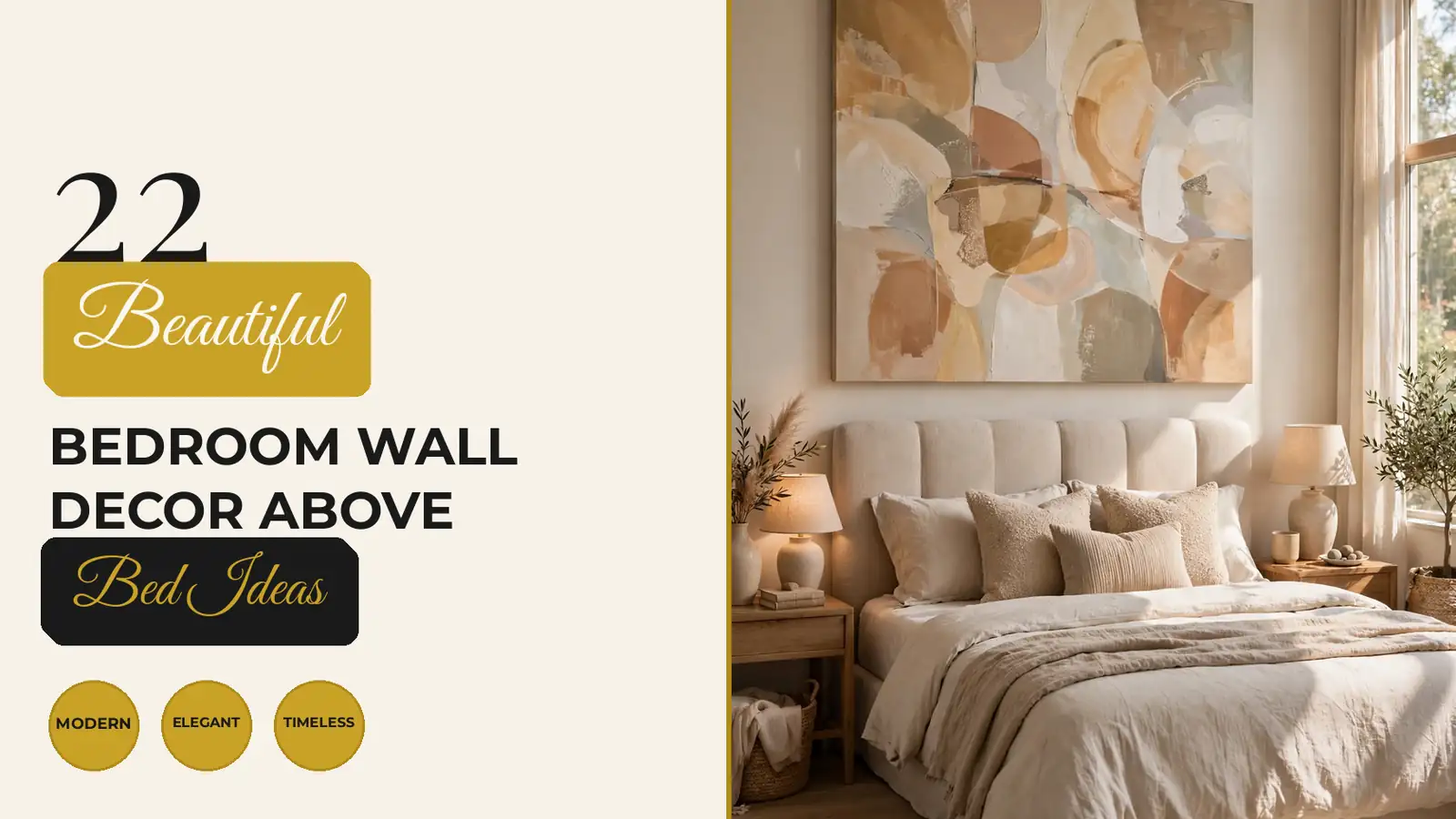
The wall above the bed is the focal point of most bedrooms, yet it is often left blank or filled with something too small. The right decor frames the bed, adds personality and makes the whole room feel finished. Whether you prefer art, texture or architectural detail, there is an option for every style and budget.
These 22 bedroom wall decor above bed ideas include sizing tips so your choice looks balanced. For more bedroom inspiration, see our wallpaper ideas for bedroom walls and this guide to bedroom mirror placement ideas.
Sizing and placement rules:
- Choose decor about two-thirds the width of the bed.
- Hang the bottom 8 to 12 inches above the headboard.
- Center decor on the bed, not the wall.
- Use secure mounting for anything heavy.
1. Oversized Canvas Art
A single oversized canvas is the easiest way to make the wall above your bed look finished without any complicated arranging. Choose a piece that spans two-thirds to three-quarters of your headboard’s width, then hang it so the bottom edge sits six to eight inches above the headboard. Large canvas prints at Target and HomeGoods typically cost forty to sixty dollars, while a thirty-six by forty-eight inch stretched canvas from Society6 or Etsy starts around eighty dollars. Abstract landscapes, soft florals, and textured neutrals suit almost any bedroom because they read as atmosphere instead of a specific subject.

Before you buy, check whether the canvas arrives ready to hang or as a rolled print you must frame yourself. A stretched, ready-to-hang canvas spares you the frame shop, where custom framing at this size usually runs fifty to one hundred dollars. Keep the palette tied to your bedding so the art feels connected to the bed, and think about contrast: lighter art over a dark headboard adds brightness, while deeper tones keep the piece from washing out above a pale headboard. One strong piece always looks calmer than several small ones competing for attention.
2. Pair of Matching Prints
A pair of matching prints is a forgiving way to fill a wide wall because the symmetry does the design work for you. Pick two prints the same size — twenty by twenty-four inches works well over a queen bed — and hang them with two to three inches between the frames, centered on the headboard. Matching botanical prints, line drawings, or abstract pairs from Target, IKEA, or Etsy cost about twenty to forty dollars per framed print. Identical frames are what make this look pulled together, so buy the pair together rather than trying to match later.

If matching prints feel too uniform, choose a diptych instead: one image split across two panels. The split image gives you the same symmetry with a more artistic feel. Hang the pair so the bottom of each frame sits six to eight inches above the headboard, and use a level — even a slight tilt is obvious with two identical pieces. This approach suits traditional, modern farmhouse, and Scandinavian bedrooms equally well, and it is one of the easiest looks to swap seasonally since you only need to reprint two images.
3. Gallery Wall
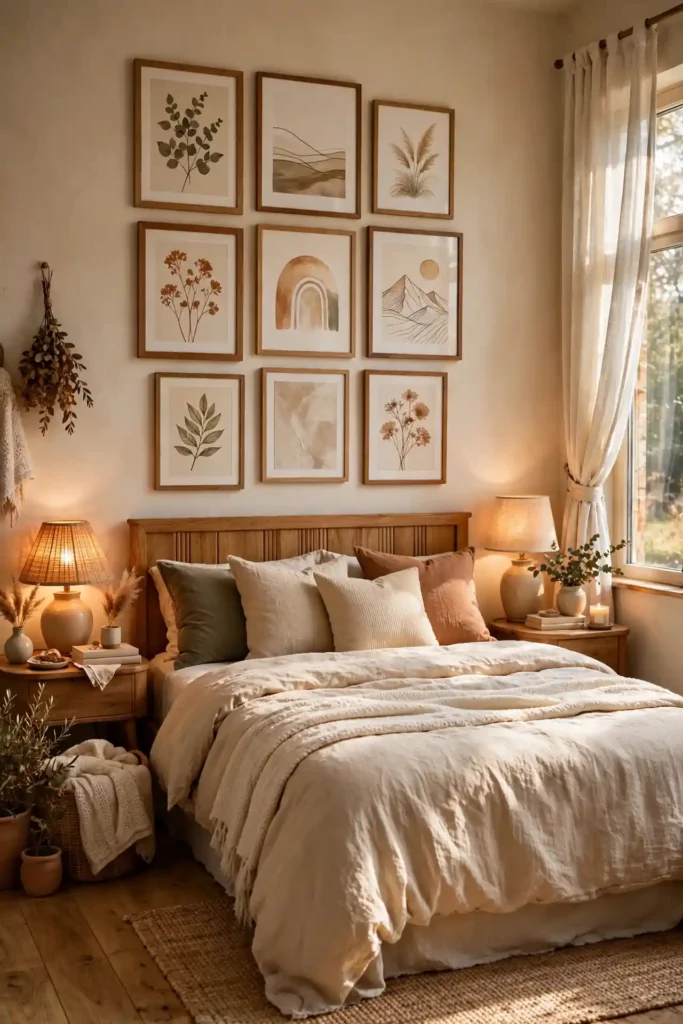
A gallery wall above the bed turns empty wall space into a personal showcase. Start by laying the arrangement on the floor inside a taped outline of your available wall area, keeping the whole composition about as wide as your headboard. Mix frame sizes — eight by tens, eleven by fourteens, and one larger sixteen by twenty anchor piece — and vary the art: photos, prints, small mirrors, and maybe a textile. Uniform frames in black, white, or natural wood keep a busy mix feeling calm. Thrift stores and IKEA’s RIBBA frames keep the total under one hundred dollars.
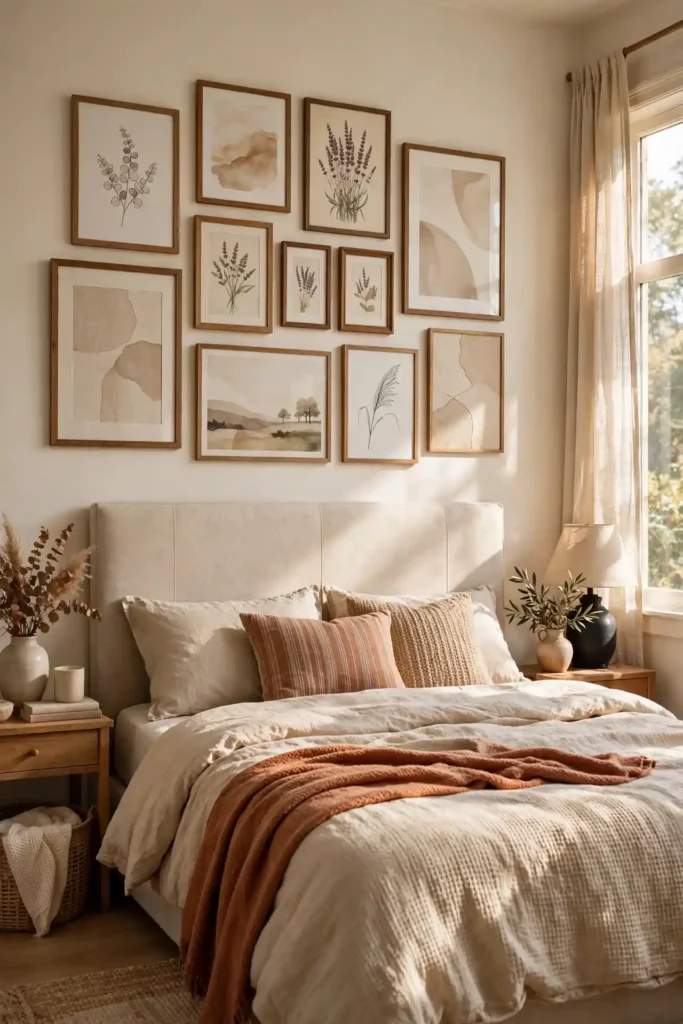
The key to hanging a gallery wall over a bed is keeping the bottom edge high enough that nobody bumps frames while sitting up. Start the lowest frames about ten to twelve inches above the headboard. Use paper templates taped to the wall to plan spacing before you drill, keeping two to three inches between pieces. Command picture-hanging strips rated for your frame weight are a renter-friendly option, though heavy framed pieces should still go into studs. Step back often as you hang — gallery walls look best judged from the doorway.
4. Round Mirror
A round mirror above the bed bounces light around the room and makes a small bedroom feel bigger. A thirty to thirty-six inch round mirror suits a queen bed; go up to forty inches over a king. Hanging the mirror so its bottom edge sits about six inches above the headboard keeps the reflection of the bed soft and unfocused rather than glaring. Target, Home Depot, and IKEA sell round mirrors in wood, brass, or black metal frames for fifty to one hundred and fifty dollars. A mirror with a deep wood frame adds warmth, while a thin brass frame feels modern and light.
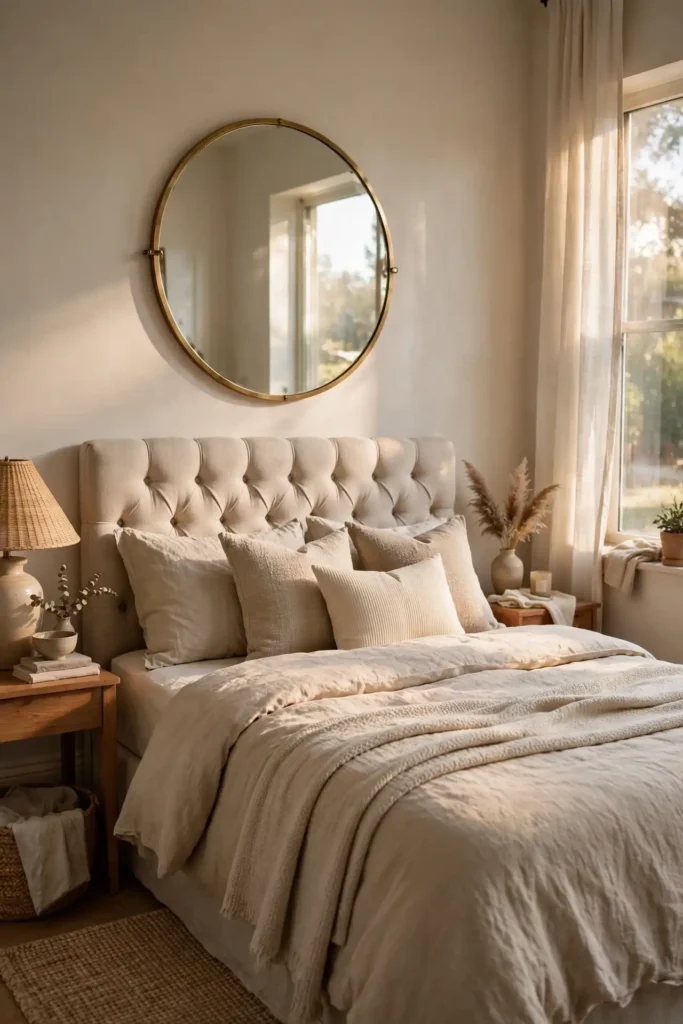
Safety matters with glass over a bed: always mount the mirror into a wall stud or use a heavy-duty anchor rated well above the mirror’s weight. Most round mirrors over twenty-four inches weigh fifteen to thirty pounds, so a single drywall anchor is not enough. Position the mirror where it reflects a window or a pretty corner rather than facing the bed directly if that bothers you. Clean it with a microfiber cloth and glass cleaner, and check the hanging wire or D-rings yearly — tension can loosen, especially in humid rooms.
5. Woven Tapestry
A woven tapestry adds softness and texture that hard-framed art cannot match. Hang a macrame or woven wall hanging that spans about half to two-thirds of your headboard width, with the bottom edge landing six to eight inches above the headboard. Handmade macrame pieces from Etsy run forty to one hundred twenty dollars depending on size, while Target and World Market sell printed tapestries for twenty to fifty dollars. Cream, oatmeal, and terracotta tones blend easily with most bedding, and the fabric softens sound slightly in echo-prone rooms. Look for varied textures like chunky knots and fringe, since dimensional details read better from across the room.

Tapestries are lightweight, which makes them ideal for renters: a couple of nails or removable adhesive hooks are usually enough. To hang it evenly, mount a slim dowel, curtain rod, or brass bar across the top so the weave hangs straight instead of sagging. Keep tapestries away from direct afternoon sun if the dyes are not colorfast, since fading shows fast on textiles. In a boho, coastal, or Scandinavian bedroom, one large woven piece above the bed can carry the whole room’s texture story on its own. Pair it with linen bedding and a jute rug to complete the layered, relaxed look.
6. Floating Shelf
A floating shelf above the bed gives you a display ledge you can restyle whenever you like. Install one forty-eight to sixty inch shelf centered over the bed, about eight to ten inches above the headboard so you cannot knock items off while sitting up. IKEA’s LACK shelf costs around twenty dollars, while solid-wood floating shelves from Etsy or Home Depot run forty to eighty dollars. Style it with a stack of books, a small plant, and one framed print — odd groupings of three or five objects look most natural.

Weight limits matter here: most floating shelf brackets support fifteen to twenty-five pounds when anchored into studs, less on drywall alone. Keep heavy items like large books near the wall and lighter decor toward the front edge. Choose shelves rated for concealed brackets if you want a clean look, and check that the shelf is level before loading it. Because the shelf sits above your head, avoid glass vases or heavy ceramics that could fall — opt for small potted plants in plastic pots, framed art, and candles. Leave some breathing room on the shelf rather than filling every inch; negative space keeps the display from feeling cluttered.
7. Wallpaper Accent Wall
A wallpaper accent wall behind the bed creates depth and pattern without a single frame. Peel-and-stick wallpaper is the renter-friendly choice: brands like Tempaper and Chasing Paper sell rolls for thirty to fifty dollars, and a ten-by-eight-foot wall takes about four to five rolls. Choose a pattern scale that suits the room — large-scale florals or arches feel current, while small prints can look busy behind a headboard. Apply from the top down, smoothing with a plastic smoother as you go, and overlap seams by about an eighth of an inch.

Traditional paste-the-wall wallpaper lasts longer but needs more skill; expect to pay a pro two hundred to five hundred dollars for one accent wall. If you DIY, measure twice and buy ten percent extra for pattern matching. Mural-style wallpapers that read as one large scene — a forest, a desert landscape — work beautifully above a bed because there is no repeat to align. Once the wall is done, keep the decor above the bed minimal: the wallpaper is the art, so one small shelf or a pair of sconces is all the wall needs.
8. Wood Slat Panel
A wood slat panel wall brings warmth and architectural interest to the space above your bed. Vertical slats in white oak or walnut tones create rhythm and make ceilings feel taller. Acoustic slat panels — real wood veneer on felt backing — cost about one hundred to two hundred dollars per four-by-eight-foot panel at Home Depot or on Amazon, and most queen-bed walls need two panels. Mount them with construction adhesive plus a few screws into studs for a secure hold that will not shift over time. Leave a small expansion gap at the edges, and trim the final panel to fit with a fine-tooth saw blade.
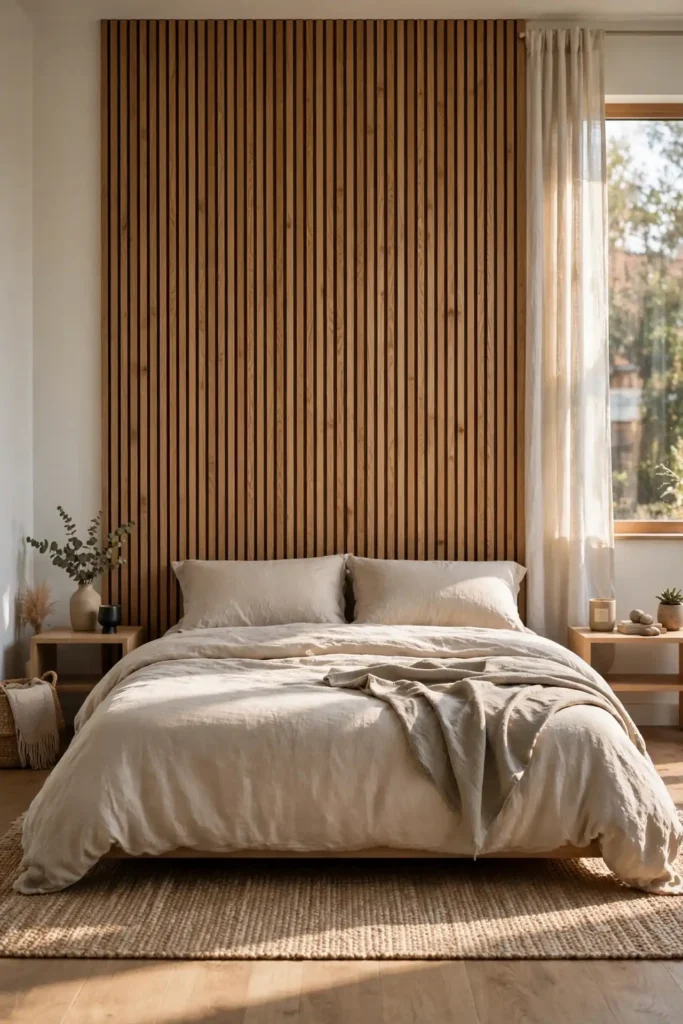
You can also build a DIY version with one-by-two pine furring strips from Home Depot for under fifty dollars total. Space the strips three-quarters of an inch apart over a painted backer wall in a contrasting color — charcoal or deep green makes the wood pop. Sand and seal the wood with a clear matte polyurethane so it resists dust. A slat panel wall pairs beautifully with linen bedding and low-profile platform beds, and it photographs well for anyone styling a modern, Japandi, or mid-century bedroom. Add two small sconces on the panel for a warm, layered glow that highlights the wood grain.
9. Painted Arch
A painted arch frames your bed like a headboard painted straight onto the wall. Use painter’s tape and a level to mark a half-circle or full arch that extends about twelve to eighteen inches beyond each side of your bed and rises two to three feet above the headboard. A quart of quality paint — Benjamin Moore or Sherwin-Williams — costs twenty to thirty dollars and covers the job with paint to spare. Terracotta, sage, and warm greige arches feel current; a tone-on-tone arch in a deeper shade of your wall color is subtler.
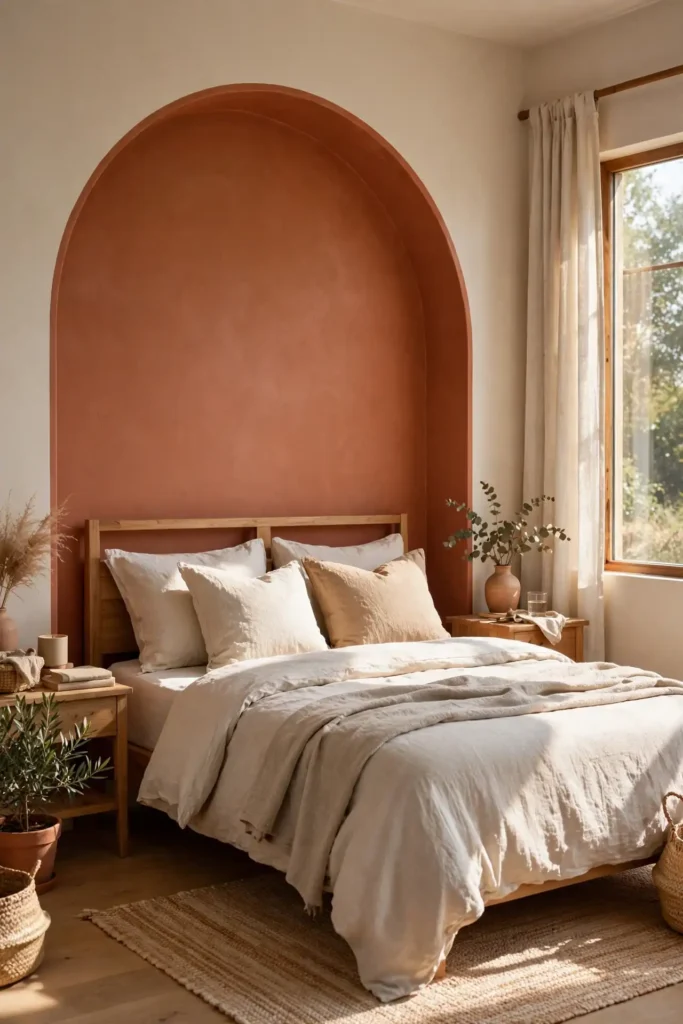
To get a clean curve, trace it with a pencil tied to a string pinned at the arch’s center point, then paint just inside the tape line. Two coats give full coverage, and pulling the tape while the second coat is still slightly tacky prevents peeling. A painted arch costs almost nothing yet defines the sleeping zone, which makes it perfect for studio apartments and kids’ rooms. Finish the look with one small piece of art or a sconce centered in the arch, or leave it bare — the shape alone is the decoration.
10. Picture Ledge
A picture ledge lets you lean framed art instead of hanging it, so rearranging takes seconds. Install one or two IKEA MOSSANDA or similar picture ledges — about twenty to thirty dollars each — centered above the bed, roughly eight inches above the headboard for the lower ledge. Layer frames of different sizes, leaning the tallest in back, and overlap them slightly for a collected look. Because nothing is nailed through the art, you can rotate prints seasonally or swap in family photos without new holes. Overlap frames slightly and mix orientations — a landscape beside a portrait keeps the ledge from looking rigid.
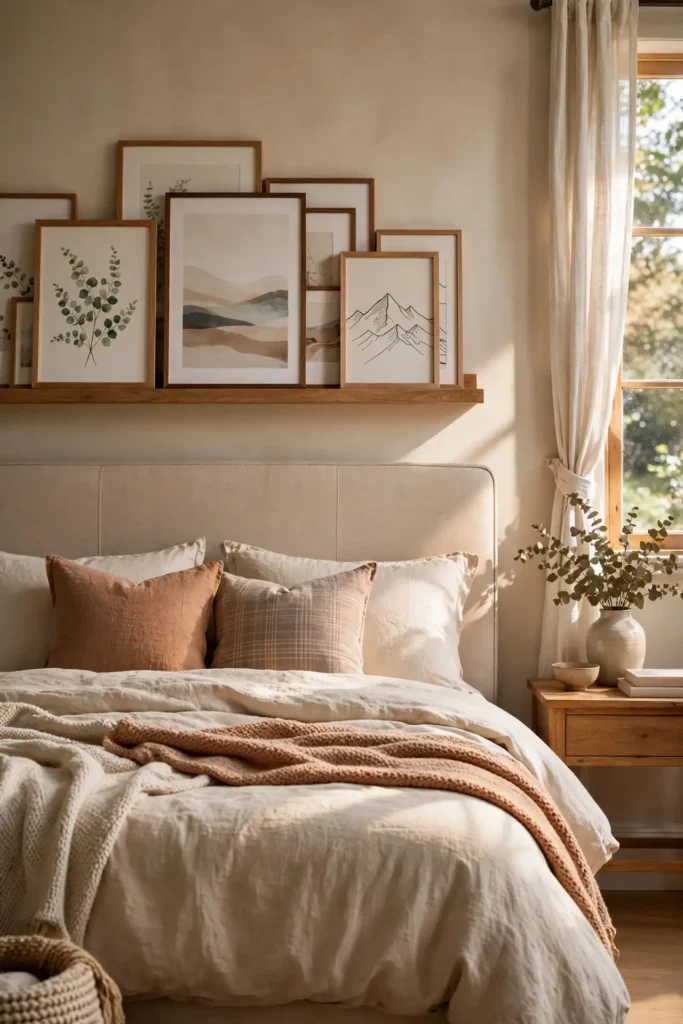
Keep the ledge display shallow: frames should lean against the wall with their bottoms on the ledge lip, not stacked deep enough to topple. Limit total weight to the ledge’s rating — usually around ten to fifteen pounds per ledge — and anchor the ledge itself into studs since it hangs above your head. Small objects like candles or tiny plants can fill gaps, but avoid anything that rolls. A picture ledge above the bed suits eclectic and modern bedrooms where the art collection changes often. Wipe the ledge monthly, since horizontal surfaces above the bed collect dust faster than wall-hung art.
11. Woven Baskets
A cluster of woven baskets turns the wall above your bed into a textured, global-inspired display. Gather five to nine flat-backed baskets in varying sizes — six to eighteen inches across — from Target, World Market, or thrift stores for three to fifteen dollars each. Arrange them on the floor first, mixing round and oval shapes with a few inches of space between each. Natural seagrass, jute, and rattan tones add warmth, and painted-pattern baskets from African or Moroccan markets add color and story. Include one larger statement basket as an anchor, then build outward with smaller pieces around it.

Hang each basket from a single nail or removable hook since they weigh almost nothing, which also makes this the most renter-friendly idea on the list. Keep the arrangement centered on the bed and roughly the width of the headboard so it reads as one composition. Dust baskets monthly with a soft brush — woven textures collect dust fast. This look shines in boho, coastal, and farmhouse bedrooms, and it costs less than almost any other option here while still looking intentional and finished. Because baskets are feather-light, you can experiment freely with the layout until the balance feels right.
12. Framed Textile
Framing a textile — a vintage scarf, a block-printed cloth, or a piece of mudcloth — gives you art nobody else has. Stretch the fabric over a canvas frame or mount it behind glass in a simple frame from IKEA or Michaels, which costs fifteen to forty dollars depending on size. A twenty-four by thirty-six inch framed textile makes a strong statement over a queen bed. Look for fabrics at Etsy, flea markets, or your own travels; even a beautiful tea towel or bandana can work at the right scale.

Iron the fabric before framing and, if stretching it yourself, staple from the center outward to keep the weave straight. UV-protective glass is worth the upgrade — about ten to twenty dollars more — since textiles fade quickly in sunny bedrooms. Match the textile’s colors to at least one other element in the room, like a throw pillow or rug, so it feels deliberate. Framed textiles suit eclectic, global, and traditional bedrooms, and they add a handmade softness that prints and photographs cannot. If the fabric is valuable or vintage, choose acid-free matting to protect it for the long term.
13. Triptych Art
A triptych — three panels that form one image or a coordinated set — fills a wide wall with built-in rhythm. Each panel typically measures sixteen by twenty or eighteen by twenty-four inches; hang them with two to three inches between panels so they read as a unit. Triptych sets from Amazon, Target, and Etsy range from sixty to one hundred fifty dollars for a three-piece canvas set. Landscapes split across three panels are the classic choice, but abstract color fields work in modern rooms. Canvas triptychs are the most affordable option, while framed photographic triptychs cost more but look sharper.
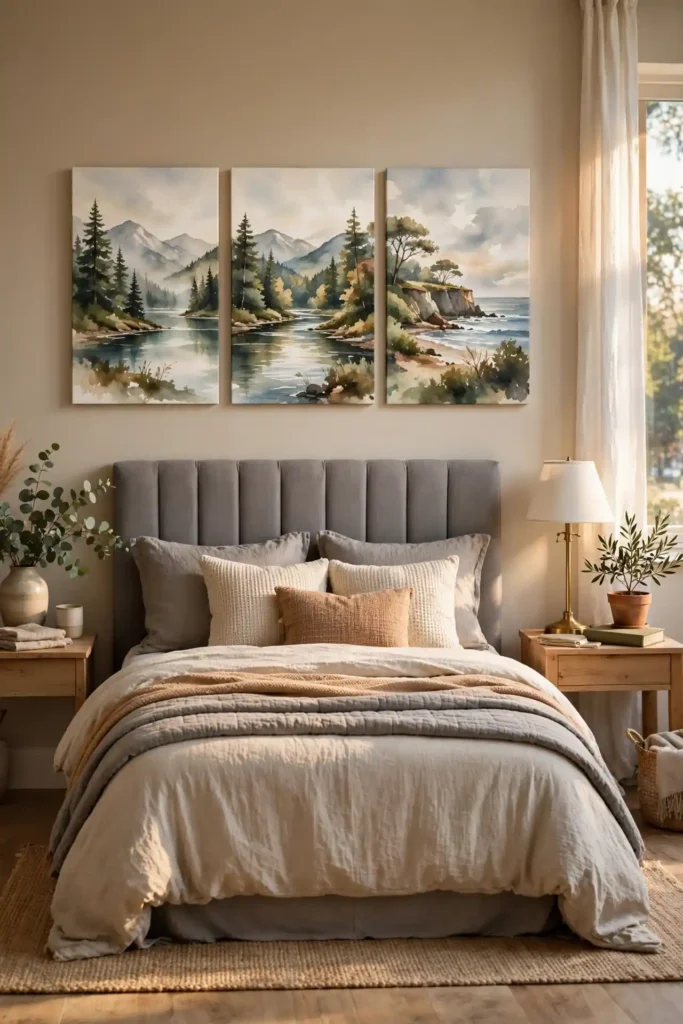
Measure the total width of all three panels plus gaps before hanging, and center that full width on the bed. Use a laser level or a long spirit level — misalignment shows immediately across three pieces. Hang the panels so the bottoms sit six to eight inches above the headboard. Because triptychs come as matched sets, color coordination is done for you; just confirm the palette works with your bedding. This is a safe, high-impact choice for traditional, transitional, and contemporary bedrooms alike. Double-check that all three panels hang at exactly the same height — even a quarter-inch difference breaks the effect.
14. Wall Sconces
Wall sconces above the bed add light and decor in one move. Plug-in sconces are the easy route — no electrician needed — and stylish options from Target, Amazon, and West Elm run forty to one hundred twenty dollars per pair. Mount them twelve to eighteen inches above the headboard and about thirty to thirty-six inches apart, centered on the bed, so the light falls on your reading spot. Swing-arm sconces are ideal for readers; fixed drum or globe shades give softer ambient light. Cord covers painted to match the wall keep plug-in cords nearly invisible against most paint colors.
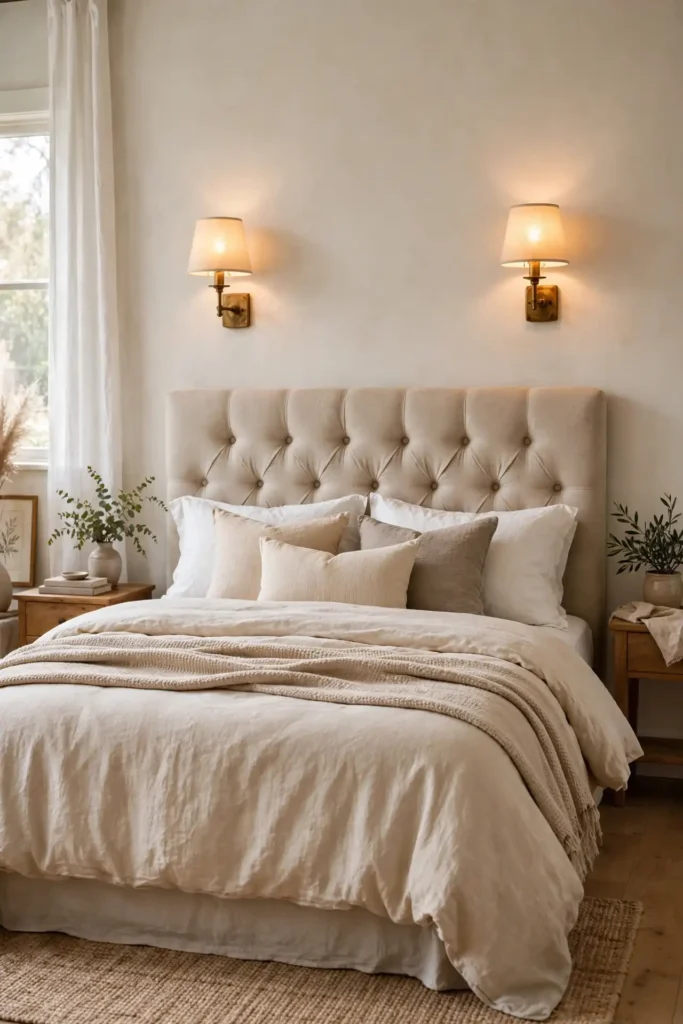
If you hardwire, budget one hundred fifty to three hundred dollars per fixture for an electrician, plus the cost of the sconces themselves. Choose LED bulbs in a warm 2700K temperature for a cozy bedroom glow, and look for sconces with built-in dimmers or pair them with smart bulbs. Keep shades clear of bedding and curtains for fire safety, and never exceed the fixture’s maximum wattage. Sconces flanking a central piece of art create a layered, hotel-like look that overhead lighting alone cannot match. Install them on separate switches or smart plugs so each side of the bed controls its own light.
15. Botanical Prints
Botanical prints bring the calm of the outdoors into the bedroom. A set of four to six matching botanical prints in identical frames — eight by ten or eleven by fourteen inches — arranged in a grid above the bed looks crisp and intentional. Vintage-style fern and eucalyptus prints from Etsy or Society6 cost ten to twenty-five dollars each unframed; IKEA frames add about ten dollars apiece. Keep the mats white and the frames consistent — black, oak, or brass — so the grid reads as one piece. Buy one extra frame in case of damage, since matching frames get discontinued without warning.

Hang the grid so the bottom row sits about eight inches above the headboard, with two inches between frames both ways. For a softer look, choose watercolor botanicals; for a crisper feel, pick engraved or line-art styles. Botanical prints pair naturally with real plants, linen bedding, and light wood furniture, making them a go-to for Scandinavian, coastal, and cottage bedrooms. If you love the look but want zero cost, press leaves from your own garden and frame them — free art with a personal story. Hang pressed botanicals away from direct sun, or the colors will fade within a single season.
16. Black and White Photography
Black and white photography adds drama and sophistication without introducing new colors. One large black-and-white print — thirty by forty inches or bigger — in a thin black or white frame makes a gallery-worthy statement over the bed. Print your own photo at a local print shop for thirty to sixty dollars, or buy fine-art prints from Etsy and Society6 starting around forty dollars. Architecture, landscapes, and abstract close-ups work best; portraits above a bed can feel intense, so choose them carefully. City skylines, misty forests, and ocean waves are timeless subjects that rarely feel dated.

The beauty of black and white is that it matches everything, so your bedding can change seasonally without clashing. Hang the piece six to eight inches above the headboard and center it on the bed, using a level — large monochrome prints show tilt easily. Use non-glare or museum glass if the print sits opposite a window, since reflections kill the effect. This look suits modern, industrial, and minimalist bedrooms, and a single strong photograph often has more impact than a busy color gallery. A slim black frame with a wide white mat gives large prints a finished, gallery-quality presentation.
17. Paneling or Wainscoting
Paneling or wainscoting on the wall behind your bed adds architecture that paint alone cannot. Board-and-batten is the DIY favorite: one-by-three pine boards from Home Depot cost about two dollars per linear foot, and a full accent wall runs under one hundred dollars in materials. Paint it the same color as the wall for subtle texture, or go bold with deep green, navy, or charcoal. The vertical or grid lines draw the eye up and make the bed feel anchored and grand. Chair-rail height wainscoting suits traditional rooms, while full-height paneling reads more modern and dramatic.
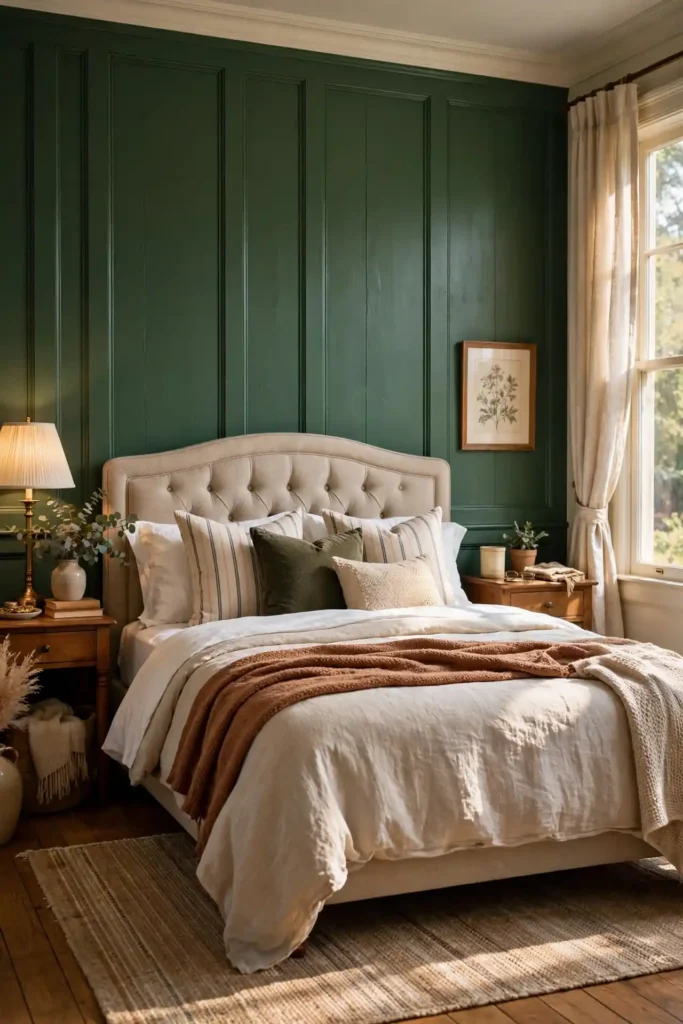
Plan your layout on paper first, spacing battens twelve to sixteen inches apart for a classic look. Use a brad nailer and construction adhesive, fill nail holes with wood filler, caulk the seams, then paint two coats for a seamless finish. This is a weekend project — expect six to eight hours including drying time. Wainscoting pairs beautifully with traditional, farmhouse, and transitional bedrooms, and because it is part of the wall, you need little to no additional decor above the bed — maybe just a pair of sconces. Let the final coat cure fully before leaning anything against it.
18. Hanging Plants
Hanging plants above the bed add life and a soft, cascading shape. Choose trailing plants like pothos, philodendron, or string of pearls, which thrive in medium bedroom light and cost ten to twenty-five dollars at Home Depot, Lowe’s, or local nurseries. Hang planters from ceiling hooks or a wall-mounted bracket so the foliage trails twelve to twenty-four inches — keep the pots themselves well clear of the headboard so you cannot bump them. Macrame hangers from Etsy or Target run ten to twenty dollars. Start with pothos if you are new to houseplants — it tolerates low light and forgives missed waterings.

Safety first: use ceiling anchors rated for at least three times the watered weight of the plant, and hang planters to the side of the bed rather than directly over pillows if you are a restless sleeper. Water over a sink or use pots with drainage trays to protect bedding and floors. Dust leaves monthly so the plants photosynthesize well. Hanging plants suit boho, jungle-inspired, and eclectic bedrooms, and a trio of plants at staggered heights looks far better than a single lonely pot. Rotate the planters every few weeks so the trailing vines grow evenly on all sides.
19. Wooden Wall Sculpture
A wooden wall sculpture adds three-dimensional interest that flat art cannot. Carved wood panels, abstract geometric wall art, or reclaimed-wood assemblages from Etsy range from eighty to three hundred dollars depending on size and craftsmanship. Look for a piece forty to sixty inches wide to fill the space over a queen bed properly. Natural finishes — teak, acacia, whitewashed oak — bring warmth, while painted geometric wood art adds color and a modern edge. Buy from sellers who list the exact dimensions and weight, since both determine your mounting hardware.

Wood sculptures are often heavy, so mount them into studs with screws or heavy-duty anchors rated above the piece’s weight; many large pieces weigh twenty to forty pounds. Hang the sculpture so its lowest point sits six to eight inches above the headboard. Dust carved details with a soft brush or a microfiber duster, since crevices collect dust fast. This look anchors rustic, modern organic, and mid-century bedrooms, and one sculptural piece can replace a whole gallery wall with far less visual clutter. Test the placement with a paper template first, since large sculptures are awkward to reposition once mounted.
20. Canopy or Drapes
A canopy or draped fabric above the bed creates a cocoon-like, romantic feel. Hang ceiling-mounted curtain tracks or a simple canopy frame — IKEA’s VIDGA track system costs about thirty dollars — and drape sheer white or linen panels from ceiling to floor on both sides of the bed. Four curtain panels from Target or IKEA run sixty to one hundred dollars total. Sheers filter morning light beautifully; heavier linen gives more drama and privacy. Pre-wash linen panels before hanging, since natural fibers can shrink noticeably after the first wash.

Mount the track or hooks into ceiling joists, not just drywall, since fabric plus hardware adds up and you will tug the curtains daily. Keep fabric at least twelve inches from any wall sconce or lamp for fire safety, and choose flame-retardant or naturally less flammable fabrics like cotton and linen over synthetics. Wash or vacuum the drapes every few months — they collect dust. Canopies suit romantic, boho, and traditional bedrooms, and they make even a basic bed frame feel like a four-poster. Tie the panels back with simple cotton ties during the day to let light flood the room.
21. Neon or Word Art
Neon or word art adds personality and a soft glow above the bed. Custom LED neon signs from Etsy or Amazon cost sixty to two hundred dollars depending on size and wording; a twenty-four-inch script sign suits most queen beds. Choose a short word or phrase — ‘dream,’ ‘love,’ or your family name — in warm white or soft pink for a bedroom-appropriate glow. LED neon stays cool to the touch, unlike traditional glass neon, and uses minimal electricity. Most signs ship with a remote or app control, so you can adjust brightness and color from bed.

Hang the sign with the included mounting kit or clear standoffs, keeping it six to twelve inches above the headboard, and route the cord neatly down one side with adhesive cable clips. Most signs plug into a standard outlet and include a dimmer — use it, since full brightness is too much for sleep. Turn the sign off at bedtime or put it on a timer plug for ten to fifteen dollars. Neon word art fits modern, glam, and teen bedrooms best, adding a playful focal point after dark. Keep the sign’s transformer hidden behind the headboard for a cleaner look.
22. Keep It Simple
Sometimes the best decor above the bed is almost nothing at all. A clean, empty wall lets beautiful bedding, an interesting headboard, and good lighting carry the room. If your headboard is tall, upholstered, or intricately carved, extra art above it can look cluttered rather than curated. Minimalist bedrooms benefit from negative space — it lowers visual noise and can genuinely help the room feel calmer at bedtime. Save your decorating energy for the nightstands and bedding instead. A bare wall also makes small rooms feel larger, since the eye travels uninterrupted across the space.

Keeping it simple does not mean unfinished: make sure the wall paint is fresh and the headboard is centered with equal space on both sides. One small element — a single floating shelf, a slim sconce pair, or a narrow picture ledge — can keep the wall from feeling bare without adding clutter. This approach costs nothing, suits Scandinavian and minimalist styles perfectly, and is ideal for small bedrooms where every visual element competes for attention. When in doubt, live with the empty wall for a week before deciding it needs something.
Safety Tips for Bedroom Wall Decor Above Bed
Anything hung above your bed must stay put — you sleep directly beneath it. Always anchor pieces heavier than ten pounds into wall studs using screws, not just drywall anchors; a stud finder costs fifteen to twenty-five dollars at Home Depot and is essential for this job. Check the weight rating on every hook, wire, and anchor, and choose hardware rated for at least twice the item’s weight. Heavy mirrors, wood sculptures, and large framed art can weigh twenty to forty pounds, so a single nail is never enough. When in doubt, hire a handyman — a thirty-minute visit beats a midnight accident.

Keep glass away from directly above pillows where possible, or use acrylic glazing instead of real glass in frames over the bed — it looks identical and will not shatter. For shelves and ledges, mount into studs and keep heavy or breakable items off them; a falling book at 2 a.m. is no joke. Check hanging hardware once a year, since wire and hooks loosen over time, especially in humid climates. If you rent, use high-weight removable hooks rated for your item, but never trust them with heavy glass or mirrors.
Choosing the Right Scale
Scale is what separates a polished wall from one that looks off. As a rule, your decor should span two-thirds to three-quarters of your headboard’s width — for a sixty-inch queen headboard, that means art forty to forty-five inches wide. Hang pieces so the bottom edge sits six to eight inches above the headboard; higher than twelve inches and the art floats disconnected from the bed. In rooms with eight-foot ceilings, keep the top of the decor at least twelve inches below the ceiling so the wall does not feel cramped.

When in doubt, go bigger rather than smaller — undersized art is the most common mistake. A single forty-by-sixty-inch canvas almost always looks better than four scattered eight-by-tens. For gallery walls, tape the outline on the wall first and live with it for a day. Measure your headboard before shopping, and bring the numbers to the store or keep them in your phone. Getting scale right costs nothing extra, yet it has more impact than upgrading to pricier art. Stand in the doorway after hanging; if the piece looks small from there, it is too small.
Matching Decor to Bedroom Style
The best wall decor echoes the style already in your bedroom. In a modern room with clean lines, choose abstract art, black frames, or a single sculptural piece. Farmhouse bedrooms suit shiplap-style paneling, botanical prints, and distressed wood frames. Bohemian spaces welcome tapestries, woven baskets, and layered textiles. Traditional bedrooms look right with oil-style landscapes, gilded frames, and symmetrical pairs. When your decor matches your furniture’s language, the whole room feels intentional instead of assembled from random finds. Walk through your room and note the dominant materials — wood, metal, fabric — then echo at least one in the wall decor.
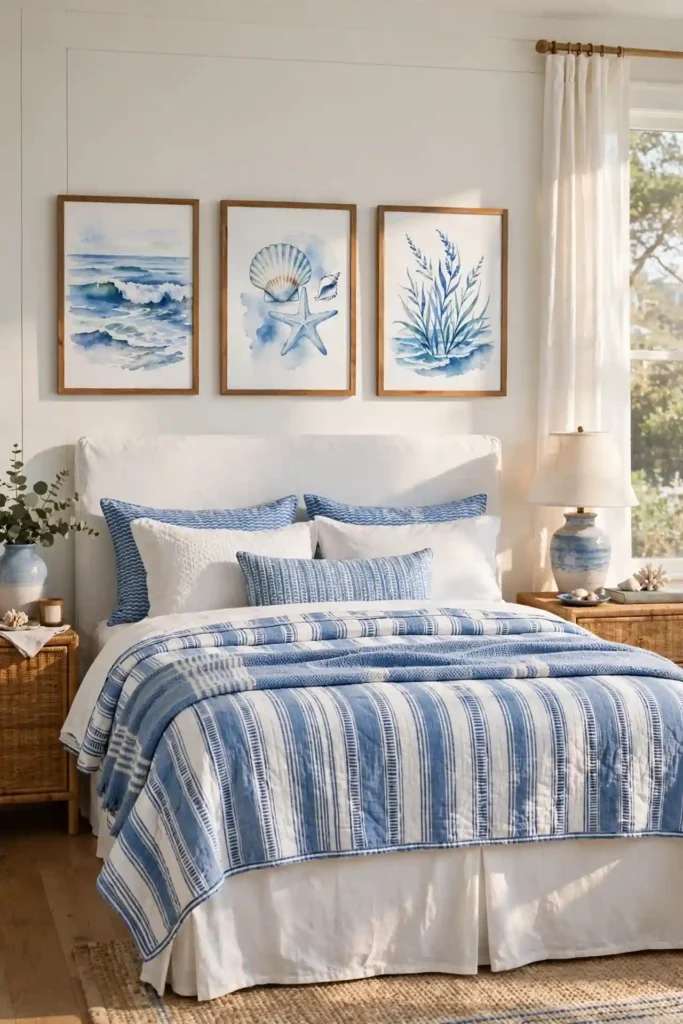
Start by naming your style in three words — ‘calm modern coastal,’ for example — and use those words as a filter when shopping. Pull one color from your bedding and repeat it in the wall decor to tie everything together. If your style is mixed, let one dominant piece set the tone and keep supporting pieces neutral. Avoid buying wall decor before the bedding is chosen; the bed is the room’s largest visual element, and everything above it should coordinate with it, not compete. Photograph your bedding and bring the photo shopping, since memory of exact shades is unreliable.
When it comes to bedroom wall decor above bed, the best results come from balancing style, comfort and everyday function. Use this list as your go-to guide for bedroom wall decor above bed, and start with the ideas that fit your space best. Save this guide on bedroom wall decor above bed so you can come back to it when you are ready to update your home.
How to Hang Bedroom Wall Decor Above Bed Step by Step
Hanging decor above the bed is straightforward if you work in order. First, measure your headboard’s width and mark the wall’s center point with painter’s tape. Decide your bottom edge — six to eight inches above the headboard for most art — and mark that height too. Hold the piece up or tape a paper template in place, then step back to the doorway to check the position. Use a stud finder to locate studs; for anything over ten pounds, plan to drill into at least one stud. Mark stud locations lightly in pencil so you can erase them later.
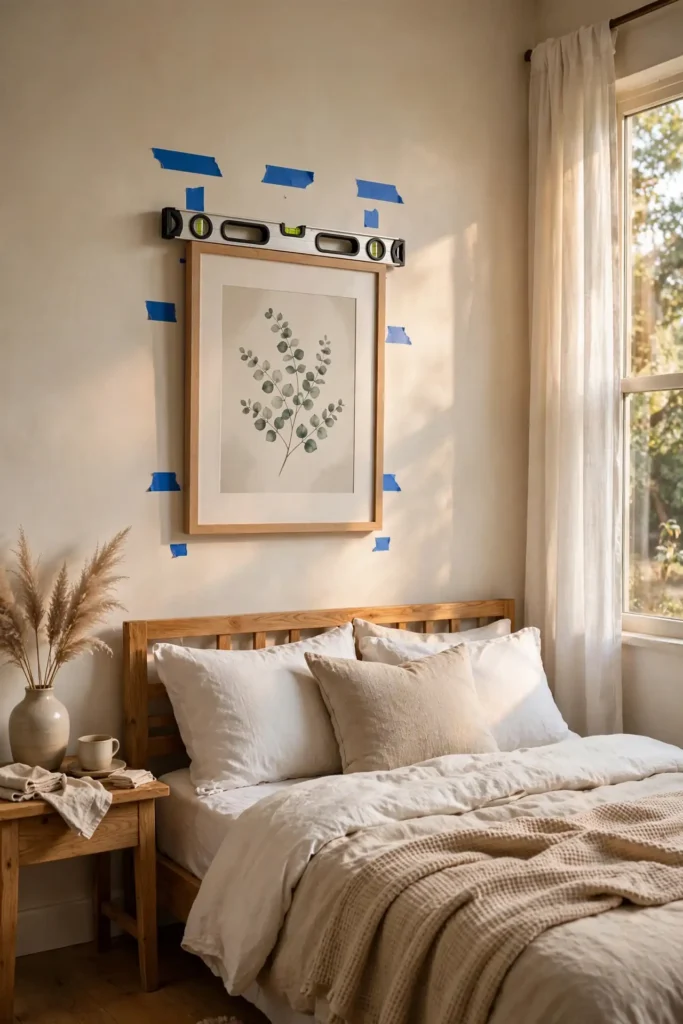
Drill pilot holes, install your anchors or screws, and hang the piece, checking with a level before finalizing. For a pair or gallery wall, hang the center or largest piece first and work outward. Keep two to three inches between grouped pieces. Finally, step back again from multiple angles — bedrooms are viewed from the door, the bed, and the dresser. Touch up any wall marks with a dab of paint, and give heavy pieces a firm tug test. The whole job takes under an hour for a single piece.
- Measure the bed width and wall height.
- Choose decor about two-thirds the bed width.
- Mark the center of the bed on the wall.
- Hang the bottom 8 to 12 inches above the headboard.
- Secure with anchors and check level.
Final Thoughts on Bedroom Wall Decor Above Bed
The wall above your bed is the first thing you see when you enter the bedroom, so it deserves the same thought you give the bedding. Whether you choose one oversized canvas, a textured tapestry, or a simple painted arch, the principles stay the same: size it to two-thirds of your headboard, hang it six to eight inches above, and anchor anything heavy into studs. Good wall decor does not have to be expensive — many of the best ideas here cost under one hundred dollars total. Thrift stores and Facebook Marketplace are goldmines for frames and mirrors at a fraction of retail prices.
Start with what you already own before buying anything new; you may have a frame, mirror, or textile waiting for a better spot. Change one element at a time and live with it for a few days — bedrooms reveal their needs slowly. And remember that the goal is rest: choose art and colors that calm you at the end of the day, not pieces that demand attention. When the wall above your bed feels right, the whole room feels finished, and falling asleep gets a little easier. Revisit the wall once a year; tastes evolve, and a quick refresh keeps the bedroom feeling personal.
Save these ideas and follow along for more bedroom inspiration.
Frequently Asked Questions About Bedroom Wall Decor Above Bed
How high should decor hang above the bed? Six to eight inches above the headboard works for most art, mirrors, and shelves; gallery walls can start ten to twelve inches up so nobody bumps frames. What size art fits over a queen bed? Aim for forty to forty-five inches wide — two-thirds of a sixty-inch headboard. Is it safe to hang heavy items above a bed? Yes, if you anchor into studs with hardware rated for twice the weight, and consider acrylic glazing instead of glass. When hanging anything heavy, use hardware rated for at least twice the item’s weight for a safety margin.
What is the cheapest way to decorate above a bed? A painted arch costs about twenty dollars in paint, and a pair of matching prints from Target can total under fifty dollars. Should the art match the bedding? It should coordinate — pull one or two colors from the bedding into the art so the wall and bed read as one composition. Can renters decorate above the bed? Absolutely: tapestries, lightweight prints on Command strips, and peel-and-stick wallpaper all come down cleanly without damaging walls. Test removable hooks on a hidden spot first, since some paints peel more easily than others.
What size art should go above a bed?
About two-thirds the width of the bed.
How high should art be above a headboard?
About 8 to 12 inches above the top of the headboard.
Is it safe to hang a mirror above a bed?
Yes, if it is securely mounted into studs with proper hardware.
What can I put above my bed besides art?
Mirrors, shelves, tapestries, wallpaper, paneling or sconces.
Should decor be centered on the bed or the wall?
Center it on the bed.





2 Comments