

An accent wall behind the bed is one of the easiest ways to transform a bedroom. It creates a focal point, adds depth and can replace the need for a headboard entirely. Whether you choose bold paint, warm wood or patterned wallpaper, an accent wall behind bed spaces instantly makes the room feel designed.
These 25 ideas cover paint, wood and wallpaper, with DIY-friendly options. For related inspiration, see our bedroom wall decor above bed ideas and these wallpaper ideas for bedroom walls.
Tips for an accent wall:
- Choose the wall your eye lands on first, usually behind the bed.
- Pick a color or material that complements the room.
- Consider the headboard: some accent walls replace it.
- Keep other walls calm to let the accent shine.
1. Deep Painted Accent Wall
A deep painted accent wall behind your bed is the fastest way to add drama to your bedroom for under $50 in materials. Rich, saturated shades like Sherwin-Williams Iron Ore, Benjamin Moore Hale Navy, or Behr Limousine Leather create a cocooning effect that makes white bedding, brass lamps, and framed art pop against the dark backdrop. One gallon of quality interior paint covers roughly 350 to 400 square feet, so a single gallon easily handles a standard 12-foot bedroom wall with paint to spare. Choose an eggshell or satin finish for a soft glow that hides minor drywall imperfections while standing up to everyday wear and occasional wipe-downs.
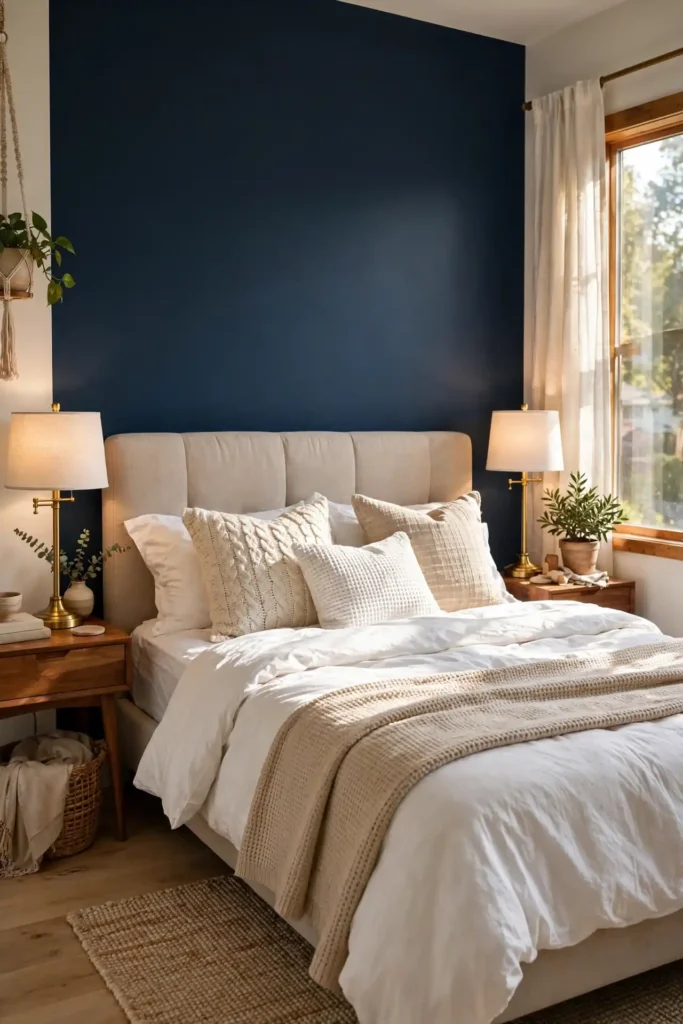
Start by moving the bed to the center of the room and wiping the wall down with a damp cloth to remove dust and cobwebs. Use FrogTape along the ceiling line, baseboards, and adjoining walls for crisp professional edges, then cut in with a two-inch angled brush before rolling the field. Apply two thin coats rather than one thick one, letting each coat dry about four hours for proper adhesion. Keep a small jar of leftover paint labeled for future touch-ups, and always paint large sample boards first so you can watch how the color shifts in your room’s natural light throughout the day.
2. Board and Batten
Board and batten brings classic cottage and farmhouse charm to the wall behind your bed with simple vertical strips of trim layered over flat panels. You will love how this texture adds depth and shadow lines without overwhelming a small bedroom, and it photographs beautifully for a Pinterest-worthy reveal. Primed MDF boards cost about $1 to $2 per linear foot at Home Depot or Lowe’s, making a full wall treatment achievable for $150 to $250 in materials depending on your wall size and spacing. The finished look reads custom and high-end despite the modest budget.

Measure your wall carefully and sketch a layout with evenly spaced battens, typically 12 to 16 inches apart on center for a balanced look. Cut 1×3 or 1×4 boards with a miter saw, attach them to studs with a brad nailer and construction adhesive, then fill every nail hole with wood filler and caulk each seam for a seamless finish. Prime everything thoroughly, then apply two coats of a durable semi-gloss or satin paint like Behr Ultra. Crisp white or warm greige looks timeless, but a moody green such as Sherwin-Williams Evergreen Fog makes the headboard area feel like a boutique hotel.
3. Shiplap
Shiplap gives the wall behind your bed that relaxed coastal or modern farmhouse feel with clean horizontal lines and subtle shadow gaps. Real pine shiplap runs $2 to $4 per square foot, while pre-primed MDF versions at Lowe’s cost closer to $1.50 per square foot and paint up beautifully with two coats. Running the boards horizontally makes a narrow bedroom feel wider, and a fresh coat of white like Benjamin Moore Simply White keeps everything light, airy, and timeless. It is a forgiving beginner project with dramatic visual payoff, even on your very first DIY attempt.

Start at the bottom of the wall and work upward, using a level for every single row and a nail gun to hit the studs securely. Leave a nickel-width gap between boards for that signature shadow line, and use spacers to keep spacing consistent across the whole wall. Stagger your end joints so seams never line up in a ladder pattern, which looks amateur. Caulk where the shiplap meets the ceiling and baseboards, then paint with two coats of satin or eggshell paint. For a modern twist, skip white and paint the shiplap a deep charcoal or navy instead.
4. Vertical Wood Slats
Vertical wood slats create a warm, sculptural accent wall behind your bed that feels straight out of a designer showroom. Thin oak or walnut slats spaced slightly apart add rhythm and texture while the dark gaps reveal a shadowed backing that gives the wall real depth. Pre-made slat panels cost $8 to $15 per square foot on Amazon, or you can build your own with 1×2 pine furring strips at about $2 each from Home Depot for a budget-friendly version. Either route delivers that coveted mid-century modern warmth, and both photograph beautifully for social media.
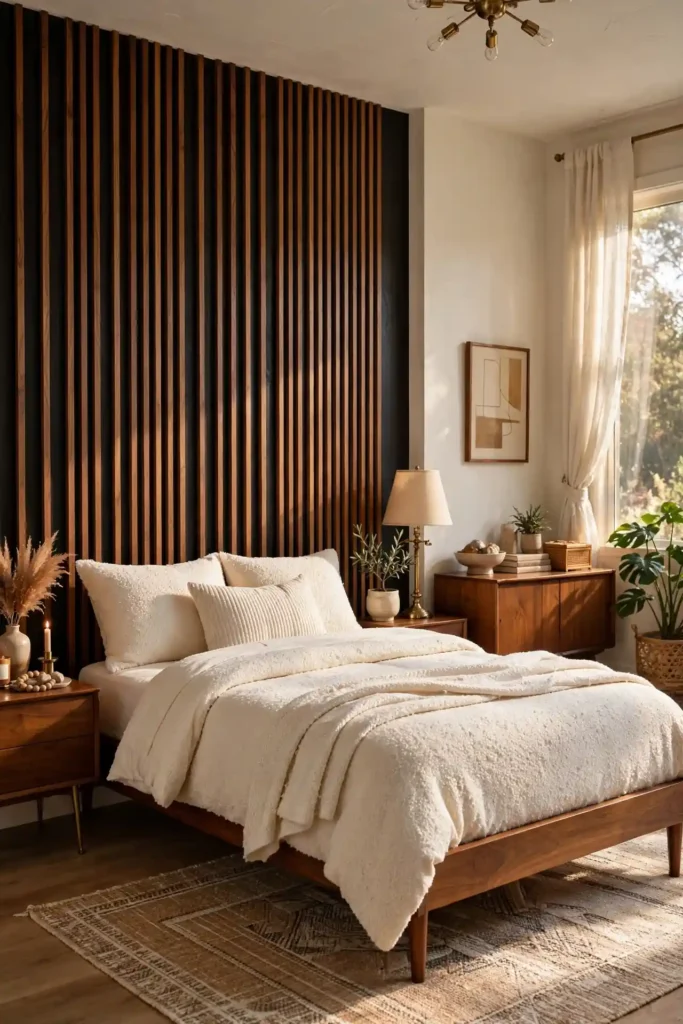
If you DIY, paint the wall behind the slats a dark charcoal first so the gaps read as intentional shadow lines rather than unfinished drywall. Cut your slats to uniform length with a miter saw and attach them vertically using construction adhesive plus brad nails wherever you hit studs. Keep spacing consistent with a small spacer block, roughly half an inch between slats, for a professional rhythm. Sand lightly with 120-grit paper, then finish with clear matte polyurethane or Minwax Early American stain. The vertical lines draw the eye upward, making standard eight-foot ceilings feel noticeably taller.
5. Picture-Frame Molding
Picture-frame molding turns the wall behind your bed into an elegant paneled feature with nothing more than thin trim arranged in rectangles. This look works beautifully in traditional, transitional, and even modern bedrooms because you control the scale, spacing, and paint color completely. Chair rail or base cap molding runs under $1 per linear foot at Home Depot, so a full wall of framed panels typically costs $100 to $200 in materials plus paint. It delivers the look of custom millwork on a DIY budget that guests will assume cost thousands.
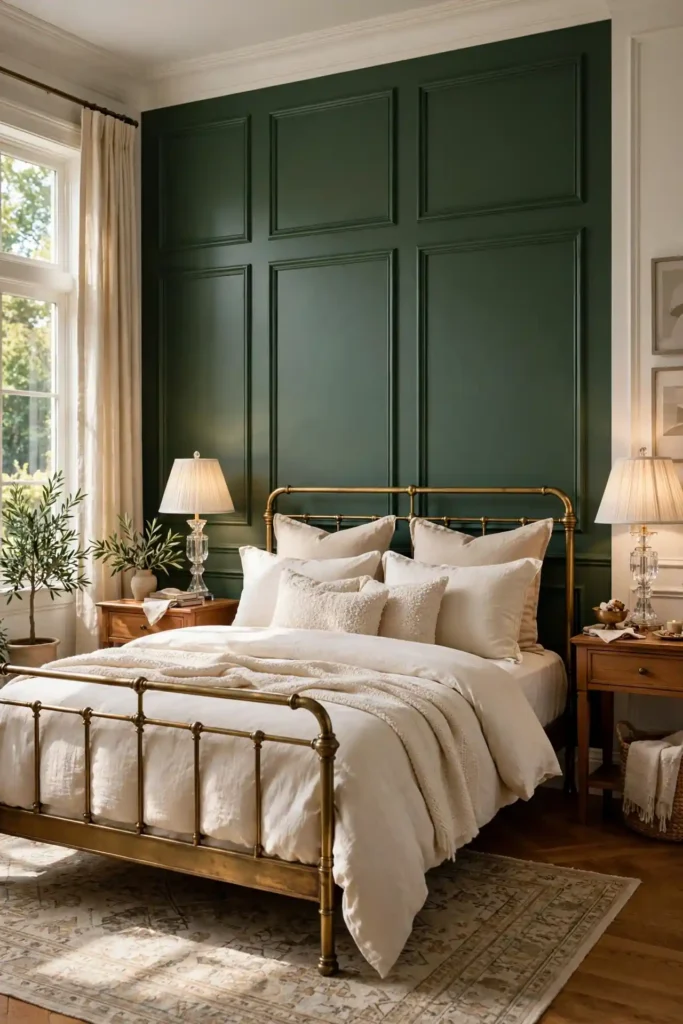
Plan your grid on paper first, keeping frames symmetrical around the bed with equal spacing of three to four inches between each rectangle. Use a miter saw to cut clean 45-degree corners and attach the trim with brad nails plus a dab of construction adhesive for lasting hold. Fill the joints with paintable caulk and wood filler, sand everything smooth, then paint the wall and molding in one unifying color for a seamless built-in look. Benjamin Moore White Dove in satin is a classic choice, while a deep green like Sherwin-Williams Evergreen Fog feels fresh and current.
6. Botanical Wallpaper
Botanical wallpaper brings the outdoors in, wrapping the wall behind your bed in oversized leaves, palms, or trailing vines. Large-scale prints make a bold statement in a master bedroom, while smaller repeats feel calmer and more traditional in a guest room. Peel-and-stick options from brands like Chasing Paper or Tempaper cost $40 to $80 per roll and are renter-friendly, while traditional paste-the-wall papers from Graham & Brown offer richer textures and deeper color for a permanent installation. Either way, the wall becomes living art that changes character as daylight shifts through the room.
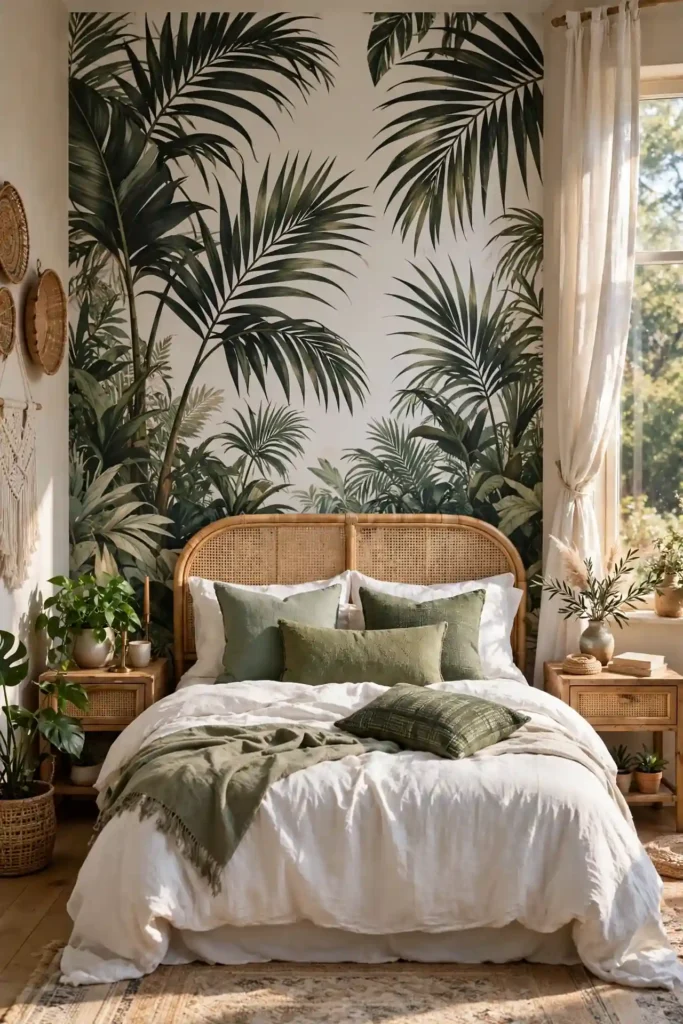
Measure your wall carefully and order 10 to 15 percent extra to account for pattern matching, trimming, and inevitable mistakes. For peel-and-stick, start at the top corner, peel back a few inches of backing, and smooth downward with a plastic smoother to push out bubbles as you go. Traditional wallpaper needs a pasted wall or pasted paper depending on the product, so read the label before you begin. Center the boldest part of the pattern directly behind the headboard for maximum impact, and pair the print with solid bedding in a color pulled from the paper.
7. Floral Wallpaper
Floral wallpaper behind your bed adds romance and softness, from delicate vintage blooms to dramatic oversized blossoms. This is one of the most searched bedroom trends because it instantly makes a plain room feel styled, layered, and intentional. Peel-and-stick floral rolls from Amazon or Target start around $30, while designer papers from Rifle Paper Co. run $150 to $200 per roll. Dark, moody florals look stunning with brass accents and velvet pillows, while light watercolor prints keep a small bedroom feeling open, bright, and effortlessly romantic from morning to night.
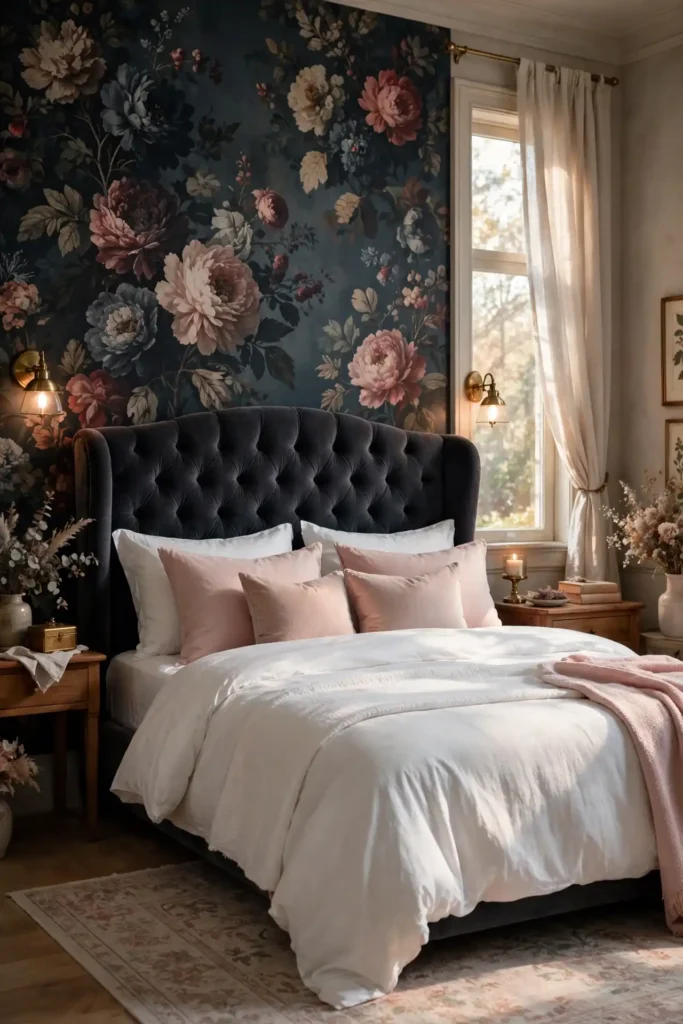
Choose a pattern scale that fits your wall: large blooms need room to breathe on a wide wall, while petite prints suit narrower spaces without overwhelming them. Hang the first panel perfectly plumb using a level, since every following panel follows its lead and small errors compound. Match the pattern at eye level behind the headboard so the prettiest motif sits front and center. If you are nervous about commitment, try a peel-and-stick version first since it removes cleanly. Finish with crisp white or cream bedding to let the wallpaper be the star.
8. Painted Arch
A painted arch behind your bed is a trendy, budget-friendly way to create a faux headboard effect with nothing but paint and painter’s tape. This look works especially well if your bed has a low-profile platform frame or a simple upholstered headboard, since the arch frames it like a piece of art. All you need is a quart of paint for about $20, a roll of quality tape, and a steady hand. Warm terracotta, sage green, and muted clay tones are the most popular arch colors right now and suit nearly every bedding palette.

Mark the center of your bed on the wall, then use a pencil tied to a string to swing a perfect half-circle at your desired width and height. Fill in the arch outline with painter’s tape for a crisp edge, or paint freehand for a softer, more organic look. Apply two coats with a small roller, keeping the edges sharp and the coverage even. Extend the arch slightly wider than your bed frame so the headboard sits comfortably inside it. This single-afternoon project delivers a designer look for less than the cost of a pizza night.
9. Two-Tone Wall
A two-tone wall splits the space behind your bed into two complementary colors, usually with a crisp horizontal line at chair-rail height or about two-thirds up the wall. This technique adds architectural interest without any trim, wallpaper, or special tools, and it is perfect for renters who can simply paint back over it later. Two quarts of paint in coordinating shades cost about $40 total, and the whole project takes a single weekend afternoon from taping to final coat. It is one of the easiest ways to make a builder-grade bedroom feel custom.
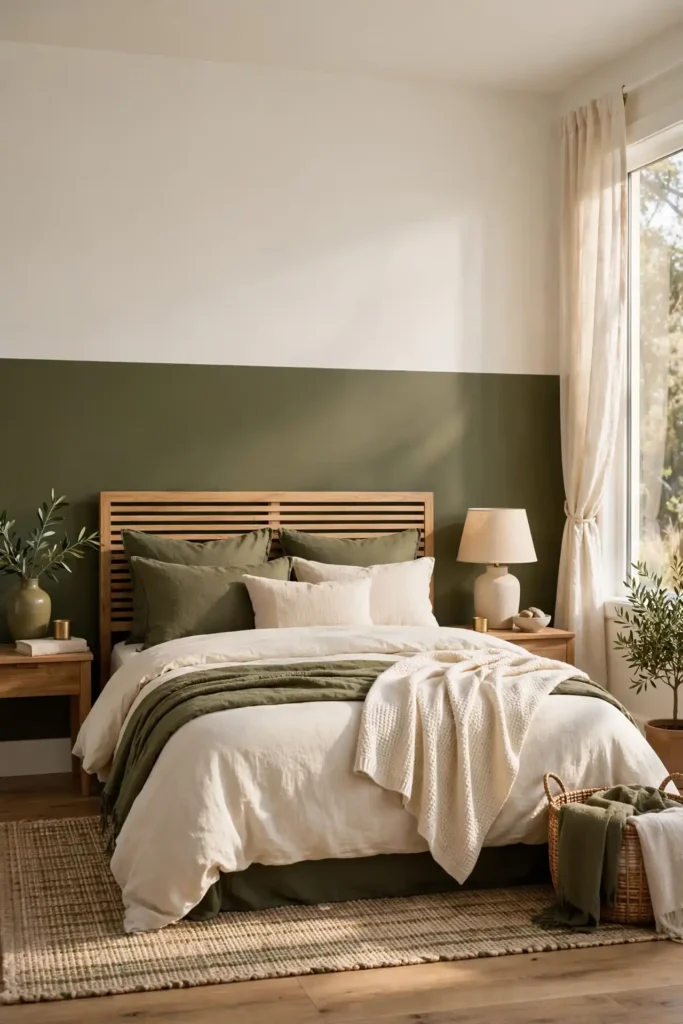
Pick colors with enough contrast to read as intentional, like warm white above and deep olive below, or soft blush paired with rich terracotta. Measure and mark your dividing line with a laser level or a long spirit level, then tape it off with FrogTape for a razor-sharp edge that looks professional. Paint the lighter color first across the whole wall, then apply the darker shade below the line once the base is fully dry. Remove the tape while the second coat is still slightly tacky for the cleanest result, and align the line with your headboard height for a built-in feel.
10. Geometric Paint Design
A geometric paint design turns the wall behind your bed into bold modern art using nothing but painter’s tape and two or three paint colors. Triangles, hexagons, oversized chevrons, and color-blocked mountain ranges are all achievable with basic taping skills and a little patience. You will spend about $50 to $75 on paint and tape, far less than wallpaper with a similar graphic punch. This is a fantastic weekend project for a teen bedroom, a home office guest room, or a playful primary suite that needs energy and a bold graphic focal point.

Sketch your pattern on paper first and transfer the key measurements to the wall with a pencil, tape measure, and level. Use quality painter’s tape and press every edge down firmly with a credit card so paint cannot bleed underneath and blur your lines. Paint the lightest color as your base, let it cure for 24 hours, then tape your shapes and fill them with the accent colors. Pull the tape at a 45-degree angle while the paint is still slightly wet for the sharpest edges. Keep your bedding and rug simple so the geometric wall stays the focal point.
11. Limewash Finish
Limewash gives the wall behind your bed a soft, cloudy, old-world texture that flat paint simply cannot replicate. This mineral-based finish creates subtle movement and depth that looks expensive and feels deeply calming in a bedroom setting. A gallon of authentic limewash paint from Portola Paints or Bauwerk costs $90 to $130 and covers about 300 square feet with two coats. It is naturally low-VOC and works beautifully in Mediterranean, modern organic, Japandi, and minimalist bedrooms where texture matters more than bold color and quiet, understated luxury is the ultimate goal.
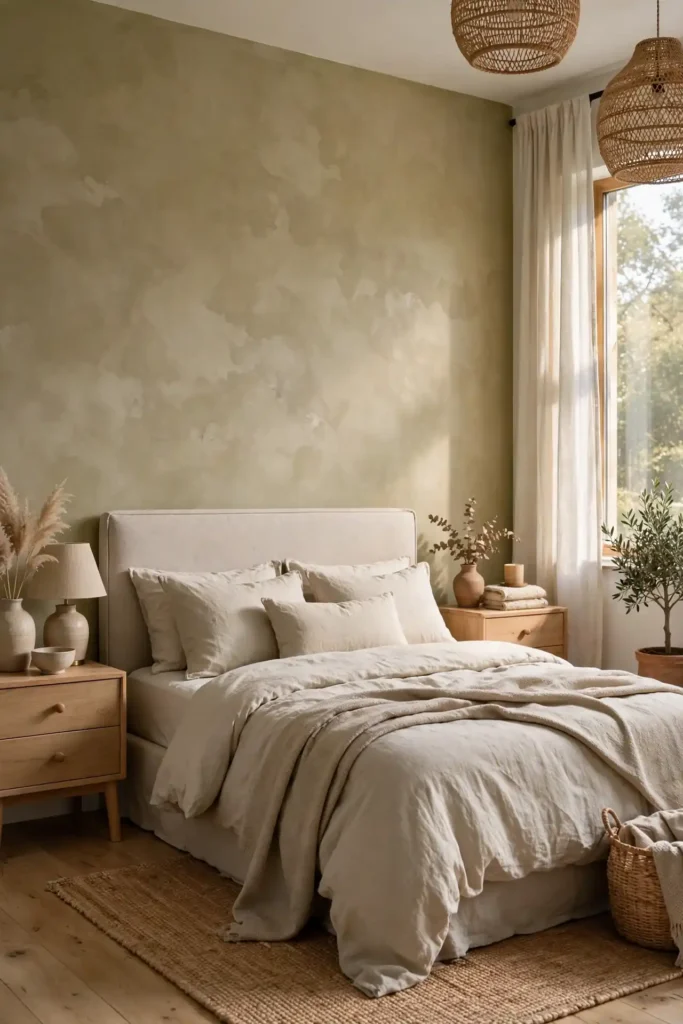
Apply limewash with a large block brush in loose, crisscross strokes rather than neat roller lines, since the random movement creates the signature cloud effect. Work in three-by-three-foot sections and maintain a wet edge as you move across the wall to avoid harsh lap lines. Two to three coats build the richest depth, and you can watch the texture develop as each layer dries. The finish continues to cure and mellow over several days, so judge the final color after a week. Pair warm white or greige limewash with linen bedding and light wood furniture.
12. Reclaimed Wood Wall
A reclaimed wood accent wall behind your bed adds instant warmth, history, and texture that brand-new lumber simply cannot match. Salvaged barn wood, pallet boards, and old factory flooring each bring unique grain patterns, nail holes, and weathered patina with a story. Reclaimed planks cost $5 to $12 per square foot from architectural salvage yards or Etsy sellers, though you can sometimes score free pallets locally through Facebook Marketplace. Always inspect salvaged wood for pests and let it acclimate indoors for a week before installing to prevent warping or cupping after installation.

Clean each board with a stiff brush and check carefully for protruding nails or staples before cutting anything. Install horizontal furring strips into the wall studs first, then attach your planks with a brad nailer, mixing tones, widths, and lengths for an authentic patchwork look. Stagger all end joints randomly and keep a level line as your guide row so the installation stays straight. Seal the finished wall with a matte water-based polyurethane to lock in the patina without adding unwanted shine. The result is a one-of-a-kind headboard wall with genuine character.
13. Upholstered Wall Panels
Upholstered wall panels create a soft, luxurious headboard wall that doubles as sound insulation for a noticeably quieter bedroom. Fabric-wrapped panels in velvet, linen, or bouclé feel high-end and are surprisingly DIY-friendly even for beginners. Pre-made panels cost $15 to $40 each on Amazon, while a DIY version using plywood, two-inch foam, batting, and fabric runs about $10 to $15 per panel. Choose a performance fabric if you like to read in bed with your head resting against the wall, since performance fabrics resist stains, fading, and nightly wear beautifully.
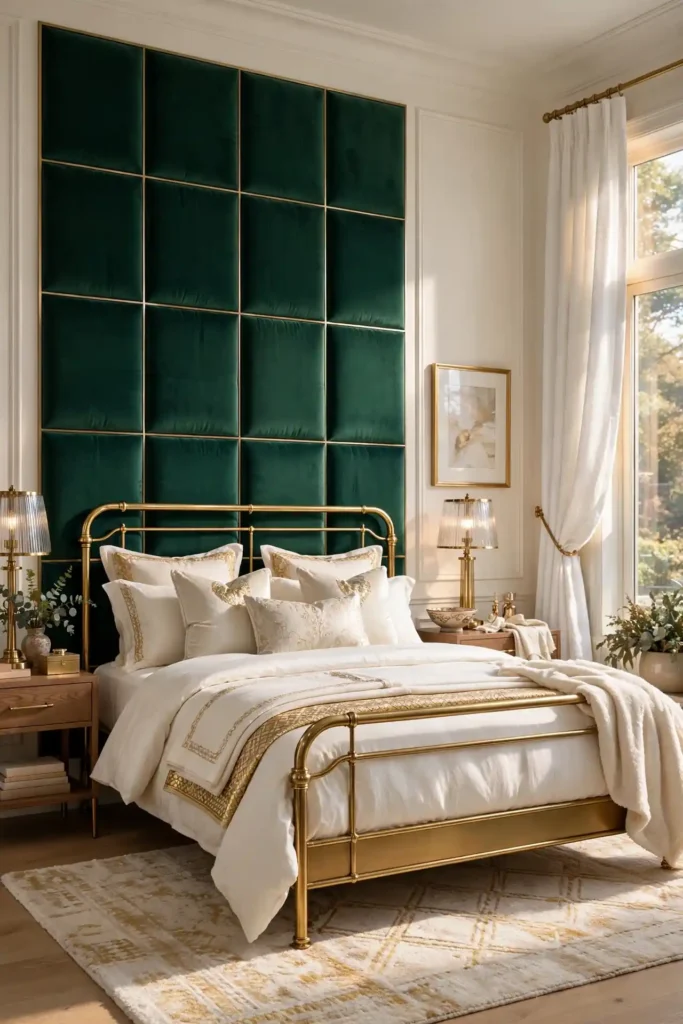
For the DIY route, cut half-inch plywood into 12-by-24-inch rectangles, layer foam and batting on top, and wrap tightly with fabric, stapling securely on the back side. Arrange your panels in a grid with small even gaps or butt them tightly together, then mount them with French cleats or heavy-duty Command strips rated for the weight. Velvet in emerald or navy looks rich and moody, while oatmeal linen keeps things light and serene. Vacuum the panels occasionally with an upholstery attachment to keep dust from settling deep into the fabric fibers.
14. Grasscloth Wallpaper
Grasscloth wallpaper brings natural, woven texture to the wall behind your bed with fibers like jute, sisal, seagrass, and arrowroot. The subtle variations in the handmade weave catch lamplight beautifully and add an organic richness that flat painted surfaces lack. Real grasscloth costs $80 to $200 per roll from brands like Phillip Jeffries, and it is usually sold unpasted, so plan for careful paste-the-wall installation or hire a professional at $3 to $7 per square foot. The investment pays off in quiet, textured luxury that elevates the whole bedroom effortlessly.
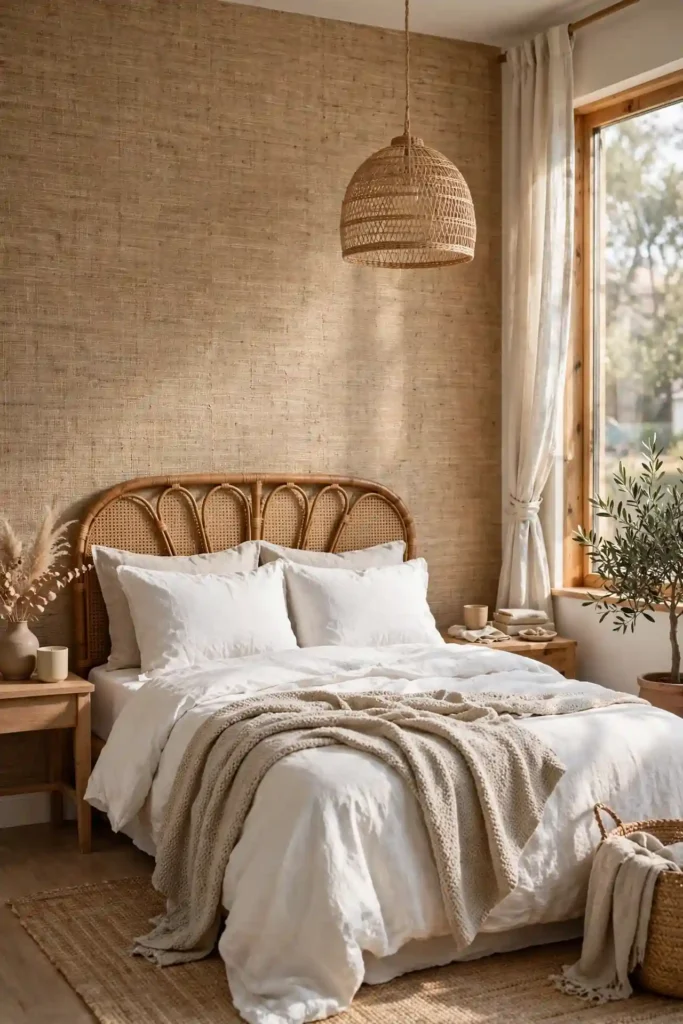
Because grasscloth is made from natural fibers, panels will have slight color variations, so buy all rolls from the same dye lot and hang them in numbered order. Do not reverse-hang the panels the way you would with printed wallpaper, since the weave direction must stay consistent across the wall. Use a sharp snap-off blade and change it often because the coarse fibers dull blades quickly. Avoid grasscloth in humid rooms or where little hands might pick at the fibers. Style it with rattan, linen, and warm wood tones for a layered bedroom.
15. Brick or Stone Veneer
Brick or stone veneer gives the wall behind your bed the character of a historic loft or countryside cottage without the weight and cost of real masonry. Thin brick veneer runs $6 to $12 per square foot at Home Depot, while faux stone panels cost $4 to $10 per square foot and install with simple construction adhesive. Real thin brick adds authentic texture and heft that guests will want to touch, while lightweight faux panels are a better pick for renters and second-floor bedrooms with weight concerns or strict HOA rules.
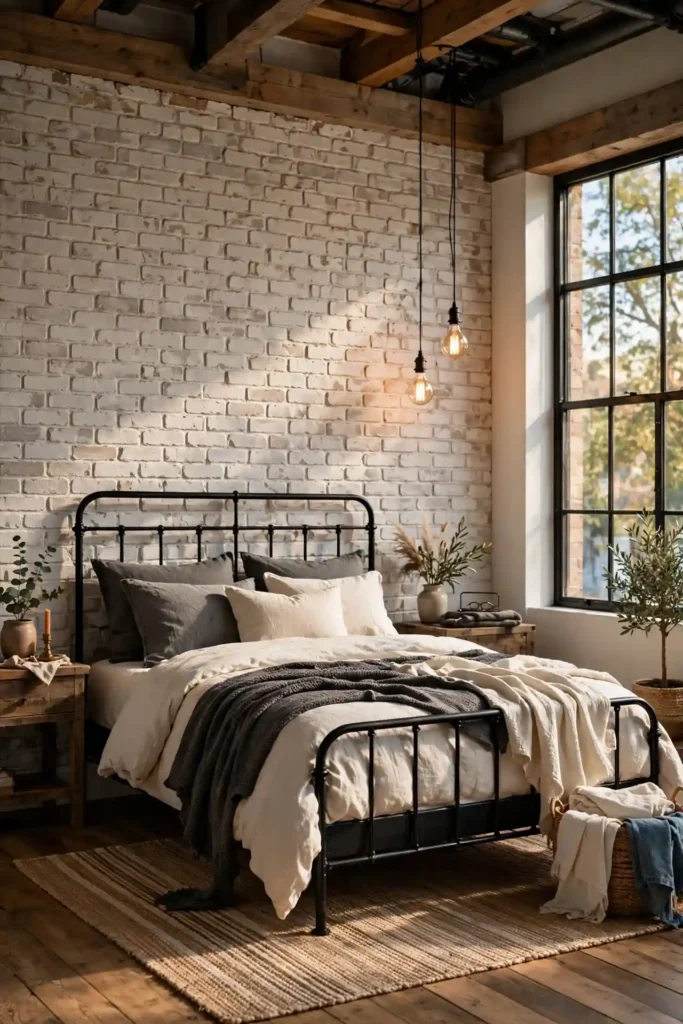
For thin brick, trowel mortar or panel adhesive onto cement backer board, press each brick firmly into place, and let it cure for 24 hours before grouting the joints. Faux panels are simpler: level your first row carefully, apply adhesive to the back of each panel, and press them to the wall, staggering seams like real stonework. Whitewashing brick with heavily diluted paint softens the look for farmhouse and coastal bedrooms. Seal the finished wall with a matte masonry sealer to prevent dusting, and pair it with iron bed frames and linen bedding.
16. Mural Wallpaper
Mural wallpaper turns the wall behind your bed into a full-scale scene, from misty forests and mountain ranges to abstract watercolor washes and chinoiserie gardens. Unlike repeating patterns, a mural is printed as one continuous image sized to your exact wall, creating a jaw-dropping focal point that feels custom. Custom murals from Photowall or Eazywallz cost $200 to $500 depending on wall size, and most companies print to your dimensions after you upload careful measurements. Peel-and-stick mural options make this dramatic look renter-friendly too without sacrificing an ounce of impact.
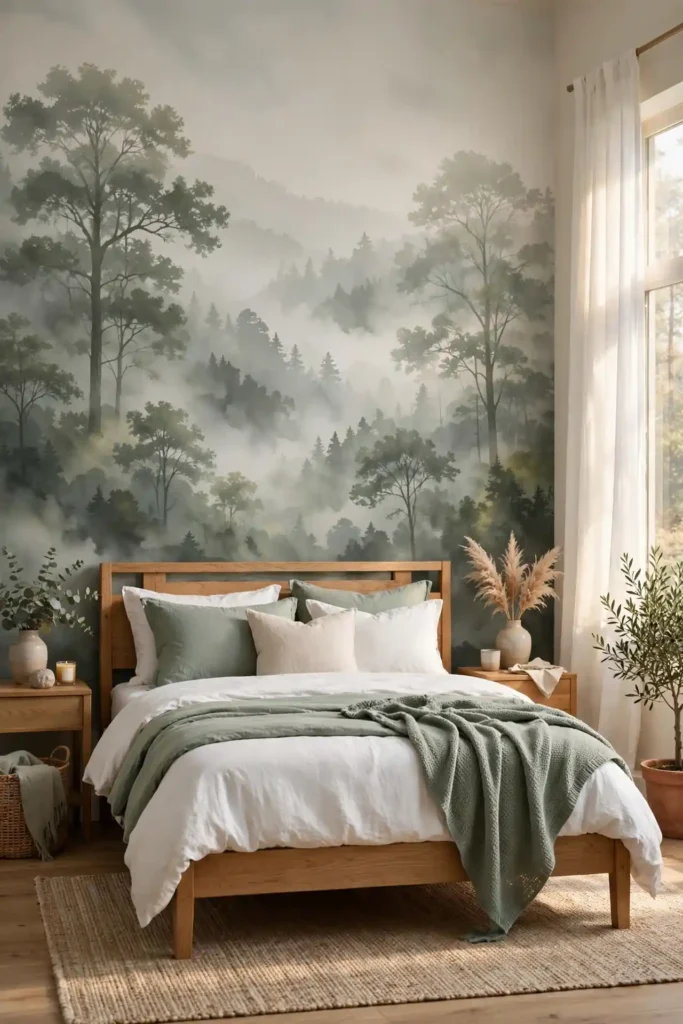
Order your mural only after measuring the wall twice, noting outlets and light switches so the company can plan panel breaks around them. Installation works like standard wallpaper: start with a plumb line, align each panel edge to edge, and smooth out air bubbles as you go with a plastic smoother. Choose a scene with its visual weight centered behind the headboard, and keep the color palette restrained so the room still feels restful at night. Misty landscapes in soft greens and grays are especially popular because they feel serene rather than busy at bedtime.
17. Stripes
Stripes are a timeless way to dress up the wall behind your bed, and you can go bold with wide bands or subtle with tone-on-tone pinstripes. Vertical stripes make standard eight-foot ceilings feel taller, while horizontal stripes visually widen a narrow bedroom and add calm rhythm. All you need is two paint colors and quality painter’s tape, keeping the total project cost around $50. Striped wallpaper is another excellent option if you want perfect lines without any taping, with peel-and-stick rolls starting near $35 at Target and Amazon during seasonal sales.

For painted stripes, roll your base color over the whole wall and let it cure for at least 24 hours so tape will not pull it up. Measure and mark your stripe widths with a pencil, using a level for every line since even a slight tilt becomes obvious. Tape the outside edges of the stripes you will paint, seal the tape with a thin coat of the base color to prevent bleed, then apply two coats of your stripe color. Pull the tape while the paint is still tacky for crisp lines. Wide 12-inch stripes in navy and white feel classic, while soft beige-on-white stripes read modern and calm.
18. Checkerboard Paint
A checkerboard paint design behind your bed delivers playful retro charm that feels fresh and current again in 2026. This bold grid works beautifully in eclectic, maximalist, and vintage-inspired bedrooms where personality matters more than playing it safe. You will need two contrasting paint colors, a level, a tape measure, and plenty of painter’s tape, with total materials running about $60 to $80. Black and white is the classic high-contrast combo, but sage and cream or terracotta and beige feel softer, warmer, and more livable day to day for most homeowners.

Start with your lighter color as the full-wall base coat and let it cure a full 24 hours before taping. Measure your wall carefully and divide it into equal squares, typically 12 to 18 inches, marking the grid lightly in pencil. Tape off every other square in a checkerboard pattern, pressing tape edges down firmly with a credit card to stop bleed-through. Roll two coats of your darker color into the taped squares and remove the tape while the paint is still tacky. Keep bedding solid and simple so the checkerboard stays the star, since this graphic pattern needs visual breathing room.
19. Dark Wood Paneling
Dark wood paneling behind your bed creates a moody, lodge-like retreat that feels warm and enveloping rather than heavy when styled thoughtfully. Rich walnut, espresso-stained oak, or even dark-painted pine boards add depth and sophistication to a primary bedroom. Pre-finished walnut-look panels cost $6 to $10 per square foot, while staining inexpensive pine boards with Minwax Dark Walnut runs under $2 per square foot plus the cost of stain and polyurethane. Keep the remaining three walls light so the dark feature wall feels intentional and balanced rather than overwhelming the senses.
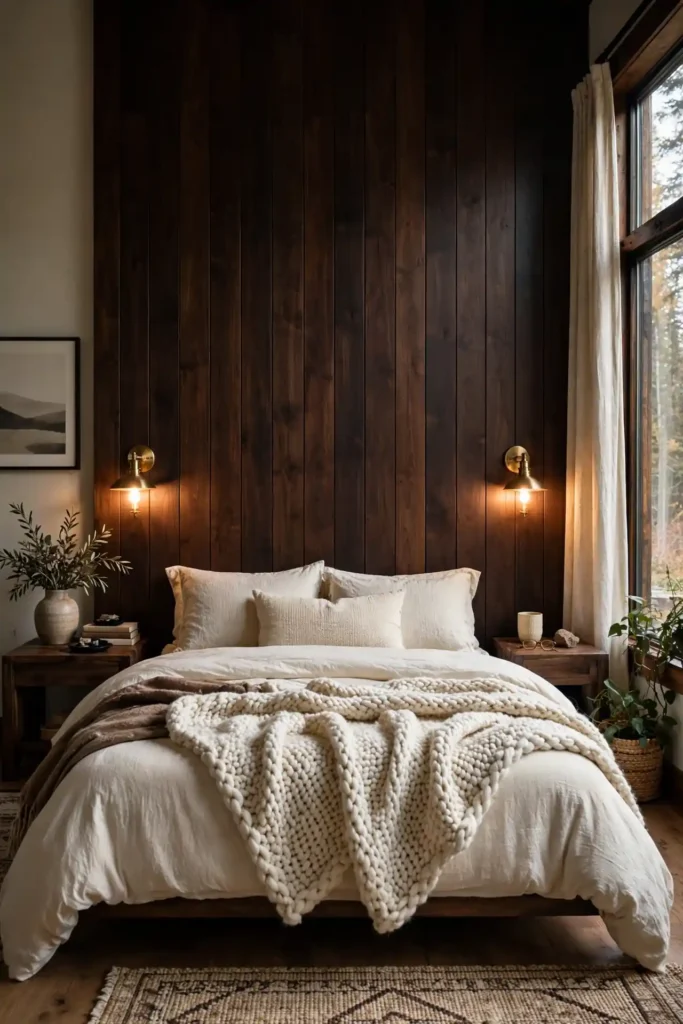
Install vertical or horizontal boards over a level starter row, nailing into studs with a brad nailer and using construction adhesive for extra holding power. Stain raw boards before installation for the most even finish, applying the stain with a rag and wiping off the excess within minutes. Balance the darkness with warm layered lighting, since bedside sconces or table lamps with 2700K bulbs keep the corner from feeling cave-like. Layer cream or ivory bedding against the dark wood for striking contrast, and add a soft area rug underfoot to complete the cozy retreat.
20. Tile Accent Wall
A tile accent wall behind your bed brings unexpected texture and a touch of luxury more often seen in high-end bathrooms and kitchens. Zellige-look ceramic, handmade-look subway tile, and large-format stone-look porcelain all create stunning headboard backdrops with beautiful light play. Tile costs $3 to $15 per square foot at Floor & Decor or Home Depot, plus thinset, grout, and sealer for the installation. Peel-and-stick tile panels offer a renter-friendly shortcut at $20 to $40 per pack with surprisingly realistic dimension and sheen. Most visitors will never guess the tiles are peel-and-stick.
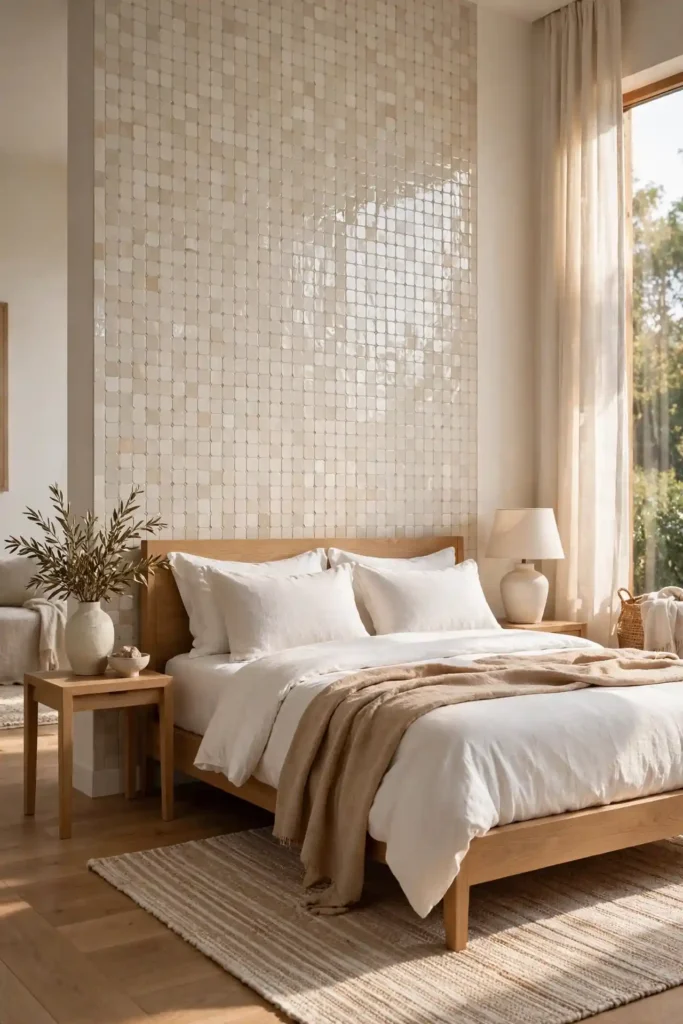
For real tile, install cement backer board over the drywall first, then spread thinset with a notched trowel and set your tiles using consistent spacers. Let the thinset cure overnight before grouting, and seal natural stone or handmade-look tiles to protect them from moisture and staining. A full wall of glossy zellige-look tile reflects lamplight beautifully after dark and feels incredibly luxurious. If you want the look without the labor, high-quality peel-and-stick tiles press directly onto clean, smooth drywall. Either way, keep grout lines neat since you will see them every morning.
21. Beadboard
Beadboard adds sweet cottage texture to the wall behind your bed with its narrow vertical grooves and nostalgic, timeless charm. Full 4×8-foot beadboard panels cost $25 to $40 at Lowe’s and cover large areas quickly, making this one of the most affordable wall treatments available to DIYers. Paint it classic white for a coastal cottage feel, soft sage for vintage charm, or deep navy for a surprisingly moody twist. The vertical grooves add subtle height to rooms with standard eight-foot ceilings and catch morning and evening light beautifully across the grooves.

Cut panels to fit with a circular saw or jigsaw, measuring carefully and cutting around outlets as needed. Apply construction adhesive to the back of each panel and nail into studs with a brad nailer, keeping the grooves perfectly vertical with a level as you work. Caulk all seams and edges, fill every nail hole with wood filler, then prime and paint with two coats of satin or semi-gloss for a durable, wipeable finish. Run the beadboard floor-to-ceiling for maximum impact, or stop at picture-rail height with a chair rail cap for a traditional wainscot look that never goes out of style.
22. Color-Blocked Wall
A color-blocked wall uses bold, asymmetric shapes of paint to create modern art directly behind your bed. Unlike neat stripes or grids, color blocking embraces organic curves, oversized rectangles, and unexpected color combinations that feel gallery-worthy and personal. This is a freeform project where a quart of paint in two or three colors, around $45 total, is genuinely all you need to start. Terracotta with cream, mustard with charcoal, and sage with blush are winning combinations for bedrooms right now. Each palette pairs effortlessly with natural wood furniture and crisp white bedding.

Sketch a loose composition on paper to get your ideas flowing, but do not over-plan since spontaneity is the whole charm of this look. Mark your main shapes on the wall with light pencil lines, then tape the edges you want crisp and leave others freehand for an organic, hand-painted feel. Paint the largest shape first, let it dry completely, then layer the smaller blocks on top. Step back frequently to check the balance from the doorway, which is how guests will see it. Small imperfections read as artistic rather than sloppy, making this perfect for first-time DIY painters.
23. Mirror Panels
Mirror panels behind your bed bounce light around the room and can make a small bedroom feel twice as large. Antiqued mirror tiles, beveled square panels, or a grid of framed mirrors all create glamorous dimension and sparkle above the headboard. Peel-and-stick mirror tiles cost $1 to $3 each on Amazon, while custom-cut antiqued mirror panels run $15 to $30 per square foot from a local glass shop. This treatment works especially well in dark bedrooms that need every bit of reflected natural and lamplight to feel bright and welcoming.
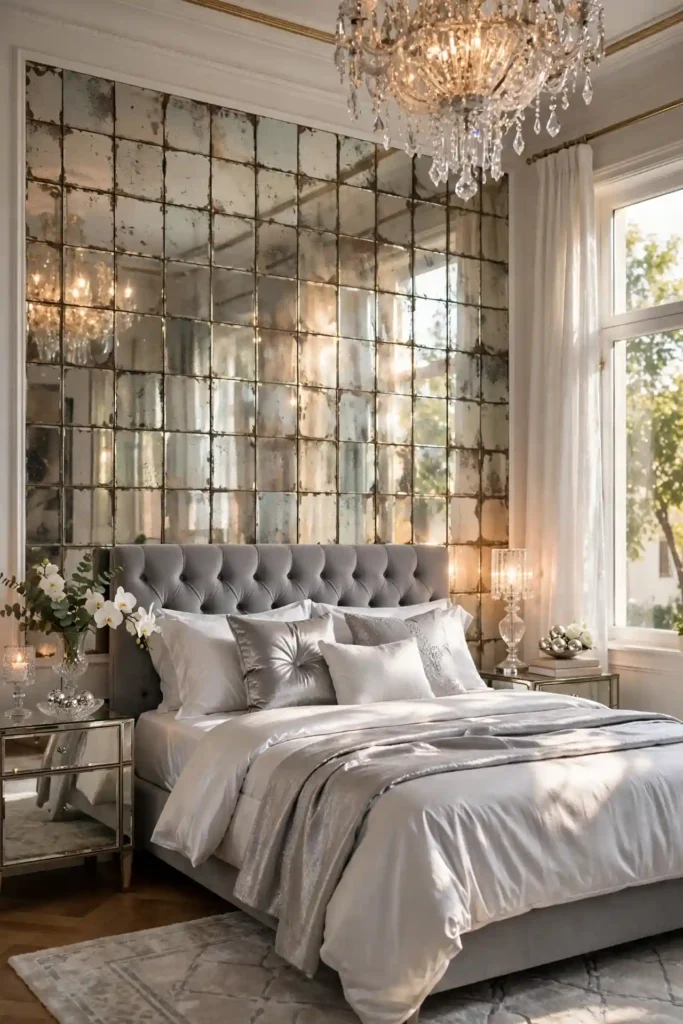
Plan a symmetrical grid and mark it on the wall with painter’s tape before committing to any adhesive. For stick-on tiles, clean the wall thoroughly so the adhesive bonds well, then press each tile firmly starting from the center outward for even alignment. Heavier glass panels need mirror mastic and J-channel supports installed level for safety. Keep the arrangement above headboard height so you are not staring at your own reflection while falling asleep. Style with simple bedding and metallic accents to lean into the glam look, and dust regularly since mirrors show every speck.
24. Accent Wall With Sconces
Pairing your accent wall with sconces takes the entire design to the next level by adding layers of warm, flattering light exactly where you need it. Hardwired sconces flanking the bed free up valuable nightstand space and look incredibly polished, while plug-in or battery-operated sconces from Amazon at $30 to $80 per pair give renters the same elevated look without calling an electrician. Brass, matte black, and natural rattan shades are the most popular finishes for bedroom sconces right now, and each creates a different mood from glamorous to earthy.
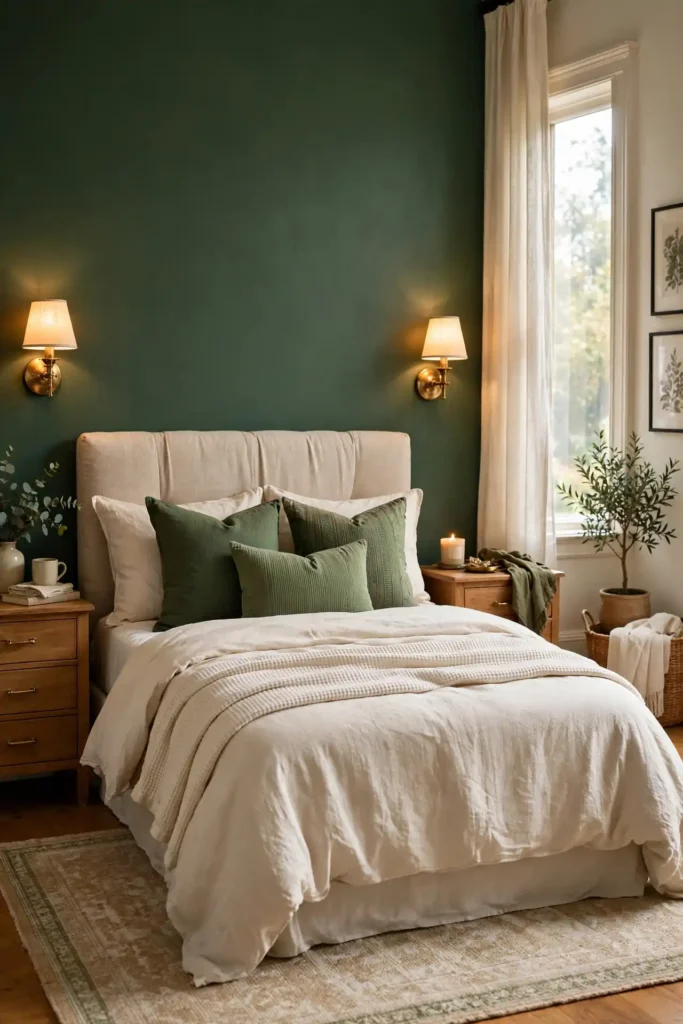
If you are hardwiring, have an electrician add boxes at 60 to 66 inches from the floor, roughly 30 to 36 inches apart and centered on the bed. For plug-in versions, mount them at the same height and hide the cords with paintable cord covers that blend seamlessly into your accent wall. Choose 2700K warm-white bulbs and add dimmers so you can shift from bright reading light to a soft evening glow. The sconces cast beautiful pools of light that highlight your wall treatment’s texture, whether that means shiplap grooves, limewash clouds, or wallpaper pattern.
25. Coordinate With Bedding
Coordinating your bedding with the accent wall is what separates a styled, designer-looking bedroom from a random collection of furniture. Pull two or three colors directly from your wall treatment into your duvet, pillows, and throw blanket for a cohesive look that feels intentional. If your wall is bold and saturated, keep bedding mostly solid in a complementary neutral so the two do not compete. If the wall is subtle, patterned bedding adds the visual interest the room needs. Stores like Target, IKEA, and HomeGoods make it easy to build a beautifully layered bed for $100 to $200.
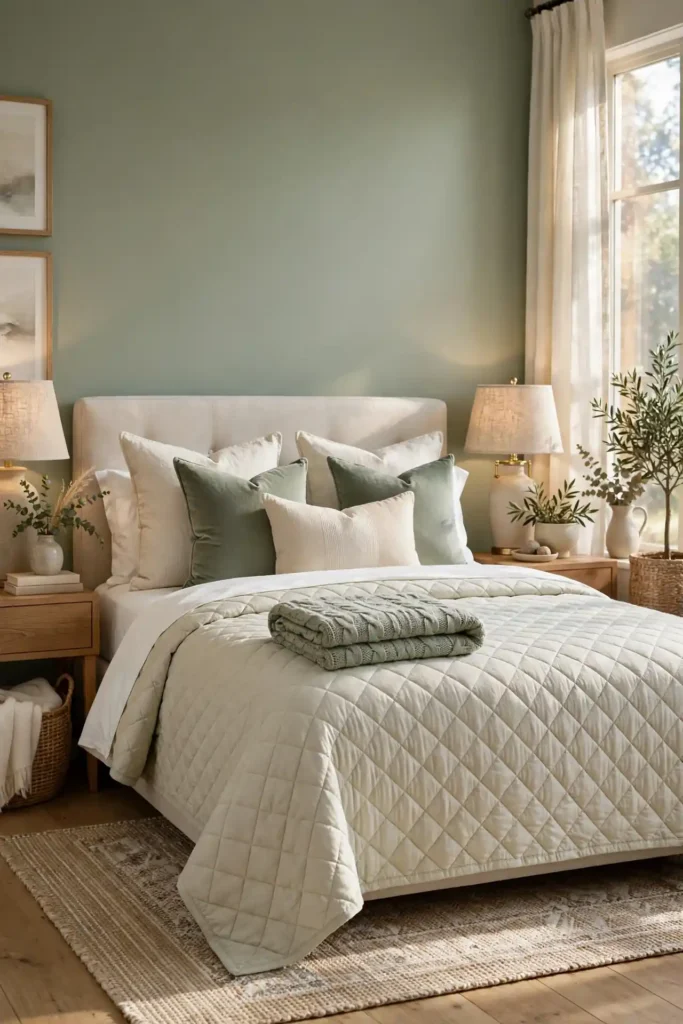
Start with crisp white or ivory sheets as your base since they work effortlessly with every wall color imaginable. Add a duvet or quilt in a tone pulled from the wall, then layer two sleeping pillows, two shams, and two or three accent pillows in mixed textures like linen, velvet, and knit. A folded throw at the foot of the bed in a contrasting texture such as chunky knit or faux fur adds the perfect finishing touch. Step back and check the whole composition from the doorway, since that is the view you will see most. When bedding echoes the wall, the bedroom feels calm and complete.
Choosing Paint vs Wood vs Wallpaper
Choosing between paint, wood, and wallpaper for the wall behind your bed comes down to budget, commitment level, and the exact look you want to live with. Paint is the cheapest and easiest option at $40 to $60 per wall, perfect if you like to redecorate often or want to test a bold color risk-free. Wood treatments like shiplap, board and batten, or slats cost $150 to $400 but add real texture and architectural dimension that paint cannot match. Wallpaper falls in the middle at $80 to $300, offering intricate patterns and artisanal prints no paint technique can replicate.
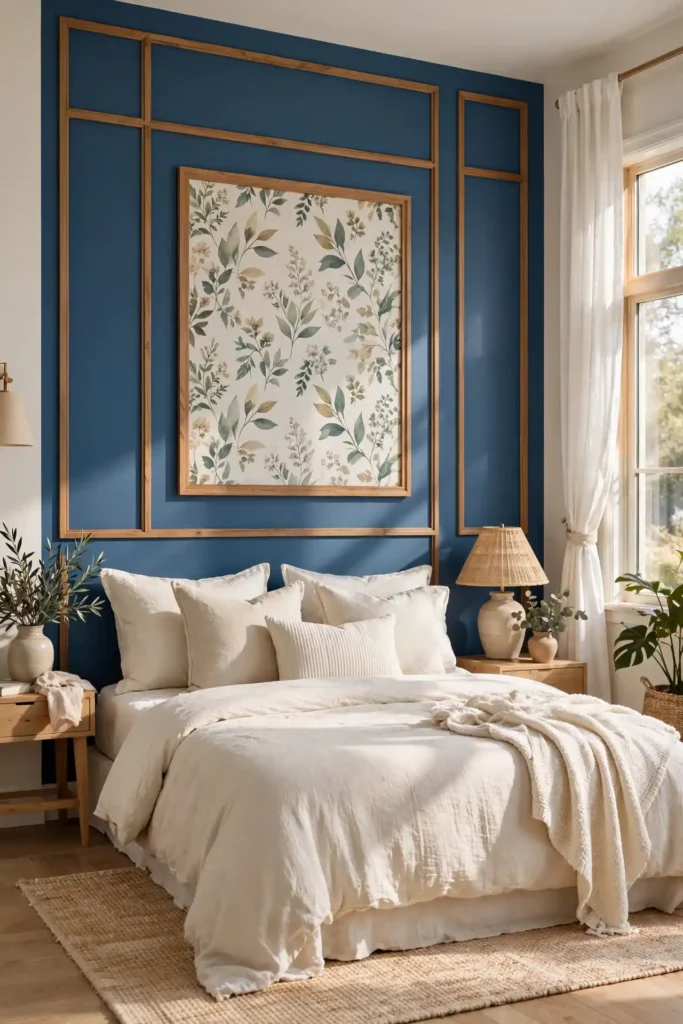
Consider your lifestyle and living situation too before deciding. Renters should stick with peel-and-stick wallpaper or paint they can easily cover when moving out. Busy households with kids or pets do best with scrubbable satin paint or wipeable vinyl wallpaper that stands up to daily life. If you crave texture and plan to stay put for years, wood is worth the investment since it adds perceived value to the home. You can also combine approaches beautifully: paint the wall a deep color, then add wood trim over it for a layered, fully custom look.
Consider your budget, skills and how long you plan to keep the look. Many people start with paint, then upgrade to paneling or wallpaper later.
DIY Tips for an Accent Wall Behind Bed
A few smart DIY tips will make your accent wall project smoother, faster, and significantly better-looking when it is done. Always start by moving the bed to the center of the room and covering it completely with a drop cloth, since dust and paint splatter travel much further than you expect. Buy 10 to 15 percent more material than your measurements suggest to cover cutting mistakes, pattern matching, and damaged pieces. Take a photo of your wall’s outlets and light switches before you start so you remember exactly what goes where during reassembly.
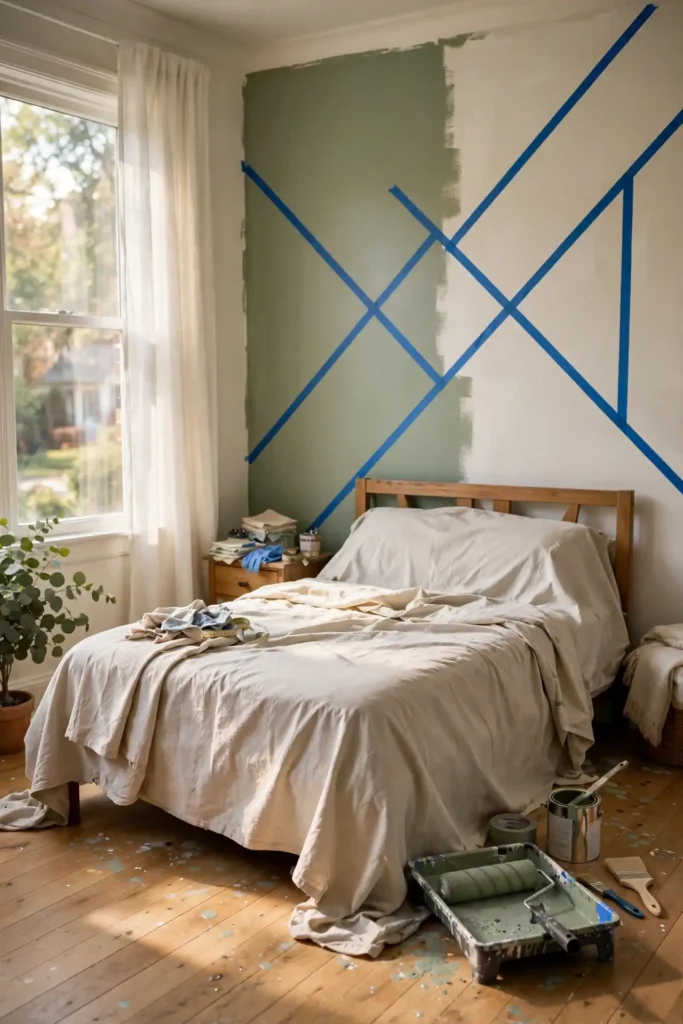
Invest in quality tools even for a one-time project, since a $15 angled brush and real FrogTape outperform bargain versions every single time. Work from top to bottom and left to right so drips and dust fall onto unfinished areas rather than completed work. Keep a damp rag within arm’s reach for immediate cleanup of paint smudges on trim and ceilings. Do not rush drying times between coats, since impatience causes the most common DIY flaws like peeling, bubbling, and uneven sheen. Finally, live with the finished wall for a few days before styling it so you can evaluate it in different light.
Accent Wall Colors That Work
The best accent wall colors for behind the bed balance personality with restfulness, since this is the last thing you see at night and the first thing you see each morning. Deep greens like Sherwin-Williams Evergreen Fog, navy tones like Benjamin Moore Hale Navy, and warm terracottas like Behr Canyon Dusk are perennial winners with designers. Soft neutrals like greige, warm white, and light sage work beautifully when you want texture rather than color to carry the design. These shades photograph well and pair easily with the most common bedding colors American homeowners already own.
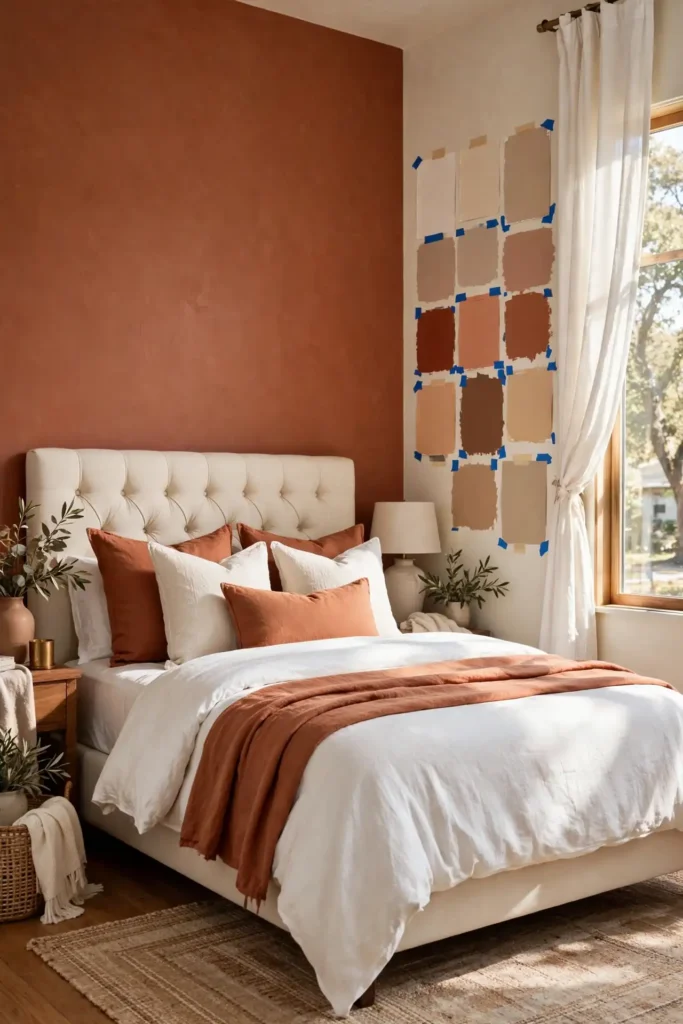
Test your shortlisted colors with large peel-and-stick sample boards from Samplize at about $6 each rather than relying on tiny paper swatches, and view them morning, noon, and night. North-facing bedrooms need warmer undertones to avoid feeling chilly and flat, while south-facing rooms flooded with sun can handle cooler shades gracefully. Remember the classic 60-30-10 rule: your accent wall is the 30 percent, so pick a color that plays well with your dominant neutral bedding and furniture. When in doubt, choose the slightly muted version of any bold color since it will feel calmer over time.
When it comes to accent wall behind bed, the best results come from balancing style, comfort and everyday function. Use this list as your go-to guide for accent wall behind bed, and start with the ideas that fit your space best.
How to Create an Accent Wall Behind Bed Step by Step
Creating an accent wall behind your bed follows the same basic steps no matter which material you ultimately choose. First, clear the wall completely, move the bed well out of the way, and lay drop cloths over the floor and any nearby furniture. Repair nail holes, dents, and cracks with spackle, sand everything smooth once dry, and wipe the wall clean with a damp cloth. Mark the center of your bed placement on the wall with painter’s tape so every treatment stays perfectly symmetrical. Gather all materials and tools before you begin so you avoid frustrating mid-project store runs.

Next, install or apply your chosen treatment working from the top down and the center outward for the most professional result. For paint, cut in the edges first and then roll the field; for panels or wallpaper, start with a plumb line and check level constantly. Let everything cure fully according to the product directions, usually 24 hours for paint and construction adhesives. Touch up edges, caulk seams, and clean up thoroughly before moving the bed back into place. Style the wall last by hanging art, mounting sconces, and layering fresh bedding for the big reveal.
- Choose paint, wood or wallpaper.
- Measure the wall and plan the design.
- Prepare the wall: clean, repair and prime.
- Install or paint carefully.
- Style the bed and lighting to complement the wall.
Final Thoughts on Accent Wall Behind Bed Ideas
An accent wall behind your bed is one of the highest-impact upgrades you can make in a bedroom, often for less than the cost of a nice dinner out. Whether you choose deep moody paint, warm natural wood, or statement wallpaper, that single wall sets the tone for the entire room and makes your bed feel like a deliberate, designed focal point. The 25 ideas in this guide cover every budget from a $20 painted arch to a $500 custom mural, so there is truly an option for every home, style, and skill level. You do not need professional help to get a professional look.
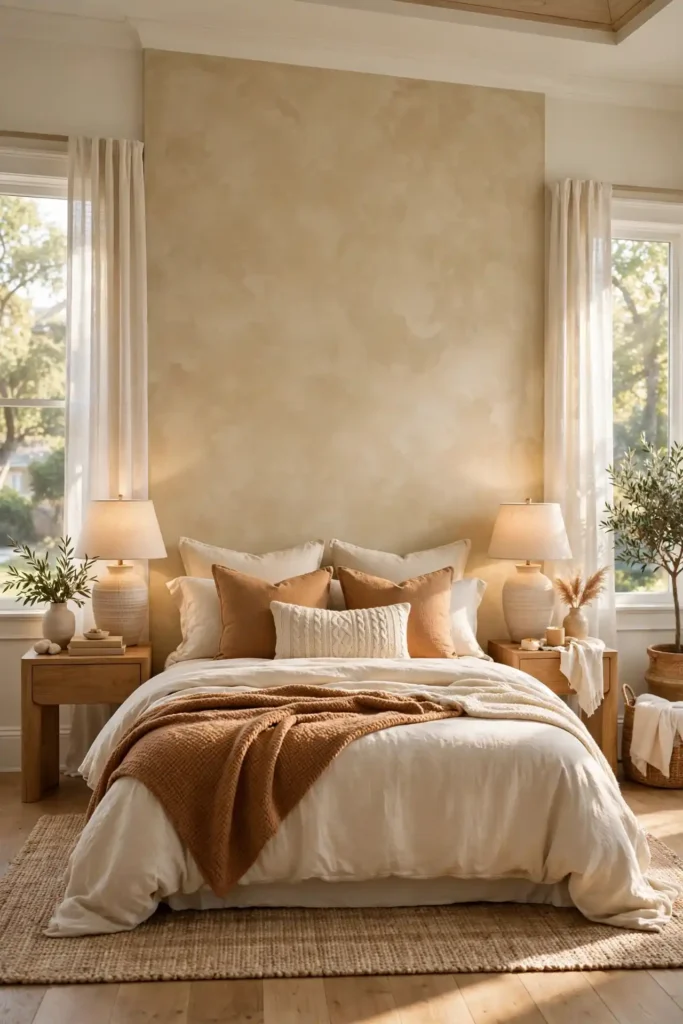
Start with the idea that excited you most while reading, not necessarily the one that seems most impressive on paper. A simple two-tone paint job you actually finish beats an ambitious wood installation that stalls halfway through the weekend. Take your time with prep work, invest in decent materials from stores you trust like Home Depot and Lowe’s, and do not be afraid to repaint or adjust until the wall feels exactly right. Your bedroom should be the calmest room in your home, and a thoughtfully designed accent wall is a beautiful step toward that feeling.
Save these ideas and follow along for more bedroom inspiration.
Frequently Asked Questions About Accent Wall Behind Bed Ideas
Choosing the right accent wall comes down to matching the treatment to your budget, skill level, and how long you plan to live with the result. Paint remains the most popular choice because it costs under $60, takes a single weekend afternoon, and is easy to change when your taste evolves. Wood treatments like shiplap and board and batten add the most texture and perceived home value, while wallpaper delivers intricate patterns that paint simply cannot replicate. Renters do best with peel-and-stick options that remove cleanly without damaging drywall or risking the security deposit.

Most homeowners complete a painted accent wall in one day and a wood or wallpaper installation over a full weekend. The key to a professional-looking result is thorough prep work: clean the wall, repair every imperfection, use quality painter’s tape, and respect drying times between coats. If you are unsure about color, order large peel-and-stick samples and live with them for several days before committing to gallons. Typical project costs range from $20 for a simple painted design to $500 for a custom mural, with most DIY accent walls landing between $50 and $250 all in.
Which wall should be the accent wall in a bedroom?
Usually the wall behind the bed, since it is the natural focal point.
What color is best for an accent wall behind the bed?
Navy, forest green, sage, terracotta and charcoal are popular.
Can an accent wall replace a headboard?
Yes. Painted arches, paneling or wallpaper can act as a headboard.
Is board and batten hard to DIY?
It is a manageable weekend project with basic tools.
Are accent walls still in style?
Yes, especially textured and wallpapered walls.





Leave a comment