


Sage green has become one of the most loved bedroom colors, and it is easy to see why. It is soft, calming and connected to nature, making it perfect for a room meant for rest. Sage works with many styles, from farmhouse and cottage to modern and Scandinavian, and pairs beautifully with wood, white and warm neutrals.
These 20 sage green bedroom ideas show how to use the color on walls, bedding and accents. For more calming inspiration, see our cozy bedroom ideas and these wallpaper ideas for bedroom walls.
Tips for using sage in the bedroom:
- Test samples, since sage can read more gray or more green depending on light.
- Pair with warm whites, cream and natural wood.
- Add brass or black accents for contrast.
- Use texture to keep the room from feeling flat.
1. Sage Green Walls With White Bedding
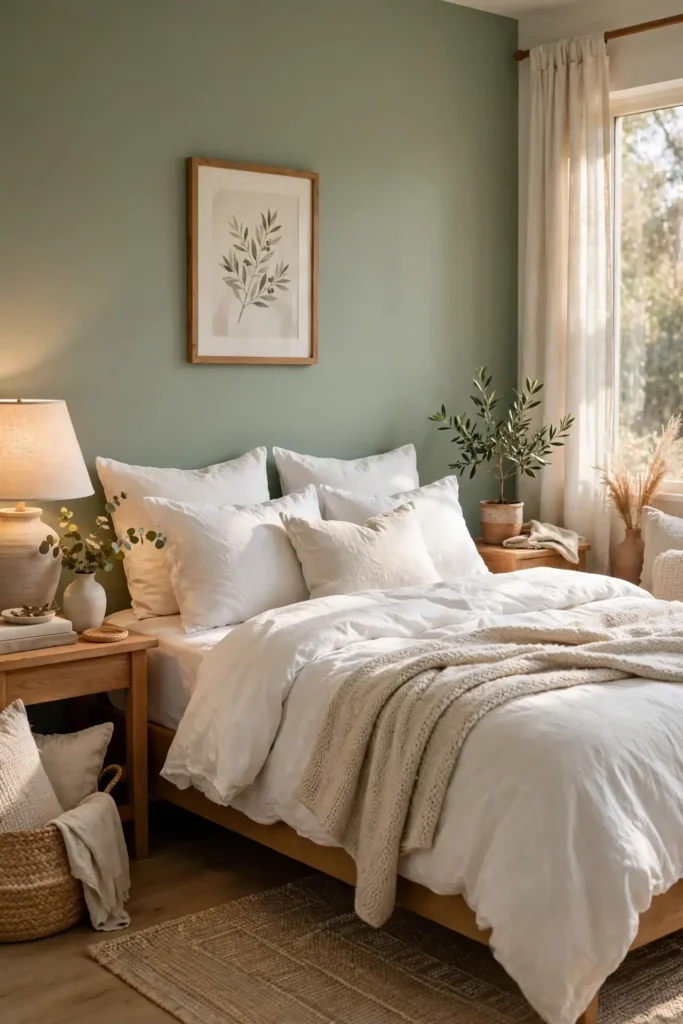
Painting all four walls a soft sage and pairing them with crisp white bedding is the fastest way to create a calm, hotel-style bedroom. Sage sits halfway between gray and green, so it reads as a neutral while still bringing nature indoors. Use two thin coats of paint and keep your ceiling and trim in a clean white, such as Benjamin Moore Chantilly Lace, so the edges stay crisp. White bedding pops against sage without competing, so affordable sets from Target or IKEA still look polished. A queen duvet cover set costs about $60 to $120, and one gallon of paint covers roughly 350 to 400 square feet.
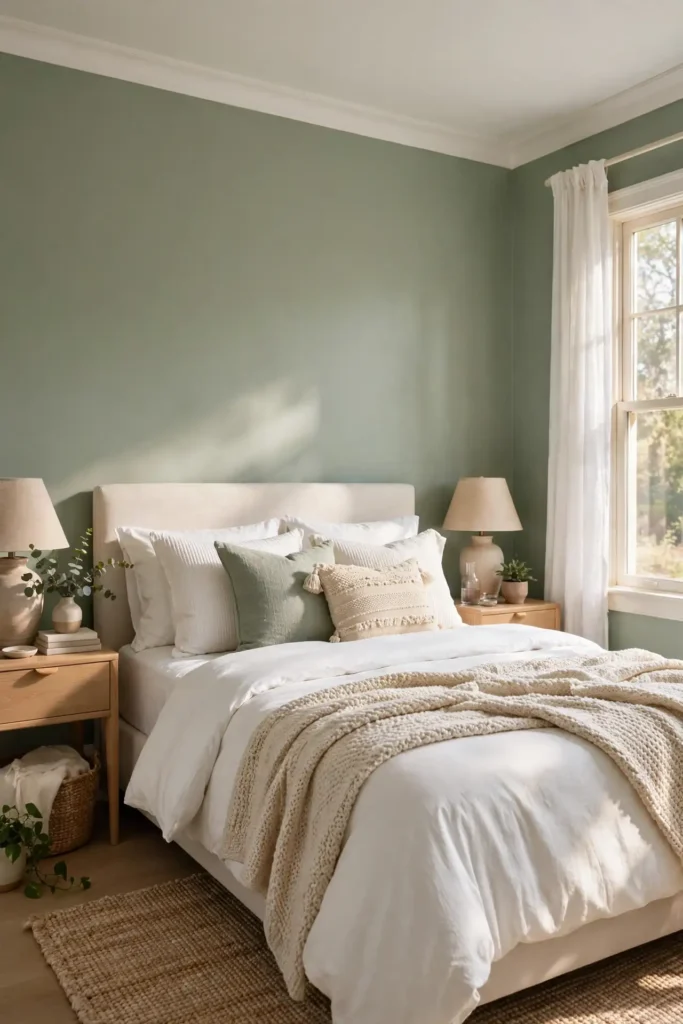
To keep the look from feeling flat, layer in texture through throws, pillows, and a rug. A chunky knit throw in ivory or a light gray linen quilt adds depth while keeping the palette airy. Choose warm white bulbs around 2700K for bedside lamps so the sage walls look soft at night instead of gray and cold. Add one wooden element, like a light oak nightstand from Home Depot or a thrifted dresser, to stop the white-and-sage scheme from turning sterile. If your room faces north, pick a slightly warmer sage with more yellow undertone so the color stays inviting in cooler light.
2. Sage Accent Wall Behind the Bed
An accent wall in sage behind the bed gives you the color’s calming effect for less money and less commitment than painting the whole room. One wall takes a single gallon of paint, about $35 to $55 for a mid-range brand like Behr, and you can finish it in an afternoon with a roller and painter’s tape. Choose the wall the headboard sits against so the color frames your bed like a backdrop. Deeper sages such as Sherwin-Williams Evergreen Fog work well here because they create contrast against white or cream bedding. Keep the other three walls a warm white so the accent wall reads as intentional rather than unfinished.
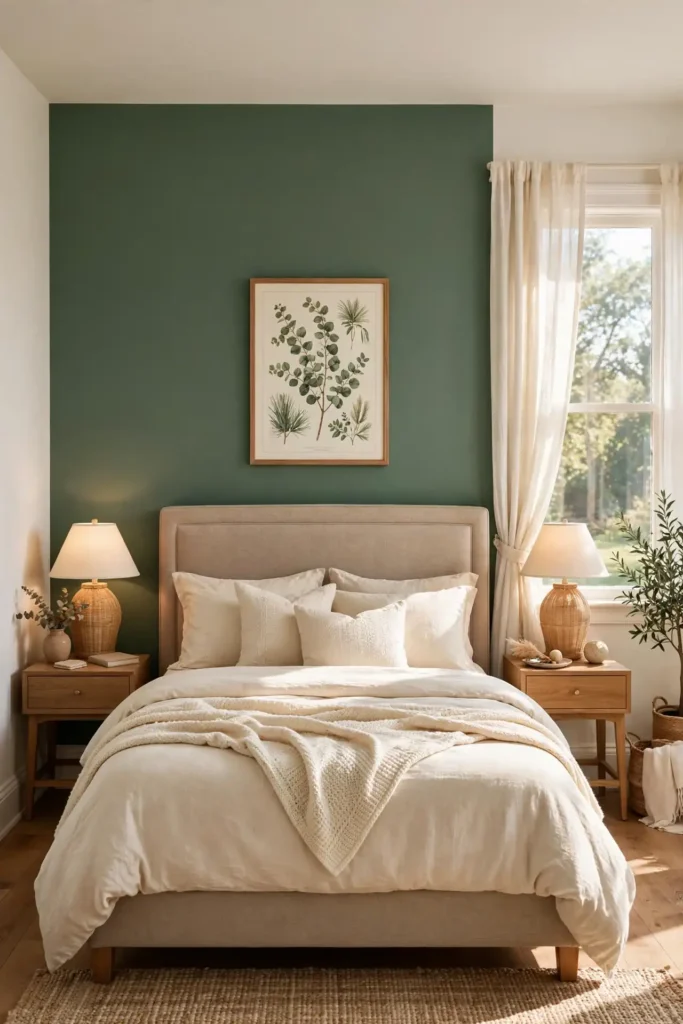
Center the bed on the accent wall and flank it with matching nightstands to anchor the composition. Two table lamps with cream shades, each around 26 to 30 inches tall, add symmetry and warm light at about 2700K. If you want more texture, try board-and-batten strips or vertical shiplap painted in the same sage before adding furniture back. A gallon of Behr Marquee costs around $55 at Home Depot and often covers in one coat over primed surfaces. Finish the wall with a piece of art above the headboard that repeats the sage tone, like a botanical print with white matting in a thin wood frame.
3. Sage Bedding in a Neutral Room
If painting feels like too much, sage bedding alone can transform a neutral bedroom for under $150. A sage duvet cover, quilt, or comforter set from Target’s Opalhouse line or Amazon basics costs between $50 and $130 for a queen size. The green reads as a soft neutral against beige, cream, or gray walls, so you don’t need to repaint anything. Pick linen or washed cotton with visible texture, since flat sage fabric can look dull under bedroom lighting. Wash new bedding once before styling so it softens and drapes naturally over the mattress.
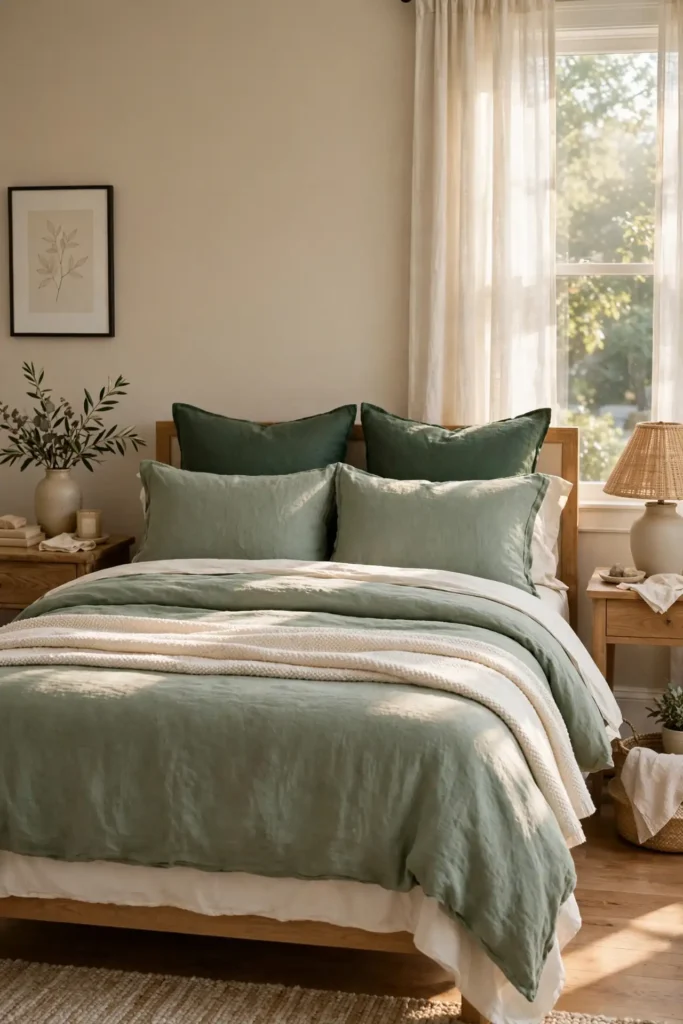
Build the look in layers so the sage feels intentional rather than random. Start with white or ivory sheets, add the sage duvet or quilt, then fold a cream throw across the foot of the bed. Two to four Euro pillows in a slightly deeper green, each about 26 inches square, add height against the headboard. Keep your walls and curtains neutral so the sage bedding becomes the room’s focal point. This approach also lets you swap colors seasonally: pair the same sage quilt with rust throws in fall or crisp white pillows in spring without buying a whole new set.
4. Sage With Natural Wood
Sage green and natural wood are a classic pairing because they echo the colors of a forest, which makes any bedroom feel grounded and calm. Light woods like white oak, maple, and pine keep the room airy, while walnut or acacia add richness for a moodier look. Try a wooden bed frame with a sage upholstered headboard, or sage walls behind honey-toned nightstands from IKEA or Target, which run about $40 to $90 each. Keep wood finishes consistent within one temperature family, either all warm or all cool, so the mix looks curated rather than cluttered.
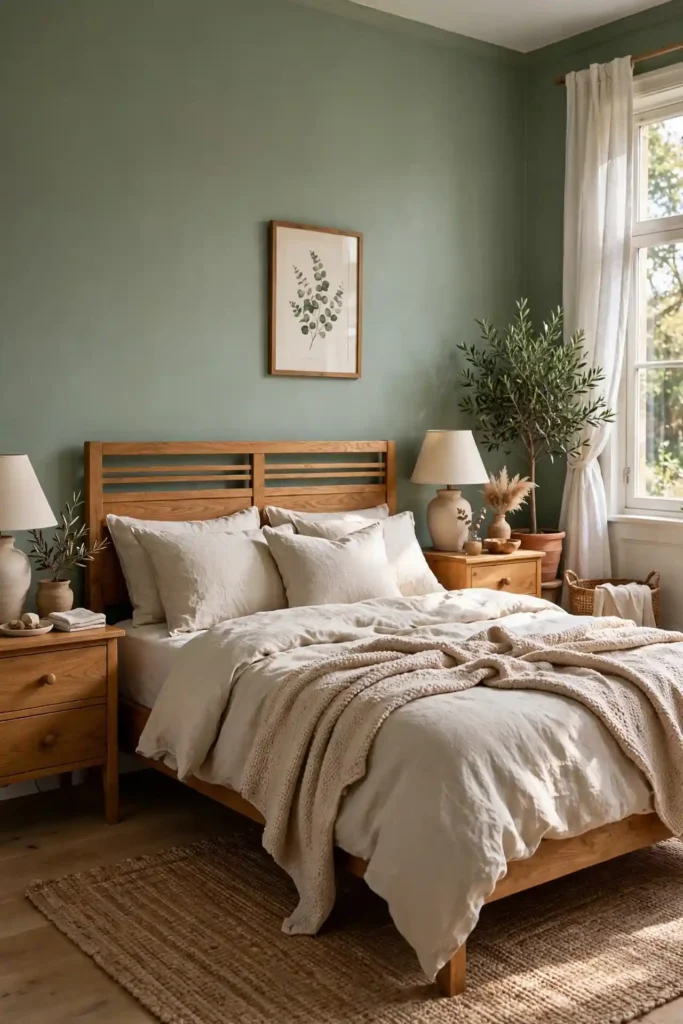
Vary the grain and texture so the wood doesn’t blend into one flat tone. Pair smooth oak floors with a reclaimed-wood bench at the foot of the bed, or mix a rattan pendant light with a solid walnut dresser. If your floors are dark wood, lighten the palette with sage bedding and cream curtains to balance the weight. Wooden picture ledges from Lowe’s, about $20 each, are an easy way to add another wood tone without buying furniture. Finish with a jute or wool rug in natural tones under the bed, roughly 8 by 10 feet for a queen, to tie the green and wood together.
5. Sage and Blush
Sage and blush is a soft, romantic combination that works beautifully in primary bedrooms and guest rooms alike. The muted green keeps the pink from feeling juvenile, while blush adds warmth that plain sage can lack. Use sage as the dominant color on walls or bedding, then bring blush in through smaller pieces: two velvet throw pillows, a lumbar cushion, or a blush throw folded at the foot of the bed. Target’s Opalhouse line and HomeGoods regularly carry blush velvet pillows for $20 to $35. Keep the ratio around 70 percent sage and neutrals to 30 percent blush so the pink accents rather than dominates.

Balance the pairing with plenty of white and natural texture so the room stays sophisticated. Crisp white sheets, a light wood nightstand, and a jute rug ground the pastel tones in something earthy. If the walls are sage, hang curtains in a warm ivory linen rather than pink to avoid overdoing the blush. A small dose of brass or gold, like a $25 mirror from Amazon or picture frames, adds a touch of polish that both colors love. In a north-facing room, lean toward a warmer blush with peach undertones so the combination glows instead of turning cool and gray.
6. Sage With Brass Accents
Brass accents lift sage green from casual to refined, adding a warm metallic glow that makes the whole bedroom feel more expensive. The yellow undertones in brass complement the earthiness of sage without the harshness of chrome. Swap out basic hardware for brass drawer pulls, which cost about $3 to $8 each at Home Depot, or add a pair of brass table lamps for around $80 to $150 each. A brushed or aged brass finish looks softer and more timeless than polished brass, which can read as flashy. Even small touches, like brass curtain rod finials or a brass tray on the dresser, carry the look.

Distribute brass in at least three spots so it reads as a deliberate design choice rather than an afterthought. Try a brass pendant light over the nightstand, a brass-framed mirror above the dresser, and brass legs on an accent chair. Keep the rest of the metals consistent: mixing brass with silver or black hardware can work, but limit yourself to two finishes maximum. A round brass mirror, roughly 24 to 30 inches across, hung at eye level makes a strong focal point in a sage bedroom. Finish the pairing with warm white lighting around 2700K, which makes brass glow and keeps sage looking soft.
7. Sage Paneling
Sage paneling, whether board-and-batten, shiplap, or wainscoting, adds architecture and depth that flat painted walls can’t match. The shadows cast by the trim lines make the sage color feel richer and more dimensional. You can install MDF batten strips from Home Depot for about $1 to $2 per linear foot, plus a gallon of sage paint, making a full accent wall possible for under $150. Paint the paneling and the wall behind it the same sage so the trim reads as texture rather than stripes. Board-and-batten with strips spaced 12 to 16 inches apart is the easiest DIY pattern for beginners.
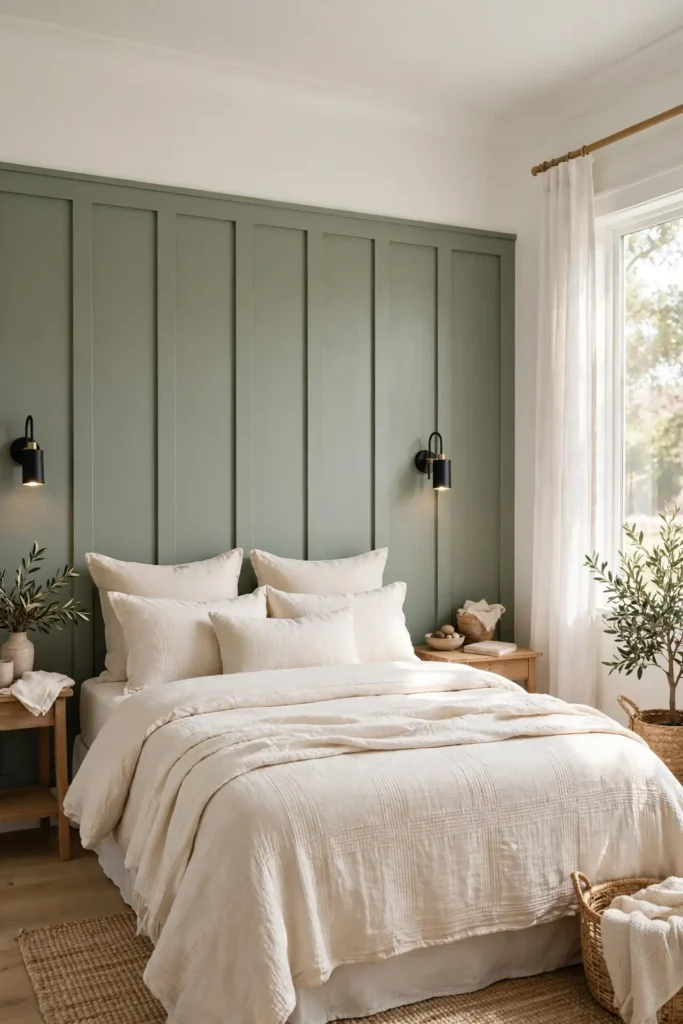
Measure and mark your layout with a pencil and level before attaching anything, since uneven spacing is the most common paneling mistake. Use a brad nailer or construction adhesive to fix the strips, fill nail holes with wood filler, then caulk the seams for a seamless finish. Two coats of a satin or eggshell paint highlight the trim work better than flat paint. Try a deeper sage like Behr Eucalyptus Wreath on the paneling with white upper walls for a classic two-tone look. Complete the wall with minimal decor: one piece of art or a simple sconce pair lets the paneling itself be the star.
8. Sage Upholstered Headboard
A sage upholstered headboard is the centerpiece move for a green bedroom, giving you softness, color, and a comfortable backrest for reading. Choose a tall headboard, at least 48 to 54 inches high, so it makes a real statement against the wall. Linen and velvet are the best fabrics: linen feels relaxed and casual, while velvet adds a luxe sheen that catches the light. Ready-made sage headboards cost about $150 to $400 at Target, Wayfair, or Amazon. If you already own a wooden headboard, a fitted slipcover in sage linen runs under $60 and transforms it completely.
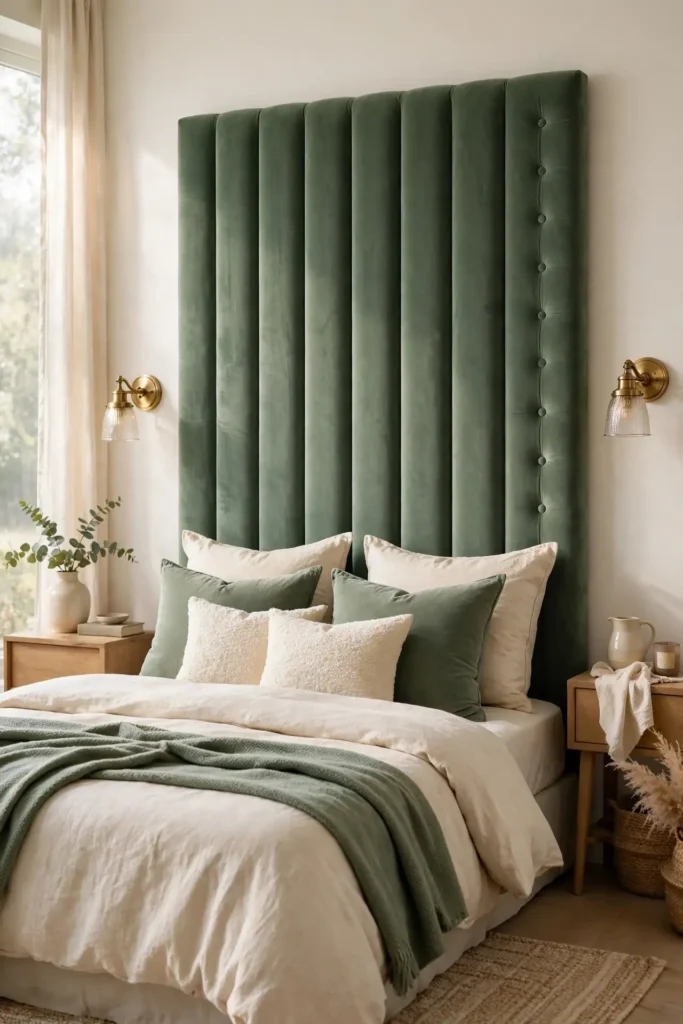
Style around the headboard by keeping the wall behind it quiet so the fabric shape stands out. A warm white or very pale sage wall lets a deeper sage headboard pop without clashing. Add wall-mounted sconces on either side instead of table lamps to show off the headboard’s full width, mounting them about 60 inches from the floor. Layer pillows in front: two sleeping pillows, two Euro shams in cream, and one lumbar pillow in a pattern that picks up the sage. Vacuum upholstered headboards monthly with a brush attachment to keep dust from dulling the fabric color.
9. Botanical Wallpaper With Sage
Botanical wallpaper with sage undertones brings pattern and life to a bedroom without overwhelming it. Look for prints with eucalyptus, fern, or monstera motifs on a cream or pale sage background, available at Home Depot, Lowe’s, or Spoonflower for $40 to $120 per roll. One roll typically covers about 56 square feet, so measure your wall and buy 10 percent extra for pattern matching. Hang it on the wall behind the bed or inside a small alcove for maximum impact. Peel-and-stick versions make this renter-friendly, and they remove cleanly without damaging paint.
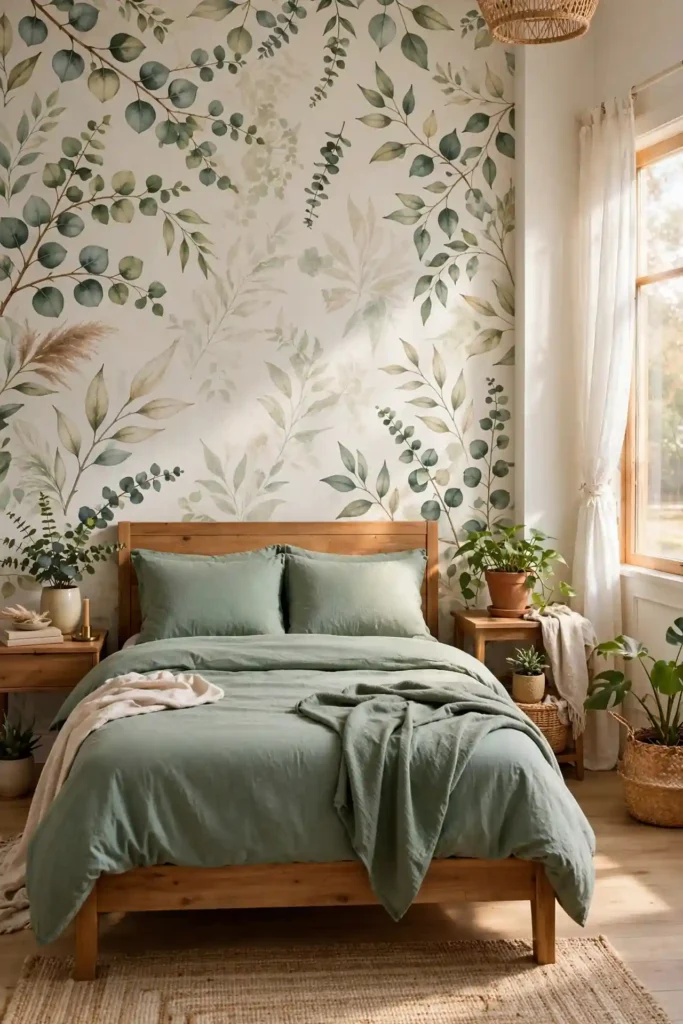
Keep the rest of the room calm so the wallpaper stays the star. Choose solid sage or cream bedding that pulls one color from the print, and hang simple linen curtains in a matching neutral. A wooden or rattan bed frame echoes the natural theme of the botanical design. If the pattern is busy, limit wall art on that wall and let the wallpaper act as the artwork. For a cohesive look, repeat one accent color from the paper, like terracotta or mustard, in a throw pillow or vase. Botanical wallpaper pairs especially well with live plants, which blur the line between print and reality.
10. Sage and Terracotta
Sage and terracotta is an earthy, sun-baked pairing inspired by Mediterranean and Southwestern design. The warm orange clay tone energizes sage’s cool calm, creating a bedroom that feels both relaxed and alive. Use sage as the base on walls or bedding, then add terracotta through a throw blanket, two accent pillows, or a handwoven rug. Terracotta pots for plants, about $8 to $20 at Home Depot or Target, are an easy way to weave the color in naturally. Keep the split around 60 percent sage and neutrals to 40 percent terracotta so the warmth accents rather than overwhelms.
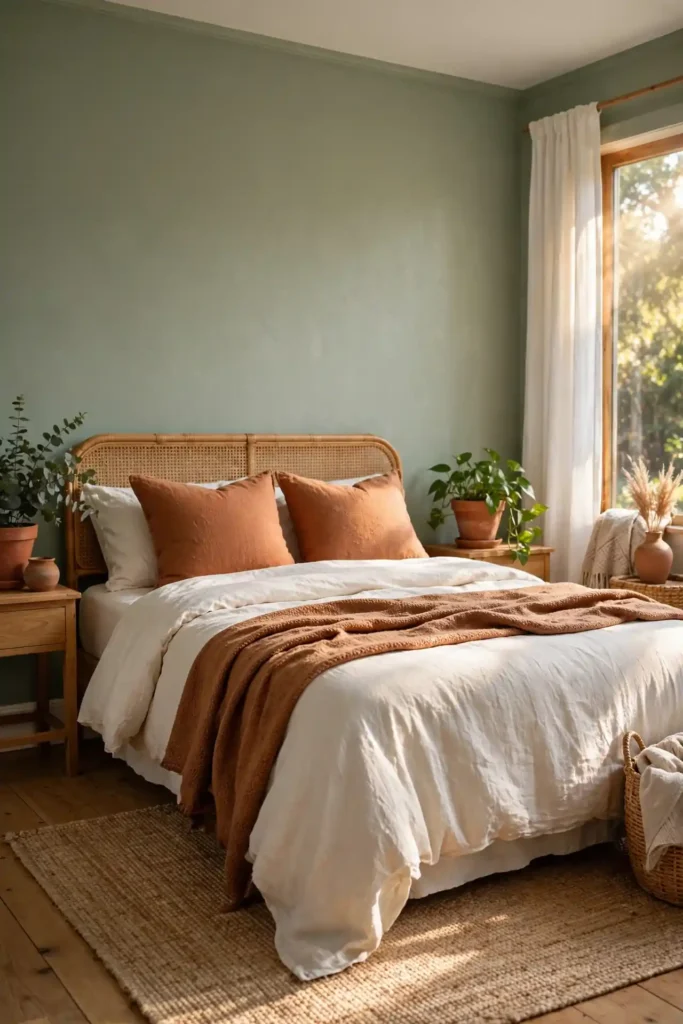
Ground the combination with creamy whites and natural materials so it feels collected rather than themed. Linen bedding in ivory, a jute rug, and light wood furniture keep the palette warm and breathable. A terracotta tile-look peel-and-stick backsplash behind a floating shelf, or clay-colored artwork above the bed, adds the warm tone at eye level. Avoid pairing terracotta with cool gray walls, since the clash can make both colors look muddy. Finish with warm lighting at 2700K and one large plant, like a fiddle-leaf fig in a terracotta planter, to complete the earthy, sun-warmed mood.
11. Sage Ceiling
Painting the ceiling sage is an unexpected move that wraps the bedroom in color and makes it feel intimate and cocoon-like. A sage ceiling works especially well in rooms with white or cream walls, where the overhead color draws the eye up and adds interest to an often-ignored surface. Use a flat or matte finish to hide imperfections, and extend the sage about 6 inches down the walls for a crisp, deliberate edge. One gallon covers most bedroom ceilings, costing $35 to $55 for quality paint. Keep light fixtures simple so the ceiling color itself becomes the feature.
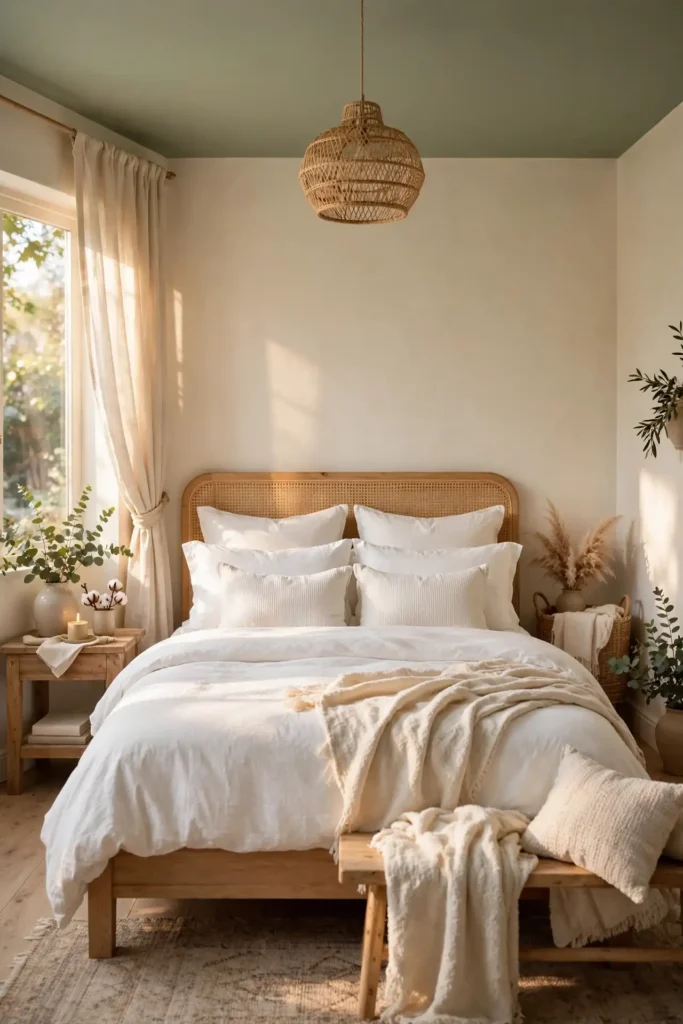
Balance a sage ceiling by keeping the rest of the room light and uncluttered. White bedding, pale wood furniture, and sheer curtains prevent the overhead color from making the room feel heavy. If your ceiling is low, under 8 feet, choose a pale sage so the color adds character without pressing down visually. A ceiling medallion around the light fixture, about $25 at Lowe’s, adds a polished touch that frames the color. Avoid dark sage on the ceiling in small rooms, since deep overhead color can make a compact space feel like it’s closing in.
12. Sage Curtains
Sage curtains are an easy, renter-friendly way to bring green into your bedroom without touching the walls. Linen or cotton curtains in sage soften window light and add gentle color at the edges of the room. Hang the rod 4 to 6 inches above the window frame and extend it 3 to 4 inches beyond each side so the windows look larger. Target and IKEA sell 84-inch sage curtain panels for $15 to $30 each, and most windows need two panels per side for a full look. Choose a lined version for the bedroom so morning light doesn’t wake you early.
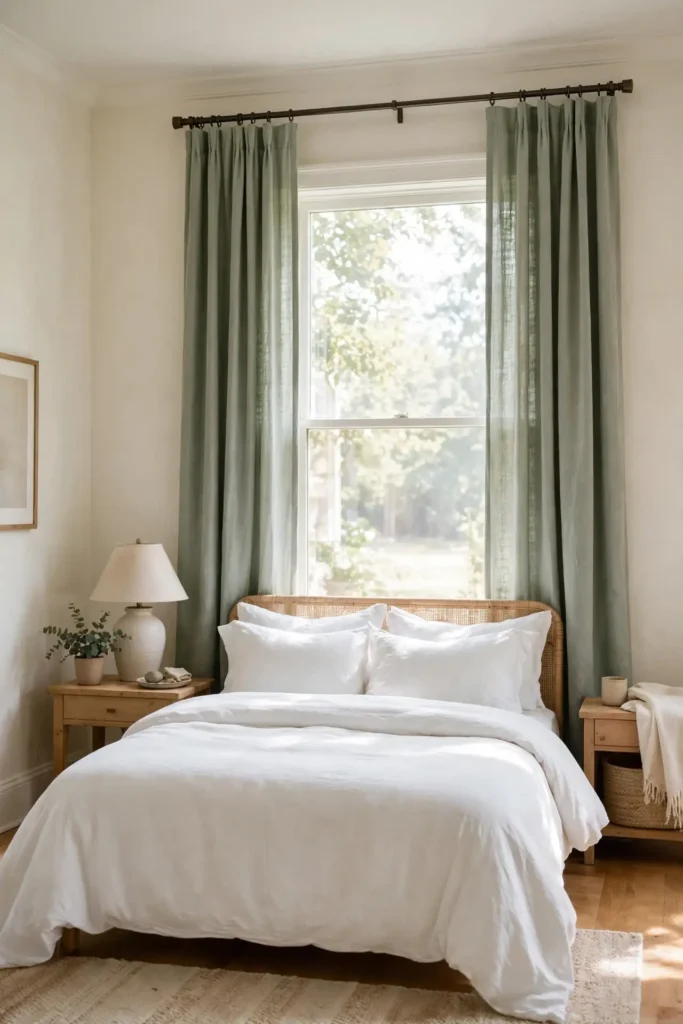
Pair sage curtains with neutral walls in white, cream, or light gray so the green becomes a soft frame around your view. If your bedding is already sage, choose curtains one shade lighter or darker to avoid a flat, matchy look. Blackout lining, which adds about $10 to $15 per panel, is worth it for anyone who sleeps past sunrise. Tie the curtains back during the day with simple rope or brass tiebacks to show off the full window. Finish by repeating the sage tone once more in the room, such as a throw pillow or a small plant, so the curtains feel connected to the whole design.
13. Sage With Rattan
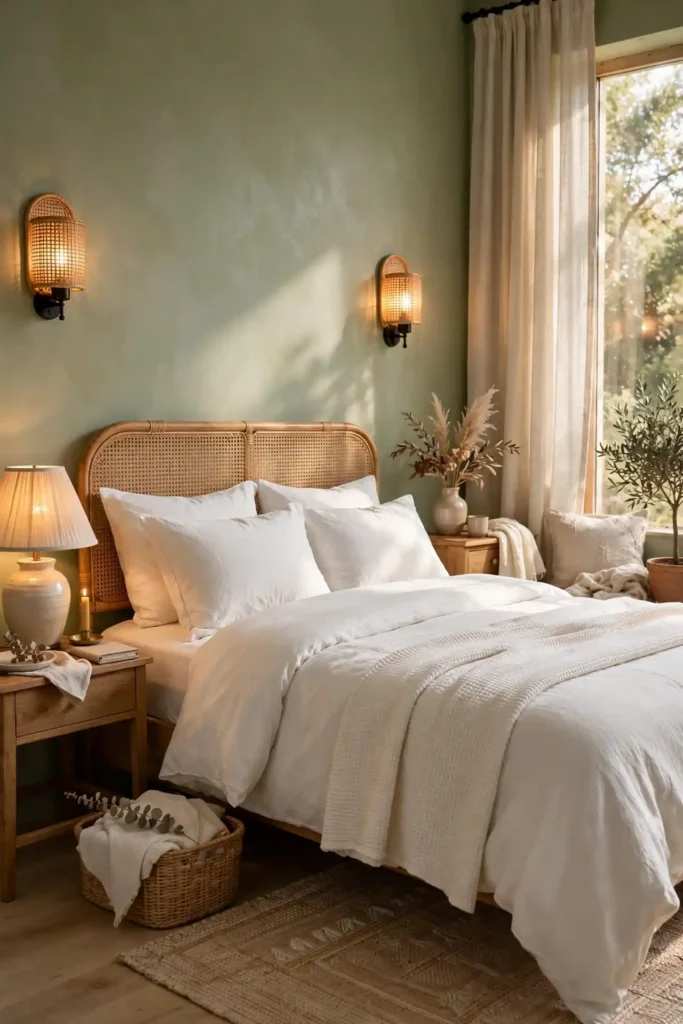
Rattan and sage is a breezy, coastal-inspired combination that makes a bedroom feel like a relaxed retreat. The warm honey tones of rattan contrast beautifully with sage’s cool green, and both materials share an organic, natural feel. Add a rattan headboard, which costs about $150 to $300 at Target or World Market, or a pair of rattan nightstands for around $80 each. A rattan pendant light hung over the bed, roughly 16 to 20 inches wide, adds texture overhead. Keep the sage soft and muted so the rattan’s warmth stays the star of the pairing.
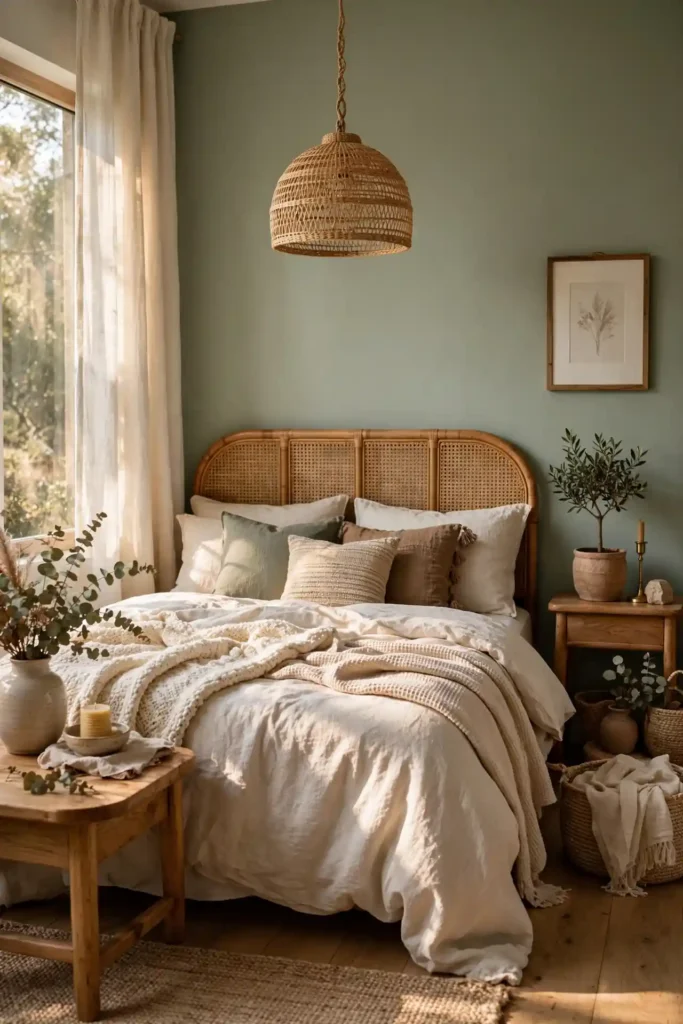
Layer in more natural textures to complete the relaxed look without going overboard. A jute rug, linen bedding in white or cream, and a woven laundry basket keep the material story consistent. Limit rattan to two or three pieces: a headboard plus a mirror or pendant is plenty, since too much woven furniture can look busy. If your walls are sage, choose natural-finish rattan rather than dark-stained pieces so the room stays light. Finish with a trailing plant like a pothos on the nightstand or dresser, which thrives in the same easygoing vibe and costs under $20 at most garden centers.
14. Sage in a Kids Room
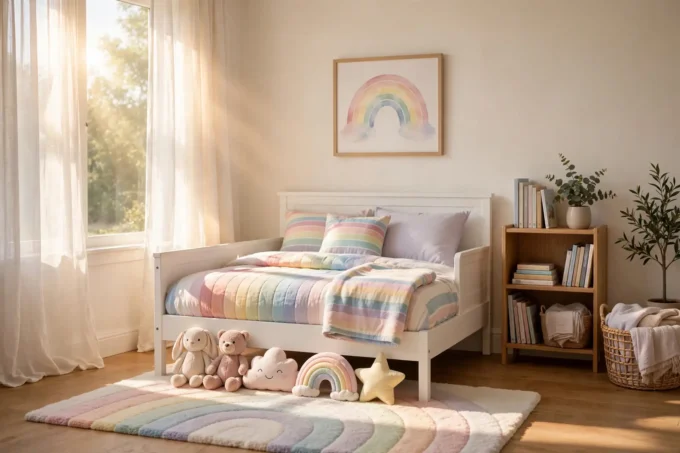
Sage is one of the best colors for a kids bedroom because it feels playful without being loud, and it grows with your child from toddler to teen. Unlike pink or blue, sage works for any gender and pairs easily with changing interests and decor. Paint the walls in a washable eggshell or satin finish so crayon marks and fingerprints wipe off easily; Behr and Sherwin-Williams both make scrubbable paints around $45 to $55 per gallon. Keep the furniture white or light wood so the room feels bright, and let bedding, art, and toys bring in the fun colors.
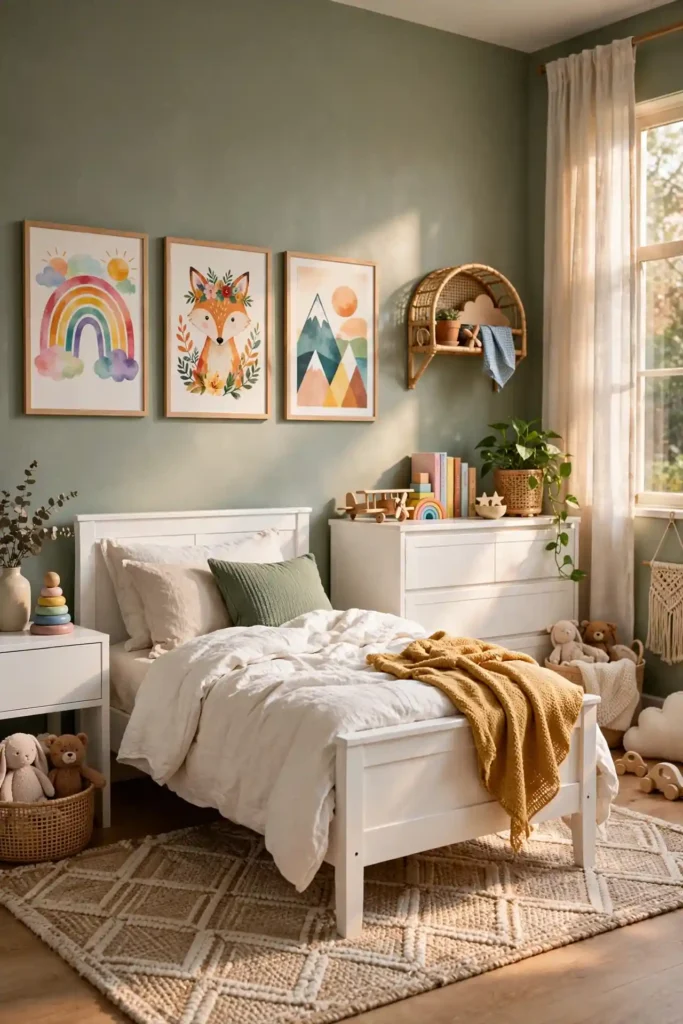
Make the sage room kid-proof and fun with smart, affordable choices. Use a washable 5-by-7-foot rug in a playful pattern, about $60 to $100 at Target or IKEA, to protect floors and add color. Add open storage like cube shelves or fabric bins so cleanup is quick and toys stay organized. A sage wall is a great backdrop for colorful art, so let your child pick framed prints or create a gallery of their own drawings. Choose blackout curtains in a coordinating color for better naps and bedtimes. As they grow, the sage walls stay relevant while you simply swap bedding and accessories.
15. Sage and Cream Layers
Layering sage with cream creates one of the softest, most restful bedroom palettes you can choose. Cream warms up sage’s cool undertones, so the combination feels cozy rather than crisp, which is ideal for a sleep space. Start with cream walls or bedding as your base, then add sage through a duvet, throw pillows, or curtains. Benjamin Moore White Dove or Sherwin-Williams Alabaster are perfect creamy whites that never look stark. Keep the contrast gentle: the two colors should melt into each other rather than compete, which is what gives this pairing its serene, cloud-like feel.

Build depth within this quiet palette through texture rather than more color. Mix linen, velvet, chunky knits, and washed cotton in alternating sage and cream layers on the bed. A cream upholstered headboard against a pale sage wall, or sage Euro shams against cream sheets, shows how the two tones play off each other. Add one natural element, like a light oak bench or a woven basket, to keep the softness from feeling flat. Warm lighting at 2700K enhances the cream tones beautifully. This layered look photographs well too, which makes it a favorite for Pinterest and home magazines.
16. Sage Green Rug
A sage green rug anchors a bedroom with color while protecting your floors, and it’s far easier to change than wall paint. An 8-by-10-foot rug fits under a queen bed with about 18 to 24 inches of rug showing on each side, while a 9-by-12 works for a king. Wool and cotton rugs in sage cost roughly $150 to $400 at Target, Rugs USA, or IKEA, depending on size and material. Choose a low-pile or flatweave rug for easy vacuuming, especially if you have pets. A subtle pattern, like a faded Persian or simple border, hides wear better than a solid color.

Style the rug by letting it connect your other sage elements into one cohesive design. Place it so the front two-thirds of the bed sit on the rug, with nightstands at least partially on it for a grounded look. If your walls are sage too, pick a rug one or two shades lighter or darker so the tones don’t blend together. Layer a smaller sheepskin or faux-fur throw rug on top near the bedside for extra softness underfoot on cold mornings. Vacuum weekly and rotate the rug every six months so sunlight and foot traffic wear it evenly over time.
17. Sage With Black Accents
Black accents give sage green bedrooms a modern, graphic edge that keeps the soft color from feeling too sweet. The high contrast between inky black and muted sage creates a sophisticated look seen in many designer bedrooms. Add black through a metal bed frame, matte black nightstands, or black picture frames, which cost about $15 to $40 each at Target or IKEA. Keep black to roughly 10 to 15 percent of the room: a little goes a long way. Black curtain rods, lamp bases, or a black-framed mirror are easy swaps that make an instant impact.
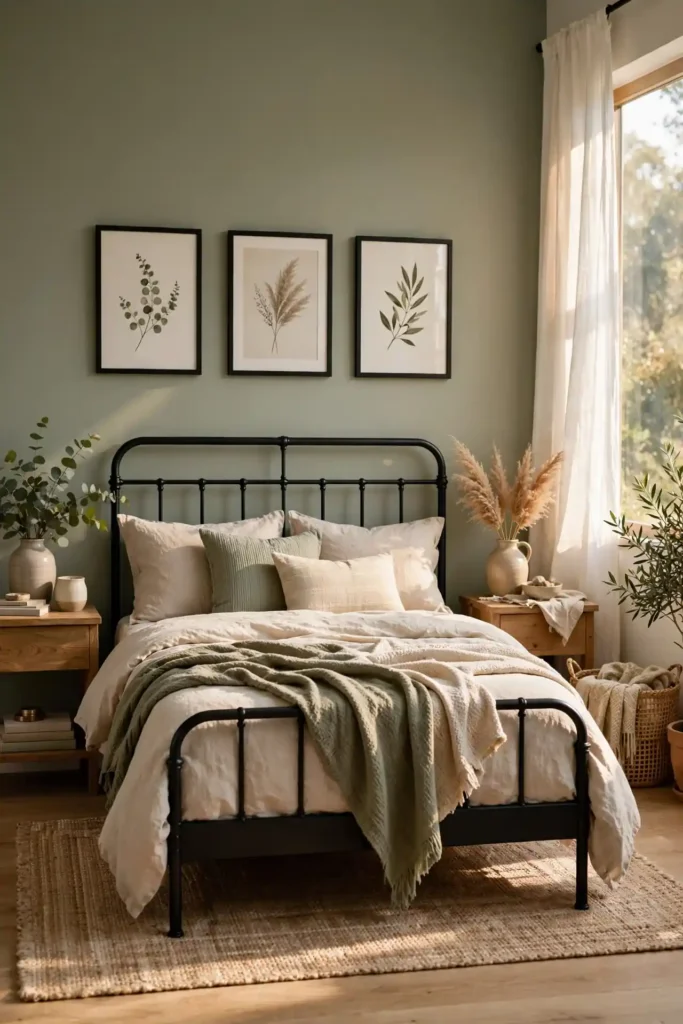
Balance the boldness of black with plenty of white and warm texture so the room stays inviting. Crisp white bedding, a cream throw, and light wood tones soften the black-and-sage contrast. If you paint an accent wall sage, hang black-framed art on it to tie the palette together. Avoid black walls paired with sage walls in the same room, since the combination can feel heavy and cave-like. Finish with warm bulbs at 2700K, which keep black elements from looking cold and help the sage glow softly in the evening hours.
18. Sage and Navy
Sage and navy is a rich, preppy pairing that brings depth and a touch of formality to a bedroom. Navy grounds sage’s softness, while sage keeps navy from feeling heavy or nautical. Use navy in smaller doses, like two throw pillows, a striped duvet, or an upholstered bench at the foot of the bed. A navy velvet lumbar pillow costs about $25 to $45 at Target or Pottery Barn. Keep the walls sage or a warm white so the navy accents pop without darkening the room. This combination works especially well in traditional and transitional bedrooms.

Add white and natural wood to keep the sage-and-navy mix feeling fresh rather than stuffy. Crisp white sheets, a light oak nightstand, and a natural fiber rug lighten the deeper tones. Brass or gold accents, like a $30 mirror or drawer pulls from Home Depot, bridge the two colors beautifully and add warmth. If you want more navy, try navy curtains against sage walls, but keep the bedding light so the room stays balanced. Avoid adding a third strong color, since sage and navy already create plenty of contrast on their own.
19. Plants in a Sage Room
Live plants are the perfect finishing touch for a sage bedroom because real greens echo and deepen the wall or bedding color. A fiddle-leaf fig in the corner, a snake plant on the dresser, or a trailing pothos on a shelf each add life and organic shape. Most houseplants cost $15 to $40 at Home Depot, Lowe’s, or local nurseries. Choose planters in white, terracotta, or natural woven baskets so the pots complement rather than compete with the sage. Place plants near windows where they’ll get bright, indirect light, which most bedroom-friendly varieties prefer.
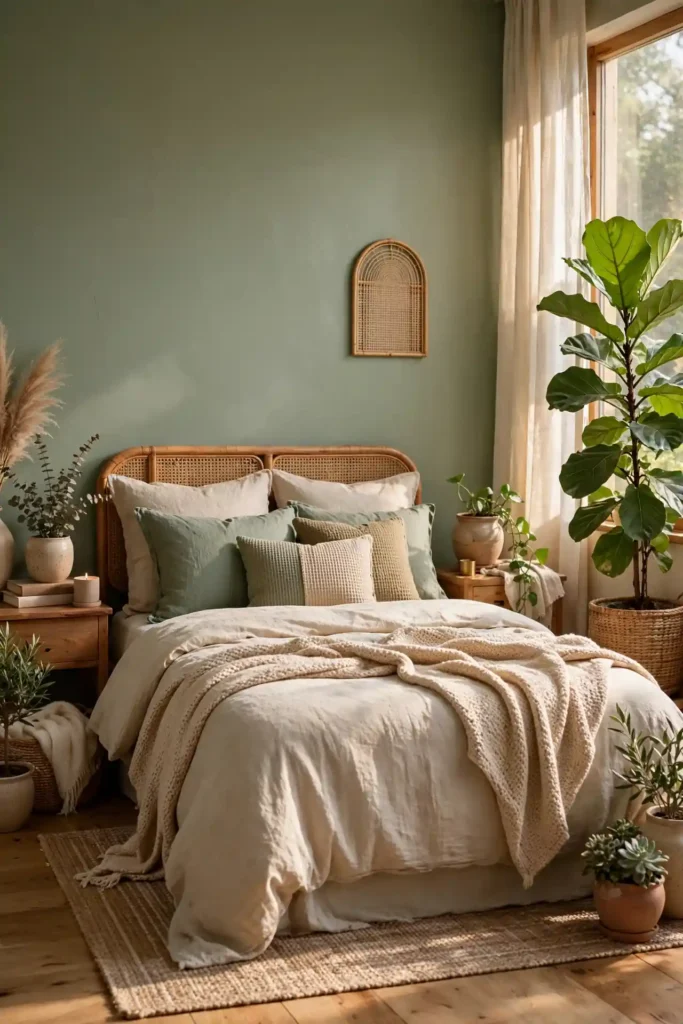
Vary plant heights and leaf shapes for a lush, collected look instead of a row of identical pots. Pair a tall floor plant, around 4 to 5 feet, with a medium tabletop plant and one trailing variety for dimension. If you’re not confident with live plants, high-quality faux plants from Target or IKEA, about $20 to $35 each, give the same visual effect with zero maintenance. Dust faux leaves monthly so they don’t look dull. Group plants in odd numbers, like three on a dresser, which looks more natural than pairs. The greenery makes sage walls feel intentional, like the whole room grew together.
20. Layer Shades of Green
Layering multiple shades of green, from pale sage to deep forest, creates a rich tonal bedroom that feels designed rather than decorated. Start with the lightest shade on the walls, like a whisper-soft sage, then deepen the color as you move toward the bed. Add mid-tone sage through curtains or an upholstered headboard, and finish with deep green in two or three accent pillows. This monochromatic approach works because all the greens share undertones, so they blend seamlessly. Keep your trim and ceiling white to give the eye a resting place between the green layers.
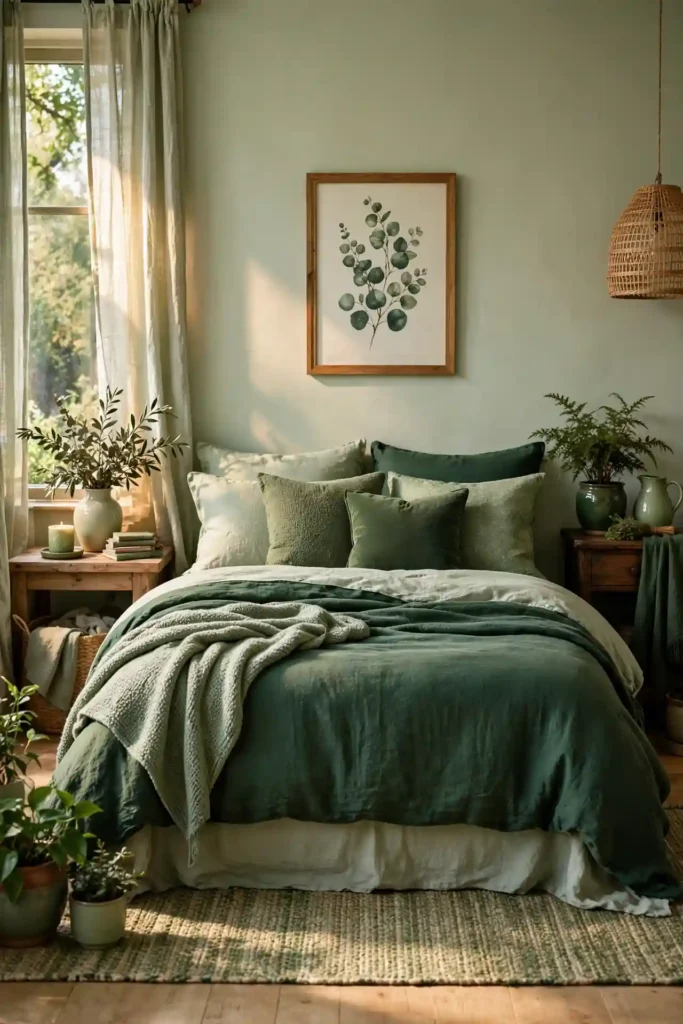
Test your green shades together before committing, since undertones can clash in ways you won’t notice from single swatches. Lay paint chips, fabric samples, and pillow covers side by side in both daylight and lamplight. Stick to greens with the same undertone family: pair gray-based sages together or yellow-based greens together, but avoid mixing the two families. Benjamin Moore October Mist, Saybrook Sage, and Essex Green form a ready-made gradient in one undertone family. Add natural wood and cream textiles to break up the green, and finish with warm 2700K lighting that unifies the layers at night.
Best Colors to Pair With Sage Green Bedroom Ideas
The best colors to pair with sage green in a bedroom are creamy whites, warm woods, soft blush, terracotta, navy, and black, each creating a different mood. Creamy whites like Sherwin-Williams Alabaster keep the look calm and airy, while warm wood tones add an organic, grounded feel. Blush and terracotta warm sage up for a cozy, romantic vibe, and navy adds classic depth for traditional spaces. Black brings modern contrast in small doses. Choose your partner color based on the mood you want: warm tones for coziness, dark tones for drama, and whites for serenity.

When combining colors, follow the 60-30-10 rule so the palette stays balanced: 60 percent dominant color, 30 percent secondary, and 10 percent accent. In a sage bedroom, sage or a neutral usually takes the 60 percent role on walls or bedding, the secondary color appears in furniture or curtains, and the accent shows up in pillows, art, or decor. Test combinations with paint swatches and fabric samples in your actual room light before buying. Avoid pairing sage with cool grays or icy blues, which can make the green look muddy. Warm metallics like brass tie almost every sage combination together.
Avoid pairing sage with cool, stark grays, which can make the room feel cold. Instead, choose warm neutrals and natural materials to enhance the calming effect.
Choosing the Right Sage Paint
Choosing the right sage paint starts with understanding undertones, since some sages lean gray, others lean yellow, and a few lean blue. Gray-based sages like Benjamin Moore October Mist feel calm and modern, while yellow-based sages like Sherwin-Williams Clary Sage feel warmer and more traditional. Buy sample pots, about $5 to $10 each at Home Depot or Lowe’s, and paint large swatches on at least two walls. Observe the color in morning, afternoon, and evening light for two full days before deciding. What looks perfect in the store can shift dramatically in your bedroom’s light.

For tried-and-true sage paint colors, start with these popular US options: Sherwin-Williams Evergreen Fog, Benjamin Moore October Mist, Behr Eucalyptus Wreath, and Valspar Soft Sage. Evergreen Fog is a deeper, moodier sage ideal for accent walls, while October Mist is lighter and works across all four walls. In eggshell or satin finishes, expect to pay $45 to $60 per gallon for premium lines. One gallon covers 350 to 400 square feet, so a standard 12-by-14-foot bedroom needs two gallons for two coats. Always use primer over dark or bold existing colors so the sage reads true.
Styling a Sage Bedroom
Styling a sage bedroom is about layering texture, balancing tones, and repeating the green just enough to feel intentional. Start with your largest surfaces: walls or bedding in sage, then build outward with complementary pieces. Mix at least three textures on the bed, such as linen sheets, a velvet quilt, and a chunky knit throw, to keep the soft palette interesting. Repeat the sage tone three to five times around the room: in the bedding, curtains, artwork, a plant pot, and a rug. This repetition is what makes a color scheme look designed instead of accidental.
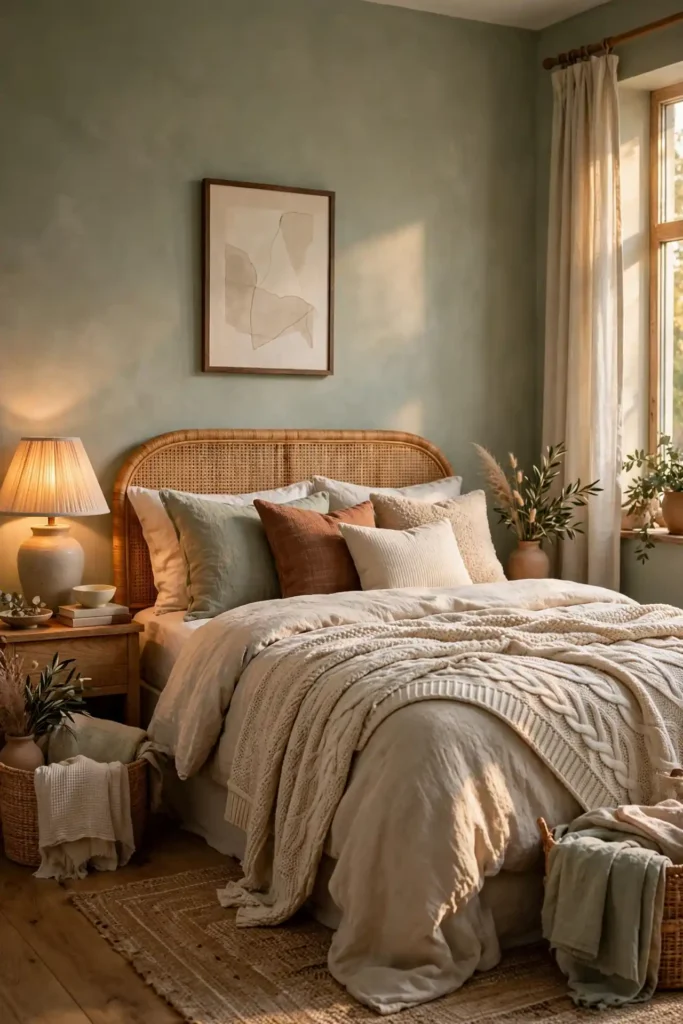
Finish your styling with lighting, art, and personal touches that support the calm mood. Choose warm white bulbs at 2700K for every lamp, since cool daylight bulbs can make sage look gray and flat. Hang artwork at eye level, about 57 inches from the floor to the center of the piece, and choose frames in wood, brass, or black to match your accent metals. Add one living element, like a plant or fresh eucalyptus stems in a vase, which costs about $10 at Trader Joe’s. Step back and remove one item if the room feels cluttered: in a serene palette, editing is the final styling step.
When it comes to sage green bedroom ideas, the best results come from balancing style, comfort and everyday function. Use this list as your go-to guide for sage green bedroom ideas, and start with the ideas that fit your space best.
How to Plan Sage Green Bedroom Ideas Step by Step
Plan your sage bedroom makeover in clear steps so you stay on budget and avoid costly rework. First, define your scope: a full repaint, a bedding refresh, or a complete redesign, and set a budget, with most sage bedroom updates landing between $200 and $1,500. Second, choose your exact sage shade using sample pots tested in your room’s light over two days. Third, list everything you need, from paint and brushes to bedding and lighting, and price it at Target, Home Depot, and IKEA. Order or buy the big pieces first, since bedding and furniture have the longest lead times.

Fourth, prep and paint before any new furniture arrives: clear the room, tape trim, and apply two coats, allowing four hours of drying time between coats. Fifth, install the big pieces: bed, rug, and curtains, hanging curtain rods 4 to 6 inches above window frames. Sixth, layer in bedding, pillows, and throws, then add lighting and art last so you can see how everything works together. Live with the room for a week before buying final accessories, since you’ll spot what’s missing once you sleep in it. This patient sequence keeps the project smooth and the result cohesive.
- Test sage paint samples in your light.
- Decide on full walls, accent wall or textiles only.
- Choose complementary bedding and curtains.
- Add wood furniture and brass or black accents.
- Finish with plants, art and textured decor.
Final Thoughts on Sage Green Bedroom Ideas
Sage green earns its place as a bedroom favorite because it delivers what a sleep space needs most: calm without boredom and color without intensity. It works with nearly every style, from modern farmhouse to coastal to traditional, and it pairs with an unusually wide range of accent colors. Because sage reads as a soft neutral, you can update the room for years by swapping pillows, throws, and art while the walls stay the same. Few colors offer that kind of long-term flexibility, which makes sage a smart investment for any bedroom makeover.
If you take one idea from this list, let it be this: start small, live with the color, and build from there. Try sage bedding or a single accent wall before committing to a full room, and give yourself a week to see how the green feels in your daily light. The best sage bedrooms aren’t the ones with the most green; they’re the ones where every shade and texture was chosen with care. Whether you paint all four walls or simply add a sage quilt and a plant, you’re bringing a little of nature’s calm indoors, and your sleep will thank you for it.
Save these ideas and follow along for more bedroom inspiration.
Frequently Asked Questions About Sage Green Bedroom Ideas
What is the most popular sage green paint for bedrooms? Sherwin-Williams Evergreen Fog and Benjamin Moore October Mist top most designer lists, with Evergreen Fog offering deeper, moodier coverage and October Mist staying light and airy. Is sage green good for a small bedroom? Yes, pale sages actually make small rooms feel larger because the soft green reflects light gently without the starkness of white. What bedding goes with sage walls? Crisp white, cream, and ivory bedding all work beautifully, letting the wall color take center stage while keeping the bed fresh and inviting.
Does sage green go with gray? It can, but choose warm grays rather than cool blue-grays, which may clash with sage’s earthy undertones. Warm greige tones blend seamlessly. How do you keep a sage bedroom from looking dull? Layer at least three textures, add warm 2700K lighting, and include one contrasting accent like brass, black, or terracotta for depth. Is sage green still trendy? Sage has moved beyond trend status into a modern classic, much like warm white or navy, so it won’t look dated in five years. Its versatility across styles keeps it relevant for the long term.
Is sage green good for a bedroom?
Yes. Sage is calming, natural and promotes a restful atmosphere.
What colors go with sage green in a bedroom?
White, cream, wood tones, blush, terracotta, navy and brass.
Is sage green still popular in 2026?
Yes. Sage remains one of the most popular bedroom colors.
What bedding goes with sage walls?
White, cream, oatmeal or blush bedding pair beautifully.
Can sage green work in a small bedroom?
Yes. Lighter sages keep small rooms feeling open and calm.





Leave a comment