


A chandelier is the jewelry of the dining room. It lights the table, defines the space in open-plan homes and sets the style for everything around it. Choosing the right one can feel overwhelming, though, with endless shapes, sizes and finishes to consider.
These 18 dining room chandelier ideas range from sleek modern fixtures to romantic vintage pieces, with practical sizing and hanging tips along the way. For a complete room, pair your fixture with our dining room lighting ideas and the right wall color from our dining room paint color ideas.
Quick sizing rules to remember:
- Add the room length and width in feet; the total in inches is a good chandelier diameter.
- Choose a fixture about one-half to two-thirds the width of the table.
- Hang the bottom 30 to 36 inches above the tabletop for 8-foot ceilings, adding 3 inches per extra foot.
- Use a dimmer for flexible mood lighting.
1. Sputnik Chandelier for Mid-Century Style
A sputnik chandelier instantly signals mid-century style with its starburst frame of radiating metal arms, each tipped with a small glowing globe. Born in the 1950s space-age era, the fixture reads as both sculpture and lighting, so it pulls double duty over your dining table. Polished brass arms paired with opal or clear glass globes warm up a room that already has walnut furniture, tapered table legs, or an Eames-style chair or two. Because the silhouette is open and airy, it never blocks sightlines across the table the way a solid shade can. Dimmer-compatible globe bulbs let you shift from bright family dinners to moody cocktail evenings in seconds.
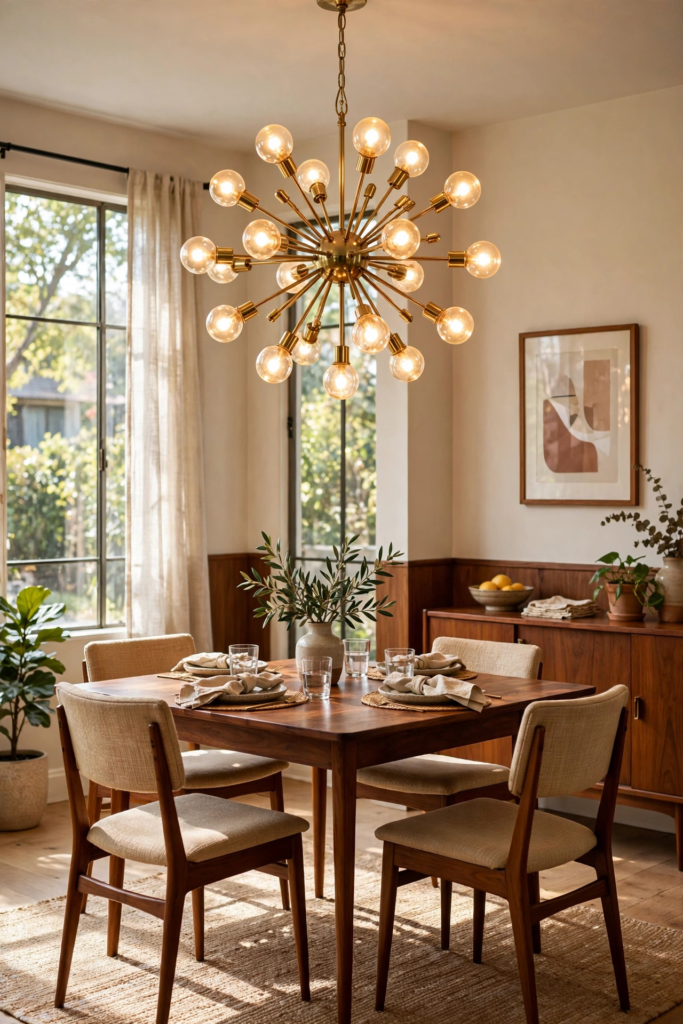
When you shop for a sputnik chandelier, size the fixture to about half the width of your dining table and hang it 30 to 36 inches above the tabletop. Lamps Plus and Wayfair stock versions from around $150 for a twelve-arm satin black model to $400-plus for solid brass with glass shades. Look for a fixture with an adjustable downrod so you can dial in the height on taller ceilings. Many models arrive as kits with clear assembly diagrams, and a confident DIYer can install one in under two hours. Hire an electrician ($150 to $300 per fixture in most US markets) if the junction box needs moving or the wiring is old.
2. Linear Chandelier Over a Long Table
Rectangular dining tables deserve lighting that mirrors their shape, which is exactly why a linear chandelier is such a popular pick. The long bar or rail suspends several bulbs along its length, spreading warm, even light from one end of the table to the other instead of pooling it in the middle. Modern farmhouse and transitional kitchens gravitate toward black metal rails with clear glass shades or seeded glass cylinders that add texture. A slim profile keeps the fixture from visually crowding the room, and many designs let you adjust the hanging height with two slim cables. You get functional task lighting that still looks like deliberate decor.
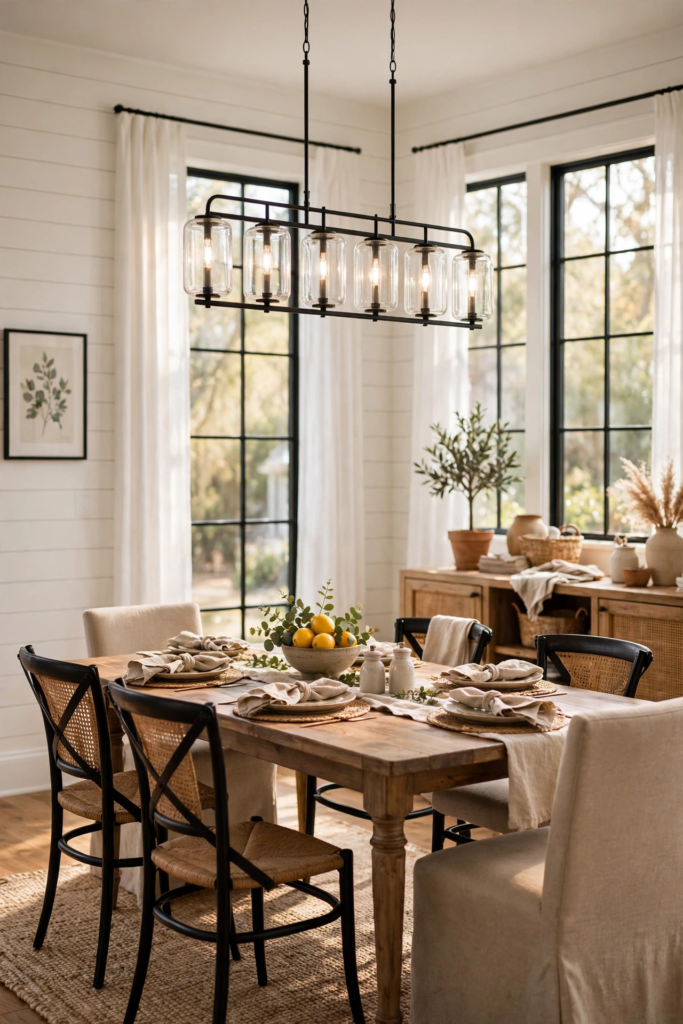
Size a linear chandelier to roughly one-half to two-thirds of the length of your dining table, and keep the bottom of the fixture 30 to 36 inches above the tabletop for glare-free conversation. Home Depot and Lowe’s carry dependable models from $200 to $600, often with LED-compatible medium bases so you can use warm 2700K bulbs for a cozy glow. Always wire it to a dimmer switch; full brightness for homework and crafts, low for dinner parties. Check the product listing for the maximum hanging length, because vaulted ceilings may need an extension rod. If your existing box is centered but the table is not, an electrician can add a swag hook or relocate the box for $150 to $250.
3. Crystal Chandelier for Classic Glamour
Nothing says classic glamour like a crystal chandelier sparkling over a polished dining table. Cut glass or K9 crystal prisms catch the light and throw tiny rainbows across the walls, which makes even weeknight dinners feel a little more special. Traditional tiered silhouettes pair beautifully with crown molding, wainscoting, and upholstered host chairs, while cleaner modern crystal designs suit transitional rooms that want sparkle without fuss. Because crystals reflect every light source in the room, the fixture brightens dark corners far beyond the table itself. Choose warm-white bulbs around 2700K so the prisms glow golden instead of looking cold and blue.
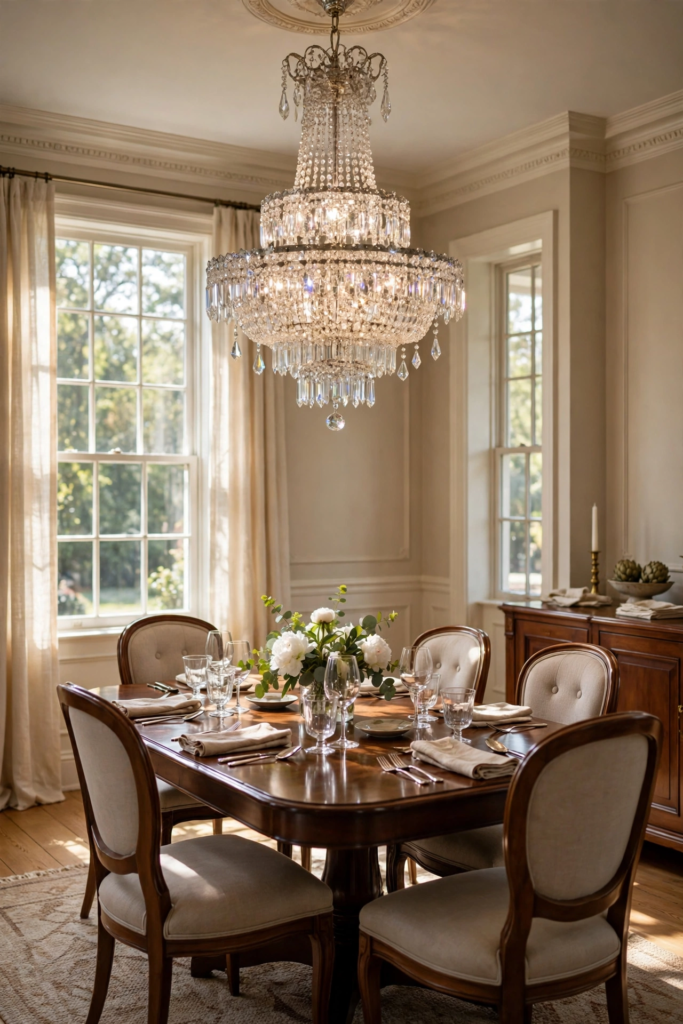
Real crystal chandeliers need a ceiling box rated for their weight, which often means a brace bar between joists — an electrician typically charges $200 to $350 for a heavy fixture installation. On Wayfair and Amazon, entry-level crystal chandeliers start around $250, while hand-strung K9 crystal pieces at Lamps Plus run $800 to $1,200 and up. Measure carefully: the chandelier’s diameter should be about half the table width, hung 30 to 36 inches above the surface. Plan on dusting the prisms with a microfiber cloth every few months, since dust dulls the sparkle fast. Spray-on crystal cleaner lets you clean in place without unhooking every prism, saving serious time.
4. Wood Bead Chandelier for Coastal Charm
A wood bead chandelier brings relaxed coastal charm to the dining room with strands of rounded wooden beads draped between metal hoops. The natural texture softens hard dining furniture and echoes other organic materials like jute rugs, linen slipcovers, and light oak floors. Because the beads are spaced apart, light filters through in a dappled pattern that feels warm and vacation-like, especially with warm-white bulbs. Whitewashed or natural wood finishes suit beach house and Scandinavian-inspired rooms, while stained darker versions lean rustic. This style reads casual and inviting, so it works beautifully in open-plan spaces where the dining area flows into the kitchen or living room.
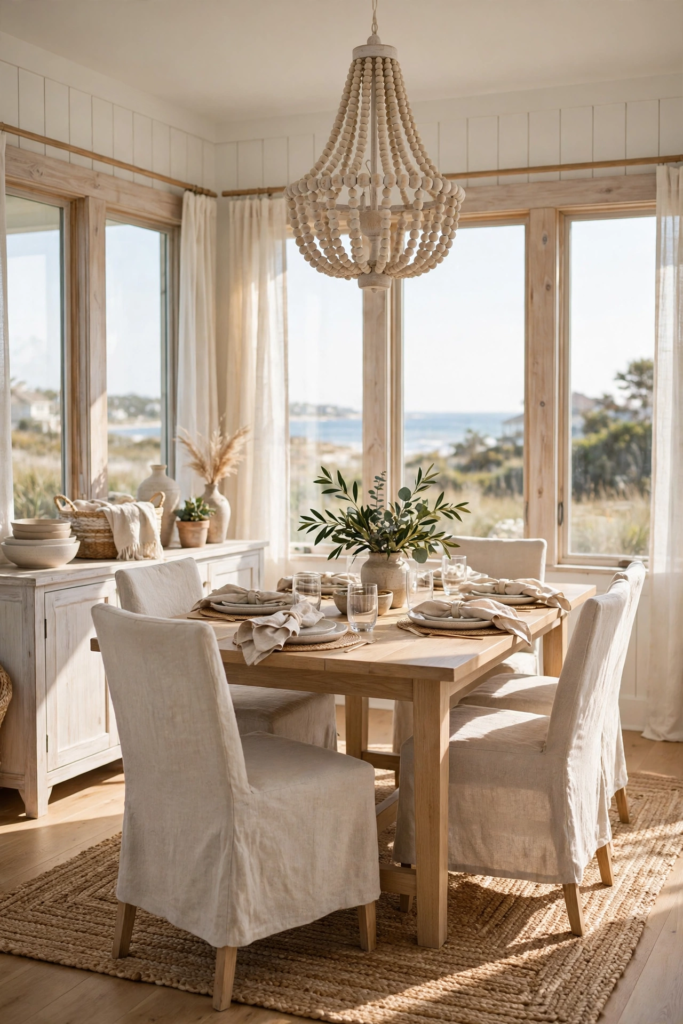
Wood bead chandeliers are among the easiest fixtures to hang yourself because the open beadwork is surprisingly lightweight — many weigh under 15 pounds. Target and World Market sell them from $120 to $350, while higher-end versions at Serena & Lily run $600 to $900. Size the hoop to about half your table width and hang it 30 to 36 inches above the tabletop. Dust the beads occasionally with a dry cloth; in kitchens, grease buildup can be wiped with a damp cloth and mild soap. If you rent or cannot rewire, several brands make plug-in swag versions that hang from a ceiling hook and drape to a wall outlet, no electrician required.
5. Rattan or Woven Pendant
A rattan or woven pendant turns your dining table into the coziest spot in the house with its handcrafted, basket-like glow. Woven from natural rattan, bamboo, or seagrass, the shade throws patterned light across the ceiling and walls that feels effortlessly bohemian. It pairs naturally with light wood tables, cream upholstery, and plenty of plants for that collected, well-traveled look. Because the weave diffuses light softly, the fixture flatters faces at the table — nobody looks harsh or washed out during dinner. Choose a tighter weave for more focused downlight or an open weave for ambient glow that spreads across the whole room.
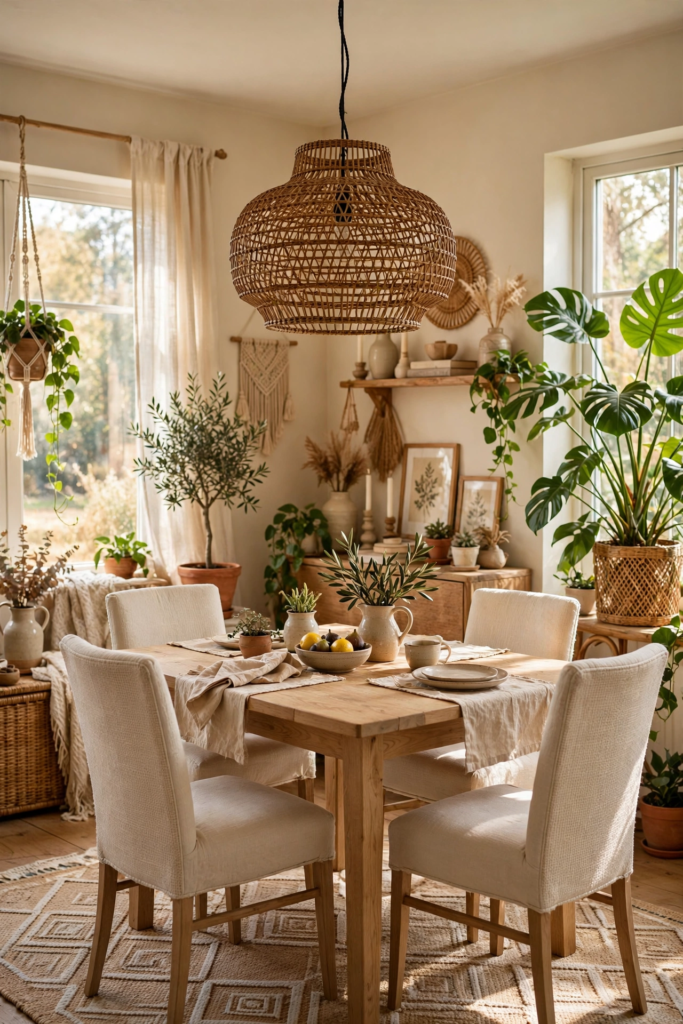
Rattan pendants are a budget win — IKEA, Amazon, and Etsy sellers list them from $40 to $150, with artisan versions on Etsy reaching $300. Because they are light and airy, size generously: a 20- to 24-inch diameter shade suits a standard 72-inch table, hung 30 to 36 inches above the surface. Always use LED bulbs, which run cool and reduce any heat concern with natural fibers. Keep them out of heavy-cooking kitchens, where grease can settle into the weave; a quick vacuum with a brush attachment keeps them clean. Installation is straightforward for most DIYers since the shades weigh little, but call an electrician ($125 to $200) if you need a new junction box.
6. Black Iron Candle-Style Chandelier
A black iron candle-style chandelier gives your dining room the look of a colonial tavern without sacrificing modern convenience. The fixture mimics clusters of candles on wrought-iron arms, complete with drips of faux wax on the sleeves, which creates instant farmhouse or rustic lodge character. Matte black metal is forgiving — it hides dust, pairs with almost any wood tone, and never looks dated next to stone or brick. Faux-candle bulbs in a warm 2200K to 2700K range complete the illusion, flickering gently on a dimmer. Guests notice the charm before they notice the lighting, which is exactly the point: atmosphere first, lumens second.
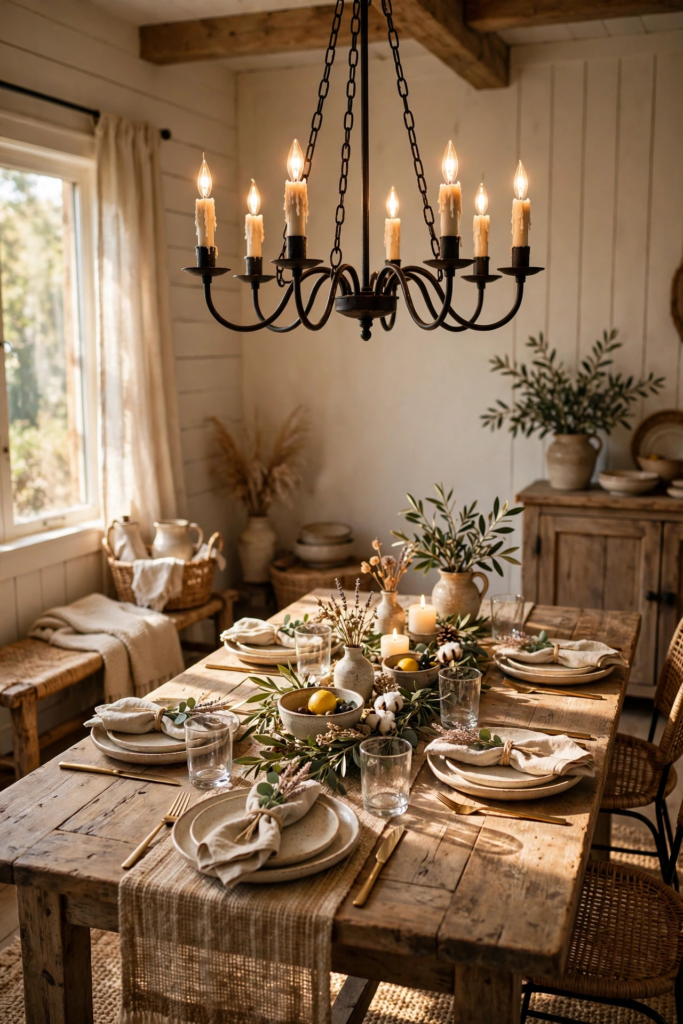
Black iron chandeliers are widely available: Wayfair and Pottery Barn carry candle-style designs from $180 to $500, with Pottery Barn’s artisan models reaching $800. Choose a width about half your table size and hang the bottom of the candle sleeves 30 to 36 inches above the tabletop. LED candelabra bulbs give you the flicker look at a fraction of the energy cost and last for years without replacement. Wipe the faux-wax drips with a damp cloth once or twice a year — real candles would be a fire hazard, so never substitute them. Most models weigh 15 to 25 pounds, so a standard ceiling box usually suffices, keeping electrician costs around $125 to $200.
7. Globe Cluster Chandelier
A globe cluster chandelier looks like a bouquet of bubbles frozen above your dining table, and that playfulness is exactly its charm. Multiple glass orbs — sometimes uniform, sometimes mixed sizes — branch off a central stem or canopy at staggered heights, creating depth without heaviness. Frosted white globes give a soft, even glow that suits Scandinavian and modern rooms, while clear or smoked glass versions lean more dramatic. Because each orb holds its own bulb, the fixture delivers generous light that fills the table evenly. It photographs beautifully too, which matters if your dining room doubles as your entertaining backdrop.
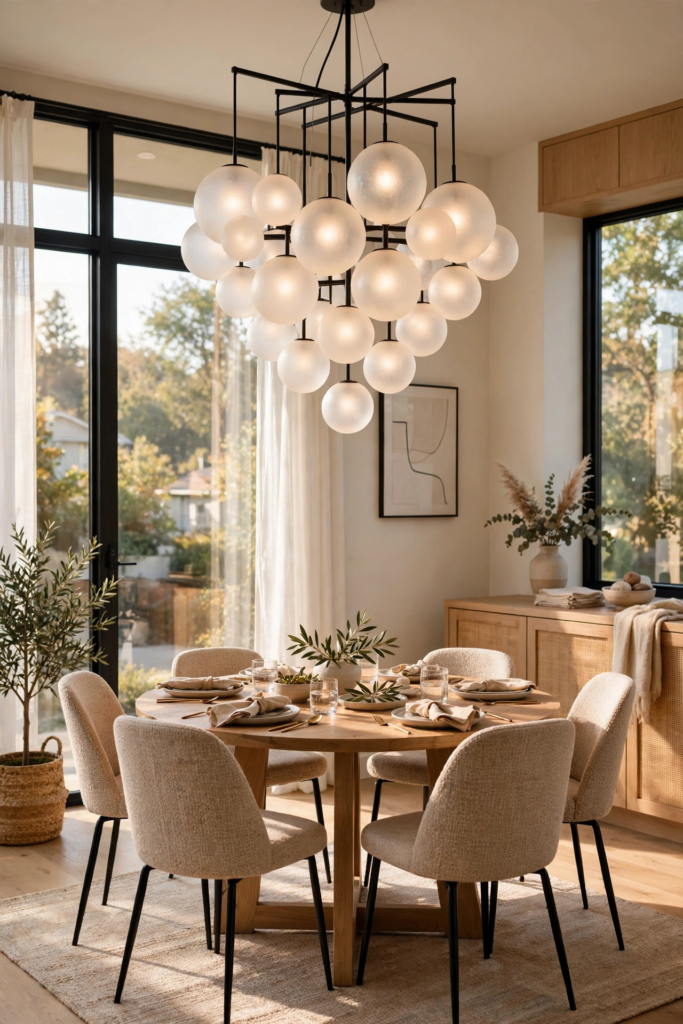
Globe cluster chandeliers run $250 to $700 at CB2, West Elm, and Amazon, with designer versions climbing past $1,000. Look for models with adjustable stems so you can vary each orb’s drop — staggered heights look best over round tables, while level rows suit rectangular ones. Keep the overall footprint around half your table’s width and hang the lowest globe 30 to 36 inches above the tabletop. Dimmable G9 or E12 bulbs in each globe let you tune the mood, and LED versions keep the electric bill low despite the bulb count. Installation takes patience because you assemble multiple arms, so budget two hours for DIY or $150 to $250 for an electrician.
8. Drum Shade Chandelier
A drum shade chandelier is the peacemaker of dining room lighting — soft, unfussy, and compatible with nearly every style. The wide fabric cylinder diffuses light in every direction, eliminating harsh shadows so faces look relaxed and food looks appetizing. Linen, burlap, and neutral cotton shades suit farmhouse and coastal rooms, while black or patterned drums add polish to modern and eclectic spaces. Because the shade hides the bulbs, you get a clean silhouette that never competes with art or window views. It is also one of the most forgiving fixtures to live with: no crystals to dust, no glass to smudge.
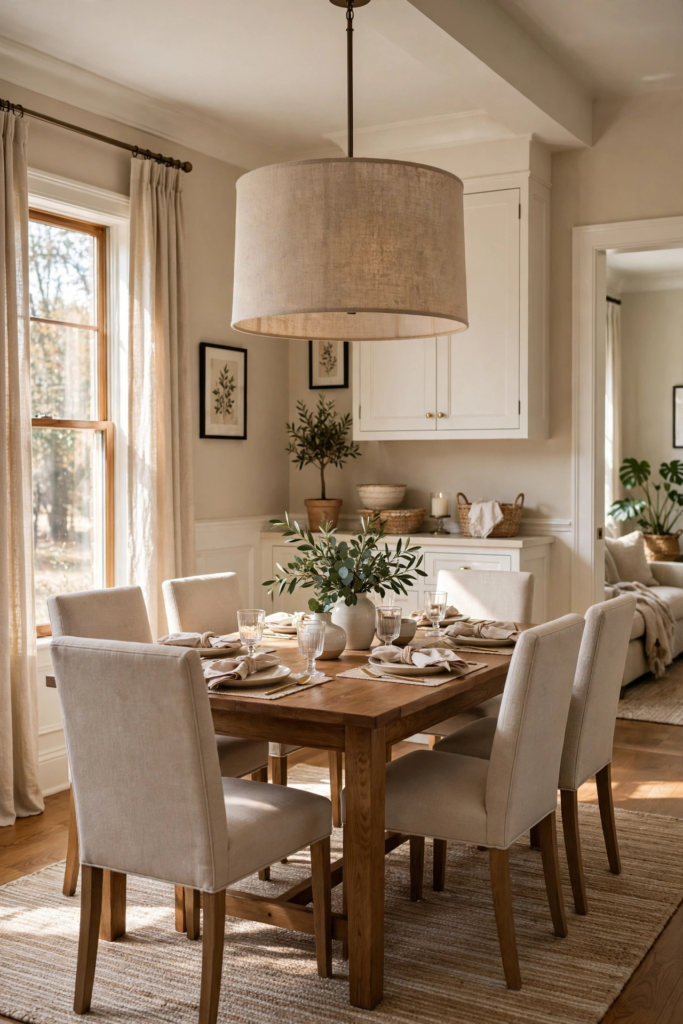
Drum shade chandeliers are easy on the wallet: Target and Home Depot stock them from $80 to $250, with linen shades at the higher end. Size the drum’s diameter to about half your table width and at least 12 inches high for good diffusion, hung 30 to 36 inches above the table. Choose a translucent shade if you want maximum light output, or a lined opaque drum for moodier, more directional glow. Vacuum the fabric with an upholstery attachment twice a year to keep dust off. Most are lightweight and wire to a standard box, so DIY installation is realistic — otherwise an electrician runs $125 to $200, plus a dimmer switch upgrade.
9. Tiered Chandelier for Tall Ceilings
A tiered chandelier turns a tall ceiling from an awkward void into the room’s best feature. Multiple stacked rings or layers of lights draw the eye upward and fill vertical space that a single fixture would leave empty. Wrought-iron tiers with candle sleeves suit rustic great rooms, while crystal or glass tiers bring hotel-lobby drama to formal dining spaces. The layered design casts light at several heights at once, so the room feels evenly lit from table to ceiling. If your ceiling is ten feet or higher, a tiered fixture is practically a requirement — anything smaller will look lost and underwhelming.
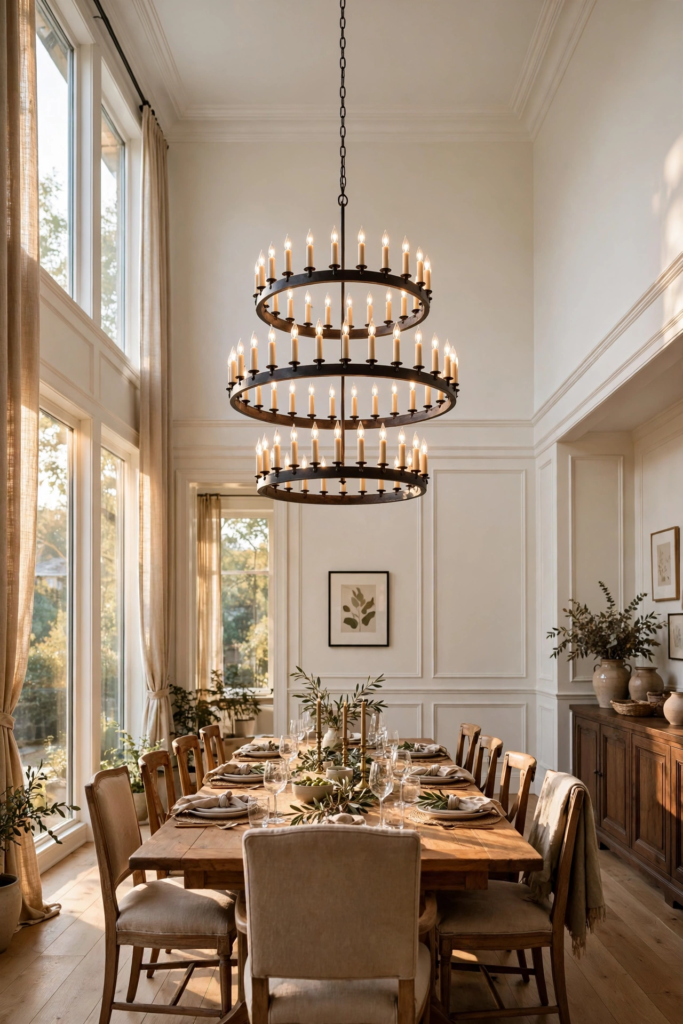
For ceilings ten feet or higher, buy a tiered chandelier with an extra-long chain or downrod — many Wayfair models from $300 to $900 include six feet of chain standard. Go bigger than usual: a fixture three-quarters of your table width looks balanced under a tall ceiling. Professional installation is strongly recommended because these fixtures are heavy and often require a tall ladder or scaffolding; expect $250 to $450 for the electrician. Add a dimmer rated for the fixture’s total wattage so you can soften the many bulbs for dinner. Clean tiered designs from below with an extendable duster, and schedule a deeper clean yearly since height makes grime easy to ignore.
10. Orb Chandelier
An orb chandelier is a sphere of curved metal bands that reads as modern art the moment you walk in. The open-frame globe keeps sightlines clear across the room, which makes it ideal for smaller dining areas where a solid fixture would feel heavy. Wood-toned bands lean farmhouse, black metal skews industrial-modern, and brass or gold finishes bring a touch of glam. Candles or bulbs peeking through the open frame cast gorgeous patterned shadows on the walls at night. Because the shape is symmetrical from every angle, it looks intentional even in rooms with awkward layouts or off-center tables.
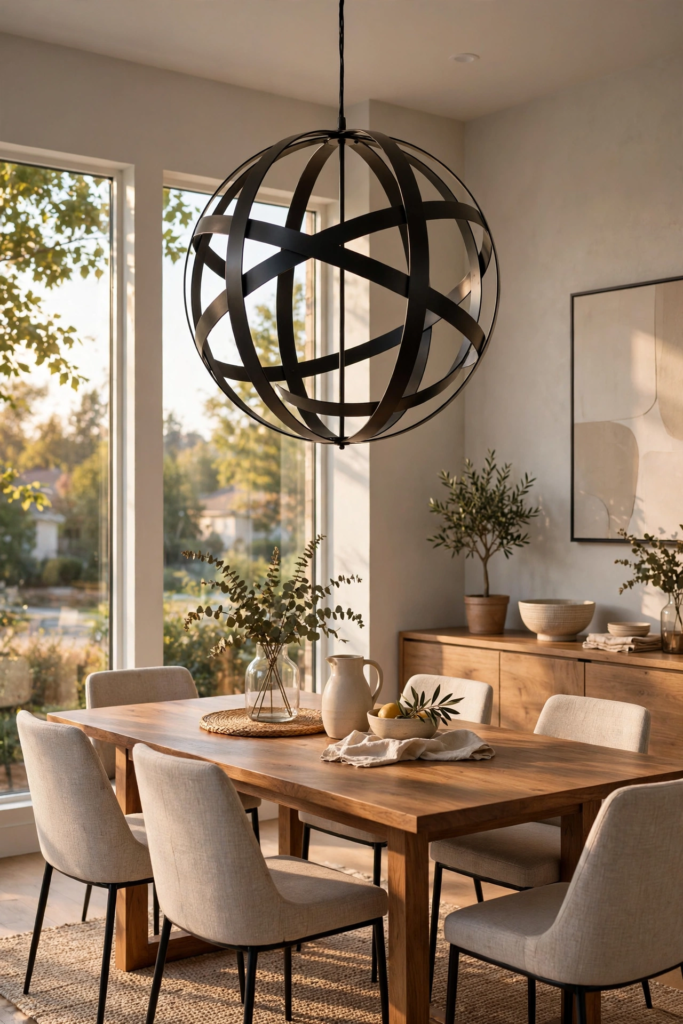
Orb chandeliers are widely stocked at Home Depot, Lowe’s, and Amazon from $100 to $400, with most dining-room models measuring 20 to 30 inches in diameter. Pick a diameter about half your table width and hang it 30 to 36 inches above the tabletop — the open frame means you can size up slightly without overwhelming the space. LED candelabra bulbs complete the look while staying cool inside the metal frame. Most orbs weigh under 20 pounds, so a standard ceiling box and a confident DIYer are usually enough. If the fixture arrives flat-packed, lay out the bands and hardware before you start; assembly takes 45 to 90 minutes.
11. Minimalist LED Ring
A minimalist LED ring chandelier strips dining room lighting down to pure line and glow. One or two slim metal hoops — sometimes concentric, sometimes offset — house integrated LEDs that wash the table in clean, even light with zero visible bulbs. The sculptural simplicity suits contemporary and minimalist dining rooms, especially paired with a live-edge wood table or stark white walls. Because there is no shade or ornament, the fixture visually disappears during the day and becomes a floating halo at night. It is the rare chandelier that satisfies both design lovers and people who just want great light.
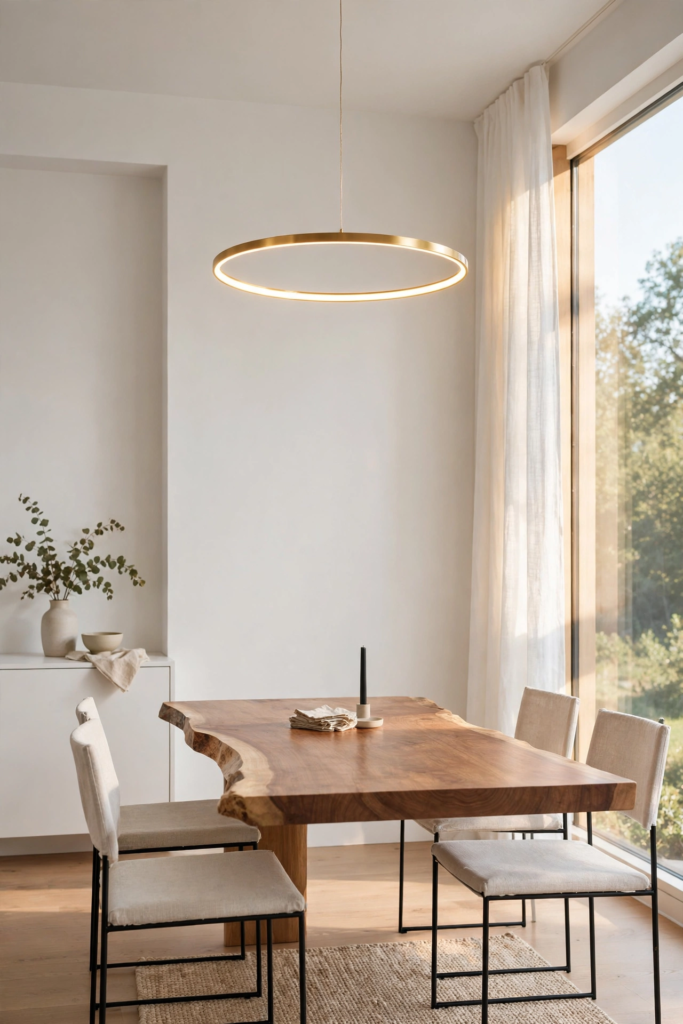
LED ring chandeliers typically cost $200 to $800 on Amazon and Wayfair, with design-forward brands like Arteriors running higher. Integrated LEDs last 30,000 to 50,000 hours, so you will rarely think about bulb changes — but check whether the driver is replaceable in case it fails. Confirm the dimmer compatibility in the listing, since some integrated LEDs only work with specific dimmer models; mismatched dimmers cause flicker. Hang the ring 30 to 36 inches above the table and size it to half the table width. Choose a model with adjustable color temperature (2700K to 4000K) so you can shift from warm dinners to bright task lighting. Electrician installation runs $150 to $250.
12. Vintage Brass Chandelier
A vintage brass chandelier brings warm, lived-in character that no shiny new fixture can fake. Aged brass with its honeyed patina flatters wood tones, leather, and warm wall colors, anchoring traditional and eclectic dining rooms alike. Whether you score an authentic mid-century find or buy a new reproduction with an antique finish, the metal’s golden glow makes the whole room feel richer. Brass pairs beautifully with candle-style bulbs, frosted glass shades, or even bare Edison filaments for a collected-over-time look. It is one of the few finishes that genuinely improves with age as the patina deepens.
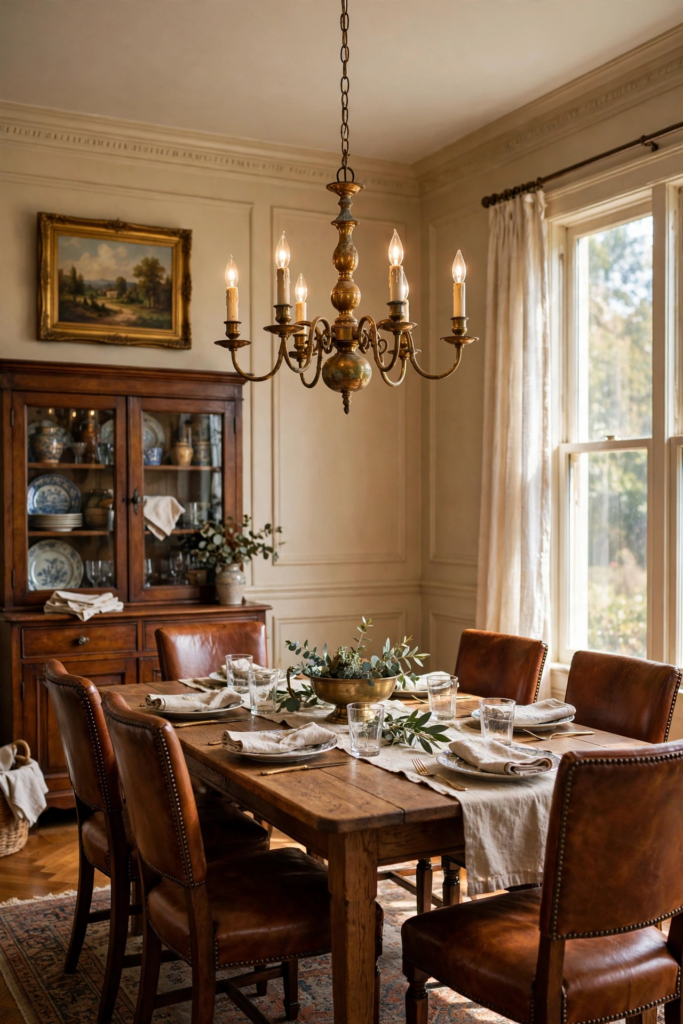
Authentic vintage brass chandeliers turn up on Etsy, Facebook Marketplace, and local antique shops from $150 to $600, while new antique-finish reproductions at Lamps Plus run $300 to $700. Have any true vintage fixture inspected and rewired by an electrician — rewiring plus installation typically costs $200 to $400, and it is non-negotiable for safety. Decide upfront whether you want to polish the brass bright or preserve the patina; once polished, the aged look is gone. Size it to half your table width and hang it 30 to 36 inches above the tabletop. Pair with dimmable warm bulbs so the brass glows rather than glares.
13. Paper Lantern Chandelier
A paper lantern chandelier floats over the dining table like a glowing moon, softening the whole room with diffused light. Made from rice paper stretched over a wire or bamboo frame, it casts a warm, shadowless glow that flatters everyone at the table and suits Japanese-inspired, Scandinavian, and minimalist rooms. The round or oval silhouette adds gentle curves that balance the hard rectangles of tables and sideboards. Because the material is so light, oversized lanterns feel airy rather than overwhelming. It is proof that the simplest fixture in the room can also be the most calming.
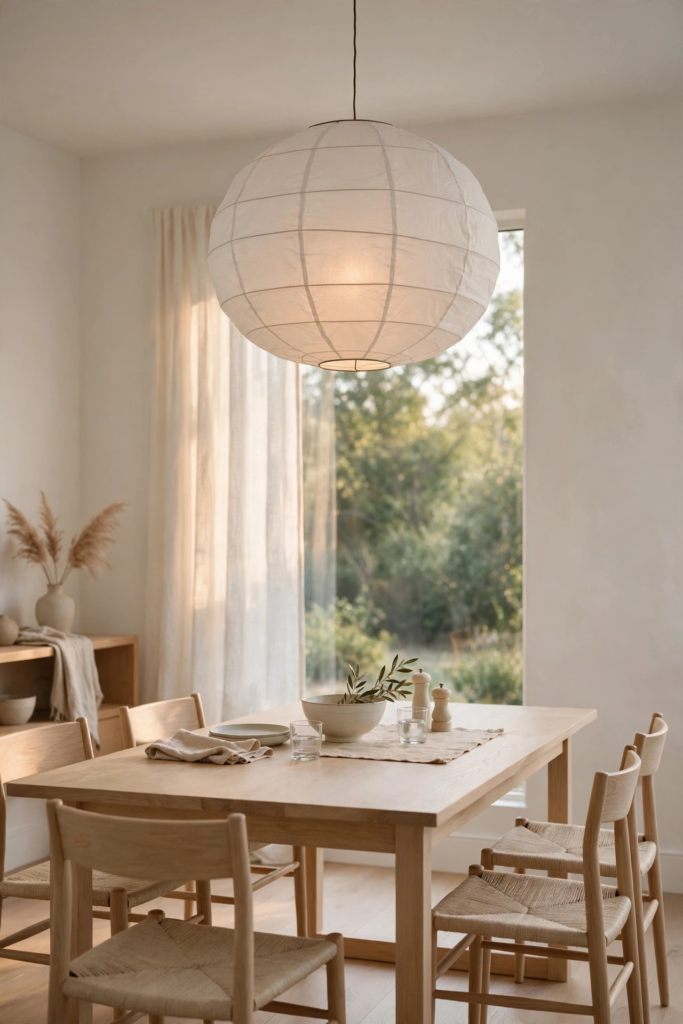
Paper lantern chandeliers are the ultimate budget fixture — IKEA and Amazon sell them from $25 to $80, and replacement shades cost almost nothing when one yellows or tears. Size generously: a 20- to 28-inch lantern suits a standard dining table, hung 30 to 36 inches above the surface. Always use cool-running LED bulbs and keep the lantern away from heat sources, since paper and hot incandescents are a bad combination. Dust with a dry microfiber cloth; never use water or cleaners on rice paper. Many come as plug-in pendants with long cords, so renters can hang one from a ceiling hook and swag it to an outlet with zero wiring.
14. Pair of Pendants Over a Long Table
Two pendants over a long dining table can outshine a single chandelier with better light distribution and more visual rhythm. Spacing a pair evenly — typically over the table’s thirds — eliminates the dark ends that one central fixture often leaves. Matching pendants create a tailored, intentional look, while a mixed pair in the same finish family adds collected charm. Glass, metal, or woven shades all work; the key is keeping both pendants identical in size and hanging height. The doubled fixture also lets you play with scale, using two medium pendants where one oversized chandelier might feel clumsy.
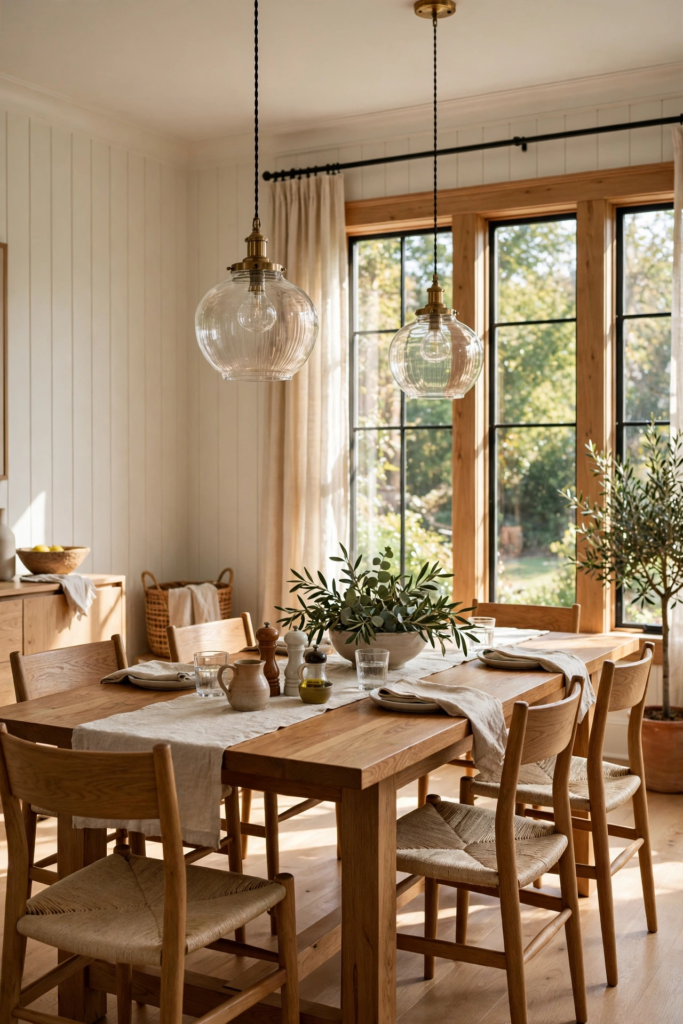
Hang the pair so each pendant centers over one-third of the table length, with both bottoms 30 to 36 inches above the tabletop and perfectly level with each other. Home Depot, Lowe’s, and Shades of Light sell matching pendant pairs from $80 to $300 per fixture. Wiring two pendants means two junction boxes, so if your ceiling has only one, an electrician will charge $200 to $350 to add the second box and wire. Put both on a single dimmer so they always match in brightness. Before you buy, mock up the spacing with painter’s tape on the ceiling and paper templates at table height — it prevents expensive misjudgment.
15. Colored Glass Chandelier
A colored glass chandelier is the fastest way to give your dining room a personality that guests remember. Amber, emerald, cobalt, or smoky gray glass shades glow like jewels when lit, turning the fixture into the room’s focal point day and night. The colored glass naturally tints the light, so amber shades warm up cool gray walls while blue or green glass adds jewel-box drama to neutral rooms. It works especially well in otherwise simple dining spaces that need one bold move. Because the color does the talking, you can keep the fixture’s shape simple — a row of colored globes or a single sculptural shade.
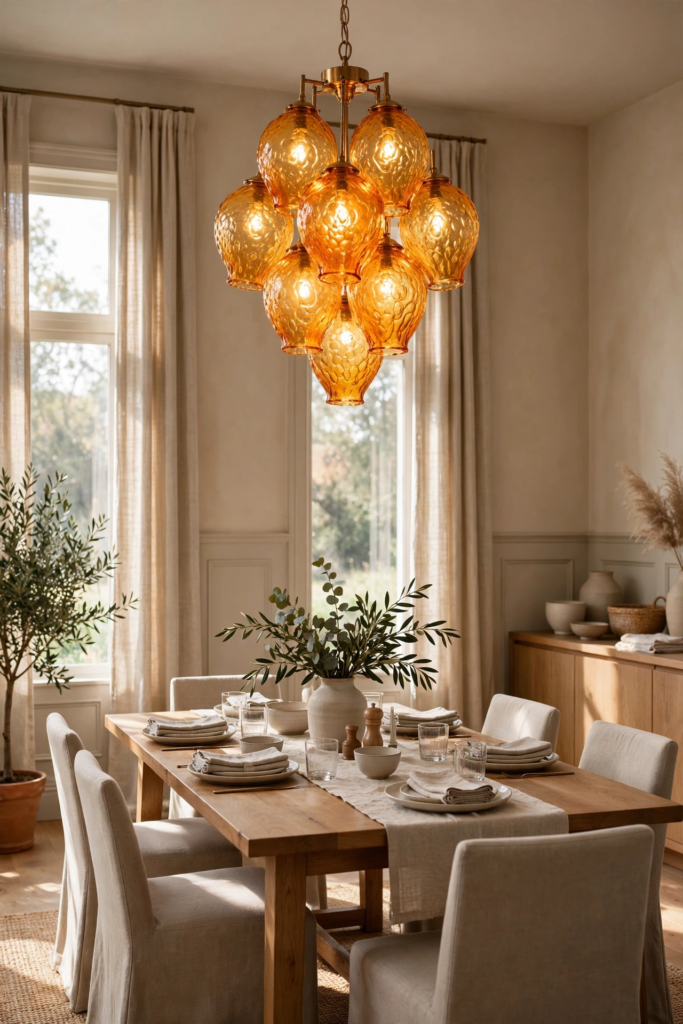
Colored glass chandeliers start around $200 on Etsy and Amazon, with artisan pieces at Anthropologie and Lumens running $400 to $700. Before committing, test how the glass tints your light — amber flatters food and skin tones, while green or blue glass can make a room feel cooler and may clash with warm wood. Keep the rest of the room’s palette quiet so the fixture stays the star; too many competing colors will fight it. Size it to about half your table width and hang 30 to 36 inches above the tabletop. A dimmer is essential, since colored glass looks its best glowing softly rather than blazing at full brightness.
16. Branch or Organic Chandelier
A branch or organic chandelier brings the outdoors in with sculptural arms that twist like tree limbs. Whether cast in bronze, finished in matte black, or made from actual preserved branches, the fixture adds wild, natural energy that contrasts beautifully with a polished dining table. It suits rustic-modern, wabi-sabi, and nature-inspired rooms, especially alongside stone, linen, and live-edge wood. The irregular silhouette means no two fixtures look exactly alike, which gives your dining room a one-of-a-kind feel. Candle-style or small globe bulbs tucked among the branches create a magical, firefly-like glow after dark.
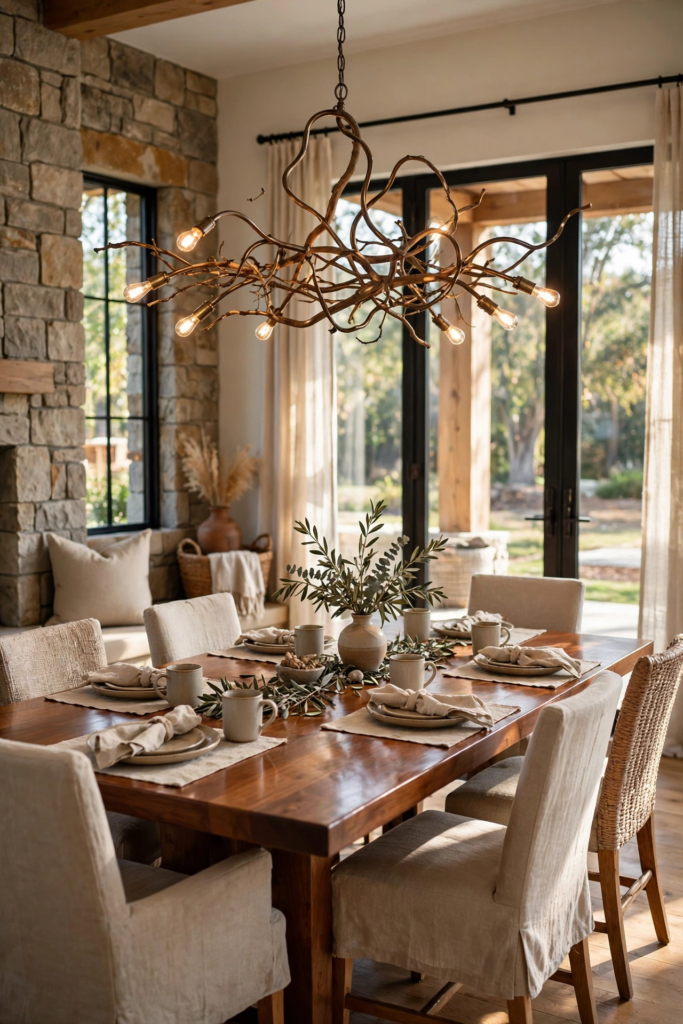
Organic branch chandeliers range from $400 on Wayfair and Etsy to $1,200-plus for cast-bronze designs from Currey & Company. The branching arms collect dust, so plan on a yearly wipe-down with a microfiber cloth or a blast from a hair dryer on cool. Size the fixture to one-half to two-thirds of your table width and hang it 30 to 36 inches above the tabletop so branches clear heads. Many designs are heavy, so confirm your ceiling box is braced — an electrician charges $200 to $350 for a supported installation. Use small LED globe or candelabra bulbs that tuck discreetly among the branches without competing with the sculptural form.
17. Industrial Pulley Chandelier
An industrial pulley chandelier puts you in control with a working pulley and counterweight that raises or lowers the fixture. Born from factory and warehouse lighting, the design pairs blackened steel, exposed chains, and Edison-style bulbs for authentic loft character. The adjustable height is genuinely useful — lower it for intimate dinners, raise it for parties or when kids need the table for projects. It anchors industrial, rustic, and masculine dining rooms, especially with concrete, reclaimed wood, or brick in the mix. Because the mechanism is the decoration, even the hardware earns its keep visually.
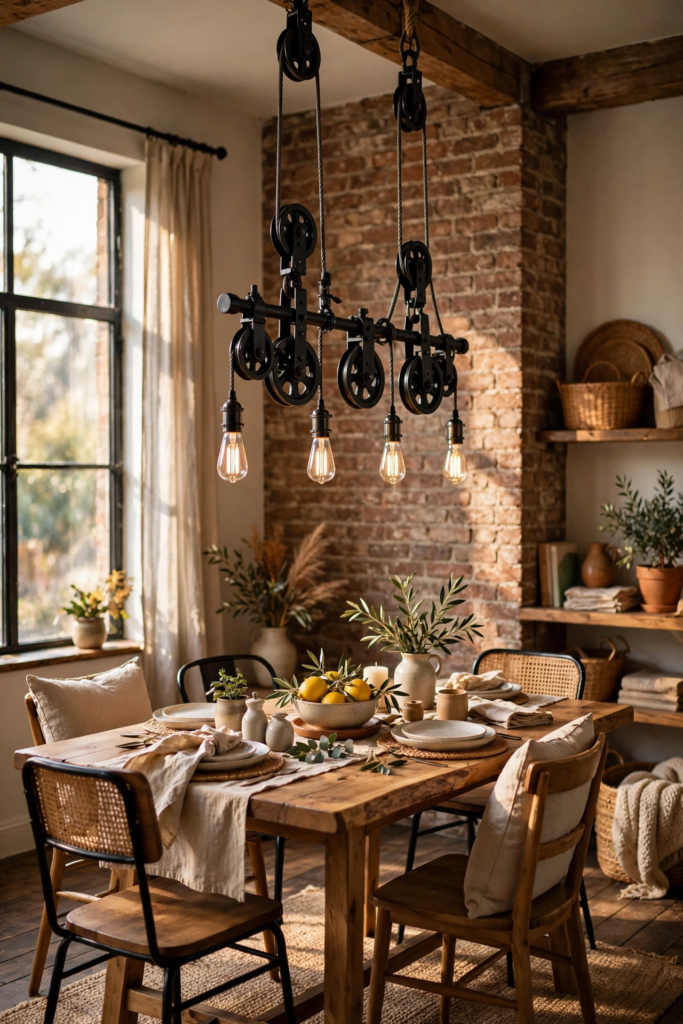
Pulley chandeliers run $250 to $700 at Wayfair and Amazon, with Restoration Hardware versions reaching $1,000 and up. Test the pulley action before final installation — it should glide smoothly and hold position without creeping. Make sure the counterweight is secured and the cord or chain is rated for the fixture’s weight, and never exceed the manufacturer’s listed range. Hang the fixture 30 to 36 inches above the tabletop at its standard position. Because the moving parts add complexity, professional installation ($200 to $300) is smart money. Choose dimmable Edison-style LEDs to keep the vintage look without the heat or energy waste.
18. Statement Oversized Chandelier
A statement oversized chandelier is the dining room equivalent of a bold red lip — unapologetic, confident, and impossible to ignore. Going big works because a single dramatic fixture simplifies the room: one hero piece instead of a cluster of small ones competing for attention. Oversized drums, giant orbs, or sprawling multi-arm designs anchor open-plan spaces and rooms with tall ceilings where standard fixtures would disappear. The trick is proportion, not just size — the fixture should relate to the table and the room’s volume. Done right, guests talk about your chandelier before they notice anything else.
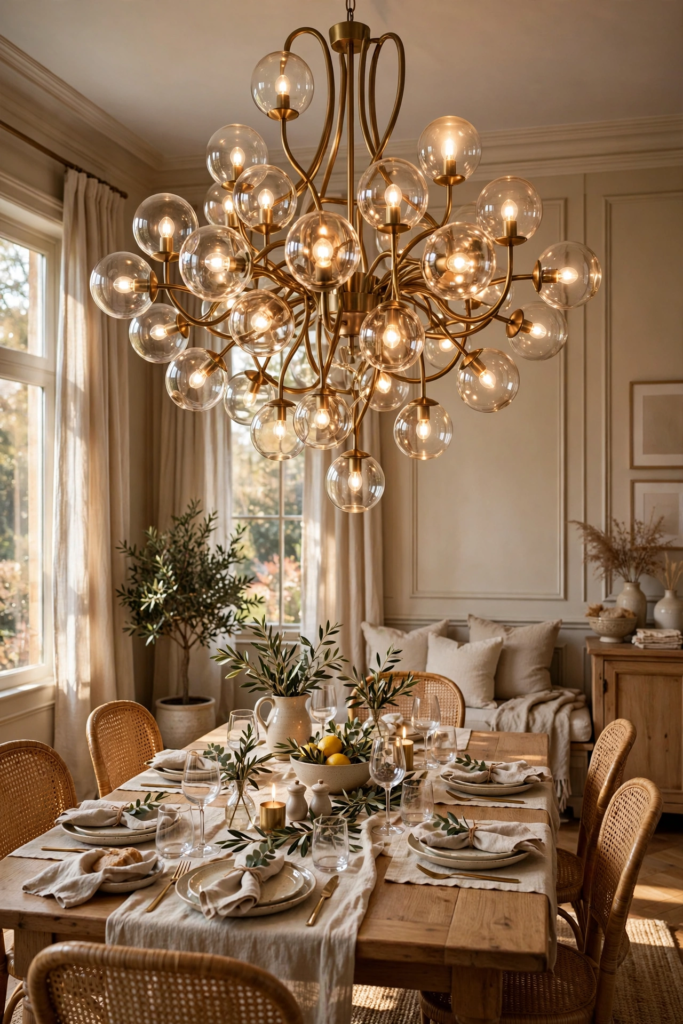
Oversized chandeliers start around $400 on Wayfair and climb past $1,500 at Lamps Plus for large designer pieces. Use the classic sizing formula: add your room’s length and width in feet, and choose a fixture with roughly that diameter in inches — a 12-by-14-foot room suits a 26-inch chandelier, so go bigger for statement scale. Confirm your ceiling box is braced for the weight, which often exceeds 50 pounds; an electrician typically charges $250 to $400 for a reinforced installation. Hang it 30 to 36 inches above the tabletop, or higher if the fixture’s bulk blocks sightlines. A dimmer is essential so the drama never becomes glare.
How to Choose Dining Room Chandelier Ideas for Your Space
Choosing the right dining room chandelier comes down to three measurements and one honest style check. First, size the fixture to about half to two-thirds of your table’s width — or use the room formula (length plus width in feet equals diameter in inches) when the room itself is the driver. Second, hang it 30 to 36 inches above the tabletop, adding three inches of height for every foot of ceiling above eight feet. Third, match the fixture’s style to your room’s dominant materials: brass with warm woods, black metal with modern contrasts, crystal with formal details. Finally, check the total wattage or lumens so the fixture actually lights the table, not just decorates it.
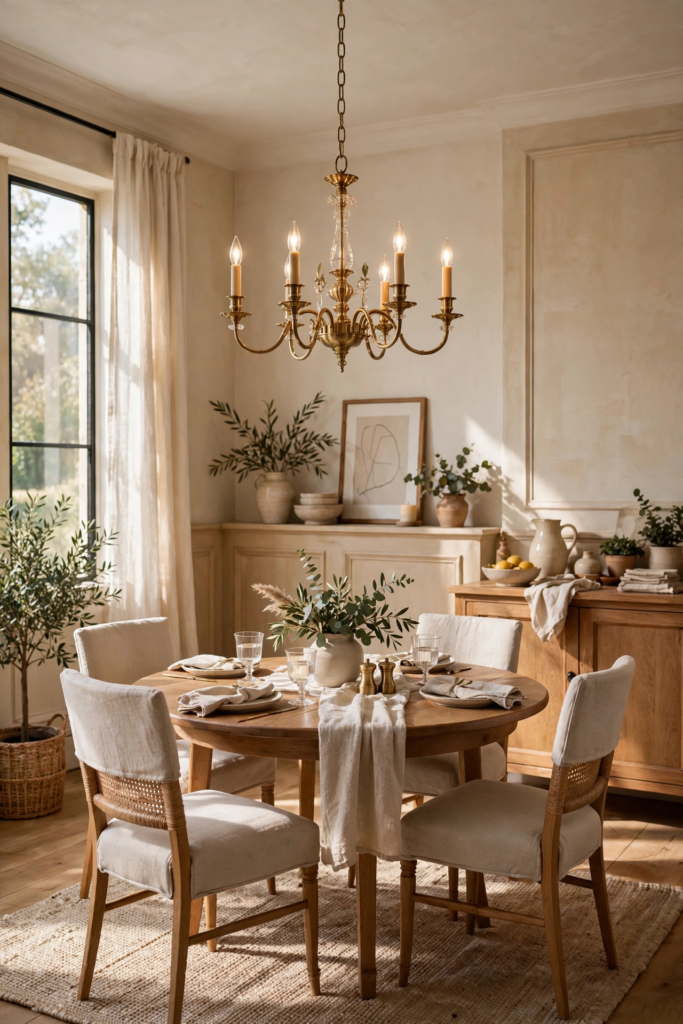
Once the size is right, think about how the light will actually feel. Wire every dining chandelier to a dimmer — it is the single cheapest upgrade, usually $25 to $50 for the switch plus installation. Choose 2700K warm-white bulbs for flattering dinner light, and check that the fixture’s sockets accept the bulb type you want. Set a budget before you browse: solid options run $150 to $400 at Home Depot and Target, $400 to $800 at Wayfair and Lamps Plus, and $800-plus for designer pieces. Read the installation manual’s weight and wiring requirements before buying, and call an electrician ($150 to $300) whenever you need a new box, a brace, or rewiring.
How to Install Dining Room Chandelier Ideas Step by Step
Installing a dining room chandelier is a satisfying weekend project if you follow the steps in order and respect the electricity. Start by switching off the breaker — not just the wall switch — and confirm the power is dead with a non-contact voltage tester. Gather a ladder, wire strippers, wire nuts, electrical tape, and a helper; most chandeliers are awkward to hold overhead alone. Remove the old fixture and inspect the ceiling box: it must be rated for ceiling fans or fixtures, and heavy chandeliers need a brace bar between joists. Assemble the new chandelier on the ground first, threading wires through the chain or downrod, and adjust the hanging length before you lift anything.
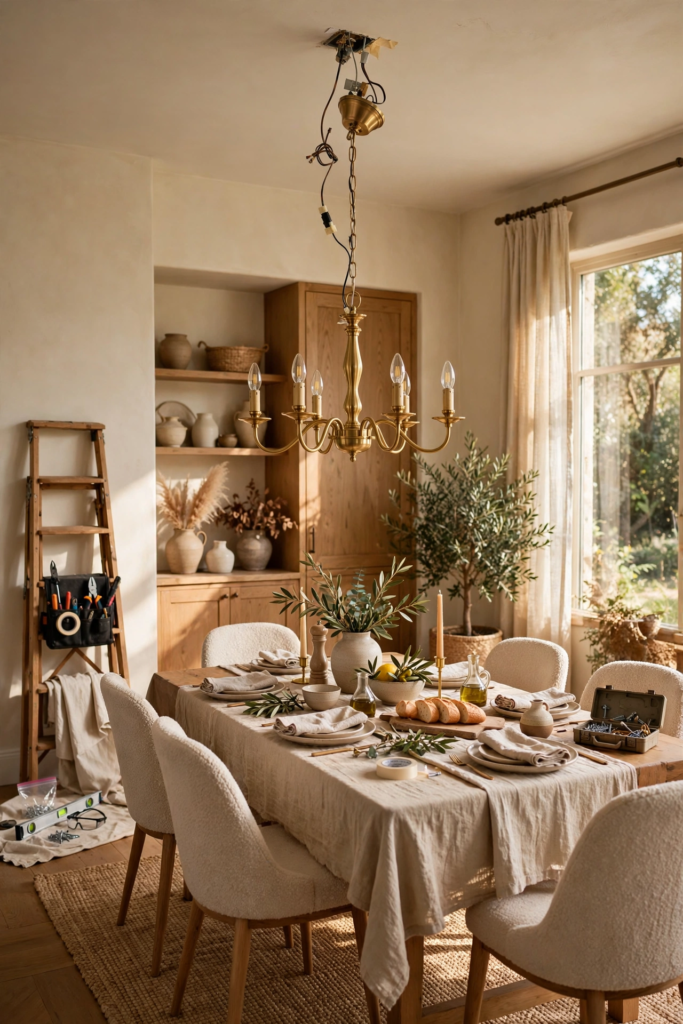
With the power confirmed off, connect the wires: fixture black to ceiling black (hot), white to white (neutral), and the bare copper or green wire to the ground screw or wire. Tuck the connections neatly into the box, then secure the mounting bracket and lift the chandelier into place — this is where your helper earns their keep. Adjust the chain or downrod so the fixture’s bottom sits 30 to 36 inches above the tabletop, then install bulbs and restore power to test. If anything sparks, smells hot, or trips the breaker, switch the breaker off and call an electrician ($150 to $300). Finish by installing a dimmer switch so your new chandelier can shift from bright to candlelit.
- Measure the room and table to choose the right size.
- Center the fixture over the table, not the room, if they do not align.
- Hang the bottom 30 to 36 inches above the tabletop.
- Use a dimmer switch and warm bulbs.
- Hire a licensed electrician for wiring and heavy fixtures.
Final Thoughts on Dining Room Chandelier Ideas
Your dining room chandelier does more work than any other single piece in the room — it lights the food, flatters the guests, and sets the mood for everything from Tuesday tacos to Thanksgiving dinner. Whether you fell for a sparkling crystal tier, a breezy rattan pendant, or a bold oversized orb, the right choice is the one that fits your table, your ceiling, and your real life. Remember the golden rules: half to two-thirds of the table width, 30 to 36 inches above the tabletop, and always on a dimmer. Trends will come and go, but a well-chosen chandelier feels right for decades.
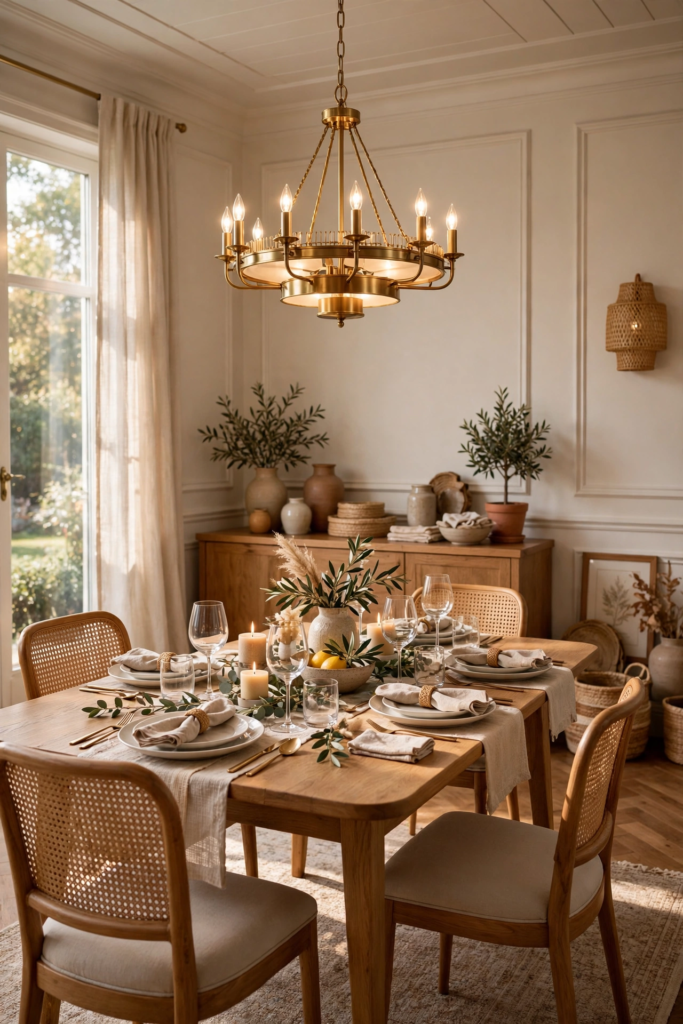
If you are still deciding, start by measuring your table and ceiling tonight — five minutes with a tape measure eliminates most bad choices. Browse the styles above, save your favorites, and pin the images that speak to you so you can compare finishes side by side. When the new fixture is up and glowing, you will wonder why you waited so long; good lighting changes how a room feels more than new paint or furniture. So pick the chandelier that makes you smile, hang it right, dim it low, and enjoy every dinner underneath it.
Frequently Asked Questions About Dining Room Chandelier Ideas
Have questions about choosing, sizing, or installing your dining room chandelier? You are not alone — these are the questions US homeowners ask most often, from how high to hang the fixture to whether you really need an electrician. The answers below distill everything in this guide into quick, practical takeaways you can act on today. Whether you are replacing a dated fixture or planning lighting for a brand-new dining room, start here for the essentials. Each answer gives you the rule of thumb plus the real-world context, so you can shop and install with confidence instead of second-guessing every decision.
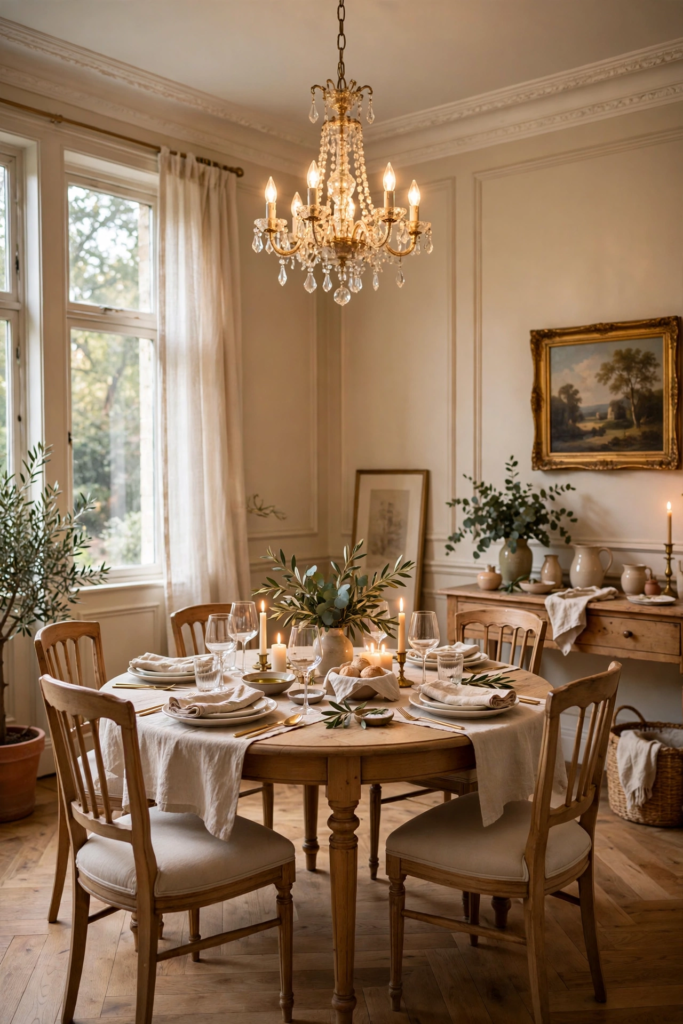
The most common themes are sizing, height, and safety — get those three right and everything else is personal taste. Remember the headline rules: choose a fixture about half to two-thirds of your table’s width, hang it 30 to 36 inches above the tabletop, and put it on a dimmer for instant atmosphere. For anything involving new wiring, heavy fixtures, or an unfamiliar ceiling box, a licensed electrician is worth every penny of the $150 to $300 typical cost. Read through the questions below, note the ones that apply to your project, and you will be ready to buy the perfect chandelier.
How big should a dining room chandelier be?
Add the room length and width in feet and use the total in inches as the diameter. It should also be about one-half to two-thirds the width of the table.
How high should a chandelier hang over a dining table?
Hang the bottom of the fixture 30 to 36 inches above the table for 8-foot ceilings, adding about 3 inches for each additional foot of ceiling height.
Should a dining room chandelier be centered on the table or the room?
Center it on the table, since that is where the light is needed. Use a swag hook or ceiling canopy offset if the junction box is not aligned.
What bulbs are best for dining room chandelier ideas?
Warm bulbs between 2700K and 3000K create a flattering glow. Dimmable LEDs save energy and let you adjust the mood.
Can I use two pendants instead of a chandelier?
Yes. Two or three pendants work well over long rectangular tables and spread light more evenly.



Leave a comment