

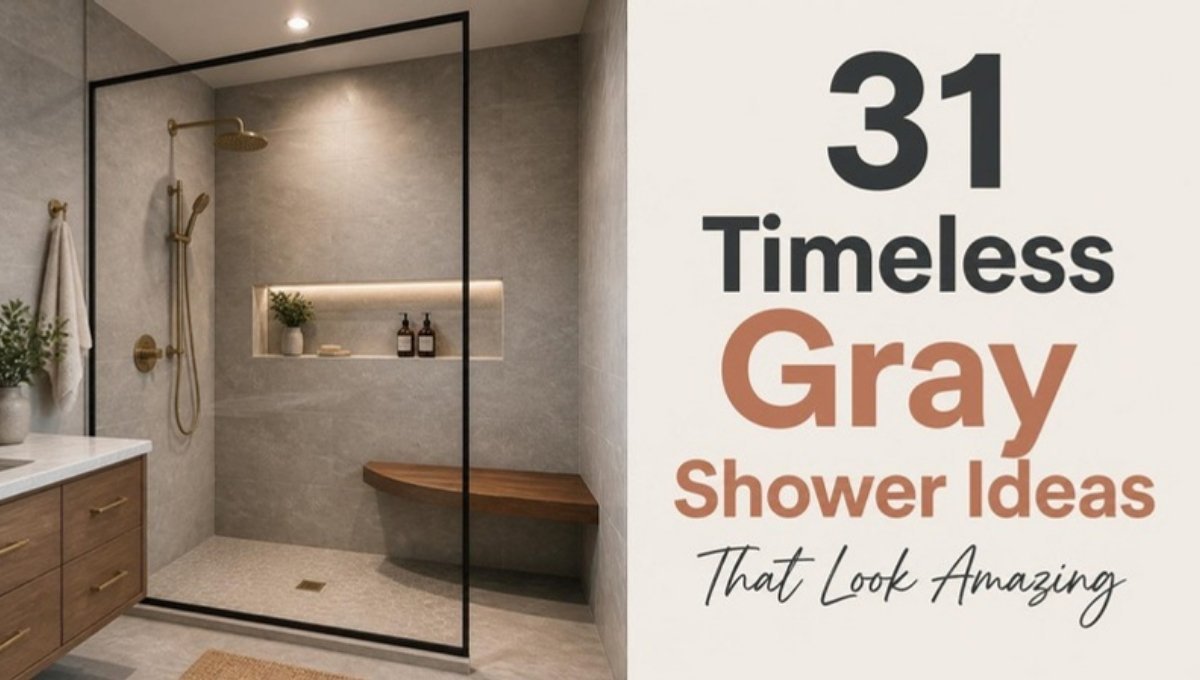
Gray has earned its place as the most dependable shower color in modern bathrooms, and the reason goes beyond trend cycles. It hides water spots and soap residue better than white, it flatters both warm brass and cool chrome, and it sits comfortably alongside almost any vanity finish you might choose later. A gray shower gives you a calm, spa-like backdrop that never fights with towels, tile accents, or whatever direction your taste moves in over the next decade. That flexibility is exactly what makes it timeless rather than merely popular.
The catch is that gray covers an enormous range, from icy silver to warm greige to near-black charcoal, and the wrong undertone can leave a bathroom feeling cold and clinical. Getting it right means paying attention to undertone, texture, tile format, and lighting rather than simply picking a shade off a sample board. The thirty-one gray shower ideas below cover tile choices, layouts, material combinations, and the small design decisions that separate a forgettable gray shower from one that genuinely looks amazing.
1. Choose a Warm Greige Base
The most common mistake in gray showers is picking a cool, blue-leaning gray that turns clinical under bathroom lighting. A warm greige, which blends gray with a touch of beige or taupe, keeps the neutrality you want while adding enough warmth to feel welcoming. Greige also pairs effortlessly with wood vanities, brass fixtures, and cream towels, giving you far more decorating flexibility. Test large samples against your actual lighting before committing, since undertones shift dramatically between daylight and artificial light in windowless bathrooms.
2. Use Large Format Gray Porcelain
Large format porcelain panels, typically 24 by 48 inches or larger, dramatically reduce grout lines and create a smooth, continuous gray surface that reads as high-end stone. Fewer joints mean less cleaning and a calmer visual field, which makes small showers feel considerably larger. Look for tiles with subtle veining or a soft mottled finish rather than a flat solid color, which can look plastic. Professional installation matters here, since large panels are unforgiving of uneven substrate and require careful layout planning.
3. Install Vertical Stacked Subway Tile
Stacking classic subway tile vertically instead of the traditional running bond gives a familiar material a distinctly current feel. The vertical lines draw the eye upward, which makes standard eight-foot ceilings feel taller and works especially well in narrow shower enclosures. Choose a soft dove or mid gray with a gloss finish so it reflects light. Use a matching grout color for a seamless look, or go one shade darker to emphasize the geometry. It is one of the most affordable ways to make a shower look designed.
4. Try Gray Marble-Look Porcelain
Marble-look porcelain gives you the drama of Carrara or Bardiglio veining without the sealing, etching, and staining headaches of natural stone. Gray-veined varieties are especially forgiving, since the movement in the pattern conceals water spots and everyday residue. Choose a tile with varied face patterns so the veining does not repeat visibly across the wall. Book-matched panels, where two large tiles mirror each other, create a genuinely striking focal wall behind the shower fixtures at a fraction of real marble’s cost.
5. Add a Charcoal Accent Niche
Lining the shower niche in a deeper charcoal tile while keeping the surrounding walls lighter turns a purely functional recess into a designed detail. The contrast frames your bottles neatly and adds depth to a flat wall. Small mosaic, penny round, or a textured finish inside the niche all work well. Add an LED strip along the top interior edge for a soft glow that makes the niche feel intentional and improves visibility. Slope the niche floor slightly forward so water drains rather than pooling.
6. Combine Gray Tile With Natural Wood
The single most reliable way to warm up a gray shower is to pair it with real or convincing faux wood. A teak shower bench, a wood-look porcelain floor, or wood-effect tile on one wall provides the organic contrast that pure gray lacks. The combination is the foundation of Scandinavian and Japandi bathroom design and consistently photographs beautifully. Keep the wood tone warm rather than orange, and repeat it at least once outside the shower, in the vanity or a shelf, so it reads as deliberate.
7. Use Gray Hexagon Floor Tile
Small hexagon tile on the shower floor is both practical and attractive. The multitude of grout lines provides genuine slip resistance, which matters more than any other design consideration on a wet floor, and the small format conforms easily to the slope required for drainage. Gray hides soap film far better than white. Choose a matte or textured finish rather than gloss, and use an epoxy or high-performance grout that resists staining and mildew in the constantly wet environment.
8. Go Monochrome With Tonal Grays
Using two or three closely related gray tones across the walls, floor, and niche creates a sophisticated layered effect without any hard contrast. Vary the texture and format rather than the color: a large smooth wall tile, a small textured floor tile, and a ribbed accent all in similar shades. The result feels rich and considered while remaining completely calm. This approach suits minimalist bathrooms particularly well and gives you a shower that never feels dated because it never depended on a specific trend.
9. Add a Fluted or Ribbed Gray Tile Wall
Fluted, ribbed, and three-dimensional tiles are among the most talked-about surfaces in bathroom design, and gray is the easiest color to carry them. The raised vertical ridges catch light and shadow throughout the day, adding movement to what would otherwise be a flat plane. Use them on one wall only, typically the wall facing the shower entry, so the texture reads as a feature. Check the manufacturer’s guidance on wet-area suitability and ensure the profile allows water to run off freely.
10. Frame the Shower in Black Metal
A black-framed glass shower enclosure is the strongest single upgrade you can make to a gray shower. The dark grid outlines the enclosure crisply, echoes contemporary window styling, and gives the whole bathroom architectural definition. It pairs particularly well with mid to light gray tile, where the contrast is clearest. Choose a matte or satin black rather than gloss, and repeat the finish in the shower fixtures, towel bar, and mirror frame so the metalwork reads as one coherent system.
11. Use Gray Zellige or Handmade Tile
Handmade zellige and similar artisan tiles bring irregularity, subtle color variation, and a gently uneven glazed surface that catches light beautifully. In gray, the effect is textured and organic without being loud. Because each tile differs slightly, the finished wall has depth that machine-made tile cannot replicate. Expect and embrace the variation, including chipped edges and glaze pooling, which are characteristic rather than defective. Use a grout color close to the average tile tone so the irregularity reads as texture, not chaos.
12. Add a Frameless Glass Panel
A single fixed frameless glass panel, sometimes called a walk-in or wet room screen, keeps sightlines completely open and lets your gray tile be seen from the whole bathroom. Without a door, hinges, or a frame, the shower disappears visually and the room feels considerably larger. This works best in bathrooms with sufficient space for water to fall well away from the opening, and requires careful floor slope and drain placement. Low-iron glass avoids the green tint that makes gray tile look muddy.
13. Try Concrete-Look Microcement
Microcement or a concrete-look porcelain delivers a seamless gray surface with no grout lines at all, which is both strikingly modern and remarkably easy to clean. The subtle mottling in the finish adds depth and conceals water marks. Microcement must be professionally applied and properly sealed for wet areas, so budget accordingly. Concrete-look large format porcelain achieves a very similar appearance with standard tiling methods and less risk. Both suit minimalist and industrial bathrooms exceptionally well.
14. Layer With Warm Brass Fixtures
Brass is the antidote to gray’s coolness. A brushed brass showerhead, valve trim, and hinge hardware introduce warmth that transforms a gray shower from clinical to inviting. Satin or brushed finishes hide water spots better than polished and look more contemporary. Because brass reads as a warm neutral, it works with virtually every gray undertone. Carry the finish through the entire bathroom, including the faucet and towel bars, for a coordinated result rather than a mix of competing metals.
15. Add a Built-In Shower Bench
A tiled bench built into one end of the shower adds genuine everyday function, whether for shaving, sitting, or resting a basin. Cladding it in the same gray tile as the walls makes it read as architecture rather than an add-on, while a contrasting wood or stone top adds warmth. Ensure the top surface slopes very slightly toward the drain so water does not pool. A floating bench, cantilevered from the wall with no visible support, is the most modern version.
16. Use Gray Penny Round Mosaic
Penny round tile in gray gives shower floors excellent grip and a soft, slightly retro character. Because the tiles are small and round, they curve smoothly around drains and slopes, which makes installation cleaner than with square formats. Mix two or three shades of gray in the same mosaic sheet for subtle depth that hides everyday wear. Use a mid-gray grout so the pattern stays visible without high contrast, and choose epoxy grout for its superior stain resistance in wet areas.
17. Install a Continuous Linear Drain
A linear drain running along one wall or across the shower entry lets you slope the floor in a single direction, which means you can use large format tile on the shower floor instead of small mosaic. The result is a cleaner, more continuous gray surface with far fewer grout lines. Linear drains also enable curbless designs and are visually far less intrusive than a central round drain. Choose a tile-in drain cover to make the drain nearly disappear into the floor.
18. Create a Curbless Wet Room
Removing the curb entirely gives you a completely level floor from bathroom to shower, which looks strikingly modern and makes the space fully accessible. Running the same gray tile across the whole floor creates visual continuity that makes small bathrooms feel meaningfully larger. Curbless designs require careful waterproofing, correct slope, and usually a recessed subfloor, so this is a decision for a full renovation. The payoff in both aesthetics and long-term accessibility is substantial.
19. Add a Gray Slate-Look Tile
Slate-look porcelain brings natural stone texture with rugged, layered gray tones and none of the maintenance of real slate. The subtle surface variation is excellent at concealing water marks and everyday grime, making it one of the most practical options available. It suits rustic, industrial, and mountain-modern bathrooms particularly well. Pair it with warm wood and black metal to prevent the overall effect from feeling too heavy, and choose a lighter slate tone in small or windowless bathrooms.
Read More Blogs on: decormellow.com
20. Use Contrast Grout Deliberately
Grout color is a design decision, not an afterthought. Matching grout to your gray tile creates a seamless, calm surface, while a deliberately darker grout emphasizes the tile pattern and gives geometric layouts real graphic punch. Never choose white grout on a shower floor, where it will stain within months. Mid-gray grout is the most practical all-around choice, staying clean-looking far longer than either extreme. Epoxy grout costs more but resists staining and mildew dramatically better.
21. Add a Skylight or Frosted Window
Natural light is the most flattering thing that can happen to a gray shower. A skylight, a small frosted window, or glass block brings daylight that reveals the tile’s true undertone and prevents the space from feeling like a cave. If a new opening is not possible, a solar tube is a less invasive alternative. Where no natural light exists at all, prioritize a warm-temperature ceiling light with a high color rendering index so the gray does not read flat and lifeless.
22. Pair Light Gray Walls With Dark Gray Floors
Grounding a shower with a darker floor and lighter walls follows the natural logic of how we read space and makes the enclosure feel stable and taller. The darker floor also hides dirt and water marks far better than a light one, which is a genuine practical advantage. Keep both tones within the same undertone family so the pairing looks intentional rather than mismatched. This simple two-tone approach works in showers of every size and costs nothing extra.
23. Add Ledge Shelving Instead of a Niche
A slim tiled ledge running the full width of one shower wall offers more storage than a recessed niche and creates a strong horizontal line that visually widens the enclosure. Because it is built out rather than recessed, it does not require opening the wall cavity, which simplifies construction in some situations. Slope the top surface slightly forward for drainage and finish the edge with a metal trim in your chosen accent metal for a crisp, professional detail.
24. Use Gray Terrazzo Tile
Terrazzo brings speckled interest that hides water spots and daily wear extremely well while adding a playful, contemporary note. Gray-based terrazzo with soft neutral chips works as a sophisticated neutral, while versions with colored aggregate add subtle personality. Use it on the shower floor for pattern underfoot, or across a full wall as a bold statement. Modern terrazzo-look porcelain installs like any other tile and requires none of the sealing that real terrazzo demands.
25. Keep Fixtures Wall-Mounted and Minimal
Clean, minimal fixtures let the tile do the talking. A slim wall-mounted showerhead, a flush thermostatic valve plate, and a simple handheld on a slide bar keep the visual clutter low. Avoid oversized rain heads in small enclosures, where they overwhelm the space and drop water directly onto the entry. Concealed valves, where the body is buried in the wall, give the cleanest look but require access planning. Match all trim in a single finish for coherence.
26. Add a Textured Accent Strip
A single horizontal band of textured or mosaic gray tile at eye level breaks up a large expanse of flat wall without introducing color. Keep the accent within a shade or two of the surrounding tile so the effect is textural rather than contrasting. Position the band around chest height or align it with the top of the niche for a considered relationship between elements. This is a low-cost way to add interest when your budget is mostly spent on the basics.
27. Use Gray With a Green or Sage Accent
If a fully gray shower feels too restrained, sage or muted eucalyptus green is the easiest color to introduce. Green sits beautifully against gray, evokes natural stone and moss, and reads as calm rather than bold. Add it in a niche lining, a single accent wall outside the shower, or simply through towels and a plant. Because the color is muted, it can be changed later without redoing tile if your taste shifts.
28. Choose Matte Over Gloss for Modern Calm
Matte gray tile absorbs light rather than reflecting it, producing a soft, contemporary, and notably calming surface. It also conceals water spots and fingerprints far better than gloss, which is a real advantage in a shower. The trade-off is that matte finishes can make small dark bathrooms feel dimmer, so balance with good lighting or use matte on the floor and lower walls with a satin finish above.
29. Add Integrated LED Lighting
A recessed LED strip inside the niche, along a ledge, or behind a floating bench transforms a gray shower after dark. The indirect glow reveals tile texture, adds depth, and creates a spa atmosphere that overhead lighting alone cannot achieve. Use warm white around 2700K to 3000K and ensure any fixture is rated for wet locations. Place the strip so the light source itself is hidden and only the reflected glow is visible for the most refined result.
30. Extend Gray Tile to the Ceiling
Carrying the shower tile all the way up onto the enclosure ceiling creates a sense of full immersion and reads as genuinely custom. It also protects the ceiling from the steam damage that eventually blisters paint in poorly ventilated bathrooms. Use a lighter tone on the ceiling than the walls so the space does not feel compressed, and pair with a properly sized extractor fan. The detail is subtle from a distance but unmistakable once noticed.
31. Balance With Warm Textiles and Wood
The final layer is everything outside the tile. Warm cream or oatmeal towels, a teak bath mat, a wooden stool, and a plant near the shower entry are what stop a gray bathroom from reading cold. These are also the cheapest and easiest elements to change, which makes them the ideal place to adjust the room’s temperature over time. A gray shower is a backdrop; the softness you place around it determines how the space actually feels.
Final Thoughts on Gray Shower Ideas
The reason gray shower ideas keep working is that gray is a genuine neutral, capable of supporting almost any direction you take the rest of the bathroom. Choose a warm greige or mid gray with a warm undertone, vary texture rather than color for depth, and ground the space with a darker floor. Add real warmth through wood, brass fixtures, and soft textiles, since gray alone will always read cool. Pay attention to grout color, drainage, and lighting, which are the details that determine whether a shower still looks amazing in five years. Get those right and the color will take care of itself.
For more inspiration, explore our 15 Fresh Mid Century Modern Bathroom Ideas and browse more home decor ideas.
Frequently Asked Questions About Gray Shower Ideas
Is a gray shower still in style?
Yes. Gray has moved from a passing trend to a standard neutral in bathroom design because it works with every fixture finish and hides water spots well. The current preference leans toward warm greige and mid-tone grays rather than the cool, blue-toned grays that dominated a decade ago.
What color grout should I use with gray tile?
Mid-gray grout is the most practical all-round choice, staying clean-looking far longer than white and offering subtle definition without harsh contrast. Match the grout to the tile for a seamless look, or go one shade darker to emphasize a geometric layout. Avoid white grout on shower floors entirely.
How do I keep a gray bathroom from feeling cold?
Choose a gray with a warm undertone, add real or wood-look surfaces, use brushed brass or bronze fixtures, install warm 2700K to 3000K lighting, and layer in cream or oatmeal textiles. Warmth comes from the materials and lighting around the tile, not from the tile itself.
What color pairs best with a gray shower?
Warm wood tones, cream, and brass are the most reliable pairings. Sage green, dusty blue, and soft terracotta all work well as accent colors. Black metal framing and hardware provide crisp definition, especially against light and mid-gray tile.
What is the best tile size for a small gray shower?
Large format tile reduces grout lines and makes small showers feel bigger, while small mosaic works best on the floor for slip resistance and drainage. A common approach is large format on the walls with a matching small hexagon or penny round on the floor.
Does gray tile show water spots?
Less than white or black, which is one of gray’s main practical advantages. Mid-tone grays with subtle veining or texture hide spots best. Matte finishes conceal marks better than gloss, and mineral deposits are most visible on very dark, very glossy surfaces.




Leave a comment