

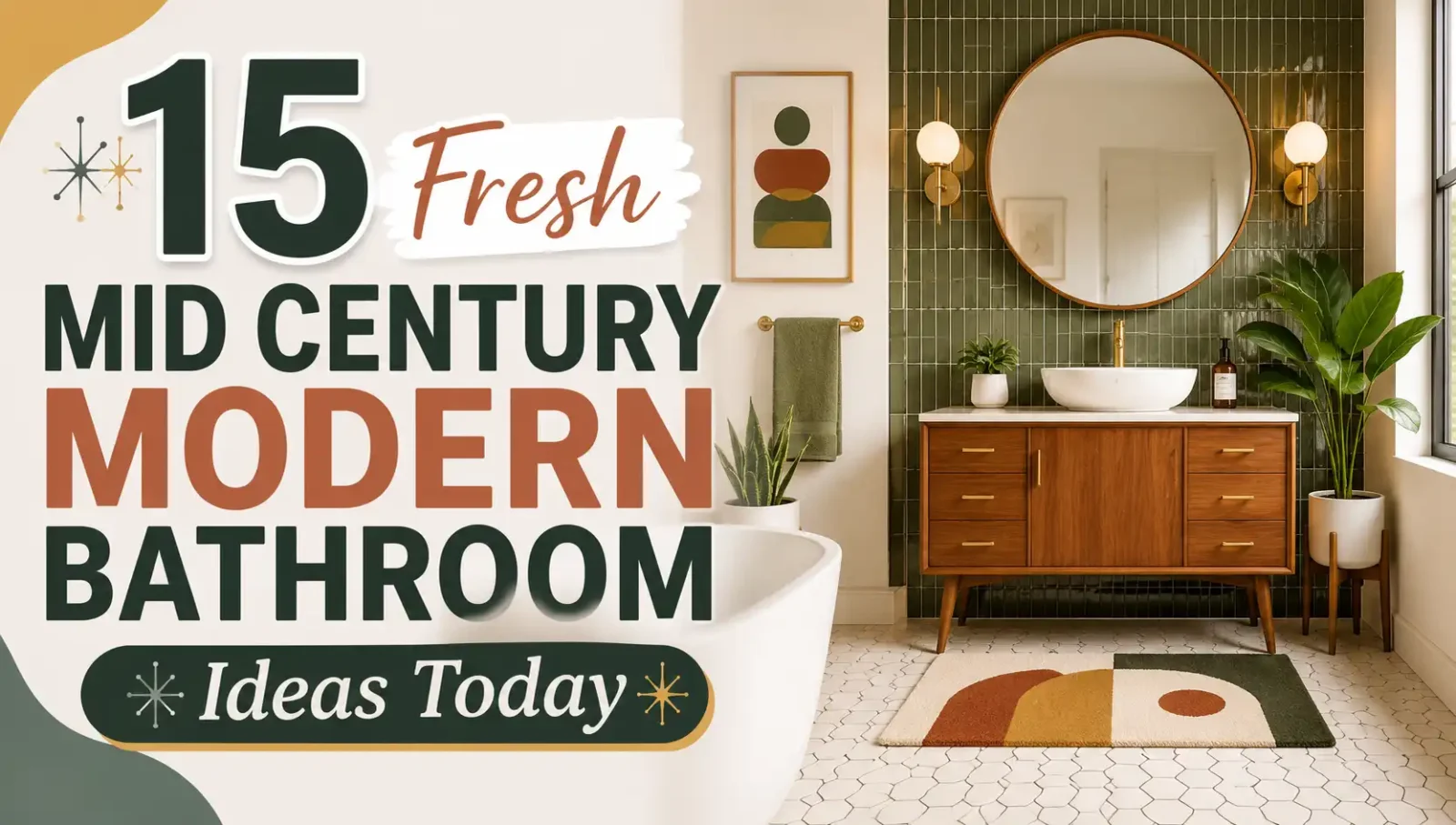
Mid century modern bathrooms have quietly become one of the most requested renovation styles, and the reason is simple: the look is clean without being cold. Born from the design movement that ran roughly from the 1940s through the 1960s, the style favors warm walnut, tapered legs, geometric tile, and organic curves balanced by strong horizontal lines. In a bathroom, those qualities translate into a space that feels calm, uncluttered, and genuinely timeless, which matters when you are choosing finishes you may live with for fifteen years or more.
The best part is that mid century style adapts to almost any bathroom size. A powder room can carry the look with a single walnut floating vanity and a round mirror, while a full family bathroom can go further with penny tile, a sunken tub surround, and brass fixtures. You also do not need vintage pieces, since most manufacturers now produce faithful reproductions at reasonable prices. Below are fifteen fresh mid century modern bathroom ideas, each with practical guidance on materials, color, and how to keep the look modern rather than dated.
1. Install a Walnut Floating Vanity
Nothing signals mid century style faster than a warm walnut vanity with clean horizontal grain and simple slab doors. Mounting it to the wall so it floats above the floor is the update that keeps the look current: the exposed floor beneath makes the room feel larger, simplifies cleaning, and emphasizes the strong horizontal line the era loved. Choose an integrated or minimal pull rather than ornate hardware, or specify a routed finger channel for the cleanest face. If walnut is beyond budget, white oak with a warm stain or a quality walnut-look laminate delivers a very similar effect.
2. Choose Hairpin or Tapered Legs
If a floating vanity is not possible, a freestanding vanity on slim tapered legs or hairpin metal legs achieves the same lifted, airy quality. Legs were fundamental to mid century furniture design because they made heavy case goods look light. In a bathroom, the visible floor underneath prevents the vanity from reading as a bulky block and gives small rooms breathing space. Aim for legs between six and nine inches tall, angled slightly outward. Pair walnut cabinetry with black metal legs, or oak with brass, and repeat that metal in your faucet and mirror frame.
3. Use Geometric Penny or Hex Tile
Small-format geometric tile is a genuine period detail that still looks fresh. Penny round tile, hexagons, and small squares all appeared widely in mid century bathrooms and remain readily available. Use them on the floor in a single soft tone, or introduce a simple two-color pattern such as a border or a scattered accent. Because the tiles are small, the grout lines create fine texture that keeps large floors from looking flat. Choose a grout color close to the tile for a subtle look, or one shade darker to emphasize the geometry deliberately.
4. Add a Bold Vertical Tile Feature Wall
Stacked vertical tile in a saturated color is a modern way to bring mid century boldness into a bathroom without committing to full period decor. Glossy ceramic in mustard, teal, olive, or terracotta stacked in a straight vertical grid behind the vanity or inside the shower makes a strong statement while staying easy to clean. Vertical stacking also draws the eye upward and makes ceilings feel higher. Keep the rest of the room neutral so the color wall stays the clear focal point rather than competing with other finishes.
5. Pick a Round or Capsule Mirror
Curved shapes were the counterweight to all those straight lines in mid century design, and the bathroom mirror is the easiest place to add one. A large round mirror in walnut, brass, or thin black metal softens the rectangular geometry of the vanity, tile, and doorway. Capsule and arched shapes work equally well and suit narrower vanities. Size the mirror to roughly two-thirds the width of the vanity below and center it carefully. Backlit versions with a warm LED halo give you a period-appropriate glow and practical illumination in one fixture.
6. Add Globe or Sputnik Lighting
Lighting is where mid century bathrooms have the most fun. Opal glass globe sconces flanking the mirror are the definitive choice, giving even, flattering light with a soft sculptural form. For overhead lighting, a small Sputnik fixture or a cluster of glass globes on brass arms brings genuine personality to a room that too often gets a builder-grade flush mount. Use warm bulbs around 2700K and add a dimmer. If your ceiling is low, choose a semi-flush globe rather than a pendant so the fixture stays clear of head height.
7. Introduce Warm Brass Fixtures
Brass was everywhere in mid century interiors, and it remains the most flattering metal for warm wood tones. Choose brushed or satin brass rather than high-polish, since the softer finish shows fewer fingerprints and looks contemporary. Apply it consistently across the faucet, shower trim, towel bars, and mirror frame so the room feels coordinated. Unlacquered brass is an option if you enjoy patina, though it will darken unevenly over time. For a cooler take on the era, matte black or a chrome-and-walnut combination is equally authentic and often easier to source.
8. Choose an Earthy Retro Color Palette
Mid century color is warm, muted, and confident. Build a palette from mustard yellow, avocado or olive green, burnt orange, teal, and warm browns, then dilute it with plenty of cream, white, and natural wood so the room does not tip into costume. Use one saturated color as the accent, in tile, a painted vanity, or towels, and keep the remaining surfaces neutral. Muted, dusty versions of these shades age far better than bright, high-chroma ones and photograph beautifully against walnut and brass.
9. Add a Wall-Mounted Faucet
A wall-mounted faucet frees the countertop of clutter and reinforces the horizontal emphasis that defines the style. It pairs especially well with vessel or shallow undermount sinks and makes cleaning the counter far simpler. The trade-off is plumbing: the valve must be roughed into the wall, so this is a decision to make early in a renovation rather than as a later swap. If wall-mounting is impractical, a low-profile single-lever deck faucet with a slim cylindrical body achieves a similar minimalist effect.
Read More Blogs on: decormellow.com
10. Use a Slatted Wood Accent
Vertical wood slats, whether on a wall, a vanity front, or a shower bench, add rhythm and texture that photographs beautifully and feels distinctly of the period. In a bathroom, use properly sealed hardwood, thermally modified timber, or a moisture-rated slat panel, and keep it out of direct spray zones. A slatted wall behind a freestanding tub or on the wall opposite the vanity introduces warmth without adding color. The repeating vertical lines also make a low-ceilinged bathroom feel taller, which is a useful bonus in older homes.
11. Try a Terrazzo Floor or Countertop
Terrazzo saw its first major popularity during exactly this era and has returned in a big way. The speckled composite offers subtle color and movement that hides water spots and daily wear, making it genuinely practical for bathrooms. Choose a neutral base with warm chips in caramel, rust, and cream to complement walnut cabinetry, or go bolder with larger, more colorful aggregate for a playful powder room. Modern terrazzo-look porcelain tiles deliver the appearance at a fraction of the cost and install like any other large-format tile.
12. Install a Curved or Rounded Tub Surround
Where space allows, a tub with soft rounded corners or a curved plaster surround brings the organic side of mid century design into play. The curve contrasts with the straight tile lines and creates a sculptural moment in the room. A microcement or tadelakt finish on the surround gives a seamless, hand-finished surface with no grout lines, which suits the minimalist ethos well. In smaller bathrooms, even rounding the corners of a standard alcove tub surround with a curved return softens the space noticeably.
13. Keep Storage Concealed and Minimal
Mid century interiors valued order, and visible clutter undermines the entire aesthetic. Prioritize concealed storage: a recessed medicine cabinet with a flush mirrored front, deep vanity drawers with internal organizers, and a single closed cabinet rather than open shelving. If you do use open shelves, style them sparsely with three or four objects, such as a folded towel stack, a ceramic vessel, and a small plant. The clean, quiet surfaces are what let the wood grain, tile geometry, and lighting do their work without visual competition.
14. Add Vintage-Style Textiles and Accessories
Small accessories let you experiment with the era’s personality at almost no cost. Look for a geometric-patterned bath mat, a rounded ceramic soap dispenser, a rattan or walnut tissue box, and towels in mustard or teal. A small framed abstract print or a vintage-style bath scale adds character without permanence. Because these items are easy to swap, they are also the ideal place to test bolder colors before committing to tile or paint. Keep the total number of visible objects low so the room stays composed.
15. Bring in a Plant for Organic Balance
Mid century design was deeply connected to nature, with large windows and indoor greenery central to the movement. A pothos, snake plant, or small monstera thrives in bathroom humidity and adds the organic softness that hard surfaces need. Place it on a floating shelf, a windowsill, or a small walnut plant stand in a corner. Use a simple ceramic or unglazed pot rather than anything ornate. Even in a windowless bathroom, a low-light plant such as a ZZ plant or a good-quality faux option will complete the room.
Conclusion
Mid century modern bathroom ideas work because they balance warmth against discipline. Walnut, brass, and organic curves supply the warmth, while geometric tile, clean lines, and concealed storage supply the discipline. You do not need a full renovation to get there. A floating walnut vanity, a large round mirror, globe sconces, and brushed brass fixtures will carry the look convincingly in almost any bathroom. Add a bold accent color in tile or textiles, keep the surfaces clear, and finish with a plant for organic softness. The result is a bathroom that feels considered today and will still feel considered a decade from now.
Frequently Asked Questions
What defines a mid century modern bathroom?
Warm wood tones such as walnut or teak, clean horizontal lines, tapered or hairpin legs, geometric small-format tile, globe or Sputnik lighting, brass or black hardware, and a muted retro palette of mustard, olive, teal, and terracotta balanced by plenty of neutrals.
What colors are best for a mid century modern bathroom?
Mustard yellow, avocado and olive green, burnt orange, teal, and warm brown work best as accents, paired with cream, warm white, and natural wood as the base. Choose muted, dusty versions of these shades rather than bright, high-saturation ones for a look that ages well.
Is mid century modern still in style for bathrooms?
Yes. The style has remained consistently popular for over a decade because it relies on natural materials and simple geometry rather than short-lived trends. Walnut vanities, round mirrors, and brass fixtures continue to be among the most requested bathroom finishes.
What tile works best in a mid century modern bathroom?
Penny round, hexagon, and small square mosaics are the most authentic choices for floors. For walls, vertically stacked glossy ceramic tile in a saturated color, or terrazzo-look porcelain, both suit the era while feeling contemporary.
Can I get the look in a small bathroom?
Absolutely. Use a wall-mounted floating vanity to expose floor space, a large round mirror to add light, wall-mounted faucets and sconces to keep surfaces clear, and one bold tile color as the single focal point. Small bathrooms often suit the style better because clutter is impossible.
What metal finish suits mid century modern best?
Brushed or satin brass is the most characteristic choice and pairs beautifully with walnut. Matte black and chrome are both period-appropriate alternatives. Whichever you pick, use it consistently across the faucet, shower trim, towel bars, and mirror frame.



Leave a comment