

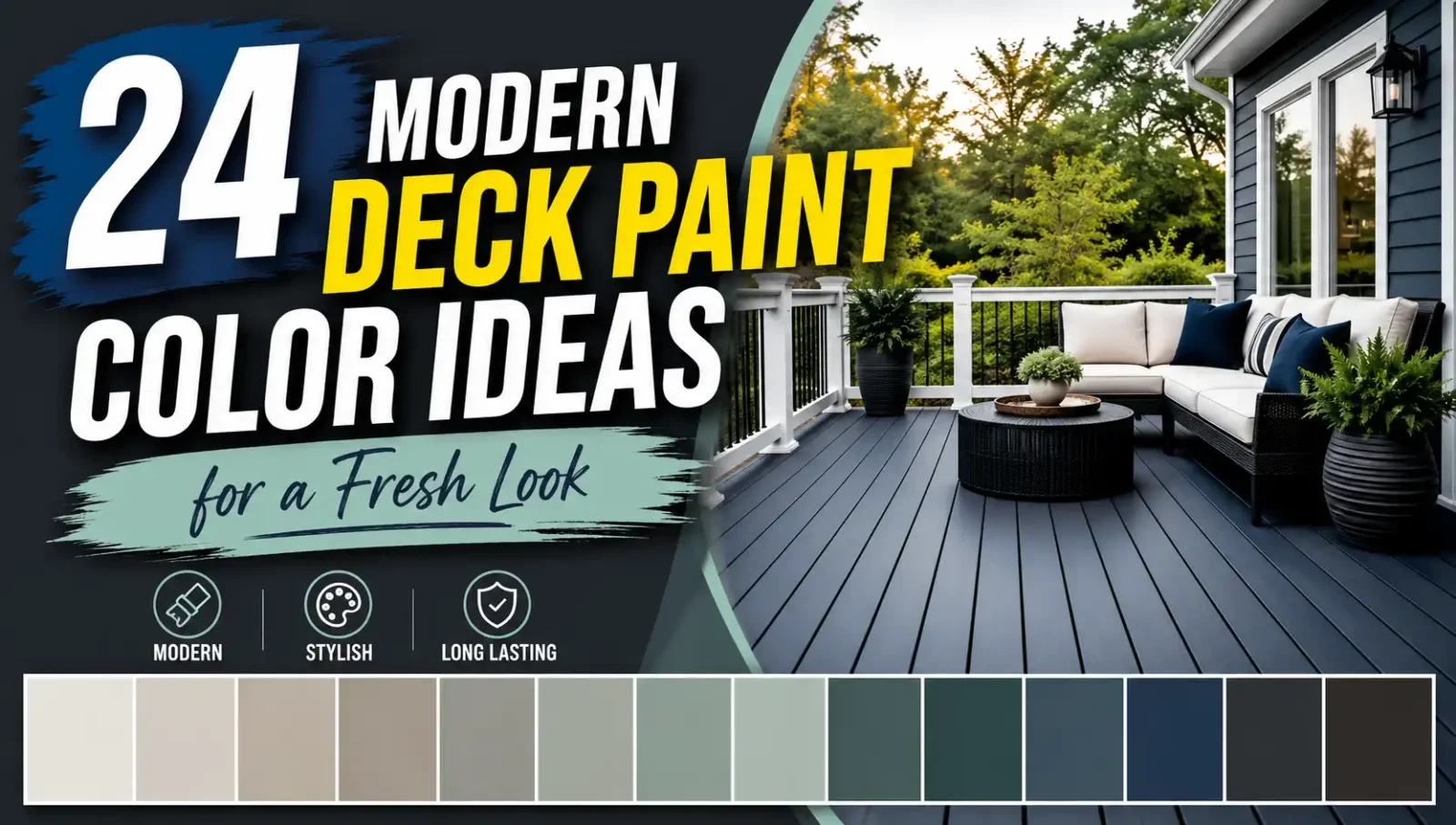
Deck paint color is one of the highest-impact exterior decisions you can make, and one of the most reversible. A single weekend and a few gallons can take a gray, weathered platform and turn it into the most inviting part of your home. Modern deck colors have moved well beyond the standard cedar and redwood tones of past decades. Today’s palettes lean toward soft grays, warm greiges, deep charcoals, muted greens, and confident two-tone combinations that treat the deck as an extension of the interior rather than an afterthought.
Choosing well means thinking about three things at once: how the color relates to your siding and trim, how it will handle sun and heat in your climate, and how much maintenance you are realistically willing to do. Dark colors absorb heat and show fading, light colors show dirt, and mid-tones tend to hide both. Below are twenty-four modern deck paint color ideas with practical notes on where each one works best, what to pair it with, and which finishes will hold up longest under real weather.
1. Classic Charcoal Gray
Charcoal is the most requested modern deck color for good reason. It reads sophisticated and architectural, hides dirt and pollen remarkably well, and pairs with almost any siding, from white clapboard to natural cedar to red brick. The depth makes surrounding greenery look richer and gives outdoor furniture a clean stage. The one caveat is heat: dark surfaces get hot underfoot in strong sun, so consider it more carefully in very hot climates or on decks used barefoot. Choose a solid stain rather than a film-forming paint for better long-term wear on horizontal surfaces.
2. Soft Dove Gray
A lighter, cooler gray keeps a deck feeling airy and bright without the starkness of white. It is a natural fit for coastal homes, modern farmhouses, and any house with white or light gray siding. Because it stays cool underfoot, it suits sunny climates and decks used by children and pets. The trade-off is visible dirt, so plan on regular sweeping and an occasional wash. Pair dove gray with crisp white railings and black furniture for a clean, high-contrast look that photographs beautifully year round.
3. Warm Greige
Greige, the blend of gray and beige, is the safest sophisticated choice available. It bridges cool and warm undertones, which means it works with both gray-toned siding and warm brick or stone. It also hides dust and pollen better than pure gray, making it a practical pick for wooded lots. Greige reads modern without being trendy, and it lets colorful cushions and planters take the lead. Look for a shade with a slight taupe undertone rather than a green one, which can look muddy in shade.
4. Deep Forest Green
Muted forest green is one of the most striking modern deck colors and remains underused. Against surrounding trees and lawn, it blurs the boundary between built and natural, which makes small yards feel more expansive. It works especially well with white or cream siding, natural stone, and black metal railings. Choose a deep, desaturated green rather than a bright one so it reads as a neutral. This color is particularly effective on decks that sit low to the ground and are heavily framed by planting.
5. Matte Black
A black deck is a bold, confidently modern move that pairs exceptionally well with contemporary architecture, black window frames, and light-toned siding. The effect is dramatic and gallery-like, especially with pale outdoor furniture and large planters. Heat is the main consideration: black absorbs the most solar energy of any color, so it is best on shaded decks, in cooler climates, or in spaces used mainly in the evening. Use a high-quality solid stain formulated for decks, and expect to touch up high-traffic areas periodically.
6. Two-Tone Charcoal and Cedar
Combining a painted charcoal deck floor with natural cedar or warm-stained railings is one of the most popular modern approaches. The contrast gives the deck visual structure, defines the edges clearly, and lets you enjoy real wood grain at eye level while the hardest-wearing surface gets a durable solid finish. It also reduces cost, since you only need to maintain the natural wood on the vertical surfaces that weather more slowly. This combination suits almost every house style from craftsman to contemporary.
7. Crisp White Railings With Gray Decking
Painting the railings, posts, and skirting bright white while keeping the deck boards in a mid gray creates a clean, structured look that echoes classic coastal and farmhouse architecture. The white outlines the deck’s geometry and reflects light back into adjacent rooms, while the gray floor conceals foot traffic. Maintenance is the trade-off, since white shows mildew and needs washing, but vertical surfaces stay far cleaner than horizontal ones. Use a mildew-resistant exterior paint and choose a slightly warm white rather than a stark blue-white.
8. Weathered Driftwood
Driftwood tones sit between gray and taupe with a subtle silvery quality that mimics naturally aged wood. The advantage is that as your deck weathers, the color drifts in the same direction rather than fighting it, so touch-ups and wear blend in easily. This is one of the lowest-maintenance-looking colors available. It suits coastal properties, cabins, and any home where you want the deck to recede quietly rather than announce itself. Pair with natural rope, rattan, and teak furniture for a relaxed, cohesive result.
9. Slate Blue-Gray
A gray with a distinct blue undertone brings coolness and calm, especially near water or in regions with lots of sky. It is a small step beyond neutral gray that adds personality without commitment to a strong color. Slate blue-gray works particularly well with white trim, natural stone, and silver-toned metal railings. Because blue undertones can read very cool in shade, test a sample in both morning and afternoon light before buying full gallons. Warm-toned furniture in teak or rattan balances it beautifully.
10. Terracotta and Clay
Warm earth tones are having a genuine moment in exterior design. A muted terracotta or clay deck brings Mediterranean and southwestern warmth, works exceptionally well with stucco and adobe-style homes, and makes green planting pop. It also hides the reddish dust common in dry climates. Keep the saturation muted, closer to weathered clay than to bright orange, and pair with cream, off-white, or sand-colored walls. Black or bronze railings ground the warmth and keep the palette from reading dated.
11. Rich Espresso Brown
Deep brown remains one of the most reliable deck colors because it reads as wood while delivering full opacity to hide flaws in older boards. Espresso pairs beautifully with cream, sage, and terracotta accents and complements brick homes especially well. It hides dirt nearly as effectively as charcoal but with a warmer, less severe character. Choose a shade with a neutral rather than a red undertone if you want a contemporary feel, since strongly red-brown finishes can look distinctly early 2000s.
12. Sage Green
Softer and lighter than forest green, sage is a gentle, sophisticated color that bridges the deck to the garden without dominating. It suits cottages, bungalows, and homes with white, cream, or natural wood siding. Sage also stays relatively cool underfoot and looks especially good with brass or bronze hardware and terracotta planters. Because it is a light-to-mid tone, it hides moderate dirt while still feeling bright. Test samples carefully, as green undertones shift noticeably between full sun and shade.
13. Navy Blue
A deep navy deck is unexpected and unmistakably intentional. It works best on smaller decks, porches, and balconies where the concentrated color becomes a design feature rather than a large expanse. Navy pairs superbly with white trim, brass lighting, and natural wood furniture, and it is a natural fit for coastal and traditional homes. Like all dark colors it absorbs heat, so consider it for covered or partly shaded spaces. Choose a slightly grayed navy rather than a bright one for a more modern result.
14. Sand and Bone
Pale sand, bone, and greige-white tones create a bright, resort-like deck that stays cool in intense sun. This palette suits desert, coastal, and Mediterranean settings, and it makes small decks feel considerably larger by reflecting light. The obvious downside is that dirt, leaves, and footprints show immediately, so this works best on covered decks or in low-debris environments. Pair with light wood furniture, oversized planters, and a single dark accent such as black railings to give the scheme definition.
15. Monochrome Deck and Siding
Painting the deck the same color as your house siding creates a seamless, architectural effect that makes the whole structure read as one deliberate form. This is a distinctly modern approach and works especially well in charcoal, black, or deep green. Use a slight sheen difference between the two surfaces so they remain distinguishable at close range while matching from a distance. The monochrome treatment is powerful on contemporary homes and can visually enlarge small properties by removing the busyness of contrasting elements.
Read More Blogs on: decormellow.com
16. Muted Olive
Olive sits between green and brown, which makes it exceptionally versatile outdoors. It complements natural stone, weathered wood, and both warm and cool siding colors. Olive also hides dirt and organic debris better than almost any other color, making it a genuinely practical choice under trees. Pair with cream cushions, black metal furniture, and terracotta pots for a grounded, natural scheme. The color reads as a warm neutral from a distance while revealing its green character up close.
17. Light Taupe
Light taupe is greige’s warmer cousin, leaning slightly more brown. It flatters brick, stone, and cedar siding and provides a soft, neutral background that lets furniture and planting take the visual lead. Because it sits in the mid-light range, it stays reasonably cool and hides everyday dust well. Taupe is a strong choice for homeowners who want something warmer than gray but less committed than brown. Combine it with white railings and dark bronze hardware for a balanced, current look.
18. Cool Concrete Gray
A flat, slightly cool concrete gray gives a wooden deck the appearance of a modern poured surface at a fraction of the cost. It suits minimalist and contemporary architecture, especially alongside black-framed windows, corten steel planters, and ornamental grasses. Choose a matte or low-sheen finish, since gloss undermines the concrete illusion. The color is a strong neutral base for bold outdoor furniture in rust, mustard, or deep green, and it makes surrounding planting look particularly vivid.
19. Painted Deck With Stained Steps
Contrasting the steps against the main deck surface is both a design choice and a safety feature. Painting the deck a solid color while staining or painting the stair treads a darker or lighter tone makes each step edge clearly visible, which genuinely reduces trips at dusk. Visually, the change of tone breaks up a large surface and adds a designed detail. Add a nosing stripe in a contrasting color for maximum visibility, or run a subtle band along the deck perimeter to echo the effect.
20. Soft Mushroom
Mushroom is a muted purple-brown-gray that behaves as a neutral while offering more depth than plain gray. It looks especially good in shaded, wooded settings where cool light brings out its subtle complexity. Mushroom pairs well with cream, sage, and dusty pink accents and complements natural stone beautifully. Because the undertone is complex, it is essential to test large samples in your actual light. When it works, it is one of the most refined and least common deck colors you can choose.
21. Black Railings With Natural Wood Deck
Leaving the deck boards in a clear or lightly tinted natural finish while painting all railings, posts, and balusters black is arguably the most popular modern deck combination right now. The black framework reads almost like a metal railing system, gives the deck a crisp architectural edge, and disappears visually so the view beyond stays open. Meanwhile the natural wood floor keeps the space warm underfoot. It also simplifies maintenance, since the horizontal surface gets a penetrating finish that will not peel.
22. Bold Accent Deck Floor
If your deck is small, such as a balcony, landing, or plunge-pool surround, a saturated accent color can transform it into a genuine feature. Mustard, teal, deep coral, and cobalt all work when the area is compact and the surrounding architecture is neutral. Because the surface is small, the paint cost is low and repainting later is easy, which makes this a low-risk way to experiment. Keep furniture and planters simple so the floor remains the star of the composition.
23. Gradient or Ombre Boards
Painting deck boards in gradually shifting tones of a single color, from lightest at one edge to deepest at the other, creates a subtle custom effect that looks far more expensive than it is. Grays, blues, and greens all work well for this. The technique disguises mismatched or replaced boards and adds visual movement to a large flat surface. Plan the sequence on paper first, buy the tones as a set from one brand for consistent undertones, and keep the transition gradual rather than striped.
24. Natural Wood With a Clear Protective Finish
Sometimes the freshest choice is no color at all. A high-quality clear or lightly tinted penetrating oil lets cedar, redwood, ipe, or thermally modified wood show its natural grain while providing UV and moisture protection. This approach never peels, never needs stripping, and refreshes with a simple clean and recoat. It is the lowest-maintenance option over the deck’s full lifetime and suits modern, Scandinavian, and Japandi exteriors perfectly. Pair with black railings and a few large planters for a clean, contemporary finish.
Conclusion
The best modern deck paint color is the one that suits your climate, your siding, and your tolerance for upkeep. Charcoal, greige, and muted olive are the most forgiving all-rounders, hiding dirt while looking current. Light grays and sands keep decks cool in strong sun but need more cleaning. Dark blacks and navies deliver drama but absorb heat. Two-tone schemes, especially black railings with a natural or charcoal floor, give you the most modern result with the least visual risk. Whatever direction you choose, buy sample pots, paint a full board, and view it in both morning and evening light before committing.
Frequently Asked Questions
What is the most popular modern deck paint color?
Charcoal gray is currently the most requested, followed by warm greige and natural wood paired with black railings. These options look contemporary, hide dirt effectively, and work with almost any siding color.
Should a deck be lighter or darker than the house?
Most designers recommend going a shade or two darker than the siding so the deck grounds the structure and hides wear. Matching the siding exactly creates a seamless modern look, while going much lighter can make the deck feel disconnected and show dirt quickly.
What deck color hides dirt best?
Mid-tone colors hide dirt best: greige, taupe, muted olive, mushroom, and mid gray. Charcoal also conceals dirt well but shows dust and pollen. Very light and very dark colors both show marks more readily than mid-tones.
Do dark deck colors get too hot?
Dark surfaces absorb significantly more solar heat, and black or charcoal decks in full sun can become uncomfortable underfoot in summer. If your deck is unshaded and heavily used barefoot, choose a mid or light tone, or add shade sails, pergolas, or outdoor rugs.
Is deck paint or solid stain better?
Solid stain generally performs better on horizontal deck surfaces because it penetrates the wood and wears down gradually rather than peeling in sheets like film-forming paint. Paint can work well on railings, posts, and skirting, where water does not sit.
How often should a painted deck be repainted?
Expect to recoat a painted or solid-stained deck floor every three to five years, depending on sun exposure, foot traffic, and climate. Railings and vertical surfaces typically last twice as long. Annual cleaning and prompt spot repairs extend the interval considerably.







Leave a comment