


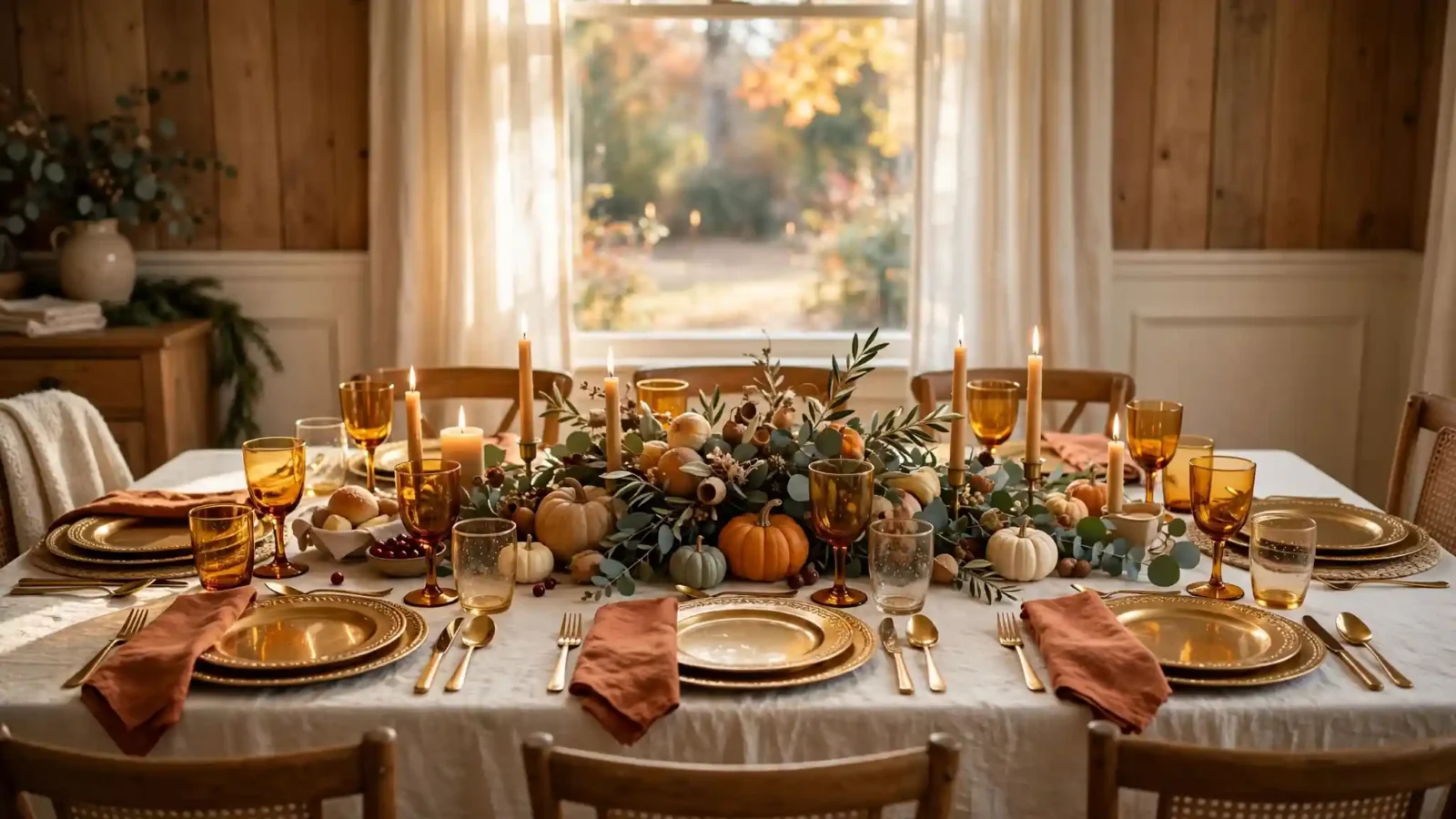
A beautiful thanksgiving table setup does not require a designer, a big budget, or a week of stressful preparation. With Thanksgiving table settings that layer simple linens, warm colors, and one low centerpiece, any dining table can feel festive in under an hour. This thanksgiving table setup starts with what you already own, then adds a few affordable pieces from Target, Walmart, or your grocery store produce aisle for color and texture. The ideas ahead use real measurements, honest prices, and stores most American households already shop at, so you can copy them without special orders or custom work.
Before you buy anything new for your thanksgiving table setup, clear the table completely and measure it from end to end. A standard six-person table is about 72 by 36 inches, which leaves roughly 12 inches in the center for decor once place settings are in position. Write down your guest count, chair spacing, and serving plan, because a pretty table that leaves no room for the turkey platter will frustrate everyone once dinner actually begins. Think about traffic flow too: guests need a clear path from the kitchen to their chairs, and servers need room to set down hot dishes safely without reaching across anyone.
You do not need to copy all 22 ideas in this guide to succeed. Pick five or six that match your style, your table size, and the pieces you already have at home. A calm, consistent thanksgiving table setup always beats a crowded table stuffed with every fall decoration you own. Work in layers, step back often, and leave breathing room around each plate. By the final idea, you will have a warm, practical table guests can enjoy for hours. Most ideas take five to fifteen minutes each and work for a table of four or a crowded table of ten.
1. Start With a Warm Neutral Tablecloth Base

Begin every table with a clean, well-fitting tablecloth in cream, oatmeal, soft white, or warm taupe. A neutral base hides small stains, makes colorful food look richer, and lets pumpkins, greenery, and amber glassware stand out without competing patterns. Choose a cloth that drops 8 to 12 inches on each side; enough to look finished, but not so long that guests catch it when they sit down or stand up during the meal. It also gives you a forgiving foundation if the rest of your decor is simple, borrowed, or bought at the last minute from the nearest store.
Cotton and linen-blend cloths from Target, HomeGoods, and Amazon cost $15 to $35 for a 60-by-84-inch size that fits most six-person tables. Measure your table and add twice the drop to both length and width before ordering. Iron or steam the cloth the day before, and use a thin felt pad underneath to protect wood from hot dishes and reduce noise. Avoid bright white if your dinnerware is cream, because the mismatch can look accidental. Pro tip: keep a stain stick under the sideboard so small spills can be treated before they set.
2. Layer a Rustic Burlap Table Runner

A burlap or natural linen runner down the center instantly adds rustic texture and gives your centerpiece a clear path to follow. Runners protect the tablecloth, define the decorating zone, and keep your eye moving from one end to the other. Choose a runner 12 to 14 inches wide for a standard table, long enough to hang 6 inches over each end or stop neatly just inside the edge, depending on the look you prefer. The runner also helps you judge scale early, because you can see exactly how much center space remains before plates and glasses take their places around it.
Natural burlap runners cost $8 to $18 at Hobby Lobby, Michaels, and Walmart, while washable linen versions run $15 to $25 and soften after each use. Shake burlap outdoors first because loose fibers shed onto plates and clothing. If burlap feels too rough for your style, layer a narrow plaid or rust-colored cotton runner over a neutral one instead. Keep the runner smooth and centered before adding anything else, because fixing it later means lifting the whole centerpiece. Pro tip: use double-sided fabric tape at the ends to stop the runner shifting when dishes are passed.
3. Build a Low Pumpkin and Greenery Centerpiece

A low centerpiece of mini pumpkins, eucalyptus, and short candles brings classic fall color without blocking conversation across the table. Mix three to five pumpkins in orange, white, and sage, then tuck greenery between them so the arrangement feels full rather than lined up. Keep the finished height under 12 inches, and leave at least 12 inches of clear space around it for serving bowls, water glasses, and passing dishes during dinner. Arrange the pieces in a loose triangle, step back to the doorway, and adjust from a distance, because guests will see the whole table at once first.
Grocery stores sell mini pumpkins for $1 to $3 each in November, and a bunch of silver dollar eucalyptus costs $5 to $8 at Trader Joe’s or most supermarkets. Faux greenery from Michaels costs more upfront but can be reused for several years. Build the centerpiece on a tray or wooden board so you can lift it off in one move when the turkey arrives. Avoid scented elements near food, because strong fragrance competes with the meal. Pro tip: place the largest pumpkin slightly off-center, then balance it with candles on the opposite side.
4. Use Charger Plates for Instant Elegance
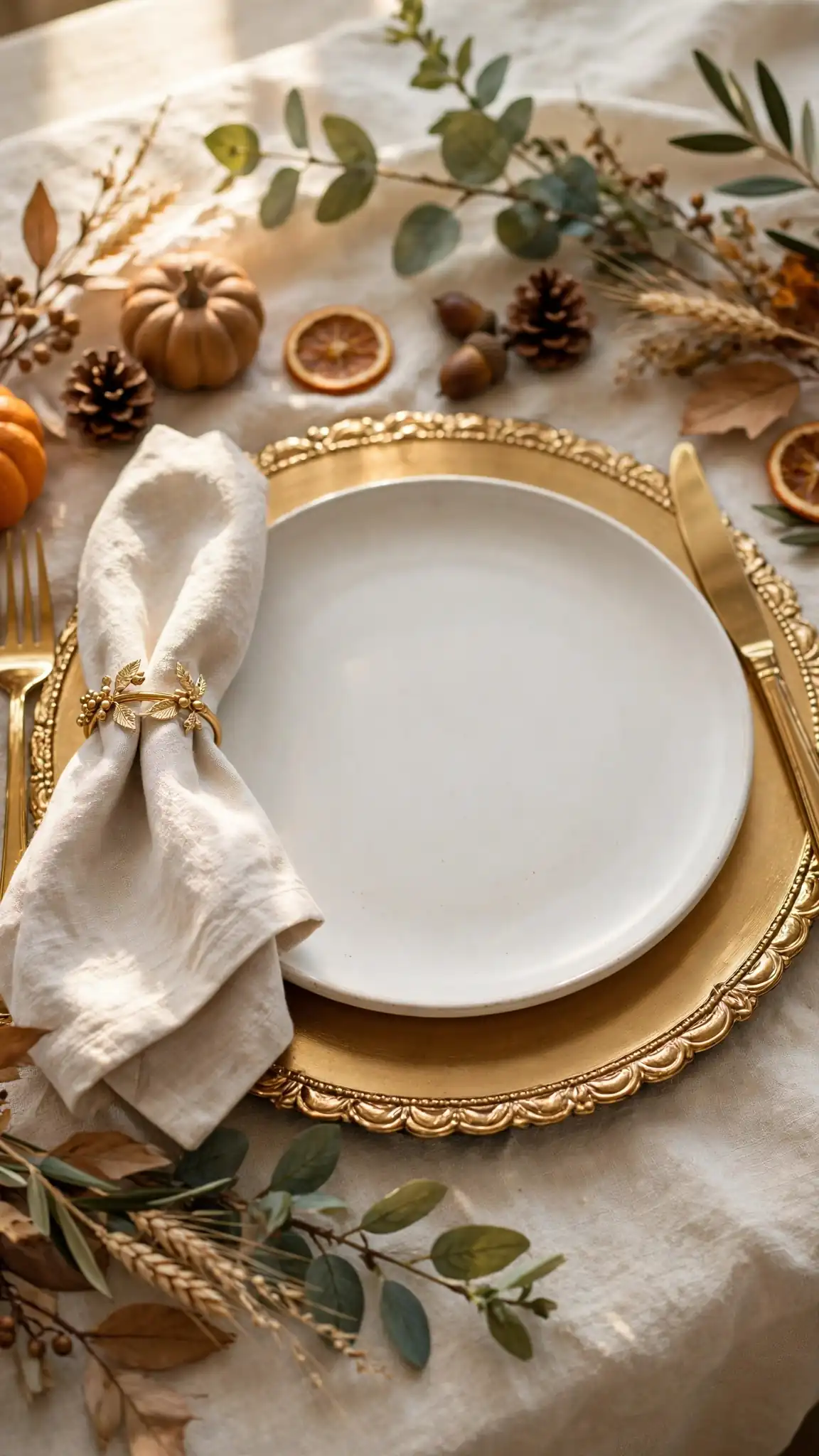
Charger plates are the fastest way to make everyday dinnerware look dressed for a holiday. These large decorative plates sit under the dinner plate, frame each setting with color or texture, and catch crumbs and drips before they reach the tablecloth. Gold, copper, woven rattan, and matte black chargers all suit Thanksgiving, and they work with plain white plates you may already own, so no new dinnerware set is required for a polished result. They also protect your tablecloth from the ring of condensation and small drips that always gather under plates during a long, relaxed holiday meal service.
Standard chargers measure 13 inches across, so confirm each setting still allows about 24 inches of width per guest before buying a full set. Plastic and melamine chargers cost $1 to $3 each at Dollar Tree, Walmart, and Target, while metal and rattan versions run $4 to $8 each. Chargers are decorative only and should never go in the oven or hold food directly. Wipe them clean and stack them with felt or paper between layers to prevent scratches. Pro tip: buy one extra charger so a last-minute guest never receives a mismatched setting.
5. Thanksgiving Table Setup With Layered Place Settings

Layered place settings make each guest feel expected, and they are the heart of a successful thanksgiving table setup. Start with the charger, add the dinner plate, then a salad plate or folded napkin on top. Place forks on the left, knife and spoon on the right, and glasses above the knife. If you need more dining table centerpiece ideas, keep those layers low and consistent so the center and settings feel like one planned design. Consistent spacing is what makes the table photograph beautifully and feel calm, even when the menu is generous and the guest list is larger than usual.
Work one complete setting first, sit in the chair to check comfort, then copy it around the table using a ruler or your hand as a spacer. Keep plate edges about 1 inch from the table edge and 2 inches between chargers. Everyday stoneware sets from Target and IKEA cost $30 to $60 for four settings, but mixing your existing plates with new napkins and chargers is cheaper. Remove salad plates before the main course if table space is tight. Pro tip: photograph your sample setting so helpers can copy it exactly without asking questions.
6. Add Cloth Napkins With Simple Folds
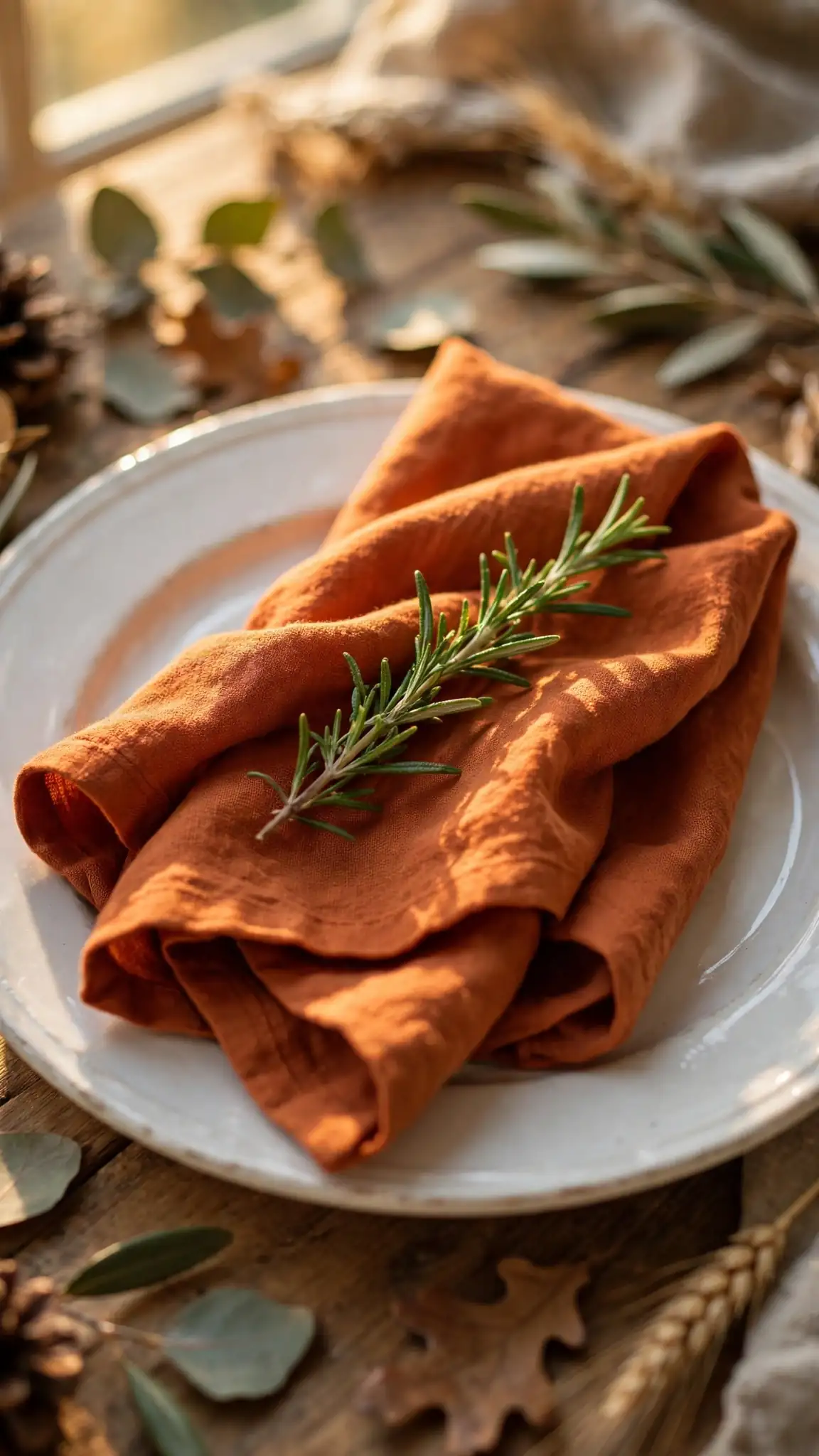
Cloth napkins instantly make a meal feel slower, warmer, and more intentional than paper, even when the fold itself takes only seconds. Choose rust, mustard, olive, deep burgundy, or natural linen to repeat your centerpiece colors at every seat. A simple rectangle fold tucked under the charger, a loose knot, or a napkin placed across the plate all look polished without requiring origami skills or extra time on a busy cooking day. Cotton and linen both photograph softly in candlelight, and they can be washed, folded, and reused for Christmas, birthdays, and ordinary Sunday dinners all year.
A set of twelve cotton napkins costs $12 to $22 at HomeGoods, Target, and Amazon, and each napkin should measure about 18 by 18 inches for a generous lap size. Wash and fold them the weekend before Thanksgiving, then store them flat in a drawer so they stay smooth. Provide one spare napkin for every four guests, because holiday gravy finds a way to test even careful adults. Avoid heavily scented laundry products that transfer odor during dinner. Pro tip: roll napkins around a sprig of rosemary for color, scent, and a finished look.
7. Mix Amber Glassware for Fall Glow

Amber, smoke, and soft gold glassware adds warmth the moment light passes through it, especially during an afternoon meal that stretches toward evening. You do not need a full matching set; using amber water goblets at every seat and keeping wine glasses clear creates a collected look that still feels unified. Colored glass also hides minor water spots better than crystal, which is helpful when you are setting the table a day ahead. Set the colored glass out a day early if you can, because seeing it in both daylight and evening light tells you whether the shade works.
Amber goblets cost $3 to $6 each at HomeGoods, World Market, and Target, and many discount stores sell four-packs for $10 to $15. Keep each setting to two glasses at most in smaller spaces, usually water plus wine or cider, so the table does not feel crowded. Place glasses in a small triangle above the knife, close enough to reach without crossing over plates. Hand-wash thin vintage pieces and check every rim for chips before guests arrive. Pro tip: chill a spare pitcher of water so refills never require anyone to leave the table.
8. Create Height With Cake Stands and Wood Risers

A completely flat table can look dull, even with beautiful colors, so add gentle height in one or two places using a cake stand, wood riser, or stack of cookbooks covered with linen. Raise a small pumpkin cluster, a bowl of rolls, or a candle grouping while keeping sight lines open. Height should create rhythm, not obstacles, so vary the center in thirds: low greenery, one medium cluster, and one slightly taller accent near the middle. Keep the total number of raised pieces small, usually one or two, so the effect stays elegant and the table still feels open and easy to use.
Wood risers and small cake stands cost $10 to $25 at HomeGoods, Target, and IKEA, and a 9- to 11-inch diameter suits most dining tables. Keep raised items stable and away from the table edge where sleeves and serving spoons can knock them. This is also a smart place to browse the Pottery Barn Thanksgiving tabletop collection for sturdy, reusable serving pieces that match a classic fall palette. Never place a hot casserole directly on a decorative stand without a trivet. Pro tip: test every riser with a gentle push before dinner to be sure it cannot wobble.
9. Set Out a Gratitude Card at Each Seat

A small gratitude card at each plate gives guests a meaningful moment before the meal and adds a personal layer no store-bought decoration can match. Use plain kraft, cream, or rust cardstock with one simple prompt, such as naming a person, place, or small joy from the year. Provide a short pencil at each setting, and invite everyone to share only if they feel comfortable, keeping the moment warm rather than forced. Reading a few cards aloud often becomes the moment guests remember most, long after they have forgotten exactly which side dishes were served that year.
A pack of fifty blank cards costs $6 to $10 at Michaels, Target, and Amazon, and 3-by-5-inch or 4-by-6-inch sizes fit neatly above a plate or tucked into a napkin. Write the prompt yourself in dark brown or black ink for a handmade feel, or print all cards at once for cleaner results. Keep completed cards in a small basket near the door so guests can take theirs home. Avoid glitter pens that shed onto food and clothing. Pro tip: write the year on the back so families can save cards as keepsakes.
10. Thanksgiving Table Setup for Small Dining Tables
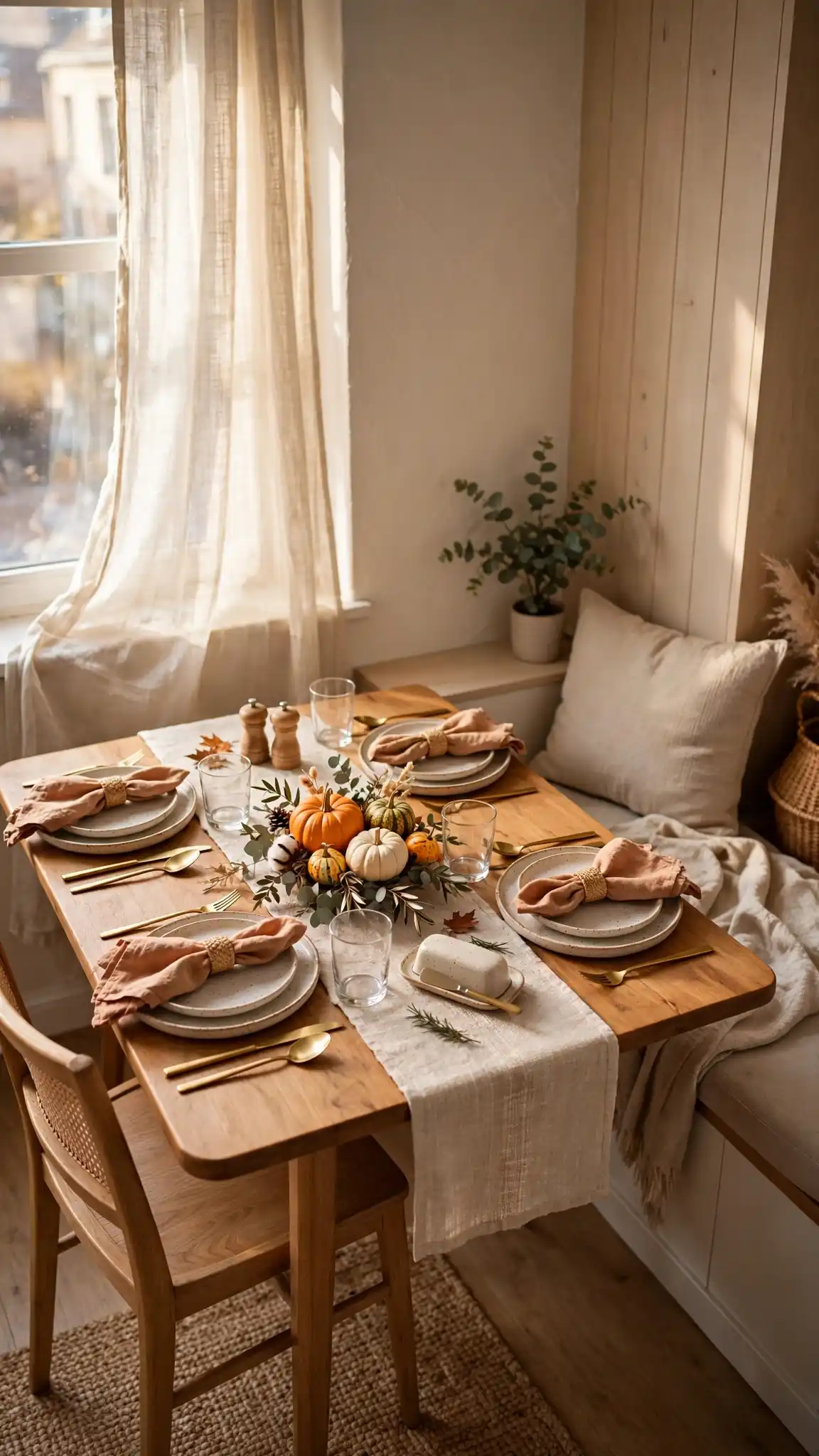
A small table needs editing more than decoration, and a smart thanksgiving table setup for a 48- to 60-inch table starts by moving serving dishes elsewhere. Use a narrow runner, one compact centerpiece, chargers only if settings still breathe, and glasses that do double duty. Seat four comfortably rather than squeezing six, and place extra chairs nearby only if the room truly allows knees, plates, and passing space without constant shifting and apologies. Borrow visual tricks from larger tables, such as repeating one color three times, but scale every piece down so proportions stay balanced and comfortable for diners.
A folding side table or kitchen counter can hold the turkey, sides, and drinks, freeing the dining table for people instead of casseroles. Compact centerpieces in a 12-inch tray cost under $20 using grocery pumpkins and candles. Skip bulky napkin folds and tall floral arrangements, and choose slim water glasses over wide goblets. If two leaves exist for your table, add only one; more surface covered with decor still leaves guests crowded. Measure chair clearance before deciding. Pro tip: set the small table fully, then remove one decorative item to restore breathing room.
11. Use Battery Candles for Safe Ambience

Candlelight makes Thanksgiving food look richer and faces look softer, but real flames near paper cards, greenery, sleeves, and excited children can become a constant worry. Battery candles with warm flicker settings give you the same glow for six hours or more with no dripping wax or fire risk. Group them in odd numbers along the runner, mixing short pillars and tea lights inside glass holders for depth and sparkle. Because there is no flame, you can place them close to greenery, paper, and fabric, which gives you far more freedom when styling narrow center areas.
A twelve-pack of flameless tea lights costs $8 to $12, while three realistic pillar candles run $15 to $25 at Target, IKEA, and Amazon. Choose a warm 2700K color so skin tones and food look natural, and switch candles on thirty minutes before guests sit down to check batteries. Keep glass holders clean because fingerprints show clearly in candlelight. Store all candles together after the holiday with batteries removed if the set will sit unused for months. Pro tip: place one candle near each end so the whole table glows evenly.
12. Scatter Fall Leaves and Acorns Lightly

A light scatter of leaves, acorns, or small pinecones between centerpiece pieces fills awkward gaps and makes the table feel gathered from nature. The key word is light: guests should notice texture, not need to sweep decorations aside to find room for a glass. Use faux leaves for a clean, reusable option, or collect real leaves a few days ahead, press them flat, and inspect them carefully for moisture and insects before bringing them indoors. Work in small handfuls and edit as you go, removing pieces from any spot where the tablecloth disappears completely under decoration instead of showing through nicely.
Faux leaf packs cost $5 to $9 at Dollar Tree, Michaels, and Walmart, and one pack is usually enough for an eight-person table. Keep scatter pieces at least 3 inches away from plate edges and never place loose items where serving dishes will land. Gold-painted acorns add a little shine, while natural pieces suit rustic tables better. If young children are present, skip small acorns that could become choking hazards and use larger leaves instead. Pro tip: scatter after all plates and glasses are set so gaps guide your placement.
13. Label Dishes With Small Place Cards

Place cards solve two problems at once: guests know where to sit, and hosts can balance talkative relatives, children, and shy friends thoughtfully around the table. Small tented cards in cream or kraft paper match almost every fall palette and take only minutes to write. Place them above the charger or leaning against the water glass, angled so each guest can read theirs while standing behind the chair before sitting down for dinner. Thoughtful seating also reduces the classic holiday bottleneck where two quiet guests sit stranded together while the lively conversation happens at the far opposite end.
Blank place cards cost $5 to $9 for fifty at Michaels, Target, and office-supply stores, and a fine black or brown pen gives the cleanest result. Write first names only for casual meals, and add a tiny leaf drawing if you want a handmade touch. For guests with food allergies, discreetly mark the menu card rather than the place card. Keep two blank cards and the pen nearby for late changes, because holiday seating plans often shift at the last moment. Pro tip: seat one confident helper near the kitchen end for refills.
14. Choose a Cohesive Color Palette of Rust and Cream

A limited palette is what separates a collected table from a pile of fall items. Rust and cream make a forgiving base: cream keeps the table bright, rust brings autumn warmth, and wood, greenery, and amber glass fit naturally between them. Add one accent only, such as deep green or antique gold, and repeat each color at least three times across the table so nothing looks like a lonely mistake or leftover decoration. Once the palette is fixed, shopping becomes faster and cheaper, because you stop buying pretty single items that will never agree with anything else you own.
Before buying anything, gather your plates, napkins, runner, and decor in one place under daylight and remove pieces that fight the palette. A rust napkin set costs $12 to $20, while cream dinnerware is widely available at IKEA and Target for $25 to $50 per set. Photograph the grouping because a phone picture reveals clashing undertones faster than your eyes do in a store aisle. Keep orange pumpkins if you love them, but balance them with plenty of cream space. Pro tip: carry one napkin to the store for accurate color matching.
15. Add Fresh Herbs for Scent and Color

Fresh rosemary, sage, and thyme bring deep green color and a gentle savory scent that belongs beside a Thanksgiving meal. Tuck small sprigs into napkin folds, lay a short stem across each bread plate, or fill tiny jars along the runner. Herbs are inexpensive, edible, and less fussy than flowers, and they still look good if the table is set the night before and kept in a cool room away from direct heat. Herbs also connect the table to the kitchen in a subtle way, echoing the flavors in the turkey, stuffing, and roasted vegetables guests are about to enjoy.
Fresh herb bunches cost $1 to $3 each at most grocery stores, and one rosemary pack usually supplies eight to ten napkin sprigs. Rinse herbs the morning of the meal, pat them dry, and trim stems to 3 or 4 inches so they sit neatly without touching food too much. Avoid herbs treated with anything not meant for culinary use, and skip strongly scented lavender near the main course. Replace any wilted pieces just before guests arrive for the freshest look. Pro tip: keep extra rosemary in water like flowers until the moment you style it.
16. Keep Serving Dishes Off the Main Table

The prettiest setting will fail if the turkey, three casseroles, gravy, cranberries, and rolls all compete for the same center strip. Plan a serving station on a sideboard, buffet, kitchen island, or sturdy folding table, and keep the dining table for people, plates, water, bread, and one shared dish at a time. This gives elbows room, reduces spills across linens, and lets guests stand for seconds without squeezing behind seated chairs. Guests also help themselves more comfortably when the serving route is obvious, which keeps the host seated longer instead of constantly jumping up to direct traffic.
A six-foot folding table costs $45 to $60 at Walmart or Costco, but a cleared counter works free and may be closer to the oven. Set out trivets, serving spoons, small plates for bones and drips, and a towel for quick cleanup before food leaves the kitchen. Label dishes if guests bring contributions, especially for allergies. Keep hot items grouped together and cold items at the far end to create a smooth serving flow. Plan the route from kitchen to station so nobody crosses the dining chairs. Pro tip: place the carving board at the serving station, never on the decorated table.
17. Make a Kid-Friendly End of the Table

Children enjoy Thanksgiving more when their end of the table feels included rather than exiled. Use the same colors and cloth napkins as the adult settings, then swap fragile glassware for sturdy cups, add smaller plates, and place a paper runner section where kids can draw between courses. Seat a calm older child or patient adult nearby, keep sharp serving tools at the far end, and give each child the same gratitude card as everyone else. Giving children a defined, attractive space also protects the rest of the table, because art supplies and cups stay in their zone instead of drifting everywhere.
Butcher paper costs $8 to $14 for a roll at Target and craft stores, and a cup of washable markers costs under $6. Cut the paper to cover only the children’s section, about 18 inches deep per seat, so the main tablecloth still shows. Avoid small decorative items that toddlers can grab or swallow, and use battery candles instead of real flames at that end. Serve children’s drinks in lidded cups until everyone is seated and settled. A small basket of quiet activities helps during long adult conversations. Pro tip: let kids fold their own napkins so they feel part of preparing the table.
18. Use Woven Placemats for Texture
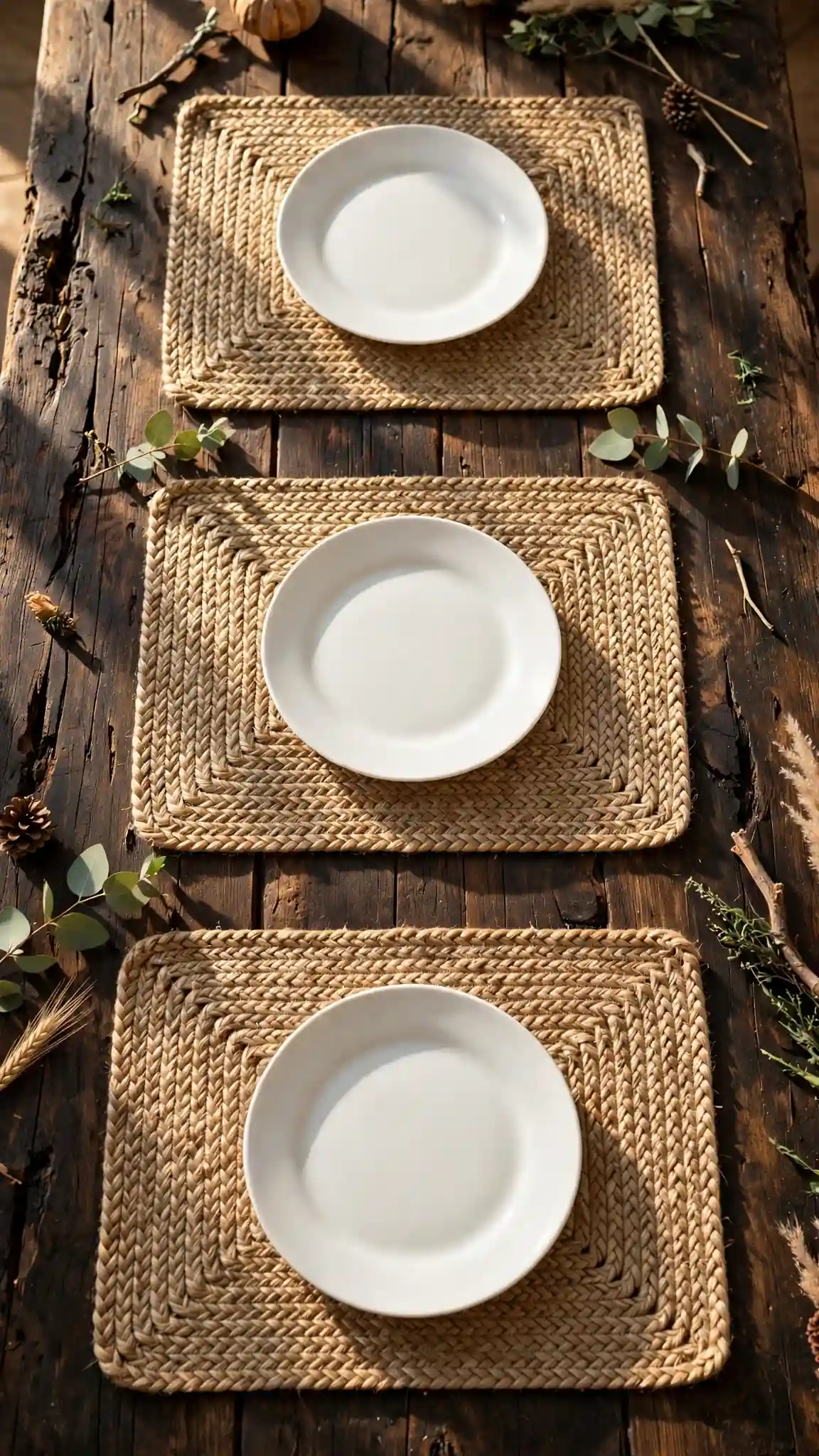
If you prefer bare wood to a full tablecloth, woven placemats give each setting structure while letting the table surface show. Round jute, rectangular seagrass, and washable woven vinyl all add texture and protect against heat and scratches. Placemats also help space settings evenly: place them first, keep a consistent gap between them, and every plate that follows will land in the right position without measuring each one separately during a busy setup. They work especially well for second seatings and dessert, because you can lift, shake, and replace one setting in seconds without ironing or rearranging a cloth.
Standard placemats measure about 13 by 19 inches or 15 inches round, and sets of six cost $15 to $30 at IKEA, Target, and World Market. Choose a style that lies completely flat, because curled edges catch plate rims and sleeves. Shake woven natural fibers outdoors and wipe spills quickly, since gravy can stain jute if it sits. On a dark wood table, lighter placemats create contrast; on a pale table, choose medium brown or rust for definition. Skip chargers if placemats and plates already fill the width. Pro tip: store placemats flat with a heavy book on top overnight.
19. Dress Up Plain Plates With Napkin Rings
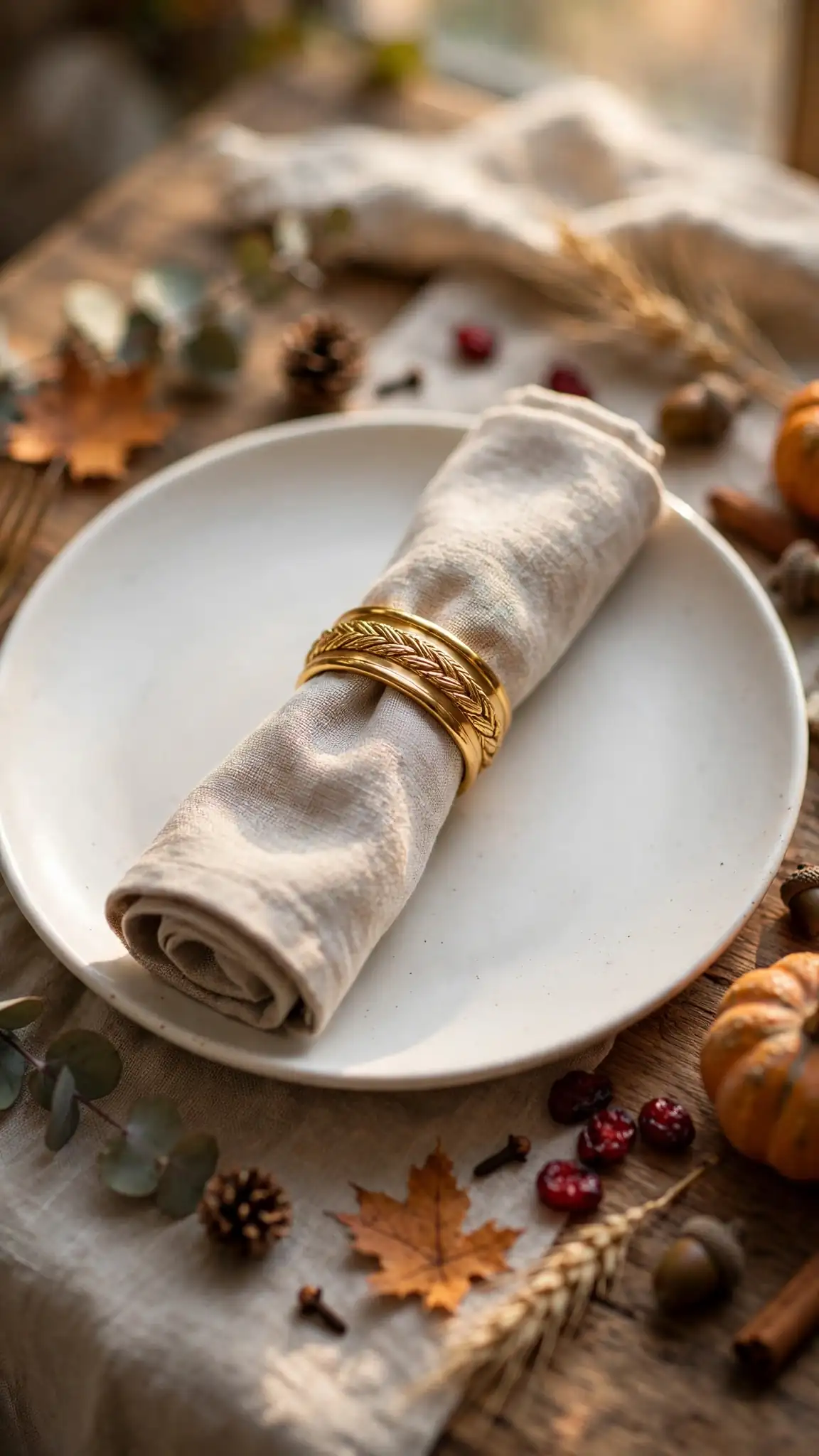
Plain white plates are a Thanksgiving gift because they accept almost any accent, and napkin rings are a small accent with a surprisingly tailored effect. Gold, wood, braided jute, and matte black rings all change the mood of the same plate in seconds. Slide the ring over a rolled or pointed napkin, then lay it diagonally across the plate or just above the charger for a clean, restaurant-like finish guests notice immediately. Rings also keep napkins from unfolding or sliding onto the floor before guests sit, which is surprisingly common in busy rooms with chairs moving around constantly.
Napkin rings cost $1 to $4 each at HomeGoods, IKEA, and Amazon; buy eight matching rings for $12 to $25 rather than expensive singles. Check the opening size if your napkins are thick linen, because tight rings crumple fabric and slow down setting the table. Metal rings can scratch glossy chargers, so place them on the napkin rather than directly on hard surfaces. If buying is not in the budget, tie napkins with twine and a herb sprig for the same finished feeling. Pro tip: store rings inside one napkin in the drawer so the set never separates.
20. Add a Simple Garland Down the Center

A garland gives you a full center in one step, especially when time is short and arranging loose stems feels fussy. Lay a six-foot eucalyptus, pine, or mixed fall garland down the runner, then nestle three pumpkins and several battery candles into its curves. Let the garland fall in gentle waves rather than a stiff straight line, and keep it narrow enough that plates, glasses, and serving hands never need to push through leaves during the meal. A garland is also forgiving for beginners, because its organic shape hides small gaps and uneven spacing that would be obvious with separate, precisely arranged pieces.
Faux garlands cost $15 to $35 at Michaels, Target, and Hobby Lobby, and quality versions can be reshaped and reused for Christmas by swapping pumpkins for ornaments. Fresh garlands cost more and should be purchased one or two days ahead. Fluff each section with your fingers and trim any stems that poke toward place settings. Keep garland at least 6 inches from open flames, or use battery candles only. If your table seats four, cut or fold the garland to four feet so the ends do not overwhelm the settings. Pro tip: build the garland on the runner before plates are set.
21. Plan Lighting That Flatters Food and Faces

Lighting decides whether a beautiful table looks warm in person or washed out and harsh. Aim for soft, layered light: dim the overhead fixture if possible, add battery candles on the table, and use a side lamp or nearby sconce to fill shadows. Avoid a single bright ceiling light directly above the center, which makes food look flat and creates unflattering shadows under eyes during photos and conversation throughout the evening meal. Good lighting also helps older guests read place cards and see their food clearly, so beauty and practical comfort improve together with the same small changes.
A plug-in dimmer or smart bulb costs $10 to $20 at IKEA, Target, and Home Depot, and warm bulbs around 2700K are the safest choice for dining. Set the light level an hour before dinner at the same time of day as the meal, because afternoon sun can hide how dark the room becomes later. Keep candles at different heights but below eye level when seated. If the room still feels dim, add a mirror or light-colored runner to reflect what light you have. Pro tip: take one phone photo of the set table to spot glare.
22. Do a Final Walk-Around Before Guests Arrive

The last ten minutes matter: walk around the finished table slowly, sit in at least three chairs, and look for wobbly glasses, blocked views, missing spoons, crooked chargers, and decorations crowding elbows. Check that every guest can reach water, see across the table, and stand without catching the tablecloth. Move the turkey plan, serving station, and extra chairs into place before anyone rings the bell, because small fixes are easy now and awkward once coats and dishes arrive. Finally, light the candles, pour the water, and check the room temperature, because a slightly cool room feels right once it fills with people and food.
Keep a small rescue kit nearby with spare napkins, a lighter or extra batteries, tape, scissors, a stain stick, and two blank place cards; the whole kit fits in one drawer and costs under $15 to assemble from items at home. Turn music on low, switch candles on, and pour yourself water before greeting guests. If something still looks imperfect from one chair, remember that candlelight and conversation soften nearly everything. Focus on welcome, not perfection, once the doorbell rings. Pro tip: take your keepsake photo before the first dish touches the table.
Final Thoughts
The best thanksgiving table setup is the one that still works when real life arrives, with hot dishes, passing hands, and conversations lasting well past dessert. Start with a clean base, add one clear centerpiece, layer each place setting, and stop before the table feels crowded. Warm colors, soft light, and a little texture do most of the work for you. If you prepare the nonperishable layers a day early, the final hour before guests arrive feels calm instead of rushed, and you can actually enjoy your own holiday gathering.
Remember that guests remember how a table felt far more than whether every fork matched perfectly. A thoughtful thanksgiving table setup simply says you were glad they came and you made room for them. Keep extra napkins, water, and serving spoons within easy reach, and let small imperfections pass without comment. Choose two or three favorite ideas from this list, repeat them next year as your signature style, and your thanksgiving table setup will become a tradition your family looks forward to every November. That is the real goal behind every layer, candle, and card on the table this year.
FAQs
Readers ask the same practical questions every November about timing, table space, centerpiece height, and what to buy first on a limited budget. The answers below cover the decisions that matter most, from how early you can set the table to keeping food warm and guests comfortable throughout a long holiday meal together. Most answers stay simple on purpose, because holiday hosts need clear decisions, not complicated design rules, in the final busy days before Thanksgiving arrives.
If your question is not answered here, return to the basic order used throughout this guide: protect the table, lay the base, build the center, set each place, then add light and small details last. That simple sequence solves most problems, even in a small dining room or when unexpected extra guests arrive at the last minute. Keep a notepad nearby and note what worked, so next November starts with a proven plan.
How early can I complete my thanksgiving table setup?
You can complete most of your thanksgiving table setup one or two days early, including linens, plates, glassware, napkins, and nonperishable decor. Add fresh flowers, greenery, and food-based pieces on Thanksgiving morning so they stay bright. Cover the finished table lightly with a clean sheet if your household has pets or curious young children.
How much space should each guest have at the table?
Allow about 24 inches of width per guest and 12 to 15 inches of depth for a comfortable place setting. Elbow room matters more than extra decor, especially during a long meal. If guests feel crowded, remove the centerpiece extras first rather than squeezing plates closer together along the table edge.
What is the best centerpiece height for conversation?
Keep your main centerpiece under 12 inches tall, or raise it above 24 inches on a stand, so guests can see each other across the table. Low arrangements of pumpkins, greenery, and candles work best for most dining tables. Test the view by sitting in two opposite chairs before guests arrive.
What should I buy first for a thanksgiving table setup on a budget?
For a budget thanksgiving table setup, buy a washable tablecloth, cloth napkins, and charger plates first because they frame every place and can be reused for years. Add grocery-store pumpkins, eucalyptus, and unscented candles next. These five purchases usually cost under $60 total at Target or Walmart and deliver the biggest visual change.
Can I mix different plates and glassware?
Yes, mixing is fine when you repeat one unifying element, such as the same napkin color, charger, or glass shape at every seat. Keep patterns within one color family so the table feels intentional rather than accidental. Place the most similar settings opposite each other to create balance when viewed from either end.
How do I keep serving dishes from crowding the table?
Plan a separate serving zone on a sideboard, kitchen island, or folding table before you finish decorating. Keep only water, bread, butter, and one or two shared dishes on the dining table itself. Refill small bowls instead of placing every large casserole in the center, and guests will have comfortable room to eat.




Leave a comment