

Mirror placement is one of the few design decisions that changes how a bedroom looks, feels, and functions all at once. Put a mirror in the right spot and a narrow room reads wide, a dim corner brightens, and a plain wall gains a focal point. Put it in the wrong spot and you get glare, awkward reflections, and a space that feels restless at night. The good news is that the rules are simple, forgiving, and easy to test before you drill a single hole in the wall.
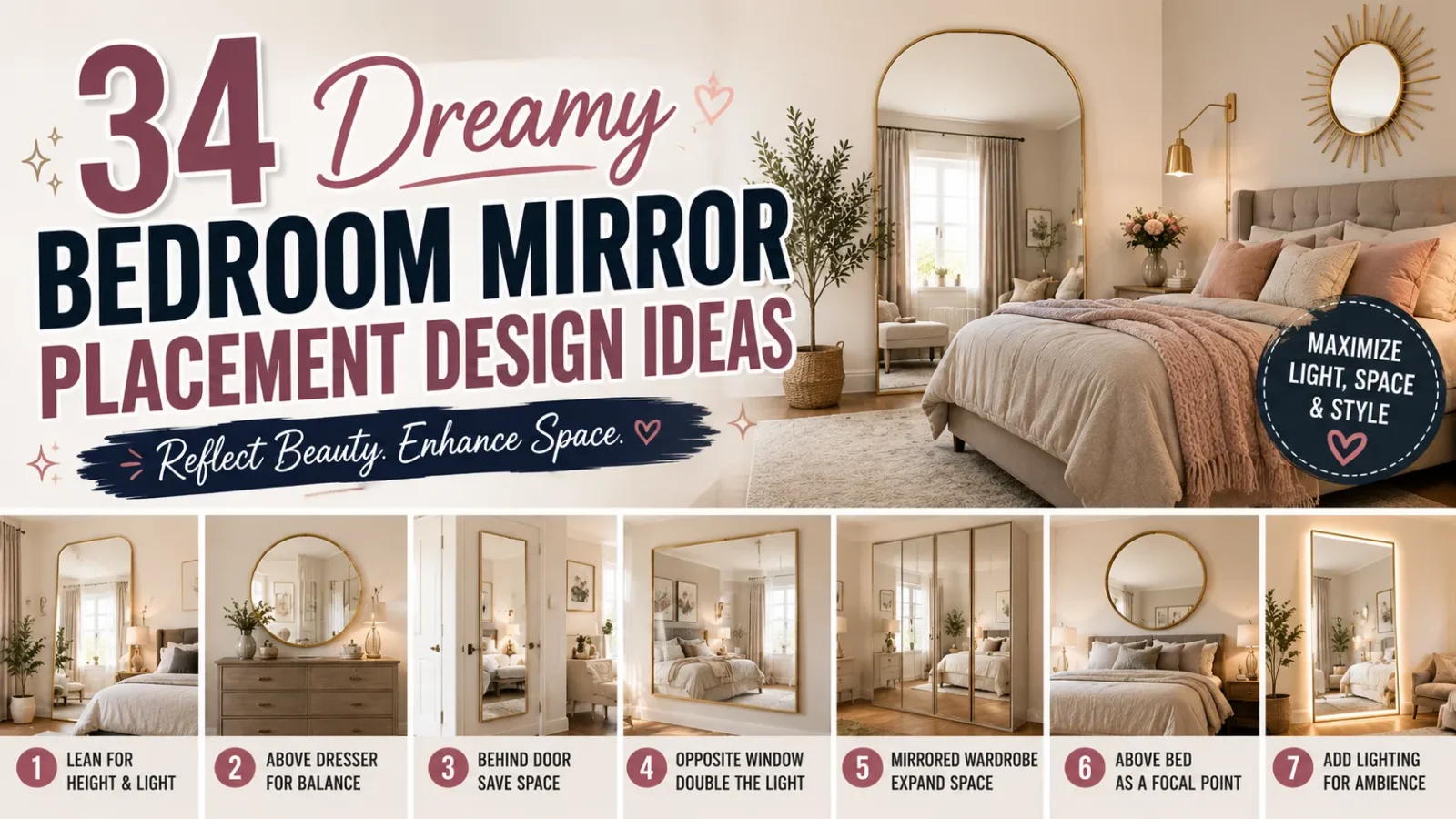
This guide covers thirty-four bedroom mirror placement ideas, from oversized leaning floor mirrors to subtle mirrored panels and gallery arrangements. Each idea includes the practical reasoning behind it: what the mirror will reflect, how it affects light, and where it works best by room size. You will also find guidance on hanging heights, safety, and the placements many designers deliberately avoid. Whether you have a compact rental bedroom or a large primary suite, at least a handful of these will suit your walls exactly.
1. Hang a Mirror Above the Headboard
Placing a mirror directly above the headboard turns the bed wall into a clear focal point and adds height to rooms with standard ceilings. Choose a mirror roughly two-thirds the width of the bed so the proportions feel deliberate, and leave six to twelve inches between the top of the headboard and the bottom of the frame. Horizontal or arched shapes work best here, since a tall vertical mirror can crowd the space. Always use heavy-duty anchors rated well above the mirror’s weight, and consider a shatter-resistant backing for peace of mind above a sleeping area.
2. Lean an Oversized Floor Mirror in a Corner
A large mirror leaning casually against the wall is the most forgiving placement of all, since you can move it until the reflection looks right. Corners are ideal because the angle catches light from two directions and fills space that furniture rarely uses well. Choose a mirror at least five feet tall so the gesture reads intentional rather than temporary. Rest the base on the floor or a rug, tilt it slightly, and secure it to the wall with an anti-tip strap. The relaxed, unhung look suits modern, boho, and Scandinavian bedrooms equally well.
3. Place a Mirror Opposite a Window
Positioning a mirror directly across from a window is the single most effective way to brighten a dark bedroom. The mirror captures incoming daylight and pushes it back into the room, doubling the perceived light source and often making the space feel noticeably larger. It also gives you a second view of whatever is outside, whether that is a tree, a garden, or an open sky. Keep the mirror at a similar height to the window for the cleanest effect, and avoid placing it where direct afternoon sun would reflect onto the bed and create glare.
4. Create a Mirror Gallery Wall
Instead of one large mirror, group several smaller ones in varied shapes and frames for a layered, collected effect. Mix rounds, ovals, and rectangles, but keep the frames within a single material family such as brass, black metal, or natural wood so the arrangement holds together. Lay the composition out on the floor first, keeping about two to three inches between pieces. This idea suits wide empty walls, awkward corners near a door, and rooms where a single oversized mirror would feel too heavy. The multiple reflective surfaces scatter light in a soft, sparkling way.
5. Mount a Mirror Above the Dresser
The dresser mirror is the most practical placement in any bedroom, giving you a natural spot to get ready without needing a separate vanity. Center the mirror on the dresser and choose one about two-thirds of the furniture width so the pairing looks balanced. Hang it four to six inches above the surface, close enough to read as a single unit. Leave enough clear surface below for a lamp, a tray, and daily items. If your ceiling is high, a taller mirror here is one of the easiest ways to draw the eye upward.
6. Use Mirrored Closet Doors
Mirrored wardrobe or closet doors deliver full-length reflection without consuming a single inch of wall space, which makes them exceptional in small bedrooms. Modern versions have come a long way from the dated sliding panels of past decades: look for slim black or bronze frames, fluted glass inserts, or antiqued finishes that soften the reflection. Because the surface is large, be thoughtful about what it will reflect, ideally a window, artwork, or an attractive wall rather than clutter. Keeping the opposite side of the room tidy becomes part of the design commitment.
7. Add a Round Mirror Above a Nightstand
A small round mirror above one nightstand adds a soft, unexpected shape to a wall usually reserved for artwork. The curve breaks up the strong rectangles of the bed, headboard, and furniture, which instantly makes the arrangement feel less rigid. Choose a diameter between eighteen and twenty-four inches so it relates to the nightstand rather than dominating it. Hang it centered over the table at roughly eye level when standing. Pair it with a wall sconce to the side, and the mirror will bounce that light across the bed for a warm, layered glow.
8. Frame a Mirror With Sconces
Flanking a mirror with a pair of wall sconces is a classic hotel and vanity technique that works beautifully in bedrooms. The side lighting eliminates the harsh shadows that overhead fixtures cast on the face, making the spot genuinely useful for getting ready. Mount sconces at roughly sixty to sixty-six inches from the floor, spaced about thirty to thirty-six inches apart depending on mirror width. Choose warm bulbs and add a dimmer. Even when switched off, the symmetry of two sconces around a mirror creates a tidy, architectural composition on an otherwise empty wall.
9. Install a Full-Length Mirror Behind the Door
If wall space is genuinely scarce, the back of the bedroom door is valuable real estate. A slim full-length mirror mounted there stays completely out of sight when the door is open and appears exactly when you need it. Use a lightweight mirror and hardware rated for repeated movement, since the door will swing and vibrate daily. Adhesive strips alone are rarely sufficient; screws into the door’s solid rails are safer. This placement is especially useful in rentals and small bedrooms where every square foot of wall is already spoken for.
10. Use an Arched Mirror for Height
Arched mirrors have become a favorite because the curved top draws the eye upward and mimics a doorway or window opening, which subtly suggests more space beyond. Placed against a flat wall, an arched mirror softens the room’s geometry while still offering the practicality of a tall reflective surface. Lean a large one in a corner or mount a slimmer version above a console. The shape pairs particularly well with rounded furniture, curved headboards, and organic decor. In a room full of right angles, one arch does a surprising amount of visual work.
11. Add a Vanity Mirror Nook
If your bedroom has an alcove, a bay recess, or an unused corner, a compact vanity nook with a mirror gives it purpose. A narrow table, a small stool, a tabletop or wall-mounted mirror, and good lighting are all it takes. Position the setup near a window if possible, since natural daylight is the most accurate light for grooming and makeup. Choose a mirror with slight magnification only if you will use it, since heavy magnification looks odd from across the room. This nook adds function without needing a separate dressing room.
12. Place Twin Mirrors Above Matching Nightstands
Symmetry is deeply calming in a bedroom, and a matched pair of mirrors above two nightstands delivers it efficiently. Use identical mirrors, hang them at exactly the same height, and center each above its table. Round or oval shapes work especially well because they contrast with the rectangular headboard between them. The pair frames the bed and creates a balanced, hotel-quality composition. This idea also solves the common problem of wanting artwork on both sides of the bed without committing to two pieces that may not coordinate.
13. Choose a Sunburst Mirror as a Focal Point
A sunburst or starburst mirror is a decorative statement more than a functional one, and that is exactly its value. The radiating spokes fill a large area of wall with relatively little visual weight, which makes it ideal above a headboard, a dresser, or a fireplace. Brass and gold versions add warmth to neutral rooms, while black or natural rattan versions suit more contemporary and organic schemes. Because the mirror glass itself is usually small, this is a good choice when you want sculptural interest without a large reflective surface facing the bed.
14. Mirror an Accent Wall Panel
Installing mirrored panels across a section of wall creates a dramatic, space-expanding effect that borders on architectural. Fluted or reeded mirror glass is the current favorite because the vertical ridges break up the reflection into soft, abstract light rather than a hard image, which feels far calmer in a bedroom. Antiqued or smoked mirror achieves a similar softening. Limit the treatment to one wall or one section, such as the area behind the headboard, so the room stays grounded. Professional installation is strongly recommended for panels of any real size.
15. Add a Mirror Above a Fireplace
Bedrooms with a fireplace have a built-in focal point that a mirror can amplify. Center the mirror on the chimney breast, matching its width to roughly the width of the mantel or slightly narrower. Leave four to eight inches of clearance above the mantel shelf. The reflection captures light from the room and, in the evening, from the fire itself, which produces a genuinely beautiful flicker. Choose a substantial frame that can hold its own against the fireplace surround, since a delicate mirror can look lost above a heavy stone or brick opening.
16. Use a Mirror on a Narrow Wall
Long, narrow bedrooms often have one short wall that feels cramped. A wide horizontal mirror mounted there visually pushes that wall back and corrects the proportions of the whole room. Choose a mirror that spans most of the wall’s width, leaving even margins on each side. The horizontal orientation matters: a tall vertical mirror in the same spot would emphasize the narrowness rather than counter it. This is one of the most reliable spatial tricks in interior design and works regardless of your decorating style or budget.
17. Hang a Mirror at Eye Level
Height is where most mirror placements go wrong. As a rule, the center of a mirror should sit between fifty-seven and sixty-five inches from the floor, which corresponds to average eye level and matches standard gallery hanging practice. When a mirror is hung too high, the room feels top-heavy and the mirror stops being usable. When furniture sits below, measure from the furniture rather than the floor, keeping four to eight inches of breathing room. Use painter’s tape to mock up the outline before committing, and step back to check from the doorway.
18. Layer a Mirror Over Wallpaper
Hanging a mirror on a wallpapered wall creates rich, layered depth that a plain wall cannot match. The trick is contrast: a bold patterned paper needs a simple, clean-lined mirror frame, while a subtle textured or grasscloth paper can support a more ornate or carved frame. The mirror also gives the eye a place to rest within a busy pattern, which prevents the wall from feeling overwhelming. Position it slightly off-center if the wallpaper has a strong repeat, aligning the mirror with a natural break in the design.
Read More Blogs on: decormellow.com
19. Add a Tray Mirror on the Dresser
Not every mirror needs to hang. A small mirrored tray resting on a dresser or nightstand catches light from below, adds a touch of reflective sparkle, and corrals perfume, jewelry, and small items into an organized vignette. It is the lowest-commitment mirror idea on this list and costs very little. Layer a few objects of varying heights on the tray, and the reflection beneath them doubles their presence. This works especially well in bedrooms where wall space is limited or where you rent and cannot drill.
Read More Blogs on: decormellow.com
20. Use Antique Mirror Glass for Softness
Antiqued or foxed mirror glass, with its speckled and clouded surface, offers reflection without sharpness. In a bedroom, this matters more than people expect: a crystal-clear mirror facing the sleeping area can feel jarring at night, while antiqued glass reads as a warm, atmospheric surface. The aged patina also suits period homes, vintage furniture, and darker color schemes beautifully. Use it for large statement pieces where a clear mirror would be too dominant, or for panels behind a headboard where you want reflected light but not literal reflection.
21. Place a Mirror Behind a Plant
Positioning a mirror behind a large potted plant is a small trick with a big payoff. The reflection doubles the foliage, making one plant look like a lush grouping, and the leaves break up the mirror’s surface so it feels integrated rather than stark. Corners are the natural home for this arrangement, since the mirror brightens a spot that would otherwise be dark. Choose a plant with an open, airy silhouette such as a palm or olive tree rather than a dense shrub, so light still passes through to the glass.
22. Install a Mirror Inside a Wardrobe
Mounting a mirror to the inside of a wardrobe door keeps the reflection completely hidden until you open it. This is the ideal solution for anyone who dislikes seeing themselves at night, for very small bedrooms, and for minimalist rooms where a large mirror would disrupt the calm. Fit it to the door’s inner panel using both adhesive and mechanical fixings, and check clearance so the mirror does not collide with shelves or hanging clothes. The added benefit is that you can check your outfit right where the clothes are.
23. Add a Mirror Above a Bench
If you have a bench or an ottoman against a wall, the space above it is a natural mirror location. The furniture anchors the mirror and prevents it from floating awkwardly in empty wall space, while the mirror gives the bench a purpose beyond storage. Center the mirror on the bench, matching roughly two-thirds of its width, and hang it about six to ten inches above the seat. Add a basket underneath and a small plant to one side, and the corner becomes a complete, considered vignette.
24. Choose a Black-Framed Mirror for Contrast
In a bedroom full of soft neutrals, a black-framed mirror provides the graphic punctuation the scheme needs. The dark outline defines the mirror’s shape crisply against a pale wall and echoes any black elements elsewhere, such as a lamp base, window frames, or hardware. Thin frames read modern and light, while thicker frames feel more industrial or traditional depending on the profile. Repeat black at least twice more in the room, even in small doses, so the mirror looks like part of a plan rather than an isolated dark object.
25. Use a Rattan Mirror for Texture
A mirror framed in rattan, cane, or woven seagrass adds warmth and handcrafted texture that metal and painted frames cannot. The natural fiber softens the hardness of glass and suits coastal, boho, Scandinavian, and organic modern bedrooms. Round rattan mirrors are especially popular above dressers and nightstands, where the circular woven edge acts almost like sunrays. Because the material is light in both weight and color, these mirrors work well in small rooms where a heavy frame would feel oppressive. They are also generally very affordable.
26. Add a Mirror to a Small Bedroom Wall
In a compact bedroom, one well-placed mirror can do more than any other single purchase. Choose the largest mirror the wall can reasonably hold, place it where it reflects the window or the room’s longest sightline, and keep the frame simple. Avoid multiple small mirrors, which create a busy, fragmented reflection that makes the space feel more cluttered. The goal is one clean, generous reflective plane. Keep the area it reflects tidy, because the mirror will amplify whatever it sees, for better or worse.
27. Hang a Horizontal Mirror Over a Low Bed
Low platform beds leave a large expanse of empty wall above the headboard, and a wide horizontal mirror fills it perfectly. The landscape orientation echoes the bed’s low, spreading silhouette and keeps the composition calm rather than vertical and tense. Choose a mirror close to the bed’s width, and hang it so the bottom edge sits roughly eight to fourteen inches above the headboard. This pairing is a staple of Japandi and minimalist bedrooms, where the horizontal emphasis is central to the entire aesthetic.
28. Add Mirror Panels to a Headboard
Integrating mirrored panels into the headboard itself creates a built-in look that eliminates the need for separate wall art. Slim vertical strips of antiqued or fluted mirror set between upholstered or wooden sections catch light beautifully without producing a full reflection. Because the panels face outward from behind you, they never reflect the bed directly, which sidesteps the discomfort some people feel about mirrors in sleeping areas. Custom headboards like this can be commissioned locally, or approximated by mounting narrow mirror strips to the wall behind a low headboard.
29. Place a Mirror Near the Entry
A mirror positioned near the bedroom door serves as a final check on your way out and visually extends the room as you enter. Place it on the wall adjacent to the door rather than directly facing it, so the first thing you see when walking in is the room rather than yourself. A slim vertical mirror suits the tight wall space beside most doors. Add a small hook or shelf beneath it, and the spot becomes a functional landing zone for keys, glasses, or jewelry.
30. Use a Mirror to Reflect Artwork
Before you hang any mirror, stand in its planned position and look at what it will show. Positioning a mirror so it reflects a favorite painting, a beautiful headboard, or a styled shelf effectively gives you the piece twice. This turns the mirror from a functional object into a curated view. It also solves the problem of blank walls that are hard to see from the main seating or sleeping position. Test with a handheld mirror first to preview exactly what the finished reflection will capture.
31. Add a Mirror Above a Radiator or Console
Narrow furniture such as a radiator cover, a slim console, or a floating shelf leaves a specific proportion of wall above it that a mirror fills neatly. Match the mirror’s width to the furniture below, and keep the vertical dimension modest so the composition stays horizontal. This placement is common in older homes where radiators occupy prime wall positions under windows or beside doors. The mirror distracts from the utilitarian object below and turns an unavoidable feature into a deliberate design moment.
32. Choose an Asymmetrical Organic Shape
Irregular, pebble-like, and asymmetrical mirrors have become a favorite for bedrooms that need one sculptural element. The unpredictable outline reads as art rather than utility, which makes it a strong choice for a wall where a conventional rectangle would feel plain. These shapes work best against simple backgrounds and with minimal surrounding decor, since their form needs space to be appreciated. A single organic mirror above a dresser or leaning in a corner can carry the personality of an entire room by itself.
33. Avoid Facing the Mirror Directly at the Bed
Many designers deliberately avoid placing a mirror where it reflects the bed head-on. The practical reasons are real: a direct reflection can be startling when you wake at night, and any light from a hallway, phone, or window bounces straight back at you. In feng shui, the placement is also considered disruptive to rest. If your only available wall faces the bed, choose antiqued, fluted, or textured glass, or select a mirror that can be angled or covered. Comfort should outrank composition in a bedroom.
34. Finish With Proper Mirror Lighting
A mirror is only as good as the light around it. Position lighting so it falls on you rather than on the glass, which prevents glare and gives you an accurate reflection. Sconces at the sides, a picture light above, or a nearby table lamp all work better than an overhead fixture directly in front. Warm bulbs around 2700K to 3000K flatter skin tones, while very cool bulbs can look harsh. If the mirror is your main dressing spot, aim for even light from two directions and add a dimmer for evening use.
Conclusion
Bedroom mirror placement comes down to three questions: what will it reflect, how high should it sit, and is it safely secured. Answer those well and almost any mirror will improve the room. Use the opposite-the-window placement to brighten dark spaces, horizontal mirrors to correct narrow proportions, and full-length options on doors or closet fronts when wall space is tight. Keep the center around eye level, mock up the position with painter’s tape before drilling, and choose antiqued or fluted glass if a direct reflection of the bed would disturb your sleep. Start with one well-placed mirror; you will notice the difference immediately.
Frequently Asked Questions
Where should a mirror be placed in a bedroom?
The most effective placement is opposite or adjacent to a window, where the mirror reflects daylight back into the room. Other strong options include above the dresser, above the headboard, on a closet door, or leaning in a corner. Avoid positions that reflect the bed directly if that would disturb your sleep.
What is the correct height to hang a bedroom mirror?
Center the mirror between fifty-seven and sixty-five inches from the floor, matching standard eye level. When hanging above furniture such as a dresser or bench, measure from the furniture instead and leave roughly four to eight inches of clearance below the frame.
Is it bad to have a mirror facing the bed?
It is not harmful, but many people find a direct reflection unsettling at night, and it can bounce unwanted light toward the bed. Feng shui traditionally discourages it as well. If the wall gives you no alternative, use antiqued, fluted, or textured glass to soften the reflection.
How do I make a small bedroom look bigger with mirrors?
Use one large mirror rather than several small ones, position it to reflect a window or the room’s longest sightline, and choose a simple frame. Mirrored closet doors and tall leaning mirrors both add reflection without using extra floor space.
What size mirror should go above a dresser?
Choose a mirror about two-thirds the width of the dresser. This proportion keeps the pairing balanced without the mirror overwhelming the furniture. Hang it four to six inches above the surface so the two pieces read as a single unit.
How do I hang a heavy mirror safely?
Locate the wall studs and screw directly into them wherever possible. If studs are not available, use toggle bolts or heavy-duty anchors rated for at least twice the mirror’s weight. Use two hanging points instead of one for stability, and add an anti-tip strap for any mirror that leans.







Leave a comment