

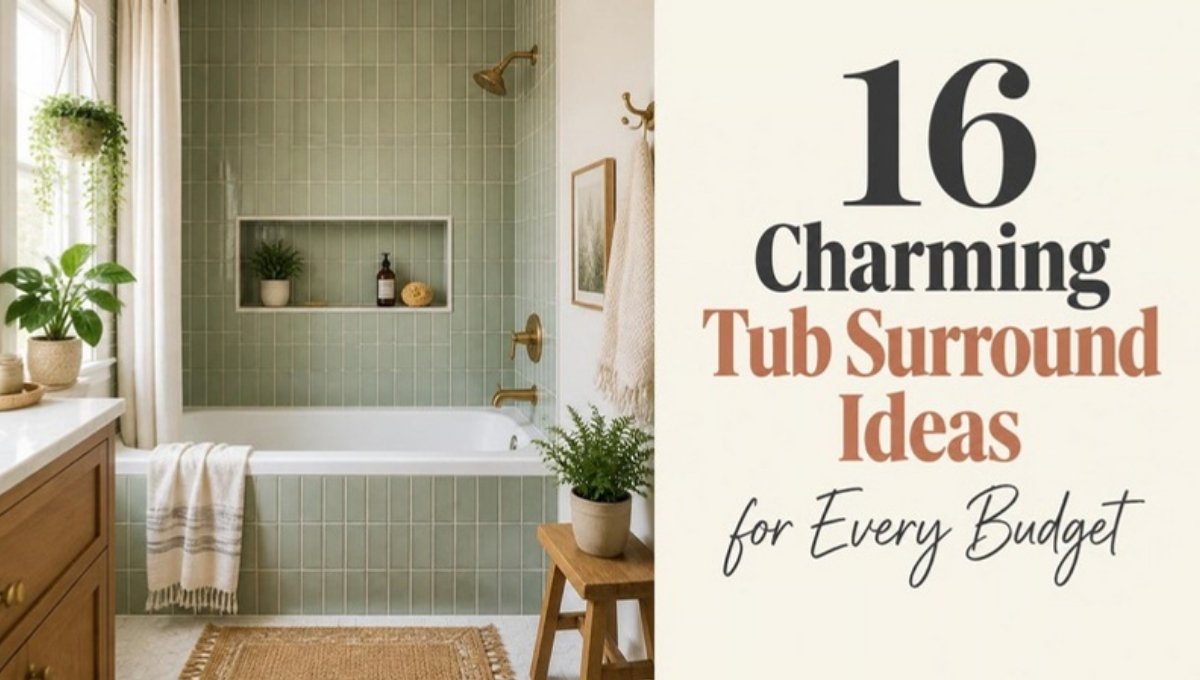
The tub surround is the largest visible surface in most bathrooms, which makes it the fastest way to change how the whole room feels. Replace a dated fiberglass panel with tile, wood, or stone and the space reads as renovated even if the tub, vanity, and floor stay exactly where they are. That leverage is why surrounds are one of the smartest places to spend a limited bathroom budget, and why a well-chosen surround can carry a room that is otherwise entirely ordinary.
What people often do not realize is how wide the price range actually is. A peel-and-stick treatment or a coat of the right paint can transform a surround for the cost of a nice dinner, while a book-matched marble slab can run into five figures. In between sits an enormous middle ground of tile, beadboard, shiplap, and composite panels that look genuinely custom for a moderate outlay. Below are sixteen charming tub surround ideas organized so you can find one that suits your space, your skills, and your budget.
1. Classic White Subway Tile
Subway tile remains the most reliable tub surround material because it is inexpensive, widely available, easy to install, and impossible to date. Run it in the traditional offset brick pattern for a familiar look, or stack it vertically for a more current feel. Extending the tile to the ceiling rather than stopping at shower head height makes the surround look custom and protects the wall from steam. The real design decision is grout: white grout keeps things seamless, while a soft gray adds definition and stays looking clean far longer.
2. Beadboard Wainscoting Above the Tile
Combining a few rows of tile at the tub deck with painted beadboard above is a classic cottage approach that costs less than full-height tile and delivers enormous charm. The vertical grooves add texture and the paint color gives you an easy way to inject personality. Use moisture-resistant MDF beadboard or PVC panels, seal every cut edge, and finish with a semi-gloss or satin paint. Keep the beadboard well clear of direct spray, which makes this best suited to tubs without a shower. That is why it ranks among the most practical tub surround ideas in this guide.
3. Full-Height Marble Slab
A single book-matched marble or quartzite slab running the full height of the tub wall is the most luxurious surround available, and the effect is genuinely striking. With no grout lines at all, the veining reads as continuous artwork and cleaning becomes effortless. This is the highest-budget option on the list, requiring templating, fabrication, and professional installation. Quartz and porcelain slabs offer a very similar seamless look with better stain resistance and a meaningfully lower price, which makes them the practical choice for most homes. That is why it ranks among the most practical tub surround ideas in this guide.
4. Handmade Zellige Tile
Zellige tile brings the irregular edges, uneven glaze, and subtle color variation that only handmade materials can produce. Each tile catches light slightly differently, so the finished wall has a shimmering depth that machine-made tile cannot match. It is mid-to-high budget and requires an installer comfortable with variable tile dimensions. Choose a grout tone close to the tile average so the irregularity reads as texture rather than mess, and accept the chips and waves as part of the material’s character.
5. Vertical Stacked Tile for Height
Running rectangular tile vertically rather than horizontally draws the eye upward and makes a standard-height bathroom feel taller. It is exactly the same tile at exactly the same cost as a conventional layout, which makes it one of the highest-value design decisions available. The effect is especially strong in small bathrooms and in alcove tubs where the surround occupies three walls. Pair with a matching or slightly darker grout so the vertical rhythm stays visible without becoming busy. Of all the tub surround ideas here, this one offers some of the best value.
6. Painted Tile Refresh
If your existing tile is sound but ugly, specialist tile paint or an epoxy tile refinishing kit can transform it for a very small outlay. Thorough cleaning, degreasing, and sanding are non-negotiable, and the finish must cure fully before the tub is used. Results typically last several years with careful use, which makes this an excellent stopgap for renters or anyone saving for a full renovation. Choose a light neutral or a soft muted color, and expect to touch up occasionally in high-contact areas.
7. Board and Batten Surround
Board and batten adds architectural structure through vertical battens applied over a flat panel, producing crisp shadow lines and real presence. Painted in a deep green, navy, or charcoal, it turns an ordinary tub wall into the feature of the room. Like beadboard, it belongs in bathrooms where the tub is not used as a shower, or above a tiled splash zone. Use moisture-resistant materials, caulk every joint thoroughly, and finish with a durable satin bathroom paint. It is a favorite among tub surround ideas because it works in so many homes.
8. Large Format Porcelain Panels
Large format porcelain, in sheets of 24 by 48 inches or bigger, gives you the seamless look of stone with dramatically fewer grout lines and no sealing required. Marble-look, concrete-look, and travertine-look versions all read convincingly at normal viewing distance. The material sits in the mid to upper budget range, driven more by installation than by the tile itself, since large panels need a perfectly flat substrate and specialist handling. The payoff is a surround that looks expensive and cleans in seconds.
9. Penny Round Mosaic Surround
Penny round tile across a full tub surround creates a soft, slightly vintage texture that suits cottage, farmhouse, and traditional bathrooms beautifully. Because it comes on mesh sheets, a competent DIYer can install it over a weekend, which keeps costs low. Choose a single soft color for calm, or a subtle two-tone blend for depth. The many grout lines mean grout choice matters enormously: use epoxy or a high-performance grout so the surface stays clean over years of use. Of all the tub surround ideas here, this one offers some of the best value.
10. Shiplap With a Tiled Splash Zone
Horizontal shiplap above a tiled lower section combines cottage warmth with practical waterproofing. Tile the bottom two or three feet where water actually lands, then run painted shiplap above to ceiling height. The horizontal lines widen the room visually and the paint color is easy to change later. Use PVC or moisture-rated boards, prime all edges, and caulk the transition line carefully. This combination delivers a great deal of character for a modest material cost. Keep it in mind as you shortlist tub surround ideas for your own space.
Read More Blogs on: decormellow.com
11. Fluted or Ribbed Tile Feature
Three-dimensional fluted tile turns the tub surround into a textural feature that shifts with the light throughout the day. In a neutral color, the effect is quiet but sophisticated; in a deeper tone, it becomes the room’s focal point. Use it on the main tub wall and keep the side walls in a flat matching tile so the texture stays special. Confirm with the manufacturer that the profile suits wet areas and allows water to drain freely from the grooves.
12. Peel-and-Stick Tile for Renters
Quality peel-and-stick tile has improved considerably and offers a genuinely reversible option for rentals and short-term fixes. Applied to a clean, dry, smooth surface, it can cover a dated surround convincingly at very low cost. It will not withstand direct, sustained spray, so keep it above the tub deck and out of the shower zone, and seal the perimeter with clear caulk. Test one tile first and check how it releases before committing to the full wall.
13. Wood-Look Porcelain Plank
Wood-look porcelain planks give a tub surround the warmth of timber with none of the water risk. Run them vertically for height or horizontally for width, and choose a plank with realistic grain variation and matte finish so it does not read as plastic. The material suits spa, Japandi, and Scandinavian bathrooms particularly well, especially paired with black fixtures and a stone-look floor. Cost sits comfortably in the mid range and installation is no harder than standard tile. That is why it ranks among the most practical tub surround ideas in this guide.
14. Color-Drenched Tile Surround
Choosing a saturated color for the entire surround, whether deep green, terracotta, ochre, or dusty blue, is one of the most confident moves in bathroom design. Because the tub area is contained, the color feels bold without overwhelming the room, and it works especially well in small bathrooms and powder-room-adjacent spaces. Glossy ceramic in a rich tone reflects light and looks far more expensive than it costs. Keep the floor, vanity, and ceiling neutral so the surround remains the clear focal point. It is a favorite among tub surround ideas because it works in so many homes.
15. Built-In Ledge or Niche Detail
Whatever material you choose, a recessed niche or a slim built-in ledge along the tub wall adds daily function and a designed detail at minimal extra cost. A ledge running the full width creates a strong horizontal line that visually widens the room, while a niche keeps bottles tucked out of sight. Line the niche in a contrasting tile for emphasis, slope the surface forward for drainage, and finish edges with a metal trim in your chosen accent finish. Of all the tub surround ideas here, this one offers some of the best value.
16. Refinish and Repaint the Existing Surround
The lowest-cost option is often the most overlooked. Professionally refinishing an existing fiberglass or acrylic surround, along with the tub itself, produces a uniform fresh finish for a fraction of replacement cost. New caulk, updated fixtures in a current finish, and a fresh coat of paint on the surrounding walls complete the transformation. The result will not match new tile, but for a rental property, a quick sale, or a tight budget, it delivers the largest visible improvement per dollar spent.
Final Thoughts on Tub Surround Ideas
The right tub surround depends less on your budget than on how you plan to use the tub. If it doubles as a shower, prioritize genuinely waterproof materials such as tile, porcelain panels, or stone, and give real attention to waterproofing behind them. If it is a soaking tub only, beadboard, shiplap, and board and batten open up a world of paintable charm at low cost. Across every price point, the details do the heavy lifting: extend the surround to the ceiling, choose grout deliberately, add a niche or ledge, and caulk carefully. Those four decisions make a modest surround look considered and an expensive one look worth it.
For more inspiration, explore our 15 Fresh Mid Century Modern Bathroom Ideas and browse more home decor ideas.
Frequently Asked Questions About Tub Surround Ideas
What is the cheapest way to update a tub surround?
Refinishing the existing surround, using specialist tile paint, or applying quality peel-and-stick tile above the splash zone are the least expensive routes. Fresh caulk, updated fixtures, and repainted surrounding walls add a surprising amount of improvement for very little money.
Can I use wood around a bathtub?
Only where it will not be directly and repeatedly wetted. Beadboard, shiplap, and board and batten work well above a tiled splash zone in bathrooms where the tub is not used as a shower. Use moisture-resistant materials, seal all cut edges, and caulk every joint. For full shower use, choose wood-look porcelain instead.
How high should a tub surround go?
For a tub-shower combination, tile at least six inches above the shower head, and ideally all the way to the ceiling for the most finished look and best steam protection. For a soaking tub without a shower, three to four feet is generally sufficient.
What is the most durable tub surround material?
Porcelain tile and porcelain or quartz slab are the most durable and lowest-maintenance options, resisting water, stains, and wear without sealing. Natural stone looks beautiful but requires periodic sealing and can etch from acidic products.
Should tub surround tile match the floor tile?
It does not need to match, but the tones should relate. A common approach is a lighter surround with a darker floor, keeping both within the same undertone family. Matching exactly can look flat, while unrelated colors and undertones make the room feel disjointed.
How do I stop mold in a tub surround?
Ensure proper waterproofing behind the tile, use epoxy or high-performance grout, caulk the tub-to-wall joint with a mildew-resistant silicone, run an adequately sized extractor fan during and after bathing, and wipe down surfaces regularly. Most mold problems trace back to ventilation rather than the surround material itself.





Leave a comment