



The vanity is the hardest-working piece of furniture in the bathroom. It holds the sink, hides everyday essentials and sets the style for the entire room. Pair it with the right lighting and mirror, and even a simple bathroom can feel like a boutique hotel.
These 21 bathroom vanity ideas cover vanity styles, lighting, mirrors and storage for powder rooms, family bathrooms and primary suites. For more inspiration, see our medicine cabinet organizer ideas and these bathroom paint colors ideas.
Keep these vanity guidelines in mind:
- Standard vanity height is 32 to 36 inches; comfort height is 34 to 36.
- Leave at least 21 inches of clear space in front of the vanity.
- Hang sconces about 60 to 66 inches from the floor.
- Choose a mirror slightly narrower than the vanity.
Pair any of these vanities with one of these master bathrooms with walk in showers and the whole room feels like a boutique hotel.
1. Floating Vanity for Small Bathrooms
A floating vanity attaches directly to your bathroom wall, leaving the floor beneath it completely open — a visual trick that makes even the tightest powder room feel noticeably bigger. Without legs or a base cabinet blocking sightlines, light flows freely and your eye reads the entire floor area, so a cramped space breathes easier. The style works in modern, transitional, and minimalist bathrooms, and a slim trap cover hides the plumbing for a tailored finish. You get genuine storage while keeping that airy, hotel-bathroom feeling that small bathrooms need most, and cleaning the floor underneath takes seconds with a quick mop pass.
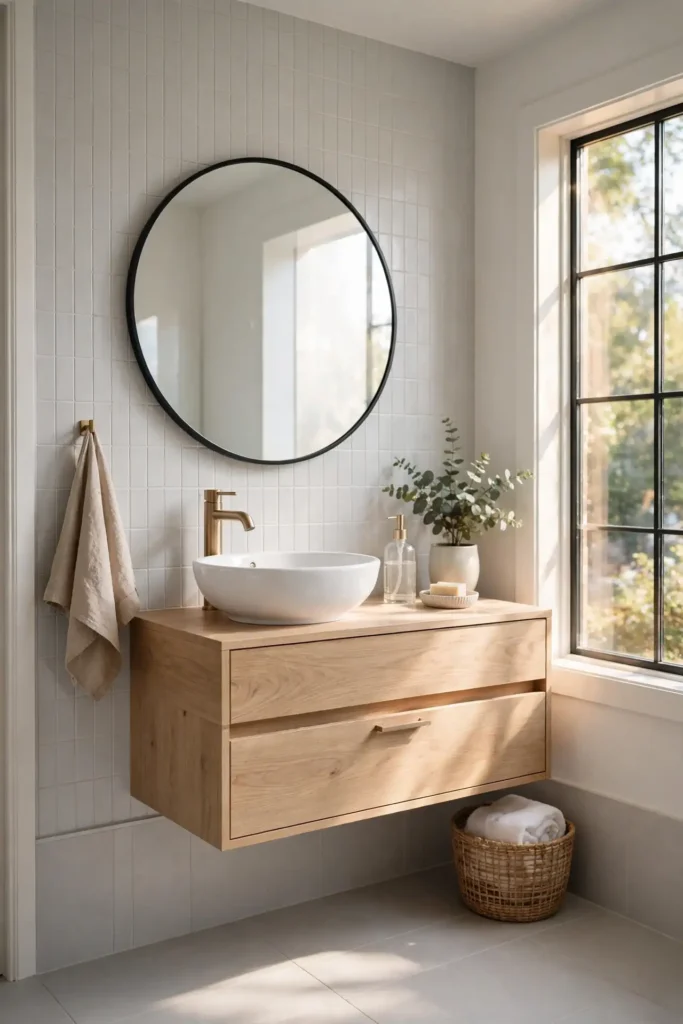
Pick a unit 24 to 36 inches wide and 18 to 20 inches deep so it never crowds the room, and hang it at 32 to 34 inches high for comfortable daily use. Make sure the wall has solid blocking behind the drywall, since a wall-hung cabinet concentrates its weight — a contractor can add blocking for $150 to $250 if needed. Good options include IKEA’s GODMORGON, Kohler’s wall-hung vanities, and dozens of styles on Wayfair, typically $250 to $900. Finish the look with a vessel or undermount sink, a large mirror above to double the sense of space, and a motion-sensor night light tucked underneath for safe late-night trips.
2. Furniture-Style Vanity
A furniture-style vanity borrows the turned legs, carved details, and warm presence of a fine dresser, bringing instant character to a bathroom that might otherwise feel sterile. Unlike boxy built-ins, it looks like a piece you chose rather than one the builder installed, which adds personality to primary suites and guest baths alike. These vanities pair beautifully with traditional, farmhouse, and eclectic decor, and their raised bases make mopping underneath effortless. Because they read as furniture, they soften hard tile and porcelain surfaces and make the whole room feel more inviting and lived-in, especially in larger bathrooms where a small cabinet would look lost.
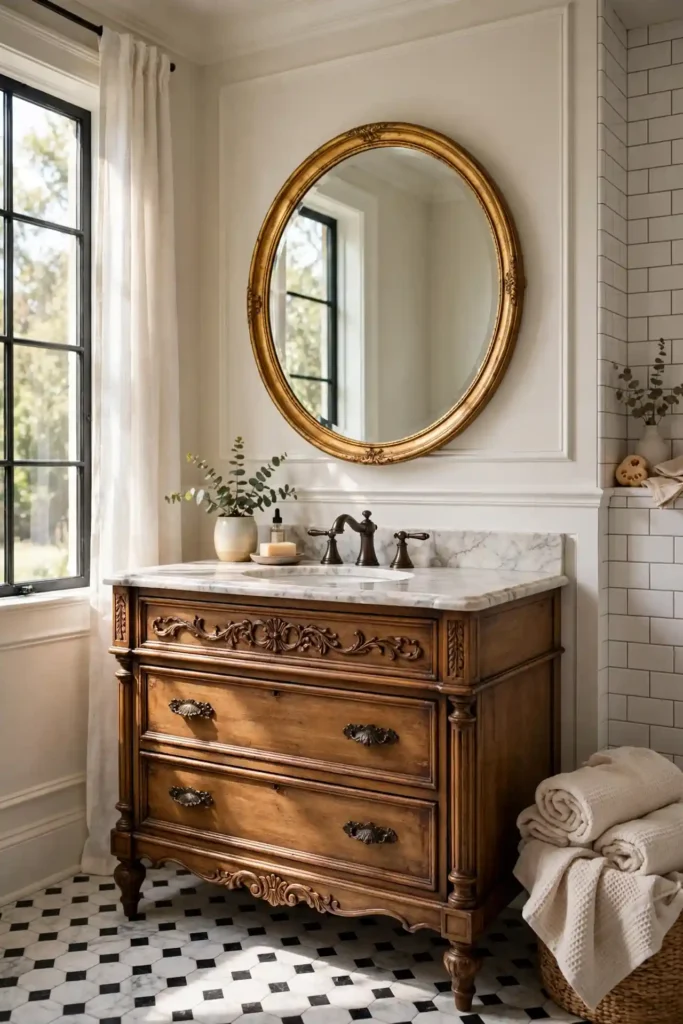
Shop antique stores and estate sales for a genuine dresser to convert, or buy ready-made furniture-style vanities from Restoration Hardware, Pottery Barn, or Wayfair for $600 to $2,500. Standard heights run 30 to 36 inches, and a professional can cut the top for plumbing and seal the wood against moisture for about $200 to $400. Choose oil-rubbed bronze or brushed brass hardware to complete the look, and add a stone top if you want extra durability. Keep finishes sealed yearly so steam and splashes never damage the wood, and leave a small gap behind the piece for air circulation.
3. Double Vanity for Shared Bathrooms
A double vanity ends the morning rush-hour battle by giving two people their own sink, faucet, and counter space in a shared bathroom. Couples, siblings, and roommates all benefit from parallel routines that shave real minutes off hectic mornings. The wider silhouette also anchors the room visually, making a primary bath feel like a proper suite rather than a pass-through. With 60 inches of counter, you gain room for two soap dispensers, toothbrush holders, and styling products without the cluttered overlap that single sinks force on everyone, and resale buyers consistently rank double vanities among their most-wanted bathroom features.
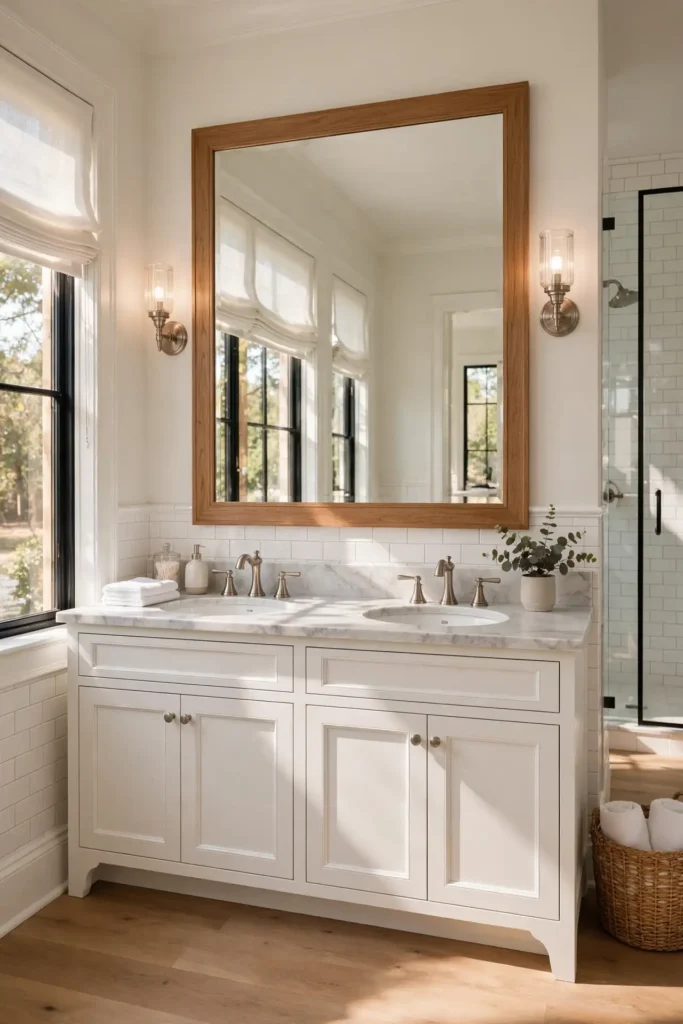
Plan on a 60-inch-wide cabinet minimum, with 30 inches of clear space per person for comfortable elbow room. Each sink needs its own drain and trap, so budget $1,200 to $3,500 for the vanity, faucets, and professional installation from Home Depot or Lowe’s contractors. Center a light fixture or sconce pair over each sink for even task lighting, and add drawer dividers so toiletries stay separated. If 60 inches will not fit, a 48-inch double with compact rectangular sinks is a workable compromise that still beats sharing one basin. Your mornings will thank you.
4. Painted Vanity in a Bold Color
A painted vanity in a bold color — deep navy, forest green, or even matte black — becomes the focal point of your bathroom in a single afternoon. Color delivers more personality per dollar than almost any other upgrade, transforming a forgettable white box into a designed space with real point of view. Saturated hues pair strikingly with brass or gold hardware and white countertops, creating contrast that photographs beautifully. If you love trends but fear commitment, remember that paint is the cheapest thing in the room to change later, so you can experiment freely without a costly mistake.
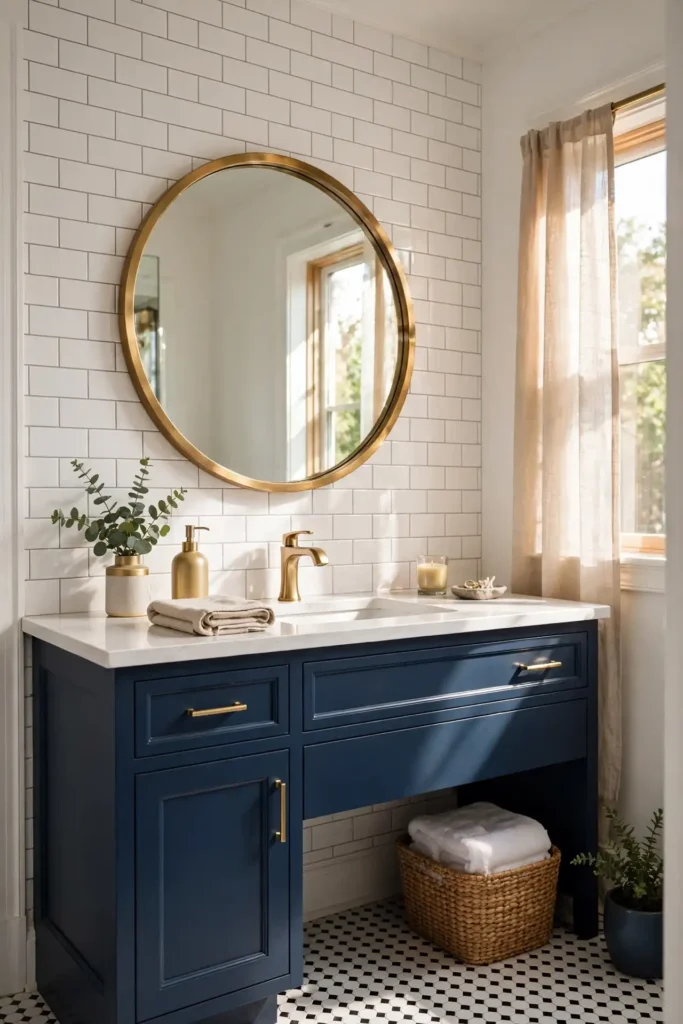
Sand, prime, and apply two coats of cabinet-grade enamel like Benjamin Moore Advance or Sherwin-Williams Emerald, budgeting $80 to $150 in materials for a DIY weekend. For a factory-smooth finish, a local refinisher charges $400 to $800. Remove doors and hardware before painting, use a foam roller or sprayer for an even coat, and let each coat cure fully before reassembling. Complement navy or green with brushed gold pulls from Build.com or Amazon, keep walls and tile neutral so the vanity owns the spotlight, and add a coordinating hand towel for a pulled-together finish.
5. Natural Wood Vanity
A natural wood vanity brings organic warmth into a room dominated by cold tile, porcelain, and glass, grounding the space with texture you can feel. Oak, walnut, and teak grains add visual richness that painted cabinets simply cannot match, and each piece develops a patina that makes it uniquely yours over time. Wood bridges modern and rustic styles effortlessly, working beside matte black fixtures or brushed nickel with equal ease. In windowless bathrooms especially, warm wood tones add the coziness that artificial light alone cannot deliver, turning a utilitarian room into a genuine retreat.

Look for solid oak or walnut vanities from Rejuvenation, Room & Board, or Etsy makers, typically $700 to $2,000 depending on size. Protect the wood with a marine-grade or water-based polyurethane sealer, reapplying every two to three years in steamy bathrooms. Teak and white oak handle humidity best, while raw pine dents and warps too easily for bathroom duty. Pair with a white quartz top and simple bar pulls, run your exhaust fan during every shower to keep moisture from settling into the grain, and wipe up standing water promptly after heavy use.
6. Vessel Sink Vanity
A vessel sink sits proudly on top of the vanity like a sculptural bowl, turning an ordinary cabinet into a design statement. The elevated profile draws the eye and adds height to the countertop, making even a modest vanity feel custom and intentional. Vessel sinks come in glass, stone, ceramic, and hammered copper, so you can match any style from spa-modern to rustic farmhouse. Because the basin sits above the counter, installation is simpler and you gain a few extra inches of cabinet storage below the drain, which makes this style practical as well as pretty.
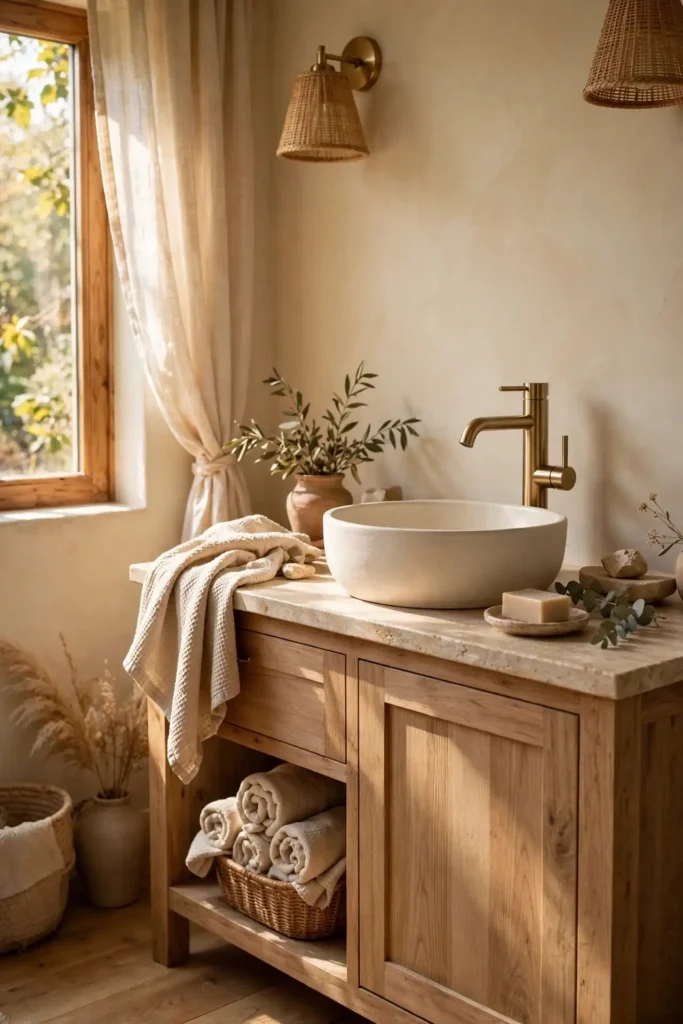
Mount the vanity a few inches lower — 30 to 32 inches — so the vessel rim lands at a comfortable 34 to 36 inches for handwashing. You will need a taller vessel faucet or wall-mounted spout to clear the bowl, adding $100 to $300 from Delta or Kohler. Vessel sinks run $80 to $400 at Wayfair, Home Depot, and Build.com. Caulk the base with silicone to prevent wobbling, check clearance between the bowl and your mirror or sconces before you buy, and keep a step stool handy if young children will use the sink daily.
7. Open Shelf Vanity
An open shelf vanity trades closed doors for visible shelving, creating a light, airy look that suits modern and Scandinavian bathrooms. Everything stays within reach — towels, baskets, and everyday products — so your morning routine moves faster without digging through dark cabinets. Open shelving also encourages a pleasing discipline: with contents on display, you naturally curate and edit, which keeps the bathroom tidy. Stacked white towels and woven baskets turn storage itself into decor, doubling as the room’s styling and giving guests a boutique-hotel impression. It is a small change with an outsized payoff.

Choose a vanity with two to three fixed or adjustable shelves, or build open shelving beside a pedestal sink with brackets from Home Depot for $100 to $300. Use matching baskets or bins to corral small items and hide visual clutter, spending $40 to $120 on sets from Target or IKEA. Keep a small tray for daily products on the top shelf, fold towels uniformly for a tidy look, and wipe shelves monthly since open storage collects dust. In humid bathrooms, ventilate well to keep linens fresh and prevent any musty odors.
8. Wall Sconces on Both Sides of the Mirror
Wall sconces flanking both sides of your mirror deliver the most flattering bathroom light possible, washing your face in soft, shadow-free illumination from left and right. Unlike a single overhead bar that casts harsh shadows under your eyes and chin, side lighting mimics the even glow of a makeup studio, making shaving, makeup, and skincare noticeably easier. Sconces also double as jewelry for the wall, adding style long after the lights go off. For any vanity used for grooming, this is the single biggest lighting upgrade you can make, and guests will notice the difference immediately.
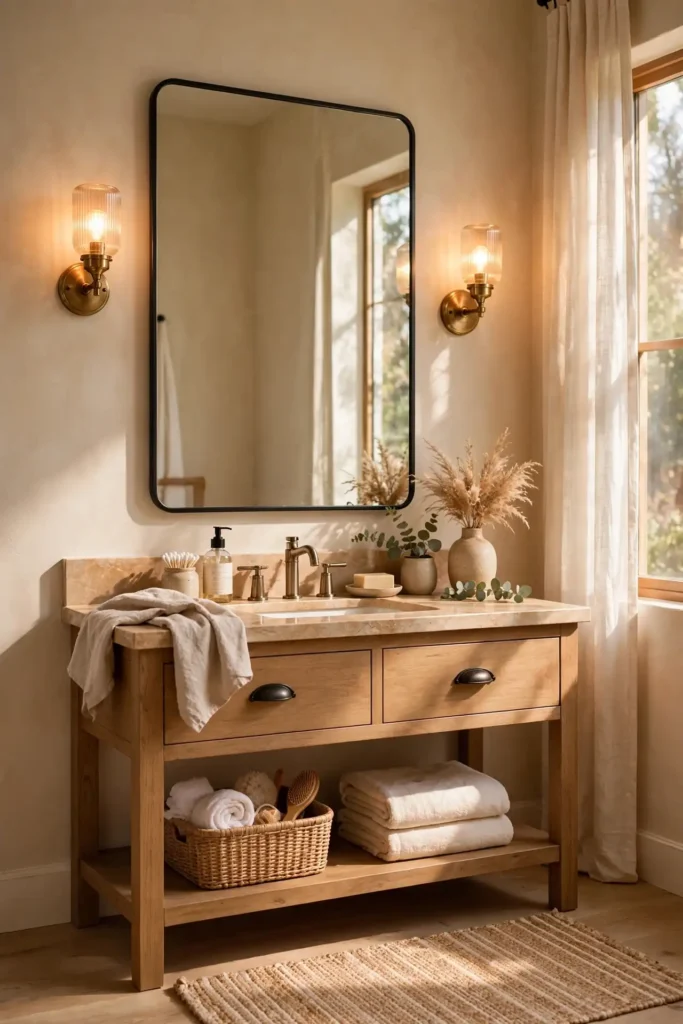
Mount each sconce 60 to 65 inches from the floor and 28 to 30 inches apart, centered on the mirror, so light hits your face evenly. Choose fixtures rated for damp locations and 2700K to 3000K bulbs for warm, skin-friendly color. Pairs from Kichler, Hudson Valley, or Wayfair run $120 to $500. An electrician typically charges $150 to $300 per fixture if new wiring is needed. Dimmer switches, about $25, let you shift from bright task light to a soft evening glow, which makes the bathroom feel like a spa after dark.
9. Overhead Vanity Light Bar
An overhead vanity light bar stretches across the top of your mirror, bathing the counter in bright, even light that makes every task easier. From tweezing to applying makeup, consistent downward illumination eliminates the guesswork that dim corners create. Modern LED bars come in sleek profiles that suit contemporary bathrooms, while multi-shade bars with glass globes flatter traditional spaces. Because one fixture covers the whole vanity, a light bar is often the simplest, most budget-friendly path to proper task lighting, and installation is usually a straightforward swap. Most homeowners finish the upgrade in a single weekend.

Size the bar to roughly three-quarters of your mirror’s width and mount it 75 to 80 inches from the floor for the best spread. Integrated LED bars use minimal electricity and last 25,000 to 50,000 hours, costing $80 to $350 from Home Depot, Lowe’s, or Build.com. Pick 3000K for warm white or 4000K for crisper task light, and confirm a CRI of 90-plus so colors read accurately. If your mirror is extra wide, use two smaller bars instead of one oversized fixture, keeping them evenly spaced for balanced coverage. The difference in daily usability is immediate.
10. Round Mirrors for Softness
A round mirror softens the hard rectangles that dominate bathrooms — the vanity box, the tile grid, the doorframe — with one graceful curve. That single circle relaxes the whole composition, making the room feel calmer and more welcoming without any renovation. Round mirrors work in every style, from boho rattan frames to frameless modern discs, and they pair especially well with vessel sinks and arched doorways. Because the shape draws the eye upward, a round mirror also makes standard eight-foot ceilings feel a touch taller, which opens up the entire room.

Choose a diameter about two-thirds the width of your vanity — a 24 to 30 inch round mirror suits most single vanities. Hang it so the center sits at average eye level, roughly 60 to 65 inches from the floor. Framed options from Target, West Elm, and Amazon run $50 to $250, while backlit rounds add $150 to $400 more. Keep the frame finish consistent with your faucet and hardware, leave at least 4 inches between the mirror’s edge and any sconces for a balanced look, and use proper wall anchors for heavier framed pieces.
11. Arched Mirrors for Elegance
An arched mirror borrows the elegance of classic architecture, lending your vanity area a refined, almost European feel with a single shape. The gentle curve breaks up boxy bathroom geometry while adding height, which makes the vanity wall feel grander than its actual dimensions. Arched mirrors suit traditional, transitional, and modern organic styles, and they pair beautifully with brass fixtures and marble-look surfaces. If your bathroom lacks architectural character, an arch mirror delivers it instantly for the cost of one accessory, no contractor required. One well-chosen mirror can redefine the whole vanity wall.

Match the arch’s width to your vanity — typically 20 to 30 inches wide — and hang it with the bottom edge 5 to 8 inches above the backsplash. Brass and black metal arches from Anthropologie, CB2, and Wayfair cost $150 to $600. Flank it with vertical sconces to emphasize the arch’s height, or top it with a small picture light for drama. Secure heavier mirrors to a stud with proper anchors, since arched mirrors often weigh 15 to 25 pounds, and double-check that the arch clears any overhead light fixture.
12. Medicine Cabinet Mirror
A medicine cabinet mirror hides serious storage behind a reflective face, giving you a full vanity mirror plus shelving for daily essentials in zero extra inches. Recessed models sit flush inside the wall, so they steal no space from a tight bathroom while swallowing toothpaste, medications, and contact lens supplies. Modern versions offer beveled edges, soft-close doors, and even built-in LED lighting, shedding the clunky look of old builder-grade cabinets. For small bathrooms where every inch counts, this is the hardest-working mirror you can buy, and it keeps counters beautifully clear.
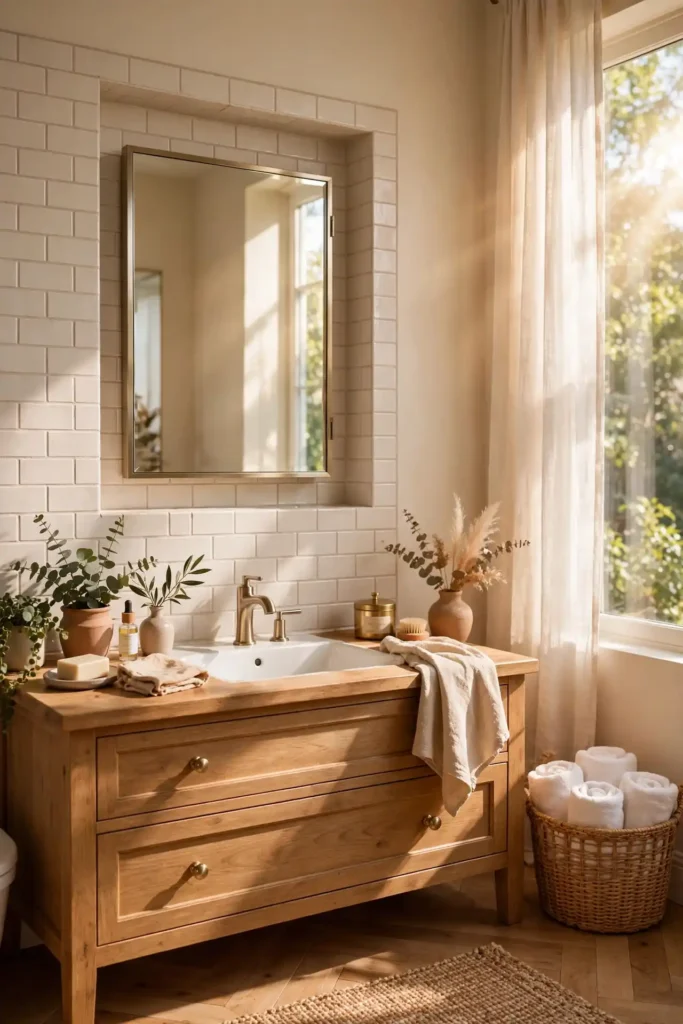
Recessed cabinets need a wall cavity free of plumbing and wiring — have a contractor confirm before cutting, with installation running $200 to $400. Surface-mount models install like a regular mirror in under an hour. Kohler, Robern, and IKEA offer mirrored cabinets from $100 to $800, while lighted models with defoggers run higher. Size the cabinet to your vanity width, position shelves for tall bottles, choose mirrored interiors to bounce extra light around the room, and keep a small step stool nearby if shelves sit high. Organized storage behind the mirror keeps mornings moving fast.
13. Backlit LED Mirror
A backlit LED mirror glows from behind its edges, casting a soft halo of light that flatters your reflection and turns the vanity wall into a focal point. The indirect illumination is gentle on the eyes during late-night trips yet bright enough for morning routines, especially models with adjustable color temperature. Floating light also makes the mirror appear to hover, adding a high-end, spa-like quality that standard mirrors cannot match. Many include touch controls, defoggers, and dimming — small luxuries that feel anything but small at 6 a.m. when you are getting ready in the dark.
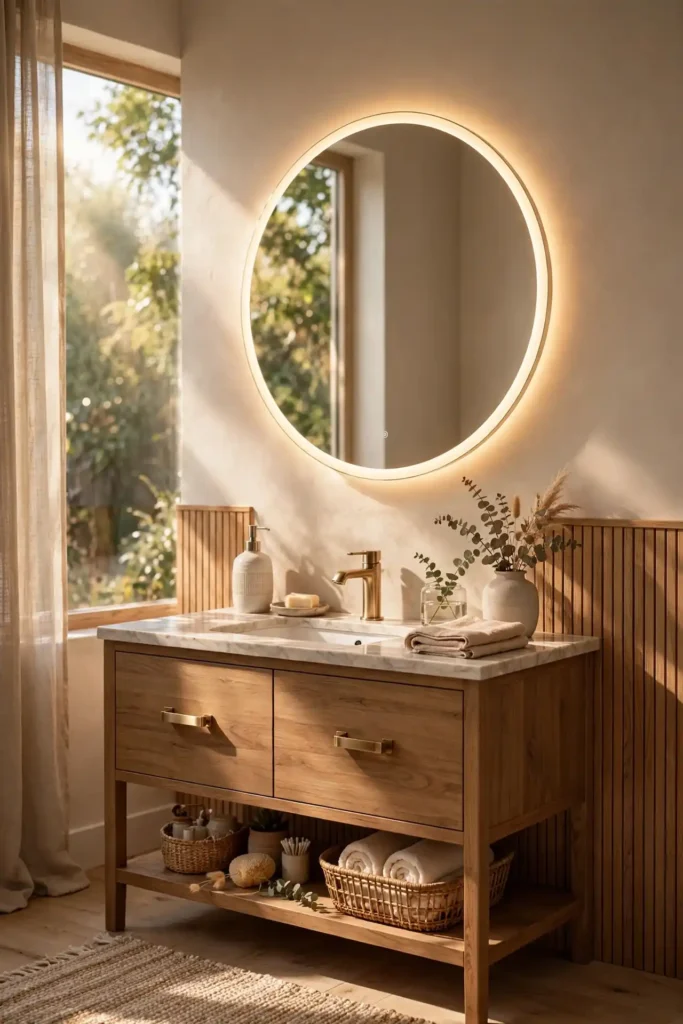
Choose a mirror sized to your vanity and look for 2700K to 5000K adjustable temperature with a CRI above 90. Quality backlit mirrors from Kohler, Krugg, and Electric Mirror run $200 to $900 depending on size and features. Hardwire it to a switch or choose a plug-in model for simpler installation. Confirm the defogger covers the main viewing area if you skip the exhaust fan, pair with dimmable sconces so you can layer light for evening baths, and wipe the glass with a microfiber cloth to keep the glow crisp.
14. Drawer Organizers
Drawer organizers transform the chaotic jumble inside your vanity into a calm grid where every item has a home. Deep vanity drawers swallow cosmetics, razors, and hair tools whole, but dividers keep them visible and reachable instead of lost in a pile. A place for everything also speeds up cleaning — you wipe around tidy compartments rather than excavating clutter. Custom-looking interiors make even a budget vanity feel thoughtfully designed, and the daily friction of hunting for small items simply disappears once every product has its own slot. That small daily win adds up fast.

Measure your drawer interiors, then buy adjustable bamboo or acrylic dividers from Amazon, IKEA, or The Container Store for $15 to $60 per drawer. Use shallow trays for makeup and tall dividers for bottles, since stackable inserts double capacity in deep drawers. Line drawers with waterproof liners to protect against leaks, and dedicate one divider section to a small trash bag for cotton pads. Spend an hour decluttering first — organizers only work when everything inside earns its spot — then label sections if multiple people share the drawer. Tidy drawers make the whole bathroom feel calmer.
15. Tall Linen Tower
A tall linen tower adds vertical storage to bathrooms that have run out of horizontal space, stacking towels, toiletries, and cleaning supplies in a slim footprint. Because it reaches toward the ceiling, it draws the eye upward and makes the room feel taller while swallowing an impressive volume of goods. Linen towers slot neatly beside a vanity or into an awkward corner, turning dead space into hardworking storage. Closed doors keep everything dust-free and visually calm, which matters in a room where clutter shows instantly and counter space is precious.
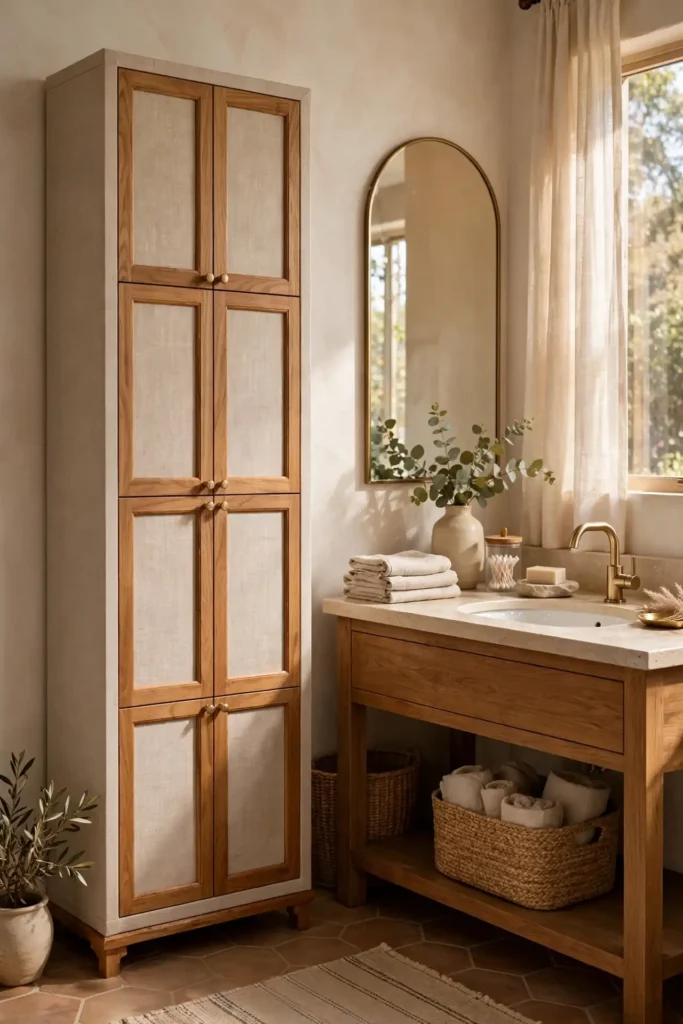
Look for towers 60 to 72 inches tall and 15 to 20 inches wide so they fit beside most vanities without crowding. Freestanding options from Wayfair, Target, and IKEA cost $150 to $500, and matching the vanity finish creates a built-in look. Anchor tall units to the wall with anti-tip hardware, especially in homes with kids. Adjust shelves to fit folded towels on top and tall bottles below, keep a small basket on one shelf for items you grab daily, and leave the top shelf for backstock you rarely need.
16. Countertop Trays
Countertop trays corral your daily essentials — soap dispenser, toothbrush holder, hand cream — onto one defined surface, instantly making the vanity look styled rather than scattered. A tray creates visual boundaries that trick the eye into reading a group of small objects as one intentional arrangement. Materials like marble, wood, glass, and rattan add texture and echo your bathroom’s finishes. Best of all, you can lift the whole tray to wipe the counter underneath, which makes cleaning dramatically faster and keeps grime from building up around bottle bases. It is the easiest styling trick in the book.

Choose a tray 10 to 14 inches long that fits your counter without crowding the faucet, spending $20 to $80 at Target, Anthropologie, or Amazon. Match the tray material to your decor — marble for classic, acacia wood for warm modern, mirrored for glam. Limit contents to five or six daily items so the tray stays curated, and store backups in a drawer. Wipe the tray weekly and reseal stone trays yearly to prevent water rings from bottles and dispensers, and swap in a fresh hand towel to keep the vignette looking crisp.
17. Quartz or Marble Countertops
Quartz or marble countertops elevate your vanity from functional to luxurious, giving the whole bathroom a polished, high-end anchor. Marble’s natural veining makes every slab one of a kind, while quartz offers consistent patterns with superior stain resistance and zero sealing. Both materials pair beautifully with undermount sinks for a seamless look and handle daily splashes, cosmetics, and hot tools with ease. A stone top is also the single surface guests notice most, so it pays the biggest visual dividend in a refresh and photographs beautifully for listings. Buyers and guests notice quality stone right away.

Expect $50 to $100 per square foot installed for quartz and $60 to $150 for marble, with most vanity tops costing $400 to $1,200 total from Home Depot, Lowe’s, or a local fabricator. Choose quartz for busy family bathrooms since it resists stains without sealing, and pick honed marble if you love the look and accept yearly sealing. Standard thickness is 2 to 3 centimeters, and an eased or ogee edge adds a custom feel. Measure twice before ordering — stone is cut to fit and cannot be adjusted on site — and confirm the sink cutout matches your faucet choice.
18. Integrated Sink Vanity
An integrated sink vanity fuses basin and countertop into one seamless piece, eliminating the rim, caulk lines, and crevices where grime loves to hide. The smooth, continuous surface wipes clean in seconds and looks strikingly modern, giving even a compact vanity a custom, sculptural quality. Solid-surface and cultured marble versions offer affordable seamlessness, while integrated porcelain tops deliver a crisp, classic finish. With no lip to catch water, splashes drain naturally back toward the basin instead of pooling on the counter, which keeps the area drier and more hygienic. Cleaning becomes a one-minute job.
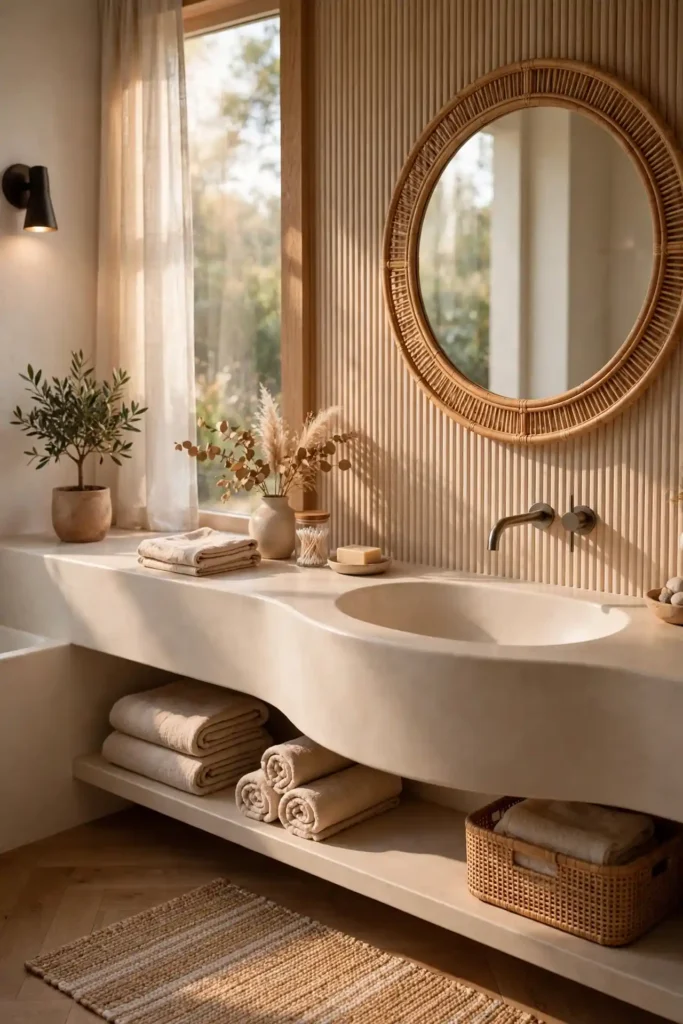
Integrated vanity tops in standard widths of 24 to 60 inches run $150 to $600 at Home Depot, Lowe’s, and Wayfair, including the molded basin. Solid-surface options like Corian can be custom-ordered through a fabricator for $800 to $1,500. Confirm the drain location matches your existing plumbing to avoid costly rerouting, and choose a single-hole faucet drill to keep the profile clean. Avoid abrasive cleaners on solid-surface tops — a soft cloth and mild soap preserve the seamless finish for years — and repair minor scratches with fine-grit sanding. With basic care, the seamless look lasts for years.
19. Vanity With Makeup Station
A vanity with a built-in makeup station carves out a dedicated beauty zone with a lower counter, knee space, and a comfortable seat, so your routine stops competing with the sink. Sitting down changes everything — application becomes steadier, lighting angles improve, and you stop hunching over a too-high counter. A proper station keeps brushes, palettes, and tools organized in shallow drawers instead of scattered across shared counter space. For anyone with an involved skincare or makeup ritual, this setup feels like a personal studio and keeps the main sink clear for others.
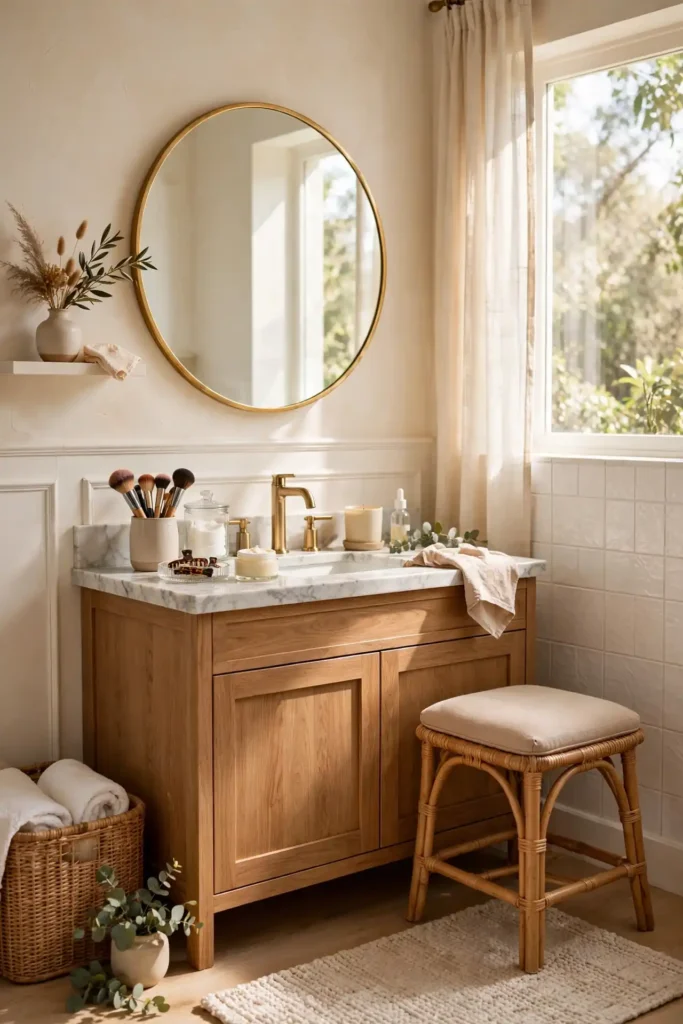
Plan a 30-inch-wide section at 28 to 30 inches high with at least 24 inches of knee clearance, and add a comfortable stool or vanity chair for $80 to $250. Install a magnifying mirror with built-in light and flank it with 3000K sconces or a Hollywood-style bulb strip for shadow-free application. Shallow drawer organizers from The Container Store keep products sorted for $20 to $50. If space is tight, a fold-down wall-mounted table beside the vanity creates a station that disappears when not in use, which is ideal for shared bathrooms.
20. Pedestal Sink Alternative
If a pedestal sink leaves you starved for storage, smart alternatives deliver its slim profile without the sacrifice. Console vanities with open metal legs, narrow 18-inch-deep cabinets, and wall-mounted mini vanities all preserve floor space while adding drawers or shelves a pedestal cannot offer. These options keep the airy, open feeling that makes pedestals appealing in powder rooms, but they actually hold toiletries, cleaning supplies, and spare towels. You get the best of both worlds: visual lightness with genuine function, and your guests get a powder room that actually works.
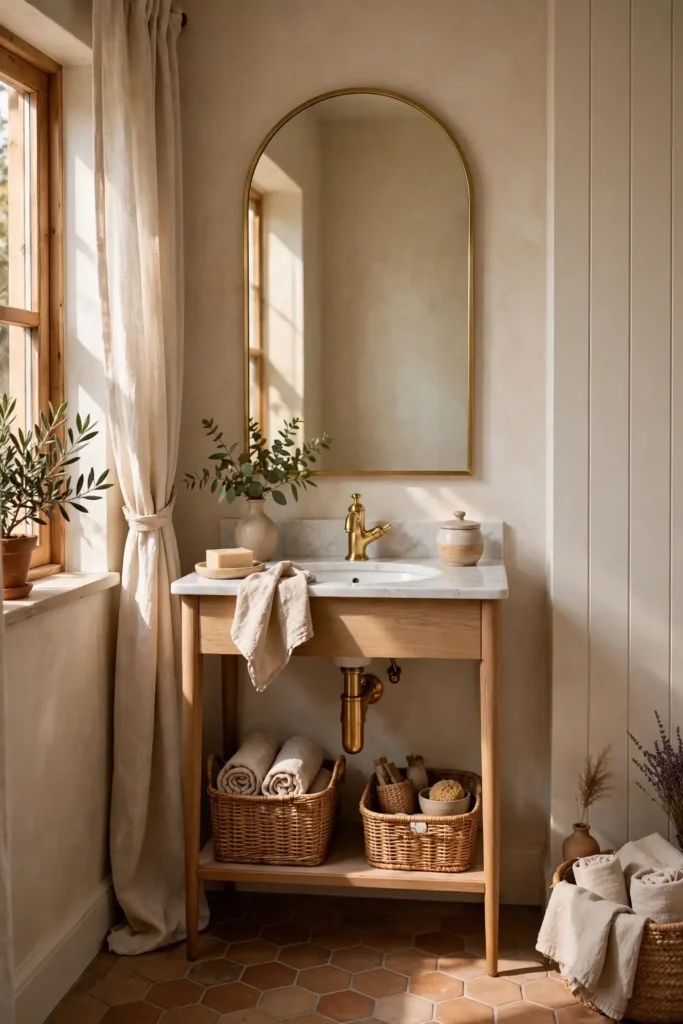
Console sinks with integrated towel bars run $300 to $900 from Kohler and Signature Hardware, while slim 18-inch-deep vanities cost $200 to $600 at Wayfair and IKEA. Wall-mount a 20-inch-wide cabinet with a vessel sink for the smallest footprint. Keep plumbing exposed and polished — chrome or brass P-traps turn necessity into a design feature for under $50. Add a small wall cabinet or recessed niche nearby for the items that still need a home, and the pedestal compromise disappears entirely without any major plumbing changes. Small bathrooms benefit most from this smart swap.
21. Match Hardware and Fixtures
Matching your hardware and fixtures — faucets, drawer pulls, towel bars, and shower trim in one finish — gives your vanity area a cohesive, professionally designed look. Mixed metals can work, but a single finish reads as intentional and calm, especially in small bathrooms where visual noise shows quickly. Brushed nickel and chrome suit modern spaces, matte black adds contemporary edge, and brushed brass or gold warms up traditional and transitional rooms. Consistency across every metal surface makes even budget fixtures look like a curated set chosen by a designer.
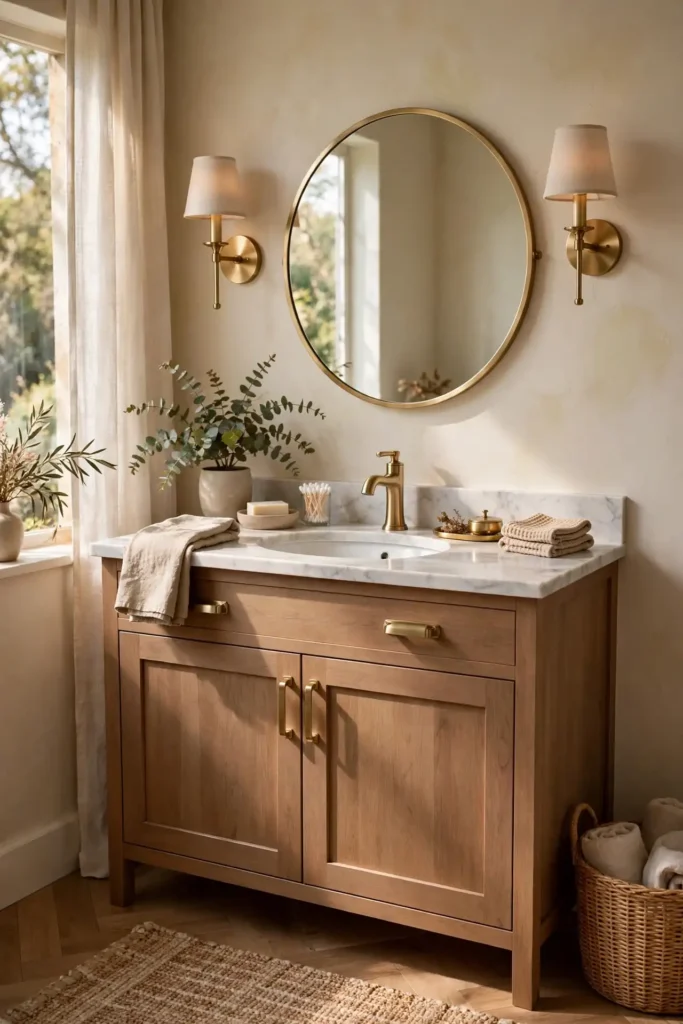
Choose your finish before buying anything, then source the faucet, pulls, mirror frame, and accessories in that exact finish — manufacturers’ brushed nickel shades vary, so buy from one brand line when possible. Delta, Moen, and Kohler offer coordinated collections from $150 to $600 per bathroom. Replace cabinet pulls first for the cheapest impact, about $3 to $10 each from Build.com or Amazon. Keep the finish consistent on lighting too, and avoid mixing more than two metals in one bathroom to protect the pulled-together effect you worked to create. Cohesive metals make the design feel intentional.
Choosing Bathroom Vanity Ideas for Small Bathrooms
Choosing bathroom vanity ideas for small bathrooms starts with honest measurements, because the difference between a vanity that fits and one that overwhelms is often just two inches. Measure your wall width, door swing, and clearance in front of the vanity — you need at least 21 inches of open floor space to use it comfortably. In tight footprints, wall-mounted, corner, and 18-inch-deep vanities preserve precious square footage while still delivering storage. Light colors, reflective surfaces, and open bases amplify the effect, making the room feel larger than its actual dimensions and far more pleasant to use daily.

Start by sketching your layout on graph paper or a free room planner, marking plumbing locations you would rather not move. Prioritize storage type over size, since deep drawers beat shallow cabinets in small vanities. Shop 24-inch vanities from IKEA, Wayfair, and Home Depot, typically $200 to $700, and pair them with a large mirror and wall sconces to multiply light. Avoid oversized vessel sinks that eat counter space, keep the palette light — white, pale wood, or soft gray — so the vanity recedes instead of dominating, and mount towel rings on the wall to free the counter.
Lighting Tips for Bathroom Vanity Ideas
Good lighting makes or breaks bathroom vanity ideas, because even the prettiest vanity underperforms in dim, shadowy light. The goal is layered illumination: bright, even task light at face level for grooming, plus softer ambient light for atmosphere. Side-mounted sconces eliminate the unflattering shadows that overhead-only fixtures cast, while dimmers let one bathroom serve both rushed mornings and relaxing soaks. Color temperature matters too — 2700K to 3000K renders skin tones naturally, while cooler bulbs can make you look washed out and tired in the mirror. The right bulbs flatter everyone who uses the room.

Follow the three-layer rule: sconces or a light bar at the mirror, a ceiling fixture for overall brightness, and dimmers on everything. Budget $200 to $600 total for a quality vanity lighting setup, shopping Kichler, Progress Lighting, and Wayfair. Use LED bulbs with a CRI of 90 or higher so makeup colors read true, and place switches where you can reach them without dripping across the room. If rewiring is not in the cards, plug-in sconces and battery-powered LED mirrors deliver better light with zero electrical work and install in an afternoon.
Storage Solutions That Make Bathroom Vanity Ideas Work
Storage solutions make bathroom vanity ideas actually work in real life, because a beautiful vanity buried under clutter helps no one. The trick is matching storage to your habits: deep drawers for hair tools, divided trays for cosmetics, and vertical space for towels and tall bottles. When everything has a designated spot, cleanup takes seconds and the counter stays clear enough to use. Smart storage also protects your investment — organized drawers prevent leaks and scratches that shorten a vanity’s life and keep warranties intact. A little planning prevents years of frustration.
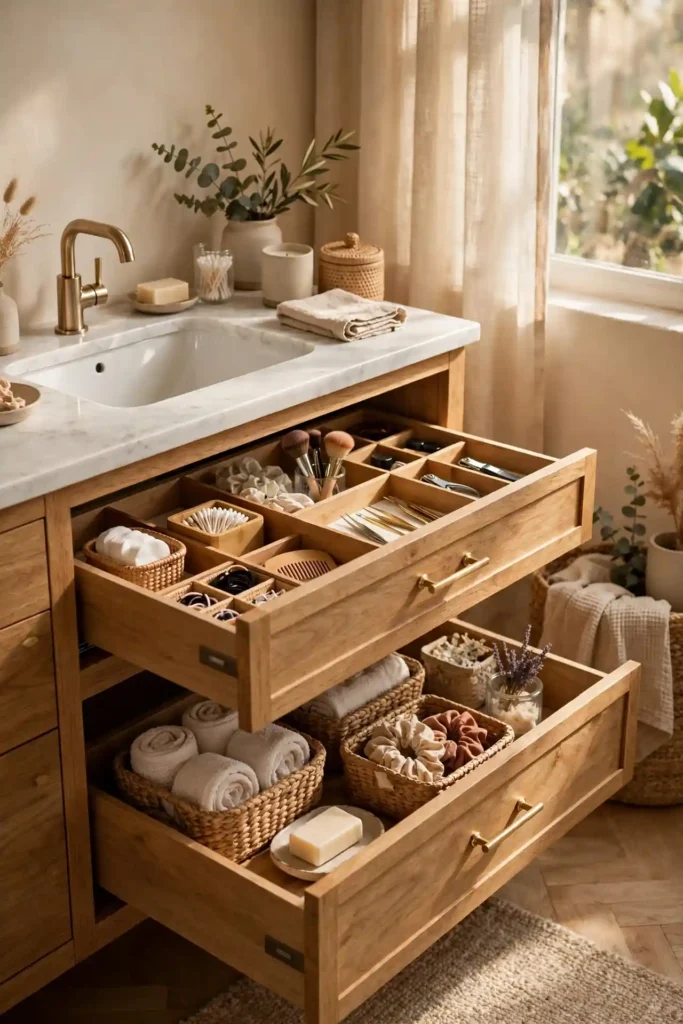
Audit what you own before buying anything, then fill gaps strategically: drawer dividers ($15 to $40), stackable under-sink organizers ($20 to $50), and over-door hooks for robes and towels. Add a recessed medicine cabinet or wall niche for daily items so the counter stays clear. In rentals, freestanding carts and tiered trays add storage without drilling a single hole. Reassess every six months and purge expired products — the best storage system is simply owning less, stored well, in spots that match your routine. Repeat the audit twice a year to stay ahead of clutter.
Drawer dividers, acrylic organizers and small bins keep items from sliding around and make it easy to see what you have. Under the sink, use stackable drawers or a U-shaped organizer that fits around the plumbing. Doors can hold slim racks for hair dryers or cleaning supplies. If you share a vanity, give each person their own drawer or bin so nothing gets mixed up.
On the countertop, less is more. Keep only a soap dispenser, a small plant or a candle and one tray for daily essentials. Everything else goes inside. This simple habit makes even an inexpensive vanity look high end and turns everyday routines into something more relaxing.
Choosing Materials for a Long-Lasting Vanity
Choosing materials for a long-lasting vanity means thinking past the showroom shine to how surfaces handle a decade of steam, splashes, and cleaning products. Solid wood and plywood cabinets resist moisture far better than particleboard, which swells and crumbles when water seeps in. Quartz countertops shrug off stains without sealing, while properly sealed marble and solid-surface tops age gracefully with basic care. Hardware in solid brass or stainless steel outlasts plated zinc, which pits and flakes in humid air and looks shabby within a few years. Quality materials pay for themselves over time.
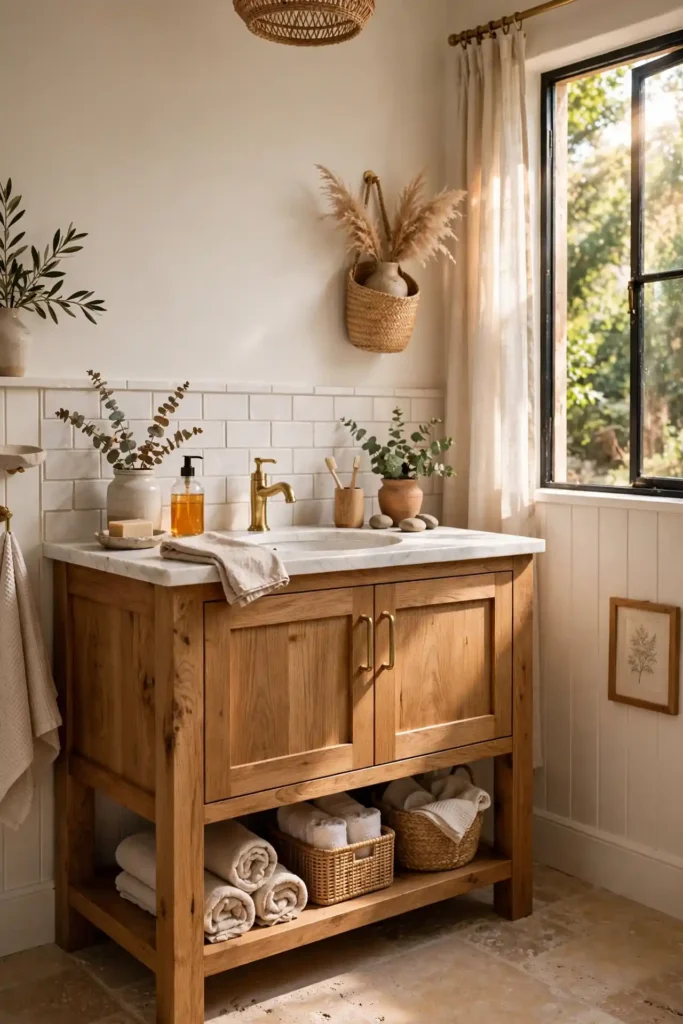
Inspect construction before you buy: dovetail or dowel drawer joints, soft-close hardware, and a plywood — not particleboard — box signal quality worth paying for. Expect $800 to $2,500 for a well-built 36-inch vanity from KraftMaid, Bertch, or a local cabinet shop. Seal all wood edges, especially around plumbing cutouts, with silicone or polyurethane. Run the exhaust fan during every shower and wipe standing water promptly — even the best materials fail faster in a chronically damp bathroom, so ventilation is part of the material strategy. Good habits protect your investment every day.
When it comes to bathroom vanity ideas, the best results come from balancing style, comfort and everyday function. Use this list as your go-to guide for bathroom vanity ideas, and start with the ideas that fit your space best. Save this guide on bathroom vanity ideas so you can come back to it when you are ready to update your home. Good bathroom vanity ideas choices work in homes of every size and budget.
How to Plan Bathroom Vanity Ideas Step by Step
Planning bathroom vanity ideas step by step keeps your project on budget and on schedule instead of spiraling into costly mid-project changes. A clear sequence — measure, set budget, choose layout, select fixtures, schedule trades — prevents the classic mistake of ordering a vanity that does not fit the plumbing. Written plans also make contractor quotes comparable and keep DIY weekends focused. Whether you are refreshing one powder room or gutting a primary bath, the same methodical process protects both your wallet and your sanity from start to finish. Methodical planning turns stress into confidence.
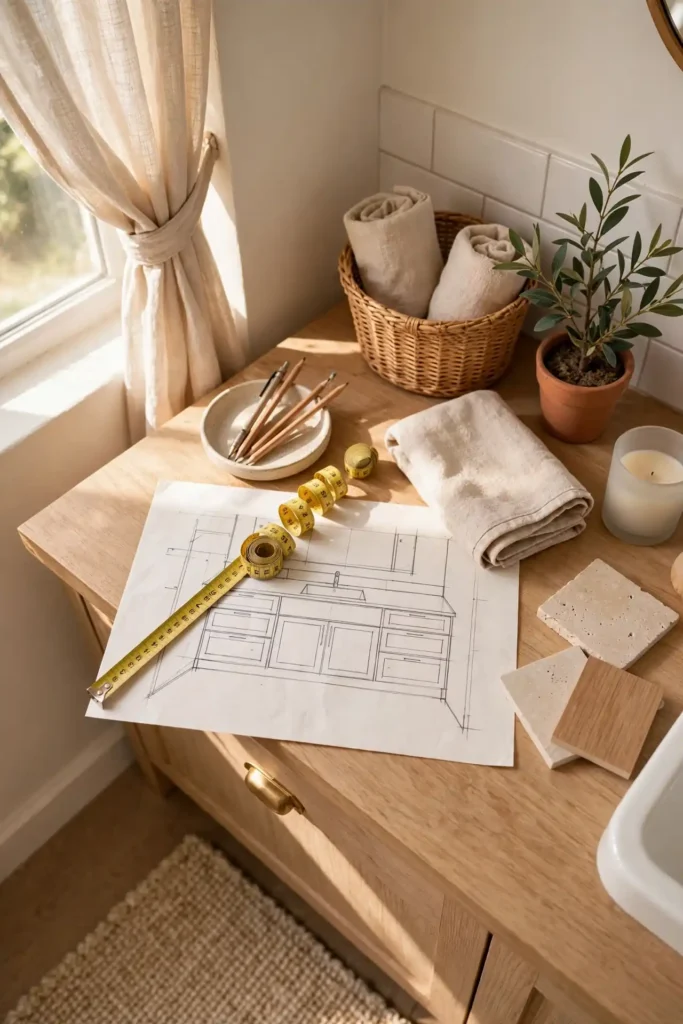
Step one: measure the space and photograph existing plumbing. Step two: set a realistic budget — $500 to $1,500 for a straightforward swap, $3,000 to $8,000 for a full vanity-wall remodel. Step three: choose your vanity, sink, faucet, mirror, and lighting together so finishes coordinate. Step four: order materials early, allowing two to six weeks for delivery. Step five: schedule the plumber before demolition day. Finally, protect floors and adjacent rooms during installation, keep a 10 percent contingency for surprises behind the wall, and do a final walkthrough before the contractor leaves.
- Measure the space and plumbing locations.
- Choose the vanity size, style and height.
- Select countertop and sink type.
- Pick the mirror and lighting.
- Add storage solutions and finishing hardware.
Final Thoughts on Bathroom Vanity Ideas
The best bathroom vanity ideas share one trait: they fit your real life, not just a showroom. A floating vanity that opens up your small bath, sconces that finally make makeup easy, drawers that swallow the clutter — these choices earn their keep every single day. You do not need the most expensive option or the trendiest finish; you need the combination of storage, lighting, and style that matches how you actually live. When each element serves a purpose, the whole bathroom feels calmer, more functional, and unmistakably yours in the best possible way.

Start with the change that solves your biggest frustration, whether that is storage, lighting, or simply a look you love. Tackle one vanity wall at a time, measure twice, and buy the best quality your budget allows for the pieces you touch daily — faucets, drawers, and lighting. Keep finishes consistent, ventilate well, and maintain seals and caulk yearly. Do it right once, and your vanity will reward you with a decade or more of beautiful, hardworking mornings that start every day on the right note. Your future self will be glad you planned carefully.
Save these ideas and follow along for more bathroom design inspiration.
Frequently Asked Questions About Bathroom Vanity Ideas
Below you will find answers to the questions homeowners ask most about bathroom vanity ideas, from sizing and standard heights to costs, materials, and installation. These quick answers cover the practical details that turn inspiration into a confident purchase — how wide your vanity should be, which countertop survives busy family bathrooms, and when to call a plumber versus handling the swap yourself. Use them as a checklist while you shop and plan, so no important detail slips through the cracks before installation day arrives. Bookmark this section to revisit while you shop.

If your question is not covered here, start with your measurements and your plumbing layout — those two facts answer most vanity dilemmas faster than any buying guide. Standard vanities run 30 to 36 inches high and 18 to 24 inches deep, most swaps cost $500 to $1,500 installed, and quartz remains the lowest-maintenance countertop choice. Keep these benchmarks in mind as you read on, and you will recognize the right vanity, mirror, and lighting combination for your bathroom the moment you see it in the showroom. Confident shoppers always get better results.
What is the standard height for a bathroom vanity?
Standard vanities are 30 to 32 inches, while comfort-height vanities are 34 to 36 inches.
How wide should a mirror be over a vanity?
The mirror should be slightly narrower than the vanity, usually a few inches less on each side.
Where should vanity lights be placed?
Sconces are best at face level on both sides of the mirror, about 60 to 66 inches from the floor.
What are good bathroom vanity ideas for small spaces?
Floating vanities, narrow-depth vanities, drawers instead of doors and recessed medicine cabinets work well.
What countertop is best for a bathroom vanity?
Quartz is durable and low maintenance. Marble and granite are beautiful but need sealing.








1 Comment