


Apartment living comes with its own set of challenges: limited square footage, rental rules and sometimes awkward layouts. But with a little creativity, a small apartment living room can feel just as stylish and personal as any house. The key is choosing renter-friendly updates and furniture that works hard.
These 22 apartment living room decor ideas cover layout, storage, lighting and decor, all without breaking your lease or your budget. For more inspiration, see our cozy living room ideas and these coffee table decor ideas.
Remember these apartment rules of thumb:
- Choose furniture with legs to show more floor and feel airy.
- Use removable solutions like peel-and-stick, command hooks and plug-in lights.
- Measure doorways and stairs before buying furniture.
- Pick pieces that do double duty.
1. Define the Living Area With a Rug
A well-chosen area rug is the fastest way to carve a living zone out of a studio or open-plan apartment, and renters love it because it requires zero lease permissions — no nails, no paint, no holes. Pick a rug at least 8 by 10 feet so the front legs of your sofa and chairs rest on it; smaller rugs make a room feel chopped up and cluttered. Low-pile and flat-weave options at IKEA USA, Target, and Wayfair typically cost $80 to $200 for that size, while washable rugs from Ruggable or Tumble start around $150 and survive coffee spills. Unroll it, float your seating on top, and your living room gains instant boundaries.
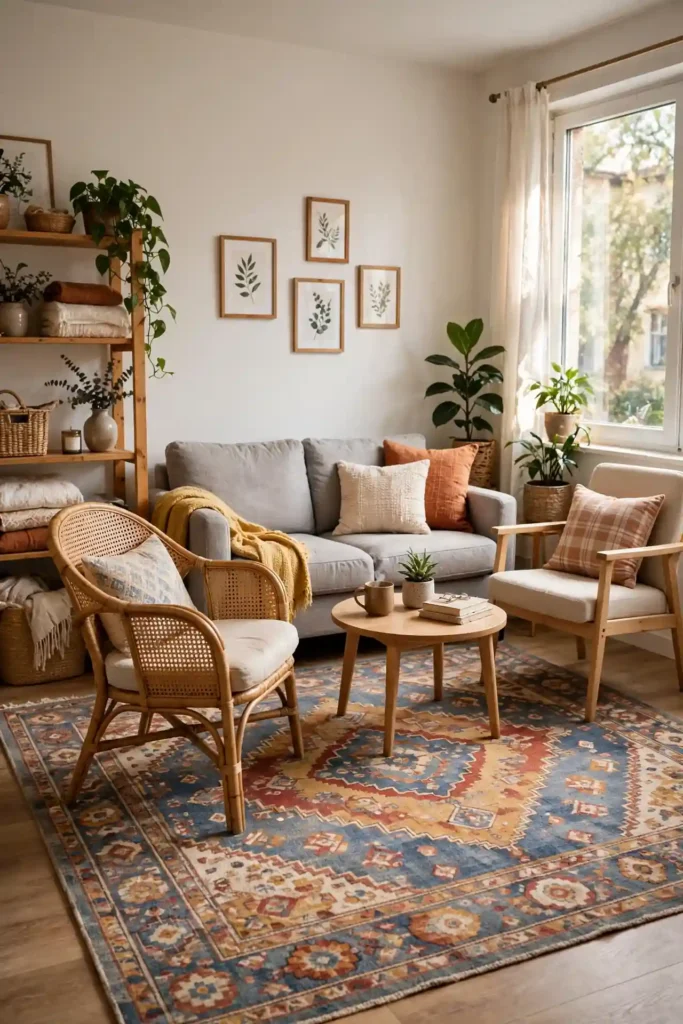
Layer a smaller rug over a larger one if your floors are cold or you want extra pattern without a big commitment. Choose colors that echo your sofa and curtains so the palette feels intentional, and keep high-contrast prints away from busy floors. Use rug tape or a non-slip pad — about $15 to $30 at Amazon — to stop sliding on hardwood, which landlords appreciate since it prevents scratches. In rentals with wall-to-wall carpet, a flat-weave rug still adds texture and hides stains. Vacuum weekly and spot-clean promptly, and a budget rug will look sharp for years in your apartment living room.
2. Choose a Compact, Deep Sofa
Your sofa anchors the whole room, so pick one that fits apartment proportions — around 72 to 84 inches wide with a seat depth of at least 22 inches for real lounging comfort. Deep, compact sofas like IKEA’s SÖDERHAMN or the Article Sven loveseat look designer but cost $400 to $900, far less than a full sectional. Measure your doorways, hallways, and elevator before ordering, since a sofa that cannot get inside is useless. Choose a performance fabric or a slipcover style, which you can wash when roommates or pets leave their mark, keeping your budget living room fresh.
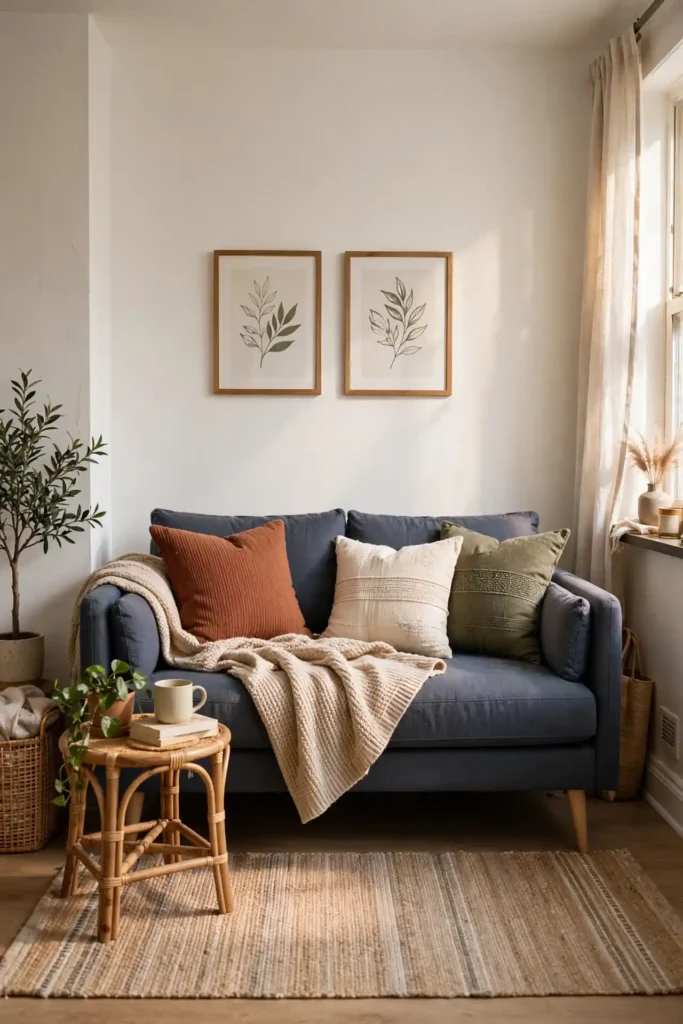
Place the sofa with its back to the room’s entry or float it a few inches off the wall to make a small space feel larger. A low-profile design with slim arms saves visual weight, and legs that lift the base off the floor let light flow underneath. Add a washable throw and two or three cushions in your accent color to make a budget sofa look custom. When you move, a compact sofa fits more apartments and narrow stairwells, so it is a one-time investment that follows you from rental to rental for years.
3. Use Peel-and-Stick Wallpaper
Peel-and-stick wallpaper delivers the drama of a renovation with zero risk to your security deposit. One accent wall behind the sofa or TV typically needs 4 to 8 rolls, and quality brands like Tempaper, Chasing Paper, or RoomMates Decor sell rolls for $30 to $60 each on Amazon — so a full wall costs roughly $150 to $400. Installation is a two-person weekend job: clean the wall, peel the backing, and smooth from top to bottom with a plastic squeegee. When your lease ends, it pulls off cleanly without damaging paint.
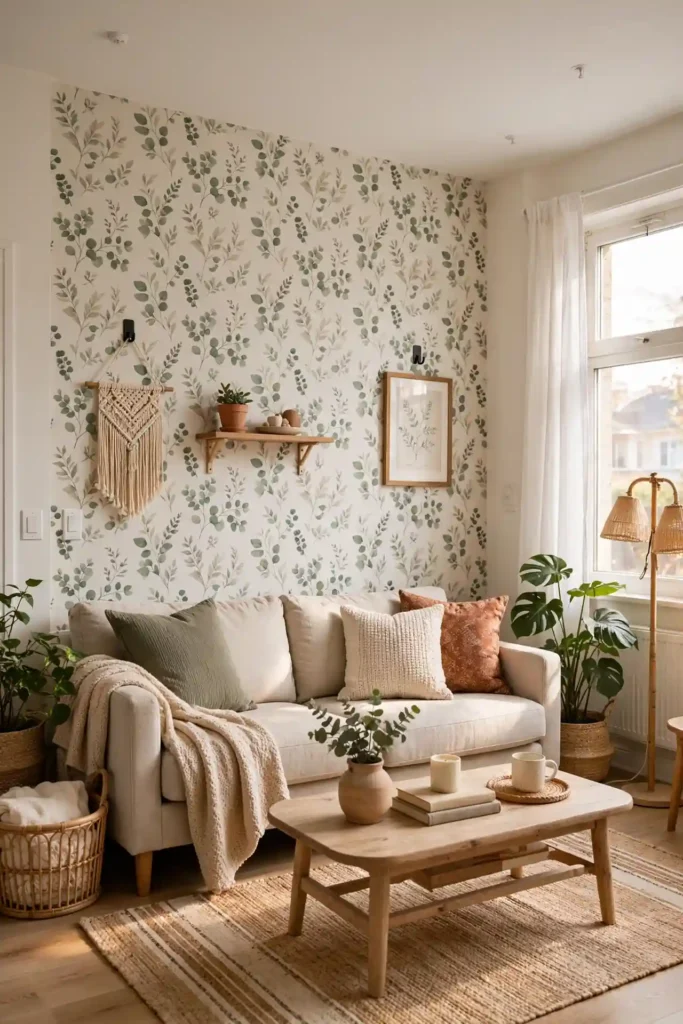
Choose patterns that suit a small space — vertical stripes add height, while small-scale botanicals or subtle geometrics add interest without closing the room in. Dark, large-scale prints can shrink a tiny living room, so order a $5 swatch before committing to full rolls. Use it on a single accent wall or inside bookshelf backs rather than all four walls. If the paper bubbles, lift and re-stick; the adhesive is forgiving. This renter-friendly upgrade photographs beautifully and makes even basic furniture look intentional. Coordinate the wallpaper’s background tone with your existing sofa or rug so the accent wall feels connected to the rest of the apartment living room.
4. Swap Out Rental Light Fixtures
Those builder-grade flush mounts and dated pendants drag down every apartment, but swapping them is easier than most renters think. Turn off the breaker, photograph the existing wiring for reference, and replace the fixture with a budget-friendly find from Target, IKEA, or Wayfair — stylish flush mounts and mini pendants run $40 to $120. The whole job takes about 20 minutes with a screwdriver, and YouTube has step-by-step videos for nearly every fixture type. Store the original in its box and reinstall it before move-out to protect your deposit. Label each wire with painter’s tape as you disconnect it, and keep all screws in a zip bag taped inside the original fixture box.
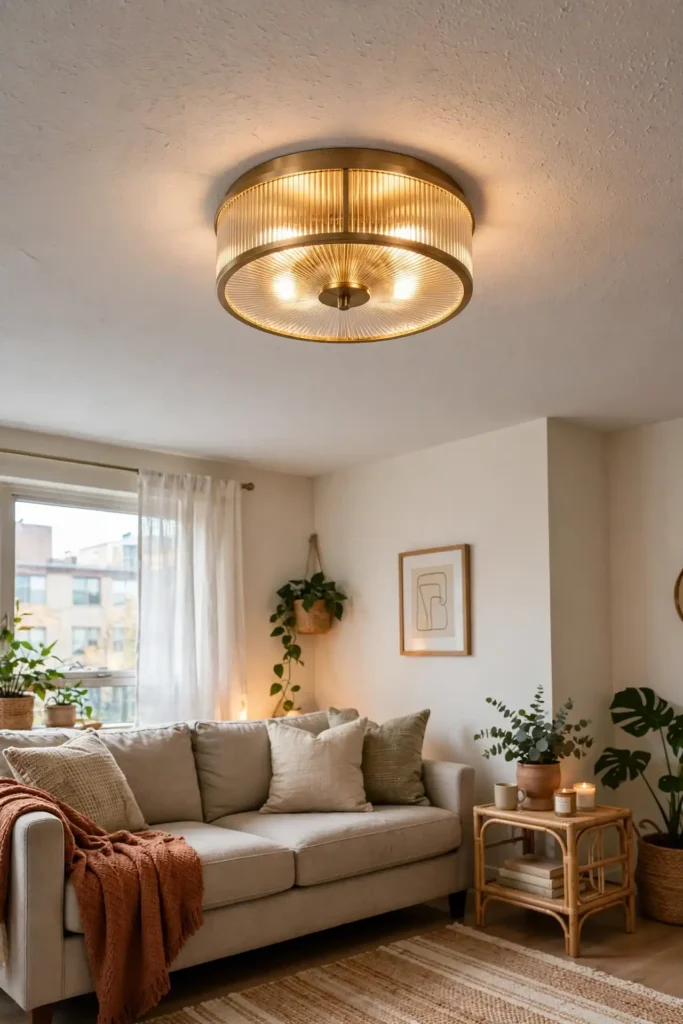
Always check your lease first — most landlords allow fixture swaps as long as you restore the original, but a quick email keeps everything above board. Choose fixtures that use standard E26 bulbs so you can add warm 2700K LEDs for a cozy evening glow. If electrical work makes you nervous, a $150 electrician visit is still cheaper than living with ugly lighting for a year. Renter-friendly lighting upgrades transform your apartment living room from flat to inviting in a single afternoon. Dimmer-compatible LEDs in a warm tone make even a basic rental ceiling fixture feel like thoughtful custom lighting design.
5. Add Plug-In Wall Sconces
Plug-in wall sconces give you layered, flattering light without a single hole beyond a small nail or adhesive hook. Modern plug-in sconces from Amazon, Target, or Lamps Plus cost $35 to $90 each and hang with cord covers that you paint to match the wall for a convincing hardwired look. Place a pair flanking the sofa or artwork at about 60 inches from the floor, which is eye level for most seating. The cords tuck discreetly behind furniture, keeping the whole look clean and cord-free. Choose swing-arm styles if you read on the sofa, since you can angle the light exactly where you need it most.
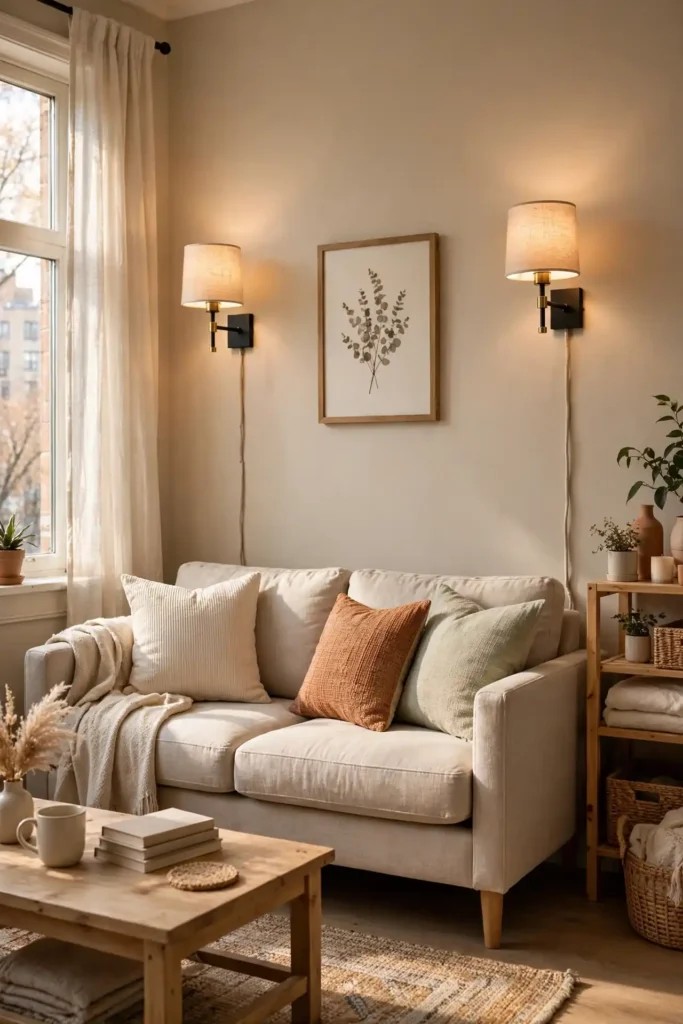
Use warm-white bulbs around 2700K and, if your sconces accept them, add plug-in dimmers for adjustable movie-night ambiance. Battery-operated puck lights inside a sconce shade are another no-wire option at about $20 for a set of six. Command picture-hanging strips rated for the sconce’s weight can replace nails entirely in strict rentals. Two matching sconces create symmetry that makes even a basic sofa wall feel designed, and you take them with you when you move. Battery-powered LED candles inside the shades add realistic flicker without any wiring at all, making them perfect for the strictest lease agreements.
6. Hang Curtains High and Wide
Hanging curtains close to the ceiling and extending 8 to 12 inches past each side of the window makes windows look bigger and ceilings taller — the oldest designer trick in the book. Mount the rod 4 to 6 inches above the frame, or just below the crown molding, and let panels kiss the floor or puddle slightly for a luxurious feel. Budget linen-look curtains from IKEA (RITVA, about $25 per pair) or Target run $20 to $40 per panel. For strict no-drill leases, use tension rods inside the frame or adhesive brackets.
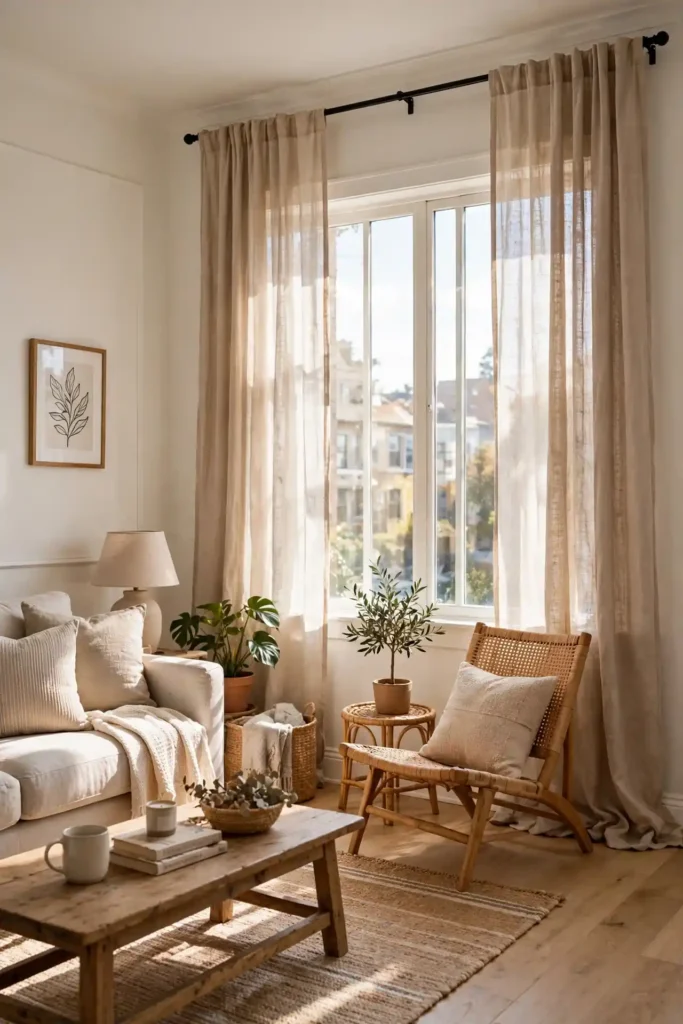
Choose light, airy fabrics in a shade close to your wall color to keep a small living room feeling open and bright. Double up panels for fullness — two panels per side look far more expensive than one skimpy panel. Blackout linings behind sheer panels give you sleep-friendly darkness and daytime softness in one setup. Iron or steam out packaging creases before hanging, because wrinkled curtains read as cheap. This single change can make a rental living room feel twice as tall for under $100. Ceiling-mounted tracks are another renter-friendly option that lets curtains glide smoothly across wide sliding doors or awkward windows.
7. Use a Large Mirror
A large mirror doubles light and visually expands a small apartment living room, making it the highest-impact decor under $150. Lean a full-length floor mirror — IKEA’s STOJ or a Target arch mirror, $80 to $150 — against the wall opposite or beside a window to bounce daylight deep into the room. Leaning avoids wall anchors entirely, which lease-conscious renters appreciate. A 65-by-24-inch mirror is a good minimum size for real visual impact. Check thrift stores and Facebook Marketplace first, where large mirrors often sell for $30 to $60 in perfectly good condition.
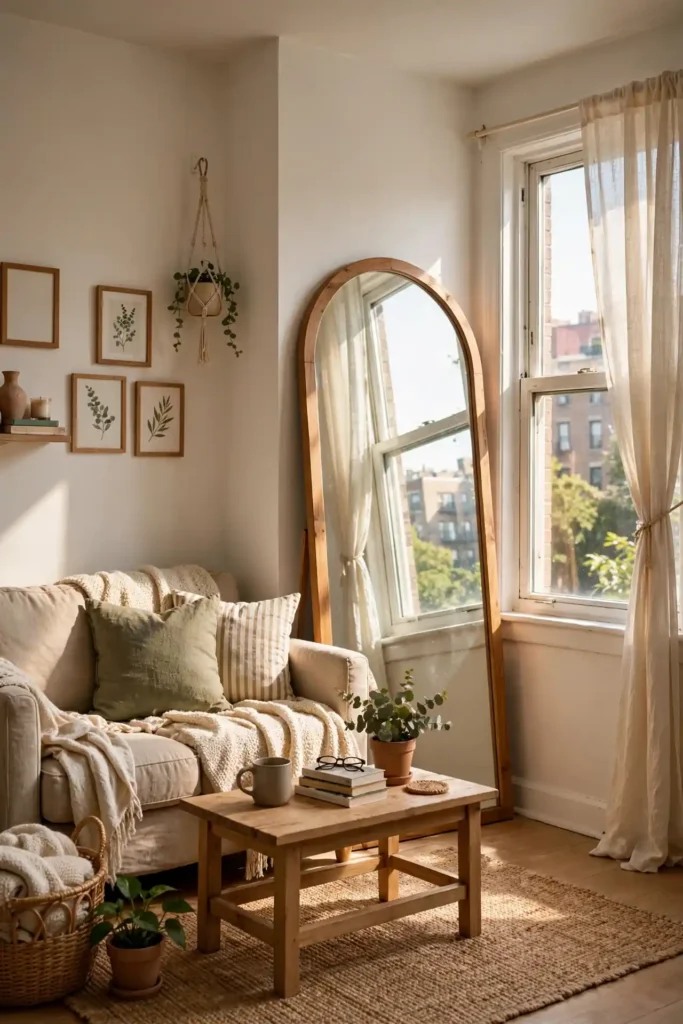
Round mirrors soften the lines of boxy furniture, while arched mirrors add the trendy curve everyone wants right now. Hang a gallery of small mirrors with Command strips if floor space is tight. Keep the glass clean — streaks kill the effect — and angle mirrors away from clutter so they reflect light, plants, or art instead of mess. In a dark apartment, placing a mirror near a lamp multiplies the glow and makes evenings feel warm and welcoming. A mirror hung behind a console table with a lamp creates a vignette that looks styled from every angle in the room.
8. Choose Multi-Functional Furniture
Every piece in a small apartment should earn its footprint, so choose furniture that does double duty. A storage ottoman ($60 to $120 at Target or Wayfair) hides remotes and throws while serving as extra seating or a footrest. Lift-top coffee tables ($130 to $250) become work-from-home desks in seconds, and sleeper loveseats or quality futons host overnight guests without a spare bedroom. Nesting side tables tuck away until you need them for a crowd. Daybeds with trundles are another smart pick, giving you a sofa by day and sleeping space for two guests at night.
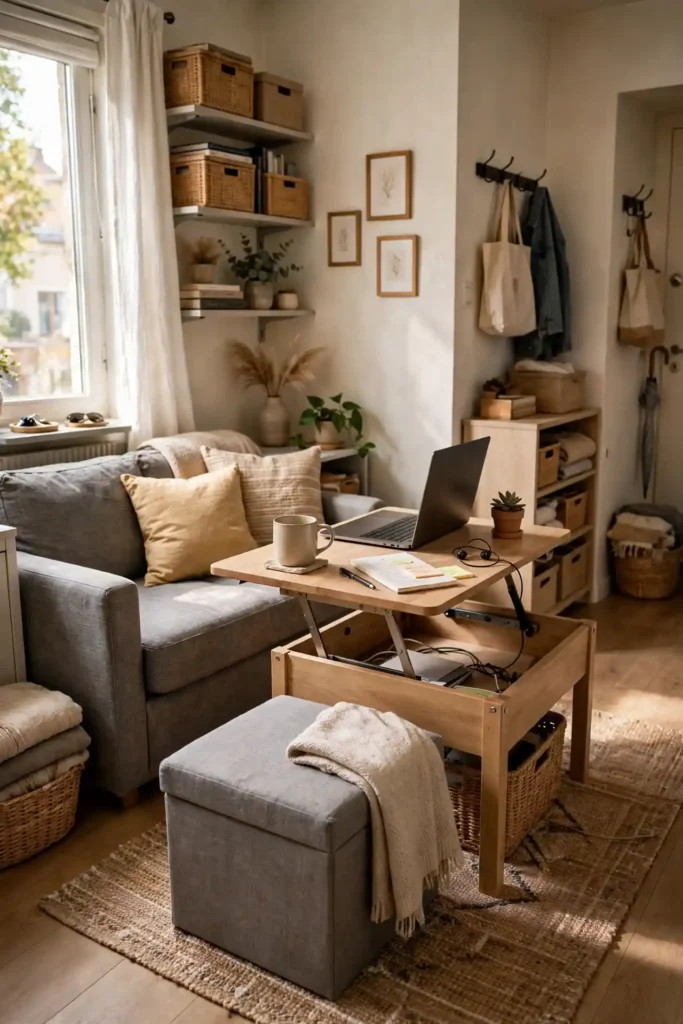
Look for pieces with hidden storage: sofas with under-seat compartments, benches with flip tops, and media consoles with closed cabinets. Measure twice — multi-functional pieces often run deeper than they look — and leave at least 18 inches of walkway around them. Buying one great double-duty piece beats buying three single-purpose ones, saving both money and square footage. Your apartment living room stays flexible for movie nights, workdays, and overnight guests alike. Prioritize pieces on casters when you can, since rolling furniture makes rearranging for parties or cleaning day effortless.
9. Go Vertical With Shelving
When floor space is scarce, the walls are your best real estate. Floating shelves, tall bookcases, and leaning ladder shelves draw the eye upward and add storage without eating square footage. A 5-tier ladder shelf from Amazon or Target costs $60 to $100 and needs only wall-leaning placement — no drilling required. Style shelves with books, baskets, and a trailing pothos for that curated look. Keep heavier items on the lower shelves for stability and safety. Add small LED strip lights under one shelf to spotlight your favorite objects and add warm evening ambiance.
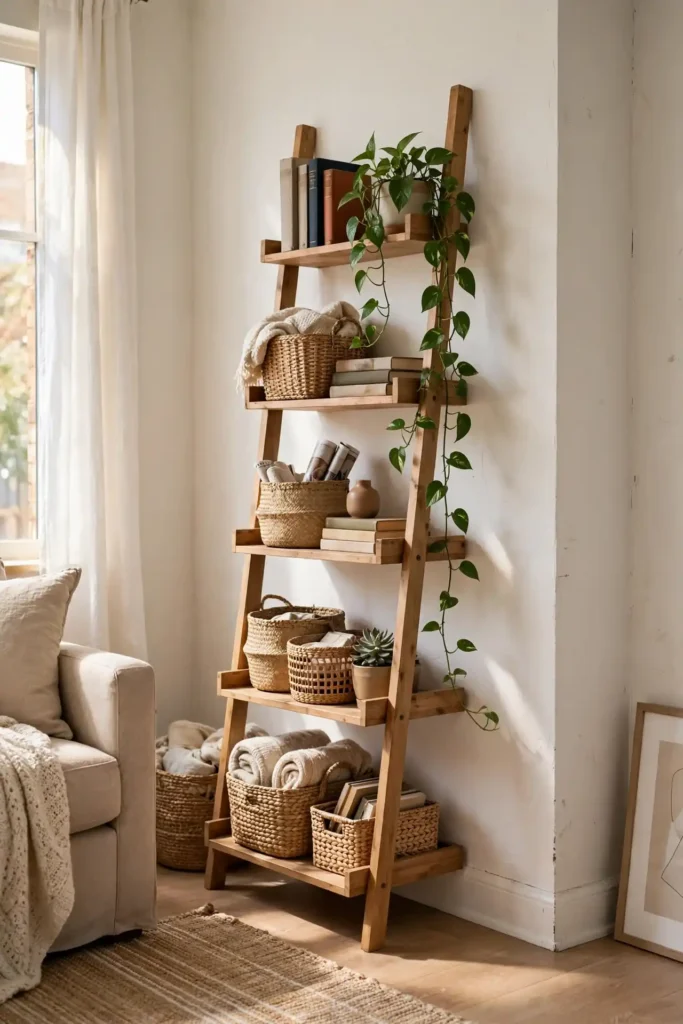
For strict rentals, use freestanding bookcases like IKEA’s KALLAX or BILLY ($70 to $150) instead of wall-mounted shelves. Anchor tall pieces with furniture straps that use adhesive pads rather than screws if your lease forbids drilling. Leave breathing room between objects — crowded shelves read as clutter rather than curation. Vertical storage also keeps the floor clear, which makes small living rooms feel noticeably larger and much easier to vacuum every week. Dust shelves monthly with a microfiber cloth, since eye-level surfaces show dust faster than anything else in the room.
10. Add Plants
Plants are the cheapest way to make a rental living room feel alive, and they cost far less than new furniture. Start with forgiving varieties — pothos, snake plants, and ZZ plants thrive on neglect and low light, and a 6-inch nursery pot runs $10 to $25 at Home Depot, IKEA, or Trader Joe’s. Group plants in odd numbers at different heights for a designer look. A tall fiddle-leaf fig or olive tree in the corner fills dead space beautifully for $40 to $80. Rotate pots a quarter turn every few weeks so plants grow evenly instead of leaning toward the window.
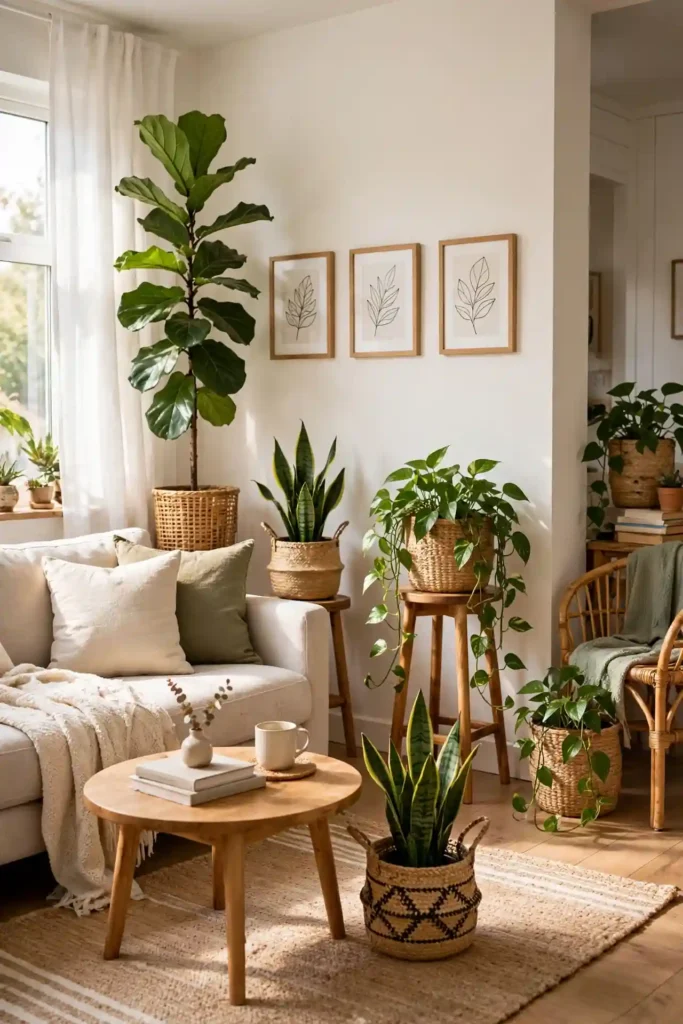
Use woven baskets ($12 to $25 at Target) as cachepots to hide plastic nursery pots and add natural texture. Hang trailing plants from adhesive ceiling hooks or place them on high shelves to draw the eye upward. If you travel often, choose drought-tolerant plants or add a $15 set of self-watering spikes. Wipe leaves monthly so they photosynthesize well and look glossy. Even two or three plants can transform a beige rental box into a fresh, welcoming space. Start with just three plants and add more only after you prove to yourself you can keep them alive.
11. Create a Gallery Wall With Command Strips
A gallery wall turns a blank rental wall into personal art with zero nail holes, thanks to 3M Command picture-hanging strips. Plan your layout on the floor first, then photograph it for reference before anything goes up. Mix frame sizes — 8x10s, 11x14s, and one larger anchor piece — in matching or coordinated frames from IKEA or Target ($3 to $12 each). Command strips hold up to 16 pounds per set and remove cleanly with the pull tab, protecting your security deposit. Use kraft paper templates taped to the wall to preview spacing before you commit a single strip.
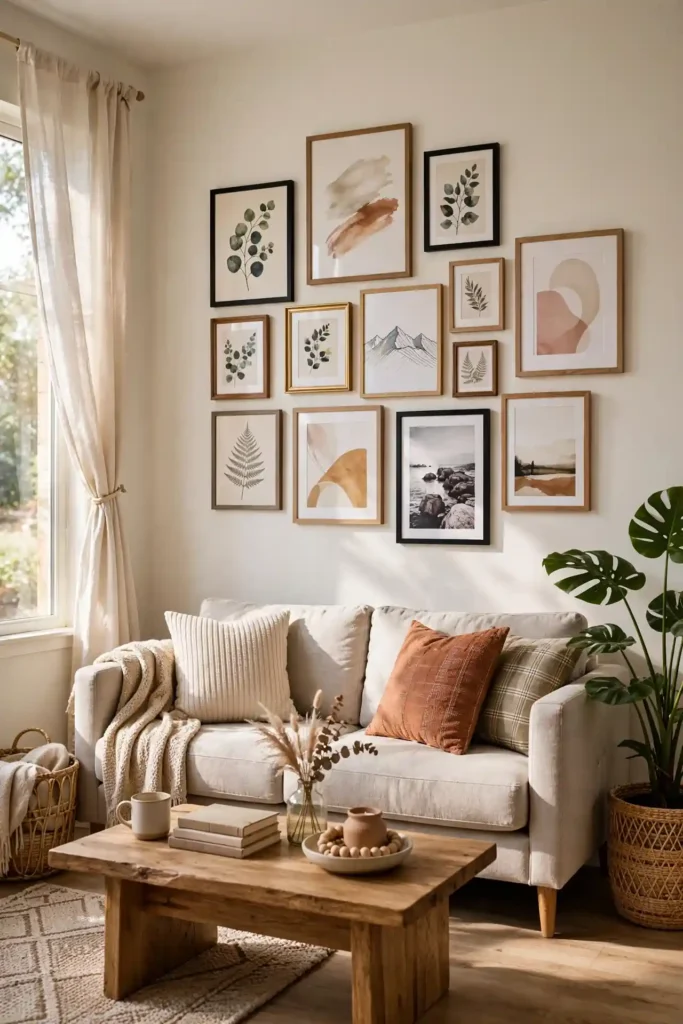
Start hanging from the center outward, keeping 2 to 3 inches between frames for a balanced, gallery-style look. Center the arrangement at 57 inches from the floor — museum height — or above the sofa with the bottom frame 6 to 8 inches above the cushions. Mix art prints, personal photos, and a small mirror or woven textile for depth and texture. Affordable prints from Etsy, Society6, or free museum downloads keep the whole wall under $100. It is the most personal upgrade in any apartment living room. Weigh each frame on a kitchen scale first so you use the correct strip size and nothing crashes down at midnight.
12. Use a Console Behind the Sofa
A narrow console table behind a floating sofa adds surface space and makes the arrangement look intentional rather than stranded. At 10 to 14 inches deep, consoles from IKEA, Target, or Wayfair cost $70 to $150 and fit even the tightest layouts. Style it with a pair of table lamps, a stack of coffee-table books, and a small plant — the lamps add the layered lighting that designers swear by. Keep the console height at or below the sofa back so sightlines across the room stay open. A runner or small tray on top protects the surface from lamp bases and drink rings over time.
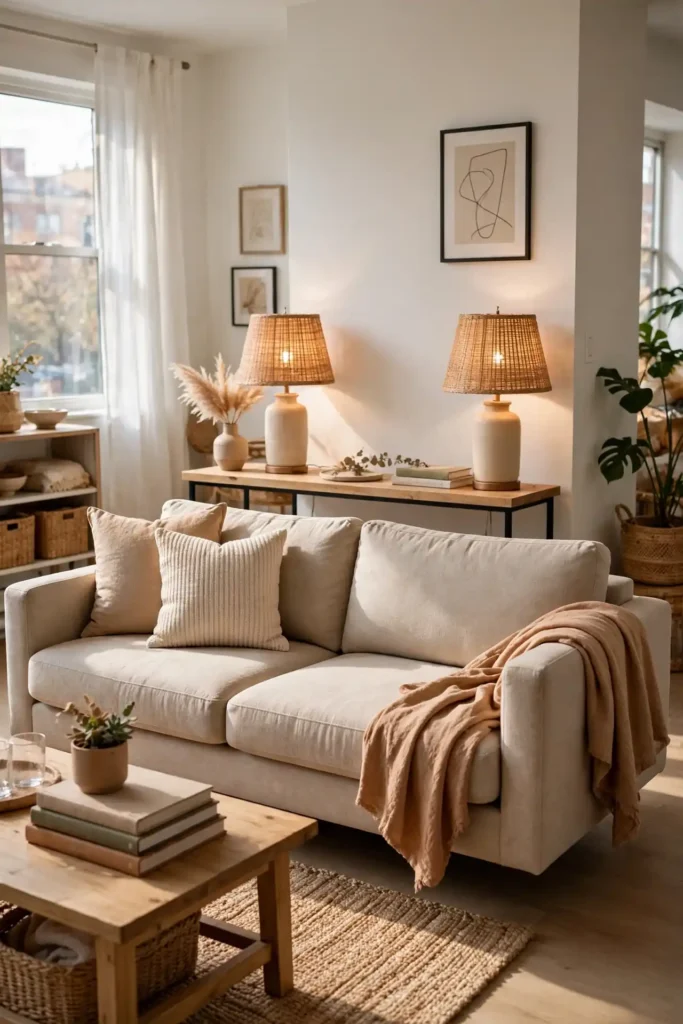
Choose a console with a lower shelf or drawers for extra storage of remotes, chargers, and board games. In a studio apartment, the sofa back plus a console creates a convincing visual divider between living and sleeping zones. Secure lamp cords with adhesive cable clips so everything plugs in neatly without tangles. This one piece solves the floating-sofa problem, adds warm light, and gives you a landing spot for keys — all for the price of a nice dinner out. Look for consoles with cord cutouts in the back panel so chargers and lamp cables stay hidden.
13. Try a Round Coffee Table
A round coffee table is a small-space secret weapon: no sharp corners to bruise shins, better traffic flow, and a softer silhouette that contrasts nicely with a boxy sofa. For a standard sofa, choose a table 30 to 36 inches in diameter and about 16 to 18 inches high — roughly two-thirds the sofa’s length. Budget options in wood, marble-look, or rattan run $80 to $180 at Target, IKEA, and Wayfair. Leave 14 to 18 inches between the table and sofa for comfortable legroom. A tray on top keeps the surface tidy and gives you a stable base for candles or a small vase.
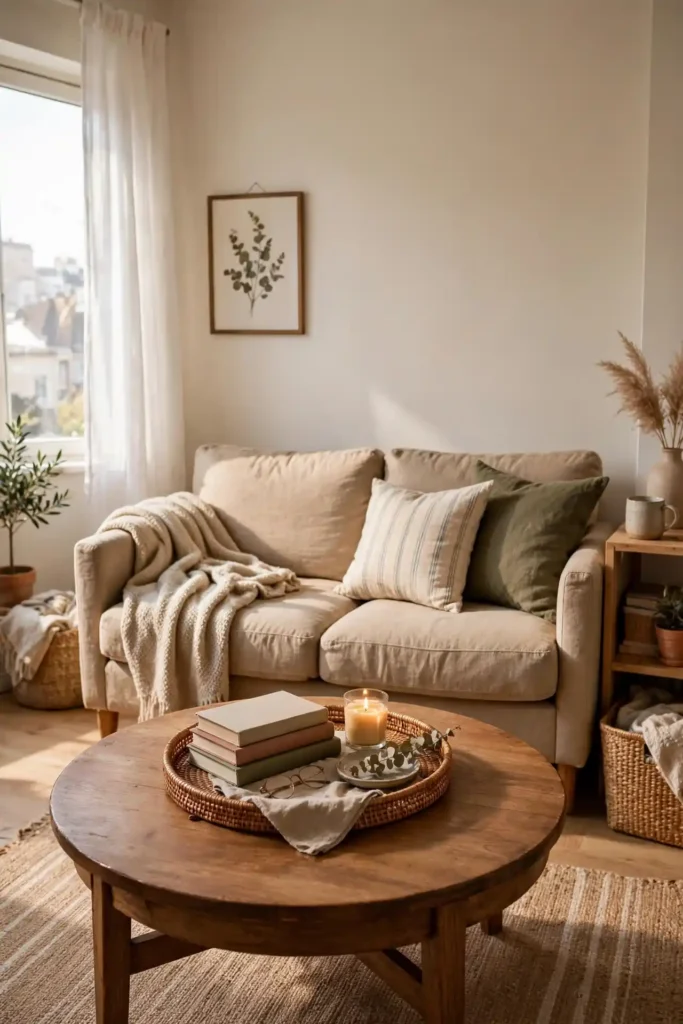
Round tables also make conversation easier since everyone angles slightly inward toward the center. Style the surface with a tray to corral remotes, a small stack of books, and one low plant or candle — keep the center clear enough for drinks and snacks. If you need storage, pick a design with a lower shelf or a lift-top. In tight apartments, a round table lets you squeeze past without the hip-check a rectangular table delivers, making daily life noticeably smoother. Choose a table with a lower shelf to stash baskets of throws or the board games you actually play.
14. Layer Textiles
Layered textiles — throws, cushions, and an extra rug — are what separate a flat rental from a cozy, collected living room. Start with a base palette, then mix textures: chunky knit, linen, velvet, and faux fur in coordinating tones. IKEA, Target, and H&M Home sell cushion covers for $8 to $20 each, so a full refresh of six cushions costs under $100. Drape a throw over one sofa arm instead of spreading it flat for that casual, designer look. Stick to machine-washable fabrics so a spilled glass of wine does not become a permanent decorating disaster.
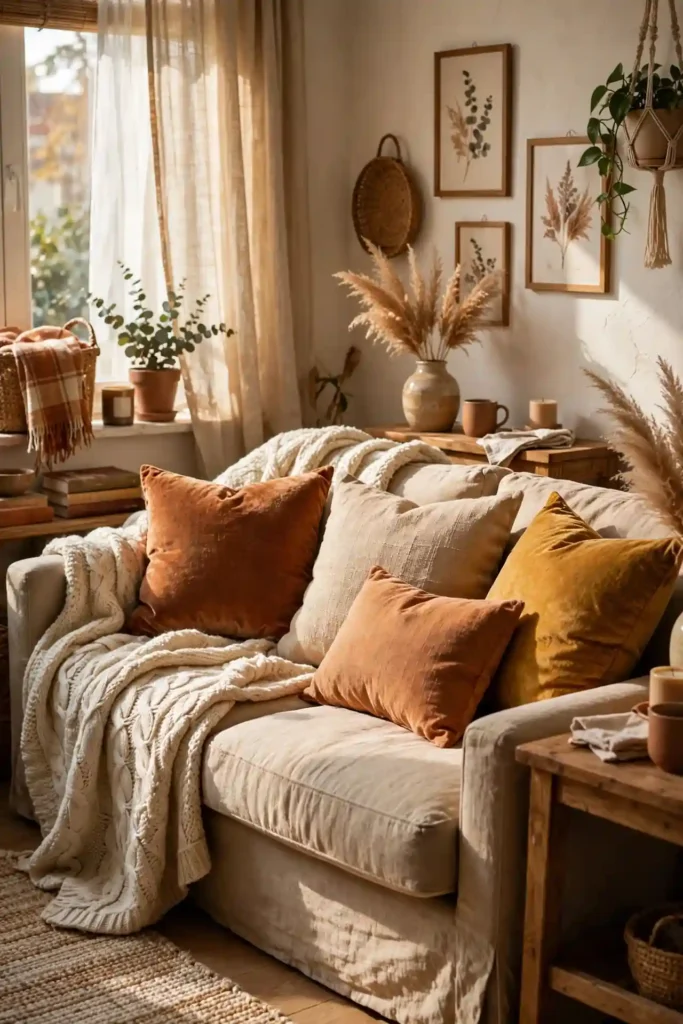
Follow the odd-number rule: three or five cushions look better than four on most sofas. Vary the sizes — 20-inch squares in back, smaller lumbar pillows in front for depth. Washable covers are non-negotiable for renters with pets or kids. Swap textiles seasonally — light linen for summer, chunky knits for fall — to refresh the room for under $50. Textiles also absorb sound, a real bonus in apartments with thin walls and echoey hardwood floors. Store off-season textiles in vacuum bags under the bed to free up precious closet space.
15. Use Clear Acrylic Furniture
Clear acrylic furniture practically disappears, making it perfect for tight apartment living rooms where visual clutter shrinks the space. A ghost chair or acrylic side table from Amazon or Wayfair costs $60 to $140 and lets light pass straight through, so the room feels larger and airier. Use an acrylic coffee table over a patterned rug to show off the pattern, or choose acrylic dining chairs that tuck fully under the table when not in use. Look for thick, polished edges rather than thin sheets, which can look cheap and flex under weight.
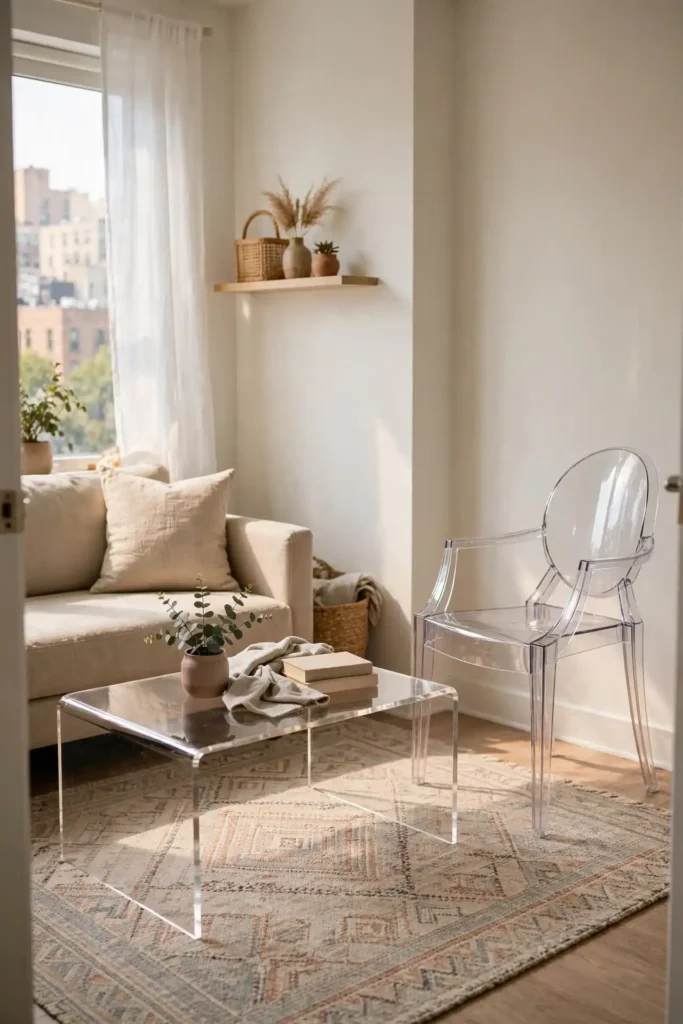
Keep acrylic clean with a microfiber cloth and mild soap — never abrasive cleaners, which scratch the surface permanently. Pair one acrylic piece with warmer materials like wood and boucle so the room does not feel cold or sterile. A waterfall acrylic console or a set of nesting tables adds function without bulk. Because these pieces read as nearly invisible, you gain seating or surface space without the visual weight of solid furniture — a genuine small-space cheat code. Keep one soft cloth tucked in a nearby drawer so fingerprints never linger on the clear surfaces.
16. Paint If Allowed
If your lease allows painting — many do, as long as you return walls to the original color — a fresh coat is the highest-impact budget upgrade available. A gallon of quality paint ($35 to $55 at Sherwin-Williams, Behr, or Benjamin Moore) covers about 350 square feet, so one accent wall costs under $60 including supplies. Warm whites, soft sage, and greige make small living rooms feel larger and more expensive. Always get written permission first and note the original paint color and finish. Ask the paint store to match your landlord’s original color exactly and keep the formula sticker for move-out day.
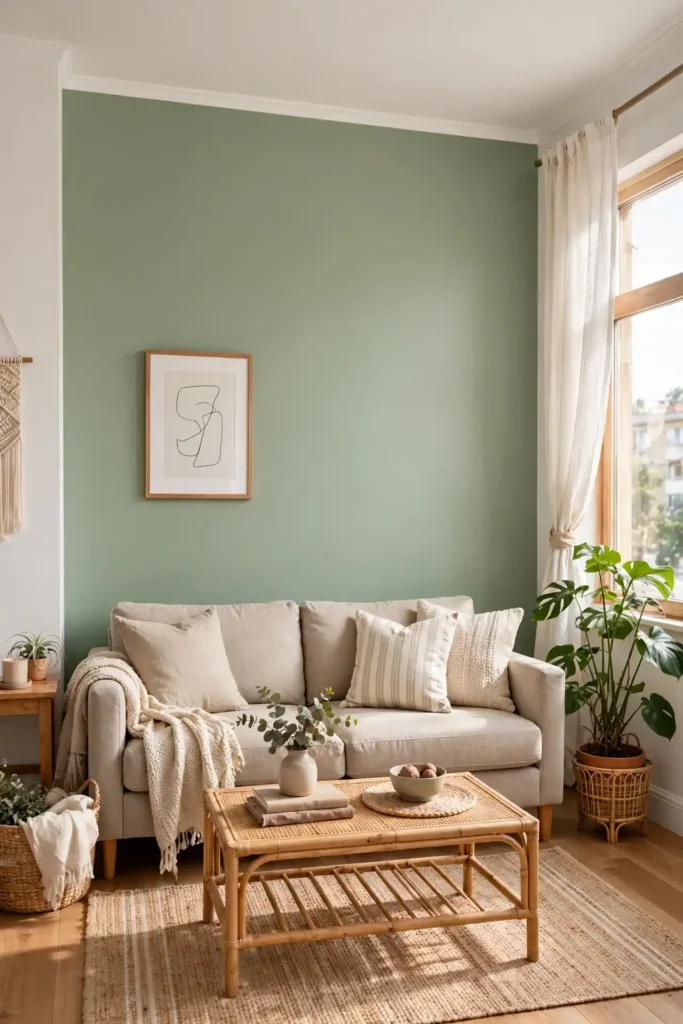
Prep matters more than the paint itself: clean the walls, tape the edges, and use drop cloths to protect floors and trim. Two thin coats beat one thick coat every time, with drying time in between. If full painting is off-limits, paint the inside of a bookshelf or a single door for a hit of color. Photograph everything before you start so move-out touch-ups are easy. A weekend of painting can make a rental feel like a home you actually chose. A freshly painted ceiling in soft white can also brighten a dark rental living room without touching the walls.
17. Hide Clutter in Baskets
Baskets are the renter’s secret to a tidy-looking living room with zero built-in storage. Woven seagrass, rattan, and fabric bins from Target, IKEA, or HomeGoods cost $12 to $30 each and swallow throws, toys, chargers, and magazines. Place a large basket beside the sofa for blankets, lidded baskets on shelves for the unattractive stuff, and a slim bin for the entry clutter that migrates in daily. Closed storage always reads as calm and intentional. Tuck a scented dryer sheet inside each fabric bin to keep stored throws and blankets smelling fresh between uses.
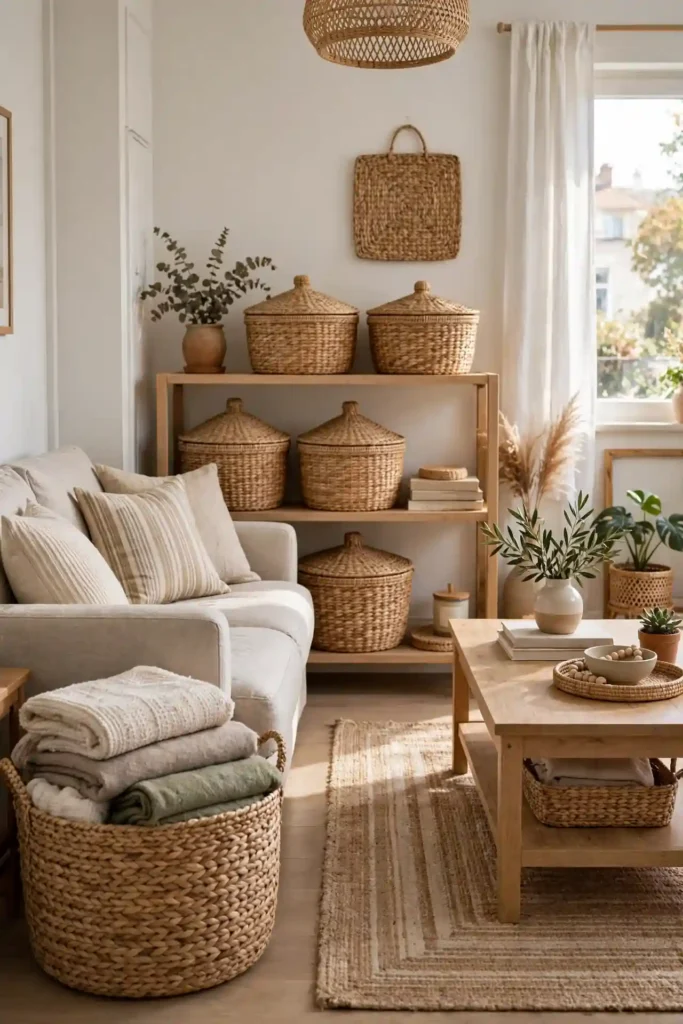
Choose baskets that match your palette — natural fibers warm up modern rooms, while felt or canvas bins suit minimal spaces. Use the one-in-one-out rule so baskets do not quietly become junk drawers. A lidded basket-ottoman hybrid doubles as a side table for drinks. Stack two sizes in a corner for a styled look that is secretly all storage. For under $75, a basket system can make even the most chaotic apartment living room look intentionally curated. Mix two basket materials at most so the storage looks curated rather than like a random collection.
18. Add a Statement Chair
One bold chair gives your living room a designer focal point without replacing the whole sofa. A velvet accent chair in emerald or rust, a rattan peacock chair, or a sculptural boucle armchair runs $150 to $350 at Target, Wayfair, or Amazon — far less than a new sofa. Place it at an angle to the sofa to create a conversation zone, or in a lonely corner with a floor lamp to build a reading nook. Match the chair’s seat height within 2 inches of your sofa’s for lasting comfort.
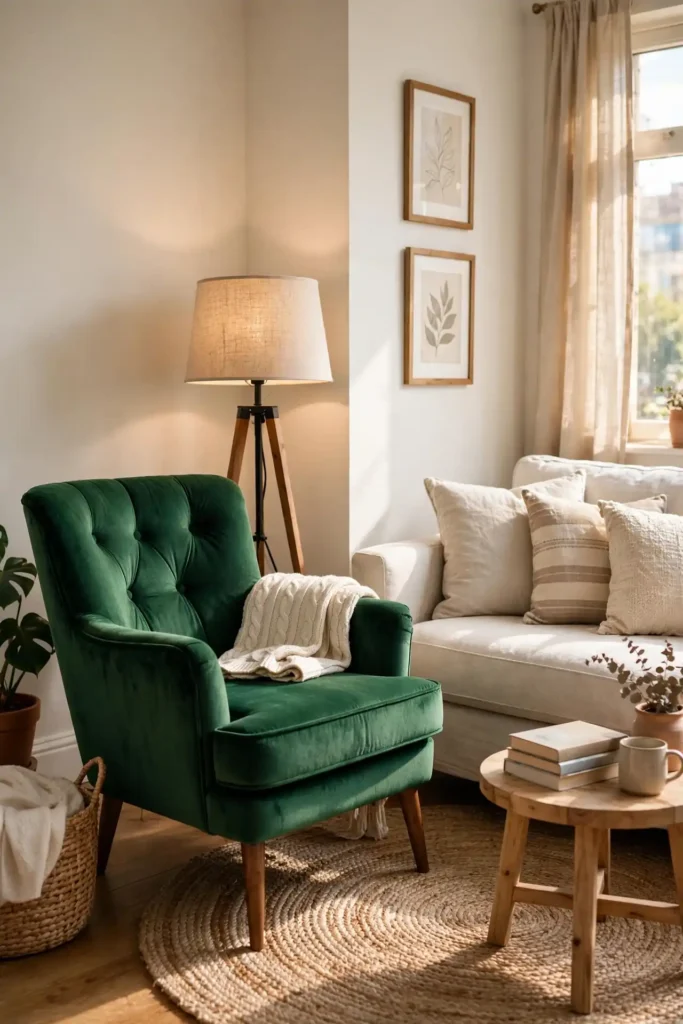
Let the chair be the star by keeping surrounding pieces neutral, then echo its color in one cushion or throw for cohesion. Secondhand stores and Facebook Marketplace often have solid-wood or vintage chairs under $75 that you can reupholster or paint for a custom look. A statement chair also moves easily between apartments, so it is a long-term investment in your style. One confident piece signals taste more than a roomful of safe, matching furniture ever will. Test the chair in person when possible, since seat depth and back angle matter more than photos suggest.
19. Use Smart Lighting
Smart lighting lets renters customize mood without touching a single wire or fixture. Screw-in smart bulbs from Philips Hue, Wyze, or Govee cost $10 to $25 each and work in your existing lamps and fixtures — no electrician needed. Set warm scenes for evenings, bright cool light for cleaning days, and schedules that turn lamps on before you get home. A starter kit with two bulbs and a smart plug runs about $40 to $60 on Amazon. Name each bulb by room in the app so voice commands like ‘dim the living room’ work the first time.
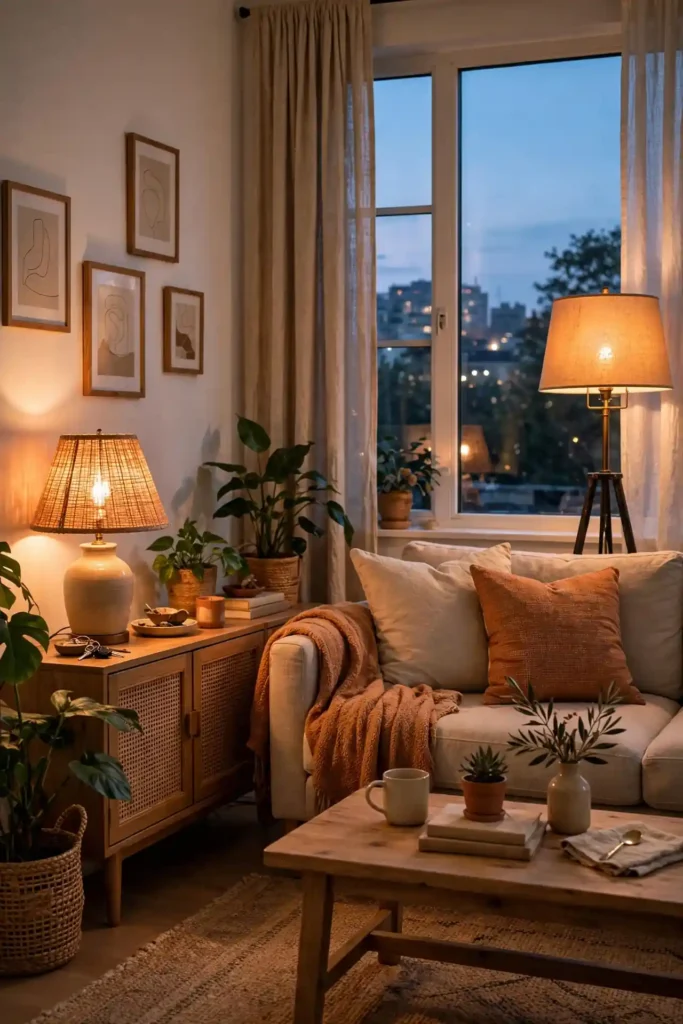
Add smart plugs ($12 to $20 each) to make any floor lamp or string light voice-controlled through Alexa or Google Home. Use the app to dim the lights for movie night without ever leaving the sofa. Since everything is plug-and-play, you take the whole system to your next apartment. Smart lighting also saves energy with schedules and auto-off, trimming your electric bill — a practical win for budget-conscious renters who still want real atmosphere. Set a ‘goodnight’ routine that turns everything off at once so you never fall asleep with lamps blazing.
20. Mount the TV or Use a Media Console
A wall-mounted TV frees up floor space and looks far more polished than a TV on a wobbly stand — and many leases allow it with small anchor holes you fill at move-out. A tilting wall mount costs $25 to $45 on Amazon and installs in about 30 minutes with a stud finder and a level. Center the screen so its middle sits 42 to 48 inches from the floor, roughly eye level from your sofa. Always confirm your lease terms first and use proper anchors for your wall type.
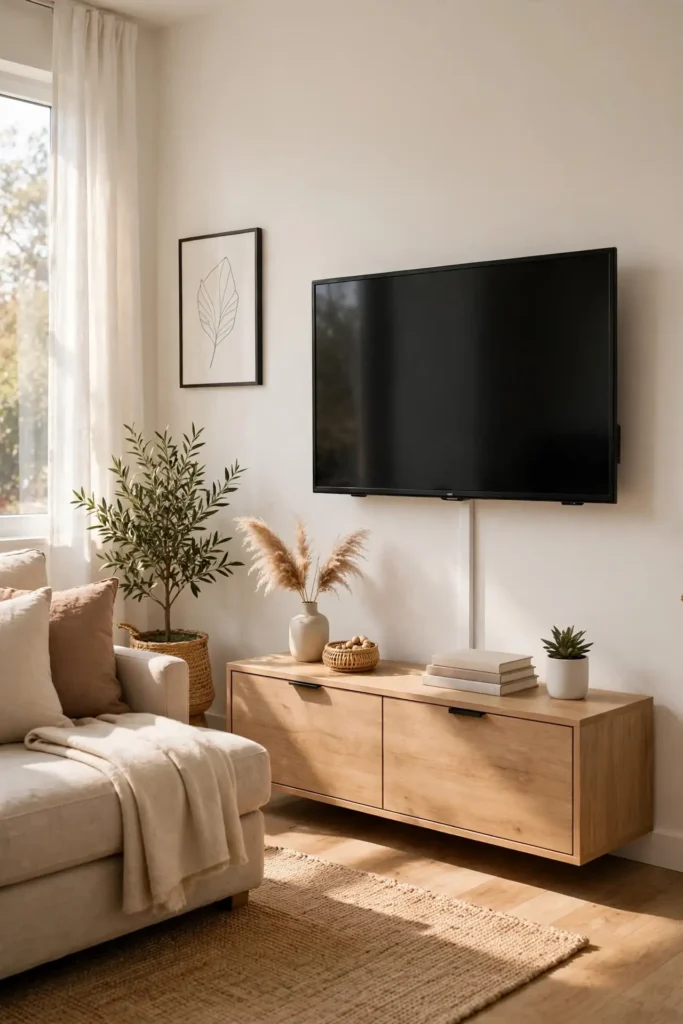
If mounting is off the table, choose a low media console — 50 to 65 inches wide for most TVs — with closed storage to hide game consoles and cables. IKEA’s BESTÅ or LACK units ($60 to $150) are renter favorites for good reason. Hide cords with adhesive cable channels painted to match the wall for a clean look. Either way, keep the TV wall simple: one console, one screen, and minimal decor so the setup reads as clean rather than cluttered. Measure your TV’s VESA pattern before buying a mount so the bracket matches your specific model.
21. Add a Room Divider
In studios and open-plan apartments, a room divider carves out a distinct living area without any construction. Folding screens ($60 to $150 at Target, Wayfair, or Amazon) need zero installation and fold flat on moving day. Open-back bookcases like IKEA’s KALLAX ($80 to $130) divide space while adding storage on both sides. Curtain panels on a tension rod or ceiling track offer a soft, flexible boundary for around $50 to $100. A tall open bookcase divider also gives you valuable display space that faces both your living area and your sleeping zone.
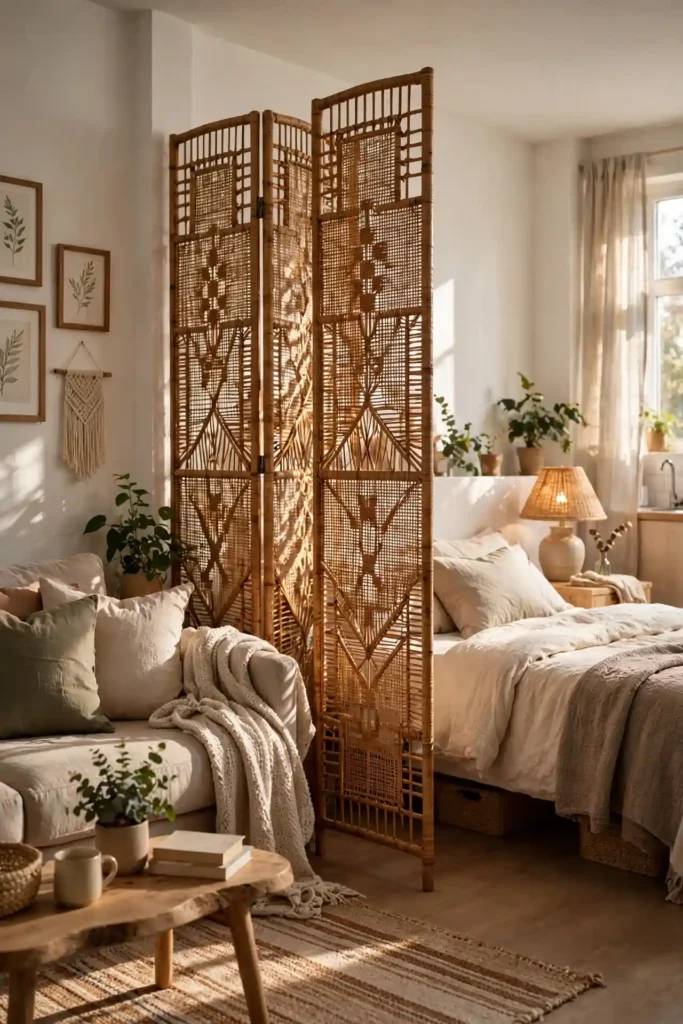
Position the divider to separate the living zone from the bed or dining area, leaving walkways at least 30 inches wide for comfortable passage. Choose open or airy designs — slatted screens, sheer curtains — so light still flows through and the space does not feel boxed in. A divider also creates a backdrop that makes your sofa arrangement look deliberate and styled. When your lease ends, every option here packs up in minutes with nothing to patch or repaint. Add a floor lamp behind the divider so both zones get their own pool of warm light at night.
22. Keep a Cohesive Palette
A cohesive color palette is what makes a budget living room look expensive and intentional. Pick three colors — a dominant neutral, a secondary tone, and one accent — and repeat them across the rug, curtains, cushions, and art. Warm whites, greige, and soft black suit most rentals; add one accent like terracotta, sage, or navy for personality. When every piece speaks the same color language, even $20 Target finds look curated. Carry a small swatch card in your wallet or phone so impulse buys at Target or HomeGoods always match your scheme.
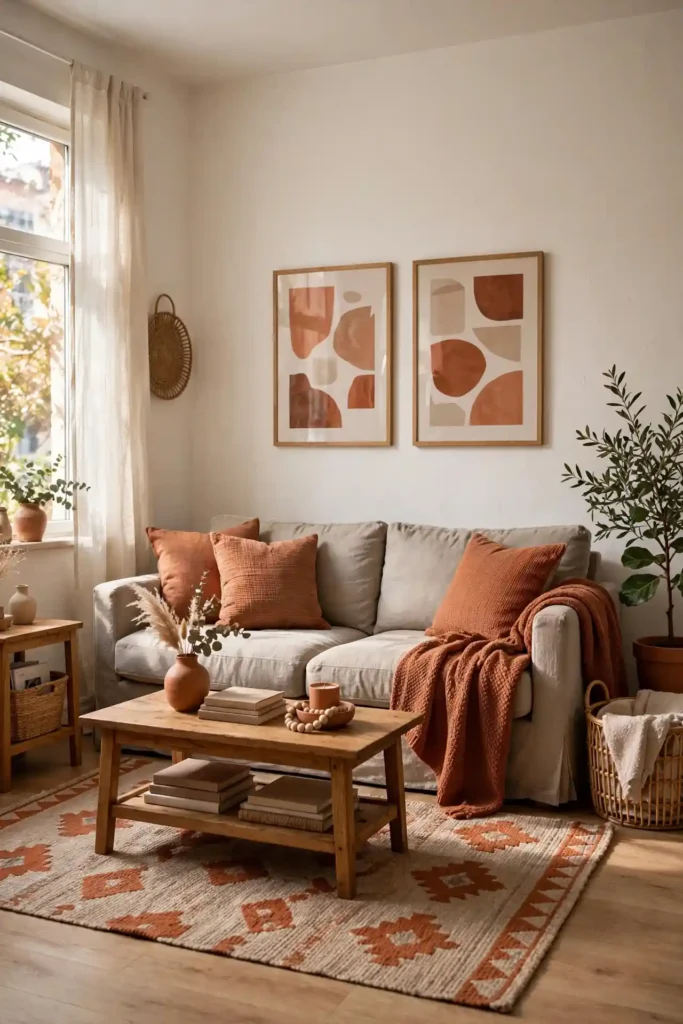
Test your palette by gathering swatches — paint chips, fabric scraps, phone photos — and viewing them together in natural daylight. Repeat each color at least three times around the room for balance: a rust throw, rust wall art, a rust cushion. Avoid introducing a fourth or fifth color, which creates visual noise in small spaces. A disciplined palette also makes future purchases easier, because you will instantly know what fits your apartment living room and what does not. When in doubt, default to your dominant neutral — it is always the safest choice for big-ticket pieces.
Renter-Friendly Apartment Living Room Decor Ideas
Renter-friendly decorating means maximum style with zero deposit risk, and it starts with knowing your lease inside out. Most landlords allow Command strips, tension rods, freestanding furniture, and peel-and-stick products — confirm in writing before you drill or paint anything. Focus your budget on portable upgrades: rugs, lighting, textiles, and art you will take to your next place. Photograph every wall and fixture on move-in day so you have proof of the original condition. Email the photos to yourself immediately so you have timestamped proof if any deposit dispute arises later.
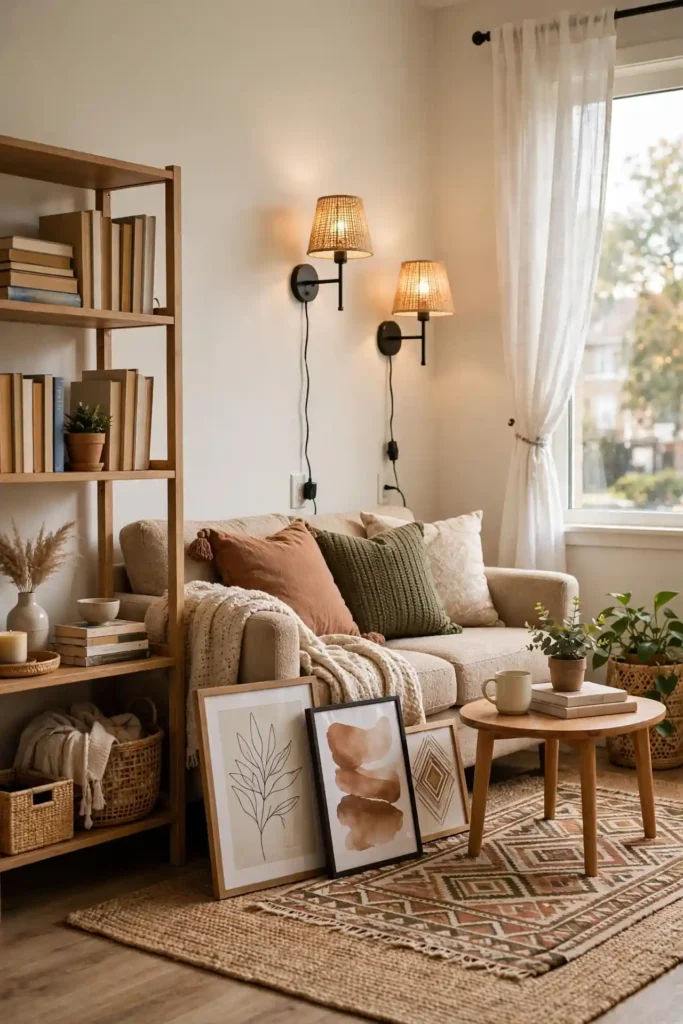
Build a move-out kit from day one: a small box with spackle, touch-up paint, extra Command strips, and the original light fixtures and hardware you replaced. Patch small holes, wipe scuffs with a magic eraser, and rehang the originals two weeks before your lease ends. Renters who restore carefully almost always get their full deposits back. Decorate boldly within these guardrails, and your apartment living room can feel fully yours without costing you a dime at move-out. Keep all landlord approvals in one email folder so you can find written permission in seconds if questioned.
Small-Space Layout Tips
Good layout matters more than square footage in a small apartment living room. Float furniture away from walls to create breathing room — even 3 inches behind the sofa improves flow and makes the room feel larger. Keep main walkways 30 to 36 inches wide and maintain 14 to 18 inches between the sofa and coffee table. Angle one chair slightly inward to open up conversation, and never block windows with tall furniture that steals your best natural light. Leave at least 24 inches in front of any fireplace or radiator so heat circulates safely around furniture.
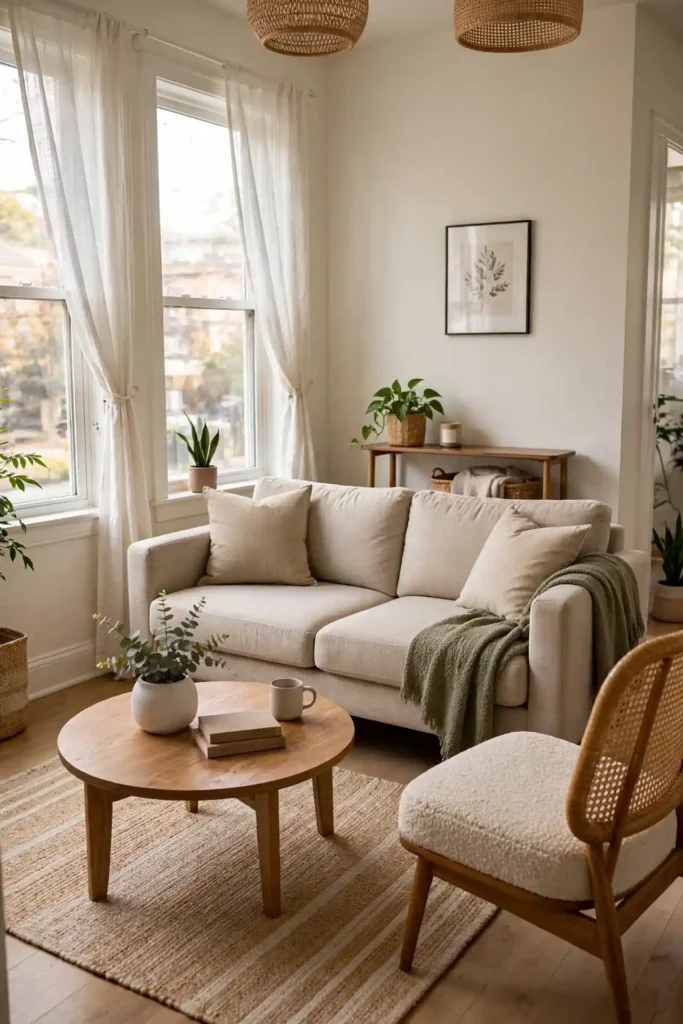
Sketch your layout on graph paper or a free room-planner app before buying anything, noting door swings and outlet locations. In studios, arrange the sofa with its back to the bed to define separate living and sleeping zones. Choose fewer, larger pieces over many small ones — a room crowded with tiny furniture feels busier, not bigger. Test the layout by living with it for a week; moving a chair six inches can completely change how a small space functions day to day. Take a photo of each arrangement you try so you can compare options side by side before deciding.
How to Plan Apartment Living Room Decor Ideas Step by Step
Start with a plan so your budget goes where it counts most. First, measure the room — length, width, window and door positions — and photograph it in daylight from every angle. Second, set a total budget and split it: roughly 40 percent for the sofa or seating, 20 percent for the rug, 20 percent for lighting, and 20 percent for textiles and art. Third, pick your three-color palette and save inspiration photos that share it, so every purchase pulls in the same direction. Write down your room’s measurements in your phone notes so you always have them while shopping.
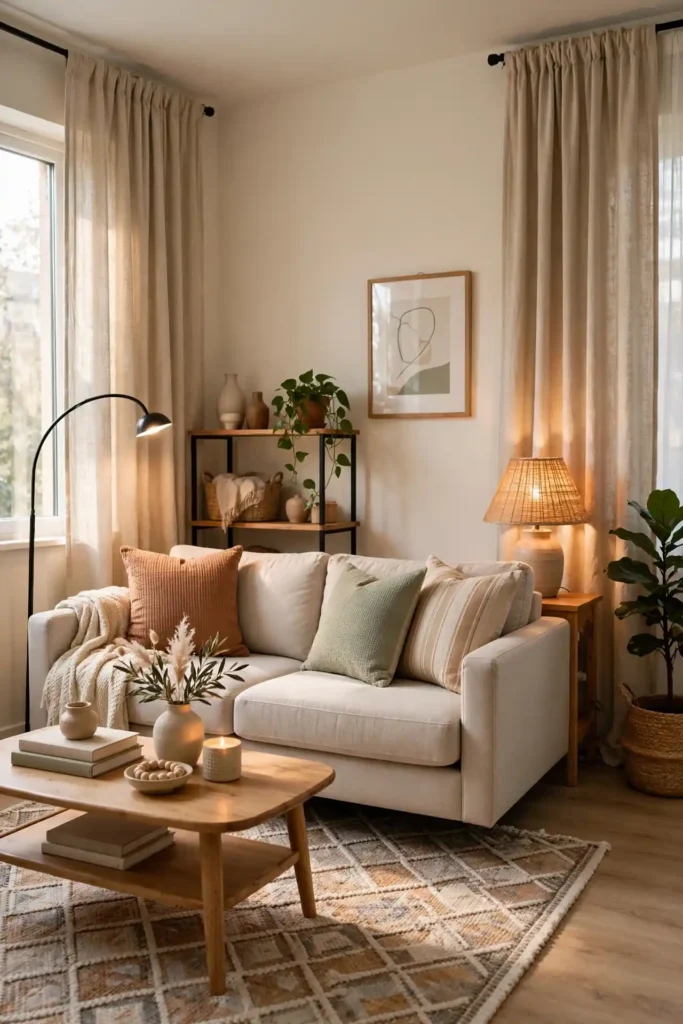
Fourth, buy in order of impact: rug and curtains first to set the foundation, then lighting, then furniture, and accessories last. Fifth, shop sales strategically — IKEA, Target, and Wayfair run major discounts around holidays, and Facebook Marketplace lists quality secondhand finds daily. Finally, style slowly: live with the big pieces for a week before adding small decor. A step-by-step plan keeps apartment living room decorating fun, affordable, and free of expensive impulse buys. Set a monthly calendar reminder to revisit your plan so small impulse purchases do not quietly blow the budget.
- Measure the room, windows and doorways.
- Choose a layout and a rug to define the space.
- Select a compact sofa and multi-functional pieces.
- Add lighting, curtains and a mirror.
- Finish with art, plants and textiles.
Final Thoughts on Apartment Living Room Decor Ideas
A chic apartment living room on a budget comes down to smart priorities, not big spending. Define the space with a rug, layer warm lighting, hang curtains high, and keep your palette tight — these four moves alone transform most rentals dramatically. Invest in portable pieces like a good sofa, quality textiles, and art you love, since they move with you to the next place. Everything else can be thrifted, DIY’d, or upgraded over time as your budget allows. Shop your own home first — you may already own baskets, art, or lamps that work in the new layout.
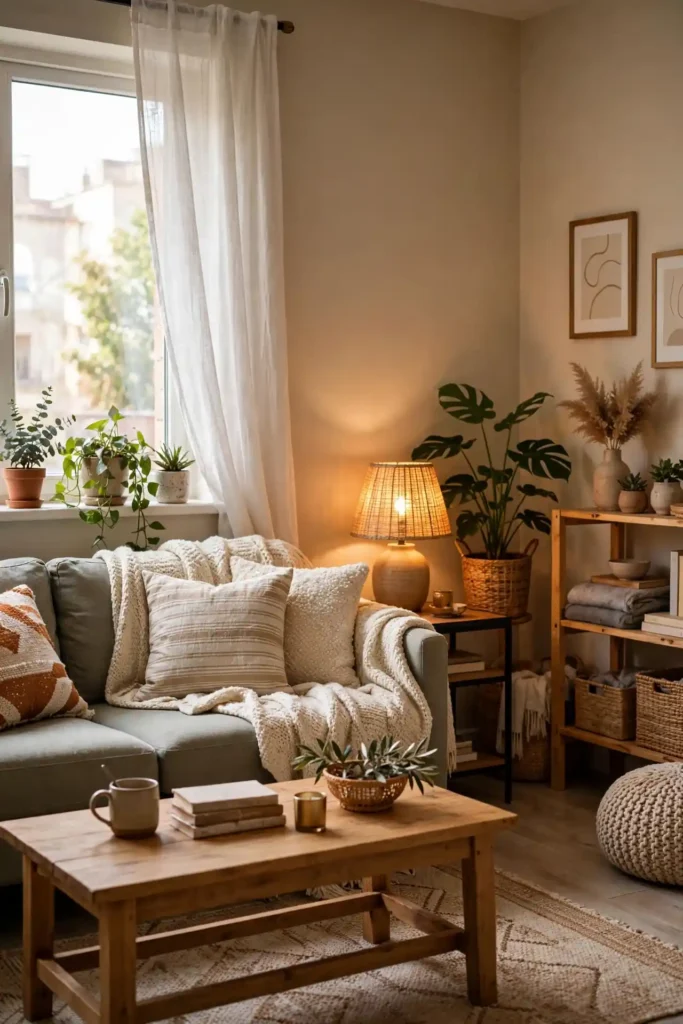
Remember that renting is temporary, but your style is not — choose pieces that will work in your next apartment too. Take before-and-after photos to track your progress and inspire your next project. Start this weekend with one change, whether it is a new rug or a pair of plug-in sconces, and build from there. Your apartment living room can look curated, cozy, and completely yours without breaking the bank or violating your lease. Share your finished room photos online to inspire other renters who are working with the same tight budget.
Frequently Asked Questions About Apartment Living Room Decor Ideas
Renters ask the same smart questions before decorating: can I hang things without losing my deposit, how do I make a small living room look bigger, and where should a tight budget go first? The short answers are yes — with Command strips, tension rods, and peel-and-stick products — by using mirrors, light colors, and high-hung curtains, and by spending first on a rug, lighting, and seating. This FAQ rounds up the most common concerns so you can decorate with total confidence. Bookmark this guide so you can return to specific answers as each decorating question comes up.
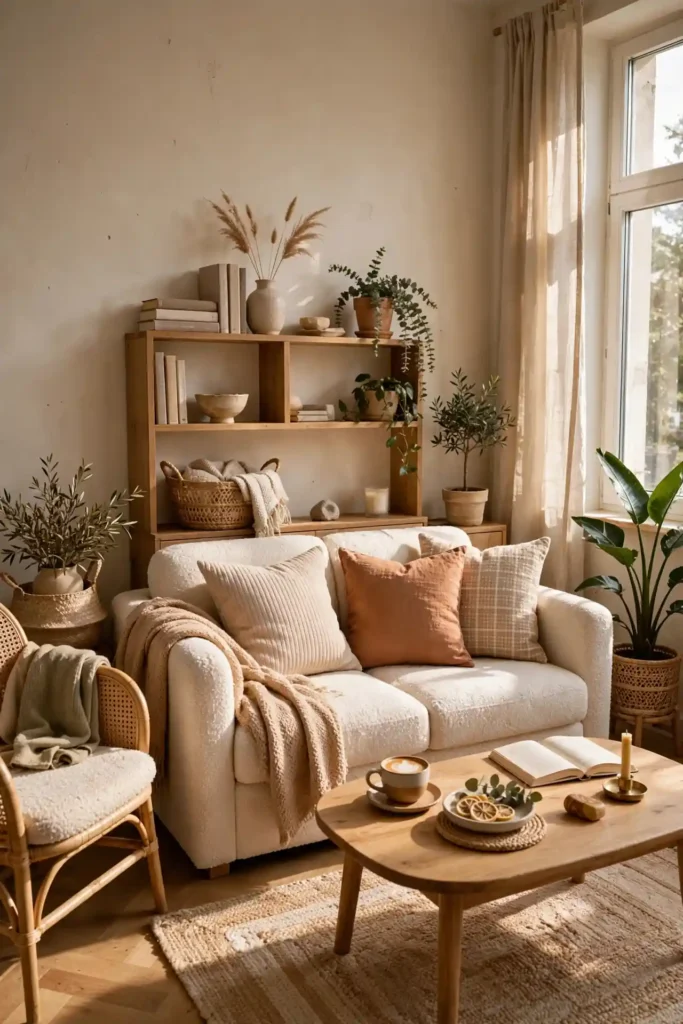
You will also find answers about the best budget stores for apartment decor, how to handle strict no-drill leases, whether painting is worth the effort, and how to style a living room that doubles as a home office or guest space. Each answer gives practical, renter-tested steps with real price ranges and familiar US store names. Skim the questions below, grab the ideas that fit your space and budget, and start with the one change that will make the biggest difference this week. Most renters finish a full living room refresh in two to four weekends without hiring any help.
How can I decorate my apartment living room on a budget?
Use textiles, plants, thrifted art, removable wallpaper and plug-in lighting.
How do I make a small apartment living room look bigger?
Use a large mirror, light colors, furniture with legs and curtains hung high and wide.
Can I decorate an apartment without damaging walls?
Yes. Use adhesive hooks, command strips, tension rods and leaning art.
What furniture is best for small apartments?
Compact sofas, storage ottomans, nesting tables and wall-mounted shelves.
How do I separate the living room in a studio?
Use a rug, an open bookshelf or a folding screen as a room divider.






2 Comments