


Many homes do not have space for both a dedicated guest room and a home office. Combining the two is a smart solution, but it takes careful planning so the room works for daily work and still feels welcoming when guests arrive.
These 20 guest bedroom office combo ideas cover furniture, layouts, storage and styling. For more small-space inspiration, see our apartment living room decor ideas and these cozy bedroom ideas.
Plan a dual-purpose room:
- Prioritize the function you use most, usually the office.
- Choose a bed that folds away or doubles as seating.
- Include closed storage for work supplies.
- Leave space for guests to unpack.
1. Murphy Bed With Desk
A Murphy bed with a built-in desk is the gold standard for a guest bedroom office combo, giving you a genuine workspace by day and a real bed by night. When the bed folds up into the wall cabinet, a full desk surface swings down into place, so your setup feels permanent rather than improvised. Guests still get a proper full or queen mattress, which beats an airbed every time. Look for combo units from Wayfair or Amazon in the $1,500 to $3,000 range, and leave at least 6 feet of clearance in front for the bed to open safely.
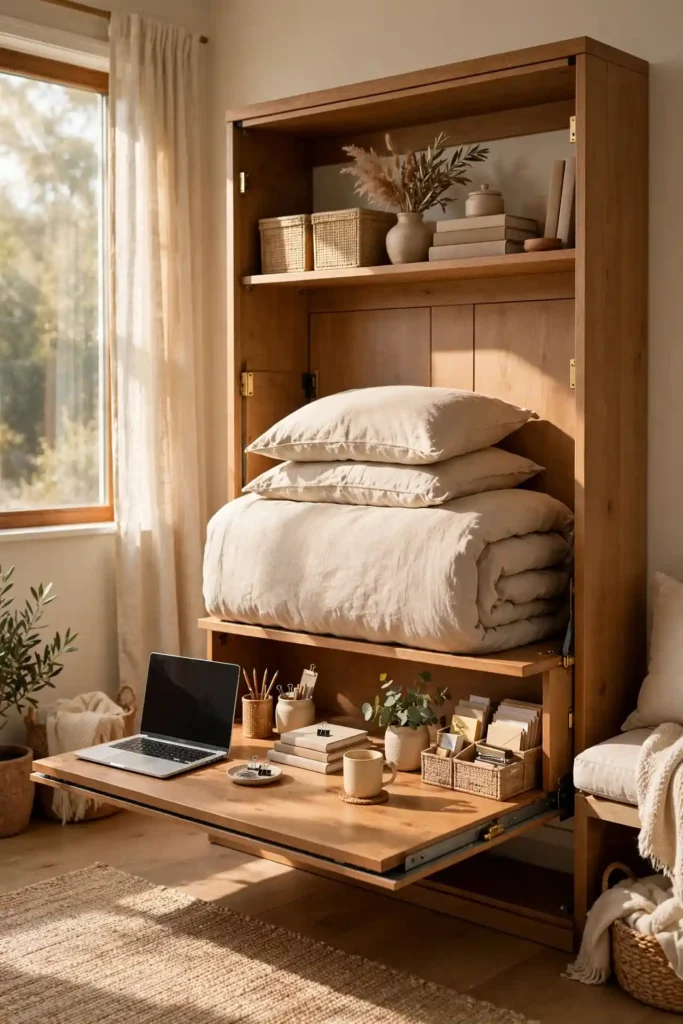
Choose a side-mount or vertical unit based on your room’s width, and anchor it into wall studs for safety. Pair the cabinet with a task chair that tucks under the desk and a small rug that stays clear of the swing zone. If drilling into the wall feels daunting, hire a TaskRabbit handyman for about $100 to $200. Keep bedding simple with a duvet and fitted sheet stored inside the cabinet’s shelves, so the whole room converts in under two minutes. Finish the setup with a wall-mounted reading light for guests and a compact rug placed outside the swing path for safety.
2. Daybed as Sofa and Bed
A daybed gives your guest room a built-in sofa look during work hours and a comfortable twin bed when visitors arrive. Style it with bolster pillows and throw blankets in neutral linen, and it reads as a lounge spot for reading or video calls rather than a bedroom swallowed by a desk. Twin mattresses run about 75 inches long and 38 inches wide, so they fit neatly against a wall without eating the floor plan. Daybed frames from IKEA or Target start around $200, with trundle models adding a second sleeping spot underneath for under $500 total.
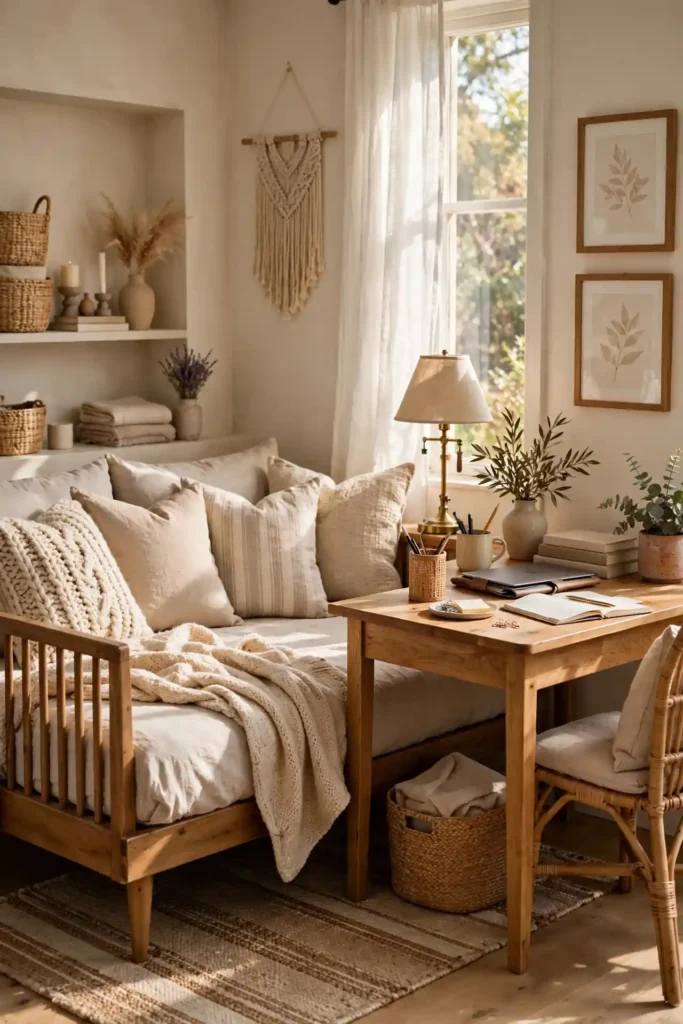
Place your desk on the opposite wall or in an adjacent corner, facing a window if possible, so your work zone feels separate from the sleep zone. A slim side table between the daybed and desk acts as shared surface for both guests and work gear. Choose a mattress 8 to 10 inches thick for a true bed feel, since thin futon pads leave guests sore. During the workday, fold the bedding into a decorative storage bench to keep the room looking intentional and tidy. Tuck matching storage cubes under the desk for work supplies so the room stays tidy whether you are working or hosting overnight guests.
3. Sleeper Sofa
A sleeper sofa hides a full mattress inside furniture that looks like a regular couch, making it ideal when your guest bedroom doubles as your main home office. Modern pull-out mechanisms from brands like Article or Burrow unfold in seconds without the dreaded bar-in-the-back problem of old futons. Measure the room with the sofa fully extended, since a queen sleeper needs roughly 84 inches of depth when open. Quality sleeper sofas start around $1,200 on Wayfair and climb past $2,500 for solid-hardwood frames with thick mattresses. Test the pull-out mechanism in person when possible, and look for models with removable, washable covers that make long-term upkeep much easier.
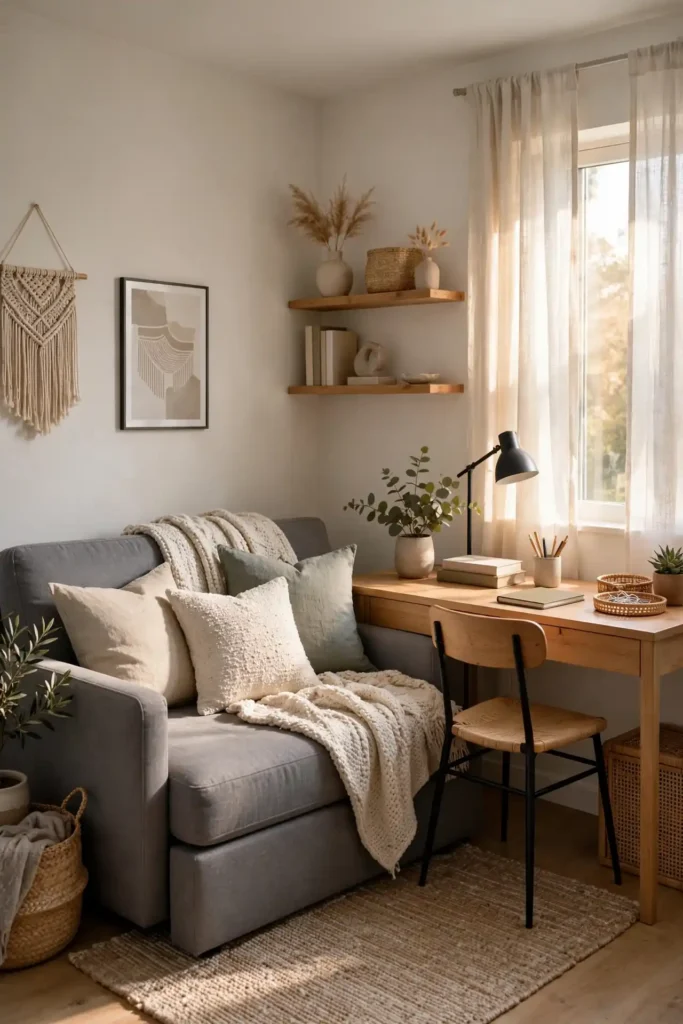
Position the sleeper sofa perpendicular to your desk so your work chair never blocks the pull-out path. Add a memory foam topper stored in the closet for extra guest comfort, plus a set of real sheets rather than the spare-linen chaos many hosts rely on. By day, the sofa becomes your meeting backdrop, so keep throws and pillows in muted tones that look sharp on video calls. Vacuum the mattress area quarterly to keep dust from collecting in the folds. A slim floor lamp behind the sofa arm gives guests reading light without using side-table space, and it doubles as task lighting during workdays.
4. Desk in a Closet
Turning an underused closet into a desk nook is one of the smartest space-saving moves for a guest bedroom office combo. Remove the closet doors, install a 48-inch laminate countertop at 30-inch desk height, and you have a built-in workspace that vanishes when you hang a curtain across the opening. Closets are usually 24 inches deep, which fits a monitor and keyboard comfortably without crowding. A basic conversion costs $150 to $300 in materials from Home Depot, including shelving brackets, a countertop, and a curtain rod. Add a pair of small LED puck lights inside the nook, since closets rarely have their own wiring to support a proper overhead light fixture.
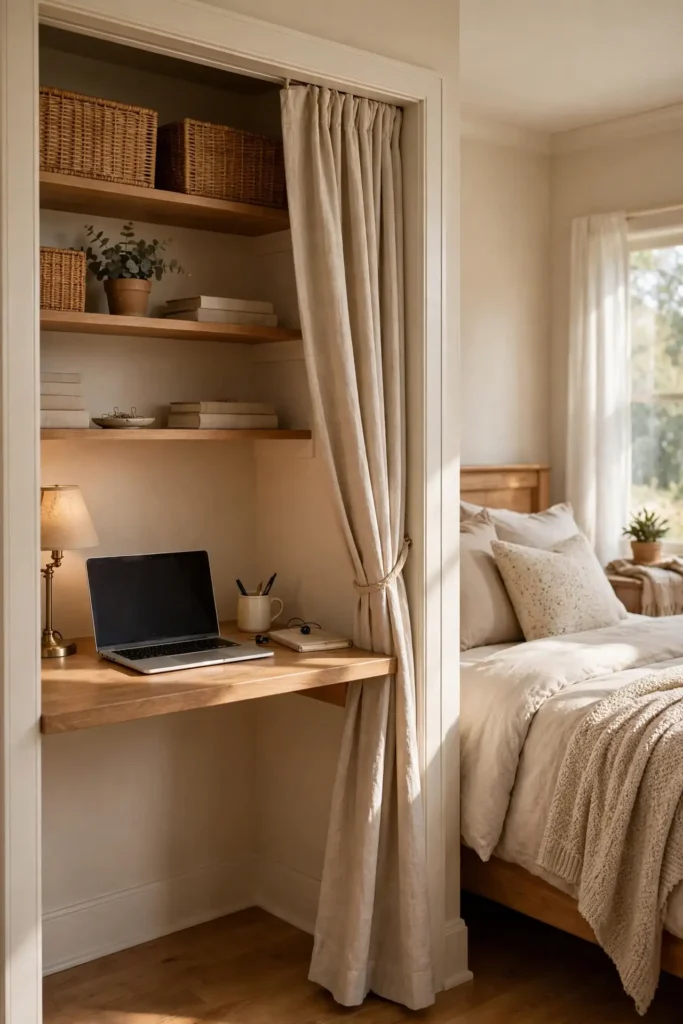
Mount a power strip and a small LED task light inside the closet so the nook is fully functional without trailing cords. Keep the upper closet shelf for guest storage or office supplies in matching bins. A low-back chair or stool slides completely into the nook, preserving walkable floor space. When visitors arrive, simply draw the curtain to hide work clutter, and they get a clean guest room. Leave at least 4 inches of ventilation gap behind a laptop to prevent overheating in the enclosed space. When visitors arrive, simply draw the curtain to hide work clutter instantly, and they get a clean, welcoming guest room with zero extra effort.
5. Floating Desk
A floating desk mounts directly to the wall with hidden brackets, giving you a sturdy work surface with zero legs to bang your knees against. Because it takes up no floor footprint, a 42-inch floating desk can fit on walls that would never hold a standard desk, such as beside a window or between two windows. Wall-mounted desks from IKEA or Amazon cost $80 to $250, and most hold up to 50 pounds when anchored into studs. This airy look keeps small guest bedrooms feeling open instead of cramped. Choose a model rated for at least 50 pounds when anchored into studs, which comfortably holds a monitor, laptop, notebook, and your coffee.
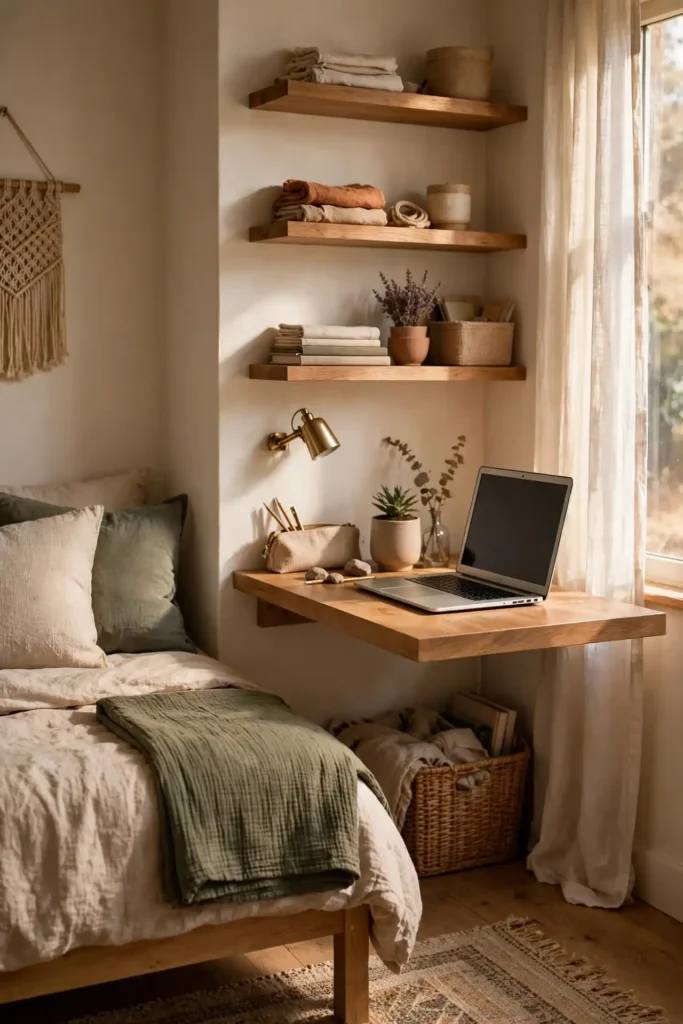
Install the desk at standard 28 to 30 inches high and add a wall-mounted shelf or two above for monitors, plants, and files. Pair it with a chair that slides fully underneath, like the IKEA FLINTAN or a low-profile task chair. Run cables through a wall-mounted channel or behind a cord cover to keep the floating illusion intact. If you rent, use heavy-duty French cleats that leave only small screw holes to patch later. Run cables through a slim wall-mounted channel or behind a painted cord cover so the floating illusion stays clean and professional on video calls.
6. Room Divider
A room divider creates a visual boundary between your office zone and the sleeping zone, which helps your brain switch between work mode and rest mode. Options range from a $100 rattan screen from Amazon to a $400 IKEA KALLAX shelving unit that doubles as storage. Open designs like slatted panels keep light and airflow moving, which matters in smaller rooms. Position the divider between the bed and the desk, leaving at least 3 feet of clearance on each side for comfortable walking. Open designs like slatted panels keep light and airflow moving, which matters in smaller rooms where a solid divider could feel boxed in.
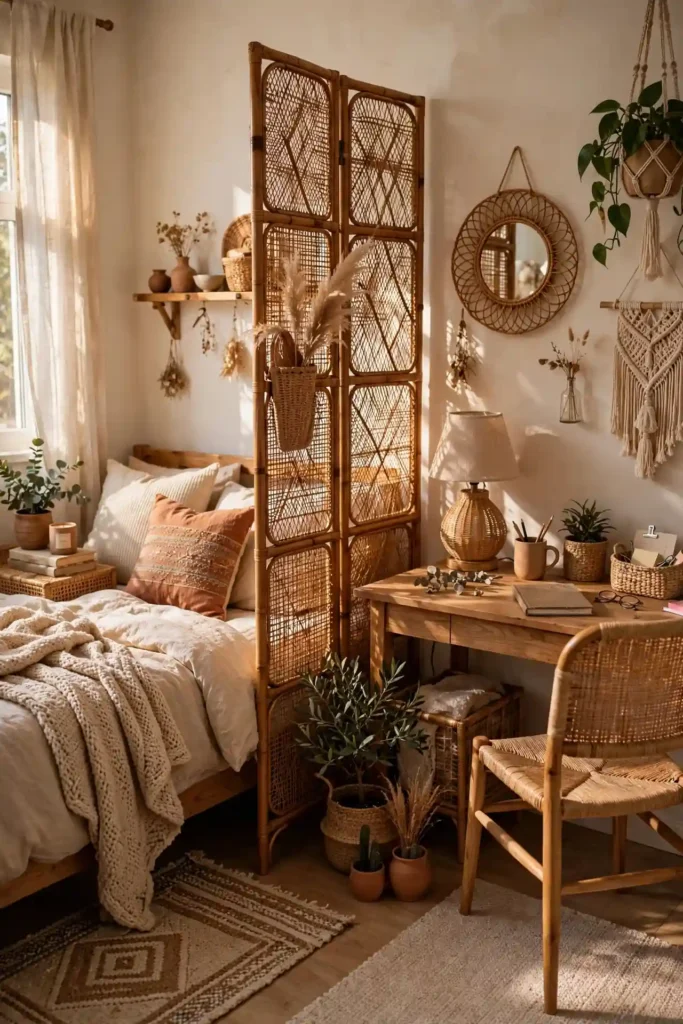
Choose a divider that complements your decor rather than shouting temporary, since a stylish panel reads as intentional design. Bookshelf dividers earn their keep by holding guest reading material on one side and office supplies on the other. Folding screens can be collapsed flat behind a door when the room needs to open up for guests. For renters, a tension-rod curtain hung from ceiling to floor creates a soft partition with zero damage to walls. Folding screens collapse flat behind a door when the room needs to open up, and renters can use a tension-rod curtain for a soft, damage-free partition.
7. Closed Storage Cabinets
Closed storage cabinets are the secret weapon of a tidy guest bedroom office combo, hiding printer paper, files, and tech gear behind calm, clean doors. Open shelves look great in photos but collect visual clutter that distracts you during work and overwhelms guests. A pair of tall cabinets flanking the desk provides around 20 cubic feet of hidden storage without looking bulky. IKEA BILLY bookcases with doors or Target’s Room Essentials cabinets cost $60 to $150 each and come in neutral finishes that blend with any palette. Opt for soft-close hinges and adjustable shelves so the cabinets stay quiet at night and adapt as your storage needs change.
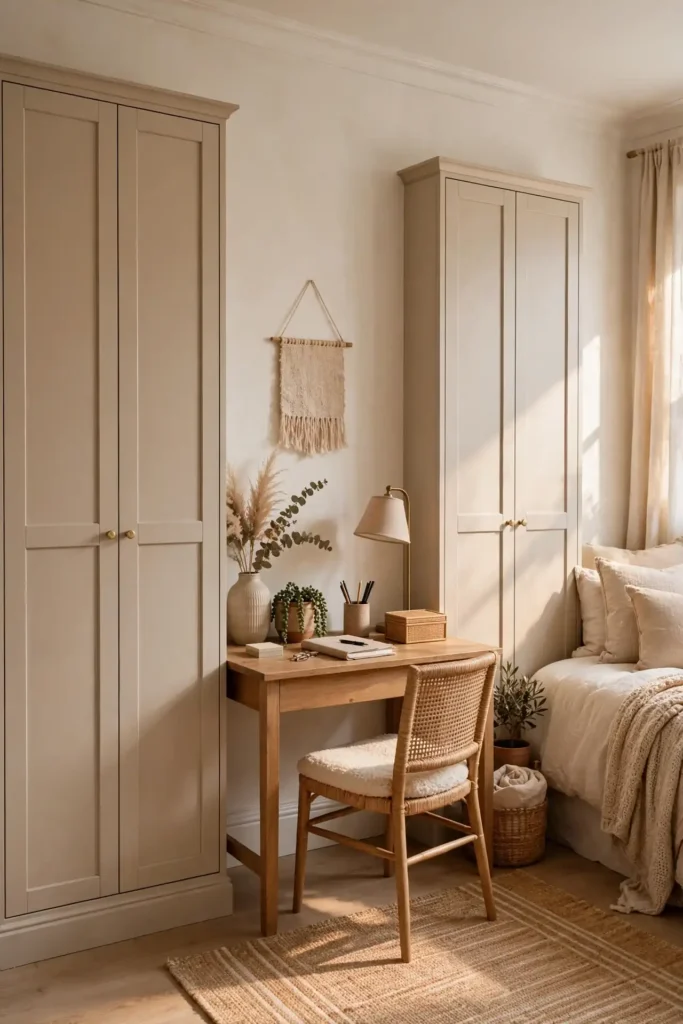
Designate one cabinet for office supplies and the other for guest amenities like extra blankets, towels, and toiletries. Label the insides so you can find things without opening every door. Wall-mounted cabinets keep floor space clear, but make sure they are anchored into studs to support the weight. Keep the tops clear or use them for a single plant or framed photo, since cluttered cabinet tops defeat the purpose of hiding things away. Keep the cabinet tops clear or style them with a single plant or framed photo, since cluttered tops defeat the purpose of hiding things away.
8. Ergonomic Chair That Looks Good
An ergonomic office chair that actually looks attractive is non-negotiable when your office shares space with a guest bedroom. Bulky black gamer chairs scream corporate office, while designs like the Herman Miller Sayl or the Branch Ergonomic Chair blend support with style in neutral colors. Expect to spend $300 to $600 for a chair with real lumbar support, adjustable armrests, and a seat that fits a 5-foot-3 to 6-foot-3 range. Your back deserves better than a dining chair for eight-hour days. Expect to spend $300 to $600 for genuine lumbar support, adjustable armrests, and a seat depth that suits a wide range of body types.
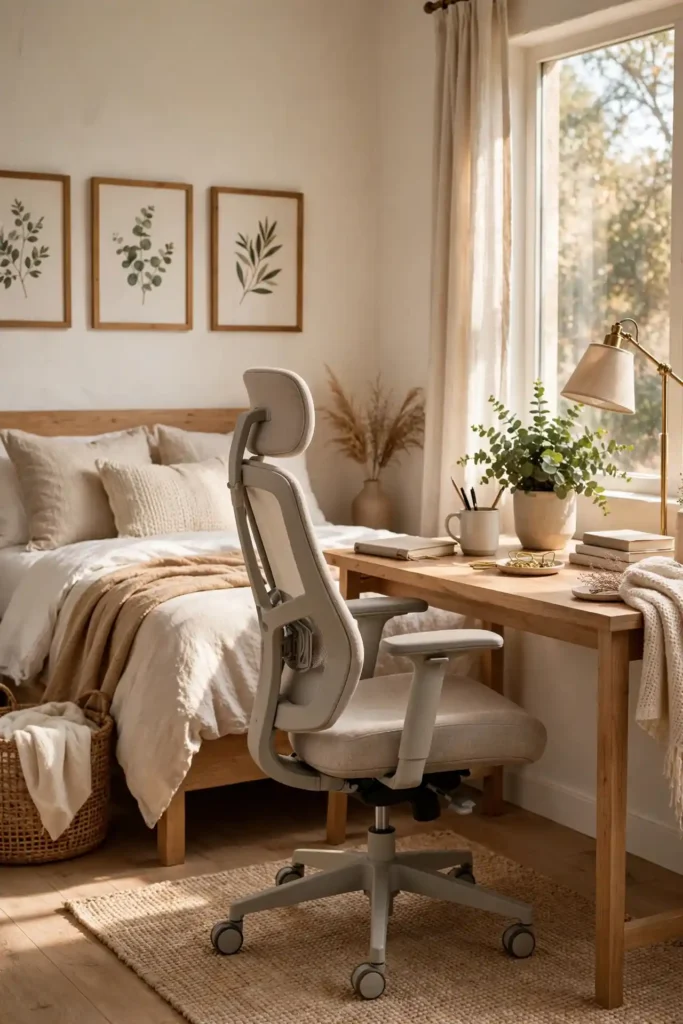
Look for chairs with a waterfall seat edge that reduces pressure behind the knees, plus a breathable mesh or upholstered back. Choose a fabric in warm gray, cream, or cognac leather that complements bedroom decor rather than clashing with it. Test the chair’s recline tension and arm height before committing, since showroom comfort fades fast over long sessions. When guests arrive, a stylish chair doubles as a bedroom accent rather than an eyesore they have to work around. Test the recline tension and arm height before committing, since showroom comfort often fades fast during real eight-hour workdays.
9. Guest Luggage Space
Guests feel instantly more welcome when they have a clear place to put their suitcase, so plan dedicated luggage space into your guest bedroom office combo. A folding luggage rack from Amazon costs $30 to $60 and stores flat in the closet when no one visits. Alternatively, clear a 30-inch bench or the top of a low dresser for bag placement. Positioning luggage space near the door keeps suitcases out of your work path and off the clean bedding. Position the luggage space near the door so suitcases stay out of your work path and never end up sitting on clean bedding.
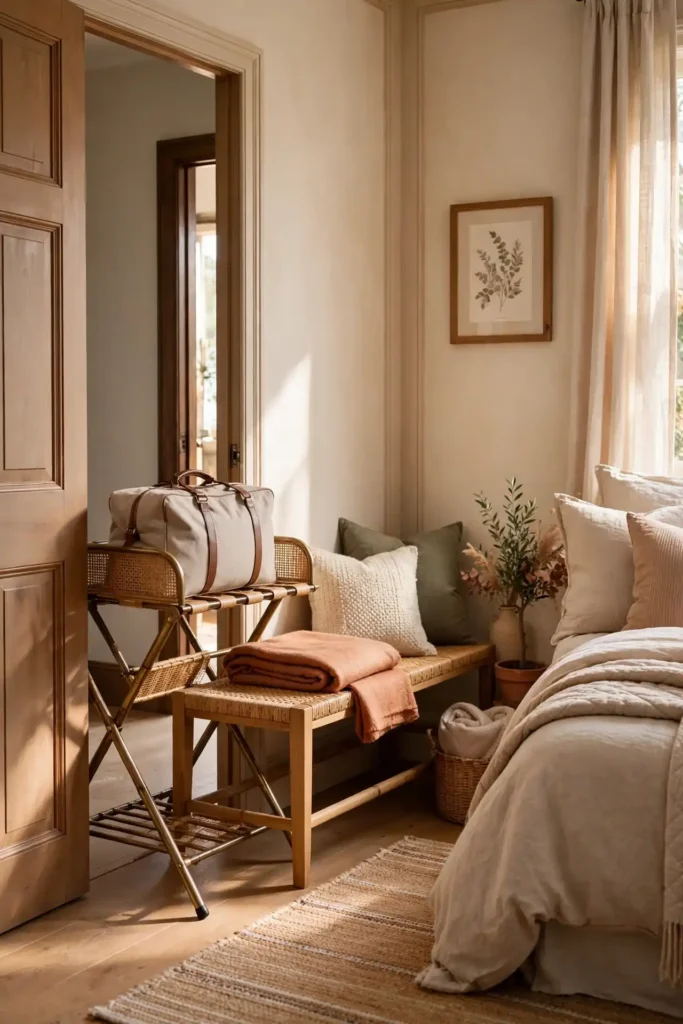
If floor space is tight, install sturdy wall hooks rated for 25 pounds each to hang garment bags and backpacks. A small valet tray on the dresser corrals keys, wallets, and phones so guests are not scattering belongings across your desk. Keep one closet section or a set of empty drawers clear for guests to unpack, since living out of a suitcase feels temporary and unwelcoming. These small gestures make your home office feel like a real guest room when visitors arrive. Keep one closet section or a couple of empty drawers clear for guests to unpack, since living out of a suitcase always feels temporary and unwelcoming.
10. Layered Lighting
Layered lighting keeps a dual-purpose room working hard from morning emails to evening reading. Start with ambient light from a ceiling fixture or flush-mount LED, then add task lighting like an adjustable desk lamp for work hours. A warm bedside lamp gives guests a cozy glow for winding down, while under-shelf LED strips add gentle accent light. Aim for bulbs in the 2700K to 3000K range for a warm feel, and keep total room illumination around 150 to 300 lux for comfort. Aim for bulbs in the 2700K to 3000K range for warmth, keeping total illumination around 150 to 300 lux so the room never feels harsh.
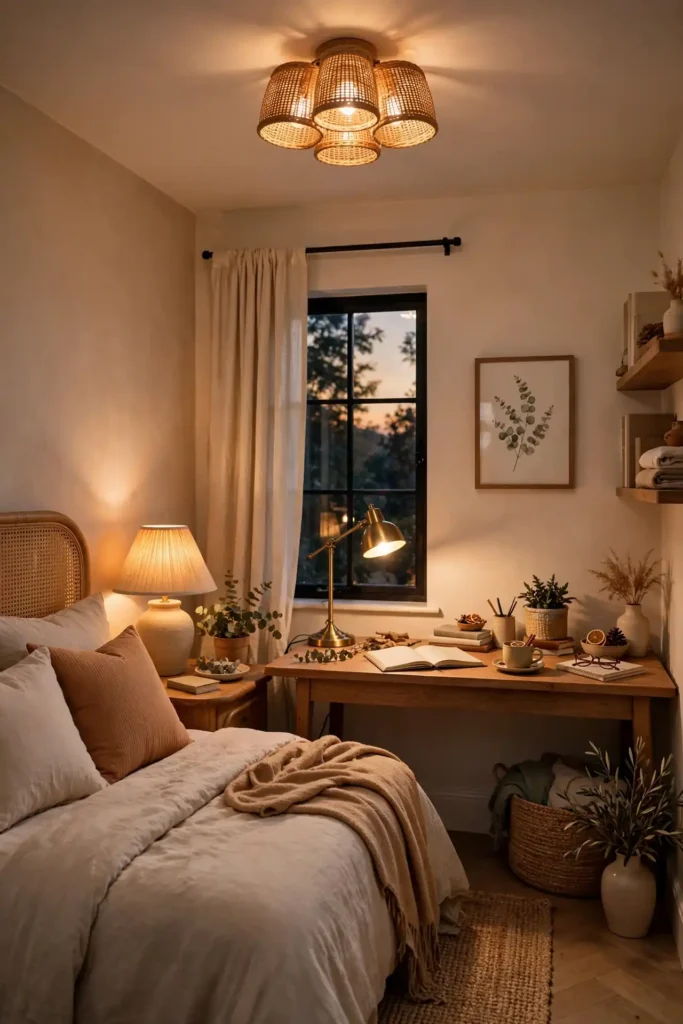
Put task and ambient lights on separate switches or smart plugs so you can flip the room’s mood without rewiring anything. Philips Hue or affordable Govee smart bulbs let you dim from bright workday white to soft evening amber from your phone. Place the desk lamp on the opposite side of your dominant hand to avoid casting shadows while you write. A clip-on reading light for guests costs under $25 and keeps bedtime reading from disturbing anyone. Place the desk lamp opposite your dominant hand to avoid writing shadows, and add a clip-on reading light so guests can read undisturbed.
11. Neutral Calming Colors
Neutral, calming colors make a guest bedroom office combo feel bigger, brighter, and easier to relax in. Soft whites, warm grays, greige, and pale sage create a backdrop that suits both focused work and restful sleep. Sherwin-Williams Accessible Beige or Benjamin Moore White Dove are popular choices that photograph well and never clash with furniture. A gallon of quality interior paint covers about 400 square feet and costs $40 to $70, making color the cheapest transformation in the room. A gallon of quality interior paint covers about 400 square feet and costs $40 to $70, making color the cheapest transformation in the room.
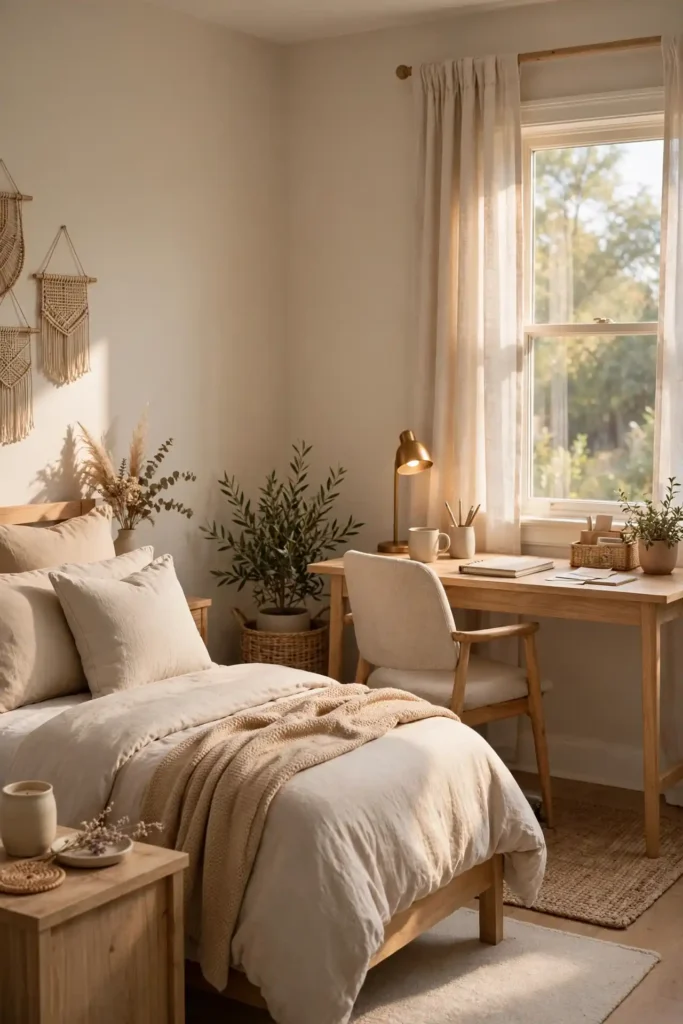
Layer neutrals through bedding, curtains, and upholstery rather than painting everything one flat tone. Add warmth with natural textures like linen, jute, and light wood to prevent the room from feeling sterile. Reserve small doses of color for art or throw pillows so the palette can shift with the seasons. Matte or eggshell finishes hide wall imperfections better than satin, which matters in older homes with textured walls. Matte or eggshell finishes hide wall imperfections far better than satin, which matters in older homes where textured walls catch light unevenly.
12. Blackout Curtains
Blackout curtains serve double duty in a guest bedroom office combo by blocking glare on your monitor during work hours and giving guests the dark room they need for quality sleep. Look for curtains labeled true blackout rather than room darkening, since only a tight weave with a thermal backing blocks up to 99 percent of light. Standard panels cost $25 to $60 per pair at Target or Amazon, and ceiling-mounted tracks eliminate the side gaps where light sneaks through. Standard panels cost $25 to $60 per pair at Target or Amazon, and ceiling-mounted tracks close the side gaps where light sneaks through.
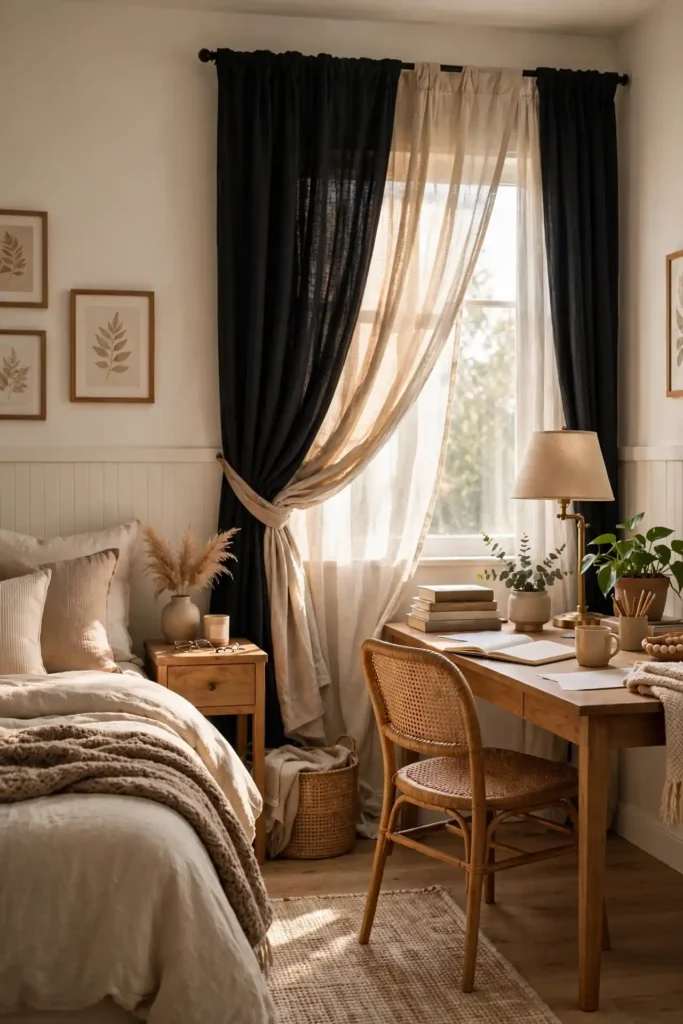
Mount the curtain rod 4 to 6 inches above the window frame and extend it 6 to 8 inches beyond each side for maximum coverage. Choose a color that matches your neutral palette so the heavier fabric does not dominate the room visually. Pair blackout curtains with a lighter sheer layer for daytime privacy when you want daylight without street views. Machine-washable panels are worth the slight price premium, since bedroom curtains collect dust and odors over time. Machine-washable panels are worth the slight price premium, since bedroom curtains quietly collect dust, odors, and pet hair over time.
13. Shelves Above the Desk
Shelves above the desk pull storage upward, freeing precious floor space in a guest bedroom office combo. Two 36-inch floating shelves mounted 16 to 18 inches above the desktop hold books, files, and decor without crowding your work area. Solid wood or sturdy laminate shelves cost $30 to $80 each at Home Depot or IKEA, and bracket systems rated for 30 pounds per shelf handle heavier items safely. This vertical approach keeps the room feeling open instead of closed in. Sturdy wood or laminate shelves cost $30 to $80 each at Home Depot or IKEA, and brackets rated for 30 pounds per shelf handle books safely.

Style the shelves with a mix of 70 percent function and 30 percent decor, keeping everyday items within arm’s reach. Use matching baskets or magazine files to group small supplies so the shelves look tidy on video calls. Anchor every shelf into wall studs or use heavy-duty toggle bolts for drywall. Leave the lowest shelf clear of anything fragile that your monitor arm or raising laptop could knock over. Anchor every shelf into wall studs or use heavy-duty toggle bolts for drywall, and keep the lowest shelf clear of anything fragile.
14. Nightstand That Doubles as File Cabinet
A nightstand that doubles as a file cabinet gives guests a bedside surface while keeping your work papers organized and out of sight. Rolling two-drawer file cabinets in wood-look finishes from Amazon or Wayfair cost $80 to $180 and slide right up to the bed. The top drawer handles letter and legal files, while the flat top holds a lamp, alarm clock, and phone charger for guests. Lockable drawers add security for sensitive documents when visitors are in the house. Rolling two-drawer file cabinets in wood-look finishes from Amazon or Wayfair cost $80 to $180 and slide right up against the bed.
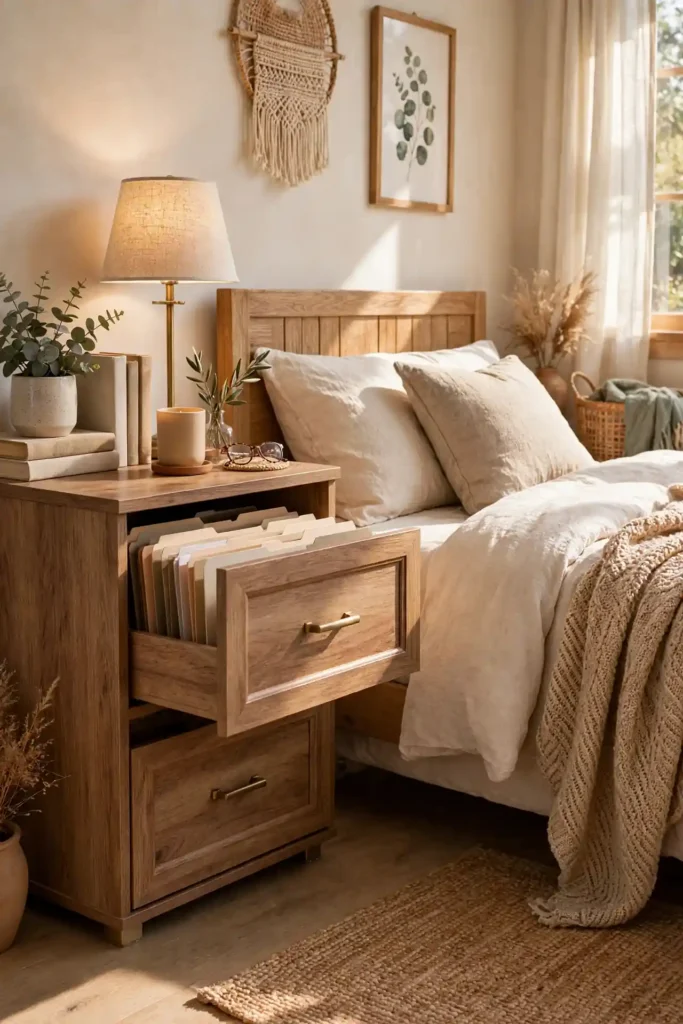
Measure your bed height first, since nightstands should sit within 2 inches of the mattress top for comfortable reach. Choose a cabinet 15 to 18 inches wide so it does not overwhelm a small bedroom. Add felt pads under a rolling unit to protect hardwood floors, and keep one drawer partially empty so guests can stash their own items. When work is done, close the drawers and the cabinet reads as ordinary bedroom furniture. Add felt pads under rolling units to protect hardwood floors, and leave one drawer partially empty so guests have space for their own items.
15. Folding Desk
A folding desk is the ultimate disappearing act for a guest bedroom office combo, giving you a full workspace that folds flat against the wall when visitors take over. Drop-leaf and wall-mounted fold-down desks provide 30 to 40 inches of work surface when open and just 4 to 6 inches of depth when closed. Models from Amazon or IKEA cost $100 to $300, with solid wood versions running higher. This option suits people who work from home part-time or need the room to feel purely like a guest bedroom. Check the weight rating before loading it with dual monitors, since most fold-down desks support between 30 and 50 pounds total.
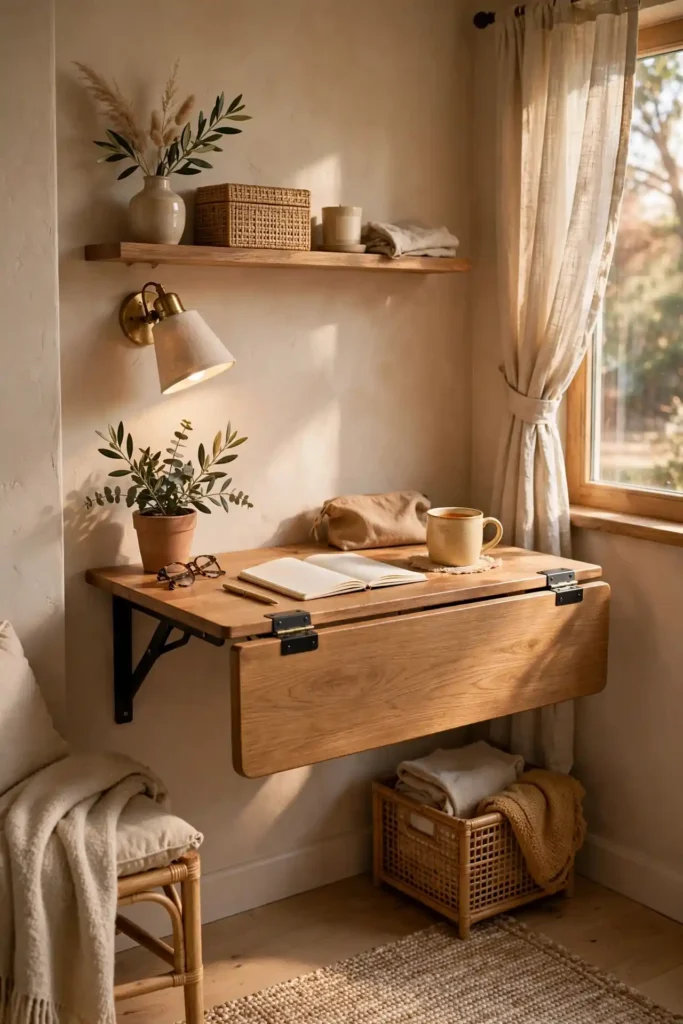
Mount the desk at 28 to 30 inches high and pair it with a chair that stacks or folds away nearby. Keep your laptop, notebook, and charger in a tote bag so setup and breakdown take under a minute. Check the weight rating before loading it with dual monitors, since most fold-down desks support 30 to 50 pounds. Anchor the unit into studs, and add a small wall hook above to hang headphones or a bag. Anchor the unit into studs for safety, and mount a small wall hook above it for headphones or a bag so accessories stay off the surface.
16. Rug to Define Zones
A well-placed rug visually separates your office zone from the sleep zone, which helps a dual-purpose room feel intentional instead of jumbled. Place a 5×7-foot rug under the desk and chair to anchor the work area, and let the bed sit on bare floor or its own smaller rug. Low-pile rugs cost $80 to $250 at Target, Rugs USA, or IKEA, and they let office chairs roll smoothly. Choose a pattern or color that differs slightly from the bedding to mark the zones clearly. Choose a pattern or color that differs slightly from the bedding to mark the zones clearly without clashing with the rest of the room.
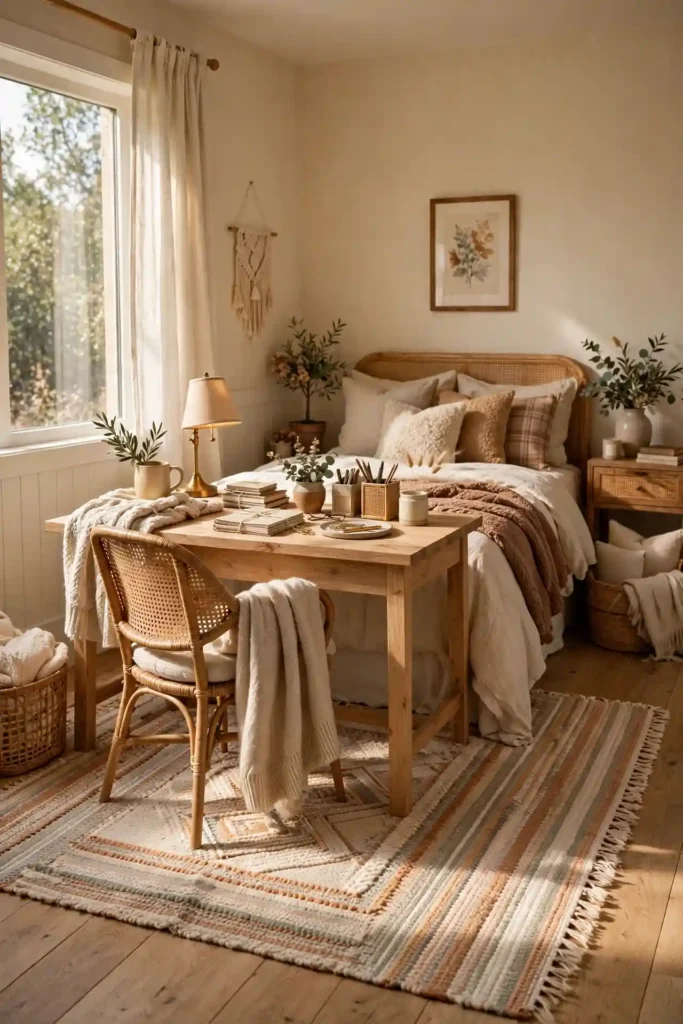
Measure carefully before buying, since a rug that is too small looks lost and one that is too large blurs the boundary. Leave at least 18 inches of bare floor around the rug edges for a balanced look. Washable rugs from Ruggable or Tumble start around $150 and survive coffee spills and desk-chair wear. Use a rug pad underneath to prevent slipping and add cushioning, especially on hardwood or tile floors. Use a rug pad underneath to prevent slipping and add cushioning, especially on hardwood or tile floors that feel cold in the morning.
17. Welcoming Guest Basket
A welcoming guest basket turns your home office into a thoughtful guest retreat the moment visitors walk in. Fill a woven basket or tray with bottled water, snacks, a phone charger, travel-size toiletries, and a card with your Wi-Fi password. Baskets from Target or HomeGoods cost $15 to $30, and the contents run another $20 to $40. Place it on the dresser or at the foot of the bed where guests will spot it immediately. Add small local touches like a regional snack or a printed list of nearby coffee shops so guests can explore with confidence.

Refresh the basket before each visit by checking expiration dates and restocking anything used last time. Add small local touches like a regional snack or a printed list of nearby coffee shops and restaurants. Keep a few universal phone chargers in the basket, since guests always forget theirs. Store the empty basket in the closet between visits so your office does not look cluttered during the workweek. Store the empty basket in the closet between visits so your office stays uncluttered, then restock it fresh the day before guests arrive.
18. Cord Management
Cord management is what separates a polished guest bedroom office combo from a tangled mess of cables. A single desk setup can easily produce six to ten cords from monitors, chargers, lamps, and speakers. Use a $15 to $30 under-desk cable tray, adhesive cord clips, and a braided sleeve to bundle everything into one clean run to the outlet. A cable-management box hides the power strip itself, keeping dust bunnies and visual chaos at bay. A $15 to $30 under-desk cable tray, adhesive cord clips, and a braided sleeve bundle everything into one clean run to the outlet.
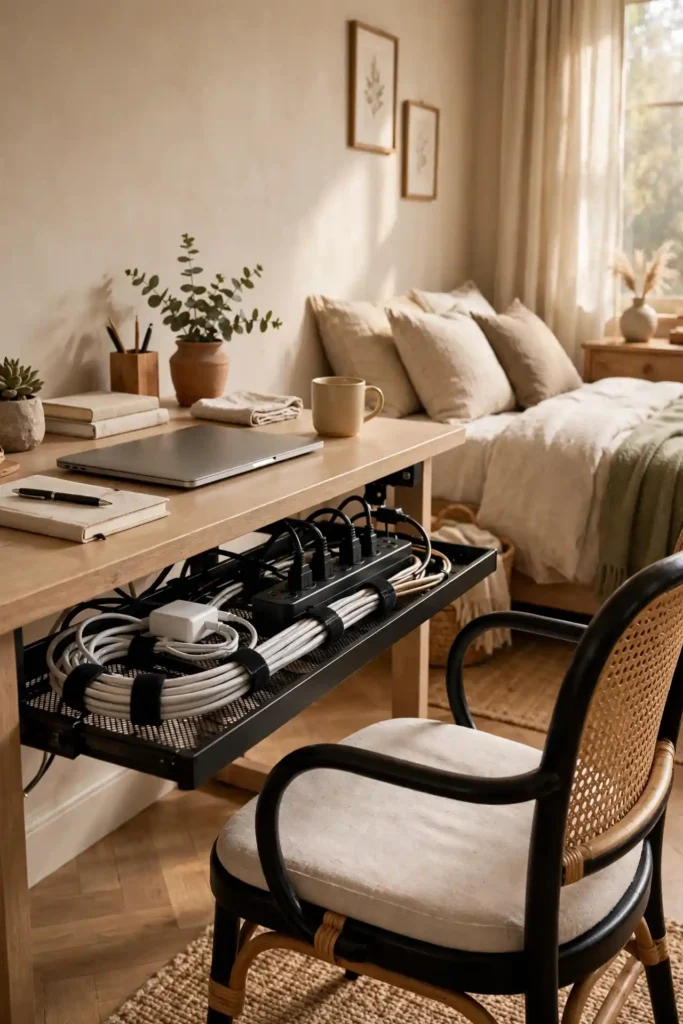
Label both ends of each cord with small tags so you can unplug and reconfigure without tracing cables by hand. Route cords along the back of furniture and secure them every 12 inches to prevent sagging. Choose a power strip with surge protection rated for at least 1,000 joules to protect your equipment. When guests arrive, one tidy cable run behind the desk is far less distracting than a nest of wires spilling across the floor. Choose a surge-protected power strip rated for at least 1,000 joules to guard your computer and monitors against damaging electrical spikes.
19. Wall Art for Both
Wall art that suits both a home office and a guest bedroom keeps the room feeling cohesive instead of split between two personalities. Choose abstract landscapes, botanical prints, or soft geometric designs in your neutral palette rather than motivational office posters or overly personal family photos. A gallery wall of three to five framed prints from Etsy or Society6 costs $60 to $200 and fills an empty wall beautifully. Art at eye level, about 57 inches from floor to center, looks professionally placed. Hang art at eye level, about 57 inches from floor to center, which is the museum standard for a professionally placed look.
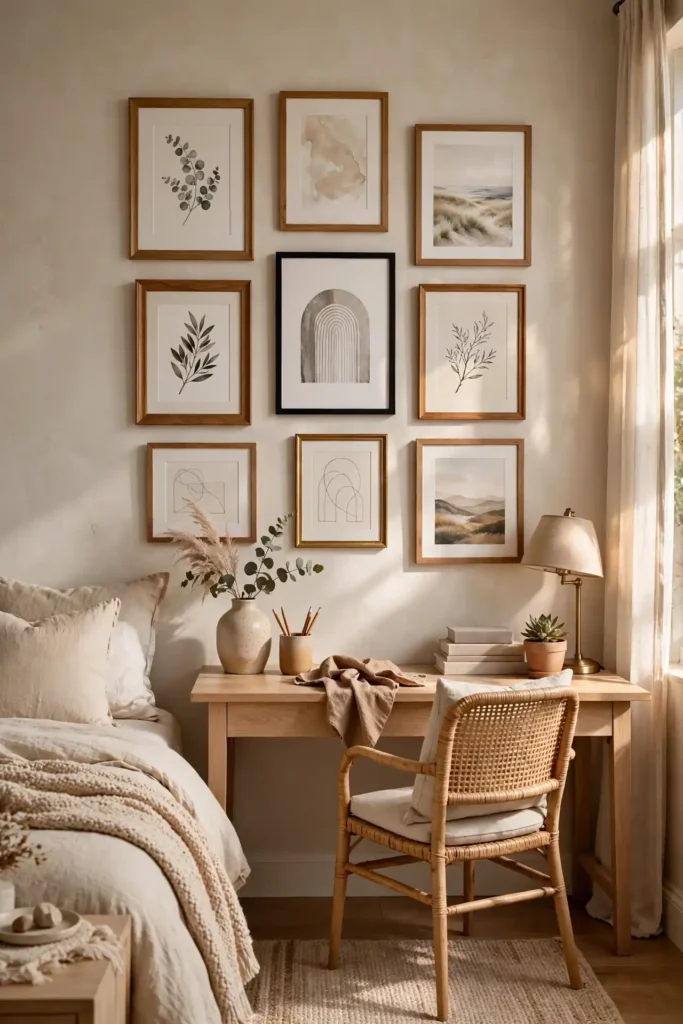
Hang one statement piece above the desk to inspire work hours and another above the bed for a restful focal point. Stick to a consistent frame style, like thin black or natural wood, so mixed art still feels unified. Avoid anything too stimulating near the bed, since guests need calm more than creativity at night. Command strips rated for the frame’s weight let renters hang art without drilling holes. Command strips rated for the frame’s weight let renters hang art without drilling a single hole, and they remove cleanly when you move.
20. Keep It Flexible
Keeping your guest bedroom office combo flexible means every piece of furniture earns its place and nothing locks the room into one rigid layout. Choose lightweight pieces on casters, folding chairs, and nesting tables that you can rearrange in minutes. Flexibility matters because guest visits are unpredictable, and a room that adapts beats one that fights you. Aim for furniture under 40 pounds per piece so one person can shift things without help. Aim for furniture under 40 pounds per piece so one person can rearrange the whole room without calling for backup help.

Store seasonal or rarely used items elsewhere so the room never accumulates dead weight. A rolling cart can hold office supplies during the week and transform into a guest refreshment station on weekends. Revisit the layout every few months and donate or relocate anything you have not used. The goal is a room that takes less than 30 minutes to flip between full office mode and full guest mode. Revisit the layout every few months and donate or relocate anything you have not touched, keeping only pieces that truly earn their space.
Layouts for a Guest Bedroom Office Combo
The best layout for a guest bedroom office combo depends on your room’s shape, but a few proven arrangements work in most American bedrooms. In a rectangular 10×12-foot room, place the bed along the long wall and the desk in a corner near the window, leaving a clear 36-inch walkway between them. L-shaped rooms let you tuck the office into the alcove, naturally separating work from sleep. Always position the desk so your back is not to the door, which reduces that exposed, distracted feeling during video calls. L-shaped rooms let you tuck the office into the alcove, naturally separating work from sleep without adding any extra furniture.
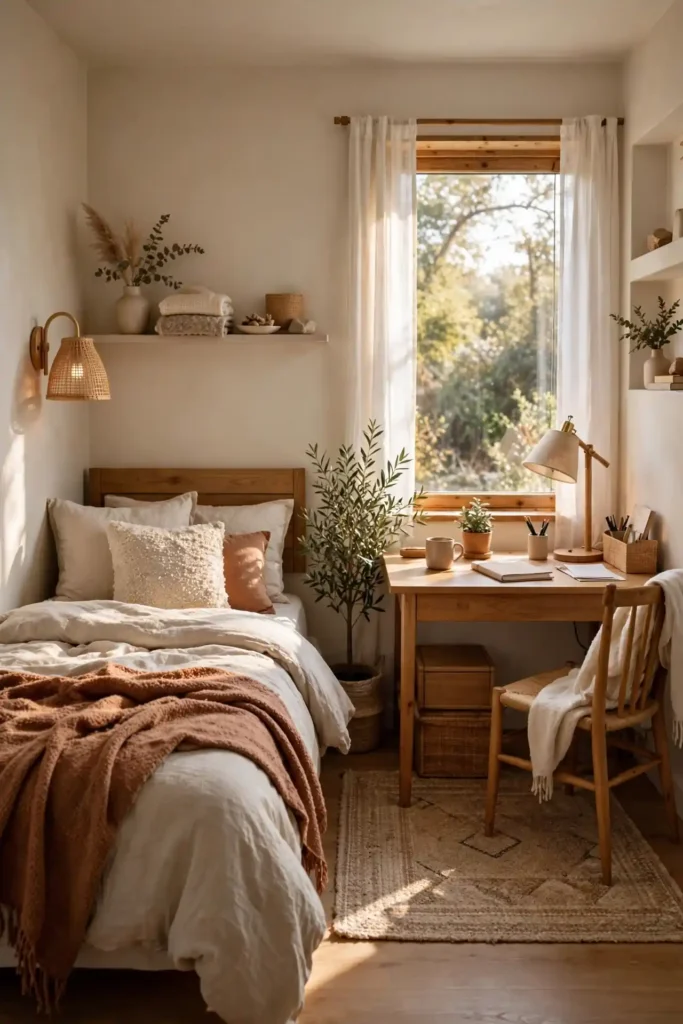
Sketch the room on graph paper or use the free IKEA Home planner to test layouts before moving heavy furniture. Leave at least 24 inches of clearance around three sides of the bed so guests can get in and out comfortably. Keep the desk within 6 feet of an outlet to avoid extension cords snaking across the floor. Try living with a layout for a week before committing, since real daily use reveals traffic problems that floor plans hide. Keep the desk within 6 feet of an outlet to avoid extension cords snaking across the floor where guests might trip over them.
Keep walkways at least 30 inches wide so guests can move comfortably, and make sure the bed is accessible without moving the desk chair.
Preparing the Room for Guests
Preparing the room for guests takes less effort than you think when your guest bedroom office combo is designed for quick transitions. Start by stowing your laptop, documents, and small work items in a designated bin or drawer, which should take under 10 minutes. Strip any clutter from the nightstand and dresser top, then set out fresh sheets, clean towels, and the guest basket. A quick vacuum and a wipe of the desk surface make the room feel freshly cleaned rather than borrowed. Strip clutter from the nightstand and dresser top, then set out fresh sheets, clean towels, and the guest basket for a welcoming touch.
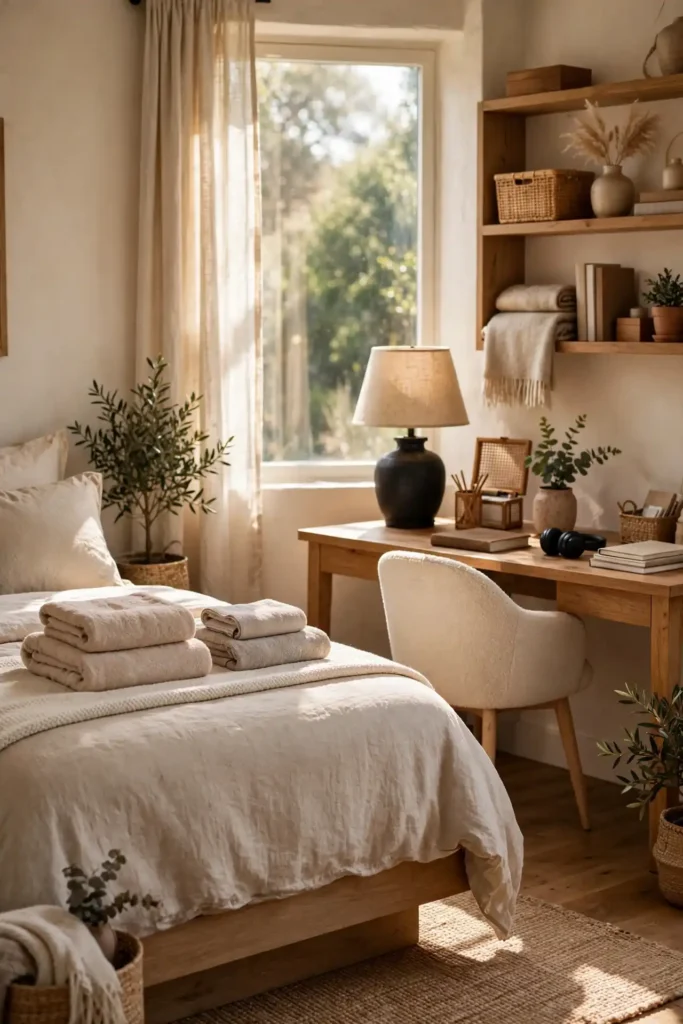
Write a simple welcome note with the Wi-Fi password, house quirks like tricky locks, and your phone number in case guests need anything. Check that the bedside lamp works, the blackout curtains close fully, and there is an empty outlet near the bed for chargers. Leave closet space or empty drawers so guests can unpack instead of living from a suitcase. These small preparations take about 30 minutes total and make visitors feel genuinely at home. Check that the bedside lamp works, the blackout curtains close fully, and an empty outlet sits near the bed for phone chargers.
Staying Productive in a Shared Room
Staying productive in a shared room comes down to boundaries, routines, and smart scheduling rather than square footage. Start your workday by resetting the room to office mode: open the blackout curtains for natural light, clear the desk completely, and put on noise-canceling headphones as a do-not-disturb signal. Time-block your calendar so deep work happens in quiet morning hours, and save calls for when the house is empty. Studies on remote work consistently show that consistent routines beat bigger spaces for focus. Time-block your calendar so deep work happens in quiet morning hours, saving calls and meetings for when the house is completely empty.
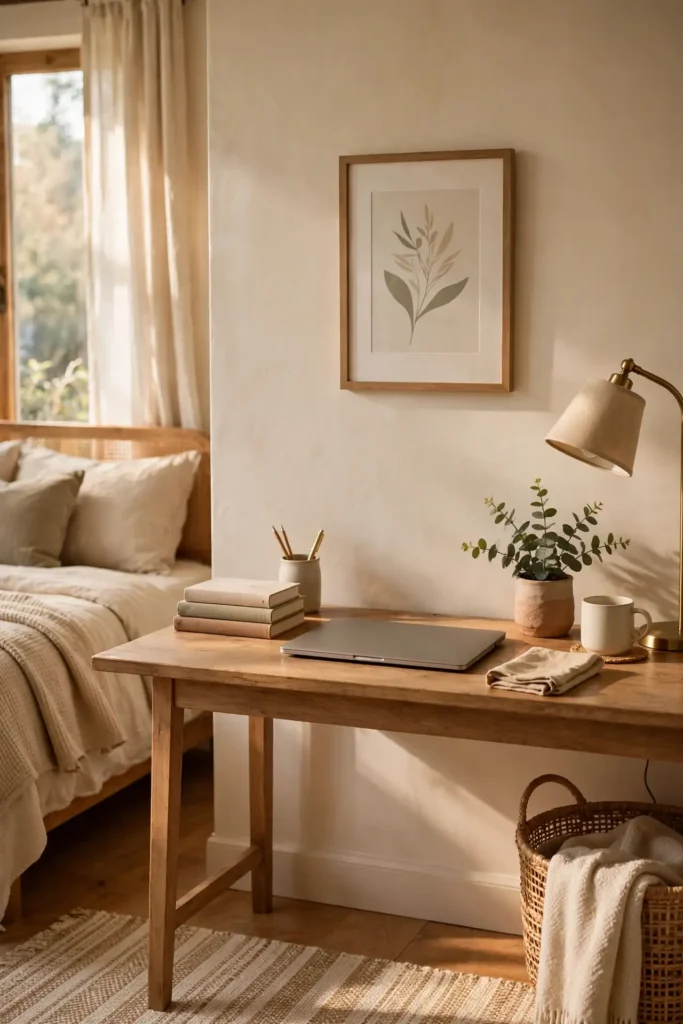
Use a small whiteboard or a digital status indicator to signal when you are in a meeting, which prevents family or guests from walking in mid-call. Keep a shutdown ritual at day’s end: file papers, close the laptop, and dim the lights to tell your brain work is over. If guests are staying over, shift calls to a different room or schedule them around visitor plans. Protecting your focus is about habits, not hardware, so invest in the routine first. Keep a shutdown ritual at day’s end: file papers, close the laptop, and dim the lights to signal your brain that work is over.
When it comes to guest bedroom office combo, the best results come from balancing style, comfort and everyday function. Use this list as your go-to guide for guest bedroom office combo, and start with the ideas that fit your space best. Save this guide on guest bedroom office combo so you can come back to it when you are ready to update your home.
How to Plan a Guest Bedroom Office Combo Step by Step
Planning a guest bedroom office combo step by step starts with measuring your room and listing what each function truly needs. Measure wall lengths, window positions, and outlet locations, then note your must-haves: a bed size, desk dimensions, and storage requirements. Set a realistic budget, since most rooms come together for $500 to $2,000 depending on whether you buy new or repurpose furniture. Sketch two or three layout options on paper before buying anything, so you invest in pieces that fit. Set a realistic budget, since most rooms come together for $500 to $2,000 depending on whether you buy new or repurpose existing furniture.
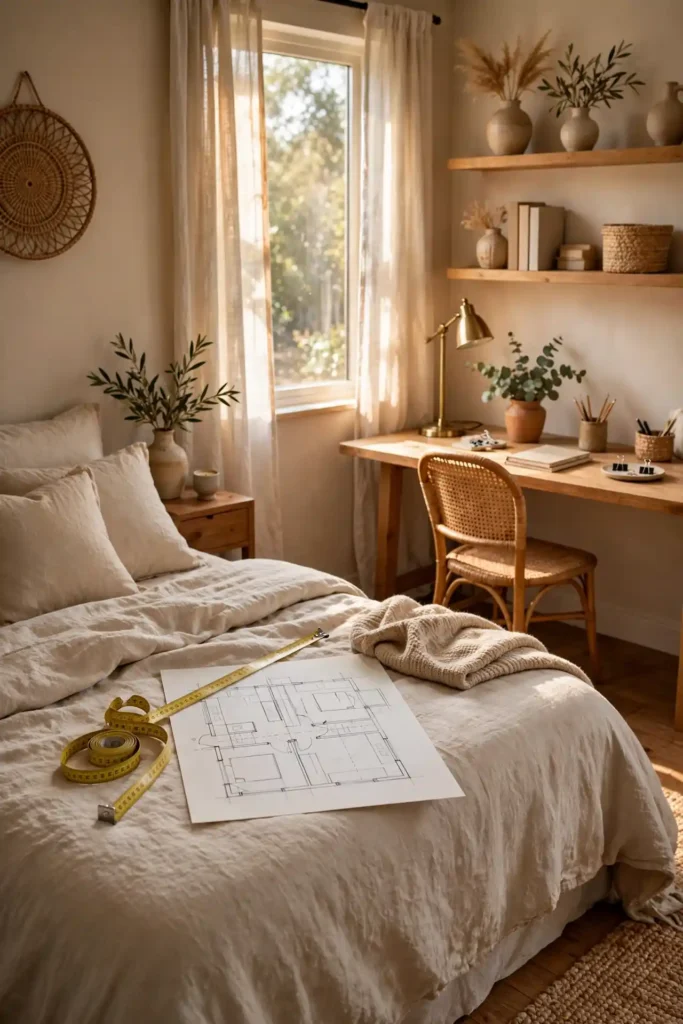
Next, shop in priority order: bed solution first, then desk, then storage, then lighting and decor. Buy the largest items from stores with generous return policies like IKEA, Target, or Amazon in case measurements were off. Assemble and place furniture over a weekend, then live with the setup for a week before adding final decor. Finally, create a 15-minute guest-prep checklist and tape it inside a closet door so every visit starts smoothly. Buy the largest items from stores with generous return policies like IKEA, Target, or Amazon in case your measurements were slightly off.
Plan the room in five steps:
- Measure the room and decide on the main function.
- Choose a space-saving bed: Murphy, daybed or sleeper sofa.
- Place the desk near natural light.
- Add closed storage and lighting.
- Style for both work and welcome.
Final Thoughts on Guest Bedroom Office Combo Ideas
A guest bedroom office combo works best when you stop treating it as a compromise and start designing it as a genuinely dual-purpose room. The ideas in this guide, from Murphy beds to layered lighting, all share one principle: every item should serve both functions or disappear when not needed. You do not need a huge budget or a spare wing of the house to pull this off, just thoughtful choices and a willingness to rearrange. Small rooms often produce the most creative solutions. The ideas in this guide all share one principle: every item should serve both functions or disappear gracefully when not needed.
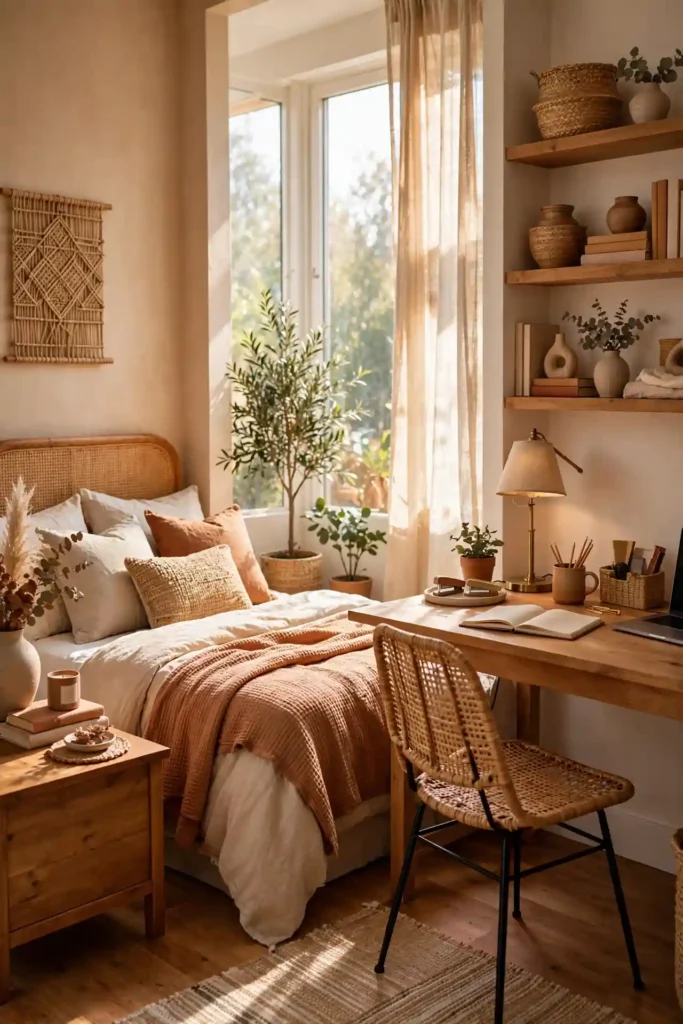
Start with one change this weekend, whether that is adding blackout curtains, mounting a floating desk, or clearing a drawer for guests. Small upgrades compound quickly, and within a month your spare room can feel like the hardest-working space in your home. Remember that guests remember warmth and comfort far more than square footage. Design for the life you actually live, and your guest bedroom office combo will reward you every single day. Small upgrades compound quickly, and within a month your spare room can feel like the hardest-working space in your entire home.
Save these ideas and follow along for more small-space inspiration.
Frequently Asked Questions About Guest Bedroom Office Combo Ideas
The most common question about a guest bedroom office combo is whether one room can truly serve both purposes well, and the answer is yes with the right furniture. A Murphy bed, daybed, or sleeper sofa provides real sleeping comfort without permanently sacrificing your workspace. The second most asked question is about cost: most people complete the transformation for $500 to $2,000 using a mix of new and repurposed pieces. Small rooms from 8×10 feet upward can work if you choose space-saving furniture and keep clutter under control. The second most asked question is about cost: most people finish the transformation for $500 to $2,000 with a mix of new and repurposed pieces.
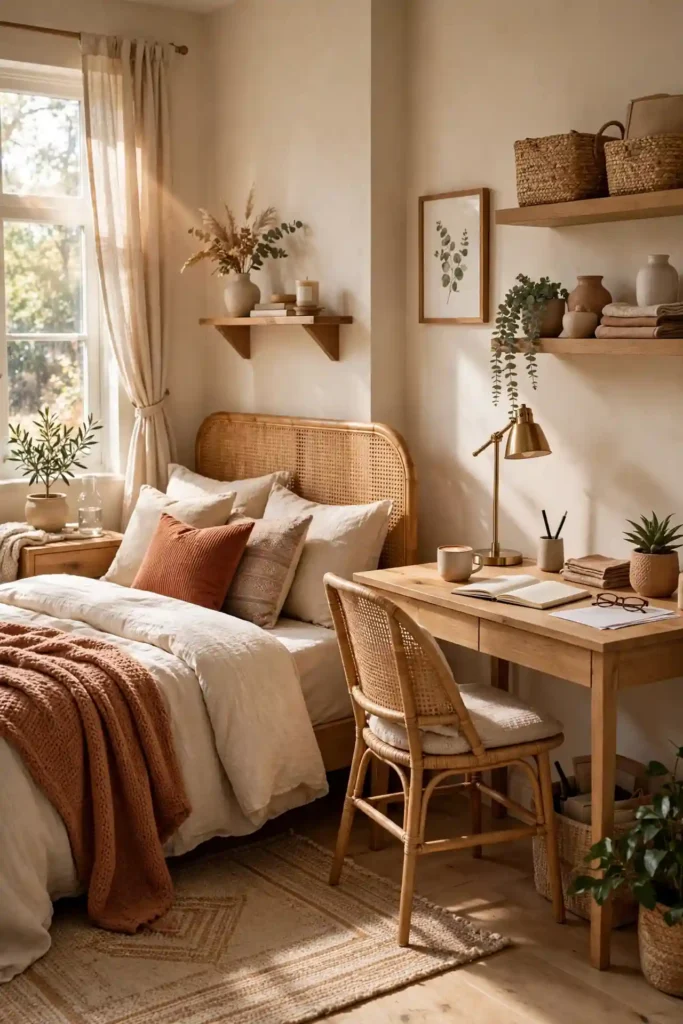
People also ask how to keep work and rest from bleeding together, and the fix is a combination of physical boundaries and daily routines. A room divider or rug defines zones visually, while a shutdown ritual of clearing the desk signals your brain that work is over. Guests frequently wonder where to put their things, so clear a drawer, provide a luggage rack, and stock a guest basket. With these basics covered, your dual-purpose room will feel intentional rather than improvised. Guests frequently wonder where to put their belongings, so clear a drawer, provide a luggage rack, and stock the guest basket generously.
What is the best bed for a guest room office?
A Murphy bed, daybed or sleeper sofa saves space and doubles as seating.
How do I separate an office and guest room?
Use rugs, open shelves or a folding screen to define zones.
Where should the desk go in a guest bedroom?
Near a window for natural light, away from the bed if possible.
How do I hide office clutter for guests?
Use closed cabinets, baskets and cord management.
Can a small room be a guest bedroom and office?
Yes, with space-saving furniture like wall beds and floating desks.






1 Comment