



The living room works overtime in winter. It is where you gather after a cold day, watch movies under blankets and host friends for warm drinks. A few seasonal changes can make it feel like a cozy cabin, even after the holiday decorations are packed away.
These 21 winter living room decor ideas focus on texture, warmth and soft light. For more seasonal inspiration, see our winter decor ideas and these winter bedroom decor ideas.
Winter living room essentials:
- Plenty of throws and textured pillows.
- Warm, layered lighting.
- A thick rug underfoot.
- Natural elements like greenery, wood and pinecones.
1. Pile on Throws
Nothing transforms a living room for winter faster than a generous pile of throws within arm’s reach. Drape two or three across the sofa arms and fold a heavier knit over the back so the space feels inviting before anyone even sits down. Chunky knits in cream or oatmeal from Target’s Casaluna line (about $35 to $60) layer beautifully with a plush faux-fur throw from IKEA (around $25). The secret is mixing textures — pair a waffle weave with a smooth sherpa, or a cable knit with soft merino — so the whole arrangement stays visually interesting. Keep a woven basket beside the sofa with a few extras folded inside for guests on chilly evenings.

To get the layered look right, stick to one color family and vary the materials instead of the hues. A 50-by-60-inch throw works for standard sofas, while a 60-by-70-inch oversized version covers a sectional generously. Wash heavier knits on a gentle cycle and air-dry them to keep their loft through the season. Rotate which throws you use weekly so they wear evenly, and refold them every few days to keep the sofa looking styled rather than rumpled. When the season ends, store them in a breathable cotton bag so winter fabrics stay fresh until next December.
2. Swap Pillow Covers
Swapping pillow covers is the cheapest, fastest way to give your living room a winter personality without buying new inserts. Pull off the light summer covers and replace them with velvet, wool, or boucle covers in deep tones like forest green, rust, or warm charcoal. Amazon sells quality velvet cover sets of four for $20 to $35, while Pottery Barn’s wool options run $40 to $70 each if you want a premium feel. Aim for a mix of solid colors and one or two subtle patterns, like a plaid or herringbone, so the sofa looks curated rather than matchy. Keep your existing inserts and store off-season covers flat in a drawer.

Size matters more than most people realize when styling winter pillows. Use 20-by-20-inch squares for the front layer and 22-by-22-inch euro shams behind them for depth on a standard three-seat sofa. Odd numbers work best, so arrange three or five pillows per side of a sectional. Choose covers with hidden zippers for a clean finish and check that they are machine washable, since winter living rooms get heavy daily use. Fluff each pillow and give it a firm karate chop down the center top for that plump designer look you see in catalog photos. When spring arrives, this five-minute swap reverses instantly and costs nothing the second time around.
3. Style a Winter Mantel
Your mantel is the natural focal point of a cozy winter living room, so treat it like a seasonal gallery wall. Start with an anchor piece in the center — a round mirror, a large framed print, or a wreath — and build outward with symmetrical groups of candleholders, garlands, and small decor objects. A 6-foot faux cedar garland from Home Depot (about $40) draped along the mantel shelf instantly adds winter warmth. Layer in battery-operated taper candles ($15 for a set of two on Amazon) and a few pinecones or birch logs at the ends for balance. Keep the palette tight so the arrangement looks intentional, not cluttered.

The best mantel displays change slightly through the season, so build yours with pieces you can refresh easily. For Christmas, add a red ribbon and a few ornaments; after the holidays, swap them for plain brass candlesticks and eucalyptus sprigs to carry the look into February. Secure garlands with removable adhesive hooks rather than nails to protect the finish. Dust the shelf before styling and step back frequently to check the composition from across the room. A well-styled winter mantel can carry the entire room’s decor, so spend your main effort here.
4. Add a Thick Rug
A thick, plush rug grounds a winter living room and keeps bare feet warm on cold floors, which makes the whole room feel cozier. Choose a high-pile shag, a chunky wool weave, or a faux-fur rug that extends at least 8 to 10 inches beyond each side of your sofa. A 5-by-7-foot high-pile rug from Rugs USA typically costs $120 to $200, while IKEA’s wool options start around $150 for the same size. Light neutrals like ivory or warm beige brighten a dark winter room, but a deep rust or charcoal rug hides winter foot traffic better. Always use a rug pad underneath for cushioning and to stop slipping on hardwood.
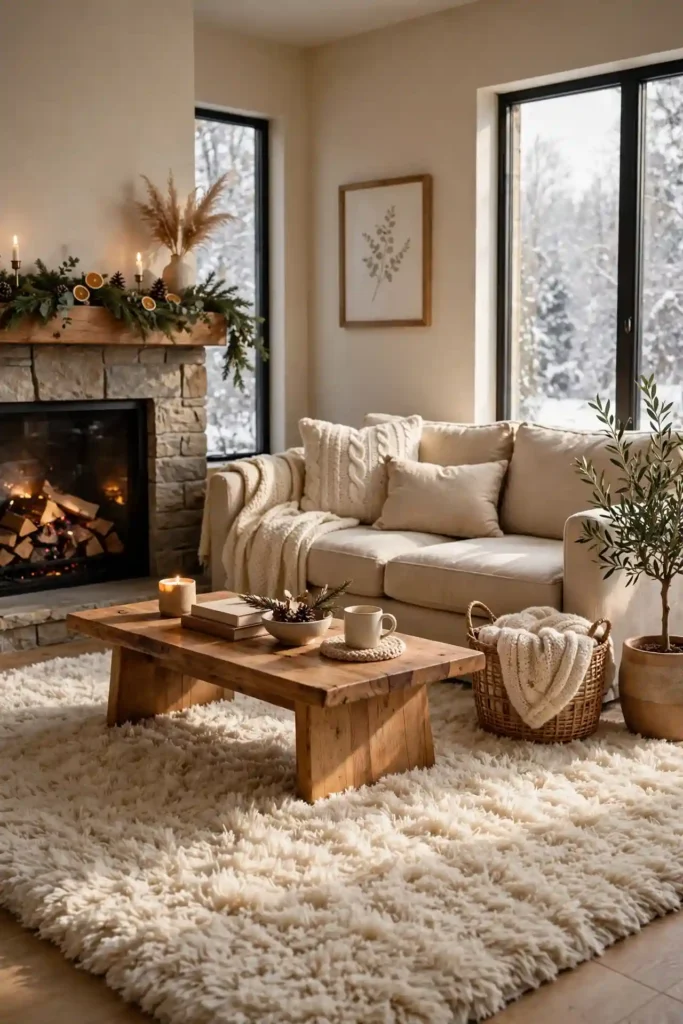
When sizing your rug, remember that front furniture legs should sit on it at minimum — a rug that floats in the middle of the floor makes the room feel colder and smaller. Vacuum high-pile rugs weekly with the beater bar turned off so you don’t damage the fibers, and spot-clean spills immediately with a damp cloth. If you have a light-colored rug and pets, keep a washable throw over the highest-traffic edge as a sacrificial layer. Rotating the rug 180 degrees mid-season evens out wear and keeps the pile looking fresh.
5. Use Candles Generously
Candles are the single most effective mood-setter for winter living room decor because their warm, flickering light flatters everything in the room. Group candles in clusters of three or five at different heights — a mix of pillars, tapers, and votives — on the coffee table, mantel, and sideboard. Yankee Candle and Bath & Body Works winter scents like balsam fir or spiced vanilla ($15 to $30) fill the room with seasonal fragrance. Flameless LED pillars from Amazon (about $25 for a set of six with a remote and timer) give you the same glow on shelves or bookcases where real flames would be risky. The more candles you distribute, the more layered and inviting the light feels.

Safety matters as much as atmosphere when you use candles generously. Never leave burning candles unattended, keep them at least 12 inches from anything flammable like curtains or greenery, and trim wicks to a quarter inch before each use to prevent soot. Set LED candles on a six-hour timer so they glow every evening without you remembering to switch them on. If you love the ritual of real candles, confine open flames to the coffee table and mantel where you can see them. A home filled with candlelight feels instantly warmer even when the thermostat hasn’t moved.
6. Light the Fireplace
Whether you have a working wood fireplace or a gas insert, lighting it is the centerpiece moment of every cozy winter living room. For real wood fireplaces, stock seasoned hardwood like oak or maple — it burns hotter and cleaner than pine, with less creosote buildup. A face cord of seasoned oak typically costs $80 to $120 in most US markets and will last a typical household through many winter evenings. For gas fireplaces, schedule a professional chimney and vent inspection once a year (about $100 to $200) before the first cold snap. The dancing flames become the room’s natural gathering point and make every other decor choice feel more intentional.

If you don’t have a working fireplace, you can still capture the effect. Electric fireplace inserts that slide into an existing firebox start around $150 at Home Depot and produce convincing flames with a heater you can switch off. Freestanding electric stove-style fireplaces run $200 to $400 and need only a nearby outlet. Keep a firewood basket beside any fireplace — filled with birch logs from a craft store for about $20 — since it reads as cozy even when decorative. Always keep a screen in front of real flames and store matches out of children’s reach.
7. Hang Heavy Curtains
Heavy curtains insulate your windows, block cold drafts, and add the visual weight a winter living room needs to feel snug. Replace sheer summer panels with lined velvet or thick thermal drapes that extend to the floor. IKEA’s lined velvet curtains cost about $50 to $80 per pair and come in rich winter colors like deep green and warm gray. For real draft protection, look for thermal blackout panels from Target or Amazon ($30 to $60 per pair) — they can cut heat loss through windows noticeably. Hang the rod 4 to 6 inches above the window frame and 3 to 4 inches wider on each side so the curtains cover the glass completely when drawn.
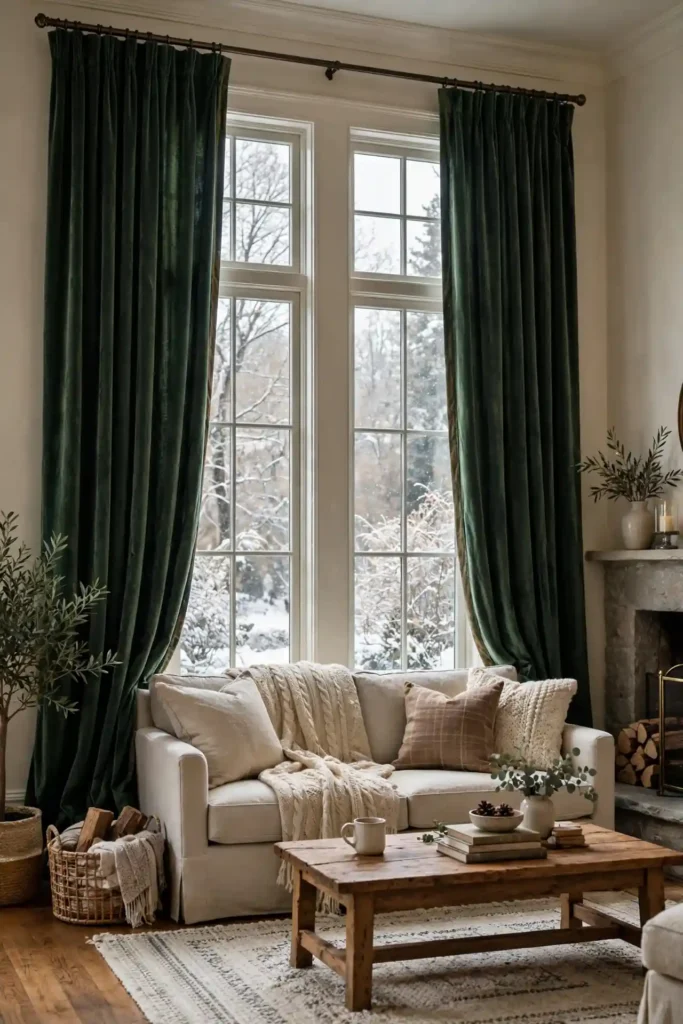
Layering works beautifully in winter: keep a sheer panel behind the heavy drapes so you still get soft daylight without the glare. Open the curtains on sunny winter days to let solar heat warm the room, then draw them at dusk to trap the warmth inside. Wash or vacuum curtain panels at the start of the season to remove dust that collected all summer. Choose a color that echoes your throw pillows or rug so the window treatment feels connected to the rest of the room. Heavy curtains instantly make tall windows feel less cavernous in winter.
8. Add Sheepskin
A sheepskin throw adds instant Scandinavian-style softness to a winter living room, and it is one of those textures guests always want to touch. Drape one over an armchair, layer it across a bench, or lay it flat on a cold wooden seat. IKEA sells genuine sheepskins for about $30, while specialty retailers like Overland Sheepskin offer thicker hides for $80 to $150. The long, dense fibers look luxurious against leather or wood furniture and add warmth to hard surfaces that feel chilly in winter. Choose white or ivory for a classic Nordic look, or a warm gray if your palette runs darker.

Sheepskins are surprisingly practical as well as beautiful. They insulate the seat, resist dirt better than most fabrics, and a quick shake outdoors refreshes them without washing. Brush the fibers with a pet brush every few weeks to keep them fluffy, and spot-clean stains with a damp cloth and mild soap. Avoid placing them in direct sun for long stretches since the leather backing can dry out. If you prefer not to use real hides, high-quality faux sheepskins from Amazon (around $25) look convincing and hold up well to daily use. One or two is plenty; more starts to look staged.
9. Bring In Greenery
Fresh and faux greenery brings life into a winter living room when the world outside looks bare and gray. A small potted pine, a Norfolk Island pine, or a cluster of eucalyptus stems in a tall vase adds color and movement to a side table or corner. Home Depot sells live 3-gallon Norfolk Island pines for about $25 to $35 each winter, and they thrive indoors with bright, indirect light. For zero maintenance, a realistic faux cedar stem bunch from Amazon ($15 to $25) looks convincing in a ceramic vase. Tuck sprigs of rosemary or pine into bookshelves and tray displays so greenery repeats around the room.

The trick to winter greenery is layering different heights and textures rather than relying on one big plant. Place a tall fiddle-leaf fig or olive tree in an empty corner, medium potted plants on side tables, and trailing pothos on a high shelf. Water indoor plants less in winter since growth slows, and wipe dust off leaves monthly so they can absorb what little light is available. Group plants in odd numbers and vary the pot materials — terracotta, ceramic, and woven baskets — for a collected feel. Greenery softens hard furniture lines and makes a winter room feel alive.
10. Use Warm Lighting
Winter evenings demand warm lighting because cool white bulbs make a living room feel clinical when it gets dark at 5 p.m. Swap your bulbs for warm white 2700K LEDs throughout the room — a 4-pack costs about $10 at Home Depot — and the whole space instantly feels cozier. Add lighting at three levels: floor lamps for reading corners, table lamps on side tables for middle-height glow, and string or fairy lights for sparkle. Dimmable smart bulbs from Philips Hue or budget-friendly TP-Link options (around $12 to $20 per bulb) let you lower the brightness as the evening progresses. Warm light at eye level or below flatters skin tones and creates the golden ambiance winter decor needs.
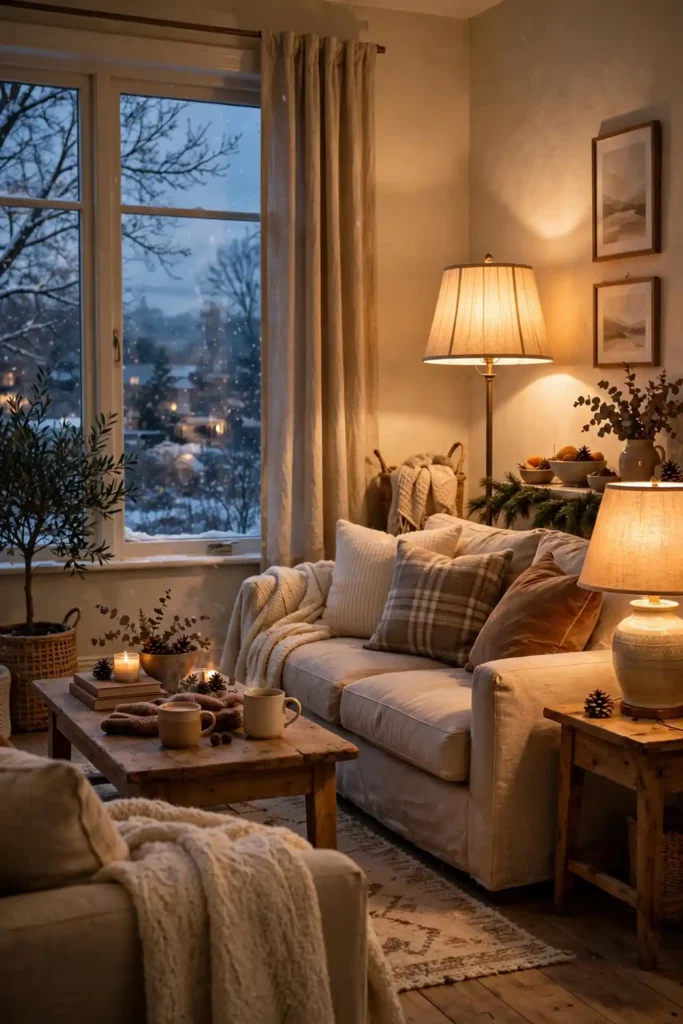
Avoid relying on a single overhead light, which casts harsh shadows and kills the cozy mood. Instead, create pools of light where people actually sit and leave corners softly dim so the room feels intimate rather than exposed. Table lamps with fabric shades diffuse light more warmly than metal ones, and a floor lamp with an adjustable arm is perfect for a reading spot. Put the main lamps on a timer or smart plug so the room glows welcoming when you walk in after work. Small changes in lighting temperature make a bigger difference than almost any other winter decor move.
11. Create a Reading Corner
A dedicated reading corner gives your winter living room a purpose-built cozy zone and makes the space feel larger and more thoughtful. All you need is an unused corner, a comfortable chair with good back support, and a side table for your book and mug. A tufted accent chair from Wayfair runs $150 to $300, while a plush armchair from IKEA costs under $200. Add a floor lamp with a warm 2700K bulb, a soft throw over the chair arm, and a small ottoman so you can put your feet up. Position the chair near a window for daylight reading and away from the TV so the corner feels like a retreat.

Make the corner inviting enough that someone actually uses it. Keep a small basket of current books or magazines within reach, add a sheepskin or cushion to the seat for extra comfort, and place a power outlet or extension cord nearby for e-readers and phones. A small rug under the chair defines the zone and warms the floor — even a 3-by-5-foot rug works. Hang a piece of art or a small shelf with favorite books above the chair to give the corner its own identity. When guests see a reading nook, the whole room reads as more considered and personal.
12. Add a Hot Drink Tray
A hot drink tray turns your coffee table into a winter hospitality station and makes cocoa, tea, or mulled cider feel like an occasion. Choose a tray 16 to 20 inches wide — wooden trays from Target run $20 to $35, while brass or marble options from Amazon cost $30 to $50. Style it with two or three mugs, a small lidded jar of cocoa mix or tea bags, a honey dipper, and a tiny vase with a sprig of greenery. The tray keeps everything contained and makes cleanup simple when guests leave. It also gives your coffee table a finished look with almost no effort, since the grouping reads as one intentional vignette.

Keep the tray stocked and practical rather than purely decorative. Rotate the drink selection through the season — spiced cider in December, peppermint cocoa around the holidays, chamomile tea in January. Store extra supplies in a nearby basket so refilling takes seconds. Choose mugs in different shapes but a coordinated palette so the tray looks collected, not mismatched. A small wooden board for cookies or biscotti elevates the whole setup for movie nights. When the tray is always ready, hosting a friend for a warm drink becomes spontaneous instead of a production.
13. Display Winter Books
A curated stack of winter books adds personality and color to your living room while giving the space an intellectual, lived-in feel. Choose coffee-table books with winter themes — photography of snowy landscapes, Nordic design, or holiday baking — and stack two or three on the coffee table or a side table. Thrift stores and used bookshops sell beautiful hardcovers for $3 to $8 each, while new titles from Barnes & Noble run $25 to $40. Arrange them with the largest book on the bottom and offset each one slightly so the stack looks natural. Top the stack with a small object like a candle or a pine sprig to finish the vignette.

Rotate your book display through the season to keep it feeling fresh. Lean into holiday titles in December, then shift to nature photography or cozy mysteries in January and February. If you have open shelving, arrange books by color to create a visual rhythm — a row of cream and forest-green spines suits winter perfectly. Keep a few novels or a poetry collection on the reading-corner side table so the books invite actual use. Winter books work because they signal slowness and comfort, which is exactly the mood a winter living room should deliver.
14. Use Wood and Natural Textures
Wood and natural textures bring organic warmth to a winter living room and balance all the soft fabrics with something solid and grounding. A reclaimed-wood coffee table, a set of woven rattan baskets, or a live-edge wooden bowl adds character that mass-produced pieces can’t match. Etsy and local antique shops sell unique wooden trays and bowls for $20 to $60, while Target’s Studio McGee line offers affordable woven baskets from $25. Layer a jute or sisal rug under a softer area rug for texture contrast, and swap plastic storage bins for seagrass or wicker versions that look like decor instead of clutter.

Natural materials also age gracefully, which makes them a smart long-term investment for seasonal decorating. Birch logs stacked in a fireplace basket, a driftwood candleholder, or a stone mortar on the coffee table all read as winter-appropriate without screaming holiday. Mix light woods like birch and maple with darker walnut or oak so the palette has depth. Keep wooden surfaces conditioned with a simple beeswax polish ($10 to $15) so they stay rich through dry winter heating. When textures come from nature, the room feels calm and timeless rather than trendy.
15. Add Winter Art
Swapping your wall art for winter is one of the easiest ways to shift the whole mood of the room without moving a single piece of furniture. Replace bright summer prints with moody landscapes, snowy forest scenes, or abstract pieces in deep greens, warm grays, and creamy whites. Large-scale prints from IKEA — a 24-by-36-inch frame with print runs about $30 to $50 — make an instant statement above the sofa. Thrift stores often carry beautiful vintage winter landscapes for under $20; reframe them in simple black or natural-wood frames from Target ($15 to $25) for a collected, gallery look. Art sets the emotional temperature of a room, so choose pieces that feel calm and quiet.

Lean a large piece on the mantel instead of hanging it for a relaxed, layered effect, and build a small gallery wall of three to five smaller prints above a side table or console. Keep frame finishes consistent — all black, all brass, or all natural wood — so the grouping looks deliberate rather than random. In December, add one festive piece like a botanical wreath print; swap it for a serene winter landscape in January. If you rent and can’t drill holes, large art propped on the floor against the wall looks intentional and costs nothing in hardware. Rotate your art twice a season and the room feels fresh every time you walk in.
16. Try String Lights
String lights aren’t just for Christmas — used year-round, they give a winter living room a magical, twinkling warmth that overhead lighting can’t match. Drape a strand of warm-white fairy lights along a bookshelf, around a mirror, or inside a glass cloche for instant sparkle. Battery-operated copper-wire fairy lights cost about $8 to $12 for a 33-foot strand on Amazon, and USB-powered options eliminate battery changes entirely. Choose warm white (2700K or below) rather than cool white so the glow stays cozy. Weave lights through a garland on the mantel or coil them inside a lantern for a concentrated pool of light.

Placement makes all the difference with string lights in winter. Avoid random draping and instead anchor them to architectural features — window frames, shelving edges, or the top of a tall bookcase. Use clear adhesive clips ($6 for a pack of 40) to secure strands invisibly without damaging paint. Set them on a timer so they switch on at dusk and off at bedtime automatically. Keep the total number of strands to two or three so the effect stays elegant rather than carnival-like. In the darkest weeks of winter, these tiny lights do more for the room’s mood than any single piece of furniture.
17. Arrange a Cozy Seating Layout
A cozy seating layout pulls furniture inward so people naturally gather, talk, and linger during long winter evenings. Move your sofa and chairs closer together — aim for no more than 8 feet between facing seats so conversation flows easily without shouting. Angle armchairs slightly toward each other rather than lining them up like a waiting room, and pull everything a few inches off the walls to create breathing room. A round coffee table (36 to 42 inches in diameter) keeps the arrangement feeling fluid and gives everyone a place to set a mug. The goal is a conversation circle that feels intimate even in a large room.
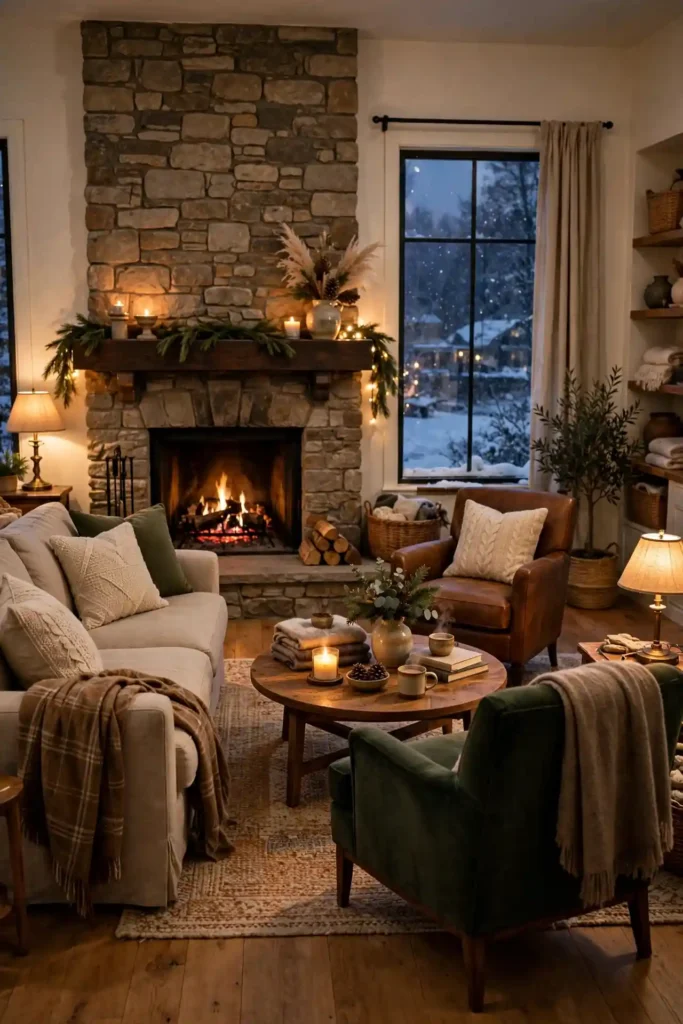
Start your layout from the focal point — usually the fireplace or the largest window — and arrange seating to face it. Keep walkways at least 30 inches wide so the room stays functional even with furniture pulled in. If your room is narrow, try a symmetrical two-sofa layout facing each other across the coffee table. Add a bench or ottoman that can slide in as extra seating when guests arrive. Test the layout by sitting in every seat and checking sight lines, elbow room, and access to side tables. A room arranged for gathering gets used more, which is the whole point of winter decorating.
18. Add a Pouf or Ottoman
A pouf or ottoman is the hardest-working piece of winter living room decor — it serves as a footrest, extra seat, side table, and even a cozy pet perch. Knitted poufs from Target cost $30 to $50 and add the nubby texture winter rooms crave, while leather or velvet ottomans from Amazon run $60 to $120 and look more polished. Place a pouf beside your favorite armchair as a footrest, or use a pair of small ottomans in front of the sofa where guests can pull them in. A storage ottoman ($70 to $150 at Wayfair) doubles as a hiding place for extra throws and remotes, keeping the room tidy.
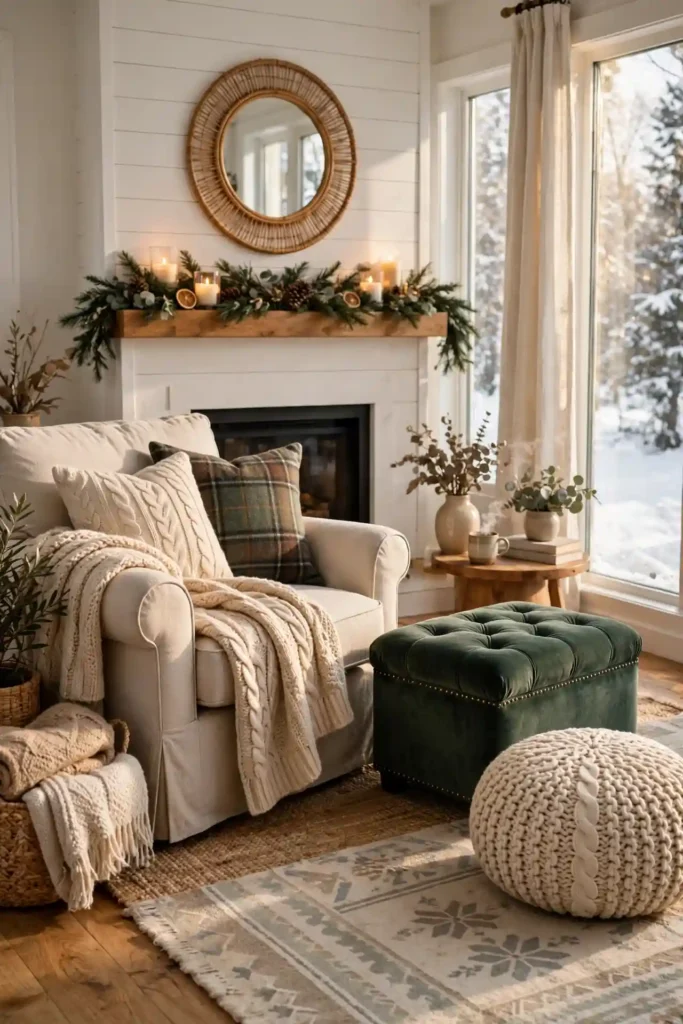
Choose a pouf or ottoman that coordinates with your existing palette but adds a new texture — a Moroccan-style knit, a faux-fur cover, or tufted velvet. Round poufs soften a room full of rectangular furniture, while a long bench ottoman suits a sectional. Make sure the height matches your seat cushions (usually 16 to 18 inches) so it works comfortably as a footrest. If you use it as a side table, top it with a small tray to create a stable surface. Lightweight enough to move in seconds, a pouf makes your living room flexible for movie nights and gatherings alike.
19. Use Neutral Plaid
Neutral plaid brings classic winter pattern to your living room without the commitment of bold color or holiday-specific prints. Look for plaids in oatmeal, camel, charcoal, and cream — they read as winter-cozy all season long. Flannel plaid pillow covers on Amazon cost $18 to $30 for a set of four, and a neutral plaid throw blanket from Target runs about $35. Use plaid on one or two pieces only, like a throw over the sofa arm plus a single lumbar pillow, so the pattern stays a highlight rather than a theme. Pair it with solid textures like velvet and wool so the check pattern has room to breathe.

Scale and color keep neutral plaid sophisticated instead of cabin-cliché. Choose a medium-scale check for throws and a smaller windowpane for pillows so the two patterns don’t compete. Buffalo check in black and cream is the most versatile option and works with farmhouse, modern, and traditional styles alike. If your sofa is patterned, keep plaid to a single accent and let the solid pieces carry the room. Wash flannel plaid before first use to soften it and reduce shedding. Done right, neutral plaid is the rare pattern that feels festive in December and perfectly calm in February.
20. Add Paperwhites
Paperwhites are the winter living room’s secret weapon — they bloom indoors in just three to four weeks with almost no effort and fill the room with a sweet, heady fragrance. Buy paperwhite bulbs in fall (about $8 to $12 for a bag of five at Home Depot or garden centers) and plant them in a shallow bowl with pebbles and water, no soil needed. Nestle the bulbs shoulder to shoulder with the pointed ends up, add water to just below the bulb bases, and place the bowl in a cool spot until roots form. Within weeks, tall stems of white blossoms appear exactly when the winter landscape outside looks bleakest.
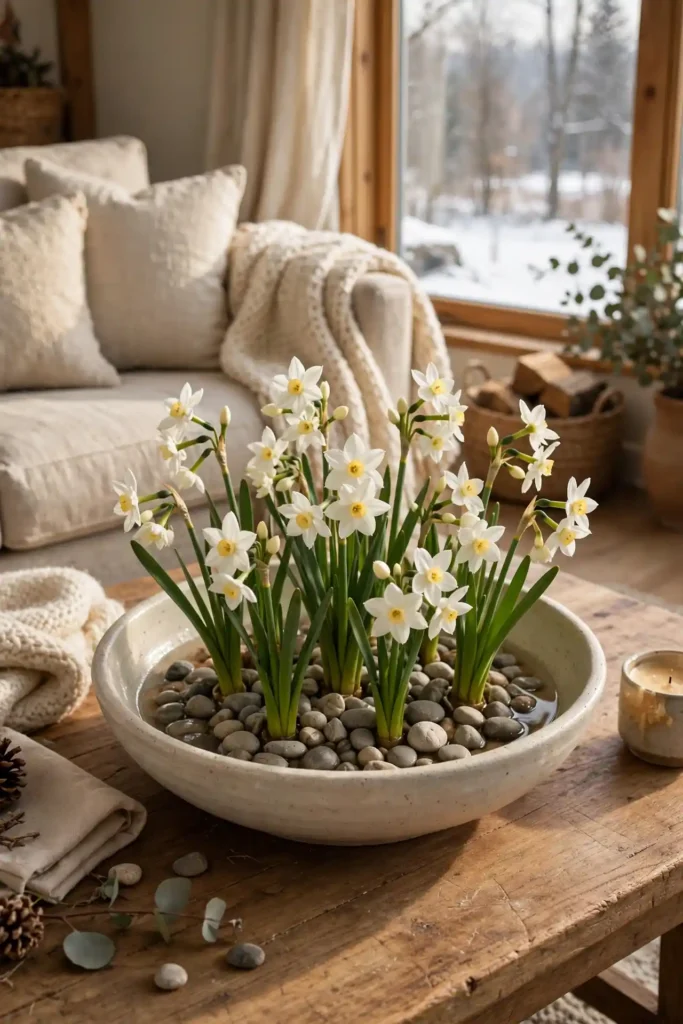
For the prettiest display, stagger your plantings two weeks apart so new blooms arrive all season. Once stems reach 4 to 6 inches tall, move the bowl to bright light and add a splash of rubbing alcohol to the water (one part alcohol to ten parts water) — this classic trick keeps stems shorter and sturdier so they don’t flop. Place the finished bowl on the coffee table, mantel, or entryway console where the fragrance greets people. When blooms fade, compost the bulbs since paperwhites rarely rebloom. Few winter decor ideas deliver this much beauty for under ten dollars.
21. Keep It Calm
The most restful winter living rooms aren’t the most decorated — they’re the calmest, with breathing room around every object. Resist the urge to fill every surface with seasonal decor; instead, choose five to seven winter pieces you love and give each one space to be noticed. A calm room with a soft throw, warm lighting, a few candles, and one statement piece feels more luxurious than a room crowded with knickknacks. Edit ruthlessly: if an item doesn’t add warmth, texture, or light, put it away until spring. Winter already brings visual noise with coats, boots, and blankets piling up, so the decor should compensate with serenity.

Calm also comes from visual consistency, so limit your winter palette to three or four colors and repeat them around the room. Hide everyday clutter in closed storage — baskets with lids, ottomans with compartments, or a media console with doors. Leave at least one surface completely clear, like a side table or a shelf, so the eye has somewhere to rest. Vacuum and dust more often in winter since closed windows trap dust, and a clean room always feels calmer. When the decor is quiet, the fireplace glow and candlelight become the stars of the room.
Choosing a Palette for Winter Living Room Decor Ideas
A deliberate palette is what separates a cohesive winter living room from a random collection of seasonal stuff. Start with a warm neutral base — ivory, oatmeal, or soft beige — then add one deep accent like forest green, burgundy, or navy, plus one metallic such as brass or gold. This three-part formula (base, depth, shine) works in farmhouses, modern condos, and traditional homes alike. Pull your colors from a single inspiration piece, like a plaid throw or a piece of winter art, and repeat each color at least three times around the room so the palette feels intentional. Write the palette down before you shop so impulse buys don’t derail it.

Test your palette in your actual winter light before committing, since northern exposure and gray days shift how colors read. Lay fabric swatches or pillow covers on the sofa and observe them at morning, noon, and lamplight before buying the full set. If your room gets little natural light, lean warmer — camel, rust, and honey tones glow under artificial light while cool grays can look flat. Keep wall color in mind too: a beige room needs deeper accents for contrast, while white walls can carry bolder winter colors. A palette chosen on paper always looks better in the room when you’ve tested it first.
If your living room already has strong colors, bring in winter through texture instead of new colors. Knit, faux fur, wool and velvet in your existing palette will feel seasonal without clashing.
Winter Living Room Decor Ideas on a Budget
You can build a genuinely cozy winter living room for under $100 if you shop strategically and lean on swaps instead of new furniture. Start with the highest-impact cheap moves: swap pillow covers ($20 on Amazon), add a thrifted throw ($10 to $15), and buy a bag of LED candles ($25) for instant atmosphere. Dollar Tree and Target’s dollar section sell surprisingly good winter greenery, pinecones, and candleholders for $1 to $5 each. Check Facebook Marketplace and thrift stores for wool blankets, baskets, and wooden trays — winter textures are easy to find secondhand. One $50 Target run plus a thrift stop can transform a room in an afternoon.
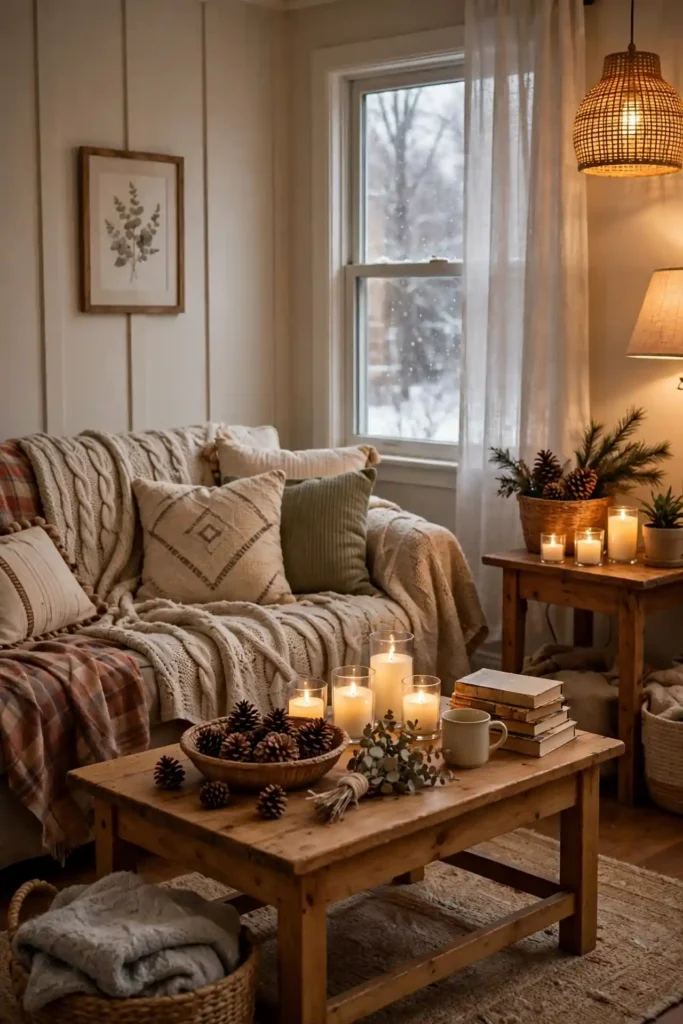
The budget mindset is about reusing what you own before buying anything. Rearrange furniture for free to create a cozier layout, move a lamp from the bedroom into the reading corner, and restyle existing bookshelves with winter books and greenery you already have. Save receipts and buy from stores with generous return policies so you can test items at home first. Spread purchases across paychecks — lighting one month, textiles the next — so the cost never stings. A budget winter room often looks better than an expensive one because every piece was chosen with care rather than bought in a set.
When it comes to winter living room decor ideas, the best results come from balancing style, comfort and everyday function. Use this list as your go-to guide for winter living room decor ideas, and start with the ideas that fit your space best.
How to Plan Winter Living Room Decor Ideas Step by Step
Planning your winter living room in steps keeps the project enjoyable instead of overwhelming, and it prevents the random-shopping trap. Step one is assessment: photograph your room, note what feels cold or bare, and list what you already own that fits a winter mood. Step two is the palette — choose your three colors and write them down. Step three is the big moves: rug, curtains, and lighting, since these change the room most. Step four is layering: throws, pillows, and greenery. Step five is the finishing details like candles and a hot drink tray. Working in this order means each layer builds on the last.

Give yourself a realistic timeline so the room is done before the season’s best weeks pass. Block one weekend for assessment and shopping, a second for the big textile swaps and lighting changes, and an evening for styling details and candles. Measure your sofa, windows, and rug area before buying anything — returns eat time and money. Keep a simple checklist on your phone and check items off as they arrive. Photograph the finished room in evening light so you can remember what worked next year. A planned approach takes about three weekends total and delivers a room that feels considered rather than thrown together.
- Pack away holiday-specific decor.
- Add throws, pillows and a thick rug.
- Style the mantel with greenery and candles.
- Update lighting and curtains.
- Finish with books, art and fresh flowers.
Final Thoughts on Winter Living Room Decor Ideas
A cozy winter living room isn’t about following every trend — it’s about creating the room your household actually wants to live in from December through February. The ideas that matter most are the ones you’ll feel daily: warm lighting that flatters the evening, textiles you can curl up in, and a seating layout that brings people together. Start with two or three changes that excite you rather than trying to do all twenty-one at once. A single new rug plus warm bulbs can shift a room’s entire mood in one afternoon. Winter decorating rewards patience more than spending.

Keep what works and release the rest without guilt. If the reading corner becomes everyone’s favorite spot, invest in a better chair next year; if the mantel styling feels like a chore, simplify it. Photograph your finished room so you can recreate the look quickly next season instead of starting from scratch. Most importantly, use the room — light the candles on ordinary Tuesdays, not just holidays. A winter living room earns its keep when it becomes the warmest, most-used spot in the house, and that only happens when you enjoy it every single day.
Save these ideas and follow along for more seasonal inspiration.
Frequently Asked Questions About Winter Living Room Decor Ideas
The most common question about winter living room decor is how to make a small room feel cozy without looking cluttered. The answer is to scale down the number of items but scale up their impact: one thick throw instead of three thin ones, a single statement candle cluster instead of scattered votives, and one warm floor lamp rather than multiple small lights. Choose furniture that does double duty, like a storage ottoman, and keep the palette to two or three colors. Small rooms actually get cozy faster than large ones because warmth concentrates — lean into that advantage instead of fighting it.

Another frequent question is when to put up and take down winter decor. Most US households start layering in winter textures right after Thanksgiving and keep the cozy elements — throws, warm lighting, candles, greenery — through February or early March. Holiday-specific items like red ornaments and Christmas plaids come down in early January, but the underlying winter coziness stays. Store off-season textiles in breathable bags and keep a photo of your favorite arrangement so next year’s setup takes an hour instead of a weekend. Winter decor should follow the weather, not the calendar, in regions with long cold seasons.
How do I make my living room cozy in winter?
Add throws, pillows, a thick rug, candles and warm lighting.
What decor can stay up after Christmas?
Plain greenery, white lights, candles, pinecones and neutral throws.
What colors work for winter living rooms?
White, cream, oatmeal, charcoal, camel, deep green and silver.
How do I keep a living room warm in winter?
Use thermal curtains, rugs and draft stoppers, and arrange seating away from drafty windows.
When should I change winter decor to spring?
Most people refresh in March with lighter textiles and fresh flowers.








Leave a comment