


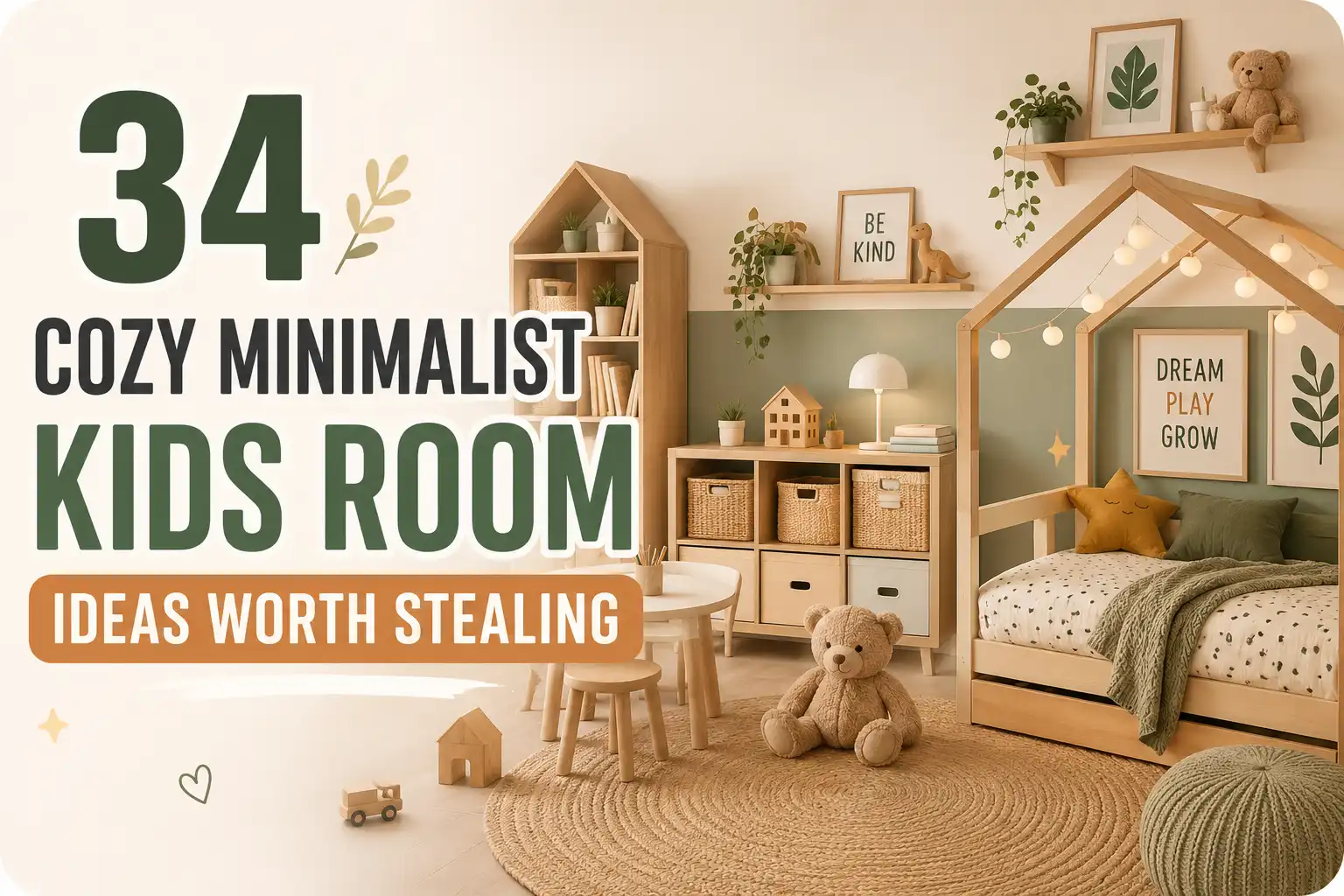
Cozy minimalist kids room ideas prove that “minimalist” and “child-friendly” belong in the same sentence. A minimalist kids room is not empty or cold — it is calm, warm, and intentionally simple: fewer toys on display, softer colors, natural materials, and storage that makes tidying effortless. Parents love the look because it photographs beautifully and cleans quickly; children benefit even more, since research consistently links less visual clutter with better focus, deeper play, and easier bedtimes. This guide gathers thirty-four warm, practical ideas you can genuinely steal, whatever your budget or room size.
The secret to cozy minimalism is the “cozy” half: layered textures, warm woods, soft lighting, and a few beloved objects on display. Strip a room to white walls alone and it feels clinical; add a chunky knit blanket, a sheepskin, warm-toned timber, and a glowing night light, and the same room becomes a sanctuary. Every idea below follows that balance — subtract the clutter, then add warmth deliberately. Start with two or three ideas, involve your child in the edit, and watch both the room and the bedtime routine transform.
1. Warm White Walls as the Foundation
Skip stark white and choose a warm white or soft ivory for kids room walls. Warm whites bounce light while feeling gentle, creating the calm canvas minimalism needs without the laboratory chill of pure white. Every other idea in this list works better against this backdrop: wood tones glow, textiles look richer, and children’s colorful books and art become the room’s decoration. Warm white also survives changing tastes from toddler to teen, meaning you may never repaint. It is the least exciting idea here and the most important one.
2. Low Floor Bed for Toddlers and Young Kids
A mattress on a low timber frame — or a Montessori-style floor bed — is minimalist function at its best. Children climb in and out independently, falls become harmless, and the low profile keeps the room feeling open and airy. Choose natural wood or a simple house-frame design for subtle charm. Dress it with layered neutral bedding and one soft toy. The floor bed embodies the minimalist principle of child independence: a room built to the child’s scale needs fewer gadgets and less parental intervention.
3. Neutral Palette with One Muted Accent
Build the room on cream, oat, sand, and soft grey, then add a single muted accent — dusty rose, sage, clay, or denim blue — repeated in exactly three places: a cushion, a piece of art, a blanket. This restraint is what separates cozy minimalism from beige boredom. Muted accents soothe rather than stimulate, which matters in a room designed for sleep. When your child’s favorite color changes, swapping three accent items costs little. The three-repetition rule alone will make any kids room look professionally styled.
4. Toy Rotation with Hidden Storage
The core minimalist trick: display only eight to twelve toys at a time and store the rest in a closet or lidded boxes, rotating every few weeks. Children play longer and more creatively with fewer visible choices — a finding parents confirm within days. Use closed storage for the reserve and open, low shelving for the current selection. Rotation days feel like receiving new toys for free. This single habit removes eighty percent of kids room clutter and is the reason minimalist rooms stay minimalist.
5. Low Open Shelving at Child Height
Replace tall toy chests with one low, open shelf where every displayed toy has a visible home. Children tidy independently when they can see and reach where things belong — a Montessori principle that minimalist design borrows gratefully. Style the shelf with baskets for small parts, a short row of books, and current favorite toys spaced generously. Anchor the unit to the wall. A room a child can reset alone in five minutes is the true definition of practical minimalism for families.
6. Chunky Knit Blankets and Layered Bedding
Coziness lives in bedding. Layer a fitted sheet, a duvet in washed cotton or linen, a chunky knit throw folded at the foot, and one or two pillows in mixed textures — waffle, boucle, quilted. Stick to the room’s neutral palette with a single accent tone. The layered bed becomes the room’s soft centerpiece and makes even the simplest space feel warm and finished. Washable everything, always. This idea delivers the biggest cozy-per-dollar return in the entire minimalist playbook.
7. Sheepskin and Soft Rugs on Warm Floors
A washable sheepskin beside the bed or a thick wool-blend rug under the play area warms minimalist rooms instantly — bare floors read cold, especially in kids spaces. Choose cream, oat, or soft grey low-pile rugs that hide crumbs and vacuum easily. Layer a small sheepskin over a larger flat-weave rug for depth. Children spend hours on floors; a soft landing invites reading, building, and quiet play. Texture underfoot is half of what makes a minimal room feel cozy rather than empty.
8. Warm Wood Tones Everywhere
Natural timber — oak, ash, pine, beech — is the soul of cozy minimalism. Choose a wooden bed frame, shelf, and toy pieces over plastic wherever possible, keeping tones consistent across the room. Wood adds visible warmth no white plastic can, ages gracefully through scratches, and connects children to natural materials. Mid-tone woods feel warmest; very dark woods can heavy a small room. If existing furniture is mismatched, a light sanding and matching finish unifies thrifted pieces into an intentional set.
9. Canopy Reading Corner
Hang a simple cotton or linen canopy in a corner over a floor cushion and a small basket of books, and you have created the coziest square meter in the house. The canopy defines a hideaway without walls — children treat it as their private world. Choose neutral fabric to keep the minimalist look, add a soft sheepskin inside and a battery fairy-light strand or small star light overhead. This corner encourages independent reading and quiet time, two habits every parent hopes a room will teach.
10. Cloud and Moon Soft Wall Decor
One or two soft wall pieces — a felt cloud, a wooden moon lamp, a linen banner — decorate without cluttering. The minimalist rule: each wall gets at most one focal element. Dreamy sky motifs suit sleep spaces naturally and stay lovable from nursery through primary school. Choose muted tones and natural materials over bright plastic decals. When walls stay mostly bare, the few chosen pieces gain presence and the room keeps its calm. Restraint here is what makes visitors say the room feels peaceful.
11. Warm Dimmable Lighting Layers
Lighting decides whether minimalism feels cozy or cold. Use three warm layers: a soft ceiling light with a fabric or rattan shade, a small table or wall lamp for evening routines, and a gentle night light — 2700K warmth throughout, everything dimmable. Avoid cool-white bulbs entirely in kids rooms; they suppress the wind-down hormones bedtime depends on. A dim, amber-lit room at 7 pm does more for sleep than any routine chart. Lighting is invisible decor, and in minimalist rooms it does the heavy lifting.
12. One-In-One-Out Toy Rule
Keep the room minimalist forever with a simple family rule: when a new toy arrives, an old one is donated. Involve your child in choosing what leaves — the practice teaches generosity, decision-making, and the idea that space has value. Keep a donation basket in the closet so the habit stays easy. Birthdays and holidays stop being clutter events. This idea costs nothing, but it is the maintenance system without which every beautifully minimized room slowly refills. Steal the rule before you steal the decor.
13. Muted Rainbow Accents Done Minimally
Kids love color; minimalism loves restraint. The compromise: a muted, earthy rainbow — terracotta, ochre, sage, dusty blue, blush — used sparingly in a stacking toy, one art print, or a garland. These desaturated tones read calm while still delighting children. Limit the rainbow moment to one or two spots and keep everything around it neutral. This is how Scandinavian kids brands style their catalogs, and it is why their rooms feel joyful and serene at once. Bright primary rainbows shout; muted rainbows hum.
14. Wall Hooks Instead of Floor Clutter
A row of wooden peg hooks at child height swallows the daily chaos: backpack, dressing gown, tomorrow’s outfit, a cloth bag of blocks. Floors stay clear, mornings run faster, and children hang things themselves because the hooks are reachable. Choose simple beech pegs or a natural peg rail for the minimalist look. Add one hook per category and label with small icons for pre-readers. Vertical storage is minimalism’s quiet workhorse — every item on a hook is an item not on the floor.
15. Single Statement Plant
One child-safe plant — a spider plant on a shelf or a rubber tree in a woven basket — brings life into a minimalist room without clutter. Greenery softens neutral palettes and teaches gentle daily care; watering can become the child’s own job. Keep plants out of reach for babies and always verify the species is non-toxic. Skip plastic plants where possible; part of the point is watching something grow. One healthy plant beats five struggling ones, in rooms as in life.
16. Under-Bed Drawers for Invisible Storage
Under-bed storage is minimalist gold: rolling drawers or flat lidded boxes hide spare bedding, off-rotation toys, and seasonal clothes in space the room already wastes. Choose a bed frame with built-in drawers when buying new. Assign one category per box and label it. The visible room stays serene while real family storage happens out of sight — which is the honest truth of every minimalist home. A clear floor also makes small kids rooms feel dramatically larger and gives play space back.
17. Neutral Canopy Bed Nook for Older Kids
For school-age kids, frame the bed with a simple curtain rail and neutral linen panels, creating a semi-enclosed sleep nook. Drawn at night, the curtains signal bedtime and block stimulation; open by day, they disappear into the decor. The nook satisfies the growing need for privacy without a full room redesign. Keep bedding layered and warm inside so the space feels like a den, not a hospital bay. Children fall asleep faster in defined, enclosed-feeling sleep spaces — cozy minimalism at its most functional.
18. Art Display Wire for Rotating Masterpieces
Children produce art daily; minimalist walls cannot host it all. A single wire or wooden ledge with clips displays five or six current works, rotated weekly, while a flat storage box archives the rest. The child curates their own gallery — pride intact, walls calm. Frame one or two genuine favorites permanently in simple oak frames. This system honors creativity while preventing the paper avalanche that buries most kids rooms, and the rotating display becomes a lovely weekly ritual together.
19. Soft Play Mat That Matches the Decor
Replace the loud primary-colored foam puzzle mat with a padded play mat in linen, oat, or muted terracotta tones. Modern brands make thick, wipeable mats that look like quiet rugs and fold away in seconds. Babies and young kids get safe cushioned floor time; parents keep the calm palette. Place it in the room’s open zone and let it define the play area. When guests come, it folds behind the wardrobe — minimalist rooms love furniture that knows when to disappear.
20. Capsule Wardrobe for Kids Clothes
Apply minimalism inside the closet: a capsule of roughly fifteen to twenty mix-and-match pieces per season in a coordinated palette. Mornings speed up, laundry shrinks, drawers close easily, and children dress independently because every top matches every bottom. Store off-season clothes in labeled under-bed boxes. Donate outgrown items immediately rather than archiving guilt. A calm wardrobe teaches kids that enough is a real number — and it quietly halves one of parenting’s most repetitive chores.
21. Cozy Window Seat with Storage
If the room has a window, a low storage bench beneath it becomes a reading perch, a toy chest, and an architecture moment at once. Top with a fitted cushion in oat linen, add two soft pillows, and keep a small basket of books beside it. Inside, store bulky items like spare blankets. Children gravitate to window light naturally. Even a repurposed low cabinet with a cushion achieves the effect. One built-in-looking piece gives minimalist rooms the custom, finished feeling designers charge for.
22. Two-Kid Shared Room, Minimalist Edition
Shared rooms suit minimalism because clutter doubles otherwise. Give each child a matching bed, one personal shelf, and one hook rail; keep a single shared toy shelf with rotation. Identical bedding in the same palette with different accent cushions balances unity and identity. Bunk beds free floor space for shared play. The visual symmetry calms the room, and clear personal zones cut sibling disputes. Less stuff per child, more space between them — the shared-room formula every parenting forum eventually discovers.
Read More Blogs on: decormellow.com
23. Calm Homework Corner for School Age
A minimalist study spot: small desk facing the wall, one task lamp, one pot of pencils, and a single shelf for schoolbooks. Nothing else. Visual quiet around the desk measurably helps focus — the research on clutter and attention is unambiguous. Add a felt pinboard for the timetable and current artwork only. Chair at proper height, feet supported. When homework ends, the desk clears completely. Children learn that a ready workspace invites work, a lesson worth more than the furniture itself.
24. Woven Baskets as the Universal Storage
Natural woven baskets — seagrass, rattan, cotton rope — are the minimalist parent’s answer to everything: blocks, soft toys, laundry, books, blankets. Their texture warms the room while their sameness calms it. Choose three or four sizes in matching tones and place them low for child access. A basket per category, a home for everything. Unlike plastic bins, baskets look like decor, so storage becomes styling. Buy more than feels necessary; every minimalist room runs on more baskets than the photos admit.
25. Soft Neutral Wallpaper on One Wall
One wall in a subtle patterned wallpaper — tiny dots, fine stripes, a faint botanical — adds depth without breaking calm. Keep the palette tone-on-tone: cream on white, sand on oat. Peel-and-stick versions suit renters and changing tastes. The gentle pattern gives the eye somewhere soft to land and stops the minimalist room from feeling flat in photos and in person. Behind the bed is the classic placement. Skip busy motifs and bright characters; the wallpaper should whisper, never perform.
26. Montessori Mirror and Movement Area
For babies and toddlers, a horizontal acrylic safety mirror at floor level beside the play mat supports self-discovery and movement — a Montessori staple that happens to look beautifully minimal. Add a low wooden pull-up bar for pre-walkers if desired. The mirror doubles visual space and light in small rooms. Frame it simply or mount frameless. This idea shows the deeper truth of minimalist kids design: the best rooms are built around child development first, and the aesthetics follow naturally from that respect.
27. Seasonal Nature Display Shelf
Dedicate one small shelf to nature finds: autumn leaves, pinecones, spring blossoms, summer shells and stones. The display changes with the seasons, costs nothing, and connects the room to the world outside. Add a small vase for foraged branches. Children curate it themselves after walks. This single rotating shelf provides all the “decoration change” a minimalist room needs across the year, teaching observation and impermanence along the way. It is the gentlest idea on this list and often the most loved.
28. Blackout Curtains in Soft Neutrals
Cozy sleep needs darkness. Choose blackout curtains in oat, ivory, or soft grey — never the shiny hotel kind — hung high and wide to frame the window generously. Linen-look blackout fabrics keep the airy minimalist feel while blocking summer-evening light and early sunrises. Better darkness means earlier, deeper sleep, which every parent will trade any decor trend for. Add a sheer layer behind for soft daytime privacy. Curtains are the largest fabric surface in the room; their calm color sets the whole tone.
29. Handmade and Heirloom Touches
Cozy minimalism welcomes soul: a grandmother’s knitted blanket, a hand-carved toy, a framed embroidered name. One or two handmade pieces give the pared-back room warmth and story that catalog styling cannot fake. These objects also model valuing few, meaningful things over many disposable ones — arguably the entire lesson of minimalism. Display them proudly at child height where they will be touched and used. A minimalist room with heirlooms feels loved; without them it can feel like a showroom.
30. Neutral Play Kitchen or One Big Toy
Instead of twenty small plastic toys, invest in one substantial wooden centerpiece — a neutral play kitchen, a dollhouse, or a large block set in a basket. One anchor toy invites deep, repeated, imaginative play and looks like furniture rather than clutter. Wooden versions in white and natural tones blend into the minimalist palette. Children return to open-ended anchor toys for years, long after novelty toys are forgotten. Fewer, better, bigger: the minimalist toy philosophy in a single purchase.
31. Clutter-Free Ceiling and Calm Overhead View
Children spend surprising time looking at ceilings — from bed, every night. Keep the overhead view intentional: a warm pendant with a rattan or linen shade, perhaps one paper mobile for babies, and nothing else. Skip busy glow-star explosions in favor of a few accurate constellation decals or none at all. A calm ceiling supports the wind-down that bedtime needs. This overlooked surface is the final test of a minimalist room: if even the ceiling feels peaceful, the room is done.
32. Reading Ledges Instead of Bulky Bookcases
Two or three narrow picture ledges display books cover-out at child height — a tiny bookstore on the wall. Front-facing covers invite reading far more than packed spines, and the shallow ledges keep floors free. Rotate the selection weekly from a closet reserve, matching seasons and interests. Ledges in white or natural wood disappear into the wall. For minimalist rooms, this idea replaces an entire bookcase with centimeters of depth while actually increasing how much children read.
33. Soft Color-Drenched Cocoon Room
A gentle twist on minimalism: paint walls, trim, and ceiling one soft muted tone — clay pink, sage, or warm sand — drenching the room in a single cozy hue. The monochrome envelope feels like a hug and photographs stunningly, while the limited palette keeps everything calm. Furniture stays natural wood and white; bedding matches the wall tone. Color drenching in muted shades is trending in kids design precisely because it delivers personality and serenity simultaneously. One paint color, whole-room coziness.
34. The Evening Reset Ritual
The final idea is a habit, not an object: a five-minute family reset each evening where toys return to baskets, books to ledges, and clothes to hooks. Because every idea above gave everything a visible home, the reset is genuinely quick — even toddlers join in. The room greets each morning calm and ready. Minimalist design is only half the system; the ritual is the other half. Steal both, and the cozy minimalist kids room stops being a photo and becomes your family’s daily reality.
Conclusion
Cozy minimalist kids room ideas all orbit one balance: subtract the clutter, then add the warmth. Warm whites and muted accents calm the eye; wood, wool, sheepskin, and knits invite the body; low beds, reachable shelves, and hooks give children real independence; and rotation systems plus the evening reset keep it all working next month, not just for the photo. You do not need every idea here — choose a foundation (walls, bed, storage), one cozy layer, and one habit, then build gradually with your child involved. The reward is a room that looks beautiful, tidies in minutes, and genuinely helps your child play deeper and sleep better.
FAQs
What is a cozy minimalist kids room?
It is a simple, clutter-free room warmed with natural materials, layered textiles, and soft lighting. It keeps only meaningful toys and furniture while feeling snug rather than empty.
Do kids actually benefit from minimalist rooms?
Yes. Studies and parent experience show children focus longer, play more creatively, and settle to sleep more easily in rooms with fewer visible toys and less visual clutter.
How do I make a minimalist room feel warm, not cold?
Use warm white paint, natural wood furniture, layered bedding, wool or sheepskin rugs, woven baskets, and dimmable warm lighting. Texture and light create the coziness.
How many toys should be out at once?
Around eight to twelve, displayed on low open shelves, with the rest stored away and rotated every few weeks. Rotation keeps play fresh without buying anything new.
What colors work best in minimalist kids rooms?
Warm whites, cream, oat, and soft grey as the base, with one muted accent such as sage, clay, dusty blue, or blush repeated three times around the room.






Leave a comment