


A kids room has to do a lot. It is a bedroom, a playroom, a reading spot and sometimes a homework station. It also needs to grow with your child, adapting as interests change from dinosaurs to space to sports. The best kids rooms balance fun with function and are easy to update over time.
These 24 kids room ideas cover themes, storage, furniture and decor for toddlers to tweens. For more inspiration, see our cozy minimalist kids room ideas and these modern stuffed animal storage ideas.
Plan a kids room with these tips:
- Choose a neutral base and add themes through decor.
- Plan storage at kid height.
- Leave open floor space for play.
- Use washable paint and durable fabrics.
1. Neutral Base With Playful Accents
Paint the walls a soft neutral like warm white, light greige, or pale beige, then build the big-ticket pieces in timeless finishes so the room can evolve with your child. A neutral foundation means you won’t repaint every time interests change — when dinosaurs give way to basketball, you swap a $25 duvet cover from Target instead of hiring a painter. Invest in classic furniture like a natural-wood or white bed frame from IKEA (from around $100) and a sturdy white dresser that still looks right at age twelve. Neutrals also bounce natural light around the room, making a standard 10-by-12-foot kids’ bedroom feel larger and calmer.
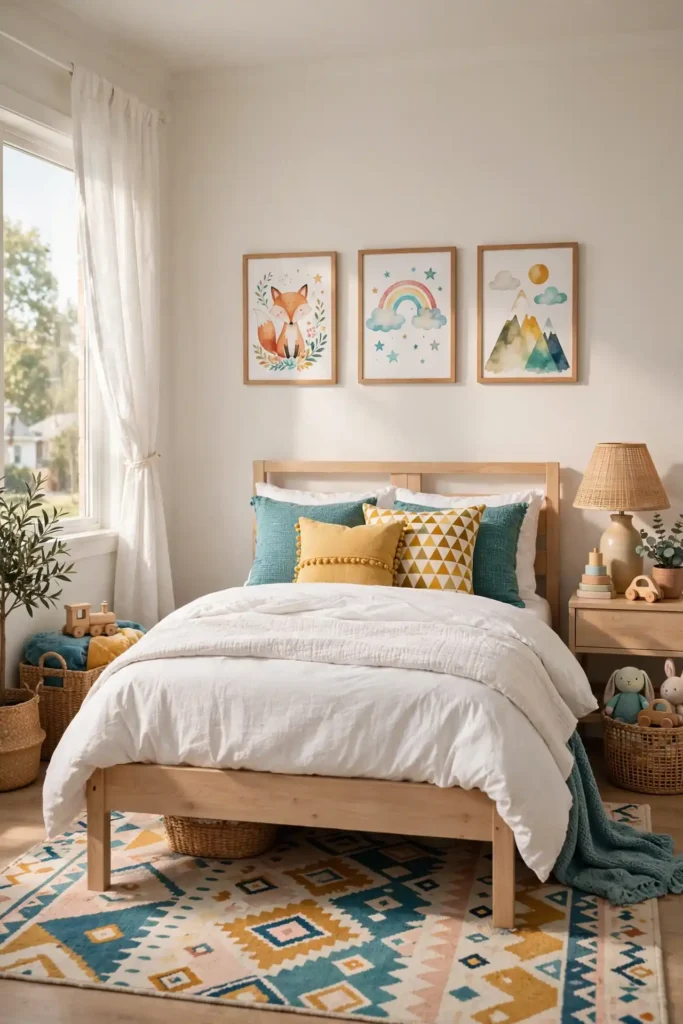
Once the neutral base is in place, layer in the fun with colorful throw pillows, a patterned rug, and playful wall art your child picks. Choose one accent color family — say, teal and mustard — and repeat it in three to five spots so the room feels designed instead of scattered. Affordable accents make this easy: Target’s Pillowfort line sells pillows for $8 to $20, and IKEA’s colorful MAMMUT stool costs under $15. Rotate these pieces seasonally or on birthdays to keep the room fresh. Because every bright piece is a removable layer, you can change the whole personality of the room in a weekend without touching a paint roller.
2. Bunk Beds for Shared Rooms
Bunk beds are the classic solution when two kids share one bedroom, freeing up roughly 30 square feet of floor space compared to two twin beds side by side. A twin-over-twin bunk fits comfortably in most rooms, leaving space for a dresser, a small desk, and an actual play area. Look for solid-wood frames with built-in guardrails on both sides of the top bunk and a sturdy ladder; IKEA’s MYDAL bunk ($199) and Target’s solid-pine options are popular, dependable picks. Follow the manufacturer’s age guidance — the top bunk is for kids six and older — and check that the ceiling leaves at least two feet of clearance above the top mattress.
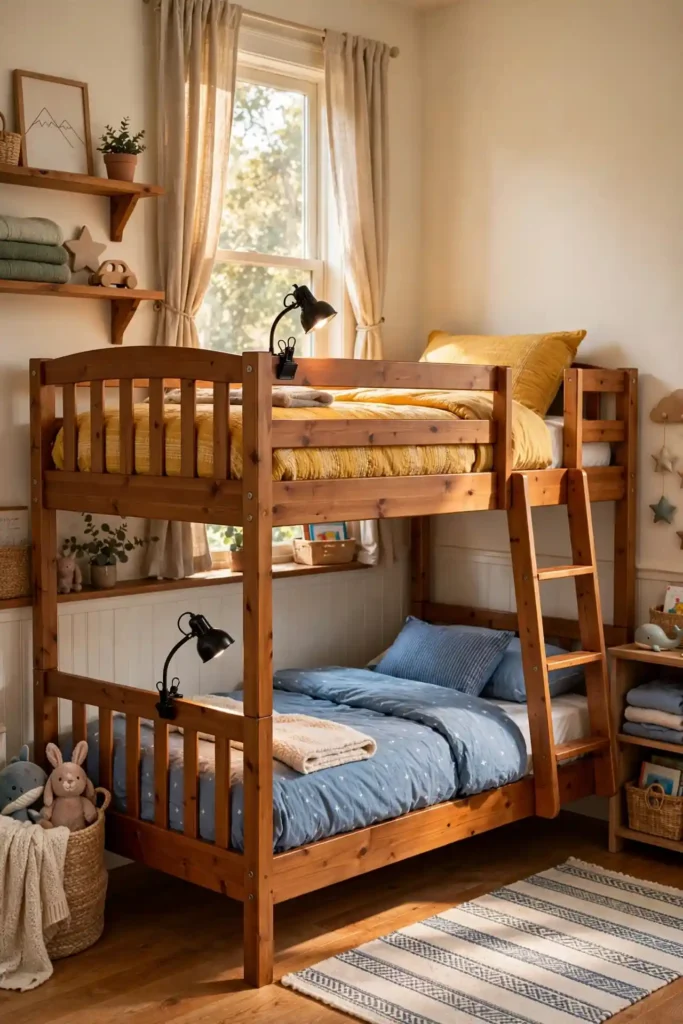
Make bunk beds feel special rather than cramped with bedding that gives each kid their own identity. Let each child pick a duvet color or patterned sheet set (around $30 to $50 at Target or Amazon) so each bunk feels like a personal retreat. Add clip-on reading lights ($10 to $15 each) to both bunks so one kid can read while the other sleeps, and hang a small fabric organizer pocket on each bed for books and water bottles. For tight rooms, an L-shaped bunk tucks into a corner and leaves the middle of the floor open. Vacuum under the bunks monthly — dust bunnies love the shadowed space beneath the lower bed.
3. Loft Bed With Play Area Below
A loft bed lifts the mattress five to six feet off the floor and hands you the entire footprint underneath — typically about 28 square feet of bonus space in a twin-size setup. That open area becomes a reading den, a homework station, or a pretend playhouse, depending on your child’s age. Solid-wood or metal loft beds from IKEA, Target, or Amazon run $150 to $400, and many include a built-in desk or open shelving at one end. Measure your ceiling first: you need at least 33 inches of sitting space between the top of the mattress and the ceiling so your child can sit up comfortably.

Design the space underneath to match how your child actually spends time. For a young reader, add a bean bag chair, a low bookshelf, and string lights to create a cozy hideout. For a school-age kid, slide in a compact desk and chair with a task lamp for homework. Curtain panels on tension rods ($15 to $25) turn the under-loft area into a secret fort — kids love the sense of ownership a “cave” gives them. Keep the ladder clutter-free and lay a soft rug beneath the bed to soften the space and muffle noise. Revisit the setup each year; the under-loft zone is the easiest part of the room to re-theme.
4. House-Frame Bed
A house-frame bed wraps a twin mattress in a wooden or metal frame shaped like a little house, with a peaked roofline and open sides that invite imaginative play. Toddlers moving from a crib love them because the low-to-the-floor profile (often under 12 inches high) feels safe, and the frame doubles as a fort when draped with a blanket. Simple house-frame beds start around $90 on Amazon or at IKEA, and many models come in white, natural wood, or gray. Skip the box spring — the slatted base supports the mattress directly — and pair it with a 6-to-8-inch mattress so the side rails stay meaningful.

Style the frame with bedding that plays up the cottage feel: gingham or striped sheets, a cozy knit throw, and a couple of stuffed animals by the headboard. Drape battery-operated fairy lights along the roof peak for bedtime magic — LED strands cost about $8 and stay cool to the touch. Hang a small bedside caddy from the frame to keep a water bottle and nightlight within reach. Because the design is simple and neutral, a house-frame bed works for boys, girls, and shared sibling rooms alike. It also photographs beautifully, which explains why it dominates Pinterest kids’ room boards.
5. Reading Nook
A reading nook gives your child a dedicated spot that signals “this is where books live,” and kids who have one genuinely read more. You only need a corner about four feet square: a plush floor cushion or small armchair, a basket of books, and warm lighting. Place the nook near a window for natural daylight, then add a wall-mounted reading light or small table lamp so it works after dark. IKEA’s kids’ POÄNG armchair or a simple foam reading cushion ($25 to $50) anchors the space well. Keep the book basket at kid height — a low shelf or canvas bin on the floor — so choosing a book is always easy.
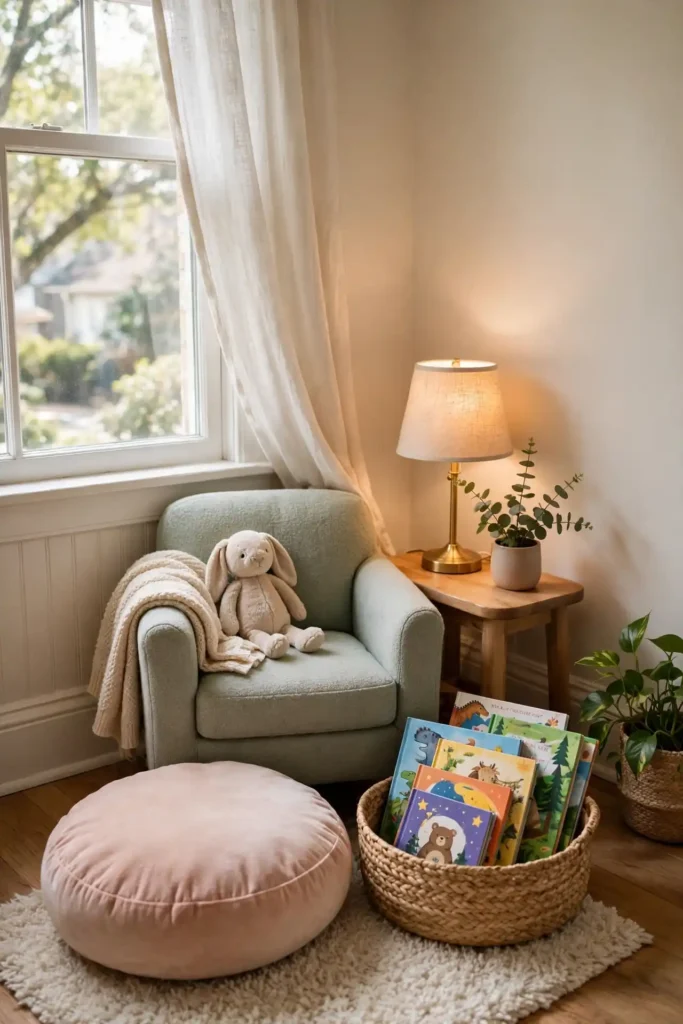
Make the nook inviting with layers of texture and softness. Add a small shag rug, a couple of throw pillows, and a knit blanket so the corner feels distinctly cozier than the rest of the room. Hang a framed print or a playful “read” sign above the chair to mark the spot as special. For older kids, swap the armchair for a hanging egg chair ($80 to $150 on Amazon) or a floor lounger with back support. Rotate the book selection every few weeks to spark new interest — the local library is free, so there is no excuse for a stale basket. A nook beside the bed can double as a calm-down corner.
6. Low Open Shelving
Low open shelving puts books, toys, and art supplies within your child’s reach, which builds independence and makes cleanup realistic. Front-facing book ledges let toddlers “shop” by cover — libraries have used this trick forever because it works. Aim for shelves no higher than 30 inches for preschoolers, with book ledges like IKEA’s BEKVÄM spice racks ($5 each) or a picture ledge from Target for displaying favorites. Anchor every shelf to the wall with the included anti-tip hardware; a climbing toddler can pull an unanchored unit down. Keep heavy items like wooden blocks on the lowest shelf so the center of gravity stays low.

Rotate what is displayed instead of cramming every toy onto the shelves. A curated, clutter-light shelf teaches kids to choose and, more importantly, to put things back. Use small baskets or bins on the shelves to corral fiddly pieces like crayons, puzzle parts, or LEGO bricks — label them with pictures for pre-readers. Place one “special” shelf slightly higher for items you want supervised, like paint sets or slime. Wipe shelves weekly; dust settles fast on open surfaces. As your child grows, the same shelving graduates from toy display to chapter books and trophies without a single new purchase.
7. Toy Storage Bins
Toy storage bins are the fastest route from chaos to calm because they make cleanup a single-step toss instead of a sorting chore. Choose sturdy, kid-sized bins that your child can lift and carry — fabric cubes, stackable plastic bins, or woven baskets all work. A cube organizer like the IKEA KALLAX (from $70) with fabric Drona inserts ($8 each) is the gold standard for kids’ rooms: each cube gets a category, and kids learn exactly where the cars, dolls, or blocks live. Stick-on picture labels ($5 on Amazon) help pre-readers sort without help.
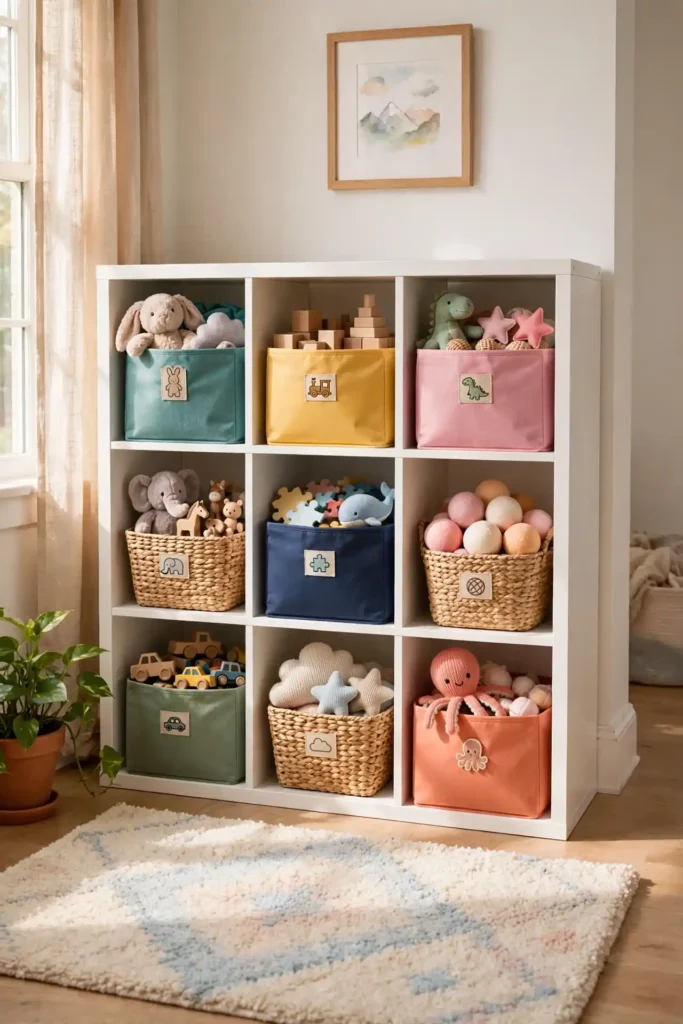
Keep the total number of bins limited — eight to twelve is the sweet spot for most kids’ rooms. More bins than that just means more hidden clutter. Do a toy audit every three months: donate outgrown items and stash half of the rest in a closet, then rotate them back in monthly so old toys feel new again. Use one large rolling bin ($20 to $30) for the daily-use stuffed animals or dress-up clothes that never seem to stay put. Bins with lids stack neatly and keep dust off toys your child ignores for weeks. Match bin colors to your accent palette so storage reads as decor, not an eyesore.
8. Chalkboard Wall
A chalkboard wall turns a blank stretch of wall into a giant creative canvas where drawing big is the whole point. Use chalkboard paint ($20 to $25 per quart at Home Depot or Lowe’s) on one accent wall or a framed plywood panel — two thin coats over primer give the smoothest surface for drawing. Season the painted wall by rubbing chalk sideways across the whole area and wiping it off before first use; this prevents ghosting. Pair the wall with a low tray or ledge for chalk, erasers, and a small step stool so little artists can reach the upper half.
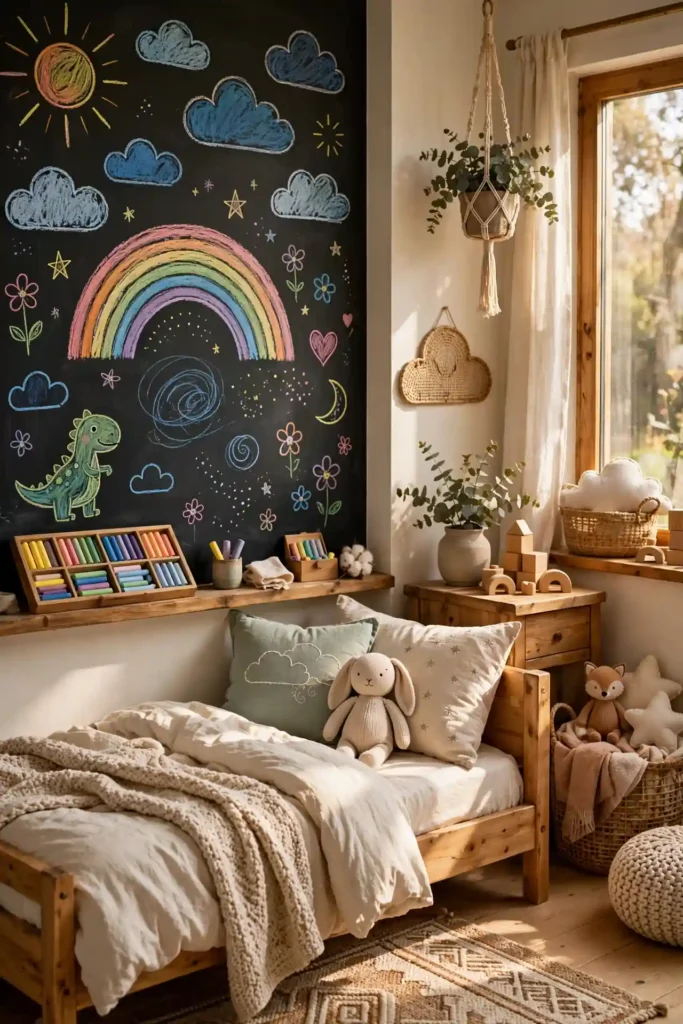
Chalkboard walls pull double duty as functional family space. Older kids use them for spelling practice, math work, or brainstorming school projects, while younger ones just draw. Add a strip of magnetic primer under the chalkboard paint (about $25 extra) and the wall holds alphabet magnets too. Dustless chalk keeps the air cleaner and your hands less messy — a real win if the wall is near bedding. Frame the chalkboard area with painted trim or a large frame so it looks intentional, not unfinished. Wipe it down weekly with a damp cloth to keep colors bright and reset the canvas for the next masterpiece.
9. Wall Decals
Wall decals deliver maximum personality with zero commitment, making them perfect for renters and for kids whose obsessions change yearly. Peel-and-stick decals from Amazon, Target, or Etsy ($15 to $40 per set) apply in minutes, remove cleanly, and come in every theme from dinosaurs to rainbows. Start with a smooth, clean wall — lightly textured or freshly painted walls (cured at least 30 days) hold decals best. Plan the layout on the floor first, then work from the center outward, smoothing air bubbles with a credit card as you go.

Use decals strategically rather than plastering every wall. A single accent wall of stars above the bed, a growth-chart tree in the corner, or scattered polka dots behind a reading nook reads polished; decals on all four walls read chaotic. Let your child place a few decals themselves — the repositionable kind forgive mistakes and give them ownership of the design. When tastes change, peel them off and the wall underneath is untouched. Keep a few spare decals in a folder for repairs if a corner curls. For a custom look, layer decals over painted shapes or stripes to build a one-of-a-kind mural.
10. Space Theme
A space-themed kids’ room taps into genuine wonder — planets, rockets, and constellations never stop being cool. Start with deep navy or charcoal walls (or a single accent wall if dark feels heavy), then layer glow-in-the-dark star stickers on the ceiling ($10 to $15 for a few hundred) for a planetarium effect at bedtime. A solar-system mobile, a rocket-ship lamp, and NASA-style bedding from Target or Amazon ($40 to $60 for a twin set) complete the scene. Keep furniture simple and modern — white or light wood — so the theme pieces pop against a clean background.
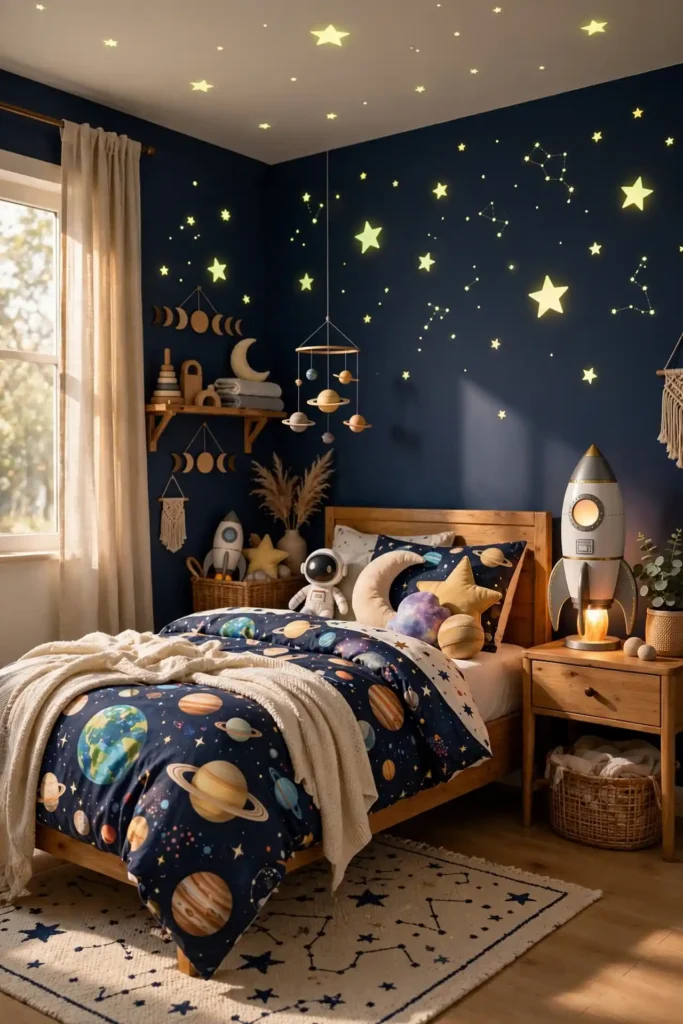
Ground the fantasy with educational details that grow with your child. A framed constellation poster, a moon-phase wall hanging, or a bookshelf stocked with space books turns decoration into learning. Add a small telescope by the window for real stargazing — kid-friendly models start around $50. For older kids, swap cartoon rockets for a sleek astronaut print and LED strip lights along the ceiling that shift colors like a nebula. Painted cardboard boxes become a rocket ship play station for about $10 in supplies. The best space rooms balance imagination and calm so bedtime still feels restful.
11. Jungle or Safari Theme
A jungle or safari theme brings the outdoors in with leafy greens, warm tans, and animal accents that feel adventurous but never babyish. Start with warm white or soft green walls, then add a peel-and-stick palm-leaf or animal mural on one accent wall ($30 to $60 on Amazon). Layer in stuffed animals, a giraffe-print throw pillow, and woven baskets that double as toy storage. Natural materials — rattan, jute, light wood — sell the safari-lodge feeling far better than plastic, so lean toward IKEA’s rattan pieces and Target’s woven textures when you shop.
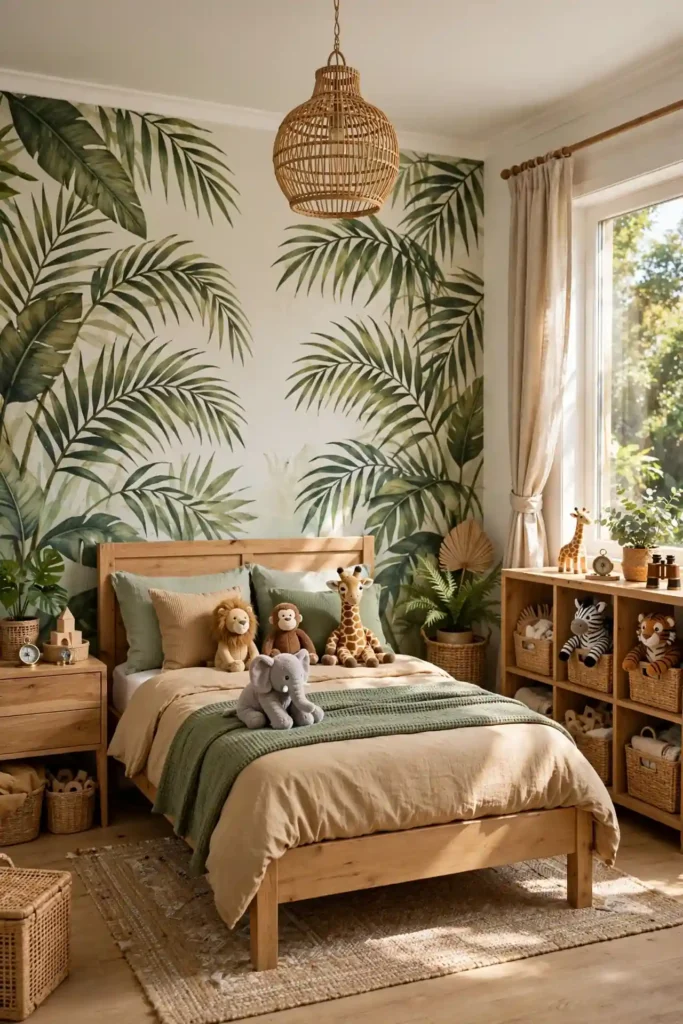
Add depth with lighting and texture. A rattan pendant light or a paper lantern casts the warm, dappled glow of a canopy, while a faux-fur throw in cream or tan suggests a safari blanket without the ethics question. For toddlers, a plush animal rocker or a play tent shaped like a hut ($40 to $70) becomes the room’s centerpiece. Older kids appreciate framed wildlife photography and a world-map pin board marking where their favorite animals live. Keep the palette to three or four earthy tones so the room feels curated, not like a toy-store explosion. This theme ages gracefully into the tween years.
12. Ocean Theme
An ocean-themed room feels breezy and calm — exactly the energy you want at bedtime. Paint walls a soft aqua, sea-glass green, or sandy beige, then add wave or fish wall decals ($15 to $35) on one accent wall. Nautical stripes on bedding, a rope-detail mirror, and a driftwood-style lamp bring the seaside in without going kitschy. Blues and whites keep the room light and airy, which works especially well in smaller bedrooms or rooms with limited natural light. Coral and sand accents warm the palette so it never feels cold.
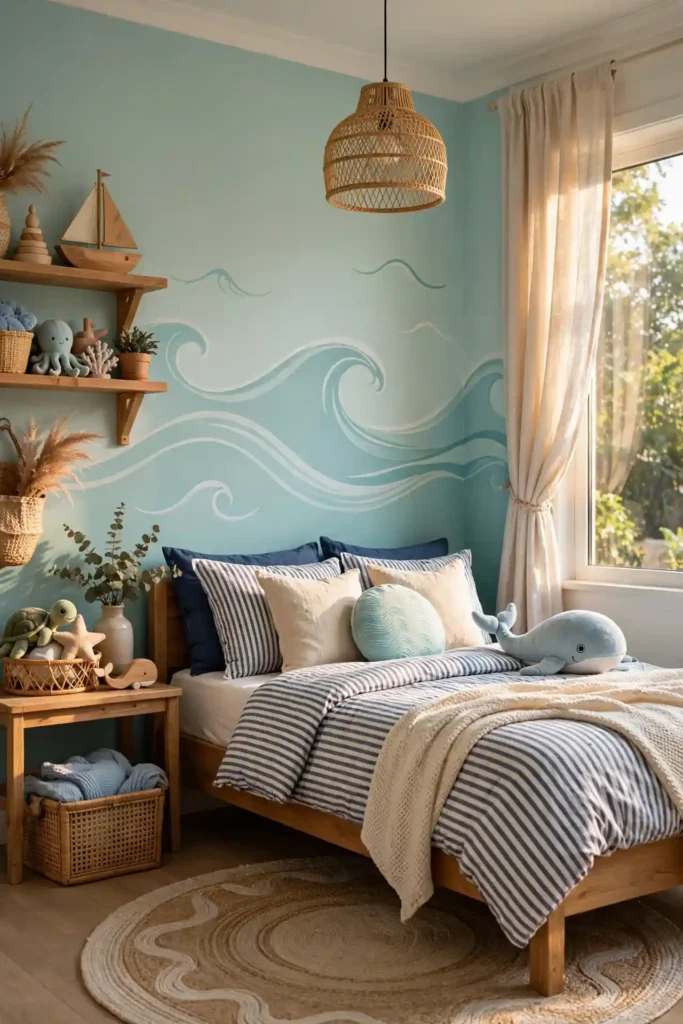
Layer the theme by age so it never feels babyish. Toddlers love a plush octopus and a play tent shaped like a shark; school-age kids go for a ship-in-a-bottle model, a globe showing the oceans, and books about marine life. Add a wave-patterned rug ($40 to $80 at Target) to anchor the bed area, and hang sheer white curtains that move like sails in the breeze. A small aquarium — even a low-maintenance 5-gallon tank — makes the theme come alive and teaches responsibility. Keep wall art simple: one large framed ocean print beats ten small ones. The palette transitions easily to a teen coastal look later.
13. Art Display Wall
An art display wall celebrates your child’s creativity and costs almost nothing to create. Dedicate one wall — or a hallway-facing section — to rotating their drawings, paintings, and crafts. Use clipboards screwed to the wall ($3 each at IKEA), wire with clothespins, or simple frames with the backs removed for easy swapping. Hang the display at your child’s eye level, not yours; a gallery that kids can reach invites them to curate it themselves. Change the artwork every month or two so the wall always feels fresh and current.

Make the display look intentional rather than cluttered. Stick to uniform frames or clips in one finish — black, white, or natural wood — so mismatched art still reads as a collection. Leave breathing room between pieces; a crowded wall overwhelms. Add one small shelf for 3D projects like clay figures or LEGO builds that deserve the spotlight. For grandparents’ favorites, scan the originals and print copies so the real masterpieces stay safe. An art wall also ends the “where do we put this?” dilemma after every school project. Photograph the wall before each refresh to keep a digital portfolio of their artistic journey.
14. Canopy Over the Bed
A canopy over the bed adds instant magic — a sheer fabric drape turns an ordinary twin bed into a hideaway, a castle, or a reading retreat. Hang a ready-made canopy net from the ceiling with a single hook and anchor ($15 to $30 at IKEA or Amazon), or drape gauzy curtains from a ceiling-mounted hoop for a fuller look. Choose lightweight, breathable fabrics like muslin or voile in white or a soft accent color. Keep the fabric clear of lamps and heaters, and make sure the canopy doesn’t block smoke detectors or sprinklers in the room.

Style the canopy to match your child’s personality. A blush or sage canopy with fairy lights feels like a fairy-tale retreat; a crisp white one with navy bedding reads like a sailor’s cabin. For reading, tuck a floor cushion and a clip-on light inside the canopy zone to create a tent-like nook. Wash the fabric every few months — canopies collect dust — and check the ceiling hook’s hold twice a year. Toddlers should have canopies hung well out of reach to avoid pulling. When your child outgrows it, the canopy comes down in minutes and the room instantly feels more grown-up.
15. Playful Rug
A playful rug anchors the room’s color story and gives kids a soft surface for the floor play that fills most of childhood. Choose a low-pile rug (under half an inch) so toy cars roll, blocks stack, and vacuuming stays easy. A 5-by-7-foot rug fits nicely beside a twin bed or under a small play table; expect to pay $50 to $120 at Target, IKEA, or Amazon for a washable option. Machine-washable rugs from brands like Ruggable or Tumble are worth the premium in a kids’ room — juice spills and mystery stains are inevitable, and hosing down a rug beats replacing it.
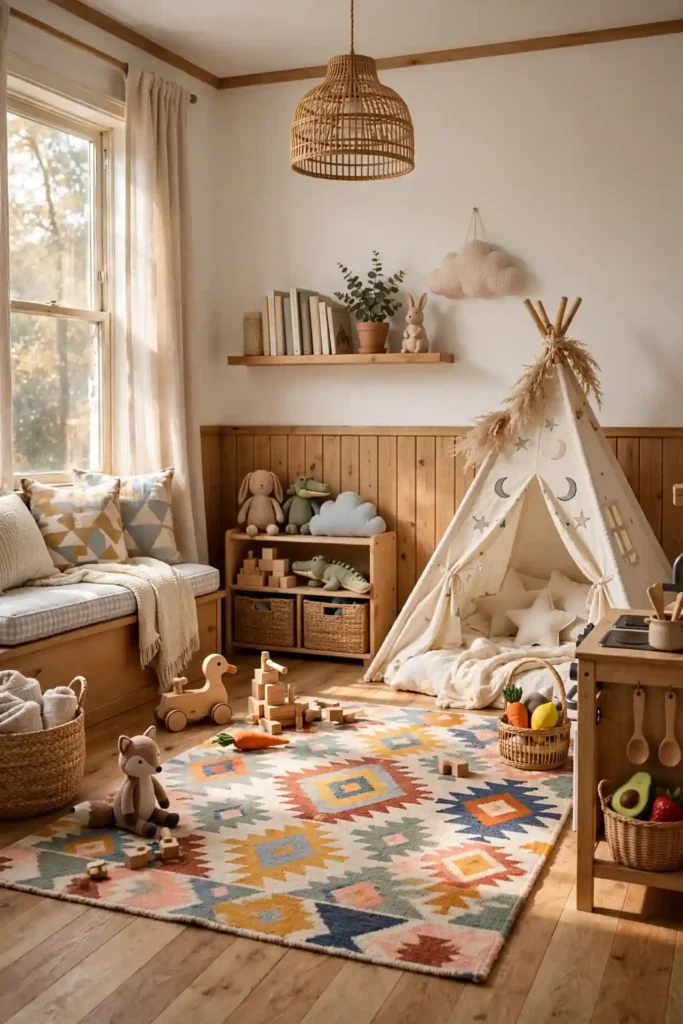
Pick a pattern that does decorating work for you. Road-map rugs invite imaginative play, geometric patterns add modern energy, and a bold color pulls your accent palette together. If your child has allergies, wash the rug monthly and skip high-pile shag that traps dust mites. Layer a smaller rug over a large neutral one for a designer look on a budget. Place a non-slip pad underneath — it keeps the rug in place during enthusiastic play and adds cushioning. Rotate the rug 180 degrees twice a year so wear and sun-fading stay even.
16. Growth Chart
A growth chart turns measuring your child into a treasured ritual — and a piece of decor that outlasts every toy. Skip the pencil marks on the doorframe and choose a wooden ruler-style chart ($20 to $40 on Amazon or Etsy) that hangs on the wall and moves with you when you relocate. Mount it about six inches off the floor on a flat wall section, away from baseboards that skew measurements. Use a fine-tip permanent marker to record the date, age, and height each time; many families measure on birthdays and the first day of school.

Make the ritual part of family life. Let your child stand tall, mark the spot together, and talk about what changed since last time — it becomes a conversation, not just a measurement. For siblings, use different ink colors or separate charts so each child has their own record. Some families add a photo from that year next to the mark for a visual timeline. If you prefer DIY, paint a ruler design directly on the wall with a yardstick and a steady hand for about $10 in supplies. Whichever style you choose, a growth chart is one of the few kids’ room pieces parents genuinely keep forever.
17. Desk for Homework
A dedicated homework desk teaches your child that work has a place — and keeps school papers off the kitchen table. You don’t need much space: a 32-to-42-inch-wide desk fits in a corner or along a wall in most kids’ rooms. Choose a desk with the work surface 22 to 26 inches high for elementary kids, or an adjustable-height model ($80 to $150 at IKEA or Amazon) that grows through middle school. Pair it with an ergonomic kids’ chair with foot support; dangling feet make fidgeting worse. Position the desk near a window or add a task lamp with warm-white light to reduce eye strain.

Keep the desk setup simple and distraction-free. A small organizer for pencils, a charging spot for a tablet, and a bulletin board or whiteboard for assignments cover 90 percent of homework needs. Avoid facing the desk toward the TV or the room’s play zone — a wall or window view helps focus. For shared rooms, back-to-back desks or a long countertop along one wall give each child defined territory. Stock a homework caddy with sharpened pencils, erasers, and a ruler so “I can’t find a pencil” never delays the start. Tidy the desk together each evening; a clean surface makes tomorrow’s homework feel easier.
18. Climbing Wall or Indoor Swing
A climbing wall or indoor swing burns off energy on rainy days and builds strength, coordination, and confidence. A simple climbing wall needs only a 4-by-8-foot section of wall: screw textured climbing holds ($30 to $60 for a set of 20 on Amazon) into studs — never just drywall — and lay a 4-inch crash mat or thick gym mat beneath. An indoor swing hangs from a ceiling joist with a heavy-duty mount rated for at least 300 pounds ($25 to $40); hammock swings and pod swings are favorites because they cocoon kids. Always locate the joist with a stud finder and follow the hardware’s weight ratings exactly.
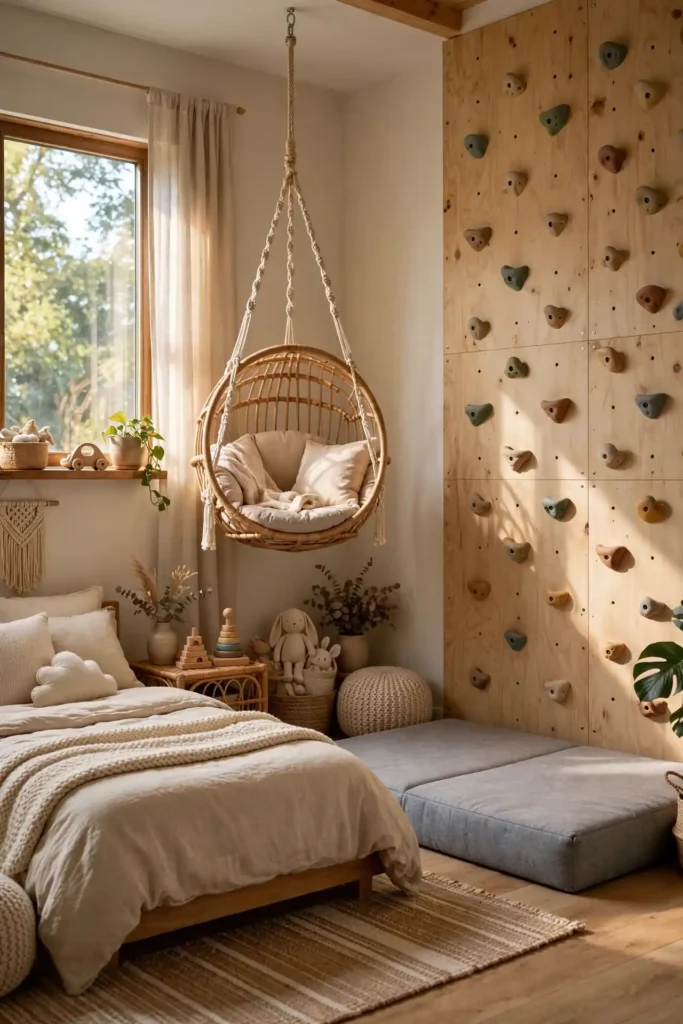
Match the equipment to your child’s age and your space. Toddlers do best with a low Pikler triangle or a gentle bucket swing; school-age kids can handle a taller climbing wall or a trapeze bar. Keep a clear landing zone of at least six feet around swings, free of furniture and sharp corners. Set house rules: one child at a time, no climbing above the top hold, and swings are for sitting. Inspect bolts and ropes monthly — kids’ equipment loosens with use. When installed correctly, active play features are among the most-used elements in a kids’ room, far outlasting most toys.
19. Soft Lighting
Soft lighting makes a kids’ room feel safe and cozy after dark, and it is one of the cheapest mood upgrades you can make. Layer three types: a warm overhead light on a dimmer, a bedside lamp for reading, and a nightlight for middle-of-the-night wakeups. Swap harsh daylight bulbs for warm-white LEDs (2700K), which feel calm and flattering. A dimmable ceiling fixture ($30 to $60) lets you go from bright playtime to sleepy wind-down with one switch. Plug-in nightlights with dusk-to-dawn sensors ($8 to $12 for a two-pack) handle themselves automatically.

Add personality with fun fixtures your child loves. String lights along a headboard or canopy, a rocket-ship or animal-shaped lamp on the nightstand, or a star-projector nightlight ($20 to $35) that turns the ceiling into a galaxy all make bedtime something to look forward to. Keep cords secured behind furniture and out of reach of toddlers, and choose LED bulbs that stay cool to the touch. For kids who fear the dark, a slowly dimming “sunset” lamp eases the transition to sleep. Avoid blue-toned or flickering lights near bedtime — they signal daytime to the brain and delay sleep.
20. Dress-Up Corner
A dress-up corner fuels the imaginative play that defines early childhood, and it contains the costume explosion to one tidy spot. All you need is a low clothing rack or a few wall hooks at kid height, a small mirror, and a bin or trunk for accessories. A garment rack from IKEA or Amazon ($25 to $40) holds capes, tutus, and uniforms without overwhelming the room. Hang a shatterproof acrylic mirror low on the wall — kids spend ages admiring their transformations. Add a small rug to define the “stage” where performances happen.
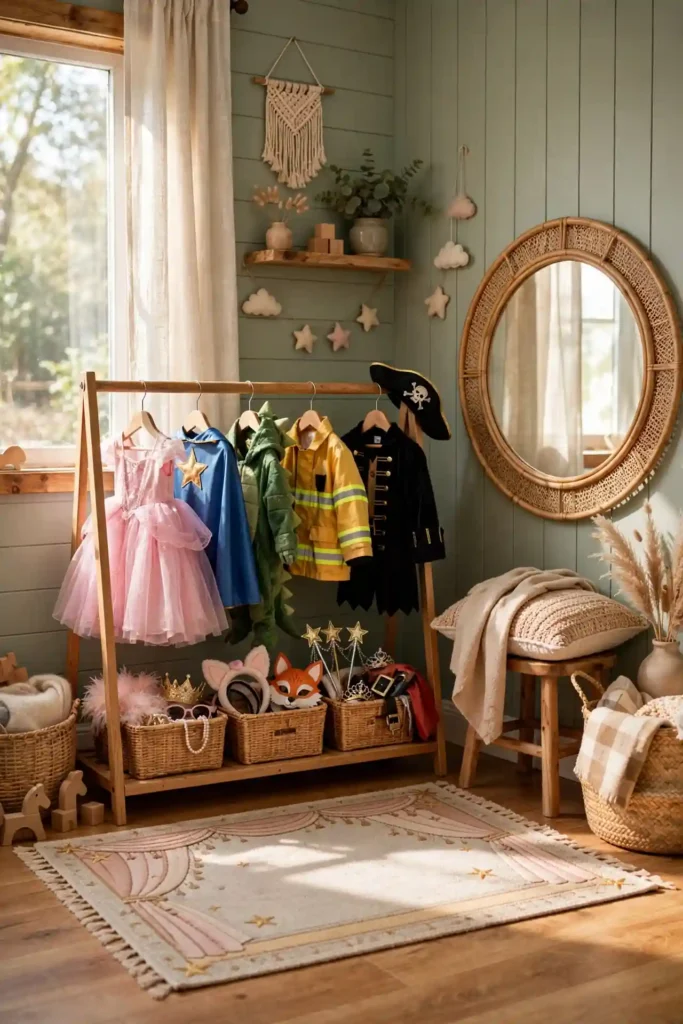
Stock the corner thoughtfully rather than endlessly. A dozen versatile pieces — capes, hats, a doctor’s coat, a firefighter jacket, scarves — spark more creativity than fifty flimsy costumes. Thrift stores are gold mines for dress-up clothes at $2 to $5 per piece. Rotate the selection seasonally: Halloween costumes get a second life here after October. Include a few “grown-up” props like a briefcase, a stethoscope, or a tool belt for role-play variety. Keep accessories in labeled bins so cleanup is part of the game. As kids outgrow dress-up, the rack converts easily to a regular wardrobe or sports-gear station.
21. Under-Bed Storage
Under-bed storage reclaims the dead space beneath the mattress — up to 20 cubic feet under a standard twin — for toys, clothes, or keepsakes. Rolling bins designed for the 7-to-8-inch clearance under most bed frames ($15 to $30 each at Target or IKEA) slide out easily for small hands. Vacuum-seal bags work brilliantly for out-of-season clothes or spare bedding, compressing bulky items flat. If you are buying a new bed, consider a captain’s bed or storage bed with built-in drawers ($200 to $400); the drawers cost less than a separate dresser and keep everything dust-free.

Organize under-bed storage by frequency of use. Everyday toys and pajamas go in the front bins your child can reach; keepsakes, memorabilia, and outgrown-but-sentimental clothes go in labeled boxes pushed to the back. Clear bins or photo labels on the ends let kids find things without pulling everything out. For bunk or loft beds, the space beneath the lower bunk still fits flat bins — just measure the clearance first. Vacuum under the bed quarterly; dust accumulates fast in these hidden zones. Teach kids the one rule: if it doesn’t fit under the bed, something has to go — a gentle, built-in limit on clutter.
22. Personalized Name Sign
A personalized name sign above the bed or on the door tells your child “this room is yours,” and it is one of the most-loved kids’ room details. Options range from wooden cutout letters ($20 to $50 on Etsy) to neon-style LED name signs ($40 to $80 on Amazon) to simple framed prints with their name in a fun font. Hang the sign at eye level for your child — roughly 36 to 48 inches off the floor depending on age — so it feels like theirs, not like adult decor. For shared rooms, a sign on each bed or each side of the room marks personal territory.
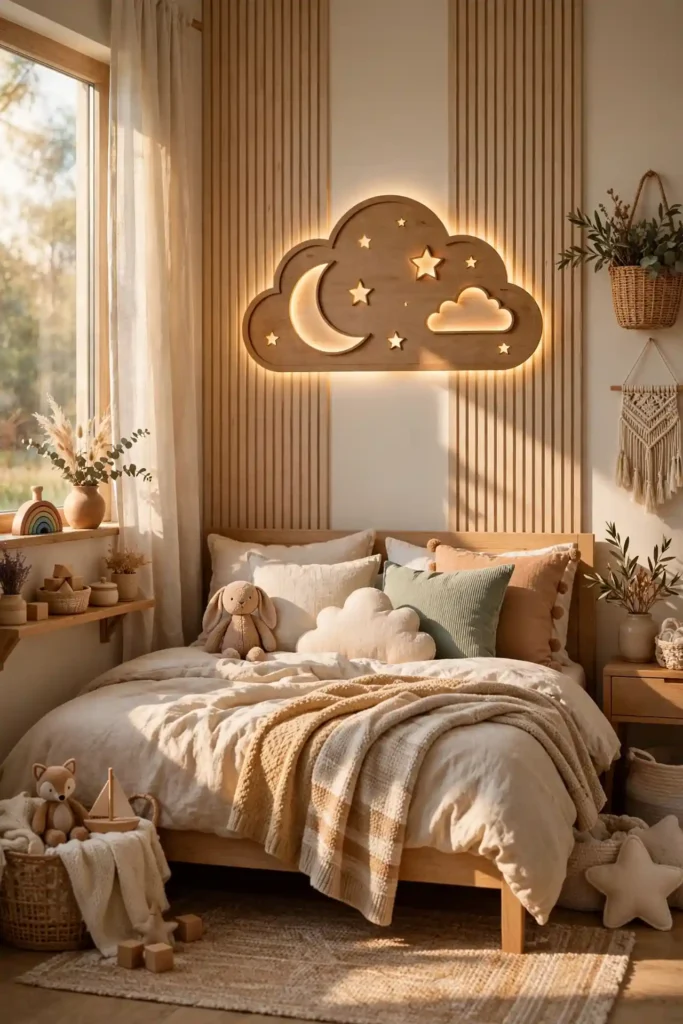
Match the sign style to the room’s personality. A rustic wood sign suits a farmhouse or safari theme; a glowing LED script fits a modern or glam room; colorful painted letters work in a playful preschool space. Many Etsy sellers customize colors, fonts, and sizes, so you can coordinate exactly with your palette. DIYers can cut letters from craft-store wood with a jigsaw and paint them for under $15 total. Use removable adhesive strips for lightweight signs so walls stay damage-free. A name sign also makes a wonderful gift for a new big-kid room reveal — kids light up seeing their name in lights.
23. Blackout Curtains
Blackout curtains are a sleep-quality investment: blocking light helps kids fall asleep faster and stay asleep, especially during summer’s long evenings and early sunrises. True blackout curtains block 99 to 100 percent of light; “room darkening” versions block less, so read the label. Expect to pay $20 to $45 per panel at Target, IKEA, or Amazon, and buy panels at least twice the window width for full coverage without gaps. Hang the rod 4 to 6 inches above the window frame and extend it 3 to 4 inches past each side so light can’t leak around the edges.

Choose curtains that work for both day and night. Layer blackout panels behind sheer curtains on a double rod ($25 to $40): sheers filter daylight softly during playtime, blackouts close for naps and bedtime. Pick a color or pattern your child likes — stars, stripes, or a favorite accent color — since these curtains are highly visible. Wash them every few months; dust on curtains aggravates allergies. For kids who nap, blackout curtains in the nursery or toddler room are practically non-negotiable. Portable blackout shades ($25) are a smart add for travel or grandma’s house. Good sleep is worth every penny of this upgrade.
24. Let Kids Help Choose
Letting kids help choose their room decor builds ownership — and a child who chose the bedding is far more likely to keep the room tidy. Offer guided choices rather than a blank slate: pick three bedding sets you approve of and let your child select one, or narrow paint to two shades and let them decide. This works for every age: toddlers point at a favorite color, school-age kids browse Pinterest boards with you, and teens can manage a budget for their own refresh. Set the boundaries first (budget, what stays), then hand over real decisions within them.

Expect their taste to surprise you — and roll with it within reason. A neon-green accent wall might horrify you, but it is one wall, and repainting costs $30 and a Saturday. When kids feel heard, bedtime battles often ease because the room genuinely feels like theirs. Take them shopping (in-store or online) and let them touch fabrics and compare options; the process teaches decision-making. Photograph the finished room together — kids love the reveal moment. Revisit choices yearly with a mini-refresh: new throw pillows or art prints keep their evolving taste reflected without a full redo. Collaboration now builds a teen who trusts your design instincts later.
Kids Room Ideas by Age
Kids’ rooms should evolve with developmental stages, and planning by age saves you from redoing everything every two years. For babies and toddlers (0–3), prioritize safety and simplicity: a crib or floor bed, blackout curtains, soft lighting, and open toy bins at floor level. Preschoolers (3–5) need imaginative play zones — a dress-up corner, a reading nook, and a small art table. School-age kids (6–12) need a real homework desk, organized storage they can manage, and space for hobbies. Teens (13+) want privacy, a full-size desk, good lighting, and decor that reflects their identity.

Design with transitions in mind to stretch your budget. A convertible crib becomes a toddler bed and then a daybed; a neutral wall color works from nursery to teen years; adjustable-height desks grow with your child. Involve kids more in decisions as they age — a five-year-old picks pillow colors while a fourteen-year-old should co-design the whole room. Reassess the room at each birthday: what still works, what frustrates, what needs to go? Small annual updates beat massive overhauls. The goal is a room that always fits the child living in it right now, not the baby they were.
Safety Tips for Kids Rooms
Safety comes first in any kids’ room, starting with anchoring every dresser, bookshelf, and TV stand to the wall with anti-tip kits ($8 to $12 for a multi-pack). The U.S. Consumer Product Safety Commission warns that tip-over accidents injure thousands of children yearly — and most are preventable with two screws into a stud. Keep the crib or bed away from windows, cords, and curtain pulls; blind cords should be cordless or fitted with cleats mounted at least five feet high. Choose cribs and toddler beds that meet current ASTM and CPSC standards, and check for recalls at cpsc.gov before buying secondhand furniture.
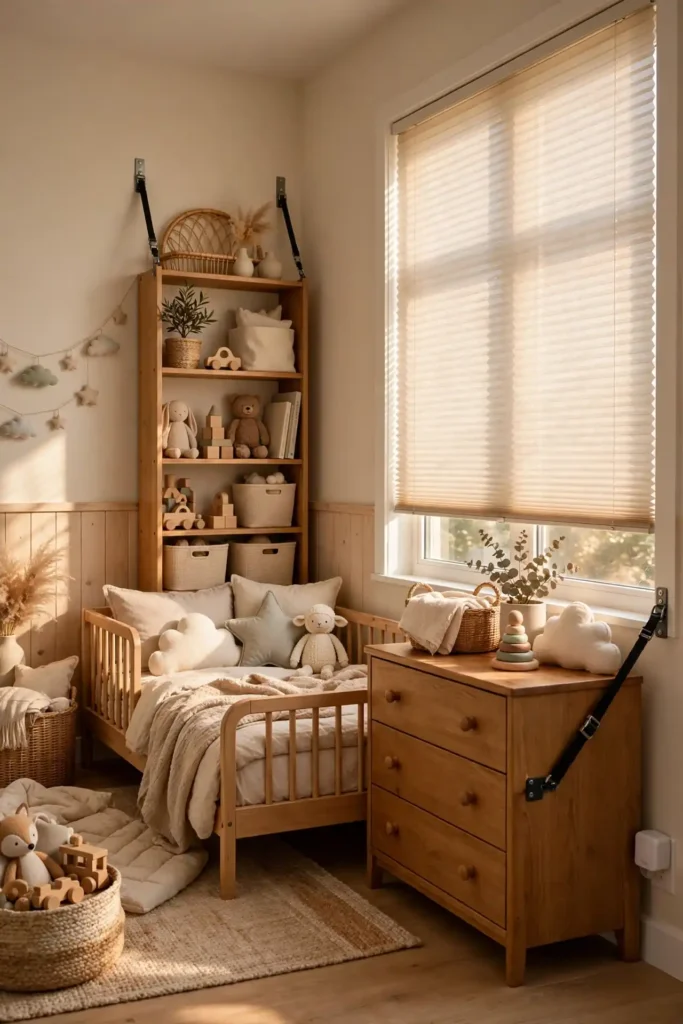
Layer in age-appropriate details as your child grows. Cover outlets with sliding safety plates, secure heavy wall art and mirrors with proper anchors, and keep small objects, button batteries, and magnets out of reach of children under three. For top bunks and lofts, confirm guardrails extend at least five inches above the mattress and gaps are under 3.5 inches to prevent entrapment. Install a smoke detector and carbon monoxide alarm in or near every bedroom and test them monthly. Use LED bulbs that stay cool, keep space heaters out of kids’ rooms entirely, and store medications and cleaning products in locked cabinets. Revisit the checklist every birthday.
Storage That Works for Kids
Storage only works for kids if they can actually use it — which means low, simple, and visible beats tall, complex, and hidden every time. Open bins at floor level, low cubbies, and hooks at kid height let even toddlers put things away independently. The IKEA TROFAST system (frames from $40, bins $5 to $10 each) is beloved because kids can see everything and slide bins in and out themselves. Label bins with pictures for pre-readers and words for older kids. Keep the total system simple: every toy needs one obvious home, and “miscellaneous” bins become black holes, so avoid them.

Build cleanup into the room’s daily rhythm. A five-minute tidy before dinner or bedtime, done together with music playing, keeps storage from overflowing. Purge quarterly: donate outgrown toys and broken items, and box up half of what’s left for rotation. Store out-of-season clothes and keepsakes up high or under the bed — prime real estate belongs to daily-use items. For small rooms, go vertical with wall-mounted shelves for books and use the back of the door for shoe organizers holding art supplies or small toys. When storage matches your child’s height and habits, tidying stops being a battle and starts being a habit.
When it comes to kids room ideas, the best results come from balancing style, comfort and everyday function. Use this list as your go-to guide for kids room ideas, and start with the ideas that fit your space best.
How to Plan Kids Room Ideas Step by Step
Start planning your kids’ room with measurements and a budget before you buy a single thing. Measure the room’s length, width, ceiling height, and window and door positions, then sketch a simple floor plan on graph paper or a free app. Set a realistic budget — $300 to $800 covers a solid refresh with paint, bedding, and storage, while a full furniture overhaul runs $1,500 to $3,000. List must-haves (bed, dresser, desk) versus nice-to-haves (canopy, climbing wall) and price the must-haves first. Shop your home before shopping stores: an old bookshelf with fresh paint works beautifully.

Next, choose your foundation and involve your child in the fun decisions. Pick wall color, flooring, and major furniture in neutral, long-lasting styles, then let your child choose bedding, art, and accent colors within your budget. Order big furniture first since delivery takes weeks, and tackle the room in this order: paint, furniture placement, window treatments, lighting, then decor and storage. Assemble everything before the big reveal if you want the wow factor. Finally, live in the room for two weeks before buying extras — you’ll discover what is actually missing. Photograph the finished space; you’ll want the before-and-after.
- Choose a neutral base color.
- Select a bed that suits age and space.
- Plan storage at kid height.
- Add a rug, lighting and window treatments.
- Personalize with themes, art and decals.
Final Thoughts on Kids Room Ideas
The best kids’ rooms balance what children want with what parents need: fun for them, function and sanity for you. You don’t need a designer budget or a huge bedroom — the ideas in this guide work in rentals, small rooms, and shared spaces because they focus on smart choices, not square footage. Start with the foundations that matter most: safe furniture, good sleep conditions, and storage your child can actually use. Then layer in the personality with bedding, art, and accents your child helped choose. A room built this way grows with your family instead of fighting it.

Remember that a kids’ room is never truly finished, and that is exactly as it should be. Tastes change, kids grow, and the room should flex with them — that is why removable, affordable layers beat permanent commitments every time. Revisit the space each year with fresh eyes: what still delights your child, what frustrates them, what could work harder? Small, regular updates keep the room feeling current without the stress or cost of a full redo. Most importantly, enjoy the process together. Designing their space is one of the rare projects where your child is genuinely the expert on what matters.
Save these ideas and follow along for more family home inspiration.
Frequently Asked Questions About Kids Room Ideas
How much does it cost to decorate a kids’ room? A thoughtful refresh typically runs $300 to $800, covering paint ($30 to $60), new bedding ($50 to $120), storage bins and shelving ($80 to $200), and decor accents. A full overhaul with new furniture — bed, dresser, desk — lands between $1,500 and $3,000 depending on brands and whether you buy from IKEA, Target, or Pottery Barn Kids. Save money by keeping existing furniture and spending on high-impact, low-cost changes: paint, bedding, rugs, and wall art deliver the biggest visual transformation per dollar. Shop sales at Target, IKEA, and Amazon, and check Facebook Marketplace for quality secondhand kids’ furniture.
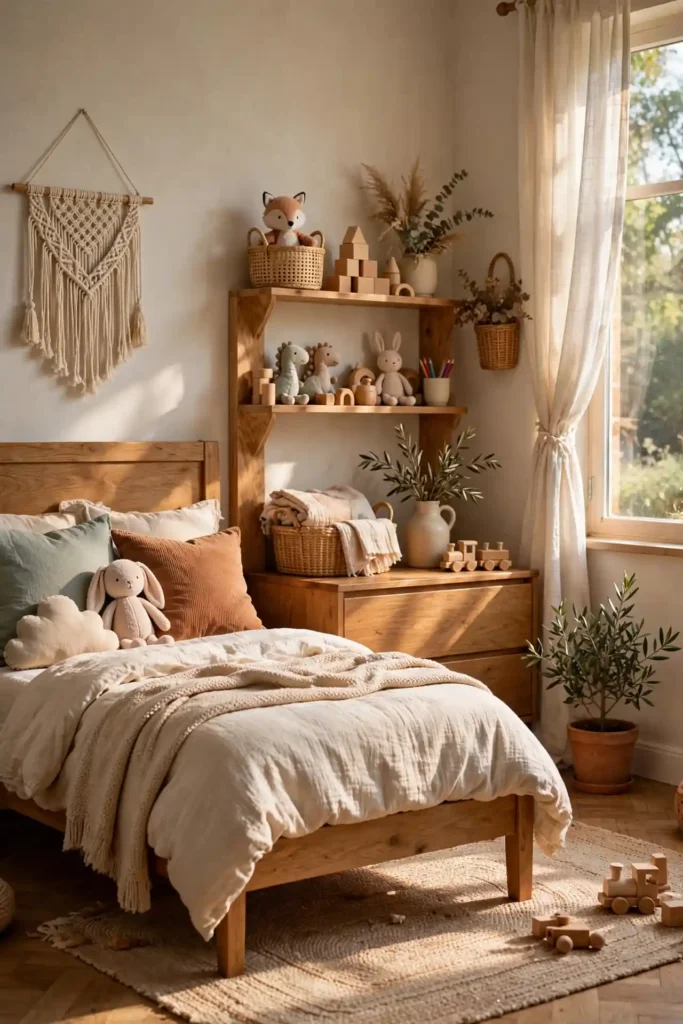
How do you decorate a small kids’ room? Prioritize vertical space and multi-functional furniture. Choose a loft or bunk bed to free up floor area, mount shelves and hooks on walls instead of using floor-standing units, and use under-bed rolling bins for hidden storage. Light wall colors, a large mirror, and minimal clutter make the room feel bigger. Keep the palette to two or three colors and pick furniture scaled to the room — an oversized dresser in a 9-by-10-foot room eats precious play space. Fold-down desks and nesting tables add function without permanent footprint. Every piece should earn its place by serving at least two purposes.
How do I decorate a kids room on a budget?
Use wall decals, thrifted furniture, DIY art displays and colorful bedding.
What colors are best for kids rooms?
Soft neutrals with playful accents let the room adapt as kids grow.
How do I organize toys in a kids room?
Use labeled bins, low open shelves and rotate toys regularly.
Are bunk beds safe?
Yes, with guardrails on top and age guidelines followed; usually for kids 6 and older on the top bunk.
How do I make a kids room grow with them?
Choose neutral furniture and update themes through decor.





3 Comments