

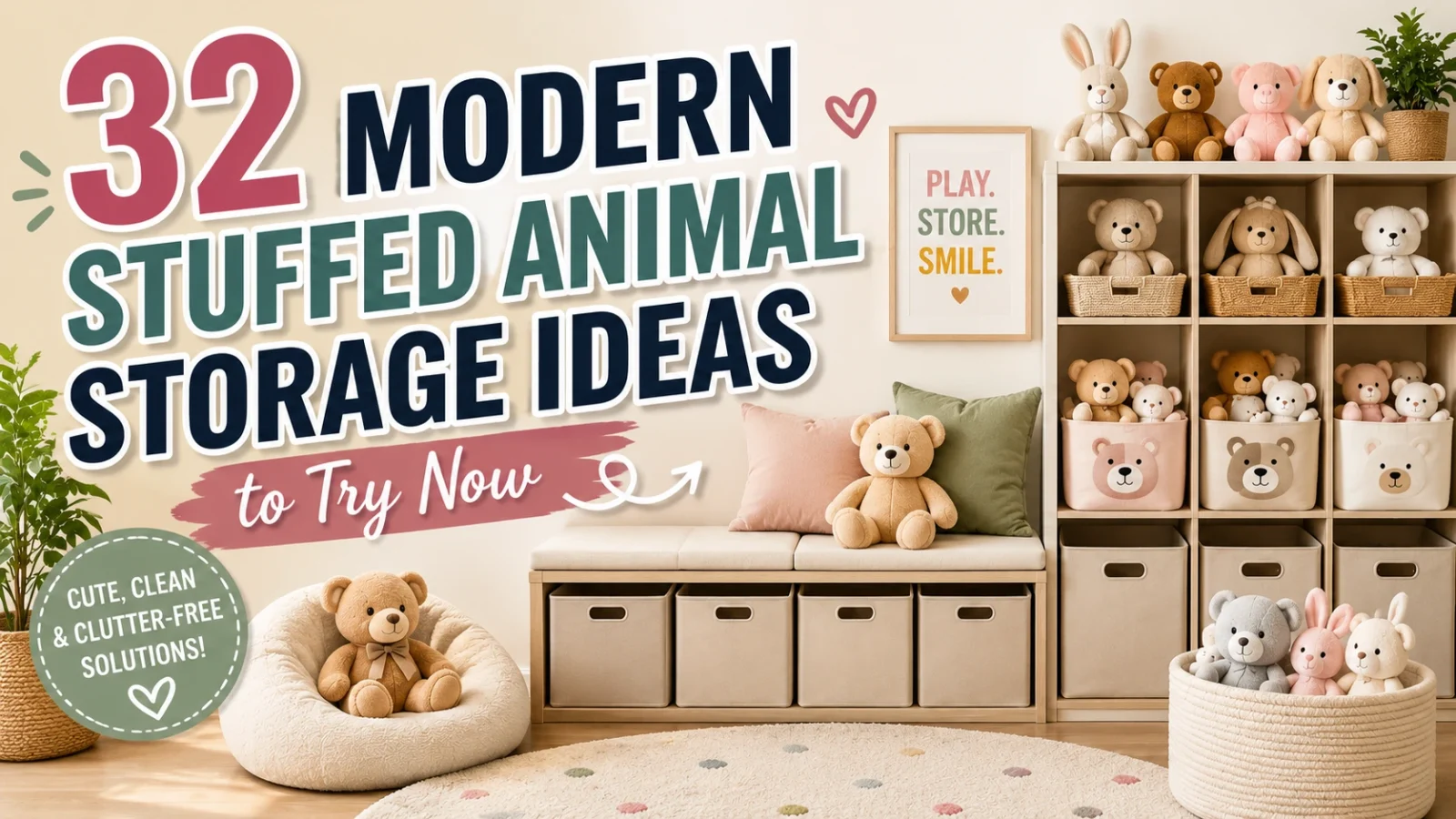
Modern stuffed animal storage ideas answer the question every parent eventually asks: where do all these plushies actually go? Stuffed animals multiply faster than any other toy — birthdays, claw machines, well-meaning relatives — until the bed disappears and the floor becomes a fur carpet. The good news: today’s storage solutions treat plushies as decor rather than clutter, displaying favorites beautifully while corralling the crowd invisibly. From hanging hammocks and zoo cages to bench seats and wall gardens, this guide collects thirty-two stylish, practical ideas that work for nurseries, kids rooms, and small shared spaces alike.
The smartest approach layers three storage tiers: display for the beloved few, active storage for the current rotation, and archive for the sentimental reserve. Add a regular declutter-and-donate rhythm and the collection stays manageable forever. Every idea below fits one of those tiers, and most cost little or double as furniture the room needed anyway. Whether your child owns twelve plushies or one hundred and twenty, at least five of these solutions will fit your space, your budget, and — crucially — your child’s ability to tidy independently. Let the great plushie reorganization begin.
1. The Stuffed Animal Zoo Cage
A tall wooden frame with bungee-cord “bars” lets kids stuff animals inside and pull favorites out between the stretchy cords — storage that plays like a toy. The zoo concept turns tidying into feeding-time at the enclosure, which is why children actually use it. DIY versions need four boards and bungees; bought versions come in white or natural wood to match modern rooms. Floor footprint stays small while capacity runs high. For plushie populations in the dozens, the zoo remains the reigning champion of fun-per-square-meter.
2. Ceiling-Corner Hammock Classic, Modernized
The plushie hammock — a mesh or cotton net stretched across an upper corner — keeps the collection visible, aired, and completely off the floor. Modernize the classic with a neutral cotton-rope version instead of primary-colored mesh, hung above the reading corner where the animals “watch over” storytime. Install with proper anchors and keep it high enough to stay decorative. One hammock holds fifteen to twenty medium plushies. It uses the one space every room has spare: the air near the ceiling.
3. Bench Seat with Hidden Plushie Storage
A storage bench at the bed’s foot or under the window swallows two dozen plushies invisibly while providing seating the room needed anyway. Choose upholstered lids with soft-close hinges for finger safety, in oat boucle or navy for the modern look. Bedtime routine becomes simple: the crowd goes in the bench, the chosen two stay on the pillow. Furniture that stores is the small-room golden rule, and nothing hides fluffy chaos more gracefully than a bench everyone assumes is just a bench.
4. Picture Ledge Plushie Parade
Narrow picture ledges — the kind sold for books — mounted in rows become display shelving where favorite plushies sit in a charming parade against the wall. The shallow depth keeps them tidy-looking rather than heaped, and children curate which friends earn ledge status. Paint ledges wall-color for the floating modern effect. Two or three ledges hold fifteen display-worthy animals. This idea converts the collection’s cutest members into intentional wall decor, which is the entire modern-storage philosophy in one move.
5. Rope Basket Trio in Graduated Sizes
Three woven rope baskets — large, medium, small — in cream with subtle black or tan stitching hold the active plushie population while reading as Scandinavian decor. Assign by size: big bears in the floor basket, mediums in the shelf basket, minis in the small one. Soft sides mean no bumped heads, handles mean easy relocation, and the natural texture warms modern rooms. Baskets are the workhorse of every storage tier list because a filled basket still looks styled; a filled corner just looks buried.
6. Bean Bag Cover Storage Hack
An unfilled bean bag cover stuffed with plushies becomes genuinely comfortable seating — the collection literally disappears into furniture. Choose a washable cover in corduroy or teddy fabric; fifty small-to-medium animals fill a standard child size. Kids sit on their own plushie hoard while the room reads spotless. When a specific friend is needed, unzip and rescue. This is the single highest-capacity idea in this list, and the one that makes visiting grandparents ask where all the animals went.
7. Hanging Chain of Clips
A vertical chain or ribbon with clips every fifteen centimeters, hung from the ceiling or a wall hook, holds a column of plushies dangling in a playful totem. The vertical format uses dead corners and narrow wall slivers beside wardrobes. Choose wooden clips and natural cord for the modern version. Rotating who hangs keeps it fresh, and clipping animals up is fine-motor practice disguised as tidying. Ten to twelve animals per chain, zero floor space, high delight factor.
8. Under-Bed Rolling Plushie Drawer
Dedicate one rolling under-bed drawer entirely to plushies: the overflow slides out for play, slides away for calm. Lidded versions keep dust off; clear fronts let kids see the residents. This is the archive tier’s front line — animals not currently beloved but not ready for donation. Label it with a plushie icon. The under-bed zone stores more stuffed volume than any shelf while keeping the visible room minimal, which is why every serious storage plan starts beneath the mattress.
9. Wall-Mounted Wire Baskets
Industrial-style wire baskets mounted in a column up the wall hold plushies visibly while keeping floors clear — modern utility aesthetic meets soft toy chaos. Black wire suits monochrome rooms; gold warms neutrals. Mount the lowest basket at child height for independent access, higher ones for parental-rotation stock. Wire’s transparency lets colorful plushies become the decor inside the graphic frames. Three baskets hold twenty animals in a footprint of zero floor centimeters.
10. The Plushie Swing Shelf
A small wooden swing — two ropes, one plank — hung from the ceiling or a shelf bracket seats three or four favorite animals in permanent adorable flight. Pure display-tier storage that functions as mobile-style decor above the bed corner or changing area. DIY from a cutting board and cotton rope in twenty minutes. Children rearrange the passengers endlessly. Capacity is tiny but charm is enormous; every storage system deserves one purely delightful element, and this is it.
11. Cube Shelf with Basket Inserts
The classic cube organizer modernizes plushie storage: open cubes display sitting favorites like museum niches while fabric-basket cubes hide the masses. Alternate display and hidden cubes in a checkerboard for the styled look. Choose oak-and-white units with oat baskets for current aesthetics. A 2×4 unit manages forty-plus animals across both tiers. Anchor to the wall always. This hybrid display-plus-hide approach in one piece of furniture makes cubes the most complete single-purchase answer on the list.
12. Toy Hammock Under the Loft Bed
Loft and bunk beds hide bonus storage: stretch a hammock or net beneath the upper bunk’s frame, creating a suspended plushie loft in otherwise dead air. The animals hang cozily below the sleeper like cargo in a ship’s berth. Use frame-mounted hooks, no drilling needed. Kids in the lower bunk get a soft canopy of friends above. This idea costs one net and exploits architecture already in the room — the definition of smart storage.
13. Rotating Display: The Plushie of the Week
Institute a single place of honor — a small shelf, a mini chair, a spotlight ledge — where one chosen animal reigns weekly while the rest live in baskets. The rotation ritual makes limited display feel like celebration rather than restriction, and children anticipate choosing day eagerly. The honored plushie joins bedtime; the crowd waits its turn. This idea is storage psychology at its finest: less visible stuff, more perceived specialness, tidier room, happier child.
14. Vacuum Bags for the Sentimental Archive
Outgrown-but-unpartable plushies compress into vacuum storage bags at a quarter of their volume, then stack in the closet’s top shelf or under-bed archive. Label by era: baby animals, preschool crew. Fluff restores fully after opening. This is the guilt-free tier — nothing beloved gets donated prematurely, but nothing dusty crowds the room either. When the college years arrive, the archive becomes a time capsule. Compress the past; display the present. Storage wisdom in one sentence.
15. Plushie Corner Net in Neutral Tones
The corner net returns in modern dress: cream cotton netting spanning a corner in two or three tiers, holding the collection like produce at a stylish market. Tiered nets sort by size — minis up top, giants below. Against white walls the neutral net nearly vanishes, leaving colorful animals floating decoratively. Installation takes three hooks. For renters and small rooms, tiered corner nets remain the highest capacity-to-cost ratio in the entire plushie storage universe.
Read More Blogs on: decormellow.com
16. Window Seat Plushie Harbor
If the room has a window seat or wide sill area, line it with the display-tier animals gazing outward — the classic teddy-in-the-window charm, curated. Limit to a sitting row, not a heap, backed by a cushion for reading company. Rotate the harbor’s residents monthly. From outside, the window gains storybook warmth; from inside, the sill stores a dozen friends without consuming play space. Old-fashioned in spirit, modern in restraint.
17. Personalized Plushie Locker
A small vintage-style locker or cabinet painted in the room’s accent color gives plushies an official home with doors that close — chaos contained behind cheerful metal. Name-plate the locker for ownership pride. Magnetic doors suit little hands; shelves inside sort by size. The closed-storage format teaches the put-away habit more strongly than open baskets because “done” looks visibly done. One locker, one child, one rule: friends sleep in their house.
18. Floating Corner Shelves as Display Perches
Two or three small floating shelves stepped up a corner give individual perches to the collection’s stars — each animal displayed like sculpture with air around it. Corner placement uses awkward wall space while creating a climbing visual rhythm. White shelves vanish; wood tones warm. One animal per shelf maximum is the modern discipline. This gallery treatment elevates favorite plushies to decor status officially, which children find deeply satisfying and guests find genuinely cute.
19. Travel-Ready Plushie Backpack Station
Mount a hook by the door holding a small backpack designated for travel plushies — the friends currently accompanying car rides and sleepovers. The station ends the doorway scramble and the tragic left-behind-bear crisis. Rotate passengers weekly. This idea manages the collection’s most mobile members with airline efficiency: assigned boarding, one bag, hook-side check-in. Storage is not only where things rest but how they move; the backpack station handles the fleet’s active duty roster.
20. Ottoman Cubes That Hide the Herd
Two or three upholstered storage ottomans in the play area swallow plushies at cleanup and serve as guest seating, footrests, and fort-building blocks between. Choose washable covers in the room’s palette. Cube ottomans distribute storage across the room — one near the bed, one by books, one mid-floor — so tidying means walking three steps maximum from any plushie’s location. Furniture that plays, seats, and stores simultaneously earns its floor space three times over.
21. Pegboard Plushie Wall
A large pegboard with movable shelves, hooks, and small baskets creates infinitely reconfigurable plushie display — animals perch on mini shelves, dangle from hooks, and peek from cups, rearranged as the collection evolves. White or birch pegboard suits modern rooms; the grid itself reads design-forward. Children redesign their wall monthly, which keeps engagement high. Pegboards grow with kids from plushie parade to teen accessory wall, making this the longest-serving storage investment here.
22. The Donation Basket Ritual
Keep a lidded basket in the closet labeled for donation, and run a gentle seasonal ritual: together, choose animals ready to make another child happy. Kids release plushies far more willingly when framed as gifting forward, especially choosing themselves. The basket’s constant presence normalizes flow — collections breathe in and out rather than only accumulating. No storage system survives without an exit; this ritual is the exit, dressed in kindness. Fewer animals stored is the storage idea nobody sells.
23. Bed Canopy Pocket Organizer
A hanging fabric organizer with pockets — mounted on the bed’s side rail or headboard — holds each night’s essential crew at arm’s reach: the sleep bear, the backup bunny, the emergency dinosaur. Pockets end the midnight floor-fishing for dropped friends. Choose quilted neutral fabric over character prints for the modern room. Six pockets, six friends, zero floor casualties. Small-scale storage precisely where the need occurs is the quiet genius move of organized homes.
24. Giant Plushie Corner Throne
The oversized animals — the fairground bears, the meter-long crocodiles — defeat every basket. Give them a dedicated corner as furniture: arranged sitting against the wall in a cuddle-pile throne that children climb into for reading. One sheepskin beneath formalizes the zone. Two or three giants maximum keeps it intentional; more becomes the problem again. Sometimes modern storage means admitting an object is furniture now and styling it as such, honestly and adorably.
25. Closet Door Shoe Organizer Conversion
An over-door clear-pocket shoe organizer inside the closet holds twenty-plus small plushies in individual visible windows — the mini-animal apartment building. Each resident gets a pocket; children learn exactly where everyone lives. The door location hides the display when closed, contributing zero visual clutter to the room. This decades-old hack persists because nothing else stores small plushies as densely, visibly, and cheaply. Modern storage is not always new; sometimes it is classics deployed neatly.
26. Plushie Vignettes on the Bookshelf
Integrate animals into book styling: a small bear leaning against a book stack here, a mouse beside the plant there — plushies as bookshelf decor accents rather than a separate storage problem. One animal per shelf keeps it design, not dumping. The vignette approach absorbs eight to ten display-tier plushies into existing furniture invisibly. Stylists use this trick in every kids-room magazine shoot; the animals were never removed, just curated into the composition.
27. Laundry-Day Plushie Wash Station
Storage includes maintenance: a mesh laundry bag hung in the closet collects plushies due for washing, machine-safe friends cycling through on sheets day. Clean animals store better — dust-mite reduction matters for allergies — and the rotation doubles as natural declutter review. Air-dry on the display ledge like a plushie spa day. A collection maintained is a collection that stays welcome in a modern room; the wash station is the unglamorous idea keeping every other idea fresh.
28. Nursery Plushie Cloud Shelf
For nurseries: a cloud-shaped shelf holding three soft companions above the changing area (secured, out of reach) turns first plushies into mobile-adjacent decor. White cloud, pastel animals, instant sweetness. As baby grows, the cloud descends to reachable height and joins active storage. Starting the display-tier habit from birth — few animals, beautifully placed — sets the collection philosophy before the plushie flood arrives. The cloud is less storage than a statement of intent.
29. Zippered Plushie Storage Pouf
Large floor poufs with hidden zippers store off-rotation plushies inside structured seating — firmer and more furniture-like than the bean bag hack. Knitted or boucle covers in cream and grey suit modern rooms completely; guests never suspect the filling. Two poufs flank the reading corner holding sixty animals invisibly. When rotation day comes, unzip and swap. The pouf is the bean bag’s sophisticated sibling: same magic trick, better tailoring.
30. High Shelf Perimeter Parade
Run a single shelf near the ceiling around one or two walls, and parade the extended plushie family along it — visible, dust-manageable, and entirely out of the play zone. The perimeter treatment turns quantity into charm: forty animals reading as a friendly audience above the room. White brackets on white walls keep it clean. Reachable by parents for rotation, admirable by children from below. When the collection is simply large and loved, the ceiling parade celebrates it honestly.
31. Plushie Chair Gang
A miniature chair or small vintage bench holding four or five seated animals creates a furniture vignette — the plushie gang perpetually mid-meeting in their corner. Thrift a child’s chair, paint it the accent color, arrange the committee. The staged-scene approach makes display feel narrative; children invent the meeting’s agenda daily. Capacity is low, character is maximal. Every modern room needs one moment of pure whimsy, and the chair gang delivers it while technically counting as storage.
32. The Three-Tier Master System
The idea that organizes all others: formally establish display (ledges, swings, vignettes — ten animals), active (baskets, bench, zoo — twenty animals), and archive (under-bed, vacuum bags — the rest), with the donation basket as exit. Walk your child through the tiers so the system is shared language: “Is he a shelf friend or a basket friend?” Every new arrival gets assigned; every season, tiers rebalance. Storage stops being furniture and becomes family policy — which is the only version that survives a birthday party’s plushie influx.
Conclusion
Modern stuffed animal storage ideas succeed by refusing the false choice between beloved and tidy: display the favorites like decor on ledges, swings, and window harbors; hide the active crowd in benches, poufs, baskets, and the ever-popular zoo; archive the sentimental reserve under beds and in vacuum bags; and keep the donation basket flowing so the collection breathes. Match solutions to your child’s independence — reachable baskets and lockers they can manage alone beat elegant systems only parents operate. Start with the three-tier sort this weekend, add one display idea and one hiding idea, and the fur flood becomes a curated, huggable, entirely presentable part of a modern room.
FAQs
How do I store a large number of stuffed animals?
Use the three-tier system: display ten favorites on ledges or shelves, keep the active twenty in baskets or a storage bench, and archive the rest under the bed or in vacuum bags, with regular donations.
What is the best stuffed animal storage for small rooms?
Vertical and hidden solutions: corner hammocks, hanging clip chains, over-door pocket organizers, under-bed drawers, and storage benches or poufs that double as furniture.
How do I get my child to put stuffed animals away?
Make storage playful and reachable — the zoo cage, labeled baskets at child height, or a locker — and use rituals like plushie-of-the-week and bedtime “friends go home” routines.
Should I donate old stuffed animals?
Yes, regularly. Keep a donation basket and let your child choose animals to gift forward each season. Sentimental favorites go into a compressed archive instead of the room.
How do I display stuffed animals stylishly?
Limit display to curated favorites: picture ledges, floating corner shelves, a hanging swing, or single-animal bookshelf vignettes, keeping one animal per spot with space around it.






Leave a comment