

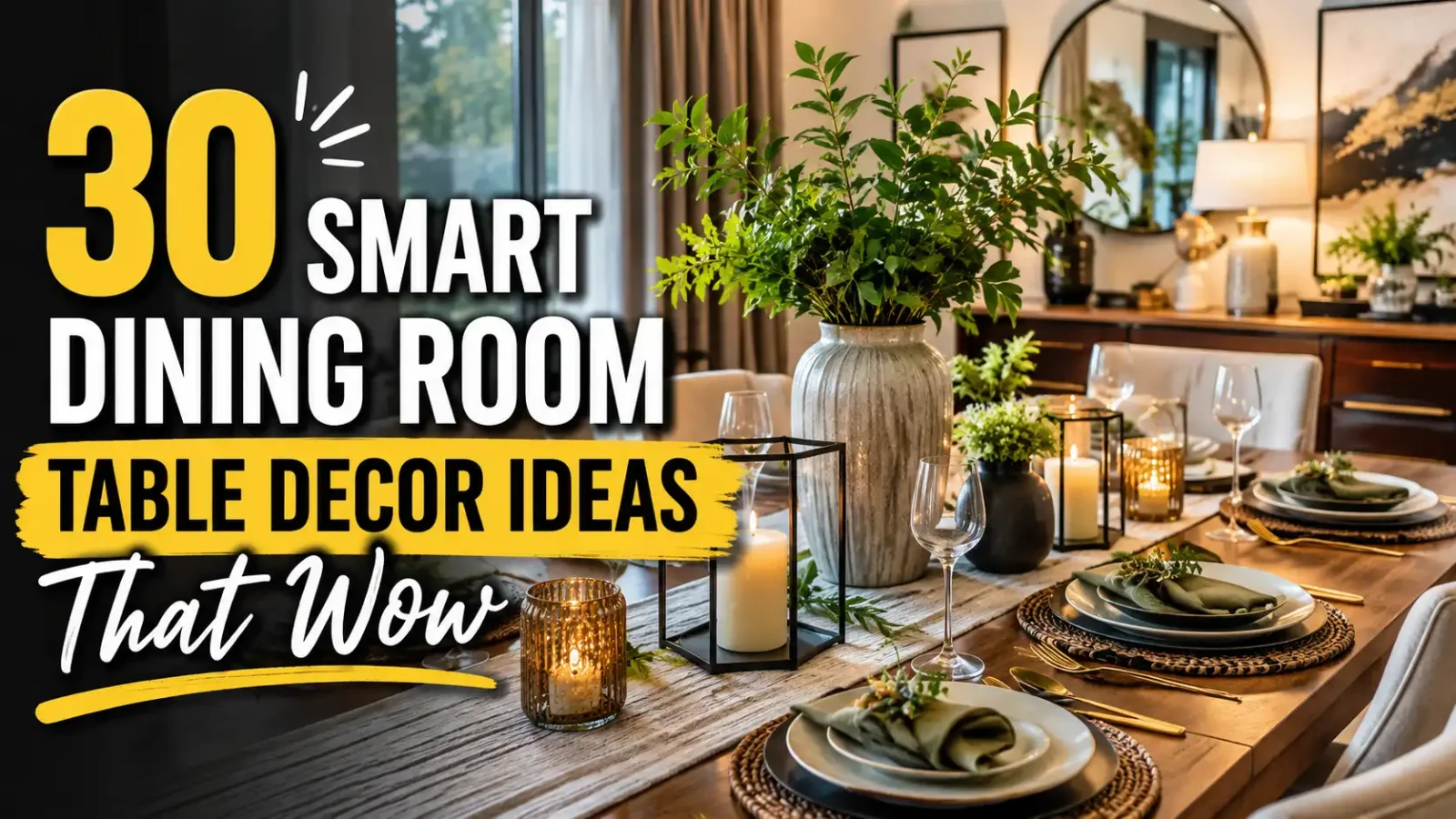
Smart dining room table decor ideas do two jobs at once: they make the table beautiful between meals and clear away gracefully when dinner arrives. That is the entire art — a centerpiece stylish enough to anchor the room, practical enough to move in ten seconds, and flexible enough to shift with seasons and occasions. Whether your table is a rustic farmhouse slab, a sleek glass rectangle, or a small round four-seater, the right decor makes the dining room feel intentional every single day, not just at holidays. This guide delivers thirty smart, copyable ideas for everyday styling, entertaining, and seasonal refreshes.
The formula behind every idea below is the stylist’s classic: a base layer (runner, tray, or bare wood), a hero piece (vase, bowl, or candle cluster), and supporting accents in odd numbers with varied heights. Keep everyday centerpieces low enough to talk over and light enough to relocate, then scale up for occasions. Match materials to your room — ceramics and linen for organic modern, glass and metallics for glam, wood and stoneware for farmhouse. Pick three ideas from this list, master the tray trick in idea two, and your table will wow guests and weeknights alike.
1. The Low Ceramic Vase with Seasonal Stems
The smartest everyday centerpiece: one sculptural ceramic vase, low and wide, holding whatever the season offers — spring tulips, summer wildflowers, autumn branches, winter eucalyptus. The vase stays constant; the stems rotate monthly for pennies. Choose matte cream, terracotta, or stone tones that suit any palette. Keep total height under 35 cm so conversation flows over it. This single-piece approach beats elaborate arrangements for real life because it moves in one hand when the lasagna lands.
2. The Tray Trick for Instant Clearing
Style everything on a generous tray — wood, rattan, or marble — so the entire centerpiece lifts away in one motion at mealtime and returns after. This is the working parent’s secret to a permanently styled table. Compose the tray with a vase, two candlesticks, and a small bowl; the tray’s edges make even simple objects read curated. Between meals it lives on the table; during dinner, on the sideboard. One trick, endless combinations, zero pre-dinner scramble.
3. Linen Runner as the Foundation Layer
A washed linen runner in oat, rust, or sage instantly softens wood and glass tables, adding color and texture as the decor’s foundation. Run it the table’s length with a modest overhang, or across the width under a centerpiece for modern asymmetry. Linen’s lived-in wrinkles are the look — no ironing required. Rotate two or three runners seasonally and the whole room shifts mood for the price of fabric. Under any idea in this list, the runner makes it look finished.
4. Candlestick Cluster in Mixed Heights
Group three to five candlesticks in varied heights — brass, wood, or black metal — with cream taper candles, clustered at the table’s center. The varied verticals create sculptural rhythm by day and irresistible ambience when lit at dinner. Mixing finishes within one metal family looks collected rather than bought-as-set. Tapers burn cleaner unscented at the table where food aromas matter. This idea alone converts a bare table into an occasion; lighting them on ordinary Tuesdays is the real luxury.
5. The Dough Bowl Centerpiece
A long wooden dough bowl — vintage or reproduction — filled seasonally makes the classic farmhouse centerpiece: spring moss and bulbs, summer lemons, autumn mini pumpkins, winter pinecones and fairy lights. The elongated shape suits rectangular tables perfectly, filling length without height. The bowl’s patina adds instant history to new rooms. Refills cost little because the bowl carries the presence. It shifts to the sideboard for meals in one lift, honoring the smart-decor rule of graceful retreat.
6. Fruit as Functional Decor
A generous bowl of real fruit — lemons en masse, green apples, seasonal pears — is decor you eat: sculptural, colorful, fragrant, and self-refreshing weekly with groceries you needed anyway. Single-fruit-type displays read intentional; mixed bowls read snack station. Choose a wide, low ceramic or wire bowl. Citrus lasts longest and brightens winter tables when flowers cost most. This oldest centerpiece idea persists because it embodies smart decor completely: beautiful, useful, affordable, and always in season somewhere.
7. Everyday Stack of Style Books
Stack two or three large-format books — cookbooks or design titles in handsome spines — at the table’s center with a small object or bud vase atop. The stack adds height, personality, and conversation fodder, styling the table like a boutique hotel lobby. Rotate titles seasonally. This idea suits tables that double as workspace, since books shift aside naturally. Guests inevitably flip through them over coffee, which is exactly what table decor should do: start conversations, then get out of the way.
8. Monochrome White-on-White Elegance
Layer whites deliberately: white ceramic vase, cream candles, white-linen runner, pale stoneware bowl — texture doing all the work within one tone. White-on-white reads expensive and calm, suiting minimalist and classic rooms equally, and it makes wood tables glow by contrast. Vary matte and gloss finishes so the layers register. Add one green stem as the single interruption. This palette never clashes with food, dishes, or seasons, making it the most versatile scheme in the entire dining playbook.
9. Statement Pendant Styling Above
Smart table decor includes the air above it: a statement pendant or linear chandelier hung 75–85 cm over the surface anchors the whole room and makes even a bare table look styled. Choose rattan for organic rooms, brass-and-glass for classic, sculptural black for modern. Dimmable warm bulbs are non-negotiable — dinner deserves candlelight-adjacent glow. When the light is right, centerpieces can shrink; the table’s decoration becomes the pool of warm light it sits in.
Read More Blogs on: decormellow.com
10. Seasonal Branch in a Floor-of-Table Vase
One dramatic branch — cherry blossom in spring, olive in summer, maple in autumn, ilex berries in winter — in a tall heavy-bottomed vase creates architectural impact no bouquet matches. Height above eye level paradoxically works because the slim stem stays transparent at conversation level. Branches last weeks, cost little from florists or gardens, and change the room’s entire silhouette. Center it on round tables; offset it on long ones. This is minimal effort performing as maximum drama.
11. Textured Neutral Layered Tablescape
For the everyday-luxury look: layer a jute or woven placemat set down the runner, stoneware chargers stacked ready, linen napkins loosely folded through rings, and a low centerpiece — the table permanently half-set in beautiful neutrals. This “styled for use” approach suits households that eat at the table daily and makes every ordinary meal feel considered. Choose washable everything. The layered textures — jute, stone, linen, wood — deliver richness without a single bright color competing with food.
12. Candles in Hurricane Glass Trio
Three hurricane glass cylinders of stepped heights holding pillar candles — with sand, coffee beans, or pebbles at their bases seasonally — give windproof glow and substantial presence. The glass adds formality that bare pillars lack while protecting flames from ceiling-fan drafts and curious sleeves. Line them down rectangular tables or cluster on rounds. Battery pillars with timers make the honest smart version: lit every evening at six automatically, ambience without a single match struck.
13. The Bud Vase Row
Five or seven small bud vases — deliberately mismatched in shape, unified in tone — marching down the runner, each holding one or two stems. The repeated-but-varied rhythm looks effortlessly artistic and costs a single supermarket bouquet split across the row. Guests each get flowers at eye level without any view-blocking mass. Clearing takes seconds per vase. This idea flexes from bohemian (amber glass, wildflowers) to refined (white ceramic, single tulips) and photographs beautifully from every seat.
14. Marble and Brass Modern Glam
Compose a glam centerpiece: marble tray base, brass candlesticks, a smoked-glass vase with white orchids or anthurium, and one small gold bowl. The material trio — stone, metal, glass — delivers luxury through finish rather than clutter. Keep the composition tight and the rest of the table bare for gallery effect. This scheme suits contemporary rooms and glass tables especially. Wipeable, flowerless versions using faux orchids survive real family life while keeping the five-star look intact.
15. Farmhouse Mason Jar Warmth
Cluster mason jars — some holding garden flowers, some fairy lights, some tea lights — on a wood board runner with scattered greenery between. The humble-materials approach suits rustic and cottage rooms, costing nearly nothing while glowing generously at dinner. Whitewash or leave jars clear; tie twine for extra charm. This decor forgives bumps, spills, and toddler adjustments, which makes it genuinely smart for family tables where precious centerpieces live dangerously.
16. The Sideboard Partnership
Smart table decor uses the sideboard as its backstage: style the buffet surface generously — lamp pair, large art, overflow candles — so the table itself can stay minimal, and centerpieces migrate there during meals. The two surfaces share one palette and trade pieces seasonally. A well-dressed sideboard lets the table breathe while the room still reads abundantly decorated. If the dining room feels bare with a simple centerpiece, the answer is rarely more on the table; it is more beside it.
17. Winter Evergreen and Candlelight Scene
December through February: a runner of fresh or faux evergreen garland down the center, cream pillar candles nested within, pinecones and white berries scattered through. The forest-and-flame combination owns winter dining. Add subtle warm fairy lights inside the garland for permanent evening magic. Fresh greenery lasts weeks in cool rooms; quality faux repeats annually. Keep flames clear of needles or use battery pillars. This scene makes January dinners — the year’s dreariest — feel like the holidays never fully left.
18. Spring Bulbs Growing on the Table
Pot living bulbs — hyacinths, muscari, mini daffodils — into ceramic bowls with moss topping, and let spring literally grow at the table’s center over weeks. The evolving centerpiece brings anticipation no cut flower offers: green tips, buds, then fragrance filling the room. Post-bloom, bulbs plant into the garden. This idea costs supermarket-bulb prices and delivers a month of change. Watching something alive while eating is quietly wonderful, and children monitor the progress like appointment viewing.
19. The Single Sculptural Object
Ultra-minimalist option: one remarkable object alone at center — a large ceramic sculpture, a carved wood form, an oversized stone bowl — with generous bare table around it. The negative space is the styling; the object reads as gallery art. Choose something with genuine presence, at least 30 cm in one dimension, in a material echoing the room. This approach suits modern interiors and beautiful tables whose surfaces deserve display. One perfect thing outclasses seven adequate ones; smart decor sometimes means restraint.
20. Round Table Center Strategy
Round tables need radial logic: one centered element — a round tray composition, a single low bowl, or a lazy Susan styled with vase and candles that spins into function at meals. Skip runners; use a round placemat as the center’s base instead. Keep the arrangement within the middle third so place settings breathe. The styled lazy Susan is peak smart decor for rounds: decoration between meals, condiment carousel during them, one object doing both jobs elegantly.
21. Autumn Harvest Abundance
September through November: heap a low wooden bowl with real gourds, mini pumpkins in white and sage (skip orange overload for the chic version), wheat stems in a jug beside, and amber candlesticks around. Warm-toned linen runner beneath. Real produce lasts the season and composts after — decor with an exit plan. The muted-pumpkin palette photographs like a magazine while honoring the harvest mood. This is the year’s easiest seasonal win; nature designs it, you arrange it.
22. Mirror or Glass Base Glow Multiplier
Set candles and vases on a mirror plate or glass tray base and every flame doubles, every stem reflects — luminosity multiplied for the cost of one reflective layer. The trick transforms evening tables especially, bouncing candlelight upward onto faces flatteringly. Mirrored bases suit glam and classic rooms; smoked glass suits modern. Wipe fingerprints before guests arrive. Lighting designers use reflection professionally for exactly this reason: the cheapest extra light is the light you already have, doubled.
23. Family Style with Beautiful Serveware
Make the serveware the decor: open shelving or the table itself displaying handsome stoneware serving bowls, a wooden salad set, carafes, and stacked linens — the tools of hospitality as permanent styling. Meals then arrive family-style into an already-beautiful frame. This approach suits generous hosts and kitchens-adjacent dining rooms. Decor you cook into weekly justifies its space honestly. The table dressed in its own working pieces says the truest thing decor can: dinner happens here, and it is loved.
24. Kid-Proof Smart Styling
Family reality edition: washable runner, unbreakable ceramic-look melamine vase with faux stems, battery candles with timers, and the entire scheme on the liftable tray. Style survives homework, craft projects, and flying peas; resets take one minute. Choose warm textures so practical never reads plastic. Decor that requires policing children fails the smart test. This setup delivers the styled-home look while surrendering nothing to the actual life happening at the table — which is decor’s real assignment.
25. Black Accents for Modern Contrast
Whatever your scheme, one black element sharpens it: black taper candles (unexpectedly chic), a black ceramic vase, or matte black candlesticks against light wood. Black grounds pale palettes that float and adds graphic modernity to farmhouse schemes drifting sweet. Use sparingly — one or two black notes, not a blackout. Interior stylists call black the punctuation of a room; the same grammar rules the tabletop. If your centerpiece looks pretty but vague, black ink is usually the missing word.
26. The Scent Layer
Smart tables engage the nose deliberately: fresh eucalyptus or herbs in arrangements, unscented candles during meals (protecting food aromas), and one quality scented candle lit after clearing — coffee-and-dessert atmosphere on cue. Rosemary and bay stems in the centerpiece release fragrance when brushed. Scent is the decor guests remember longest and photographs never capture. The rule: botanical scents at the table, gourmand scents after, perfume-strength never. Invisible styling, unforgettable effect.
27. Charging-Free Zone Styling
Decor as boundary: a fully styled table — runner, centerpiece, the works — quietly declares the surface off-limits to laptops, mail piles, and charging cables that colonize bare tables. Households report styled tables stay clearer because clutter has no landing strip. The centerpiece is a gentle guardian of the room’s purpose. If your dining table chronically becomes the junk zone, the smartest decor idea in this list might be simply keeping it decorated at all times.
28. Celebration Scale-Up System
Build occasion styling on the everyday base: the daily runner-and-vase scheme gains cloth napkins, place cards, extra candlesticks, and a fuller arrangement for birthdays and holidays — additions in twenty minutes, not a from-scratch production. Store the celebration layer in one sideboard drawer: napkin rings, card holders, spare tapers. Scaling one coherent scheme up and down beats maintaining separate everyday and fancy identities. Guests see abundance; you see the Tuesday table wearing its party layer.
29. Gallery Wall Backdrop
The table’s decor includes its backdrop: a gallery wall or single oversized artwork behind the table frames every meal and photograph taken there. Hang art at seated eye level — lower than hallway height — since dining rooms live sitting down. Echo one artwork color in the centerpiece for cohesion. A mirror alternatively doubles light and space. When walls carry the drama, tabletops can whisper, and the whole room composes itself around dinner like a set built for it.
30. The Ten-Minute Seasonal Reset Ritual
The system holding it all together: four times yearly, spend ten minutes swapping the runner, restyling the tray, and rotating the hero vase’s contents to the new season — a standing date with your own table. Keep off-season pieces in one labeled box. This tiny ritual keeps the room feeling current all year and prevents the slow drift into last-Christmas-still-here syndrome. Smart decor is not a look but a habit; this is the habit, and it takes less time than one scroll session.
Conclusion
Smart dining room table decor ideas share one philosophy: beauty that yields gracefully to dinner. Build on the stylist’s base-hero-accent formula, keep everyday centerpieces low, light, and liftable — the tray trick alone changes everything — and let seasons rotate through constant vessels: stems in the same vase, fills in the same dough bowl, runners in the same palette family. Layer in warm dimmable light from above, a styled sideboard beside, and the ten-minute seasonal reset ritual, and the table wows daily without demanding daily effort. Start tonight with three candlesticks and whatever is blooming; the dining room you keep meaning to finish is one centerpiece away.
FAQs
What is the best everyday dining table centerpiece?
A low ceramic vase with seasonal stems, styled on a tray so it lifts away at mealtimes. Keep height under 35 cm for conversation and choose neutral tones that suit every season.
How do I decorate a dining table that gets used daily?
Use the tray trick — compose decor on one tray that moves in a single lift — plus washable runners, sturdy vessels, and battery candles. Style for use, not display.
How tall should a dining table centerpiece be?
Under 35 cm for seated conversation, or above 60 cm with a slim transparent stem like a single branch. The blocked zone between eye levels is what to avoid.
What can I use instead of flowers?
A fruit bowl, candlestick clusters, a sculptural object, stacked books, a seasonal dough bowl, or living potted bulbs all anchor tables beautifully without cut flowers.
How do I make table decor look expensive on a budget?
Layer textures in one palette — linen, wood, ceramic — use odd numbers and varied heights, add one black accent, and place candles on a mirror base to double the glow.





Leave a comment