

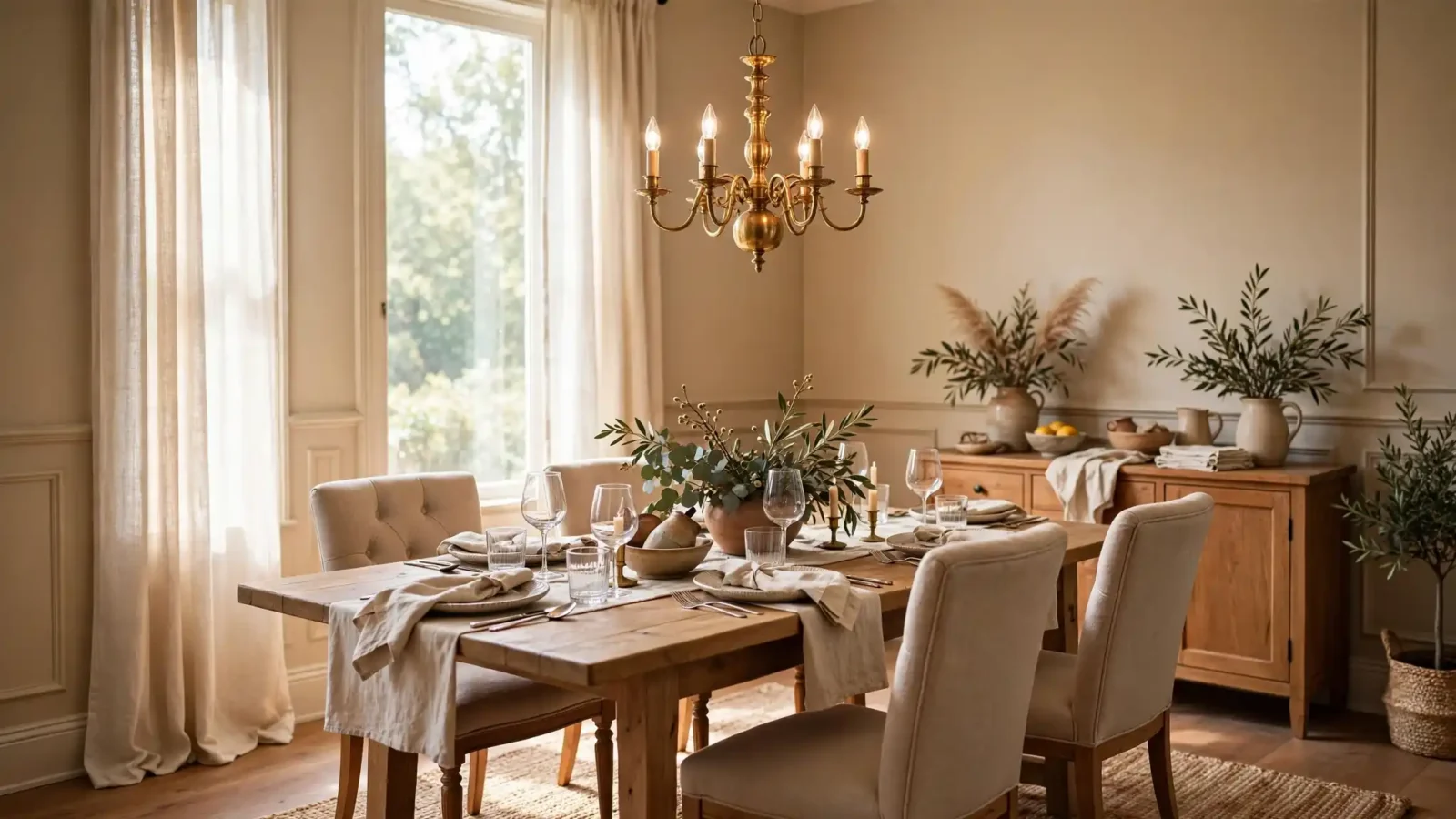
Finding the perfect dining room paint ideas can feel overwhelming when every color looks different on your walls than it does on a tiny paint chip. The best dining room paint ideas do more than refresh a room — they set the tone for every shared meal, holiday dinner, and cozy weeknight you will enjoy there. In this guide, we have gathered 23 designer-approved dining room paint ideas with real color names, honest gallon prices, and practical tips you can actually use. Whether your style leans farmhouse, modern, or classic, these dining room paint ideas will help you pick a shade that flatters your light, your furniture, and your budget.
Before you open a single paint can, it helps to know how professionals narrow their choices. Test large swatches on the wall where your dining table actually sits, because morning sun and evening lamplight can turn the same color into two completely different shades. Measure your room first — a typical 12 by 14-foot dining room with 9-foot ceilings needs roughly two gallons for two coats on the walls. Premium paints from Sherwin-Williams, Benjamin Moore, or Behr run about $45 to $95 per gallon at Home Depot or Lowe’s, so the whole room usually costs under $250 in paint.
This listicle mixes safe crowd-pleasers with bold statement colors, two-tone treatments, and creative finishes like limewash and stenciling. Each idea includes a specific color you can ask for at the counter, so you never have to guess from a wall of chips again. If you want a cozy backdrop for Thanksgiving, a dramatic setting for dinner parties, or simply a fresher everyday look, scroll through and save the shades that speak to you — then grab a sample pot, test it on your wall in morning and evening light, and start painting with confidence.
1. Soft Sage Green Dining Room Paint Ideas for a Fresh, Calming Feel
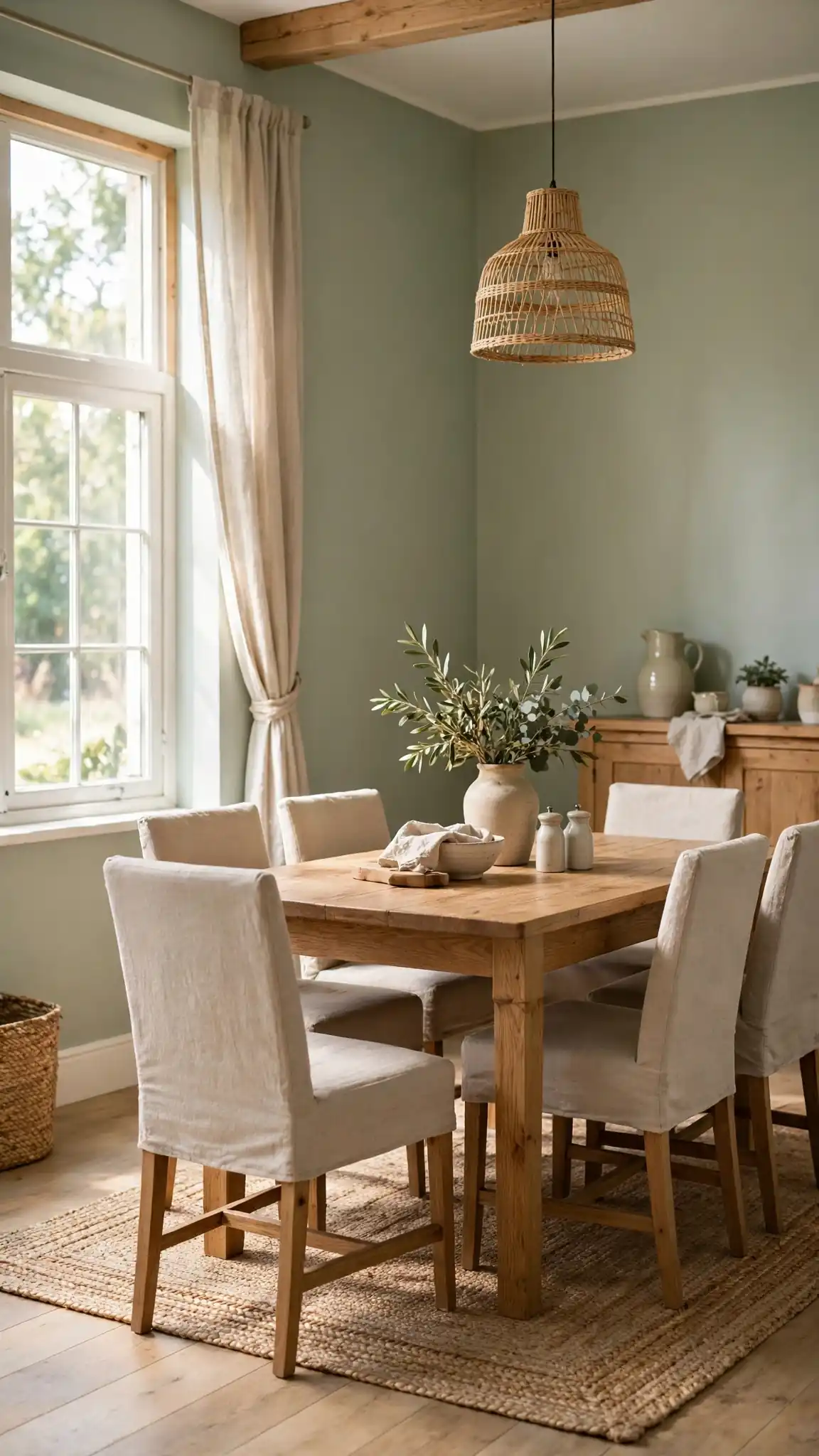
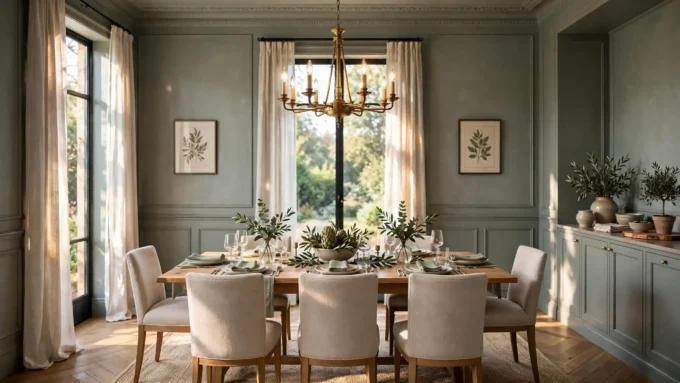
Sage green sits perfectly between gray and green, and it flatters almost every dining room style — from farmhouse to modern. Shades like Sherwin-Williams Clary Sage (SW 6178) or Benjamin Moore Saybrook Sage (HC-114) bring the outdoors in without overpowering your furniture. A standard 12 by 14-foot dining room needs about two gallons for full coverage, roughly $75 to $95 per gallon for premium lines like Emerald or Regal Select. Sage pairs beautifully with white trim, natural oak, and linen upholstery, so most of your existing decor will still work. This is one of those dining room paint ideas that feels timeless rather than trendy, and it photographs wonderfully in natural daylight.
Prep matters more than the color itself. Sand glossy trim lightly, caulk the gaps where baseboards meet the wall, and roll two thin coats instead of one thick one. If your dining room gets cool northern light, choose a sage with warm undertones so the walls do not look minty. Pair the finished walls with a jute rug and a simple wood table from a big-box store to keep the look grounded. A gallon of Benjamin Moore Regal Select in a warm sage typically costs around $80 at most US retailers. Pro tip: paint a large test swatch behind the dining table and observe it at breakfast, lunch, and dinner before committing to the full room.
2. Classic Navy Blue Accent Wall That Adds Instant Drama
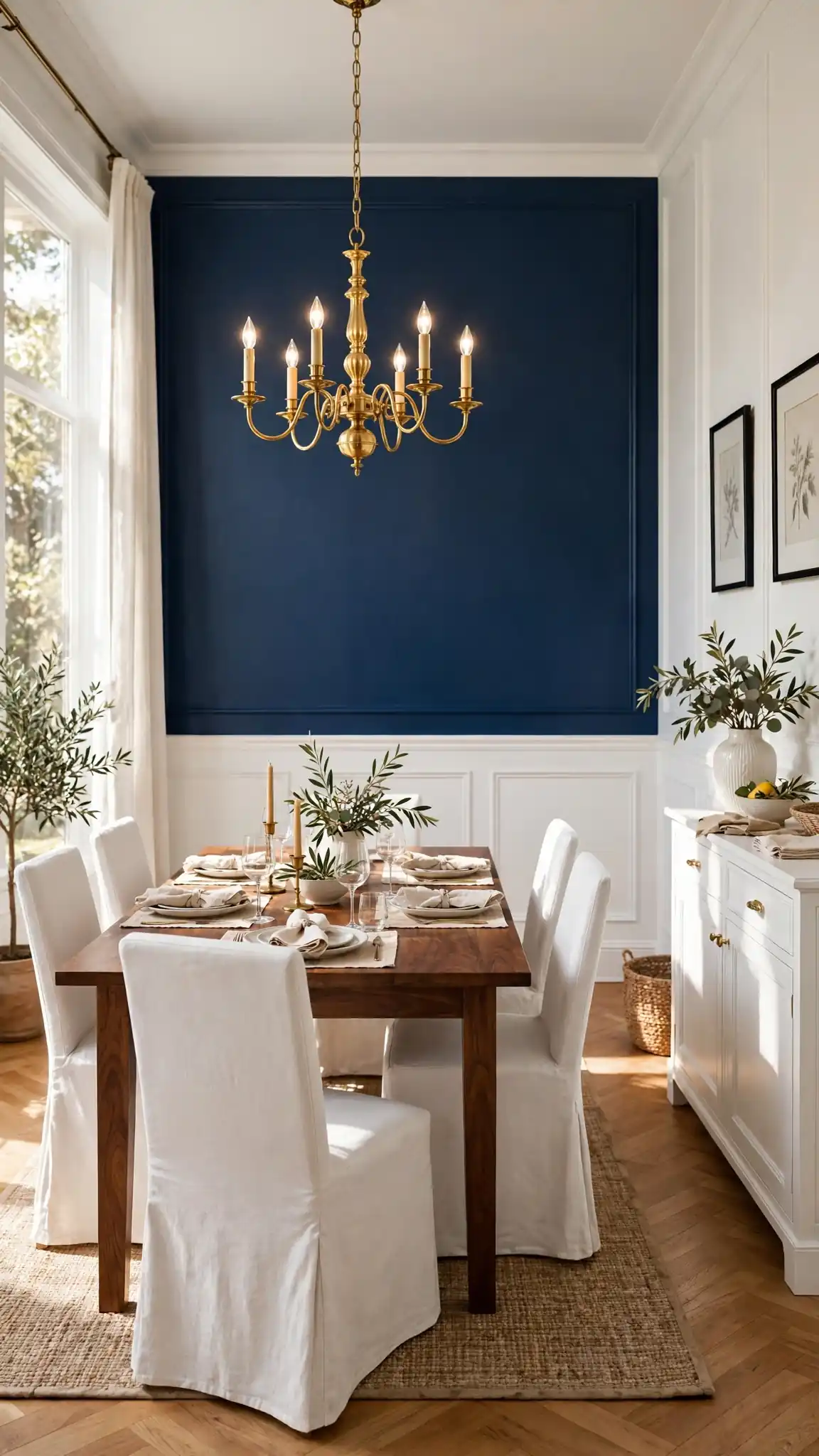
A single navy accent wall behind the dining table creates a stunning focal point without darkening the whole room. Sherwin-Williams Naval (SW 6244) and Benjamin Moore Hale Navy (HC-154) are the two most-requested dining room blues at US paint counters, and both look incredible against crisp white wainscoting or trim. Because you are only painting one wall — usually 12 to 14 feet wide by 9 feet tall — a single gallon is often enough, costing $45 to $85 depending on the brand. Navy works beautifully with brass chandeliers, walnut tables, and white chair slipcovers. It also makes white dishes and glassware pop on open shelving or a sideboard.
For the smoothest finish on a bold color, roll the wall in a W pattern and keep a wet edge so lap marks do not show. Prime first if you are covering a light color, since deep blues often need three coats over white without primer. Keep the other three walls a warm white like Sherwin-Williams Alabaster (SW 7008) so the navy feels intentional, not heavy. Add a round mirror or oversized artwork in a gold frame to bounce light around. Pro tip: buy the sample in an eggshell or satin sheen — matte hides flaws but shows every fingerprint near busy dining areas.
3. Warm Greige — The Cozy Neutral Everyone Loves
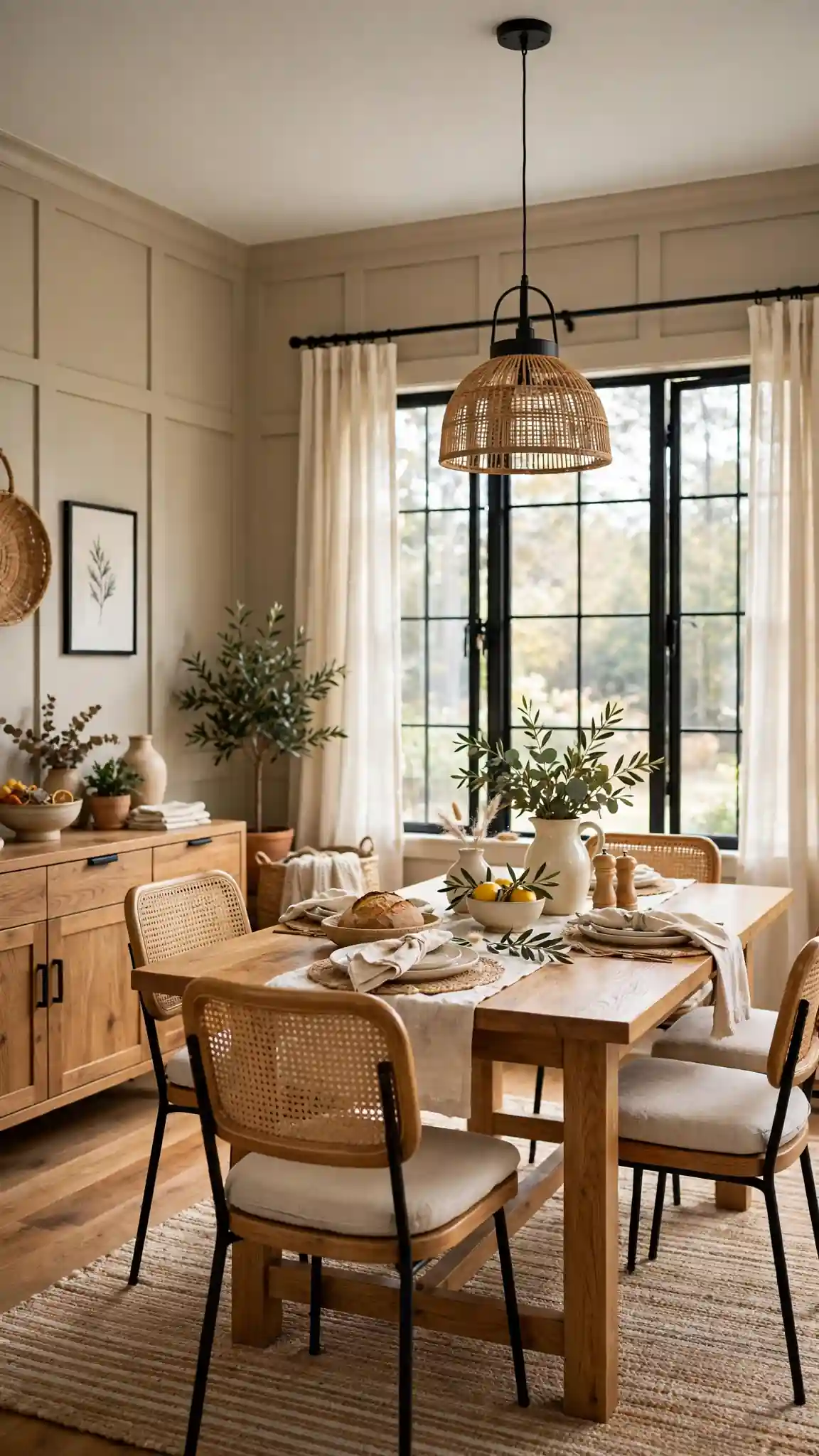
Greige, the blend of gray and beige, remains the safest dining room paint idea for resale-minded homeowners. Sherwin-Williams Accessible Beige (SW 7036) and Benjamin Moore Revere Pewter (HC-172) are the two shades designers name first, because they shift beautifully between warm and cool as the light changes. A gallon covers about 350 to 400 square feet, so budget two gallons — roughly $150 to $180 total — for an average dining room with two coats. Greige plays nicely with every wood tone, from honey oak to espresso, and it lets colorful art or patterned curtains do the talking.
The trick with greige is choosing the right undertone for your light. South-facing rooms can handle cooler greiges, while north-facing rooms look better with a warmer, creamier version. Lay your existing rug and chair fabric next to the swatch before you buy — undertones that clash will scream at you in person. Greige pairs perfectly with white ceilings and black window frames for a modern farmhouse feel. Pro tip: keep leftover paint in a sealed jar for touch-ups, since greige shows scuffs from dining chairs more than deeper colors do.
4. Two-Tone Walls: White Wainscoting With a Bold Upper Color
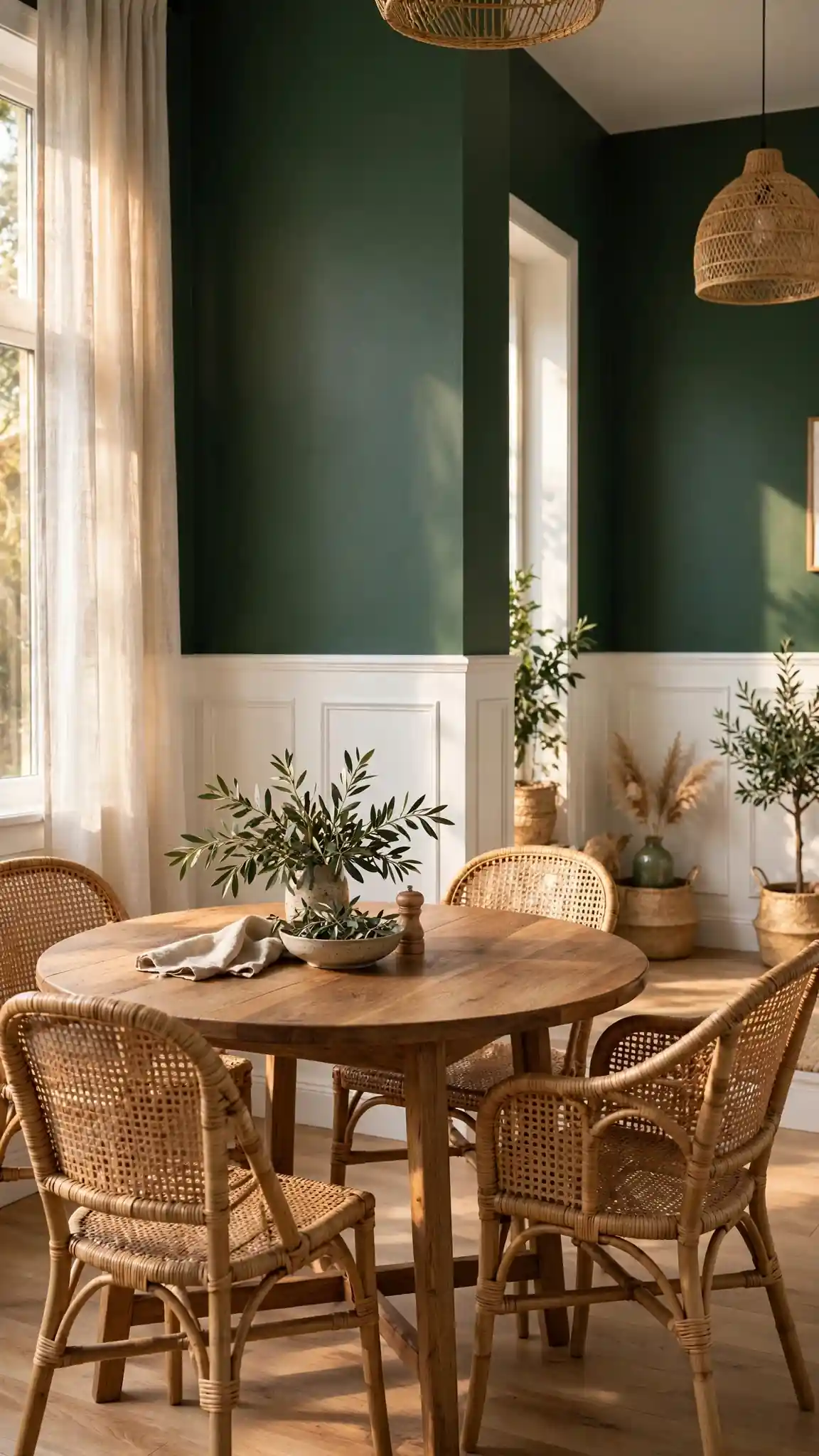
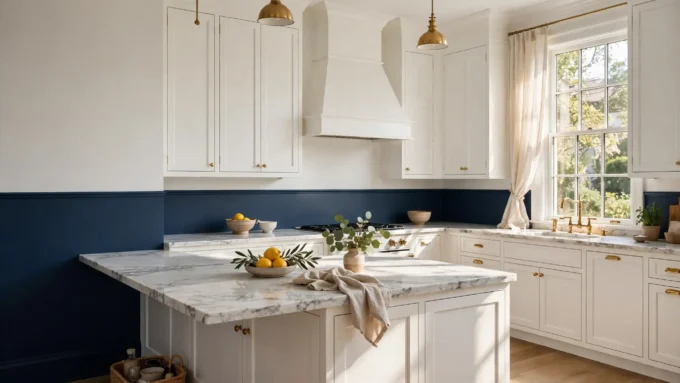
Two-tone walls give your dining room instant architectural interest, even in a newer build. Paint the lower third — wainscoting, beadboard, or just a clean chair rail — in a bright white like Sherwin-Williams Pure White (SW 7005), then take a bold color above it, such as Evergreen Fog (SW 9130) or a rich teal. Pre-made chair rail trim runs about $1 to $3 per linear foot at Home Depot, and a 12 by 14-foot room needs roughly 50 linear feet. The contrast makes ceilings feel taller and protects the lower wall from chair bumps and scuffs.
Measure 34 to 36 inches from the floor for the chair rail — standard dining-chair back height — so chair backs hit the trim, not the paint. Use semi-gloss on the lower portion for durability and eggshell above for a soft glow. If your dining room has an open doorway to the kitchen, carry the white trim through both rooms for a cohesive look. Behr Premium Plus in white covers well at around $45 per gallon for this application. Pro tip: caulk the top edge of the chair rail and the baseboards before painting — crisp lines are what make two-tone walls look expensive.
5. Moody Charcoal Walls for an Intimate Dinner-Party Vibe
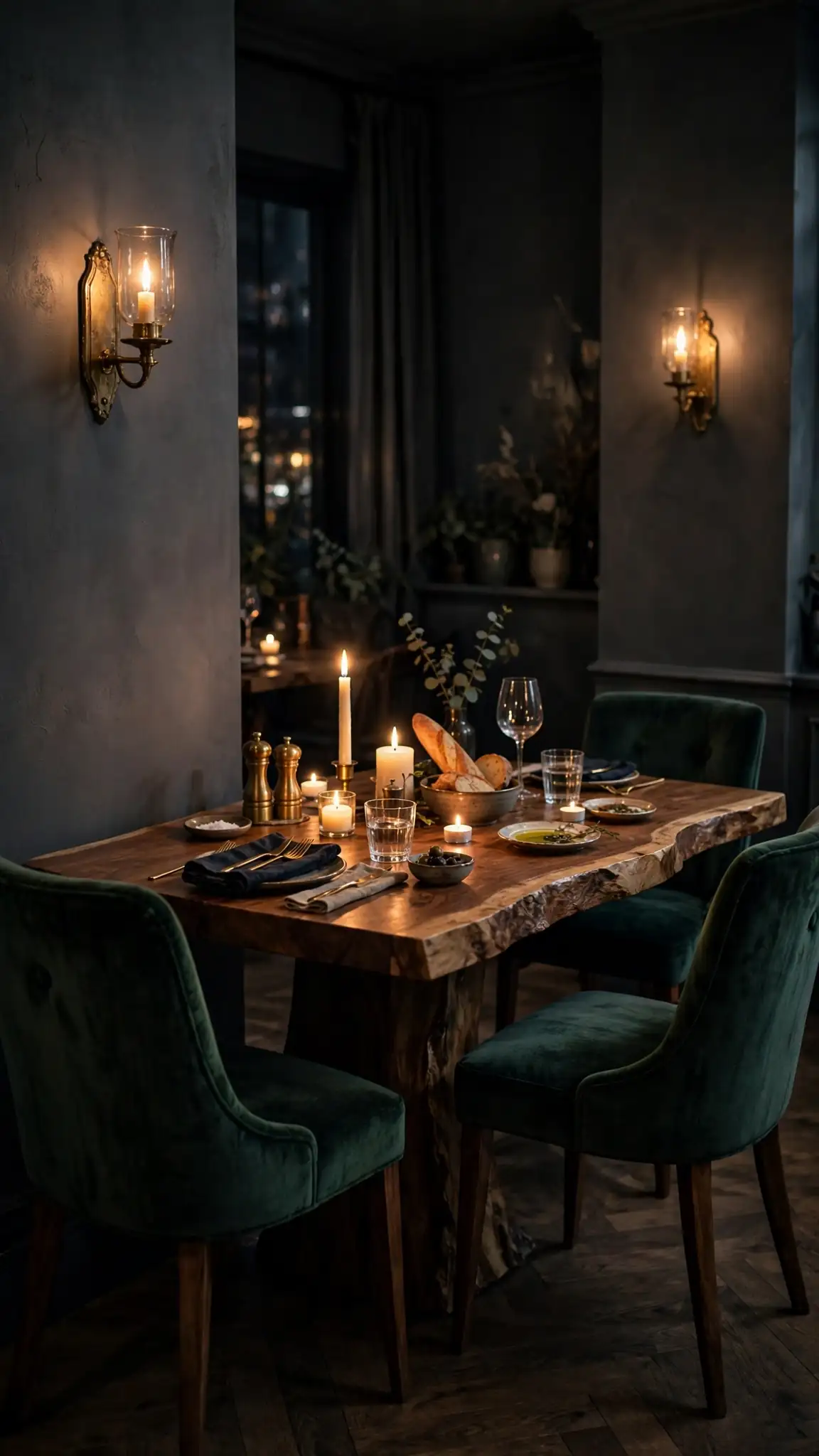
Charcoal walls turn an ordinary dining room into a candlelit bistro, perfect for evening entertaining. Benjamin Moore Kendall Charcoal (HC-166) and Behr Cracked Pepper are top picks — deep enough to feel dramatic, warm enough to avoid looking like a cave. Dark walls recede visually, so a small dining room can actually feel larger, especially when you keep the ceiling bright white. Two gallons at $60 to $85 each covers a standard room, making this one of the cheapest ways to add instant sophistication. Pair charcoal with brass sconces, velvet chairs, and a live-edge wood table for full bistro energy.
Lighting makes or breaks dark walls, so plan it before you paint. Add a dimmer to your chandelier and layer in sconces or table lamps — charcoal swallows a single overhead light. Use an eggshell or satin finish rather than flat, because darker paints show roller texture in flat sheens. If you rent, ask about removable solutions like peel-and-stick wall panels in a dark finish. Pro tip: paint the inside of a china cabinet or bookshelf the same charcoal — it creates depth and makes white dishes glow like a gallery display.
6. Blush Pink Walls for a Soft, Romantic Glow
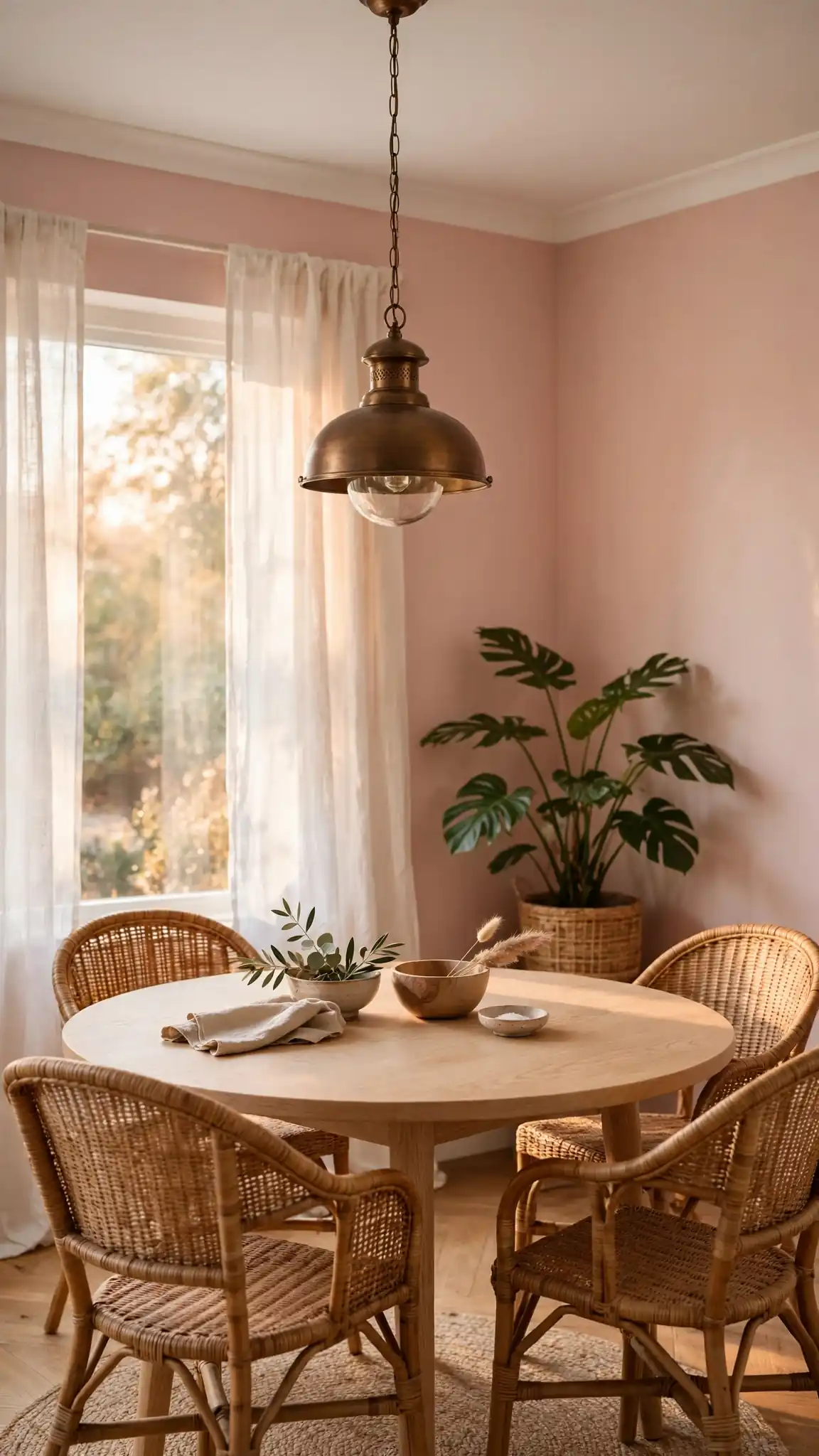
Blush pink dining rooms feel like golden hour all day long, and the color is far more livable than it sounds. Benjamin Moore First Light (2102-70) and Sherwin-Williams Romance (SW 6323) are muted enough to read as neutrals, with just a whisper of warmth. This shade flatters skin tones beautifully, so everyone looks their best at the dinner table — designers call it the most forgiving wall color for entertaining. At $60 to $85 per gallon, a full room transformation costs less than one new chair. Blush pairs effortlessly with rattan, white oak, and soft gray upholstery.
Keep the look grown-up by balancing pink with darker accents — black picture frames, a deep green plant, or bronze hardware. Choose a warm white like Benjamin Moore White Dove (OC-17) for the ceiling and trim so the pink feels creamy, not sweet. If you are nervous, test it in a powder room or entryway first, where bold choices are low-risk. This is one of those dining room paint ideas that surprises skeptics once they see it in real daylight. Pro tip: sample two or three blush shades at once, since a touch more peach or more mauve completely changes the mood.
7. Crisp White Walls That Make Natural Light Dance
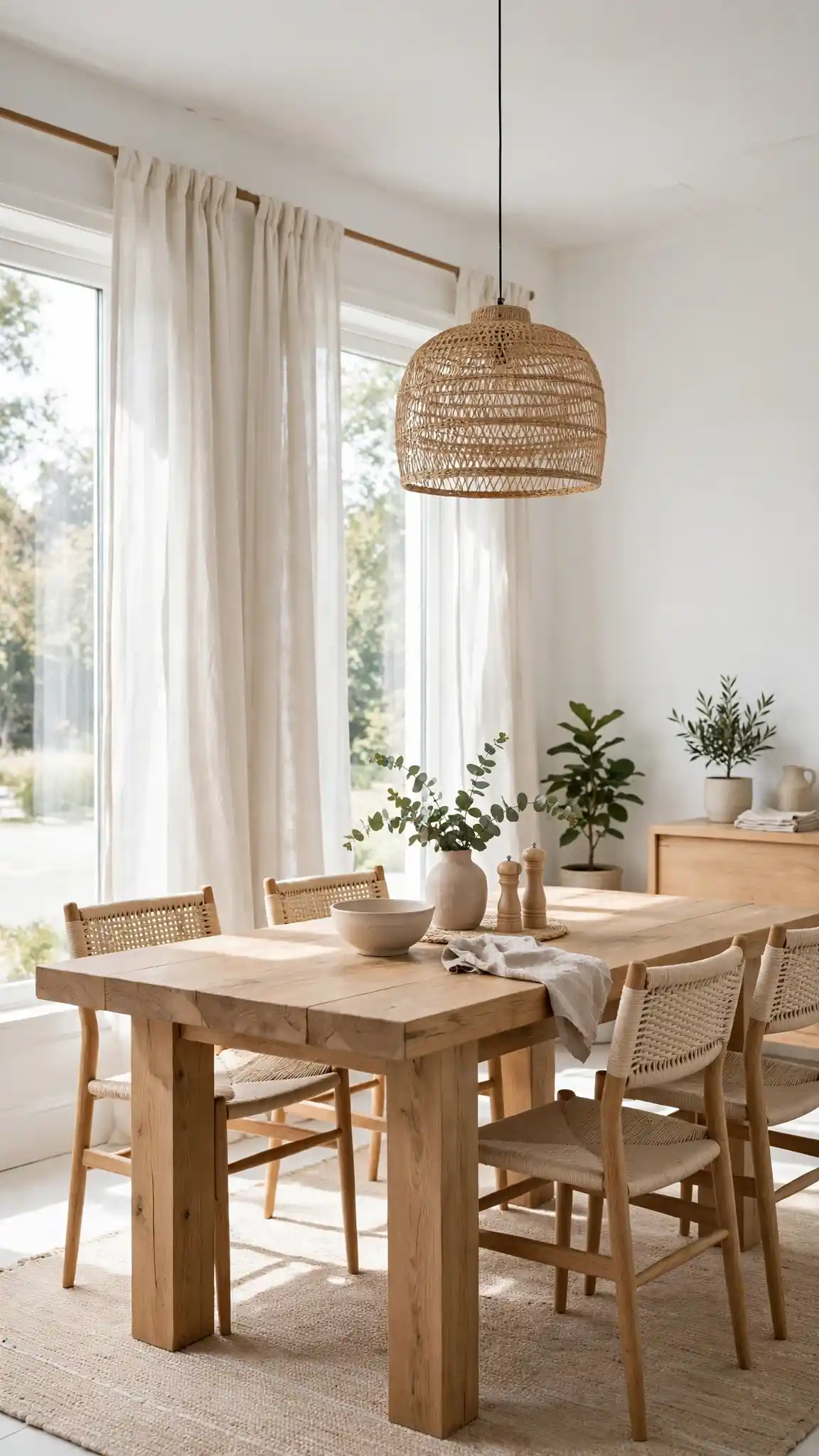
White walls never go out of style, and in a dining room they create the brightest, most versatile backdrop possible. Sherwin-Williams Pure White (SW 7005) and Benjamin Moore Simply White (OC-117) are designer favorites — the first is a touch cooler, the second slightly warmer. White walls make a small dining room feel airy and let your table, art, and lighting become the stars. A five-gallon bucket at Home Depot or Lowe’s runs about $180 to $220 and covers the whole room plus touch-ups for years. White is also the easiest color to repaint later, which renters and frequent redecorators appreciate.
Not all whites are equal, so sample carefully. Compare swatches against your flooring and table wood, because whites with gray undertones can look dingy next to warm oak. Use a satin or eggshell sheen in the dining room — flat white marks easily from chair backs and serving dishes. Add texture through the decor instead: a woven pendant light, linen curtains, or a chunky wood table keeps white walls from feeling sterile. Pro tip: repaint just the trim in a fresh, bright white every few years — it makes even older white walls look brand new again.
8. Deep Forest Green Walls With Brass Accents
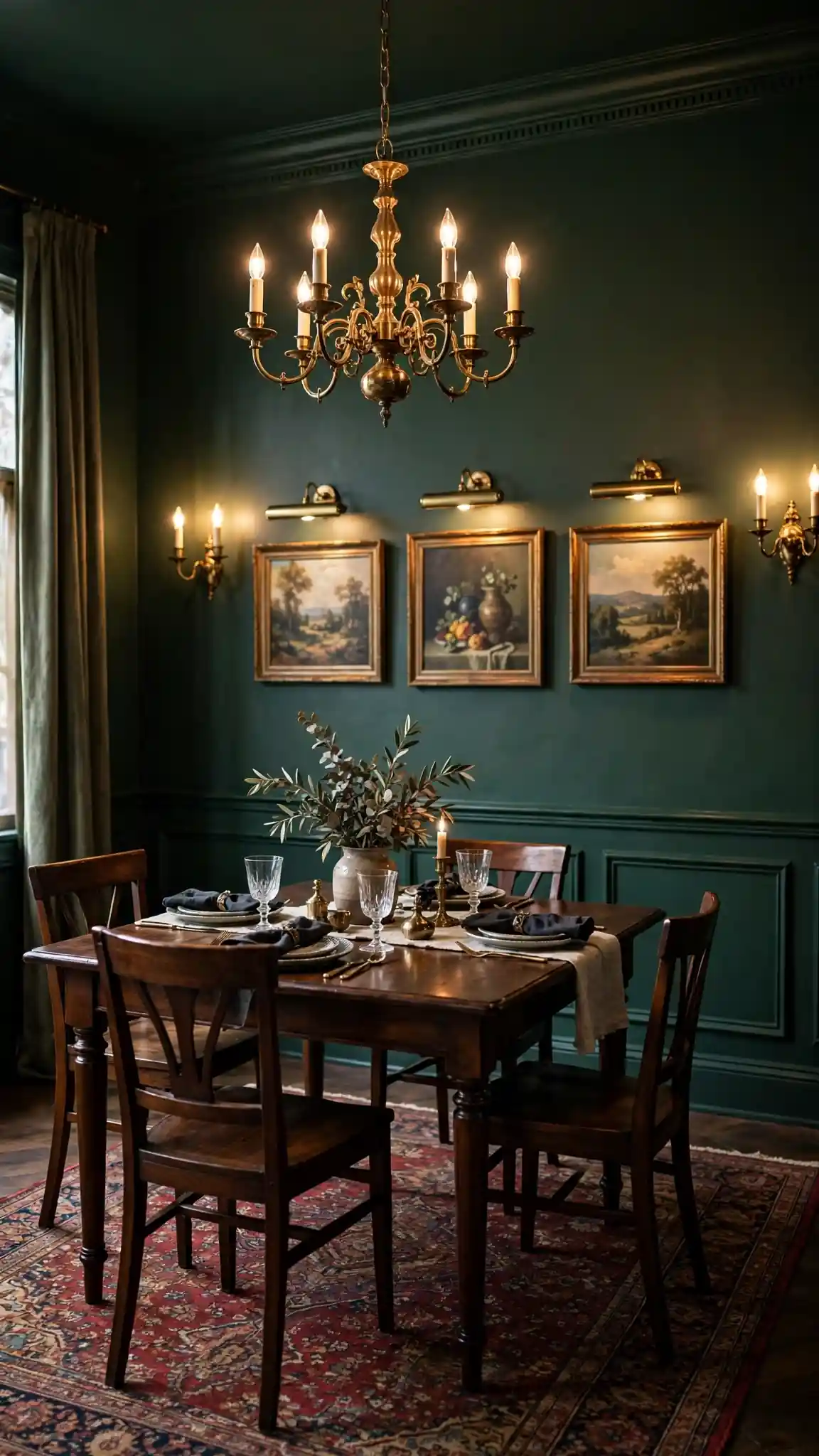
Forest green dining rooms channel classic libraries and private clubs, and the color feels especially right in autumn and winter. Sherwin-Williams Rookwood Sash Green (SW 2818) and Benjamin Moore Essex Green (HC-188) deliver that rich, traditional depth without going neon. Green is restful to the eye and pairs spectacularly with brass or gold light fixtures — the warm metal glows against the cool green. Two gallons at roughly $75 to $90 each covers most dining rooms, and the result looks far more expensive than it costs. Add a Persian-style rug and dark wood furniture to complete the old-world mood.
Because forest green is saturated, surface prep shows — fill every nail hole and sand patches smooth before your first coat. Consider painting only three walls and keeping the fourth, with a window, a lighter shade to balance the light. Brass picture lights over framed art look incredible against green, and most big-box stores sell plug-in versions under $60. This color also hides minor wall imperfections better than any pale shade. Pro tip: use the same green on the ceiling in a small powder bath nearby — it creates a jewel-box moment guests will talk about for months.
9. Warm Terracotta for Mediterranean Energy
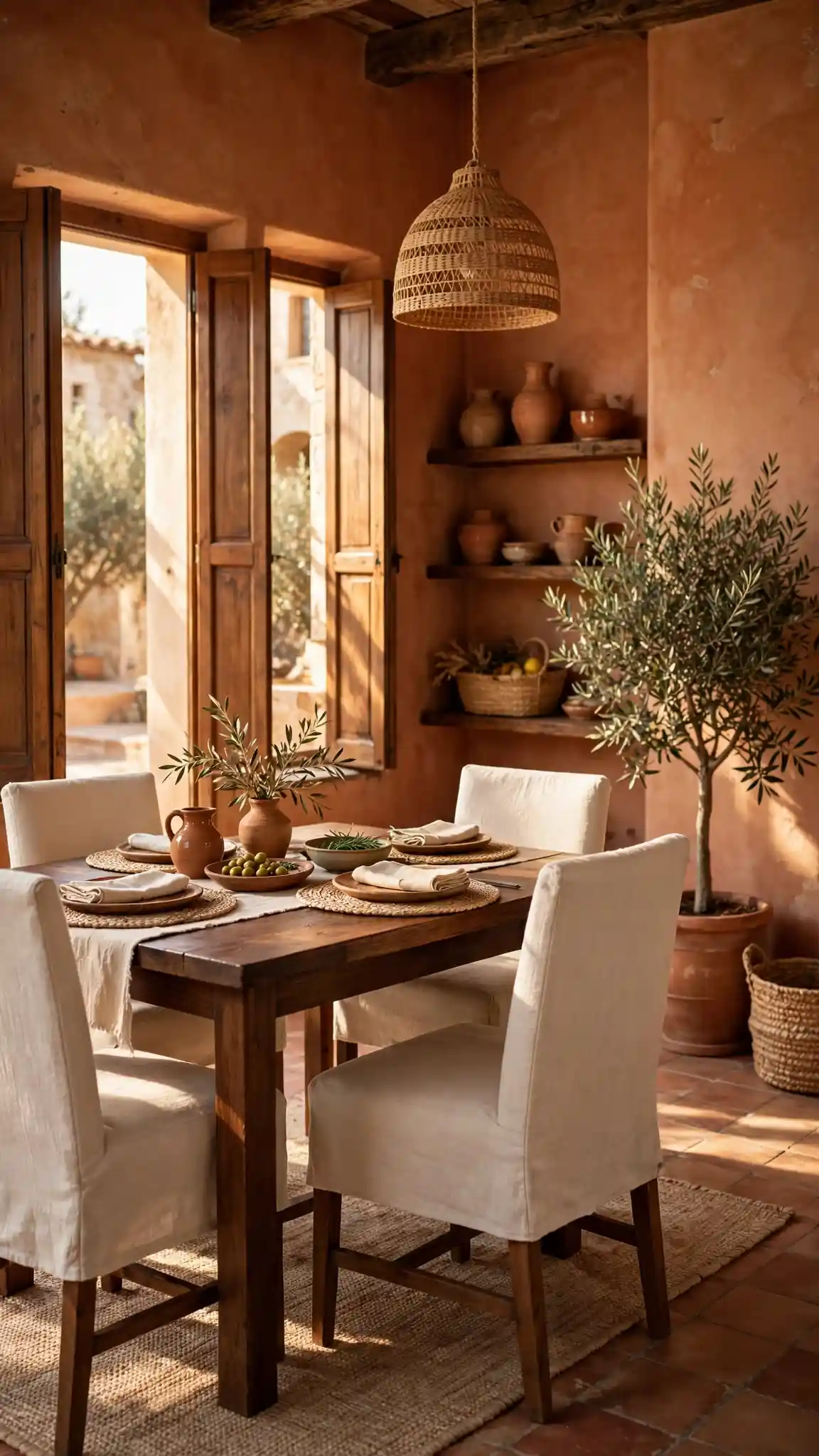
Terracotta brings sunbaked warmth to dining rooms that never see much sun, making it a favorite in northern states. Sherwin-Williams Cavern Clay (SW 7701) and Behr Terra Cotta (S200-4) glow like late-afternoon light, even on gray February days. The earthy orange-red works beautifully with plaster walls, arched doorways, and woven textures — think Santorini meets Santa Fe. A gallon runs $45 to $80, and the color covers well, usually needing just two coats. Pair terracotta with cream linen, dark wood, and plenty of greenery for a collected, traveled look that feels warm year-round.
Terracotta is bold, so anchor it with neutrals. Keep the ceiling and trim a soft warm white, and choose a rug with cream, rust, and brown tones to tie everything together. If a full room feels like too much, try terracotta on the wall behind a sideboard and hang a large mirror to double the warmth. Matte or eggshell sheens look most authentic with earthy colors — skip the semi-gloss here. Pro tip: bring home a terracotta flowerpot from the garden center and hold it against your swatches — it is a free, real-world color reference that never lies.
10. Elegant Black Dining Room Paint Ideas for Maximum Drama
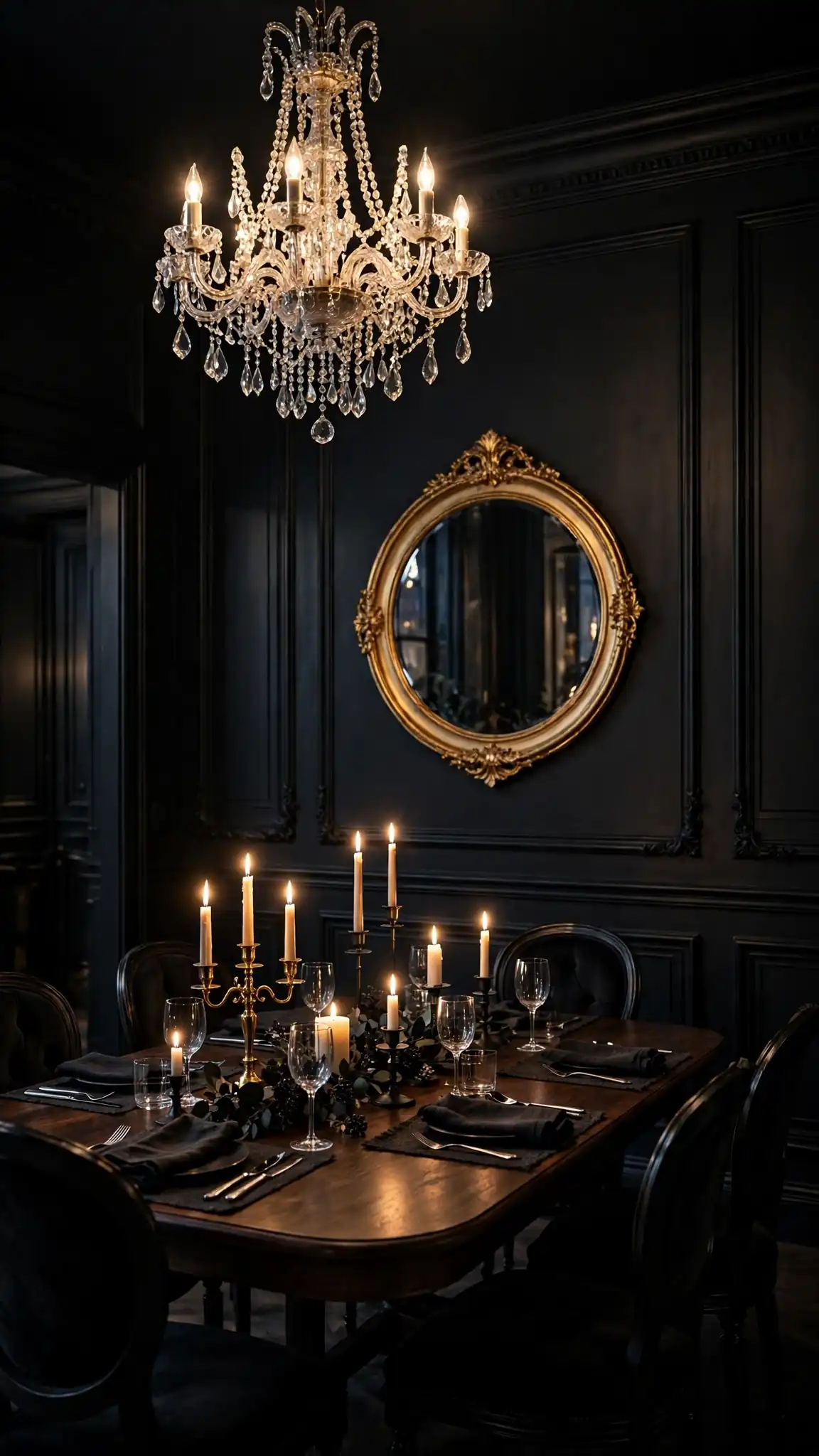
Black walls sound extreme until you see a dining room done right in Benjamin Moore Black Beauty (2128-10) or Sherwin-Williams Tricorn Black (SW 6258). These dining room paint ideas create the ultimate backdrop for art, mirrors, and candlelight — everything pops against black. Designers love black in dining rooms because the space is used mostly in the evening, when dark walls feel cozy rather than gloomy. Two gallons at $70 to $90 each is all you need, making this the boldest look on the smallest budget. Add a crystal or brass chandelier and watch the room transform into pure theater.
Commit fully — half measures ruin black walls. Paint the trim the same black in a satin or semi-gloss finish for a seamless, high-end look, or keep trim bright white for sharp graphic contrast. Good lighting is non-negotiable: add dimmers, picture lights, and candles on the table. Black shows dust and fingerprints, so choose a scrubbable satin finish near the table. Pro tip: test black on a foam board first and prop it in the room for a week — it looks different every hour, and you want to love all of its moods.
11. Powder Blue Ceilings With Creamy White Walls
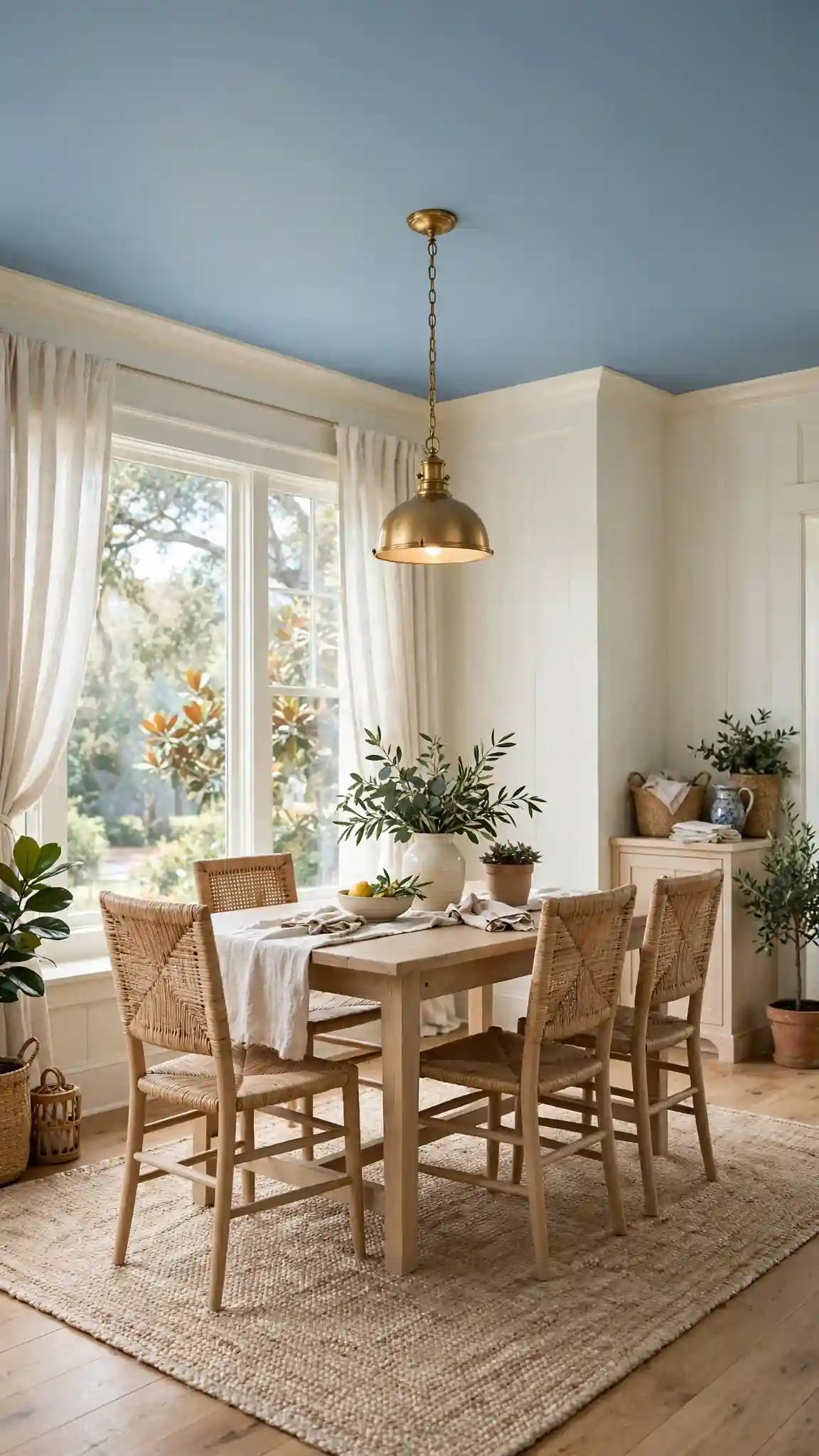
Painting the ceiling — the fifth wall — in powder blue is a classic Southern trick that feels fresh everywhere. Benjamin Moore Palladian Blue (HC-144) is the gold standard, a soft blue-green that reads almost white in bright rooms. Keep the walls a creamy white like Navajo White (SW 6126) and the blue ceiling draws the eye upward, making the whole room feel taller and airier. Ceiling paint runs $30 to $60 per gallon, and one gallon usually covers a standard dining room ceiling with two coats. This subtle touch photographs beautifully and guests always notice it, even if they cannot name what changed.
Use a flat ceiling paint to hide imperfections — sheen on ceilings highlights every flaw. Protect your walls and light fixtures with painter’s tape and drop cloths, since ceiling paint drips are inevitable. If your dining room has a ceiling medallion, paint it the same powder blue for a custom, cohesive look. Pair the blue ceiling with natural fiber rugs and light wood furniture to keep the palette breezy. Pro tip: extend the ceiling color six inches down the walls for a tent-like effect in rooms with picture-frame molding — it looks like a designer detail.
12. Rich Burgundy for a Classic, Luxurious Look
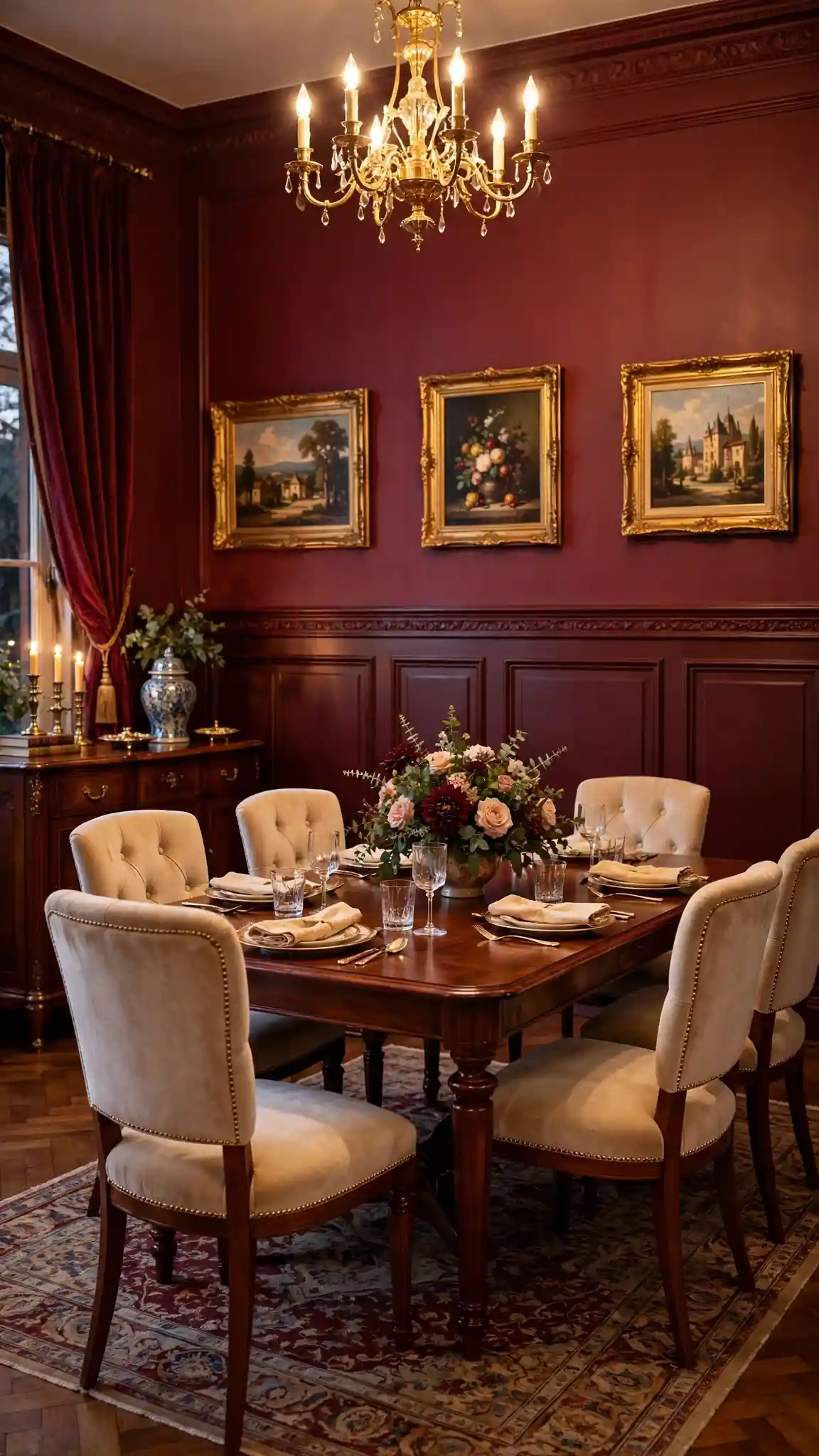
Burgundy dining rooms feel like old-world restaurants, rich and enveloping. Sherwin-Williams Fine Wine (SW 6307) and Benjamin Moore Cottage Red (HC-184) are deep, sophisticated reds that never veer into fire-engine territory. This color flatters traditional furniture — mahogany tables, upholstered chairs, damask curtains — and it glows under warm chandelier light. Two gallons at $65 to $85 each covers a standard room, a small price for such a grown-up transformation. Burgundy also pairs beautifully with dark green plants and gold-framed art, leaning into the classic, collected aesthetic that suits formal dining spaces.
Red is the hardest color to cover, so always use a tinted gray primer first — it cuts the number of topcoats from four to two. Choose an eggshell finish, which gives deep reds a soft, velvety glow instead of a plastic shine. Keep the ceiling bright white to prevent the room from feeling closed in, and add a large mirror to bounce light. If burgundy everywhere feels bold, try it on the lower walls below a chair rail with warm white above. Pro tip: red walls make food look more appetizing — restaurants have used this psychology trick for decades, and your dinner parties will benefit too.
13. Creamy Ivory Walls With Natural Wood Trim
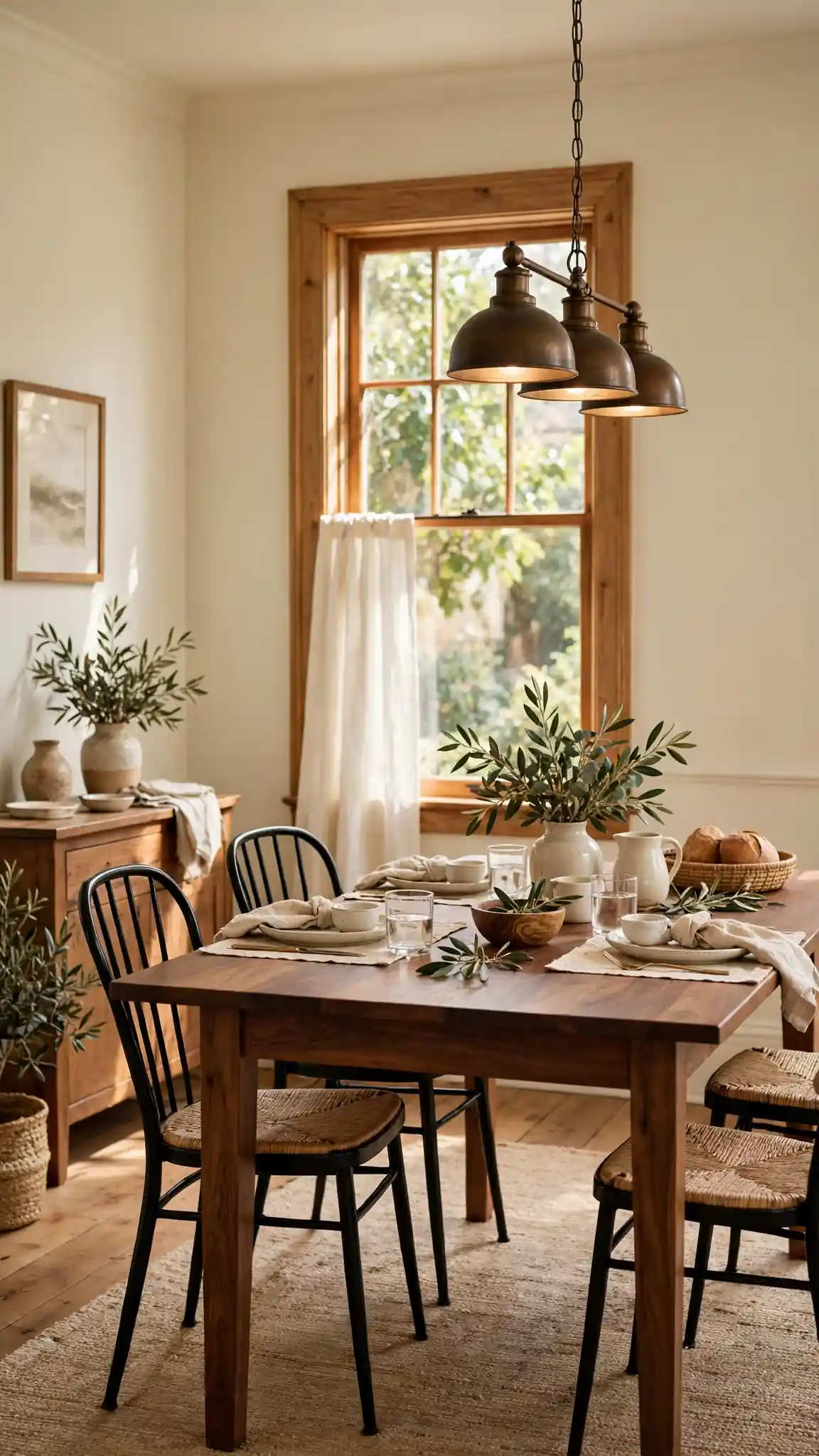
Ivory walls with natural wood trim celebrate warmth without any paint on the wood itself. Benjamin Moore Ivory Tusk (OC-30) and Sherwin-Williams Navajo White (SW 6126) are creamy enough to feel cozy, light enough to keep the room bright. Leaving trim, beams, or a wood accent wall unpainted adds organic texture that painted trim simply cannot match. Two gallons of quality ivory paint cost $90 to $160 total, and the look works with every style from Scandinavian to rustic. This combination is especially beautiful in dining rooms with lots of natural wood furniture, where it all harmonizes effortlessly.
If your existing trim is stained wood in good shape, simply clean and refresh it with a wood conditioner instead of painting. For dated orange-toned oak trim, a gel stain in a walnut shade modernizes it in a weekend for under $50. Keep ivory walls in an eggshell sheen so they wipe clean near busy dining areas. Add black or bronze hardware and light fixtures to ground all that creaminess. Pro tip: test ivory next to your wood trim in daylight and lamplight — yellow undertones in the paint can clash with pink undertones in the wood.
14. Stenciled Feature Wall in a Contrasting Color
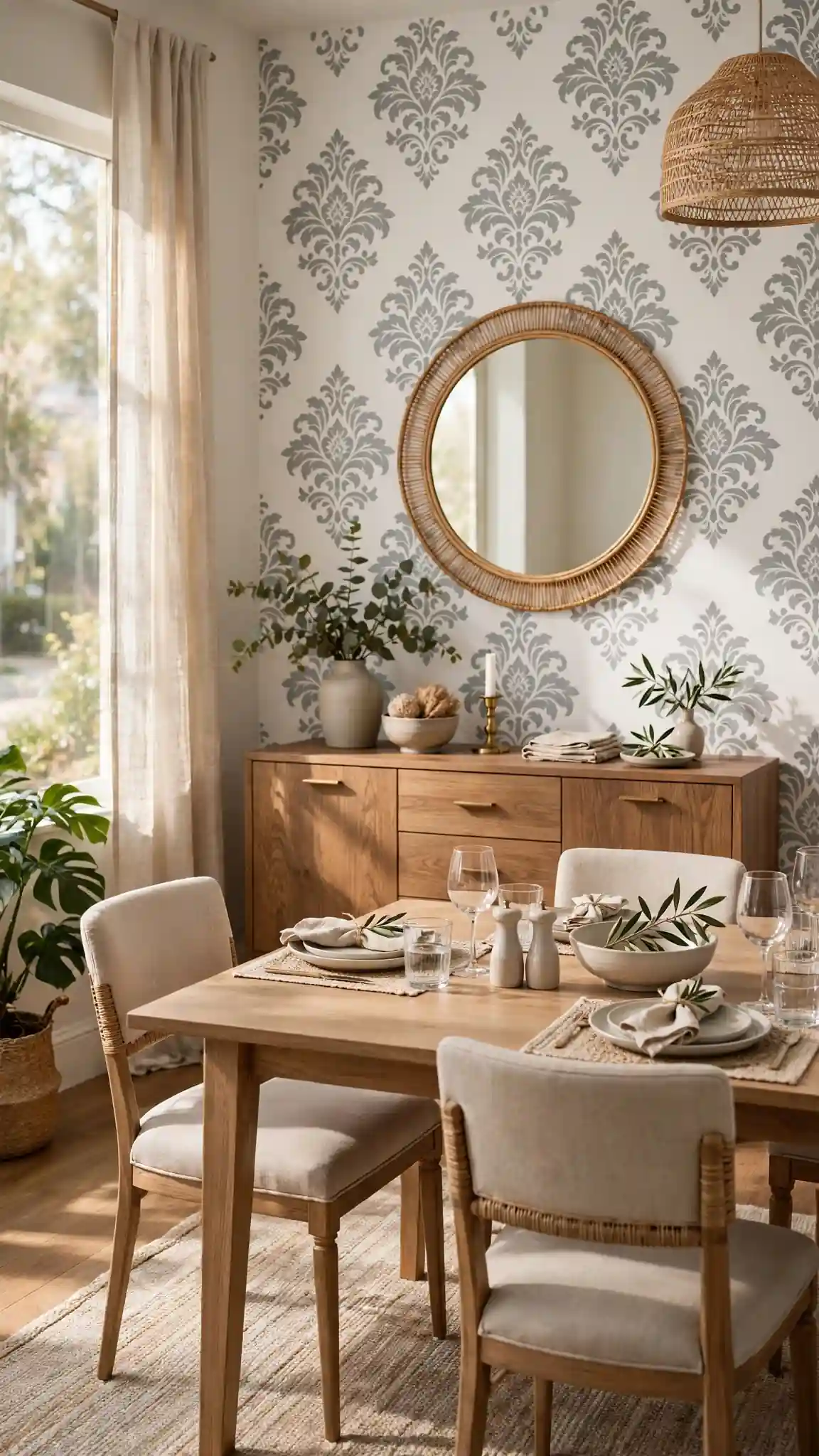
A stenciled feature wall delivers the look of expensive wallpaper for a fraction of the cost. Reusable wall stencils from companies like Cutting Edge Stencils or Royal Design Studio run $40 to $70, and you need just a quart of contrasting paint — about $15 to $25 — over your base wall color. Try a tone-on-tone look, like a soft gray pattern over white walls, or go bold with metallic gold over navy. The wall behind the dining table or sideboard is the natural canvas, and the project takes one focused weekend. Seal the finished wall with a clear matte topcoat in high-traffic dining rooms.
Start in the least visible corner, since your technique improves as you go. Use a dense foam roller with very little paint — offload most of it onto a paper towel — to prevent bleeding under the stencil. Level each repeat with a laser level or a simple pencil line, because a drifting pattern ruins the effect. Wash and dry the stencil every few repeats to keep edges crisp. Pro tip: practice on a large piece of cardboard first, and step back frequently — the pattern should read as texture from across the room, not as individual stamps up close.
15. Olive Green Half Walls With Bright White Tops
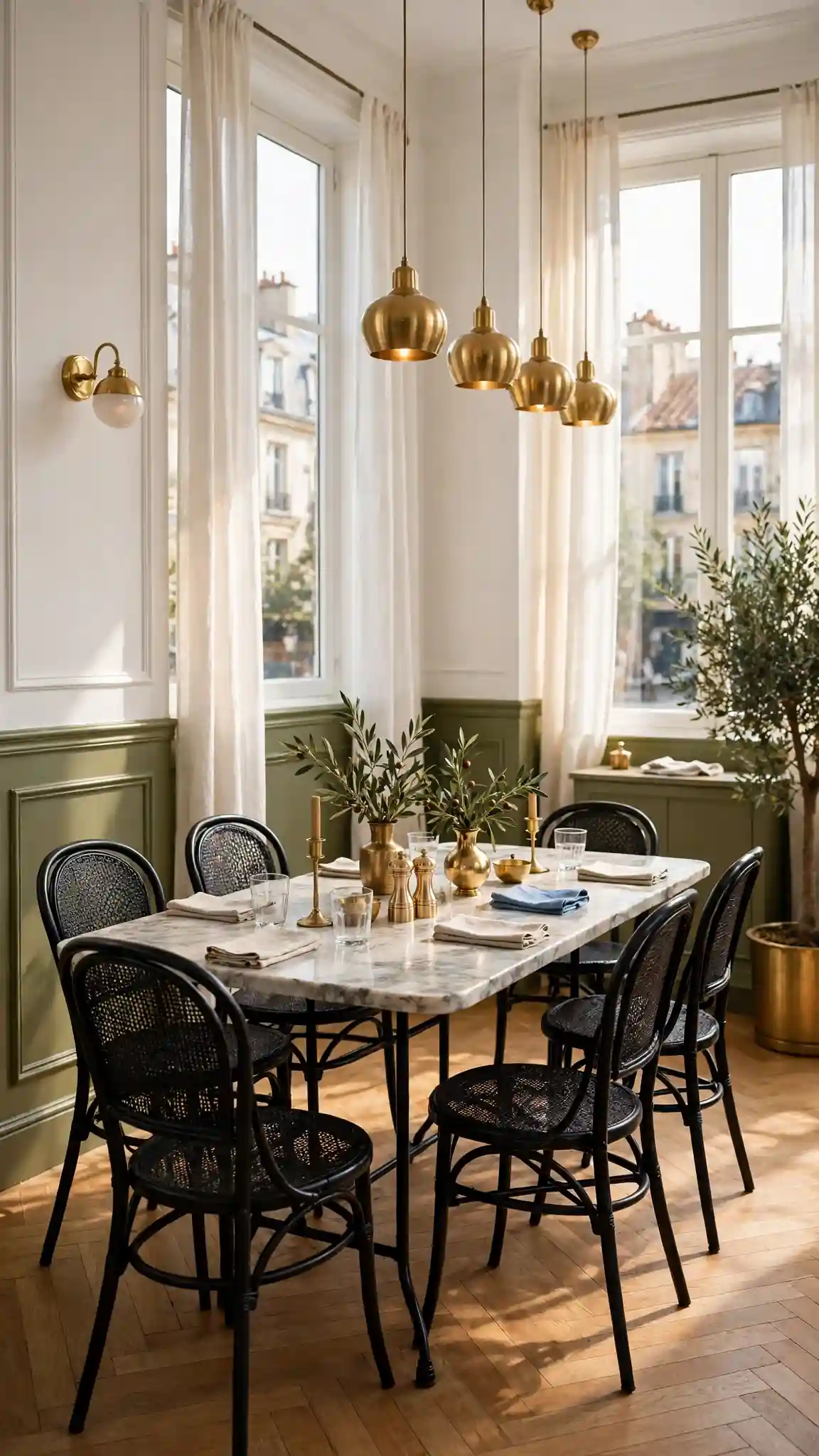
Olive green half walls bring an earthy, European-cafe feel to the dining room. Benjamin Moore Gloucester Sage (HC-100) and similar muted olives look sophisticated below a crisp white upper wall, divided by a simple chair rail or even just a painted line. This treatment is practical too — the darker lower half hides scuffs from chairs and little hands. You will need about one gallon of each color for a 12 by 14-foot room, roughly $90 to $150 total. Olive pairs wonderfully with black metal chairs, marble-topped tables, and brass accents for a modern bistro look.
If you skip the chair rail, paint a clean horizontal line at 36 inches and finish it with thin painter’s tape lines for a crisp edge — or add a slim wood batten for a more finished look. Use satin or semi-gloss on the olive lower half for wipeability, eggshell above. This two-tone approach works especially well in open-plan spaces, where it defines the dining zone without a physical wall. Pro tip: carry the olive onto the inside of any nearby built-in shelving — the repeated color makes the whole space feel intentionally designed.
16. Dusty Blue Shiplap Accent Wall
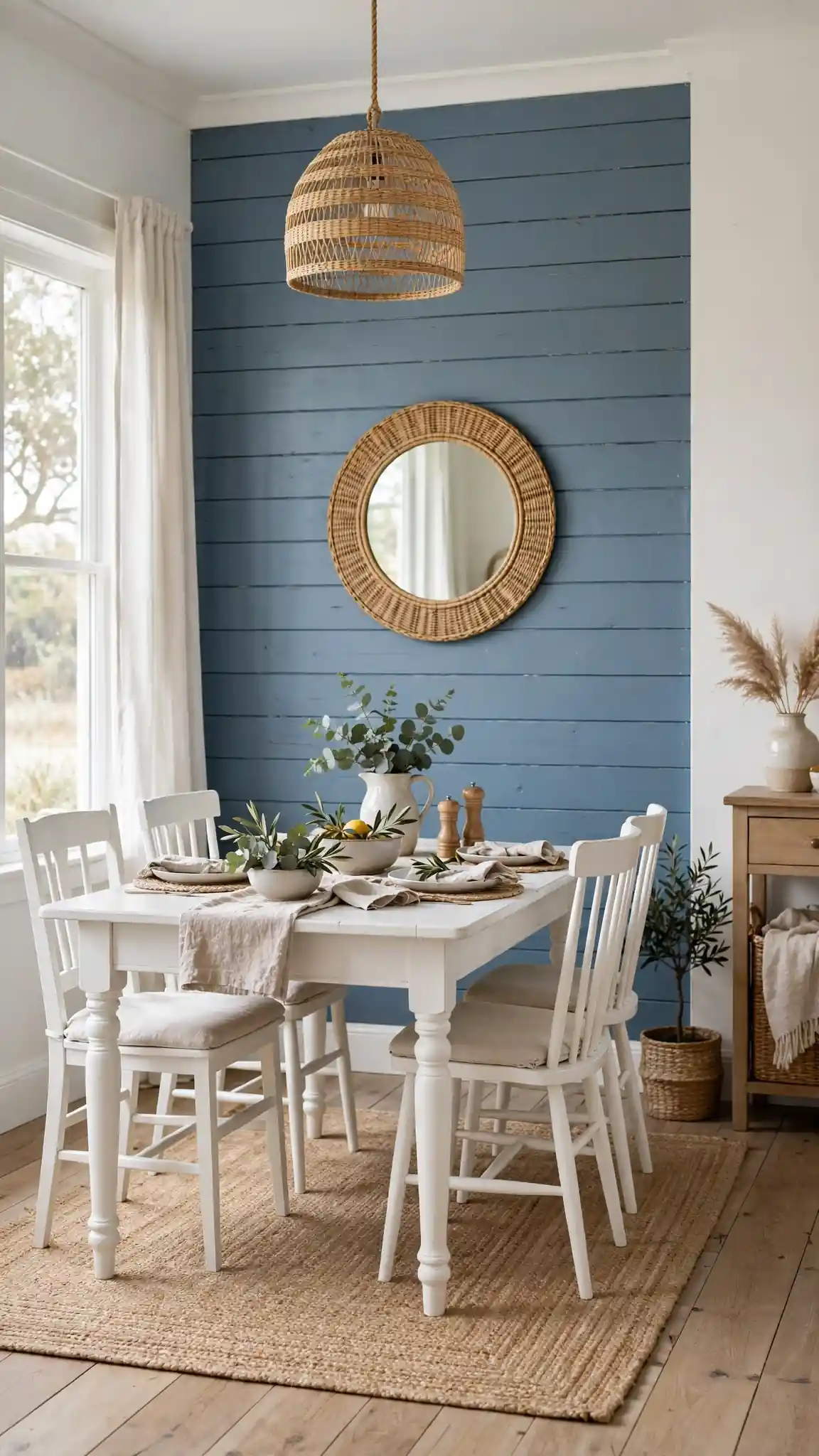
Shiplap painted dusty blue gives a dining room coastal-farmhouse charm without feeling themed. Sherwin-Williams Misty (SW 6232) is a soft blue-gray that looks like sea glass, perfect over primed MDF shiplap boards. Faux shiplap panels run $25 to $40 per 4-by-8 sheet at Home Depot, and a single accent wall needs about four sheets plus trim — under $200 in materials. Install the boards vertically to make ceilings feel taller, or horizontally for classic farmhouse lines. The texture catches light beautifully, adding depth and shadow play that flat paint alone cannot achieve.
Caulk every seam and nail hole before painting, because the grooves highlight imperfections. Roll the paint into the grooves first with a small roller, then smooth the faces with a wider one. One accent wall in dusty blue with three warm white walls keeps the room light and balanced. Hang a simple wreath, a round mirror, or floating shelves on the shiplap for easy styling. Pro tip: paint the shiplap before installation if you can — it is far easier to get clean coverage on sawhorses than on the wall.
17. Warm Taupe Backdrop for Timeless Style
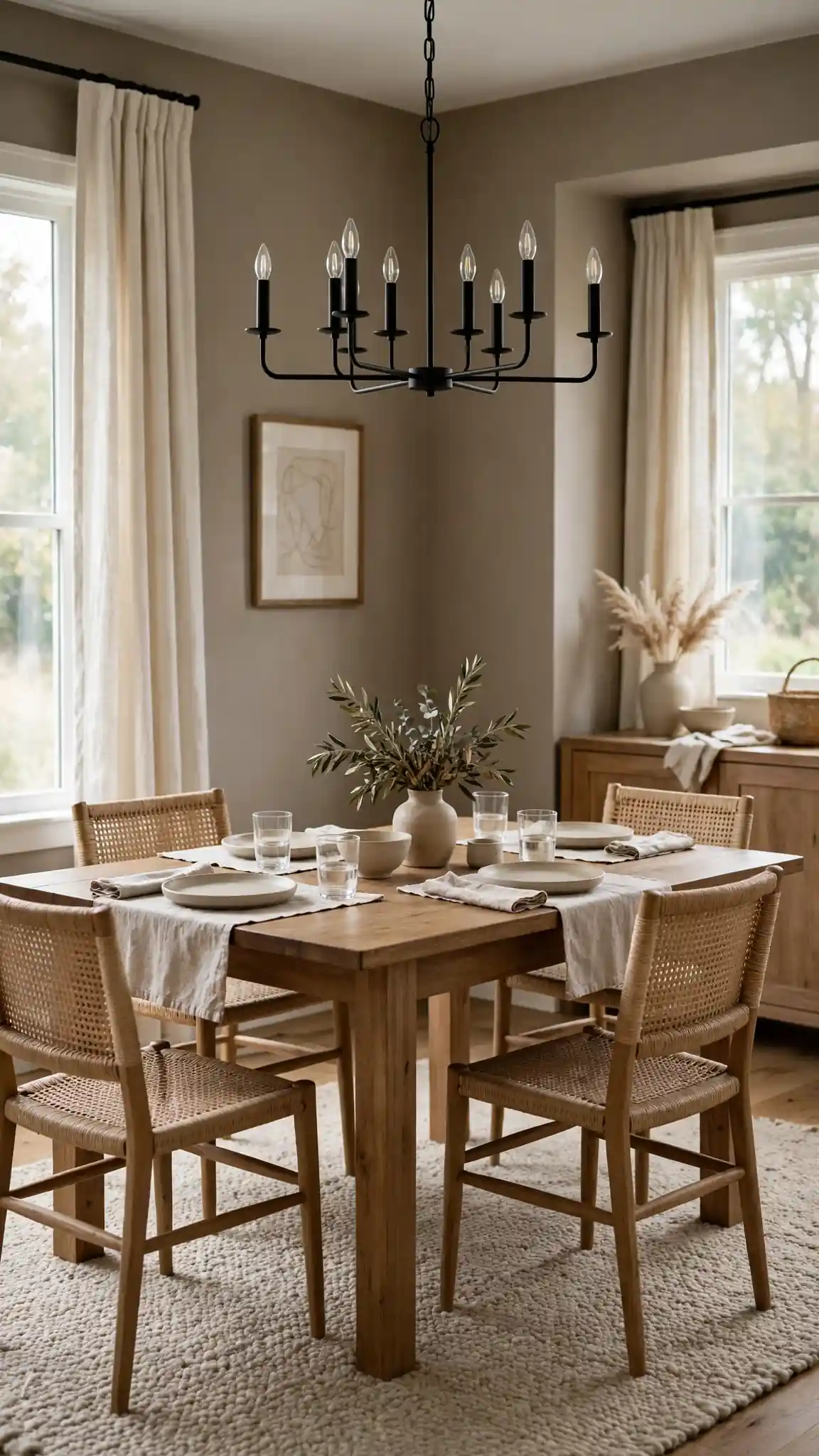
Taupe is the quiet achiever of dining room paint ideas — never flashy, always elegant. Benjamin Moore Kingsport Gray (HC-86) leans warm and cozy, a perfect backdrop for both silver and gold accents. Taupe works with literally any furniture style, which makes it ideal if you redecorate often or plan to sell. Two gallons at $65 to $85 each covers a standard dining room, and the color’s complexity hides wall flaws better than stark white. Layer taupe walls with cream curtains, a natural rug, and wood tones for a calm, collected space that feels finished.
Choose your taupe by undertone, not by name. Hold the swatch against your largest furniture piece — pink-undertone taupes clash with yellow-undertone woods. In dim dining rooms, pick a lighter taupe so the walls do not go muddy at night. Taupe loves texture: linen drapes, a nubby wool rug, and woven placemats all shine against it. Add one bold element, like a black chandelier or colorful art, so the neutrality feels intentional. Pro tip: buy the sample in the exact sheen you plan to use — taupe shifts dramatically between flat and eggshell.
18. Color-Drenching: One Gorgeous Shade Everywhere
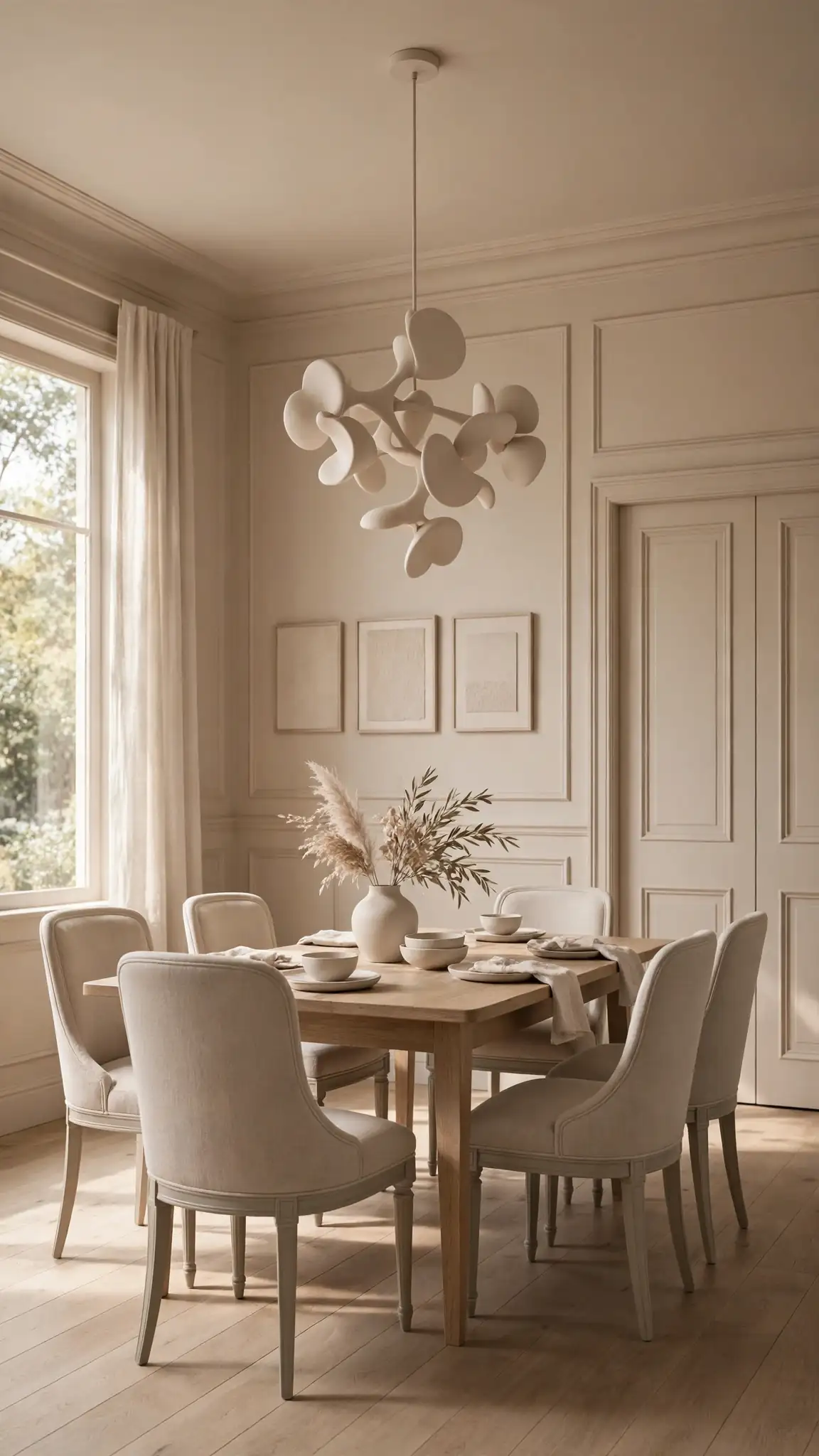
Color-drenching — painting walls, trim, ceiling, and even doors in one shade — is the boldest dining room trend of the year. Benjamin Moore Pale Oak (OC-20) drenched in a soft greige, or a deeper tone like Hague Blue by Farrow & Ball, creates a cocooning, gallery-like effect. Eliminating the contrast between trim and walls makes the room feel larger and more cohesive, and it hides awkward architectural transitions. Budget three to four gallons for full drenching, about $180 to $300 total. The result looks incredibly high-end and photographs like a magazine spread.
Vary the sheen even though the color stays the same: flat or matte on walls, eggshell on the ceiling, satin on trim and doors. This subtle shift keeps the monochrome look from feeling flat. Drenching works best with mid-tone colors — very dark shades can overwhelm, and very light ones lose the effect. Remove switch plates and outlet covers before you start, and paint them too for a seamless finish. Pro tip: color-drenching is reversible with primer and two coats, so do not fear the commitment — try the shade you secretly love.
19. Gold-Trimmed Dark Green Walls
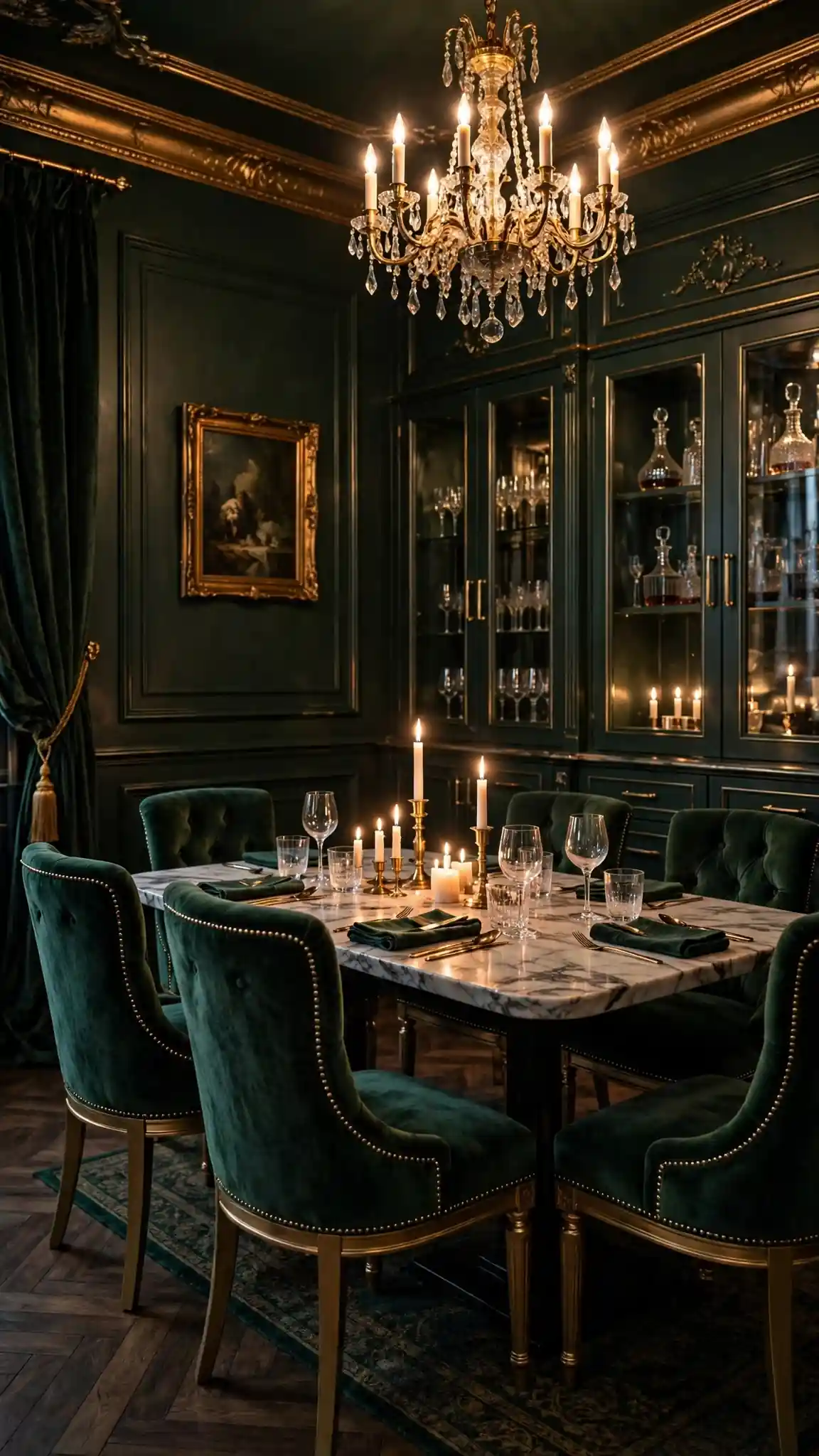
Dark green walls with gold trim feel like a private members’ club — luxurious, moody, and unforgettable. Sherwin-Williams Pewter Green (SW 6208) or a deep hunter green sets the stage, while metallic gold paint on the trim, chair rail, or ceiling medallion adds jewelry-like sparkle. Metallic craft paints and gold leaf kits run $15 to $40 at craft stores, a tiny investment for huge impact. The green-and-gold combination flatters candlelight and looks stunning in holiday photos. Pair it with velvet chairs and a marble-topped table to complete the opulent look.
Keep the gold to trim and details — too much metallic overwhelms. Use a small artist’s brush for crisp lines on molding, and seal metallic paint with a clear topcoat so it does not tarnish. Balance the drama with a light ceiling or plenty of mirrors to keep the room from feeling heavy. This look suits dining rooms with traditional architecture — crown molding and wainscoting give the gold somewhere to live. Pro tip: test the metallic under your actual chandelier light, because gold paint shifts from elegant to gaudy under cool white bulbs.
20. Pale Butter Yellow for a Sunny Morning Feel
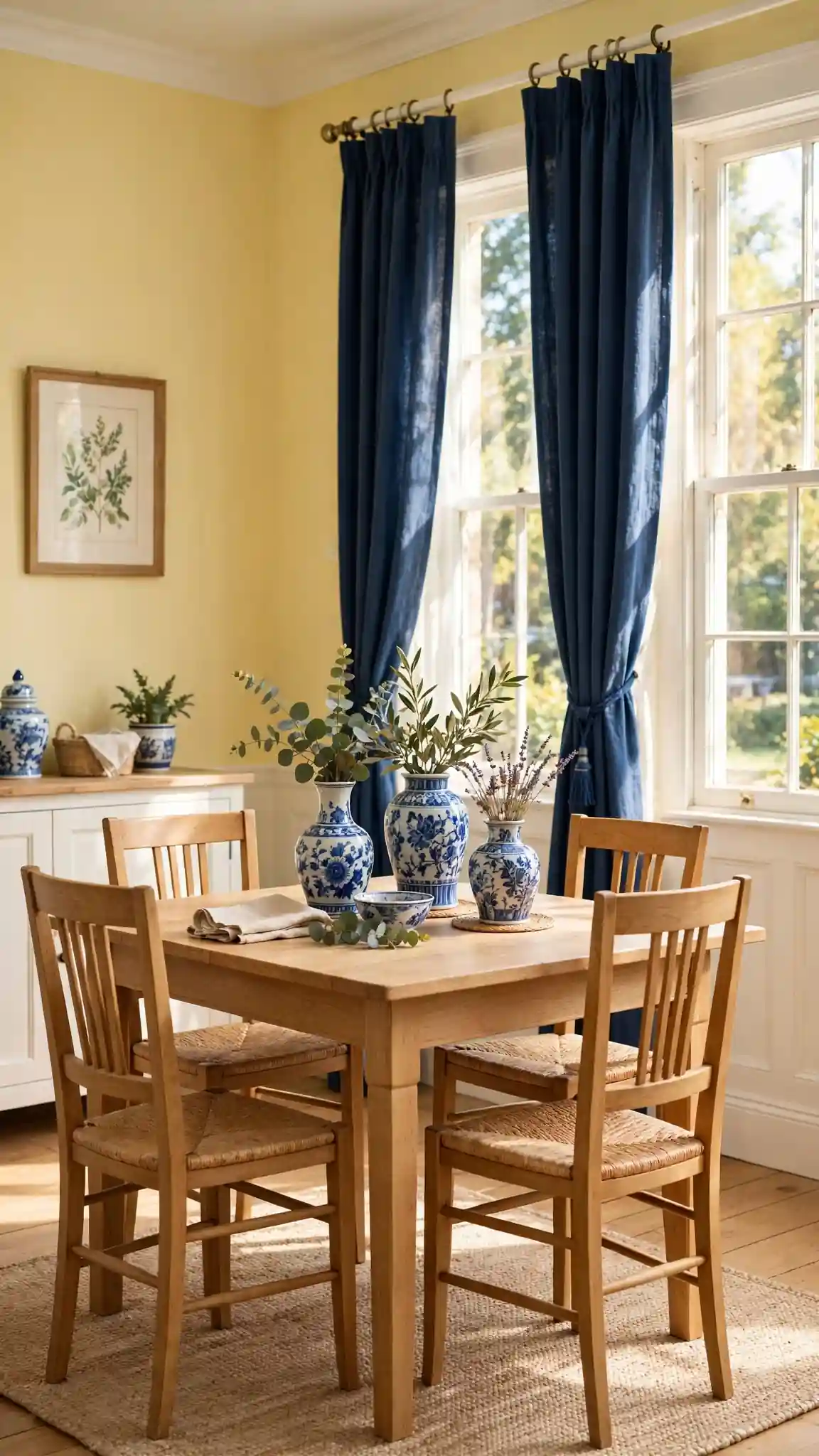
Pale butter yellow brings permanent sunshine to dining rooms, especially ones that face north or get little direct light. Sherwin-Williams Butter Up (SW 6681) is soft and creamy, reading almost neutral in bright rooms. Yellow is psychologically the happiest wall color — it energizes breakfast and makes the room feel welcoming at any hour. Two gallons at $45 to $75 each covers most dining rooms, an affordable mood boost for dark spaces. Pair butter yellow with white trim, light oak, and blue-and-white ceramics for a cheerful, classic look that never feels childish.
The key is staying pale — saturated yellows overwhelm quickly. Sample in the morning light you actually eat breakfast in, since yellow intensifies in direct sun. Keep the ceiling a clean, bright white to prevent the yellow from feeling heavy overhead. Butter yellow loves contrast: black chairs, a dark wood table, or navy curtains keep it sophisticated. This shade also makes small dining nooks feel larger and sunnier. Pro tip: yellow walls make white trim look dingy by comparison, so repaint the trim at the same time for a fresh, cohesive finish.
21. Slate Blue Walls With Crisp White Crown Molding
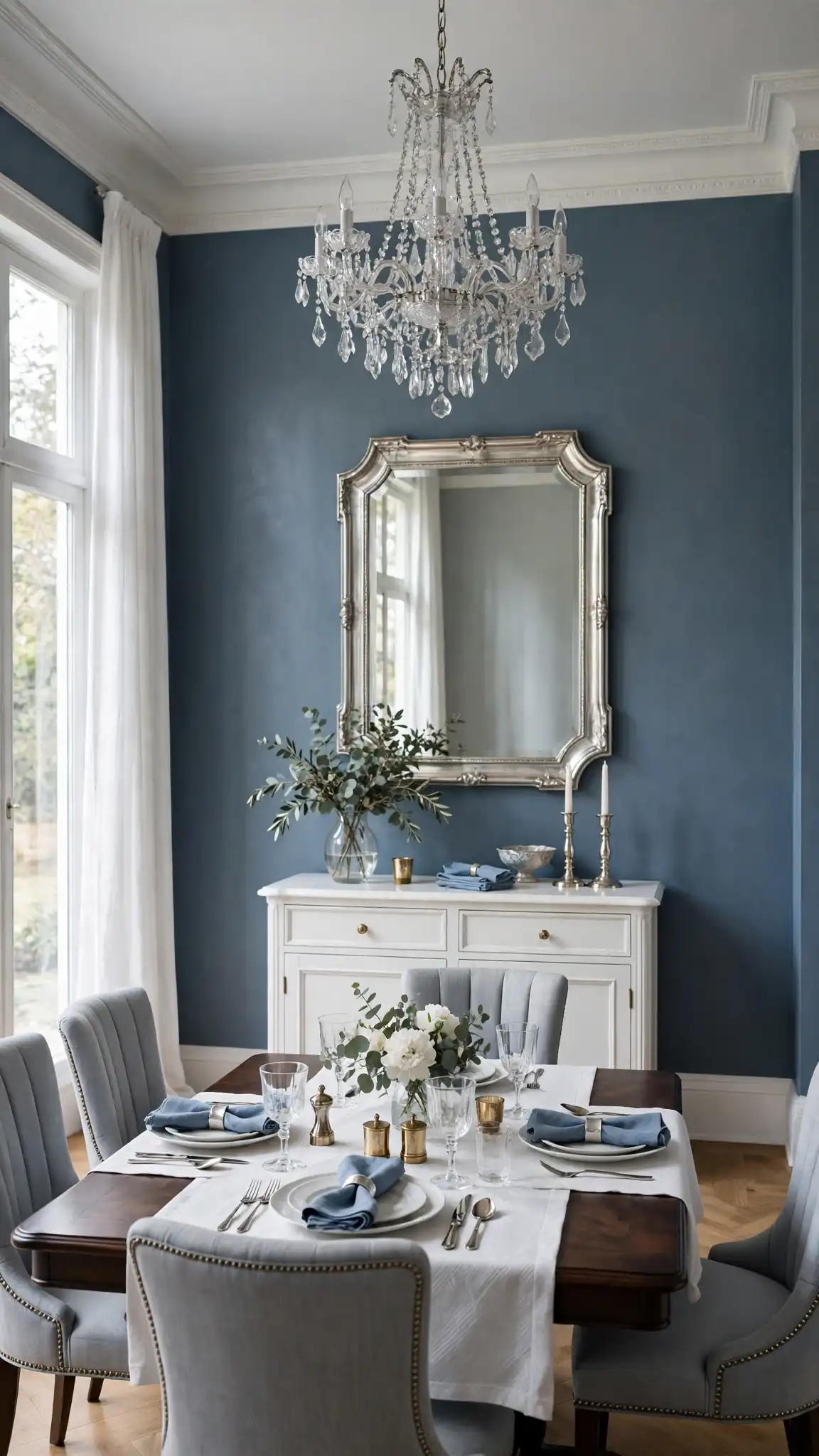
Slate blue strikes the perfect balance between gray sophistication and blue personality. Sherwin-Williams Slate Tile (SW 7624) is a moody blue-gray that looks tailored and timeless in a dining room. Crisp white crown molding against slate blue creates the kind of contrast designers charge thousands to achieve — the molding pops like a picture frame around the room. Two gallons at $60 to $85 each plus fresh white trim paint transforms the space for under $250. Slate blue works with silver, chrome, and crystal, making it ideal for more formal dining rooms.
Widen the impact by painting the crown molding, baseboards, and window trim in the brightest white you can find — Benjamin Moore Chantilly Lace (OC-65) is a favorite. Caulk and sand the trim first, because dark walls make every trim imperfection visible. Slate blue darkens noticeably at night, so add dimmable sconces or a statement chandelier. In open floor plans, use the slate blue to define the dining area while keeping adjacent walls light. Pro tip: paint a sample board and move it around the room for two days — slate blue shifts from gray to blue to almost navy as the light changes.
22. Fresh Dining Room Paint Ideas Using Limewash Texture
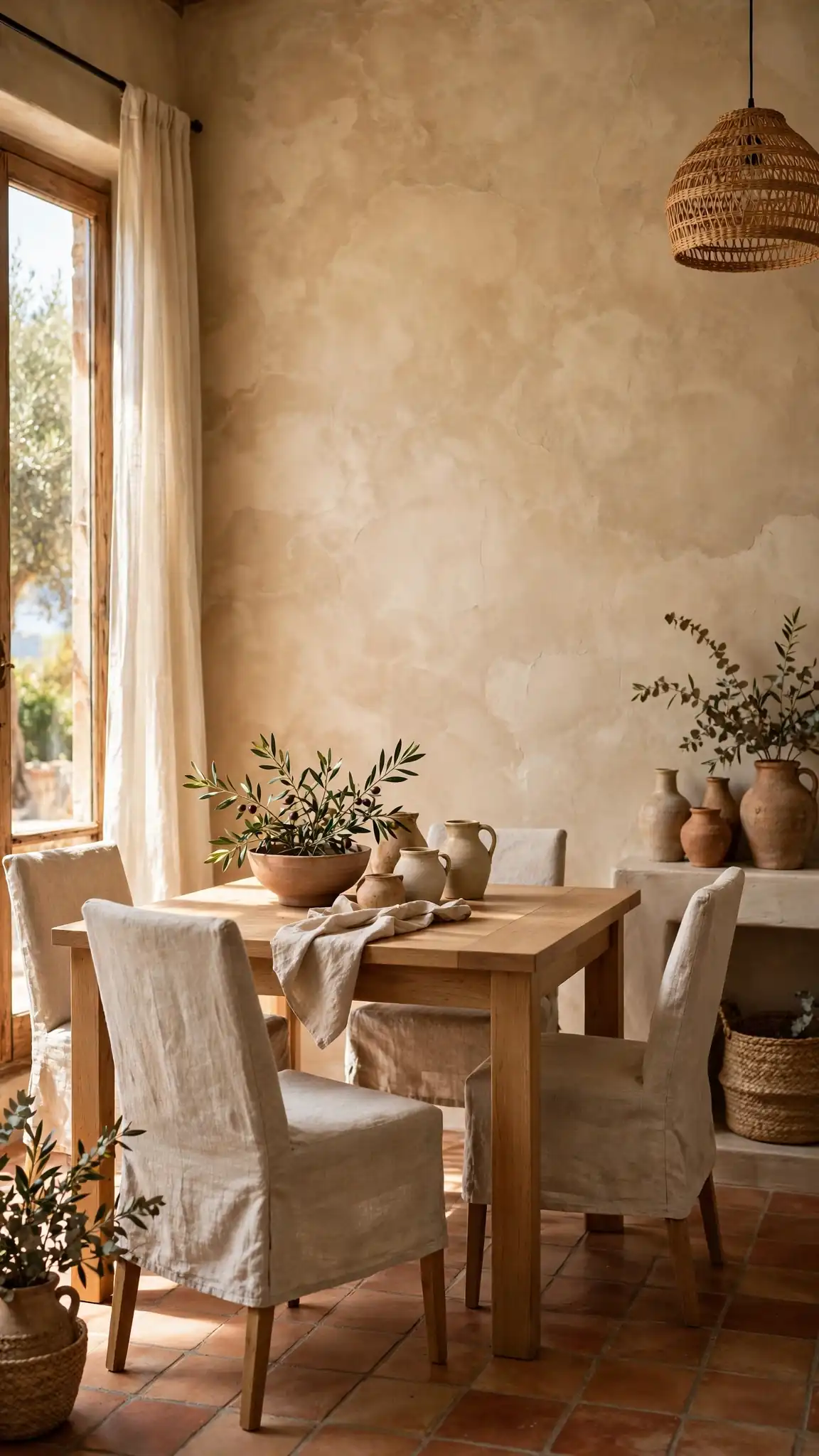
Limewash paint adds cloudy, Old World texture that flat paint simply cannot replicate. Brands like Portola Paints, Kalklitir, and even Behr’s limewash line offer authentic mineral finishes around $70 to $95 per gallon. These dining room paint ideas suit Mediterranean, rustic, and modern-organic styles — the mottled finish looks like aged plaster. Apply it with a large block brush in random crisscross strokes; the technique is forgiving and even fun. One accent wall in limewash behind the dining table creates a stunning, textural focal point for the cost of a single gallon.
Limewash needs a mineral primer on previously painted drywall, so budget an extra $30 to $40 for the right base. Work in small sections and keep a wet edge, blending strokes as you go — the cloudiness is the point, so embrace variation. Seal dining-room limewash with a matte topcoat for wipeability near the table. Pair the textured wall with simple, modern furniture so the finish stays the star. Pro tip: watch one application video before you start — limewash technique takes ten minutes to learn and the results look professionally plastered.
Final Thoughts
The right wall color changes everything about how a dining room feels, and these 23 dining room paint ideas prove you do not need a renovation budget to get there. A couple of gallons of quality paint — usually under $200 — can turn a bland box into a cozy bistro, a sunny breakfast nook, or a dramatic dinner-party backdrop. The colors that work best are the ones you test in your own light, against your own furniture, at the times of day you actually use the room. That simple testing step separates the dining rooms people love from the ones they repaint a year later.
Start with large swatches, live with them for a few days, and trust your instincts over passing trends. Whether you choose a timeless greige, a moody charcoal, or one of the bolder dining room paint ideas like terracotta or black, good prep and the right sheen matter as much as the shade itself. Pin your favorites, grab a sample pot this weekend, and enjoy the most satisfying weekend project in home decor — a dining room that finally feels warm, personal, welcoming to guests, and entirely yours for years to come.
FAQs
Choosing a dining room color raises plenty of practical questions, from the best finish for busy walls to how much paint you will actually need for the room. We have answered the most common ones below using real-world advice from paint professionals and experienced DIYers, so you can buy your paint and confidently plan your painting weekend with total confidence.
If you are still torn between two shades after reading the FAQs, remember the golden rule of these dining room paint ideas: always test a large swatch on the wall first. A $10 sample pot is the cheapest insurance against a $200 mistake, and it takes only a few minutes to brush on and evaluate in different light throughout the day.
What is the most popular dining room paint color right now?
Warm greige shades like Sherwin-Williams Accessible Beige (SW 7036) top every popularity list, because they work with any furniture style and flatter both daylight and lamplight. Soft sage greens are the fastest-rising trend, offering the same versatility with more personality. These dining room paint ideas stay popular because they photograph well and never clash with seasonal decor changes.
How many gallons of paint do I need for a dining room?
A typical 12 by 14-foot dining room with 9-foot ceilings needs about two gallons for two coats. One gallon covers roughly 350 to 400 square feet, and most rooms have around 450 square feet of wall after subtracting doors and windows. Buy an extra quart for touch-ups — color matching later is harder than you think.
What paint finish is best for dining room walls?
Eggshell is the sweet spot for most dining rooms: it has a soft glow, hides minor flaws, and wipes clean. Use satin or semi-gloss on trim, wainscoting, and chair rails for durability against bumps and scuffs. Flat finishes look elegant on ceilings and low-traffic walls but mark easily near the table.
Should dining room walls be light or dark?
Both work beautifully — it depends on your light and how you use the room. Light colors like ivory and pale greige keep small or north-facing rooms feeling open, while dark shades like navy and charcoal create cozy, intimate dinner-party vibes. These dining room paint ideas include both, so pick based on your room's natural light and your entertaining style.
How do I test paint colors before committing?
Paint large swatches — at least 2 by 2 feet — on the wall where your dining table sits, or use peel-and-stick samples. Observe them at breakfast, midday, and evening, because artificial light dramatically changes undertones. Most paint brands sell sample pots for $5 to $12 at Home Depot, Lowe's, or Sherwin-Williams stores.
Can I paint my dining room myself or should I hire a pro?
Most dining rooms are very DIY-friendly: two weekends of careful prep and rolling typically costs under $250 in materials. Hire a professional if your walls need major repairs, you have very high ceilings, or you want specialty finishes like limewash done flawlessly. Either way, these ideas suit any skill level — just never skip the prep work.


Leave a comment