


10 year olds room ideas need to balance two things: a kid who still loves play and a tween who suddenly wants independence, privacy, and style. At this age, children outgrow babyish themes fast, so the smartest designs use a neutral base — walls, bed, big furniture — with personality added through bedding, art, and accessories that are easy to swap later. This guide covers twenty-five unique ideas for boys, girls, and shared rooms, from study corners and gaming zones to reading nooks and hobby walls, so the room grows with your child instead of against them.
The best room for a 10 year old supports three daily needs: sleep, homework, and hobbies. Designers recommend zoning even small bedrooms into a rest area, a focused study spot away from the bed, and a floor space for play or friends. Involve your child in choosing colors and themes — ownership is what makes them keep the room tidy. Every idea below includes practical tips on budget, storage, and longevity, because a well-planned room at age ten should still work beautifully at age fourteen with only minor updates.
1. Neutral Base with Swappable Accents
Paint walls a calm neutral — warm white, greige, or soft sage — and let bedding, posters, rugs, and cushions carry the personality. Ten year olds change obsessions every few months, so this approach means a full “redesign” costs only a new duvet cover and some wall art. Invest in quality basics that last into the teen years: a full-size bed, a solid desk, a real wardrobe. Cheap themed furniture gets outgrown; neutral quality does not. This single principle saves parents more money than any other idea on this list.
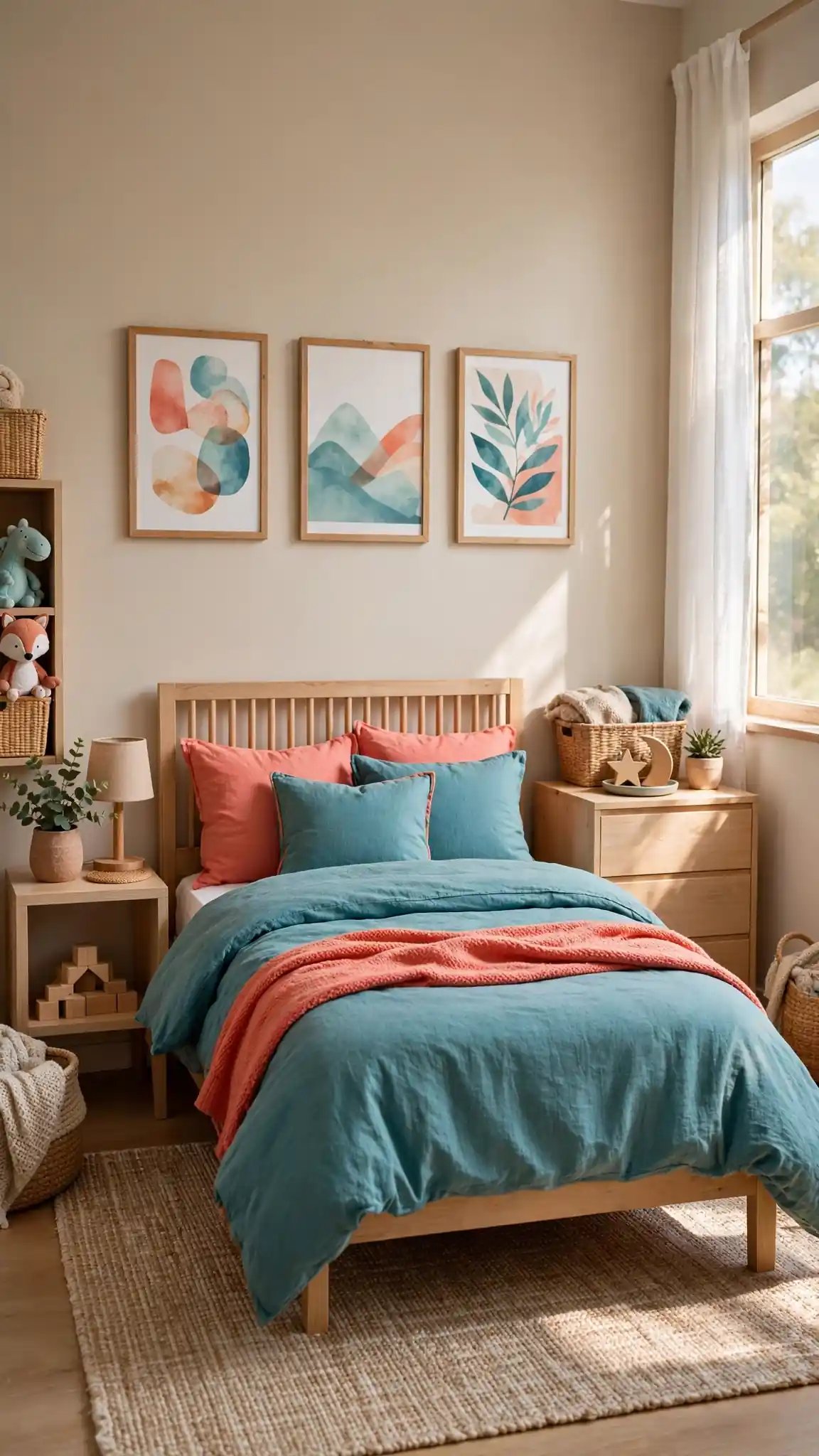
A neutral base is the smartest long-term investment in a kid's room: repainting one accent wall costs $50–$100, while redoing a fully themed room costs ten times that. Choose warm white, greige, or soft sage — colors that work at age ten and still feel right at sixteen. Then let bedding, posters, and rugs carry the personality; duvet covers ($40–$80 at IKEA or Target) swap in minutes. Keep the big furniture neutral too so nothing fights the next obsession. Pro tip: paint one wall with magnetic primer before the topcoat — it turns any wall into a display board for art and photos without a single nail hole.
2. Loft Bed with Study Space Below
A loft bed lifts sleeping up and opens the entire footprint below for a desk, shelves, and a task lamp — effectively doubling a small room. Ten is the perfect age: old enough to climb safely, young enough to find it exciting. Choose a sturdy frame with guardrails and a ladder angle your child manages easily. The under-bed study cave feels private and den-like, which kids this age adore, and it naturally separates homework from sleep. Add a pinboard on the inner wall for timetables, artwork, and photos.
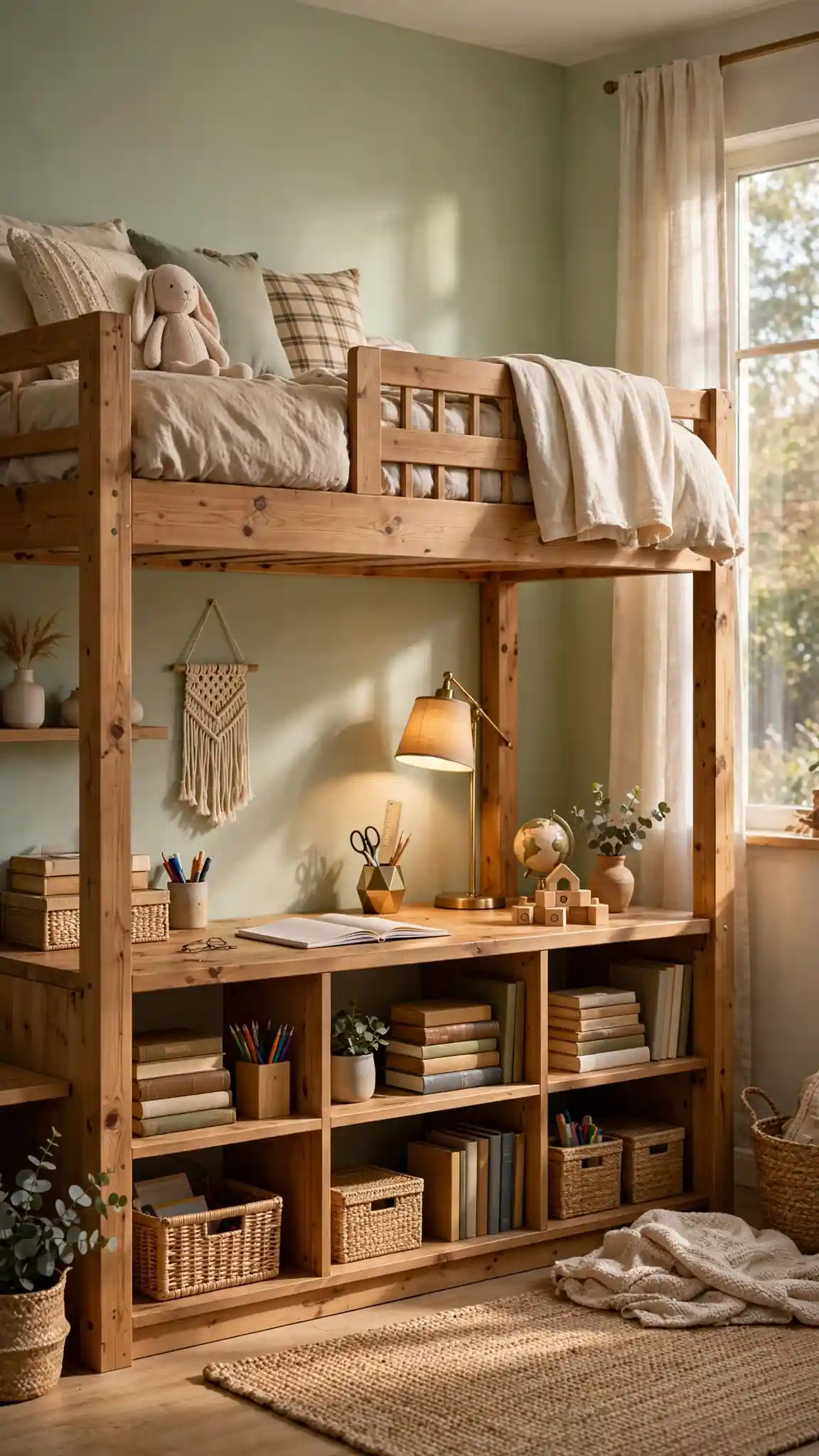
A loft bed effectively doubles a small room's floor space, but safety comes first: choose a bed rated for at least 200 lbs, with guardrails on all sides and a sturdy angled ladder. The space below fits a 42-inch desk, a bookshelf, and a task lamp comfortably in most 10×10 rooms. Leave 30–36 inches between the mattress top and ceiling so your child can sit up. Quality loft beds run $400–$900 at IKEA, Walker Edison, or Pottery Barn Teen. Pro tip: add LED strip lights under the bed frame — they make the study zone feel intentional and give late homework sessions a cozy, focused glow.
3. Dedicated Homework Station
By age ten, homework gets serious, so a proper study zone matters more than any toy. Place a desk facing a wall — not the bed or window — with a supportive chair, a warm task lamp, and a drawer unit for supplies. Add a weekly planner board above the desk and a small shelf for school books only. Keep screens and toys out of arm’s reach during study time. A defined homework station builds focus habits that pay off for years, and it signals to your child that their work is taken seriously.
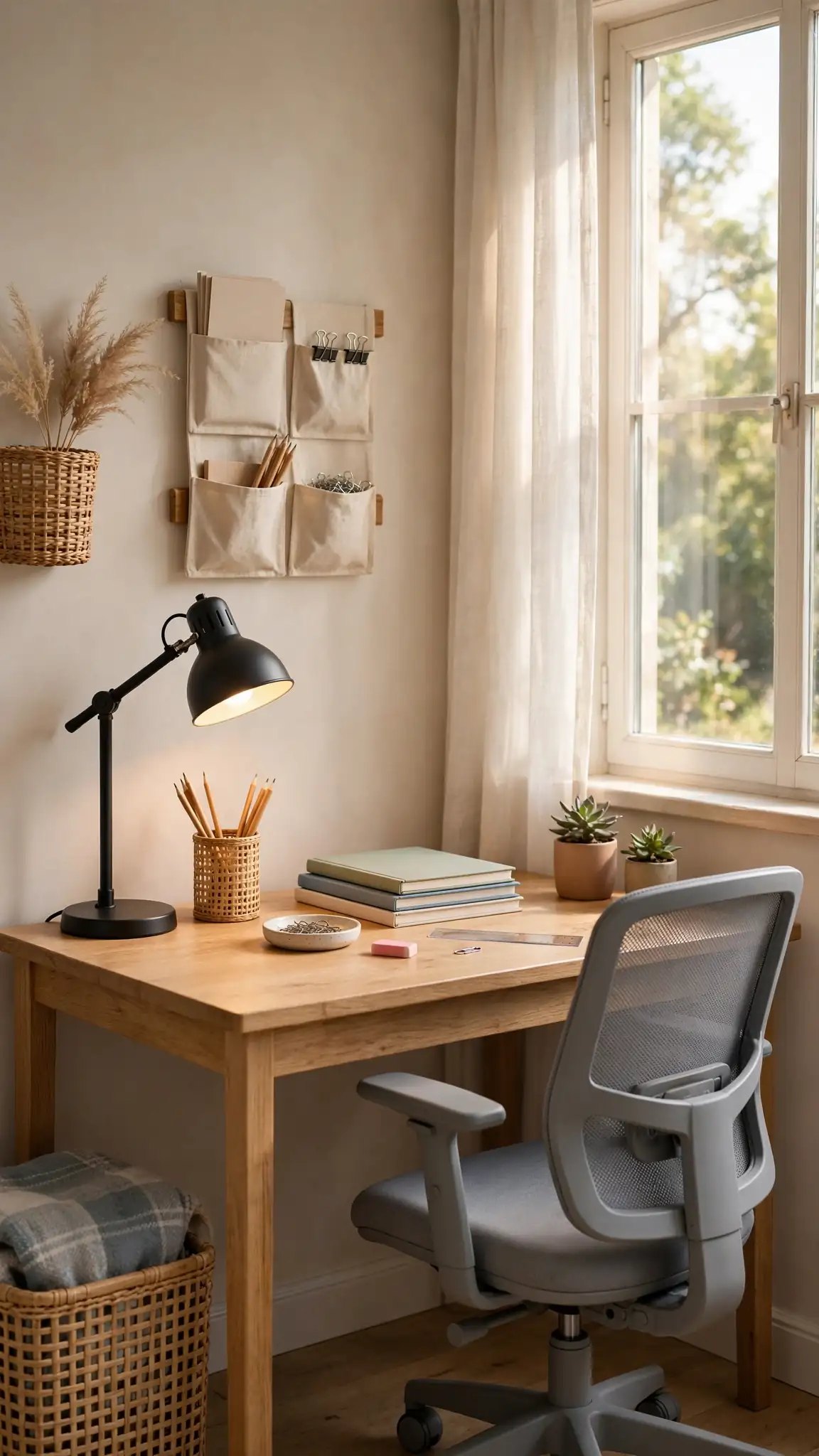
The ideal homework desk is 42–48 inches wide and 24 inches deep — big enough for a laptop plus an open textbook. Position it near a window for daylight, with a 4000K task lamp for evenings (brighter than bedroom ambient light, better for focus). An ergonomic chair with adjustable height ($80–$150) beats a dining chair for daily use. Keep supplies in a rolling cart beside the desk so the surface stays clear. Pro tip: face the desk away from the bed and door if possible — fewer visual distractions measurably improves homework focus, and a simple room divider can create that separation in a pinch.
4. Cozy Reading Nook Corner
A reading nook turns a spare corner into the most-used spot in the room. Layer a beanbag or floor cushion, a soft throw, a small bookshelf within reach, and a clip lamp or string lights overhead. A canopy or hanging tent adds the sense of hideaway that ten year olds love. Position it away from the door for a feeling of privacy. Kids read far more when books live in a spot that feels like theirs — this idea costs very little and quietly builds a lifelong habit.

A reading nook needs only three things: something soft to sit on, good light, and books within reach. A beanbag ($50–$90) or a pile of large floor cushions works, plus a clip-on book light or a small floor lamp. Place a low bookshelf or a wall-mounted ledge within arm's reach and rotate the book selection monthly to keep it fresh. A soft 5-foot round rug defines the corner and muffles sound. Pro tip: let your child choose one special element — a string of fairy lights, a favorite blanket — because ownership of the nook is what actually gets them reading there.
5. Gallery Wall of Their Own Art and Interests
Give your child one wall to curate: framed drawings, movie posters, medals, photos with friends, and printed quotes. Use a grid of identical frames for a tidy look, or a picture ledge so they can swap pieces without new holes. Ownership is the point — a ten year old who designs their own wall feels the room is genuinely theirs and treats it better. Refresh it each school year as interests change. This is the cheapest idea in this guide and often becomes the child’s favorite feature.
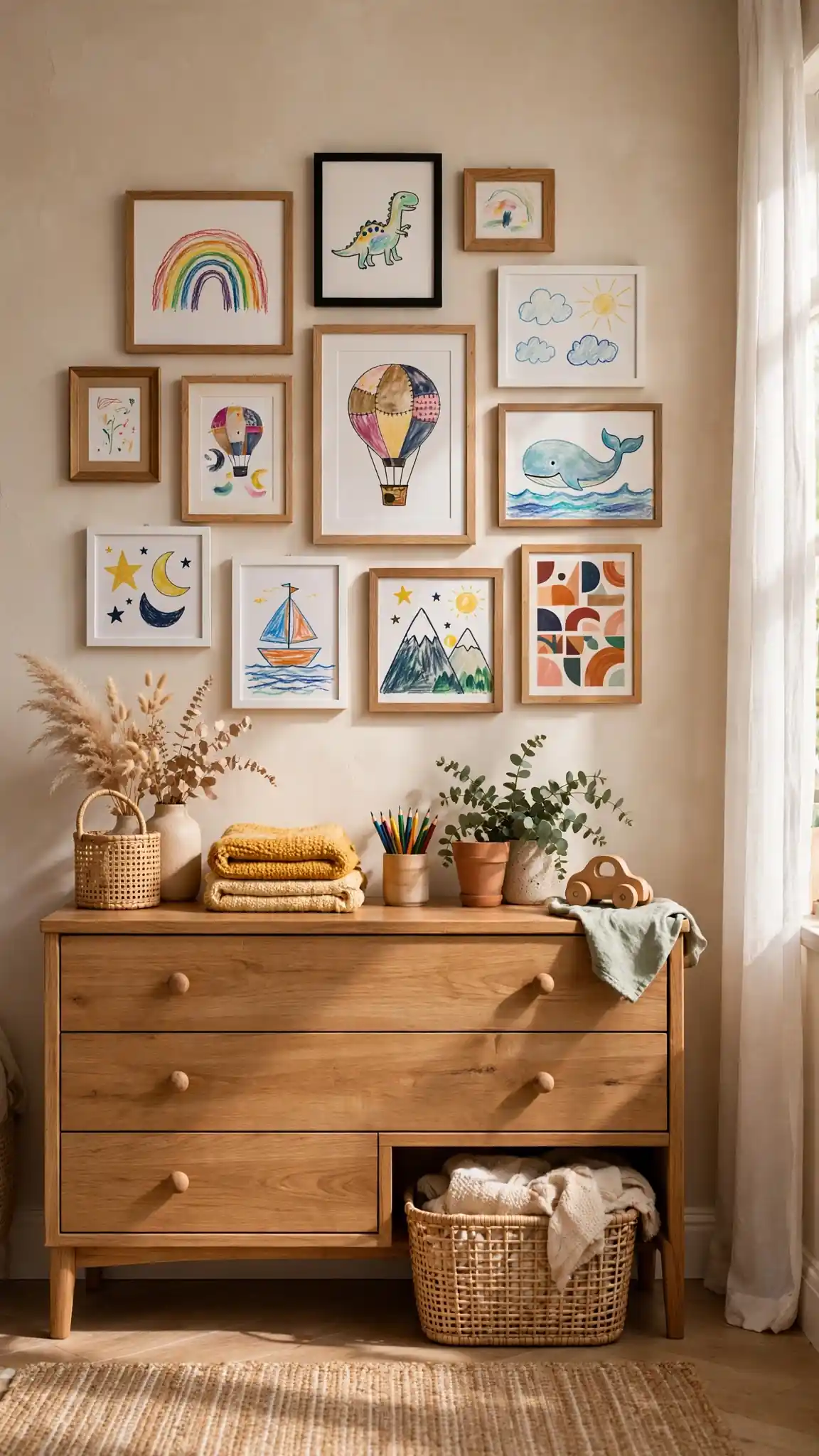
Dedicate the wall at a kid-friendly height — center the arrangement around 48 inches from the floor, not adult eye level. Use lightweight frames with acrylic (not glass) fronts for safety, and hang with damage-free adhesive strips so the gallery can evolve monthly. Mix their artwork with photos, medals, and postcards for a collected feel. A long picture ledge ($25–$40 at IKEA) is even easier: art leans, swaps in seconds, and needs no precise hanging. Pro tip: photograph each version of the gallery before changing it — kids love looking back at how their wall (and their art) evolved over the years.
6. Sports Zone Bedroom
For sports-mad kids, build the room around their game without going full theme-park. A wall-mounted mini basketball hoop over the door, a display shelf for trophies and match balls, framed jerseys, and bedding in team colors deliver the vibe. Add a bench with hooks for kit bags so equipment stops living on the floor. Keep walls neutral so switching from football to cricket later only means swapping accessories. A small over-door hoop also burns energy on rainy days — parents of active ten year olds will understand.
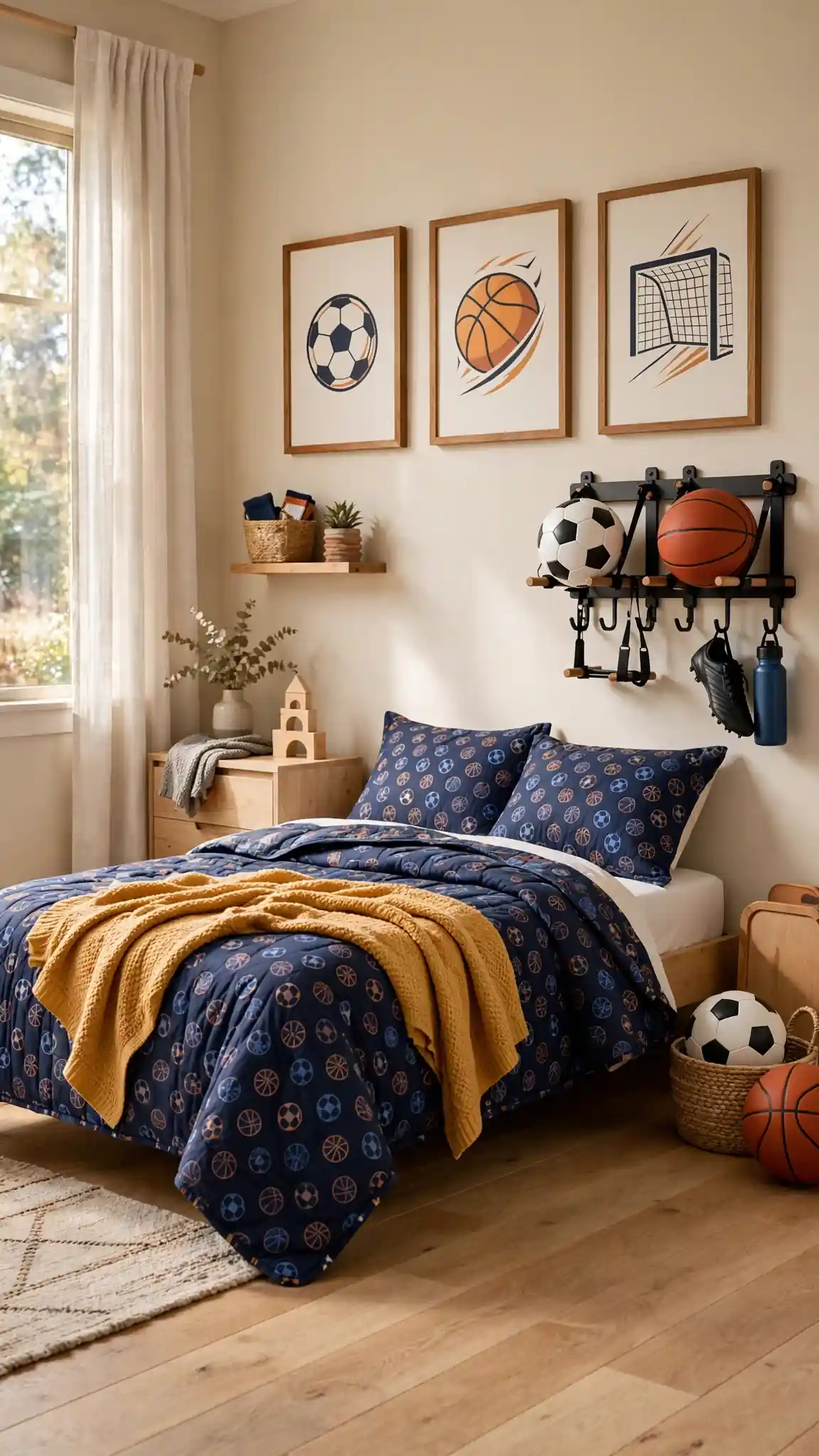
Build the sports zone around function, not just fandom: a wall-mounted ball rack ($20–$35), hooks for bags and jerseys, and one display shelf for trophies. Keep team colors to bedding and one accent wall so the room can evolve when allegiances change — repainting is cheaper than replacing furniture. A small bench or ottoman gives teammates a place to sit. Avoid wall decals of specific players; framed posters swap out easily when heroes change. Pro tip: a washable rug in a dark color hides cleat dirt and grass stains, and a lidded hamper right by the door contains the sports-laundry chaos.
7. Gaming Corner Done Right
If gaming is your child’s world, design a corner that keeps it healthy: a small console setup on a media unit, a comfortable chair with back support, LED strip lighting behind the screen to reduce eye strain, and a headset hook. Crucially, position gaming away from the bed and agree screen-time rules as part of the design. Cable management boxes keep the corner tidy and safe. A defined gaming zone actually makes limits easier to enforce — when the corner switches off, the day’s gaming is visibly over.
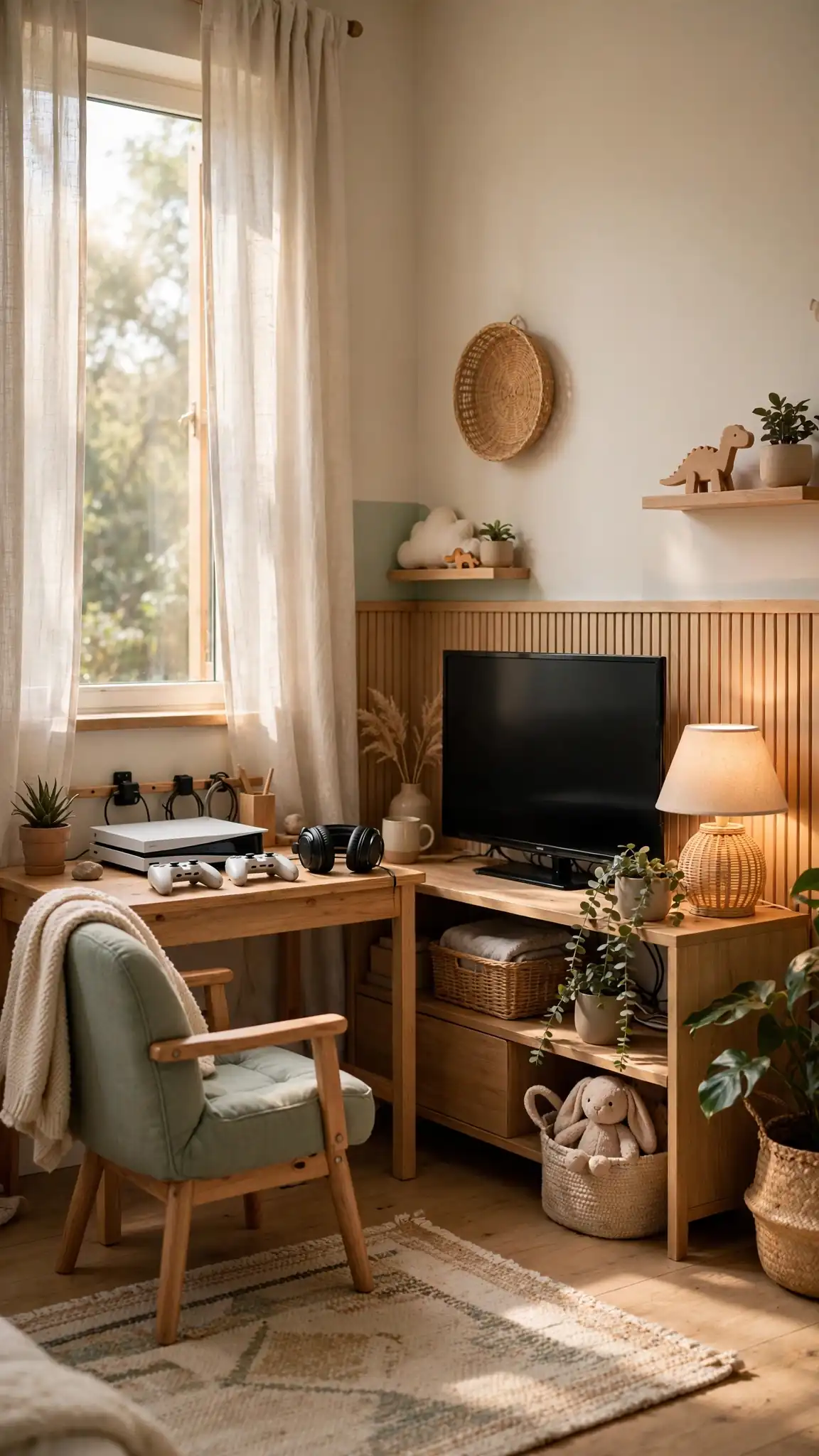
A healthy gaming corner starts with ergonomics: a chair with lumbar support, a screen at eye level (use a monitor riser, $25–$40), and the screen 20–28 inches from the eyes. Add bias lighting — an LED strip behind the monitor ($15–$25) — which reduces eye strain in dark rooms. Cable management is non-negotiable: a cable tray and Velcro ties ($15 total) keep everything tidy and safe. Set the corner up so an adult can see the screen from the doorway; it keeps gaming social and supervised. Pro tip: a simple outlet timer on the console enforces screen-time limits without a single argument — the hardware does the parenting for you.
8. Bold Accent Wall They Choose
Let your ten year old pick one wall color or a removable wallpaper — mountains, stars, graffiti art, or a deep teal. One bold wall delivers maximum personality with minimum commitment; the other three walls stay neutral for balance. Peel-and-stick wallpaper is ideal because tastes at this age change quickly and removal takes an afternoon. The act of choosing matters as much as the result: kids who select their own accent wall report loving their rooms more and showing them off proudly to friends.
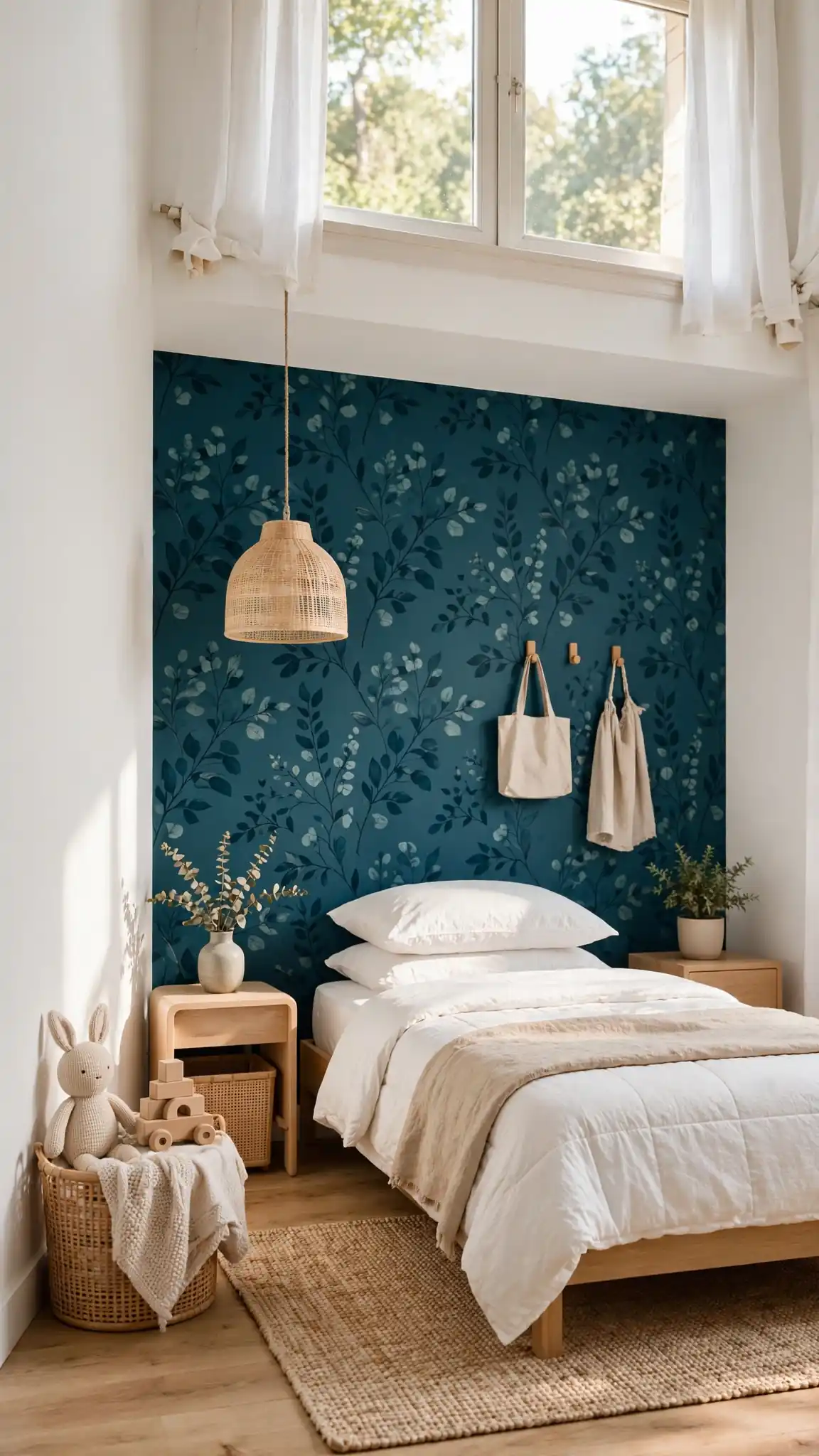
Letting your child choose the accent wall builds real ownership — and removable wallpaper ($40–$80 per roll) makes the choice reversible, which makes saying yes much easier. One roll typically covers a 10-foot accent wall; order an extra roll for pattern matching. Mountains, stars, graffiti art, and geometric prints are all forgiving for first-time installers. If paint wins, try it on a large poster board first and live with it for a weekend. Pro tip: frame the choice — literally — by painting only up to a chair rail or picture ledge; it looks intentional and makes the next changeover dramatically easier.
9. Under-Bed Storage Systems
Toys shrink at this age but stuff multiplies — school projects, hobby kits, sports gear, keepsakes. Rolling under-bed drawers or lidded flat boxes swallow it all invisibly. Choose a bed frame with built-in drawers if you are buying new; otherwise wheeled crates work under any frame. Assign each box a category and label it so tidying takes minutes, not battles. A clear floor makes a small room feel double the size and gives space for friends, sleepovers, and floor games — everything ten year olds actually use a room for.
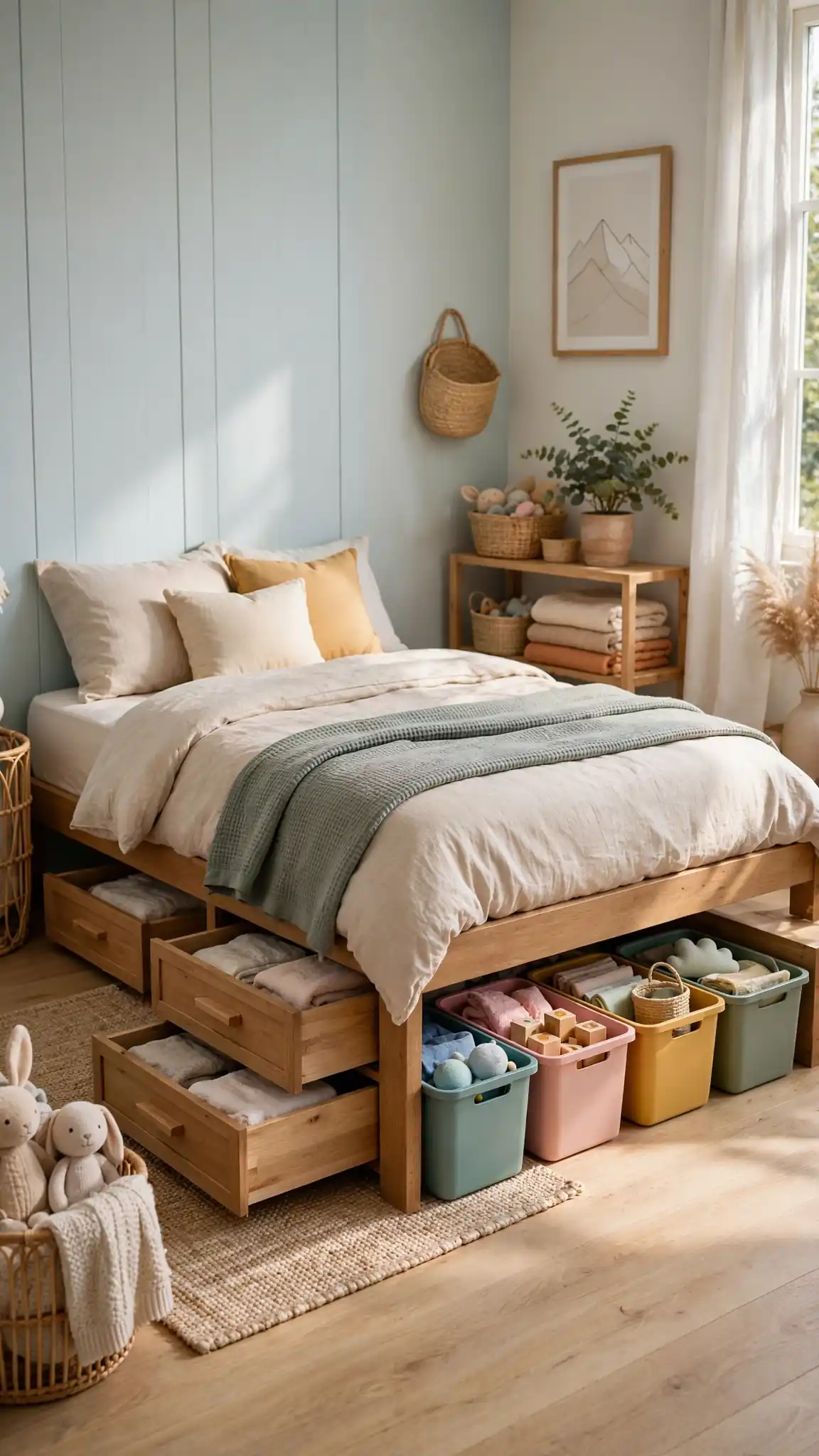
Standard under-bed clearance is 6–8 inches, so measure before buying: low rolling bins ($15–$30 each) beat tall ones that jam. Sort by category — one bin for hobby kits, one for keepsakes, one for out-of-season clothes — and label everything; unlabeled bins become junk drawers within a month. Vacuum bags compress bulky bedding to half their size. For loft or bunk beds, the taller clearance fits stackable drawers or even a small dresser. Pro tip: do a 20-minute bin audit every school break — kids outgrow hobbies fast, and regular purges keep the system working instead of overflowing.
10. Two-Kid Shared Room with Defined Halves
Sharing at ten works when each child gets clear territory. Mirror the layout — matching beds on opposite walls, a shelf unit or curtain as a soft divider, and identical desks — then let each child style their own half with colors and art. A shared central rug keeps the room unified. Headphones solve most conflicts. Symmetry plus personal freedom is the formula: the room looks designed, fights over space drop, and both kids feel ownership rather than compromise.

Mirrored layouts are the peace treaty of shared rooms: matching beds on opposite walls, each with its own nightstand, lamp, and wall space. A rug or a low bookshelf down the middle marks territory without building walls. Give each child one personal zone they control completely — even a single shelf — because autonomy prevents most sibling fights. Shared rooms need double the lighting: two task lamps, not one overhead. Pro tip: establish the 'knock rule' for each half from day one and invest in good headphones for both kids — acoustic privacy matters as much as visual privacy.
11. Science and Space Explorer Room
A space or science theme done maturely suits curious ten year olds without feeling babyish. Think a deep navy accent wall, glow-in-the-dark constellation decals mapped accurately, a real telescope by the window, and a shelf for rock collections, microscopes, or experiment kits. Add a solar system mobile or NASA prints in simple frames. This theme encourages actual learning — many kids fall into astronomy for life this way. When interests shift, the navy wall transitions easily into a teen room with new accessories.

Keep the science theme sophisticated: a star-projector night light ($30–$50) beats glow-in-the-dark stickers for a ten-year-old, and a real telescope (even a $100 beginner refractor) turns the theme into a hobby. Frame NASA prints or vintage constellation charts instead of cartoon rockets. A desk with room for experiments — rock collections, a microscope — makes the room functional, not just decorative. Dark navy bedding with white stars reads space without screaming theme. Pro tip: a planetarium visit or a junior astronomy club membership cements the interest far better than any decor, and gives the room's theme real-world roots.
12. Creative Art Studio Corner
For a child who draws, paints, or crafts constantly, dedicate a corner as a mini studio: a wipeable table, a trolley cart with supplies sorted by type, a cork wall or wire grid for displaying work, and a washable rug beneath. Vertical storage keeps materials off the desk so projects can stay out mid-way — crucial for creative momentum. Good daylight or a daylight lamp protects developing eyes. Framing one “masterpiece” per term for the wall teaches kids their work has value.

A true art corner needs a wipeable surface — a laminate-top table ($60–$120) or a table with a clear vinyl cover — because glue, paint, and glitter are inevitable. Add a rolling cart with labeled drawers for supplies ($35–$60 at IKEA or Michaels) so cleanup takes minutes. Good lighting is critical: a daylight-balanced lamp (5000K) shows true colors. Protect the floor with a washable mat or an old shower curtain under the table. Pro tip: mount a wire with clips or a simple picture ledge at kid height for drying and displaying finished pieces — seeing their work honored keeps young artists creating.
13. Bunk Bed with Guest Space for Sleepovers
Even an only child benefits from a bunk or trundle bed at ten, because sleepovers become a major social event at this age. A trundle hides a second mattress under the main bed, appearing only when friends stay. Bunks with a sofa-style bottom double as daytime lounging space. Choose designs with strong ladders and rails, and keep the ceiling clearance comfortable for the top sleeper. Hosting friends confidently helps kids build social bonds — the room becomes part of their friendships.

At ten, sleepovers are social currency, so plan for them: a bunk bed with a trundle ($500–$1,000) sleeps three without permanent floor loss. Choose bunks with guardrails on both sides of the top bunk and a weight rating of 200+ lbs — kids this age plus friends test every limit. Keep spare bedding in a labeled bin so hosting takes five minutes. A small clip-on reading light per bunk prevents lights-out arguments. Pro tip: establish the sleepover kit now — sleeping bag, spare toothbrush, phone charger — stored in one caddy, and hosting friends becomes effortless instead of a production.
Read More Blogs on: decormellow.com
14. Chalkboard or Whiteboard Wall
Paint one wall section with chalkboard or whiteboard paint and hand over the markers. Kids use it for doodles, homework working-out, countdowns to birthdays, and messages to friends. It is endlessly renewable decor that never gets boring, and it channels the drawing-on-walls instinct into an approved zone. Frame the painted area with wood trim for a finished look. Magnetic chalkboard paint doubles the fun with magnets. This idea suits budgets under thirty dollars and delivers years of daily use.

Chalkboard paint ($20–$30 per quart) needs 2–3 coats over primer and 3 days of curing before first use — rush it and chalk will never erase cleanly. Whiteboard paint is pricier ($50+ per kit) but dust-free and better for kids with allergies. Either way, frame the section with trim so it looks intentional, not improvised. Stock liquid chalk markers for vibrant color with less dust, plus a felt eraser. A 4×6-foot section is plenty; whole walls overwhelm. Pro tip: photograph homework schedules and chore charts before erasing — it creates a visual record of routines that actually worked, worth revisiting each school year.
15. Music Room Vibes for Young Musicians
If your ten year old plays an instrument, celebrate it: a guitar wall hanger, a keyboard station with a proper stool, acoustic foam panels in fun shapes, and framed posters of artists they admire. Wall-hanging instruments both save floor space and encourage daily practice because the instrument is visible and reachable. Add a small speaker for backing tracks. A room that treats music seriously tells a child their hobby matters — practice arguments often drop when the setup feels professional and theirs.

Protect both the instrument and the room: a wall-mounted guitar hanger ($15–$25) keeps guitars safe from knocks, and a keyboard on an X-stand folds away when practice ends. Add a rug under the music zone — it improves acoustics and protects floors from drum practice. A music stand, a small amp, and good task lighting complete a functional corner for under $150 in accessories. Sound matters to neighbors: acoustic foam panels ($30 for a 12-pack) on one wall tame the worst reflections. Pro tip: keep the instrument visible and ready, not cased in a closet — musicians practice dramatically more when the guitar is already in their hands’ reach.
16. Minimalist Scandinavian Kids Room
A Scandi-style room — white walls, light wood furniture, one or two muted colors, and clutter hidden in closed storage — calms busy young minds. Keep decoration to a single garland, a soft rug, and a few framed prints. The style photographs beautifully, but its real benefit is behavioral: fewer visible things means easier tidying and better focus at homework time. Ten year olds are old enough to maintain minimalism if storage is easy. This aesthetic also transitions into teen years without any redesign at all.

Scandi kids rooms work because everything has a hidden home: choose beds and dressers with built-in drawers, and use lidded baskets ($20–$40 each) for the visual clutter. Keep the palette to white, light wood, and one muted accent — sage, dusty blue, or warm gray. Open shelving should hold only curated items; the rest lives behind closed doors. This style actually reduces cleaning time since there are fewer surfaces to dust. Pro tip: the one-in-one-out rule is essential here — for every new toy that enters, one leaves. It teaches editing as a life skill and keeps the minimalist look effortless.
17. Adventure and Travel Theme
A travel theme feeds curiosity: a large world map wall (pin the places they dream of visiting), globe lamp, vintage-style suitcase storage boxes, and bedding in earthy tones. Add a photo string for holiday pictures. Scratch-off maps make geography a game, and many families use the map for planning real trips together. The theme is gender-neutral, matures well, and quietly teaches world knowledge every single day. It suits kids who love stories, atlases, and asking where things come from.

A large world map is the centerpiece — peel-and-stick map murals ($60–$120) cover a wall without commitment, or frame a vintage-style map poster ($30–$50) as art. Add push pins for places visited and string for dream destinations; it becomes an evolving project, not just decor. A globe ($25–$60), a few travel books, and a suitcase-style storage trunk complete the theme. Keep the base palette neutral so the map’s colors shine. Pro tip: tie the theme to real experiences — plan one local adventure per season and add a photo to the wall. The room then documents a real explorer’s life, not a fantasy.
18. Hobby Display Shelving
Whatever the passion — building-brick sets, models, trading cards, trophies, figurines — dedicated display shelving turns collections from clutter into pride. Floating shelves at child height, a glass-front cabinet for precious builds, or shallow ledges for cards all work. Displayed collections get maintained; boxed ones get forgotten. Add a small LED strip for a museum effect. Rotating the display teaches curation. This idea respects what your child already loves, which is the entire secret of designing for ten year olds.
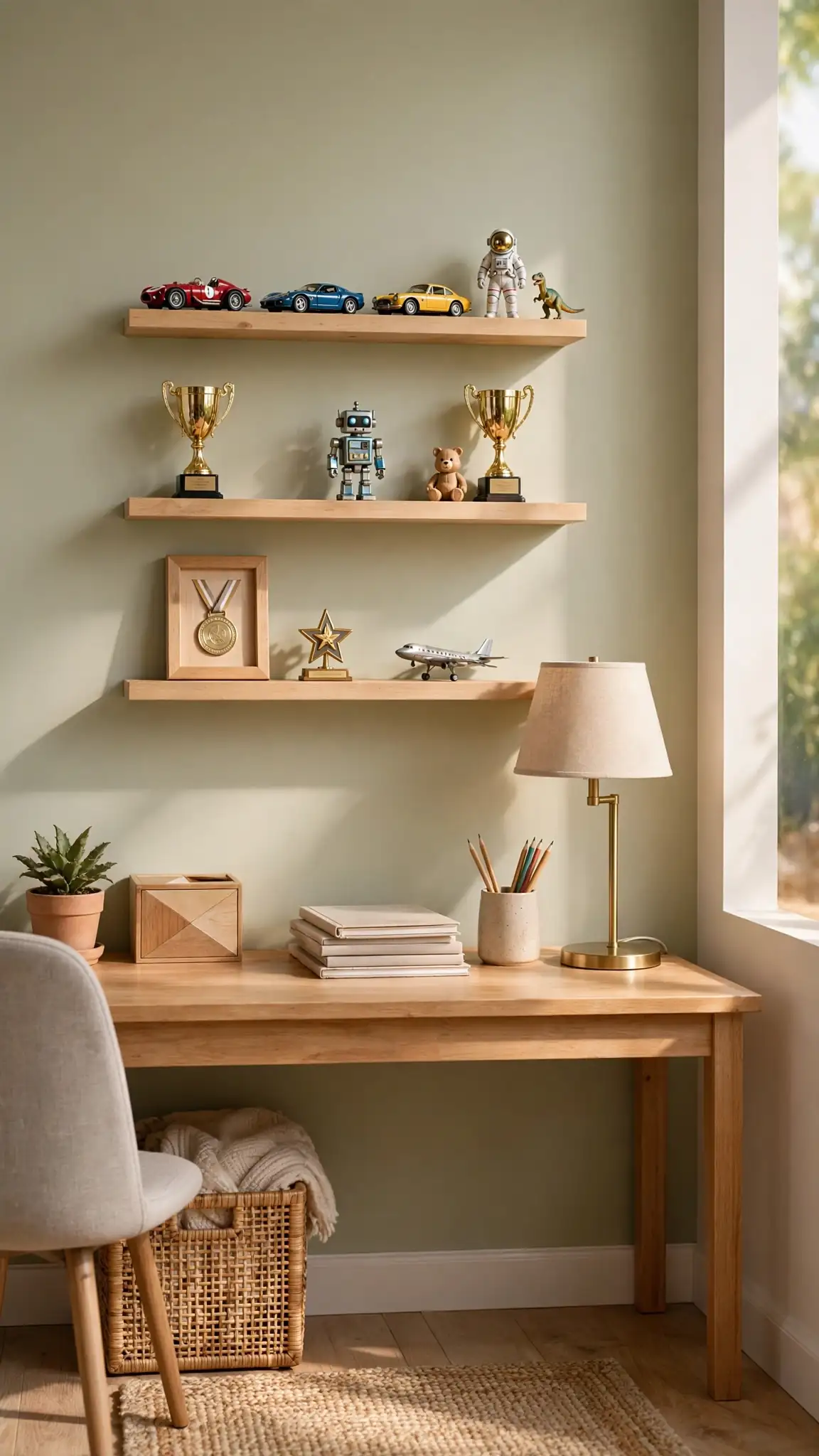
Display shelves should be narrow (6–8 inches deep) so collections read as curated, not cluttered. Picture ledges ($25–$40) work brilliantly for trading cards, models, and trophies — items lean safely and rearrange in seconds. Add small LED puck lights ($15 for a 6-pack) to make the display glow; it elevates even modest collections. Dust is the enemy: glass-front cabinets for prized pieces, open shelves for everything else. Keep one shelf deliberately empty for the next obsession. Pro tip: rotate the display seasonally like a museum — stored items feel new again when they return, and the shelf never goes stale.
19. Soft Corner for Winding Down
Ten year olds still need help switching off. Create a calm corner: a floor cushion, a weighted blanket, a dim salt lamp or amber night light, and a small basket of quiet items — a journal, fidget tools, a favorite soft toy that has survived the “too old for this” cull. No screens allowed in this corner. Many families use it as the read-before-bed spot. A designed wind-down zone improves sleep routines noticeably, and better sleep improves everything else about age ten.

A wind-down corner is a sleep investment: a floor cushion or beanbag, a weighted blanket (10% of body weight is the guideline, $40–$80), and warm dimmable lighting signal the brain that bedtime is coming. Keep screens out of this corner entirely — books, journals, and puzzles only. A small essential-oil diffuser with lavender ($25) adds a calming scent cue. Even a 3×3-foot corner works; drape a canopy or hang a curtain for enclosure. Pro tip: use the corner yourself during the first week to model the routine — kids adopt habits they see, and ten minutes of calm together beats any lecture about screen time.
20. Color Palette Rooms: Teal, Coral, or Forest Green
Moving beyond “pink or blue,” modern kids rooms use sophisticated palettes: teal with mustard, coral with sand, forest green with oak. Choose two main colors and one metallic accent, then repeat them in bedding, curtains, lamp, and art. A consistent palette makes even budget furniture look intentional and expensive. Let your child shortlist from three parent-approved palettes — guided choice keeps both sides happy. These deeper tones also hide scuffs better than pastels, a practical win in any real kid’s room.

Sophisticated palettes grow with kids: teal with mustard, coral with navy, or forest green with brass all feel current at ten and still work at sixteen. Apply the bold color to bedding, one accent wall, and accessories — never to all four walls, which overwhelms. Test the palette with a $30 bedding set before committing to paint. These colors pair beautifully with light wood and white furniture. A gallon of quality paint runs $50–$80. Pro tip: buy the paint in the exact sheen recommended for kids’ rooms (eggshell or satin) — flat paint shows every scuff, and with a ten-year-old, scuffs are guaranteed.
21. Climbing and Active Play Features
Energetic kids benefit from movement built into the room: a wall-mounted climbing holds panel, a pull-up bar in the doorway, a hanging pod chair, or a gymnastics rings setup where ceilings allow. Install everything into studs with proper hardware and place a thick rug or crash mat below. Ten is prime age for this — strong enough to use it, young enough to be thrilled. Ten minutes of climbing before homework burns restlessness and improves focus, something teachers and parents both notice quickly.

Safety is everything: mount climbing holds only into wall studs (never drywall alone), use T-nuts and bolts rated for climbing, and place a 4-inch crash mat ($80–$150) below. A 20-pack of kids’ climbing holds costs $40–$70. Keep the wall low — traversing sideways at 3–4 feet high is safer and more fun than climbing high. A pull-up bar in a doorframe ($30–$50) is the simplest active addition. Check weight ratings (most kids’ holds support 200+ lbs) and inspect hardware yearly. Pro tip: set a house rule — no climbing without the mat in place — and enforce it exactly once. Consistency makes it stick.
22. Tech-Smart Room with Simple Automation
A little smart tech delights this age group responsibly: color-changing smart bulbs they control by voice, a sunrise alarm clock that eases school mornings, and a charging station outside arm’s reach of the bed. Skip screens in the room; smart lighting alone feels futuristic to a ten year old. Set the bulbs to shift warm and dim automatically at bedtime — light cues genuinely help kids wind down. Parents keep app control, which quietly teaches that tech comes with rules.
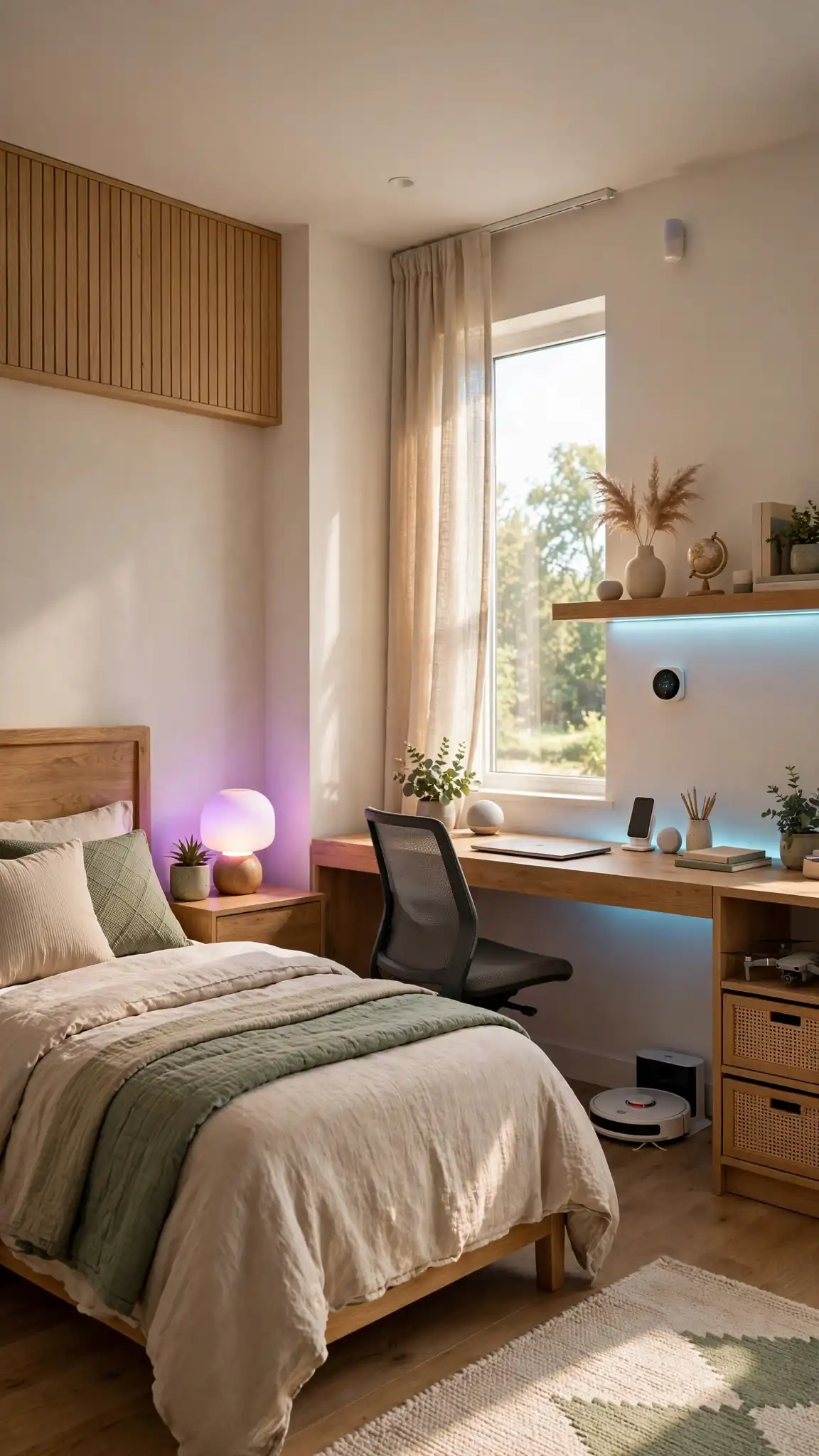
Start simple: two or three color-changing smart bulbs ($15–$25 each) and a smart plug for the lamp are enough for a ten-year-old to love. Set schedules — warm dim light at bedtime, bright white for homework — so the tech supports routines automatically. Use a kid-safe voice assistant with parental controls, and keep all accounts under parent management. Avoid cameras or always-listening devices in bedrooms; a smart speaker with the mic-mute habit taught early is the safer choice. Pro tip: create a “bedtime” scene that dims lights and plays calm music at a set hour — automation enforces the routine without nightly negotiations.
23. Vintage and Thrifted Character Room
Furnish with character pieces: a repainted flea-market desk, a vintage locker for storage, retro posters, and a rescued armchair. Thrifted rooms cost less and survive rough treatment without heartbreak — scratches add to the story. Let your child help paint a piece; the pride of “I made that” is unmatched. The eclectic result looks like a room with history rather than a catalog page, and it teaches sustainability naturally. Sand and seal old painted furniture properly to be safe.

Thrifting with a ten-year-old is a design education: set a $50 budget and a short list (desk, lamp, storage), and let them hunt. Solid wood pieces from the 60s–80s are sturdier than most new flat-pack furniture. A $15 can of chalk paint transforms almost anything; sand lightly, paint two coats, and seal with wax. Check thrifted upholstery carefully — hard furniture is the safe bet, soft pieces need professional cleaning ($50–$100). Retro posters in simple frames add instant character for under $20. Pro tip: teach the “good bones” test — solid wood, dovetail drawers, smooth mechanisms. It’s a life skill disguised as shopping.
24. Sleep-Friendly Layout and Lighting
Design directly for better sleep: bed away from the door but with the door visible, blackout curtains for early summer mornings, warm 2700K bulbs only, and no charging cables near the pillow. Add a consistent bedside routine station — water, book, lamp — so bedtime runs itself. Ten year olds need nine to eleven hours of sleep, and room design measurably affects whether they get it. This is the least glamorous idea in the guide and possibly the most important one.

Ten-year-olds need 9–11 hours of sleep, and the room should help: blackout curtains ($30–$60 per panel) are the single biggest upgrade, blocking the streetlights and early sun that fragment sleep. Position the bed where the door is visible but not in line with it — it satisfies the ancient security instinct. Keep the room cool (65–68°F is ideal) and banish screens an hour before bed; a simple charging station in the hallway enforces it. A white-noise machine ($25–$40) masks household sounds. Pro tip: switch to warm 2700K bulbs in the bedroom and put brighter 4000K+ light in the homework zone — the contrast trains the brain to associate each space with its purpose.
25. Growth-Proof Room Plan for the Teen Years
Design age ten with age fourteen in mind. Buy a full-size bed now, choose a desk that fits a future laptop and larger books, and use adjustable shelving. Keep themes in textiles, not painted murals. Leave one wall relatively empty — teens fill walls themselves. This forward planning means the awkward middle-school years need only a bedding change and new posters instead of a costly overhaul. Rooms designed to grow tell kids you respect who they are becoming, not just who they are.

Buy the full-size bed now ($400–$800 for a quality frame) — a twin will be outgrown by fourteen, and replacing a bed frame is the most expensive kids’-room mistake. Choose a desk at least 48 inches wide to fit a future laptop-plus-monitor setup, and an adjustable chair that grows. Keep walls neutral and let the teen years express themselves through easily changed bedding and art. Invest in good closet systems now; teen wardrobes expand fast. Pro tip: involve your ten-year-old in the “design for sixteen” conversation — kids who help plan a room’s future take better care of it in the present.
Conclusion
The best 10 year olds room ideas respect a child in transition: still playful, newly private, and hungry for a space that feels genuinely theirs. Build on a neutral, quality base, zone the room for sleep, study, and hobbies, and pour personality into swappable layers — bedding, art walls, accent colors, and collections on display. Involve your child in every choice you can; ownership is what turns a decorated room into a loved one. Start with one idea this weekend — a reading nook, a homework station, or a gallery wall — and let the room evolve with them into the teenage years.

The best ten-year-old rooms share one quality: they were designed with the child, not just for them. Involve your kid in real decisions — the accent wall color, the reading nook setup, the gallery wall arrangement — and the room becomes theirs in a way no decorator can replicate. Build the neutral, growth-proof foundation once, then let the swappable layers evolve through the teen years. Budget for the big pieces (bed, desk, storage) and save on the changeable ones (bedding, art, accessories). Pro tip: revisit the room together every birthday — a 20-minute annual review keeps it fitting the person your child is becoming.
FAQs
Designing a room for a ten-year-old raises practical questions: how to balance study and play, what furniture lasts into the teen years, and how much say the child should have. The answers below cover the most common concerns parents have about creating a room that works now and grows later.
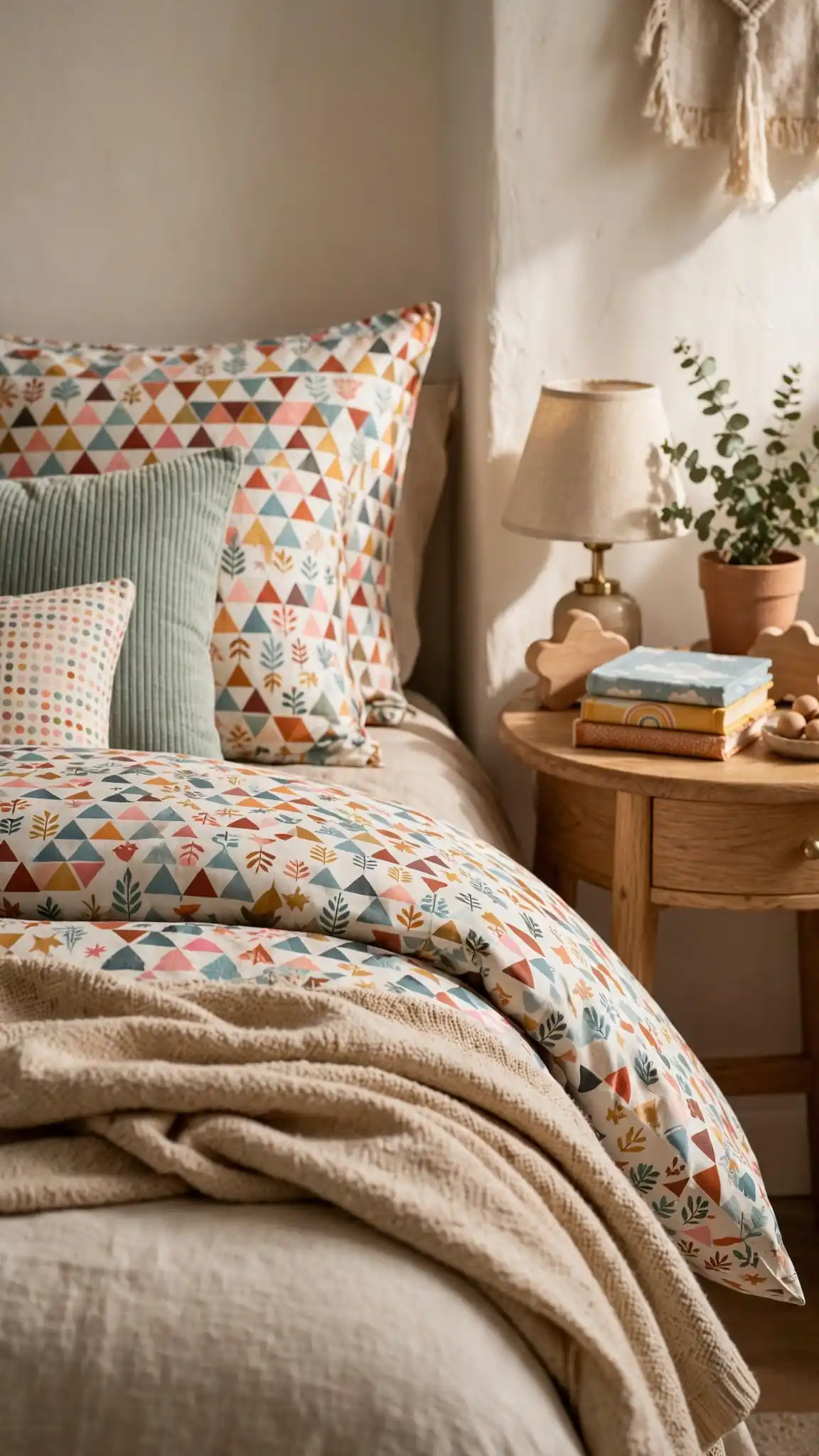
The golden rule is simple: invest in the bones, save on the skin. A quality bed, desk, and storage system last a decade; bedding, paint, and accessories can change with every phase for very little money. Give your ten-year-old genuine choices within a parent-approved framework — it builds decision-making skills and guarantees the room actually gets used. Revisit the design yearly, purge ruthlessly each school break, and remember that the best kids’ room is one that makes both homework and downtime feel good.
What does a 10 year old need in their bedroom?
Three zones: a comfortable full-size bed for sleep, a desk away from the bed for homework, and open floor or corner space for hobbies and friends. Good storage and warm lighting complete the essentials.
How do I decorate a 10 year old’s room on a budget?
Keep walls neutral and spend on swappable items: bedding, posters, a rug, and string lights. Thrift furniture and repaint it, use peel-and-stick wallpaper for accents, and add a DIY gallery wall of their own art.
Should a 10 year old choose their own room design?
Yes, with guidance. Offer two or three parent-approved options for colors and themes and let them decide. Children who help design their rooms feel ownership and keep them tidier.
What colors are best for a 10 year old’s room?
Calming neutrals — sage, greige, warm white — as a base, with richer accents like teal, coral, mustard, or forest green. Avoid heavily themed painted murals that are quickly outgrown.
Is a loft bed safe for a 10 year old?
Generally yes. Most manufacturers recommend loft and top bunks for ages six and up. Choose sturdy frames with full guardrails, check weight limits, and keep the ladder clear.





Leave a comment