

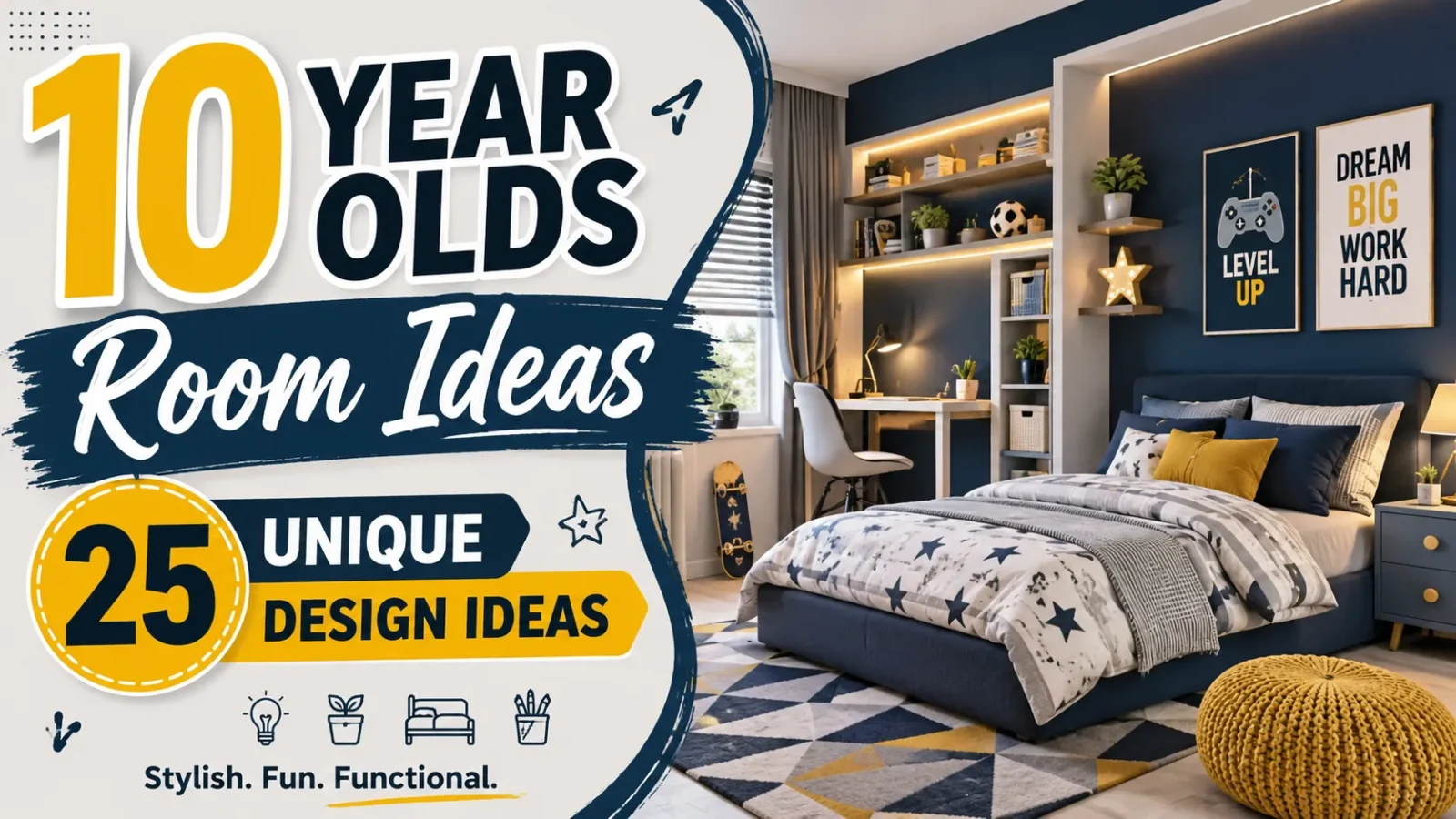
10 year olds room ideas need to balance two things: a kid who still loves play and a tween who suddenly wants independence, privacy, and style. At this age, children outgrow babyish themes fast, so the smartest designs use a neutral base — walls, bed, big furniture — with personality added through bedding, art, and accessories that are easy to swap later. This guide covers twenty-five unique ideas for boys, girls, and shared rooms, from study corners and gaming zones to reading nooks and hobby walls, so the room grows with your child instead of against them.
The best room for a 10 year old supports three daily needs: sleep, homework, and hobbies. Designers recommend zoning even small bedrooms into a rest area, a focused study spot away from the bed, and a floor space for play or friends. Involve your child in choosing colors and themes — ownership is what makes them keep the room tidy. Every idea below includes practical tips on budget, storage, and longevity, because a well-planned room at age ten should still work beautifully at age fourteen with only minor updates.
1. Neutral Base with Swappable Accents
Paint walls a calm neutral — warm white, greige, or soft sage — and let bedding, posters, rugs, and cushions carry the personality. Ten year olds change obsessions every few months, so this approach means a full “redesign” costs only a new duvet cover and some wall art. Invest in quality basics that last into the teen years: a full-size bed, a solid desk, a real wardrobe. Cheap themed furniture gets outgrown; neutral quality does not. This single principle saves parents more money than any other idea on this list.
2. Loft Bed with Study Space Below
A loft bed lifts sleeping up and opens the entire footprint below for a desk, shelves, and a task lamp — effectively doubling a small room. Ten is the perfect age: old enough to climb safely, young enough to find it exciting. Choose a sturdy frame with guardrails and a ladder angle your child manages easily. The under-bed study cave feels private and den-like, which kids this age adore, and it naturally separates homework from sleep. Add a pinboard on the inner wall for timetables, artwork, and photos.
3. Dedicated Homework Station
By age ten, homework gets serious, so a proper study zone matters more than any toy. Place a desk facing a wall — not the bed or window — with a supportive chair, a warm task lamp, and a drawer unit for supplies. Add a weekly planner board above the desk and a small shelf for school books only. Keep screens and toys out of arm’s reach during study time. A defined homework station builds focus habits that pay off for years, and it signals to your child that their work is taken seriously.
4. Cozy Reading Nook Corner
A reading nook turns a spare corner into the most-used spot in the room. Layer a beanbag or floor cushion, a soft throw, a small bookshelf within reach, and a clip lamp or string lights overhead. A canopy or hanging tent adds the sense of hideaway that ten year olds love. Position it away from the door for a feeling of privacy. Kids read far more when books live in a spot that feels like theirs — this idea costs very little and quietly builds a lifelong habit.
5. Gallery Wall of Their Own Art and Interests
Give your child one wall to curate: framed drawings, movie posters, medals, photos with friends, and printed quotes. Use a grid of identical frames for a tidy look, or a picture ledge so they can swap pieces without new holes. Ownership is the point — a ten year old who designs their own wall feels the room is genuinely theirs and treats it better. Refresh it each school year as interests change. This is the cheapest idea in this guide and often becomes the child’s favorite feature.
6. Sports Zone Bedroom
For sports-mad kids, build the room around their game without going full theme-park. A wall-mounted mini basketball hoop over the door, a display shelf for trophies and match balls, framed jerseys, and bedding in team colors deliver the vibe. Add a bench with hooks for kit bags so equipment stops living on the floor. Keep walls neutral so switching from football to cricket later only means swapping accessories. A small over-door hoop also burns energy on rainy days — parents of active ten year olds will understand.
7. Gaming Corner Done Right
If gaming is your child’s world, design a corner that keeps it healthy: a small console setup on a media unit, a comfortable chair with back support, LED strip lighting behind the screen to reduce eye strain, and a headset hook. Crucially, position gaming away from the bed and agree screen-time rules as part of the design. Cable management boxes keep the corner tidy and safe. A defined gaming zone actually makes limits easier to enforce — when the corner switches off, the day’s gaming is visibly over.
8. Bold Accent Wall They Choose
Let your ten year old pick one wall color or a removable wallpaper — mountains, stars, graffiti art, or a deep teal. One bold wall delivers maximum personality with minimum commitment; the other three walls stay neutral for balance. Peel-and-stick wallpaper is ideal because tastes at this age change quickly and removal takes an afternoon. The act of choosing matters as much as the result: kids who select their own accent wall report loving their rooms more and showing them off proudly to friends.
9. Under-Bed Storage Systems
Toys shrink at this age but stuff multiplies — school projects, hobby kits, sports gear, keepsakes. Rolling under-bed drawers or lidded flat boxes swallow it all invisibly. Choose a bed frame with built-in drawers if you are buying new; otherwise wheeled crates work under any frame. Assign each box a category and label it so tidying takes minutes, not battles. A clear floor makes a small room feel double the size and gives space for friends, sleepovers, and floor games — everything ten year olds actually use a room for.
10. Two-Kid Shared Room with Defined Halves
Sharing at ten works when each child gets clear territory. Mirror the layout — matching beds on opposite walls, a shelf unit or curtain as a soft divider, and identical desks — then let each child style their own half with colors and art. A shared central rug keeps the room unified. Headphones solve most conflicts. Symmetry plus personal freedom is the formula: the room looks designed, fights over space drop, and both kids feel ownership rather than compromise.
11. Science and Space Explorer Room
A space or science theme done maturely suits curious ten year olds without feeling babyish. Think a deep navy accent wall, glow-in-the-dark constellation decals mapped accurately, a real telescope by the window, and a shelf for rock collections, microscopes, or experiment kits. Add a solar system mobile or NASA prints in simple frames. This theme encourages actual learning — many kids fall into astronomy for life this way. When interests shift, the navy wall transitions easily into a teen room with new accessories.
12. Creative Art Studio Corner
For a child who draws, paints, or crafts constantly, dedicate a corner as a mini studio: a wipeable table, a trolley cart with supplies sorted by type, a cork wall or wire grid for displaying work, and a washable rug beneath. Vertical storage keeps materials off the desk so projects can stay out mid-way — crucial for creative momentum. Good daylight or a daylight lamp protects developing eyes. Framing one “masterpiece” per term for the wall teaches kids their work has value.
13. Bunk Bed with Guest Space for Sleepovers
Even an only child benefits from a bunk or trundle bed at ten, because sleepovers become a major social event at this age. A trundle hides a second mattress under the main bed, appearing only when friends stay. Bunks with a sofa-style bottom double as daytime lounging space. Choose designs with strong ladders and rails, and keep the ceiling clearance comfortable for the top sleeper. Hosting friends confidently helps kids build social bonds — the room becomes part of their friendships.
Read More Blogs on: decormellow.com
14. Chalkboard or Whiteboard Wall
Paint one wall section with chalkboard or whiteboard paint and hand over the markers. Kids use it for doodles, homework working-out, countdowns to birthdays, and messages to friends. It is endlessly renewable decor that never gets boring, and it channels the drawing-on-walls instinct into an approved zone. Frame the painted area with wood trim for a finished look. Magnetic chalkboard paint doubles the fun with magnets. This idea suits budgets under thirty dollars and delivers years of daily use.
15. Music Room Vibes for Young Musicians
If your ten year old plays an instrument, celebrate it: a guitar wall hanger, a keyboard station with a proper stool, acoustic foam panels in fun shapes, and framed posters of artists they admire. Wall-hanging instruments both save floor space and encourage daily practice because the instrument is visible and reachable. Add a small speaker for backing tracks. A room that treats music seriously tells a child their hobby matters — practice arguments often drop when the setup feels professional and theirs.
16. Minimalist Scandinavian Kids Room
A Scandi-style room — white walls, light wood furniture, one or two muted colors, and clutter hidden in closed storage — calms busy young minds. Keep decoration to a single garland, a soft rug, and a few framed prints. The style photographs beautifully, but its real benefit is behavioral: fewer visible things means easier tidying and better focus at homework time. Ten year olds are old enough to maintain minimalism if storage is easy. This aesthetic also transitions into teen years without any redesign at all.
17. Adventure and Travel Theme
A travel theme feeds curiosity: a large world map wall (pin the places they dream of visiting), globe lamp, vintage-style suitcase storage boxes, and bedding in earthy tones. Add a photo string for holiday pictures. Scratch-off maps make geography a game, and many families use the map for planning real trips together. The theme is gender-neutral, matures well, and quietly teaches world knowledge every single day. It suits kids who love stories, atlases, and asking where things come from.
18. Hobby Display Shelving
Whatever the passion — building-brick sets, models, trading cards, trophies, figurines — dedicated display shelving turns collections from clutter into pride. Floating shelves at child height, a glass-front cabinet for precious builds, or shallow ledges for cards all work. Displayed collections get maintained; boxed ones get forgotten. Add a small LED strip for a museum effect. Rotating the display teaches curation. This idea respects what your child already loves, which is the entire secret of designing for ten year olds.
19. Soft Corner for Winding Down
Ten year olds still need help switching off. Create a calm corner: a floor cushion, a weighted blanket, a dim salt lamp or amber night light, and a small basket of quiet items — a journal, fidget tools, a favorite soft toy that has survived the “too old for this” cull. No screens allowed in this corner. Many families use it as the read-before-bed spot. A designed wind-down zone improves sleep routines noticeably, and better sleep improves everything else about age ten.
20. Color Palette Rooms: Teal, Coral, or Forest Green
Moving beyond “pink or blue,” modern kids rooms use sophisticated palettes: teal with mustard, coral with sand, forest green with oak. Choose two main colors and one metallic accent, then repeat them in bedding, curtains, lamp, and art. A consistent palette makes even budget furniture look intentional and expensive. Let your child shortlist from three parent-approved palettes — guided choice keeps both sides happy. These deeper tones also hide scuffs better than pastels, a practical win in any real kid’s room.
21. Climbing and Active Play Features
Energetic kids benefit from movement built into the room: a wall-mounted climbing holds panel, a pull-up bar in the doorway, a hanging pod chair, or a gymnastics rings setup where ceilings allow. Install everything into studs with proper hardware and place a thick rug or crash mat below. Ten is prime age for this — strong enough to use it, young enough to be thrilled. Ten minutes of climbing before homework burns restlessness and improves focus, something teachers and parents both notice quickly.
22. Tech-Smart Room with Simple Automation
A little smart tech delights this age group responsibly: color-changing smart bulbs they control by voice, a sunrise alarm clock that eases school mornings, and a charging station outside arm’s reach of the bed. Skip screens in the room; smart lighting alone feels futuristic to a ten year old. Set the bulbs to shift warm and dim automatically at bedtime — light cues genuinely help kids wind down. Parents keep app control, which quietly teaches that tech comes with rules.
23. Vintage and Thrifted Character Room
Furnish with character pieces: a repainted flea-market desk, a vintage locker for storage, retro posters, and a rescued armchair. Thrifted rooms cost less and survive rough treatment without heartbreak — scratches add to the story. Let your child help paint a piece; the pride of “I made that” is unmatched. The eclectic result looks like a room with history rather than a catalog page, and it teaches sustainability naturally. Sand and seal old painted furniture properly to be safe.
24. Sleep-Friendly Layout and Lighting
Design directly for better sleep: bed away from the door but with the door visible, blackout curtains for early summer mornings, warm 2700K bulbs only, and no charging cables near the pillow. Add a consistent bedside routine station — water, book, lamp — so bedtime runs itself. Ten year olds need nine to eleven hours of sleep, and room design measurably affects whether they get it. This is the least glamorous idea in the guide and possibly the most important one.
25. Growth-Proof Room Plan for the Teen Years
Design age ten with age fourteen in mind. Buy a full-size bed now, choose a desk that fits a future laptop and larger books, and use adjustable shelving. Keep themes in textiles, not painted murals. Leave one wall relatively empty — teens fill walls themselves. This forward planning means the awkward middle-school years need only a bedding change and new posters instead of a costly overhaul. Rooms designed to grow tell kids you respect who they are becoming, not just who they are.
Conclusion
The best 10 year olds room ideas respect a child in transition: still playful, newly private, and hungry for a space that feels genuinely theirs. Build on a neutral, quality base, zone the room for sleep, study, and hobbies, and pour personality into swappable layers — bedding, art walls, accent colors, and collections on display. Involve your child in every choice you can; ownership is what turns a decorated room into a loved one. Start with one idea this weekend — a reading nook, a homework station, or a gallery wall — and let the room evolve with them into the teenage years.
FAQs
What does a 10 year old need in their bedroom?
Three zones: a comfortable full-size bed for sleep, a desk away from the bed for homework, and open floor or corner space for hobbies and friends. Good storage and warm lighting complete the essentials.
How do I decorate a 10 year old’s room on a budget?
Keep walls neutral and spend on swappable items: bedding, posters, a rug, and string lights. Thrift furniture and repaint it, use peel-and-stick wallpaper for accents, and add a DIY gallery wall of their own art.
Should a 10 year old choose their own room design?
Yes, with guidance. Offer two or three parent-approved options for colors and themes and let them decide. Children who help design their rooms feel ownership and keep them tidier.
What colors are best for a 10 year old’s room?
Calming neutrals — sage, greige, warm white — as a base, with richer accents like teal, coral, mustard, or forest green. Avoid heavily themed painted murals that are quickly outgrown.
Is a loft bed safe for a 10 year old?
Generally yes. Most manufacturers recommend loft and top bunks for ages six and up. Choose sturdy frames with full guardrails, check weight limits, and keep the ladder clear.




Leave a comment