


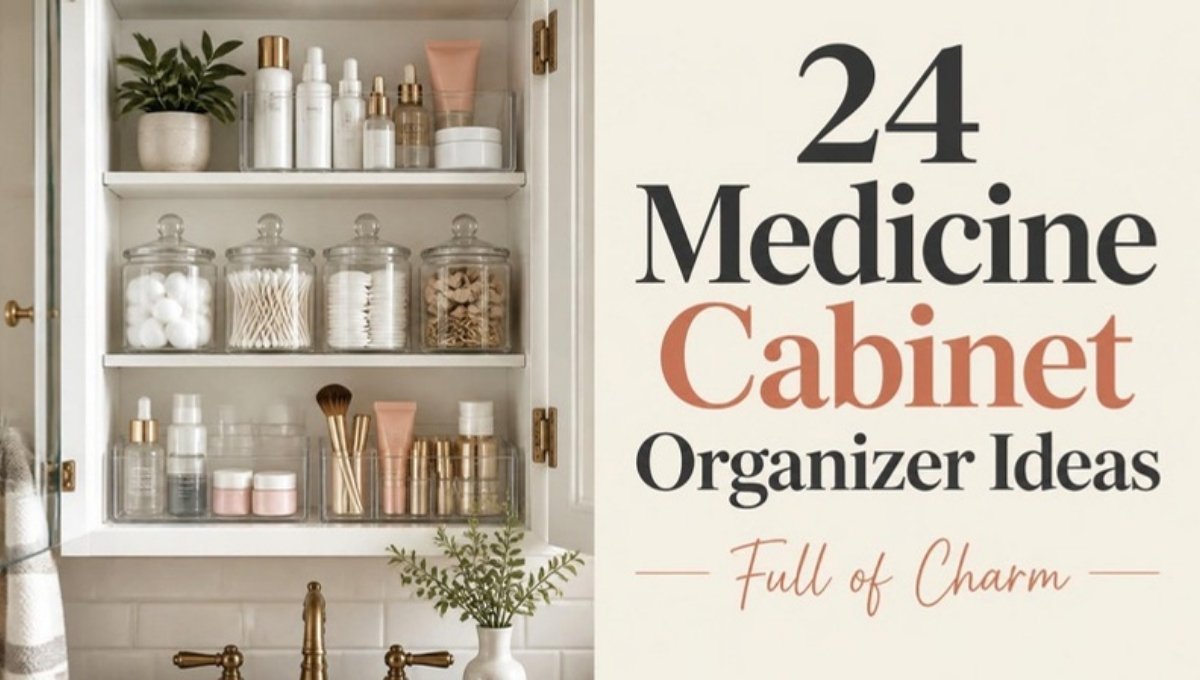
If you are looking for medicine cabinet organizer ideas that actually work in a real home, this guide is for you. A medicine cabinet is the smallest storage space in most homes and somehow the one that falls apart fastest. Half-used tubes, expired bottles, and loose cotton swabs pile up until you cannot find the one thing you actually need at seven in the morning. The fix is not more space, it is better structure. With a handful of well-chosen containers, a clear zoning system, and a few charming details, even a shallow builder-grade cabinet can become genuinely pleasant to open every day.
The ideas below cover both the practical and the pretty. You will find realistic organizing systems for tiny cabinets, ways to use the door and the underside of shelves, and small styling touches that turn medicine cabinet organization into something you actually enjoy maintaining. Most of these cost very little and take an afternoon at most. Start by emptying the cabinet completely, checking expiry dates, and grouping what remains. Everything after that becomes far easier once you know exactly what you are storing.
1. Start With a Complete Empty and Purge
Before buying a single container, take everything out and lay it on a towel. Check expiration dates on medications, sunscreen, and eye drops, and discard anything past date, dried out, or unidentifiable. Most people find that a third to a half of the contents can go immediately. Wipe down the shelves and the cabinet interior while it is empty. This step is not glamorous, but it is the reason organizing systems succeed or fail: containers cannot fix a volume problem. Group the remaining items into categories on the towel before you decide where anything goes.
2. Use Small Clear Acrylic Bins
Clear acrylic bins are the workhorse of medicine cabinet organization. Because you can see the contents, nothing gets lost behind anything else, and because they slide, you can pull a whole category forward instead of reaching past bottles. Measure your shelf depth carefully before buying, since most cabinets are only three to five inches deep and standard bins are often too large. Choose bins with slightly raised sides to prevent items tipping, and label the front edge so the system survives other household members.
3. Add Tiered Risers for Back-Row Visibility
The back row of any shelf is where products go to be forgotten. A small two-step acrylic or bamboo riser lifts rear items so you can see labels at a glance, effectively doubling your usable shelf. Risers work especially well for medication bottles, supplements, and small jars of similar height. Look for narrow versions designed for spice racks, which usually fit shallow bathroom cabinets. If a riser is too deep, a strip of foam board or a small wooden block under the back row achieves the same effect for almost nothing.
4. Install a Magnetic Strip for Metal Tools
A slim magnetic strip mounted inside the cabinet door holds tweezers, nail scissors, bobby pins, and small clippers in a single visible row. These are exactly the items that vanish into drawers and bins, so giving them a fixed vertical home is transformative. Choose a strong strip with adhesive backing rated for bathroom humidity, or screw it in for permanence. Position it high enough that items do not collide with the shelves when the door closes. The result looks tidy and slightly workshop-charming every time you open the cabinet.
5. Add Adhesive Door Pockets
The inside of a medicine cabinet door is usually completely unused. Slim adhesive pockets or shallow caddies mounted there hold toothpaste, floss, small tubes, and hair ties without consuming any shelf depth. Measure the clearance between the door and the front edge of your shelves first, since even half an inch matters. Clear acrylic pockets stay visually light, while woven or ceramic-look versions add texture. Distribute weight evenly across two or three small pockets rather than one large one so the adhesive holds long term.
6. Decant Into Matching Glass Jars
Transferring cotton balls, cotton swabs, bath salts, and hair ties into small matching glass jars is the single fastest way to make a cabinet look intentional. The uniform containers create visual calm, and glass lets you see when supplies run low. Apothecary-style jars with cork or brass lids add a charming vintage note, while plain straight-sided jars read modern. Keep the jar count reasonable, roughly three to five, so the cabinet stays functional rather than becoming a display. Add small handwritten or printed labels for clarity.
7. Use a Lazy Susan for Corner Access
If your cabinet has any real depth, a small turntable turns a hard-to-reach back corner into fully accessible storage. A single spin brings rear items to the front, which makes it ideal for skincare bottles, supplements, and anything you use in rotation. Choose one no more than six to eight inches in diameter for a bathroom cabinet, with a raised lip to stop bottles sliding off. Non-slip surfaces are worth paying slightly more for, since bathroom shelves are rarely perfectly level.
8. Create Clear Zones by Category
Assign each shelf a purpose and stick to it: daily essentials at eye level, first aid on one shelf, medications on another, backups and refills on the top. Zoning means you never search, you simply go to the right shelf. It also makes restocking obvious, since gaps appear in the category that needs attention. Write the zones down for the first few weeks if needed. This single organizational principle does more for long-term tidiness than any container, because it gives every item a permanent address.
9. Store Daily Items at Eye Level
Prime real estate should go to what you touch every day: toothbrush, toothpaste, moisturizer, deodorant, and any daily medication. Anything used weekly moves up or down a shelf, and anything used rarely goes to the very top. This principle sounds obvious but is routinely ignored, and correcting it eliminates most daily friction. Test the arrangement for a week and pay attention to what you reach for, then adjust. Frequency of use, not size or category, should determine vertical position in a small cabinet.
10. Add a Small Vintage Tray
A little vintage or brass-edged tray on one shelf corrals a small group of items while adding genuine charm. Trays work particularly well for a morning routine set or a small collection of perfumes and oils. The raised lip contains drips and spills, and you can lift the entire group out to clean the shelf beneath. Look for enamel, brass, or mirrored trays at flea markets and thrift shops, where they cost very little. The slight patina of an older piece adds character that new plastic organizers cannot.
11. Use Adjustable Shelf Dividers
If your cabinet has one tall shelf and lots of short items, a vertical divider instantly creates two usable zones side by side. Adjustable acrylic or metal dividers clip onto the shelf edge and require no tools. They stop tall bottles from toppling into short ones and keep categories physically separated. This works especially well for splitting a shelf between two household members, giving each person a defined space. Simple, cheap, and completely reversible, dividers are one of the most underrated cabinet upgrades available.
12. Add Under-Shelf Baskets
Slide-on under-shelf baskets hook over an existing shelf and hang beneath it, reclaiming the dead air between shelf levels. They suit lightweight items such as hair ties, cotton pads, small tubes, and packets. Check the gap between your shelves before buying, since many cabinet shelves are spaced too closely for standard baskets. Wire versions stay visually light and let you see contents, while solid ones hide clutter. Because they hang, they also make wiping the shelf below much easier.
13. Repurpose Small Ceramic Bowls
Little ceramic dishes, egg cups, and small handmade bowls make charming holders for rings, hair clips, cotton swabs, and spare buttons. Because they are objects rather than organizers, they bring warmth and personality that matching plastic sets lack. Mismatched pieces in a shared color family look collected rather than chaotic. This is also a lovely way to use small ceramics you love but have nowhere else to display. Keep them on the lowest or most accessible shelf where you will actually see and use them.
14. Label Everything Clearly
Labels are what keep a system alive after the initial enthusiasm fades. Use small adhesive labels on bin fronts, jar lids, or shelf edges so anyone in the household can both find and return items correctly. Handwritten labels on kraft paper look warm and cottage-like, while printed labels on clear tape stay nearly invisible and read modern. Whichever style you choose, use it consistently. Waterproof label material is worth the small extra cost in a bathroom, where steam degrades paper quickly.
Read More Blogs on: decormellow.com
15. Add a Slim First Aid Kit Box
Rather than scattering bandages, antiseptic, and gauze across a shelf, consolidate them into one clearly marked shallow box. In an emergency, you grab a single container instead of hunting for four items. A slim hinged tin or a small clear box with a red or bold label works well. Keep it on a shelf that everyone in the household can reach, and check its contents twice a year when you do your expiry sweep. This is a small change with genuinely outsized practical value.
16. Use Stackable Shallow Drawers
Small stackable acrylic drawers turn one shelf into two or three sliding compartments, which is ideal for flat items like plasters, face masks, blotting papers, and cotton pads. Because they pull out, you access the back without disturbing the front. Look for drawer units under four inches deep so they fit standard cabinets, and choose clear over opaque so contents stay visible. Assign one drawer per category and label the front. The result feels remarkably like a proper apothecary chest in miniature.
17. Store Backups Outside the Cabinet
A medicine cabinet is for what you use now, not for what you bought on sale. Move duplicate shampoo, spare toothpaste, and bulk cotton pads to a linen closet, an under-sink bin, or a labeled box elsewhere. Keeping only current items in the cabinet immediately halves the clutter and makes the remaining organization far easier to maintain. Do a quick restock check monthly and pull forward from your backup store. This single habit prevents the slow overflow that undoes most organizing efforts.
18. Add Warm Interior Lighting
A small battery-powered or rechargeable LED strip along the top edge of the cabinet interior makes everything easier to find and turns opening the cabinet into a small pleasure. Motion-activated versions switch on automatically, which is genuinely useful at night. Choose warm white around 3000K rather than harsh cool light, and position the strip so it illuminates labels without shining into your eyes. Adhesive-mounted strips install in minutes and can be recharged or replaced without any wiring work.
19. Line Shelves With Removable Paper
A patterned or textured shelf liner adds an unexpected touch of charm every time you open the door, and it protects the shelf from spills, sticky bottles, and residue. Choose a peel-and-stick vinyl or a wipeable paper in a small pattern such as a subtle floral, a fine stripe, or a soft solid. Removable versions let you change it without damage, which matters in rentals. Cut carefully to shelf dimensions for a neat finish. It is one of the cheapest ways to make a plain cabinet feel personal.
20. Group by Person in Shared Bathrooms
In a shared bathroom, dividing by person often works better than dividing by category. Give each user a labeled bin or a designated shelf so nobody’s items migrate. This eliminates the most common source of shared-bathroom friction and makes it obvious who needs to tidy what. Use a consistent bin style with different colored labels for a look that stays coordinated. Keep genuinely shared items, such as first aid supplies and cleaning wipes, in a clearly marked common zone.
21. Add a Small Plant or Dried Sprig
A tiny plant, a single dried eucalyptus sprig in a bud vase, or a small preserved bunch adds life to an otherwise utilitarian space. Choose something that tolerates humidity and low light, or go with dried material that needs no care at all. Keep it to one small item on a shelf you can see easily. This is purely decorative, and that is exactly the point: a small moment of beauty is what turns a functional cabinet into one you enjoy opening.
22. Use a Toothbrush Holder Inside the Cabinet
Storing toothbrushes inside the closed cabinet rather than on the open counter keeps them cleaner and clears the sink surface entirely. A small ceramic or metal cup, or a slim wall-mounted holder attached inside the cabinet, does the job. Ensure brushes are reasonably dry before closing the door, and consider a holder with drainage. This small relocation makes the whole bathroom look tidier from the doorway, since the countertop is what people see first when they walk in.
23. Keep One Shelf Deliberately Empty
Leaving one shelf, or even half a shelf, intentionally clear gives you flexibility for temporary items: a course of medication, a travel kit before a trip, a guest’s toiletries. Systems that are packed to capacity fail the moment anything new arrives. Built-in slack is what keeps organization functional over months rather than days. Resist the urge to fill it. That deliberate emptiness also makes the cabinet look calmer and more curated every time you open it.
24. Schedule a Seasonal Reset
Put a recurring reminder in your calendar every three or six months to empty the cabinet, check expiry dates, wipe the shelves, and restock. The whole process takes fifteen minutes once a system is in place, and it prevents the gradual accumulation that ruins every organizing effort. Pair it with something you already do seasonally, such as changing smoke alarm batteries or switching your wardrobe, so it actually happens. Consistency, not perfection, is what keeps a medicine cabinet organized for years.
Final Thoughts on Medicine Cabinet Organizer Ideas
Good medicine cabinet organization comes down to three moves: reduce what you store, give every category a fixed home, and use the vertical space you already own. Clear bins, small risers, a magnetic strip, and door-mounted pockets solve most problems in a single afternoon. The charm comes afterward, from decanted glass jars, a vintage tray, a patterned shelf liner, and a small plant. Keep one shelf deliberately empty so the system can flex, move backups out of the cabinet entirely, and schedule a reset twice a year. Done properly, this is the rare organizing project that stays organized.
For more inspiration, explore our 15 Fresh Mid Century Modern Bathroom Ideas and browse more home decor ideas.
Frequently Asked Questions About Medicine Cabinet Organizer Ideas
How do I organize a very shallow medicine cabinet?
Measure the depth first, then buy narrow spice-rack risers, slim acrylic bins under four inches deep, and adhesive door pockets. Use the door and the underside of shelves to add capacity, and move all backup supplies out of the cabinet entirely.
What should not be stored in a medicine cabinet?
Heat and humidity degrade many products, so avoid storing prescription medications, vitamins, and hydrogen peroxide in a bathroom cabinet if you can help it. A bedroom drawer or linen closet stays cooler and drier and preserves potency far better.
How often should I clean out my medicine cabinet?
Every three to six months. Check expiry dates, discard dried-out or unidentifiable products, wipe the shelves, and restock from your backup supply. Pairing the task with another seasonal chore makes it far more likely to happen consistently.
What is the best way to organize medications safely?
Keep medications in a single labeled container, store them out of reach of children, and never mix different medications in one bottle. Keep original packaging with dosage instructions, and separate daily medications from occasional ones so you never grab the wrong bottle in a hurry.
How do I stop a medicine cabinet from getting cluttered again?
Move backups out of the cabinet, keep one shelf deliberately empty, label every bin so items get returned correctly, and do a fifteen-minute reset twice a year. Clutter returns when the cabinet is packed to capacity and items have no fixed home.
What organizers fit best in standard medicine cabinets?
Spice-rack risers, clear acrylic bins under four inches deep, slim stackable drawers, adhesive door pockets, magnetic strips, and small turntables six to eight inches across. Always measure your shelf depth and shelf spacing before ordering anything.





Leave a comment