

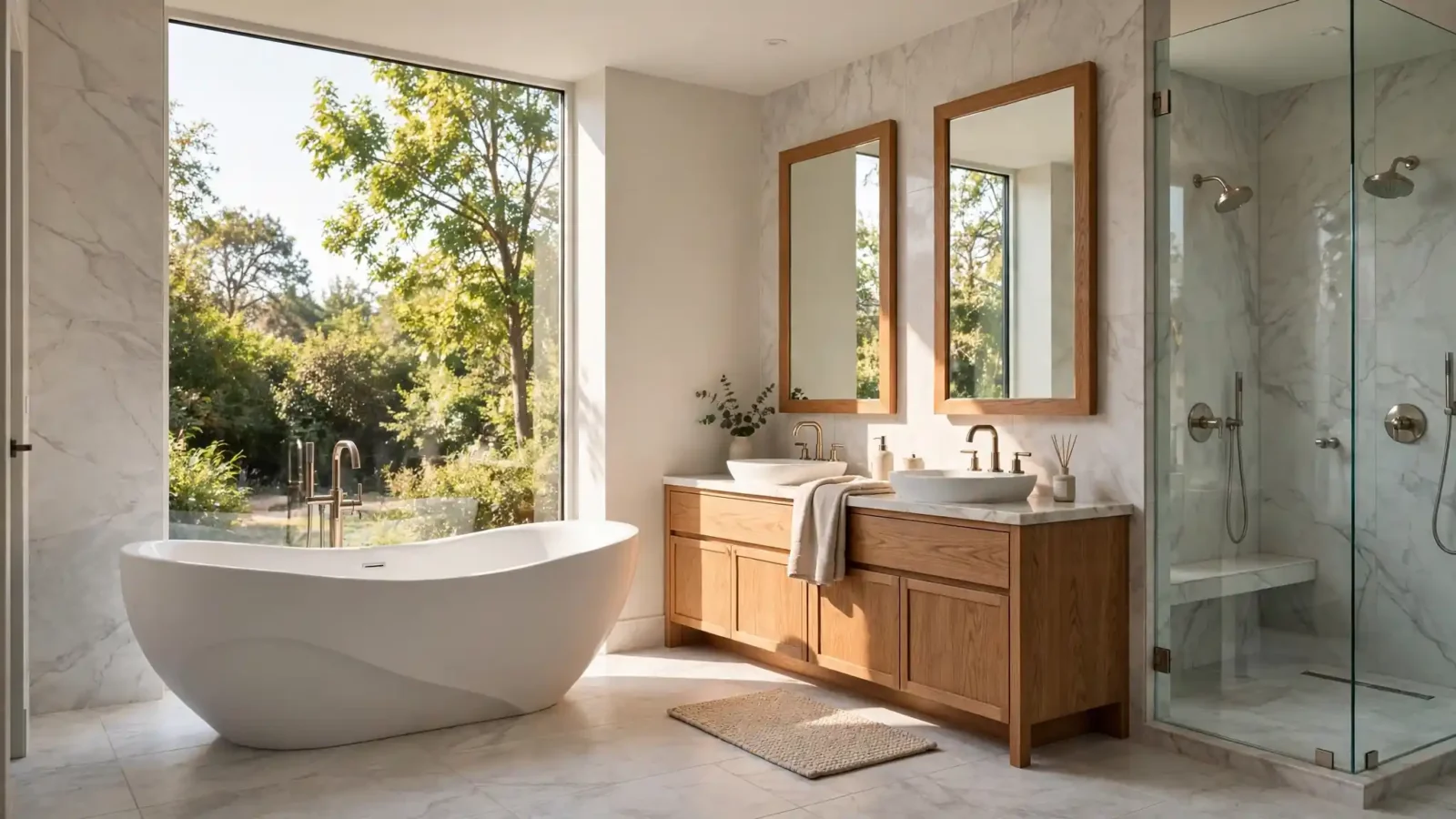
If you are planning a bathroom refresh, the master bathrooms 2026 trends are worth studying first. This year the master bath is treated as a private wellness retreat rather than a purely functional room, and the master bathrooms 2026 trends reflect that shift everywhere. Warm white oak, fluted stone, and large-format tile define the look, making even modest suites feel calm and expansive. This guide shares twenty-three ideas with real dimensions, realistic US prices, and practical styling notes. The master bathrooms 2026 trends favor spa features, smart storage, and finishes that age gracefully, and you can adapt several ideas below to your own space and budget.
Every idea below is built for real American homes, with product picks from Home Depot, Lowe’s, IKEA, Wayfair, and Amazon alongside the measurements your contractor actually needs. You will find curbless showers that suit aging in place, double vanities that end the morning rush, heated floors that make winter bearable, and lighting tricks that flatter everyone. Each section ends with a pro tip drawn from how these details get installed in practice. Whether you are doing a full gut renovation or a weekend-level refresh, the list is organized so you can jump straight to the upgrades that matter most for your bathroom.
Before you spend a dollar, measure your room carefully and note where the plumbing, windows, and doors sit, since those fixed points shape every decision that follows. The most successful remodels start with a clear priority list: better storage, better light, or a true spa feel. Save the sections you love, compare the price ranges, and bring this guide to your first contractor meeting. With the master bathrooms 2026 trends as your roadmap, you can build a space that starts and ends each day beautifully without overspending on details you will never notice.
1. Walk-In Wet Room Shower Zone
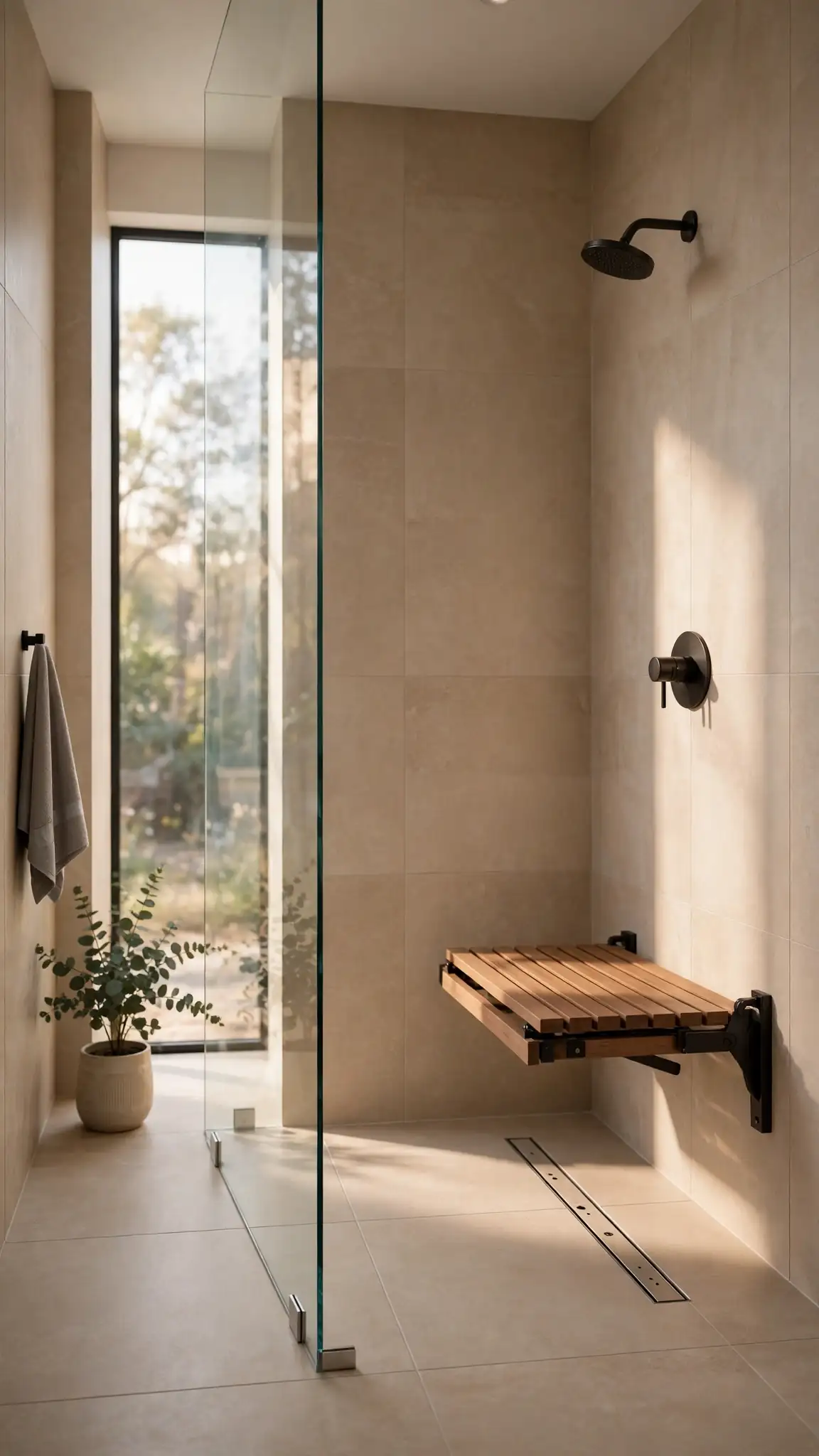
A wet room turns the shower end of the bathroom into one open, tiled zone with no curb and no door, which is why it leads the 2026 trends. Plan at least 60 by 36 inches for the shower area itself, with the floor sloped about a quarter inch per foot toward a linear drain. Waterproof the entire zone with a membrane system such as Schluter Kerdi, and choose slip-resistant porcelain rated above 0.42 DCOF for safety. Frameless glass panels from Lowe’s run $400 to $900, while a linear drain from Wayfair costs $150 to $400. Keep the toilet and vanity on the dry side of the room for easy maintenance.
Heating the wet room floor makes the open space feel cozy even in winter, and a wall-mounted folding bench adds spa comfort for about $150 on Amazon. Run the same large-format tile from wall to floor so the zone reads as one seamless volume. Ventilation matters more in open layouts, so install a quiet 110 CFM fan on a humidity sensor. Towel warmers on the dry side keep robes handy without risking splashes. Pro tip: keep the showerhead at least 36 inches from the room opening so water never reaches the vanity or doorway.
2. Double Vanity With Separate Zones
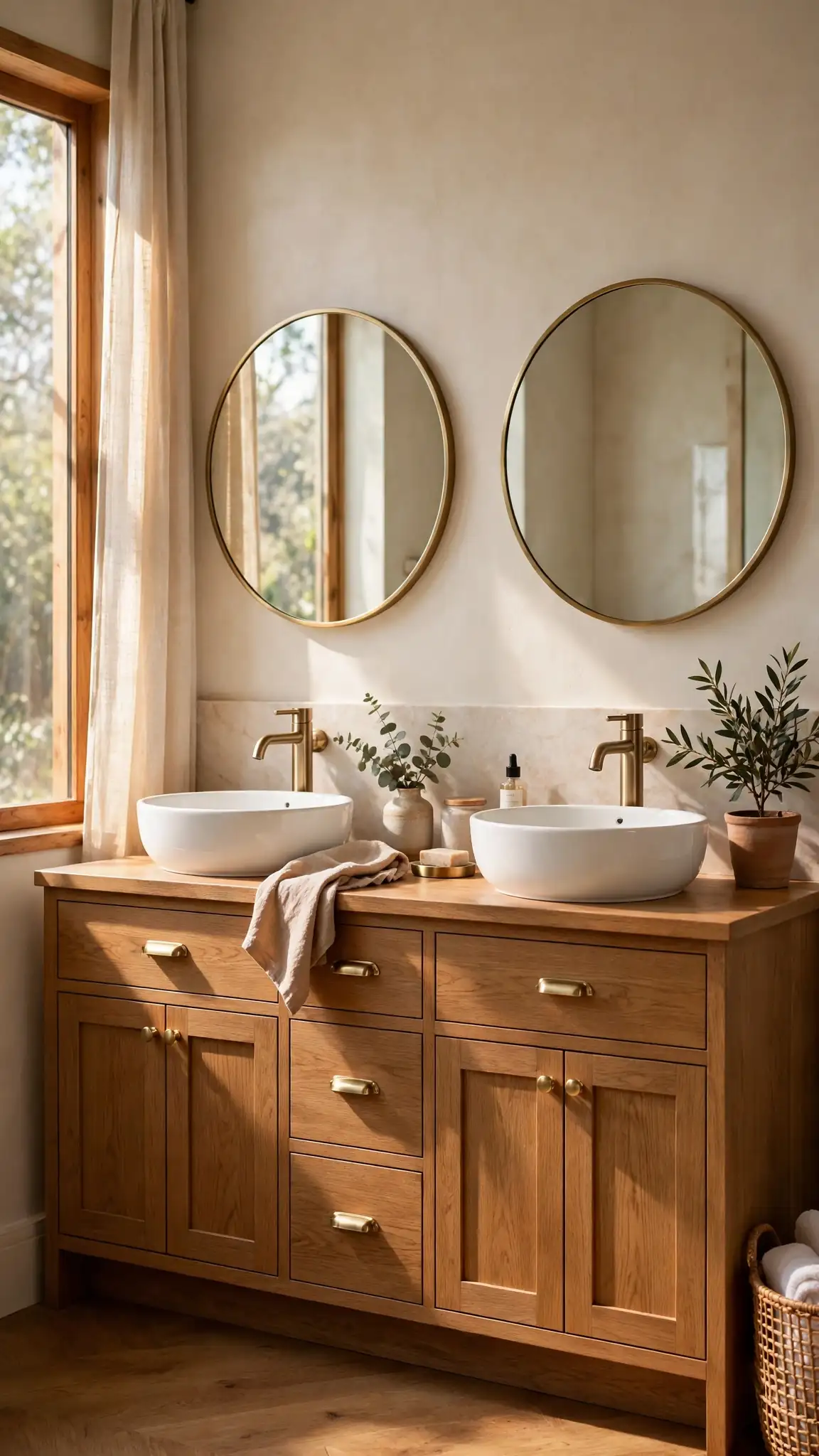
A 72-inch double vanity gives each person a defined zone with their own sink, mirror, and storage, ending the morning bottleneck for good. Standard height is 34 to 36 inches including the countertop, and each user needs roughly 30 inches of width to work comfortably. Home Depot stocks 72-inch double vanities from $900 to $2,500 in oak, white, and navy finishes, while IKEA’s GODMORGON system lets you build a custom pair for less. Add a tower cabinet or medicine cabinet between the sinks for shared items. Separate GFCI outlets per side keep hair tools from tripping breakers.
Mount a magnifying mirror on one side and a full shaving mirror on the other so routines never clash. Under-cabinet LED strips on motion sensors light the toe kick at night without waking anyone. Choose quartz or quartzite tops around $60 to $100 per square foot installed for strong stain resistance. Deep drawers beat doors for organizing bottles, and drawer dividers from the Container Store cost under $30. Match faucet finishes on both sides for a calm, symmetrical look. Pro tip: leave 30 inches of clear floor space in front of each sink so two people can stand side by side comfortably.
3. Master Bathrooms 2026 Trends: Curbless Shower Entries
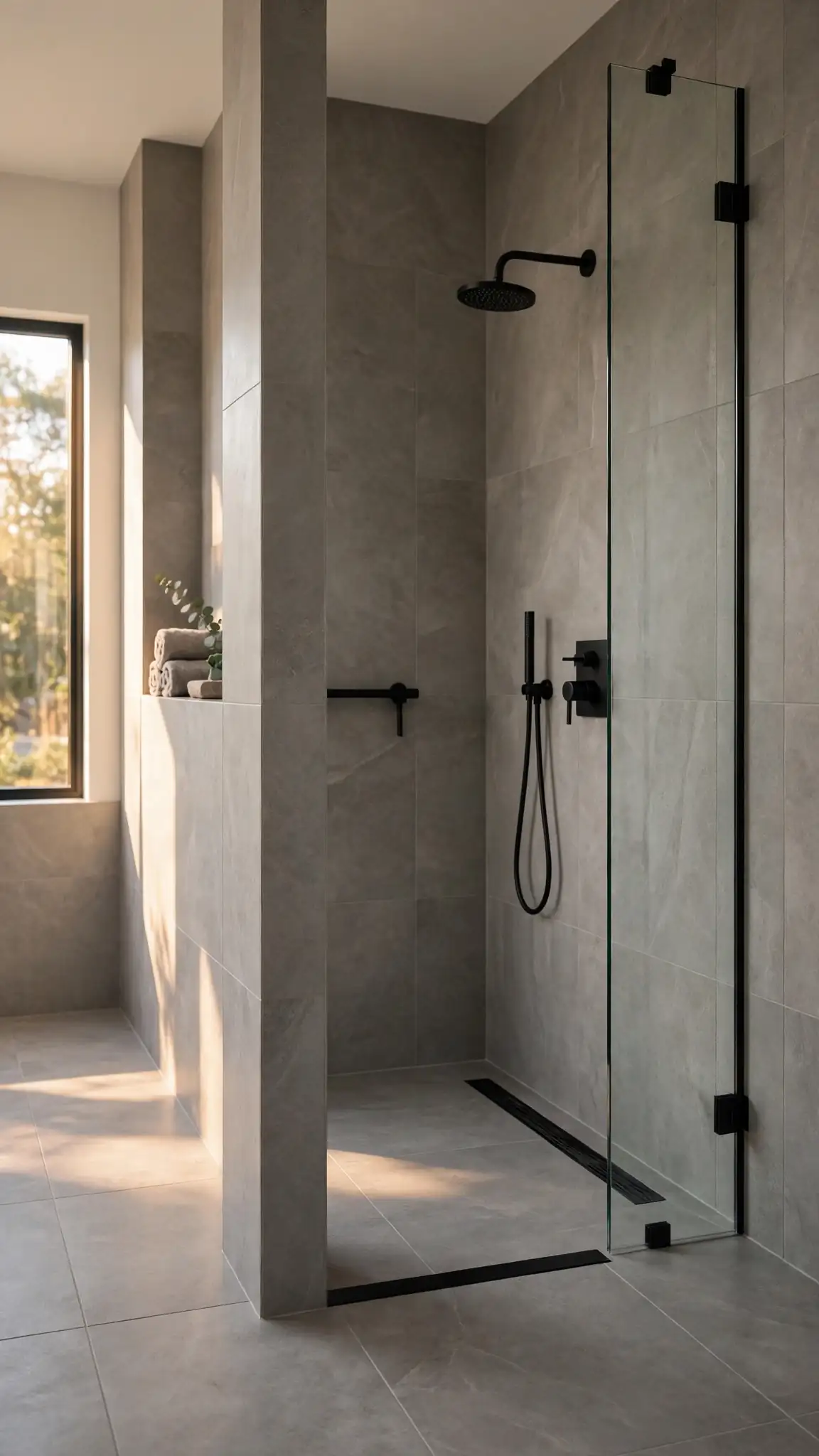
Curbless entries remove the shower threshold entirely, creating a smooth floor plane that looks bigger and works beautifully for every age. The subfloor must be recessed or ramped about one inch to create the slope, so this idea suits remodels where the floor is already coming up. Linear drains from Wayfair or Amazon cost $150 to $400 and sit flush against the wall for a minimal line. Pair the entry with a fixed glass panel rather than a door to keep the sightline open. The master bathrooms 2026 trends love this detail because it blends accessibility with a high-end look.
Waterproofing is non-negotiable here: membrane the floor and run it six inches up the walls, then flood-test for 24 hours before tiling. Choose small mosaic or textured tile inside the shower for grip, and carry the main floor tile right through for continuity. A rain head plus a handheld wand on a slider bar covers both luxury and cleaning. Position the controls near the entry so you can start the water without stepping in. Pro tip: add a second linear drain at the far edge if the wet zone extends past 60 inches, so overflow never travels.
4. Backlit Floating Vanities
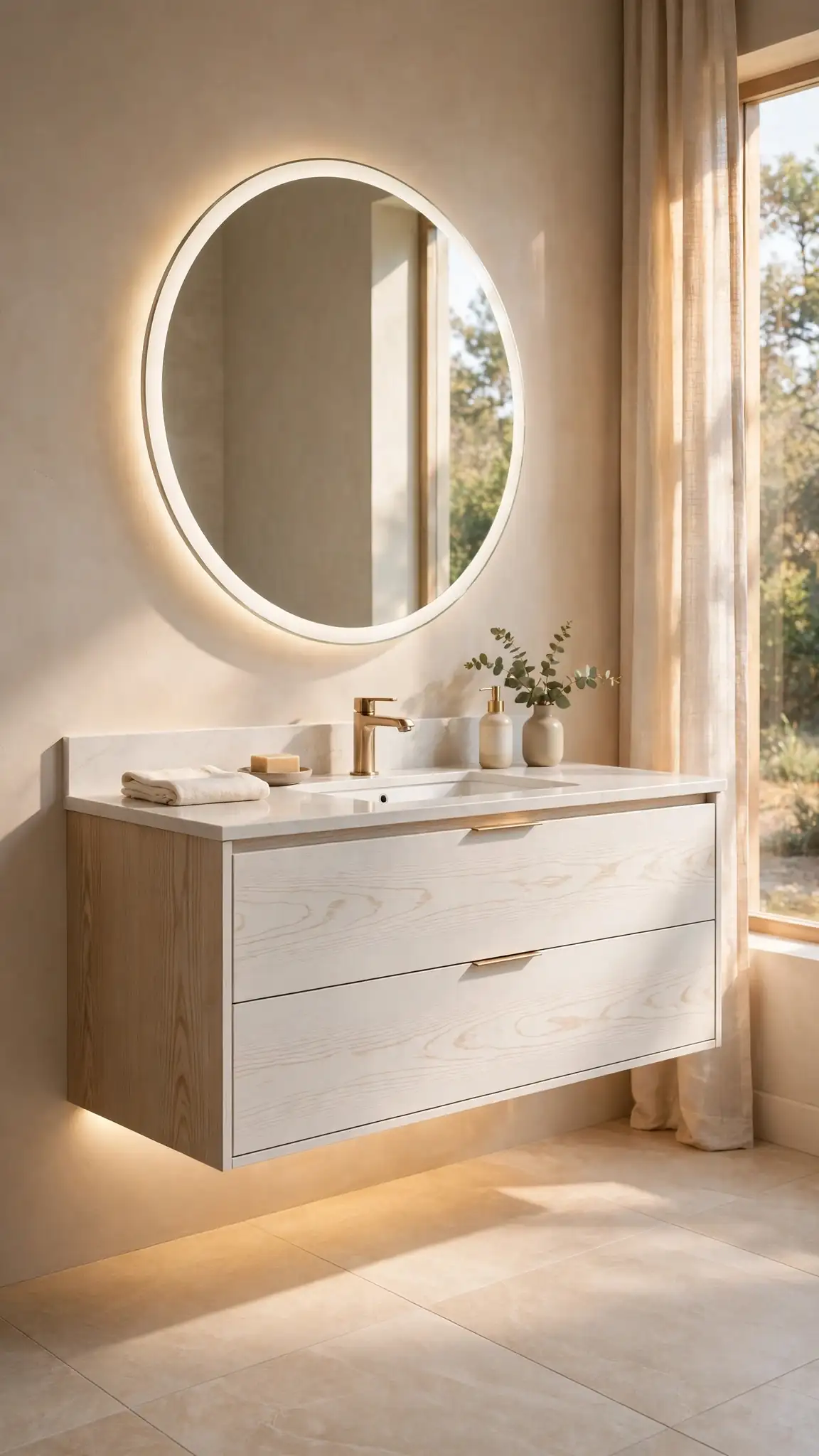
A wall-hung vanity with hidden LED lighting underneath floats above the floor, making the room look larger and mopping far easier. The cabinet must mount into studs or solid blocking since it carries the sink, countertop, and daily use. Backlit mirrors or light bars from Amazon cost $80 to $200 and cast a flattering glow with no harsh shadows. Set the vanity 34 inches high and keep the underglow on a dimmer for night visits. Oak and walnut veneers from Lowe’s vanity lines pair beautifully with the warm LED tone.
Run the LED strip in an aluminum channel with a diffuser so the light line looks even instead of dotted. A 2700K to 3000K color temperature flatters skin and matches most bath lighting. Add a motion sensor under the cabinet for a soft nightlight path to the toilet. Pair the floating vanity with large-format floor tile so the continuous floor amplifies the airy effect. Seal the cabinet bottom against moisture with a marine-grade finish. Pro tip: keep the light strip recessed at least one inch from the cabinet edge so the source stays hidden from every viewing angle.
5. Spa-Style Freestanding Soaking Tub
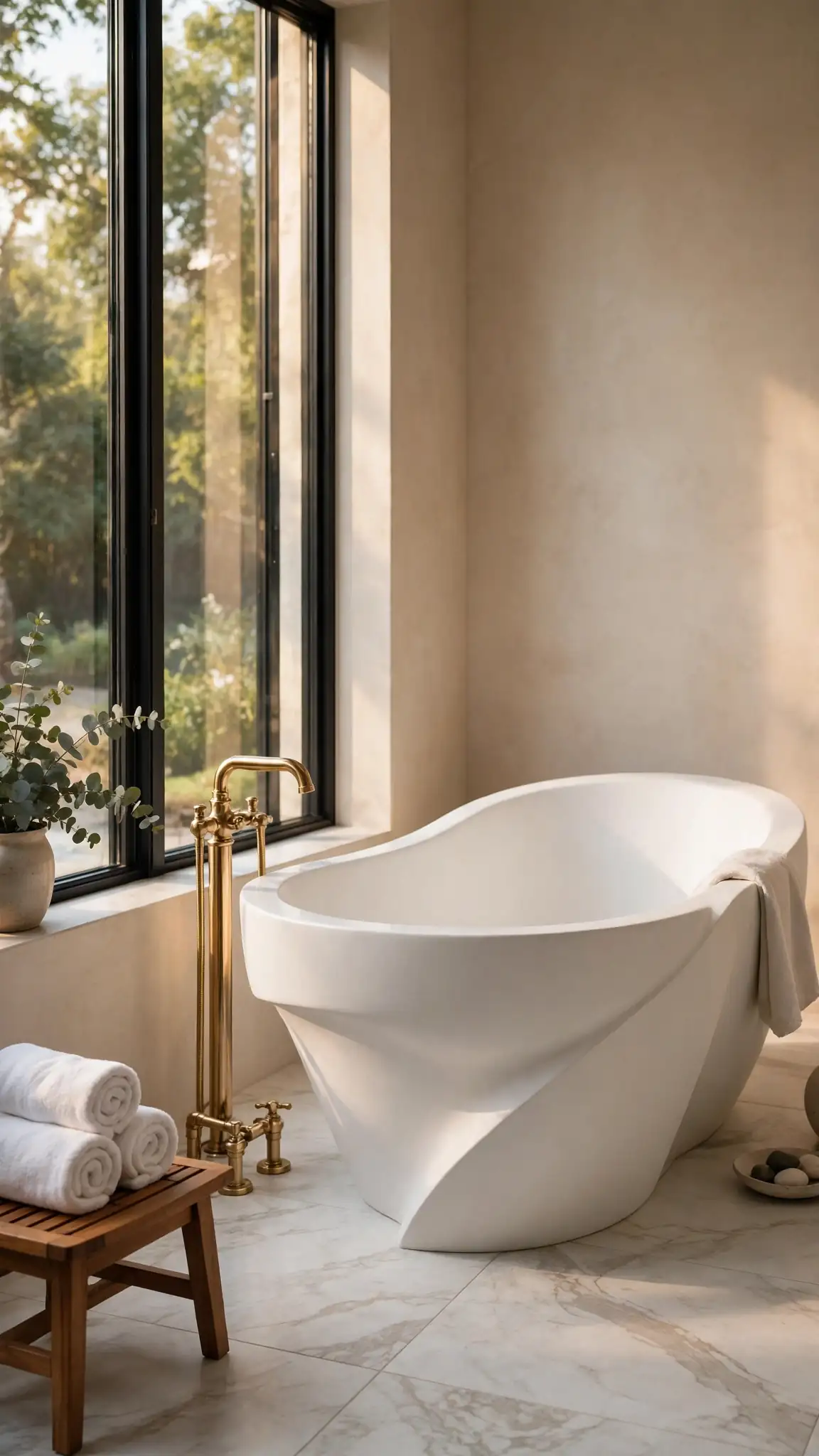
A freestanding soaking tub is the centerpiece of a spa-style master bath, and 2026 shapes run deep, curved, and sculptural. A 67-inch tub fits most master bathrooms, holding water 19 to 21 inches deep for full shoulder immersion. Wayfair and Amazon list acrylic freestanding tubs from $700 to $1,800, while cast iron runs higher but holds heat longer. Leave at least 30 inches of clearance around three sides for cleaning and a dramatic silhouette. A floor-mounted tub filler in a matching finish completes the look. A sculptural tub like this is one of the most pinned master bathrooms 2026 trends for good reason.
Position the tub near a window or under a pendant light so it becomes the room’s focal point. Check the floor load first: a filled tub plus bather can exceed 800 pounds, so confirm joist capacity in older homes. Add a small teak stool or caddy for candles and a book, around $40 at Target. A freestanding tub needs its drain roughed in precisely before the floor is finished. Match the tub’s white tone to the toilet and sink whites for cohesion. Pro tip: choose an acrylic tub with a reinforced base if your floor has any flex, since it weighs far less than stone or cast iron.
6. Large-Format Porcelain Tile Walls
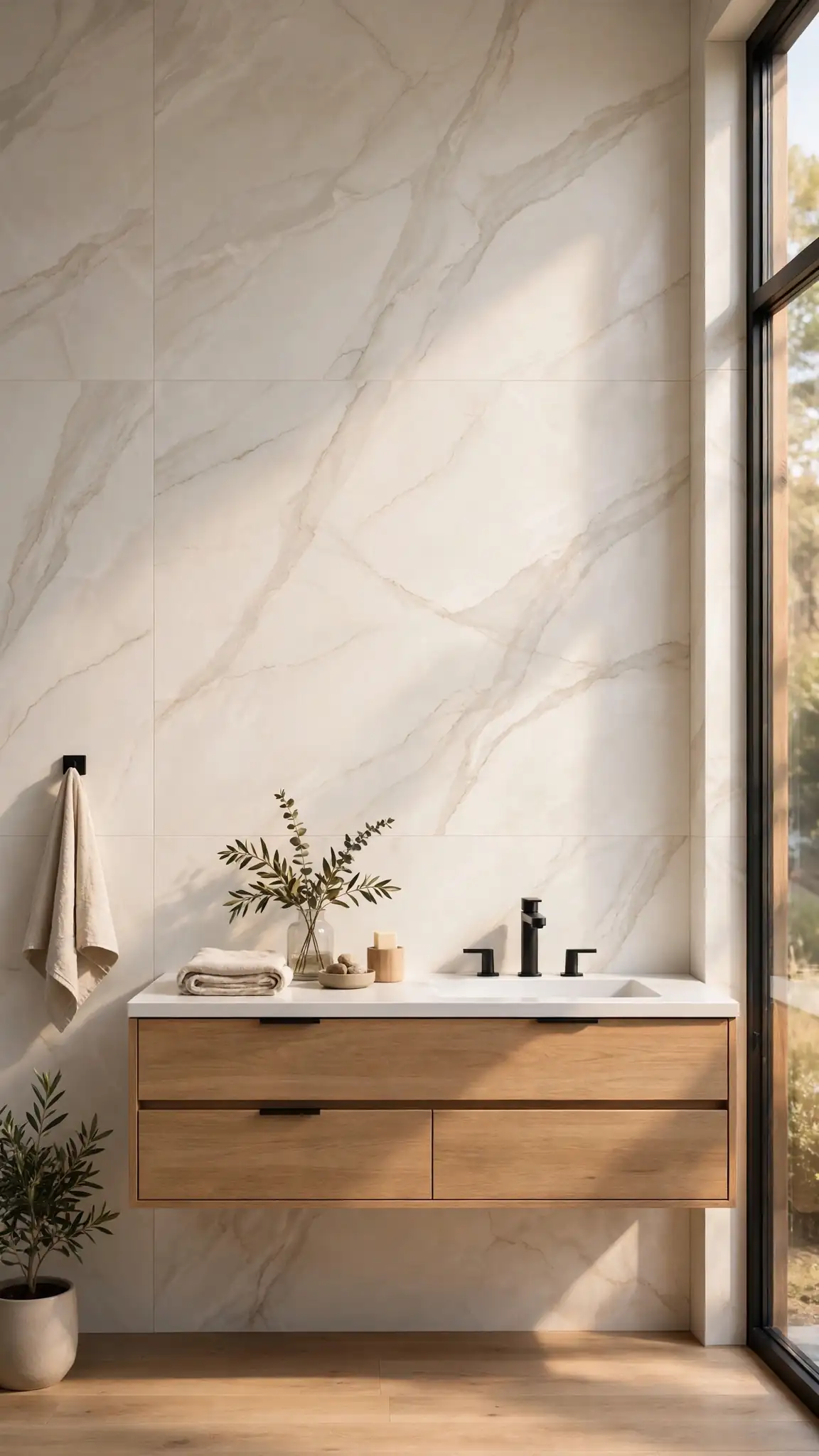
Oversized porcelain slabs in 24 by 48 inches cut grout lines dramatically, which makes walls look seamless and cleaning much faster. Porcelain costs $4 to $9 per square foot at Home Depot, a fraction of real marble slabs with similar veining. The tiles need a perfectly flat substrate, so budget for wall leveling or a tile backer system during prep. Use a 1/16-inch grout joint with rectified edges for the most continuous look. Carry the same tile onto the shower walls so the whole room reads as one material. Rectified edges and tight grout joints make the installation look almost seamless.
Large tiles are heavy and awkward, so hire an installer experienced with lippage control and a leveling clip system. Book-match two slabs behind the vanity for a designer mirror effect at no extra material cost. Matte finishes hide water spots better than polished ones in hard-water areas. Seal the grout even on porcelain installations to resist staining. Limit the palette to two tiles maximum so the scale, not the pattern, does the talking. Pro tip: order ten percent extra tile because cutting large-format pieces produces more waste than standard sizes.
7. Matte Black Fixtures Everywhere
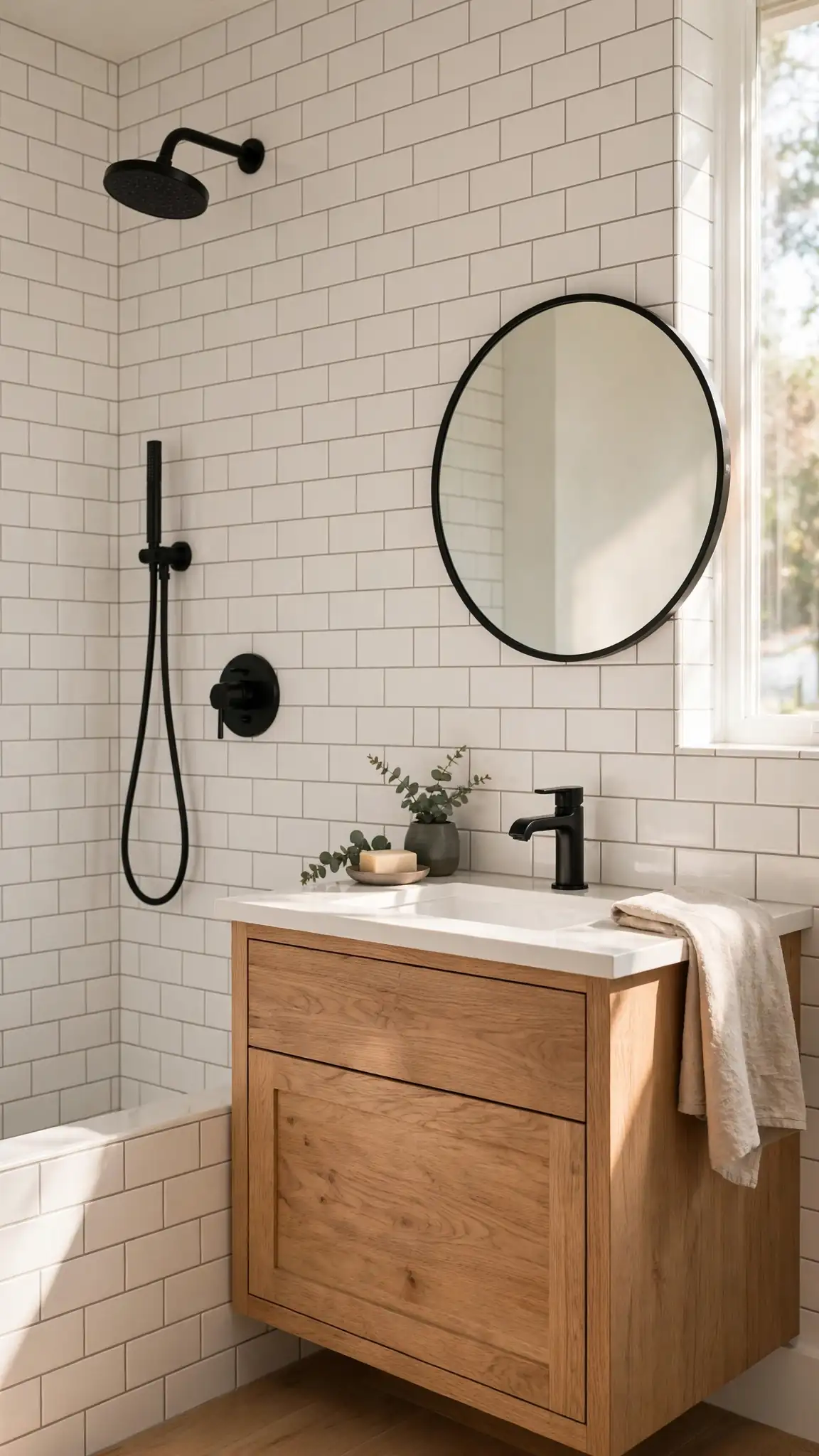
Matte black faucets, shower trim, and hardware add graphic contrast against white tile and warm wood without the upkeep of chrome. Delta and Moen matte black collections at Lowe’s run $250 to $600 for a full faucet and shower set, with spot-resistant coatings that hide fingerprints. Keep the finish consistent across the faucet, towel bars, and cabinet pulls so it reads intentional. Black works best with at least one warm material nearby, like oak or brass lighting, to avoid a cold look. Spot-resistant coatings on modern matte black lines help the finish stay clean between weekly wipe-downs.
Clean matte black only with soft cloths and mild soap, since abrasive pads can burnish the coating shiny. Check that the shower valve trim, tub filler, and accessories come from the same collection for an exact finish match. Matte black shows hard-water scale more than chrome, so wipe fixtures weekly if your water is hard. Pair with a black-framed mirror to echo the hardware. It also photographs beautifully for resale listings. Pro tip: buy one extra matching pull or knob now, because collections get discontinued and future touch-ups need the identical finish.
8. Warm Wood Vanity Accents
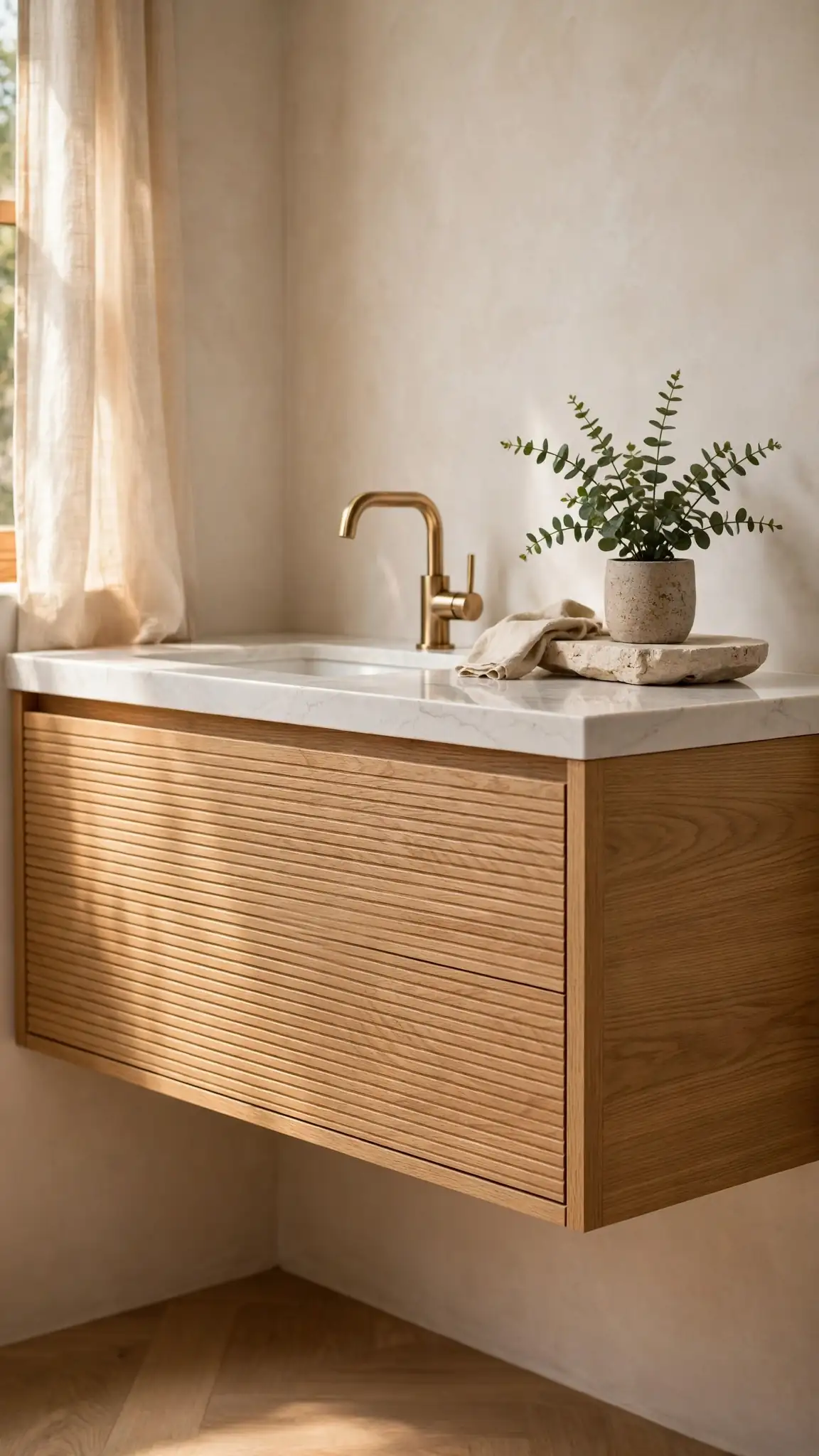
White oak and walnut vanities bring warmth that balances all the cool tile and porcelain in a modern master bath. A 60-inch oak floating vanity from Lowe’s or Wayfair costs $800 to $2,000, while IKEA’s wood-effect fronts offer the look for less. Wood-look porcelain tile on the floor echoes the vanity without any moisture risk. Keep the grain direction horizontal on drawer fronts for a calm, continuous line. Seal real wood with a marine-grade polyurethane so steam never raises the grain. Rift-sawn oak shows the least grain variation, giving the vanity a calm, even appearance.
Style the vanity top with a stone tray, a small plant, and rolled hand towels to show off the wood tone. Warm wood pairs especially well with brushed brass or champagne bronze faucets. If the budget is tight, add oak open shelves beside a painted vanity for the same warmth at a fraction of the cost. Avoid placing raw wood inside the shower splash zone. Re-oil or reseal the finish once a year in steamy bathrooms. Pro tip: match the vanity wood tone to your bedroom furniture visible through the doorway so the suite feels connected.
9. Master Bathrooms 2026 Trends: Fluted Stone Surfaces
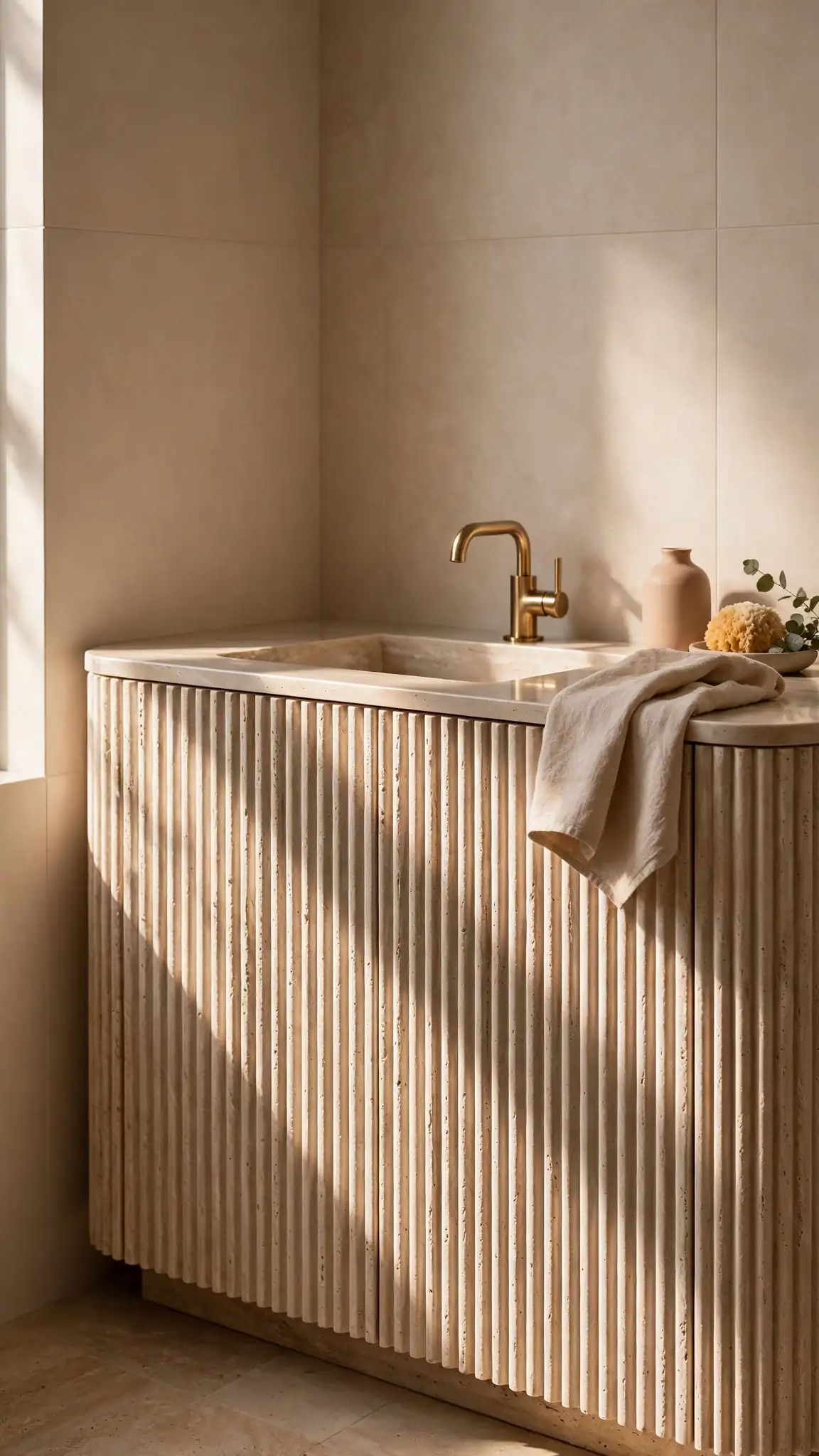
Fluted and reeded stone on vanity fronts, tub skirts, and niche surrounds adds crafted texture that flat tile cannot match. The vertical grooves catch light beautifully and hide fingerprints better than polished slabs. Small fluted travertine panels from Wayfair or Etsy run $30 to $60 per square foot, while full fluted vanity fronts start around $1,200. Use the texture on one feature only, like the vanity, so it stays special. The master bathrooms 2026 trends use fluting as the signature detail of the year. Fluted fronts also photograph beautifully, which helps if you plan to list the home later.
Seal travertine and marble fluting with an impregnating sealer, reapplying yearly in wet zones. Pair fluted stone with smooth large-format tile so the contrast reads clearly. A fluted tub skirt turns a standard alcove tub into a custom-looking centerpiece for a few hundred dollars. Keep lighting raking across the grooves at a low angle to maximize the shadow play. Dust the grooves with a soft brush during weekly cleaning. Pro tip: order a sample panel first, because flute depth and spacing vary widely and photos rarely show the true texture.
10. Skylight Over the Shower
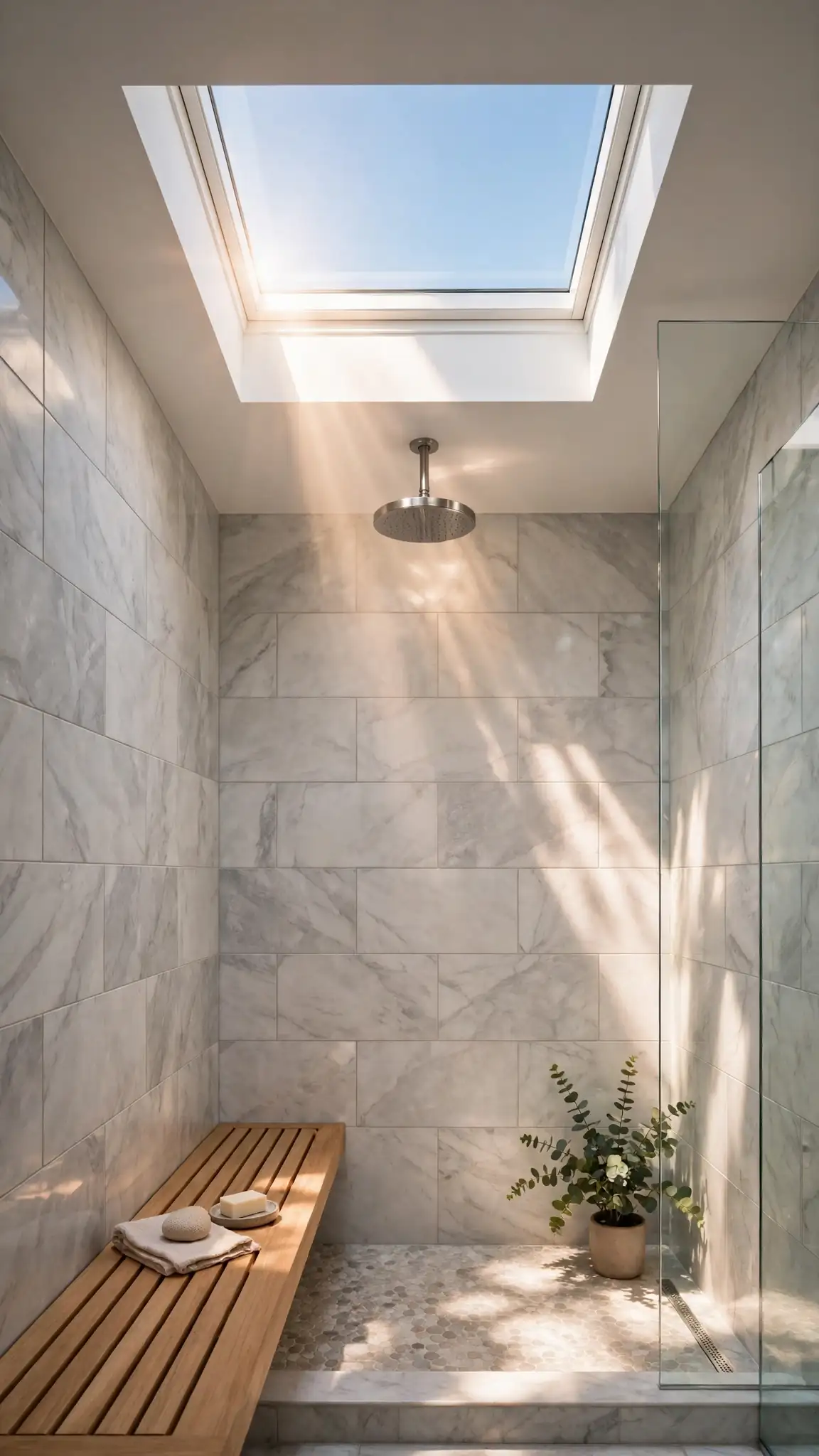
A skylight above the shower floods the space with daylight, making tile colors glow and cutting the need for daytime lighting. Velux fixed skylights cost $500 to $1,200 installed, with venting models adding a few hundred more. Size the skylight to about ten percent of the bathroom floor area for balanced light without overheating. Frosted or diffusing glass preserves privacy while spreading soft light. Pair it with a solar shade for summer afternoons in hot climates. Daylight from above also makes small bathrooms feel taller, since the eye travels up the light shaft.
Place the skylight shaft directly over the shower or tub, where the light matters most and moisture is expected. Venting skylights double as steam exhaust when paired with the right flashing kit. Check the roof structure before cutting, since rafters and trusses limit placement. A light tunnel works as a budget alternative at $200 to $400 when a full skylight is not possible. Seal the curb carefully because skylights are the most common roof leak point. Pro tip: choose a skylight with a built-in rain sensor if it opens, so it closes itself during sudden storms.
11. Heated Bathroom Floors
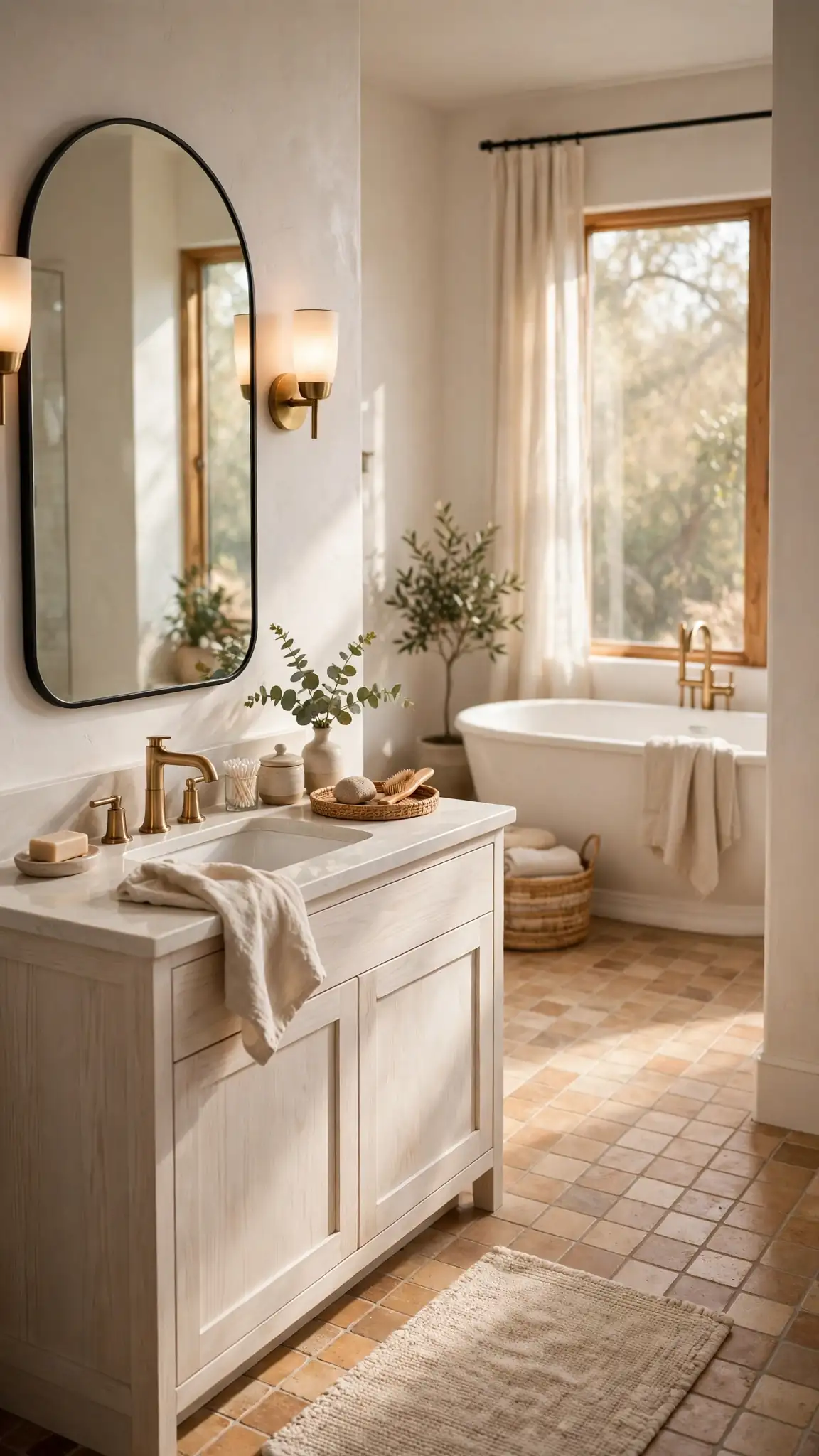
Radiant floor heating turns cold tile into a warm surface that makes winter mornings genuinely pleasant. Electric mats from SunTouch or WarmlyYours at Home Depot cost $8 to $12 per square foot, with a typical master bath running $600 to $1,200 for materials. The mat installs under tile in thinset, adding less than half an inch of height. A programmable thermostat warms the floor before your alarm and idles the rest of the day. It also dries the floor faster, cutting mildew risk. Many homeowners run the system on a schedule so the floor is warm exactly when the household wakes.
Heat the open floor areas and in front of the vanity and toilet, skipping under the tub and vanity cabinet to save money. Hire an electrician for the dedicated GFCI circuit, which most codes require. Test the mat with an ohmmeter before, during, and after tiling, since repairs afterward are expensive. Pair heated floors with a curbless shower so bare feet stay warm everywhere. The system uses about as much power as a few light bulbs. Pro tip: set the thermostat to start 30 minutes before you wake up, because tile takes that long to reach full warmth.
12. Smart Mirrors With Built-In Lighting
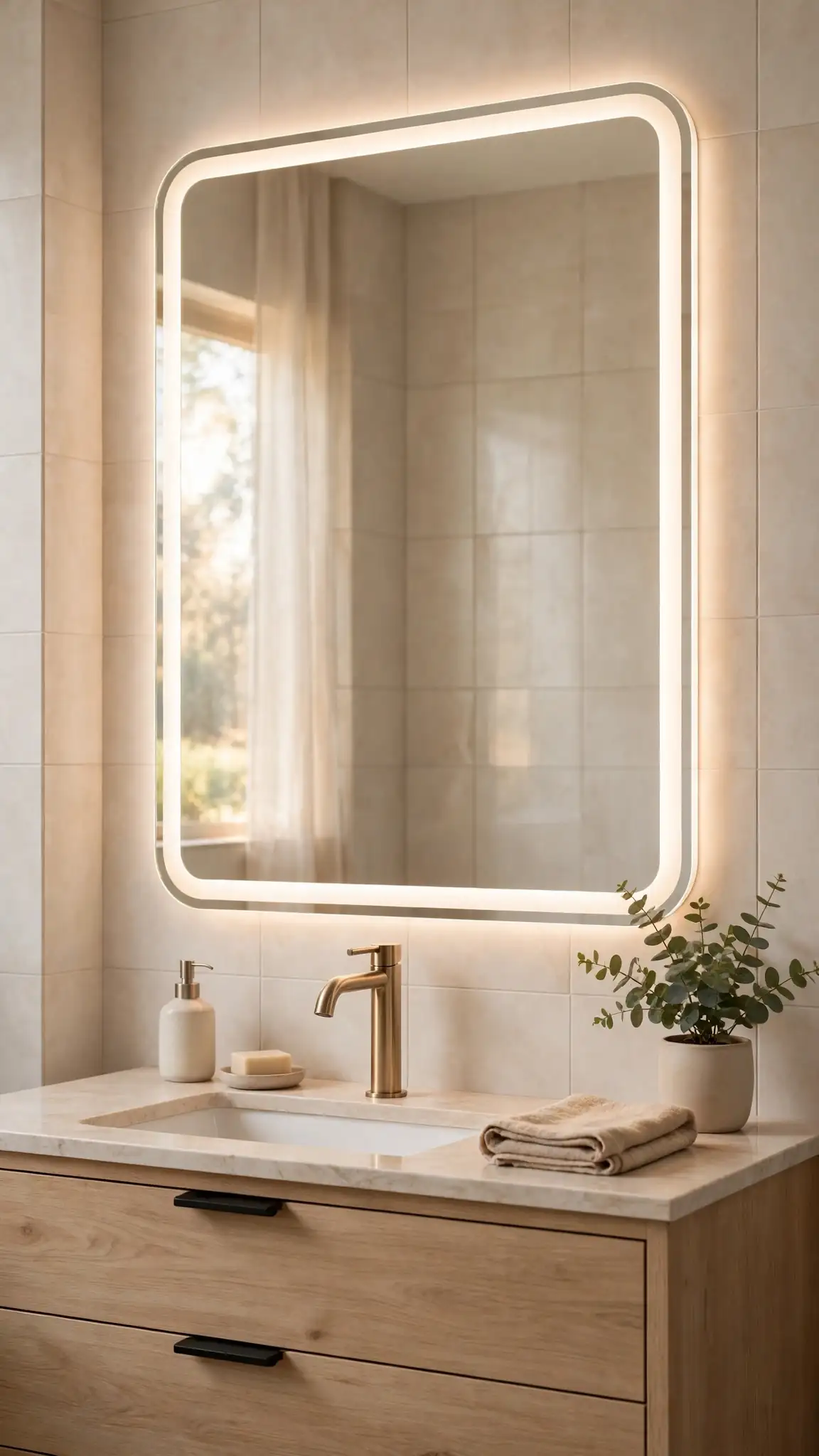
LED smart mirrors combine task lighting, anti-fog demisters, and sometimes Bluetooth speakers in one slim panel. Backlit mirrors from Amazon or Wayfair cost $100 to $300 in standard sizes, far less than custom medicine cabinets. The even, shadow-free light flatters skin and makes makeup and shaving easier. Anti-fog pads keep the center clear right after hot showers. Choose a mirror at least as wide as the vanity for proper proportion. Backlit mirrors rank among the most searched master bathrooms 2026 trends because the lighting flatters everyone. Standard widths run 24 to 72 inches, so measure your vanity before ordering.
Hardwire the mirror to a wall switch or dimmer rather than relying on a touch button alone. A 3000K to 4000K adjustable color temperature covers both warm evening and daylight-true morning needs. Mount the mirror 60 to 65 inches to center for the primary user. Frameless backlit designs suit modern baths, while arched lit mirrors soften contemporary spaces. Keep the sensor areas clean so touch controls respond reliably. Pro tip: wire the mirror’s defogger to the same switch as the shower light, so it warms up while the water runs.
13. Master Bathrooms 2026 Trends: Double Shower Heads
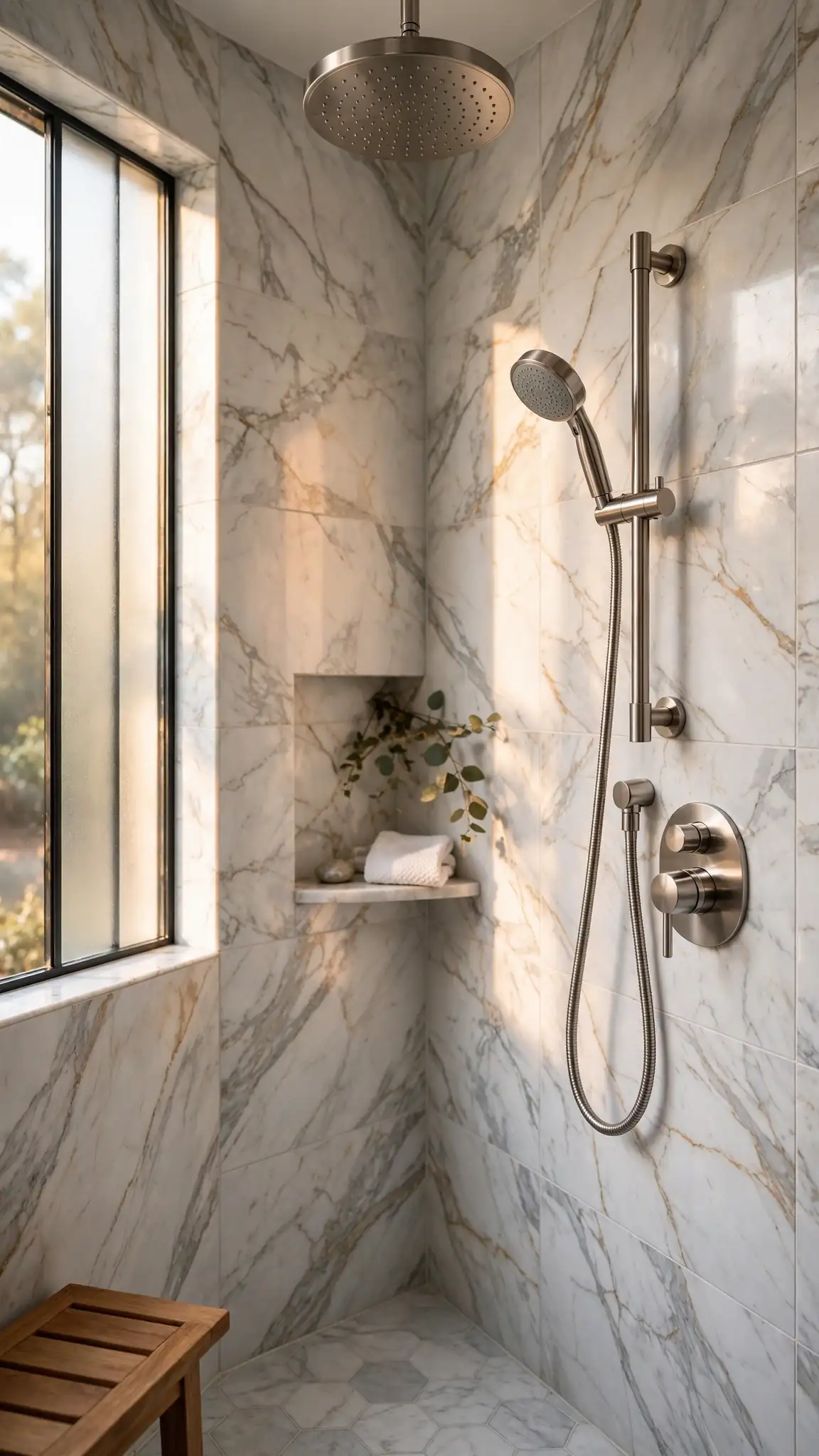
Two shower heads, usually a rain head plus a handheld wand, make a shower feel like a private spa and rinse twice as fast. Delta and Kohler dual-head combos at Lowe’s and Home Depot cost $150 to $400, with a diverter valve switching between heads. Mount the rain head at 80 inches or higher on the ceiling or wall arm for full coverage. The handheld on a 24-inch slider bar adjusts for kids, pets, and cleaning. The master bathrooms 2026 trends treat the double setup as the new standard, not an upgrade.
Check your water heater capacity, since two heads can draw 4 to 5 gallons per minute together. A pressure-balancing or thermostatic valve keeps temperature steady when a toilet flushes. Choose matching finishes on both heads and the valve trim for a cohesive look. The handheld wand also makes scrubbing the shower itself far easier. Add a corner footrest shelf if anyone shaves legs in the shower. A diverter with a shared handle keeps the wall plate simple and the controls intuitive for guests. Pro tip: install a separate volume control for each head so you can run the rain head alone on rushed mornings.
14. Statement Pendant Lighting
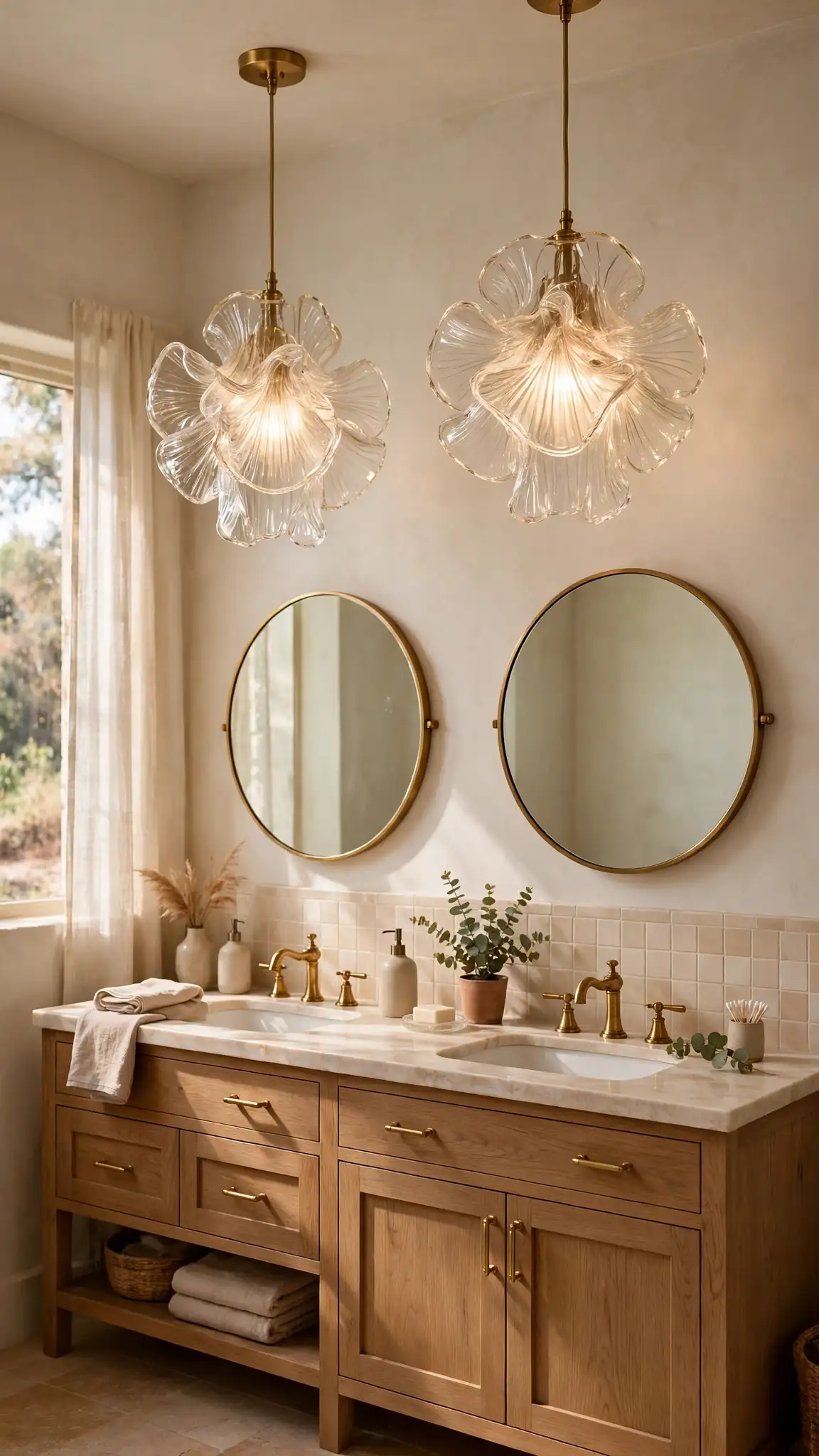
Pendant lights over the vanity or tub replace generic bar lights with sculptural focal points. Hang two small pendants over a double vanity at 65 to 70 inches from the floor, keeping them clear of mirror reflections. Wayfair and Lamps Plus offer bath-rated pendants from $60 to $180 each in glass, rattan, and brass. Choose damp-rated fixtures for any pendant within the shower splash zone. Dimmers let the same pendants shift from task light to evening mood. Glass, rattan, and alabaster shades each cast a different quality of light, so compare them in person when possible.
Keep pendants at least 12 inches from the mirror surface to avoid harsh hotspots. Match the pendant metal to your faucet finish for a pulled-together look. A single oversized pendant over a freestanding tub creates a dramatic centerpiece. Use warm 2700K bulbs so the light flatters skin tones. If ceiling height is under eight feet, choose semi-flush pendants instead. A licensed electrician should handle any new junction boxes to keep the installation code-compliant. Pro tip: hang a temporary string at the planned height and live with it for a day before drilling any holes.
15. Niche Storage Walls
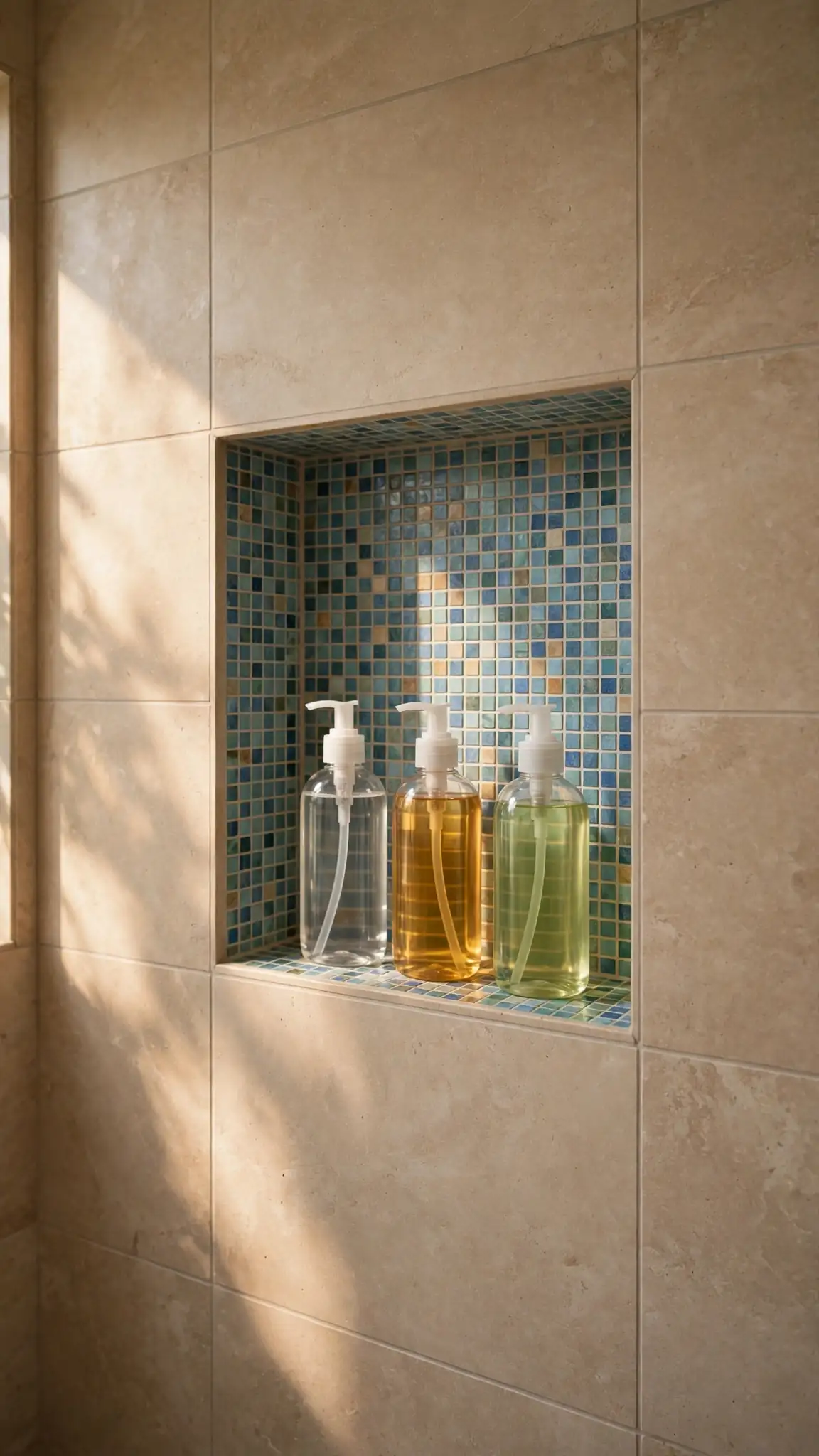
Recessed shower niches replace rusting corner caddies with tiled shelves built right into the wall. A 12 by 24 inch niche fits full-size shampoo bottles, and stacking two niches covers every product. Prefab waterproof niche boxes from Schluter cost $50 to $120, with tiling adding $200 to $400 installed. Place the niche on a side wall, never the showerhead wall, to keep products out of direct spray. Align niche edges with tile grout lines for a custom look. Frameless niches lined with the field tile look the most custom and cost nothing extra in materials.
Slope the niche shelf slightly forward so water drains instead of pooling. Use the same tile as the shower walls, or a contrasting mosaic inside the niche for a jewelry-box effect. Add a second small niche near the tub for bath products. LED strip lighting inside a deep niche turns storage into a display. Waterproof the niche box seams exactly like the rest of the shower. Keep the niche depth at three to four inches so bottles sit securely without tipping forward. Pro tip: mock up the niche height by holding your tallest bottle against the wall before the tile goes up.
16. Terrazzo Flooring Comeback
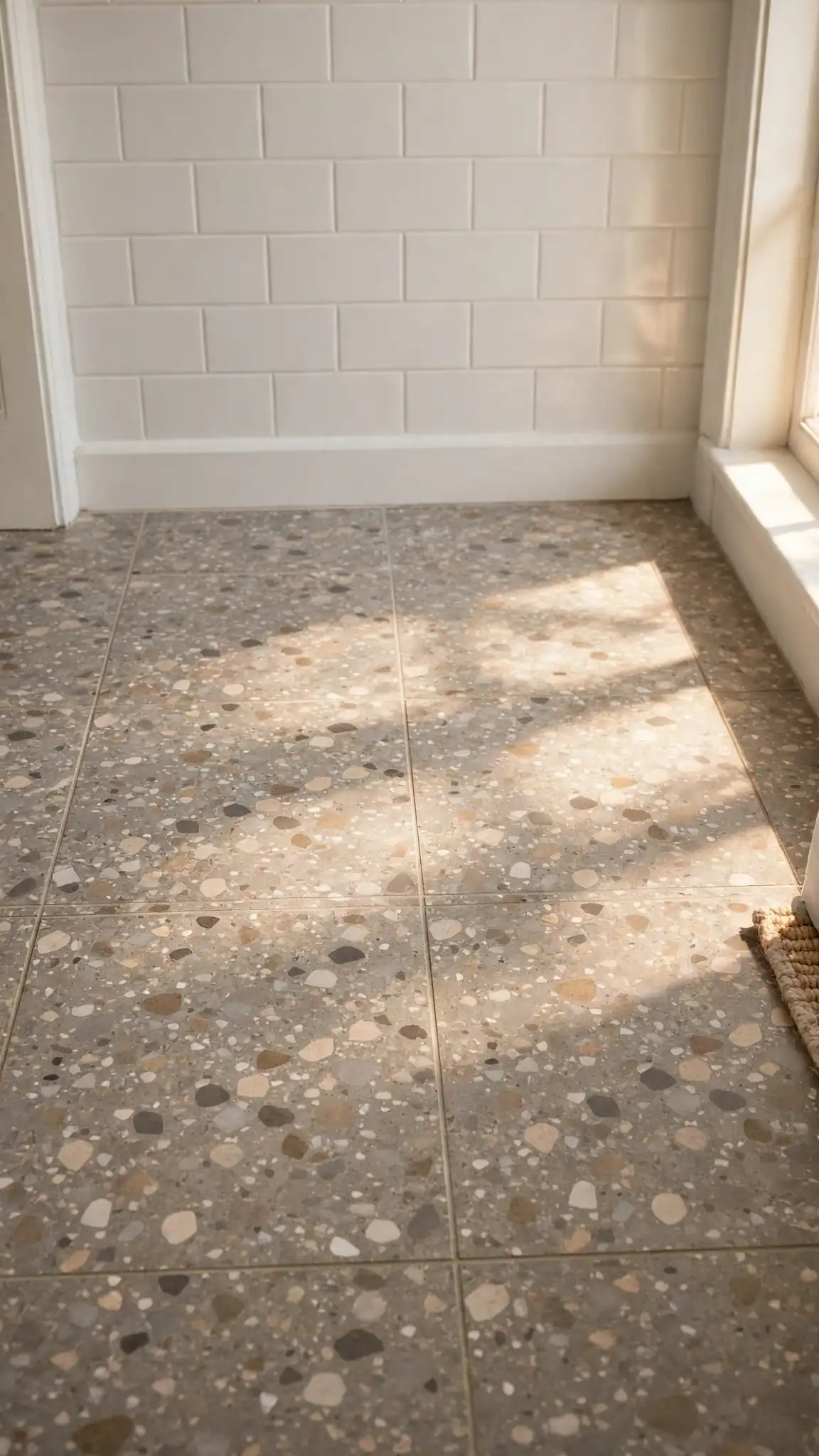
Terrazzo’s confetti-chip pattern is back, now mostly as porcelain tile that needs no sealing or polishing. Terrazzo-look porcelain costs $3 to $7 per square foot at Home Depot, a fraction of poured terrazzo at $15 to $30. The busy pattern hides dirt and hair between cleanings, a real plus in a master bath. Choose large chips for drama or fine chips for a quieter floor. Pair it with simple white wall tile so the floor stays the star. Pattern scale matters here: larger rooms handle bold chips, while small baths look better with finer aggregates.
Use a grout color close to the tile background so the chip pattern reads continuously. Terrazzo-look tile works on shower floors too, where the pattern masks soap residue. Carry the tile up one wall as an accent if you love the look. Matte finishes suit the retro-modern vibe better than polished ones. The pattern also disguises the slope cuts around a linear drain. Seal cement grout yearly, since the busy pattern can hide staining until it becomes stubborn. Pro tip: buy all boxes from the same dye lot, because chip density can shift noticeably between production runs.
17. Tadelakt Lime Plaster Walls
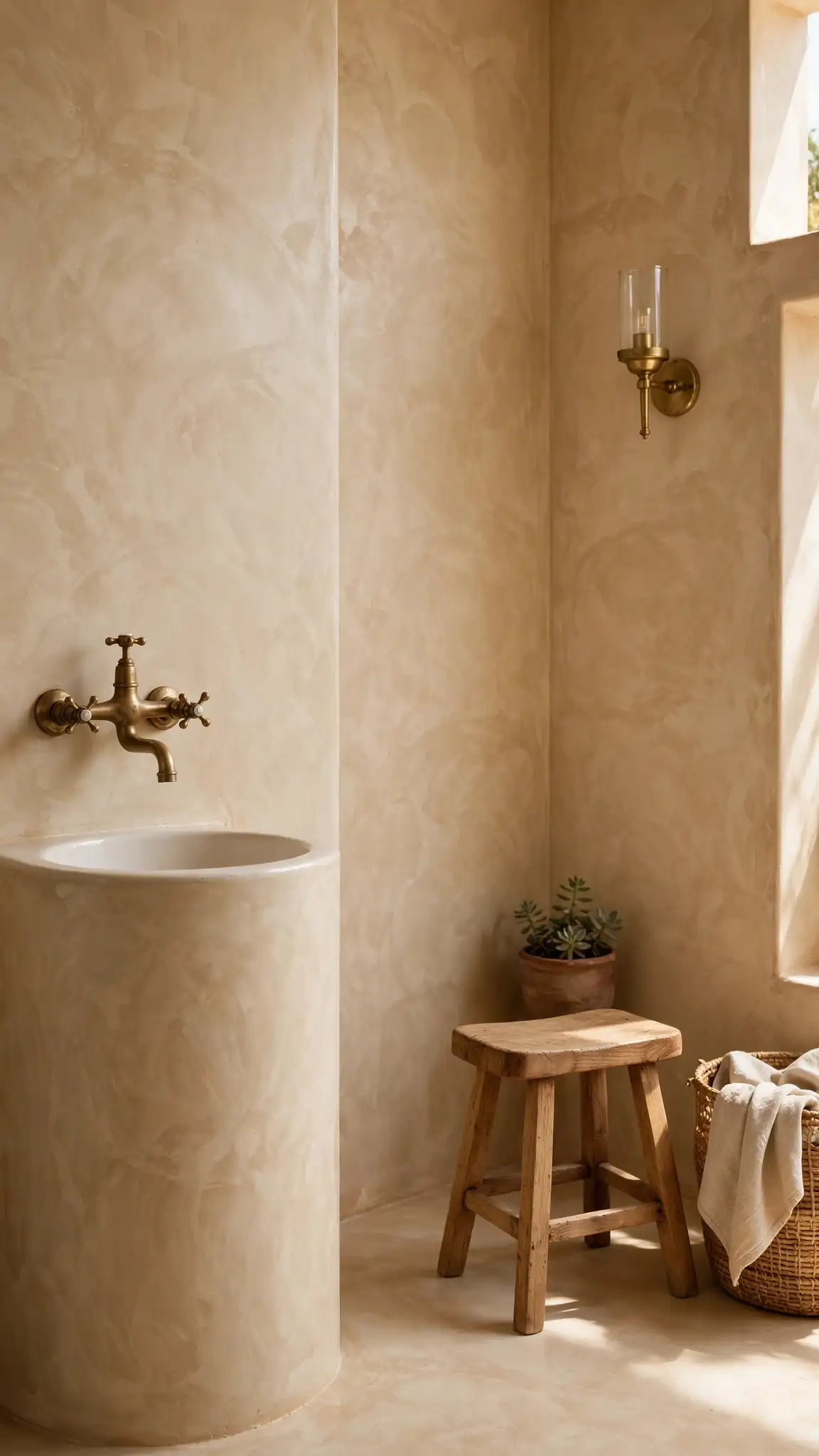
Tadelakt, the waterproof Moroccan lime plaster, gives walls a soft, seamless, hand-troweled finish no tile can imitate. A trained applicator charges $15 to $25 per square foot, so a single accent wall runs $1,500 to $3,000. The olive-oil soap finish makes it naturally water-resistant and suited to shower walls. Colors range from warm sand to deep charcoal, all with subtle movement. It pairs beautifully with unlacquered brass and natural wood. Because each wall is hand-finished, no two tadelakt surfaces look exactly alike, which is part of the appeal. Sample boards in your exact color are worth the wait.
Hire only an applicator with real tadelakt references, since the technique takes years to master. The plaster needs several days to cure before it sees water. Maintain it with black olive-oil soap rather than harsh cleaners. Small cracks can be burnished out with a stone, which is part of the craft’s charm. Use it on one or two walls maximum to control cost and keep tile elsewhere. Expect the plaster to develop a soft patina over time, adding character rather than looking worn. Pro tip: ask the applicator for a sample board in your exact color, because wet plaster dries several shades lighter.
18. Open Shelving With Towel Styling
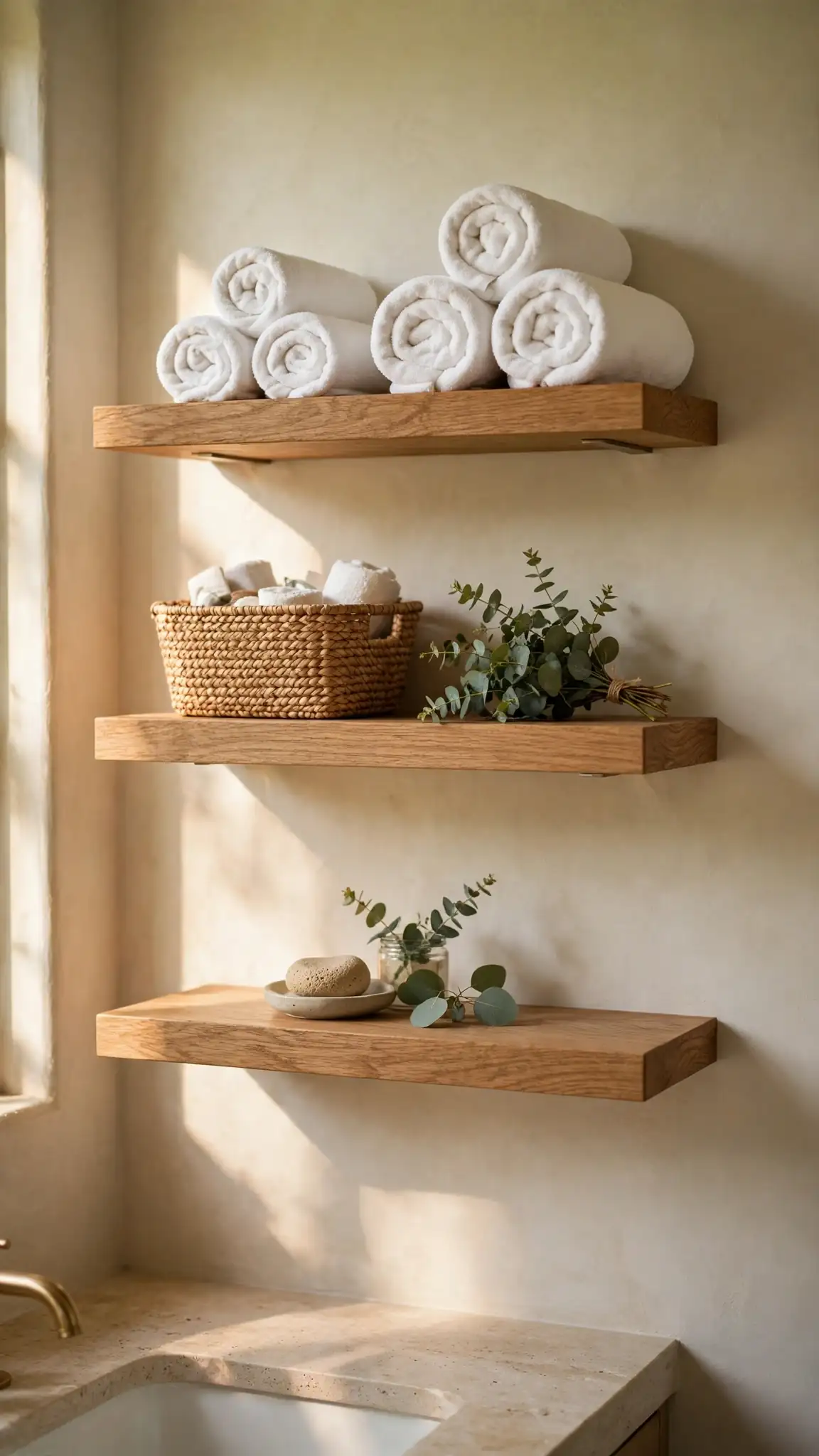
Floating open shelves beside the vanity or over the toilet turn everyday towels into decor. Two 24-inch oak shelves from IKEA cost $15 to $30 each with brackets, holding rolled towels, baskets, and a small plant. Roll rather than fold towels for a spa look that also saves space. Keep the styling simple: three towel stacks maximum per shelf to avoid clutter. Open shelving also fills awkward wall gaps between the vanity and shower. Styled open shelving is one of the easiest master bathrooms 2026 trends to copy on a small budget.
Mount shelves into studs since wet towels get heavy fast. Leave at least 18 inches above the toilet tank for clearance. Woven baskets from Target at $15 to $25 corral cotton balls and spare toilet paper. Rotate displayed towels weekly so nothing sits damp. A small eucalyptus bunch adds scent and spa atmosphere for a few dollars. A small trailing plant like pothos softens the shelf edges and thrives in bathroom humidity. Pro tip: style shelves with odd numbers of items, since groups of three or five look more natural than even pairs.
19. Champagne Bronze Hardware
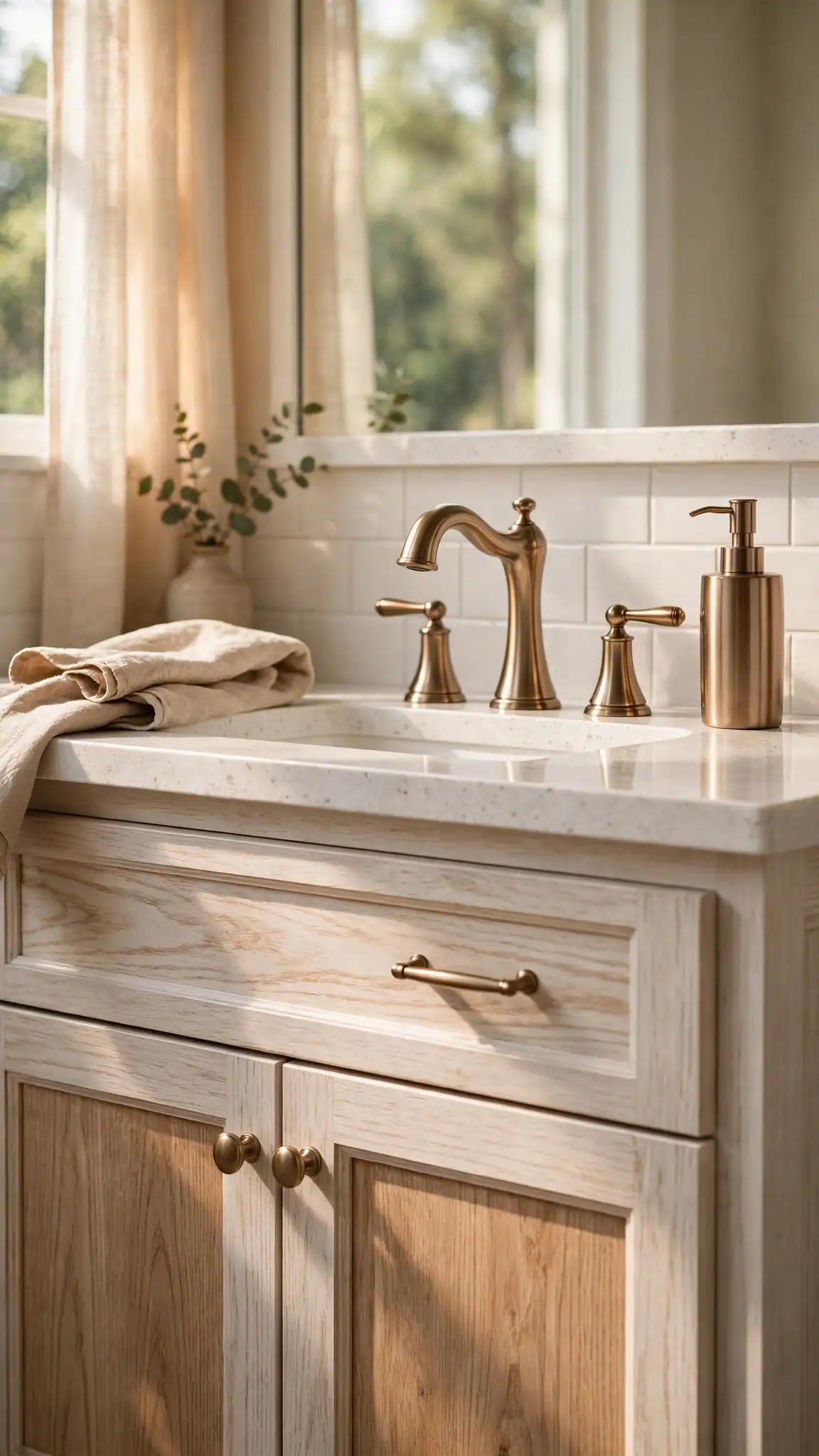
Champagne bronze faucets and pulls add a warm metallic glow that feels softer than brass and richer than chrome. Delta’s Champagne Bronze collection at Lowe’s and Home Depot runs $200 to $500 for a widespread faucet, with matching shower trim and accessories. The finish resists fingerprints and water spots better than polished nickel. It pairs beautifully with white oak vanities, marble-look tile, and warm white paint. Use it consistently on all metals in the room for a cohesive scheme. The finish also hides fingerprints well, keeping the vanity area looking polished between cleanings.
Confirm the exact finish name when mixing brands, since champagne tones vary between manufacturers. Clean with a damp microfiber cloth only, avoiding abrasive cleaners that dull the coating. A champagne bronze mirror frame ties the vanity area together. The warm metal also flatters the 2700K lighting most master baths use. It photographs warmly, which helps resale listings stand out. Unlacquered brass towel rings nearby can complement the tone without competing with it. Pro tip: order finish samples before committing, because showroom lighting can make champagne bronze look pinker than it appears at home.
20. Rain Shower With Handheld Wand
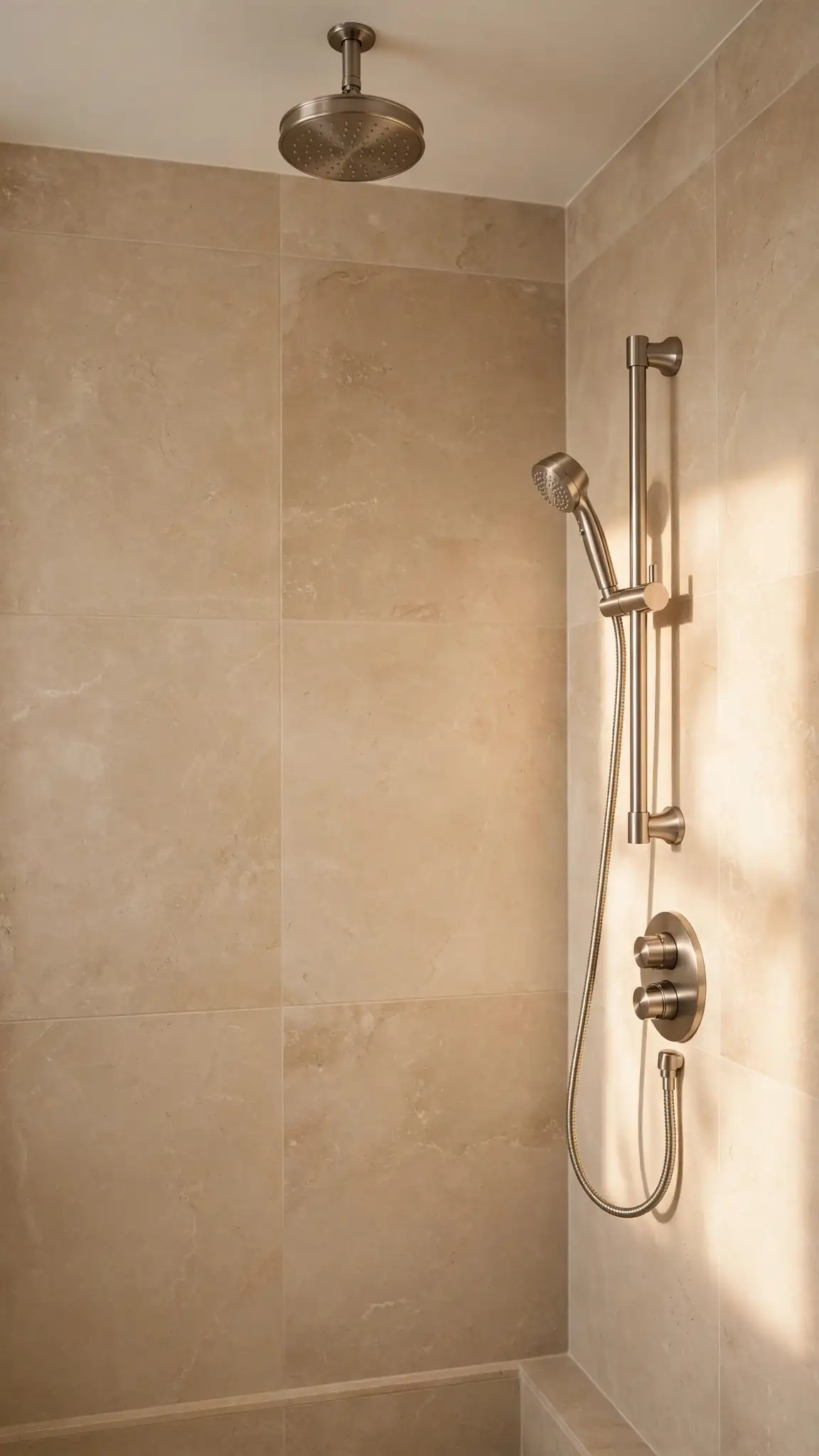
A ceiling-mounted rain head paired with a handheld wand delivers both drenching coverage and targeted rinsing. Ten-inch rain heads from Kohler or Moen cost $180 to $450 at Home Depot, with the handheld on a slide bar adding versatility. Mount the rain head at least 80 inches high so tall users stand fully under it. The handheld detaches for cleaning the shower, washing pets, or rinsing kids. A thermostatic valve keeps the temperature steady across both outlets. A 10-inch head suits standard 8-foot ceilings, while 12-inch heads need at least nine feet of height.
Ceiling-mounted arms need blocking above the drywall, so plan this before the ceiling is closed. Choose a rain head with silicone nozzles that wipe clean of limescale. Keep water pressure in mind: rain heads feel best above 2.0 gallons per minute. The wand’s hose should reach every corner of the shower for easy cleaning. Match both heads to the same finish as the valve trim. Test the spray pattern before the tile is sealed, since swapping heads later risks scratching new finishes. Pro tip: add an in-line shutoff on the handheld hose so you can pause the water while soaping up and save hot water.
21. Privacy Glass and Frosted Partitions
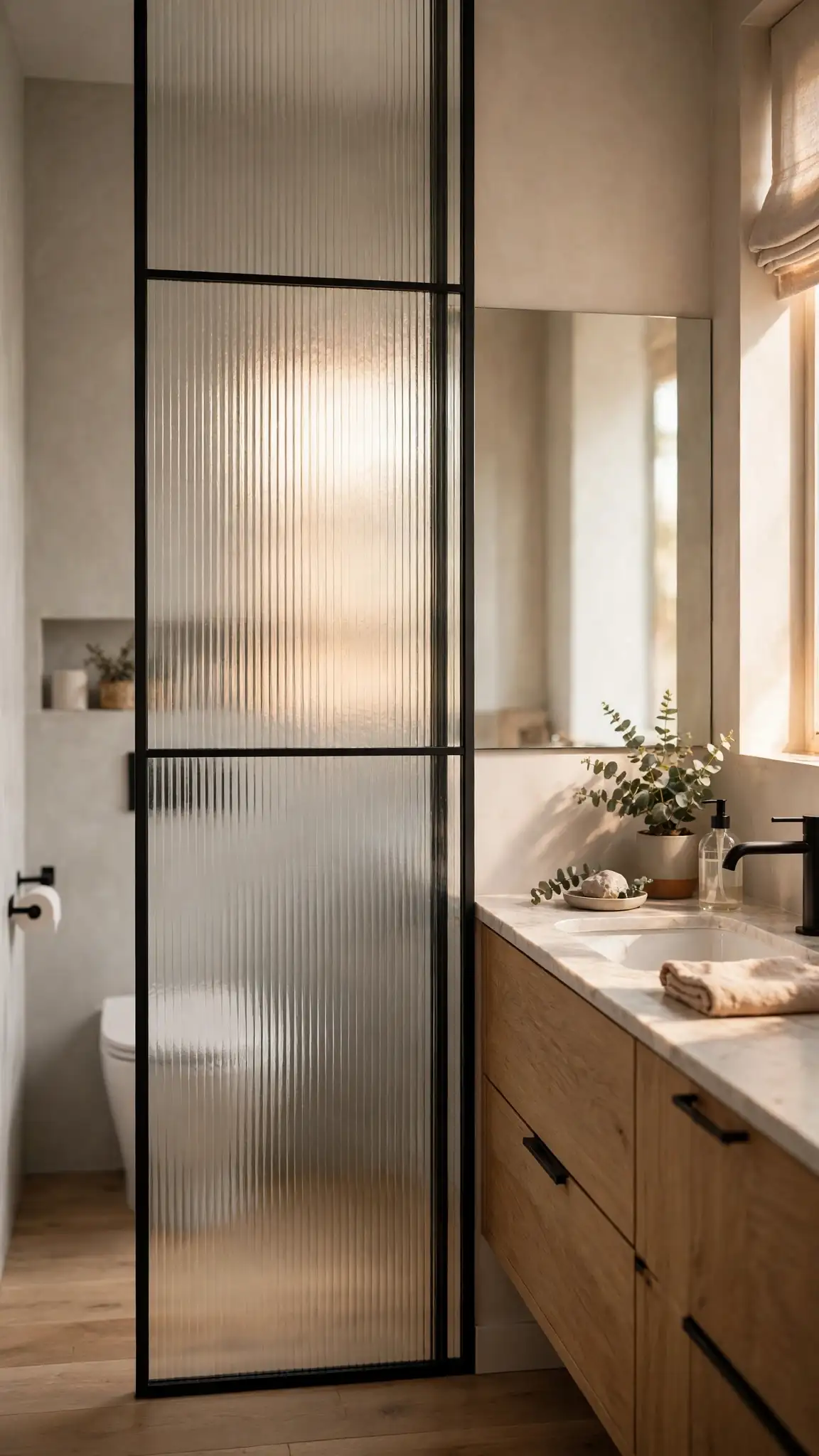
Fluted or frosted glass partitions divide the toilet or shower zone without blocking light the way a wall would. A 34-inch fluted glass panel with black framing costs $300 to $800 from Wayfair or a local glass shop. The texture obscures shapes while letting daylight travel through the room. Use it between the vanity and toilet area for modesty in shared master baths. Frameless frosted panels suit minimal spaces, while black frames add definition. Textured glass partitions are a rising master bathrooms 2026 trends detail for shared ensuite layouts. Frosted films offer a renter-friendly version for under fifty dollars.
Measure twice, since custom glass panels are cut to order and cannot be returned. Fluted glass hides water spots better than flat frosted glass. Secure tall panels with a ceiling brace or wall channel for stability. Clean with a squeegee after showers to keep the texture clear. The panels also work as splash guards beside a freestanding tub. A slim black frame echoes matte black fixtures and gives the panel a crisp, finished edge. Pro tip: hold a full-size cardboard mockup in place for a day to confirm the panel does not crowd the walkway before ordering glass.
22. Waterfall Countertop Vanity
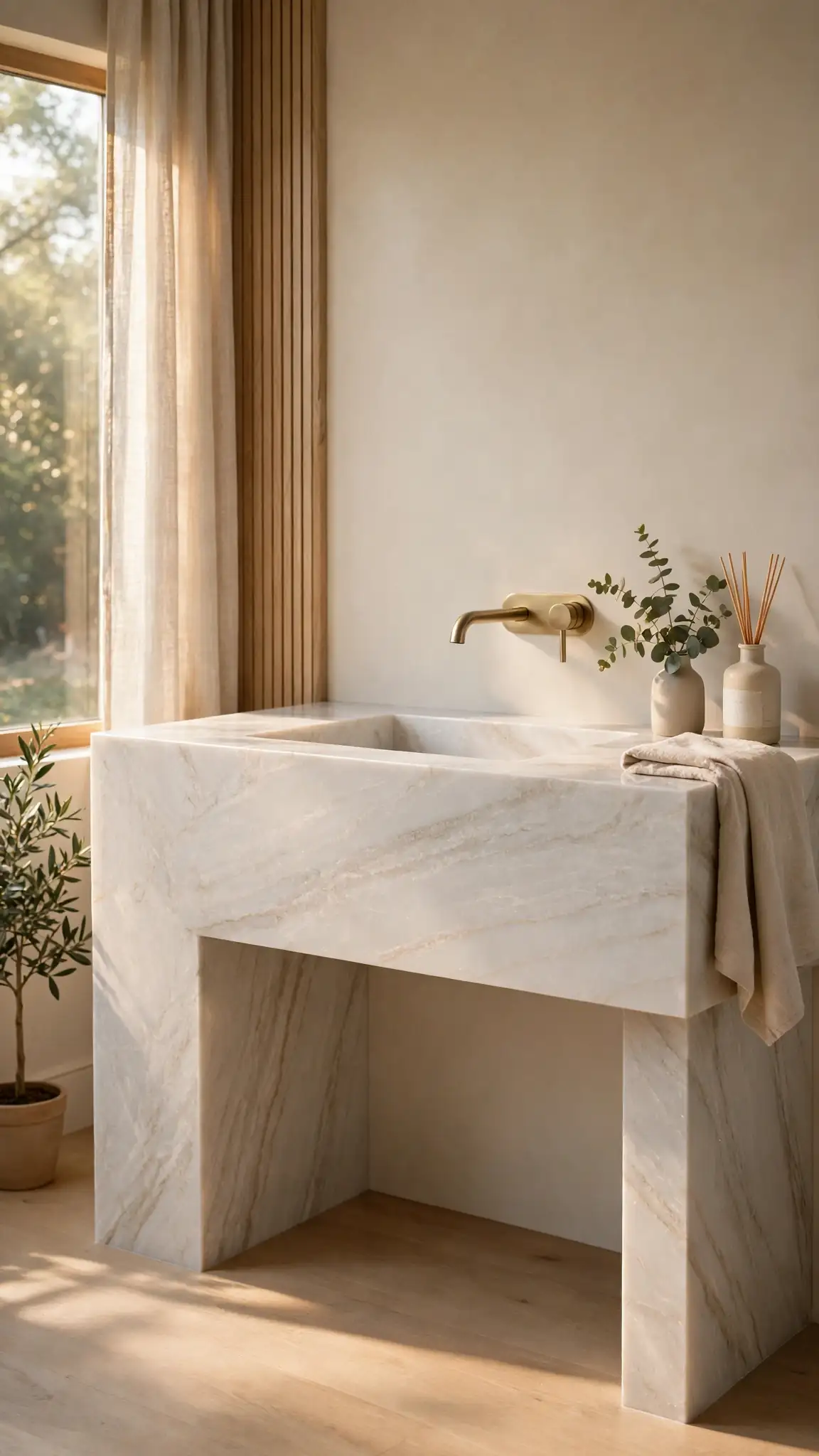
A waterfall edge lets the countertop stone flow down the vanity sides to the floor, creating one sculptural block. Quartz waterfall panels add $800 to $1,500 to a standard vanity top, with full custom pieces running $1,500 to $3,000 installed. The continuous stone hides plumbing and makes the vanity look like furniture. Choose a quartz with soft veining so the mitered corners align invisibly. This detail suits modern master baths with clean lines everywhere else. Honed quartz works best for waterfall edges, since polished corners can look overly glossy in soft light.
Confirm the fabricator can miter the waterfall joints at 45 degrees for a seamless edge. Support the overhanging stone with the cabinet carcass, since quartz is heavy. The waterfall sides wipe clean easily, with no toe-kick dust traps. Pair with a wall-mounted faucet to keep the stone top uncluttered. Match the stone on both sides from the same slab for consistent veining. Ask the fabricator to polish the mitered edges by hand for the sharpest, most furniture-like result. Pro tip: photograph the slab at the yard and approve the exact veining layout before the fabricator cuts anything.
23. Master Bathrooms 2026 Trends: Compact Spa Suites
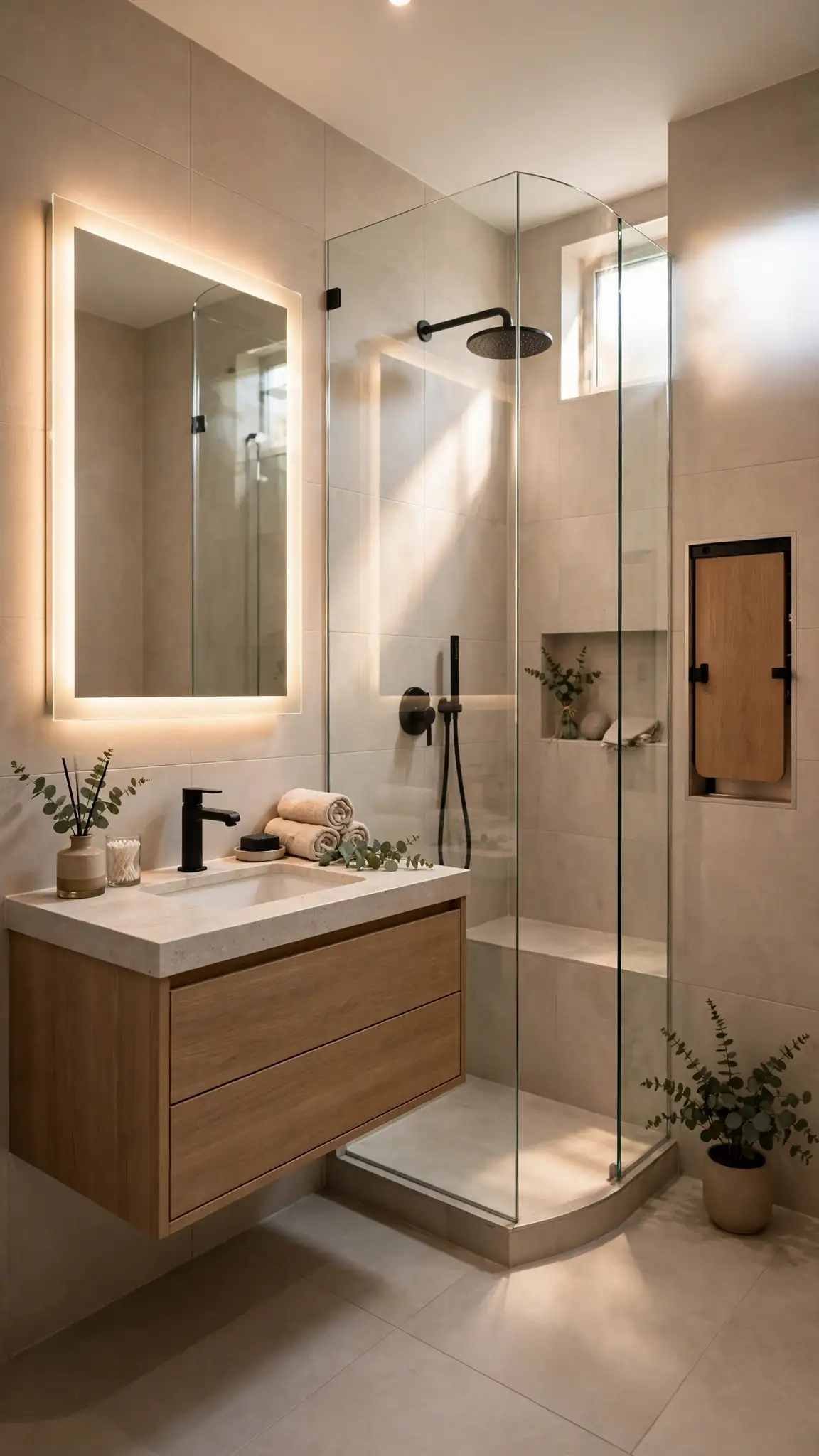
Even a 5 by 8 foot master bath can feel like a spa when every inch is planned around the 2026 trends. A 48-inch floating vanity, a curbless 36-inch shower, and a wall-hung toilet free up surprising floor space. Large-format tile and a backlit mirror visually double the room. Pocket doors reclaim the swing space a standard door wastes. The master bathrooms 2026 trends prove that smart layout beats square footage, and small suites often renovate for $8,000 to $15,000. Wall-hung toilets with in-wall tanks save nearly a foot of depth compared with standard two-piece models.
Use a single glass panel instead of a shower door to keep sightlines open. Recessed niches and medicine cabinets add storage without stealing inches. Light colors and one continuous floor material make the walls recede. A skylight or solar tube brings daylight where windows cannot fit. Keep accessories minimal: one plant, one tray, one art print. A large mirror spanning the vanity wall reflects the most light and doubles the sense of space. Pro tip: draw the layout to scale on graph paper first, because a two-inch error matters far more in a compact spa suite than in a large bath.
Final Thoughts
The master bathrooms 2026 trends all point in one direction: calm, wellness, and materials that feel good every single day. You do not need a gut renovation to join in. Swapping in a backlit mirror, adding a handheld wand beside your rain head, or styling open shelves with rolled towels can shift the whole mood of the room in a weekend. Pick the two or three ideas from this list that solve your biggest daily frustrations, whether that is storage, lighting, or cold floors, and start there. The master bathrooms 2026 trends reward thoughtful layering more than big spending, so let each change earn its place.
When you are ready for bigger moves, bring this guide to your contractor and talk through the curbless shower, heated floors, and wet room ideas first, since those decisions shape plumbing and subfloor work. Get at least three quotes, check references, and confirm lead times on tile and fixtures before demolition starts. Most master bath remodels take three to six weeks once work begins. Save your favorite images from each section, note the dimensions that fit your room, and enjoy building a space that starts and ends your day beautifully.
FAQs
Planning a master bathroom update raises plenty of practical questions, from budgets to timelines to which finishes truly last. The answers below cover the questions readers ask most about the ideas in this guide. Use them to sanity-check your plans before you order tile or book a contractor. Each answer draws on current US pricing and standard installation practices, so you can budget with confidence.
If your question is not covered here, the section guides above go deeper on dimensions, product picks, and installation tips. Bookmark this page and share it with your contractor or designer so everyone works from the same plan. A well-informed homeowner gets better quotes and fewer surprises during the remodel. The master bathrooms 2026 trends evolve quickly, so check back for updates as new products and finishes arrive each season.
What are the top master bathrooms 2026 trends?
The biggest master bathrooms 2026 trends include curbless wet room showers, floating backlit vanities, fluted stone details, heated floors, and spa-style freestanding tubs. Warm wood tones, champagne bronze fixtures, and large-format porcelain tile round out the look. Together they create calm, wellness-focused spaces that feel luxurious without clutter.
How much does a master bathroom remodel cost in 2026?
A mid-range master bathroom remodel in the US typically costs $15,000 to $30,000, while high-end projects with custom stone and smart features run $35,000 to $60,000 or more. Cosmetic refreshes like new fixtures, mirrors, and paint can land under $8,000. Always get three quotes and add a 15 percent contingency for surprises behind the walls.
How can I make a small master bathroom feel luxurious?
Use large-format tile, a floating vanity, and a backlit mirror to visually expand a small master bath. A curbless shower with a single glass panel keeps sightlines open, while recessed niches add storage without stealing space. Stick to a light, limited palette and one continuous floor material for a calm, spa-like feel.
What is the best flooring for a master bathroom?
Porcelain tile remains the best all-around master bathroom flooring because it resists water, stains, and wear. Terrazzo-look porcelain adds pattern that hides dirt, while wood-look planks bring warmth. Pair any tile with radiant floor heating for comfort, and choose a slip-resistant finish rated above 0.42 DCOF for safety.
Which fixture finishes fit the master bathrooms 2026 trends best?
Matte black, champagne bronze, and brushed brass lead the master bathrooms 2026 trends, each adding warmth against white tile and oak. Matte black gives graphic contrast, champagne bronze feels soft and rich, and brushed brass reads classic. Keep one finish consistent across faucets, hardware, and accessories for a pulled-together look.
How long does a master bathroom remodel take?
Most master bathroom remodels take three to six weeks of active construction, plus two to four weeks for design, ordering, and permits. Custom tile, stone slabs, and specialty fixtures can extend lead times. Ordering everything before demolition starts is the single best way to keep the project on schedule.


Leave a comment