

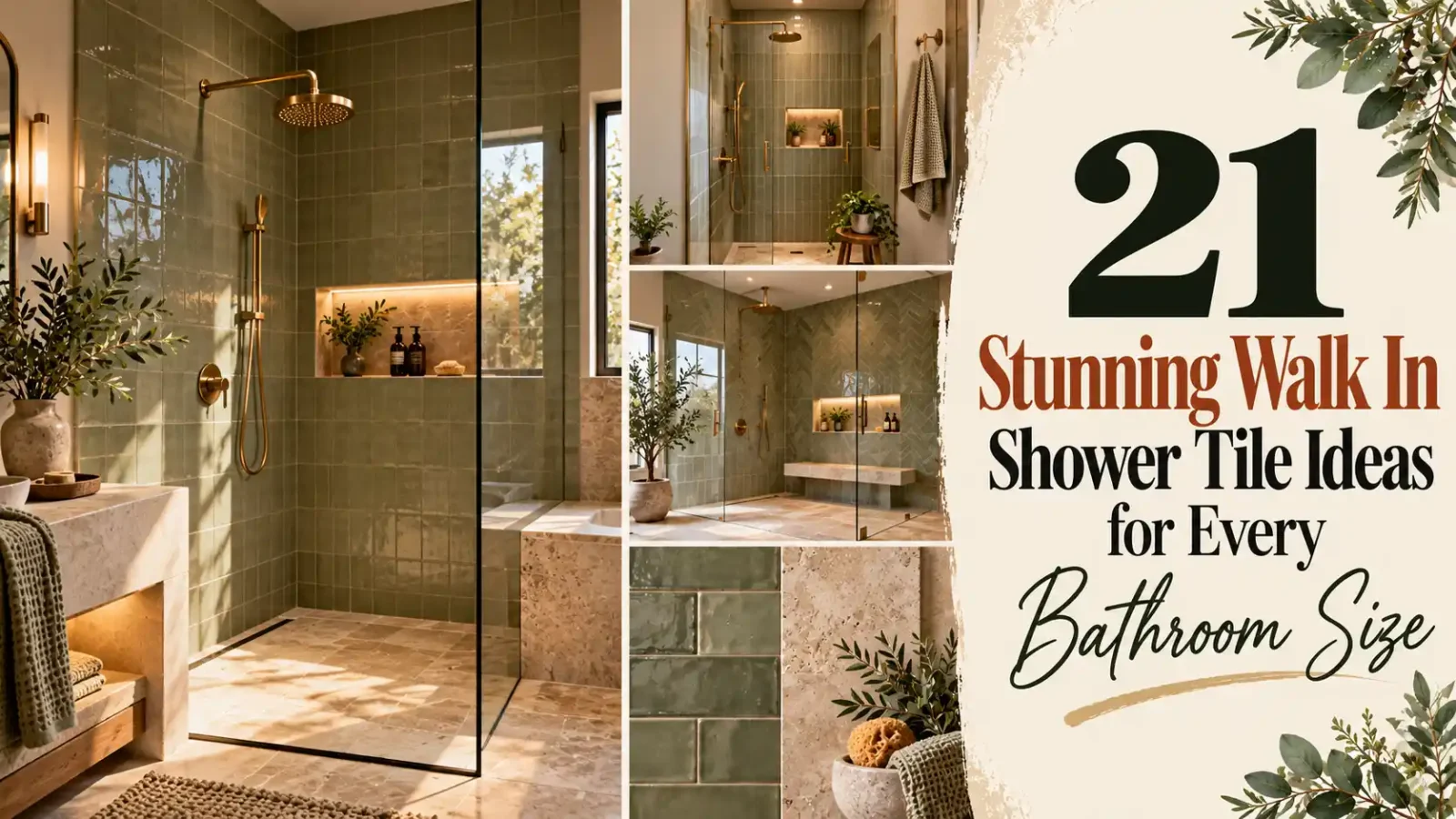
A walk-in shower is one of the best upgrades you can make to a bathroom. It feels open, modern and spa-like, and it is easier to clean and access than a tub. Tile is what gives a walk-in shower its personality, from calm and minimal to bold and graphic.
These 21 walk in shower tile ideas cover materials, patterns, colors and layouts for small and large bathrooms alike. For more bathroom inspiration, see our gray shower ideas, these tub surround ideas and our guide to bathroom paint colors ideas.
Before choosing tile, consider:
- Use slip-resistant tile, like small mosaics or textured porcelain, on the shower floor.
- Larger tiles mean fewer grout lines and easier cleaning on walls.
- Porcelain is durable and low maintenance; natural stone needs sealing.
- Plan niches and benches before tiling begins.
1. Large-Format Porcelain Slabs
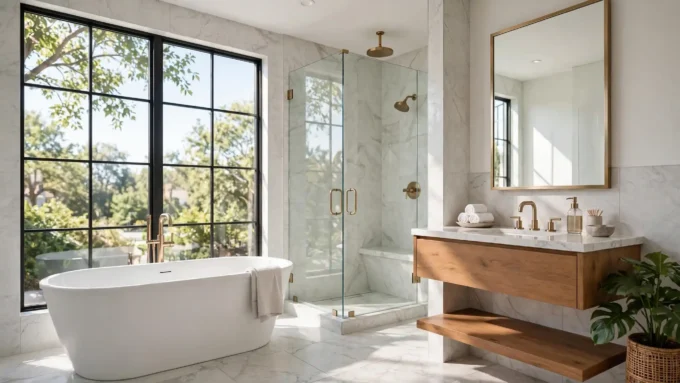
Large-format porcelain slabs give your walk-in shower the look of solid marble without the price or upkeep. These oversized tiles, often 24 by 48 inches or larger, stretch across walls with barely any grout lines, so your eye glides uninterrupted and even a modest shower feels expansive. Because fewer seams mean less grime buildup, they also clean up fast with a simple squeegee. You get the calm, high-end feel of a spa slab wall in a material that resists stains, etching, and water damage, making it one of the smartest choices for a busy household.

To get this look, shop Daltile or MSI 24-by-48-inch polished or matte porcelain slabs at Floor & Decor or Home Depot, where quality large-format tile runs $6 to $12 per square foot. Hire a pro installer experienced with big tiles, since they need perfectly flat walls, a leveling system, and careful thin-set coverage to prevent lippage. Budget $1,200 to $2,500 in labor for a standard walk-in. Use a color-matched epoxy grout for the few joints you have, and your seamless slab shower will look brand-new for years with almost no maintenance.
2. Classic White Subway Tile
Classic white subway tile is the little black dress of bathroom design — it never goes out of style. The familiar 3-by-6-inch rectangles create a clean, timeless backdrop that works in farmhouse, traditional, and modern bathrooms alike. White tile reflects light beautifully, which makes a walk-in shower feel brighter and more open, and it gives you total freedom with fixtures and hardware since every finish looks good against it. If you want a shower that will still feel fresh a decade from now, this is the safest bet. The beveled edges catch light beautifully, adding subtle dimension that keeps plain white walls from feeling flat or sterile.

Pick up Daltile or American Olean 3-by-6-inch ceramic subway tile at Home Depot or Lowe’s for just $2 to $4 per square foot. For a modern twist, install them in a vertical stack or herringbone layout instead of the classic offset pattern. Use a bright-white grout for a seamless look or dark charcoal grout for contrast that highlights the pattern. Ceramic subway tile is easy to cut and install, so a DIY-friendly shower can cost under $800 in materials, with pro installation adding roughly $1,000. Finish the look with a quartz or marble curb and a frameless glass panel to keep the classic tile feeling fresh and modern.
3. Zellige Tile for Handmade Texture
Zellige tile brings handmade texture and old-world charm that flat factory tiles simply cannot match. Each small square is crafted in Morocco with slight variations in color and glaze, so your shower wall shimmers with depth as light moves across it. The hand-cut, slightly uneven edges create a relaxed, artisanal feel that elevates both boho and Mediterranean bathrooms. You get a surface that looks custom and one-of-a-kind, since no two pieces are exactly alike, turning an ordinary walk-in into a statement. The variation means you should blend tiles from several boxes during installation so the color shifts distribute evenly across your shower walls.
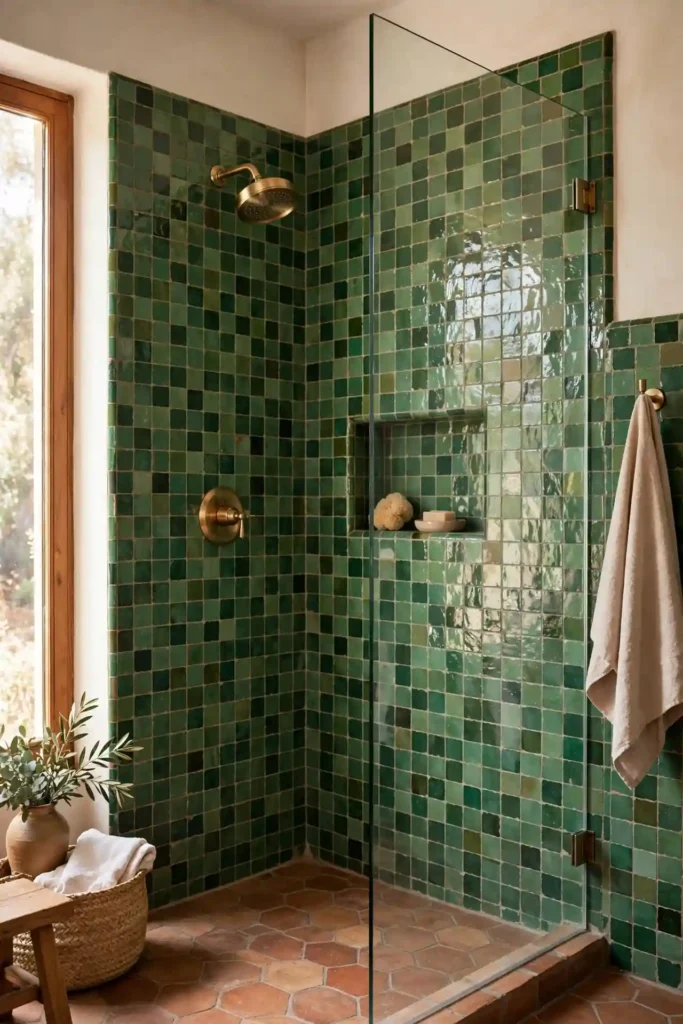
Order handmade zellige squares, typically 4-by-4 inches, from TileBar or Clé Tile, where authentic options run $20 to $35 per square foot; budget-friendly lookalikes from Floor & Decor cost about $6 to $9. Pair the glossy squares with a neutral grout to let the glaze shine. Because zellige pieces vary in thickness, hire an installer comfortable with handmade tile and plan for a thicker mortar bed. Seal lighter colors once a year to protect against hard-water stains, and your shower keeps its artisan glow. Budget for a full waterproofing membrane behind the tile, since authentic zellige is more porous than glazed porcelain alternatives.
4. Herringbone Floor Tile
Herringbone floor tile adds instant movement and energy to a walk-in shower through its signature zigzag pattern. The angled rectangles pull your eye along the floor, making even a narrow shower feel longer and more dynamic. This layout works beautifully with wood-look planks or marble-effect rectangles, giving you a designer floor without the designer price. The pattern also hides water spots and wear better than plain layouts, so your shower floor looks cleaner between cleanings. The zigzag layout also pairs beautifully with a linear drain, which keeps the pattern flowing cleanly across the floor without awkward cuts around a center drain.
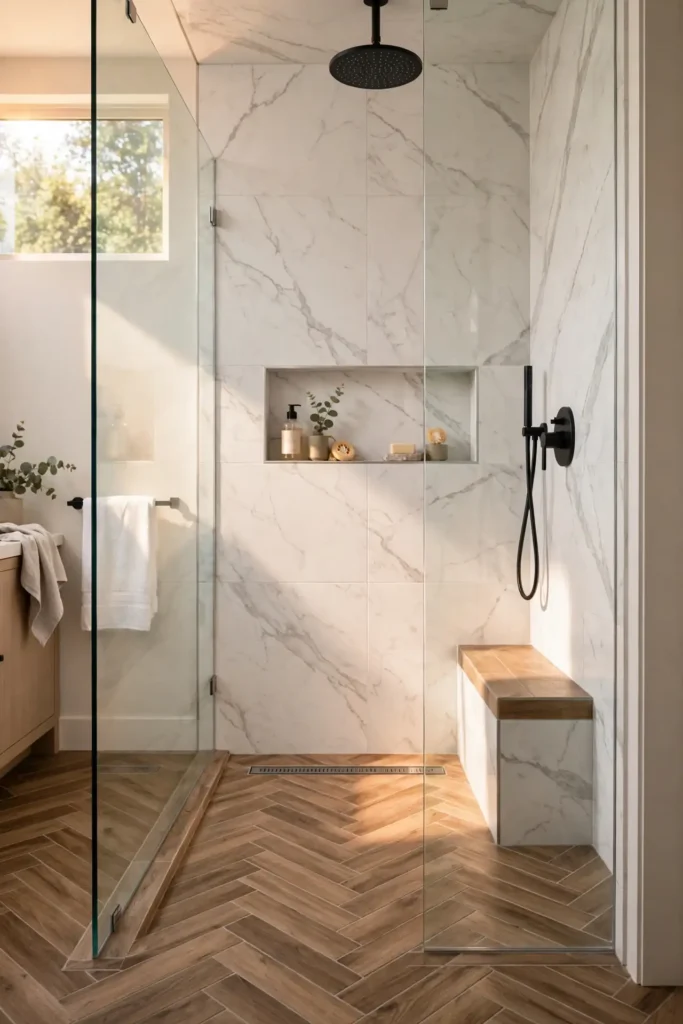
Use 3-by-12-inch or 4-by-16-inch porcelain planks from MSI or Daltile, available at Floor & Decor for $4 to $8 per square foot. A herringbone layout takes 15 to 20 percent more tile than straight runs, so order an extra box. Keep the DCOF slip-resistance rating at 0.42 or higher for a safe shower floor, and choose a grout color close to the tile so the joints blend in. Expect professional installation to run $1,500 to $2,800 since herringbone demands precise cuts at the edges. Plan the layout from the center outward so the pattern stays symmetrical, and dry-fit a few rows before committing to thin-set.
5. Penny Tile Floors
Penny tile floors deliver vintage charm with a mosaic of tiny round tiles that feel great underfoot. These one-inch circles, mounted on mesh sheets, conform perfectly to sloped shower floors and around drains where larger tiles struggle. The many grout joints create natural grip, so penny tile is one of the safest choices for a walk-in shower floor. White or soft-gray penny rounds give a classic bungalow feel, while black or patterned mixes add retro drama without much cost. Because the sheets flex, penny tile wraps curbs, benches, and curved walls easily, making it a favorite for custom-shaped walk-in showers.
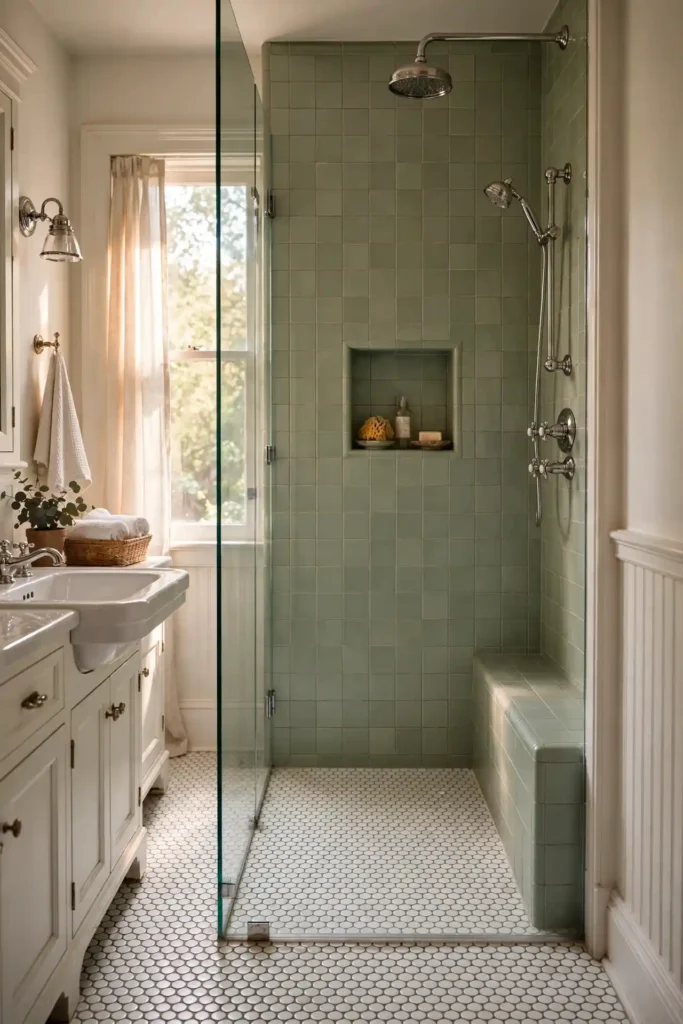
Find Daltile or American Olean penny round mosaics at Home Depot or Lowe’s for $6 to $10 per square foot. Look for a DCOF rating of 0.42 or higher and choose darker grout if you want to hide discoloration over time. Installation is straightforward since the mesh sheets speed up setting, though cutting sheets around the drain takes patience. Use an epoxy or urethane grout for stain resistance, and reseal standard cement grout annually so your penny floor stays bright. Run a bead of color-matched silicone where the floor meets the walls instead of grout, since that joint flexes with seasonal movement.
6. Vertical Stacked Tile
Vertical stacked tile draws the eye upward and makes your shower feel taller than it really is. Instead of the usual staggered offset, the tiles line up in straight vertical columns, creating a crisp grid that suits modern and minimalist bathrooms. The clean lines emphasize height rather than width, which flatters compact walk-ins especially well. You can achieve the look with subway tile, small squares, or elongated planks, so it adapts to almost any material and budget. The straight columns also make small format tiles feel more architectural, turning an affordable material into a deliberate design statement, even on a modest budget.
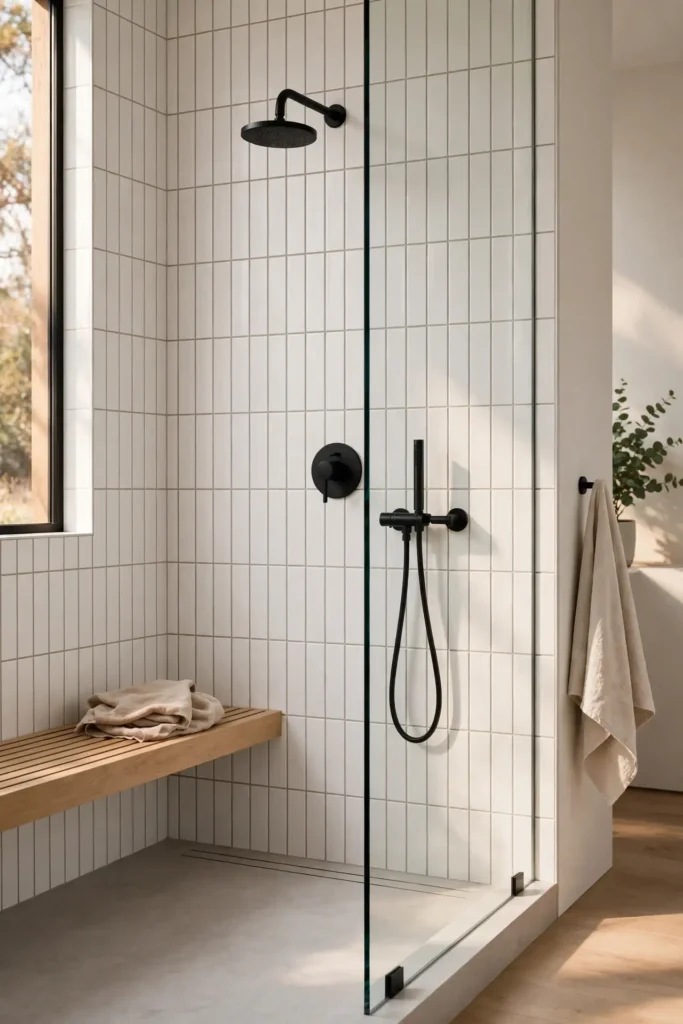
Buy Daltile or MSI 4-by-16-inch or 3-by-12-inch tiles at Floor & Decor for $4 to $9 per square foot. Because stacked layouts expose every alignment flaw, your walls must be flat and the installer should use tile spacers and a laser level for precision. Keep grout lines tight at 1/16 inch with rectified tile for the sleekest result. Match the grout color to the tile for a monolithic look, or pick a contrasting grout to turn the grid itself into the design feature. Start your first column at the most visible corner and work outward, so any cut tiles land in the least noticeable spot.
7. Green Tile for Nature-Inspired Showers
Green tile wraps your shower in a nature-inspired palette that feels calm, fresh, and quietly luxurious. From soft sage to deep emerald, green shades echo eucalyptus leaves and forest light, turning your morning routine into a retreat. Green also pairs beautifully with brass fixtures, warm wood vanities, and creamy walls, so it anchors a cohesive spa-like design. Because it is colorful yet grounded, green reads as sophisticated rather than trendy, and it hides water spots far better than white tile. Deeper emerald tones create a jewel-box effect in windowless bathrooms, while pale sage keeps bright, airy spaces feeling calm and connected to nature.
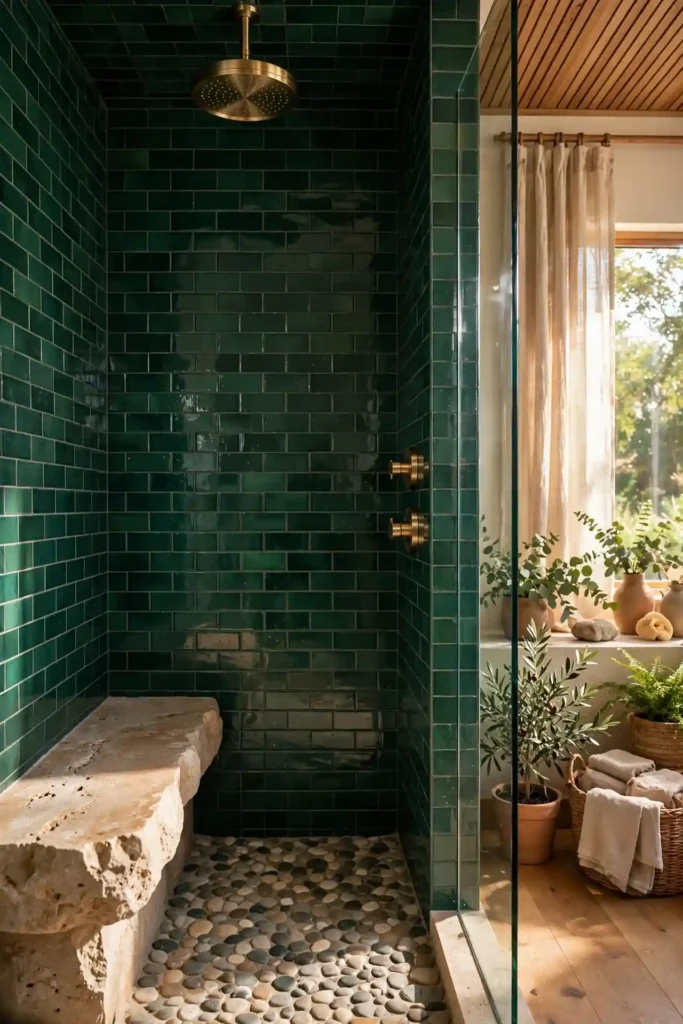
Shop emerald or sage zellige from TileBar or Clé Tile at $15 to $35 per square foot, or grab Daltile and American Olean green subway tile at Home Depot for $3 to $7. For the floor, pick a coordinating green penny or hexagon mosaic with a DCOF of 0.42 or higher. Warm-white or light-gray grout softens the look, while dark grout adds drama. Seal glossy green tile with a penetrating sealer to guard against hard-water marks in areas with mineral-heavy tap water. If you love the look but fear commitment, try green tile on one accent wall first and keep the remaining walls in warm white.
8. Black Tile for Drama
Black tile brings undeniable drama to a walk-in shower, creating a moody, hotel-suite atmosphere that feels bold and sophisticated. Matte black walls absorb light for a cocooning effect, while glossy black reflects it for sleek dimension. The dark surface makes brass or chrome fixtures pop and turns even basic white vanities nearby into a deliberate contrast. If your bathroom already gets decent natural light, black tile delivers maximum impact with surprisingly little effort. Black tile also hides soap scum better than white between cleanings, though hard-water spots show more, so a daily squeegee keeps the drama looking intentional rather than dingy.
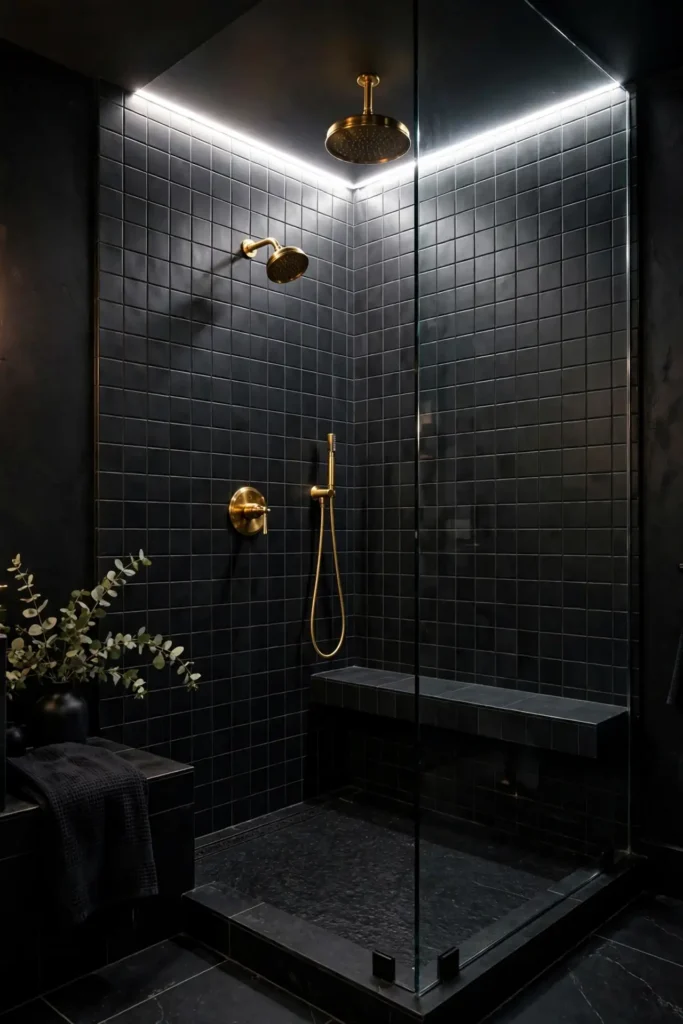
Find matte or glossy black porcelain from Daltile or MSI at Floor & Decor for $4 to $10 per square foot. Use black or charcoal grout so joints disappear, and add a niche or shelf in a contrasting stone to break up the darkness. Pair with bright LED shower lighting at 3000K to keep the space readable. Note that hard water shows on black, so install a water softener or wipe walls with a squeegee after each shower. Pro installation typically runs $1,200 to $2,200. A matte black showerhead and fixtures complete the monochrome look, while mixed metals like brass add warmth and contrast.
9. Hexagon Tile
Hexagon tile gives your walk-in shower a playful geometric pattern that works from vintage to ultra-modern. The six-sided honeycomb shape adds visual texture even in a single color, and the grid of joints naturally improves slip resistance on shower floors. Small one-to-two-inch hexagons suit classic black-and-white designs, while oversized six-inch hexes read contemporary on walls. It is one of the few tile shapes that can be the star of the room without overwhelming it. Mixing two tones of hexagons in a random or ombre pattern adds even more personality, letting you customize the floor without hiring an artist for a truly custom result.
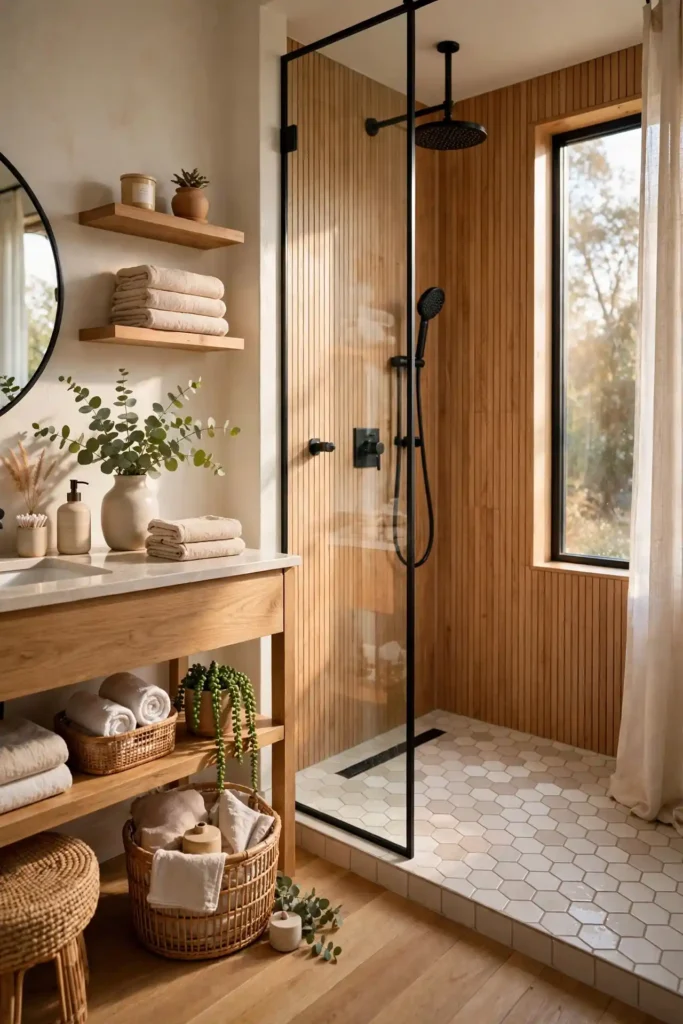
Shop one-inch hexagon mosaics from Daltile at Home Depot or Lowe’s for $6 to $10 per square foot, or large-format hexagon porcelain at Floor & Decor for $5 to $9. For floors, confirm a DCOF rating of 0.42 or higher, and consider a darker grout to define the honeycomb pattern. Order 10 to 15 percent extra since cutting hexagons at edges creates waste. A skilled installer charges about $1,500 to $2,500 for a hexagon shower floor, and the result feels custom every time. Use a grout release on textured hexagons before grouting to make cleanup easier and protect the tile faces.
10. Fish Scale Tile
Fish scale tile, also called mermaid or scallop tile, brings whimsical ocean-inspired texture to your walk-in shower. The overlapping curved shapes catch light in waves, creating a shimmering, dimensional wall that feels playful yet refined. In pearlescent blues and greens it channels a coastal retreat, while matte white or black scales keep the look grown-up and sculptural. Few tiles deliver this much visual interest with a single material, so it is perfect for homeowners who want their shower to be a conversation piece. The scalloped profile also softens the hard lines of glass enclosures and square niches, balancing modern bathrooms with organic curves.
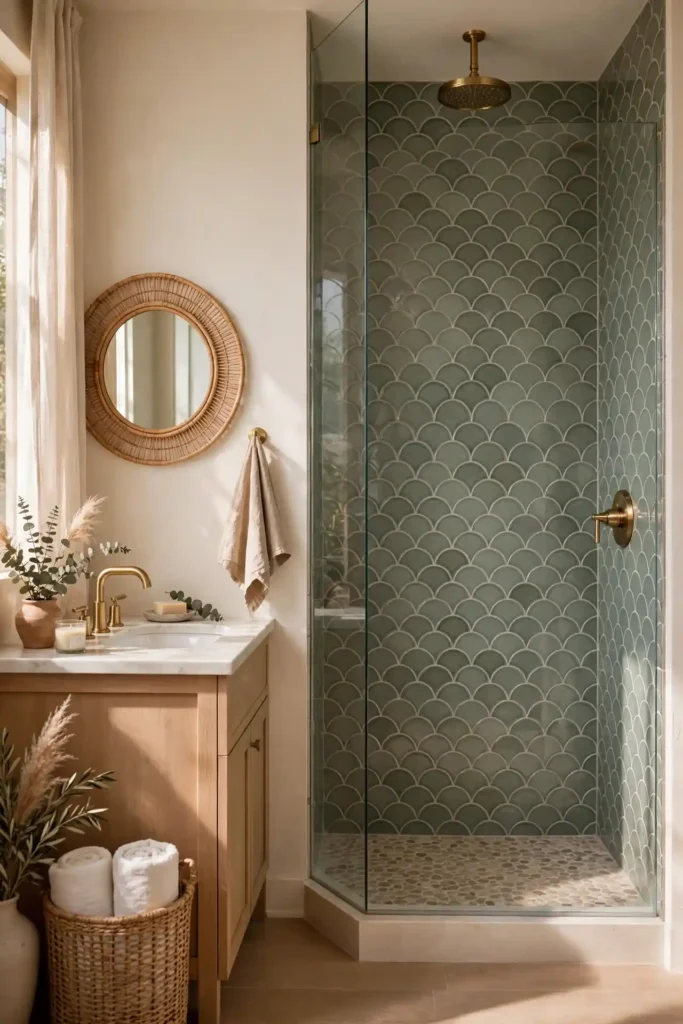
Source scallop mosaics from TileBar, Mercury Mosaics, or Floor & Decor, where porcelain versions run $12 to $25 per square foot. The curved edges demand a patient installer and careful layout planning, so get a quote for $1,800 to $3,000 in labor. Use a grout color that matches the tile body so the scallop pattern, not the joints, takes center stage. Add one strong waterproofing membrane behind any mosaic wall, and keep your scale tile as an accent wall paired with simpler tile elsewhere to control costs. Keep the remaining shower walls in a large-format neutral tile so the scallops stay the star without overwhelming the space.
11. Terrazzo-Look Tile
Terrazzo-look tile delivers the speckled, confetti-like charm of classic Italian terrazzo without the pour-in-place cost. Tiny chips of marble, quartz, and glass suspended in the tile give your shower a lively, terrazzo tile surface that hides water spots and everyday wear beautifully. It bridges traditional and contemporary styles effortlessly, pairing with warm wood, brass, or crisp white fixtures. Because the pattern is busy in the best way, it also makes small showers feel curated rather than cramped. The multicolor chips camouflage everything from hard-water spots to hair dye drips, which makes terrazzo one of the most forgiving shower surfaces you can choose.
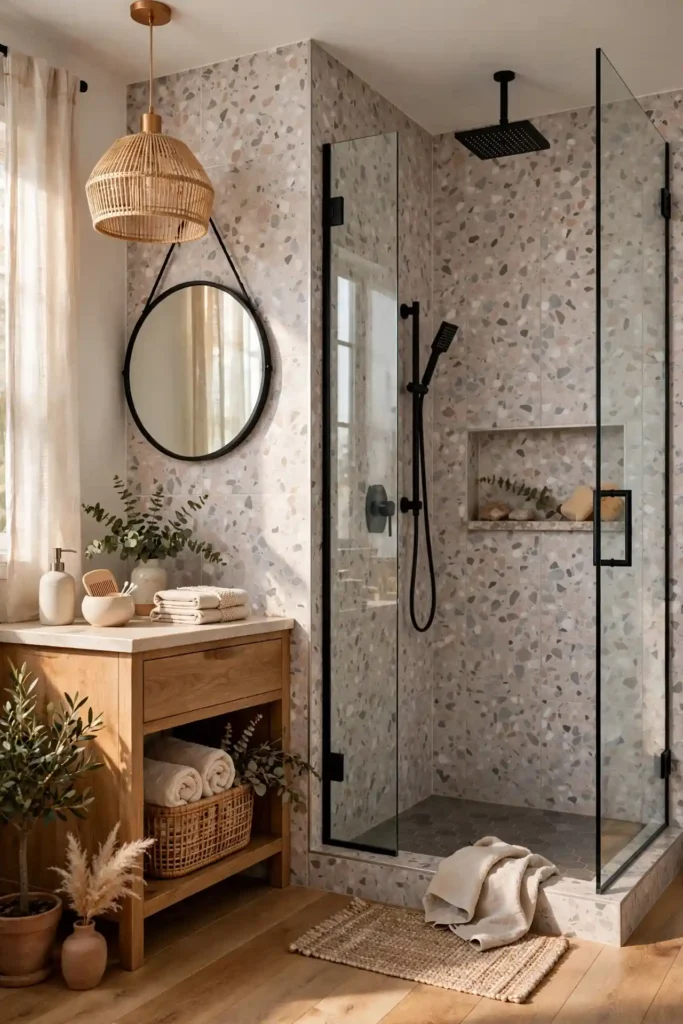
Find terrazzo-look porcelain at Floor & Decor or TileBar for $5 to $11 per square foot in sizes from 24-by-24-inch slabs to smaller formats. Choose a base tone that matches your bathroom palette — warm beige for cozy spaces, cool gray for modern ones. Use it on walls with a simpler hexagon or penny mosaic on the floor for grip, checking the floor tile’s DCOF of 0.42 or higher. Pro installation runs $1,200 to $2,200, and epoxy grout keeps the speckled pattern maintenance-free. Larger terrazzo slabs with bigger aggregate chips read more modern, while small-chip patterns lean classic and work in traditional bathrooms.
12. Wood-Look Porcelain
Wood-look porcelain gives you the warmth of timber in a material built for constant water exposure. High-definition printing captures grain, knots, and plank variation so convincingly that most guests will never guess it is tile. Unlike real wood, it will not warp, swell, or need refinishing in a steamy walk-in shower. The long plank format also stretches your shower visually, and the warm tones balance cool fixtures like chrome and glass beautifully. The warm tones pair especially well with black fixtures and frameless glass, creating a modern-rustic balance that feels both cozy and current in American bathrooms year after year.
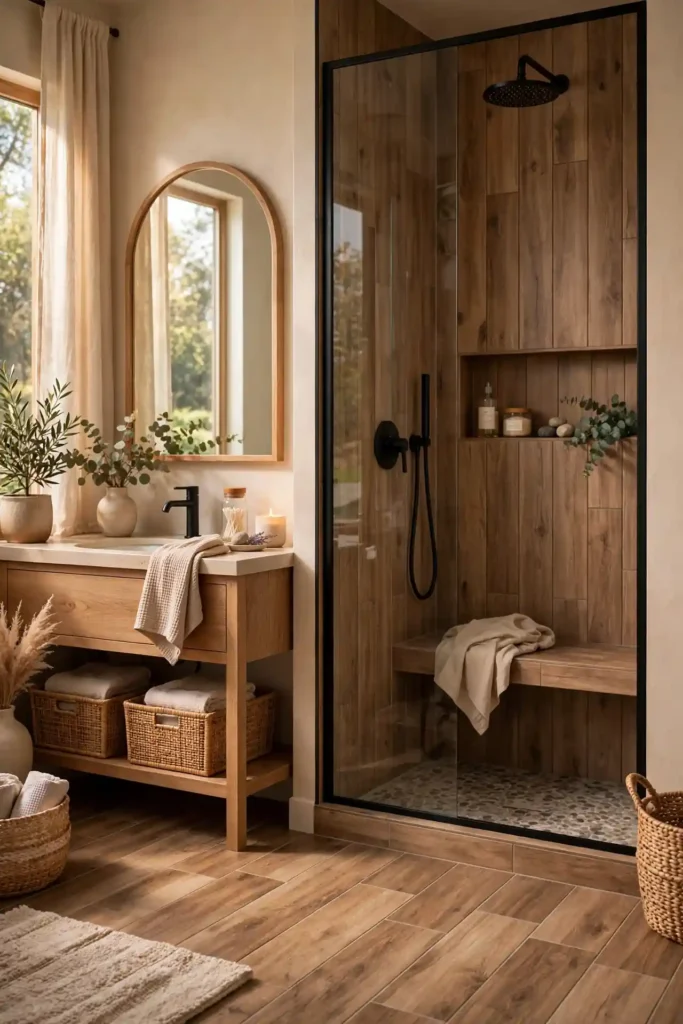
Shop 6-by-36-inch or 8-by-48-inch wood-look planks from Daltile, MSI, or Marazzi at Floor & Decor and Lowe’s for $3 to $8 per square foot. Choose a matte finish with a DCOF rating of 0.42 or higher for safe footing. Install planks in a straight or herringbone layout with grout lines in a matching warm tone to mimic real boards. Pair with a curbless drain and a rain showerhead to complete the spa-cabin feel, and budget $1,500 to $2,500 for professional installation. Choose planks with high shade variation, labeled V3 or V4, so the floor reads like real wood instead of repeating the same printed board.
13. Natural Stone Walls
Natural stone walls bring organic luxury and one-of-a-kind variation that manufactured tile cannot replicate. Slate, travertine, and marble each carry veining and color shifts formed over millennia, so your shower becomes a genuinely unique installation. Stone also feels warm and substantial to the touch, grounding a bathroom in a way that elevates the whole space. With proper sealing, it stands up to daily showers while developing a rich patina that adds character rather than wear. Honed finishes feel softer underfoot and show fewer water spots than polished stone, making them the practical choice for busy family showers in daily use.
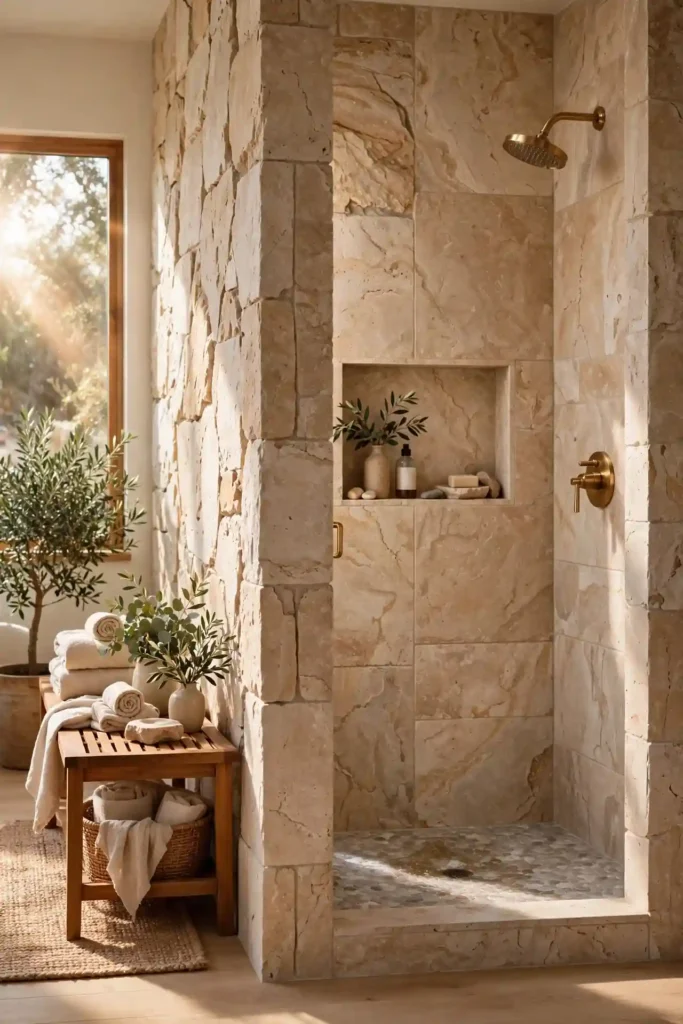
Source honed travertine or slate from Floor & Decor or a local stone yard at $8 to $18 per square foot; Carrara-look marble tile runs $10 to $20. Seal natural stone before grouting and reseal every 12 to 18 months with a penetrating sealer to prevent staining. Use pH-neutral cleaners only, since acidic products etch stone surfaces. Hire a stone-experienced installer and budget $1,800 to $3,000 for labor. The result is a shower wall with geological depth that porcelain imitations only hint at. Keep a stone-safe cleaner under the sink and skip the vinegar, since even diluted acids dull natural stone over time.
14. Two-Tone Tile
Two-tone tile design lets you play with contrast without committing to bold patterns everywhere. Pairing two colors — crisp white with charcoal, sage with cream, or navy with sand — creates a custom, designer look that feels intentional rather than busy. The two-tone approach also helps zone your shower: one tone inside the wet area, another on the surrounding walls. You get a layered, high-end result using affordable standard tiles in smart combinations. The contrast also lets you highlight architectural features, like wrapping a bench or niche in the bolder color while the main walls stay quiet and calm.
Mix Daltile or American Olean field tiles from Home Depot at $2 to $6 per square foot per color. A popular scheme runs white subway tile on three walls with a deep green or navy tile on the shower accent wall. Keep the two tiles the same size and finish so grout lines align cleanly. Map your layout on paper first to avoid awkward cut tiles at corners. Pro installation adds $1,200 to $2,000, and using one color-matched grout keeps the palette crisp and cohesive. Carry one of the two colors into the bathroom floor or vanity backsplash to tie the shower design into the rest of the room.
15. Tile Accent Wall
A tile accent wall turns one shower surface into the focal point while keeping the rest of the bathroom calm. Concentrating bold tile — handmade zellige, encaustic-look cement, or a dramatic stone — on a single wall delivers maximum style for a fraction of a full-shower price. It also lets you experiment with a pattern or color you might find overwhelming across an entire room. The contrast draws the eye the moment you enter, giving your walk-in a designed, magazine-worthy feel. Because the eye lands there first, even a modestly priced patterned tile reads as a luxury upgrade when it owns the focal wall.
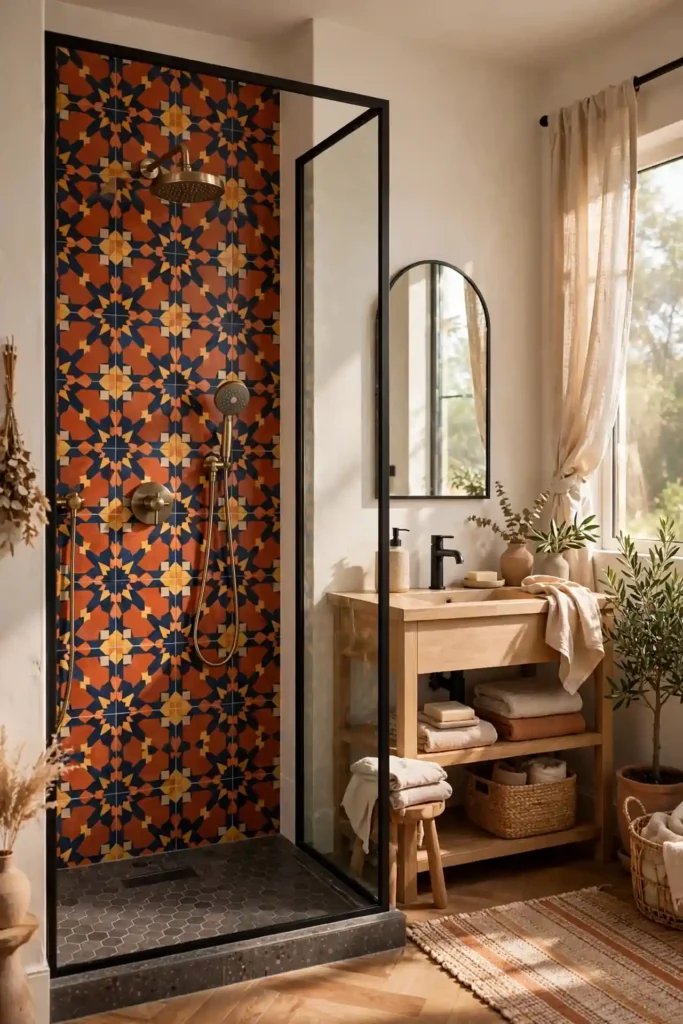
Choose your statement tile from TileBar or Floor & Decor, budgeting $12 to $30 per square foot for the accent wall only, and use simple $2-to-$5 white or gray field tile everywhere else. The shower’s back wall is the natural spotlight since you face it when entering. Frame the accent with schluter metal trim for crisp edges, and keep grout understated so the tile pattern leads. An accent wall typically needs just 30 to 50 square feet of premium tile, cutting your total material cost dramatically. Add a dimmable shower light aimed at the accent wall to make the texture and color pop, especially with handmade or metallic tiles.
16. Tiled Shower Niche
A tiled shower niche turns necessary storage into a design moment within your walk-in shower. Recessed between the studs, the niche holds shampoo and soap without protruding shelves that collect grime. Tiling it in a contrasting mosaic, bold color, or matching slab creates a jewel-box effect that draws the eye. Done well, a tiled niche looks like it was always part of the architecture, adding both function and a custom detail buyers remember. Position the niche at chest height and out of the direct spray line, so bottles stay reachable but the shelf does not become a waterfall during every shower.
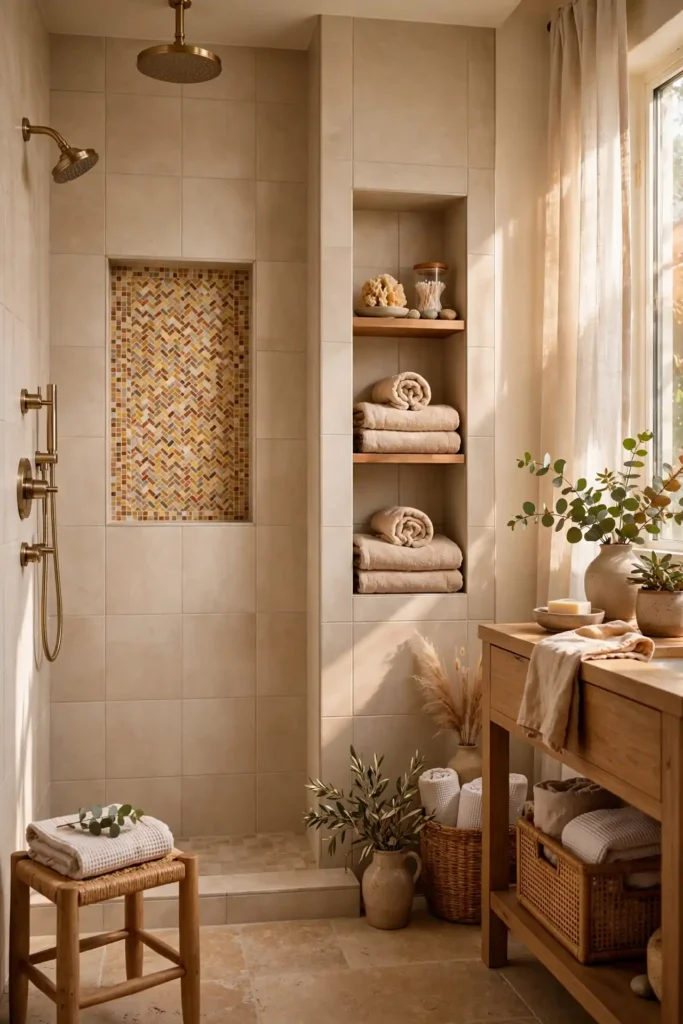
Plan niche placement during framing, since standard niches fit between 16-inch-on-center studs. Waterproof the niche with the same membrane as the shower, sloping the bottom shelf slightly toward the drain so water runs off. Accent the niche interior with a $15-to-$25-per-square-foot mosaic from TileBar, using the main wall tile on the surround. Installers typically charge $150 to $400 to tile a niche. Choose quartz or stone for the niche shelf for a clean edge that never needs caulking. For extra polish, ask your installer to miter the niche edges so the tile wraps cleanly around the opening with no visible cut faces.
17. Pebble Floor Tile
Pebble floor tile gives your walk-in shower the feel of a riverbed spa underfoot. Sliced natural pebbles, mounted on mesh sheets, create a gently textured surface that massages your feet and provides excellent natural traction. The irregular shapes and earthy color variation add organic warmth that balances sleek glass enclosures and modern fixtures. It is a favorite for nature-inspired and Zen-style bathrooms because no manufactured pattern matches its authenticity. The natural color variation, from warm tans to cool grays, blends with almost any wall tile, so you can update the shower surround later without replacing the floor down the road.
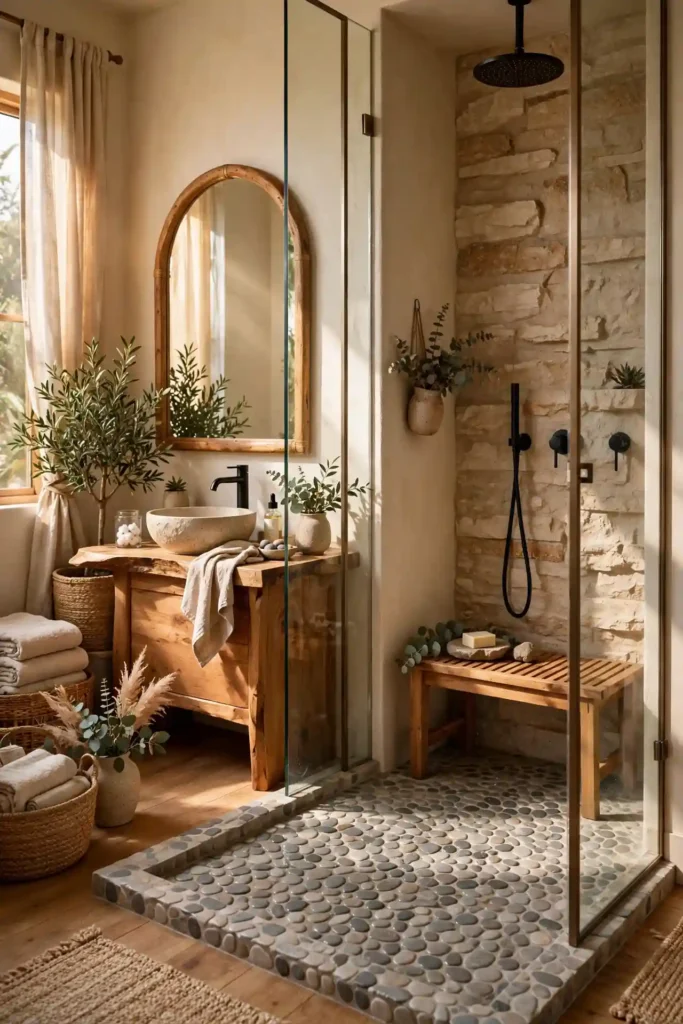
Buy sliced pebble mosaics from MSI or Jeffrey Court at Home Depot and Floor & Decor for $7 to $13 per square foot. Sliced pebbles sit flatter than tumbled ones, making grouting easier and footing more comfortable. Check the DCOF rating is 0.42 or higher, and choose sand-colored grout to blend with the stones. Seal the pebbles and grout after installation to resist staining, and reseal yearly. Plan for $1,500 to $2,500 in labor since setting pebbles neatly takes skill. Grout the pebbles with a grout bag rather than floating, which pushes grout deep around the stones without smearing their tops.
18. Glass Mosaic Tile
Glass mosaic tile adds luminous color and light-play that ceramic tile cannot duplicate. The translucent glass pieces catch and reflect light, making small or windowless showers feel brighter and more spacious. Available in every hue from sea glass blue to warm amber, glass mosaics create anything from subtle shimmer to bold color-blocked statements. They also resist staining and mildew better than porous materials, which simplifies shower maintenance over time. Iridescent and frosted finishes scatter light softly, which flatters skin tones and makes the whole bathroom feel more flattering and spa-like during your morning routine.
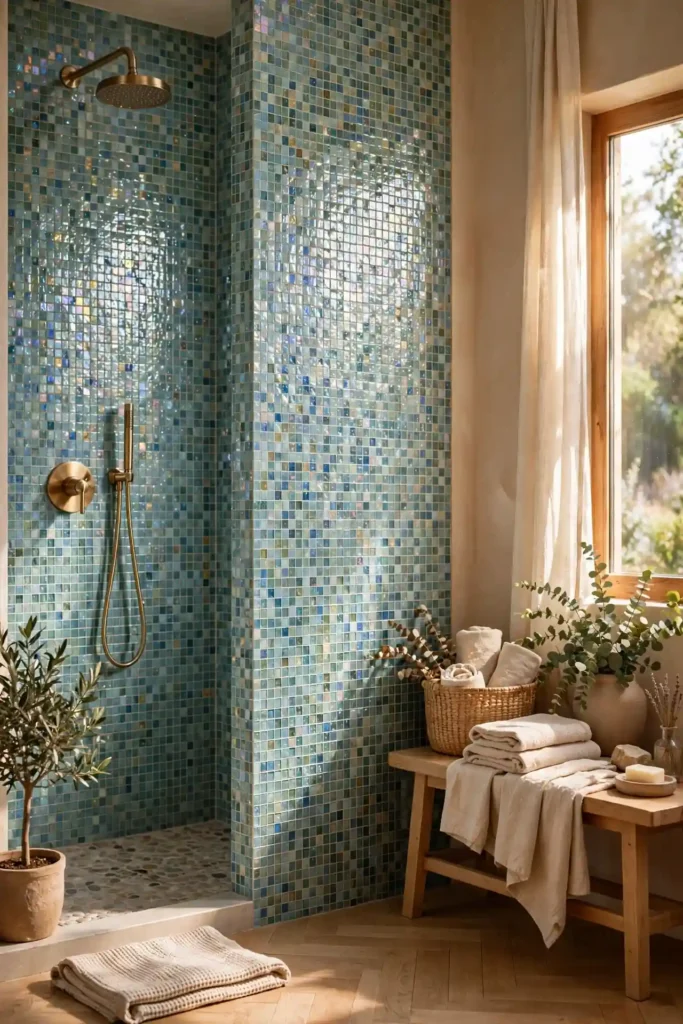
Shop glass mosaics from Daltile, American Olean, or TileBar at $12 to $28 per square foot. Use white thin-set mortar behind glass tile so the adhesive does not darken the colors, and choose a matching light grout for the brightest effect. Because glass can be slippery, reserve it for walls and niches rather than the shower floor unless it is rated for floor use. Pro installation runs $1,800 to $3,200 since precise cutting and setting take time. The finished wall glows with a depth that flat tile cannot touch. Wipe glass tile with a microfiber cloth after steamy showers to prevent mineral haze from dulling the reflective finish.
19. Curbless Walk-In Shower Tile
Curbless walk-in shower tile creates a seamless transition from bathroom floor to shower with no threshold to step over. The continuous floor plane makes the entire bathroom feel larger and delivers the accessible, age-in-place design that buyers increasingly want. Without a curb, your tile flows from dry area to wet area in one unbroken surface, which reads as sleek and modern. It also eliminates the curb’s grime-collecting corners, so cleaning gets noticeably easier. Wheelchair users and aging homeowners especially appreciate the zero-entry design, which removes the most common trip hazard in the bathroom entirely for good.
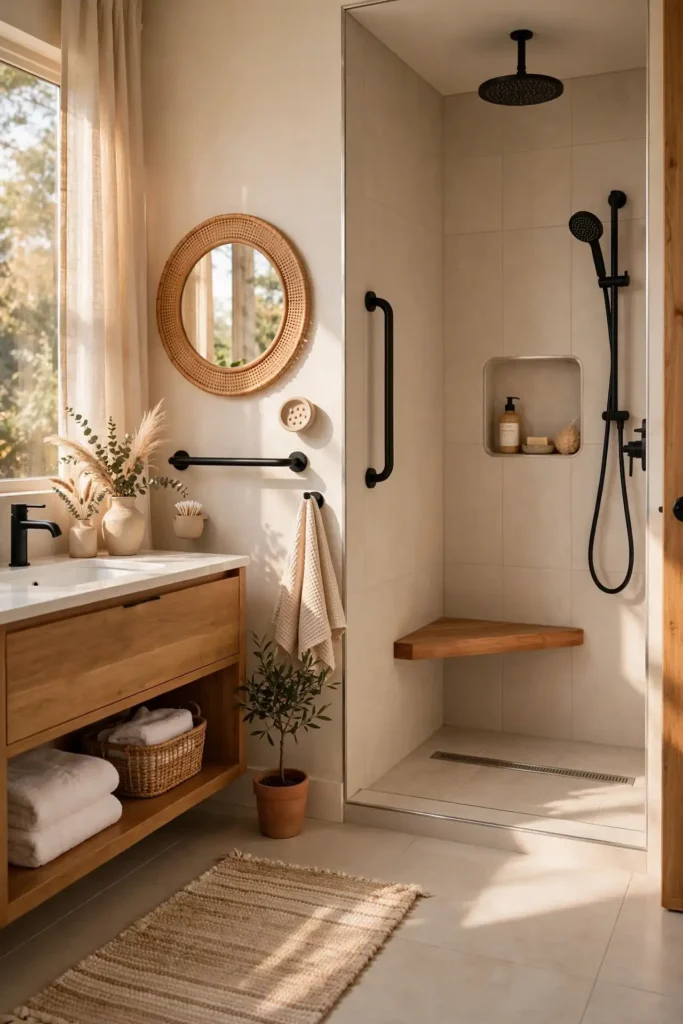
Achieving a curbless shower requires recessing the shower floor for proper drainage slope — typically one-quarter inch per foot toward a linear drain. Use the same porcelain tile throughout, from Daltile or MSI at $4 to $9 per square foot, keeping the DCOF rating at 0.42 or higher since the whole floor gets wet. A linear drain along one wall simplifies the slope and looks clean. Budget $3,000 to $6,000 for the curbless shower pan and tile installation, since the framing and waterproofing work is more involved. Test the slope with a bucket of water before tiling, since fixing drainage after tile is set costs far more than a dry run.
20. Small Bathroom Walk In Shower
Small bathrooms demand smart walk in shower tile ideas that maximize every inch. Use light colors, large-format tiles and a frameless glass panel to make a small shower feel open and airy. Continue the same tile from the bathroom floor into the shower to erase visual boundaries, and run wall tile to the ceiling to draw the eye upward. A wall-mounted or floating vanity keeps the floor visible, which makes the whole room read larger. Expect to pay $2,500 to $5,000 for a small walk-in shower retile, since less square footage keeps material and labor costs down.
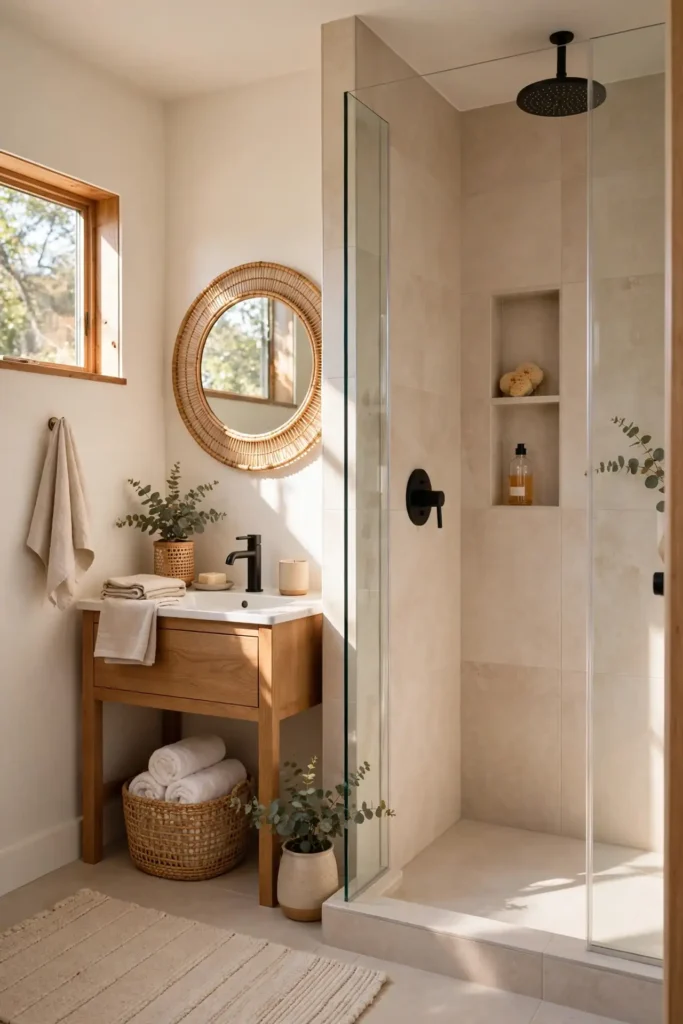
For small showers, choose 12-by-24-inch or larger porcelain tiles from Daltile or MSI at $3 to $7 per square foot, since fewer grout lines make the space feel bigger and are easier to clean. Use a clear glass panel instead of a curtain, and add a recessed niche rather than a protruding shelf to save inches. Good lighting matters too — a bright shower feels twice as large. Most small walk-in showers take 3 to 5 days to tile once the waterproofing is done.
21. Floor-to-Ceiling Tile
Running tile all the way to the ceiling looks polished and luxurious. It is one of the easiest walk in shower tile ideas to get right, because it eliminates the awkward stopping point where tile meets painted drywall. Floor-to-ceiling tile also protects walls from moisture and makes cleaning simpler, since you can wipe down one continuous surface. In a standard 8-foot bathroom, tiling to the ceiling adds about 20 to 30 percent more tile, so budget an extra $400 to $900 for materials and labor. Choose large-format tiles to keep grout lines minimal on the tall walls.
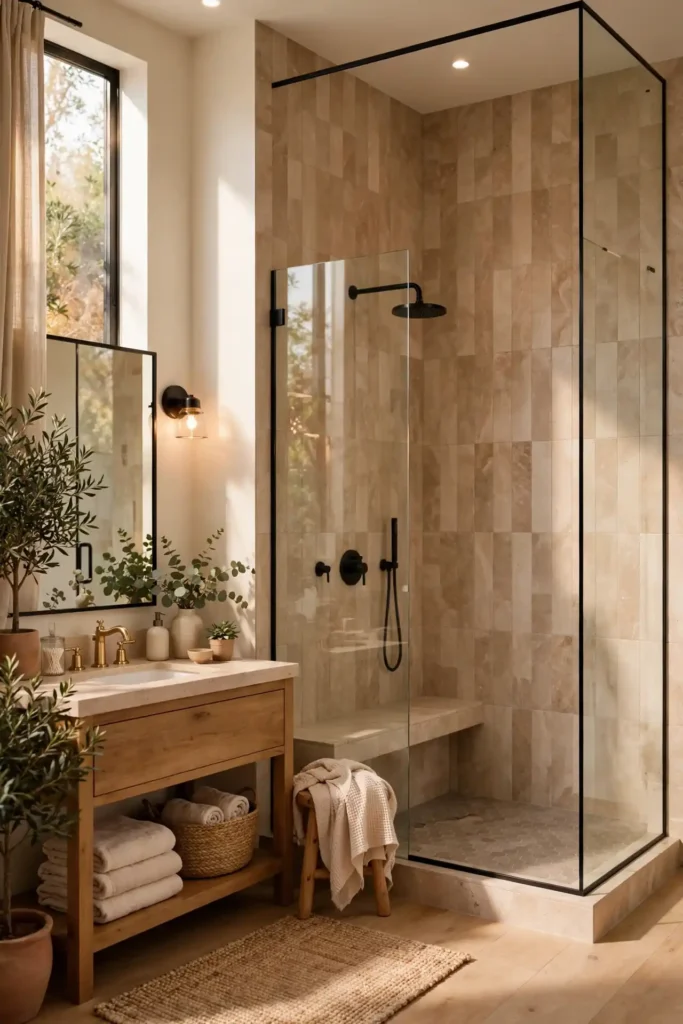
When tiling to the ceiling, use a ledger board to keep the first row level, and plan the layout so cut tiles land at the ceiling where they are less noticeable. Large-format porcelain from Daltile or MSI at $4 to $10 per square foot keeps the tall walls looking seamless. Make sure the exhaust fan is vented properly, since floor-to-ceiling tile can trap humidity if ventilation is poor. Most installers charge $10 to $18 per square foot for the extra wall area above standard tub height.
Best Walk In Shower Tile Ideas for Small Bathrooms
In a small bathroom, the goal is to make the shower feel open and light. Large-format tiles in pale colors reduce grout lines and reflect more light, which visually expands the space. Run the same floor tile from the bathroom into the shower with no curb or threshold to erase the boundary between the two areas. A frameless glass panel keeps sightlines clear, and tiling the walls to the ceiling draws the eye upward. These walk in shower tile ideas for small bathrooms work because they remove visual clutter — fewer lines, fewer transitions and more continuous surfaces.
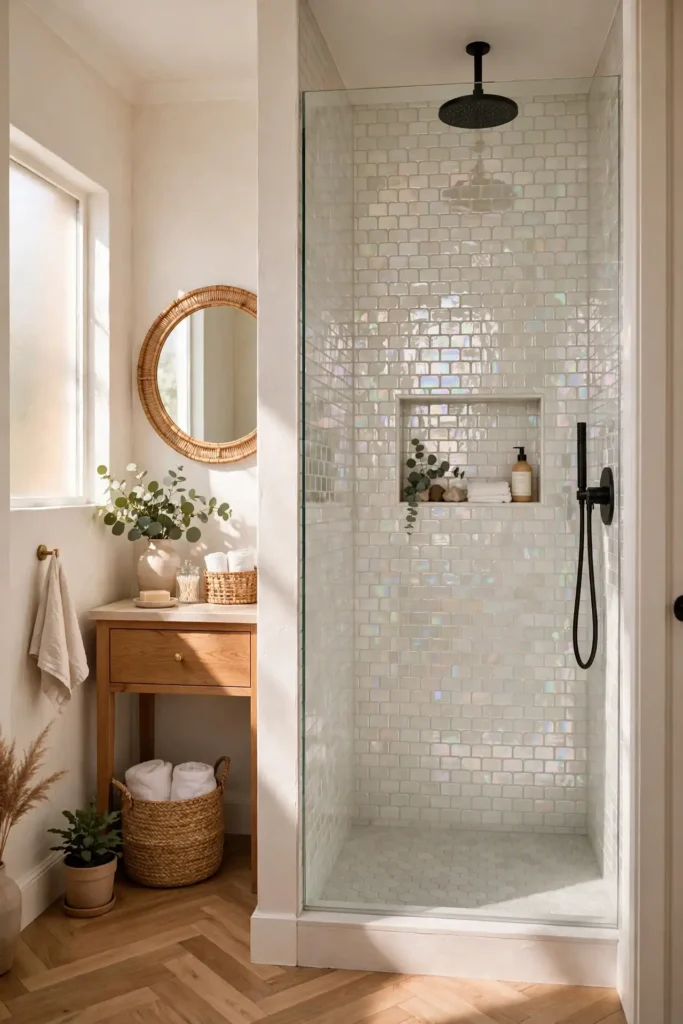
For small bathrooms, choose 12-by-24-inch or 24-by-24-inch porcelain tiles from Daltile or MSI at $3 to $7 per square foot in white, light gray or soft beige. Use a clear glass panel instead of a shower curtain, and add a recessed niche for storage rather than a protruding shelf. Keep the grout color close to the tile color for a seamless look. A small walk-in shower typically needs 60 to 80 square feet of tile, so material costs stay between $200 and $600.
Best Walk In Shower Tile Ideas for Large Bathrooms
Larger bathrooms can handle bolder choices. Try a dramatic stone slab wall, a mix of patterns on the floor and walls, or a wide walk-in shower with a bench and dual showerheads. Large-format tiles still work well, but you can also use mosaics or patterned tiles without overwhelming the space. Define zones with different tiles — for example, a feature wall behind the showerheads and simpler tiles elsewhere. These walk in shower tile ideas for large bathrooms focus on proportion and balance, since too many competing patterns can make even a big room feel chaotic.
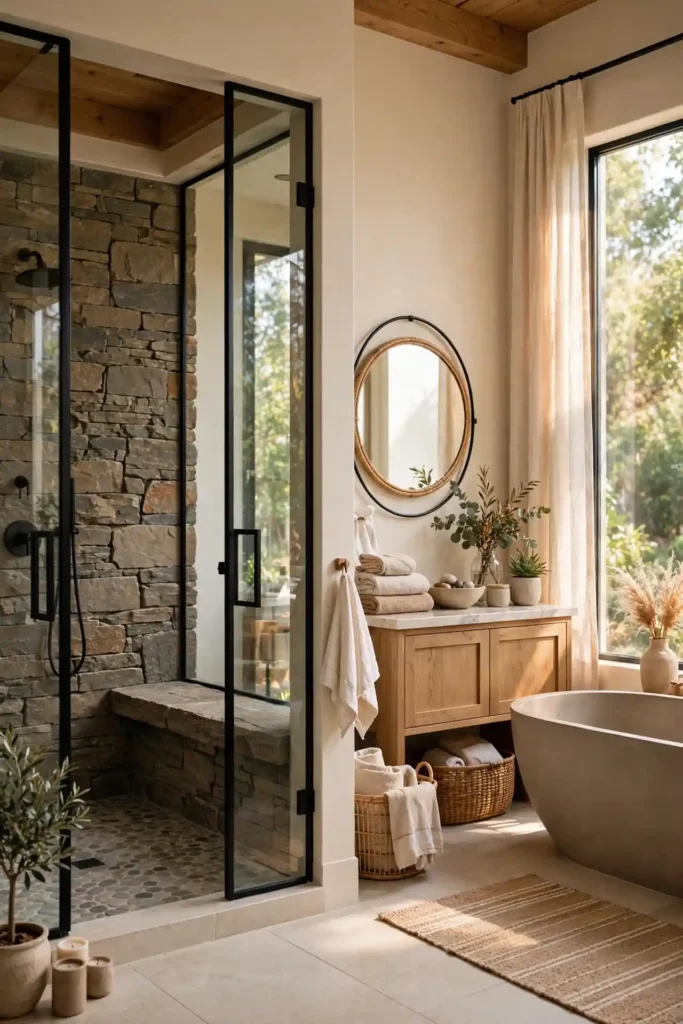
For large bathrooms, consider 24-by-48-inch porcelain slabs from Daltile or MSI at $8 to $15 per square foot for a feature wall, paired with simpler 12-by-24-inch field tiles at $4 to $8 per square foot. A wide shower with a built-in bench typically needs 100 to 150 square feet of tile, so material costs range from $600 to $1,800. Keep the palette to two or three colors for a cohesive look, and use the same grout color throughout to unify different tile shapes.
Maintenance Tips for Walk In Shower Tile
Walk in shower tile stays beautiful with simple habits. Squeegee walls after each shower to prevent water spots and soap buildup, and use a daily shower spray to slow mildew growth. Clean grout lines weekly with a pH-neutral cleaner — avoid bleach on colored grout, since it can fade the color. Reseal natural stone and grout once a year, or when water stops beading on the surface. These maintenance tips for walk in shower tile keep the installation looking new and extend its life by years.
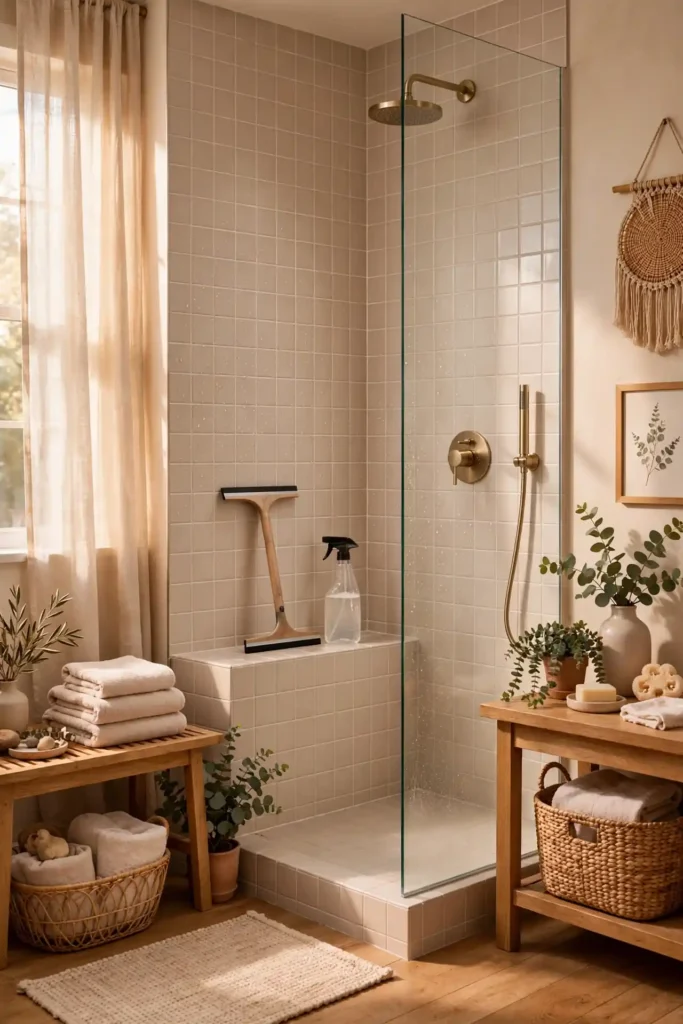
For daily care, keep a squeegee in the shower and wipe down glass and tile after use — it takes 30 seconds and prevents most buildup. Use a soft brush on grout lines monthly, and run the exhaust fan during and after showers to reduce humidity. If you have hard water, a 50-50 mix of white vinegar and water dissolves mineral deposits, but do not use it on natural stone. Most porcelain walk-in showers need only basic cleaning to look new for decades.
How to Plan Walk In Shower Tile Ideas Step by Step
Follow these steps for a successful project:
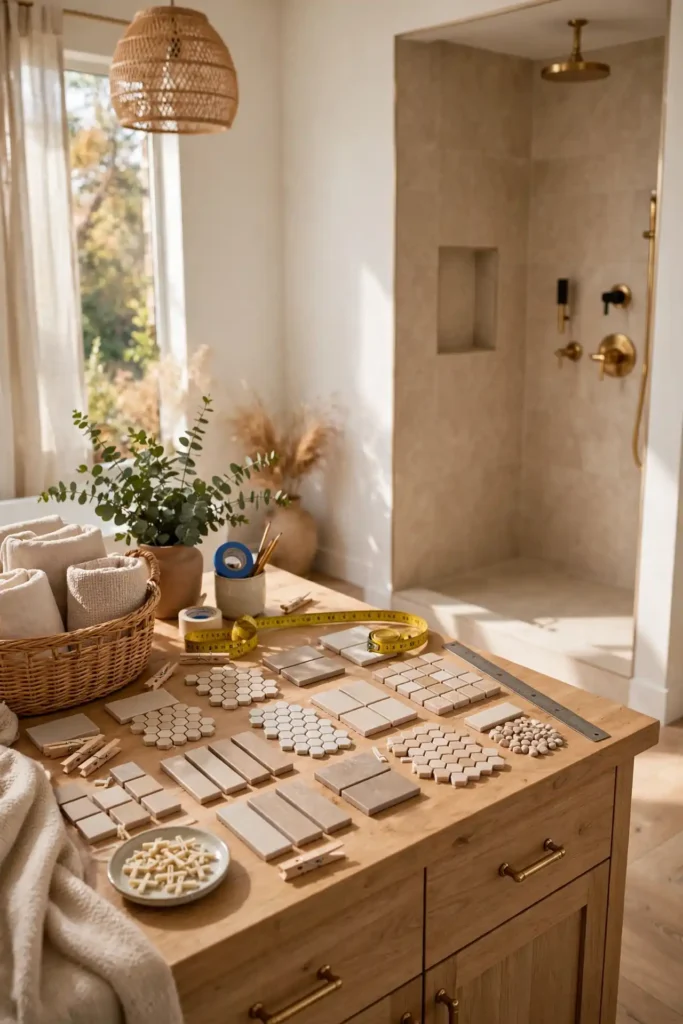
Start by measuring the shower and deciding on a curb or curbless design. Choose floor tile first for safety and slope, then select wall tile, layout and grout color. Plan niches, benches and glass panels before tiling begins, and hire an experienced installer for waterproofing — it is the most critical step. Order 10 percent extra tile for cuts and future repairs.
- Measure the shower and decide on a curb or curbless design.
- Choose floor tile first for safety and slope.
- Select wall tile, layout and grout color.
- Plan niches, benches and glass panels.
- Hire an experienced installer for waterproofing.
Final Thoughts on Walk In Shower Tile Ideas
The best walk in shower tile ideas balance beauty, safety and easy maintenance. Large-format porcelain keeps grout lines minimal, textured or mosaic floors prevent slips, and a cohesive color palette ties the whole bathroom together. Whether you choose a dramatic accent wall or a calm neutral retreat, prioritize waterproofing and proper slope — they matter more than any tile pattern. These final thoughts on walk in shower tile ideas come down to one rule: choose tile you will love seeing every day, since a well-done shower lasts for decades.
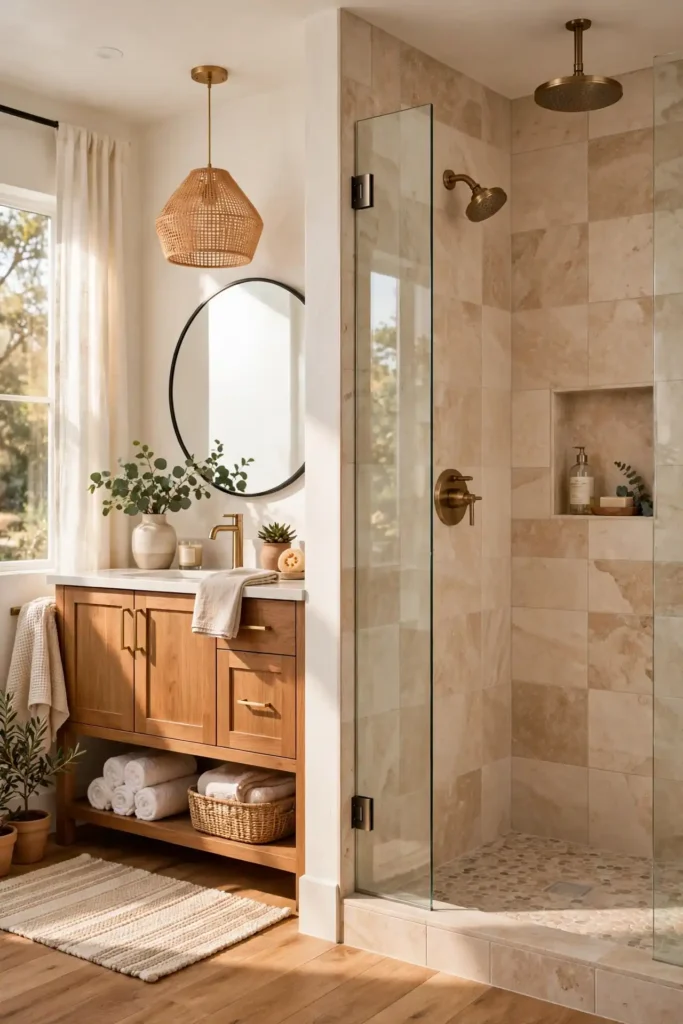
Before you commit, order full-size samples and view them in your bathroom’s lighting at different times of day. Get at least three quotes from licensed tile installers, and ask to see photos of their recent walk-in showers. Budget 10 to 15 percent extra for unexpected issues behind the walls. A well-planned walk-in shower with quality tile adds lasting value to your home and turns a daily routine into something you actually look forward to.
Frequently Asked Questions About Walk In Shower Tile Ideas
The most common question about walk in shower tile ideas is what size tile works best. For floors, small mosaics or 2-inch tiles give the best grip and slope; for walls, large-format tiles mean fewer grout lines and easier cleaning. Porcelain is the safest all-around choice, while natural stone needs more sealing and care. Keep grout lines tight, slope the floor toward the drain, and always waterproof behind the tile. Frequently asked questions about walk in shower tile ideas usually come down to cost, size and maintenance — and the answers are simpler than most people expect.
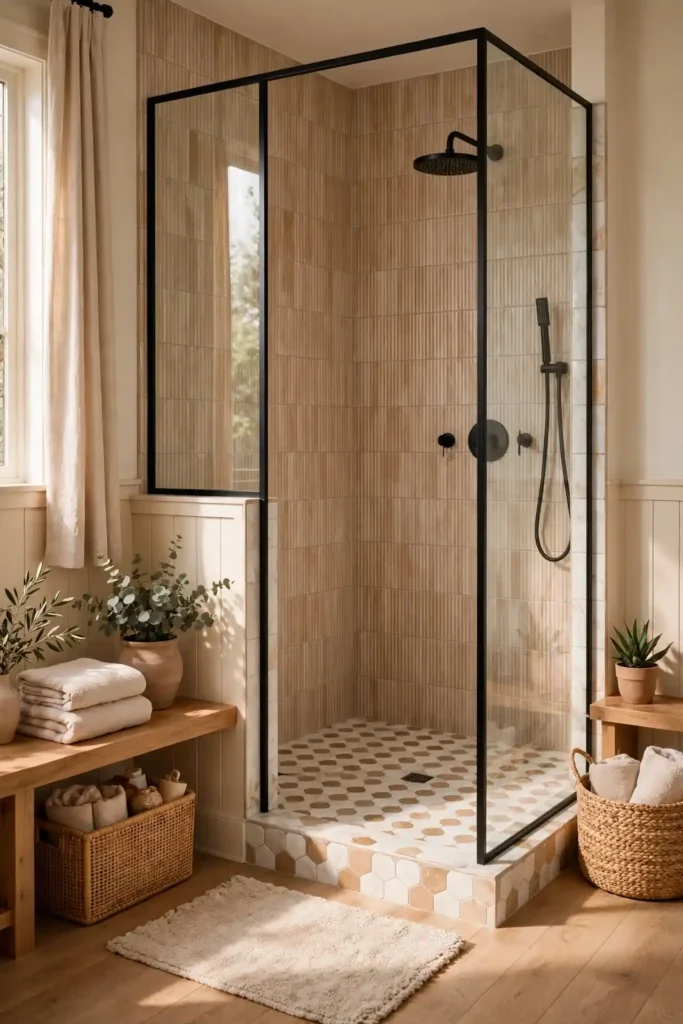
If you are still deciding, start with porcelain in a 12-by-24-inch size — it works on walls and floors, costs $3 to $8 per square foot, and suits almost any bathroom style. Add a mosaic accent or niche for personality, and keep the grout color close to the tile for a seamless look. Most walk-in showers take 5 to 10 days to tile once the prep work is done. With the right tile and a good installer, your walk-in shower will look new for decades.
What is the best tile for a walk-in shower?
Porcelain is durable, water resistant and easy to maintain. Use small or textured tiles on the floor for grip.
Should shower floor tile be different from wall tile?
Often yes. Smaller floor tiles provide more grout lines for traction, while larger wall tiles reduce cleaning.
What are good walk in shower tile ideas for small bathrooms?
Use light colors, large-format tiles, vertical layouts and a frameless glass panel.
Does tile need to go to the ceiling in a shower?
It is not required, but floor-to-ceiling tile looks polished and protects walls from moisture.
What grout color is best for a shower?
Mid-tone gray or colors that match the tile hide stains and wear better than bright white.





3 Comments