



A mudroom is the unsung hero of a busy household. It catches shoes, coats, backpacks, dog leashes and sports gear before they spread through the house. Even if you do not have a dedicated room, you can create a mudroom zone in an entryway, laundry room or garage.
These 21 mudroom ideas cover layouts, storage, flooring and style for spaces of every size. For more organization inspiration, see our small bathroom decor ideas and these guest bedroom office combo ideas.
Plan a mudroom with these essentials:
- A bench for putting on shoes.
- Hooks at adult and kid heights.
- Closed storage for seasonal items.
- Durable, easy-clean flooring.
1. Built-In Bench With Cubbies
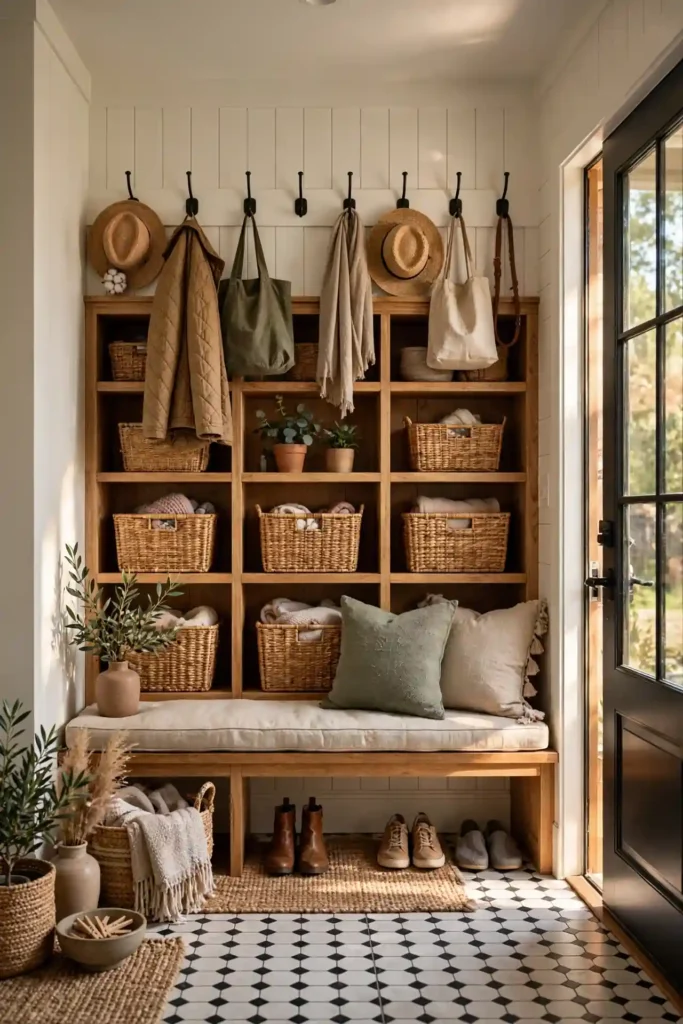
A built-in bench with cubbies gives your entryway the one thing most homes lack: a place where everything has a home. Instead of shoes scattered across the floor and backpacks piled on a chair, you get a sturdy seat for putting on boots plus open cubbies below for each family member’s daily gear. Build the bench from moisture-resistant plywood or MDF painted with Behr Premium Plus semi-gloss from Home Depot, which resists scuffs and wipes clean. A comfortable seat height is 17 to 19 inches, and cubbies 12 to 14 inches square fit most shoes and tote bags.
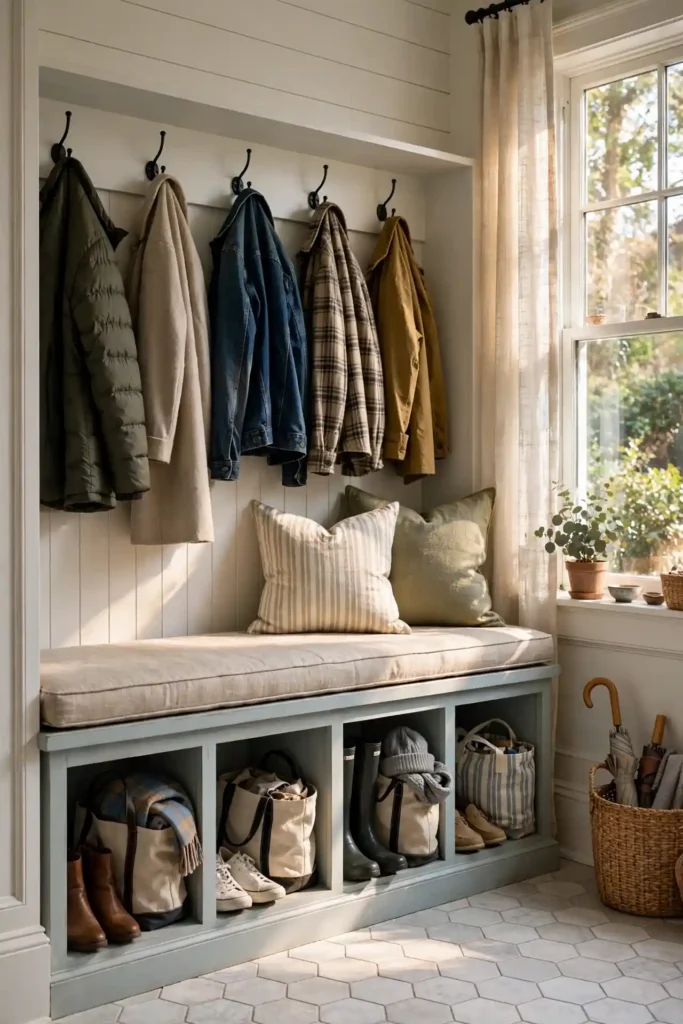
Measure your wall first, then sketch a layout with one cubby per person — most families need four to six. Mount the bench frame directly to wall studs with 2.5-inch screws so it holds 200 pounds or more without wobbling. Above the bench, add a row of double hooks from Lowe’s for coats and leashes, spacing them 6 to 8 inches apart. Label each cubby with chalkboard tags so kids know where their gear goes, and set a weekly five-minute reset where everyone returns stray items. A basic DIY build runs about 120 to 180 dollars in materials; hiring a carpenter typically costs 800 to 1,500 dollars.
2. Locker-Style Storage
Lockers bring order to a mudroom because each person gets a defined, private space — no more mystery jackets or missing gloves. These tall compartments work especially well in wide entryways and garage transitions where four or more people need storage at once. Look for pre-built locker units at Wayfair or Costco, or ask a carpenter to frame custom lockers from cabinet-grade plywood for a seamless look. Paint them in a durable finish like Sherwin-Williams Emerald urethane trim enamel, which stands up to daily bumps from sports gear. Standard locker width runs 12 to 16 inches per person.
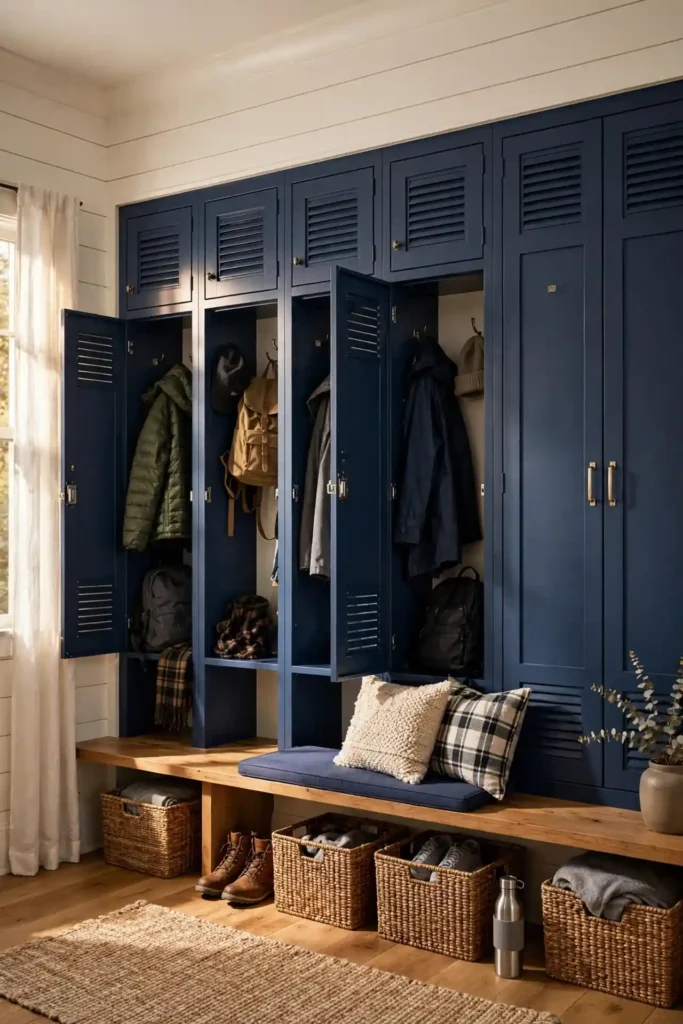
Add ventilation to each locker so damp coats dry instead of smelling musty — a half-inch gap under the locker door or a few drilled vent holes does the job. Inside each compartment, mount a double hook at about 60 inches high for jackets, a small shelf for hats, and a low hook at 24 inches so kids can reach their backpacks. Number or label lockers so guests and grandparents can use them without guessing. Pre-built two-locker units start around 300 dollars, while custom floor-to-ceiling lockers run 1,200 to 2,500 dollars installed, depending on wood species and finish.
3. Entryway Mudroom Nook
An entryway mudroom nook carves hardworking storage out of a front entry or hallway without a full renovation. Even a 3-foot-wide alcove can hold a bench, hooks, and shoe shelf if you plan vertically. Use a freestanding hall tree from Target or IKEA, which costs 80 to 150 dollars and assembles in under an hour, or flank a low bench with two narrow bookshelves turned into lockers. Keep the color scheme light — warm white walls with natural wood tones — so the nook feels open instead of cramped. A slim mirror above the bench doubles as a last check before you walk out.
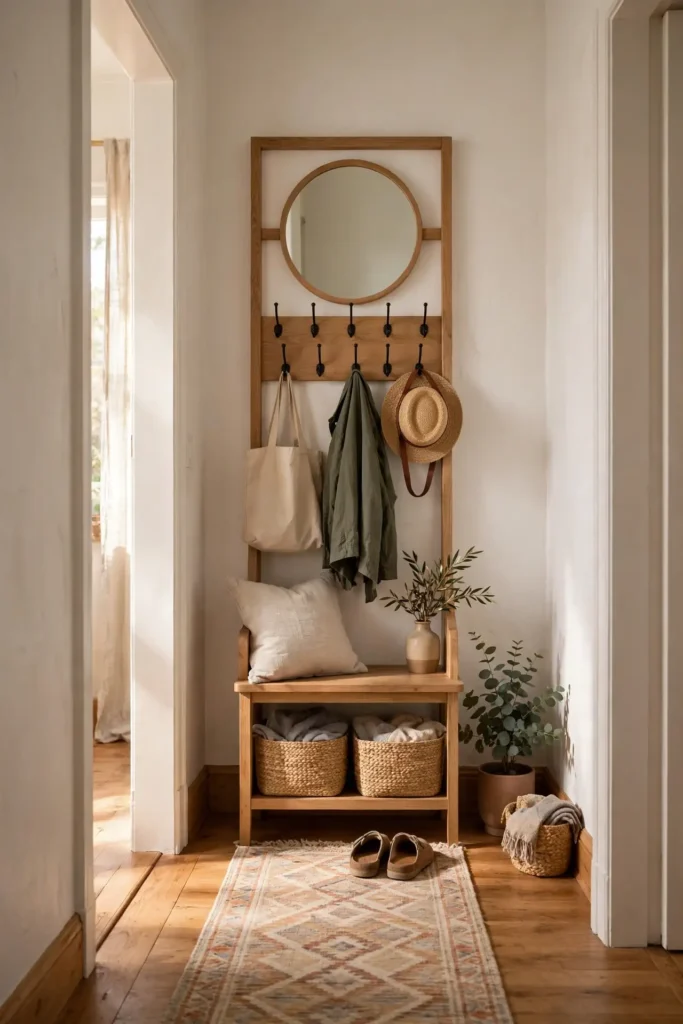
Anchor the nook with a 2-by-3-foot washable rug to catch grit from shoes, and add a wall sconce or plug-in picture light so the corner reads as intentional rather than leftover. If the nook lacks depth, choose hooks that project only 2 to 3 inches from the wall and a bench no deeper than 12 inches so you keep the walkway clear. Rotate gear by season: store snow boots and parkas elsewhere from April through October, and keep only what your family uses weekly. A simple nook refresh — paint, hooks, and rug — takes one weekend and costs 150 to 250 dollars total.
4. Laundry Room Combo
Combining your laundry room and mudroom multiplies the usefulness of both, because the sink, machines, and folding space already live there. Place a bench and hooks along the wall opposite the washer and dryer so the room serves both drop-off and wash-day duties. Protect the area under your bench with the same porcelain tile you use by the machines, and keep a small hamper or sorting bin in one cubby so dirty sports gear never hits the floor. Ventilate well — a quiet 50-CFM bath fan from Home Depot costs about 60 dollars and keeps damp smells from settling into coats.
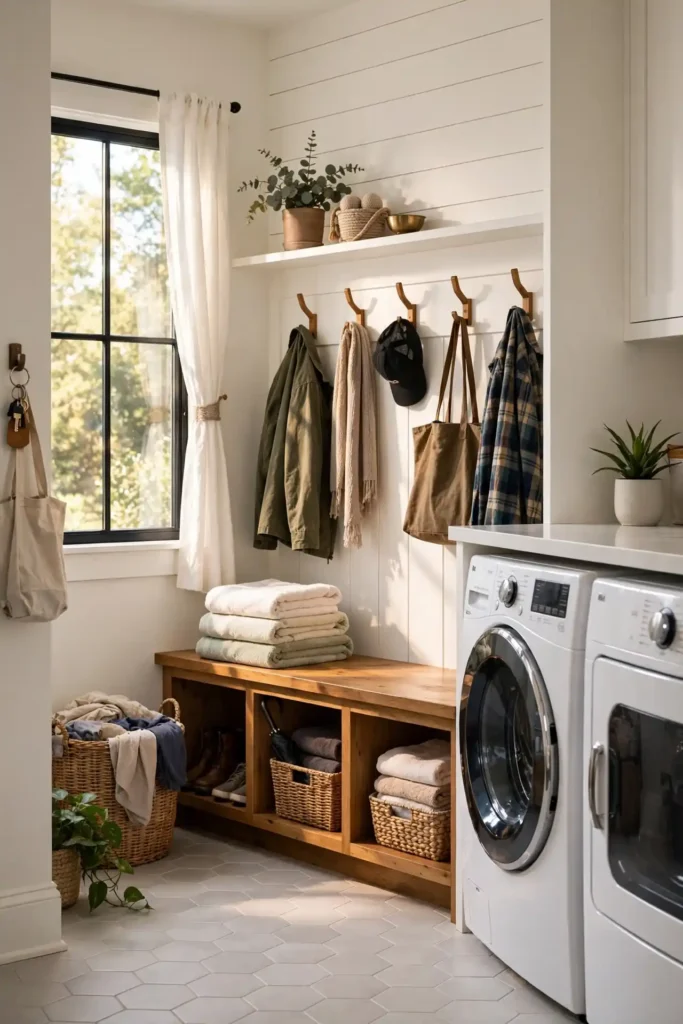
Design the room as a workflow: coats off on hooks, shoes under the bench, and dirty items straight into the nearest hamper. Keep a folding counter clear by storing supplies in upper cabinets instead of on the work surface, and add a pull-out ironing board so one surface serves two jobs. Bright 4,000K LED lighting makes it easier to spot stains before they set. If space allows, add a second rod above the bench for drip-drying hand-wash items. The combo layout saves real estate, but give yourself at least 4 feet of clear floor so two people can move comfortably.
5. Garage Entry Mudroom
The garage entry is where the messiest traffic enters, so treat it as your home’s first line of defense. Garage mudrooms need the toughest materials: sealed concrete or porcelain tile floors, metal or HDPE plastic lockers, and hooks rated for 50 pounds or more. Mount a bench with a wipeable vinyl cushion, and keep a heavy-duty doormat on both sides of the door to trap oil, gravel, and road salt. Insulate the entry door and add weatherstripping so you do not lose heat every time the family walks through. A garage mudroom also keeps muddy gear from ever crossing into your living space, which saves your hardwood floors and your sanity.
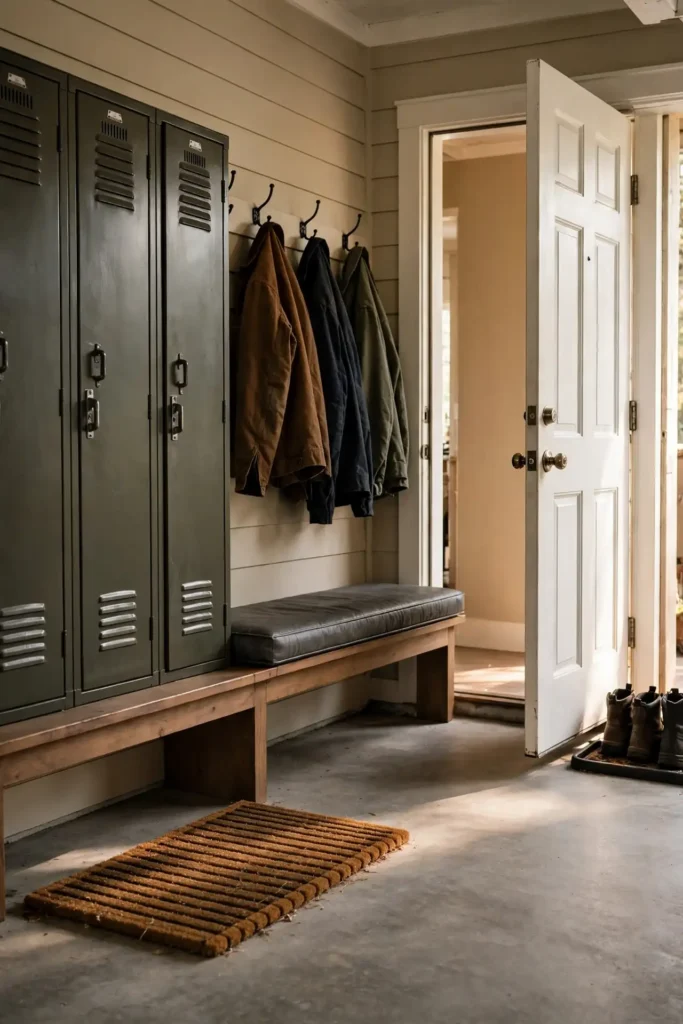
Garage entries are often dim, so install a motion-sensor LED light above the door and task lighting over the bench. Add a GFCI outlet near the bench for charging tools and devices — code requires GFCI protection in garages, and an electrician can install one for about 150 to 250 dollars. Keep a small broom and dustpan in a wall-mounted holder for daily sweeping, because garage grit travels fast. If your garage gets below freezing, choose finishes and adhesives rated for temperature swings so nothing cracks or peels. Finally, keep a sturdy welcome mat inside the interior door too, so the last bit of dirt stays out of your hallway.
6. Durable Tile Floors
Tile floors are the workhorse of any mudroom because they shrug off water, mud, and road salt that would ruin hardwood. Choose porcelain tile with a PEI rating of 4 or 5 and a slip-resistant matte finish — textured tiles with an R10 or R11 rating stay safe when wet. Large-format 12-by-24-inch tiles mean fewer grout lines to scrub, and a dark grout like Mapei’s Charcoal hides dirt between cleanings. Tile costs 2 to 8 dollars per square foot at Floor & Decor or Lowe’s, plus 5 to 12 dollars per square foot installed.
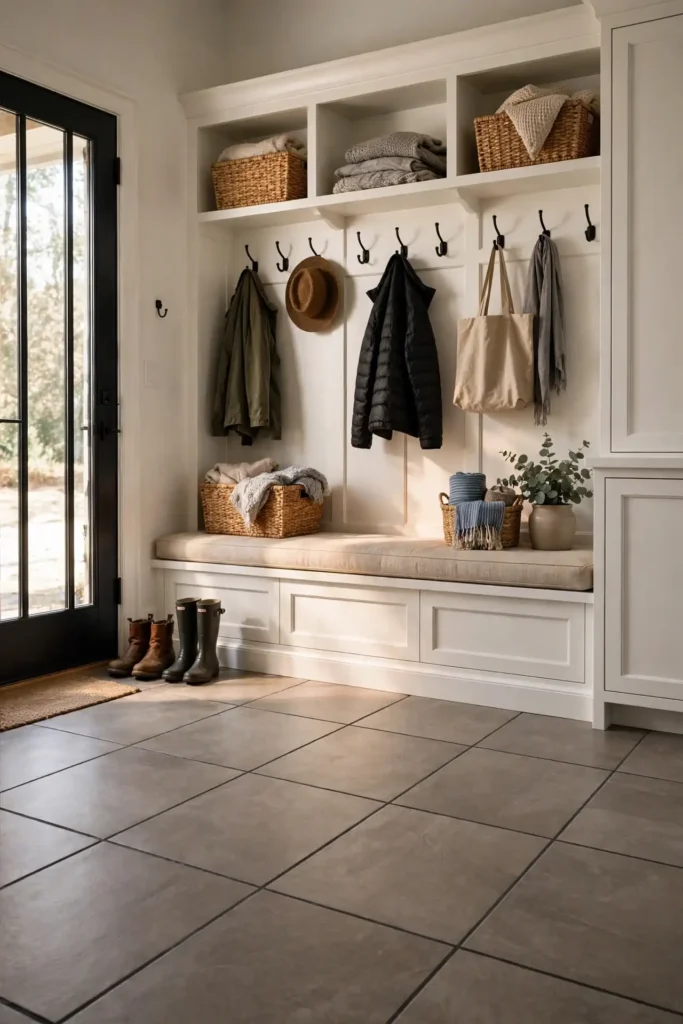
Install tile over a cement backer board rather than plywood, and use a polymer-modified thinset so the floor survives freeze-thaw moisture near the door. If your budget allows, add an electric radiant heat mat under the tile — a 30-square-foot kit runs about 250 to 400 dollars and dries wet boots from underneath. Seal grout lines every 12 to 18 months with a penetrating sealer to prevent staining. Mop weekly with a pH-neutral cleaner, and keep an extra box of tile in the garage for repairs — dye lots change, and future matches are never guaranteed.
7. Washable Rug
A washable rug is the easiest upgrade in any mudroom because it absorbs the first wave of dirt and goes straight into the washing machine. Ruggable’s two-piece system lets you peel the top layer off and toss it in the wash, and their 3-by-5-foot runners start around 119 dollars. Look for low-pile or flatweave rugs under 0.5 inches thick so doors swing over them easily. Dark patterns and Persian-style prints hide tracked-in grime between washes, which matters in a space that sees constant daily foot traffic from kids and dogs.
Size the rug to cover the main walkway from door to bench — at least 30 inches wide and long enough to take three or four strides. Wash the cover every two to four weeks, or monthly in low-traffic seasons, and shake it out between washes. Keep a spare cover on hand so the floor is never bare while laundry runs. If Ruggable’s price is steep, Target and Amazon sell budget machine-washable rugs for 25 to 60 dollars in similar sizes. Skip rubber-backed rugs on heated tile, since the backing can bond to warm surfaces.
8. Boot Tray
A boot tray keeps melting snow, mud, and road salt in one contained spot instead of spreading across your floor. Choose a tray with a raised lip of at least 2 inches and a ribbed or slatted bottom so boots sit above the pooled water and dry faster. Plastic and galvanized-steel trays at Target and Amazon run 15 to 40 dollars for a 30-inch tray that holds three pairs. For a custom look, fill a shallow wooden box with smooth river pebbles — water drains between the stones and boots rest on top. Place the tray directly inside the door so wet boots never travel past the entry.
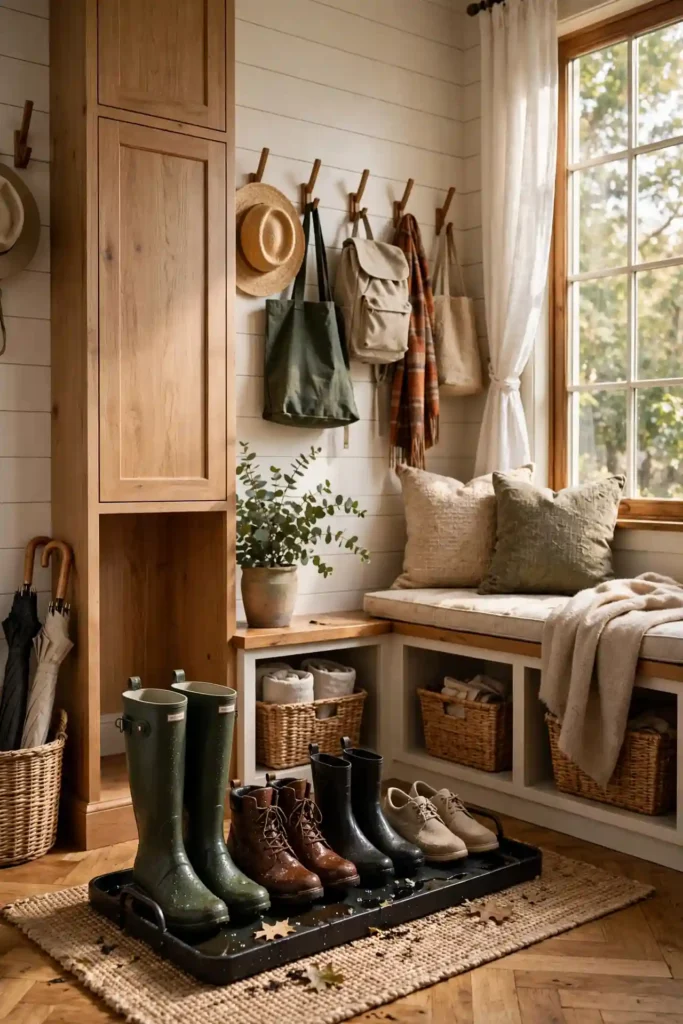
Buy one tray per 2 to 3 people so boots do not pile up, and size each tray at least 24 inches long to hold two adult pairs. Empty standing water daily during wet weeks to prevent mineral stains on the tray and sour smells in the room. Wipe plastic trays with a vinegar solution monthly to remove salt residue, and reseal wooden trays with polyurethane each fall. If your household includes tall rain boots or work boots, choose a deeper tray — 4 inches or more — so splashes stay contained. Keep an old towel draped over the tray edge for quick wipe-downs on extra-messy days.
9. Baskets for Small Items
Baskets catch the small stuff — gloves, hats, sunglasses, sunscreen, dog leashes — that otherwise vanishes into junk-drawer chaos. Assign one labeled basket per person or one per category, and keep them at bench or cubby level so they are easy to grab and put back. Seagrass and water hyacinth baskets from HomeGoods or Target cost 12 to 30 dollars and add warmth, while stackable plastic bins from the Container Store handle damp gear better. Choose baskets 8 to 12 inches wide for shelves, and make sure handles are sturdy enough for daily lifting.

Label every basket with chalkboard tags, adhesive labels, or a label maker so the system survives busy mornings. Keep a small “outgoing” basket by the door for library books, returns, and packages you need to mail — it stops items from being forgotten on the counter. Rotate contents seasonally: swap sunscreen for hand warmers in October, and gloves for garden tools in spring. Wash fabric bins in the machine a few times a year, and wipe plastic bins with disinfectant monthly. The rule that makes it stick: everything small gets a basket, and every basket has a label.
10. Pet Station
A pet station turns the mudroom into mission control for your dog’s daily routine — leash, food, towels, and waste bags all in one spot. Mount a hook for the leash at 48 inches high, place food and water bowls on a raised feeder to protect your floors, and stash treats and bags in a lidded bin nearby. Keep a basket of old towels by the door for wiping paws on rainy days, and use a spill-proof mat under bowls to catch splashes. Elevated feeders from Amazon run 25 to 50 dollars and suit most medium and large dogs.
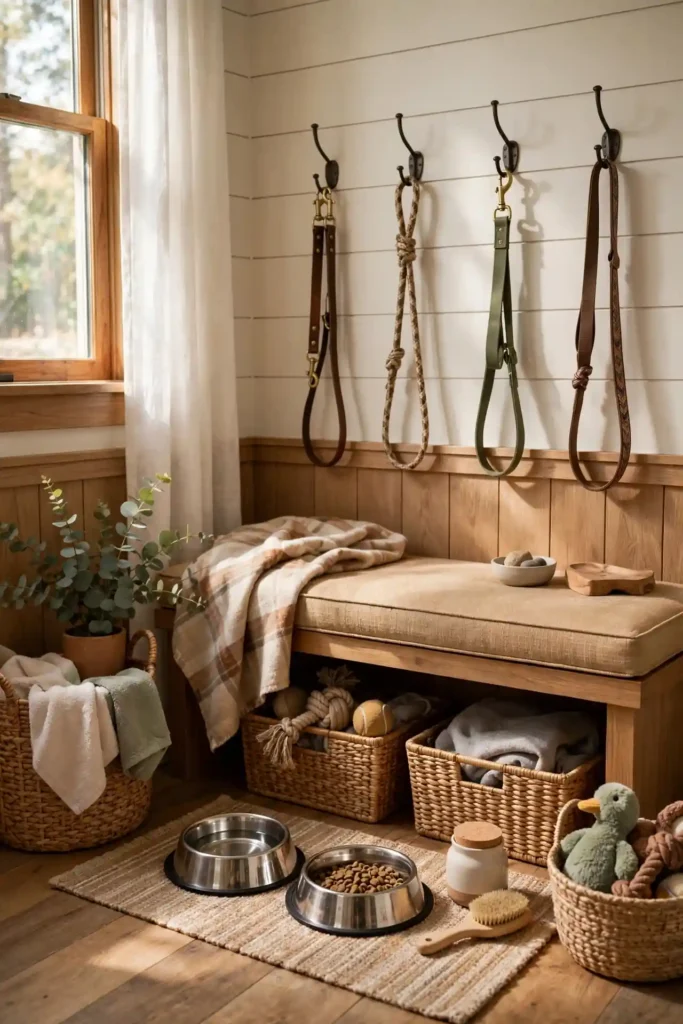
If your mudroom doubles as the dog’s hangout, add a crate or bed in a corner away from the main walkway, and install a baby gate at the interior door to keep muddy paws out of living areas. Choose washable crate pads and bedding so cleanup is easy after wet walks. Store kibble in an airtight container — a 25-pound Vittles Vault costs about 30 dollars at Chewy — to keep food fresh and pests out. Sweep or vacuum daily around the station, since kibble and fur travel fast. A pet station keeps your whole house cleaner by containing the mess where it starts.
11. Charging Station
A charging station gives every device a home in the mudroom so phones, earbuds, and tablets stop disappearing into coat pockets. Set up a small shelf or drawer insert near an outlet and add a multi-port USB charger — Anker’s 6-port models cost about 30 dollars on Amazon. Use short 1-foot cables to avoid tangles, and label each slot so family members dock their devices in the same spot. Mount the station at counter height where adults and teens can reach it, but keep it out of toddlers’ sight lines. A dedicated dock ends the nightly “where is my charger” hunt.
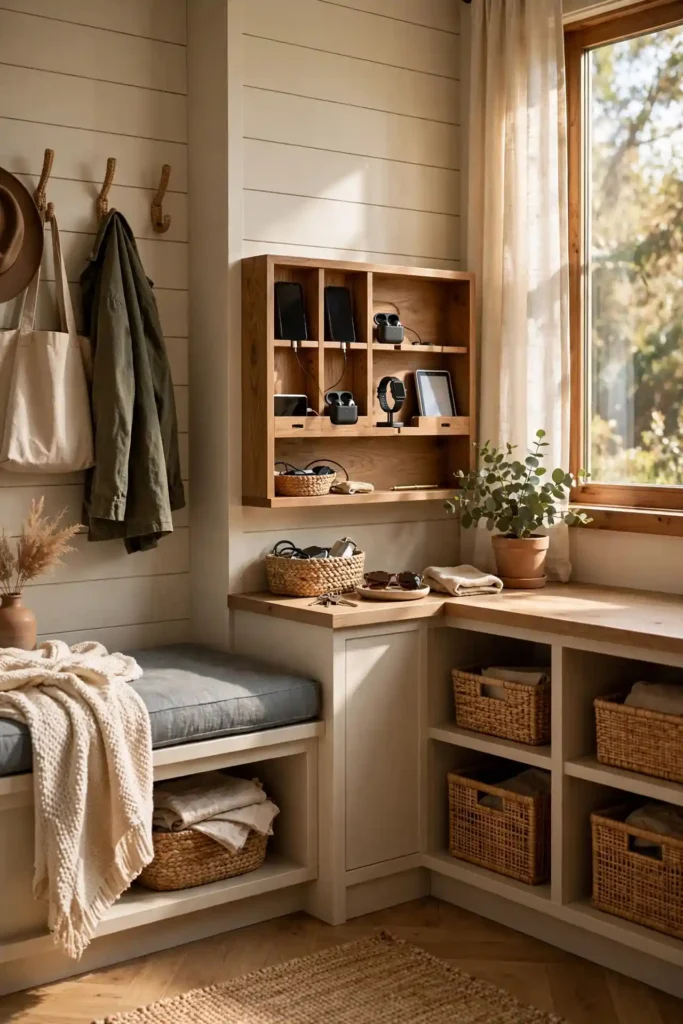
Keep cords tidy with adhesive cable clips and a small power strip mounted inside a drawer or cabinet to hide the clutter. If you recess the station into a drawer, drill a 2-inch cord pass-through in the back and use a slim-profile power strip so the drawer closes fully. Avoid overloading: a standard 15-amp outlet safely handles four to six device chargers plus a lamp. Add a surge protector — about 20 dollars at Best Buy — to shield devices during summer storms. For a built-in look, have an electrician add a quad outlet inside a cabinet during a remodel for roughly 150 to 250 dollars.
12. Upper Cabinets
Upper cabinets claim the wall space above your bench and hooks, turning dead air into storage for out-of-season gear. Store sunscreen, bug spray, and beach bags up top in summer, then swap in hats, scarves, and hand warmers for winter. Choose stock wall cabinets from Home Depot — a 30-inch-wide cabinet costs 60 to 120 dollars — and paint them to match your mudroom for a built-in look. Keep the bottom shelf within reach at about 60 inches from the floor so everyday items stay accessible. Deep cabinets (15 inches or more) swallow bulky items like spare backpacks.
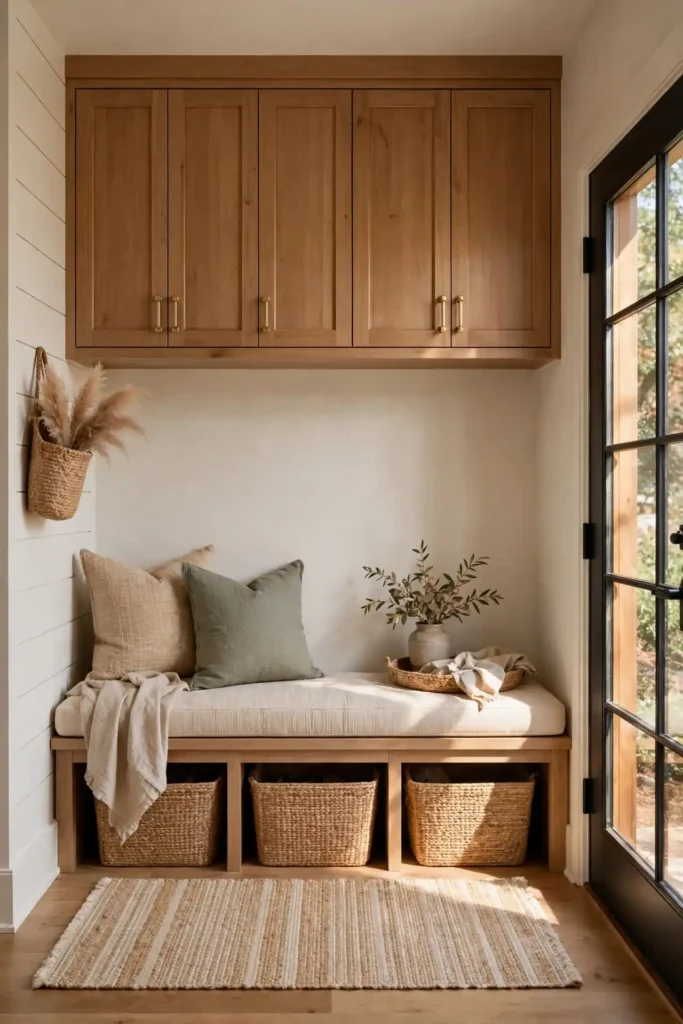
Secure each cabinet to wall studs with 3-inch cabinet screws, and use a ledger board during installation to hold cabinets level while you fasten them. Add child-safe latches on cabinets that hold cleaning supplies or heavy items that could fall. Under-cabinet LED puck lights — about 25 dollars for a 6-pack on Amazon — make the bench area feel bright and custom. If the ceiling allows, run cabinets to the top and use the highest shelf for rarely touched items like luggage straps. Leave an 18-inch gap between the bench and the cabinet bottom so adults can sit without bumping their heads.
13. Beadboard or Shiplap
Beadboard or shiplap walls give a mudroom instant character while shrugging off the scuffs that flat drywall cannot handle. Beadboard’s narrow grooves suit classic and farmhouse styles; shiplap’s wider planks read more modern coastal. Both install over existing drywall with construction adhesive and brad nails, and MDF panels from Home Depot cost 25 to 45 dollars per 4-by-8-foot sheet. Paint with a semi-gloss finish like Benjamin Moore Advance so walls wipe clean. Install panels vertically to make low ceilings feel taller, or horizontally to widen a narrow hall. Cap the top with a simple chair rail for a finished edge that also protects the wall from coat hooks.
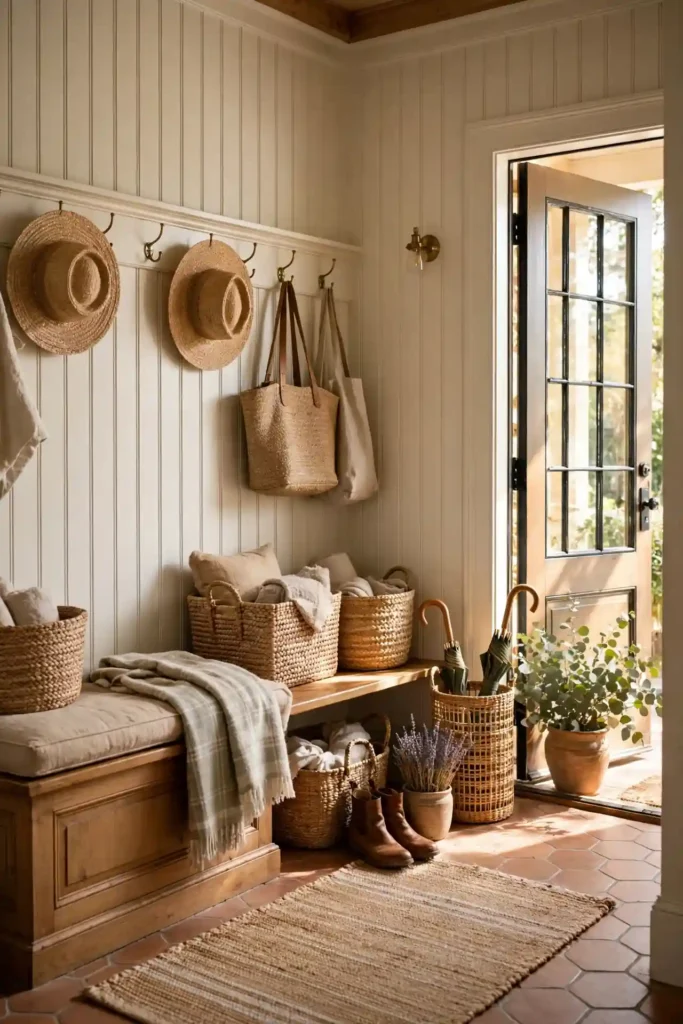
In a mudroom, moisture is the enemy, so seal the bottom edge of every panel with paintable caulk where it meets the baseboard or floor. Leave a 1/8-inch expansion gap at the ends, hidden by trim, so seasonal humidity does not buckle the panels. For homes near the coast or in humid climates, choose PVC beadboard — it costs about 40 percent more but never swells or rots. Touch up scuffs once a year with leftover paint, and keep a damp microfiber cloth handy for weekly wipe-downs. With basic care, a beadboard mudroom wall looks crisp for a decade or more.
14. Bold Paint Color
A bold paint color turns the smallest mudroom into a space with personality instead of a forgotten pass-through. Deep navy like Sherwin-Williams Naval, forest green like Benjamin Moore Essex Green, or a rich terracotta all hide scuffs far better than white. Since mudrooms are compact, one gallon — 40 to 60 dollars for quality paint — usually covers every wall. Choose satin or semi-gloss sheen for wipeability; flat paint shows every fingerprint. If you are hesitant, paint just the back wall or the lockers and keep the rest neutral. Color-drenched trim in the same shade makes a tiny mudroom feel intentionally designed rather than patched together.
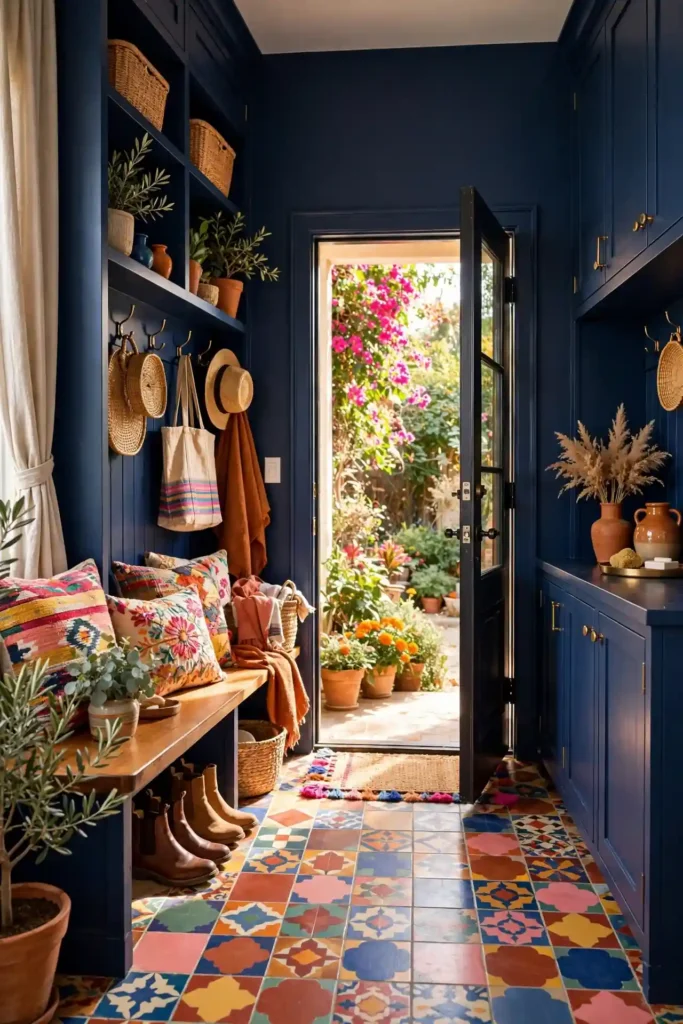
Test bold colors before you commit: paint a 2-by-2-foot swatch on the wall and check it at morning, noon, and night, since mudroom lighting changes fast. North-facing entries make colors read cooler and darker, so go one shade lighter than the swatch you love. Coordinate with the rest of your home by pulling one accent color from the adjacent room’s rug or art. Keep the ceiling white or a pale tint to preserve brightness. Most bold mudroom paint jobs take a single weekend — one day for prep and painting, one day for touch-ups and hardware.
15. Command Center
A command center keeps the whole household on one page — literally. Mount a whiteboard or chalkboard calendar, a row of labeled file folders for mail and school papers, and a small corkboard for invitations and reminders. Place it at eye level near the door so everyone sees it on the way out. Acrylic wall organizers from Amazon cost 20 to 40 dollars and keep papers visible instead of buried. Color-code folders by family member, and keep a pen cup attached so notes get written the moment they are needed.
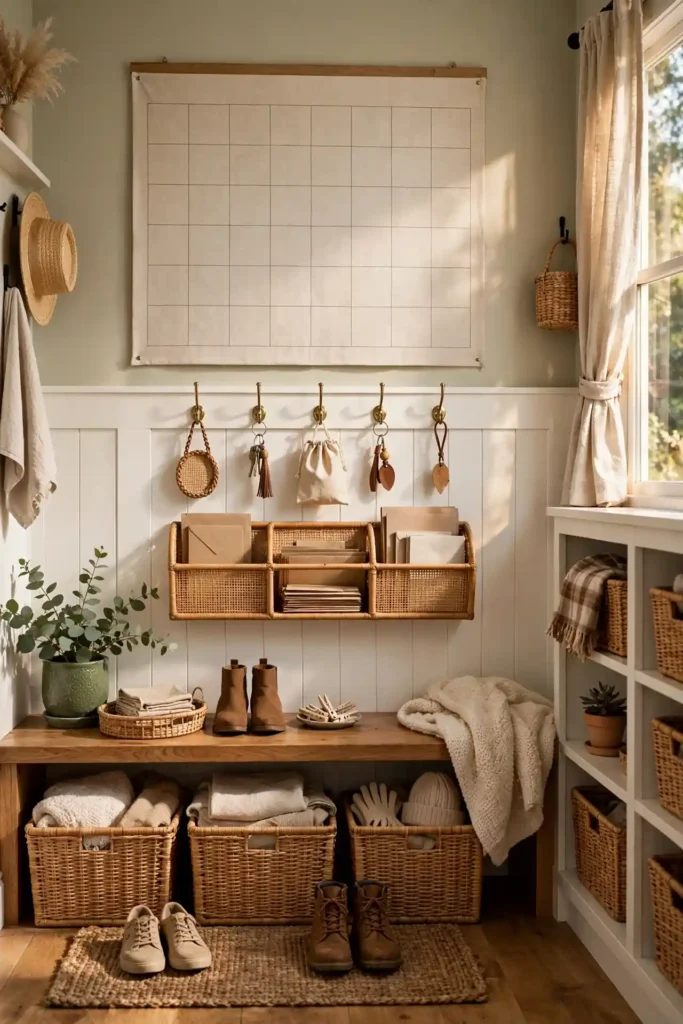
Add a small charging nook beside the command center so phones dock where the family calendar lives. Keep a hook row underneath for keys — one hook per driver, labeled — so nobody hunts for keys in the morning. Spend five minutes every Sunday updating the week’s calendar and clearing expired papers, which keeps the center useful instead of cluttered. If wall space is tight, use the inside of a cabinet door for the calendar and folders. A well-run command center cuts forgotten items and missed pickups dramatically within the first month.
16. Umbrella Stand
An umbrella stand stops wet umbrellas from dripping across your floor or pooling in a coat closet. Choose a stand at least 20 inches tall with a weighted base so tall golf umbrellas do not tip it over. Ceramic and metal stands from Target and HomeGoods run 25 to 60 dollars and come in finishes that match any decor. Look for a removable drip tray at the bottom — emptying it takes seconds and prevents rust and mildew. Tuck the stand beside the door, not in the walkway, so grabbing an umbrella on the way out feels natural.

If space is tight, hang two sturdy hooks inside a closet door and store umbrellas vertically in a slim canvas sleeve. A vintage crock or tall basket can double as an umbrella stand — just line it with a plastic insert to protect the container. Keep a compact folding umbrella in each family member’s cubby so the stand holds only full-size ones. In dry months, repurpose the stand for walking sticks, a fly swatter, or rolled-up reusable shopping bags. Empty the drip tray weekly during rainy season, and wipe the stand interior monthly to stop mildew before it starts.
17. Pull-Out Shoe Drawers
Pull-out shoe drawers hide footwear behind cabinet fronts, giving your mudroom a clean built-in look with zero visual clutter. Install them under a bench or inside a tall cabinet using full-extension drawer slides rated for 75 pounds or more. Slanted shelves inside each drawer keep shoes visible and prevent pairs from sliding. A pair of 24-inch drawers holds 8 to 12 pairs depending on shoe size. Order ready-made pull-out shoe organizers from Rev-A-Shelf for 100 to 200 dollars per unit, or build them from plywood for about half that. Label each drawer by person or shoe type so the family actually uses the system instead of piling shoes on top.
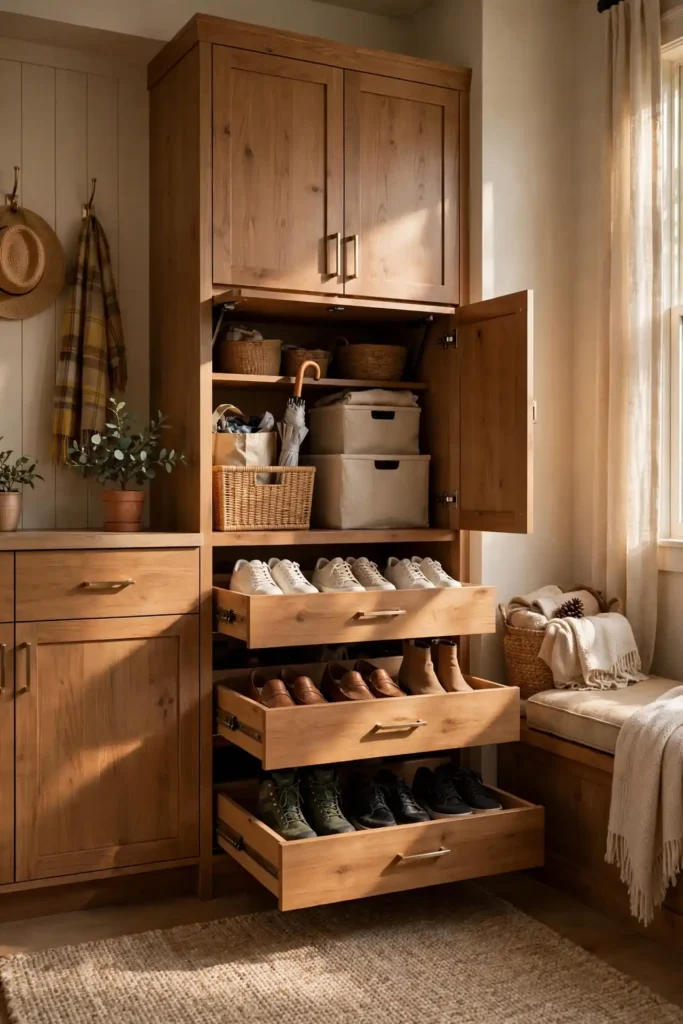
Ventilate the drawers so damp shoes dry instead of trapping odor — drill a row of 1-inch holes in the drawer back or leave a half-inch gap behind each slanted shelf. Keep drawer depth at 14 to 16 inches to fit men’s size 13 shoes comfortably. Add soft-close hardware so drawers never slam, which matters in a high-traffic entry used early in the morning. Wipe the drawer interiors monthly with a disinfectant wipe to control odor. If you are retrofitting an existing cabinet, measure the opening twice: standard pull-out units need at least 22 inches of clear depth.
18. Dog Wash Station
A dog wash station in the mudroom saves your bathtub and your back after muddy walks. Build it from a 30-inch utility sink or a prefabricated shower pan, with a handheld sprayer on a 5-foot hose for rinsing. Tile the surround floor-to-ceiling with porcelain tile so splashes wipe away, and add a non-slip mat so your dog feels secure. Keep shampoo, towels, and a treat jar within arm’s reach on a nearby shelf. A basic setup runs 300 to 600 dollars in materials; adding a plumber for the drain and water lines adds 500 to 1,000 dollars.

Plan the drain carefully: a standard shower drain handles the water volume, but add a hair strainer to keep fur out of your pipes. Size the station for your dog — 36 inches square works for most medium breeds, while large dogs need 48 inches. Mount the sprayer at 36 to 42 inches high so you can rinse without bending over. Add a wall-mounted dryer or keep a high-velocity pet dryer nearby for winter baths. After each use, squeegee the pan dry to prevent mineral buildup, and launder the towels immediately so wet-dog smell never settles in.
19. Utility Sink
A utility sink gives your mudroom a place for the truly dirty jobs — rinsing muddy boots, soaking sports uniforms, and filling mop buckets. Choose a deep 22-to-25-gallon polyethylene tub from Home Depot for about 100 to 150 dollars, or upgrade to stainless steel for 250 to 400 dollars. Mount it on sturdy legs at 34 to 36 inches high, a comfortable working height. Connect it to hot and cold water with a pull-down faucet so you can rinse tall buckets. A utility sink keeps grime out of your kitchen and bathroom sinks for good.

Place the sink near an exterior wall to simplify the drain run, and add a shutoff valve on each supply line so you can service the faucet without killing water to the house. Tile the wall behind the sink up to 48 inches to catch splashes, or mount a simple FRP (fiberglass reinforced panel) backsplash for about 30 dollars per sheet. Keep scrub brushes, stain remover, and a stack of microfiber cloths in a cabinet beside the sink. Empty and wipe the basin weekly so soap scum never builds up. If plumbing a new line, budget 300 to 600 dollars for a plumber’s rough-in.
20. Good Lighting
Good lighting turns a mudroom from a dim pass-through into a space that feels welcoming and works hard. Layer three types: a ceiling fixture for general light, task lighting over the bench or sink, and a nightlight for late arrivals. Choose bright 4,000K LEDs that render colors accurately so you can match outfits and spot stains. A flush-mount LED ceiling light from Lowe’s costs 30 to 60 dollars and installs in under an hour. If your mudroom lacks a window, aim for 300 to 500 lumens per fixture to keep the space cheerful.

Add a motion sensor or occupancy switch — about 25 dollars at Home Depot — so the light turns on when your hands are full of groceries. Mount task lights under upper cabinets or beside the mirror to eliminate shadows on faces. If you have a tall ceiling, a pendant hung 7 feet above the floor adds style without blocking sightlines. Keep switches near both doors in a pass-through layout so nobody walks through in the dark. Dimmer switches help too: bright for cleaning, softer for evening when the mudroom doubles as a calm entry.
21. Keep It Simple
Keeping it simple is often the smartest mudroom idea of all, because fewer pieces mean less clutter to manage. A single bench, a row of five hooks, and one shoe tray handle the daily needs of most families. Stick to a tight palette — white walls, natural wood, one accent color — so the small space feels calm instead of busy. Resist the urge to add organizers you will not maintain; every basket and bin needs emptying. Simple systems survive real life, while complicated ones collapse by February. Start with the basics and add storage only when a real, repeated problem demands it.
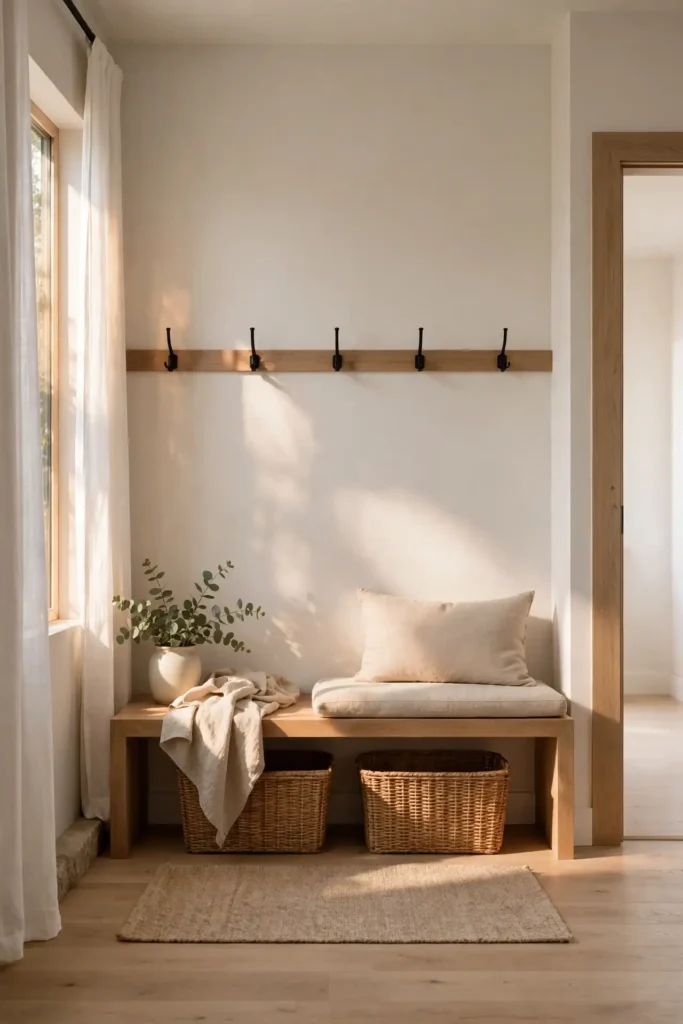
Set a five-minute daily reset: shoes in the tray, coats on hooks, and mail into its folder. Once a season, pull everything out and return only what your family actually used in the last 90 days. Donate the rest to a local Goodwill — mudrooms collect duplicates fast, from extra umbrellas to outgrown boots. Keep cleaning supplies minimal too: one all-purpose spray, a microfiber cloth, and a small broom handle most messes. The goal is a space that resets itself with almost no effort, not a showroom that needs constant attention.
Mudroom Ideas for Small Spaces
Small spaces demand vertical thinking: use every inch of wall from floor to ceiling before you add a single piece of furniture. A wall-mounted folding bench takes up zero floor space when folded, and a peg rail with adjustable hooks adapts as kids grow. Choose pieces no deeper than 12 inches so walkways stay clear — narrow shoe cabinets from IKEA are only 9 inches deep yet hold 18 pairs. Paint walls a light color and add a mirror to double the sense of space. Measure your footprint first; most small mudrooms work within a 3-by-5-foot zone.
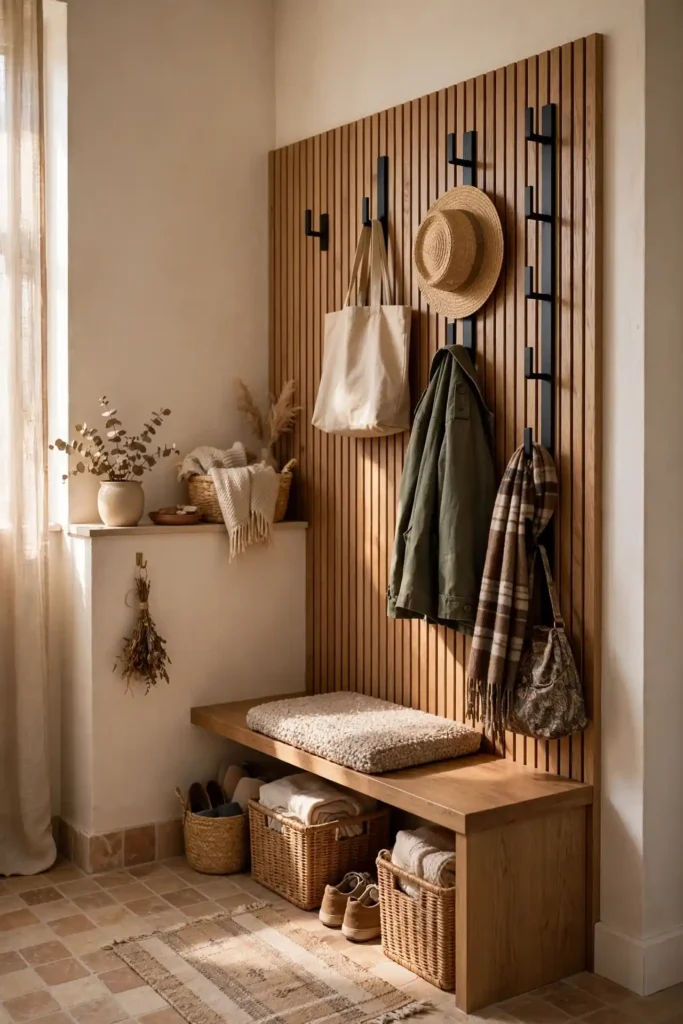
Make every piece earn its place: a bench with storage inside, hooks that double as art, a mirror that hides a cabinet. Replace a swinging door with a pocket door or barn door to reclaim 10 square feet of floor space. Use the back of the door for hooks or an over-the-door shoe organizer — a 24-pocket model costs about 15 dollars on Amazon. Corners are gold: a corner bench or triangular shelf uses space that would otherwise sit empty. In the tiniest entries, even a 2-foot-wide strip with hooks and a tray counts as a mudroom if it keeps gear contained.
Mirrors and light paint colors help small entryways feel larger, while a durable runner protects floors from dirt and water.
Choosing Materials for a Mudroom
Choosing materials for a mudroom means picking finishes that survive water, grit, and daily impact without looking worn. Start with the floor: porcelain tile, luxury vinyl plank, or sealed concrete all handle wet boots. For walls, use semi-gloss or satin paint — or beadboard — so scuffs wipe away. Cabinetry should be plywood or MDF with a catalyzed finish, not raw particleboard that swells with moisture. Hardware matters too: choose solid metal hooks rated for 35 pounds or more instead of adhesive hooks that fail under winter coats. Spend a little more on the surfaces that take abuse; they are cheaper to buy once than to replace twice.
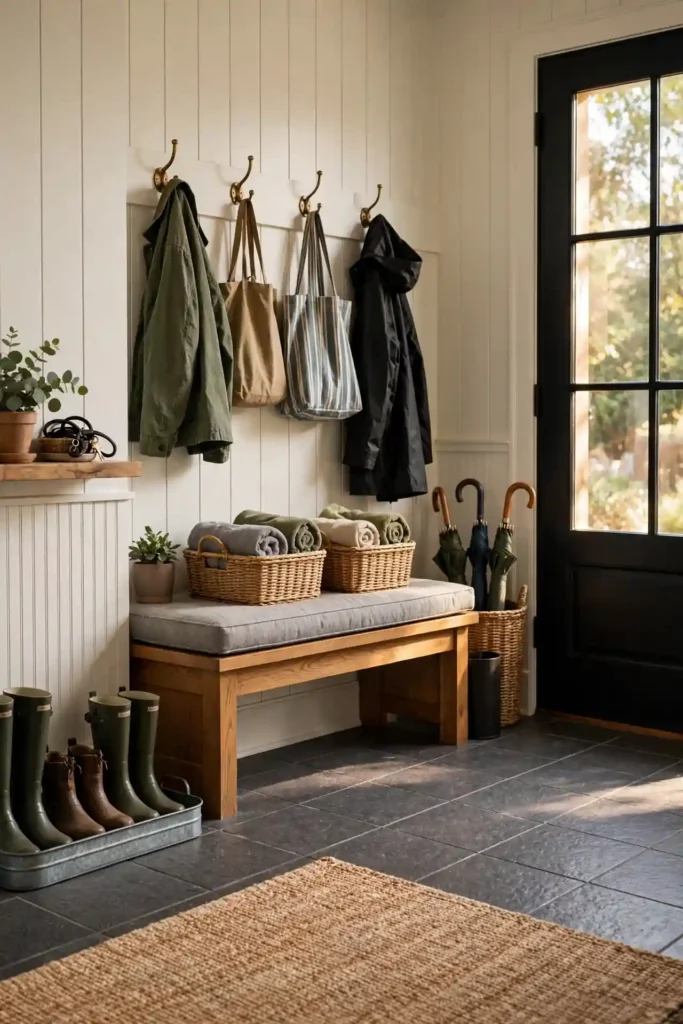
Set your material budget in tiers: splurge on flooring and hardware, save on paint and baskets. A 100-square-foot mudroom floor costs 700 to 2,000 dollars installed depending on material, while paint for the whole room stays under 100 dollars. Order samples and test them hard — spill water, drag a boot, scratch with keys — before committing. Check moisture ratings on every product: look for “suitable for wet areas” on flooring and “kitchen and bath” on paint. The right materials make your mudroom look new for years instead of tired by spring.
Organizing for a Family
Organizing for a family means building a system every member can follow without thinking. Give each person a dedicated cubby, hook set, and basket labeled with their name — kids as young as three can match a color or picture label. Keep daily items at each person’s height: adult hooks at 60 inches, kids’ hooks at 36 to 42 inches. Store seasonal overflow in labeled bins on high shelves. Build in a weekly reset: Sunday evening, everyone returns stray items to their spots. Systems fail when they are complicated, so keep the rules to three: hang it, bin it, or leave it.
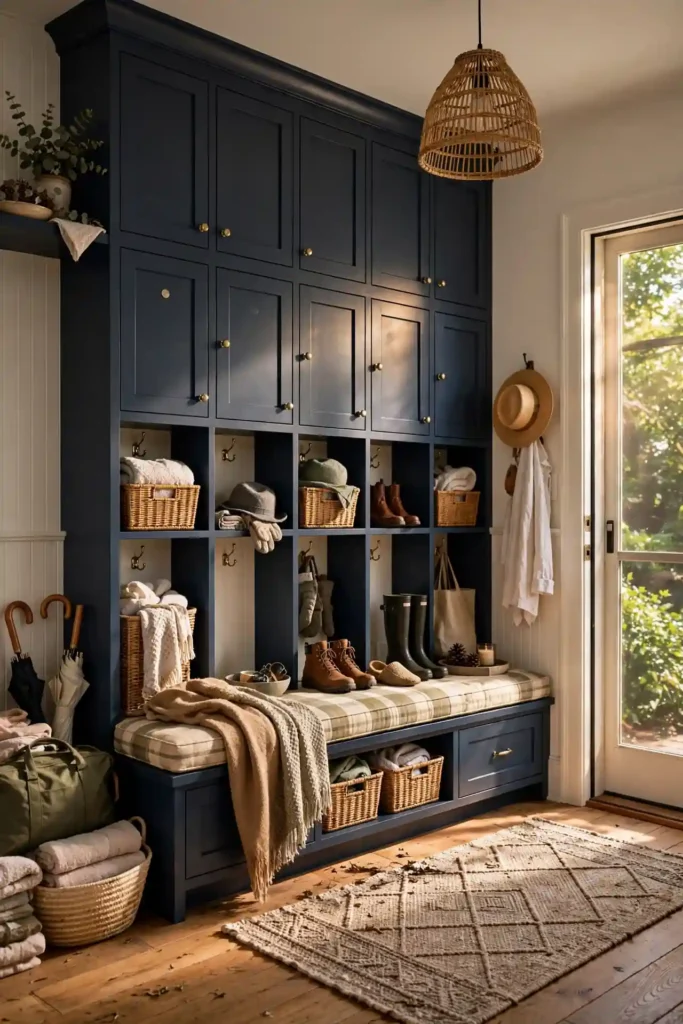
Plan for growth: leave one empty cubby for a new baby, a guest, or the inevitable accumulation of sports gear. Teach the system once with a family walkthrough, then let natural consequences do the work — a forgotten lunchbox stays in its cubby. Keep a donation box in the mudroom so outgrown coats and shoes leave the house instead of piling up. Review the setup every fall before school starts and every spring when winter gear rotates out. A family mudroom works when the laziest member can still use it right, so design for your least organized person.
When it comes to mudroom ideas, the best results come from balancing style, comfort and everyday function. Use this list as your go-to guide for mudroom ideas, and start with the ideas that fit your space best.
How to Plan Mudroom Ideas Step by Step
Planning a mudroom starts with measuring: record the width, depth, and ceiling height of your space, and note door swings and outlet locations. Next, list what the room must hold — count coats, shoes, bags, and sports gear for every family member. Then set a budget: a simple refresh costs 200 to 500 dollars, a mid-range build runs 1,500 to 4,000 dollars, and a full custom mudroom with plumbing reaches 8,000 to 15,000 dollars. Sketch your layout on graph paper or a free room planner, keeping a clear 36-inch walkway through the space.
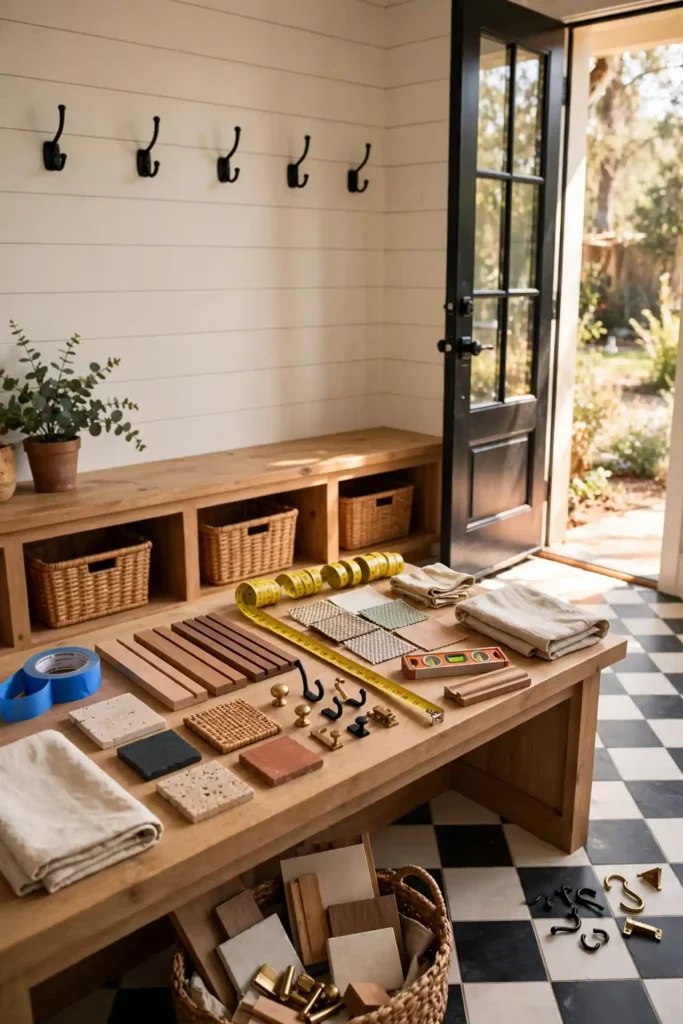
Order materials before demolition: tile, cabinets, and fixtures can take two to six weeks to arrive. Do the messy work first — flooring, then painting, then built-ins — so each layer stays clean. Install hooks and hardware last, after paint fully cures (wait 24 to 48 hours). Build in this sequence: measure, order, demo, floor, paint, install, organize. Photograph each stage for your records and future repairs. Most DIY mudrooms take two to four weekends; a contractor typically finishes in one to two weeks. Live with the layout for a month, then adjust hook heights and basket placement based on real use.
- Choose a location near the most-used entrance.
- Measure and plan bench, hooks and storage.
- Select durable flooring and wall finishes.
- Assign storage zones for each family member.
- Add lighting, rugs and personal touches.
Final Thoughts on Mudroom Ideas
The best mudroom ideas share one trait: they match how your family actually lives, not how a showroom looks. Whether you build custom lockers or simply add hooks and a boot tray, the goal is the same — a smoother morning and a cleaner house. Start with the biggest pain point, whether that is the shoe pile, the coat avalanche, or the missing keys, and solve that first. Every small upgrade compounds: a rug today, a bench next month, cabinets when the budget allows. Your future self will thank you every single morning.
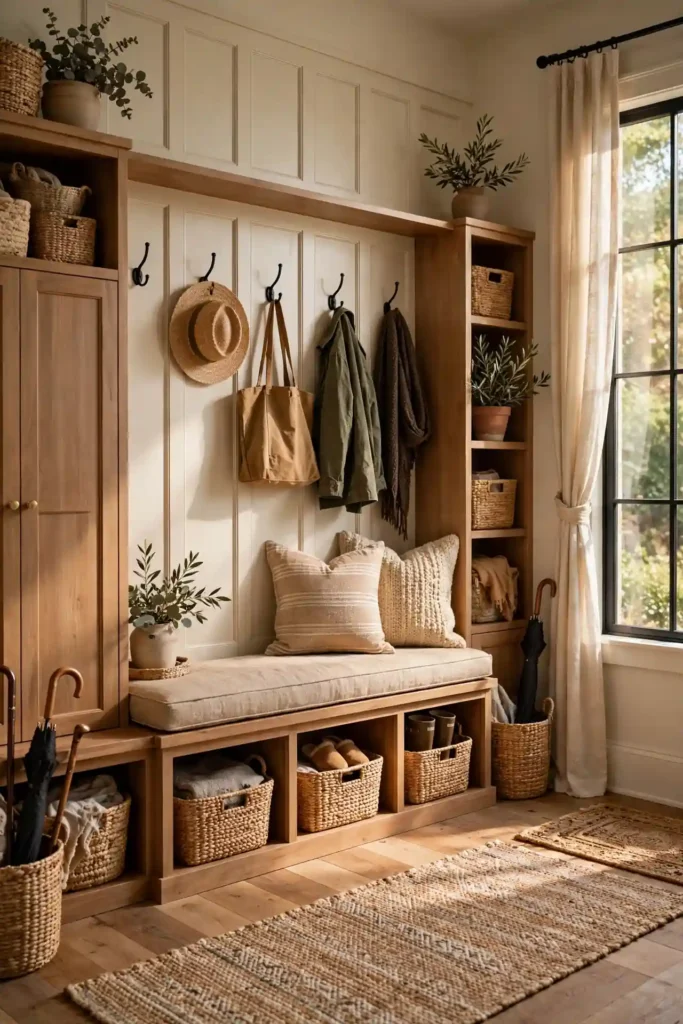
You do not need a big budget or a contractor to get started — most of these ideas take a single weekend and a trip to Home Depot. Pick one project, finish it, and live with it before adding more. Share your mudroom wins with us in the comments, and pin your favorite ideas to Pinterest for later. A well-organized entry sets the tone for your whole home, and it is one of the few rooms where function matters more than decoration. Start small, stay consistent, and enjoy the calm that comes with everything in its place.
Save these ideas and follow along for more organization inspiration.
Frequently Asked Questions About Mudroom Ideas
These are the questions we hear most from homeowners planning a mudroom: how much space you need, what it costs, and which features matter most. A functional mudroom works in as little as 3 by 5 feet, a basic refresh costs a few hundred dollars, and the highest-impact features are hooks, a bench, and washable flooring. Read through the answers below to fine-tune your plan, then revisit the ideas above with fresh eyes. If your question is not covered, ask in the comments — we answer every one. Bookmark this page so you can come back when you start shopping for materials.
Remember that the perfect mudroom is the one your family will actually use. Fancy built-ins mean nothing if the hooks are too high for the kids or the drawers stick. Keep your design simple, your materials tough, and your system easy enough for the busiest morning. With the right plan, your mudroom becomes the hardest-working room in the house — and the one you are most glad you built. Good luck with your project, and enjoy the organized mornings ahead. Pin your favorite ideas, share your progress in the comments, and come back anytime you need a fresh dose of inspiration.
What should a mudroom include?
A bench, hooks, shoe storage, baskets and durable flooring.
How do I create a mudroom without a mudroom?
Use an entryway wall with a bench, hooks and a shelf.
What is the best flooring for a mudroom?
Porcelain tile, slate, brick or luxury vinyl plank.
How high should mudroom hooks be?
About 60 to 66 inches for adults and 36 to 48 inches for kids.
How do I keep a mudroom organized?
Assign zones, label baskets and do a weekly reset.








Leave a comment