



Curtains are the quiet workhorse of dining room design. They soften hard architecture, absorb the echo that bounces off a table and hard floor, control glare during daytime lunches, and add the colour or pattern a neutral scheme is missing. Because a dining room is usually furnished with hard surfaces — timber, glass, metal, stone — fabric at the window is often the single element that makes the space feel finished rather than staged. Get the length, fullness and hanging height right, and even inexpensive panels will look custom-made.
Below are 33 pretty dining room curtain ideas covering styles, fabrics, colours, headings and window types. You will find breezy linen and sheer voile for light-filled breakfast rooms, velvet and blackout layers for formal evening dining, café curtains for cottage windows, and practical solutions for bay windows, sliding doors and awkward ceiling heights. Each idea explains what it looks like and when it works best, so you can pick window treatments that suit your room’s light, size and personality.
1. Floor-to-Ceiling Linen Panels
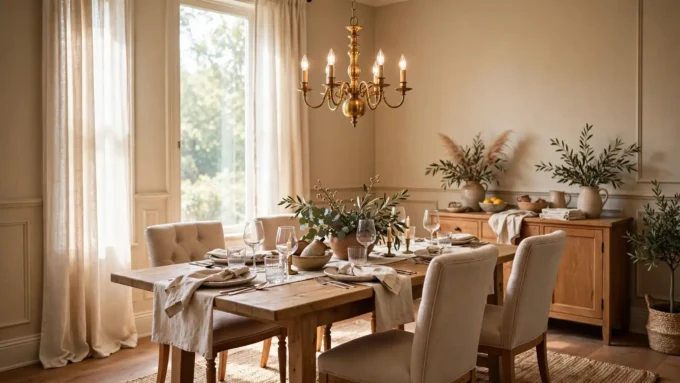
Hanging linen from just below the ceiling down to the floor is the fastest way to make a dining room feel taller and more expensive. The eye reads the full vertical drop as window height, even when the actual glass is modest. Linen’s slight irregularity and natural drape suit relaxed, modern and coastal schemes, and it filters light into a soft glow rather than blocking it. Choose a medium weight so panels hang with body instead of clinging. Allow at least double the window width in fabric so the folds look generous rather than stretched.
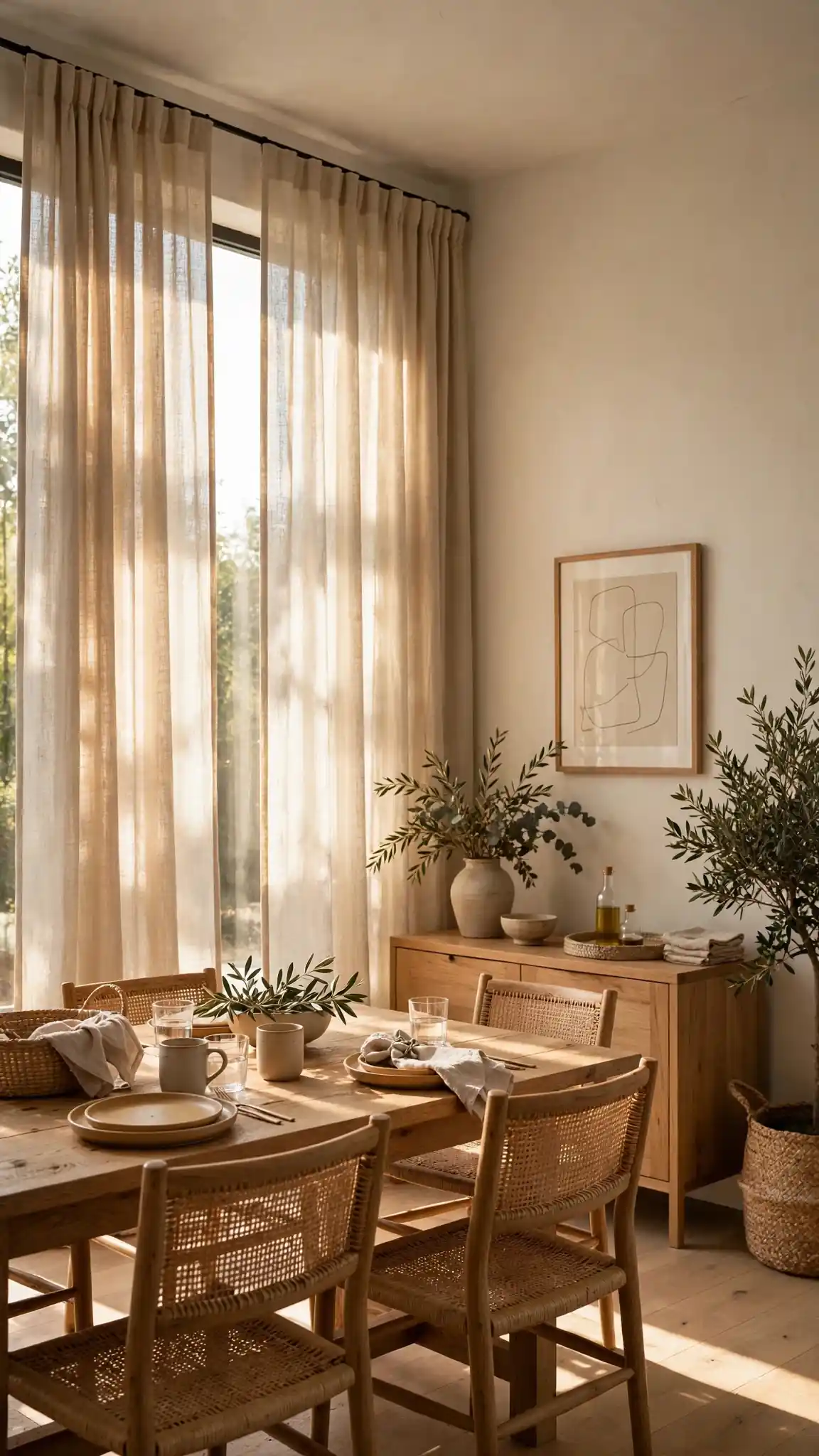
Hang the rod four to six inches below the ceiling and extend it eight to twelve inches past the frame on each side, so open panels stack on the wall instead of covering glass. Budget roughly $25 to $70 per 96-inch linen panel from IKEA, Target, or Half Price Drapes; custom Belgian linen can exceed $200 a panel. Prewash or buy pre-shrunk fabric, since linen can shrink up to five percent and ruin your hem. Finish the hem about a half inch above the floor for a clean break that won't collect dust. Pro tip: steam panels vertically right after hanging to release packing creases without ironing out linen's natural character.
2. Crisp White Sheer Voile
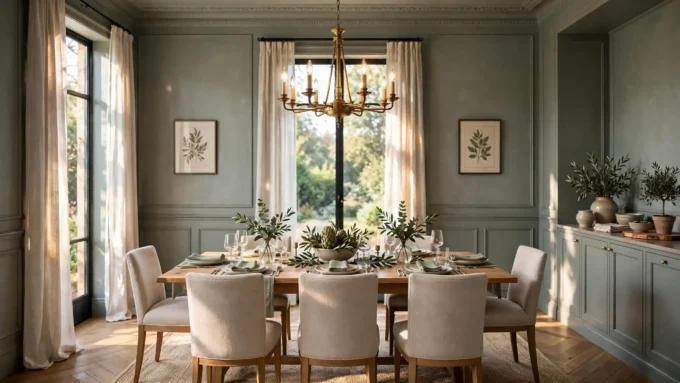
Sheer voile is the answer when a dining room needs privacy without sacrificing daylight. It diffuses harsh sun into a flattering wash, hides an unattractive view, and keeps the room bright for lunches and homework at the table. White and off-white sheers recede visually, making them ideal in small dining rooms where heavier fabric would dominate. Hang them wide of the window frame so they never obstruct glass, and choose polyester-blend voiles if you want easy machine washing and reliable resistance to sun fading.
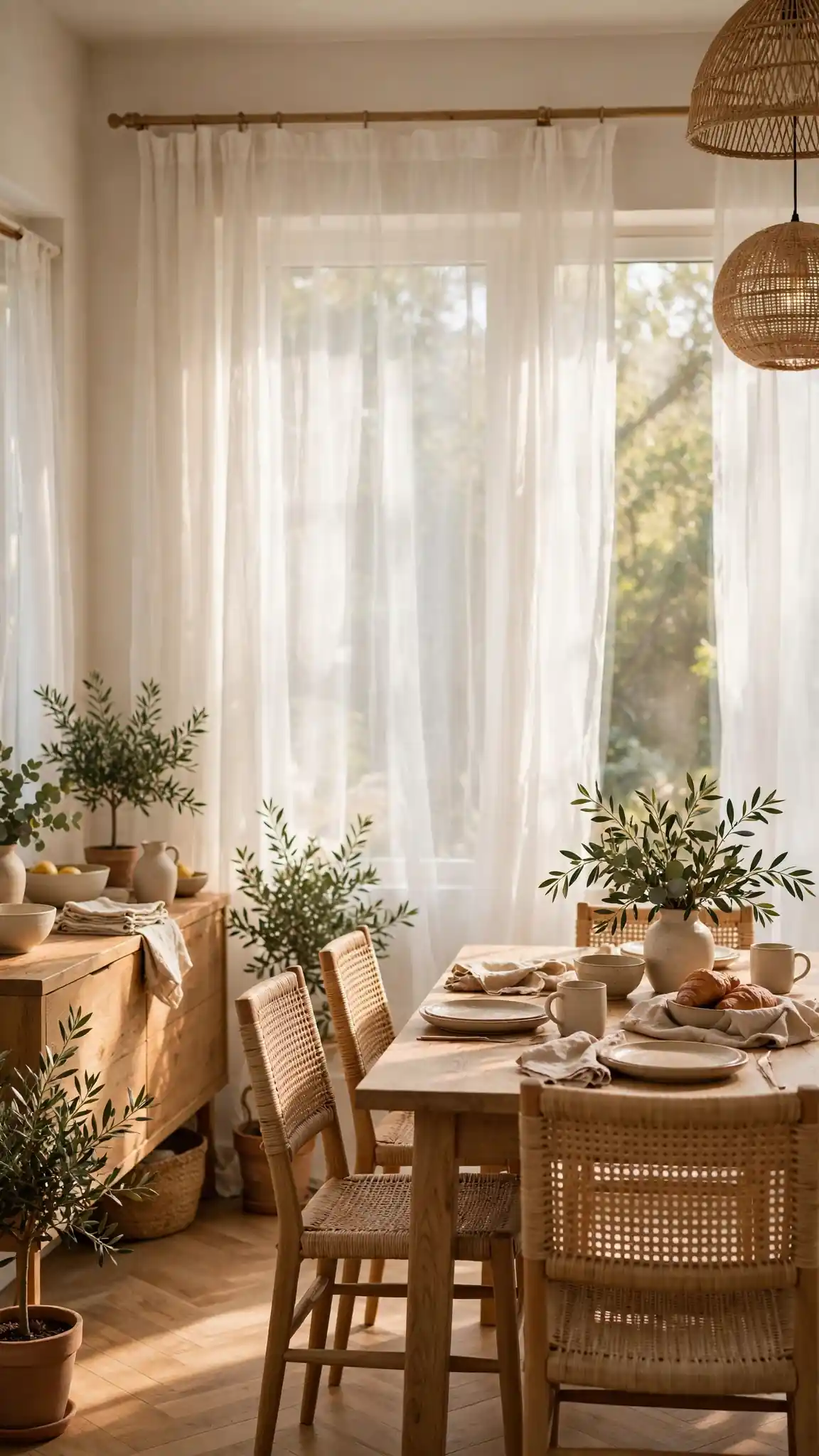
Size sheers so each panel covers one and a half to two times the window width; skimpy sheers look cheap even at premium prices. Ready-made voile panels run about $10 to $35 each at Amazon, IKEA, and Wayfair, while custom sheers cost $50 to $120 per panel depending on width. Mount them on an inside tension rod for a simple look, or add them to the inner channel of a double rod if you plan to layer later. Wash in cold water on delicate and rehang damp so gravity does the pressing. Pro tip: choose a voile with a UV rating if the table sits in direct sun, since untreated sheers can yellow within two summers.
3. Layered Sheers with Blackout Drapes
Layering gives you two rooms in one. Sheers stay closed during the day for softness and privacy; heavier lined drapes pull across at night for warmth, darkness and intimacy around the table. Use a double curtain rod or a track with two channels, keeping the sheer on the inner track closest to the glass. This arrangement genuinely improves thermal performance, reducing draughts near the dining table in winter. Match the drape colour to your walls for a calm effect, or contrast it for drama.
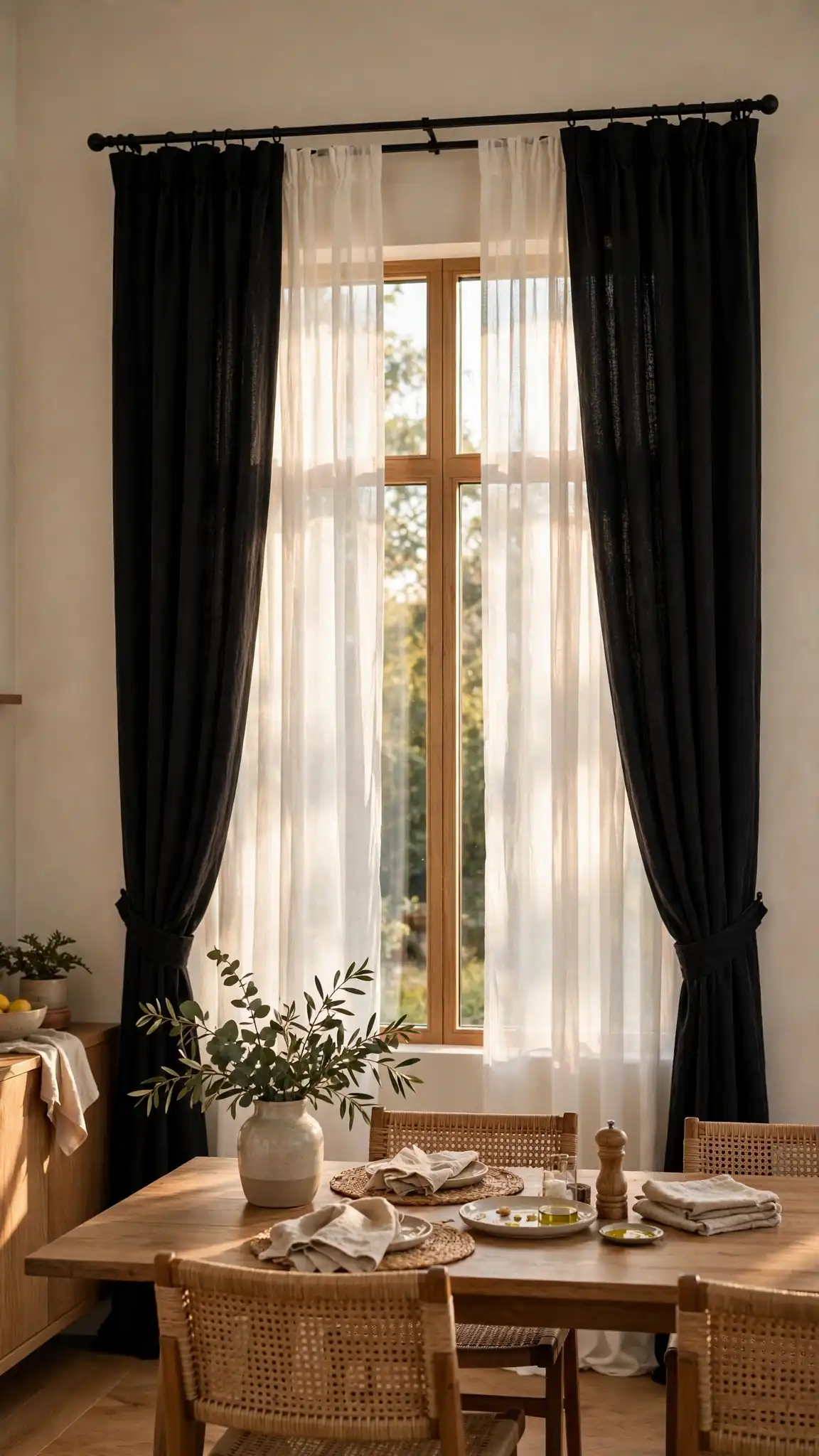
A double rod set costs about $30 to $80 at big-box stores and does the job perfectly; wall-mount brackets should sit four to five inches above the frame. Expect to spend roughly $80 to $300 total for a standard six-foot window when you combine a $20-per-panel sheer with $40-to-$80 blackout drapes. For genuine thermal benefit, add a return: let the drape ends wrap back to the wall so air can't leak behind the panel. Blackout linings also protect fabric from sun rot, extending drape life by years. Pro tip: hang the sheer panel at least one full width wider than the drape layer so it never pulls taut or peeks unevenly at the edges.
4. Rich Velvet Drapes
Velvet is the most theatrical fabric you can hang in a dining room, and formal dining is exactly where theatre belongs. Its dense pile absorbs sound noticeably, softening the clatter of cutlery and conversation, and it insulates well against cold windows. Deep emerald, burgundy, navy and chocolate all catch candlelight beautifully. Cotton and mohair velvets drape more elegantly than stiff polyester versions. Because velvet is heavy, invest in a sturdy pole with adequate brackets, and steam rather than iron to protect the pile.
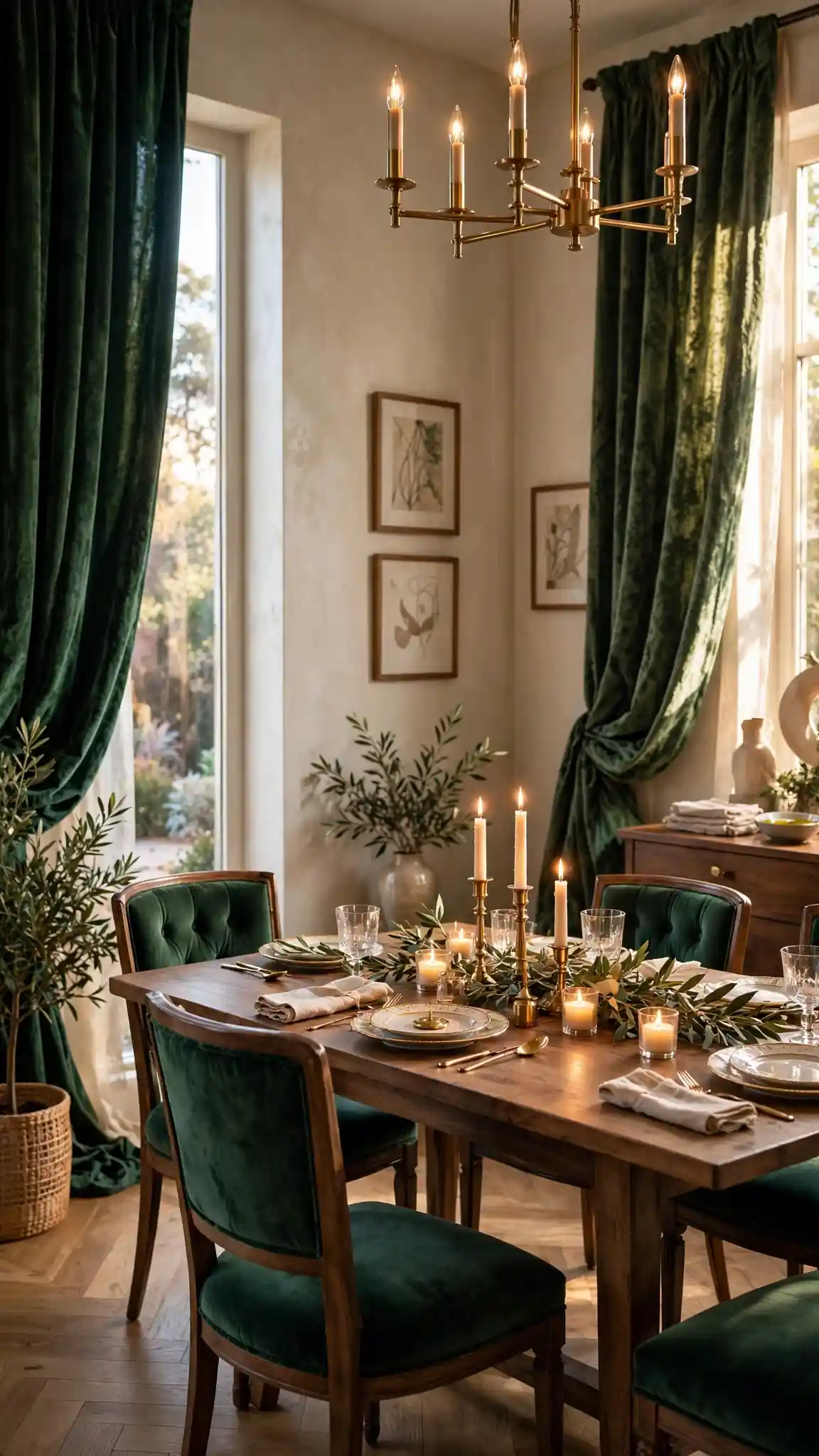
Quality matters more than pattern with velvet: cotton or cotton-blend velvet runs about $35 to $90 per ready-made panel, while cheap polyester velvet crushes unevenly and shines like plastic. Because a pair of velvet panels can weigh ten pounds or more, use a pole of at least one inch diameter with brackets every 48 inches and wall anchors rated for the load. A handheld steamer at $25 to $40 is the right care tool; never press velvet with an iron. Pro tip: brush the pile upward with a dry sponge between cleanings to lift flattened areas where chairs bump the fabric.
5. Botanical Floral Print Curtains
A floral print at the window brings the garden indoors and stops a dining room feeling severe. Large-scale blooms suit tall windows and generous rooms, where the pattern can be read properly; small ditsy prints work better in cottage-scale spaces. Pull one or two colours from the print into your chairs, rug or tableware for a scheme that looks considered. If the walls are plain and the furniture simple, a bold botanical curtain can carry the entire personality of the room on its own.
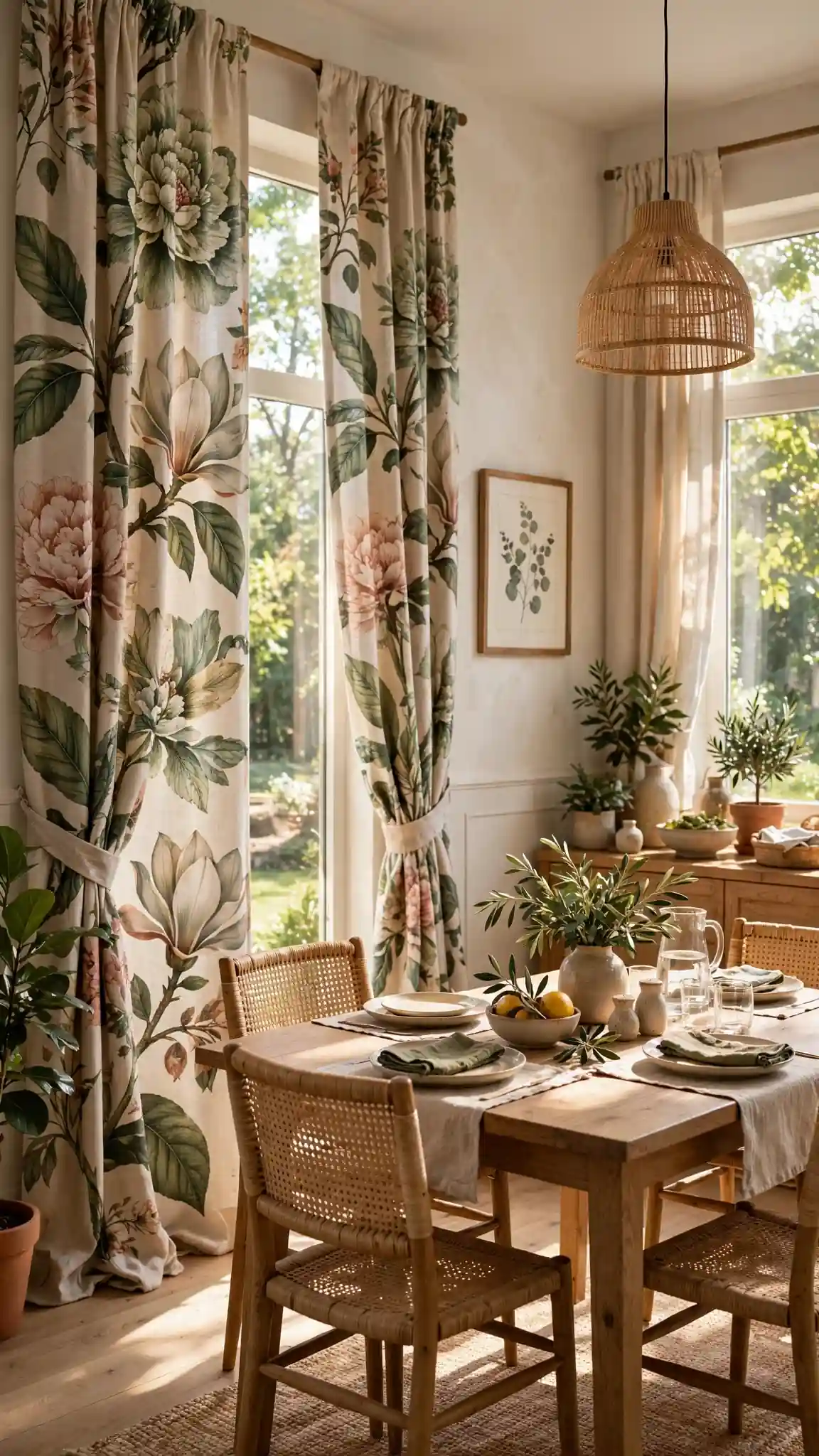
Match the print scale to the window: blooms bigger than eight inches need windows at least five feet wide, while ditsy prints under two inches suit windows under four feet. Ready-made floral panels cost $20 to $60 each at Target, Anthropologie, and Spoonflower-fed custom shops; custom botanical prints start around $150 per panel. If the print repeats every 12 inches, remember to buy panels long enough that the pattern aligns across the pair. Line them with white cotton to stop the print showing through at night. Pro tip: photograph your rug and chair fabric on your phone before shopping so you can color-match the print in the store aisle.
6. Vertical Stripe Curtains
Stripes are the most underrated pattern for dining rooms because they add interest without visual noise. Vertical stripes exaggerate ceiling height, making them especially effective in rooms with standard eight-foot ceilings. Wide ticking stripes read as classic and slightly rustic; fine pinstripes feel tailored and contemporary. Two-tone stripes in a neutral plus one accent colour coordinate easily with existing furniture. Because the pattern is directional, take extra care that panels are hemmed straight — a crooked stripe is instantly obvious.
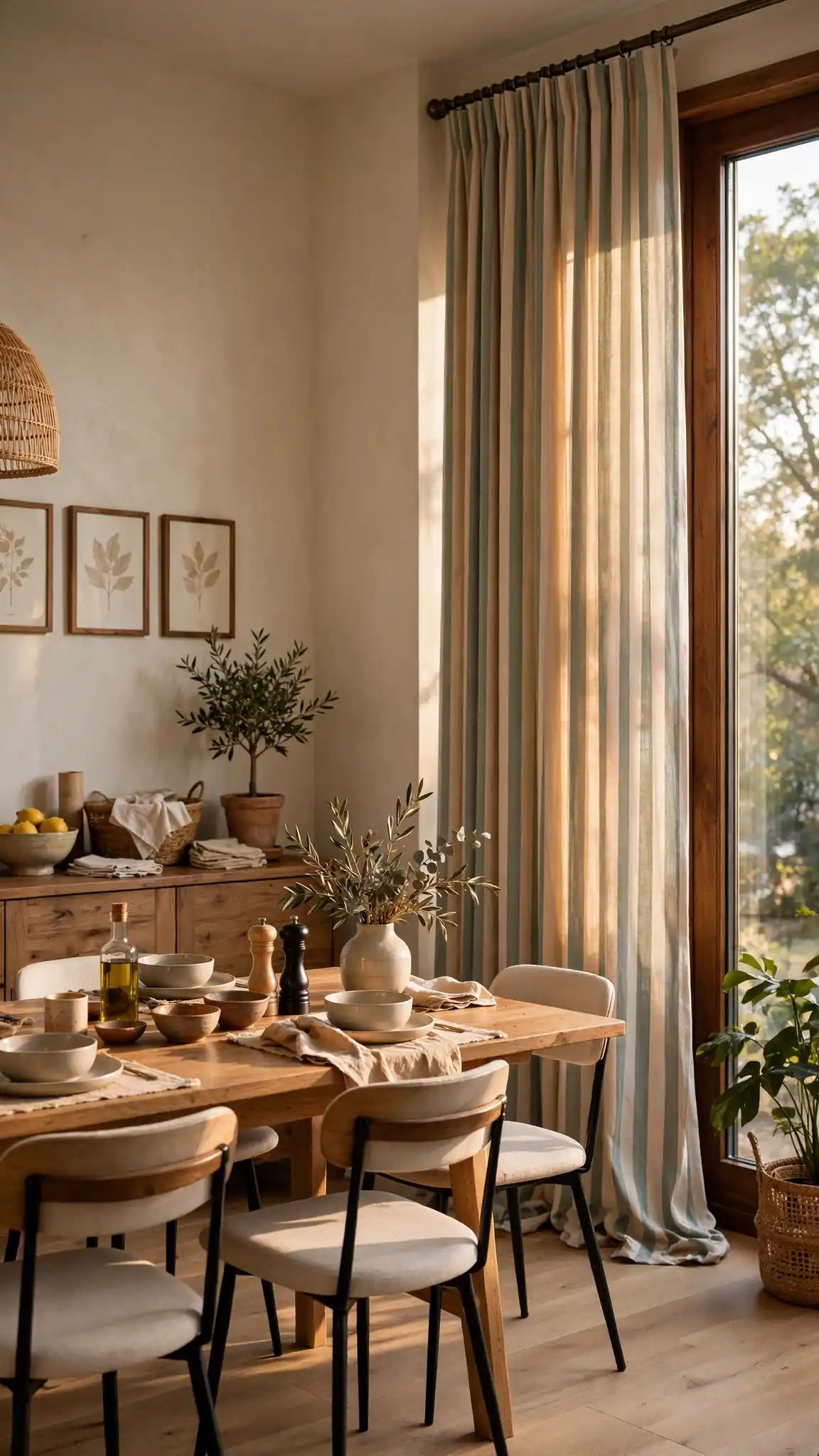
For stripes to read correctly, every panel must be cut on the exact same vertical repeat, so buy all panels from the same dye lot and order one spare if lengths differ. Expect $25 to $70 per panel for ticking stripe or pinstripe cotton. When measuring, add four inches of drop for the hem plus one inch for the header so stripes finish square at the floor. Crooked hems are the number one stripe mistake: have the tailor check each stripe against a level line before sewing. Pro tip: place the boldest stripe toward the inner leading edge so the eye catches it first when the curtains are drawn.
7. Pinch Pleat Drapes
Pinch pleats are the most formal and tailored heading available, with fabric gathered into groups of two or three folds at the top. The result is a crisp, evenly spaced ripple that holds its shape whether open or closed. Triple pinch pleats suit grand dining rooms with high ceilings, while double pleats offer a slightly softer, more contemporary version. Pleated headings require more fabric — typically 2.5 times the track width — which is precisely why they look so rich compared with flat panels.
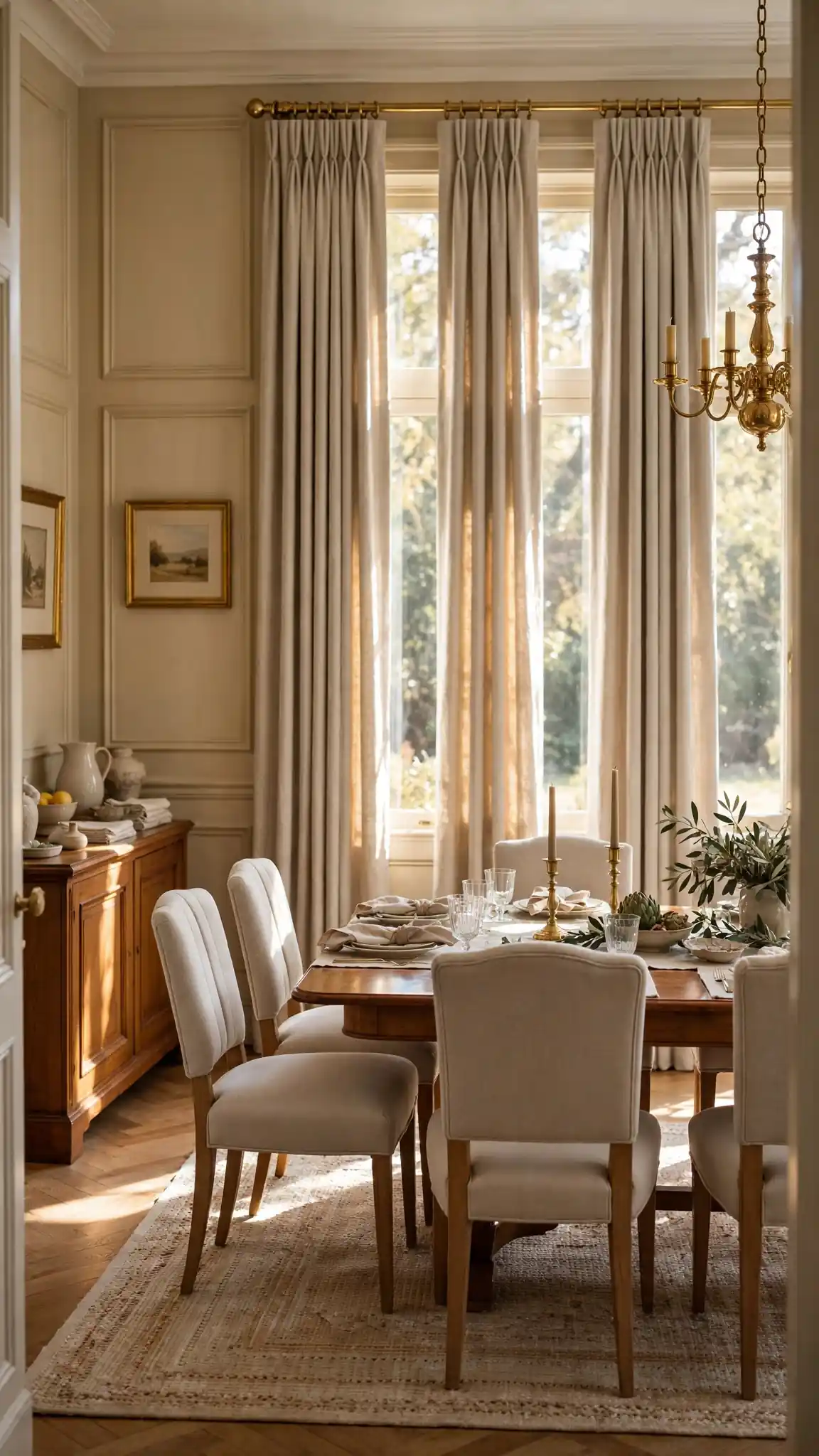
Pinch pleats need 2.5 times fullness, so a 60-inch window requires about 150 inches of fabric — two 96-inch panels won't cut it, budget three. Ready-made pinch pleats start around $60 per panel; custom pleated drapes run $200 to $500 per panel including lining. The pleats sit on pin hooks that slide into rings or a traverse rod, so measure hook drop carefully to keep the hem where you want it. Lining adds roughly $15 to $25 per panel but keeps pleats crisp for years. Pro tip: steam each pleat's folds after hanging and leave panels closed for 48 hours so the folds 'train' into their shape permanently.
8. Wave or Ripple Fold Headings
Wave headings run on a specialised track and produce continuous, uniform S-curves from one end to the other. The look is clean, modern and architectural, with no visible pleats or gathers to date the room. They stack back very neatly, revealing more glass than pleated alternatives — useful when the dining table sits close to the window and you want maximum light. Wave suits minimalist, Scandinavian and contemporary dining rooms where simplicity is the point and fuss would feel wrong.
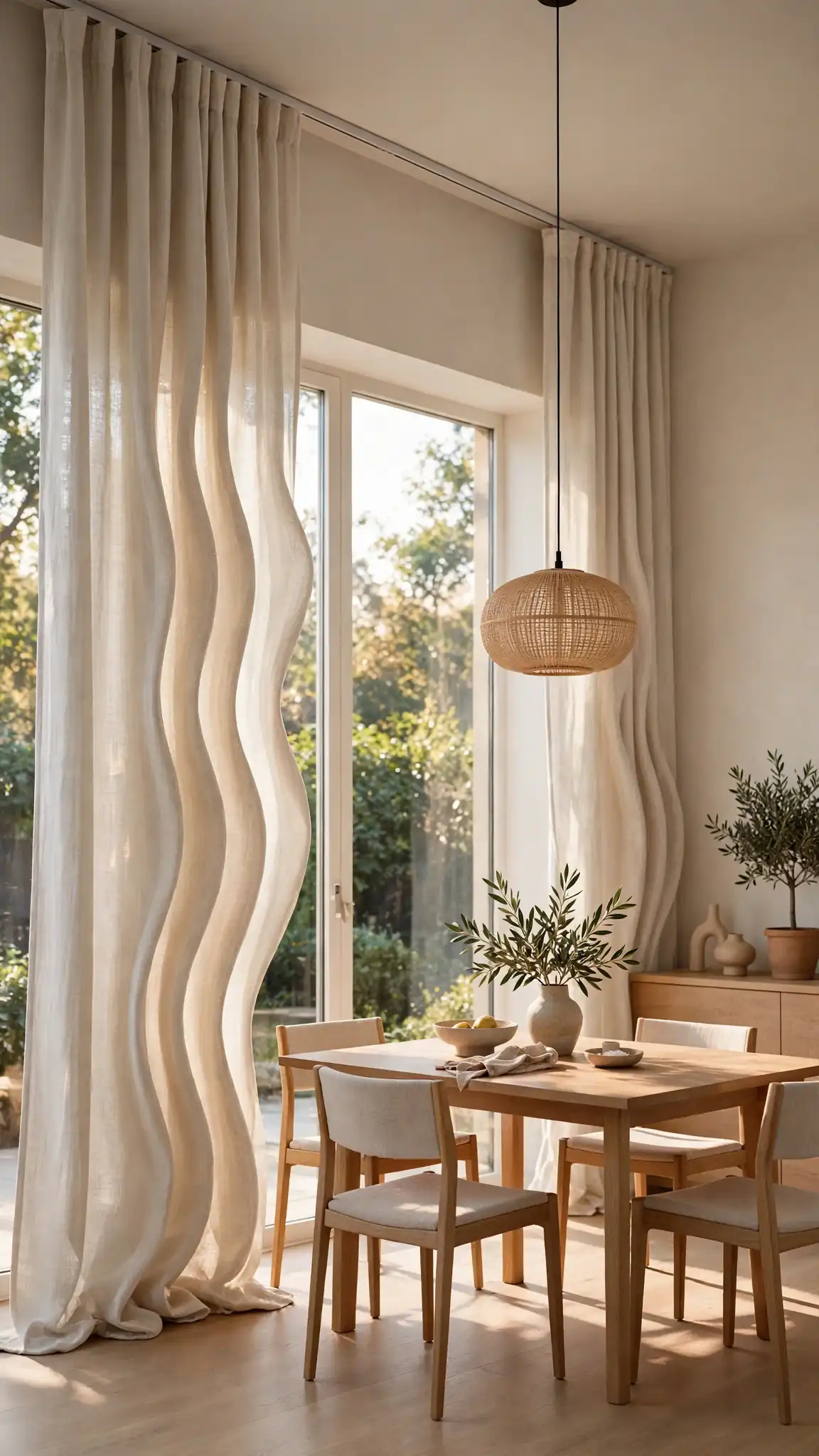
A wave heading needs its matched ripple-fold track — standard rods won't work — so budget about $40 to $120 for a quality track plus $60 to $150 per panel for ready-made wave drapes. The carriers come set at two carrier widths; use the narrower 60mm spacing for tight waves and 80mm for looser ones. Because waves stack very flat, extend the track at least six inches past each side of the frame for near-full glass clearance. Keep fabric weights medium: heavy velvet can overwhelm the carriers. Pro tip: order the track slightly longer than needed and cut to fit, since too-short tracks can't be stretched.
9. Grommet Top Curtains
Grommet, or eyelet, curtains thread directly onto the pole through metal rings, creating deep, evenly spaced folds with almost no effort. They glide open and closed smoothly, which matters if you adjust them daily around mealtimes. The exposed metal rings offer a chance to echo other hardware in the room — brushed brass with warm woods, matte black with industrial lighting. The style leans casual and contemporary, so it suits family dining rooms and kitchen-diners better than very formal settings.
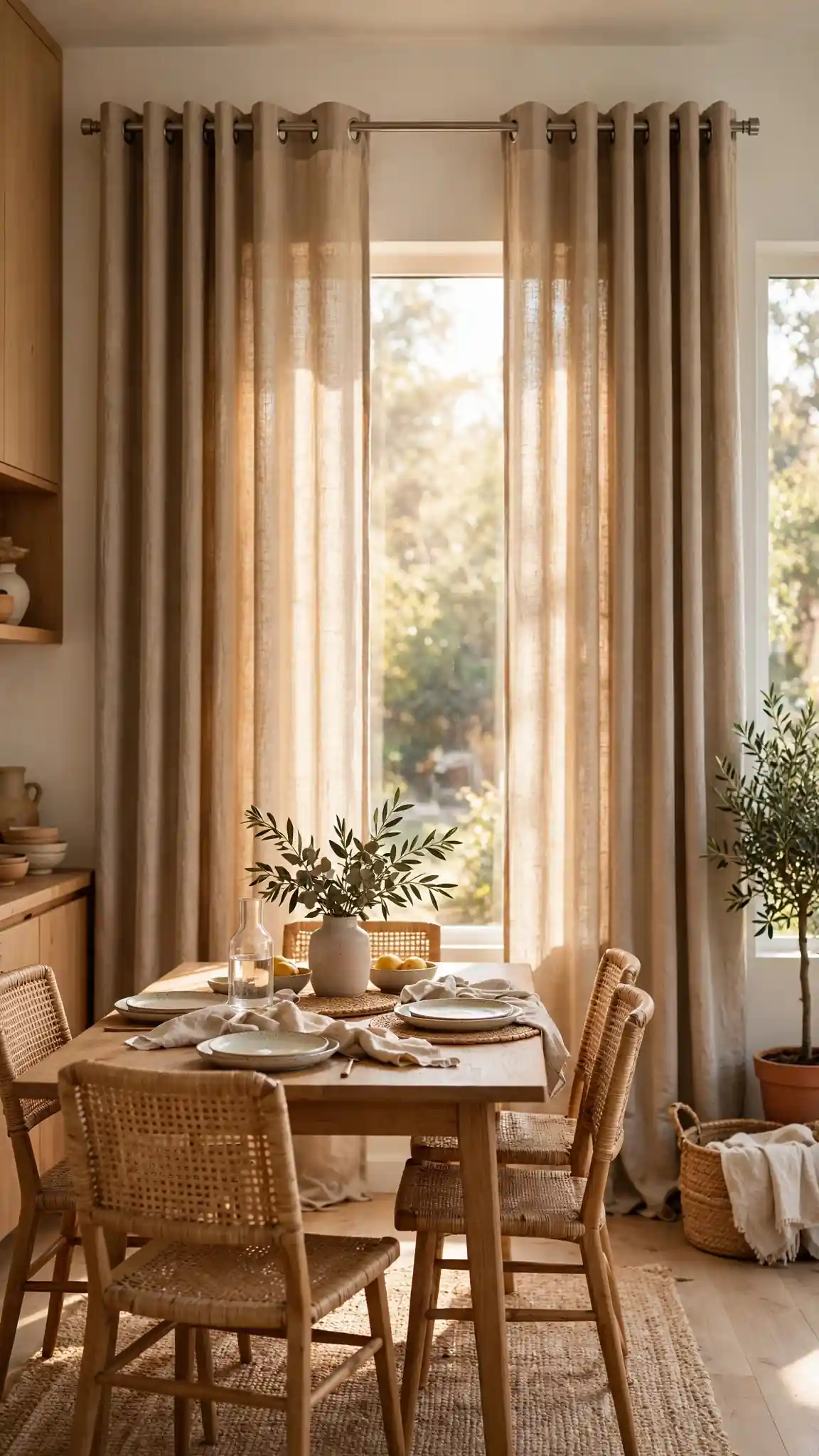
Grommet panels are the easiest DIY: metal eyelets slide onto any pole of one to one-and-a-half inches diameter, no hooks needed. Ready-made grommet curtains cost $15 to $45 per panel at IKEA, Target, and Amazon. Use about one and a half widths of fullness; the grommets themselves create the fold rhythm, so less fabric works here than with pleats. Match the ring finish to your pole — brass grommets on a black pole looks accidental. Wipe rings with a damp cloth twice a year to stop them sticking. Pro tip: leave a half inch of clearance between the panel top and the pole so the grommets glide silently instead of scraping.
10. Rod Pocket Cottage Curtains
Rod pocket panels slide onto the pole through a sewn channel, gathering into soft, informal ruching. It is the simplest and usually cheapest heading, and it gives an unmistakably cottage, farmhouse or country feel. Because the fabric grips the pole, these curtains are best for panels you rarely open and close — a decorative frame rather than a working treatment. In a dining room with painted timber, a dresser and vintage china, rod pocket curtains in a small print look entirely at home.
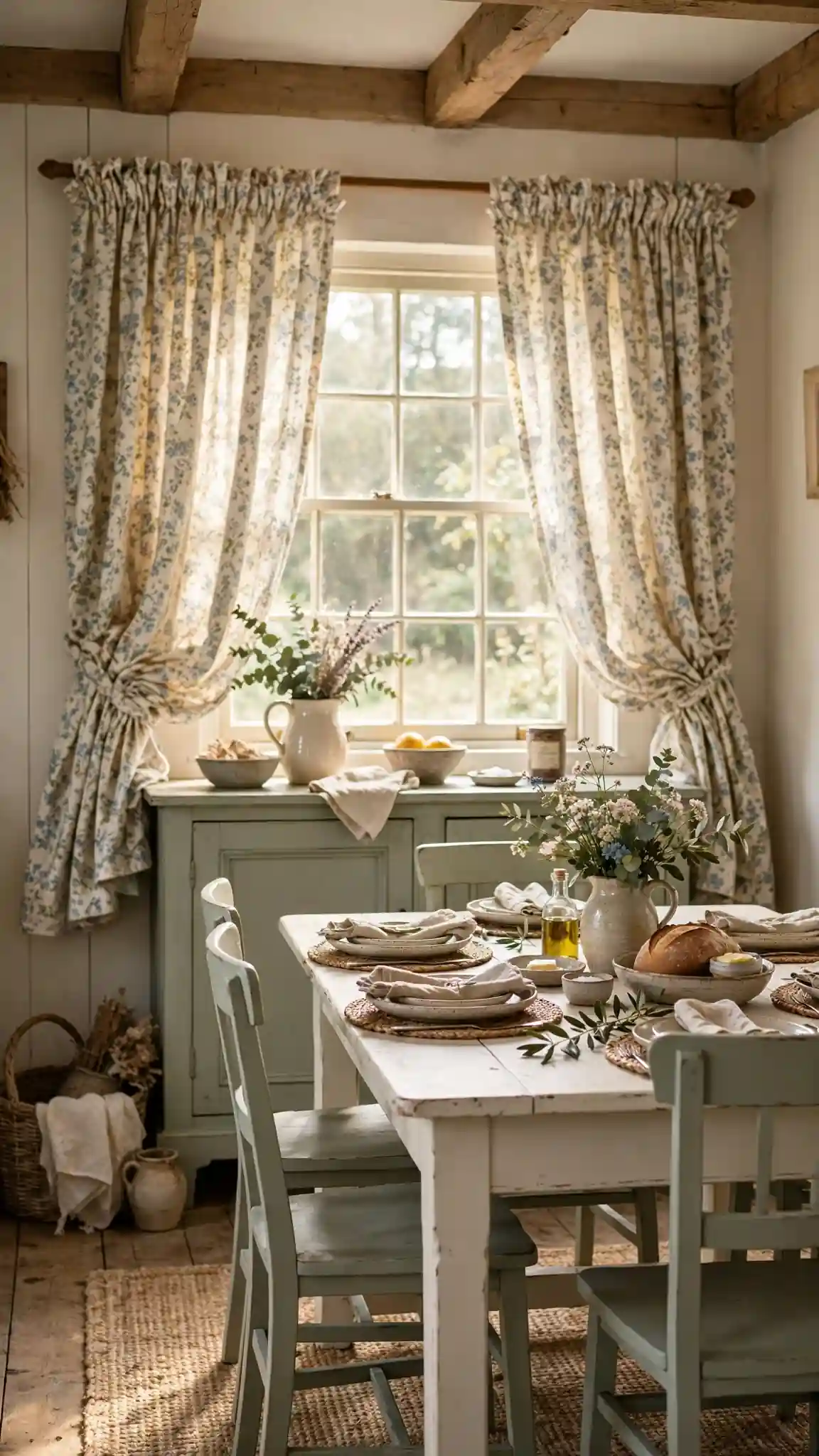
Measure the rod diameter before buying: a one-inch pocket fits a one-inch pole snugly, which looks neat but barely slides, while a three-inch pocket gathers loosely and hangs more elegantly. Ready-made rod pocket panels are the budget champion at $10 to $30 each, making a full dining room treatment cost under $80. Since they don't glide, add clip rings if you ever want to draw them — the rings slip through the pocket. Iron the pocket channel crisp so panels distribute evenly instead of bunching. Pro tip: thread a thin wooden dowel through the pocket above the rod to keep the gathers evenly spaced and stop them sliding to the middle.
11. Tab Top Rustic Panels
Tab tops use fabric loops sewn along the header to hang the panel from the pole, leaving the pole clearly visible between each tab. The effect is relaxed, handmade and slightly rustic, pairing naturally with reclaimed wood tables, woven pendants and linen upholstery. Contrasting tabs — natural linen loops on a dyed panel, for instance — add a subtle detail worth doing. Like rod pockets, tabs create friction on the pole, so choose them for windows you do not need to operate constantly.
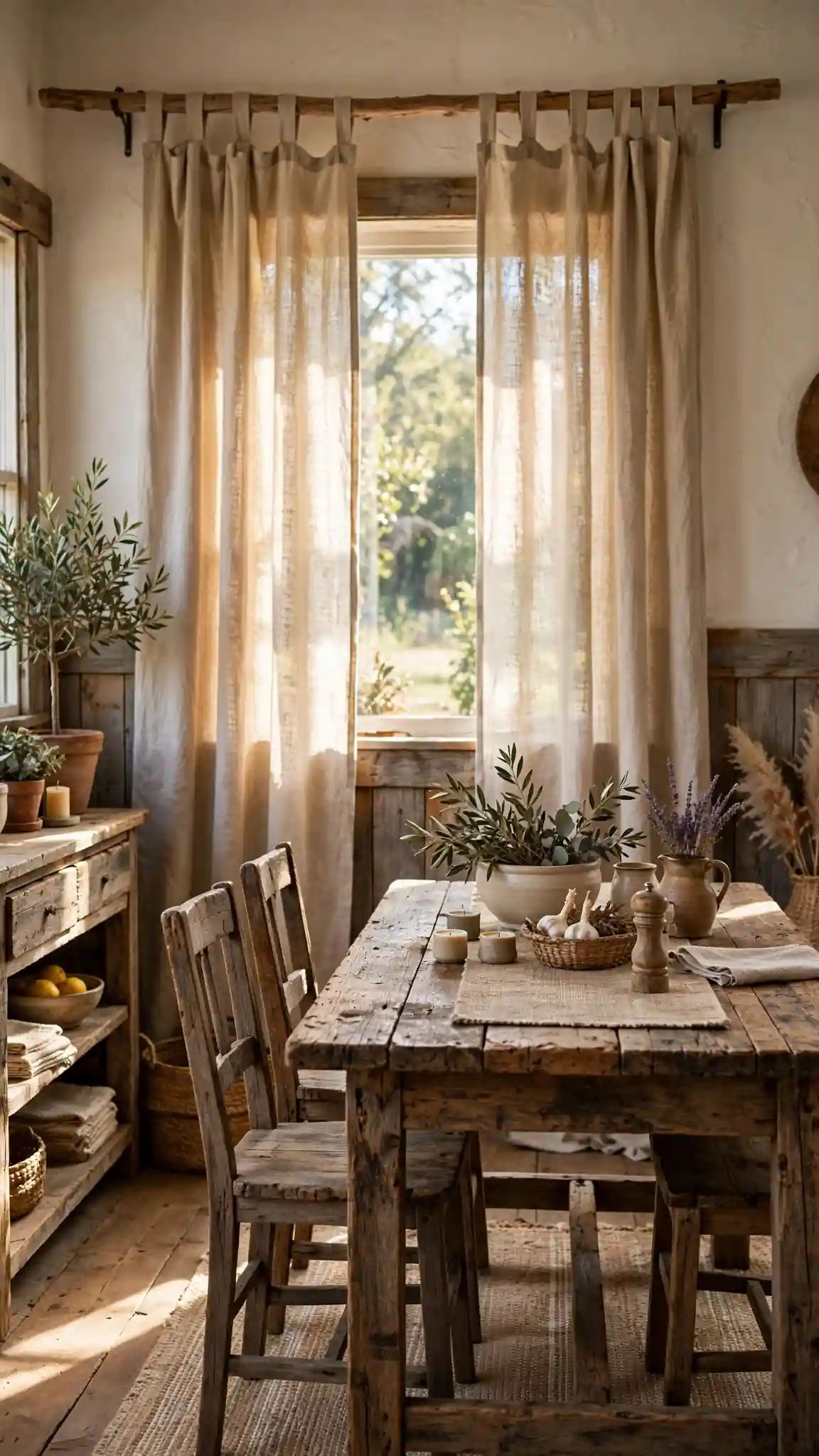
Make tabs at least one and a half inches wide and finish them with button or knot details for a crafted look; skinny tabs stretch and tear under weight. Tab panels cost $20 to $50 ready-made, and they're among the easiest to sew yourself — straight seams only, about an hour per panel. If contrast tabs appeal to you, buy or make extras, since dye lots shift and matching later is frustrating. Use a pole with decorative finials, because the gaps between tabs put it on full display. Pro tip: rub a little candle wax on the pole where each tab sits; it dramatically reduces friction so panels slide instead of bunching.
12. Café Curtains
Café curtains cover only the lower half of the window, hung from a slim rod at the midpoint. They deliver privacy at seated eye level while leaving the top half of the glass open for daylight — an elegant solution for a dining room facing a street or a neighbour. The style is closely associated with French bistros and English cottages, and it works beautifully in a scalloped edge or simple gingham. Pair with a matching valance above for a more complete, traditional look.
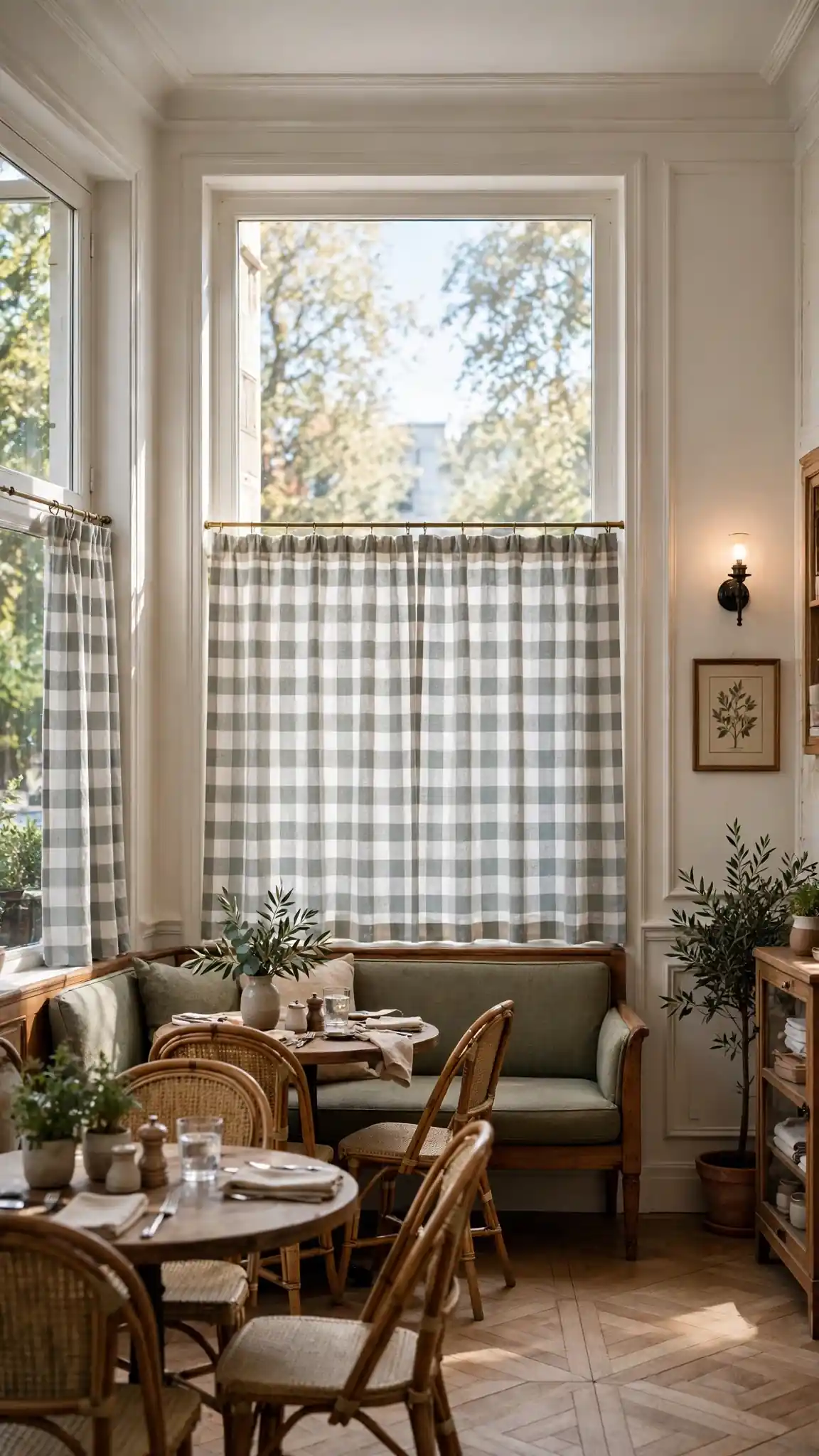
The café rod should sit at about 60 percent of the window height — roughly seated eye level — and extend two inches past the frame each side. Budget $20 to $60 total: a slim tension or sash rod costs under $15 and ready-made café panels run $12 to $25 per pair. Measure the drop from the rod to the windowsill and add two inches for hems; too-long café curtains look like a mistake, not a style. Scalloped edges need at least two inches of extra hem allowance. Pro tip: if privacy is only a nighttime concern, add an inside-mounted roller shade above and leave the café panels purely decorative during the day.
13. Roman Shades
Roman shades pull up into neat horizontal folds, giving fabric softness without the bulk of full-length panels. They are ideal where a dining sideboard, radiator or built-in bench sits directly beneath the window and floor-length curtains would be impractical. Flat Romans look tailored and modern; relaxed Romans with a gentle curve at the bottom feel softer and more traditional. Mounted outside the recess and above the frame, they make the window appear considerably larger than it is.
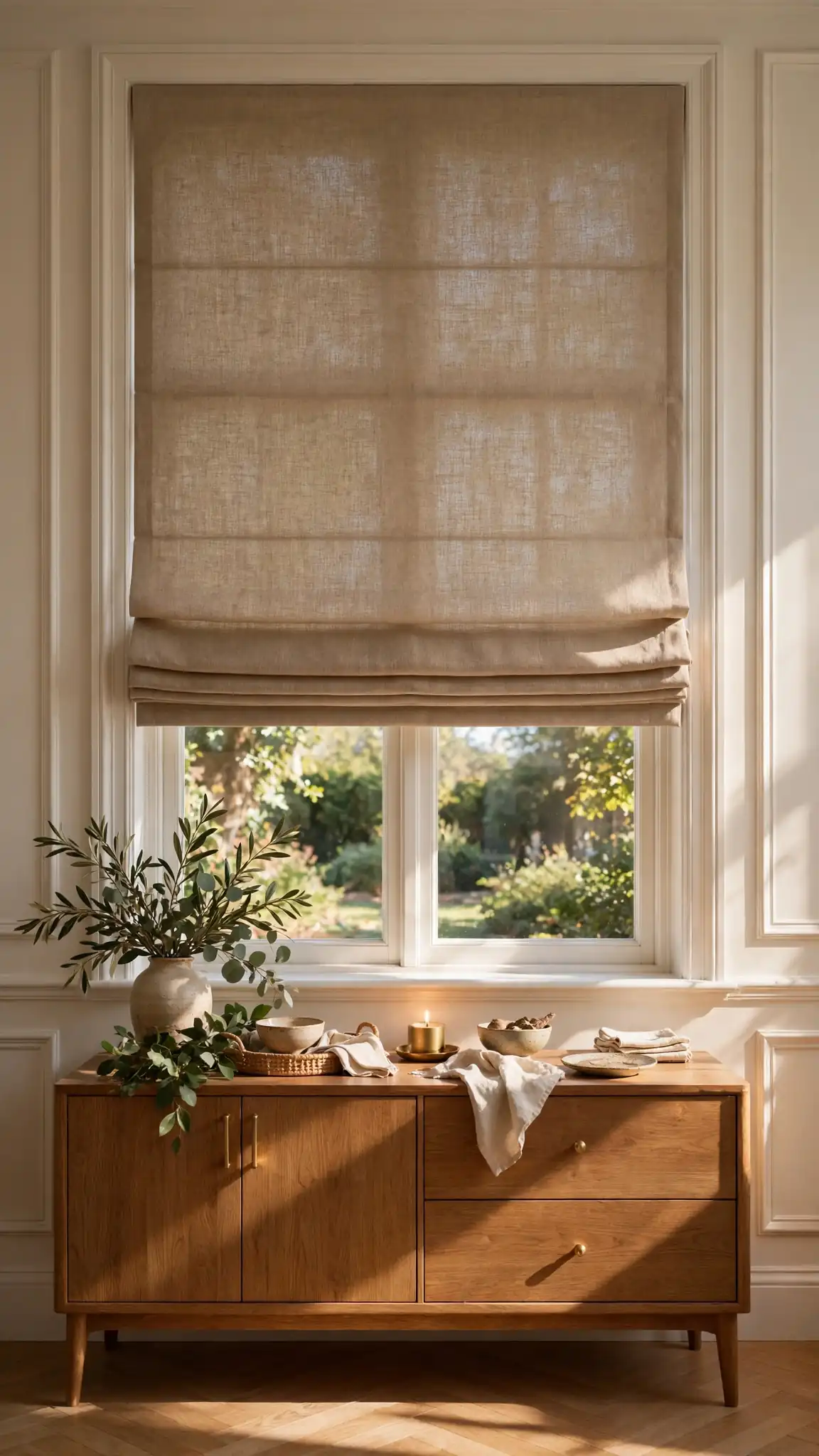
For outside mounting, order the shade four to six inches wider than the frame and three inches taller, mounted at least two inches above it — this is what creates the 'bigger window' illusion. Custom Roman shades cost $100 to $300 per window; ready-made ones run $30 to $90. Flat-fold styles need crisp fabric like cotton twill, while relaxed styles suit soft linen. Always choose cordless lifts around dining chairs for safety and a cleaner look. Pro tip: pick a fabric with a white or off-white lining on the street side so neighbors see a uniform shade even when your interior print is bold.
14. Woven Wood and Bamboo Shades
Woven wood shades bring organic texture that painted walls and polished tables cannot supply. Made from bamboo, reed, jute and grasses, they filter light into warm, dappled patterns and immediately relax a formal dining room. They suit coastal, boho, tropical and modern-organic schemes, and pair especially well with rattan chairs and a jute rug. Add a privacy liner if the room faces a neighbour, since unlined weaves are quite open, and choose a cordless lift for child safety.
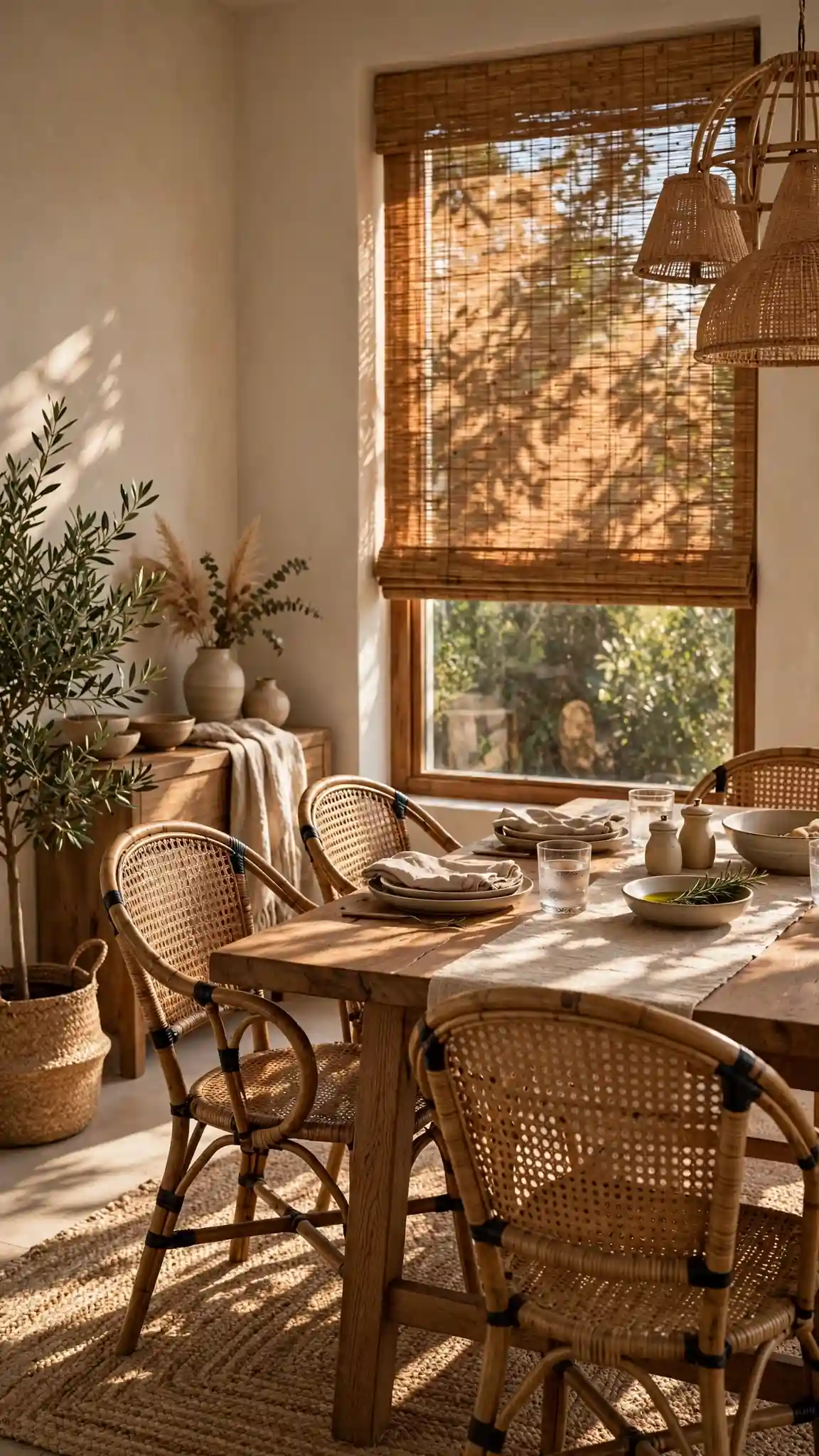
Order woven woods as an outside mount, one to two inches wider than the frame each side, and check the light-filtering percentage — unlined weaves transmit 30 to 50 percent of light, so privacy liners are worth the extra $20 to $40 per shade. Expect $60 to $200 per shade depending on size, with custom weaves at the top end. Because natural fibers expand and contract with humidity, avoid them directly above a steamy range or in a humid conservatory. Wipe with a dry microfiber cloth; never soak them. Pro tip: hold a sample against your window at noon and again at dusk before ordering, since bamboo looks dramatically different under changing light.
15. Cellular Shades Beneath Drapes
Cellular, or honeycomb, shades trap air in their pockets, giving them the best insulation performance of any soft window treatment. In a dining room with a large cold window, they meaningfully reduce draughts around the table in winter and heat gain in summer. On their own they look plain, which is exactly why they work so well hidden behind decorative side panels — you get real energy performance plus the softness and colour of fabric drapes framing the window.
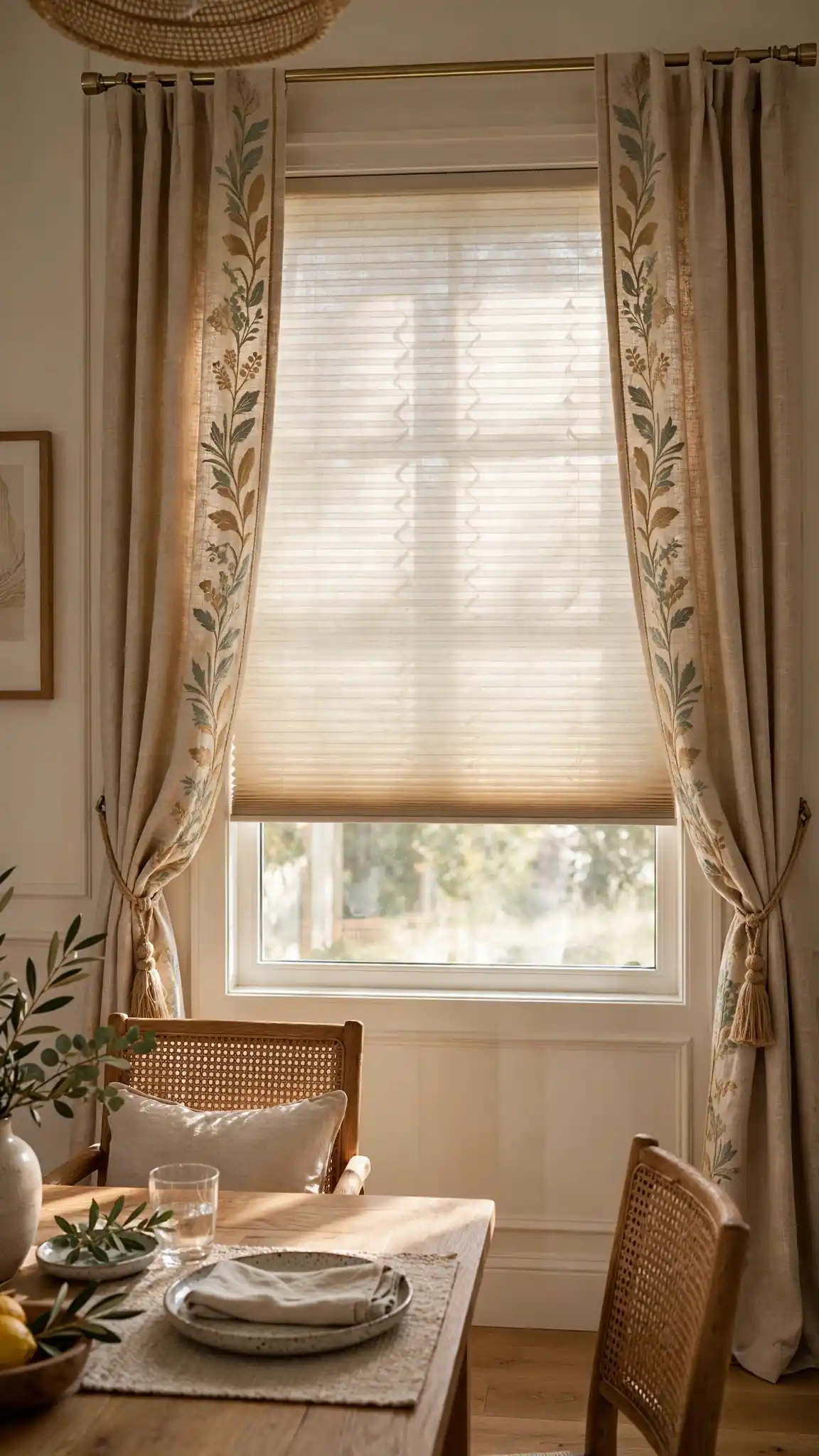
Cellular shades should be measured as an inside mount to sit flush in the window recess: width minus an eighth inch for clearance, exact height. Double-cell construction insulates about 20 percent better than single-cell and costs $60 to $180 per window ready-made, $150 to $400 custom. Choose a cordless top-down/bottom-up lift so you can drop the top for daylight while keeping the bottom closed for privacy — the single most useful dining room feature. Match the shade color to your wall for invisibility behind side panels. Pro tip: keep the operating rails dust-free with a weekly feather-duster pass, because grit in the cells is what makes them look dingy over time.
Read More Blogs on: decormellow.com
16. Neutral Beige and Greige Panels
A quiet neutral curtain lets the dining table, lighting and artwork take the lead. Beige, greige, oatmeal and warm stone recede into the wall, especially when the curtain colour sits close to the paint tone, creating an uninterrupted envelope that makes the room feel larger. This approach is also the most forgiving long term: you can change chairs, rugs and tableware repeatedly without the curtains ever clashing. Add interest through texture — slub linen, herringbone weave, subtle self-stripe.
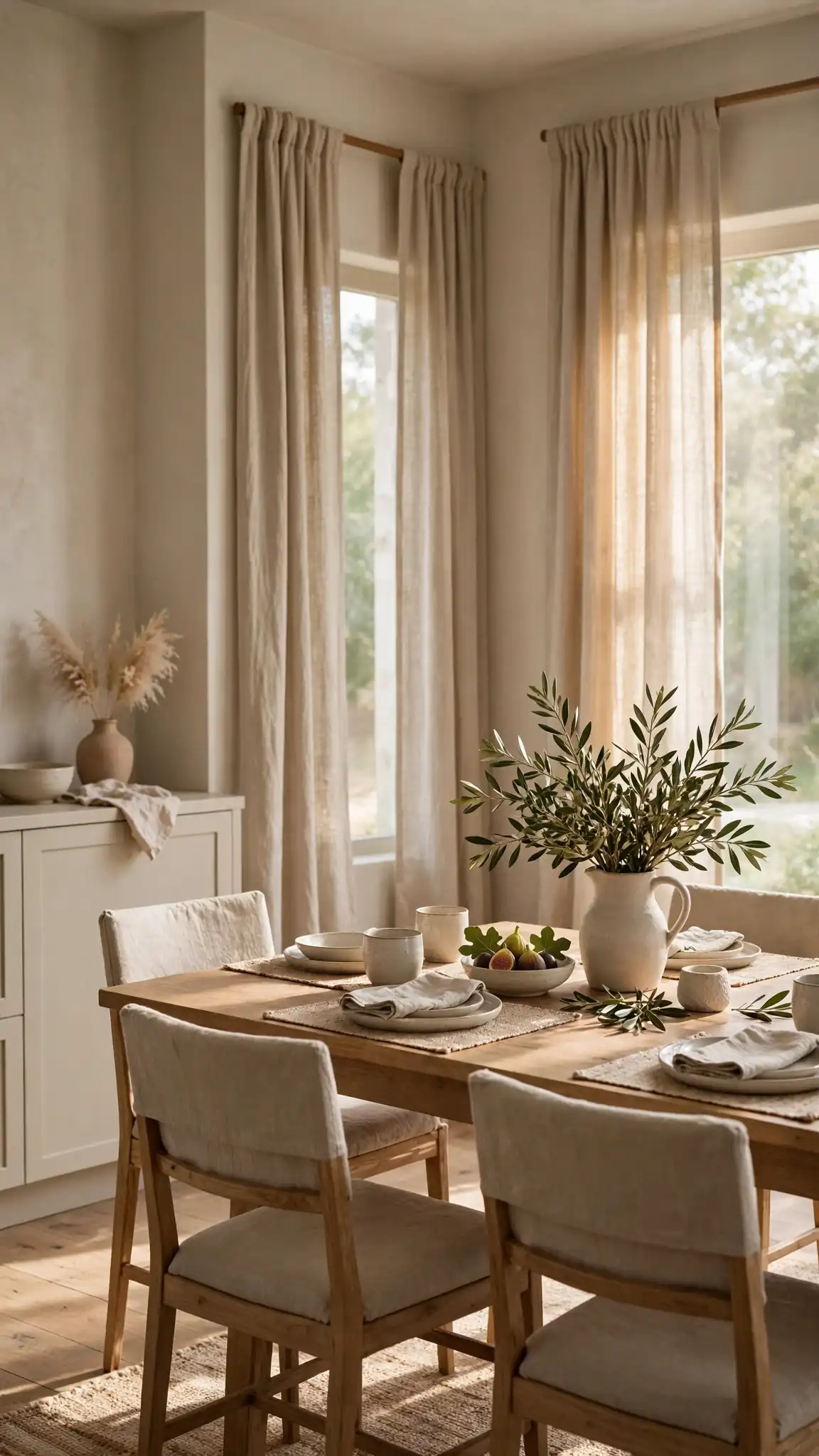
The trick to neutrals is undertone matching: hold fabric swatches against your wall paint at noon and at 7 p.m., since beige can skew pink and greige can skew blue under different light. Ready-made neutral panels cost $20 to $60 each; the texture — slub, herringbone, or self-stripe — is what keeps them from looking flat. Buy all panels from one dye lot and add one extra for the inevitable length mismatch. Linen-look polyester blends give the texture without the shrinkage of real linen. Pro tip: if walls are warm white and trim is bright white, choose a neutral midway between the two so the curtains bridge them instead of clashing with one.
17. Emerald Green Jewel Tones
Emerald green has become a dining room signature colour, and curtains are a lower-commitment way to use it than painting all four walls. It flatters warm woods, brass and cream upholstery, and it looks especially rich under warm evening light. Velvet amplifies the depth; linen keeps it fresher and more casual. Because green sits between warm and cool, it works in both north- and south-facing rooms. Repeat it once elsewhere — a vase, chair seat or artwork — to tie the scheme together.
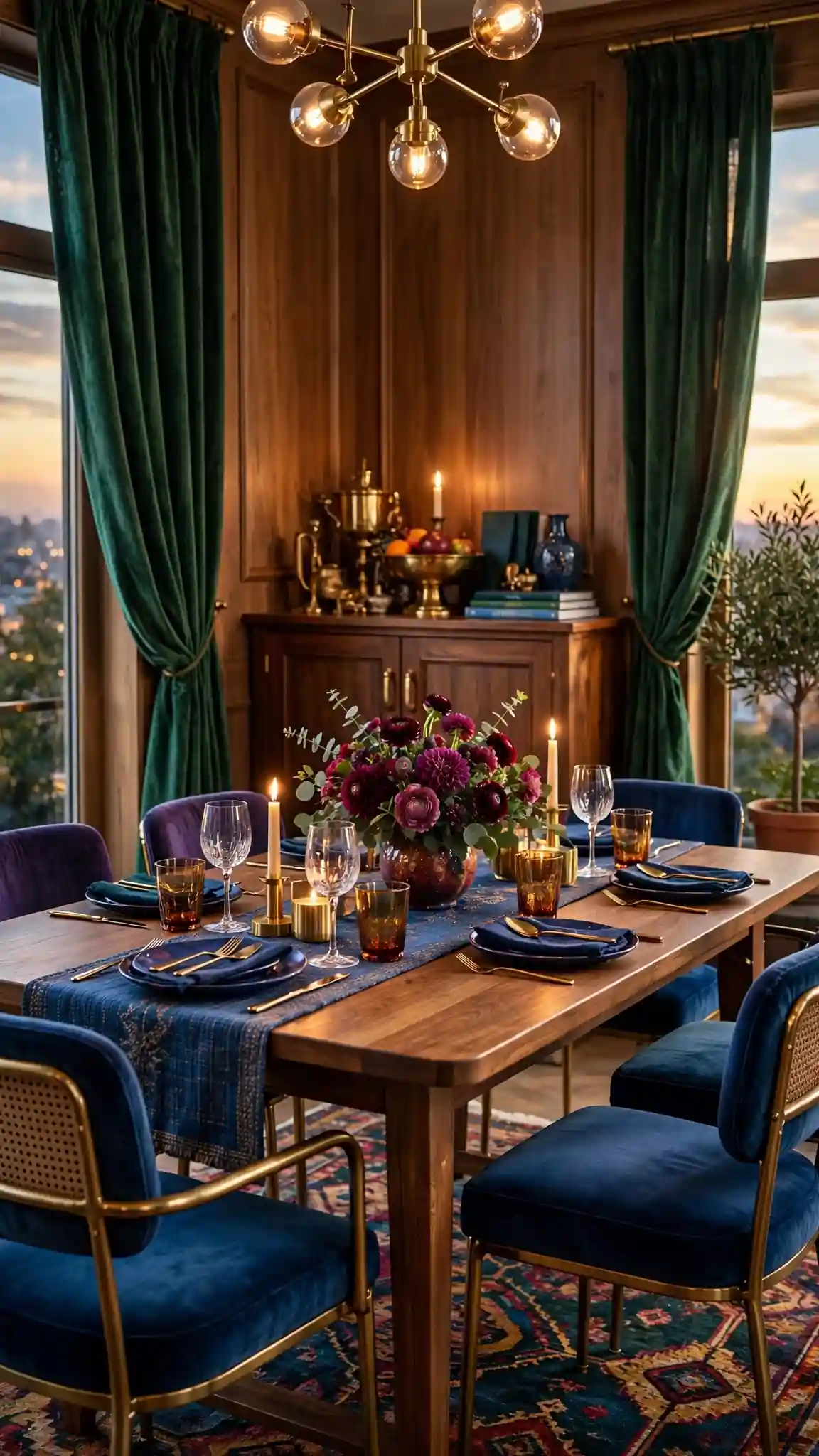
Velvet or a heavy cotton-linen blend delivers the richest emerald; thin polyester washes the color out and looks flat by daylight. Ready-made emerald panels run $30 to $80 each, with velvet at the higher end. Because green is light-sensitive, line panels facing south or west to prevent fading to an olive tone within two years. Test one panel at the window for a full day before committing — emerald shifts dramatically between morning cool light and evening warm bulbs. Pro tip: repeat the color in exactly one other spot, like a velvet chair cushion, and keep everything else neutral so the green reads intentional rather than random.
18. Navy Blue Drapes
Navy is the practical alternative to black: dramatic and grounding, but softer and less severe. It creates a strong frame around a window and makes white trim look crisper. In a dining room with pale walls and a light floor, navy curtains supply the visual weight that keeps the scheme from floating. It pairs naturally with brass, rattan, walnut and white ceramics. Navy also hides marks and dust far better than pale fabrics, which is a genuine advantage in a food-adjacent room.
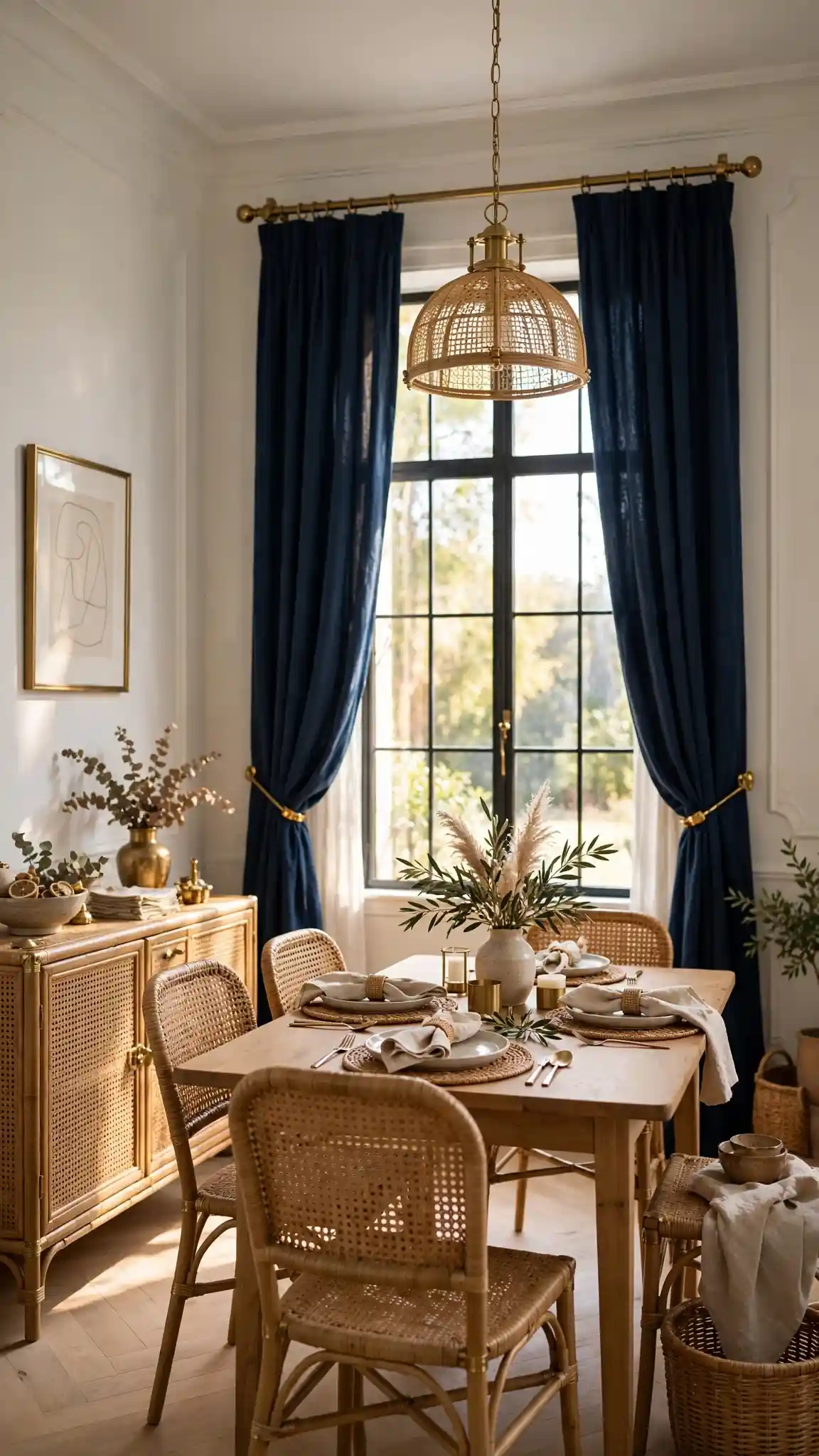
Navy shows every wrinkle and lint speck, so choose a fabric with some texture — linen weave or brushed cotton — and keep a lint roller in the sideboard drawer. Ready-made navy panels cost $25 to $70 each; blackout-lined versions add about $20 per panel and deepen the color dramatically. In rooms under 12 feet wide, keep panels stacked fully on the wall when open so the navy doesn't shrink the window visually. Navy and warm brass is the classic pairing; chrome can make it feel cold. Pro tip: steam navy panels inside-out so you never leave shine marks on the face that shows to the room.
19. Blush Pink Curtains
Blush pink reads as a warm neutral rather than a bold colour, casting a flattering glow across the room as daylight passes through it. In a dining room it softens hard edges and works surprisingly well with grey, charcoal, olive and natural wood. Choose a dusty, muted blush rather than a bright candy tone to keep it sophisticated. Linen and cotton hold the colour beautifully; avoid shiny synthetics, which can push blush toward something that reads as cheap.
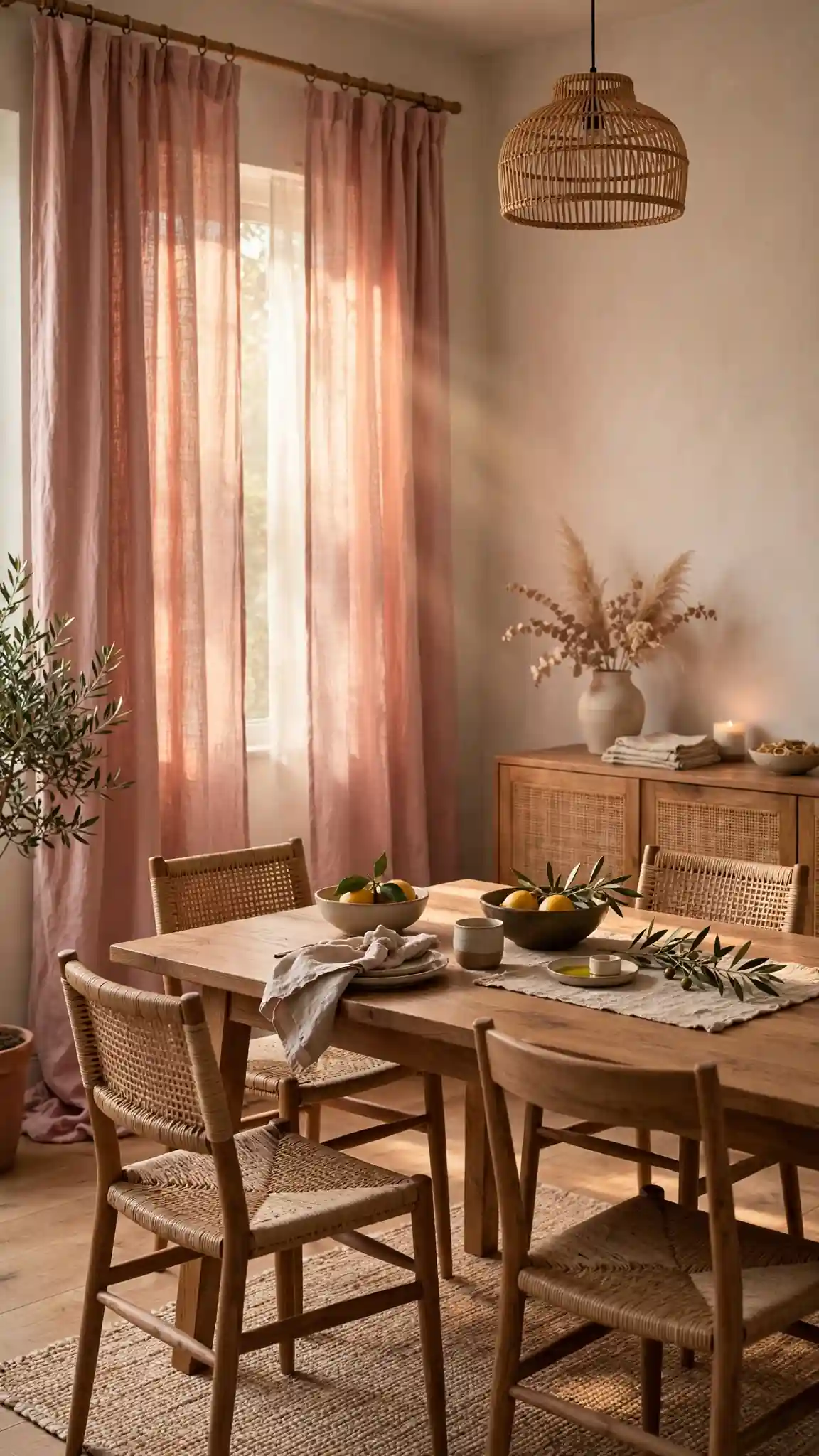
Dusty blush (think dried rose, not bubblegum) pairs with grey walls and walnut furniture; candy pink needs a much braver scheme. Ready-made blush panels cost $20 to $55 each at retailers like West Elm and Pottery Barn. Because blush fades fast in sun, reserve it for north or east windows or add a UV lining. The color reads best in matte cotton or linen — sheen turns blush brassy under artificial light. Test with your evening bulbs on, since cool LEDs can push blush toward grey. Pro tip: layer blush panels over white sheers to soften the color at the edges and keep the look airy instead of solid.
20. Mustard and Ochre Panels
Mustard curtains inject warmth and energy into dining rooms that lack natural light, effectively mimicking sunshine on grey days. The colour has a strong retro-modern association, sitting comfortably with mid-century furniture, teak sideboards and globe pendant lights. It contrasts brilliantly against deep blue, charcoal and forest green walls. Because ochre is saturated, keep the rest of the palette restrained and let the curtains carry the intensity. Textured weaves keep the colour from looking flat.
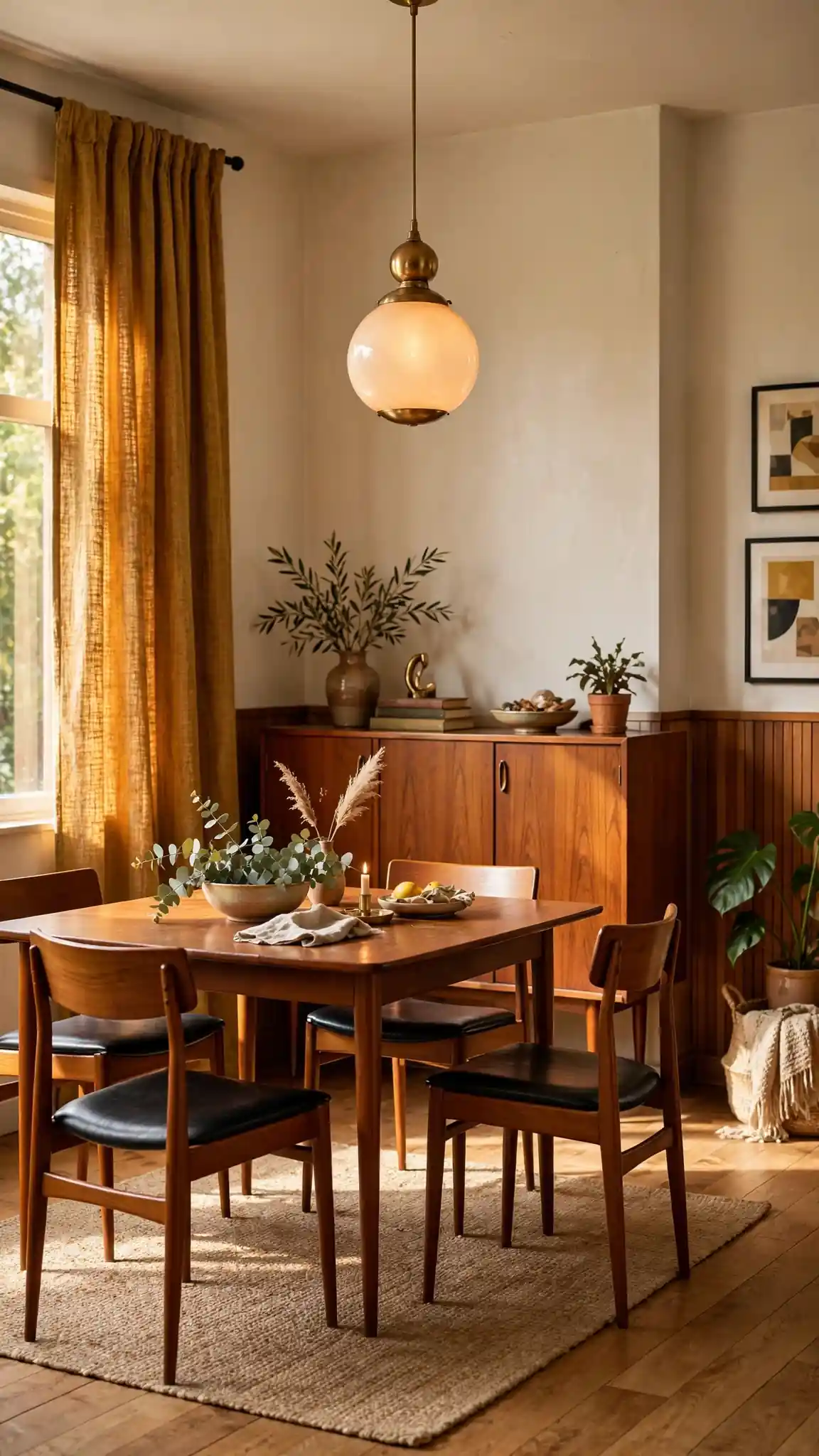
Mustard demands restraint everywhere else: keep walls white or soft grey, furniture wood-toned, and limit other strong colors to one small accent. Ready-made mustard panels run $20 to $60 each. The color is unforgiving of cheap fabric — thin polyester looks neon, while a textured cotton or wool blend reads rich. Because ochre darkens a room's feel, add a mirror opposite the window to bounce light back. Check the dye lot in daylight before hanging; mustard shifts most between store lighting and home. Pro tip: wash mustard panels separately the first two times, since saturated dyes bleed more than any other color in this list.
21. Black Curtains
Black curtains are a bold, confident choice that instantly makes a dining room feel more graphic and gallery-like. They frame a window like a picture, drawing attention to the view or the light beyond. In a room with white walls the contrast is crisp and modern; against dark walls it produces a moody, enveloping cocoon that suits evening entertaining. Choose matte fabrics such as linen or brushed cotton rather than shiny options, and keep the heading simple so the silhouette stays clean.
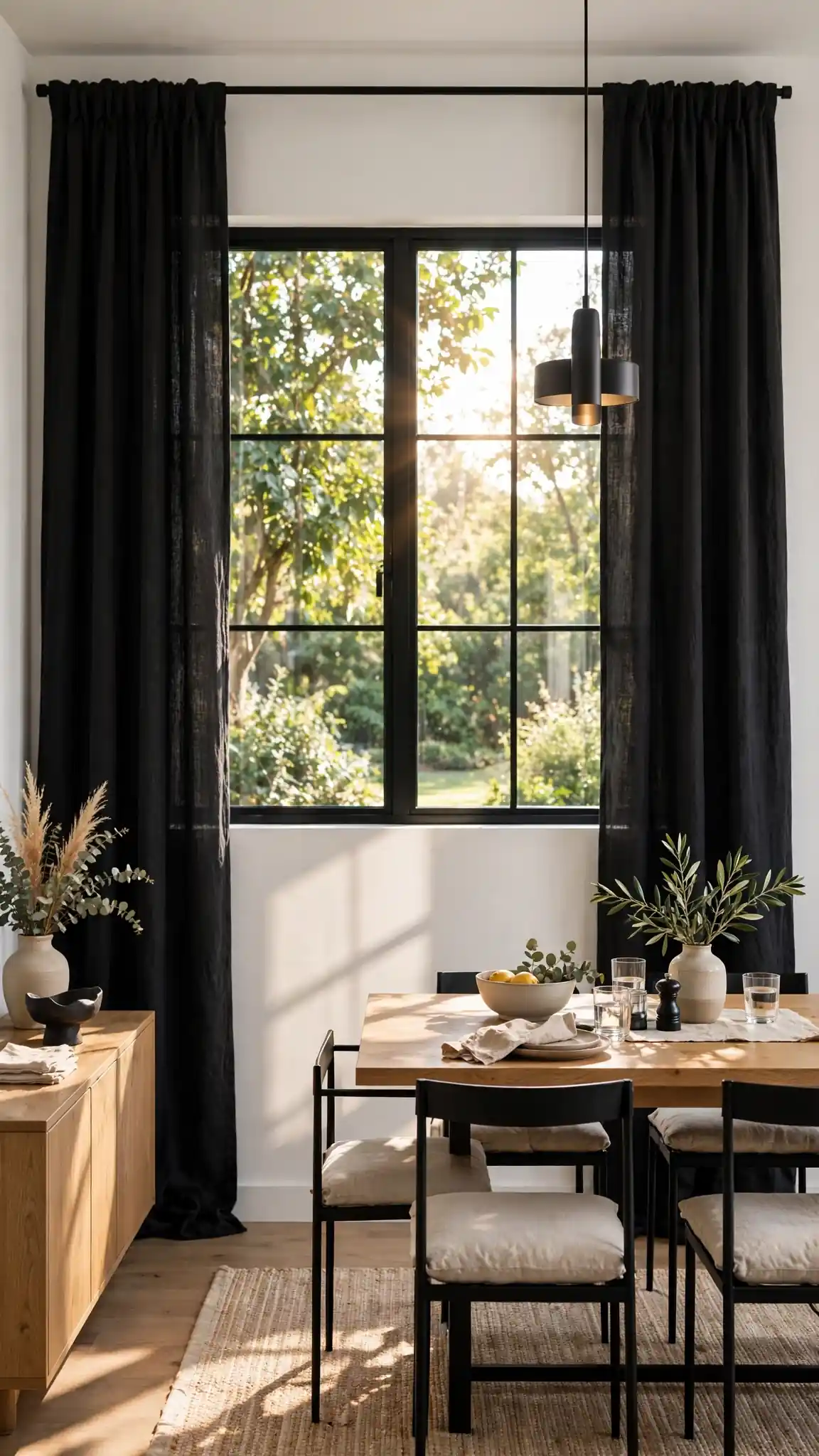
Black curtains need breathing room: they work best in dining rooms at least 12 by 14 feet with ceilings of nine feet or more, where the drama doesn't overwhelm. Matte linen or brushed cotton costs $25 to $70 per panel; avoid anything with sheen. Because black absorbs light, double your usual lighting — add a pendant dimmer or wall sconces so the room doesn't feel cave-like after dark. Dust shows instantly, so shake panels outdoors monthly. Pro tip: keep the hardware minimal and dark — a slim matte-black rod disappears, letting the fabric silhouette carry the whole look.
22. Two-Tone Colour Block Curtains
Colour blocking joins two fabrics horizontally or vertically in a single panel — a neutral upper section with a coloured band at the hem, for instance. It is a designer detail that costs little and stops plain curtains looking basic. A contrast band at the bottom also visually anchors the panel to the floor and adds weight so the fabric hangs better. Keep the proportions deliberate: roughly one-fifth contrast to four-fifths main fabric usually looks far better than an even split.
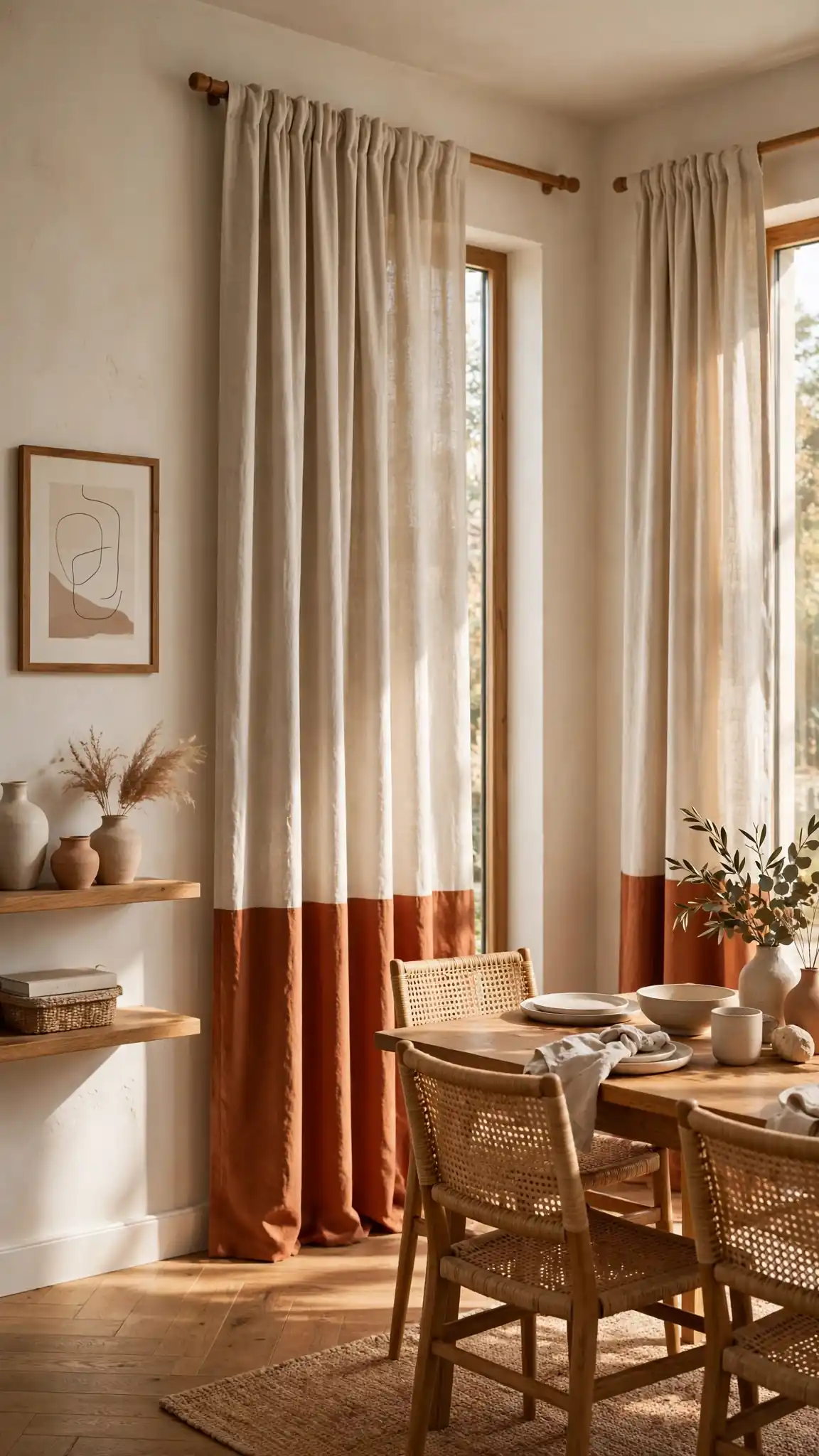
Sew or order the contrast band at the bottom hem, roughly 18 to 24 percent of the total length — the one-fifth ratio reads designer, while a half-and-half split looks like two curtains stitched together. Ready-made color-block panels cost $30 to $75 each; DIY is easy since it's just a horizontal seam plus hemming. Match the band color to something already in the room — a chair cushion, the rug border — so it feels connected. Use the same fabric weight for both sections so the seam hangs straight. Pro tip: press the joining seam toward the band and topstitch it; the crisp line is what sells the custom look.
23. Embroidered and Crewelwork Curtains
Embroidered curtains add texture you can see and touch, with raised stitching that catches light differently through the day. Crewel work — wool embroidery on a linen or cotton ground — brings a traditional, slightly bohemian richness that suits dining rooms with antiques or layered collections. Because the pattern is tonal rather than printed flat, it reads as subtle from across the room and rewards closer inspection. Line embroidered panels to protect the stitching and help them hang straight.
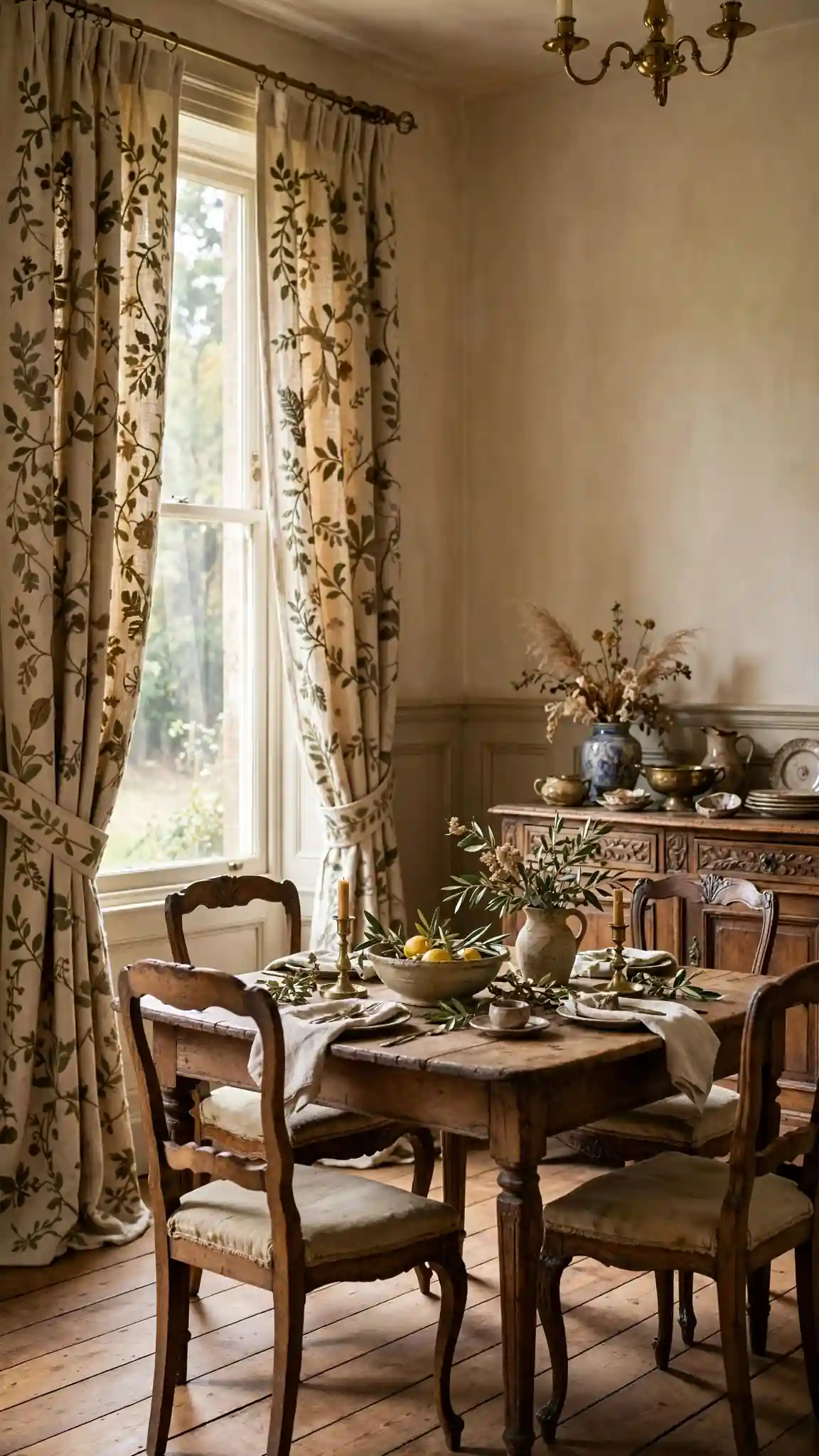
Crewel and embroidered panels are investment pieces: ready-made versions cost $60 to $150 per panel, custom work starts around $250. Always line them — lining protects the stitching from sun damage and adds the weight embroidery needs to hang without curling. Check the back before buying; loose threads and skipped stitches signal poor quality that won't survive cleaning. Dry clean only, since water can pucker the ground fabric and bleed wool dyes. Pro tip: hang embroidered panels where guests can see them up close — beside the sideboard, not across a 20-foot room — because the detail is the whole point.
24. Indian Block Print Cottons
Hand block printed cotton brings genuine artisanal character, with slight registration variations that prove a human made it. Indian block prints in indigo, madder red and soft greens suit eclectic, colourful dining rooms and pair beautifully with rattan, brass and mismatched vintage chairs. The cotton is lightweight, so it moves nicely in a breeze from an open door. Wash carefully or dry clean, as natural dyes can bleed, and consider lining to prevent sunlight fading the pigments.
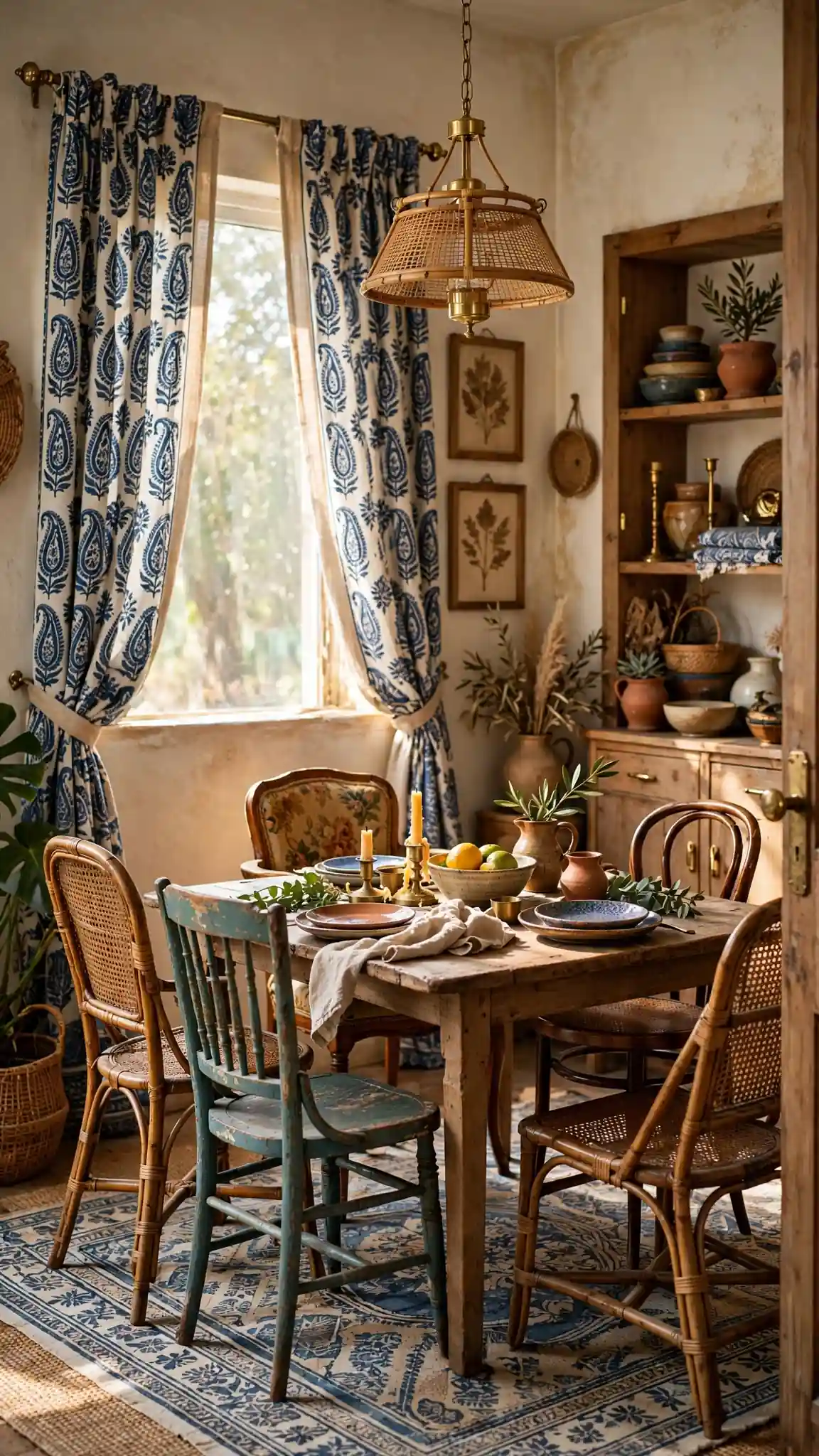
Real hand block prints cost $40 to $90 per panel from fair-trade shops and Etsy sellers; machine copies at $15 to $30 lack the charming irregularities. Expect slight misregistration and small dye spots — that's authenticity, not damage — but reject panels with large bleeds or off-grain printing. Wash in cold water with a color-catcher sheet the first three times, or dry clean to be safe. Line them to slow sun fading of natural dyes. Pro tip: buy from sellers who name the artisan cluster or workshop; transparent sourcing is the best guarantee you're getting genuine hand work rather than a printed imitation.
25. Silk and Faux Silk Drapes
Silk has an unmatched sheen and fluidity, catching light with a subtle lustre that makes formal dining rooms feel genuinely luxurious. It drapes into elegant, fine folds that heavier fabrics cannot achieve. Real silk degrades quickly in direct sunlight and must always be lined and interlined; faux silk polyester delivers a similar look with far better UV stability and easier care. Reserve silk for dining rooms used mainly at night, where its shimmer plays against candlelight and chandeliers.
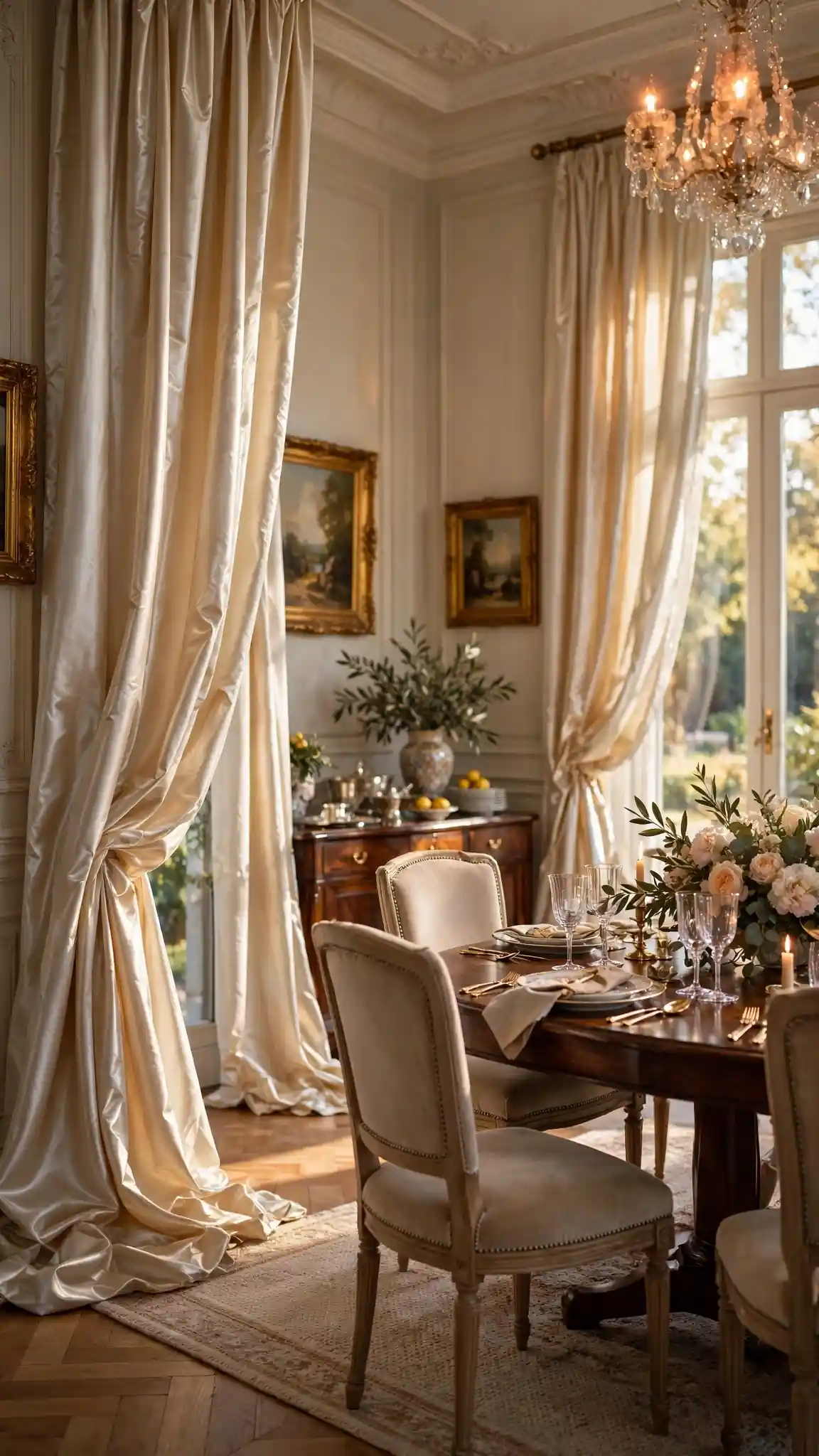
Real silk drapes start around $200 per panel custom and demand full lining plus interlining, which adds $60 to $100 per panel — skip the lining and south-facing silk will rot within three years. Faux silk polyester costs $30 to $70 ready-made, resists fading, and can be machine washed on gentle. If you choose real silk, keep it in rooms used mainly evenings and away from direct sun; even lined silk hates UV. Never wring silk — roll in a towel to remove water. Pro tip: test an inconspicuous corner with a damp white cloth before any cleaning; if color transfers, commit to professional dry cleaning only.
26. Sheers with Metallic Thread
Sheer fabric woven with fine gold, silver or copper thread introduces a faint shimmer that comes alive as sunlight moves across the window. It is a subtle way to add glamour to a dining room without heavy or ornate treatments. The metallic thread also gives sheer fabric slightly more body, helping it hang with definition rather than floating. Keep the surrounding scheme simple — plain walls, restrained furniture — so the effect reads as refined rather than festive.
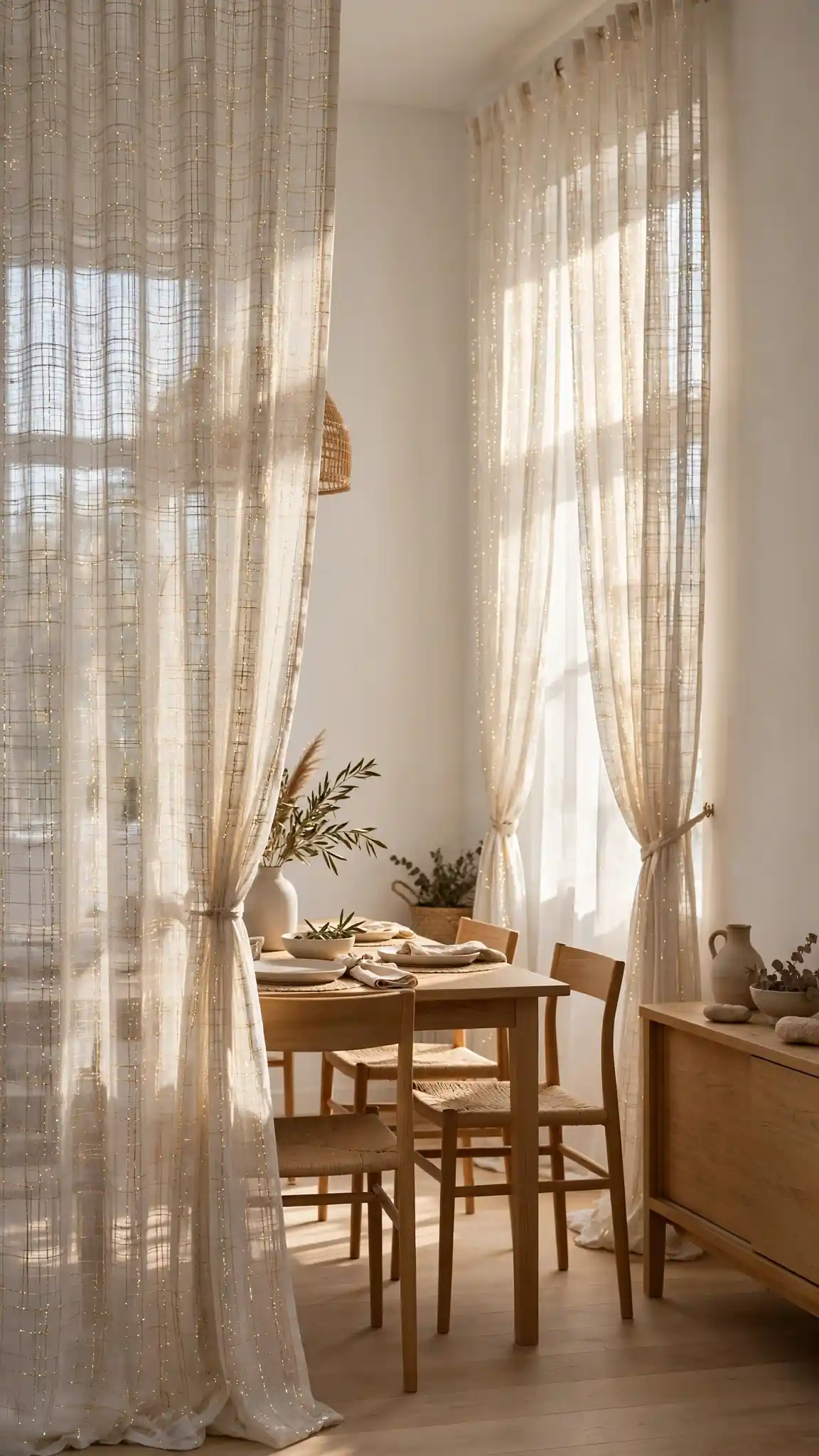
Metallic-thread sheers cost $20 to $50 per panel — only slightly more than plain voile — and the shimmer reads best in gold thread against warm white walls or silver against cool greys. Because metallic fibers are delicate, wash in a mesh laundry bag on cold delicate and never use bleach, which corrodes the thread. Hang them with minimal fullness (about 1.5 times width) so the shimmer stays visible instead of getting lost in deep folds. Keep nearby fabrics matte so the sheers remain the focal point. Pro tip: view samples under your actual evening lighting before buying, since metallic thread can look green or dull under cheap LEDs.
27. Tassel and Trim Edged Panels
Adding a decorative trim to a plain curtain is the highest-value upgrade in soft furnishings. A contrasting tape down the leading edge, a fringed hem or a subtle Greek key border turns budget panels into something that looks bespoke. Trim also emphasises the vertical line of the curtain, reinforcing height. Choose a trim colour that appears elsewhere in the dining room — the rug, the chair fabric, the artwork — so it reads as a deliberate connection rather than decoration for its own sake.
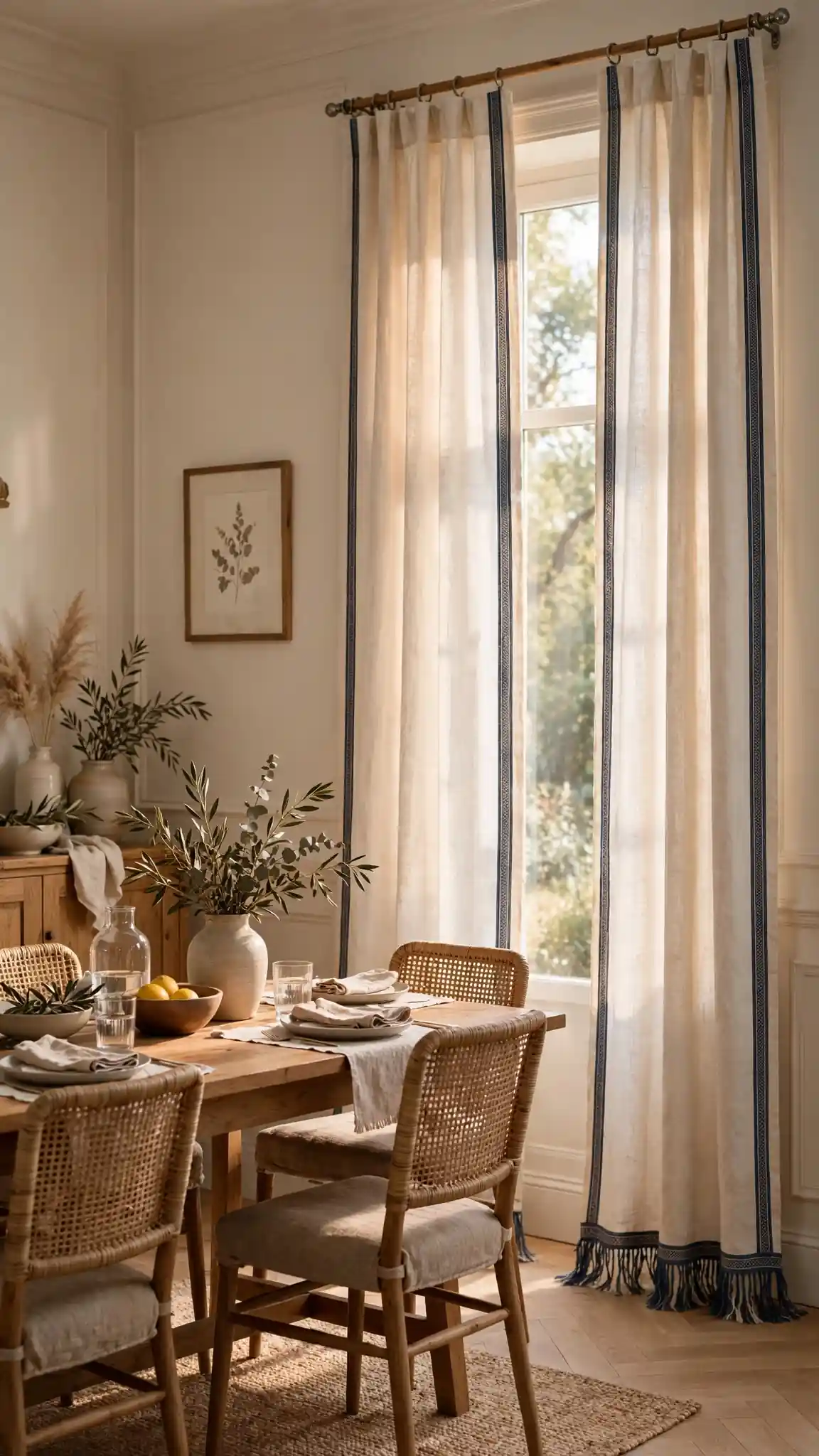
Budget about $2 to $8 per yard for trim tape and $15 to $40 total per pair of panels including a tailor's sewing if you don't DIY — still the cheapest transformation in this list. Apply trim to the leading edge for maximum visibility, or the hem for a subtler effect. Use fabric glue rated for washable textiles if you won't sew, but stitched trim survives cleaning far longer. Match trim width to panel scale: a two-inch Greek key suits tall panels, while a half-inch tape suits café curtains. Pro tip: buy 20 percent more trim than you measure; pattern-matching at corners and seams eats length fast.
28. Valance with Side Panels
A valance conceals the track or pole hardware and gives the window a finished, architectural top. Paired with stationary side panels, it creates a classic, symmetrical frame that suits traditional dining rooms with formal furniture. Modern interpretations keep the valance flat and tailored rather than swagged or ruffled, which stops the look feeling dated. Mount the valance high, above the window frame, so it never eats into the glass and steals daylight from the table.
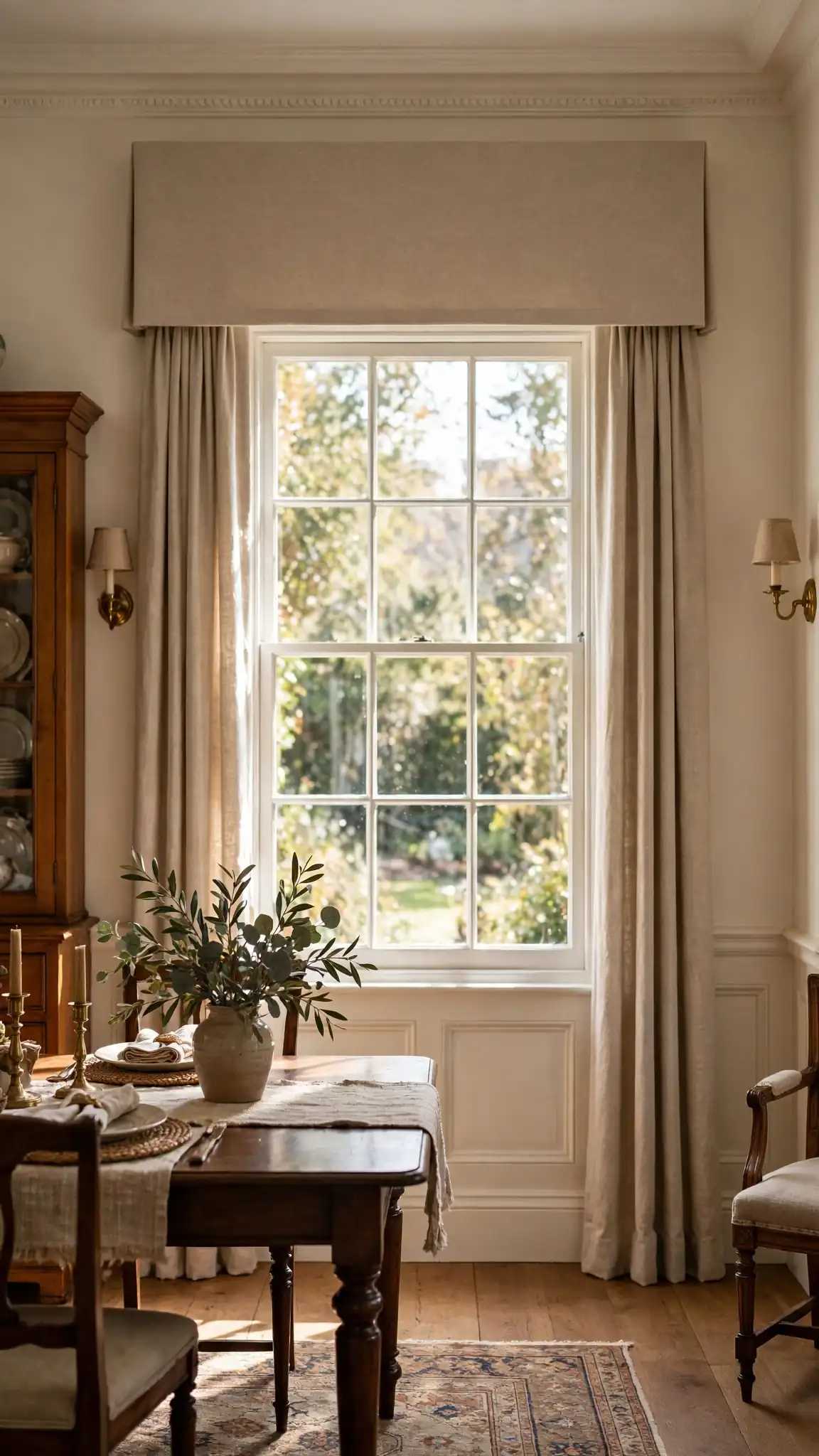
A flat valance should be 12 to 18 inches deep and mounted on a board or rod four to six inches above the window frame so it never covers glass. Custom valances cost $80 to $200 each; a DIY plywood-board valance upholstered in your fabric runs under $40 in materials. Keep side panels stationary — they're decoration — and put any working shade or blind behind them for actual light control. In rooms under nine-foot ceilings, skip the valance entirely; it visually lowers the room. Pro tip: line the valance in the same fabric as the panels so the underside looks finished from the dining table below.
29. Puddled Curtains
Puddling means cutting panels several inches longer than the floor so the excess fabric pools softly at the base. It is unapologetically romantic and looks especially good in velvet, linen and silk in formal dining rooms. A three to six inch break creates a gentle puddle; anything more becomes dramatic and high maintenance. Because the fabric rests on the floor, puddling suits windows away from doorways and traffic, and it needs occasional rearranging and more frequent cleaning.
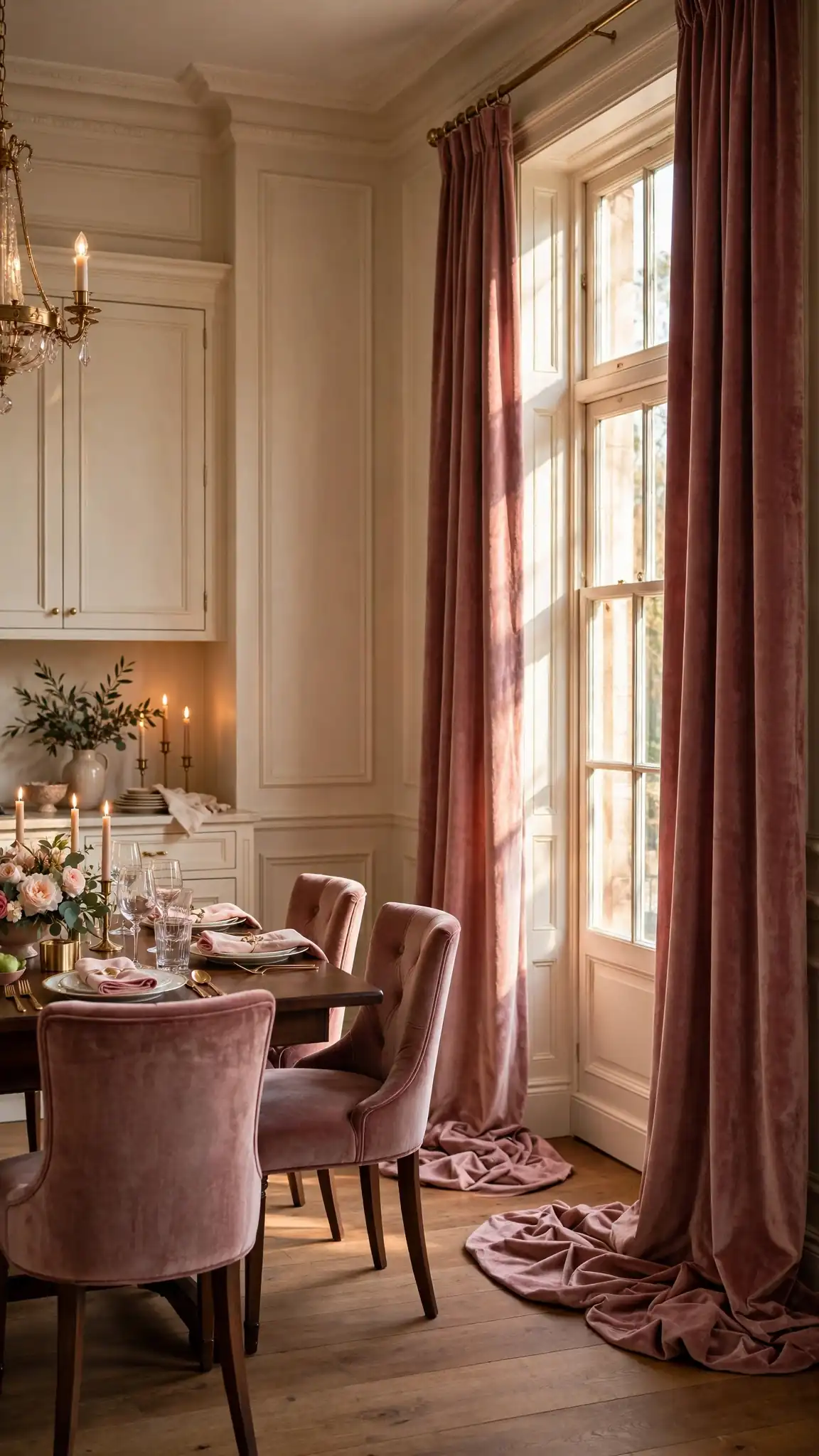
Order panels six to ten inches longer than your floor measurement to get a true puddle; a one-inch 'kiss' just looks like a measuring error. Puddled curtains and dining chairs are a bad mix — fabric snags on chair legs — so keep puddling to windows at least three feet from the table. Velvet and silk puddle most beautifully; stiff cotton looks rumpled instead of romantic. Vacuum the pooled fabric monthly with an upholstery attachment, since floor contact collects dust fast. Pro tip: arrange the puddle once with your hands, then leave it alone — constant fussing creates creases, while a settled puddle drapes itself naturally.
30. Bay Window Curtain Solutions
Bay windows are a dining room favourite and a curtain challenge. A flexible bendable track following the bay’s angles gives the cleanest result, allowing panels to draw right around the curve. Alternatively, treat each window in the bay as an individual with its own panels for a more traditional, layered look. If a table sits inside the bay, Roman shades or café curtains avoid fabric touching chairs. Always ensure curtains stack back onto the wall, not across the glass.
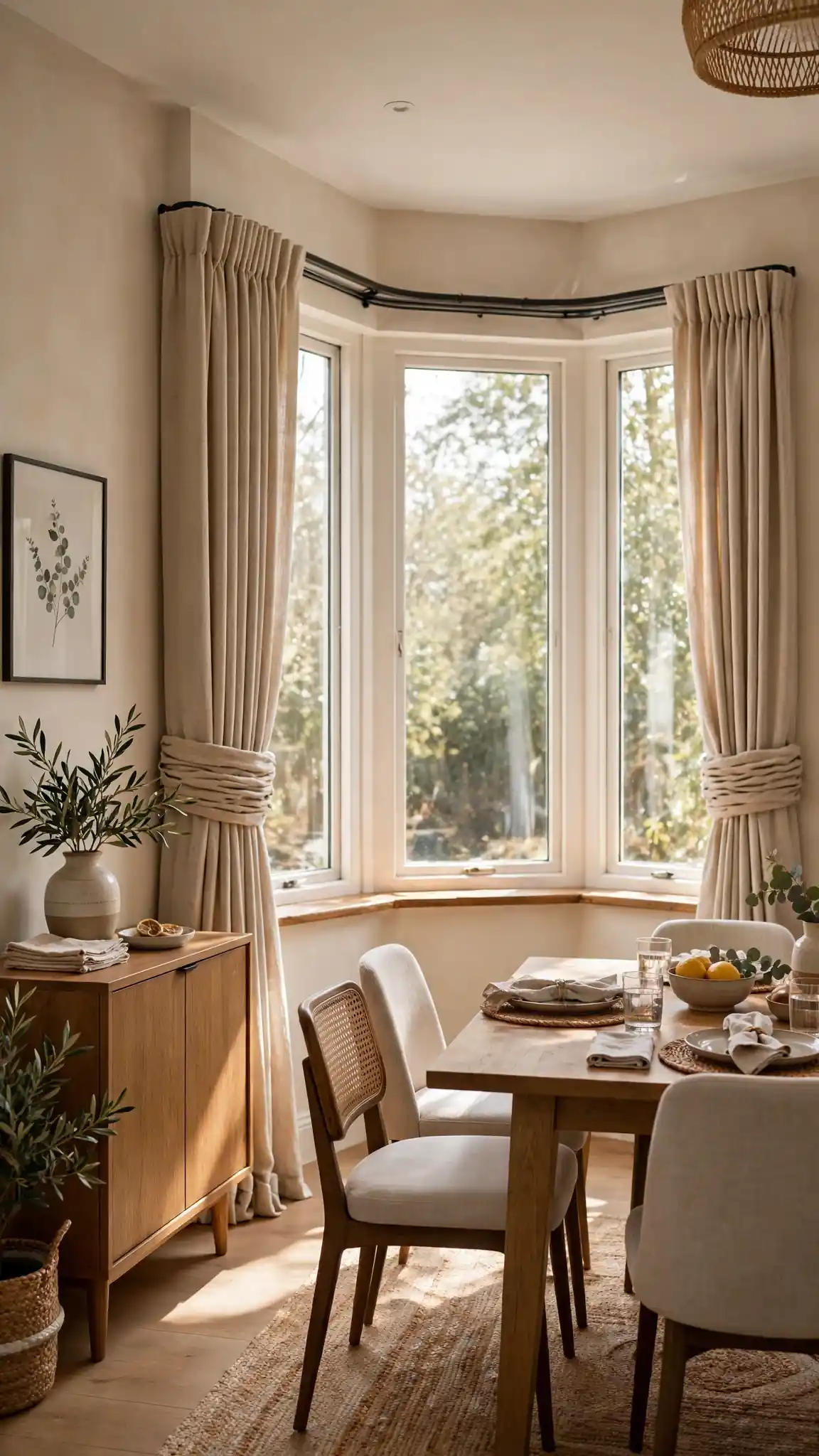
Measure each bay segment separately and order a flexible track (about $50 to $120) that bends to your exact angles — bring the angle measurements, not guesses, to the supplier. Panels for bays need extra width since they travel around corners; budget $150 to $400 total for a three-window bay. If the table sits in the bay, mount Roman shades inside each recess instead — they cost $40 to $100 per window ready-made and never touch chair backs. Always check that stacked panels clear the side walls before finalizing. Pro tip: draw the full bay on paper with measurements and photograph it; installers and suppliers work far faster from a sketch than from verbal descriptions.
31. Panel Track Blinds for Sliding Doors
Wide sliding or bifold doors onto a garden demand a treatment that stacks compactly and moves easily. Panel track blinds glide flat fabric sections sideways along a headrail, sliding neatly behind one another to clear the doorway. They suit modern dining rooms and open-plan extensions, and they handle the large scale that would overwhelm conventional curtains. Choose light-filtering fabric to preserve the garden view during the day and a room-darkening option for evening privacy.
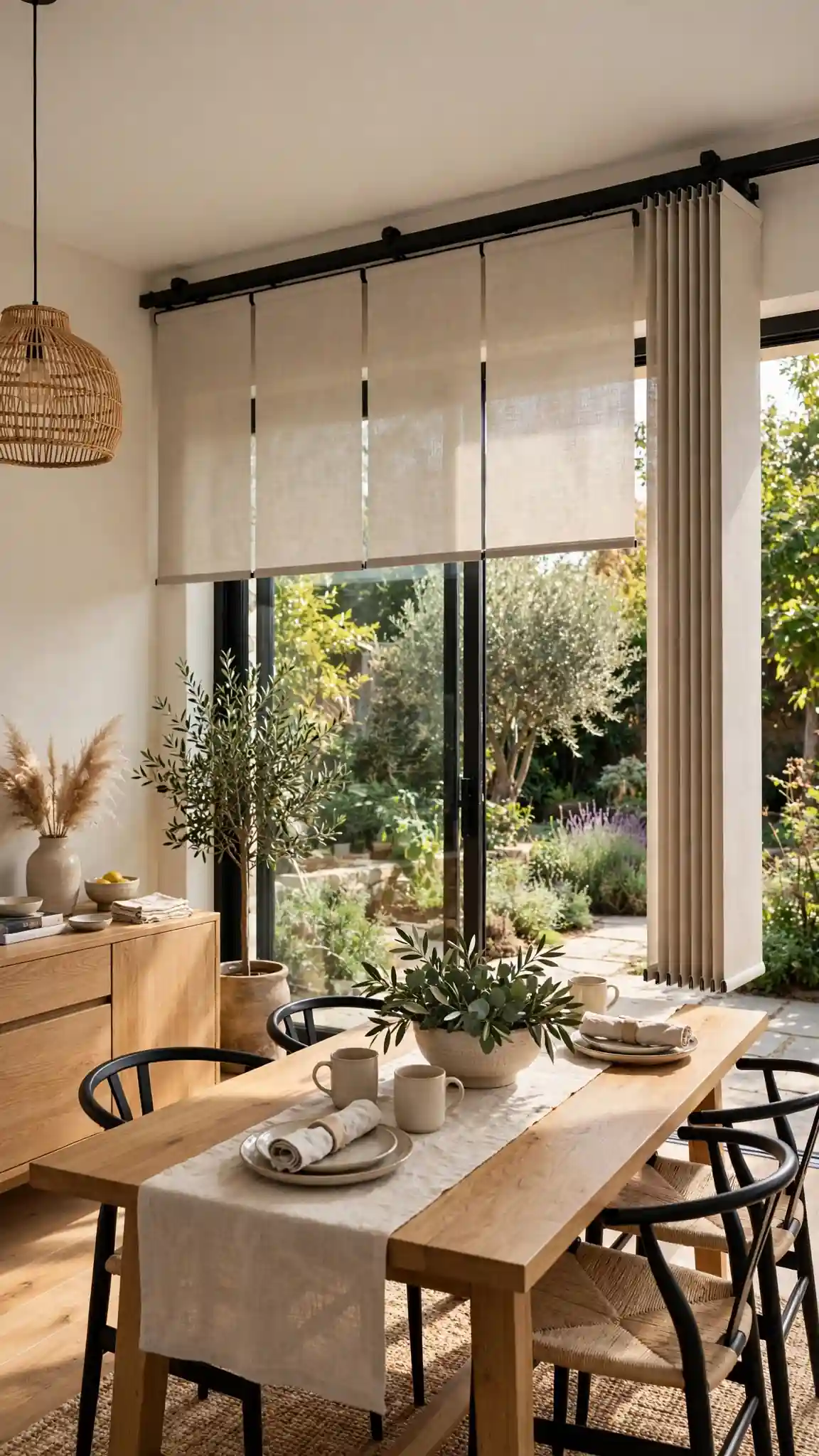
Measure the door width and add at least 12 inches of stack space on one side so open panels clear the walkway completely. Panel tracks cost $80 to $250 per door depending on width, with replacement fabric panels at $20 to $50 each. Choose a wand control over cords for safety and smoother operation, and confirm the track can handle your door's full span — most max out around 12 feet. Light-filtering panels preserve the garden view; add a second darker set if evening privacy matters. Pro tip: vacuum the track channel every few months, because grit in the rail is the number one cause of sticking panels.
32. Statement Tiebacks and Holdbacks
Hardware deserves as much thought as fabric. Metal holdbacks in brass, bronze or matte black hold panels in a sculpted curve and add a jewellery-like detail to the window. Rope tiebacks with tassels read traditional; simple leather straps feel modern and understated. Position tiebacks around two-thirds of the way down the curtain rather than exactly halfway, which produces a more flattering, elongated silhouette and lets more light into the dining area.
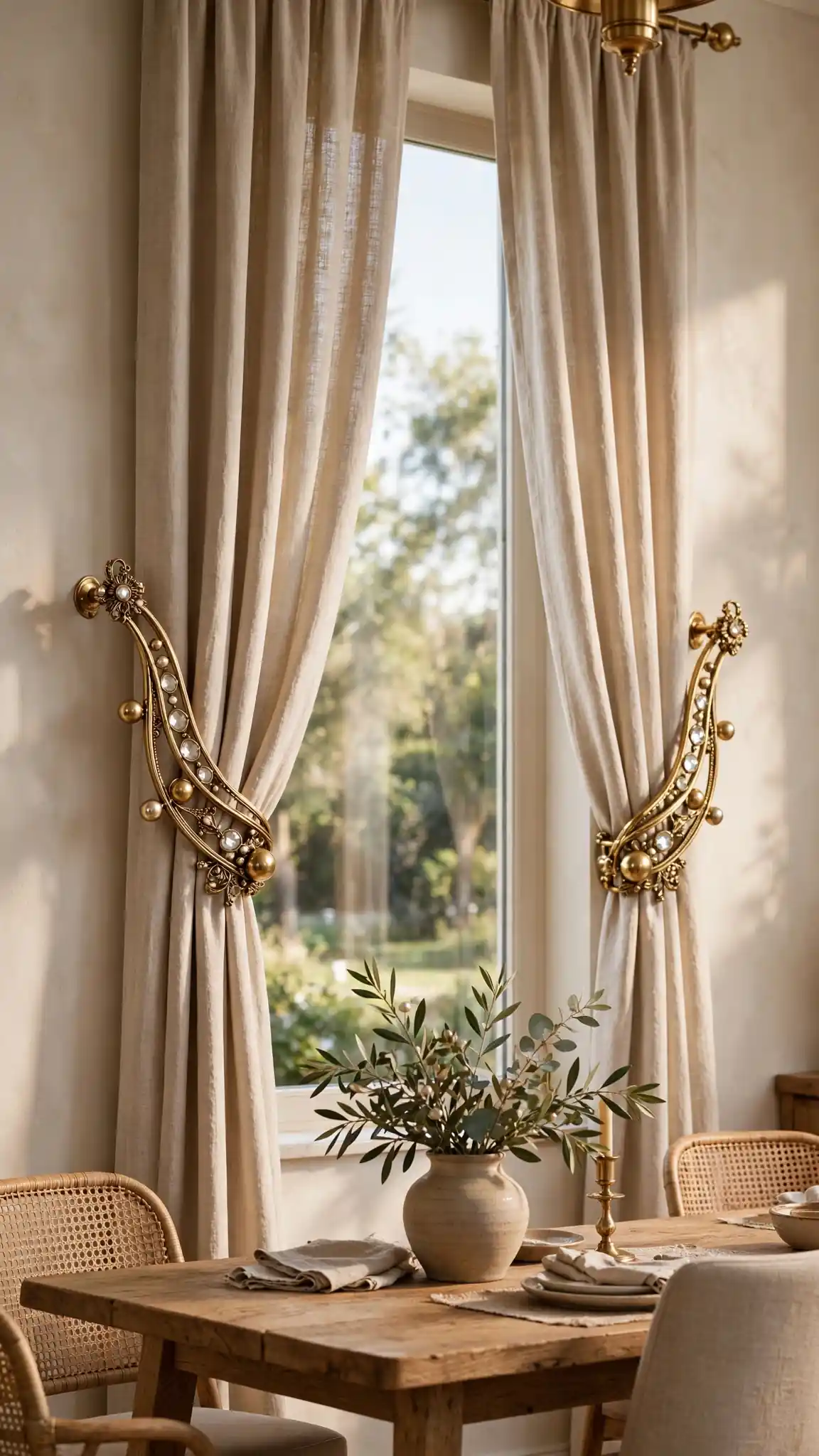
Install holdbacks 24 to 36 inches from the floor — roughly the lower third — and at least four inches from the window frame so the panel sweeps in a graceful curve. Quality holdbacks cost $15 to $40 per pair in brass, bronze, or matte black; rope tiebacks with tassels run $10 to $25 per pair. Match the metal finish to your curtain rod, not your light fixture, for a coherent window story. Test the position with a ribbon before drilling — holdback holes are permanent. Pro tip: on wide windows, use two holdbacks per side spaced a foot apart for a fuller, more sculpted sweep that shows off the fabric.
33. Ceiling-Mounted Curtain Tracks
Recessing a track into the ceiling — or fitting it tight against it — removes visible hardware entirely and lets fabric appear to fall straight from above. The effect is dramatic, contemporary and highly effective at exaggerating ceiling height in dining rooms with standard proportions. It also lets you run curtains across an entire wall rather than a single window, treating fabric as a soft architectural surface. Pair with wave headings and floor-length panels for the cleanest possible result.
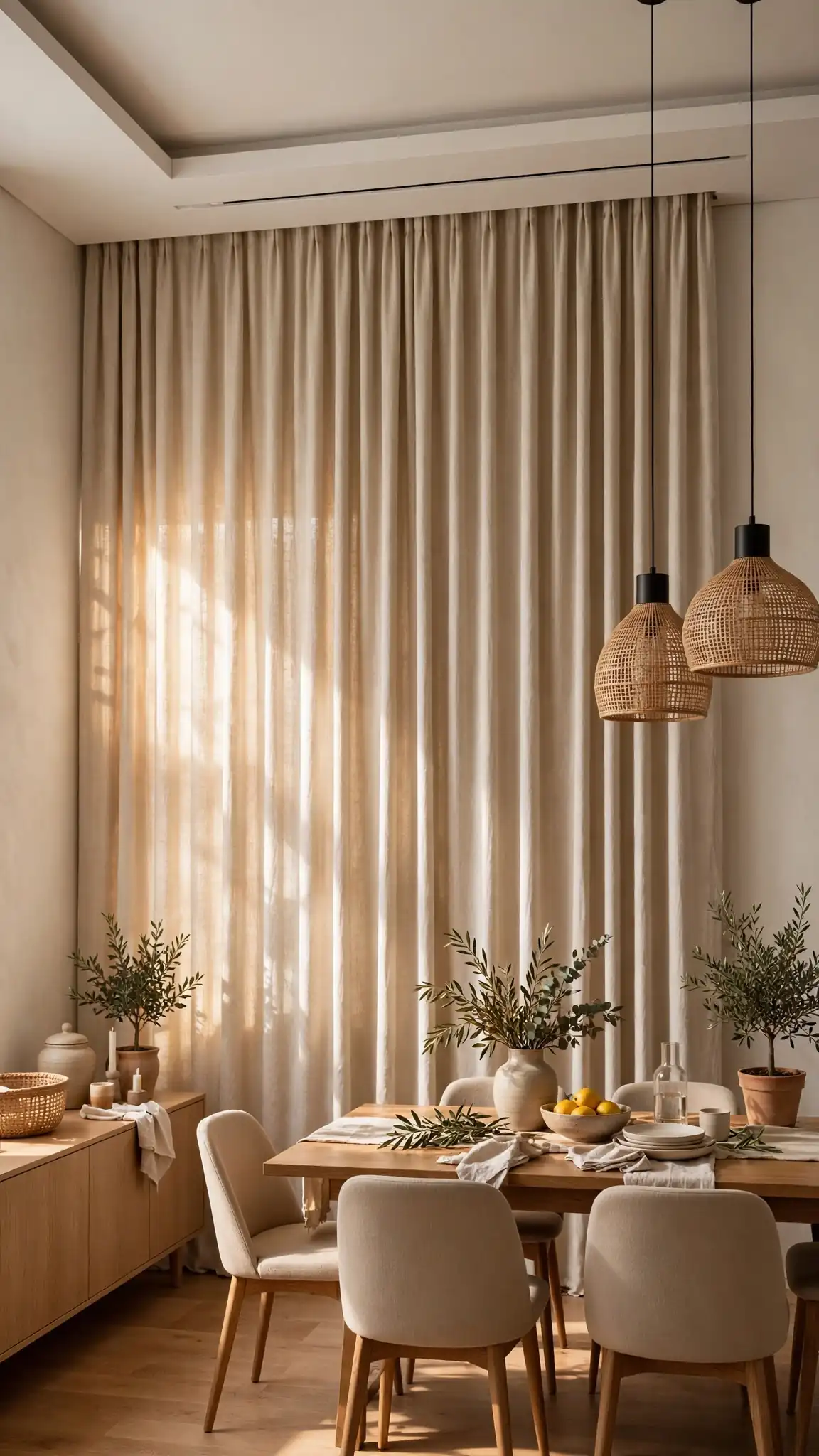
Ceiling tracks cost $30 to $90 for a quality aluminum system, plus professional installation at $100 to $200 if you recess into drywall — surface-mount tracks are a solid DIY alternative. The track must be anchored into joists or solid blocking every 16 inches; drywall anchors alone will fail under the weight of full-length drapes. Plan for the track to run six to twelve inches wider than the window on each side for proper stacking. Pair with ripple-fold carriers for the signature seamless look. Pro tip: paint a surface-mount track the exact ceiling color before installing and it virtually disappears, giving you the recessed look for a fraction of the cost.
Conclusion
The prettiest dining room curtains are the ones that solve your room’s specific problem while adding the softness a hard-surfaced space needs. If daylight is scarce, reach for sheers, voiles and pale linens. If the room feels cold or echoes, choose velvet, layered drapes or cellular shades. If it lacks personality, a botanical print, a jewel tone or a contrast trim will supply it instantly. Whatever style you choose, three rules matter more than fabric: hang the rod high and wide, allow at least double fullness, and finish at the floor. Get those right and almost any curtain will look expensive.
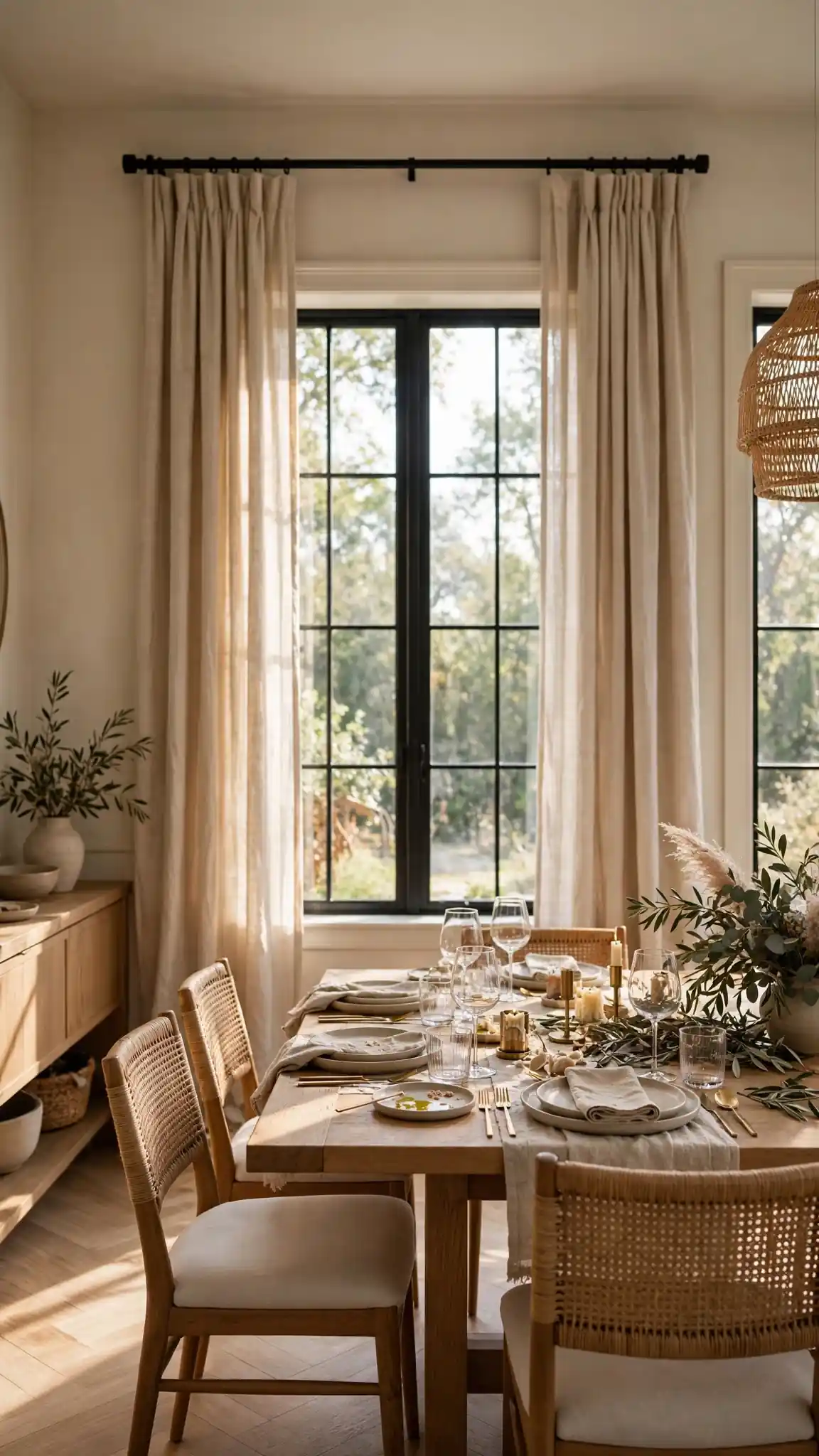
Start with the highest-impact fix first: moving the rod up and out costs nothing and transforms even budget curtains overnight. Then address fullness — if your panels look stretched, that's the single most common reason curtains look cheap. Finally, commit to floor length; anything shorter visually shrinks the window it's supposed to flatter. Most dining rooms need only one hero treatment done well, not every idea on this list. Take measurements twice, buy from one dye lot, and live with one panel at the window for a day before ordering the rest. Pro tip: photograph the finished window in daylight and lamplight; if it looks expensive in both, you've nailed it.
Frequently Asked Questions
Still deciding on fabric, length, or hardware? These are the questions readers ask most about dressing dining room windows — from whether curtains should touch the floor to how much fullness you really need. The answers below distill the practical rules from all 33 ideas above into quick, confident decisions, so you can measure once, buy once, and hang curtains that look like they were made for your room.
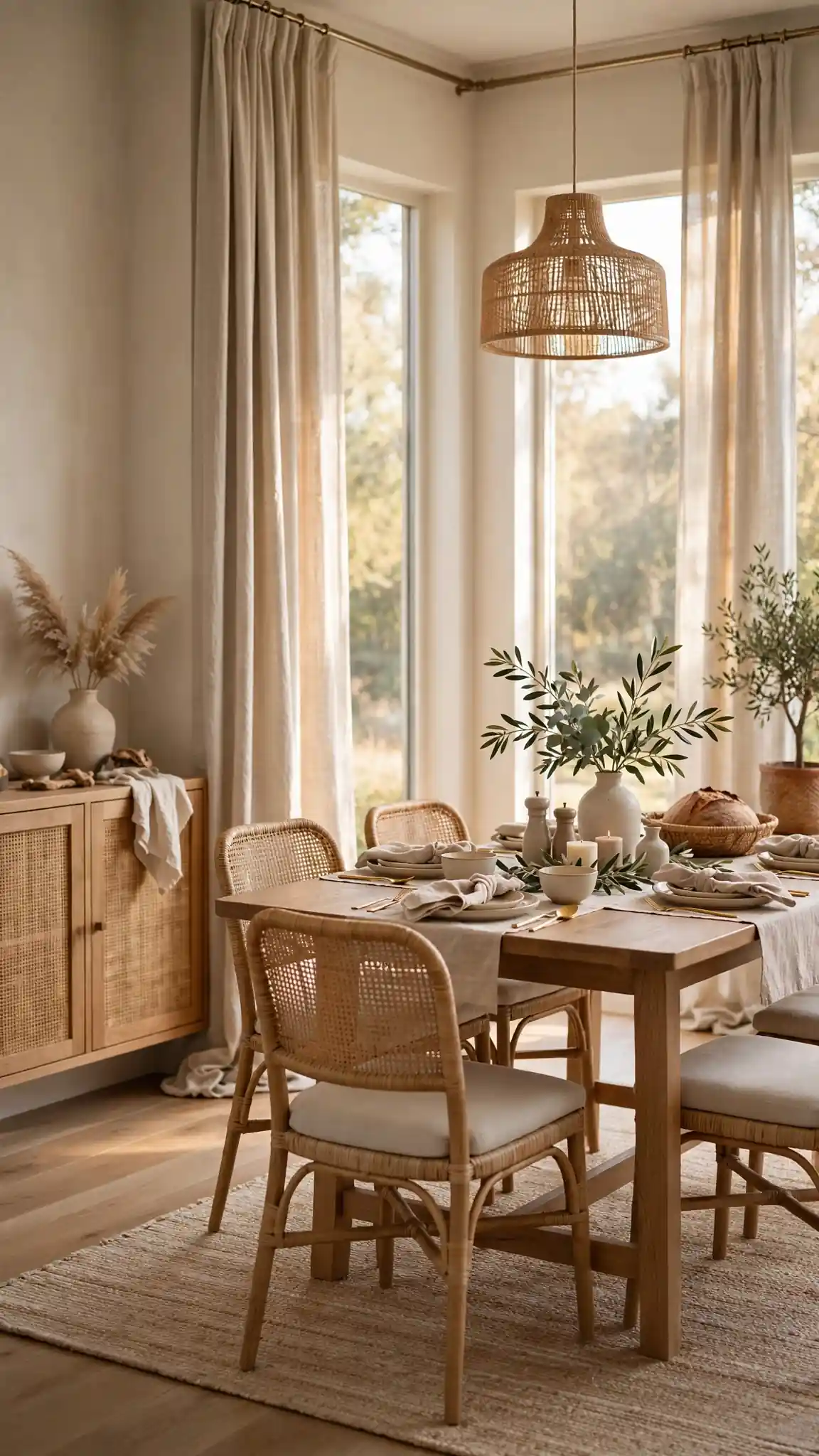
If you remember nothing else, remember three measurements: rod four to six inches above the frame, panels one and a half to two and a half times the window width, hems kissing the floor. Get those right and almost any fabric here will look polished. When in doubt, choose simpler fabric in a better weight — plain medium-weight linen beats fussy thin polyester. Buy one panel first to test color and scale at your window before ordering the full set.
Should dining room curtains touch the floor?
Yes, in most cases. Curtains that stop short of the floor make windows look truncated and the room feel smaller. Aim for the hem to just kiss the floor, or puddle two to four inches for a softer, more traditional look.
How high should I hang dining room curtains?
Mount the rod four to six inches below the ceiling, or as close to the ceiling as possible in rooms with low headroom. Hanging high and extending the rod eight to twelve inches beyond each side of the window makes the glass appear significantly larger.
What curtain colour is best for a dining room?
Neutral tones like oatmeal, greige and soft white suit almost any scheme and let furniture lead. For more character, deep jewel tones such as emerald, navy and burgundy work beautifully in formal dining rooms, especially in velvet under warm lighting.
Do I need blackout curtains in a dining room?
Usually not, since dining rooms rarely need total darkness. Blackout lining is worth considering if severe glare hits the table at mealtimes, or if the room doubles as a workspace or home cinema area.
Are curtains or blinds better for a dining room?
Curtains add warmth, softness and sound absorption, which benefits rooms with hard floors and tables. Blinds and shades suit windows blocked by furniture or radiators. Combining both — a shade for function with side panels for softness — often gives the best result.
How much fabric do I need for full-looking curtains?
Use at least two times the window or track width in total fabric for a decent gather, and 2.5 times for pleated headings. Anything less will look flat and stretched when the curtains are drawn closed.




1 Comment